Happy first day of spring! Today is the vernal equinox (or the autumnal equinox, if you’re in the southern hemisphere). I was a little fuzzy on the term “equinox”, so I turned to Google and found that the London Telegraph explained it very clearly:
The March equinox marks the moment the Sun crosses the celestial equator – the imaginary line in the sky above the Earth’s equator – from south to north. This happens on March 19, 20 or 21 every year . . . Since night and day are nearly exactly the same length – 12 hours – all over the world the event is called the equinox, which in Latin, literally means ‘equal night’ (equi – equal, and nox – night).
I also didn’t know that certain rituals are associated with the spring equinox. According to the Elephant Journal, picnics, kite-flying, and special cleansing baths accompanied by candles and incense are good ways to celebrate spring. The article’s author also suggests an activity that, despite my enthusiasm for the coming season, I will not be engaging in: “Gather a circle of sisters around a fire, to share stories, laughter and music. I’m usually naked dancing by my first bonfire if the neighbors are not up for the weekend, or indoors by the wood stove.”
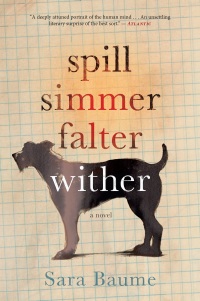 I’m all for sharing stories, laughter, and music, but I like to keep my clothes on. And even though it’s supposed to be spring, I still like a cozy blanket over me when I read on the couch in the evening. Right now, I’m reading Spill Simmer Falter Wither, by Irish author Sara Baume, just out in paperback. Told in poetic language, it’s the story of two outcasts, a lonely 57-year-old man and his one-eyed dog. If you liked The Curious Incident of the Dog in the Night-Time, this will appeal to you.
Here are nine other terrific books, just out in paperback, that you may have missed in hardcover:
 Lilac Girls by Martha Hall Kelly
Anyone who loved The Nightingale, Salt to the Sea, The Invisible Bridge, or All the Light We Cannot See will find Hall’s debut novel both unforgettable and hard to put down. Historical fiction at its best, the novel tells the powerful story of female prisoners subjected to medical experimentation at the hands of the Nazis. Three narrators — a Polish teenager, a German doctor, and an American humanitarian, all based on real women, lend their distinctive voices to this meticulously researched story of heartbreak and courage.
The North Water by Ian McGuire
This adventure story certainly isn’t everyone’s cup of tea, but I read it in two days. The North Water was chosen by the New York Times Book Review as one of the year’s ten best books, so I can’t be the only person who willingly reads about violence aboard a 19th century whaling expedition — gruesome murders, polar bear attacks, animal slaughter, and violence galore.
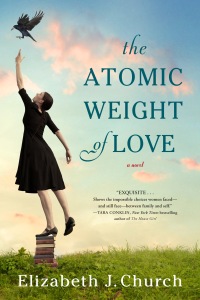 The Atomic Weight of Love by Elizabeth J. Church
Meridian (Meri), a young biology student at the University of Chicago, marries her much older professor, Alden, and gives up her own dreams of becoming an ornithologist when her husband is sent to Los Alamos to help develop the atomic bomb. This lovely novel of love, sacrifice, and societal change spans 30 years in Meri and Alden’s flawed marriage. This would be a perfect book club selection — beautiful writing and plenty of issues to discuss.
The Summer Before the War by Helen Simonson
Simonson, author of Major Pettigrew’s Last Stand, brings us a kinder, gentler World War I book than most. The story centers on Beatrice Nash, a young Latin teacher who arrives in the small village of Rye during the summer of 1914. Determined to make her own way after the death of her beloved father, Beatrice is thwarted by the sexist mores of the times. She befriends a local family, the Kents, whose nephews — each for his own complicated reasons — volunteer to serve in France soon after war is declared. Warning: you may shed a tear or two at the end of this lovely, charming book, which is a perfect choice for fans of Downton Abbey.
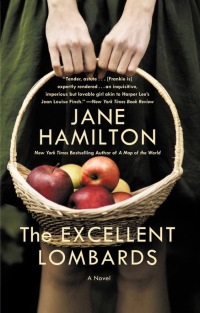 The Excellent Lombards by Jane Hamilton (coming in paperback on April 4)
Jane Hamilton is one of my very favorite authors, and it’s been seven years since her last novel. The Excellent Lombards is well worth the wait. It’s a jewel. The story, like so many others I’ve read recently, is about a young person growing up and finding her place in the world. Mary Frances Lombard (“Frankie”) enters a grade school geography bee, learning from her teacher that “‘everything about the place where you live determines Who You Are’”.
A Mother’s Reckoning: Living in the Aftermath of Tragedy by Sue Klebold
The question that everyone asked after the Columbine tragedy, Where were their parents?, is partially answered in this painfully honest memoir by the mother of one of the two killers.
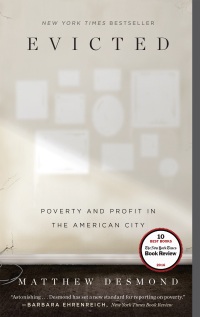 Evicted: Poverty and Profit in the American City by Matthew Desmond
Desmond, a sociologist, has written a work of nonfiction that reads like the most compelling novel you can imagine. Evicted is reminiscent of Behind the Beautiful Forevers, Random Family, and There Are No Children Here. He follows eight Milwaukee families struggling to find and keep safe and affordable housing, along with the property owners who control their fates.
Lit Up: One Reporter. Three Schools. 24 Books Tht Can Change Lives by David Denby
Denby, film critic for the New Yorker for many years, wanted to learn how schools can foster the love of reading in screen-addicted teenagers. His account of the time he spent observing dedicated teachers fighting this uphill battle kept me reading late at night.
 The Underdogs: Children, Dogs, and the Power of Unconditional Love by Melissa Faye Greene
Melissa Fay Greene ( author of Praying for Sheetrock and There Is No Me Without You, among others) is one of my favorite nonfiction writers. The Underdogs tells the story of Karen Shirk, founder of the service dog academy 4 Paws for Ability. Karen trained her own service dog after she became profoundly disabled and was rejected by every service dog agency she approached. I was riveted by Karen’s story, and the stories of the amazing dogs she trains who are able to help people in ways that humans cannot.
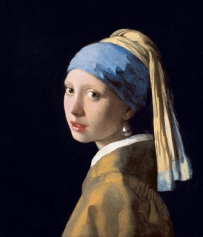 In a
In a 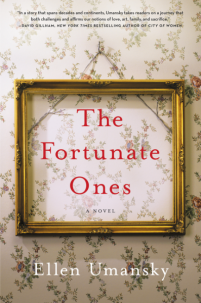 The Fortunate Ones by Ellen Umansky
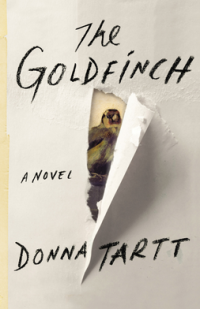 The Goldfinch by Donna Tartt (winner of the Pulitzer Prize in 2014)
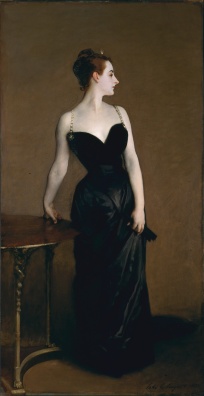 I Am Madame X by Gioia Diliberto
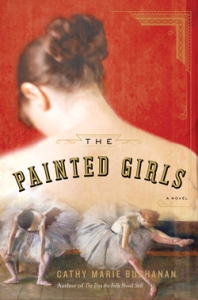 The Painted Girls by Cathy Marie Buchanan
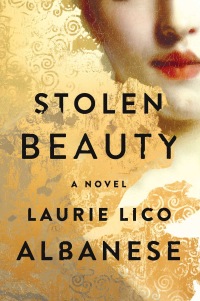 I’ve just started reading Stolen Beauty by Laurie Lico Albanese, about Gustav Klimt and Adele Bloch-Bauer, the “woman in gold” who is the subject of two of his most famous paintings. So far, so good — and my husband highly recommends Anne-Marie O’Connor’s nonfiction account, The Lady in Gold: The Extraordinary Tale of Gustav Klimt’s Masterpiece, Portrait of Adele Bloch-Bauer.
 This is a girl who has lived through broken dreams and promises. Still lives. Will always live on that hillside, at the center of a world that unfolds all the way to the edges of the canvas.
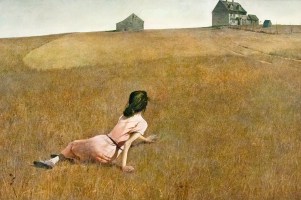 Over the years, the artist and his subject develop a close and trusting relationship. Christina, a bitter woman whose life has brought her many disappointments, is difficult for most people to like. She rejects the kind, if awkward, attempts of neighbors to befriend and help her. But she and Andy are kindred spirits, in a way:
 When Christina first meets Andrew Wyeth, he’s introduced as N.C. Wyeth’s son: “‘You know N.C. Wyeth. The famous illustrator? Treasure Island?'” Robert Louis Stevenson’s classic adventure novel stands in contrast to the story of Christina’s life, in which a trip to Boston is an exciting experience. Al, who longed to make a living on the sea and whose forebears traveled the world on sailing ships, read Treasure Island a dozen times — “Might be the only book I ever actually finished, now that I think about it,” he says.
 The beach is not a place to work; to read, write or to think . . . too warm, too damp, too soft for any real mental discipline or sharp flights of spirit.
 Most popular book:
 One of my all-time favorite nonfiction books:
 Best Jodi Picoult novel in a long time, if you can ignore the preachy message:
 Great book for book clubs:
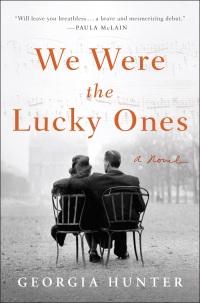 And what did I read? My favorites were A Piece of the World by Christina Baker Kline (complete review coming next week) and We Were the Lucky Ones by Georgia Hunter. Hunter’s debut novel is the heart-wrenching story of an extended Polish family (five grown siblings, their parents, and spouses) who are separated during World War II. Miraculously, all survive after years of unspeakable suffering. The novel is based on the experiences of the author’s family, and is a tribute to their courage — and luck.
 Books on the Table