10 War Novels for Memorial Day

Not only are they commemorated by columns and inscriptions, but there dwells also an unwritten memorial of them, graven not on stone but in the hearts of men.
Pericles, Funeral Oration ( delivered in Athens 2500 years ago and a source of inspiration for Abraham Lincoln’s Gettysburg Address)

Memorial Day is almost over, and I’m finally getting to my Monday blog post — so this will be short.  (I guess I should have written it ahead of time!) I’ve just returned from my son Charlie’s college graduation. He’s now on a cross-country road trip, starting in Ithaca, New York and ending in San Francisco. His first stop was Gettysburg, where he saw as much of the battlefield and monuments as he could until the sun set. To coin Lincoln’s phrase, it seems “altogether fitting and proper” that Charlie visited Gettysburg on the day that has been set aside to honor those who died while serving in our armed forces.

Michael Shaara’s Pulitzer Prize winning novel about the Battle of Gettysburg, The Killer Angels, is a modern classic. I have to admit I’ve never read it, but my husband (a true Civil War buff) says it’s well worth reading. My list of favorite war novels includes books about the Civil War, and World Wars I and II as well:

coverCorelli’s Mandolin  (Louis deBernieres) There’s just a touch of magical realism in this lovely novel about a Greek island that’s occupied by the Italian army during World War II.

City of Thieves  (David Benioff) During the siege of Leningrad, two Russians must carry out an impossible task — or face execution.

Restless  (William Boyd) An English woman learns that her mother is a White Russian who was recruited by the British as a spy. From the New York Times: “Boyd has written a crackling spy thriller, but more than that, he has evoked the atmosphere of wartime espionage: the clubby, grubby moral accommodations, the paranoia . . .”

The Absolutist (John Boyne ) From Publishers Weekly: “In this relentlessly tragic yet beautifully crafted novel, Boyne documents the lives of two inseparable men navigating the trenches of WWI and the ramifications of a taboo involvement.”6d2d32a98c258c6c1a7b112eda9968b9

Birdsong (Sebastian Faulks) A young Englishman falls in love with a married French woman during a business trip to France in 1910; they meet again, during World War I. I read this for the first time about 15 years ago, and have never forgotten the vivid scenes of trench warfare, or the love story.

The Widow of the South (Robert Hicks) Based on the true story of Carrie McGavock, who tended the graves of the 1,500 soldiers buried on her family’s land. We visited the actual site in Franklin, Tennessee last fall.

A Very Long Engagement (Sebastian Japrisot) A French woman who doesn’t believe her fiancé was killed in the First World War embarks on an investigation and discovers the corrupt system the French government used to deal with soldiers who tried to avoid combat.

Gone With the Wind  (Margaret Mitchell) I don’t know how many times I read this book as a teenager, but my old paperback copy is falling apart. I can even remember the first sentence, without looking: “Scarlett O’Hara was not beautiful, but men seldom realized it when caught by her charm as the Tarleton twins were.”

cover-1The Invisible Bridge  (Julie Orringer) The best World War II novel I’ve read in the past few years.  From the Chicago Tribune: “Set largely in Hungary, with Paris, the city of light, serving as a kind of Byzantium for several characters who spend hopeful, youthful years there in the opening chapters of the novel, The Invisible Bridge is a tale of war-torn lovers, family and survival of the luckiest rather than the fittest.”

The Caine Mutiny (Herman Wouk) An old favorite, The Caine Mutiny takes place on a Navy warship in the Pacific. I’ve loved all of Herman Wouk’s books — The Winds of War, War and Remembrance, and two wonderful (and unappreciated) coming-of-age stories — Marjorie Morningstar and City Boy. (No, they’re not war novels, but since I’m touting Herman Wouk I have to mention them!)

I’ve read very little fiction about the more recent wars. On my list are Matterhorn by Karl Marantes  (Vietnam), The Yellow Birds by Kevin Powers (Iraq), and Redeployment (Iraq and Afghanistan). I read Sparta by Roxana Robinson, about Conrad, a young veteran returning from Iraq who has difficulty readjusting to civilian life. Conrad is a classics major at Williams College from an upper-middle class (and decidedly unmilitary family) from suburban New York City. When he comes home suffering from PTSD, his family is too bewildered to offer any meaningful help. The book was insightful in many ways, but I couldn’t fathom the idea that a family like Conrad’s would abandon him to the bureaucracy of the VA.

Our next national holiday is July 4. I plan to read a contemporary war novel by then and let you know what I think. If you have any other suggestions, I’d love to hear them.

Charlie at Gettysburg, May 26, 2014


The Supreme Macaroni Company — Book Review

9780062136596Every once in a while, I’m in the mood for a fun escape novel. When that mood strikes, I want to read something clever, entertaining, and well-written, with a touch of humor. Sometimes I need the reading version of comfort food — macaroni and cheese, anyone? Adriana Trigiani’s novels are perfect “comfort reading” — they’re warm and substantial.

Trigiani grew up in a large Italian family in Big Stone Gap, Virginia. A theater major in college, she spent 15 years as a playwright, comedy troupe actress, TV writer/producer (writing several episodes for the Cosby Show), and documentary filmmaker before turning to fiction writing.  Her first novel, Big Stone Gap, the first in a series set in her hometown, started out as a screenplay. The movie version (written and directed by Trigiani and starring Ashley Judd) has just been filmed and is due for release this year.)

The Supreme Macaroni Company — which has almost nothing to do with a macaroni company — is the third in a series about shoe designer Valentine Roncalli and her family. (Trigiani has also written stand-alone novels and a memoir.) I’ve read almost all of Trigiani’s books, and every one is a delight. Don’t worry about reading them in order; you’ll enjoy your introduction to Trigiani’s wonderful characters wherever you start, and Trigiani skillfully weaves the background information into each story.

At the heart of The Supreme Macaroni Company is a love story. The book opens on Christmas Eve on the roof of the Angelini Shoe Company, where Valentine becomes engaged to Gianluca Vechiarelli (her grandmother’s stepson). Valentine loves Gianluca, but she also loves her family’s shoe company. Her workaholic tendencies will later put a strain on her new marriage, but for now she is full of optimism about their future:

A shoemaker would marry a tanner.
This could work.
Shoemakers and tanners form a symbiotic relationship out of necessity. One provides the leather while the other whips it into a glorious creation. At Vechiarelli & Son in Arezzo, Gianluca creates some of the most sumptuous leather, calfskin, and suede in Italy . . . For over a century, there has been and remains a shorthand between our families’ shops. The Angelini Shoe Company in Greenwich Village has proudly used Vechiarelli & Son’s goods for generations.

Valentine and Gianluca marry on Valentine’s Day, in the wedding her mother has always dreamed of — starting with “proper invitations”:

Years from now, you’ll want a permanent record of your wedding. An invitation is the bride’s Dead Sea scroll at the bottom of her hope chest . . . I’ll have the invitations printed up. You don’t even have to look at them. When Chrissy Pipino got married, she had a fold-out card with a tissue, and if you remember, it was gold-leafed. She even had a pop-up angel. You yanked a satin ribbon and the little cherub went over and down like a windshield wiper. We don’t have time for a pop-up, but we will have our version of Caravaggio angels.

Valentine’s mother, like  almost every character in this novel, is funny and lovable. Curmudgeonly Aunt Feen — who is truly heinous — is a comic foil, highlighting the essential goodness of the other family members. (Aunt Feen has a bit of a drinking problem: “She was having another Bailey’s on the rocks, and she was about to hit them hard like an old dinghy.”)  It’s a pleasure, every now and then, to read about people who are honest and well-meaning. They have flaws and make mistakes,to be sure, but they are decent people — people with big hearts, quick wits, and humor. I can’t tell you how many times I laughed out loud while reading this book. (I also cried, just a little, but I won’t tell you any more about that.)

Consider the reaction of Valentine’s family when they learn that the appointed priest will not be able to officiate at the wedding:

When my mother returned, she had a look of panic on her face, which she tried to mask with a smile so broad it reminded me of the sample choppers dentists use to demonstrate proper flossing. “Val, we thought we had Father Drake.”
“Who do we have?”
“Father Nikako.”
“What happened to Father Drake?” Tess asked.
“He’s giving last rites at Queens County Hospital,” Mom explained.
“There’s a full-time job for you,” Aunt Feen piped up. “You better be bleeding like an animal when you go over there, otherwise you got a nine-hour wait. I saw a man holding his liver over there when I went for my flu shot . . . But Nikako? Jesus. I can’t understand a word he says.”
“He’s from Nigeria,” Mom snapped.

It’s easy to see that Trigiani has a background in TV sitcom writing! But she also writes lovely prose, equally at home describing the beauty of the Hudson River at night, the otherworldly appeal of New Orleans, and the struggle within Valentine between love and work.

Our bookstore has been fortunate enough to host Adriana Trigiani for several events. Before one of her appearances, Trigiani’s publicist warned us that “one thing about Adriana is that she will keep talking until someone stops her so if there is some kind of time limit just let her know beforehand and then politely give her a signal when it’s time to wrap up.” Well, I don’t think anyone wanted her stop talking. However, it’s probably time for me to stop writing. If you, like me, need a break from war, murder, psychopaths, and devastating family tragedies, I recommend The Supreme Macaroni Company. You’ll learn something about the shoemaking business to boot. (Sorry, I couldn’t help myself.)

For further reading:

Interview with Adriana Trigiani

Feature article about Adriana Trigiani’s Greenwich Village home

I read this book as part of a blog tour. To visit more stops on the blog tour, click here:

tlc logo


We Were Liars — Book Review

coverTime shall unfold what plighted cunning hides,
Who covers faults at last with shame derides.
Cordelia, to her lying sisters in King Lear

If E. Lockhart’s remarkable new novel, We Were Liars, is typical of its genre, I might become a YA convert. Actually, I dislike the term “genre” when it comes to reading. When Gillian Flynn was asked by a New York Times interviewer, “Do you have a favorite genre? Any literary guilty pleasures?”, she said:

I read all kinds of novels, as long as they’re good. I get a bit piqued when people say, “I don’t really like that kind of book. It’s akin to marking yourself as proudly poorly read. I like westerns, fantasy, sci-fi, graphic novels, thrillers, and I try to avoid the word “genre” altogether. A good book is a good book. And as far as guilty pleasures, I don’t ever feel guilt if I’m enjoying reading something.

I certainly didn’t feel any guilt when I was reading We Were Liars. I knew from the first page that I was reading something extraordinary. Lockhart’s writing is lovely — simple and poetic, with dialogue worthy of a screenplay. The voice of the narrator, teenager Cadence Sinclair Eastman, is completely authentic. Cady’s story takes place on her grandfather’s private island off the coast of Massachusetts, where she spends every summer with her extended family. The island setting is important to the plot, but even more crucial to the otherworldly atmosphere of the novel. Everything that happens in the book seems to take place in an almost magical realm, with little connection to the outside world.

Cady introduces herself as the “eldest Sinclair grandchild. Heiress to the island, the fortune, and the expectations.” Her mother is one of three daughters:

yhst-137970348157658_2313_1375965663Granddad’s only failure was that he never had a son, but no matter. The Sinclair daughters were sunburnt and blessed. Tall, merry, and rich, those girls were like princesses in a fairy tale. They were known throughout Boston, Harvard Yard, and Martha’s Vineyard for their cashmere cardigans and grand parties. They were made for legends. Made for princes and Ivy League schools, ivory statues and majestic houses.

The island has always been a refuge for Cady, but one summer (“summer fifteen”, she calls it), something traumatic happens to her there; something she can’t seem to remember. Now,  more than two years later, she is suffering from “selective amnesia” and  “migraine headaches caused by traumatic brain injury” and trying to piece together the events of “summer fifteen”.  She recalls the beloved fairy tales of her childhood: “So many have the same premise: once upon a time, there were three . . . I have time on my hands, so let me tell you a story. A variation, I am saying, of a story you have heard before.”

9780140714760MThe story she tells — interwoven with pieces of her own story — is “Meat Loves Salt”, the tale of a farmer with three daughters who rejects his youngest daughter because he doesn’t understand her love and her honesty.  A Publishers Weekly interview with Lockhart points out that “Shakespeare liked this one too; it’s the same tale thought to have inspired King Lear.” (It’s worth noting that when Cady starts giving away her possessions, one of the first things she donates is a copy of King Lear.) Lockhart says “as a child, I was captivated by these beautifully illustrated collections my mother owned . . . Fairy tales have been a preoccupation of mine for a very long time, and for a long time I wanted to write a contemporary story with a fairy-tale structure so I could unpack some of what I had spent so much time thinking about.”

After I finished We Were Liars, I spent a lot of time thinking about it. I wondered about the significance of the title. The “liars” of the title are Cady, her cousins Johnny and Mirren, and Gat, a family friend: “The family calls us four the Liars, and probably we deserve it. We are all nearly the same age, and we all have birthdays in the fall. Most years on the island, we’ve been trouble.”  But the irony is that the adults in the family are the real liars, as Cady (and the reader) gradually discover. Their lies are numerous and their reasons for lying are complicated.  Cady, evoking King Lear’s honest daughter, Cordelia, is the only person who is trying to learn the truth about herself and her family. Her father left the family because “he couldn’t smile, couldn’t lie, couldn’t be part of that beautiful family in those beautiful houses.”

I deliberately haven’t talked much about the plot of We Were Liars. In the letter that came with the ARC, the publisher said:

It’s not often that I write a letter asking a reader to do this, but please trust me. I won’t tell you the plot of this book. It is better for you to just read it. We Were Liars is a dazzler. It’s suspenseful, literary, and romantic . . . You don’t need to know more. More would spoil it . .  Whatever you do, don’t spoil it for the people who haven’t read it yet. And if anyone asks you how it ends, just LIE.

Marketing hype? Maybe. Still, I won’t ruin it for you by telling you any more.  I’ll echo the publisher and ask you to trust me. And I’m not a liar.

For more reading:

An Adult YA Addict Comes Clean (New York magazine)

Why I Read Young Adult Literature (Book Riot website)

Review of We Were Liars (New York Times)

Interview with E. Lockhart (Publishers Weekly)


10 Books for “Carnivorous” Readers

Is anyone else really, really tired of the term “curated”? To quote from the Chowhound website: “You curate a museum, or perhaps an art collection for a billionaire”. I agree — restaurants don’t “curate” wine lists, and book reviewers don’t “curate” lists of books. I promise never to use that annoying word in this blog! What I will do is present a list of books that my oldest son liked a lot. Today is David’s 27th birthday, so of course I bought him a book. (I also bought him a plane ticket, but he’ll need something to read on the plane, right?) I started thinking about David’s evolution as a reader, from Richard Scarry’s Cars and Trucks and Things That Go, to the DK Eyewitness Pond and River LIfe, to Rick Reilly’s Who’s Your Caddy?.

To make a silly analogy to the animal kingdom, readers can be divided into three categories: herbivores (fiction readers), carnivores (nonfiction readers), and omnivores (people who read anything). David, like so many of his gender, is a carnivore. Even as a young child, he preferred the fact-oriented series The Magic Schoolbus to its fictional cousin, the Magic Tree House series. (Although he loved Jon Scieszka’s  books about the Time Warp Trio — it must have been the humor. I’ve found, as a bookseller and a parent, that if a book is funny a little boy will like it.)

coverSo is it any surprise that a book David recently enjoyed, and recommends to other carnivores, is called Meat Eater? It’s written by journalist Steven Rinella, also the author of American Buffalo: A Lost Icon. But don’t take David’s word for it. Here’s what the New York Times and Wall Street Journal had to say about the book:

The stories in Meat Eater are full of empathy and intelligence….In some sections of the book, the author’s prose is so engrossing, so riveting, that it matches, punch for punch, the best sports writing. When Mr. Rinella wades into the surging Grand River, to throw a fly for steelheads, the story moves as well as Tom Callahan writing about Johnny Unitas in the 1958 championship or Bill Nack writing about Secretariat. — Wall Street Journal

Truth be told, I have lived a life plenty comfortable with my disdain toward hunters and hunting. And then along comes Steven Rinella and his revelatory memoir Meat Eater to ruin everything. Unless you count the eternal pursuit of the unmetered parking space, I am not a hunter. I am, however, on a constant quest for good writing. . . This is survival of the most literate. —New York Times

If you’re a carnivore, or know someone who is, here are a few other suggestions from David’s library (both his childhood library and his current bookshelves):

Harris and Me (Gary Paulsen)
All Paulsen’s books are wonderful, but this one is special. It’s about a city boy who spends the summer on his cousin’s farm. There are many hilarious incidents, with just the right amount of crude humor to appeal to grade school age boys. It’s fiction — as are many of Paulsen’s other books (including the Hatchet series) — but still good for carnivores.

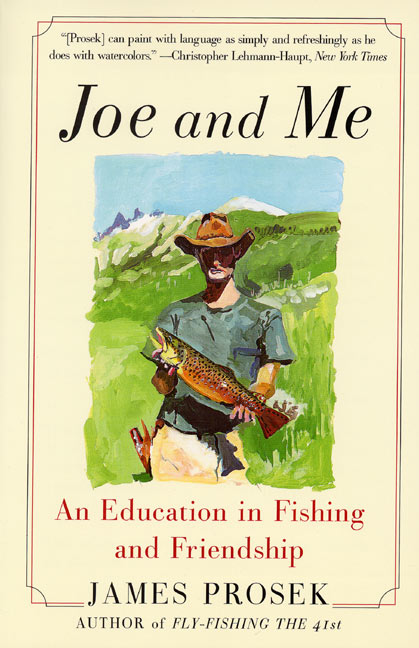
9780060537845Joe and Me: An Education in Fishing and Friendship  (James Prosek)
A coming of age story about a teenage boy who runs afoul of the local fish and game warden. David’s copy looks like it’s been read a few times. Prosek has written many other terrific books about fly fishing, but this is the only one for YA readers.

Who’s Your Caddy?: Looping for the Great, Near Great, and Reprobates of Golf (Rick Reilly)
I think I enjoyed this book as much as David did, and I don’t even follow golf. Reilly has to be a great writer if he can get me to read a golf book. I started reading it because I was slightly worried about the content, and then got hooked. (Looking back, I can’t believe I was worried about what a sophomore in high school was reading. Can you tell David is my oldest?)

Into Thin Air: A Personal Account of the Mount Everest Disaster (Jon Krakauer)
A classic adventure story about an ill-fated ascent of Mount Everest in 1996. Krakauer’s Into the Wild is excellent as well.

The Psychopath Test: A Journey Through the Madness Industry (Jon Ronson)
Our whole family passed this book around on vacation a couple of summers ago — it’s fascinating!  What a relief it was to find that none of us is a psychopath.

Methland: The Death and Life of an American Small Town (Nick Reding)
Journalist Reding spent four years in a small town in Oelwein, Iowa, examining the effects of the meth epidemic on that town and similar towns all over the Midwest. My daughter and I couldn’t put this book down either.

9780393081817_300Boomerang: Travels in the New Third World (Michael Lewis)
It seems that Michael Lewis can do no wrong — his books, starting with Liar’s Poker (another favorite of David’s) — are uniformly excellent, transforming complicated economics into entertaining and informative narratives.

No Easy Day: A Firsthand Account of the Mission That Killed Osama Bin Laden (Mark Owen)
The movie Zero Dark Thirty tells a little bit of the story; this book, written by a Navy SEAL,  provides all the details. Apparently the author (who used a pseudonym) was criticized for revealing secrets without clearance from the government.

An American Caddie in St. Andrews: Growing Up, Girls, and Looping on the Old Course (Oliver Horovitz)
An American teenager spends a “gap year” in Scotland as a caddy at the world’s most famous golf course — and returns to work there year after year, even after college graduation.

Guess where we are going to celebrate David’s birthday tonight? A hot new barbecue restaurant in Chicago — Green Street Smoked Meats*. And I hope he likes the book I’m giving him: The Price of Silence: The Duke Lacrosse Scandal, the Power of the Elite, and the Corruption of Our Great Universities, by Bill Cohan. It just got a rave review in the New York Times.

*Thank you, Gina, for organizing!


Fallout — Book Review (and Giveaway!)

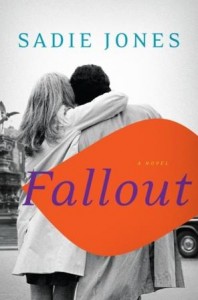
FalloutI will read fiction about almost any topic, as long as the story, the characters, and the writing engage me. Certain topics are shoo-ins — I can’t resist books about boarding schools and colleges; I’m fascinated by novels that have a medical angle; and I gravitate towards fiction about World Wars I and II. Other subjects don’t intrigue me in the least, but that doesn’t stop me from reading about them. I can’t think of a subject I’m less interested in than college baseball, but I absolutely loved Chad Harbach’s The Art of Fielding. Because, of course, The Art of Fielding isn’t “about” baseball. Westish College baseball is the vehicle Harbach uses to develop the relationships among his characters. Similarly, Maggie Shipstead’s Astonish Me is “about” professional ballet — but what engaged me was the story of the characters’ struggles to come to terms with their limitations. Learning a little bit about ballet was a bonus.

I’m an avid theatergoer, so it was with high hopes that I picked up Fallout, by Sadie Jones. The novel is set in England during the 1960s and 1970s, focusing on four young people struggling to make it in the world of theater: Luke, a playwright, Paul, a producer, Leigh, a stage manager, and Nina, an actress. Love triangles ensue — Luke, Paul, and Leigh; Luke, Nina, and Tony, an older theater producer. Clandestine love affairs destroy long friendships and working collaborations. The novel is painstakingly constructed, unfolding at a steady pace and returning always to Luke, the protagonist.

Luke is the son of an alcoholic and neglectful father and a mentally ill mother who has been hospitalized during most of his childhood. He has an artist’s sensibility from an early age, with intellectual curiosity and an intense drive to succeed. He writes journal entries, poems, and plays (before he has ever seen one performed on stage):

He read anything, everything, and then his Shakespeare again. And again . . . He watched all the plays on the BBC, wrote down the names of the playwrights and transposed the dialogue in a high-speed scrawl, not looking at the page . . . The life inside him was tearing him up; writing himself inside out in lined-paper notebooks, rushing and looking and working and moving but knowing all the time that he was just staying still.

The reader knows from the prologue that Luke will become a success. What the reader doesn’t know is how he achieves his success, and the fates of his friends and lovers. The most interesting parts of the book, for me, were about Luke as a creator of plays and about the experience of being part of a theatrical production. Jones beautifully describes Nina’s reaction to seeing the audience respond to Luke’s first hit play:

And then the first laugh; a scattered, surprised sort of laugh, moving from the front of the audience to the back as if it were asking permission, and not quite reaching them. She looked at Luke again. He had dug his face further into his hands, hunched down in his seat. Then there was another laugh — this one quick and shocked — quite loud and from the whole theatre together. It was as if the audience had decided as one how they felt, from then on there was a batting back and forth between the actors and the watchers, like percussion; beat, line, laugh, line, laugh, beat and the play came to life.

Luke’s plays come to life in Fallout, but the characters never really came alive for me — especially Paul and Leigh. In one scene, Leigh protests against the misogyny she perceives in a play produced by Tony (and starring Nina), but, disappointingly, her character becomes little more than a love interest until much later in the book.  Luke is certainly the most well-developed character, but I never warmed up to him. Nina, the damaged product of a manipulative stage mother, shows promise as a well-rounded character but ends up as a stereotypical victim who can’t accept that she deserves happiness. Tony, her cruel and abusive husband, is a villain with no redeeming qualities except the love of theater: “Luke saw that they loved theatre, and cared for the plays and helpless as he was in his hatred of Tony as Nina’s jailor he could not help but admire his incisive mind. He had a rare talent; he knew what worked.”

There’s a certain grim humorlessness in this novel; I found myself wishing for some comic relief. I recall reading somewhere that no one in a Chekhov play is ever happy, and this book reminded me a bit of a Chekhov play. (There’s even an aspiring actress named Nina in Chekhov’s The Seagull.) The tone of the book surprised me; it’s very different from Jones’s last book, The Uninvited Guests, a clever comedy of manners that takes place in an Edwardian country house. The Uninvited Guests is filled with black humor, and the pace moves briskly. I applaud Jones for trying something different and perhaps more ambitious with Fallout. I haven’t read her first two books yet — The Outcast and Small Wars, both set in the 1950s and both very well-received.

Sadie JonesSadie Jones, the daughter of an actress and a writer, worked as an unsuccessful screenwriter for 15 years before becoming a novelist. Her debut novel,  The Outcast, won the prestigious Costa Award for a first novel in 2008. What kept her going, she told the London Telegraph, were “tales of writers such as Mary Wesley and J.K. Rowling who became successful after years of struggle . . . Now it’s nice to be someone else’s hopeful story.”

Fallout received excellent reviews in two London newspapers, the Guardian (“Fallout: Sadie Jones at the Peak of Her Powers”) and the Independent (“a hugely enjoyable contribution to the backstage genre”).

The publisher, HarperCollins, has generously provided me with an extra copy of Fallout. If you’d like to receive it — along with a copy of The Uninvited Guests — please write a brief comment below about why you’d like to receive the books. I’ll pick a name out of the proverbial hat. U.S. entries only, please.

I read this book as part of a blog tour. To visit more stops on the tour, click here.

tlc logo


Essentialism: What Really Matters

coverBeware the barrenness of a busy life.
Socrates

Tell me, what is it you plan to do
With your one wild and precious life?
Mary Oliver

I’ve always been wary of books that claim they will “change your life”. Books certainly can change your life, but in my experience the books that have an enormous impact are books that sneak up on you. They aren’t commercially packaged to change your life, but somehow they do. They make you understand other people in a way you never did before. In her brilliant collection of essays, The Empathy Exams, Leslie Jamison says, “Empathy isn’t just something that happens to us . . . it’s also a choice we make: to pay attention, to extend ourselves.” Reading is one way we leave ourselves behind and consider life from another person’s point of view.

I believe that one of the main reasons to read — aside from pure enjoyment and escape — is to develop empathy — “to get inside another person’s state of heart or mind”, as Jamison says. And when we understand others, we understand ourselves better too. Books whose purpose is to help us understand and improve ourselves have always seemed a little simple-minded and self-indulgent to me.

So when I picked up Greg McKeown’s Essentialism: The Disciplined Pursuit of Less, I had low expectations. I imagined I’d scan it, as a courtesy to the publicist who sent it to me, and set it aside. Instead, I read it in one sitting, underlining and turning down pages as I read. The book resonated with me in a way that no business book ever has. (The book is categorized as “business & economics/personal success; it’s a toss-up whether to shelve it under Business or Self-Help.)

McKeown’s book shows us how to shape a life that is filled with meaningful activity. The book doesn’t advocate that we abandon our electronic devices, and it doesn’t provide tips for time management or organization.  It’s a philosophical guide to setting priorities in life. McKeown asks:

What if we stopped celebrating being busy as a measurement of importance? What if instead we celebrated how much time we had spent listening, pondering, meditating, and enjoying time with the most important people in our lives?

Appropriately for its topic, Essentialism is a short, concise book. It contains 20 brief chapters, each the length of a magazine article. Every chapter opens with a quotation that epitomizes the chapter; for example, the quote at the beginning of the chapter entitled “Escape: The Perks of Being Unavailable”, by Pablo Picasso, states “Without great solitude no serious work is possible.”

McKeown refers to the “Way of the Essentialist”, a phrase that grates on me because it sounds  New-Agey and pseudo-spiritual. But I do like his description of what the path to Essentialism is:

The way of the Essentialist is the relentless pursuit of less but better . . . it isn’t about setting New Year’s resolutions to say “no” more, or about pruning your in-box, or about mastering some new strategy in time management. It is about pausing constantly to ask, “Am I investing in the right activities?” There are far more activities and opportunities in the world than we have time and resources to invest in. And although many of them may be good, or even very good, the fact is that most are trivial and few are vital. The way of the Essentialist involves learning to tell the difference; learning to filter through all those options and selecting only those that are truly essential.

Throughout the book, McKeown uses concrete examples that illustrate how companies and individuals have successfully applied Essentialist principles:

  • Making trade-offs: Southwest Airlines cutting what were once considered essential services
  • Adhering to a mission statement: Johnson & Johnson reacting to the Tylenol tampering emergency
  • Depending on a routine: Michael Phelps’s training schedule
  • Discerning what really matters in a situation: Nora Ephron’s approach to journalism

If I’m starting to sound like an evangelist for Essentialism . . . well, maybe I am. I just bought five copies to give to my children and their significant others. Usually, I try very hard not to foist books on my family!

One of my favorite mantras in the book, which has  already been helpful to me in quite a few situations, is: “If it’s not a clear yes, it’s a clear no.” How many times have I said “yes” to something that I wasn’t completely enthusiastic about, and then regretted it later? Another little kernel of wisdom is: “If you don’t prioritize your life, someone else will.” That might seem obvious, but sometimes we need to be reminded of simple truths.


10 Favorite Boston Books

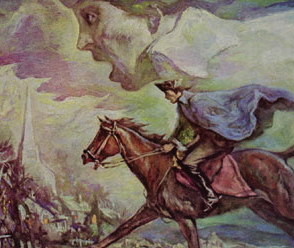
Image from the Paul Revere House.
Image from the Paul Revere Memorial Association.

I had a different post planned today, but this morning I remembered that it is Patriots’ Day (also known as “Marathon Monday”) in my birthplace, Massachusetts. Patriots’ Day commemorates the opening battle of the Revolutionary War — remember the opening lines of Henry Wadsworth Longfellow’s famous poem?

Listen my children and you shall hear
Of the midnight ride of Paul Revere,
On the eighteenth of April in Seventy-five;
Hardly a man is now alive
Who remembers that famous day and year.

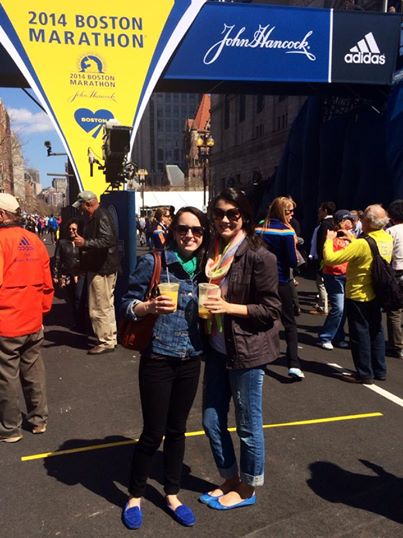
Massachusetts observes Patriots’ Day on the third Monday in April. It’s typically a festive day in Boston, with battle reenactments, the Red Sox playing at home, and of course, the marathon. Last year, Patriots’ Day fell on April 15. It was a busy day for me — we were cohosting Chris Bohjalian at a nearby library for the paperback release of his spectacular novel about Armenian genocide, The Sandcastle Girls, and I had to file my taxes. So I had no idea what my daughter, who lives in Boston, was talking about that afternoon when I finally saw her texts: “Don’t worry, I’m fine!”; “Ran all the way home and staying inside”; “Call me!” I knew that her office was closed for the day and she was planning on watching the marathon. I finally reached her and found that she and her friends were in a bar near the finish line when the bombs went off. They didn’t know what had happened, and simply headed for safety as quickly as possible. Today, she and her friends are cheering for the 36,000 runners from all over the world whose participation in the marathon is a tribute to last year’s bombing victims.

The only marathon I can imagine participating in is a reading marathon. (Just in case you’re interested, there’s one planned next weekend — Dewey’s Read-a-Thon.) In honor of the Boston Marathon, I’d like to share a list of my favorite books set in and around Boston.

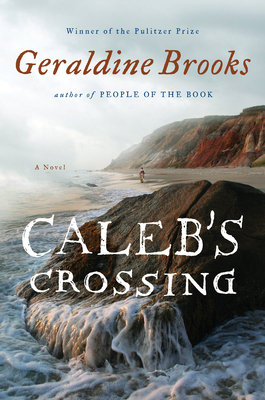
9780670021048HCaleb’s Crossing (Geraldine Brooks)
Brooks (also the author of March, the story of the absent father in Little Women, among other historical novels) brings to life the story of Caleb Cheeshahteaumauk,  the first Native American graduate of Harvard.

Townie (Andre Dubus III)
Growing up in tough neighborhoods north of Boston and largely abandoned by his famous father, Andre Dubus III learned the best way to protect himself was to throw the first punch. Over time, he transformed himself from a violent youth into an empathetic writer. Last year, Dubus was on a college trip to Boston with his daughter on the day of the marathon bombings. In a moving account written for Boston magazine, he refers to the “old rage” he felt when confronted with the tragedy that took place:

. . . For rage only brings more rage in return. So then what must we do? We must run again. And if we cannot run, we should walk or wheel ourselves, but we must go out in the street and begin training, each in our own way, for that Monday in April next year when one of the finest cities on earth opens her arms to all those who strive. And if my daughter decides to come to Boston in the fall, I will stand behind her completely, for she must continue to live her life with joy and gratitude and resolve. We all must. For this is a city that demands and deserves it, one I have always loved, but now, well, I love it more than ever before.

9780670015658HNorth of Boston (Elisabeth Elo)
Elo’s debut is a literary thriller featuring Pirio Kasparov, a hard-as-nails  Boston perfume executive who has the amazing ability to survive for long periods in very cold water. After the lobster boat she is on is rammed and sunk by a freighter, Pirio is convinced the tragedy was no accident.

The Heretic’s Daughter (Kathleen Kent)
Kent, a descendant of one of the accused Salem witches, mines her family’s history. The New York Times reviewer says:

Granted, the based-on-my-family-­history novelization is too often a product of a weekend writers’ workshop and the misplaced belief that the stories Grandpa told are immensely, immensely interesting. Maybe that’s just jealousy talking. Why couldn’t any of my ancestors have gotten themselves hanged as witches? But The Heretic’s Daughter overcomes this and several other obstacles . . . It is a powerful coming-of-age tale in which tragedy is trumped by an unsinkable faith in human nature.

I was born in Salem, and also (or so I’ve been told) am descended from an accused witch, so this book absolutely fascinated me. (I’m always careful to say “accused witchThey weren’t really witches, after all.

The Given Day (Dennis Lehane)
The Given Day takes place at the end of the First World War, culminating in the Boston police strike. It brings to mind E.L. Doctorow’s Ragtime, with celebrities and politicians of the time (Babe Ruth, Calvin Coolidge, Eugene O’Neill) mixing with the novel’s fictional characters.  The sequel to The Given Day, Live by Night, is set in Prohibition-era Boston, and is being made into a movie (produced by Ben Affleck) for 2015 release. Lehane’s mysteries are excellent as well, particularly Mystic River and Gone, Baby, Gone. Lehane published an article in the New York Times the day after the 2013 marathon, entitled “Messing With the Wrong City”:

But I do love this city. I love its atrocious accent, its inferiority complex in terms of New York, its nut-job drivers, the insane logic of its street system . . . Bostonians don’t love easy things, they love hard things — blizzards, the bleachers in Fenway Park, a good brawl over a contested parking space. Two different friends texted me the identical message yesterday: They messed with the wrong city.

All Souls: A Family Story from Southie (Michael Patrick MacDonald)
MacDonald grew up in a housing project in South Boston and lost four siblings to violence. The story of his survival reminds me of Angela’s Ashes.9780670451494H

Make Way for Ducklings (Robert McCloskey)
I had to include this classic picture book on the list. When my children were little, no trip to Boston was complete without a visit to the Public Garden to see the statue of Mrs. Mallard and her ducklings.

Run (Ann Patchett)
I love everything Ann Patchett has ever written. Run takes place over 24 hours in the life of Bernard Doyle, former mayor of Boston, and his two adopted sons, Teddy and Tip.

With or Without You (Domenica Ruta)
A good companion to Townie, Ruta’s memoir is, according to the New York Times, “a recovery memoir in which the most vivid character doesn’t recover”. That character is Ruta’s mother, a drug user and dealer — and a toxic mother. The Times article explores Ruta’s background:

In person Domenica, 33, is a lot like her book. She’s sharp, intense, funny in that darkly sarcastic way that working-class New Englanders so often are, and given to bursts of strong feeling. She now lives in Brooklyn, but last week she came back to Danvers, the town where she grew up. Turning off the highway, she suddenly said: “My heart always beats really fast right here. I don’t know why.” A few moments later she became ironic and added, “Welcome to the mean streets of Danvers, those hardscrabble streets.” In fact Danvers is an unfancy and mostly unremarkable North Shore suburb, whose greatest distinction is that in the 17th century it was where the Salem witches came from.

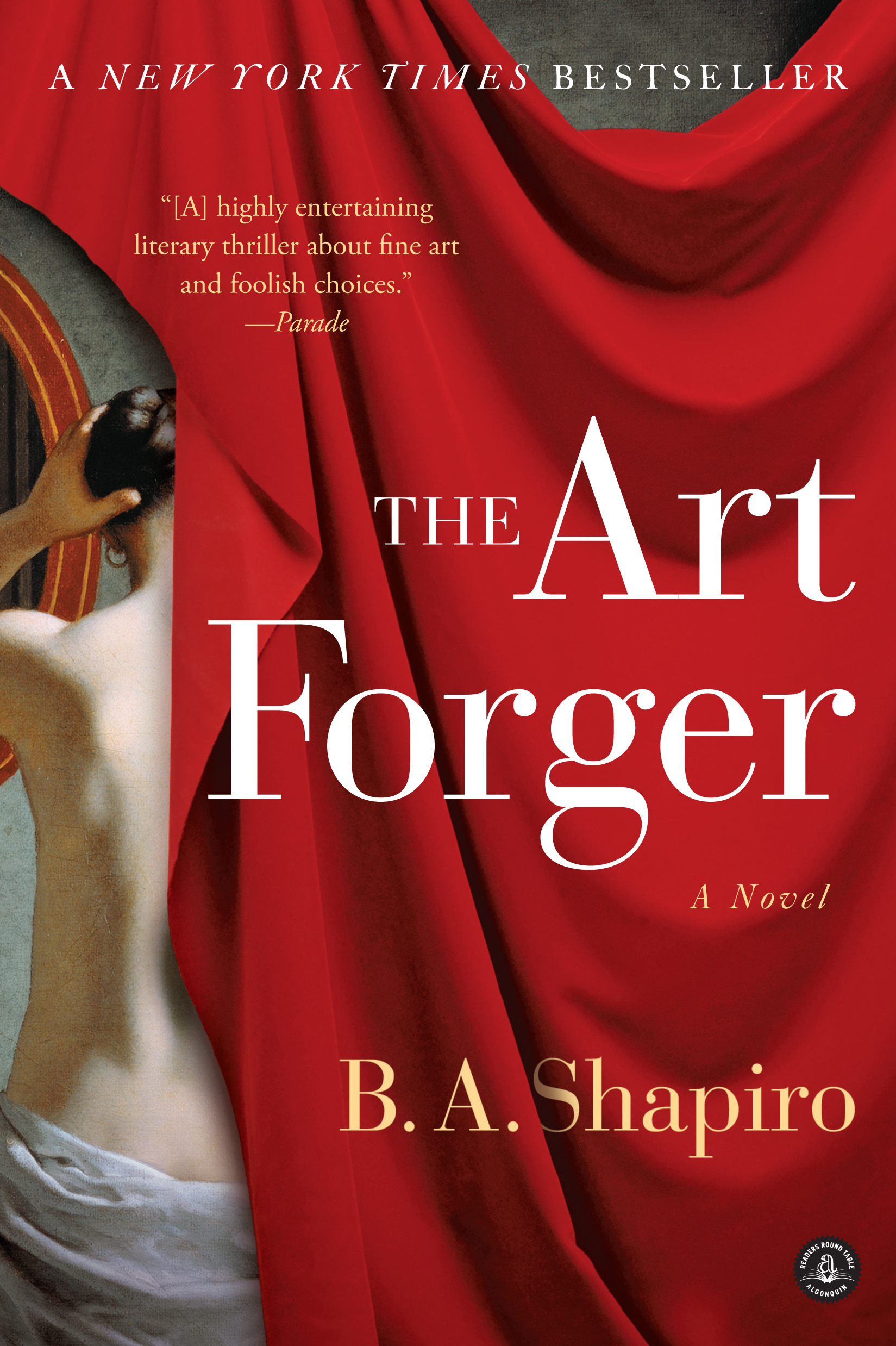
9781616203160The Art Forger (B.A. Shapiro)
In 1990, 13 paintings and drawings were stolen from the Isabella Stewart Gardner Museum. The crime has never been solved, and if you visit the museum today, you’ll see blank spaces on the walls where the works of art should hang. In Shapiro’s entertaining and enlightening novel, one of the paintings apparently resurfaces.

There are many mysteries set in Boston; probably the best known is Robert Parker’s Spenser series. Also popular are series by Linda Barnes, Hank Phillippi Ryan, and Tess Gerritsen. I’ve never read any of these, since I’m not a huge mystery fan, but maybe I should expand my horizons.


My daughter and a friend at the 2014 Boston Marathon.


Monday Match-Up: And the Dark Sacred Night & Three Junes

www.randomhouseI see skies of blue,
And clouds of white.
The bright blessed day,
The dark sacred night.
And I think to myself,
What a wonderful world.
“What a Wonderful World”, written by Bob Thiele and George David Weiss; originally recorded by Louis Armstrong

Julia Glass has been a heroine of mine ever since she arrived on the literary scene in 2002, with the publication of her debut novel, Three Junes. I hate to use the term “late in life”, but recognition of her talent has come later in life than it does for most published writers. Glass was 46 years old when she won the National Book Award for Three Junes — seven years older than Flannery O’Connor (one of my favorite literary heroines) was when she died. An article in New York magazine (“Cinderella Story”, January 2003) explores Glass’s unexpected success:

So it was a stunning upset in the literary world in late November when Glass won the writer’s equivalent of the Best Actor Oscar — the National Book Award for fiction — which she jubilantly dedicated in her acceptance speech to “late bloomers.”  . . . As novelist and awards judge Bob Shacochis puts it, “Three Junes is an anti-hip book, an anti-cool book. It was like choosing a 25-year-old single-malt whiskey.”

“Julia is incredibly brave,” says Deb Garrison, the Pantheon editor who bought the book and shepherded it through publication. “To be a first novelist in your forties, writing without a book contract and no steady income, to just say, ‘This is what I have to be doing.’ ”

“Julia Glass is an update on those wonderful writers from the nineteenth century that we admire so much, like Jane Austen and the Brontë sisters,” says Shacochis, who pored through almost 300 submissions for the book awards. “I couldn’t put it down because it had such emotional power.”

Glass’s new novel, And the Dark Sacred Night, is certainly a work of emotional power. The story centers on Kit Noonan, a middle-aged man my grandmother would have described as a “sad sack”. He’s an unemployed art historian with a specialty in Inuit art. Kit suffers from a lack of energy and purpose; he lost his academic job for failing to turn his manuscript in on time. His wife, Sandra, is convinced that his inertia is caused by an identity crisis. Kit was raised by a single mother, Daphne, who has steadfastly refused to give him any information about his birth father. Sandra sends Kit from his suburban New Jersey home to Vermont, where Kit’s ex-stepfather, Jasper, lives. Sandra believes that Jasper, who was married to Daphne during most of Kit’s childhood, knows the truth about Kit’s father.

coverIt doesn’t take the reader long to figure out who Kit’s father is, so I’m not giving anything away by revealing the fact that Kit’s father was Malachy Burns, who died of AIDS in Three Junes. Readers of Three Junes will recognize Malachy in the very first chapter, which takes place at the Vermont arts camp where Daphne and Malachy met as teenagers. Readers will also recall Malachy’s mother, Lucinda Burns. In an interview, Julia Glass says the character of Lucinda was the inspiration for And the Dark Sacred Night:

It grew initially out of my sudden yearning to revisit a character from Three Junes: Lucinda Burns, the mother of the music critic Malachy Burns. She’s a character I had a tough time getting right, but once I did (well, I hope I did!), I fell in love with her and was sad to leave her behind. Lucinda led me back to a teeny-tiny subplot of Three Junes involving a baby born to a 17-year-old single mother in the late 1960s. And the Dark Sacred Night is, in the smallest of nutshells, the story of that grown-up-baby’s search for his father. In a roundabout way, this new character gave me the way to delve deeper into Lucinda’s life. Inevitably, she led me back to Fenno McLeod, the character who seems to come back to me again and again, always just when I think I’ve sent him packing for good.

It’s easy to see why Glass is attached to her characters and revisits their lives. More than any other contemporary novelist I’ve read, she creates complex characters that seem real: imperfect, sometimes likable, sometimes annoying, but always interesting and fully textured. Even the minor characters in the novel — Jasper’s on-again, off-again girlfriend and employee, Loraina, and Lucinda’s overscheduled daughter, Christina, for example — are well-developed and have important roles to play. Glass also excels at capturing poignant moments in ordinary life. The scene in which Lucinda brings her husband, Zeke, home from the hospital after he’s suffered a stroke, is heartbreakingly and vividly rendered:

Christina helps her father out of the car while Lucinda wrestles with the walker, unfolding and locking its cheap metal wings. Each of the women holds onto one side while Zeke fumbles for a grip.

Even though she knows he’s stooping to keep his balance, to meet the demands of this crablike contraption, Zeke seems disturbingly smaller to Lucinda. He dozed on the half-hour drive from the rehab center, and now, still, he says nothing.

Once inside the front door he glances around. He spots the hospital bed. “Christ, it’s come to this,” he says. Though it sounds like, “Frise, come to fuss.”

Music is a thread that runs through the novel. Kit says he “cannot imagine a childhood without music”. Daphne is a classically trained cellist who once dreamed of a  career as a performer, now supporting herself as a music teacher, and Malachy was a flutist who came to be a well-known music critic. Both the opening and closing chapters of the book take place at the music camp where they met.  Music is a bridge to the past; at the concert at the end of the book, Daphne recalls, “‘There was a concert like this one when I was here.'” The novel takes its title from the Louis Armstrong song, “What a Wonderful World”. Fenno McLeod, an old friend of Malachy’s, recalls a discussion about the meaning of the song:

Do you know that song, “What a Wonderful World”? We hear it so often that it’s become about as moving as a beer jingle. But it’s beautiful . . . What I mean is that the past is like the night: dark yet sacred. It’s the time when most of us sleep, so we think of the day as the time we really live, the only time that matters, because the stuff we do by day somehow makes us who we are. But there is no day without night, no wakefulness without sleep, no present without past.

The characters in And the Dark Sacred Night are trying to make sense of the mysterious past and how it connects to the sometimes confusing present. Glass suggests that Kit’s lack of knowledge about his origins has almost paralyzed him. I wonder, though, if Kit’s inability to take charge of his life is really rooted in his fatherlessness, or if it’s simply his genetic makeup. The plot depends, to a certain extent, on the reader believing — as Sandra does — that Kit’s life will be transformed once he learns about his father. As much as I love the characters and the writing in the novel, I have trouble with this premise. I think Kit is a just a passive person by nature. Recalling his attempts to do first-hand research with Inuit artists, he says:

He did like driving though the wilderness, through the brief, bright flowering of the tundra . . . but when it came to striking up a conversation with the artists he met, asking them to talk about their work, he turned shy and formal. He learned little beyond what he needed to know. Kit had no clue how to ask the startling question that would yield the unexpected revelation.

And the Dark and Sacred Night isn’t really a sequel to Three Junes, but once you’ve read one, you will want to read the other, because the characters are so compelling. Fenno McLeod’s family — particularly his mother, a collie breeder in Scotland — will win your heart. (It’s interesting that Jasper Noonan is a dog breeder as well.)  I wonder if Julia Glass has sent her characters “packing for good”, or if we will see more of them in future novels?


The Point of No Return

Recently I returned an ill-conceived purchase to a large chain store. (OK, it was Target.) The cashier was polite to me, but I still felt uncomfortable about the whole transaction. She wanted to know the reason for the return; I’m sure the store keeps records and she had to ask that. I wasn’t sure what to say: “I thought I would look OK in this, but it was horribly unflattering?” “I didn’t want to try it on in your dressing room because last time I went in there the walls collapsed and I was lucky to escape without a fractured skull?” (Yes, that actually happened. The Target fitting rooms shouldn’t actually be called rooms. The whole setup is like a house of cards. I’m not sure how the walls stay up.)

c28cd382f5579f8fbc5790606933c652At Lake Forest Book Store, we don’t ask people why they’re returning something — although they sometimes feel duty-bound to tell us. Actually, we don’t get many returns. I don’t have the data, but I’d guess that other kinds of stores get many more returns than bookstores do. People probably think they’re going to read (or regift) that copy of The Luminaries someday. We are quite generous with our return policy. We don’t even require that the book was originally purchased at our store, as long as the customer just wants to exchange it for another book. Most people are pleasantly surprised at how accommodating we are. The most common reason people bring books back is that they’re duplicates. I often encourage customers to buy actual books as  gifts, rather than gift cards. “Think of the book as a more personal version of a gift card,” I say. “They can always bring it back.”

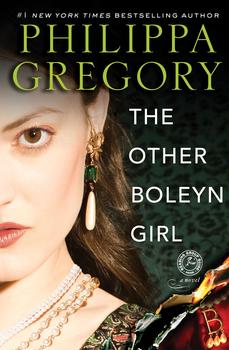
cvr9780743227445_9780743227445_lgMaybe I shouldn’t say “always”, because over the years some people have taken me quite literally:

  • An elderly woman returned a dog-eared copy of one of Philippa Gregory’s books, saying she found it “filthy”. Apparently she needed to read it very thoroughly to determine just how offensive it was. I wondered if she also asks for refunds on restaurant meals after she has eaten them.
  • A man brought back a copy of a travel guide to London, claiming he didn’t need it because his trip was canceled. I guess this cancellation happened after he circled restaurants, hotels, and sightseeing spots he planned to visit.
  • A woman returned the hardcover copy of Team of Rivals (publication date: 2005) in 2013, wanting to exchange it for the paperback edition.cvr9780684824901_9780684824901_lg
  • A customer lugged in two large shopping bags full of old, yellowed mass market paperbacks from the previous century, claiming they were all purchased from our store. When I pointed out that the public library down the street would accept them as donations, she asked if I would drop them off there on my way home from work.
  • People often return books they received as gifts, look around the store for a while, and then ask for a credit because there’s nothing they want to buy. “Not that there’s anything wrong with that,” as Jerry Seinfeld would say, but really? In the whole store, there isn’t ONE irresistible book? I will never understand that.
  • A mother returned a children’s paperback book ($3.99), announcing that it was much cheaper at Amazon ($3.59).
  • A very well-dressed woman brought in a pile of coffee table books (some recently published, some not so recently published), because she was “trying to reduce clutter” in her newly redecorated home.

These incidents, thank goodness, are few and far between. Now I have to head out to the local grocery store to return the strawberries I bought yesterday that are already moldy. Do you think they’ll replace them?

STL150

Monday Match-Up: Astonish Me & Frances and Bernard

cover

The intellect of man is forced to choose
Perfection of the life, or of the work,
And if it take the second must refuse
A heavenly mansion, raging in the dark.
When all that story’s finished, what’s the news?
In luck or out the toil has left its mark:
That old perplexity an empty purse,
Or the day’s vanity, the night’s remorse.
William Butler Yeats

On one level, Maggie Shipstead’s new novel, Astonish Me, is about professional ballet. It’s a fascinating glimpse into an unfamiliar world. Beginning in 1973, the story follows Joan Joyce, a member of the corps de ballet in a New York dance company, and her relationship with the company’s star, Arslan Rusakov, whom she has helped defect from the Soviet Union. Joan, unlike her roommate Elaine, never succeeds as a soloist and ends up marrying her childhood sweetheart and teaching ballet. She does, however, raise a son who becomes a tremendously talented dancer.

The story is interesting in its own right, with plenty of surprises, but what intrigued me most was the examination of the artistic life. Artists — whether they are dancers, or writers, or painters — are always striving for perfection. In a BookPage interview, Maggie Shipstead said:

But I think there’s a common experience among writers and dancers (and probably most artists) of what it’s like to spend all your time trying to do something that’s extremely difficult, something that requires a massive amount of practice and dedication and might give you a rush of satisfaction one day and then leave you feeling utterly defeated the next. It’s a precarious way to live.

Often, artists are forced to come to terms with their limitations — particularly in ballet, because of the extreme physical requirements. When Joan, who knows she will never achieve real success, becomes pregnant and retires from ballet, she feels she has escaped:  “For the first time she can remember, she is not afraid of failing, and the relief feels like joy”. She always has the lingering feeling, however, that the artist’s path is somehow superior to hers — a feeling that is shared by those close to her.

IMG_1538
Maggie Shipstead visits Lake Forest — August 2013

Her husband, Jacob, boasts to strangers about being married to a former  ballet dancer. Her art is an essential part of her, and he is saddened that she has given up on it: “For as long as he has known Joan, since they were almost children, she has lived a double life, as a dancer and as a civilian, and her retirement means that she has been reduced in some essential way.”  He thinks that Joan and their son, Harry, see him as  “uncool” and his job as an educator is “mundane”:

Sometimes he has an urge to remind them that he is the only one with a college degree, let alone a doctorate, that he knows things they don’t, but he resists. He doesn’t want to talk himself into thinking less of his family.

The novel explores the connection between artistic success and self-absorption. Arslan, probably the most fascinating character, is a narcissist. Harry is disdainful of dancers he views as less talented than he. Jacob wonders if egotism and art are inextricably linked: “Ballet, like other pursuits that require immense determination and reward showmanship, seems to foster hubris. But maybe all art fosters hubris.”

Joan lives vicariously through Harry and his friend, Chloe, who becomes Joan’s protegé: “She had not expected to find much in teaching besides a little extra income, something to do, and a way to keep fit. She had not anticipated that she might be able to recreate, even improve, her young self through the body of another.”

Astonish Me is an impressive novel — but even more so in light of the fact that it is very different from Maggie Shipstead’s first novel, Seating Arrangements. Seating Arrangements (which I enjoyed immensely) is a rather dark comedy of manners that takes place over a single wedding weekend on a Massachusetts island. It’s completely different in subject matter, scope, and tone from Astonish Me. Maggie explains that her work is not autobiographical: “The WASPy world of Seating Arrangements interested me but wasn’t any more my world than ballet is. I hope I always try to push myself. I think I would be bored if I didn’t. Because my two novels are so different, though, it’s difficult to compare them. ”

9780547858241_hres 2Frances and Bernard is Carlene Bauer’s debut novel but not her first book. Not That Kind of Girl is a memoir of growing up as an evangelical Christian. (I haven’t read it — although having read Frances and Bernard, my curiosity is piqued.) The novel is loosely based on letters between poet Robert Lowell and novelist and short story writer Flannery O’Connor. In an interview with Intelligent Life (the online culture magazine of The Economist), Bauer describes Frances and Bernard as a follow-up to her memoir: “God makes another appearance. As do two writers, one male, the other female, who have a lifelong friendship that might be love.” Frances and Bernard is an epistolary novel — some of the letters are between the two protagonists, and some of them are written by these two characters to others.

Like Astonish Me, Frances and Bernard is concerned with the relationship of the artist to the larger world.  Frances is determined never to marry, believing that she cannot be both a wife and a writer. After a visit to Frances’s family, Bernard writes to his best friend, Ted:

I saw also that Frances is perfectly suited to family life, that she swims about her people like a fish in their waters . . . she knows this about herself, that she could easily spend her days cooking, cleaning, and corralling children, that she could quite easily be charmed into a life in which she gave order to other lives, not words, and I think this is why she is so strict with herself on the point of marriage. She does not know anyone who has written and mothered, so she thinks it is impossible . . . But she needs to be in control, and she has chosen to be in control of the people in her stories.

Frances and Bernard meet at an artists’ colony in the late 1950s, and soon begin writing to each other. Their correspondence is both intellectual and spiritual; Frances is a lifelong Catholic and Bernard has recently converted to Catholicism. Bernard writes, “Let’s not ever talk of work in these letters. When I see you again I want to talk to you about work, but I am envisioning our correspondence as a spiritual dialogue”. The spiritual dialogue continues throughout the novel, even after Bernard suffers the first of many manic episodes and loses his faith.

A review in the New York Times comments that Bauer doesn’t accurately capture the voices of Lowell and O’Connor: “What Bauer doesn’t always get right is the sound of these writers . . . O’Connor and Lowell happen to be among the most unmistakable stylists of the past century”. I think this is a slightly unfair criticism, since the novel never claims to be a biographical novel about those two authors. It is simply inspired by their lives.  I thought the writing was lovely, and the voices of the letter writers were distinctive and authentic. The review does note that:

What Bauer gets right is the shifting balance of literary ambition and emotional need, Yeats’s old choice between perfection of the life or of the work. “This is why I won’t marry,” Frances reflects. “I am not built for self-abnegation.” She clings to her ancestral faith like a life preserver, all the while wondering whether, as she puts it, “I cheated myself out of what might have made me happy.”

How should we live? That is the question that all the best fiction asks, and that’s the question that both Astonish Me and Frances and Bernard ask. What do we owe to the people we love? How do we know what we are meant to do with our lives? How important is it that we make the most of our talents?

STL150