People are always worried about what’s happening next. They often find it difficult to stand still, to occupy the now without worrying about the future. People are generally not satisfied with what they have; they are very concerned with what they are going to have. Enzo, the canine narrator of The Art of Racing in the Rain by Garth Stein
I’ve been doing a lot of driving this summer, much of it on my own, and I’ve rediscovered the joys of audiobooks. When I take my daily (well, almost daily) walks at home, I listen to music or podcasts. But this summer I drove from Chicago to New Hampshire, round trip, and I needed to alleviate the monotony with full-length books.
If you’ve ever listened to audiobooks, you know the narrator makes all the difference. Once, I was browsing through the bargain bin at a college bookstore and found The Portrait of a Lady on CD for only $2.99. I thought it would be fun to “reread” classic literature on my upcoming 18-hour drive. After an hour or so of the narrator’s sleep-inducing drone, I dropped The Portrait of a Lady in a trash can at an Indiana rest stop. Sorry, Henry James.
David Sedaris reads his own books (not possible for Henry James, I know), and they are absolutely delightful. Whenever I read something by Sedaris, I can hear his distinctive voice in my head. His books are collections of short comic pieces, best suited for short trips. (I have the audio version of Me Talk Pretty One Day stashed in my glove compartment, along with NPR’s Driveway Moments, just in case I’m stuck in traffic and there’s nothing on the radio.)
I chose four audiobooks for my road trip earlier this month, and amazingly, they were all winners. I know that because I never once got drowsy while listening, and because I was tempted to buy the print versions. (In the case of The Art of Racing in the Rain, I succumbed.) I didn’t throw any of them in a trash can, which is good because two of them came from the public library.
Orphan Train, by Christina Baker Kline, is a book club favorite that’s been on the bestseller list for months. So of course I didn’t want to read it. I read a nonfiction book, Orphan Trains: Charles Loring Brace and the ChildrenHe Saved and Failed, by Stephen O’Connor, so I thought I’d read enough on that topic. I was wrong, of course. Orphan Train is a dual narrative, with one story taking place in the Midwest during the Depression and the other taking place in present-day Maine. Niamh is an Irish immigrant who was orphaned and sent west on a train to be “adopted”; Molly is a Penobscot Indian who has spent her childhood in foster care. Eventually, their lives intersect.
My 10-year-old niece, Lily, was with me for the drive to New Hampshire, and she listened to part of Orphan Train, with great interest. I had to fill her in on some background because she was busy reading her own book in the back seat when I started listening. (Lily is a child after my own heart; she can read in the car without getting sick!) OrphanTrain, with its focus on young girls coming of age in difficult circumstances, is a terrific book to share with younger readers. The audiobook reader was wonderful, especially with Niamh’s Irish brogue.
The Art of Racing in the Rain is narrated by a dog, whose owner is a racecar driver. I was very dubious about the idea of a dog as storyteller, and I’ve never had the slightest interest in auto racing. I will try never to be so narrow-minded again, because I loved this book — so much that I raced out and bought a copy. The Art of Racing in the Rain is a truly lovely book about the love between friends, parents and children, husbands and wives — and dogs and their owners. It’s a meditation on how to live an honorable and courageous life. I do have to warn you that it’s a little dangerous to listen to while driving, because you will undoubtedly cry. Garth Stein has a new book coming out in September, A Sudden Light, and I can’t wait to read it. It’s about a 14-year-old boy who discovers family secrets while trying to save his parents’ marriage.
Still Life with Bread Crumbs, by Anna Quindlen, has been on my to-read list for months. I loved Quindlen’s most recent essay collection, Lots of Candles, Plenty of Cake, but wasn’t crazy about her last couple of novels. So I was pleasantly surprised that I enjoyed Still Life with Bread Crumbs as much as I did. It’s about Anna Winter, a 60-year-old photographer whose career is in decline. To save money and revitalize herself, she decides to rent out her beloved New York apartment and move to the country for the year. I wasn’t sure if there would be enough narrative force in this novel to make it a good audiobook, but Quindlen is so skilled at portraying characters that I was completely absorbed. I feel almost as if I’d recognize Anna if I bumped into her on the street. I knew from the beginning, when she and a local roofer (who becomes a key character in the book) discuss possible strategies for removing the raccoon that’s trapped in her attic, that I would be “reading” about interesting, tangible characters.
Code Name Verity, by Elizabeth Wein, is a YA novel, and I’m not sure why. Queenie, or “Verity,” is a young, female British intelligence officer who’s been captured by the Gestapo when her plane crashed in occupied France. Her best friend, Maddie, is the pilot who flew the plane. The first section of the book is a confession that Verity has written to her captors, followed by Maddie’s version of the story. It’s important to keep in mind that Verity is a spy, so she’s by definition an unreliable narrator. It’s a difficult book to describe without giving away key plot points. What I enjoyed most were the voices of the two narrators. Of all the audiobooks I listened to on my trip, this stood out for the high-quality narration. Here’s a review from Audiofile magazine:
To reveal almost anything about the way events in Code Name Verity unfold would spoil the book’s many twists and turns and revelations . . . The audiobook is its own revelation—narrators Morven Christie and Lucy Gaskell bring Queenie and Maddie to vibrant life, and listeners will fall in love with them from the start. Gaskell and especially Christie perform (and even sing in) a variety of English and Scottish accents as well as flawless French and German. More than that, they so fully inhabit the characters that the most harrowing moments, so intimate and immediate on audio, are nearly unbearable. It’s an extraordinary book, made even more extraordinary by their truly spellbinding narration.
I’m trying to decide what my next audiobook will be. Even though I don’t have any more road trips planned, I have plenty of 45-90 minute drives on the horizon. Suggestions are welcome!
What are those currents that run between us, filling our rooms, hallways, streets, connecting us the one to the other?
Joanna Clapps Herman, No Longer and Not Yet
When I was a teenager, my mother took me on my first trip to New York City. We did all the usual touristy things — shopped on Fifth Avenue, walked through Central Park, and went to the top of the Empire State Building. What made the biggest impression on me, though, was visiting relatives who lived in an apartment building on the Upper East Side. We walked around their neighborhood together, and everywhere we went someone greeted Mary and John by name. They stopped to chat with friends, neighbors, shopkeepers, and doormen. “You see?” I remember Mary saying. “It’s no different from living in a small town.”
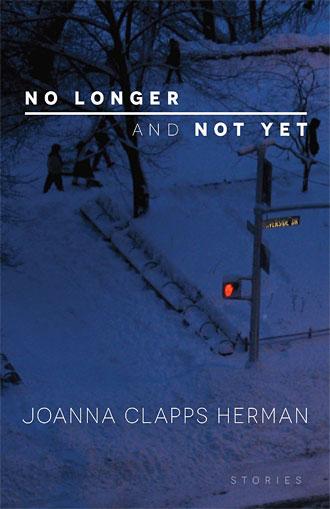
Joanna Clapps Herman’s lovely collection of linked short stories, No Longer and Not Yet, drives my cousin Mary’s point home again and again. The characters in the stories live within a few blocks of each other on the Upper West Side of Manhattan. They are connected to each other the same way people in any community are connected to each other. They fall in love, raise children, make friends, mourn the loss of family members, struggle with career decisions.
The hand-drawn map in the beginning of the book shows the important landmarks in the characters’ lives — the schools, parks, and shops they visit almost every day. Beyond the Hudson River and the Atlantic Ocean are “other places”. The opening story in the collection, “Roman Bath”, takes place in Italy, where Max and Tess are beginning their marriage. The reader doesn’t yet know anything about the couple, except that they have recently been married and they are traveling in Italy. The story succeeds on its own, but also functions as an introduction to two key characters in No Longer and Not Yet. In subsequent stories, Max and Tess negotiate marriage, parenthood, and the ups and downs of life. Despite their differences in temperament, they share a deep and abiding bond:
Max, the husband, opened. Tess, the wife, closed. Max spilled, dropped, stirred. Tess, wiped, picked up, quieted. He flung, scattered, cast off. She caught, held, fastened. He set sail; she harbored Max got up early, opened cupboards, drawers, left them where they landed . . . He got their son, Paul, up and out of the house in the morning, brought Tess a cup of coffee in bed. He started the day going . . . She stayed up late, turned off all the lights, made sure Paul was in the vicinity of his bed, pulled the blankets up around Max’s shoulders. She brought the day home.
Some of the stories in the collection are very short — vignettes, really. Others are much longer and stand alone as short stories, with individual plots. I particularly enjoyed “Two Latins”, about a young mother’s conflict with her daughter’s preschool teacher, and “Passing History”, about a young man’s friendship with an elderly woman in his building. (The building happens to be the former residence of Hannah Arendt.)
I’m a fan of short stories (in fact, I wrote a blog post about my love of short stories: 5 Reasons to Read Short Stories), but I think even readers who claim they don’t like short stories would like No Longer and Not Yet. Although there isn’t an overarching narrative, the characters develop throughout the linked stories. In that way, the book reminded me of Olive Kitteridge and A Visit From the GoonSquad. I also thought the book was reminiscent of Cheryl Mendelson’s wonderful trilogy about the Upper West Side — MorningsideHeights, Anything for Jane, and Love, Work, Children.
Joanna Clapps Herman, a resident of New York City, is a creative writing professor at the MFA Graduate Program at Manhattanville College and at the Center for Worker Education, a division of City College of New York, CUNY. When asked what she’d like readers to take away from their experience of reading No Longer and Not Yet, she says:
I’d love for people to be interested in what my characters are facing. I’d like them to feel as if they are walking around in a place that interests them. I’d like them to feel moved by my language when I’m turning it on and trying to make something beautiful or emotional.
Herman’s “Ideal reader” is “anyone who loves to read about ordinary people, especially people who like to read about raising children”.
I reviewed No Longer and Not Yet for TLC Book Tours. Please check out the other stops on the tour!
I’m on vacation this week, so I thought I’d share a post from one of my favorite blogs, Musing: A Laid-Back Lit Journal. Musing is the brainchild of author and bookstore owner Ann Patchett and her staff at Parnassus Books in Nashville. I’m always happy when I see a new post from Musings in my in-box!
Summer is a great season to be a bibliophile, because it’s considered a totally normal activity to sit in a beach/pool/lawn/whatever chair and plow through books one after the other. (Speaking of which, check out Zadie Smith’s fantastic What It Means to Be Addicted to Reading: “The beach is one of the few places pathological readers can pass undetected among their civilian cousins.”) In addition to Ann’s current favorites, here’s what our staff is reading and loving right now.
The cover of Endangered doesn’t do it justice. It makes the book look like a middle-grade or YA novel, which it is not –although it would make great reading for high school students. Endangered is a legal thriller that tells the “ripped from the headlines” story of Malik Williams, a 15-year-old African-American boy in Philadelphia who is arrested for a murder he didn’t commit.
Malik’s story is told through the perspective of his mother, Janae. When a human rights organization, headed by skilled attorney Roger Whitford, offers to take on Malik’s case at no charge, Janae is dubious. Is her son really part of an “endangered species”, as Roger claims?
“Wait! Endangered? I’m not following you. How will Malik get out of jail? How is this going to help my son? I haven’t even seen him . . . The dan-ger, the real danger, is in him being in jail, which is not where he belongs.”
The author, Jean Love Cush, is a journalist and an attorney. A native of Philadelphia, she started her career at the District Attorney’s office there. Then she joined Legal Aid as a family law attorney, helping battered women escape domestic violence. She also hosted a weekly current affairs radio show, “A View From the Summit”, which led her to investigate gun violence in the inner city and the impact on black boys:
What I learned was devastating. It inspired me to write a story exploring violence, race and the criminal justice system from the perspective of an African-American mother. This turned into my novel Endangered . . .
I read Endangered in just a couple of sittings, anxious to know if Malik would be exonerated and if the real murderer would be found. The plot is well-constructed, with plenty of tension and some twists and turns. The legal complexities of the case fascinated me — particularly the issue of juvenile offenders being tried as adults. Clearly, Jean Love Cush knows Philadelphia and she knows Pennsylvania law. I get frustrated with legal mysteries (like Scott Turow’s) that take place in fictional locations. Setting the story in a real place gives the book an extra dose of reality. William Landay successfully did this in Defending Jacob, one of my favorite recent legal thrillers, and Cush brings Philadelphia and its court system to life in the same way.
As a mother, I identified with Janae — her deep love for her son, as well as her pain and frustration. Any mother, when faced with a child in trouble, would second-guess her own culpability, as Janae does:
I keep replaying the past fifteen years in my head, about how I’ve been raising Malik. I’ve been living my life in a dark haze, drifting aimlessly with Malik in tow. Before his arrest, I was so preoccupied with trying to provide for his basic needs that I neglected the most important things . . .I just want him to be a strong man, a good man.
Cush’s portrayal of Roger Whitford is particularly strong. He is blunt, brilliant, and a bit mysterious. What are his motivations for running CPHR (Center for the Protection of Human Rights) and taking Malik’s case? Cush gradually reveals Whitford’s character and background, eventually drawing a portrait of a complex man.
Calvin Moore, the African-American attorney who made it out of the inner city to join a white-shoe Philadelphia law firm, was less interesting to me. He seems like more of a stock character — the success story who ignores the plight of his own community. When first asked to take the case, he says, “‘I get it that black boys are in trouble. I lived it. I still live it. But I would like to believe that a lot of the trouble, at least now, is self-inflicted'”. Later, Calvin changes his opinion . . . which may or may to have something to do with his feelings for Janae.
The voice that is missing from Endangered is Malik’s. Obviously, Cush’s intention was to tell Malik’s story from the point of view of the adults surrounding him — but I would have liked to have heard about Malik’s ordeal from his perspective. Perhaps Cush structured the novel in this way because Malik is meant to stand for all black boys who are treated unfairly by the legal system? But I wanted to know more about Malik as an individual.
The novel clearly was meant to be more than a page-turner. It was intended to make a point — that our justice system is unfair to black youth– and it successfully makes that point. But is that what fiction should do? Endangered seems a little heavy-handed and polemical to me. It is definitely an “issue” novel as much as it is a legal thriller. There are, of course, many well-regarded novels that focus on social problems — The Jungle, Sister Carrie, The Grapes of Wrath,Native Son, to name just a few — and scholars have always argued about the relationship of literature to social issues.
I’ve read several outstanding nonfiction books about African-American single mothers trying to raise sons in difficult environments. I highly recommend A Hope in the Unseen: An American Odyssey from the Inner City to the Ivy League by Ron Suskind, Random Family:Love, Drugs, Trouble, and Coming of Age in the Bronx by Adrian Nicole LeBlanc, and TheOther Wes Moore: One Name, Two Fates by Wes Moore. They are filled with real-life Janaes and Maliks.
I reviewed Endangered for TLC Book Tours. Please check out the other stops on the tour!
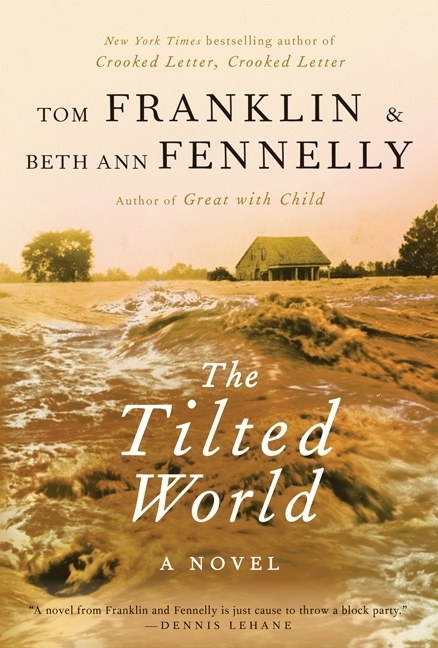
When Beth Ann Fennelly and Tom Franklin visited our store last fall as part of their tour for The Tilted World, I mentioned in my introduction that they were the first husband-wife writing team we’d ever hosted. In fact, they were the first writing team we had ever hosted. Sure, we’ve organized events for pairs of authors and illustrators. But two people who collaborated on a novel? That was a first.
Not many novels have been written by co-authors, and very few by co-authors who are married to each other. The only work of fiction I could think of that was written by a married couple is The Crown of Columbus by Michael Dorris and Louise Erdrich. A little Internet research showed me that I am hopelessly out of touch and that there are a number of couples writing fiction together. Many of them combine their names and write under a shared pseudonym: Nicci Gerrard and Sean French write crime fiction under the name “Nicci French”; Alexandra Coelho and Alexander Ahndoril write novels together as “Lars Kepler”; and Michael Jacob and Daniela De Gregorio are “Michael Gregorio” in the literary world.
Swedish authors Maj Sjöwall and Per Wahlöö, who wrote a series of ten police procedurals about detective Martin Beck in the 1960s and 1970s and are considered the forerunners to Stieg Larsson, are common-law spouses. Maybe that’s why they didn’t come up with a joint pen name?
These collaborative novels all have one thing in common: they are plot-driven and suspenseful. The Tilted World is no exception. The book grabbed me from the first page, when the protagonist, bootlegger Dixie Clay Holliver, finds what she believes to be a baby’s coffin in the swollen creek near her home in rural Mississippi. The stream was called “Gawiwatchee” (“Place Where the World Tilts”) by the Indians — “or so Jesse’d said”. Jesse, Dixie Clay’s husband, is not known for his honesty.
Dixie Clay is a bit of a stock Southern female character — she’s plucky and determined, doing what needs to be done in the face of hardship. Remember Scarlett O’Hara? She saves her husband from two federal revenue agents who are investigating the moonshine operation:
Now she aimed the Winchester . . . She remembered the years of hunting alongside her father, remembered shooting a panther out of a pin oak. She visualized that shot, and visualized this one. She squeezed the trigger. The pie plate rang and danced on its cord and the birdseed exploded, then bounced on the floor and rolled still. She used the diversion to scuttle behind the sassafras, the last shelter before the downhill slide to the front gallery forty feet away.
I found myself more interested in Dixie Clay’s nemesis and eventual love interest, Prohibition agent Teddy Ingersoll. Ingersoll’s history as an orphan and World War I soldier brings texture to his character. Jesse, and his girlfriend, Jeannette, are villains through and through. Jesse has one blue eye and one green eye, hinting that he has two sides to his personality: one charming and smooth-talking, the other ugly and violent.
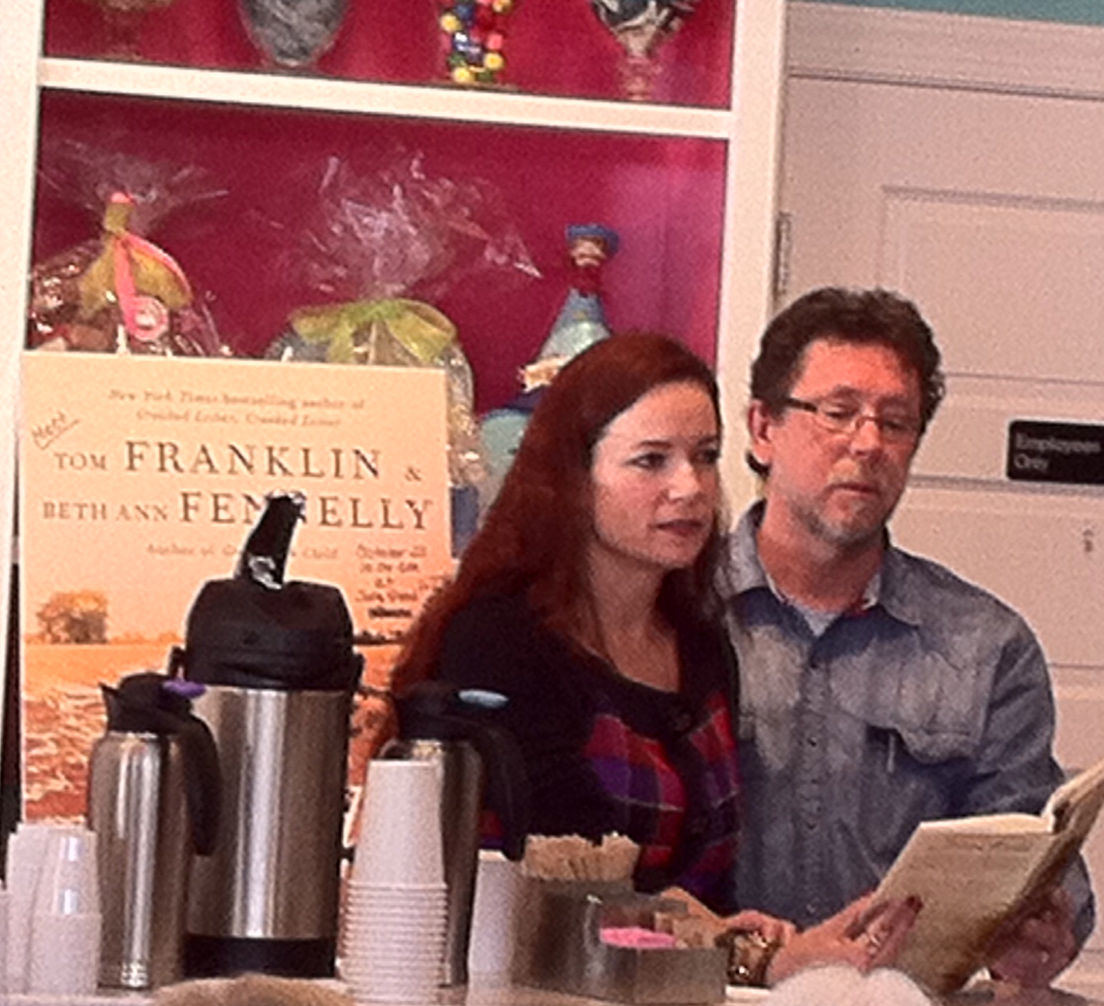
Beth Ann Fennelly and Tom Franklin reading, October 2013
The Tilted World takes place in 1927, during Prohibition and the Great Flood that decimated the South. In the authors’ note at the beginning of the book, Fennelly and Franklin comment that the flood, “largely forgotten today . . . is considered by many to be the worst natural disaster our country has endured.” Certain disasters — the sinking of the Titanic, the Chicago fire, the San Francisco earthquake — have taken hold of the popular imagination, while others — the Peshtigo fire, the sinking of the Eastland in Lake Michigan, the Galveston hurricane — have become footnotes to history. It’s interesting to contemplate why that is. In the book’s acknowledgments, Fennelly and Franklin cite John M. Barry’s Rising Tide: The Great Mississippi Flood of 1927 and How It Changed America “as an amazing work of research and journalism, to which our novel is indebted”. I’m adding it to my reading list.
Revenue agents, bootleggers, murderers, and abandoned babies, all set against the background of a flood of Biblical proportions, create a dramatic page-turner filled with tension. It’s also a literary novel, filled with enough religious imagery and symbolism to satisfy this aging English major. The Tilted World, like all the best historical fiction, leaves the reader with the gratifying feeling of having learned something new about a particular time and place. The novel also places the flood in context, showing how this massive disaster would shape American politics and race relations in the 20th century.
Fennelly and Franklin are both enormously talented writers.They met as MFA students at the University of Arkansas, and, says Franklin, “We both teach in the Ole Miss MFA program, which Beth Ann also directs. In other words, she’s my boss.” Franklin has written several other novels and a collection of short stories, all set in his native Deep South; Fennelly, a Northerner, is the author of three poetry collections and a nonfiction book, Great With Child: Letters to a Young Mother. Franklin’s evocation of the Southern atmosphere and Fennelly’s poetic depiction of maternal love combine beautifully in The Tilted World.
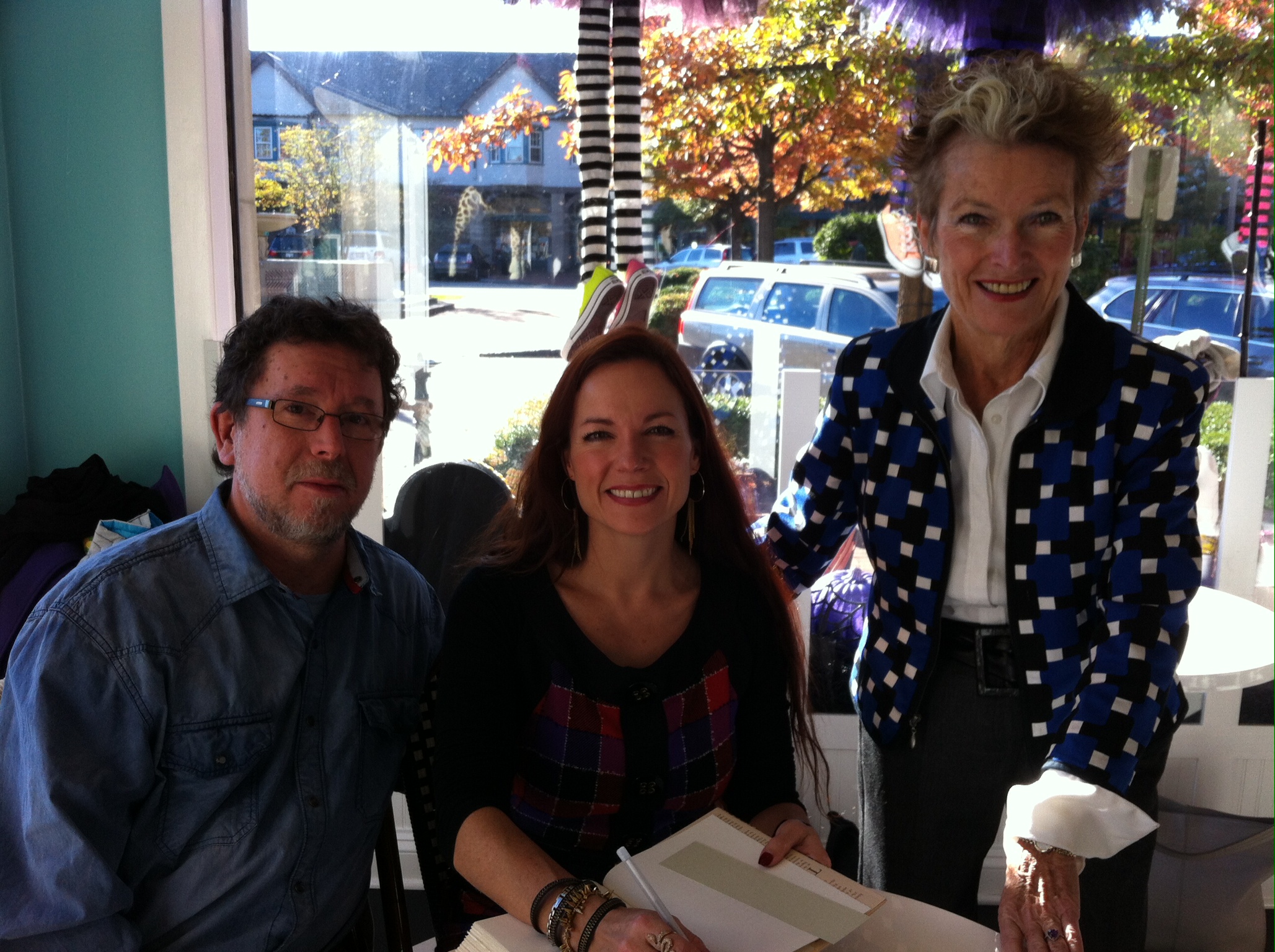
The authors with Beth Ann Fennelly’s proud mother!
How did Fennelly and Franklin write the book? Did they write alternating chapters, or did they actually sit and write together? When we hosted our reading with the two authors, that was the first question that was asked in the Q and A session. In an essay that’s reprinted in the paperback version of The Tilted World, Fennelly addresses this question at length. The short answer is: they did both. They started out with Tom writing from the point of view of Ted Ingersoll and Beth Ann writing from the point of view of Dixie Clay. But things changed:
One day, Tommy out of town, I realized I couldn’t push further with Dixie Clay until I knew what Ingersoll was up to. I wrote an Ingersoll scene, and it was liberating to give myself permission to get to know this character, too. Thereafter, we started mucking things about in each other’s pages, coloring outside the lines . . . And then we took our collaborating further, because we began crafting scenes together, kneecap to kneecap in my tiny office, talking and writing together, stringing words into sentences. That’s when the novel really started cooking– and finally became fun to write — when we adopted the method we called “dueling laptops”, writing side by side on the same passages at the same time, then reading aloud and discussing and jointly moving forward.
Will Fennelly and Franklin collaborate on a novel again — perhaps a sequel? I want to know more about Dixie Clay’s father. And maybe this time Fennelly’s name will come first, since she is her husband’s boss . . .
To read more reviews of The Tilted World, check out the stops on TLC Book Tours.
Fiction is the lie through which we tell the truth.
Albert Camus
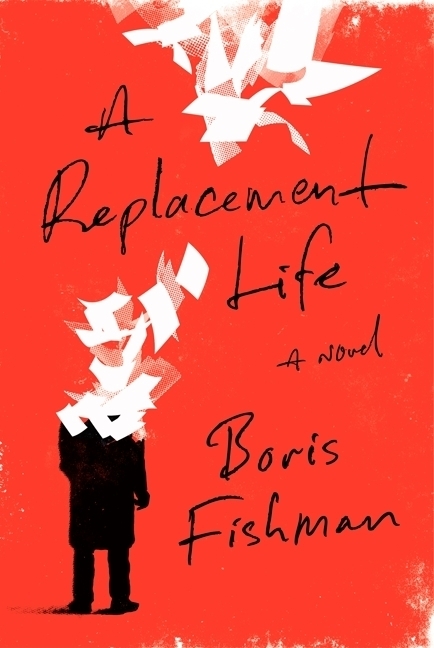
Slava Gelman, the protagonist of Boris Fishman’s brilliant debut novel, is a junior staff member at “Century” magazine. He hopes one day to be published in the magazine: “Only a byline in the New Yorker meant as much. Entire book contracts were given out on the basis of a byline in Century.” A Jewish refugee from the Soviet Union, Slava has distanced himself from his family. He rarely ventures to his old neighborhood in Brooklyn, preferring his spartan studio in the Upper East Side. Slava believes that if he is to achieve his dream of becoming a successful American journalist, he must exile himself to Manhattan:
But if Slava wished to become an American, to strip from his writing the pollution that repossessed it every time he returned to the swamp broth of Soviet Brooklyn, if Slava Gelman — immigrant, baby barbarian, the forking road spread-eagled before him — wished to write for Century, he would have to get away. Dialyze himself, like Grandmother’s kidneys.
A journalist is just another kind of storyteller, and, ironically, Slava finds that the stories he tells best are the stories of his fellow immigrants. His grandfather shows Slava a letter to Grandmother from “The Conference on Material Claims Against Germany”, offering restitution to Holocaust victims. Slava’s deceased grandmother was indeed a victim, having survived the Minsk Ghetto. Grandfather, despite having escaped German persecution as defined in the official letter (“ghettos, forced labor, concentration camps”), feels entitled to restitution and cannot understand why his grandson’s moral scruples prevent him from immediately agreeing to submit a false claim.
Grandfather has survived and prospered, in the Soviet Union and in the United States, because of his ability to outwit the system. One of his fellow refugees explains to Slava that Grandfather “‘got what needed to be got”, whether it was round-the-clock home nurses from the City of New York for his wife or house calls from Soviet doctors for his daughter. He was able to get his family out of the Soviet Union and to the United States only by lying: “At every step, everyone had lied about everything so the one truth at the heart of it all — that abused people might flee the place of abuse — could be told.”
A Replacement Life examines the relationship between truth and fiction. As Boris Fishman says in his author’s note, “The line between fact and fiction, invention and theft, is as loose as the line between truth and justice.” As Slava forges more and more “tales of woe and deceit” for Grandfather’s associates, he begins to forget what’s fact and what’s fiction. And, he wonders, does it matter? The power of the stories he’s writing intoxicates him: “He was a middleman, a loan shark, an alchemist — he turned lies into facts, words into money, silence into knowledge at last.” The stories he fabricates help him understand his family, his culture, and himself more deeply. Before he began forging restitution claims, Slava tried desperately to write articles that would appeal to the editors of Century. All are rejected, and Slava doesn’t understand why. He doesn’t really become a writer until he begins writing with passion, seeking justice for Soviet émigrés.
Slava is confronted with many moral dilemmas in the course of the novel, just as his grandparents had to make difficult choices during World War II and afterwards. Informants, falsified documents, government bureaucrats, the black market, the exchange of valuable information . . . all these things existed in the Soviet Union, and they still exist in Slava’s world. The novel asks us to consider the ways that circumstances shape us. In a conversation with his girlfriend, who is a fact-checker at Century, Slava says, “‘I can imagine myself as the person who’s forging. But I can also imagine myself as the person who turns in the forger. How can that be?'” The answer, the reader supposes, is that like Grandfather, most people do what they need to do to survive.
The novel is thought-provoking, full of wit and humor, and provides great material for a book club discussion. I usually take blurbs with a grain of salt, but Walter Kirn’s summarizes the book very well:
Buy this book for the story, but read it for the character of Grandfather, a fearless, exasperating, tormented, and singular creation. I wouldn’t want to meet him in an alley, but I could have read another book about him. A Replacement Life is that rare thing: a novel that asks the big questions, embedded in a page-turner haunted by characters that walk off the page.
To read more reviews of The Replacement Life, check out the stops on TLC Book Tours. Also, the New York Times recently gave the novel an excellent review — but be warned, the review contains spoilers. Visit Boris Fishman’s website to learn more about the author. He has several readings scheduled in New York this summer and fall.
I’ve always disliked the term “beach book”. What on earth is a beach book? If a book engages me, it’s going to engage me whether I’m at the beach, on a plane, on my couch, or in bed. (Well, maybe not in bed — too much likelihood of falling asleep, no matter how riveting the book.) CNN recently interviewed some well-known authors about their summer reading habits, defining beach reads this way: “While there are no hard and fast rules about what constitutes a ‘beach read,’ the idea is that they can be read quickly, or that they’re light in tone. Always, they’re captivating and preferably escapist.”
Joshua Ferris is a man after my own heart. He says, “What I bring to the beach is whatever I’m reading at the moment, and what I’m reading at any given moment usually concerns death, misery and marital discord, which don’t seem too beachy . . . I find it impossible to alter my reading for the sake of a season.”
Emma Donoghue, who “wants a meaty plot; brilliant language; extra points for hilarity”, is a very sensible person. She says she actually prefers to read magazines on the beach, due to the mess factor. So if I make it to the beach this summer, I’ll bring a pile of magazines — although here on Lake Michigan, we have these pesky little biting flies that make it almost impossible to read anything, or even to remain on the beach.
Here are 10 recommendations for summer reading. They’re all either available now or will be later this month.
Save the Date: The Occasional Mortifications of a Serial Wedding Guest by Jen Doll
The New York Times (which called Jen Doll “Emily Post’s worst nightmare”) gave journalist Doll’s nonfiction account of weddings she’s attended a so-so review, but I thoroughly enjoyed her take on modern-day weddings. And yes, she needs some help in the manners department.
Fourth of July Creek by Smith Henderson
From the Oregonian: “Set deep in the backwoods of Reagan-era Montana and containing all the necessary ingredients of a slow-burn literary thriller — prickly characters, graphic writing, creeping suspense, Fourth of JulyCreek spins quite an unsettling yarn.” I’ve been waiting to read this ever since I picked it up at Winter Institute in January.
Goodnight June by Sarah Jio
From the publisher: “Goodnight Moonby Margaret Wise Brown is an adored childhood classic, but its real origins are lost to history. Sarah Jio offers a suspenseful and heartfelt take on how the “great green room” might have come to be.” I’ve just finished reading this and it is truly delightful.
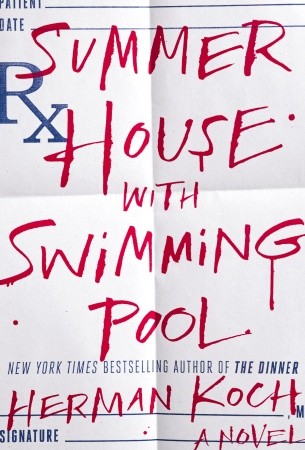
Summer House with Swimming Pool by Herman Koch
If you liked The Dinner, you’ll love Herman Koch’s latest. If you found The Dinner too dark . . . skip this one. From Publishers Weekly: “In Koch’s equally devious follow-up to The Dinner, civilization is once again only a thin cover-up for man’s baser instincts . . . very few real-world events will distract readers from finishing this addictive book in one or two sittings.”
The Other Language by Francesca Marciano
From the New York Times: “What makes these tales stand out as captivating exemplars of storytelling craft is Ms. Marciano’s sympathetic, but wryly unsentimental knowledge of these people’s inner lives; her ability — not unlike Alice Munro’s — to capture the entire arc of a character’s life in handful of pages; and her precise yet fluent prose (the result, perhaps, of writing in a second language), that immerses us, ineluctably, in the predicaments of her men and women.” Every list of recommendations needs a short story collection, and The Other Language is the best I’ve read in a long time.
Say What You Will by Cammie McGovern
I’m slowly becoming a fan of (good) YA literature — and this one is excellent. From the publisher: “The Fault in Our Stars meets Eleanor & Park in this beautifully written, incredibly honest, and emotionally poignant novel. Cammie McGovern’s insightful young adult debut is a heartfelt and heartbreaking story about how we can all feel lost until we find someone who loves us because of our faults, not in spite of them.”
The Arsonist by Sue Miller
From Publishers Weekly: “A small New Hampshire town provides the backdrop for Miller’s provocative novel about the boundaries of relationships and the tenuous alliance between locals and summer residents when a crisis is at hand.” Several colleagues are highly recommending The Arsonist, and I’ve thoroughly enjoyed everything Sue Miller has written.
My Salinger Year by Joanna Rakoff
I loved this memoir of Rakoff’s stint as an assistant to J.D. Salinger’s literary agent! From the Chicago Tribune: “Her memoir is a beautifully written tribute to the way things were at the edge of the digital revolution, and also to the evergreen power of literature to guide us through all of life’s transitions.”
China Dolls by Lisa See
From Publishers Weekly: “In the beginning of See’s stellar ninth book, three young women, Grace, Helen, and Ruby, meet and form an unlikely but strong bond in San Francisco in 1938, as the Golden Gate International Exhibition is about to open . . .The depth of See’s characters and her winning prose makes this book a wonderful journey through love and loss.” I’m thrilled that Lisa See is coming to our community for an event in late June.
The Vacationers by Emma Straub
From the New York Times: “For those unable to jet off to a Spanish island this summer, reading The Vacationers may be the next-best thing. Straub’s gorgeously written novel follows the Post family — a food writer named Franny; her patrician husband, Jim; and their children, 28-year old Bobby and 18-year-old Sylvia — to Majorca . . . When I turned the last page, I felt as I often do when a vacation is over: grateful for the trip and mourning its end.” I felt the same way!
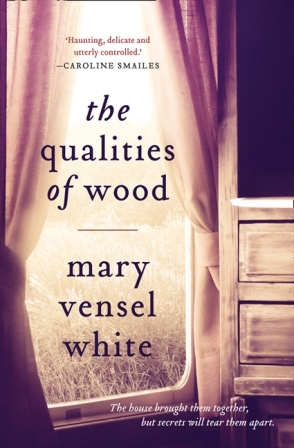
When Betty Gardiner dies, leaving behind an unkempt country home, her grandson and his young wife take a break from city life to prepare the house for sale. Nowell Gardiner leaves first to begin work on his second mystery novel. By the time Vivian joins him, a real mystery has begun: a local girl has been found dead in the woods behind the house . . . As Vivian attempts to put the house in order, all around her things begin to fall apart.
It’s understandable if this plot synopsis leads you to believe that The Qualities of Wood is a page-turner. When I started reading Mary Vensel White’s debut novel, that’s what I thought it was going to be. Suspense and tension develop after a body is found Nowell and Vivian’s land. The local people are peculiar and secretive, especially Mr. Stokes, the nearest neighbor, who lives “a half-mile to the west, deep in the trees”. Nowell’s ne’er-do-well brother arrives for an extended visit, bringing his new wife — and a frightening hint of violence.
Nowell himself acts strangely, hiding in his airless study and refusing to spend time with his wife. Is he just a temperamental writer, or does his behavior signal something more ominous? Vivian expresses surprise that “a sensitive, easy-going person like Nowell could write about deranged people and horrific events”, but to the reader, he seems far from “sensitive” and “easy-going”.
White skillfully creates a sense of foreboding in the early pages of the novel. Immediately after arriving at the country house, Vivian notices a light in the woods: “‘Someone’s back there’,” she tells Nowell, who shows a curious lack of concern about the sheriff’s investigation. The woods are a source of fascination to Vivian. When she refers to the wooded area behind her new home as a “forest”, Nowell laughs and says, “‘I never thought of it as a forest . . . I just think of forests being vast, you know, near mountain ranges. Not a small parcel beside some meager hill in the flatlands.'”
It becomes clear that big secrets can hide in “small parcels” of woods and in small towns — and in marriages and families. Maybe, Vivian wonders, secrets are important — and even necessary:
There were things Vivian didn’t understand about her husband, like his craving for privacy and his occasional secrecy . . . Besides, she had her own secrets. Whenever she began resenting Nowell’s guardedness, she thought about how it comforted her to think of her own private self, , buffeted and protected and perhaps mostly unknown even to herself. If Nowell told her everything about himself, what would that leave to discover, to talk about?
Although The Qualities of Wood is carefully constructed, it’s not a plot-driven novel. It’s a character study of Vivian, and her relationships: with her enigmatic husband and his family, and with her own parents. How much can we — and should we — know about the people we love? Gradually, the reader recognizes that there will be no dramatic plot twists. This isn’t a conventional suspense novel; readers who are expecting one may be disappointed by the book’s measured pace. But readers who are more interested in character development and setting will appreciate the artistry of The Qualities of Wood.
It’s obvious that wood is significant in this novel — both wood as a material and “the woods” as a place. One of Vivian’s most vivid childhood memories is being lost in the woods. Vivian and her parents spent a summer in a log cabin at a writers’ colony, “surrounded by trees”. One day Vivian intentionally wanders away, panicking when darkness begins to fall and she cannot find her way back. When she arrives at a house, a man smoking a “marbled-wood pipe” invites her to come inside. The reader feels a sense of dread, but it turns out that the stranger is kind and helpful, offering her a snack and returning her to her parents. Like so many events in this novel, the outcome is so ordinary that it’s unexpected.
When Vivian speaks with the sheriff who has found the dead girl in the woods, she recalls the terror she felt as a child when she realized she was lost. The woods continue to frighten her, but she is also drawn to their mystery. She’s also fascinated with Mr. Stokes, who lives in the woods and frequently wields an axe. “‘How much wood does one person need?” she asks him. ‘Don’t you worry about depleting your supply of trees?'” She sees that the woods can hide secrets, but they also provide shelter and comfort.
What are “the qualities of wood”?
Vivian remembered staring at her desktop in grammar school . . . and noticing the variety within the wood, the scant pencil remains from the students before her, the distinct markings of the grain. Like a fingerprint, each section unique to itself and to the seer. Eyes can become discerning, she thought, if you look long enough. The sky, the qualities of wood.
Wood appears in many forms in the novel — the trees behind the house, the stumps and logs in Mr. Stokes’s yard, the old furniture Vivian sells at her yard sale, the lumber that Nowell’s grandfather cut to build his house, even the paper used to print Nowell’s novels. It’s a metaphor for many things, but most of all for change and growth. In a few short weeks, Vivian learns many things about herself and her marriage.
To read more about the novel and the author, visit Mary Vensel White’s website, and visit the other blogs reviewing The Qualities of Wood for TLC Book Tours.
Also, if you happen to live in southern California, you can meet the author at Barnes & Noble in Irvine on June 17 at 7:00 p.m. and Vroman’s Bookstore in Pasadena on June 21 at 4:00 p.m.
Every once in a while, I’m in the mood for a fun escape novel. When that mood strikes, I want to read something clever, entertaining, and well-written, with a touch of humor. Sometimes I need the reading version of comfort food — macaroni and cheese, anyone? Adriana Trigiani’s novels are perfect “comfort reading” — they’re warm and substantial.
Trigiani grew up in a large Italian family in Big Stone Gap, Virginia. A theater major in college, she spent 15 years as a playwright, comedy troupe actress, TV writer/producer (writing several episodes for the Cosby Show), and documentary filmmaker before turning to fiction writing. Her first novel, Big Stone Gap, the first in a series set in her hometown, started out as a screenplay. The movie version (written and directed by Trigiani and starring Ashley Judd) has just been filmed and is due for release this year.)
The Supreme Macaroni Company — which has almost nothing to do with a macaroni company — is the third in a series about shoe designer Valentine Roncalli and her family. (Trigiani has also written stand-alone novels and a memoir.) I’ve read almost all of Trigiani’s books, and every one is a delight. Don’t worry about reading them in order; you’ll enjoy your introduction to Trigiani’s wonderful characters wherever you start, and Trigiani skillfully weaves the background information into each story.
At the heart of The Supreme Macaroni Company is a love story. The book opens on Christmas Eve on the roof of the Angelini Shoe Company, where Valentine becomes engaged to Gianluca Vechiarelli (her grandmother’s stepson). Valentine loves Gianluca, but she also loves her family’s shoe company. Her workaholic tendencies will later put a strain on her new marriage, but for now she is full of optimism about their future:
A shoemaker would marry a tanner.
This could work.
Shoemakers and tanners form a symbiotic relationship out of necessity. One provides the leather while the other whips it into a glorious creation. At Vechiarelli & Son in Arezzo, Gianluca creates some of the most sumptuous leather, calfskin, and suede in Italy . . . For over a century, there has been and remains a shorthand between our families’ shops. The Angelini Shoe Company in Greenwich Village has proudly used Vechiarelli & Son’s goods for generations.
Valentine and Gianluca marry on Valentine’s Day, in the wedding her mother has always dreamed of — starting with “proper invitations”:
Years from now, you’ll want a permanent record of your wedding. An invitation is the bride’s Dead Sea scroll at the bottom of her hope chest . . . I’ll have the invitations printed up. You don’t even have to look at them. When Chrissy Pipino got married, she had a fold-out card with a tissue, and if you remember, it was gold-leafed. She even had a pop-up angel. You yanked a satin ribbon and the little cherub went over and down like a windshield wiper. We don’t have time for a pop-up, but we will have our version of Caravaggio angels.
Valentine’s mother, like almost every character in this novel, is funny and lovable. Curmudgeonly Aunt Feen — who is truly heinous — is a comic foil, highlighting the essential goodness of the other family members. (Aunt Feen has a bit of a drinking problem: “She was having another Bailey’s on the rocks, and she was about to hit them hard like an old dinghy.”) It’s a pleasure, every now and then, to read about people who are honest and well-meaning. They have flaws and make mistakes,to be sure, but they are decent people — people with big hearts, quick wits, and humor. I can’t tell you how many times I laughed out loud while reading this book. (I also cried, just a little, but I won’t tell you any more about that.)
Consider the reaction of Valentine’s family when they learn that the appointed priest will not be able to officiate at the wedding:
When my mother returned, she had a look of panic on her face, which she tried to mask with a smile so broad it reminded me of the sample choppers dentists use to demonstrate proper flossing. “Val, we thought we had Father Drake.”
“Who do we have?”
“Father Nikako.”
“What happened to Father Drake?” Tess asked.
“He’s giving last rites at Queens County Hospital,” Mom explained.
“There’s a full-time job for you,” Aunt Feen piped up. “You better be bleeding like an animal when you go over there, otherwise you got a nine-hour wait. I saw a man holding his liver over there when I went for my flu shot . . . But Nikako? Jesus. I can’t understand a word he says.”
“He’s from Nigeria,” Mom snapped.
It’s easy to see that Trigiani has a background in TV sitcom writing! But she also writes lovely prose, equally at home describing the beauty of the Hudson River at night, the otherworldly appeal of New Orleans, and the struggle within Valentine between love and work.
Our bookstore has been fortunate enough to host Adriana Trigiani for several events. Before one of her appearances, Trigiani’s publicist warned us that “one thing about Adriana is that she will keep talking until someone stops her so if there is some kind of time limit just let her know beforehand and then politely give her a signal when it’s time to wrap up.” Well, I don’t think anyone wanted her stop talking. However, it’s probably time for me to stop writing. If you, like me, need a break from war, murder, psychopaths, and devastating family tragedies, I recommend The Supreme Macaroni Company. You’ll learn something about the shoemaking business to boot. (Sorry, I couldn’t help myself.)
Time shall unfold what plighted cunning hides,
Who covers faults at last with shame derides.
Cordelia, to her lying sisters in King Lear
If E. Lockhart’s remarkable new novel, We Were Liars, is typical of its genre, I might become a YA convert. Actually, I dislike the term “genre” when it comes to reading. When Gillian Flynn was asked by a New York Times interviewer, “Do you have a favorite genre? Any literary guilty pleasures?”, she said:
I read all kinds of novels, as long as they’re good. I get a bit piqued when people say, “I don’t really like that kind of book. It’s akin to marking yourself as proudly poorly read. I like westerns, fantasy, sci-fi, graphic novels, thrillers, and I try to avoid the word “genre” altogether. A good book is a good book. And as far as guilty pleasures, I don’t ever feel guilt if I’m enjoying reading something.
I certainly didn’t feel any guilt when I was reading We Were Liars. I knew from the first page that I was reading something extraordinary. Lockhart’s writing is lovely — simple and poetic, with dialogue worthy of a screenplay. The voice of the narrator, teenager Cadence Sinclair Eastman, is completely authentic. Cady’s story takes place on her grandfather’s private island off the coast of Massachusetts, where she spends every summer with her extended family. The island setting is important to the plot, but even more crucial to the otherworldly atmosphere of the novel. Everything that happens in the book seems to take place in an almost magical realm, with little connection to the outside world.
Cady introduces herself as the “eldest Sinclair grandchild. Heiress to the island, the fortune, and the expectations.” Her mother is one of three daughters:
Granddad’s only failure was that he never had a son, but no matter. The Sinclair daughters were sunburnt and blessed. Tall, merry, and rich, those girls were like princesses in a fairy tale. They were known throughout Boston, Harvard Yard, and Martha’s Vineyard for their cashmere cardigans and grand parties. They were made for legends. Made for princes and Ivy League schools, ivory statues and majestic houses.
The island has always been a refuge for Cady, but one summer (“summer fifteen”, she calls it), something traumatic happens to her there; something she can’t seem to remember. Now, more than two years later, she is suffering from “selective amnesia” and “migraine headaches caused by traumatic brain injury” and trying to piece together the events of “summer fifteen”. She recalls the beloved fairy tales of her childhood: “So many have the same premise: once upon a time, there were three . . . I have time on my hands, so let me tell you a story. A variation, I am saying, of a story you have heard before.”
The story she tells — interwoven with pieces of her own story — is “Meat Loves Salt”, the tale of a farmer with three daughters who rejects his youngest daughter because he doesn’t understand her love and her honesty. A Publishers Weekly interview with Lockhart points out that “Shakespeare liked this one too; it’s the same tale thought to have inspired King Lear.” (It’s worth noting that when Cady starts giving away her possessions, one of the first things she donates is a copy of King Lear.) Lockhart says “as a child, I was captivated by these beautifully illustrated collections my mother owned . . . Fairy tales have been a preoccupation of mine for a very long time, and for a long time I wanted to write a contemporary story with a fairy-tale structure so I could unpack some of what I had spent so much time thinking about.”
After I finished We Were Liars, I spent a lot of time thinking about it. I wondered about the significance of the title. The “liars” of the title are Cady, her cousins Johnny and Mirren, and Gat, a family friend: “The family calls us four the Liars, and probably we deserve it. We are all nearly the same age, and we all have birthdays in the fall. Most years on the island, we’ve been trouble.” But the irony is that the adults in the family are the real liars, as Cady (and the reader) gradually discover. Their lies are numerous and their reasons for lying are complicated. Cady, evoking King Lear’s honest daughter, Cordelia, is the only person who is trying to learn the truth about herself and her family. Her father left the family because “he couldn’t smile, couldn’t lie, couldn’t be part of that beautiful family in those beautiful houses.”
I deliberately haven’t talked much about the plot of We Were Liars. In the letter that came with the ARC, the publisher said:
It’s not often that I write a letter asking a reader to do this, but please trust me. I won’t tell you the plot of this book. It is better for you to just read it. We Were Liars is a dazzler. It’s suspenseful, literary, and romantic . . . You don’t need to know more. More would spoil it . . Whatever you do, don’t spoil it for the people who haven’t read it yet. And if anyone asks you how it ends, just LIE.
Marketing hype? Maybe. Still, I won’t ruin it for you by telling you any more. I’ll echo the publisher and ask you to trust me. And I’m not a liar.

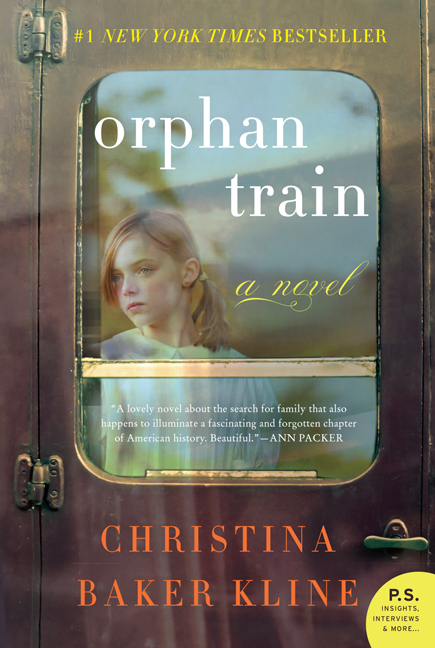 Orphan Train, by Christina Baker Kline, is a book club favorite that’s been on the bestseller list for months. So of course I didn’t want to read it. I read a nonfiction book, Orphan Trains: Charles Loring Brace and the Children He Saved and Failed, by Stephen O’Connor, so I thought I’d read enough on that topic. I was wrong, of course. Orphan Train is a dual narrative, with one story taking place in the Midwest during the Depression and the other taking place in present-day Maine. Niamh is an Irish immigrant who was orphaned and sent west on a train to be “adopted”; Molly is a Penobscot Indian who has spent her childhood in foster care. Eventually, their lives intersect.
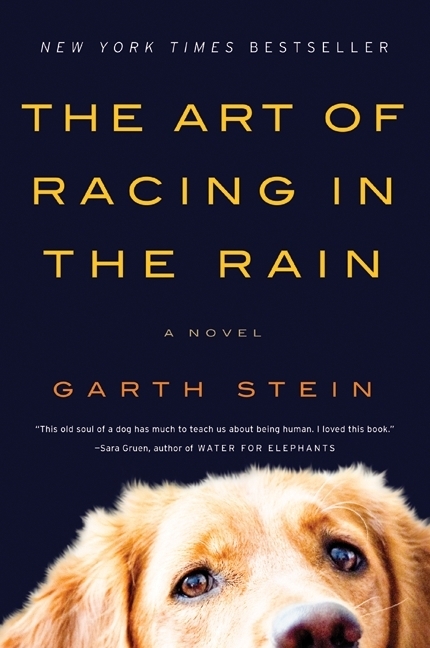 The Art of Racing in the Rain is narrated by a dog, whose owner is a racecar driver. I was very dubious about the idea of a dog as storyteller, and I’ve never had the slightest interest in auto racing. I will try never to be so narrow-minded again, because I loved this book — so much that I raced out and bought a copy. The Art of Racing in the Rain is a truly lovely book about the love between friends, parents and children, husbands and wives — and dogs and their owners. It’s a meditation on how to live an honorable and courageous life. I do have to warn you that it’s a little dangerous to listen to while driving, because you will undoubtedly cry. Garth Stein has a new book coming out in September, A Sudden Light, and I can’t wait to read it. It’s about a 14-year-old boy who discovers family secrets while trying to save his parents’ marriage.
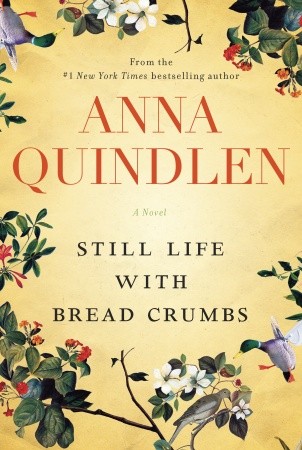 Plenty of Cake, but wasn’t crazy about her last couple of novels. So I was pleasantly surprised that I enjoyed Still Life with Bread Crumbs as much as I did. It’s about Anna Winter, a 60-year-old photographer whose career is in decline. To save money and revitalize herself, she decides to rent out her beloved New York apartment and move to the country for the year. I wasn’t sure if there would be enough narrative force in this novel to make it a good audiobook, but Quindlen is so skilled at portraying characters that I was completely absorbed. I feel almost as if I’d recognize Anna if I bumped into her on the street. I knew from the beginning, when she and a local roofer (who becomes a key character in the book) discuss possible strategies for removing the raccoon that’s trapped in her attic, that I would be “reading” about interesting, tangible characters.
 Code Name Verity, by Elizabeth Wein, is a YA novel, and I’m not sure why. Queenie, or “Verity,” is a young, female British intelligence officer who’s been captured by the Gestapo when her plane crashed in occupied France. Her best friend, Maddie, is the pilot who flew the plane. The first section of the book is a confession that Verity has written to her captors, followed by Maddie’s version of the story. It’s important to keep in mind that Verity is a spy, so she’s by definition an unreliable narrator. It’s a difficult book to describe without giving away key plot points. What I enjoyed most were the voices of the two narrators. Of all the audiobooks I listened to on my trip, this stood out for the high-quality narration. Here’s a review from Audiofile magazine:


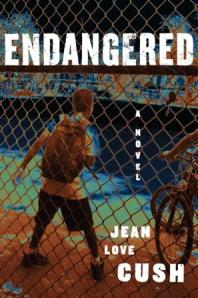 organization, headed by skilled attorney Roger Whitford, offers to take on Malik’s case at no charge, Janae is dubious. Is her son really part of an “endangered species”, as Roger claims?








 Books on the Table