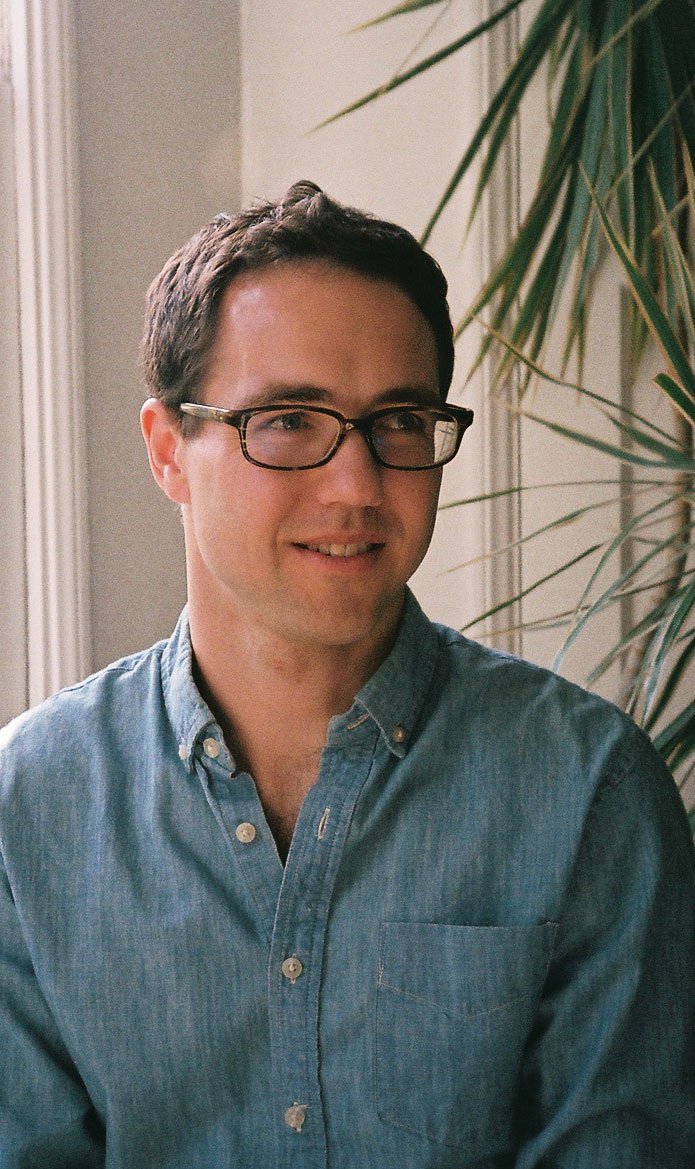
Orphan #8 — Author Interview

The historian will tell you what happened. The novelist will tell you what it felt like.
E.L. Doctorow

Orphan #8Orphans are as common in literature as no-good, two-timing liars and cheats are in country music. Cinderella . . . Jane Eyre . . .  Peter Pan and the Lost Boys . . .Heidi . . .Huckleberry Finn . . .  Frodo Baggins . . . Harry Potter . . . the list of brave and noble orphans who succeed against the odds is seemingly endless. Children’s literature, especially, is full of children who have lost parents. Could this be because this is every child’s greatest fear?

Kim van Alkemade’s grandfather, Victor Berger, was not technically an orphan, but he suffered the loss of his father at a young age.  In 1918, Harry Berger, a Russian immigrant working in the shirtwaist industry, ran off to Colorado, leaving Victor and his family destitute. Fannie Berger, “like thousands of parents before her, who, for reasons of death or desertion or illness, were unable to care for their children,” brought her children to the Hebrew Orphan Asylum in New York City.

Van Alkemade, an English professor at Shippensburg University in Pennsylvania, was conducting family research at the Center for Jewish Research when she discovered archives that inspired her to write Orphan #8.  “The idea of writing a historical novel was the furthest thing from my mind when I opened Box 54 of the Hebrew Orphan Asylum collection,” she writes.  But her curiosity was piqued when she read a motion approved by the orphanage’s Executive Committee: “the purchase of wigs for eight children who had developed alopecia as a result of X-ray treatments given to them at the Home for Hebrew Infants.”

Orphan #8 is the fictionalized story of one of those children, Rachel Rabinowitz, following her throughout her life as she comes to terms with her past as a subject of medical experimentation. Rachel’s struggle to become a whole human being, able to work, love, and even to forgive, absorbed me from start to finish. I’m always fascinated by stories inspired by little-known historical events, and Orphan #8 is moving and well-written. Kim van Alkemade was kind enough to answer my questions about the book and her career.

I read with interest the information on your website about how your family history inspired you to write Orphan #8. What made you decide to write the story as fiction, rather than narrative nonfiction?

There is a lot of my family history in Orphan #8 and I had considered narrative nonfiction for that story, but once I read about the X-ray treatments on the eight children I knew I wanted to imagine what life would have been like for one of these children. By weaving together bits of family history and research, I was able to create an imaginary story that had a compelling narrative arc.

For you, what is the line between fact and fiction? How much liberty do you think a writer of historical fiction can take with historical fact?

The line is: fact is fact, fiction is fiction. Orphan #8 is inspired by true events, but it is not a true story. I made up every character, the settings, the situations, all the dialogue (except for some of the things Dr. Hess says). Even the characters based on my family members are fictional creations. Yes, I incorporated a lot of research, and the main situation of a female orphanage doctor giving X-ray treatments to eight children did happen—but this novel is absolutely fiction. I include as much fact as possible, however, from how much a train ticket from New York to Denver would cost to how doctors treated breast cancer in the 1950s, because I want readers to have an authentic experience. The great thing about historical fiction is that it’s not a dissertation. I can take liberties. I can invent some things. I’m not sure what it’s like for the reader, but I suspect some things that seem very factual I actually made up (like how to make a wig) and other things that seem totally made up are factual (the Coney Island Amateur Psychoanalytic Society).

What audience, if any, did you have in mind as you were writing the book? (I see the book as having crossover appeal to teenagers who are interested in exploring historical fiction.)

I think Orphan #8 is a great book for mature young adults or new adult readers. There are a couple of sexy moments, and the novel deals with some heavy subjects, so I’d have to say I had an adult audience in mind as I wrote. On the other hand, Rachel is a child or a teenager for half of the book, so I think younger readers could really relate to her.

dormitoryThe term “orphanage” seems quaint now; indeed, most of today’s “orphans” are placed in foster homes, with the goal being family reunification. What is your opinion of how contemporary social service agencies handle children who have no parents or whose parents are unwilling or unable to care for them, compared with the institutional care provided 100 years ago?

In the novel, Rachel considers this very question. Even during the years in which Orphan #8 is set, the large institutional orphanages were falling out of fashion as foster care and group homes were on the rise. The philosophy behind the huge orphanages was that children of poor immigrants were probably better off away from their parents and relatives (if they had them) because the institution could provide a clean, healthy environment that promoted Americanization. In many ways, the Hebrew Orphan Asylum really saved my family. It gave my grandpa and his brothers a stable, predictable home and because my great-grandma worked there, it kept my family together. I’m not sure what alternative my great-grandma had at that time.

Orphan #8 was published as a paperback original. How did your publisher come to this decision, and what effect do you think it will have on the success of the book?

I’m not sure how William Morrow came to this decision,but that was the plan from early on. I’m really pleased about it. Though personally I purchase many hardcover new releases, the price can be steep especially compared to an e-book, so I think paperback is the best of both worlds.

Congratulations on the selection of Orphan #8 as an Indie Next Pick! Do you have a favorite bookstore where you enjoy browsing, and if you do, what makes it special?

In Carlisle, Pennsylvania, where I live, our local independent bookstore is Whistlestop Bookshop. I walked in there about a week after I’d gotten the offer for my novel, and the owner, Jeff Wood, said, “I hear we’re going to be selling your book soon.” “How did you hear that?” I asked. “Your mom was in and told me.” That’s a pretty good illustration of the role our local indie bookstore plays in our community! It really is special because everyone who works there knows the customers, it seems that everyone in town knows Jeff, and most of the time when I go in I run into someone I know.

As you undoubtedly know, a whole new phase of a writer’s life begins when the book is published. How do you feel about that? Are you looking forward to promoting the book, which involves writing and public speaking?

Well, I’m a teacher so I’m used to standing in front of people and talking, but I did want my book events to be more entertaining than a lecture, so this summer I took an improv comedy class and it was so much fun! I shed a lot of inhibitions and am thinking of ways to incorporate what I learned when I give readings. I’m really grateful to have this opportunity so even though I was very anxious about social media at the beginning, I’ve learned to embrace it because I want to do my part to promote the book. This morning I was on live television for the first time ever doing a three-minute spot about the book, and I had a good time!

Which contemporary authors (in particular, authors of historical fiction) do you most enjoy reading? When friends ask you for recommendations, what are your “go-to” suggestions?

Recently I’ve read historical fiction by Amy Bloom, Alice Hoffman, Dolen Perkins-Valdez, Bernice McFadden, Nina Revoyr, Sarah Waters, David Leavitt and Laird Hunt. I still revere Mary Renault’s historical novels about Alexander the Great—my favorite is The Persian Boy.

Which books and authors have helped you develop into the writer you are today?

I re-read Ragtime by E. L. Doctorow to get up my courage to try historical fiction, and as I was preparing to do my rewrite of Orphan #8 I re-read Ann Patchett’s State of Wonder to figure out how she paced the plot and Bel Canto to see how she managed the point-of-view. I also read all three of Donna Tartt’s novels in one month just as The Goldfinch was coming out. She gave me the courage to use the novel to express ideas that were important to me—and to write longer sentences.

I’m sure readers would like to hear more about your career as an English professor. Could you tell us a little about your academic interests and your favorite courses to teach? Are you part of a writers’ group? How do you balance your writing life with your academic responsibilities?

Well, as an undergraduate I was a double-major in English and History, and writing historical fiction has turned out to be a perfect blend of those life-long interests. I teach creative nonfiction, which is what my previous publications have been, as well as composition and technical writing. I enjoy the creativity and autonomy of planning a class. I do have a writer’s group that meets every month and my friends and colleagues are very generous in reading my early drafts. It really comes down to setting a goal for every day. When I am rough drafting, I do a word count, aiming for 1000 words a day. Once I start revising, it’s an hour every morning. I check it off on my calendar. I miss some days, of course, but then I feel crappy so I get back to work.

If we could have a glimpse of your personal library, what would it look like? How is it organized?

I just have everything alphabetical by author, unless it’s a biography. On each shelf, the books I’ve read are upright and the ones I haven’t read yet are on their side. I have the nonfiction and the fiction and the young adult all missed together. When my daughter was in school I read everything she read, so I have a lot of great young adult books. I keep all the picture books on the lowest shelf together so when I have very young visitors they can choose for themselves.

Orphan #8 has is a perfect choice for book clubs. Have you participated in a book club, either as a member or a facilitator? How do you think book groups will respond to your novel?

I am in a book club that meets at my house every other month. We’re an eclectic mix in terms of religion and background and nationality, and we read a diverse selection of contemporary fiction. My group let me practice on them by reading Orphan #8 but most of our discussion ended up being about my family because my mom is in the group, and it was her dad who grew up in the orphanage. From reading blog posts about the novel, I see there are so many ways to respond to it, I think groups will have a lot to talk about!

For reviews of Orphan #8, please visit TLC Book Tours.

August Reading

The first week of August hangs at the very top of the summer, the top of the live-long year, like the highest seat of a Ferris wheel when it pauses in its turning.
Natalie Babbitt, Tuck Everlasting

Image
Getting ready to settle in with Shirley Jackson this afternoon.

At the risk of sounding like a cranky middle-aged person, I don’t like the fact that August has become the new September. Labor Day used to signal the end of summer, and even that seemed too early, given that September is usually the most glorious month of the year. One good thing about this unwelcome change is that more books seem to be released in August. Maybe publishers are thinking of August as the beginning of the fall season — traditionally the prime time for publication?

The trend towards shortened summers has bothered me for years (although not nearly as much as it must bother people trying to run seasonal businesses).  “Autumn creep” also annoys Ann Patchett and her staff at Parnassus Books — their blog post, Summer’s Not Over — Keep Right on Reading and Relaxing, echoes my feelings:

Do not despair. Despite all those back-to-school flyers about pencils and backpacks, summer is nowhere near over. (At least not for grownups, right?) It’s August! The sun’s out, the days are long, and every week brings a new crop of fantastic new releases in your neighborhood bookstore. So plant yourself defiantly in a hammock and insist on what’s yours: one more month of leisurely reading time. Reality can wait its turn.

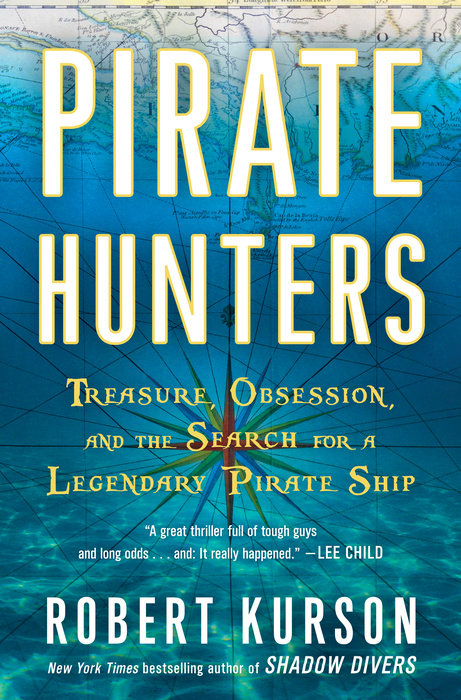
9781400063369The Parnassus staff has some great book recommendations, including two of my recent favorites: The Light of the World, a beautiful meditation on loss and healing, by Elizabeth Alexander, and Pirate Hunters: Treasure, Obsession, and the Search for a Legendary Pirate Ship, by Robert Kurson, as well as a new novel my colleague Molly absolutely loved: Fishbowl, by Bradley Somer. The August selection for Parnassus’s First Editions Book Club is Circling the Sun, a biographical novel about Beryl Markham by Paula McLain (The Paris Wife). I enjoyed Circling the Sun very much, although some of my coworkers weren’t enamored with McLain’s writing style. It inspired me to reread sections of Markham’s memoir, West With the Night, which was one of the first books my book club read, back in 1988.

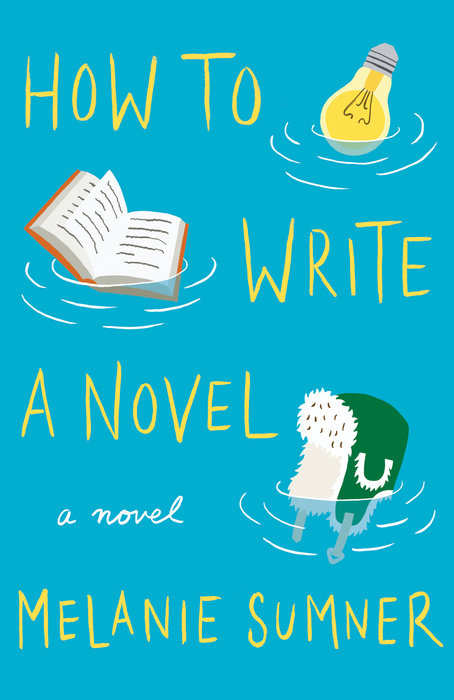
9781101873472-1I’m really excited about several books published this month. Melanie Sumner’s debut novel, How to Write a Novel (a paperback original), is a delight. I loved every page of this book, and what I enjoyed most was the voice of the 12.5-year-old (and yes, that’s how she refers to herself) narrator, Aristotle. While trying to write a book, following the instructions in a writing manual, Aristotle stumbles upon some family secrets. Fans of Where’d You Go, Bernadette? will adore this smart and endearing novel — and since almost everyone loves Where’d You Go, Bernadette?, that means almost everyone will enjoy How to Write a Novel. You could also look at this book as a Harriet the Spy for grownups.

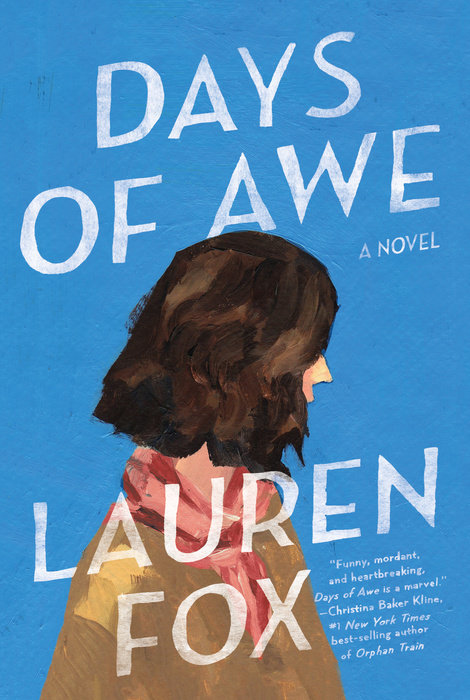
9780307268129Days of Awe, by Lauren Fox, also features a protagonist with a memorable voice. Isabel, a wife, mother, and middle school teacher, is crippled by grief and guilt when her best friend dies in a car accident. Days of Awe is a story of self-discovery, as Isabel redefines her relationships with everyone she loves. It’s by no means an unrelentingly sad book — Isabel, who makes plenty of mistakes, is filled with clever, self-deprecating humor.

9780385540049Meg Mitchell Moore’s The Admissions (available August 18) is not just another book about college admissions and the associated parental and teenage angst. This insightful and delightfully witty novel is about much more than getting into college: the secrets the members of the upwardly mobile Hawthorne family are keeping from each other, and the admissions they must make. I loved Moore’s previous books (The Arrivals and So Far Away) and I’m not sure why she hasn’t received more acclaim. Please look for a Q & A with the author on Books on the Table later this month!

a-window-opens-9781501105432_lgComing on August 25 is a book that touched my bookselling heart — it’s sort of a mashup of Goodnight June (Sarah Jio) and The Storied Life of A.J. Fikry. A Window Opens, by Elisabeth Egan, makes me want to gush, so I’m not going to hold back — I adored it! It’s the clever and entertaining story of a full-time mother and part-time editor who suddenly needs to find a “real” job — and lands at “Scroll”, an up-and-coming company with a diabolically quirky corporate culture that plans to develop e-book lounges. (At least, that’s the party line Scroll feeds our heroine, a book lover.) Perfect for all those readers who don’t want to read “dark” or “depressing” books,  the novel pays tribute to independent bookstores — and tells a heartwarming family story at the same time.

Don’t rush the end of summer — there’s still plenty of outdoor reading time!

When the Moon is Low — Book Review and Giveaway

I dare to imagine a perfect world. I dare to dream that the woman writing my story on these many pages will stop and remember that a boy by the name of Saleem Waziri is here and in search of his family. I dream that I will tell him his brother is well. I dream that we receive a letter declaring that we will not be sent away and that we will be allowed to work and go to school and stay in this country where the air is clear and life is more like metal than dust.
Fereiba, widowed mother

Saleem lived in those voids. He lived in the uninhabited spaces of night, the places where bright, cheerful faces would not be. He lived in the corners that went unnoticed, among the things people swept out the back door.
Saleem, teenage son

When the Moon is Low book coverFereiba and her family survived the Soviet occupation of Afghanistan, only to suffer more under the Taliban regime. Unable to provide for her three children, since the oppressive regime prohibits her from working as a schoolteacher, Fereiba packs up her children — including a sickly infant — and embarks on a dangerous and illegal journey to join her sister’s family in London. Along the way, Saleem becomes separated from his mother and siblings and tries to find his way to freedom.

Nadia Hashimi tells the Waziri family’s story from the alternating perspectives of both Fereiba and Saleem. Fereiba’s chapters, told in the first person, lend emotional intimacy to the sweeping narrative. Fereiba’s distinctive voice allows the reader to connect and empathize with her. Saleem’s chapters, written in the third person, include not only his point of view but occasionally the points of view of various other characters. The effect of these additional perspectives is to distance the reader from Saleem. The sections of the book focused on Saleem’s experiences attempt to cover too much territory, and I found myself anxious to return to the chapters narrated by Fereiba.

Without giving away important plot points, it’s difficult to reveal much about the family’s odyssey through the Middle East and Europe. Hashimi creates sympathy for her characters along with tension that will keep readers turning the pages. Americans read frequently about the plight of illegal immigrants in the United States, but not as often about the hardships faced by refugees and immigrants in European countries. When the Moon is Low brought to mind Chris Cleave’s Little Bee, another heartbreaking story about the human cost of repressive political regimes.

Of course, the best known novels about modern-day Afghanistan are Khaled Hosseini’s — especially his debut, The Kite Runner. The Kite Runner is often credited with introducing Afghan culture to Americans; in an interview with the Atlantic, Hosseini says: “Most readers have come away with a sense of empathy for Afghanistan and its people; there’s been awareness of the richness of its culture, its heritage and its history.” Hosseini — like the fictional Saleem in When the Moon is Low — was forced to flee Afghanistan as a teenager.

Hosseini arrived in the United States knowing no English, and although he had always dreamed of becoming a writer, he never imagined he would write books in English. He acknowledges that his greatest strength is as a storyteller, not as a prose stylist:

I think my strength is in telling a story. That’s my strength. I can keep a reader’s interest. I can bring a sense of anxiety to every page; bring a sense that something’s at stake in every page . . . . I also write in a way that emotionally resonates with the audience. I want something to be at stake emotionally for every story I write . . .

My weaknesses? I have a long list. I’m well aware of my limitations as a writer. I will never be stylish. I will never have a particularly interesting prose. When I read contemporary fiction, I recognize prose that is beyond my grasp.

Nadia HashimiHashimi, too, is a gifted storyteller and a competent writer. Born in the United States, she is the daughter of Afghan immigrants. Her parents left Afghanistan in the 1970s, planning to work in the U.S. for a few years, but ended up staying permanently after it became clear it was unsafe for them to return. Her mother, an internationally trained civil engineer, was one of the first women to enroll in Kabul University’s engineering program.

In a surprising coincidence, Khaled Hosseini and Nadia Hashimi are both physicians. Somehow — in between practicing medicine, helping to manage her husband’s neurosurgery practice, writing articles for Psychology Today, and raising three children — Hashimi has had time to write two novels. The Pearl That Broke Its Shell, published in 2014, is the moving story of two Afghan girls, separated by a century, who adopt the custom of bacha posh, in which they disguise themselves as boys in order to attend school and move freely. (For a nonfiction account of this custom, I highly recommend The Underground Girls of Kabul: In Search of a Hidden Resistance in Afghanistan, by Jenny Nordberg — just out in paperback.)

Sashimi told her college alumni magazine  that she actually began writing The Moon is Low before she came up with the idea for The Pearl That Broke Its Shell:

When the Moon Is Low was Hashimi’s first attempt at fiction. Her husband thought her idea for the story was interesting and encouraged her to explore it. . .  Hashimi got a literary agent on the strength of an early draft. “Actually, until I had an agent, I didn’t really think anything was going to come of it,” she says. “Writing was more like a hobby.”

She also had the idea for “Pearl” percolating. Eventually, she put the “Moon” manuscript aside to give the second book her undivided attention. She wrote “Pearl” in nine months — it came “in one big swoop,” she says — while she was working part time as a doctor and expecting her second baby.

The Pearl That Broke Its Shell focuses on the oppression of Afghan women, both generations ago and today. Released earlier this year in paperback, it’s garnered excellent reviews, including one from Khaled Hosseini: “Nadia Hashimi has written, first and foremost, a tender and beautiful family story. Her always engaging multigenerational tale is a portrait of Afghanistan in all of its perplexing, enigmatic glory, and a mirror into the still ongoing struggles of Afghan women.”

When the Moon is Low documents the struggles of Afghan refugees, but also shines a light on the experiences of displaced people everywhere. As the author says in her acknowledgments, “This story was inspired by the masses of people all over the world in search of a place to call home.”

I have an extra copy of When the Moon is Low I would love to give away — please comment below or send me an email at bksonthetable@gmail.com, and I’ll toss names in the proverbial hat in a couple of weeks.

For more reviews, please visit TLC Book Tours.

\

Vacation

I’m on vacation this week, which means lots of reading and relaxing — and no reviewing. I’ll be back next week with book reviews. 

9780804170154On my vacation, I’ve read two books I loved: The Painter, by Peter Heller, which came out last year, and Hold Still, by Sally Mann, just published.

If I were teaching a class called “How to Write a Novel”,  I would use the opening lines of The Painter as an example of how to grab a reader’s attention:

I never imagined I would shoot a man. Or be a father. Or live so far from the sea.

(By the way, I just read the advance reader’s copy of a terrific novel with the title How to Write a Novel, by Melanie Sumner, that will be published as a paperback original in early August. I enjoyed every page of this clever and endearing book, and what I loved most was the voice of the 12.5 year old (yes, that’s how she refers to herself) narrator, Aristotle. If you liked Where’d You Go, Bernadette? (and who didn’t?), you’ll have a great time with How to Write a Novel.)

02dde0b11247a412ef5ab2d18f7ba165I think Hold Still is one of the best memoirs I’ve ever read. It doesn’t seem fair that Sally Mann is not only a renowned photographer but a talented writer as well. Don’t be tempted to read the book electronically, because the photographs — and there are many — are integral to the story, and I think you need to see them on the printed page.

IMG_1535I’m in the middle of The Rocks, by Peter Nichols, which I brought along because it seemed like such a vacation book — it’s good, but I’m able to put it down. There’s so much else to do, especially when the sun is shining!

WWW Wednesday — Summer Reading Version 1.0

IMG_1492
My favorite reading spot, rain or shine.

It’s WWW Wednesday, when I answer three questions: What are you currently reading? What did you recently finish reading? What do you plan to read next?

Although it’s officially summer, I have yet to enjoy that quintessential summer pleasure: reading at the beach or the pool. It’s been cool and wet, so I’ve logged quite a few blissful reading hours on my screened porch, listening to the rain on the roof. Who needs those damaging UV rays, anyway, along with screaming children and biting flies?

16087465710_cf0a2d0c1e_o-500x500I’m reading, as usual, several books at once. Yes, I understand it’s not really physically possible to read more than one book at a time. I like to have a novel, a nonfiction book, and an e-book (either fiction of nonfiction) going. A recent topic on one of my favorite podcasts, Books on the Nightstand, was how to squeeze more reading into the day. A suggestion, which I think is terrific, was to read nonfiction in the morning and fiction in the evening. Another idea — even better —  is to change the screen saver on your phone to say “Read a book instead”. (Click here for a great screen saver you can download.)

9781400063369I just started reading Robert Kurson’s Pirate Hunters: Treasure, Obsession, and the Search for a Legendary Pirate Ship, the follow-up to Kurson’s terrific Shadow Divers (2004) — and I’m already hooked. Shadow Divers is one of my all-time favorite narrative nonfiction books; Kurson’s second book, Crashing Through, about a man who regains his sight after nearly a lifetime of blindness is a must-read as well.  My friend and colleague Diane recommended Pirate Hunters to me, noting that one of the daring wreck divers in search of famous pirate Joseph Bannister’s ship. Golden Fleece, is John Chatterton — hero of Shadow Divers. The book is not as much about the actual diving as it is about the history of piracy and how Chatterton and his partner, John Mattera, needed to understand Bannister’s psychology in order to find his ship.

9780062367556My current novel is Church of Marvels, by Leslie Parry, historical fiction set in turn-of-the-century New York City —  mostly Coney Island and the Lower East Side. The stories of an abandoned infant,  sideshow performers, a beautiful mute, and a young woman trapped in a mental hospital all converge (I’m not sure how, yet!) in this vivid and imaginative debut novel. A Chicago resident, debut novelist Parry recently appeared at the Printers Row Lit Fest with Matthew Thomas (We Are Not Ourselves). I wish I had been able to go — but I’ll be interviewing Parry later this summer.

I just finished two wonderful novels — Language Arts, by Stephanie Kallos, and Our Souls at Night, by Kent Haruf. They are two very different books — Language Arts is over 400 pages, with a complicated plot, and Our Souls at Night (described by several reviewers as “spare”), is a short novel, focusing on just two characters.

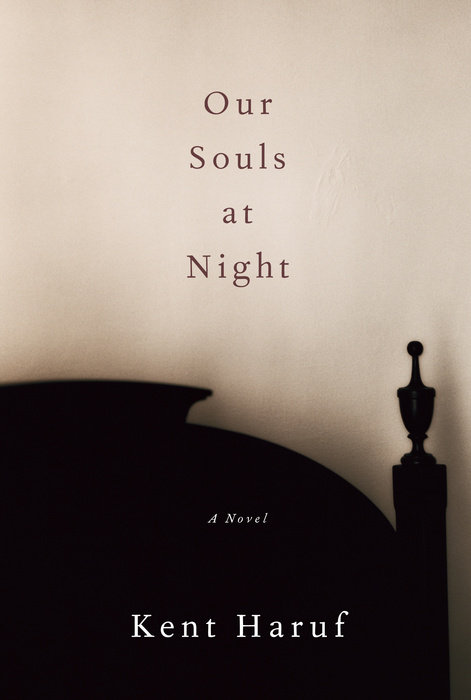
9781101875896Our Souls at Night is a beautiful and sad story, made sadder by the fact that Kent Haruf died shortly after completing his final edits on the novel. Haruf’s books are all set in the fictional town of Holt, Colorado and focus on everyday people and their need for connection with each other.  The New York Times says: “His great subject was the struggle of decency against small-mindedness, and his rare gift was to make sheer decency a moving subject.” Addie Moore and Louis Waters, both widowed and in their seventies, are long-time neighbors who seek respite from loneliness in an unusual way: through a platonic friendship that includes sleeping in the same bed. Addie says:

I’m talking about getting through the night. And lying warm in bed, companionably. Lying down in bed together and you staying the night. The nights are the worst. Don’t you think?

Kent Haruf gives more insight into the lives and longings of his characters in less than 200 pages than many authors do in books double that length. I read the book in one afternoon and had to slow myself down so I could appreciate the plain yet poetic language. My book group will be discussing Our Souls at Night next month, and I’m disappointed to miss the meeting.

9780547939742Language Arts explores many of the same themes as Our Souls at Night, especially the themes of loss and human connection. How do you connect with someone you love who doesn’t have language? Charles Marlow, an English teacher and a lover of the written word, is the divorced father of an adult autistic son. His daughter has just left for college, and Charles is desperately lonely. He reflects on his unhappy childhood, particularly his traumatic fourth-grade year; his broken marriage, and his relationship with his son, Cody:

Language left him gradually, a bit at a time. One would expect words to depart predictably, in reverse order — the way a row of knitting disappears, stitch by stitch, when the strand of working yarn is tugged off the needle — but that was not to be . . . God was the last holdout . . .

I absolutely loved this book, but I don’t want to say too much about it because the plot is full of surprising twists. As a review in Paste magazine says, “Kallos can spin a reveal like nobody’s business. At her best, she compels you to recalibrate everything you thought you knew about the book.” The review goes on to point out that while Kallos is a talented storyteller, her real gift is her deep understanding of her characters:

One thing that separates a good novel from a great one is when empathy accompanies insight. The novels of Stephanie Kallos are filled with the sort of empathy that elevates not just the books but their readers. They convey the overarching sense that repairing the world is a real possibility, however remote—more than one absorbing read away, to be sure, but certainly closer at the last line than the first.

What’s next? I’m looking forward to reading The Buried Giant, by Kazuo Ishiguro. I don’t know why I haven’t read it yet — it’s been sitting on my shelf for quite some time, several people whose opinions I trust have raved about it, and I’ve loved Ishiguro’s other books. After that . . . I can’t decide. Too many choices!


The Cherry Harvest — Book Review

9780062343628

When I was a teenager in the 1970s, I didn’t read much YA literature — because there wasn’t much available, not because I was a particularly discerning reader.  I read everything from Jane Eyre to The Thorn Birds, without much awareness that there was a difference in literary quality. I did read some books that were specifically written for teens (The Outsiders, Forever, Mr. and Mrs. Bo Jo Jones), and my favorite was Summer of My German Soldier by Bette Greene.

Summer of My German Soldier, originally published in 1973, has been in print ever since. It tells the story of a young Jewish girl growing up in a small Arkansas town in World War II, with an abusive father and a cold mother who prefer her sister. She befriends a German POW from a nearby camp, and shelters him when he escapes.

The Cherry Harvest, Lucy Sanna’s debut novel, appealed to me because of its setting in Wisconsin and because it focused on a fascinating topic I hadn’t read about i in years — German POWs on American soil. When I started reading the novel I was reminded of Summer of My German Soldier and unearthed my old copy. Before I knew it, I was immersed in my 40-year-old book, which was as wonderful as I’d remembered. So when I returned to The Cherry Harvest, I’m sorry to say that the new book  — while enjoyable — suffered in comparison.

The Cherry Harvest is set on a family farm in Door County, Wisconsin, during World War II. Because of labor shortages, no workers are available to help with the harvest and the Christiansen family is living hand-to-mouth. When Charlotte Christiansen proposes that German prisoners move into her family’s migrant worker camp and provide much-needed labor to the surrounding area, she initially meets with resistance from the community. But eventually the local officials relent, and the POWs (called PWs in this book, as they were at the time) move in, resulting in repercussions no one could have predicted.

Charlotte is a difficult character to like. I have no problem with unlikable characters; some of the best characters in literature are unlikable, but they have qualities that make them compelling. I found Charlotte unpleasant and uninteresting, and couldn’t figure out what the men in the novel found so appealing about her. The very first scene of the book, which is written in vivid, gruesome detail, describes Charlotte butchering her daughter Kate’s rabbit so the family will have food on the table that evening. This scene successfully shows Charlotte to be a tough, pragmatic person who will do what she needs to do, without much emotion.

Charlotte’s husband, Thomas, is a reluctant farmer who had hoped to finish college and pursue a literary career. Now his son is fighting in Europe and Thomas has pinned his hopes on his daughter and fellow book lover. Kate plans to attend the University of Wisconsin as an English major and aspiring writer in the fall, even though Charlotte repeatedly comments that reading is a waste of time. (Just another reason not to like Charlotte!)

Kate is an endearing character, sheltered and naive, but ready to take on the world. She meets her first love early in the novel, a privileged senator’s son who is, in Kate’s view, shirking his patriotic duty. Lucy Sanna mentions in her author’s note that Kate’s part in the novel came alive when Sanna and her daughter were walking along the lakeshore in Door County and noticed a summer home that belonged to a politician.

Sanna, a Wisconsin native, says she was intrigued to learn that German POWs were housed in camps throughout the state during World War II. She says:

I saw great potential for conflict. I imagined a small town that feared the prisoners and a farming family that needed them. There would be a strong woman at the center of the controversy, an attractive teenage daughter who would surely come into contact with the prisoners, and a son fighting against the Germans in Europe.

Perhaps there is too much conflict — or too many subplots — in this novel. Each thread of the novel receives relatively superficial treatment, because there are so many threads. I would have preferred to have the novel concentrate on one or two issues, rather than try to include everything from post-traumatic stress syndrome to war profiteeringl. I’d also have liked Sanna to delve more deeply into one or two relationships — particularly Ben’s relationship with his fiancée, Josie — rather than skim over multiple relationships. Sometimes less is more, and I think with this book I’d have liked more character development and less plot.

Whenever I finish a book, I ask myself, “Who’s the audience for this book? Will I recommend it, and to whom?” I think The Cherry Harvest would be a good choice for YA readers making the transition to adult books. They will appreciate the straightforward writing, the fast-paced plot with plenty of action, and they will identify with the teenage characters, particularly Kate. And they’ll get a bit of a history lesson besides. (I also recommend that they pick up Summer of My German Soldier!)

For more information about Lucy Sanna, visit her www.lucysanna.com. Although she lives in California, you can tell she’s a native Midwesterner from this quote on her website:

I love weather. I gain energy from thunderstorms, and peace from snow. I like walking in summer rain as much as walking on a foggy ocean beach. I like sunsets on the lake. I like weather.

Fall in the Midwest, that’s my favorite season. Colored leaves crunchy dry beneath my feet. The clear air, the last sharp smells of life.

For more reviews of The Cherry Harvest, visit TLC Book Tours.

10 Summer Paperback Picks

In the spring, I posted a list of 10 of my favorite recent books just published (or about to be published) in paperback. It’s now official summer reading season, and dozens of new paperbacks are piled high on bookstore tables. Some of these (Station Eleven) were critically and commercially successful in hardcover; some (The Blessings) didn’t get as much attention as they deserved in hardcover; and some (The Red Notebook) are brand new books, never published in hardcover.

More and more books are being published as paperback originals. According to an article in the Wall Street Journal (“The Stigma of Paperback Originals”), American publishers view the “straight to paperback” format as “an increasingly attractive option—perhaps the only option—for young authors with no track record, midcareer authors with a challenging track record and international authors being published for the first time in the U.S.” The Journal points out the paperback original is “the industry standard ‘ In Europe, the U.K., Australia and New Zealand.”

Frances Coady, formerly publisher of Picador, the paperback imprint of Macmillan, is quoted in the article as saying: “You have to ask yourself questions like, ‘Is it better to sell 5,000 or 8,000 copies in hardcover and try to reinvent the book in paperback?’—which, unless there’s some extraordinary piece of luck, is really hard to do—or ‘Is it better to sell 50,000 in a paperback original?'”

As a reader, I vote for the paperback option — especially now that paperbacks are so high-quality. Some even have fancy French flaps. Gone are the days when you cracked open a paperback only to have loose pages flutter out. And booksellers have a much easier time convincing customers to take a chance on a new author with a paperback than with a hardcover. Here are 10 books to take a chance on this summer:

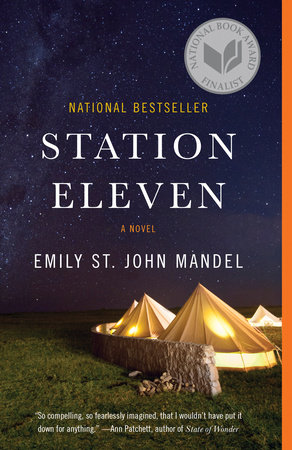
9780804172448Station Eleven by Emily St. John Mandel (hardcover 9/14; paperback 6/15)
WHAT WAS LOST IN THE COLLAPSE: almost everything, almost everyone, but there is still such beauty. Twilight in the altered world, a performance of A Midsummer Night’s Dream in a parking lot in the mysteriously named town of St. Deborah by the Water, Lake Michigan shining a half mile away.

I’m surprised this book was released in paperback only nine months after it came out in hardcover. One of five finalists for the National Book Award in fiction, the post-apocalyptic novel has been a bestseller for months. Despite the acclaim, I would never have picked up this book if it hadn’t been a selection for my book group. I couldn’t imagine getting through, much less enjoying, a dystopian novel. But I truly loved every page and recommend it without reservations to anyone who reads literary fiction. I was captivated by the first chapter, which takes place during a performance of King Lear. In a New York Times interview, the author said,

I wanted to write a love letter to the modern world, and a way to write about all these things we take for granted was to write about their absence. People would want what was best about the world, and it’s subjective, but to me, that would include the plays of Shakespeare.

women-kings-260x388-1Where Women Are Kings by Christie Watson (paperback original 4/15)
They said that the wizard was something Mama had dreamed, and because she was sick in the head. But how could Mama’s dream get inside Elijah’s head? And now they told him that Mama hurt him badly. Every time he closed his eyes, he remembered and he wanted to scratch out the memory but he couldn’t. It waited there for him like a wolf under a tree.

Seven-year-old Elijah, the son of an abusive and mentally unstable Nigerian immigrant, finds refuge with Nikki and Obi in a stable home. But Elijah comes to believe he is possessed by a wizard. This heartbreaking, beautifully written story explores  foster care, childhood trauma, interracial adoption, mental illness, religious ideology, and the complex nature of parental love.

9780345807335Dear Committee Members by Julie Schumacher (hardcover 8/14; paperback 6/23/15)
. . . Remembering Ms. Newcombe now  — though my file drawer contains thousands of lives for which I often find myself feeling accountable — I realize I am well disposed in her favor; in fact, I thoroughly urge you to offer her a job. Why? Because as a student of literature and creative writing, Ms. Newcombe honed crucial traits that will be of use to you: imagination, patience, resourcefulness, and empathy. The reading and writing of fiction both requires and instills empathy– the insertion of oneself into the life of another.

Professor Jason Fitger’s personal life and writing career are falling apart, and he tells the story through a series of very funny letters of recommendation. “Clever” doesn’t begin to describe this novel, which is much more than a satire of academia. If you enjoyed Where’d You Go, Bernadette?, you’ll love Dear Committee Members.

9781594633881The Vacationers by Emma Straub (hardcover 5/14; paperback 6/15)
A good swimming pool could do that—make the rest of the world seem impossibly insignificant, as far away as the surface of the moon.

When a New York family spends a summer vacation in a rented house in Mallorca, things are a little too close for comfort. From the New York Times: “For those unable to jet off to a Spanish island this summer, reading The Vacationers may be the next-best thing. Straub’s gorgeously written novel follows the Post family — a food writer named Franny; her patrician husband, Jim; and their children, 28-year old Bobby and 18-year-old Sylvia — to Mallorca . . . When I turned the last page, I felt as I often do when a vacation is over: grateful for the trip and mourning its end.” I felt the same way! I’ve heard that The Rocks by Peter Nichols, just published a couple of weeks ago, is another wonderful book set in Mallorca — I can’t wait to read it.

44e1505bebb7632d9a662b978df7fc9aThe Blessings by Elise Juska (hardcover 5/14; paperback 5/15)
She thought about how it was something they would all remember forever. How this was family: to own such moments together. To experience them in all their raw shock and sadness, then get the food from the refrigerator, unwrap the crackers and fill the glasses, keep the gears turning, the grand existing beside the routine, the ordinary.

This lovely novel follows several generations of a close Irish-American family from Philadelphia, in a “deceptively simple tale that examines the foibles, disappointments and passions that tie family members together” (Publishers Weekly). The book reminded me a bit of Olive Kitteridge, since it’s a collection of linked stories. Like the PW reviewer, I felt lucky to have spent some time in the Blessings’ presence.

UnknownWe Are Not Ourselves by Matthew Thomas (hardcover 8/14; paperback 6/15)
You are not in this life to count up victories and defeats. You are in it to love and be loved.

Both an epic novel of the 20th century in America and an intimate story of a marriage and family, We Are Not Ourselves amazed me with its sympathy for its complex and flawed characters. As I was reading it, I was reminded of Alice McDermott. The New York Times reviewer remarked on the connection between the two authors: “Mr. Thomas’s narrow scope (despite a highly eventful story) and bull’s-eye instincts into his Irish characters’ fear, courage and bluster bring to mind the much more compressed style of Alice McDermott. (According to this book’s acknowledgments, she has been one of his teachers. If he wasn’t an A student then, he is now.)” Daniel Goldin, owner of Boswell Book Company put it more succinctly; he notes that McDermott’s novels are “on the slim side” and calls Matthew Thomas “Alice McDermott on steroids”.

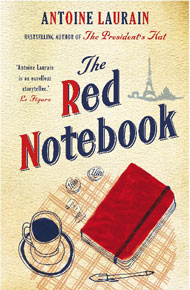
9781908313867The Red Notebook by Antoine Laurain (paperback original 3/15)
He drank some more wine, feeling he was about to commit a forbidden act. A transgression. For a man should never go through a woman’s handbag — even the most remote tribe would adhere to that ancestral rule. Husbands in loincloths definitely did not have the right to go and look for a poisoned arrow or a root to eat in their wives’ rawhide bags.

I hate to use the word “charming”, but this little jewel of a novel really is charming — and it’s not sappy. Parisian bookseller Laurent Letellier finds a woman’s handbag on the street, containing plenty of personal items — including a red notebook — but no clues to the owner’s identity. This has been one of our store’s staff and customer favorites for months — it’s the kind of book people buy in multiples to give as gifts.

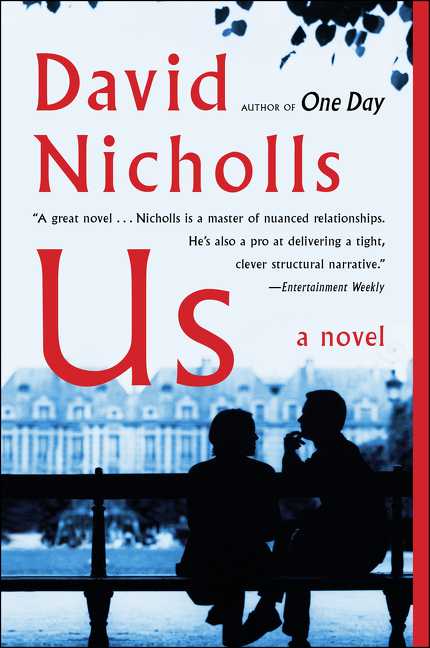
9780062365590Us by David Nicholls (hardcover 10/14; paperback due 6/30/15)
. . .  And, like many men of my generation, I enjoy military history, my “Fascism-on-the-march books”, as Connie calls them. I’m not sure why we should be drawn to this material. Perhaps it’s because we like to imagine ourselves in the cataclysmic situations that our fathers and grandfathers faced, to imagine how we’d behave when tested, whether we would show our true colours and what they would be. Follow or lead, resist or collaborate?

Has Douglas and Connie’s long marriage, as she claims, run its course? A summer “grand tour” of Europe with their sullen teenage son, Albie, brings matters to a head. If a book could be described as a romantic comedy, that would be the appropriate term for this smart and delightful novel. The characters, especially Albie, will drive you crazy — just like real people.

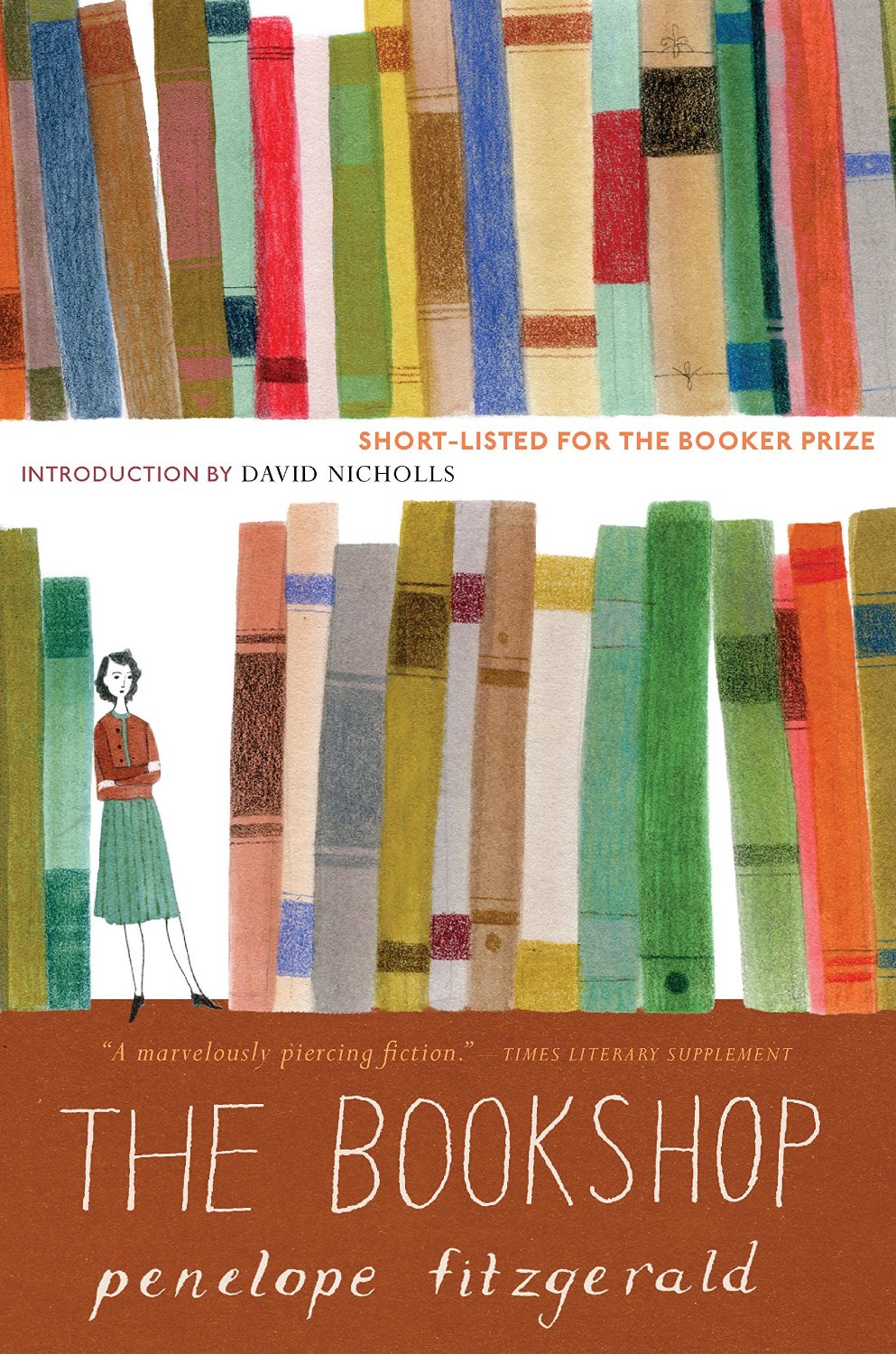
A1Ugvdz5AnL._SL1500_The Bookshop by Penelope Fitzgerald, with introduction by David Nicholls (paperback original published in the U.S. 6/15)
A good book is the precious life-blood of a master-spirit, embalmed and treasured up on purpose to a life beyond life, and as such it must surely be a necessary commodity.

I’m thrilled that this brilliant novel is being introduced to a new generation of American readers.  It’s about a widow who decides to open a bookshop in an isolated English village, encountering resistance from her neighbors. David Nicholls, who worked as a bookseller at Waterstones in London for several years, writes in introduction to the new edition of The Bookshop:

With typical self-deprecation, Fitzgerald called The Bookshop a “short novel with a sad ending”, which is true I suppose, but takes no account of Fitzgerald’s wit and playfulness . . . Fitzgerald’s great gift, often remarked upon, was the precision and economy of her prose . . .

It’s worth noting that Fitzgerald was a late bloomer. The New Yorker points out that The Bookshop, “published when Fitzgerald was sixty-one, announced her arrival on the literary scene.”

9780143127444The Hundred-Year House by Rebecca Makkai (hardcover 7/14; paperback 5/15)
But here at Laurelfield, there was something more in the mornings, a buzzing sensation about the whole house, as if it weren’t the servants keeping it running but some other energy. As if the house had roots and leaves and was busy photosynthesizing and sending sap up and down, and the people running through were as insignificant as burrowing beetles.

Once an artists’ colony, now a luxurious private home, the “hundred-year house” has a profound effect on its residents and visitors. Using an innovative narrative structure — the book begins at the dawn of the 21st century and travels back in time to 1900 — Rebecca Makkai draws us in to a world filled with artists, poets, academics, heirs and heiresses . . . and perhaps a ghost. I was enthralled from the first page. Makkai has a new book coming out this summer — a short story collection called Music for Wartime.

It just occurred to me that all the books on this list are fiction. There are plenty of great nonfiction books coming out this summer as well, and I’ll be highlighting those soon. Which paperbacks are you planning on picking up this summer?

A Deadly Wandering — Book Review

9780062284075

We have Paleolithic emotions, medieval institutions, and godlike technologies.
E.O. Wilson (epigraph to A Deadly Wandering)

The tragedy was the product of a powerful dynamic, one that elite scientists have been scrambling to understand, even as it is intensifying. It is a clash between technology and the human brain.
Matt Richtel, A Deadly Wandering

Every so often I read a book that inspires a certain evangelical fervor. I want everyone to read the book, because what the author has to say is original, compelling, and life-altering. When I read a book like this, I recommend it to everyone, without regard to reading tastes. I will even recommend it to people who don’t read much, reasoning that if they read ONE book this year, this should be the one.

A Deadly Wandering is one of those books I tell people they absolutely have to read. Pulitzer Prize winner Matt Richtel combines a groundbreaking legal case and the latest scientific research on the brain in a compulsively readable, multi-layered story about a devastating accident and the perils of multitasking in today’s digital world.

Just released in paperback, A Deadly Wandering has a new cover and a new subtitle. Despite my enthusiasm, I had a hard time selling the book in hardcover. Maybe I made it sound too much like a preachy public service announcement, rather than the engrossing and moving story it actually is. Or maybe the subtiitle was the problem: A Tale of Tragedy and Redemption in the Age of Attention. The new subtitle, A Mystery, A Landmark Investigation, and the Astonishing Science of Attention in the Digital Age, isn’t perfect either, but I guess the publisher couldn’t just call it A Deadly Wandering: Why You Shouldn’t Text and Drive. Whatever market research publishers use must have suggested to them that “mystery” and “investigation” appeal to more readers than “tragedy” and “redemption”.

15865-a-teen-girl-texting-while-driving-pvThere’s actually not much of a mystery in A Deadly Wandering. The reader knows “whodunit”: 19-year-old Reggie Shaw crossed the center line on a Utah highway on a rainy morning in 2006, killing two people. As the investigation of the tragic accident progresses, it becomes clear to the investigative team that Reggie’s distracted driving caused the crash. Scott Singleton, a Utah State Trooper, and Terryl Warner, a victim’s advocate, are determined to bring Reggie to justice, and are frustrated by Reggie’s initial denial of responsibility, as well as the lack of community support for their crusade:

Some members of the community, while sympathetic to the victims, couldn’t understand the fuss. So what if he’d looked at his phone, or texted — haven’t we all been distracted behind the wheel? Who knew that was so wrong? The law was no help: Nobody in Utah had ever been charged with such a crime.

The real mystery isn’t how the crash happened, or why Reggie lied about it. Richtel delves into Reggie’s background, painting a sympathetic portrait of a young man who transforms himself from what the New York Times calls “a thoughtless, inadvertent killer” and “denier of his own culpability” to “one of the nation’s most powerful spokesmen on the dangers of texting behind the wheel”. The mystery is why we continue to jeopardize our lives, and the lives of others, by using technology while driving.

Dr. David Strayer, a human factors expert, is a pioneer in the application of attention science to driving. His research centers on an important question:

Why, given it was becoming clear that the brain faced limitations, were people continuing to multitask, particularly in challenging, even dangerous situations? When he first started his work on distracted driving, he just assumed people would stop the behavior when they realized how dangerous it could be. But when phone use by drivers continued, even grew, he was forced to reach another conclusion, one that vexed him. People didn’t stop using the technology, because they couldn’t.

Matt-RichtelIn an interesting follow-up to A Deadly Wandering, Matt Richtel published an article in the New York Times two days ago (5/31/15) called “Eyes on the Road. Head in the Cloud”, covering new devices that are designed to “provide safer ways for people to multitask while driving”. Is that possible? Psychologists and neuroscientists say it’s not.

If A Deadly Wandering focused exclusively on cognitive science and the legal issues surrounding distracted driving, it would still be an interesting book. What elevates the book to page-turner status is Richtel’s treatment of the human beings involved. The reader becomes intimately acquainted with not only Reggie and his family, but other key players: the victims and their families, scientists, police investigators, attorneys, and legislators. The New York Times review points out that the story of Terryl Warner, a survivor of child abuse and a passionate advocate for crime victims, is “every bit as fascinating and redemptive as Shaw’s.” Everyone is trying to do his or her best under difficult and confusing circumstances.

Judge Thomas Willmore, the presiding judge on Reggie’s case, keeps cherished books in his chambers. One is “a beat-up paperback edition of Victor Hugo’s Les Miserablés, in which he’d underlined passages in red and blue pen. It touched on so much of what he faced: crime, rehabilitation, the role of the system for good and sometimes ill.” When Judge Willmore gives Reggie his sentence, he adds a final condition: requiring Reggie to read Hugo’s masterpiece, “which talks about a man who has done a terrible thing and makes it right again”.

Judge Willmore believes that redemption is possible. Reggie Shaw has pledged to devote the rest of his life to preventing others from making the same mistake he did. But, Richtel asks us, how can we come to terms with the addictive power of technology? I urge you to read this provocative book — and to share it with the new drivers in your family.

For more reviews, please visit TLC Book Tours, as well as From Reid’s Dad, a blog written by a father who lost his teenage son to a car crash. I also recommend The Deadly Wandering website, which includes a video of Richtel discussing the book and a quiz that measures your knowledge of current information about texting and driving. I’m embarrassed to admit that even after reading the book twice, I still didn’t do well on the quiz. If I were in school, I’d complain to the teacher that the material wasn’t covered in the book!

The Dismantling — Book Review

9780142181744If you’re in the mood for a smart, unusual thriller, The Dismantling is a terrific choice. On the surface, it’s about the illegal organ trade in the United States. I have no idea how much of this sort of criminal activity actually takes place here. As we all know, once you start researching something on the Internet, you can easily descend into a rabbit hole and emerge with no greater understanding of the original subject you were trying to investigate. That’s what happened when I typed in “black market organs” in the Google search box on my computer.

In Brian DeLeeuw’s thought-provoking novel, cash-strapped Maria Campos has little difficulty finding an organ broker online who is willing to buy a section of her liver. Medical school dropout Simon Worth has joined a shady organization called Health Solutions that matches poor and desperate people willing to sell their organs with rich and desperate people whose time on the legal transplant list is running out. Posing as the second cousin of Lenny Pellegrini, an NFL player suffering from alcoholism and severe depression, Maria travels to New York to “donate” a portion of her liver, collect a large chunk of cash, and start a new life. When things go badly awry, Simon is forced to face his painful past and decide what kind of person he wants to be in the future.

The “dismantling” of the title refers not just to the dismantling of Maria’s body when she sells her liver, but to the breakdown of her life when she suffered trauma as an adolescent. Simon’s life fell apart when he experienced tragedy as a young adult, and Lenny’s physical and mental health were destroyed when he was repeatedly injured during his football career. DeLeeuw asks the reader to consider whether lives can be reassembled after they have been stripped bare. Can there be redemption after “dismantling”?

DeLeeuw explains in an interview with fellow author Christopher Beha how he came up with the idea of using illegal transplants as a vehicle to explore themes of morality in contemporary society:

I came up with the character of Simon Worth first—a young man who is carrying around an enormous amount of guilt and shame, someone who feels that he is not capable of living a regular life with a regular job, friends, girlfriend. He feels defective in some way—psychically isolated—and yet he also has these large student loans to pay off from a failed attempt at medical school, so he needs to get his hands on money quickly. He can’t just retreat entirely from life. I knew I wanted take this character with very little to lose, somebody who feels as though a vital part of himself has already died, and place him in the center of a criminal underworld, turn him into an unlikely criminal.

This dovetailed with my more general desire to write an internally-focused, slow-burn crime novel. In 2008 and 2009, I started noticing articles about the organ trade popping up more frequently in mainstream newspapers and magazines; the more I read, the more I was intrigued. The idea that everything is up for sale now, that you can put a price on absolutely anything—that was of course part of the fascination. I also thought the question of individual autonomy and agency was raised here in an interesting way: should people have the right to sell parts of their bodies? Or is there something inherently unethical about the market exchange of organs?

brian-abuotThe author’s description of his novel as “slow-burn” is vivid and accurate. The novel’s action moves between the past and the present, gradually illuminating the inner lives of the characters. Asked in an interview with author Matthew Rubinstein to describe the value of “slow reveals”, DeLeeuw says:

Some novels take place only in the present, and draw their suspense from forward motion. But the novels I like most have that element, but also have a counterpoint of revealing more and more about the characters’ pasts–their back stories. There’s the interplay of the current plot with the revelation of past information. As the reader learns more about the character’s past, the present-day action takes on more resonance. For me, this push-pull between past and present helps with the book’s rhythm. I like setting up propulsive present action scenes alternating with sections going back to the past. In this novel, describing Simon’s background enriches the protagonist’s character and makes the present-day tension more understandable.

In this interview, DeLeeuw lists several authors whose books influenced him while he was writing The Dismantling: Colin Harrison (Manhattan Nocturne), Jennifer Egan (Look at Me), Donna Tartt (The Secret History), and Patricia Highsmith (Strangers on a Train). He doesn’t mention David Benioff’s  World War II thriller City of Thieves, but I wonder if Benioff (co-creator of Game of Thrones and an accomplished screenwriter) was an influence also. DeLeeuw, who recently moved from New York to Los Angeles, is a screenwriter as well as a novelist.

A fascinating subplot in The Dismantling, and one that is very topical, has to do the permanent health damage suffered by ex-NFL players. At first, Lenny seems to be an unsympathetic character, but Simon’s — and the reader’s — heart eventually goes out to this broken man. Simon reflects on the legacy of Lenny’s short career as an offensive lineman:

The rest, though, he’d had to pay for himself, with no insurance company willing to assume the future costs of such a battered consumer . . . And this was only the toll on his body. The damage to his mind had surely been subtler, more insidious. Most likely there hadn’t been one or two big hits Lenny could point to and say that’s where it all started; most likely it was the accumulation, over a decade and a half, of the routine catastrophes of each snap, stretching back to whenever teenaged Lenny had discovered the power and joy of being both the unstoppable force and the immovable object.

Lenny’s friend and benefactor, Howard Crewes, is filled with remorse for an incident that took place during his own football career. He views helping Lenny as a way to atone for his past sins, just as Simon is trying to atone for his own moral failures. Maria, on the other hand, is seeking revenge. Maria’s actions lead the reader to think about retribution and whether it is ever justified.

A thriller, by definition, is plot-driven, usually with a crime at the center of the story, but what exactly is a literary thriller? Is it just a marketing term, or does it mean something more? I think it is a thriller for people who don’t typically read thrillers — people who are more interested in character development, social issues, intellectual ideas, and good writing than a fast-paced story. If that describes you, I recommend The Dismantling.

For more reviews, please visit TLC Book Tours.

“It Takes a Genius to Make People Laugh” — 10 Funny Authors

9780062351494

Give me a choice and I’ll take A Midsummer Night’s Dream over Hamlet every time. Any fool with steady hands and a working set of lungs can build up a house of cards and then blow it down, but it takes a genius to make people laugh.
Stephen King

I think I am a pretty good seat mate on planes and trains. (Automobiles,too.) I don’t take up more than my share of the available space, I don’t initiate inane conversations, I don’t listen to loud music with improperly inserted earbuds, and I definitely do not carry and eat bags of fast food. If anyone has an explanation, please let me know why someone would sit at an airport gate, clutching a bag of greasy McDonald’s burgers and fries, and then wait to eat the cold, smelly food until an hour or so into the flight.

However, on a recent flight, I think I really annoyed the grumpy man sitting next to me. My offense? I laughed, and more than once. The first time it happened, I chuckled softly and he shifted in his seat and looked slightly irritated. The irritated look progressed to a lengthier glare, and finally he connected his headphones to his laptop. No, he did not appear to be outlining a plan for combating terrorism or putting the final touches on an important scientific presentation. He was playing solitaire.

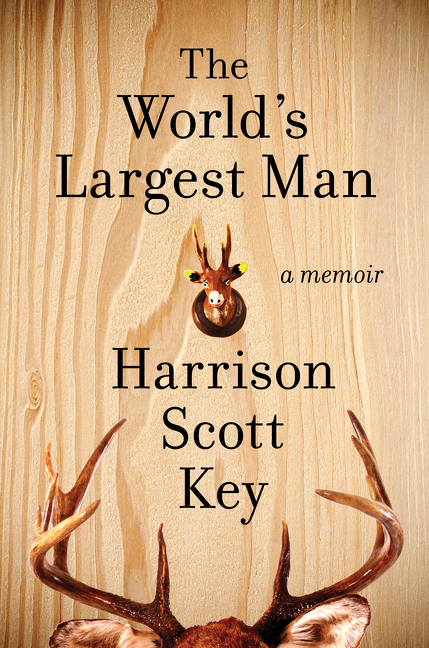
The book that made me laugh — again and again — was The World’s Largest Man, a memoir by Harrison Scott Key about his complicated relationship with his father.  It’s Key’s first book, but he has published essays in many magazines. According to his website, Key writes with the “comic verve of David Sedaris and the deft satire of Mark Twain or Roy Blount, Jr.”, but if we’re going to make comparisons, I’d say he is more like a cross between Bill Bryson and Pat Conroy.

Key grew up in Mississippi, the bookish son of a father whose main interests were hunting, fishing, and football — and in transforming his sensitive son into a different person, one who enjoyed waking at 4 a.m. and spending the day in a deer stand:

Why couldn’t I have been born with no arms? I knew, though, even if I had no arms, Pop would have found a way for me to hunt, rigging complicated pulley systems into trees and hoisting me up in a sack, then dropping me on the animals with a knife in each foot.

Key enjoyed a special bond with his mother, an elementary school teacher. who introduced “the perverse habit of reading through the gateway drug of encyclopedias, which she begged my father to purchase from a man at the door, hoping to counterbalance our growing knowledge of firearms and axes and tractors with more peaceful, productive knowledge.” Key preferred spending the day grocery shopping with his mother to hunting with his father and brother:

I was not encouraged, generally, to go grocery shopping with Mom, because Pop knew that if you sent your sons to the grocery store too much, they might learn how to locate water chestnuts, which could lead down a dark path toward vegetarian stir-fry and the wearing of aprons and eventually marrying someone named Cecil . . . How could hunting deer ever compare to hunting vanilla ice cream, which is generally docile and will let you pour syrup on it without running away?

Although Key is a gifted humorist, The World’s Largest Man is not a nonstop laugh riot. At its heart, it’s a story about love and acceptance. Much of the book is heartbreaking and poignant. Key succeeds in showing us the contradictory aspects of his father’s deeply flawed personality — a personality that turns out to be a greater influence on him than he had ever imagined.

One of the best things about humorous books is that they lend themselves to rereading. Sometimes it’s comforting knowing that what you are about to read will tickle your funnybone.

9780670824397_xlgI adored Roald Dahl as a child, and I still do. Which of his books is the funniest? It’s hard to say, but I’m partial to Matilda, probably because she’s a bookworm;

“There aren’t many funny bits in Mr. Tolkien either,” Matilda said.
“Do you think that all children’s books ought to have funny bits in them?” Miss Honey asked.
“I do,” Matilda said. “Children are not so serious as grown-ups and love to laugh.”

The first “grown-up” funny book I remember reading was Auntie Mame, by Patrick Dennis (a pseudonym). I found it on my grandmother’s bookshelves, and it made me laugh and laugh. It was out of print for more than 50 years, but it was reissued in 2001 and remains available.

Adam Freudenheim, publisher of Penguin Classics, called Auntie Mame “a lost classic” and said that he could not resist publishing a “laugh-out-loud” novel. He said: “There are lots of comic novels that aren’t that funny. It is very difficult to write ‘funny’ well. This one is sheer bliss.”

A lot of parents and teachers turn their noses up at Dav Pilkey‘s books, particularly the Captain Underpants seriesThat makes me sad, because my children loved Dav Pilkey. Guess what — kids and adults like different things. For example, some of the activities I remember enjoying as a child were throwing rocks in puddles with neighborhood children to see who could 9780062238498-1make the biggest splash . . . spinning in circles until I got dizzy and fell down . . . dressing my dog in pajamas. If Pilkey’s books had been available, I’m sure I would have laughed myself silly over them. What 7-year-old could resist Captain Underpants and the Terrifying Return of Tippy Tinkletrousers, or Captain Underpants and the Perilous Plot of Professor Poopypants? A little potty humor ever did anyone any harm, and I think Pilkey shows kids that reading doesn’t have to be a grim and serious pursuit, accompanied by timers and worksheets, but can be entertaining and laugh-inducing.

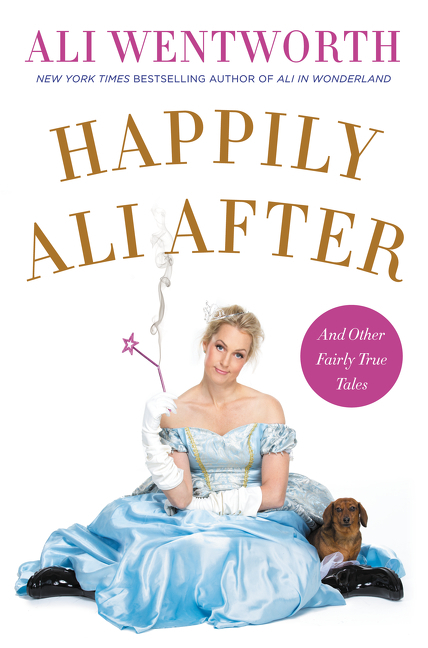
Comic actress Ali Wentworth has published one humorous memoir, Ali in Wonderland: And Other Tall Tales, and has another one, Happily Ali After: And Other Fairly True Tales, coming out in June. They’re perfect light reading, full of wickedly witty anecdotes about Wentworth’s growing-up years, career, and current family life.

9780804140416Comedian Jim Gaffigan is the male counterpart to Ali Wentworth. His books, Dad is Fat and Food: A Love Story, are hilarious when it comes to raising children and (of course) food:

There’s an old Weight Watchers saying: “Nothing tastes as good as thin feels.” I for one can think of a thousand things that taste better than thin feels. Many of them are two-word phrases that end with cheese (Cheddar cheese, blue cheese, grilled cheese).

I recently reread Nora Ephron’s roman à clef about the breakup of her marriage to journalist Carl Bernstein, Heartburn. I was worried it would seem dated, but it was every bit as clever and funny as I remembered:

Vera said: “Why do you feel you have to turn everything into a story?”
So I told her why.
Because if I tell the story, I control the version.
Because if I tell the story, I can make you laugh, and I would rather have you laugh at me than feel sorry for me.
Because if I tell the story, it doesn’t hurt as much.
Because if I tell the story, I can get on with it.

David Sedaris‘s books are hysterically funny, but best listened to on audio. And if you ever have the chance to hear his live performance, don’t pass it up. He is extremely gracious and will spend hours after his shows personalizing books and chatting with readers. I love the stories in Me Talk Pretty One Day in which Sedaris imagines how his broken French must sound to his classmates in French class. Attempting to describe the Easter bunny, he says, “‘The rabbit of Easter. He bring of the chocolate . . . He come in the night when one sleep on a bed. With a hand he have a basket and foods.'”

9780307279460I think Bill Bryson‘s funniest book might be his account of hiking the Appalachian Trail, A Walk in the Woods. I’m a little dubious about the upcoming movie — Robert Redford, who is almost 80, plays Bryson, who was in his 40s when he wrote the book. Also, the humor doesn’t stem as much from the events as it does from Bryson’s way with words:

Black bears rarely attack. But here’s the thing. Sometimes they do. All bears are agile, cunning and immensely strong, and they are always hungry. If they want to kill you and eat you, they can, and pretty much whenever they want. That doesn’t happen often, but – and here is the absolutely salient point – once would be enough.

Christopher Buckley is a political satirist, skewering everything from Chinese-American relations (They Eat Puppies, Don’t They?) to the tobacco industry (Thank You for Smoking) to the fiscal crisis (Doomsday). I’ve enjoyed his comic novels, but I especially liked his collection of essays, But Enough About You. According to the New York Times:

Buckley writes in a conversational style replete with deadpan asides. Perhaps he spends hours meticulously crafting each bon mot, but what he conveys in his work is the image of an assured writer amusing himself at the keyboard, expansively waving the reader over to join in the fun.

What are your favorite humorous books?