Nonfiction November — 10 Favorite Survival Books

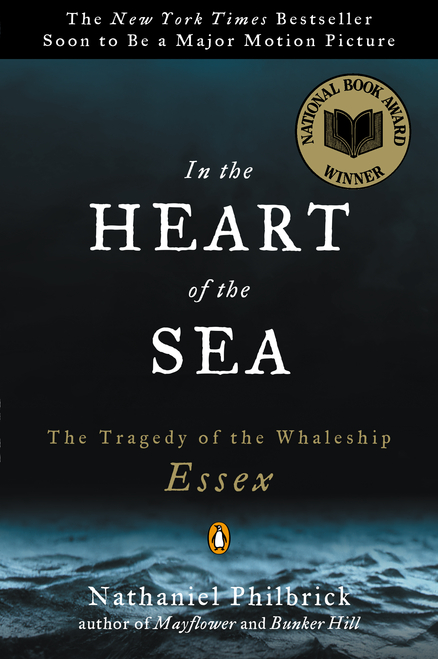
9780141001821MI just saw a preview for the movie version of In the Heart of the Sea: The Tragedy of the Whaleship Essex, one of my all-time favorite nonfiction books. (And by the way, when did the word “trailer” creep into common usage, replacing the unpretentious and much more accurate “preview”?) Seeing a clip from the movie –which included a glimpse of the deadly white whale — reminded me how much I enjoyed Nathaniel Philbrick’s enthralling account of the survivors of the sinking of the Essex. (It won the National Book Award for nonfiction in 2000.) I’ve had a strange fascination with survival stories, especially those that take place at sea, ever since childhood.

I grew up near the ocean, and spent most of my summers on boats. I remember lying in my cozy bunk at night, reading Survive the Savage Sea (originally published in 1973, and still in print) by the light of a little battery-powered lamp. Dougal Robertson’s book describes how his boat was sunk by a pod of killer whales, and how his family managed to survive for 38 days in a little dinghy with few provisions. As I recall, they had little more than a bag of onions and some fruit. I felt a little guilty when I complained about the stale cereal and canned vegetables we ate on our boat.

When I ran out of tales of shipwrecked sailors, I turned to adventure on land. Alive, by Piers Paul Read, was shocking and gruesome– so it was right up my 14-year-old alley. I don’t think my tastes have evolved much, because I continue to be intrigued by true stories of bravery in the face of danger. The best one I’ve read recently is In the Kingdom of Ice: The Grand and Terrible Voyage of the USS Jeannette, by Hampton Sides. Sides, a journalist and historian, has written several other excellent works of nonfiction; I especially liked Ghost Soldiers: The Epic Account of World War II’s Greatest Rescue Mission, about a daring raid on a POW camp in the Philippines.

Like all the best narrative nonfiction books, In the Kingdom of Ice is much more than an enthralling account of an historical event. 9780385535373Sides paints a detailed picture of post-Civil War society, when many young men who missed the opportunity to fight in the war were looking for opportunities to become heroes. His engaging, and often very funny, portrayal of newspaper titan James Gordon Bennett, Jr. (backer of the voyage), shows us the increasing role of the press. He covers Native American culture in the Arctic . . . the state of scientific and geographic knowledge in the Victorian era . . . and most of all, the enormous human capacity for courage and endurance.

Endurance: Shackleton’s Incredible Voyage, by Alfred Lansing, takes place at the other end of the world. The book (originally published in 1959) was just re-issued in honor of the 100th anniversary of Shackleton’s amazing expedition. It’s deservedly a classic. And it’s more uplifting than many survival stories; Shackleton’s entire crew survived their ordeal.

Several members of Teddy Roosevelt’s party in The River of Doubt: Theodore Roosevelt’s Darkest Journey, by Candice Millard, were not so lucky. After he lost the presidential election in 1912, Roosevelt planned an expedition to explore the River of Doubt, a previously unmapped tributary of the Amazon. I recommend this book over and over — it’s on its way to becoming a classic in adventure literature.

Unbroken: A World War II Story of Survival, Resilience, and Redemption, by Laura Hillenbrand, has to be one of the most moving stories of survival ever written. All I can say is that if you haven’t read it, you should. I also think it should be required reading for all high school students. Especially the ones who think they’re deprived if they don’t have the latest iPhone.

9780061988349Lost in Shangri-La: A True Story of Survival, Adventure, and the Most Incredible Rescue Mission of World War II, by Mitchell Zuckerman, is unusual in that one of the heroic survivors is a woman. A plane is shot down over the cannibal-infested jungles of New Guinea, with only three survivors, all of whom are injured. This book didn’t get the attention it deserved when it was published, but it’s one of the best nonfiction page-turners I’ve ever read.

Batavia’s Graveyard: The True Story of the Heretic Who Led History’s Greatest Mutiny, by Mike Dash, has it all: shipwreck . . . mutiny . . . murder . . . and survival. When a Dutch ship sinks off the coast of Australia, the survivors take refuge on a desert island — where they are at the mercy of a fanatical band of mutineers. It’s another “truth is stranger than fiction” story that reads like a thriller.

Deep Down Dark: The Untold Stories of 33 Men Buried in a Chilean Mine, and the Miracle That9780374280604 Set Them Free, by Héctor Tobar, probably shouldn’t be listed as one of my favorites — because I haven’t read it yet. But I have heard so many glowing reviews from trusted sources that I am pretty sure I am going to love it. Here’s what the Los Angeles Times reviewer has to say:

The miners’ journey into the underworld and their miraculous return is an epic tale for all time. In his new book, Deep Down Dark, journalist and former Times staffer Héctor Tobar proves equal to the occasion. Weaving together the drama of the miners’ harrowing ordeal below ground with the anguish of families and rescuers on the surface, Tobar delivers a masterful account of exile and human longing, of triumph in the face of all odds. Taut with suspense and moments of tenderness and replete with a cast of unforgettable characters, Deep Down Dark ranks with the best of adventure literature.

What determines whether a person survives an ordeal? Obviously, luck is the most important factor — but, as all these books show us, some people possess an indomitable spirit. Louis Zamperini, hero of Unbroken, says:

Yet a part of you still believes you can fight and survive no matter what your mind knows. It’s not so strange. Where there’s still life, there’s still hope. What happens is up to God.


WWW Wednesday

What did you just finish reading? What are you currently reading? What do you think you’ll read next?

short-and-tragic-life-of-robert-peace-9781476731902_lgLast night, I finished The Short and Tragic Life of Robert Peace by Jeff Hobbs. It was a miserable,rainy day in Chicago, and I was lucky enough to spend most of the day reading. Robert Peace, a 2002 graduate of Yale and a product of inner-city Newark, was murdered at age 30 in a drug-related shooting. Hobbs, who was Peace’s roommate in college and who remained a close friend after graduation, has written one of the most thought-provoking books I’ve read in a long time. Why did Peace, a brilliant young man with a promising career in scientific research, succumb to the drug trade? Hobbs thoroughly and thoughtfully examines Peace’s life in all its complexity and contradictions, with the help of Peace’s family, friends, colleagues, and teachers. I can’t imagine a better book for book club discussions. To learn more, read the excellent review in the New York Times.

I’m reading two other books right now — An Unnecessary Woman by Rabih Alameddine (a finalist for the 2014 National Book Award) and Just Mercy by Bryan Stevenson. I always like to have at least two books in progress, one paper book and one e-book. I much prefer reading “real” books, but I love reading in bed, and in the interest of marital harmony, I stick to e-books late at night.

9780802122940An Unnecessary Woman is about Aaliyah, a 72-year-old retired bookseller living alone in Beirut, translating her favorite books into Arabic:

I long ago abandoned myself to a blind lust for the written word. Literature is my sandbox. In it I play, build my forts and castles, spend glorious time. It is the world outside that gives me trouble. I have adapted tamely, though not conventionally, to this visible world so I can retreat without much inconvenience into my inner world of books.

In an NPR interview, the author says the book asks this question:, “How do we balance an inner life with an outer life and how important is each?” I’m really savoring this book — although I’m still rooting for All the Light We Cannot See to win the National Book Award.

Bryan Stevenson, author of Just Mercy, is the founder of the Equal Justice Initiative, a nonprofit organization that is dedicated to 9780385535373helping people who have been denied fair treatment in the justice system.  One early review refers to Stevenson as a modern-day “Atticus Finch” — which is ironic, because Stevenson reminds us that Atticus Finch actually lost his case in To Kill a Mockingbird. I’ve just read the first couple of chapters, but I’m finding the book fascinating and eye-opening.

What’s up next? My book club will be discussing Everything I Never Told You by Celeste Ng at our November meeting, and I can’t wait to start In the Kingdom of Ice by Hampton Sides. Jeff and I will both be reading that, because we have plans to get together with another couple and talk about it over dinner. What about you? What’s on your list?

www_wednesdays4

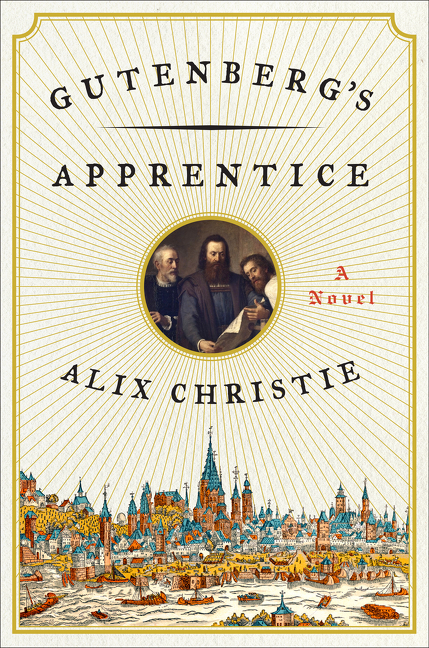
Gutenberg’s Apprentice — Book Review

9780062336019Books everywhere, and costing less than manuscripts — in quantities that simply stun the mind. Imagine how the world would look if anyone could buy one.
Johann Fust, to his son, Peter Schoeffer

What needs has any man, besides those needs we share with beasts? And then I knew: he has to read.
Johann Gutenberg, to his apprentice, Peter Schoeffer

Mass-produced books were a radical concept in 1450. Peter Schoeffer — who would become Johann Gutenberg’s apprentice and later, “the wealthy founder of the greatest printing house in all of Germany” — initially scoffs at the idea. Trained as a scribe, Peter sees the printed page as “a crude and ugly copy of the best that man can do.”

Peter’s adoptive father, Johann Fust, a wealthy merchant and bookseller in Mainz, provides Gutenberg with financial backing. His investment includes Peter’s labor as an apprentice in Gutenberg’s hellish workshop, working 14 hours a day “sweating, stoking, crushing, pouring.”

They cast no letters for the whole first month. Instead they smelted, wreathed in noxious smokes, to try to find a metal alloy that would hold. They stooped around the forge like witches, eyes red-rimmed, hands black, their faces draped in clotted veils.

Throughout his relationship with Gutenberg, Peter never learns what drives the brilliant and abrasive “madman”:

What kind of man was this? What kind of stunted and inhuman being, to whom Peter had been yoked? For all the years he worked with him, he tried to understand. The truth was that he never really knew. Peter came as close as anyone: he’d seen the master’s childlike wonder and delight, and then the darkness that erupted, demons lurking just beneath the surface every time.

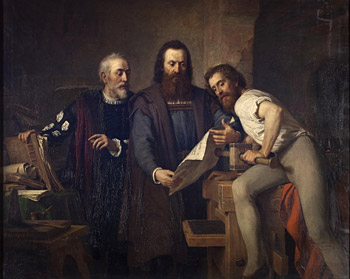
three-men-readingOf course, Gutenberg’s Apprentice is historical fiction. Little is known about the personalities and motivations of the novel’s three major characters — Gutenberg, Schoeffer, and Fust. That is the beauty (and the danger) of historical fiction. The novelist is able to imagine the interior lives of people who left behind few records of their thoughts and dreams. In an interview, author Alix Christie paraphrases Hilary Mantel:  “Writers of historical fiction stand on the shoulders of giants – the scholars who actually excavate the past.”

Alix Christie uses a clever and effective framing device to tell Peter Schoeffer’s story. The novel begins with, and is punctuated by, the 60-year-old Schoeffer’s conversations with Abbot Trithemius, a monk who wants to learn about “the true beginning of the glorious art of printing”.  Peter is reluctant to “blacken the master’s name” and reveal the crucial roles he and  Fust played in Gutenberg’s enterprise. He wonders if “what they made will prove a force for good or ill”.

Gutenberg’s Apprentice is rich with historical detail — perhaps too rich for some readers. The politics of church and state in medieval Mainz were corrupt and complicated, with feuds involving church authorities, merchants, and townspeople. In 1462, Archbishop Adolf II sacked the city, killing hundreds of citizens. While it’s important to understand the political and religious climate in Mainz during the time Gutenberg’s Apprentice takes place, the sheer amount of detail can be confusing and at times detracts from the main storyline.

Christie, like the hero of her novel, was apprenticed at a young age to master printers, starting with her grandfather. She now owns and operates a 1910 letterpress. In 2001, she read a brief article in the New York Times about new discoveries that scholars of early printing were making about Gutenberg’s first types. Her interest sparked, she learned that Gutenberg was not a lone genius, as previously believed, but succeeded with the help of two key partners.

The invention of the printing press — believed by many historians to be humanity’s most important invention since the wheel — transformed society in ways that Gutenberg and his contemporaries could never have envisioned. In a letter to readers, Christie says: “My aim was not simply to record history, but to explore the interior struggles of people living in a time of cataclysmic change with eerie echoes of our own”.  Digital technology has profoundly changed our society — and in ways that pioneers of the computer age never anticipated.

It’s interesting that Christie chose a quotation from Walter Isaacson’s biography of Steve Jobs for one of the novel’s epigraphs. I read recently that Jobs, like many other technology engineers, didn’t let his young children use iPads and iPhones. Digital technology, like the printed word, is powerful. Christie comments in an interview, “There is an uneasiness, a concern among some, that these magical devices are changing something essential in our nature.”

I have always loved books — not just reading them, but feeling the weight of them in my hands and looking at them on my shelves (and on my tables, my floors, in my car . . . everywhere). I feel comforted when I am in a room surrounded by books. Recently, though, I’ve been reading more e-books, and I enjoy the convenience when traveling and the ability to read in bed in the dark. But reading an e-book just isn’t the same experience for me. Reading Gutenberg’s Apprentice made me wonder how much of our pleasure in reading has to do with reading words printed in ink on paper.

Jason Merkoski (one of the developers of the Kindle) says, “I think we’ve made a proverbial pact with the devil in digitizing our words”. Merkoski, who says he “worked in a modern version of Gutenberg’s workshop” wrote a book called Burning the Page: The Ebook Revolution and the Future of Reading, in which he waxes poetic about his love of print books (“If you’re like me, you’re passionate about books as things you can touch, that you can dog-ear or annotate, and that have covers you’ve come to enjoy”) but then goes on to say that reading is becoming a technology-based experience and that the culture of reading is evolving in a positive way.

Merkoski’s book is certainly self-serving, but he raises some interesting questions. Physical books, he says, have limitations and e-books are their natural continuation, adding to the reading experience. E-books, according to Merkoski, enhance reading by making what was once “primarily a solitary and individual activity” a social experience. What do you think? Are e-books the next step in an evolutionary process that hasn’t moved forward substantially since the 15th century? Or are they, as Peter Schoeffer might say, “crude and ugly” facsimiles of “real” books?

The Gutenberg Bible was unveiled at the first Frankfurt Book Fair (founded by Peter Schoeffer) in 1454 — 560 years ago this week.  Happy Birthday to the publishing industry!

tlc logo

10 Books to Read This Fall

I can’t believe it’s already the last day of September. It’s been a glorious month here in Chicago, and I’m savoring every minute of the warmth and sunshine. For what it’s worth, the Farmers’ Almanac is predicting another frigid and snowy winter in the Midwest. All the more reason to have a pile of good books waiting to be read! Here are 10 books either just published or due to be published this fall to add to your list.

9780062306814The Miniaturist (Jessie Burton)
In 17th century Amsterdam, a young woman marries a wealthy businessman, who gives her a replica of their canal house — opening the door to many strange happenings. The book was inspired by an actual cabinet house owned by Petronella Oortman — which I was lucky enough to see recently in the Rijksmuseum.  The Guardian says it is “a fabulously gripping read” that will “appeal to fans of Girl With a Pearl Earring and The Goldfinch“, which think describes it perfectly. (Although I dislike the word “read” used as a noun . . .)9780062336019

Gutenberg’s Apprentice (Alix Christie)
Author Christie, a letterpress printer, contends that Gutenberg’s success was due to his gifted young apprentice, Peter Schoeffer. According to the New York Times, “Christie spotlights intriguing parallels between 15th-century Europe and the digital media of the 21st-century world.” As a lover of the printed page, I can’t wait to read this one.

The Short and Tragic Life of Robert Peace (Jeff Hobbs)
Robert Peace escaped the slums of Newark, New Jersey to attend Yale University — where he was author Hobbs’s roommate. He died at age 30, the victim of a gang-related drug assassination. The book has been receiving a lot of acclaim; the Los Angeles Times says: “In the end, The Short Tragic Life of Robert Peace is a book that is as much about class as it is race. Peace traveled across America’s widening social divide, and Hobbs’s book is an honest, insightful and empathetic account of his sometimes painful, always strange journey.” (Two other excellent books on this topic are The Other Wes Moore by Wes Moore and A Hope in the Unseen by Ron Suskind.)

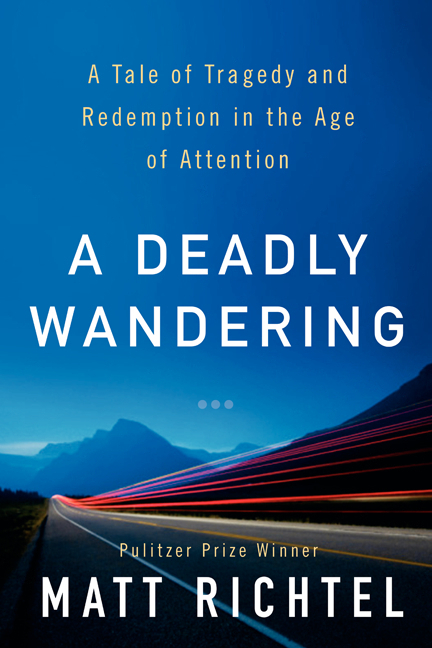
9780062284068A Deadly Wandering (Matt Richtel)
A groundbreaking legal case and the latest scientific research on the brain and attention combine in this compulsively readable page-turner about a devastating accident affecting several families and the perils of multitasking in today’s digital world. There are no villains in Pulitzer-Prize winning author Richtel’s moving story of heartbreak and healing. I can’t recommend this book strongly enough.

What the Lady Wants (Renee Rosen)
Rosen’s first historical novel, Dollface, is an entertaining and enlightening excursion back to Prohibition-era Chicago.  I’m anxious to read her next book, set in the Gilded Age, about department store tycoon Marshall Field and his love affair with Delia Canton. There will be opportunities in Chicago to meet Renee Rosen, hear her read from the book, and ask questions; details to come.  (Due November 4)

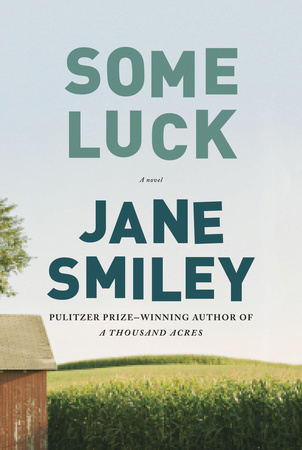
9780307700315Some Luck (Jane Smiley)
Smiley won the Pulitzer Prize for A Thousand Acres, a modern-day retelling of King Lear.  She returns to Iowa farm country with her new novel about 33 years in the lives of Walter and Rosanna Langdon and their five very different children. Each chapter covers a single year, beginning in 1920 soon after Walter’s return from World War I. The book is the first installment in a trilogy about the Langdons, and about the transformation of American culture and society in the 20th and 21st centuries. According to Publishers Weekly, “Smiley conjures a world—time, place, people—and an engaging story that makes readers eager to know what happens next.”

A Sudden Light (Garth Stein)
The Art of Racing in the Rain is one of my favorite books, and I’ve been eagerly awaiting Stein’s new novel. This one is not narrated by a dog — instead, by a 14-year-old boy, Trevor Riddell. Trevor’s bankrupt, recently separated father brings him and his sister Serena to their grandfather’s mansion in order to move the old man to a nursing home and sell the property for much-needed cash. However, Trevor discovers that there may be a ghost in the house, and secrets in his family’s history, that will prevent his father from carrying out his plan. I’m in the middle of the book now, and loving it . . . and that is surprising, because I hate ghosts.

we-are-not-ourselves-9781476756660_lgWe Are Not Ourselves (Matthew Thomas)
I think this debut novel, the story of more than 50 years in the life of Eileen Tumulty Leary and her family, is a masterpiece. I read the book months ago, and I still can’t stop thinking about it. As I was reading it, I was reminded of Alice McDermott. The New York Times reviewer remarked on the connection between the two authors: “Mr. Thomas’s narrow scope (despite a highly eventful story) and bull’s-eye instincts into his Irish characters’ fear, courage and bluster bring to mind the much more compressed style of Alice McDermott. (According to this book’s acknowledgments, she has been one of his teachers. If he wasn’t an A student then, he is now.)”

Five Days Left (Julie Lawson Timmer)
If you’re in the mood for a good cry, this is the book for you. Two people have five days left with the people they love most. I can’t really tell you more than that, except that if you read it on public transportation, make sure you have some Kleenex handy. It will definitely get your book club talking, although if you are the one who recommends it, you may be accused of suggesting “depressing” reading material.

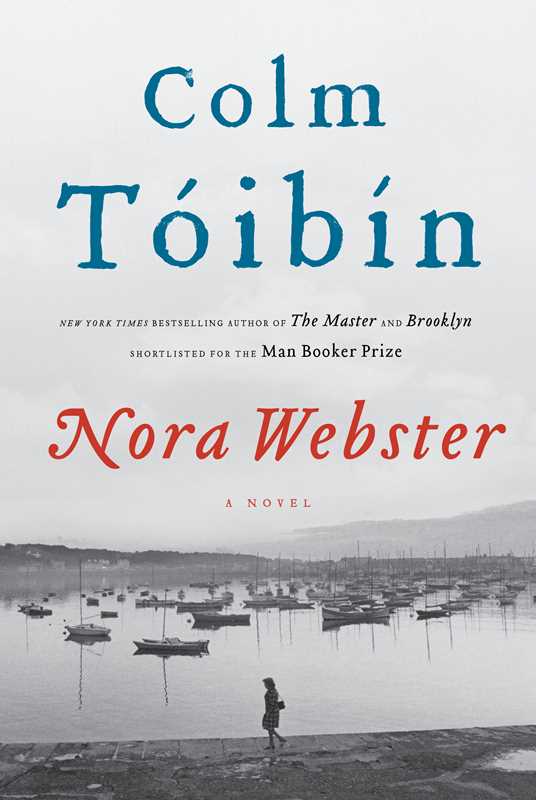
Nora Webster (Colm Tóibín)9781439138335
I’ve loved everything I’ve read by Irish author Tóibín, especially Brooklyn and The Master, and have been hearing wonderful things about his new novel. Set in his hometown in Wexford County, Nora Webster is the story of a widow raising four children in Ireland during the 1960s and early 1970s.  The Chicago Tribune says: “There is no flash and dazzle in Tóibín’s writing, just unobtrusive control, profound intelligence and peerless empathy that is almost shocking in its penetration.” I’m looking forward to hearing Tóibín speak at the Chicago Humanities Festival on November 9. (Due October 7)

STL300_border

Liar Temptress Soldier Spy — Book Review

Liar Temptress Soldier SpyShe risked everything that is dear to man — friends — fortune — comfort — health — life itself — all for the one absorbing desire of her heart — that slavery might be abolished and the union preserved.
Epitaph on Elizabeth Van Lew’s tombstone

If your only exposure to feisty Civil War women is fictional heroine Scarlett O’Hara, you are missing out on some fascinating literature about real-life heroines. Last week, I reviewed I Shall Be Near to You, Erin Lindsay McCabe’s historical novel based on the life of Sarah Rosetta Wakeman. Wakeman, like hundreds of other women, assumed the identity of a man and fought in the Civil War. Now I’m reading Neverhome, by Laird Hunt, another historical novel inspired by the letters of Sarah Rosetta Wakeman.

Rosetta makes a cameo appearance in Liar Temptress Soldier Spy: Four Women Undercover in the Civil War, Karen Abbott’s rollicking chronicle of the exploits of four female spies.  When Belle Boyd, a Confederate spy with a very high opinion of herself, was arrested and imprisoned, her guard was “Private Lyons Wakeman” of the 153rd New York:

When Belle blew kisses to the blue-eyed, five-foot-tall soldier she was unwittingly flirting with a woman: twenty-year-old Sarah Rosetta Wakeman who had left her home in upstate New York a year earlier and reinvented herself as a man. She signed many of her letters home “Rosetta”, confident that her true identity would remain secret as long as she needed it to be.

Truth is certainly stranger than fiction, an adage that Abbott demonstrates in Liar Temptress Soldier Spy. Many events seem unbelievable; I kept having to remind myself I was reading history, not historical fiction.  Abbott skillfully weaves the stories of each of the four women into one suspenseful narrative. Divided into five parts — one section for each of the war years, plus a final section about the women’s lives after the war — the book is much more than a collection of stories about four brave and independent women. It’s a painstakingly constructed history of the Civil War, based on the experiences of women who “chafed at the limitations society set for them and determined to change the course of the war”. Each woman’s distinct personality comes to life on the page, thanks to the diaries, letters, archival notes, transcripts, and family stories that Abbott used in her research.

Belle Boyd literally got away with murder — she shot a Union soldier in her own home and then dared his compatriots to shoot her: “‘Only those who are cowards shoot women,’ she said, and spread open her arms. ‘Now shoot!'” She was later exonerated, and began a career in espionage, always looking for the chance to become the center of attention. Infatuated with Stonewall Jackson, she seized the opportunity to deliver a message to the general:

Hope, fear, the love of life, and the determination to serve my country to the last, conspired to fill my heart with more than feminine courage, and to lend preternatural strength and swiftness to my limbs. I often marvel, and even shudder, when I reflect how I cleared the fields, and bounded over the fences with an agility of a deer.

Belle, as Abbott frequently (and amusingly) makes clear, did not suffer from a lack of self-esteem.

Widow Rose O’Neal Greenhow ran the Confederate spy ring in Washington, D.C., conducting affairs with Northern politicians  to gather information and using her own eight-year-old daughter to pass along intelligence. After Allan Pinkerton arrested her, she was imprisoned and eventually exiled to the South, where she continued her espionage activities. Jefferson Davis sent her as his emissary overseas to “court the French and British elite, in the hope she might rally support for the Confederacy”.

Emma Edmonds escaped a miserable family situation by disguising herself as “Frank Thompson” and joining the Union Army. She took cross-dressing to a new level when she carried out spy missions behind enemy lines “with yet another layer of disguise, a woman impersonating a man impersonating a woman”.  Her daring acts of espionage were often the product of her own creative thinking, and also reflected her personal beliefs about slavery:

Emma went out of her way to interact with slaves whenever she had the chance, listening to their stories and hoping she might one day teach them. Her choice to disguise herself again as a slave was, in her current circumstances, the best way she knew to show empathy.

Although she lived in Richmond, the capital of the Confederacy, Elizabeth Van Lew was an abolitionist. She enlisted the help of her beloved servant, Mary Jane (a well-educated “free person of color”), in her espionage activities. She placed Mary Jane as a “sleeper agent” in the Confederate White House as an “excellent house servant” to First Lady Varina Davis. Mary Jane played the part of a “simple, illiterate maid, obsequious in manner and bumbling in speech  . . . No one would think twice when she cleaned the president’s library, lingering as she dusted the desk piled with maps of fortifications and statistics about his troops”.

The title of Abbott’s book pays homage to John le Carré’s classic spy novel, Tinker Tailor Soldier Spy. Liar Temptress Soldier Spy isn’t just about women in the Civil War; it’s about espionage in general.  Like le Carré’s novel, Abbott’s study of Civil War espionage is about treachery and betrayal. The motives of female spies are as varied as the motives of male spies — belief in a cause; egotism; attraction to danger; escape from difficulty or heartache.

Liar Temptress Soldier Spy is a fascinating and illuminating reading experience. Abbott’s attention to detail shows not only in her exhaustive notes, but in the many excellent black and white photographs she includes. I also really appreciate the inventive titles she gives to each chapter.  The chapter titles help set the tone in an apt and colorful way. Abbott could have started with “Chapter One”, but she decided on “The Fastest Girl in Virginia (Or Anywhere Else For That Matter) “.  Already, the reader knows something about Belle Boyd, and about the kind of history book this is going to be.

Highly recommended!

tlc logo


I Shall Be Near to You — Book Review

9780804137744But, O Sarah! If the dead can come back to this earth and flit unseen around those they loved, I shall always be near you; in the brightest day and in the darkest night—amidst your happiest scenes and gloomiest hours—always, always; and if there be a soft breeze upon your cheek, it shall be my breath; or the cool air fans your throbbing temple, it shall be my spirit passing by.
Letter from Major Sullivan Ballou (2nd Rhode Island Infantry Regiment) to his wife, Sarah. Ballou died in July 1861 of wounds sustained in the first Battle of Bull Run.

I first heard Ballou’s letter on the Ken Burns PBS documentary series The Civil War, and it brought me to tears. Erin Lindsay McCabe’s beautiful novel of undying love during the Civil War, I Shall Be Near to You, made my eyes water as well. (Don’t worry, I’m not going to ruin the story. But keep in mind that war stories rarely have fairy-tale endings.)

Sarah Ballou, like almost every wife of a soldier, waited at home for her husband. Rosetta Wakefield, the determined and courageous heroine of I Shall Be Near to You, follows her new husband, Jeremiah, into battle. Rosetta is partially motivated by her love for Jeremiah — who only joined the 97th New York State Volunteers to earn money so he and Rosetta could buy a farm in Nebraska — and partially by her desire to escape life in Flat Creek, New York, where she is tormented by her mother-in-law and a hostile neighbor.

Jeremiah slips away to enlist, leaving Rosetta a letter that explains his leave-taking:

I am writing this letter as your Husband, and that is something Good. It don’t mean a thing is different about my Feelings that I am setting off without you knowing, or seeing you one more time and telling you all my Thoughts. You will cry to Hear them said so that is why I am Going this way, so I can Make myself Leave without causing you any more Pain.

He also leaves a map of the United States and its territories: “Jeremiah has made a heart at Flat Creek and a star at Herkimer. But in the Nebraska Territory he has written, I shall always be near to you.”

Rosetta decides to take Jeremiah’s promise literally. She will enlist with him in the Union Army and “earn a soldier’s pay instead of just a nurse’s or a laundress’s and stay with Jeremiah for as long as this war drags on.” Her impulsive and brave (or foolhardy?) decision shows us that she is no ordinary 19th century woman:

Laying there on our bed is Jeremiah’s work shirt where I left it, the map unfolded beside it. And then like a hornets’ nest in the hot dust that you almost don’t see until it’s too late, but once you have, you can’t not see it for the buzzing in and out of the crack in the dirt crust, the idea of it just comes to me.

Rosetta’s character is based on a real woman, Sarah Rosetta Wakeman, who fought in the Civil War disguised as a man. Her family later shared her letters, which were published in a book called An Uncommon Soldier: The Civil War Letters of Sarah Rosetta Wakeman alias Pvt. Lyons Wakeman, 153rd New York State Volunteers, 1862-1864. According to McCabe, “the fictional Rosetta is greatly informed by the feisty and strong-willed voice that shines through Wakeman’s letters home”. (Apparently Wakeman was not as “uncommon” as you might think; historians believe there were hundreds of women who saw combat in the Civil War.)

That “feisty and “strong-willed voice” shines brilliantly through I Shall Be Near to You, bringing Rosetta Wakefield (a.k.a. “Ross Stone”) to life on the page. McCabe perfectly captures her youthful enthusiasm, stubbornness, and bravery — and her deep and abiding love for Jeremiah. She doesn’t make the mistake so many writers of historical fiction seem to make, which is placing characters with modern-day sensibilities in a decidedly “un-modern” context. Rosetta may be more independent-minded than other young women of her time, but she is still a product of the mid-19th century. Growing up with no brothers, Rosetta has been treated more like a son than a daughter.

McCabe pays careful attention to detail throughout the novel, describing not only how novice soldiers were trained in the art of war and how they fought on the battlefield, but also how they cooked, ate, slept, bathed, and amused themselves. She also does a masterful job portraying their emotional reactions to the horror and carnage of war. Historical fiction, by allowing the author to let her imagination go beyond recorded facts, can be a very powerful way of making history come alive. No one knows what the real Rosetta’s reaction to seeing a deserter being branded would have been, or how she would have felt visiting dying men in a hospital. McCabe’s storytelling removes the distance between the reader and the historical events, helping the reader empathize with the characters.

As regular readers of this blog probably know, my husband is a Civil War buff. (Yes, it’s called the Civil War. I was recently seated at a dinner next to a gentleman from Mississippi who referred to that conflict in our nation’s history as the “War of Northern Aggression”. Sorry, no.) Jeff has an unending appetite for Civil War books — detailed accounts of military campaigns, biographies of generals, nonfiction covering various aspects of the war (prison camps, spies, battlefield medicine, etc.). Occasionally, he will read historical fiction about the war — for example, he and I both loved E.L. Doctorow’s The March — but he’s more of a nonfiction reader. He loved I Shall Be Near to You as much as I did, which should tell you it’s a really good Civil War novel. (Just in case you don’t believe me.)

I highly recommend Liar, Temptress, Soldier, Spy: Four Women Undercover in the Civil War, by Karen Abbott, a brand-new  nonfiction account of four women who served as spies during the Civil War (two for the Union, two for the Confederacy). One of the women, Rose O’Neal Greenhow, makes a cameo appearance in I Shall Be Near to You. Also recently published (and in my TBR stack) is Neverhome, by Laird Hunter, a novel about a woman who disguises herself as a man to fight for the Union, leaving her husband at home on the farm.

tlc logo

STL150

The Story Hour — Book Review

9780062259301This is how you build me, Maggie. Hour by hour. Story by story. Day by day. This is how you give me my whole lifes.

I discovered Thrity Umrigar in 2006 when I fell in love with her second novel, The Space Between Us — the story of the relationship between a middle-class woman in Bombay and her maid. I recall suggesting the book to nearly everyone who walked in the bookstore asking for a recommendation.

In The Story Hour, Umrigar returns to familiar territory — friendship between two “unequals”. Maggie, a psychologist, abandons professional propriety when she agrees to treat Lakshmi, a poor Indian immigrant, at no charge in her home office. Lakshmi, who is cut off from her family in India and trapped in a miserable marriage, has made an amateurish attempt at suicide. Maggie convinces Lakshmi’s husband, Adit (always referred to as “the husband” by Lakshmi) that Lakshmi can only be released from the hospital if she visits Maggie for weekly therapy appointments.

Lakshmi thinks of her weekly appointments with Maggie, her psychologist, as “story hours” — times for her to share her life experiences with the only person who is interested in listening to her. When Lakshmi arrives for her first appointment bearing home-cooked food for Maggie and her husband, Sudhir, Maggie tries, with little success, to explain the concept of the doctor-patient relationship. Maggie understands Indian culture fairly well, having been married to an Indian man for many years:

What did Lakshmi think this was? Happy hour? That they were going to spend the time chitchatting? Maggie knew that the very concept of therapy was alien to Lakshmi. Even among Sudhir’s educated family members in India, her profession was the butt of many jokes and eye-rolling . . . She was pretty sure that someone from Lakshmi’s peasant rural background couldn’t fathom the concept of paying a doctor to listen to her problems.

Eventually, Lakshmi grows to trust Maggie, developing a deep affection that enables her to share her guilty secrets. Lakshmi and Maggie both share the common bond of having lost their mothers at an early age. Maggie and Sudhir help Lakshmi gain independence, teaching her to drive and finding catering and cleaning jobs for her.  Maggie — and the reader — first see Adit as a controlling and possibly abusive husband, but his behavior becomes more understandable as the story behind his marriage to Lakshmi emerges.

What Lakshmi doesn’t understand is that the friendship is not a relationship of equals. Maggie is older and more educated than her patient/friend — and she has been keeping a very big secret from Lakshmi. When Lakshmi stumbles upon that secret, she is shattered.

The Story Hour is every bit as insightful and thought-provoking as The Space Between Us. Maggie and Lakshmi are two of the most well-developed and believable characters I’ve encountered in recent literary fiction. Their husbands play supporting roles, but they too are characters of substance and depth. There are no heroes or villains in this novel — just ordinary people struggling with important questions in life. To what extent do our stories determine the paths our lives will take?  What is the meaning and value of  “storytelling” (both in the sense of sharing life stories and in the sense of “tattling”)? Can we forgive someone whose betrayal strikes at the very heart of our relationship?

The novel is told in the alternating perspectives of Maggie and Lakshmi. Lakshmi, an immigrant with limited education, speaks in broken English: “I reminder everything that Maggie say and do, how she make me feel comfortable and safe. How she take me for that walk out of the lockup and show me I human being and not the animal. My heart break like glass bangle when I thinks of Maggie.” I’m sure this is authentic — Thrity Umrigar certainly knows how a recent Indian immigrant might speak — but at first I found Lakshmi’s speech patterns distracting. Her incorrect English also has the effect of infantilizing her. It also seems somewhat derogatory. Also, there is one section (when she confesses a long-held secret to Maggie) in which she speaks with correct grammar. I’d be interested in learning more about why the author (and editor) made these decisions about her use of English.

The ending of The Story Hour (which, of course, I won’t reveal) is ambiguous –and I thought it was perfect. However, readers who like their loose ends tied up at the conclusion of a novel will not be satisfied. Book groups will undoubtedly argue about the ending. There’s plenty more to think about and discuss in The Story Hour, which has a well-paced and unpredictable plot for a character-driven novel.

Earlier this month, NPR interviewed Thrity Umrigar about “the unlikely — and medically unethical — friendship between a psychologist and a patient” in The Story Hour. To listen to the podcast and/or read the interview highlights, click here.

To read more reviews, click on TLC Book Tours.


Further Out Than You Thought — Book Review

9780062292377Nobody heard him, the dead man,
But still he lay moaning:
I was much further out than you thought
And not waving but drowning.
Stevie Smith

Gwendolyn Griffin is a 25-year-old graduate student in creative writing, paying her tuition and her rent with the income she makes as a stripper at a seedy nightclub near the airport. At the club, she calls herself “Stevie”, after the British poet Stevie Smith.

Gwen was quiet. She spent her time reading, filling notebooks with her inky scrawl . . . Stevie was an invention, sprung from Gwen’s imagination. She was shameless, free as the sky, or death — those curtains that enclose us and that we cannot touch. Stevie did things that would make Gwen blush to watch, things that would mortify her, were she to dwell on them.

Like the speaker in Smith’s poem, “Not Waving But Drowning”, Gwen is isolated and unable to communicate her desperation. She lives with her boyfriend, Leo, an unemployed musician who spends his days dressed as a Revolutionary War soldier, standing on a street corner trying to sell his tapes. Her mother died when Gwen was a child, and she’s never recovered from the trauma — nor has she repaired her relationship with her father.

The events in Further Out Than You Thought take place in Los Angeles during the 1992 riots. The chaos of the city reflects the chaos of Gwen’s life. When she started working at the strip club, she thought she would work there for “a year, no more” and “enter this world which had intrigued her, this other side of life, the underbelly . . . She’d hoped this world would fuel her creativity, wake her up with its strange terrain, give her something compelling to write poems about . . .”

But now that this world has become familiar to her, Gwen wonders “how much further would she need to go to draw that exacting line and keep well enough behind it?” Having just discovered she is pregnant, Gwen is at a crossroads.  Having been abandoned by her own mother, is she capable of being a mother herself? Can she leave Stevie behind and “learn to love herself — bruises, blemishes, worries, and all”? Is it possible for “quixotic”  Leo to live in the real world and be a partner and father? Gwen sees herself as “the anchor to his boat, the anchor he managed still to pull up here and there to sail the pirate-ridden seas”.

In an attempt to escape the violence surrounding them, Gwen, Leo, and their friend, Count Valiant, impulsively decide to drive across the border to Tijuana.  Leo and Valiant are reminiscent of the “lost boys” in Neverland; Leo even calls Gwen “Tinkerbell”. In Tijuana, Gwen visits a psychic, who reminds her of her grandmother — and of the Good Witch in The Wizard of Oz. Gwen “felt like Dorothy” after her visit to the psychic; the next morning, she awakens to Valiant singing “Over the Rainbow”.  (Dorothy, of course, returns to Kansas after her sojourn in Oz.) Gwen recognizes that Leo and Valiant will never become part of the adult world.

Michaela CarterMichaela Carter has written a powerful coming-of-age novel that captures the loneliness and confusion of a young woman who believes herself to be truly alone. Carter’s writing is lovely — it’s easy to tell she is a poet. She uses recurring motifs–  especially water and the color red — effectively. However, a word of warning: the book IS about a stripper, so it’s quite sexually explicit, and the language is occasionally crude. It’s an edgier novel than I normally read, but I’m glad TLC Book Tours gave me the opportunity to review this book, because I probably wouldn’t have picked it up on my own.

Not only is Michaela Carter a novelist, a painter, a creative writing teacher, and an award-winning poet, she is a bookseller. Recently she cofounded the Peregrine Book Company, an independent bookstore in Prescott, Arizona.  According to the bookstore’s website, two of Carter’s recent favorite novels are All the Light We Cannot See and The Enchanted — two of my favorites as well. Further Out Than You Thought was selected as an IndieNext Pick by the American Booksellers Association for August — quite an honor for any book, but especially for a debut novel.

 tlc logo

WWW Wednesday — Husband/Wife Version

IMG_0759A few weeks ago, my mother and I answered three questions:

What are you currently reading? What did you recently finish reading? What do you plan to read next?

Today, I’ll answer those questions for my husband, Jeff, and me. We are busy planning a trip to Europe, with visits to Amsterdam, Ghent, Paris, Normandy, and Brittany. So we have stacks of books that take place in those locations . . . many more than we can ever read, I’m afraid!

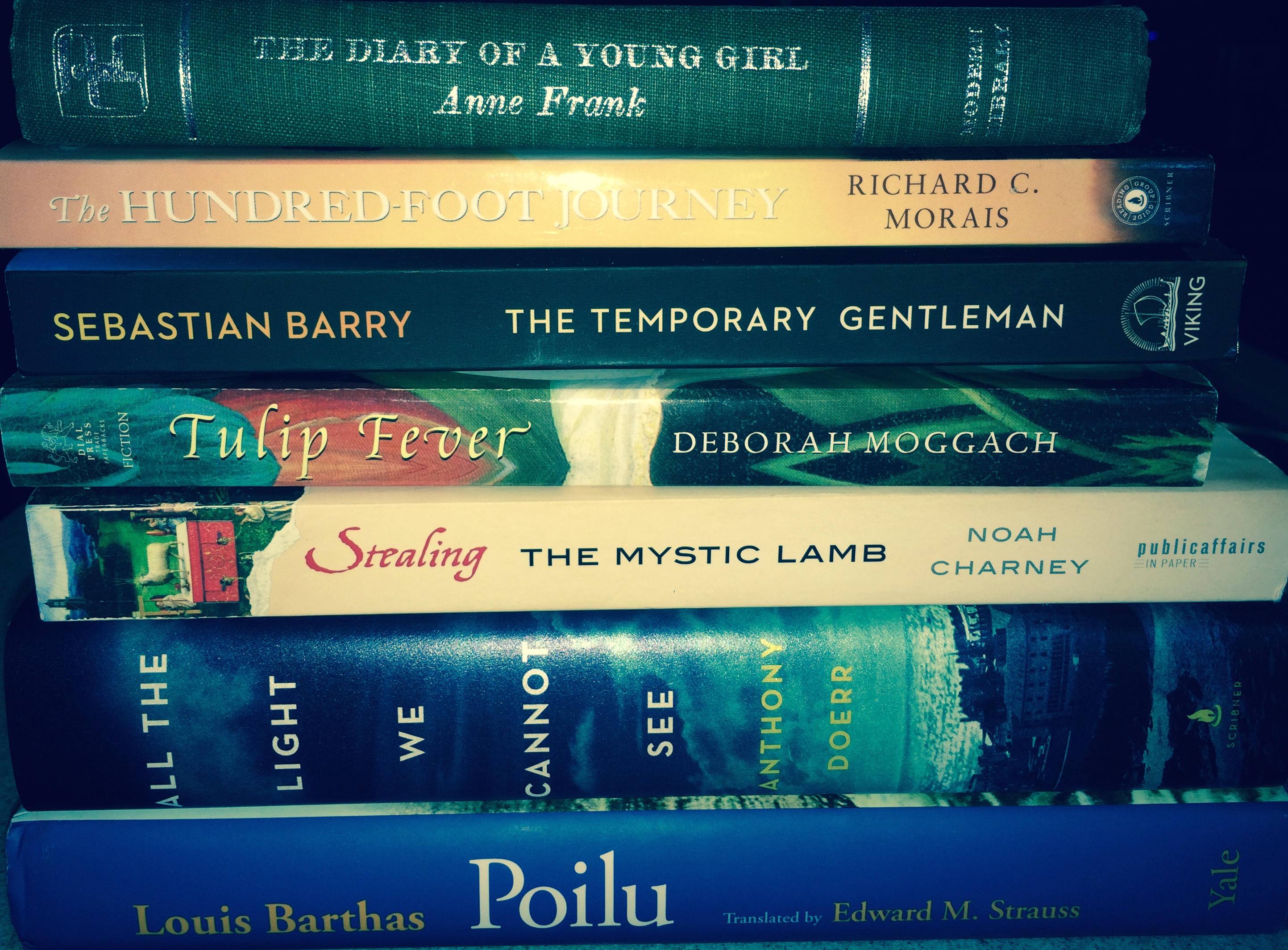
I’m currently reading Tulip Fever by Deborah Moggach, a novel about tulipomania, art, and a 9780385334921love triangle in 17th century Amsterdam. In 2000, when the novel was published, the New York Times said “Moggach’s sumptuous prose creates an impression of serenity that belies the passions just beneath the surface of Amsterdam in the 1630s, where the tulip market is reaching record highs . . . it’s a novel that ponders what it means to push things too far, and keenly examines what the consequences might be.” As the Publishers Weekly review pointed out, it is “popular fiction created at a high pitch of craft and rapid readability”. I’m enjoying the short chapters, each providing different points of view and each opening with an appropriate philosophical quotation.

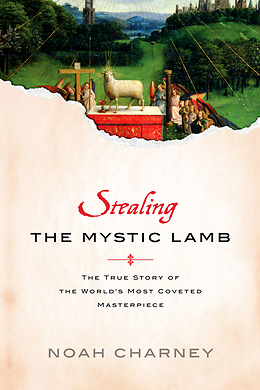
9781610390965Jeff is in the middle of Stealing the Mystic Lamb: The True Story of the World’s Most Coveted Masterpiece, by Noah Charney. If you  read Monuments Men (or saw the movie based on the book), you’ll recall the scene where the Allies discover Jan van Eyck’s “Adoration of the Mystic Lamb”, colloquially known as the “Ghent Altarpiece”, hidden in a German salt mine. Charney says, “For all its adventures, the biography of the Ghent Altarpiece, an inanimate object, reads as far more dramatic than the life of any human being”.Alexander_FlirtingFrench_jkt_FinalComp.indd

I just finished Flirting with French: How a Language Charmed Me, Seduced Me, and Nearly Broke My Heart, by William Alexander. (I read an advance copy — it will be published in mid-September.) The author is a Francophile who very badly wants to become fluent in French, and tries every available educational method — but finds it’s impossible for him. The book is filled with humor — as well as all sorts of interesting information about linguistics, neuroscience, and French history and culture. If you like Bill Bryson, you’ll love William Alexander.

9780544290488This month marks the 100th anniversary of the outbreak of World War I. Jeff recently read — and highly recommends — two books about the First World War. The Last of the Doughboys: The Forgotten Generation and Their Forgotten World War is based on interviews with the last surviving American veterans of World War I. Author Richard Rubin tracked down dozens of surviving veterans (all over 100 years old at the time of the interviews, and all now deceased) and recorded their experiences fighting 9780300191592in the trenches. Jeff also read Poilu: The World War I Notebooks of Corporal Louis Barthas, Barrelmaker, 1914-1918. It’s a new translation of the actual wartime diaries of a French soldier. Barthas spent four years in almost constant combat, fighting in every major French battle. Somehow he managed to chronicle his experiences in a series of notebooks. When he arrived home, he added information (letters, official reports, clippings, etc.), eventually filling 19 volumes. (By the way, “poilu” means “hairy one” in French and is the French version of the American “doughboy” — an infantryman.)

9780062306814What’s up next? I’ll be reading The Hundred-Foot Journey for my book/movie club. Part of the book takes place in France, and Anthony Bourdain says it’s “easily the best novel ever set in the world of cooking” — sounds wonderful! I’m also looking forward to reading The Miniaturist (due August 26), by Jessie Burton — more historical fiction about 17th century Amsterdam. It was inspired by a miniatures cabinet now housed in the Rijksmuseum.cvr9781476746586_9781476746586_lg

Jeff has a treat in store — All the Light We Cannot See, by Anthony Doerr, my favorite book of 2014 — so far. (Coincidentally, miniatures also play an important role in this novel.) We’ll be visiting the walled city of Saint-Malo, which was almost totally destroyed by fire in 1944 and which is where the paths of the book’s main characters converge. I found through Google Maps that 4 rue Vauborel really does exist, so we will have to find out what’s there today . . . perhaps a “tall, narrow house”?


The New Men — Book Review

New-Men-ECov-199x300“For us, the new man, he is one of two things,” Torassian said eagerly. “First, he is the new worker, a man we instruct and investigate until his probation is complete. But also he is an idea. In the foundry, they make parts. On the line, they make autos. But in Sociological, we make men.”

Anthony Grams (born Antonio Gramazio) comes to America with his family at the start of the 20th century in search of a better life. Bright and ambitious, Tony lands a job at Ford Motor Company in the Sociological Department, responsible for investigating the personal lives of Ford workers and determining if they are worthy of Ford profit-sharing.

It’s a familiar story, of course; many novels and nonfiction accounts have been written about the immigrant experience. Jon Enfield’s novel, The New Men, takes that experience and blends it with the story of the burgeoning auto industry.

The New Men is an ambitious novel — perhaps too ambitious. There are an overwhelming number  of characters, some based on actual historical figures (Henry Ford, Samuel Marquis, James Couzens, and many more), some inspired by and loosely based by historical figures, and some completely fictional. Along with its large cast of characters, The New Men attempts to cover the major issues of the early 20th century — race relations, anti-Semitism, industrialization, labor unions, World War I, socialism, immigration . . .

In his author’s note, Enfield (who has a Ph.D. in American literature), describes how he came to write the novel, which he first conceived as an academic article:

How does becoming the right kind of worker for an assembly line both require and demand that someone become a new kind of person altogether? What was Ford Motor Company teaching its workers?  . . . What did they learn from streets transformed first by trolley cars, then by automobiles? What did all of that mean while European streets and meadows alike were becoming assembly lines of death, dismemberment, and madness?

I pored over blueprints of the various Ford plans, descriptions of its increasingly international business empire, over schematics of the line, Model T drivers’ manuals and advertising, over the surviving records of Sociological/Educational . . . And I eventually realized it was too big for an article. That, in fact, it was too big and powerful and complex for me to do justice to as anything but a novel.

The story of the “New Men” of the 20th century is indeed “big and powerful and complex”. By telling the story through the eyes of Tony Grams, Enfield attempts to take many threads and tie them together in a single narrative. I’m not entirely sure how successful he is. His subject is fascinating, and obviously very thoroughly researched. Much of his material comes from original documents in the Ford archives. Enfield’s passion for his topic comes through in his writing. The reader can tell that he is bursting with information and ideas he wants to include in the story.

I really appreciate all the period details in the novel, especially the speech patterns and slang. Enfield mentions in his author’s note that he “wanted to get the historical facts and cultural perspectives right but also to capture how different people in Detroit spoke and wrote in the 1910s”. (I’ve frequently been annoyed when characters in historical fiction speak in what I consider 21st century speech patterns.) Enfield says, ” The editors and I promise you that if a particular character writes or says something a certain way, we went to great lengths to verify that a similar, actual person in that time and place might well have written or spelled it that way”.

That being said, I think I would have enjoyed reading about Henry Ford’s “New Men” more if the focus of the novel had been narrower. There was simply too much going on for me to become emotionally invested in any of the characters, even Tony. The book certainly piqued my curiosity about the early days of the Ford Motor Company; I ended up reading the book with my laptop by my side, so I could google things as I read.

I wonder what would have happened if Enfield had decided to write narrative nonfiction about a very specific aspect of immigrant life in Detroit –The Ford Sociological Department, the Girls’ Protective League, even the kosher meat riots. But, as he says, historical fiction has an advantage, since “sometimes history simply refuses to provide a decent love interest or a wryly amusing supporting character”.

If you’re interested in reading The New Men, please know that it’s published by a small publisher, Wayzgoose Press, and is available as an e-book (through Kobo, etc.) and that independent bookstores will order it as a print on demand title.

To read more reviews of The New Men, please visit TLC Book Tours.