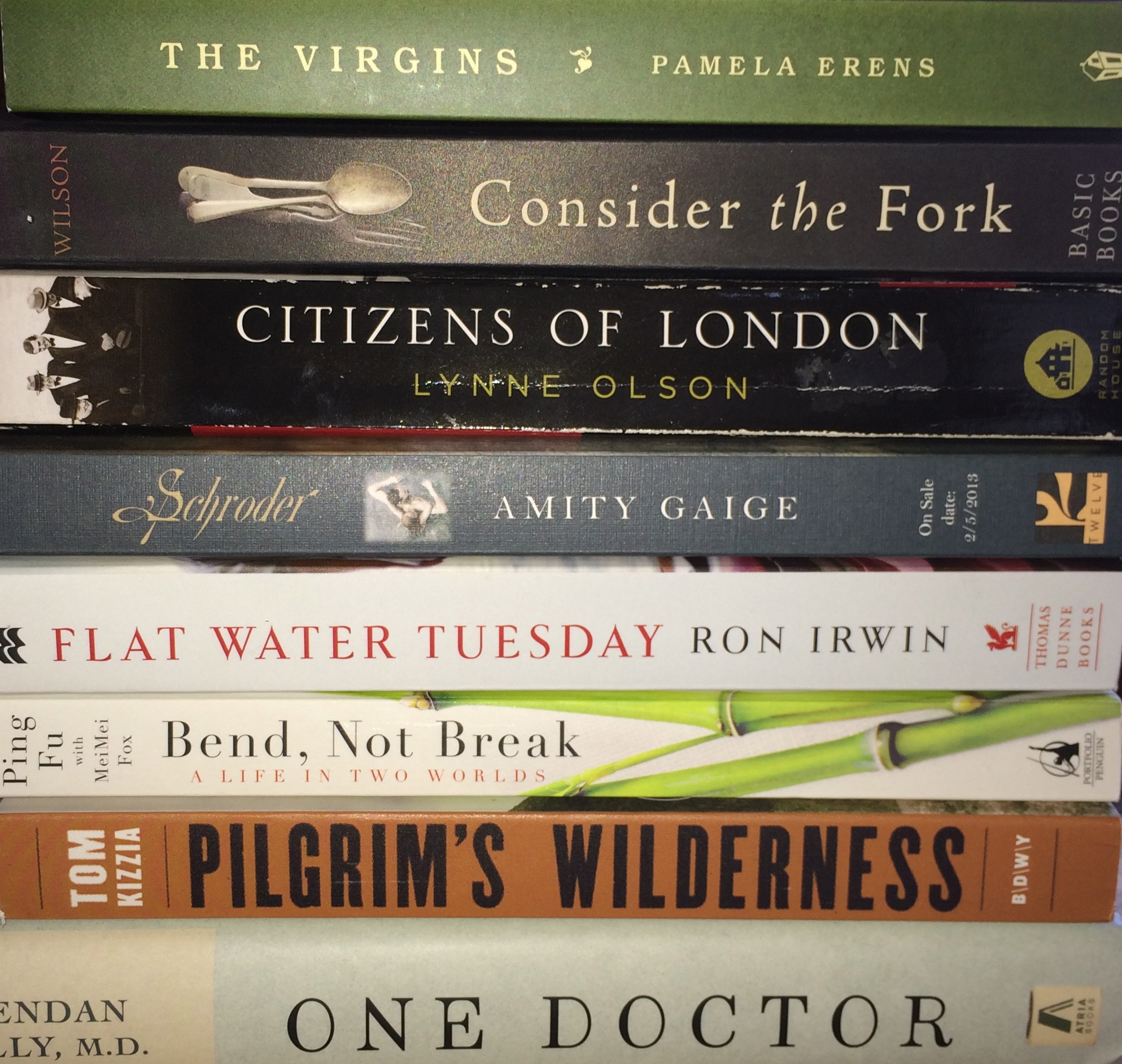
10 Fall Paperback Picks

Last month, the New York Times published an article called “The Plot Twist: E-Book Sales Slip, and Print is Far From Dead”.  The article’s main point was that the predicted “digital apocalypse” hasn’t occurred — sales of e-books are declining and independent bookstores are more robust than ever. Some industry “experts” have taken issue with the article, noting that the e-books referred to in the story are only those published by major publishers, not the gazillions of very cheap e-books available online. Fortune magazine says: “What’s really been happening is that the market share of established publishers has been declining, while sales of independently published e-books have been growing. In particular, sales of books that don’t even have industry standard ISBN numbers have increased.”

A number of authors have been very successful selling their own e-books. John Locke (the 21st century self-published author, not the 18th century philosopher) has published dozens of books since 2010, including How I Sold 1 Million Ebooks in 5 Months, and receives rave reviews from his fans. In fact, 83% of Amazon reviewers gave Locke’s The Love You Crave 4 or 5 stars; in contrast, 62% of reviewers awarded Donna Tartt’s Pulitzer Prize-winning The Goldfinch 4 or 5 stars. Are readers deciding to buy The Love You Crave instead of The Goldfinch? No, but as traditional publishers have raised the prices of e-books, more readers are buying the paperback version of The Goldfinch instead of the e-book.

The Association of American Publishers reported that paperback sales increased by 8.4% in the first half of 2015. In many cases, the price of a paperback is nearly the same as the price of an e-book. The Strand Bookstore in New York City has a large table stacked with paperbacks, strategically located by the store’s entrance, with a sign reading “Cheaper than the E-Book”.

Here are 10 recent paperback releases (five fiction, five nonfiction) to pick up this fall:
9781555977207-1On Immunity by Eula Biss
At first glance, On Immunity is an examination of the anti-vaccination movement, but this fascinating book can’t be easily categorized. The online magazine Salon describes it well:  “Part memoir, part cultural criticism and part science journalism . . . an elegant reflection on a very contemporary flavor of fear.” Book clubs will find plenty to discuss.

9780547939414_hres 2The Best American Short Stories 2015 edited by T.C. Boyle and Heidi Pitlor
Every year, I look forward to the new edition of The Best American Short Stories — along with its companions, The Best American EssaysThe Best American Food Writing, The Best American Travel Writing, and more. They are perfect for keeping on your nightstand  or in your car and picking up when you have 15 minutes or so to read.
9780143108399The Danish Girl by David Ebershoff
Ebershoff is executive editor and vice president of Penguin Random House, where he’s edited dozens of well-known books, including several Pulitzer Prize winners. He’s also written several three novels and a book of short stories. I loved The 19th Wife, a  bestselling double narrative about the Mormon Church in the 19th century and today. Now I’m reading The Danish Girl, Ebershoff’s first novel, which is based on the true story of the first transgendered woman. The movie version, starring Eddie Remayne, will be released next month and I want to read the book first — I’m really enjoying it so far.

9780062359940An Uncomplicated Life: A Father’s Memoir of His Exceptional Daughter by Paul Daugherty
Daugherty, career sports writer and father of an adult daughter with Down’s Syndrome, has written a wonderful book for any parent. Through the story of the first 25 years of his daughter Jillian’s life, Daugherty reminds us of the precious gifts our children are, “exceptional” or not. That sounds hokey, but the book isn’t. For my full review, click here.

9780143127314Last Night’s Reading: Illustrated Encounters with Extraordinary Authors by Kate Gavino
The author, like me, loves to attend author readings. Unlike me, every time she goes to a reading she draws a portrait of the author and writes down her favorite quote. She’s been to more than 100 readings in the New York area, and she keeps a map of all the events, adding a pin every time she goes to a reading. Everything about this book, from the drawings to the hand-lettered quotes, is absolutely charming.
9781492628996

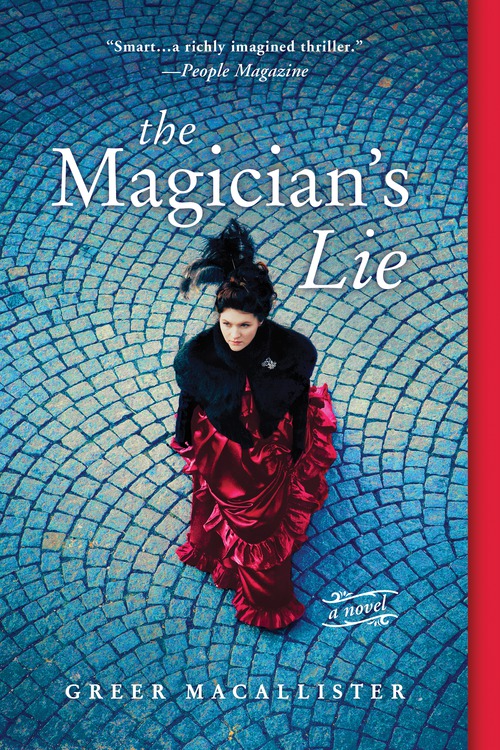
The Magician’s Lie by Greer Macallister
Macallister’s debut is a historical novel about a young, female magician (the “Amazing Arden”) at the turn of the 20th century, who is accused of murder. She is captured and interrogated by a country sheriff who has problems of his own, and during the course of one long night in a rural police station, we learn about the magician’s past. How did an aspiring dancer, born into a wealthy family, end up running a successful traveling magic show — and running for her life? It’s a terrific period piece, with a murder mystery and just a touch of the supernatural. If you enjoyed Water for Elephants, you’ll love this book.
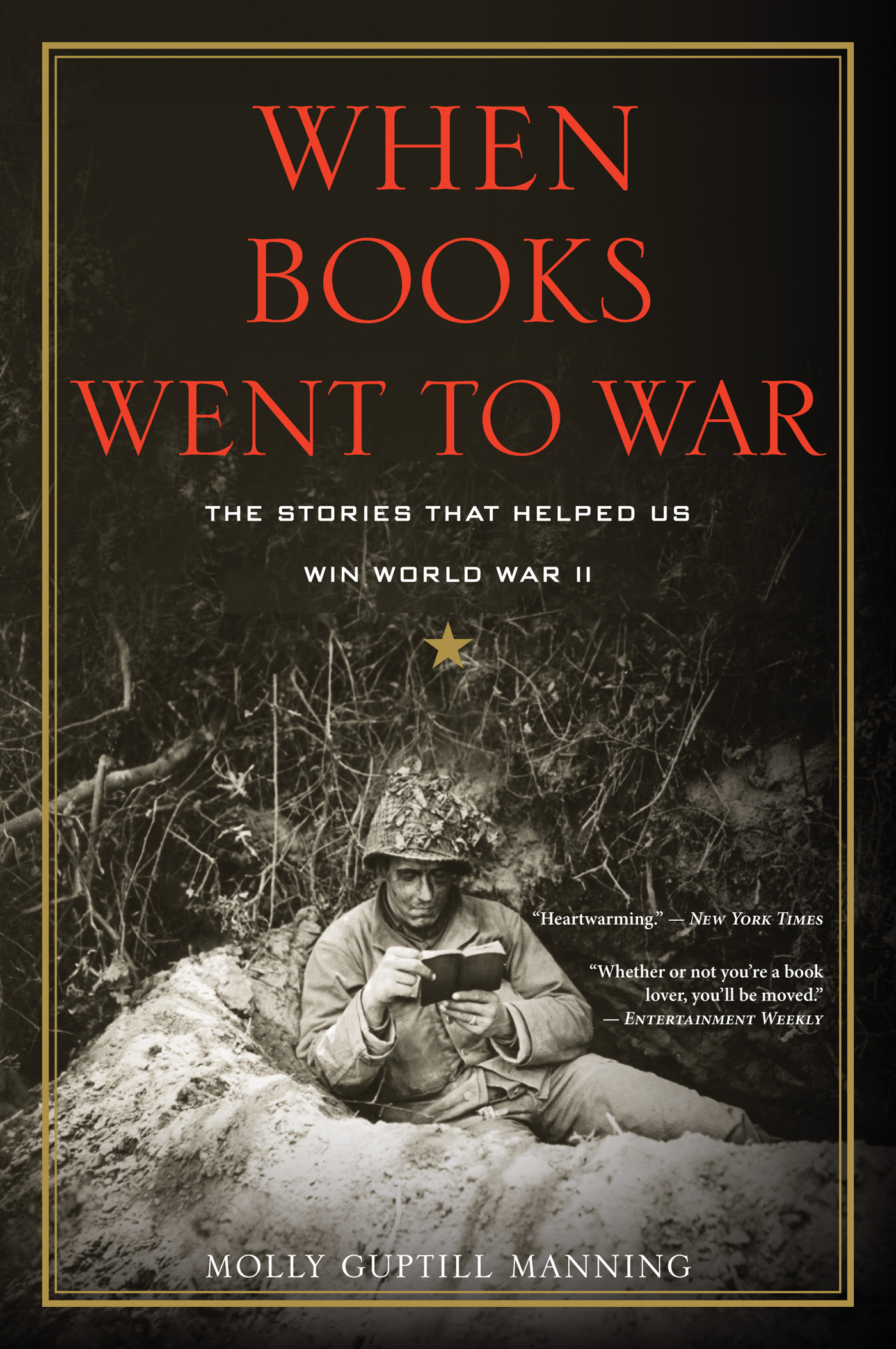
9780544570405_hresWhen Books Went to War: The Stories That Helped Us Win World War II by Molly Guptill Manning
Between 1943 and 1947, the government distributed 120 million paperback books (called Armed Services Editions, or ASEs) to millions of United States servicemen. Special favorites were A Tree Grows in Brooklyn and The Great Gatsby. Manning’s stirring book illustrates the power these books had to combat Nazi propaganda,  “soothe an aching heart, renew hope for the future, and provide a respite when there was no escape” and to “build a new literate middle class” after the war.

9780143127789The Republic of Imagination: A Life in Books by Azar Nafisi
In this insightful follow-up to Reading Lolita in Tehran, Nafisi explores three seminal American novels — Huckleberry Finn, Babbitt, and The Heart is a Lonely Hunter. These novels, and others, “link us to our past, provide us with critical insight into the present, and enable us to envision our lives not just as they are but as they should be or might become.” Interwoven with Nafisi’s literary analysis is the story of her journey to become an American citizen. The book “is a priceless gift to readers who revel in literary fiction”, according to the Chicago Tribune. (Interestingly, the original subtitle of the book was America in Three Books.)

white-collar-girl_brown_Page_1-copyWhite Collar Girl by Renee Rosen (due November 3)
Rosen is carving out a nice niche for herself — historical page-turners set in Chicago. She’s written about Al Capone and organized crime (Dollface) and Marshall Field and the Gilded Age (What the Lady Wants); her new book, a paperback original, focuses on a young woman trying to break into journalism in the 1950s at the Chicago Tribune. (The newspaper column she writes is called “White Collar Girl”.) Like her other books, Rosen’s latest is full of well-known figures — from Mayor Daley to Mike Royko to Ernest Hemingway.

9780142426296Belzhar by Meg Wolitzer
One of my favorite authors ventures into YA literature with this  imaginative novel about a   traumatized young girl who is sent to a boarding school for “emotionally fragile, highly intelligent teenagers.” After she and several other students are hand-picked for a special English class (based on Sylvia Plath and The Bell Jar), they find that writing in their journals enables them to re-experience life before their traumas occurred. I’m looking forward to talking about the book with our store’s YA book group.

What paperbacks are you planning on reading this fall?

The Bookstore Conversation I Dread

Oscar_Wilde_SaronyI don’t like novels that end happily. They depress me so much.
Oscar Wilde

If you’re an avid reader and you like people, selling books is not hard. It’s not as if you’re trying to sell a complicated computer system to a business, or cold-calling strangers with a two-for-one deal on burial plots. You’re chatting with nice people about books, and — most of the time — what could be more fun than that?

indie-bookstore“I’m just browsing, thanks.”

Several kinds of customers come into bookstores. When browsers wander in, they make it clear that they do not want or need any help. The bookseller’s job is to keep an eye on those people because sooner or later they actually do want help and often get annoyed if you don’t intuit this immediately. Other people come in with a purpose. Some of them need a specific book — the Real ACT Guide, or their book club selection (about which they have very little information, such as the title or author), or a London guidebook. These are both the easiest and the most difficult customers — either you pull the desired book off the shelf and hand it over, with a satisfied customer leaving in less than five minutes — or you waste a good chunk of your time on the computer trying to figure out which translation of the Odyssey the high school is using, and which warehouse has stock.

“What’s the hot new book?”

The customers who are the most fun are the ones who want recommendations:

“Something funny for my third grader who hates to read . .. he’s already read all the Wimpy Kid books.”
“A page-turner for a long plane flight.”
“A mystery . . . well, maybe a thriller . . . for my father, who’s recovering from hip surgery.”
“Something brand new for my girlfriend’s birthday — she’s read everything and she loves historical fiction.”
“My mom loves a little romance but nothing too racy, please — no Fifty Shades of Gray.”
“I just need a really, really good book.”

“No war, no dysfunctional families!”

As much as I enjoy talking with customers — discussing favorites and not so favorites, recommending undiscovered gems, and sharing ideas about book club picks — I dread one conversation that regularly repeats itself. I call it the Depressing Books conversation. A customer, usually female, asks me to suggest books for her book group. I ask her what the group has read recently, and whether these choices inspired good discussions. She starts to tell me, and then exclaims, “But they were all so DEPRESSING! Can you suggest a happy book? Doesn’t anyone write happy books anymore?” One customer gave me a list of taboo topics, which included war, illness, death, and unhappy families.

I’ve heard this question, or a variation of it, countless times — and I still don’t have a good answer. Often I answer the question with a question: “What do you mean by ‘depressing’”? It seems that what many readers want are books about likable people who have good things happen to them. If some not-so-good things happen, they shouldn’t be too bad, and in any case everything should turn out all right in the end. I talk about conflict, and drama, and how these are elements of good storytelling. As Deborah Triesman, fiction editor of the New Yorker, says, “Happiness is static, and fiction has to move.”

Small Blessings_tpWhy I can’t create a list of happy book recommendations

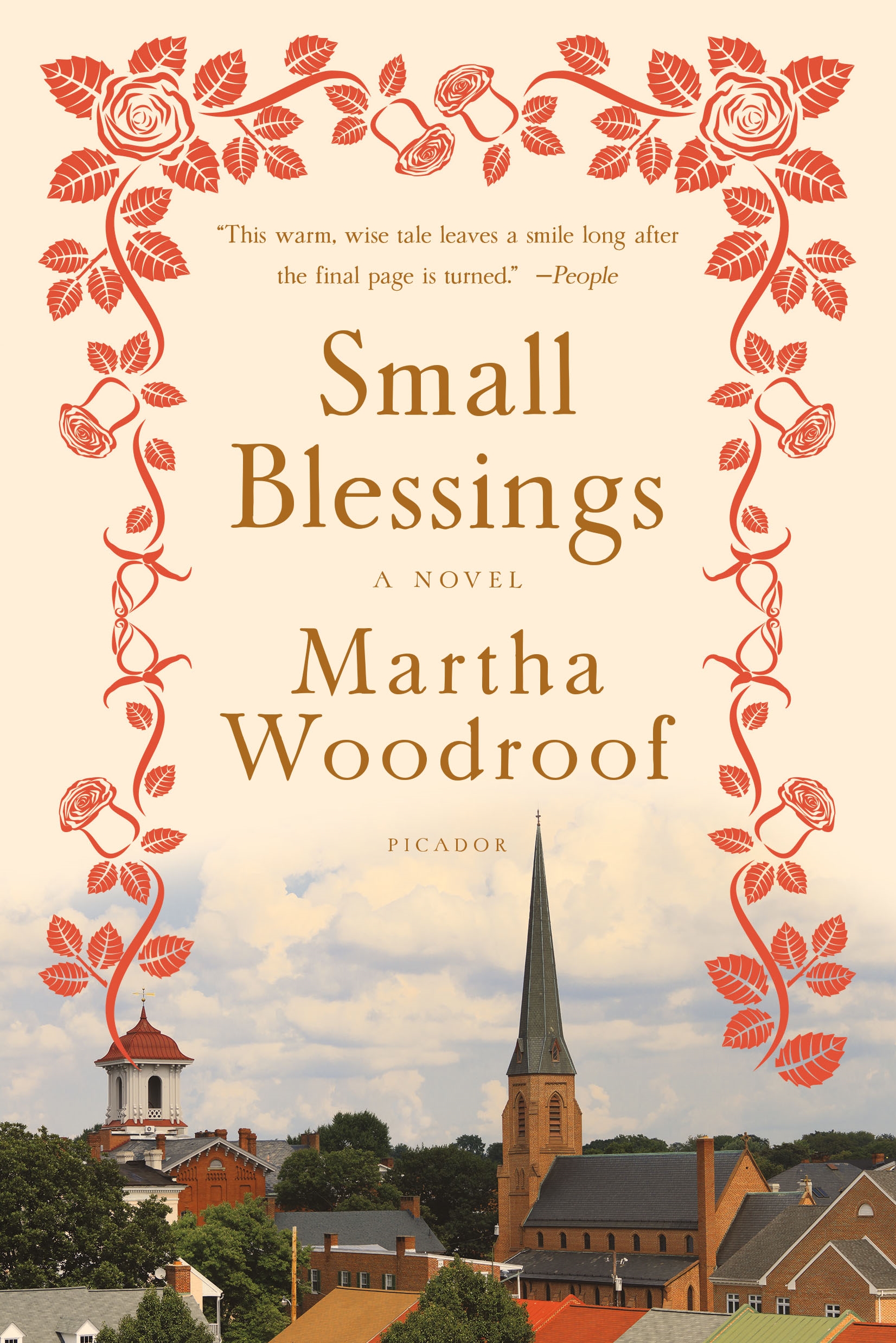
I’ve been trying to compile my own list of books that are non-depressing, yet meaty. Every once in a while, I’ll read a book — most recently it was the marvelous Small Blessings, by Martha Woodroof — that I think is a perfect for this list, only to have my bubble burst when someone points out a “depressing” plot element in my happy book. Guess what? There is almost no way to write a compelling story without including some of life’s unpleasantness. Aspiring authors, take note: there is a huge market for books the reading public perceives as “happy” and uplifting. The trick is to write one that’s not too saccharine. (Also, please bear in mind that the parents of middle-grade reluctant readers — who are mostly male — need MORE FUNNY BOOKS. Fart jokes are OK.)

I recently discovered a website called Positively Good Reads (“feel-good fiction with substance: an upbeat reading list for people who often find serious novels depressing”) which includes a list of books that make the site’s creator feel “hopeful about humankind”. It’s an odd list, weighted heavily in favor of classics that most people already know about (Jane Eyre, Pride and Prejudice, Little Women, A Room With a View, To Kill a Mockingbird), many of which are packed with upsetting topics.

88da2cf387cd631c_oprah-book-club-booksEveryone’s a critic when it comes to Oprah’s book choices

Why do readers so often use the vague and negative term “depressing” to describe contemporary novels? Oprah’s Book Club selections seem to elicit special scorn. Oprah Winfrey did an amazing thing back in 1996 when she launched her monthly book club. For 15 years, she shared her love of reading and promoted her favorite books (many by relatively unknown authors). Many highbrow critics scoffed at Oprah’s Book Club; Scott Stossel, an editor at the Atlantic, said: “There is something so relentlessly therapeutic, so consciously self-improving about the book club that it seems antithetical to discussions of serious literature. Literature should disturb the mind and derange the senses; it can be palliative, but it is not meant to be the easy, soothing one that Oprah would make it.”

If Stossel was interested in the opinions of everyday readers — which I doubt — he should have spent some time talking with my bookstore’s customers. Many of them found Oprah’s selections far from “easy” and “soothing” and were quick to dismiss her choices as “downers”. In an article in The Oprah Affect, a collection of scholarly essays about Oprah’s Book Club, R. Mark Hall says Oprah was “often chided by Book Club participants for choosing stories her readers find grim or even depressing.”

cover-1“Feel-good” literature — hard to find, harder to define

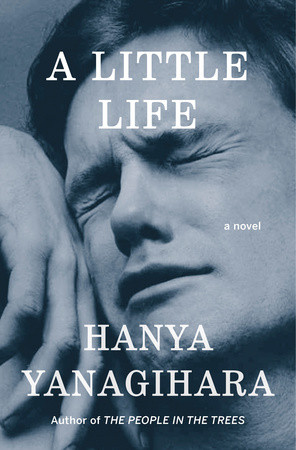
Cynthia Crossen, who wrote the “Dear Book Lover” column in the Wall Street Journal for several years, received a request from a book club for a list of “recent releases that are uplifting and joyful to read, yet also stimulating—something that would satisfy our intellectual needs but also make us feel good about the world.” She didn’t have many suggestions, citing the theory of Daniel Gilbert (author of a nonfiction book about what the very word happy actually means, Stumbling on Happiness) that “people are generally poor prognosticators of what will make them happy” and noting that “the same may be true of predicting books that will leave the reader feeling uplifted and joyful.” Maybe another reason she had few recommendations is that she’s not the kind of reader looking for cheerful books, as evidenced by her rave review of Hanya Yanigihara’s dark and disturbing novel, A Little Life, which she calls “one of the most compelling, original, and moving novels I have ever read.”

9781410468895Compelling. Original. Moving. Those are the three of the four qualities I look for most in a book, fiction or nonfiction. (I’d add “beautifully written” to the list.) I’m not expecting a book to make me feel good about the world, although sometimes that’s nice. The Storied Life of A.J. Fikry gave me a warm fuzzy feeling, although I’ve talked to several people who thought the book was sad and that A.J. was unlikable. The only books that make me feel depressed are books I wish I hadn’t invested time in reading, because I didn’t gain any knowledge or emotional insight from them and the only feelings they evoked were negative. I picked up You, a thriller by Caroline Kepnes, because the main character was a bookstore employee. Turns out he was a psychopath who stalked a woman and then locked her in a torture chamber he’d built in the basement of his bookstore. The plot of this creepy book was filled with holes, and the characters were uninteresting — I didn’t even care about the victim. I hate to use the dreaded word, but this book was just plain . . . depressing.

August Reading

The first week of August hangs at the very top of the summer, the top of the live-long year, like the highest seat of a Ferris wheel when it pauses in its turning.
Natalie Babbitt, Tuck Everlasting

Image
Getting ready to settle in with Shirley Jackson this afternoon.

At the risk of sounding like a cranky middle-aged person, I don’t like the fact that August has become the new September. Labor Day used to signal the end of summer, and even that seemed too early, given that September is usually the most glorious month of the year. One good thing about this unwelcome change is that more books seem to be released in August. Maybe publishers are thinking of August as the beginning of the fall season — traditionally the prime time for publication?

The trend towards shortened summers has bothered me for years (although not nearly as much as it must bother people trying to run seasonal businesses).  “Autumn creep” also annoys Ann Patchett and her staff at Parnassus Books — their blog post, Summer’s Not Over — Keep Right on Reading and Relaxing, echoes my feelings:

Do not despair. Despite all those back-to-school flyers about pencils and backpacks, summer is nowhere near over. (At least not for grownups, right?) It’s August! The sun’s out, the days are long, and every week brings a new crop of fantastic new releases in your neighborhood bookstore. So plant yourself defiantly in a hammock and insist on what’s yours: one more month of leisurely reading time. Reality can wait its turn.

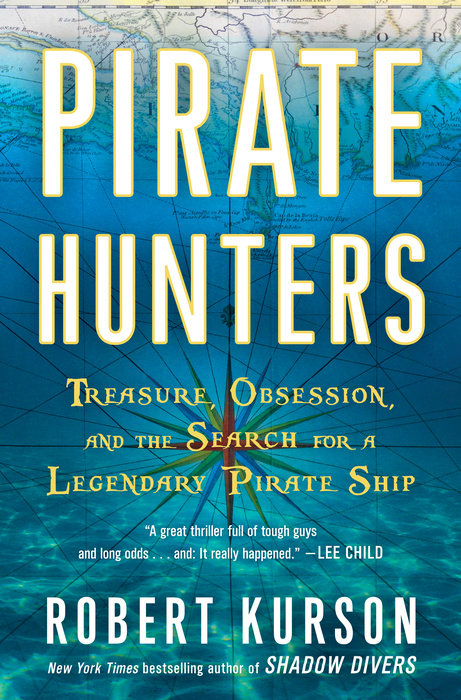
9781400063369The Parnassus staff has some great book recommendations, including two of my recent favorites: The Light of the World, a beautiful meditation on loss and healing, by Elizabeth Alexander, and Pirate Hunters: Treasure, Obsession, and the Search for a Legendary Pirate Ship, by Robert Kurson, as well as a new novel my colleague Molly absolutely loved: Fishbowl, by Bradley Somer. The August selection for Parnassus’s First Editions Book Club is Circling the Sun, a biographical novel about Beryl Markham by Paula McLain (The Paris Wife). I enjoyed Circling the Sun very much, although some of my coworkers weren’t enamored with McLain’s writing style. It inspired me to reread sections of Markham’s memoir, West With the Night, which was one of the first books my book club read, back in 1988.

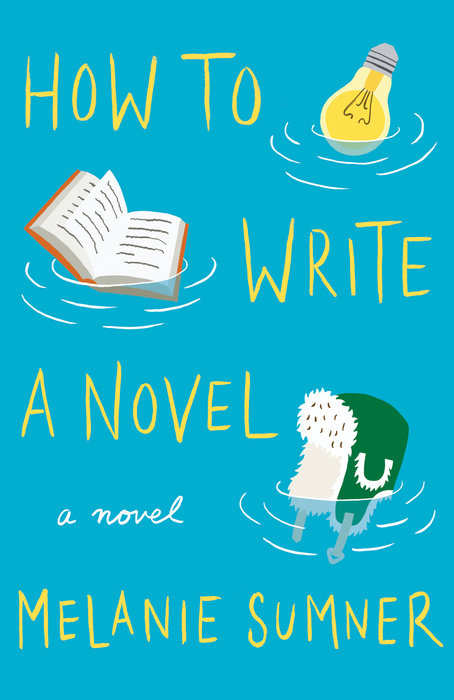
9781101873472-1I’m really excited about several books published this month. Melanie Sumner’s debut novel, How to Write a Novel (a paperback original), is a delight. I loved every page of this book, and what I enjoyed most was the voice of the 12.5-year-old (and yes, that’s how she refers to herself) narrator, Aristotle. While trying to write a book, following the instructions in a writing manual, Aristotle stumbles upon some family secrets. Fans of Where’d You Go, Bernadette? will adore this smart and endearing novel — and since almost everyone loves Where’d You Go, Bernadette?, that means almost everyone will enjoy How to Write a Novel. You could also look at this book as a Harriet the Spy for grownups.

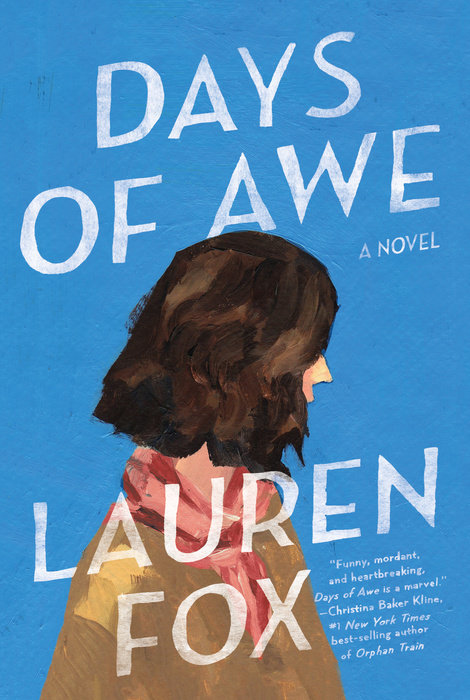
9780307268129Days of Awe, by Lauren Fox, also features a protagonist with a memorable voice. Isabel, a wife, mother, and middle school teacher, is crippled by grief and guilt when her best friend dies in a car accident. Days of Awe is a story of self-discovery, as Isabel redefines her relationships with everyone she loves. It’s by no means an unrelentingly sad book — Isabel, who makes plenty of mistakes, is filled with clever, self-deprecating humor.

9780385540049Meg Mitchell Moore’s The Admissions (available August 18) is not just another book about college admissions and the associated parental and teenage angst. This insightful and delightfully witty novel is about much more than getting into college: the secrets the members of the upwardly mobile Hawthorne family are keeping from each other, and the admissions they must make. I loved Moore’s previous books (The Arrivals and So Far Away) and I’m not sure why she hasn’t received more acclaim. Please look for a Q & A with the author on Books on the Table later this month!

a-window-opens-9781501105432_lgComing on August 25 is a book that touched my bookselling heart — it’s sort of a mashup of Goodnight June (Sarah Jio) and The Storied Life of A.J. Fikry. A Window Opens, by Elisabeth Egan, makes me want to gush, so I’m not going to hold back — I adored it! It’s the clever and entertaining story of a full-time mother and part-time editor who suddenly needs to find a “real” job — and lands at “Scroll”, an up-and-coming company with a diabolically quirky corporate culture that plans to develop e-book lounges. (At least, that’s the party line Scroll feeds our heroine, a book lover.) Perfect for all those readers who don’t want to read “dark” or “depressing” books,  the novel pays tribute to independent bookstores — and tells a heartwarming family story at the same time.

Don’t rush the end of summer — there’s still plenty of outdoor reading time!

Why My Books Are Not Clutter

Clutter n: A large amount of things that are not arranged in a neat or orderly way : a crowded or disordered collection of things.

Clutter n: A crowded or confused mass or collection; a mass of disorderly or distracting objects or details.

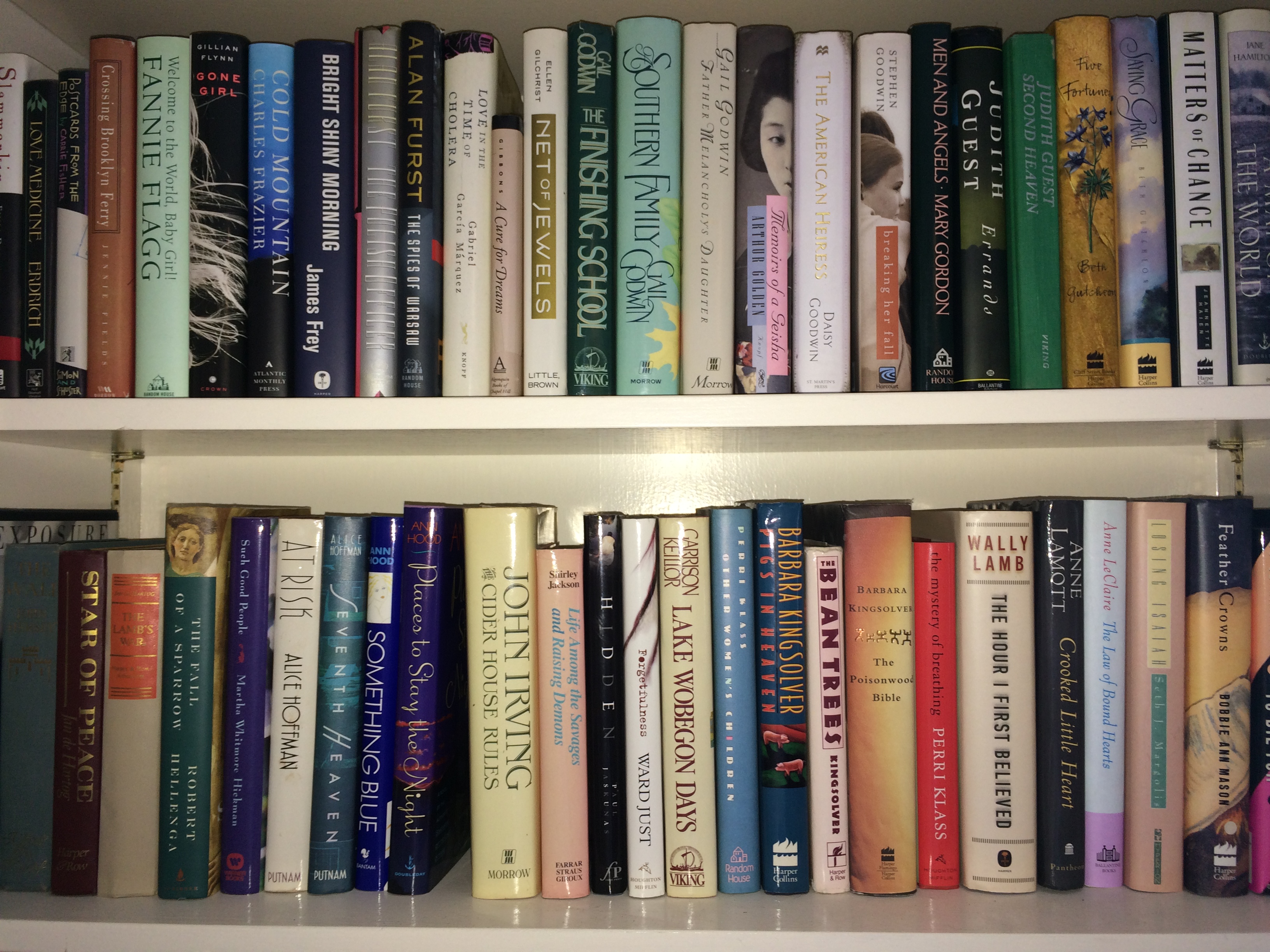
IMG_1221When it comes to my books, I’ll admit to “large amount, and even to “crowded” — but definitely not to “confused” or “disorderly”. I do find them “distracting” — but isn’t that part of the point of books? My books are organized by subject and in the case of fiction, even alphabetized by author. They are lined up neatly on shelves and stacked on tables. Clutter, to my mind, is the stuff I shove in my laundry room junk drawer — mysterious cords, chargers, and hardware items. I’m also guilty of hanging on to piles of magazines. The homes featured in those very magazines don’t have overflowing baskets of House Beautiful and Veranda in their living rooms. (They also rarely have reading lights next to chairs and sofas, I’ve noticed.)

We’ve recently tried to spruce up our house, recovering furniture, replacing rugs, and adding window treatments. So I’ve been reading a lot of interior design magazines, blogs, and books. I’ve learned that there are some very big no-nos — “brown furniture” (which apparently means antiques made of wood) and “matchy matchy” frequently come up as evils to avoid. The absolute worst sin that amateur decorators can commit is failing to eliminate clutter. Clutter not only causes people to experience stress, it may contribute to obesity — according to professional organizer Peter Walsh, author of Lose the Clutter, Lose the Weight: The Six-Week Total-Life Slim Down.

Judging from much of what I’ve been seeing, today’s ideal home looks like an upscale chain hotel, with lots of neutral colors and empty space. (In a large percentage of these homes, the designer adds “personality” by tossing a zebra skin rug over a sisal rug.)

Dominique Browning  (past editor-in-chief of House & Garden) wrote a lovely and insightful article, “Let’s Celebrate the Art of Clutter”, published in the New York Times a few weeks ago. She laments today’s “propaganda of divestment”, and asks, “Why on earth would we get rid of our wonderful things?” :

It is time to celebrate the gentle art of clutter. We live, and we pick up things along the way: the detritus of adventure; the vessels of mealtimes; the books and music of a life of the mind; the pleasures of our daily romps through the senses . . . And yes, you will have bookshelves. Never enough of them. And more books, to replace all those books you gave away. That, too, is a law of nature.

9781607747307Organizational guru Marie Kondo, author of The Life-Changing Magic of Tidying Up, says that “books are one of three things that people find hardest to let go”. Maybe this should tell her something. Why must we feel pressured to let go of things we would like to keep? She says the “true purpose” of books “is to be read, to convey the information to their readers. It’s the information they contain that has meaning. There is no meaning in their just being on your shelves”. That’s where Kondo and I disagree. Being surrounded by my books (even those that don’t particularly “spark joy”, to use Kondo’s phrase), gives me a sense of comfort and warmth that half-empty, dust-free shelves can’t provide.

Kondo recommends placing bookcases in the closet, leaving “nothing to obstruct the line of vision”.  But books are exactly what I want in my line of vision. Just because I’ll never reread a book, cover to cover, doesn’t mean I don’t want it on my shelf. The familiar gray cover of Bonfire of the Vanities reminds me of stolen hours on the couch while my infant son napped. On the shelf above I see Gorky Park and recall reading it on a lounge chair on my honeymoon. I know without looking that The Poisonwood Bible was published in 1998, because I remember that it was one of my very first purchases with my employee discount at Lake Forest Book Store. I’ll never forget coming home from work and reading it during a power outage, by candlelight, while the children were at school.

Every now and then I reread some of my childhood favorites — most recently, I reread A Wrinkle in Time. The lines I underlined when I was 12 are the same ones I would underline now:

In your language you have a form of poetry called the sonnet . . . There are fourteen lines, I believe, all in iambic pentameter. That’s a very strict rhythm or meter . . . And each line has to end with a rigid pattern. And if the poet does not do it exactly this way, it is not a sonnet…But within this strict form the poet has complete freedom to say whatever he wants . . . You’re given the form, but you have to write the sonnet yourself. What you say is completely up to you.

I’m glad I have this book on my shelf, even though I may never open it again. I understand a little more about what Madeleine L’Engle has to say about fate and free will than I did when I was 12, and I’m inspired to read her adult books. As our world becomes more digital, I find myself becoming more attached to physical objects that evoke memories — books, of course, but letters and photographs as well. The books I read electronically don’t seem to lodge themselves in my memory as well as the “real” books I read. A few times, I’ve actually bought the physical version of an e-book I’ve read just so I can add it to my collection.

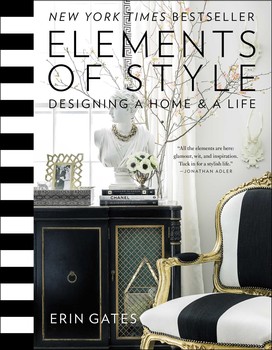
elements-of-style-9781476744872_lgOne book I recently bought that I had already read is Elements of Style: Designing a Home and a Life, by Erin Gates. The photos didn’t show up well in the electronic version (which was a galley, anyway), and it’s a book I’ll stack on my coffee table and refer to again and again. I love that lots of the rooms Gates designs include bookcases that are filled with books, rather than with pottery and knickknacks. She has lots of great decorating tips for the amateur, and plenty of funny anecdotes also.

I’ve amassed piles of design books, including Books Make a Home, Living With Books, and Novel Interiors: Living in Enchanted Rooms Inspired by Literature. My house is not “enchanted”, but it’s not cluttered either — it’s just full of books!

The Joys of Podcasts — Put Those Headphones On!

UnknownA couple of years ago, when I came up with the crazy idea of writing a book blog, I thought I had the perfect name: Books on the Nightstand. A Google search revealed that a website by that name already existed. My initial disappointment evaporated when I spent some time exploring Books on the Nightstand. Two Random House sales reps started recording podcasts in 2008 and since then, have produced 340 episodes. (They recommend books from many publishers, not just Penguin Random House.) Here’s their description of Books on the Nightstand:

At Books on the Nightstand, we strive to bring you great book recommendations, as well as a behind-the-scenes look at the world of books, bookstores and publishing. We do this through our weekly podcasts and frequent blog posts. Michael Kindness and Ann Kingman are friends and colleagues who work in the publishing industry. That means that we talk about books all day long to other people who love to talk about books. But sometimes, those conversations have to end before we’re ready to stop talking. Thus, this blog . . . Our weekly podcasts (internet radio shows) are the heart of what we do here, and we hope you’ll join us. We post new episodes every Wednesday (or often late Tuesday night).

coverBooks on the Nightstand podcasts usually follow the same format: a discussion about a book related topic, with book suggestions; an in-depth book recommendation from both Michael and Ann (“Two books we can’t wait for you to read”); and an audiobook recommendation. Most often, the recommended books are hot off the press, although about once a month backlist books receive attention in a feature called “Don’t you forget about me”.  The books chosen for discussion are always interesting, and often surprising; recent selections include one of my favorite neglected gems, The Rope Walk, by Carrie Brown;  a new — and very topical — thriller, The Cartel, by Don Winslow;  and a new memoir, Blackout, by Sarah Hepola. (By the way, I just read Blackout, and I don’t think I’ve stopped cringing. It’s very well-written, but painfully honest.)

I’ve moved quite a few books to the top of my stack after listening to a review on Books on the Nightstand. (The podcast is the next best thing to in-store presentations by our own Random House reps, Bridget and Laura.) Ann’s high praise for The Painter inspired me to read the novel right away:

My pick for this week is The Painter by Peter Heller. I love this novel so much, even more than I loved The Dog Stars, which I wouldn’t have thought possible. I think this is a book that will appeal to so many of you: those of you who love beautiful sentences, those that like intriguing characters, those that love great descriptions of the landscape, and all of you that love a fully-realized story. Don’t miss this one!

rosie-effect-9781476767314_lgI especially enjoy the audiobook reviews, which focus not only on the content of the books, but the performances of the narrators. I’ve mentioned before that I love listening to audiobooks when I’m on car trips (Road Trip “Reading” — The Joys of Audiobooks). Right now, I’m able to relax — and even laugh– while driving in Chicago traffic because I’m listening to The Rosie Effect, by Graeme Simsion.

Podcasts are perfect for getting me moving — an hour of brisk walking seems to fly by when I’m listening to something interesting. Music just doesn’t do it for me. Once I discovered Books on the Nightstand, I found that there are countless podcasts that hold my attention. If you haven’t listened to Serial, download it immediately — you’ll be hooked.  The Huffington Post reports that host Sarah Koenig announced that two more seasons are in the works, and provides some background on the  series:

Serial debuted in October as a spinoff of This American Life, a long-running podcast from Chicago public radio station WBEZ. In it, Koenig reinvestigated the case of Adnan Syed, who is serving a life sentence for the 1999 strangulation of his high school ex-girlfriend, Hae Min Lee, whose body was found in a Baltimore-area park. The show racked up unprecedented numbers of downloads and took on a life of its own as devotees debated Syed’s guilt.

Other podcasts I enjoy listening to are The Moth: True Stories Told Live, Selected Shorts: Let Us Tell You a Story,  and Slate’s Audio Book Club. The online magazine Bustle has a good list of literary podcasts, noting that “podcasts are a great excuse to shut out the world for a little bit on your next commute, jog, or errand, and get lost in a community of people who are just as psyched about books as you are. Put those headphones on; all the cool people are doing it”.

One question: why haven’t I lost any weight, with all the walking/listening I’ve been doing?

Vacation

I’m on vacation this week, which means lots of reading and relaxing — and no reviewing. I’ll be back next week with book reviews. 

9780804170154On my vacation, I’ve read two books I loved: The Painter, by Peter Heller, which came out last year, and Hold Still, by Sally Mann, just published.

If I were teaching a class called “How to Write a Novel”,  I would use the opening lines of The Painter as an example of how to grab a reader’s attention:

I never imagined I would shoot a man. Or be a father. Or live so far from the sea.

(By the way, I just read the advance reader’s copy of a terrific novel with the title How to Write a Novel, by Melanie Sumner, that will be published as a paperback original in early August. I enjoyed every page of this clever and endearing book, and what I loved most was the voice of the 12.5 year old (yes, that’s how she refers to herself) narrator, Aristotle. If you liked Where’d You Go, Bernadette? (and who didn’t?), you’ll have a great time with How to Write a Novel.)

02dde0b11247a412ef5ab2d18f7ba165I think Hold Still is one of the best memoirs I’ve ever read. It doesn’t seem fair that Sally Mann is not only a renowned photographer but a talented writer as well. Don’t be tempted to read the book electronically, because the photographs — and there are many — are integral to the story, and I think you need to see them on the printed page.

IMG_1535I’m in the middle of The Rocks, by Peter Nichols, which I brought along because it seemed like such a vacation book — it’s good, but I’m able to put it down. There’s so much else to do, especially when the sun is shining!

Nonrequired Reading

children-studying-670663_640Any book that helps a child to form a habit of reading, to make reading one of his deep and continuing needs, is good for him.
Maya Angelou

Yesterday I saw a sight that warmed my heart. A little boy, on his way home from our local library, just couldn’t wait to read one of the books he’d just checked out. He meandered along the sidewalk, once nearly bumping into a tree, while reading one of his books. I don’t know what book captured his attention, but I’m pretty sure it wasn’t one of the books on a required summer reading list.

I remember riding my Schwinn Hollywood home from the library, the basket piled with books. Some were books I’d read before, some were below my reading level, some were what is now called “inappropriate”; very few were the kinds of books teachers would be likely to assign. If I didn’t like a book, I didn’t finish it. If I liked it a lot, I’d read it again. No one paid any attention, as far as I could tell, to what I read. The school didn’t send home a list of books that were required summer reading.

Here is the information on required summer reading my old elementary school publishes on its website:

Summer provides a wonderful opportunity for nurturing self-directed learning experiences, but it is equally important to give students more structured activities that keep them from losing ground over the long break from school. This summer’s reading requirements closely align to the English Language Arts Curriculum so that students are prepared to jump right into their first unit of study. Below you will find an overview of the summer reading program with directions explaining how to access the reading list and assignments.

The assigned fiction title will prepare students for their first unit of study in English Language Arts. Each grade has one specific novel and an accompanying assignment. No substitutions will be accepted. Grade six has an additional link to a teacher model of the assignment. Remember that the fiction title and assignment are on the same document, and is accessed the same way, as nonfiction.

61iWdIYvLcLPretty grim . . . doesn’t exactly make you want to pick up a book, or even “nurture a self-directed learning experience”, does it? (And by the way, what is “English Language Arts”? Maybe the school couldn’t decide whether to call the subject “English” or “Language Arts”, so they came up with this weird compromise?) When I reviewed the “assigned fiction titles”, I was very glad I wasn’t entering fifth grade, because I would have been forced to read Avi’s Something Upstairs (published in 1988), a horror story about a boy who discovers a ghost. I hated those types of books when I was 10, and guess what — I still do. I did enjoy S.E. Hinton’s The Outsiders (published in 1967) when I read it in the early 1970s, but it seems like an odd, dated choice for today’s seventh graders.

The school district in the town where our bookstore is located has a slightly more upbeat attitude toward summer reading. I say “slightly” because the school refers to summer reading as a “task”. What was the last “task” you enjoyed? Warning parents that “while the summer months are a wonderful opportunity for fun and relaxation, the break from the rigors of school can cause a lag in learning”, the school does acknowledge that an additional goal is “to foster and encourage a lifelong habit of reading — for pleasure as well as knowledge — in our students.” I wonder how many eighth graders will find reading And Then There Were None, by Agatha Christie, to be a pleasure. A few will, I’m sure, but the school has required students to read this book for many years and I don’t think I’ve ever had a child come back to the store and ask for more Agatha Christie books.

At least, from a bookseller’s perspective, it’s easy to hand over the requested copy of And Then There Were None. What we dread are the requests for sixth grade reading, which is supposed to center on themes of hope and gratitude:

For your summer reading, we’d like you to read 2 – 3 books of various genres that focus on the themes of hope or gratitude. Look for books where the characters may have overcome struggles or where, despite the conflict within the book, it has a “happy ending”; you believe the characters will be OK.

I suppose almost any book could fit this description, especially since the school mentions Anne Frank’s The Diary of a Young Girl as an example of a book that focuses on optimism. (News flash: the “characters” were not OK.) If an important goal is to develop a love of reading, wouldn’t it be better to ask children to read a few books — on any subject and on any reading level — and tell why they liked these books? Anything, from graphic novels/comics to series books to sports biographies, would be fair game. The only requirement would be that kids find something to read that they enjoy.

Is that an unrealistic idea? Schools are understandably concerned about students losing ground over the long summer vacation. Our school website says: “Research demonstrates that students must read at least three challenging books during the summer break simply to maintain fluency and comprehension skills; a minimum of five such books is necessary to improve on any reading weaknesses.” But what is the cost of forcing children to read books they don’t enjoy? What good is “fluency and comprehension” if children don’t want to read? I’m curious to hear what teachers and parents of school-aged children think.

Books In and Out of Print

41DXF6CG59L._SS500_
Back in the Dark Ages, we used to look books up in these big, heavy volumes. They had very small print!

I can’t count how many times I’ve had to tell a disappointed customer that a book is “out of print”.

“But that can’t be!” the customer will exclaim. “It’s a wonderful book. And it just came out a couple of years ago.”

A couple of years is a long time in the fast-paced world of book publishing, where the focus is always on the next bestseller. Most books die a quiet death after their one and only printing. Bookstores return unsold volumes to publishers, and I’m sorry to tell you that eventually publishers may destroy those books.

Once, an elderly woman asked me to order a book that she said was a special favorite. I couldn’t find any listing for this book or its author (or for any variation of their names), so I finally asked her if it was an older book. “Not really,” she said. “It came out after the war.” “The war” was World War II, and I tried, without success, to convince her that it really was an old book and unavailable for us to order. I offered to do an out-of-print search, but she wanted only a brand new copy. I’m sure she thought I was a hopeless incompetent and went off to torture some other bookstore.

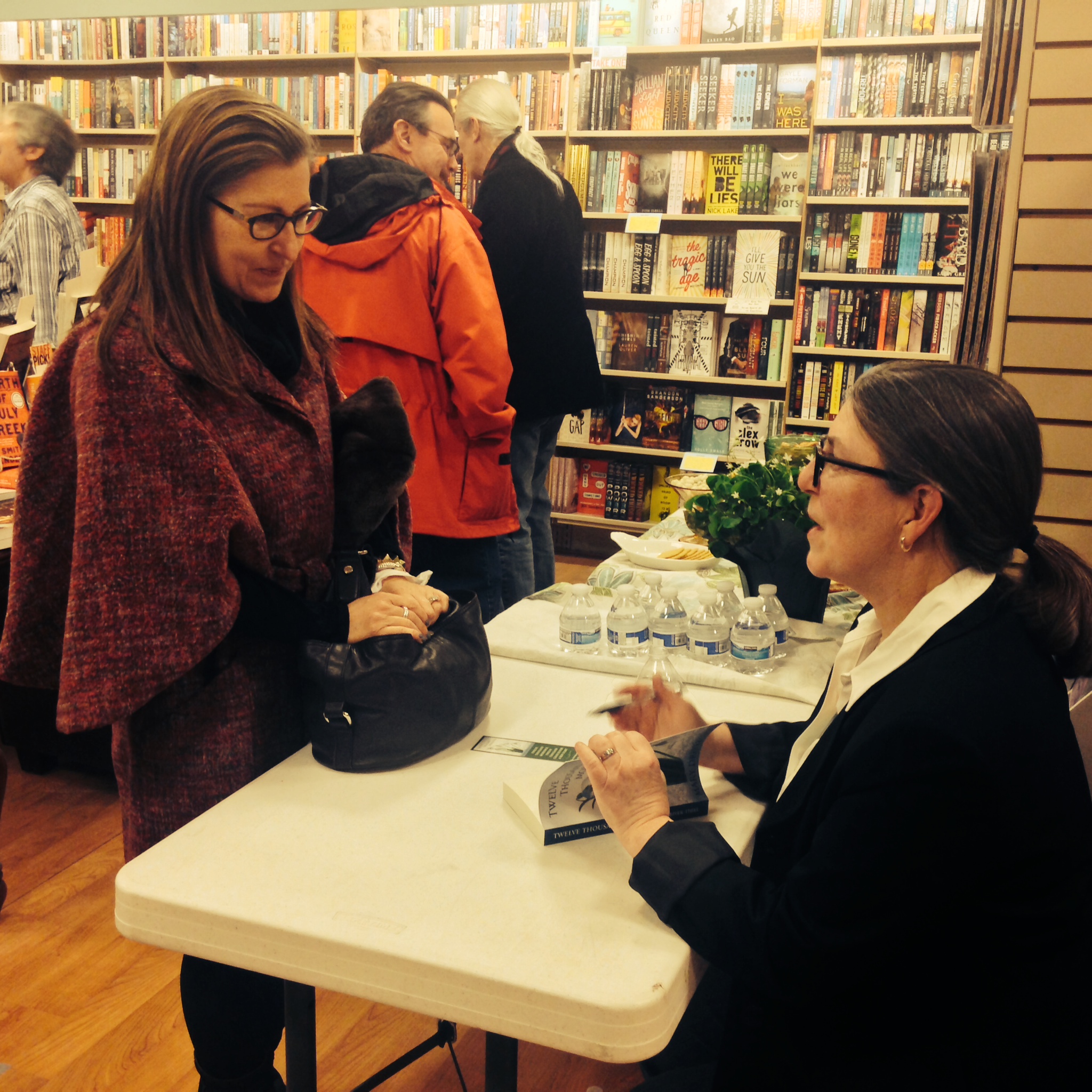
Unknown-1Recently, I had coffee with local author Mary Driver-Thiel, who had just published her second novel, Twelve Thousand Mornings. Our conversation meandered from Mary’s writing career to favorite new books to the literary legacy left by Mary’s mother and grandparents. Mary set up her own publishing company, Pine Lake Press, and has published both her books independently. Through self-publishing, Mary is able to maintain complete editorial control over her books — and she will decide how long they stay in print.

Mary is a third-generation author. I think she and her mother are probably the only mother and daughter who have both held readings at Lake Forest Book Store. Mary’s mother, Ginny Winter (called “Mrs. Munroe Winter” in the invitation the bookstore sent IMG_0432in 1962), wrote a series of children’s books on ballet, riding, swimming, skating, and more. Mary’s grandmother, Mary Adams Kraus, published several books of poetry. All their books are out of print, with just a few available on eBay. Mary’s grandfather, Milo Winter, was a well-known children’s book illustrator, and several of his books remain in print today.

photo 1
Mary Driver-Thiel signing books at Lake Forest Book Store.

Twelve Thousand Mornings, the engaging story of a middle-aged woman who is forced to reinvent her life (“What did a 56-year-old woman who had never had a proper job in her life do when she was left destitute?”), is off to a great start. The book, a sequel to Mary’s well-received earlier novel, The World Undone, has been popular at Lake Forest Book Store. Now Mary must transform herself from a writer into a marketer: “It’s a funny thing–when I spend months and months in solitary pursuit of a finished novel, I daydream about the launch and promo. I really do enjoy talking to people about my work.”

The literary community is divided on the question of whether the explosive growth of self-publishing is a positive development. Author Thomas Christopher Greene (who most recently published The Headmaster’s Wife with Macmillan), says has “mixed feelings” about self-publishing:

I have friends who choose to self-publish. I do think publishing, when done well, is a team sport though. I certainly don’t want to have to worry about designing covers or choosing fonts or distribution or copyediting. There is also a crucial curation role that publishers play.

Clearly, many writers are frustrated with the “curation” function that publishers, who are traditionally gatekeepers, serve. No one seems to know exactly how many books are independently published each year, but estimates range from 300,000 to 500,00 or more. How many of these are family memoirs and cookbooks or other efforts intended only for a small audience? And how many are serious literary endeavors? Again, no solid information is available.

Mary emphasizes on her website that self-publishing doesn’t mean DIY; many authors who publish independently understand, as she does, that creating a book is a “team sport”:

Yes, anyone can self-publish a book for under fifty bucks, and if it’s just for friends and family, that’s fine. But for someone who is planning to venture into the bigger world of serious writing, multiple edits for content and copy are essential. Essential, too, is hiring a high-caliber formatter to keep the widows, orphans, and dingbats under control and a professional graphic designer because a book is, indeed, judged by its cover.  There is also a world of difference between do-it-yourself publishing and independent publishing with a quality team. To quote my wise and wonderful agent, April Eberhardt, “We can and must educate authors, and the publishing world at large, that ‘indie’ and ‘self-published’ mean many different things.”

Perhaps the biggest hurdle facing self-published authors is getting the book noticed — by booksellers, readers, and reviewers. To say the market is oversaturated is an understatement. Bookstores can stock and display only a tiny fraction of the books that are published each year. As an article in Forbes magazine harshly points out to would-be authors: “No one cares about your book. That’s it in a nutshell. There are somewhere between 600,000 and 1,000,000 books published every year in the US alone, depending on which stats you believe . . .on average, they sell less than 250 copies each. Yours won’t stand out.”

still-alice-9781501107733_lgEvery now and then, through a serendipitous collection of factors, a self-published book becomes wildly successful. The most recent example is Lisa Genova’s Still Alice, which she decided to publish herself after she couldn’t find an agent or publisher. In her website, Genova says:

It’s important to know that a self-published book was not my goal. I self-published because I couldn’t make any headway on the conventional road to a book deal. My self-publishing goal was to demonstrate that Still Alice had an enthusiastic and sizeable audience. I wanted to give my book a chance to wave its arms in the air and yell at the top of its lungs, to create a buzz loud enough for the literary agents and publishing houses to hear. And at the end of my self-published day, I still wanted a book deal from a traditional publishing house.

Eight years later, Still Alice is still in print, along with Genova’s three subsequent novels. (And of course, Still Alice was made into an excellent movie, with Julianne Moore winning the Oscar for Best Actress.) That’s a Cinderella story that doesn’t happen very often . . . but it’s one that I’m sure every self-published novelist knows.

Dog-Eared Pages: 10 Quotes I Love

My third grade teacher, Mrs. Pierce, once reprimanded me for turning down the page of my book. She informed me that this was called “dog-earing” and it was very, very bad, on a par with wasting food at lunchtime and talking in the halls — two other crimes I had committed. Now I’m almost as old as Mrs. Pierce was then, and I can dog-ear my books anytime I want. If you borrow a book from me and there are lots of pages turned down, you know that this is a really good book filled with passages worth rereading and remembering.

In high school, one of my favorite English teachers, Mr. Regan, told us that “quote” is a verb and “quotation” is a noun. Mr. Regan, the co-author of our textbook, the English Competence Handbook, devoted an entire chapter to the proper use of “Quotations”. To the chagrin of English teachers everywhere, the word “quote” has become commonly used as a noun. Even the people in charge of websites devoted to cataloging quotes seem confused. One website calls itself The Quote Garden (“celebrating 17 years online”) but lists quotations in hundreds of categories, from “curmudgeonesque” to “ladybugs”.

Ever since I left Mrs. Pierce’s classroom,  I’ve dog-eared quite a few pages. Here are some of my favorite quotes (sorry, Mr. Regan!) about books and reading:

9780385531955When a book is a time machine, taking me back and sideways to other minds and times and cities and planets but mostly forward, forward to dinnertime, to when my mother would walk in the door and the unsympathetic girl would leave and I could re-emerge into my life, and it would be only the two of us again, my mother and me, and although I felt like I barely had her at least she was mine alone — who would give such magic away?
Holly LeCraw, The Half Brother

There is something called the rapture of the deep, and it refers to what happens when a deep-sea diver spends too much time at the bottom of the ocean and can’t tell which way is up. When he surfaces, he’s liable to have a condition called the bends, where the body can’t adapt to the oxygen levels in the atmosphere. All of this happens to me when I surface from a great book.
Nora Ephron, I Feel Bad About My Neck

962ab117cc4ac2dd9054af8b597fde98At eight, Arthur was walking five miles every other Tuesday to Mrs. Robert J. Taylor’s in Glassville to borrow a book from her considerable collection of eighty-five volumes. He was Robinson Crusoe sneaking through the jungle, scouting for ambush. He was Gulliver negotiating the fleshy landscapes of the Brobdingnags. He was Ahab, substituting green moss boulders for the white whale and losing his leg a thousand times. For Arthur, the words gathered in waterfall thoughts that spilled off the page into the pools of imagination collecting in his head.
Christopher Scotton, The Secret Wisdom of the Earth

Never did she find anything so difficult as to keep herself from losing her temper when she was suddenly disturbed while absorbed in a book. People who are fond of books know the feeling of irritation which sweeps over them at such a moment. The temptation to be unreasonable and snappish is one not easy to manage.
Frances Hodgson Burnett, A Little Princess

imgresSo Matilda’s strong young mind continued to grow, nurtured by the voices of all those authors who had sent their books out into the world like ships on the sea. These books gave Matilda a hopeful and comforting message: You are not alone.
Roald Dahl, Matilda

Writing and reading decrease our sense of isolation. They deepen and widen and expand our sense of life: they feed the soul. When writers make us shake our heads with the exactness of their prose and their truths, and even make us laugh about ourselves or life, our buoyancy is restored. We are given a shot at dancing with, or at least clapping along with, the absurdity of life, instead of being squashed by it over and over again. It’s like singing on a boat during a terrible storm at sea. You can’t stop the raging storm, but singing can change the hearts and spirits of the people who are together on that ship.
Anne Lamott, Bird by Bird

ZHer library would have been valuable to a bibliophile except she treated her books execrably. I would rarely open a volume that she had not desecrated by underlining her favorite sections with a ball-point pen. Once I had told her that I would rather see a museum bombed than a book underlined, but she dismissed my argument as mere sentimentality. She marked her books so that stunning images and ideas would not be lost to her.
Pat Conroy, The Prince of Tides

It was easy enough to write a sentence, but if you were going to create a work of art, the way Melville had, each sentence needed to fit perfectly with the one that preceded it, and the unwritten one that would follow. And each of those sentences needed to square with the ones on either side, so that three became five and five became seven, seven became nine, and whichever sentence he was writing became the slender fulcrum on which the whole precarious edifice depended. That sentence could contain anything, anything, and so it promised the kind of absolute freedom that, to Affenlight’s mind, belonged to the artist and the artist alone. And yet that sentence was also beholden to the book’s very first one, and its last unwritten one, and every sentence in between.
Chad Harbach, The Art of Fielding

9781410468895When I read a book, I want you to be reading it at the same time. I want to know what would Amelia think of it. I want you to be mine. I can promise you books and conversation and all my heart, Amy.
Gabrielle Zevin, The Storied LIfe of A.J. Fikry

I never deliberately learned to read, but somehow I had been wallowing illicitly in the daily papers. In the long hours of church — was it then that I learned? I could not remember not being able to read hymns. Now that I was compelled to think about it, reading was something that just came to me, as learning to fasten the seat of my union suit without looking around, or achieving two bows from snarl of shoelaces. I could not remember when the lines above Atticus’s moving finger separated into words, but I had stared at them all the evenings in my memory . . . Until I feared I would lose it, I never loved reading. One does not love breathing.
Harper Lee, To Kill a Mockingbird

Do you turn down pages, highlight, underline, or use Post-It notes to remember favorite passages?

For more inspiring and thought-provoking literary quotes, check out The Broke and the Bookish, host of Top 10 Tuesday.


Why I Hate Reading Challenges — And Why I’m Participating in One

IMG_1244I keep hearing about reading “challenges”.  Readers challenge themselves to read a certain number of books or pages in a year, or they try to read certain types of books that are outside their comfort zones. These challenges don’t appeal to me at all. I know a lot of avid readers find them fun and rewarding, but the message I get from the challenges is that reading is a chore and people need all the encouragement they can get. This message seems to start in grade school, when children are forced to read for a prescribed length of time and to read books that are of no interest to them. Read more