All the Stars in the Heavens — Book Review

I’m interested in how we survive by the labor of our own hands, and who we choose to love. Those are my two themes—they’re in every book I write.
Adriana Trigiani

Adriana Trigiani’s latest novel is an unabashedly romantic story of Hollywood’s golden age, peopled with the stars of yesteryear — Spencer Tracy, David Niven, Myrna Loy, Carole Lombard, Hattie McDaniel — and Clark Gable and Loretta Young. Trigiani paints a romantic picture of Gable and Young as star-crossed lovers, kept apart by the strict moral codes and sexist double standard of the times.

Their problems were not of the heart, or their intentions, but of the practical world, which was defined by the wily and improbable laws enforced by the studios that employed them, and by the public, whose ticket dollars gave them the final say. Gable and Young were indentured to the stardom that made their lifestyle possible.

Fans of old movies and old-fashioned, multi-generational sagas will love All the Stars in the Heavens. It’s the kind of novels described in blurbs as “sweeping” — an overused word that is, nonetheless, apt when applied to this Hollywood epic. If the book were a movie it would be called a “biopic”. We first meet Loretta Young as a child actress, working to help her single mother pay the bills, and follow her as she becomes a leading lady in Hollywood, falling in love with the wrong men, and eventually a grandmother, watching herself and Clark Gable on a VHS tape of The Call of the Wild.

Warning to readers: don’t Google “Loretta Young”, “Clark Gable” — or anything else in the book that piques your curiosity. I made the mistake of doing that and I not only ruined the story for myself, but came across some recent information (so recent that Trigiani wouldn’t have known about it while writing the book) that cast doubt on one of the central plot elements. Granted, All the Stars in the Heavens is fiction, but it’s clear Trigiani tried to keep her story within the basic outline of Young’s life.

The most interesting character in the book is one Trigiani invented — Alda Ducci, Young’s secretary and dear friend. An Italian immigrant, Alda came to the Young household after being asked to leave the Daughters of Charity of Saint Vincent de Paul, where she had been training to become a nun. The Mother Superior at the convent says, “‘I’m told this a fine Catholic family, very devout. You would be a secretary to one of the daughters. She works in pictures. Her name is Loretta Young.'” I was reminded of The Sound of Music, when Maria leaves the Abbey and falls in love with Captain von Trapp. (Remember the Baroness: “And somewhere out there is a lady who I think will never be a nun.”)

Not only does Alda form a deep and abiding friendship with her employer, she falls in love with Luca Chetta, a scene painter on the set of The Call of the Wild. Both the friendship with Loretta and the relationship with Luca happen improbably fast. Almost immediately after meeting Alda, Luca says, “‘I’m already crazy about you . . . You got a big, sad heart. And big, beautiful eyes. I want to understand why you’re sad. And I want to look into those eyes of yours forever.'”  Alda responds: “‘You sound like a movie script.'”

The dialogue in All the Stars in the Heavens does sound like a movie script — a movie script from another era. It’s sometimes corny, but often the repartee is witty and flirtatious. Trigiani knows how to set a scene too, from the cold and isolated area of northern Washington where The Call of the Wild was filmed to the ancient and crowded neighborhood in Padua, Italy where Alda’s family lives.

Would I recommend All the Stars in the Heaven? For me, it was a welcome break from serious nonfiction, as well as a nostalgic trip to a bygone era. It’s fun reading, and you’ll learn a little something about old Hollywood. Like many of the movies the book references, All the Stars in the Heavens is clever, entertaining, and doesn’t probe too deeply. Trigiani is a terrific storyteller, and she has great material to work with in this book — which is her first biographical novel.

It’s not surprising that Trigiani chose to write about the movie business. A theater major in college, she spent 15 years as a playwright, comedy troupe actress, TV writer/producer (writing several episodes for the Cosby Show), and documentary filmmaker before turning to fiction writing. Her first novel, Big Stone Gap, the first in a series set in her Virginia hometown, started out as a screenplay. The movie version (written and directed by Trigiani and starring Ashley Judd) was just released last month. The reviews have been middling; the Washington Post’s was typical, concluding that “In a lot of ways this is a Chicken Soup for the Soul sort of movie. But sometimes, especially when the air’s starting to turn brisk, that’s exactly what you need.”

And every once in a while, what you need is a Hollywood novel that gives you a glimpse of a glamorous world that no longer exists. I also recommend A Touch of Stardust by Kate Alcott (the filming of Gone With the Wind) and, if you’d prefer something more literary, Beautiful Ruins by Jess Walter (the making of Cleopatra).

Stories are people. I’m a story, you’re a story . . . your father is a story. Our stories go in every direction, but sometimes, if we’re lucky, our stories join into one, and for a while, we’re less alone.
Jess Walter, Beautiful Ruins

Click here for my review of Adriana Trigiani’s 2014 release, The Supreme Macaroni Company.

Matchmaking: 10 Nonfiction/Fiction Pairs

Fiction and nonfiction are not so easily divided. Fiction may not be real, but it’s true; it goes beyond the garland of facts to get to emotional and psychological truths.
Yann Martel

The National Endowment for the Arts recently studied the reading habits of Americans, and one of their findings won’t surprise any bookseller: “Men are more likely to read nonfiction books than fiction, while the opposite holds true for women.” The NEA defines a “literary reader” as someone who has read “at least one novel, play, or poem within the last 12 months”. According to this definition, 47% of American adults are “literary readers”. So if a person (female) reads one novel in a year — say, Fifty Shades of Gray — she is a “literary reader”, but if a person (male) reads dozens of nonfiction books — The Boys in the Boat, The Innovators, The Warmth of Other Suns — he is some type of “non-literary”, inferior reader?

Like Nancy Pearl, librarian, NPR book critic, and author of Book Lust, I’m an omnivore when it comes to books. When asked how she chooses the books she discusses on Morning Edition’s “Under the Radar” segments, she said:

Simple: I just pick some of the titles that I’ve most enjoyed since the last time I was on, without concern for whether they’re fiction or nonfiction, genre or not, or aimed or classified as being for children or teens. Because I am an omnivorous reader, at first glance my choices always seem to me to be completely higgledy-piggledy, with no book bearing any similarity to any other.

So whether you’re an omnivore, a carnivore (nonfiction reader), or herbivore (fiction reader), here are some complementary sets of fiction and nonfiction books. (For a list of books for the confirmed carnivore, check out 10 Books for “Carnivorous” Readers — which includes Steven Rinella’s Meat Eater: Adventures of an American Hunter.)

9780804137744Interested in Civil War cross-dressing?
Nonfiction: Liar, Temptress, Soldier, Spy: Four Women Undercover in the Civil War by Karen Abbott
A rollicking chronicle of the exploits of four female spies (two Union, two Confederate) during the Civil War.
Fiction: I Shall Be Near to You by Erin McCabe
In this beautiful story of love and war, a headstrong young woman disguises herself as a man, enlists in the Union Army, and follows her new husband off to battle.

Want to read about work/life balance?
Nonfiction: Lean In: Women, Work, and the Will to Lead by Sheryl Sandberg
Sandberg’s book advising young women to be more ambitious received a lot of unfair criticism — much of it, I suspect, from people who didn’t read it. Anne-Marie Slaughter, author of the recent book, Unfinished Business: Women Men Work Faa-window-opens-9781501105432_lgmily, wrote an excellent review in the New York Times.
Fiction: A Window Opens by Elisabeth Egan
The clever and entertaining story of a full-time mother and part-time editor who suddenly needs to find a “real” job — and lands at “Scroll”, an up-and-coming company with a diabolically quirky corporate culture

Want to understand more about developmentally disabled young adults?
Nonfiction: An Uncomplicated Life: A Father’s Memoir of His Exceptional Daughter by Paul Daugherty
A wonderful book for any parent — through the story of the first 25 years of his daughter Jillian’s life, Daugherty reminds us of the precious gifts our children are, “exceptional” or not.
Fiction: A Step Toward Falling by Cammie McGovern
In McGovern’s second novel for young adults, two achievement-oriented high school students fail to protect a developmentally disabled classmate, Belinda, at a pivotal moment. Belinda, who narrates sections of the book, comes to life as a three-dimensional character.

Think you need to learn more about why school shootings happen?
Nonfiction: Columbine by Dave Cullen
Cullen spent 10 years researching the events at Columbine High School, and what he found was that “most of what we ‘know’ about Columbine was wrong.” The killers, he points out, were not bullied — they were, in fact, bullies themselves.
Fiction: We Need to Talk About Kevin by Lionel Shriver
One of the most chilling books I’ve ever read.

Interested in the craft of writing?
Nonfiction: On Writing by Stephen King and Escaping Into the Open by Elizabeth Berg
Both are not only excellent writing manuals but entertaining memoirs as well.
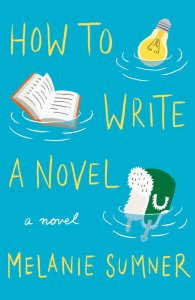
Fiction: How to Write a Novel by Melanie Sumner9781101873472-1
Maybe it’s a bit of a stretch pairing How to Write a Novel with books on how to write, because Sumner’s debut novel is only on the surface about writing a novel. While trying to write a book, following the instructions in a writing manual, 12-year-old Aristotle stumbles upon some family secrets. Fans of Where’d You Go, Bernadette? will adore this smart and endearing novel.

Fascinated by World War I?
Nonfiction: Testament of Youth by Vera Brittain
This classic memoir of love and loss in World War I-era England should be required reading for anyone interested in that time period.
Fiction: The Absolutist by John Boyne and A Long Long Way by Sebastian Barry
I love both of these books so much that I can’t decide which is my favorite World War I novel. (Birdsong, by Sebastian Faulks, is a runner-up.) Both are beautifully written and almost unbearably sad.

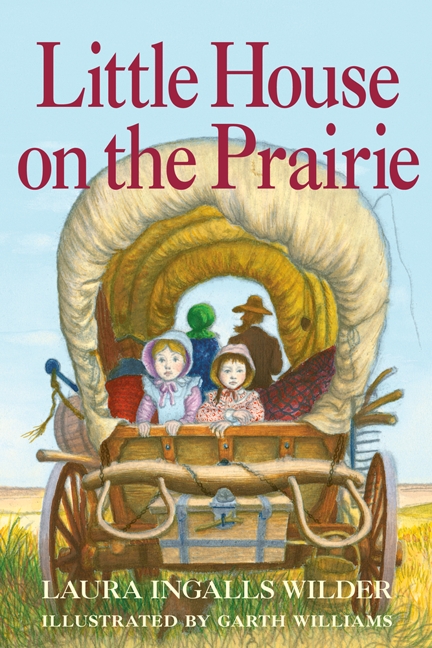
9780061958274Are you a Little House on the Prairie fan?
Nonfiction: Pioneer Girl: The Annotated Autobiography by Laura Ingalls Wilder and Pamela Smith Hill
Hill, the author of a biography of Laura Ingalls Wilder, edited Wilder’s memoir — which is really a rough draft of the Little House books. An article in the Los Angeles Times points out that the Little House series was written for children, and Wilder’s memoir “would have been rated R for violence and adult content.”
Fiction: Pioneer Girl by Bich Minh Nguyen
Lee Lien, daughter of hardworking Vietnamese immigrants, is a newly minted Ph.D. in English literature with no job who finds a mysterious gold brooch belonging to her mother — an item that may have belonged to Laura Ingalls Wilder.

Curious about reclusive authors?
Nonfiction: My Salinger Year by Joanna Rakoff
Actually, Salinger doesn’t show up much in Rakoff’s memoir of her stint as a famously eccentric literary agent, but his brief appearances are memorable — and so is the book.
Fiction: & Sons by David Gilbert
A big, fat novel centering on A.N. Dyer — a reclusive writer reminiscent of J.D. Salinger. If you like Jonathan Franzen, you’ll like this. There’s a lot going on — a novel within a novel, lots of characters, and even a touch of science fiction.

9781101872871What happens when cultural and religious differences collide with modern medicine?
Nonfiction: The Spirit Catches You and You Fall Down: A Hmong Child, Her American Doctors, and the Collision of Two Cultures by Anne Fadiman
Published almost 20 years ago, this award-winning book — one of my “top 10” works of narrative nonfiction — includes a new afterword with updates on the characters and on the author herself.
Fiction: The Children Act by Ian McEwan
The morally complex and emotionally resonant story of a London family court judge who must make a decision about whether to order a lifesaving blood transfusion for a 17-year-old Jehovah’s Witness.

What was it like to live through Hurricane Katrina?
Nonfiction: Five Days at Memorial by Sheri Fink
The author is a physician and Pulitzer Prize winning journalist who’s written a gripping account of the life-and-death decisions medical staff at Memorial Medical Center in New Orleans were forced to make during Hurricane Katrina.
Fiction: Salvage the Bones by Jesmyn Ward
The 2011 National Book Award for fiction, set in Mississippi just before and during Hurricane Katrina, has ‘the aura of a classic”, according to Ron Charles of the Washington Post.

Nonfiction November: This Year’s Overlooked Gems

You can tell a more incredible over-the-top story if you use a nonfiction form.
Chuck Palahniuk

There is really no fiction or non-fiction; there is only narrative. One mode of perception has no greater claim on the truth than the other . . .
E.L. Doctorow

November is a busy month, and that’s not just because of Thanksgiving and the beginning of the holiday season. I don’t know how these things work, but the powers that be have determined that November is also National Novel Writing Month, National Peanut Butter Lovers Month, Historic Bridge Awareness Month, Manatee Awareness Month, and International Drum Month — and of course, it’s No Shave November. Thank goodness for that, because who has time to shave while writing a novel and learning about historic bridges?

In the world of book blogging, it’s Nonfiction November.  Dozens of reviewers share their favorite recommendations for nonfiction books. Many of the same best-selling titles pop up again and again, and for good reason — they’re excellent books, well worth reading. Atul Gawande’s Being Mortal should be required reading for anyone who’s mortal, but you don’t need me to tell you about it.

I suspect many readers regard nonfiction as a homework assignment, not riveting reading. Novelist Chris Bohjalian said, “People seem to read so much more nonfiction than fiction, and so it always gives me great pleasure to introduce a friend or family member to a novel I believe they’ll cherish but might not otherwise have thought to pick up and read.” I’ve found the opposite — in my experience, nonfiction is usually a harder sell than fiction.

Over the past year, I’ve read plenty of nonfiction, including a few books that — at least in my little corner of the world — haven’t received the love they deserve. I’ve mentioned these terrific books before, but they’re worth mentioning again.

The Light of the World by Elizabeth Alexander
Poet Alexander has written a gorgeous chronicle of her family’s grief after her 50-year-old husband died unexpectedly. Every short chapter (most are 2-3 pages) is like a poem, with spare, beautiful feeling and intense feeling. The book is reminiscent of Joan Didion’s The Year of Magical Thinking.
From the Boston Globe review:  ” . . . A poetry lover, and a memoirist of loss myself, I expected to like Alexander’s book. But nothing could have prepared me for the experience of reading The Light of the World. It riveted me, rent me, sent me reeling. It flooded me with ineffable joy.”

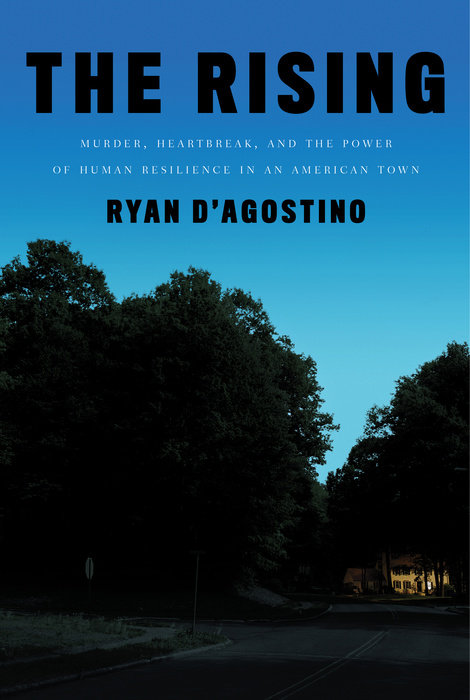
9780804140164The Rising: Murder, Heartbreak, and the Power of Resilience in an American Town by Ryan D’Agostino
The devastating true story of Dr. William Petit, who lost his wife and two daughters — and was critically injured himself — in a brutal attack in the family’s Connecticut home. Amazingly, Petit has not only survived but managed to rebuild his life.
From the Publishers Weekly review: “D’Agostino’s tender approach to his subject and story is impressive as he artfully charts Petit’s emotional thawing without resorting to cloying prose or melodrama . . .Though a horrific crime provides the backdrop, this book is a remarkable account of hope, fellowship, and love in the face of tragedy.”

9780062268679Something Must Be Done About Prince Edward County: A Family, A Virginia Town, A Civil Rights Battle by Kristen Green
Veteran journalist Green chronicles the years when Prince Edward County, Virginia closed its public schools rather than obey the federal mandate to desegregate — and tells the story of her family’s part in this shameful chapter of history.
From the New York Times review: “It is this personal story that makes her mix of memoir and history . . . so absorbing as she returns home to interview family and friends about a past that many would rather leave there.”

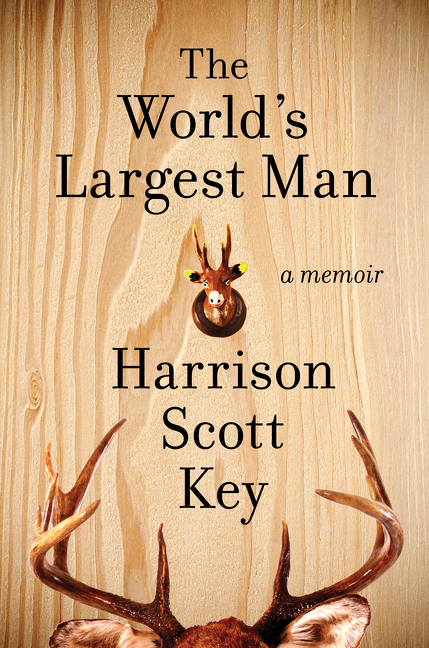
9780062351494The World’s Largest Man by Harrison Scott Key
A hilarious (and sometimes heartbreaking) memoir about a bookish son’s relationship with his testosterone-fueled father. Although Key is a gifted humorist, The World’s Largest Man is not a nonstop laugh riot. At its heart, it’s a story about love and acceptance. Much of the book is heartbreaking and poignant. Key succeeds in showing us the contradictory aspects of his father’s deeply flawed personality — a personality that turns out to be a greater influence on him than he had ever imagined. Perfect for fans of Pat Conroy.
From the Florida Times-Union review: “The first part of this memoir by Savannah College of Art and Design professor Harrison Scott Key will have you laughing out loud. The remainder may bring you to tears . . . Key laments the lost art of Southern story-telling, one he believes has gone the way of the family farm, but once you read The World’s Largest Man, you’ll realize he may be a tad premature.”

Between You and Me: Confessions of a Comma Queen by Mary Norris
Much more than a copy editor, Norris is a delightfully wicked and witty writer. She’s been on staff at the New Yorker since 1978, upholding the magazine’s notoriously high standards. Her memoir is sprinkled with grammar advice, as well as plenty of gossipy tidbits. I enjoyed every page, and learned a few things besides.
From the New Republic review: “Norris’s very funny, lucid, and lively new book” is  “part memoir, part language guide, and part personal account of life at the New Yorker.”

Which books this year have you loved that haven’t received their share of attention?

Thieves, Murderers, and Psychopaths: Why I Like True Crime

Beneath the gore and smoke and loam, this book is about the evanescence of life, and why some men choose to fill their brief allotment of time engaging the impossible, others in the manufacture of sorrow. In the end it is a story of the ineluctable conflict between good and evil, daylight and darkness, the White City and the Black.

Erik Larson, The Devil in the White City: Murder, Magic, and Madness at the Fair That Changed America

Last week, a customer asked me to recommend a new true crime book. It took me a minute to think of one, because nobody has ever asked me that before. I don’t know why, because true crime books are really popular. In Cold Blood, Helter Skelter, The Executioner’s Song, The Devil in the White CityUnder the Banner of Heaven — all bestsellers. But “true crime” sounds just a bit unsavory. Maybe readers think they’ll appear macabre or voyeuristic if they’re interested in true crime. Some true crime authors have been accused of profiting from other people’s misfortunes. Others have been criticized for falsely befriending criminals to extract information.

15749967517_c304ed6a38_bThe 2014 podcast Serial, which tells the true story of the investigation into the murder of a teenage girl, has become the most popular podcast in history. According to the Wall Street Journal, Serial “gets people to drop everything and just listen . . . it’s a testament to the power of good storytelling”. Also, Serial is open-ended, like many true crime stories. In real life, often we don’t know what really happened. I think that’s part of the appeal of true crime. The loose ends are not as neatly tied up as they are in fictional murder mysteries. Certain details remain hidden. Even in situations when a criminal cooperates with an author, the criminal can’t be trusted to tell the truth.

I’ve always preferred true crime stories to fictional ones. Even as a child I didn’t care for Nancy Drew, but gravitated to encyclopedia entries about Jack the Ripper and Lizzie Borden. I think they reason may be that I’ve always been more interested in character than plot. In most true crime, the reader knows “whodunit” at the beginning of the book. True crime author Walter Walker said that Ann Rule, perhaps the best-known author in the genre, possessed “the narrative skill to create suspense from a situation in which the outcome is a matter of fact, known to many readers before they open the book.”

As a teenager, I discovered Ann Rule”s The Stranger Beside Me, a study of the serial killer Ted Bundy — who happened to be Rule’s colleague. When Bundy was arrested for a series of murders in the Seattle area, Rule initially didn’t believe her friend could be guilty. Rule, who died several months ago, wrote dozens of true crime books after the success of The Stranger Beside Me. Her books focus on the “why” of heinous crimes more than the “how”:

I look for true stories where, just when you think nothing else bizarre can happen, it does . . . What real people do is far more compelling than anything a novelist can think up! . . . I am drawn to cases where the suspect(s) is NOT the classic murderer. I’ve learned that my readers are as interested as I am in the psychopathology of the criminal mind.

IMG_1807Rule’s obituary says, “In a crowded field, she consistently led the pack, taking up most of the real estate in the true crime shelves of bookstores.” From what I’ve seen, most bookstores today don’t separate true crime into its own section. If you google “true crime books”, the same ones come up on every list. On a recent visit to the Book Stall in Winnetka, Illinois, I was surprised to see several shelves dedicated to true crime. Most were historical, rather than contemporary in the vein of Ann Rule, but what a treasure trove of new and exciting true crime:

Bizarre family secrets in 19th century England (The Dead Duke, His Secret Wife, and the Missing Corpse: An Extraordinary Edwardian Case of Deception and Intrigue) by Piu Marie Eatwell

Arsenic poisoners (The Inheritor’s Powder: A Tale of Arsenic Murder and the New Forensic Science by Sandra Hempel and The Poisoner: The Life and Times of Victorian England’s Most Notorious Doctor by Stephen Bates)

The previously unsolved murder of a Hollywood mogul (Tinseltown: Murder, Morphine, and Madness at the Dawn of Hollywood by William J. Mann)

A Prohibition-era kidnapping and the birth of the FBI (The Year of Fear: Machine Gun Kelly and the Manhunt That Changed the Nation by Joe Urschel)

A father and son spy team (The Spy’s Son: The True Story of the Highest-Ranking CIA Officer Ever Convicted of Espionage and the Son He Trained to Spy for Russia by Bryan Denson)

9780062273475A teenage psychopath in 19th century Boston (The Wilderness of Ruin: A Tale of Madness, Fire, and the Hunt for America’s Youngest Serial Killer by Roseanne Montillo)

The Isabella Stewart Gardner Museum theft (Master Thieves: The Boston Gangsters Who Pulled Off the World’s Greatest Art Heist by Stephen Kurkjian)

A murderous Parisian con man and his mistress (Little Demon in the City of Light: A True Story of Murder in Belle Époque Paris by Steven Levingston)

Why do I enjoy true crime? Why does anyone? A few minutes of cursory Internet research was unenlightening, to say the least. An article in Psychology Today claims that women like true crime because the books “may provide important information and survival strategies should they ever be in a dangerous situation”. Hmmm, I don’t think so. Edmund L. Pearson, who wrote many nonfiction crime books in the early 20th century, including one on Lizzie Borden, said it best:

Writers of book reviews, sixty to eighty times a year, begin their articles with the grave inquiry: Why do people like to read about murder? After a discussion, in language that seems to be the result of profound thought, they come to the conclusion that people like to read such books because they do.

The Indifferent Stars Above: The Harrowing Saga of the Donner Party — Book Review

The Indifferent Stars Above COVERAnd they had nailed the boards above her face,
The peasants of that land,
Wondering to lay her in that solitude,
And raised above her mound
A cross they had made of two bits of wood,
And planted cypress round;
And left her to the indifferent stars above.
W.B. Yeats, “A Dream of Death” (epigraph to The Indifferent Stars Above)

But I think what Sarah’s story tells us is that there were in fact heroes in the Donner Party, and that heroes are sometimes the most ordinary-seeming people. It reminds us that as ordinary as we might be, we can, if we choose, take the harder road, walk forth bravely under the indifferent stars.
Daniel James Brown, The Indifferent Stars Above

Before he wrote The Boys in the Boat, which has been a New York Times paperback bestseller for 73 weeks (and is currently #1), Daniel James Brown published two other works of narrative nonfiction: Under a Flaming Sky: The Great Hinckley Firestorm of 1894 (2006) and The Indifferent Stars Above: The Harrowing Saga of a Donner Party Bride (2009). With the popularity of The Boys in the Boat, surely one of the decade’s best-loved books, Brown’s publisher has released a paperback edition of The Indifferent Stars Above, changing the subtitle and adding a “P.S.” section at the back. (Brown published his first two books with HarperCollins, switching to Penguin with The Boys in the Boat.)

TheBoysintheBoatWhat has made The Boys in the Boat so successful? It’s a story that’s not only universally appealing but also previously unknown to most readers. The book initially received no national media attention, but became a word-of-mouth phenomenon. According to the Seattle Times:

When The Boys in the Boat was published in hardback in the spring of 2013. It immediately gained an audience of rowers. Then “the rowers started giving it to their moms and dads,” Brown said. Robert Sindelar, managing partner at Third Place Books in Lake Forest Park, WA says that “The Boys in the Boat is the kind of book readers almost feel compelled to testify for . . . It’s a book that people are passionate about sharing.”

The Indifferent Stars Above is a fascinating historical narrative about the pioneer era and the limits of human endurance, but it’s not one that most people will be recommending to all their friends. It’s a “niche” book, not a book for everyone. Many readers, even history buffs, will find the book just too grisly. Let’s face it — when you think of the Donner Party, you think of cannibalism. Brown says:

Though we understandably tend to think of it as a story about death and cannibalism, I wanted to approach the Donner Party saga as a survival story. After all, roughly half the people who constituted the Donner Party lived through the ordeal, which means that at the end of the day there were some forty individual survival stories to be told. To my mind, how each survivor managed to sustain his or her life is ultimately more interesting than how the others died.

Despite Brown’s emphasis on the courage of the survivors, he is obligated to include many gory details of the lengths to which these people had to go in order to survive. I’m not squeamish, but I found a few sections of The Indifferent Stars Above to be difficult reading. I persevered, however, because all my life I’ve been captivated both by survival stories and the pioneer era. A childhood favorite was Patty Reed’s Doll, narrated by the doll of one of the survivors of the Donner Party tragedy. The doll had nothing to say about the cannibalism surrounding her, mentioning only that Patty cries because she has a stomachache from hunger.

The accuracy of Brown’s account seems undisputed. Not only does the book include 13 pages of sources, many of them primary sources (newspaper accounts, diaries, letters) but he retraced the Donner Party’s route — which gave him “innumerable small insights into the physical world Sarah had moved through on her journey.”

Brown, as you know if you’ve read The Boys in the Boat, is a talented storyteller. In The Indifferent Stars Above, he’s wisely chosen to focus on one member of the Donner Party —  21-year-old Sarah Graves Fosdick. Sarah, her new husband, and the entire Graves family (parents and eight children) set out from Illinois as part of a pioneer wagon train seeking better farming opportunities in California. Brown has a “tenuous connection” to Sarah. His great-uncle, George W. Tucker, journeyed west on the same wagon train with the Graves family: “He had traveled where she traveled . . . his bones had walked the same tedious trails, stretched out at night on the same patches of prairie sod, climbed laboriously through the same icebound mountain passes.” I haven’t read Brown’s first book, Under a Flaming Sky, but reviews note that Brown also has a personal connection to that story; his great-grandfather was killed in the Great Hinckley Fire chronicled in the book.

Originally, the book’s subtitle was The Harrowing Saga of a Donner Party Bride, suggesting that the focus of the book would be on Sarah Fosdick. I’m not sure why the publisher decided to change the subtitle to The Harrowing Saga of the Donner Party, but my cynical guess is that they thought male readers would be turned off by the word “bride”. Brown’s choice to concentrate on Sarah and her family makes the story all the more compelling, transforming what could have been a fairly dry historical account into narrative nonfiction about real people. However, as Brown points out, “Sarah hasn’t made it easy. She left little record of her own experiences, and while others who suffered through the ordeal with her that winter have left us with their own, sometimes quite detailed accounts, few of them have had much to say about her.”

Therein lies a problem with Sarah as a character. She serves to help the reader imagine what it would be like to be a desperately frightened 21-year-old woman, stranded in the wilderness and trying to rescue her family, but she doesn’t come alive as an individual. We just don’t know enough about her, and Brown is too meticulous a nonfiction writer to invent personal characteristics. The book, he says in the introduction, is a “lens through which I hope you will be able to gaze with compassion and understanding on one young woman and all that the world once was to her.” By that measure, the book succeeds — but I found it disappointing not to know more about Sarah as an individual. It’s unfair to compare Sarah’s portrayal with that of Joe Rantz and the other “boys in the boat”, but it’s almost unavoidable. Sarah remains at a distance from the reader, while the 1936 Olympic crew team and their coach are people the reader comes to know intimately.

One of my favorite aspects of The Indifferent Stars Above is the historical context that Brown provides. Often, he digresses from the Donner Party story, in a very engaging manner, to talk about nitty-gritty details of life in the 19th century. These asides give us a more rounded picture of the pioneers. They weren’t just “strong-jawed men circling the wagons to hold off Indian attacks and hard-edged women endlessly churning butter and peering out from under sunbonnet with eyes as cold and hard as river-worn stones”. Brown fills us in on common diseases of the time (the “Illinois shakes”), hygiene along the trail (minimal), birth control (not very effective), weapons (generally Revolutionary War-era), burial customs, attitudes toward children, and holiday traditions.

Like the crew team, Sarah and the group of brave pioneers who set out on jimmy-rigged snowshoes across the Sierra Nevada to get help for their starving families were ordinary people trying to do their very best under difficult circumstances. Theirs was a life and death struggle, not a quest for an American gold medal, but the same theme runs through both books: character, hard work, and heroism. Some of the moral decisions the Donner Party made, including the decision to practice cannibalism, are open to debate. Readers who have the stomach for The Indifferent Stars Above will find themselves wondering what they would have done if they were trapped in the snow during that cold winter of 1846-47.

10 Fall Paperback Picks

Last month, the New York Times published an article called “The Plot Twist: E-Book Sales Slip, and Print is Far From Dead”.  The article’s main point was that the predicted “digital apocalypse” hasn’t occurred — sales of e-books are declining and independent bookstores are more robust than ever. Some industry “experts” have taken issue with the article, noting that the e-books referred to in the story are only those published by major publishers, not the gazillions of very cheap e-books available online. Fortune magazine says: “What’s really been happening is that the market share of established publishers has been declining, while sales of independently published e-books have been growing. In particular, sales of books that don’t even have industry standard ISBN numbers have increased.”

A number of authors have been very successful selling their own e-books. John Locke (the 21st century self-published author, not the 18th century philosopher) has published dozens of books since 2010, including How I Sold 1 Million Ebooks in 5 Months, and receives rave reviews from his fans. In fact, 83% of Amazon reviewers gave Locke’s The Love You Crave 4 or 5 stars; in contrast, 62% of reviewers awarded Donna Tartt’s Pulitzer Prize-winning The Goldfinch 4 or 5 stars. Are readers deciding to buy The Love You Crave instead of The Goldfinch? No, but as traditional publishers have raised the prices of e-books, more readers are buying the paperback version of The Goldfinch instead of the e-book.

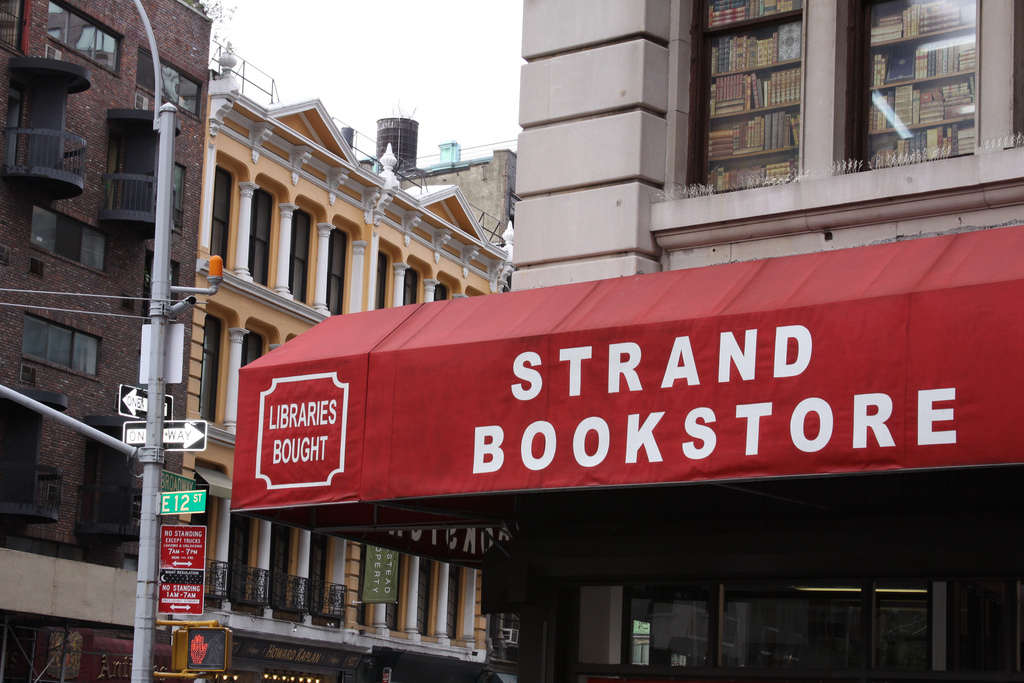
The Association of American Publishers reported that paperback sales increased by 8.4% in the first half of 2015. In many cases, the price of a paperback is nearly the same as the price of an e-book. The Strand Bookstore in New York City has a large table stacked with paperbacks, strategically located by the store’s entrance, with a sign reading “Cheaper than the E-Book”.

Here are 10 recent paperback releases (five fiction, five nonfiction) to pick up this fall:

9781555977207-1On Immunity by Eula Biss
At first glance, On Immunity is an examination of the anti-vaccination movement, but this fascinating book can’t be easily categorized. The online magazine Salon describes it well:  “Part memoir, part cultural criticism and part science journalism . . . an elegant reflection on a very contemporary flavor of fear.” Book clubs will find plenty to discuss.

9780547939414_hres 2The Best American Short Stories 2015 edited by T.C. Boyle and Heidi Pitlor
Every year, I look forward to the new edition of The Best American Short Stories — along with its companions, The Best American EssaysThe Best American Food Writing, The Best American Travel Writing, and more. They are perfect for keeping on your nightstand  or in your car and picking up when you have 15 minutes or so to read.

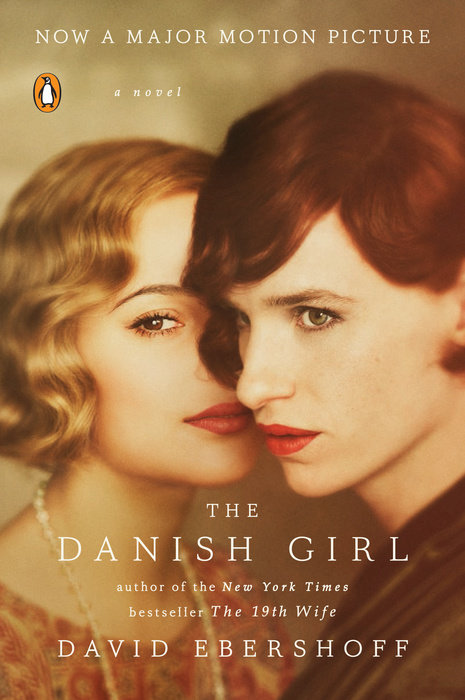
9780143108399The Danish Girl by David Ebershoff
Ebershoff is executive editor and vice president of Penguin Random House, where he’s edited dozens of well-known books, including several Pulitzer Prize winners. He’s also written several three novels and a book of short stories. I loved The 19th Wife, a  bestselling double narrative about the Mormon Church in the 19th century and today. Now I’m reading The Danish Girl, Ebershoff’s first novel, which is based on the true story of the first transgendered woman. The movie version, starring Eddie Remayne, will be released next month and I want to read the book first — I’m really enjoying it so far.

9780062359940An Uncomplicated Life: A Father’s Memoir of His Exceptional Daughter by Paul Daugherty
Daugherty, career sports writer and father of an adult daughter with Down’s Syndrome, has written a wonderful book for any parent. Through the story of the first 25 years of his daughter Jillian’s life, Daugherty reminds us of the precious gifts our children are, “exceptional” or not. That sounds hokey, but the book isn’t. For my full review, click here.

9780143127314Last Night’s Reading: Illustrated Encounters with Extraordinary Authors by Kate Gavino
The author, like me, loves to attend author readings. Unlike me, every time she goes to a reading she draws a portrait of the author and writes down her favorite quote. She’s been to more than 100 readings in the New York area, and she keeps a map of all the events, adding a pin every time she goes to a reading. Everything about this book, from the drawings to the hand-lettered quotes, is absolutely charming.
9781492628996

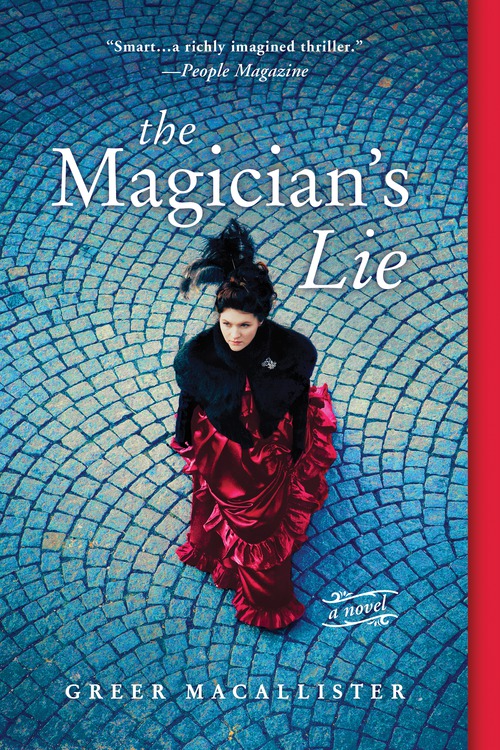
The Magician’s Lie by Greer Macallister
Macallister’s debut is a historical novel about a young, female magician (the “Amazing Arden”) at the turn of the 20th century, who is accused of murder. She is captured and interrogated by a country sheriff who has problems of his own, and during the course of one long night in a rural police station, we learn about the magician’s past. How did an aspiring dancer, born into a wealthy family, end up running a successful traveling magic show — and running for her life? It’s a terrific period piece, with a murder mystery and just a touch of the supernatural. If you enjoyed Water for Elephants, you’ll love this book.

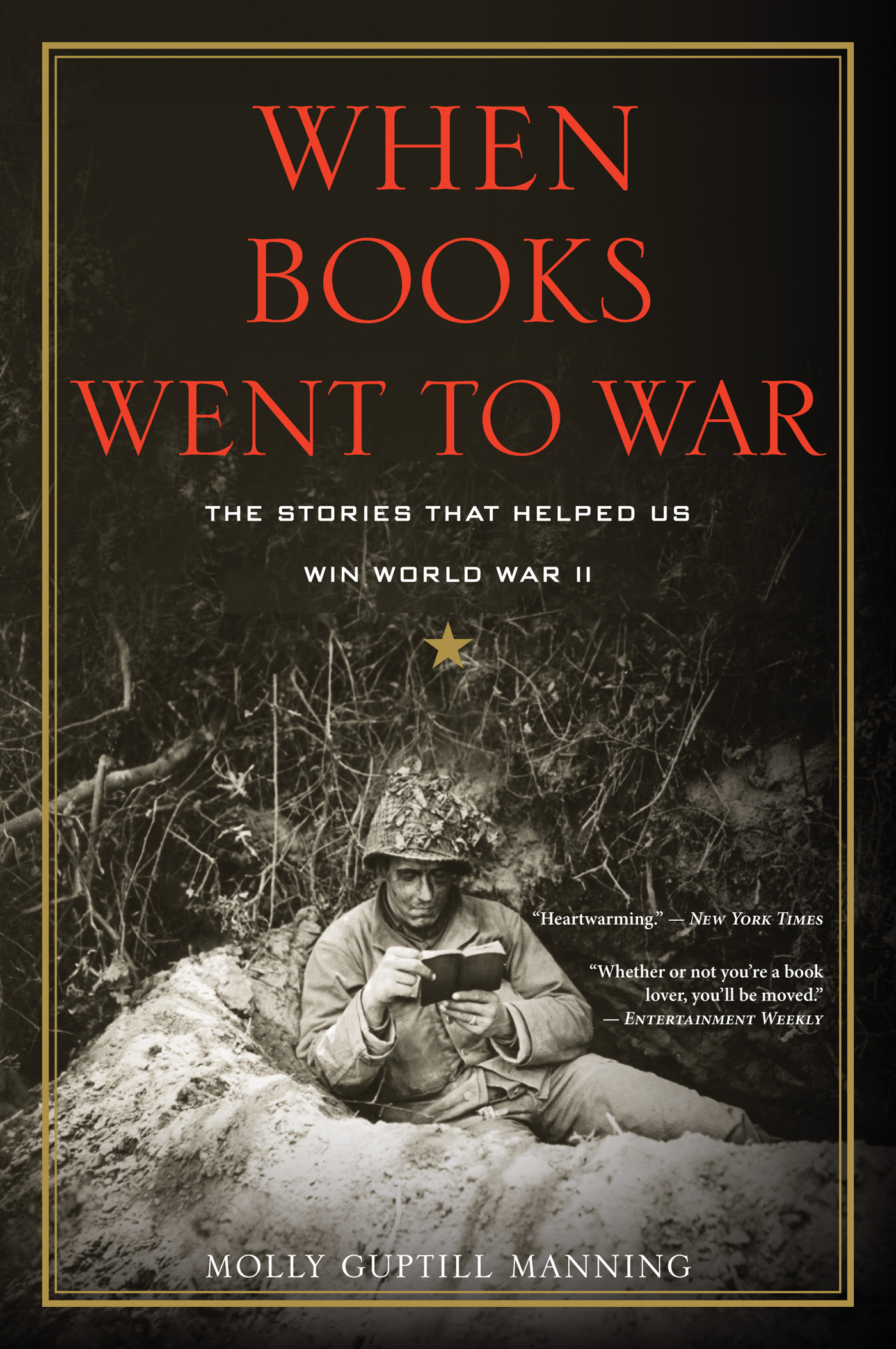
9780544570405_hresWhen Books Went to War: The Stories That Helped Us Win World War II by Molly Guptill Manning
Between 1943 and 1947, the government distributed 120 million paperback books (called Armed Services Editions, or ASEs) to millions of United States servicemen. Special favorites were A Tree Grows in Brooklyn and The Great Gatsby. Manning’s stirring book illustrates the power these books had to combat Nazi propaganda,  “soothe an aching heart, renew hope for the future, and provide a respite when there was no escape” and to “build a new literate middle class” after the war.

9780143127789The Republic of Imagination: A Life in Books by Azar Nafisi
In this insightful follow-up to Reading Lolita in Tehran, Nafisi explores three seminal American novels — Huckleberry Finn, Babbitt, and The Heart is a Lonely Hunter. These novels, and others, “link us to our past, provide us with critical insight into the present, and enable us to envision our lives not just as they are but as they should be or might become.” Interwoven with Nafisi’s literary analysis is the story of her journey to become an American citizen. The book “is a priceless gift to readers who revel in literary fiction”, according to the Chicago Tribune. (Interestingly, the original subtitle of the book was America in Three Books.)

white-collar-girl_brown_Page_1-copyWhite Collar Girl by Renee Rosen (due November 3)
Rosen is carving out a nice niche for herself — historical page-turners set in Chicago. She’s written about Al Capone and organized crime (Dollface) and Marshall Field and the Gilded Age (What the Lady Wants); her new book, a paperback original, focuses on a young woman trying to break into journalism in the 1950s at the Chicago Tribune. (The newspaper column she writes is called “White Collar Girl”.) Like her other books, Rosen’s latest is full of well-known figures — from Mayor Daley to Mike Royko to Ernest Hemingway.

9780142426296Belzhar by Meg Wolitzer
One of my favorite authors ventures into YA literature with this  imaginative novel about a   traumatized young girl who is sent to a boarding school for “emotionally fragile, highly intelligent teenagers.” After she and several other students are hand-picked for a special English class (based on Sylvia Plath and The Bell Jar), they find that writing in their journals enables them to re-experience life before their traumas occurred. I’m looking forward to talking about the book with our store’s YA book group.

What paperbacks are you planning on reading this fall?

Mendocino Fire — Book Review

Mendocino-Fire-394x600-197x300She could swear that an enthralled reader nineteen years old is the most beautiful animal on earth — at least, she’s seen one or two who were, in their spellbound moment, the incarnation of extremest human beauty. They were not themselves. Literature looked back at her from their eyes and told her certain things she was sure they ought not to have understood at their age.

Elizabeth Tallent, “The Wilderness”

Heidi Pitlor, series editor of The Best American Short Stories, estimates she reads between 3,500 and 4,500 stories a year — yet even she cannot explain exactly what makes short story succeed. “It’s easier, in the end, to say what doesn’t work than to pinpoint exactly what does, as a successful short story does not expose its mechanics”, she says in an article entitled “What Makes a Good Short Story‘, adding that “a good story tells you something interesting about someone. Things happen in a good story. People reveal who they are.”

The stories in Elizabeth Tallent’s brilliant collection, Mendocino Fire, unveil the inner lives of a diverse cast of characters. The stories are peopled with men and women who face turning points in their relationships with others and emotional crises within themselves. The twenty-something son of a fisherman comes to term with his father’s rejection (“The Wrong Son”); an aging political activist blames a scavenged Persian rug for the demise of his hasty marriage (“Tabriz’); a wronged woman drives across the country to track down her ex-husband and his new wife, with surprising repercussions (“Nobody You Know”); a working-class couple pressure their teenage son into a shotgun marriage and become entwined with his troubled wife (“Never Come Back”); a young woman embarks on an impulsive affair with a famous writer (“Narrator”). These five stories, and the five more that comprise Mendocino Fire, exemplify short story writing at its best.

As every writing instructor I’ve ever had has emphasized, short stories depend on scenes. Pitlor emphasizes the importance of scenes:

Sometimes, story writers seem to forget to write scenes . . . Too often, we as readers enter a story via a small action (a door opening, a phone ringing) and then are held captive while the author utilizes a disproportionate amount of space introducing a character, his marriage, his children, his divorce, his parents and his emotional limitations before we return to the room he just entered or the phone call that just begun. In a 17-page story, each page matters. Each sentence matters. Pacing matters.

With one exception, the stories in Mendocino Fire are built on scenes. In “Narrator”, the protagonist describes the first hours she spent with her soon-to-be lover — a writer who understands very well the importance of detail:

We spent the night over coffee in a cafe on Telegraph Avenue, breaking story-length pieces off from our lives, making a slice of torte disappear in alternating forkfuls. Our waitress’s forgetfulness he explained as distraction: she had a sick child at home. How can you tell? Unicorn stamp on her left hand. How a local pediatrician commemorates non-crying visits.

Tallent, who has been an English professor at Stanford since 1994, is the author of three previous short story collections (In Constant Flight, Time with Children, and Honey), along with a novel (Museum Pieces) and a work of critical analysis (Married Men and Magic Tricks: John Updike’s Erotic Heroes). When Time with Children was published in 1987, the New York Times review commented that “Like John Updike . . . Ms. Tallent is interested in the ways in which the institution of marriage affects our contradictory yearnings for freedom and safety, independence and domesticity.” And like Updike, Tallent constructs beautiful sentences — some very short, some almost a full page in length. One sentence, in particular from “Briar Switch”, a story about a woman facing the impending death of her estranged father (and fittingly, the final story in the collection) is really a prose poem. Both physical and emotional coldness figure into “Briar Switch”, as this sentence excerpt illustrates:

At the other end of the closet is her father’s overcoat, and it stops her, his overcoat simply hanging there, not an overcoat she has any special associations with except that by virtue of being his it evokes the first overcoat she knew him in, no cold like the winter cold borne in with her father’s overcoat, coldest in its folds, but also, all over, distinctly cold, and as if the cryptic eyes your father turns on you were not mystery enough, this ghostly cold comes as a sly erotic assault, a little squall for your child’s senses when that coat shrugs its way down to you . .

Talent’s stories have been published in many magazines and anthologies (The New Yorker, Esquire, Harper’s,The Paris Review, The Best of Tin House, The PEN/O.Henry Prize Stories, and The Best American Short Stories) and have received many awards. Pitlor selected my favorite  story in Mendocino Fire, “The Wilderness”, for the 2013 edition of The Best American Short Stories.  This story breaks the rules — it’s a “sceneless” (to use Pitlor’s word) meditation. The story begins with an English professor contemplating her students’ dependence on electronic devices and their desire for constant connectivity, and ends with the professor ruminating on her great-great-grandfather’s experiences as a Civil War soldier in the Battle of the Wilderness and her own need for connection — with him and with other people. It’s a beautiful, poetic story that demands to be read again and again. The professor recalls a childhood visit to a museum, when she encountered mummies and “for the first time comprehended death”:

Her heart has always been the same size as it was that long-ago Sunday when she first saw those eyes pointed at both ends, and she has always felt the same to herself. Secretly, because people are supposed to go through enormous changes, to mature, she wonders if there is something wrong with her, to feel such consistency between who she is now and who she was then when she looked down into those alive-dead eyes.

The professor, like Tallent’s other characters —  Finn, the tree-sitter in “Mendocino Fire”; Clio in “Eros 101”;  the ex-wife in “Mystery Caller” — wants what we all want: intimate connection with other people, to know and be known. That universal longing links the ten stories of Mendocino Fire. The collection is Tallent’s first book in 20 years, but fortunately we won’t have to wait that long for her next book — she has a memoir,  Perfectionism, due for publication in 2016.

Don’t think you’re a short story fan? Check out Five Reasons to Read Short Stories

Books on the Table in New York — This Link Works!

Something happened to my recent blog post, Books on the Table in New York — it vanished from cyberspace, and the so-called “Happiness Engineers” at WordPress are unavailable until October 21st while they “work on a few projects internally as a team”. Why does this make me think that the glitch with my blog is just one of many? ANYWAY, click on the link below to read about my literary weekend in New York — and have a wonderful weekend!

https://booksonthetable.com/2015/10/12/books-on-the-table-in-new-york/

Carrying Albert Home — Book Review

y648-1The story of how my parents carried Albert home was a bit more than their fanciful tales of youthful adventure. Put all together, it was their witness and testimony to what is heaven’s greatest and perhaps only true gift, that strange and marvelous emotion we inadequately call love.

Homer Hickam (the younger)

Homer Hickam grew up hearing tall tales about his mother’s alligator, Albert. Elsie Hickam “loved Albert more than just about anything in the whole world”, but Elsie’s new husband, Homer, finally issues an ultimatum: “‘Me or that alligator.'” After thinking it over, Elsie reluctantly agrees to give up her beloved pet, returning him to his native Florida. The young couple’s road trip from West Virginia to Florida involves more adventures than most people have in a lifetime.

Elsie and Homer befriend John Steinbeck while visiting a vagrant camp; they have dinner with Ernest Hemingway in Key West just before the Labor Day Hurricane of 1935; they become paid actors when they stumble upon a movie set; and they have run-ins with a variety of lowlifes and criminals, from bank robbers to bootleggers to smugglers.  Albert himself plays baseball, flies in a plane, and plays a mysterious part in saving Homer’s life.

At its heart, Carrying Albert Home is a love story. In an interview, Hickam says, “It’s a book for people who are in love, want to be loved, know somebody who has been in love, or is interested in love even as a concept.” Read more

Books on the Table in New York

Don’t you love New York in the fall? It makes me want to buy school supplies.
Nora Ephron (from You’ve Got Mail, the best bookstore movie ever)

If I ever get rich, I’m going to come here and buy all the books I want.
Overheard at the Strand Bookstore

3782319053_344f405b95_bMy husband and I just spent a gorgeous fall weekend in New York with our son, and actually did buy some school supplies — at the famous Strand Bookstore, which claims to have 18 miles of books. That’s the length of the New Hampshire coastline. The books (new and used) at the Strand are not only crammed into hundreds of shelves, but piled on table after table.

The Strand has more tables than I’ve ever seen in a bookstore, and they aren’t your usual “new fiction” and “new nonfiction”.  Here are just a few of the Strand’s tables:

IMG_1787Award-winning books
My favorite: In the Heart of the Sea: The Tragedy of the Whaleship Essex by Nathaniel Philbrick (also on the Read the Book First table of books adapted into movies)

Culinary literature
My favorite: Blood, Bones and Butter: The Inadvertent Education of a Reluctant Chef by Gabrielle Hamilton

Must-own short stories (What a pleasure to see a whole table devoted to short stories!)
My favorite: The Collected Stories by Grace Paley

Books everybody loves
My favorite: In the Garden of Beasts: Love, Terror and an American Family in Hitler’s Berlin by Erik Larson
Most curious selection: Valley of the Dolls by Jacqueline Susann

IMG_1794Expand your horizons
I must really need to expand my horizons, because I hadn’t read much of anything on this table. Maybe I’ll start with Oliver Sacks, whose books are currently featured?

YA bestsellers
My favorite: Eleanor & Park by Rainbow Rowell

One table in particular attracted a large crowd — the “erotica” table, which surprisingly is located right next to the children’s section. Maybe the staff has found that parents of young children are the store’s biggest erotica customers? I quickly moved away from that table, imagining how embarrassing it would be if my son found me browsing there. I couldn’t even say I was doing “research”, because Lake Forest Book Store definitely does not carry erotica. We don’t even have a romance section.

Just to prove that no bookstore can stock everything, the Strand didn’t have a book I wanted to take a look at — Symphony for City of the Dead: Dmitri Shostakovich and the Siege of Leningrad by M.T. Anderson. I always feel a little bad, even though I shouldn’t, when customers come into our store with a book review ripped out of a magazine or newspaper and we don’t have the book — even though I know we can’t have everything in our little store, and that we do a really good job stocking the books that appeal to our customer base. So I felt better when a huge bookstore like the Strand didn’t have a book that had received a great review in that day’s New York Times.

9781857593280_p0_v1_s192x300I took a lot of photos in the Strand, although I was a little worried someone would confront me, thinking I was one of those awful people who take photos and then order the book elsewhere. Actually, I became one of those people later that day when we were in the gift shop at the Frick Collection. We bought a copy of the Frick’s Handbook of Paintings, along with Meet You in Hell: Andrew Carnegie, Henry Clay Frick, and the Bitter Partnership That Changed America by Les Standiford, and then on the way out Jeff saw something that intrigued him called The Curious Map Book, which was large and heavy. So I snapped a photo (sorry, Frick Collection gift shop) and e-mailed an order to Lake Forest Book Store.

It’s nearly impossible to leave the Strand without buying something. Jeff and I each bought a blank book (our “school supplies”) and I bought a journal called Literary Listography: My Reading Life in Lists. I can’t resist that kind of thing, and this one is filled with hand-drawn illustrations. I successfully resisted buying more reading material to lug home, but Jeff and Charlie filled a  couple of shopping bags with books. (None of their selections came from the erotica section.)

9781400031702I tossed in a copy of Donna Tartt’s The Secret History, for Charlie’s roommate. At brunch, he had asked me whether I thought The Goldfinch was worth reading. I said it absolutely was, but recommended that he read The Secret History first. “If it involves a bitchy female protagonist, I’m in,” he said. I said that it did, which isn’t exactly true, but I’m pretty sure he’ll love the book anyway.

We had brunch at Pete’s Tavern, which says it’s the oldest bar in New York and bills itself as “the tavern O. Henry made famous.” Supposedly, O. Henry wrote “The Gift of the Magi” there. Of greater interest to me is the fact that Ludwig Bemelmans created Madeline in a booth at Pete’s. According to a 1999 article in the New York Times:

Petes-tavern-2007_crop-1Madeline must be the only famous French orphan born in a tavern near Gramercy Park. It was there, 60 years ago, that Ludwig Bemelmans, her creator, jotted on the back of a menu the famous phrases, ”In an old house in Paris that was covered with vines lived 12 little girls in two straight lines.”

A plaque honoring Bemelmans, who died in 1962, was dedicated at that bar, Pete’s Tavern, in late September. The small crowd that gathered for the occasion included his widow, Madeleine (known as Mimi), and his daughter, Barbara, who were inspirations for Madeline.

9781101911617Because it’s a requirement to go to the theater during a New York weekend, we saw this year’s Tony Award winner —  The Curious Incident of the Dog in the Night-Time. The performances and the staging in the play, adapted from Mark Haddon’s novel, were superb. You don’t so much watch the play as become immersed in the mind of the main character, a 15-year-old boy on the autism spectrum. To the critic who sniffed,  “I’m sorry to tell you a winsome puppy figures in (the play’s) denouement”, I’d like to say that we really liked the puppy. Haddon published a fascinating piece in the Guardian about the process of adapting his novel into a play, noting that “Just as the novel was a novel about novels and how we read them, so the play is a play about plays and how we watch them.”

I’m already looking forward to planning our next trip, which I’m hoping will include tickets to the hit play Hamilton (inspired by Ron Chernow’s book, Alexander Hamilton). And how about staying at the Library Hotel, in which “each of the 10 guestroom floors honor one of the 10 categories of the Dewey Decimal System and each of our 60 rooms are uniquely adorned with books and art exploring a distinctive topic within the category it belongs to.)?