The Half Brother — Book Review

9780385531955The Half Brother tells a familiar story: growing up at a New England boarding school. What makes the novel fresh and original is that it focuses on the coming of age of a young teacher.  In the beginning of the book, Charlie Garrett is not much older than his students:

Teaching English at Abbott was my first job, right out of college . . . for me the idea of being employed at all, at a job that entailed skill and responsibility, was unreal, ludicrous. The only time I felt even slightly proficient at life was when I was holding a book in my hand.

Many novels are set at schools, but I’ve read few that capture the essence of what goes in on the classroom as well as The Half Brother. Charlie has received no formal training as a teacher, and is initially terrified of his students. He develops a persona, “a tweedy, knowledgeable, unflappable self”, and discovers that he actually has a gift for teaching:

At the window of my classroom, looking out, I was in the prow of a landship, forging ahead with my new self, built on the scaffolding of these names; then I turned around and my own energy went forth, joined theirs, became something new and larger. I had not expected to feel my own self slowly emerging as I tried to draw out theirs. I had not expected to love anyone, is what I’m saying. Sometimes they looked at me in amazement at what came out of their mouths.

As a new teacher, Charlie is drawn to one of his students, May Bankhead, who is a “faculty brat” — the daughter of the school chaplain. They correspond with each other after May’s graduation, and when she returns to campus several years later to care for her dying father, May and Charlie finally admit to themselves what they’ve always felt for each other.

Later, May becomes a teacher at Abbott herself — and so does Charlie’s younger half-brother, Nicky. Charlie has always been protective of Nicky, who is brilliant, handsome, and popular, yet strangely vulnerable. The inevitable triangle follows– and that’s all that I can tell you about the plot of The Half Brother, because the plot twists — which do not rely on unreliable narrators — are truly surprising. Read more

The Last Good Paradise — Book Review

9781250043962

What was this thing, the pursuit of happiness, that moved out of reach as you approached? Was the emphasis on the wrong word? Was it simply about pursuit? Did said happiness evaporate when one got within proximity of it, moving off to lure one from yet another difficult, forward location?

Tatjana Soli’s new novel, The Last Good Paradise, is a black comedy that takes place on a remote island in the South Pacific. Ann and Richard, a successful couple in their thirties, run away from Los Angeles after an unscrupulous business partner bankrupts them. They take refuge at “the most isolated, lonesome destination” Ann could find — Sauvage, a resort “sans telephone, WiFi, or electricity”. Their relaxing idyll turns into a melodrama with a quirky cast of characters.

I began reading this book with high hopes, having admired the author’s previous novels — The Lotus Eaters (about a love triangle in wartime Vietnam) and The Forgetting Tree (a family tragedy set on a California citrus ranch). I’ve always been fascinated by French Polynesia, Captain Cook’s voyages, and,seafaring stories — especially Mutiny on the Bounty and Moby-Dick. Read more

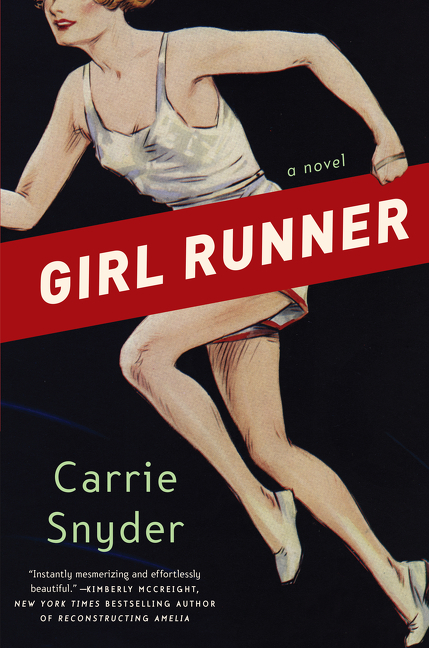
Girl Runner — Book Review

9780062336040And still I run: I run and run, without rest, as if even now there is time and purpose and I will gain, at last — before my spool of silence unwinds — what I’ve yet to know.

Former Olympic athlete Aganetha Smart is 104 years old at the beginning of Girl Runner, spending her final days in a nursing home where she is wheelchair-bound, unable to speak clearly, “a bit deaf — though not so deaf as they think — and not quite blind.” She has outlived everyone she’s cared about and wonders if anyone will remember her: “My achievement is to have lived long enough to see my life vanish. Who will write my obituary?”

In 1928, Aganetha was at the top of her game, a gold medalist in the 800 meter race at the Amsterdam Olympics. Her extraordinary running ability took her far away from her family’s farm in rural Canada, where she had already suffered more grief and loss than many people experience in a lifetime. From the time she was a small child, Aggie was a runner — fast and indefatigable. She was the one the family sent running for the doctor when there was an emergency on the farm.

Although Aggie Smart is a fictional character, author Carrie Snyder was inspired to create her by Canada’s real 1928 female track and field team, known as the “Matchless Six”.  The 1928 Olympics were the first at which women competed in track and field events, and it would be the last — until 1960 — at which women were allowed to participate in races farther than 200 meters. An Olympic committee blocked women from distance running, claiming that several female runners at the 1928 race dropped out, and that several others collapsed at the finish. (Film footage of the race refutes these claims; click here for an interesting article about the controversy in Runner’s World.) Read more

WWW Wednesday — Staff Picks

9780761178422What did you just finish reading? What are you currently reading? What do you think you’ll read next?

Today, at our monthly meeting, our staff discussed those very questions. Our meetings are supposed to begin at 8:00 a.m., and we rush to get through as many book reviews as possible before the store opens at 9:30.

Sheet Pan Suppers, by Molly Gilbert, has been a hit with our staff and customers, although clearly the title is a bit of a misnomer — this morning we sampled the raspberry white chocolate scones, which were delicious! (The subtitle of this great cookbook is 120 Recipes for Simple, Surprising, Hands-Off Meals Straight From the Oven, Plus Breakfast, Desserts, and Snacks Too!) I noticed that the scones sat untouched for the first half of the meeting, as our health-conscious booksellers delicately nibbled on clementines, but that somehow by the end of the meeting the scones were almost gone.

What else have we read recently?9781402298684

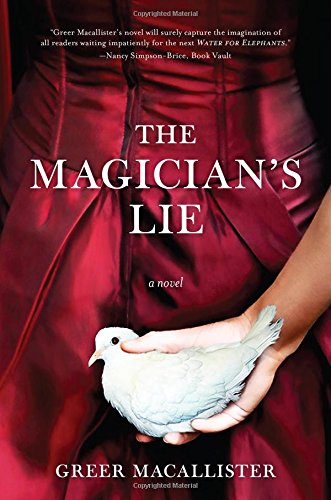
Last week was a great reading week for me — I finished two debut novels that I absolutely adored. The Magician’s Lie, by Greer Macallister, is a historical novel about a young, female magician (the “Amazing Arden”) at the turn of the 20th century, who is accused of murder. She is captured and interrogated by a country sheriff who has problems of his own, and during the course of one long night in a rural police station, we learn about the magician’s past. How did an aspiring dancer, born into a wealthy family, end up running a successful traveling magic show — and running for her life? It’s a terrific period piece, with a murder mystery and just a touch of the supernatural. If you enjoyed Water for Elephants, you’ll love this book.

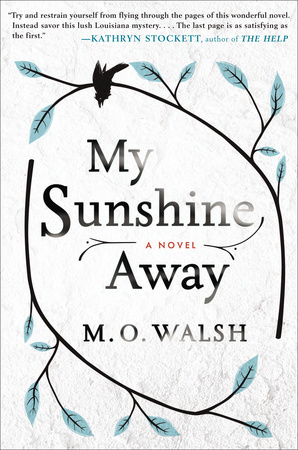
9780399169526I can’t say enough good things about My Sunshine Away, by M.O. Walsh (due February 10).  During the summer of 1989, the narrator of My Sunshine Away is fourteen years old and in love with his neighbor on Piney Creek Road in Baton Rouge, Louisiana, Lindy Simpson. When Lindy becomes the victim of a rape, everything changes. The narrator finds himself, along with other neighbors, interrogated about the crime:

Don’t believe what you see on the crime shows today. No single hairs were tweezed out of Old Man Casemore’s lawn. No length of rope was sent off to a lab. No DNA was salvaged off the pebbles of our concrete. And although the people of Woodland Hills answered earnestly every question that was asked of them, although they tried their best to be helpful, there was no immediate evidence to speak of.

Although My Sunshine Away is suspenseful — sometimes almost unbearably so — it’s really a coming of age story. It’s about an immature, self-centered boy becoming an adult with integrity. As he recounts the pivotal events of his youth, the narrator’s voice is authentic and compelling. At one point, he reflects on the nature of nature of memory:

And it is not until times like these, when there are years between myself and the events, that I feel even close to understanding my memories and how the people I’ve known have affected me. And I am often impressed and overwhelmed by the beautiful ways the heart and mind work without cease to create this feeling of connection.

Although I’ve never been to Baton Rouge, I felt as if I had after reading Walsh’s lyrical descriptions of this singular place. Walsh, who is the director of the Creative Writing Workshop at the University of New Orleans, clearly heeds every creative writing teacher’s advice: “Show, don’t tell.” He shows us a setting and characters that are as vivid as any I’ve encountered on the page. The novel reminded me in some ways of Alice Sebold’s The Lovely Bones — but without the murder and the accompanying trip to heaven, and with a great deal more wisdom. Read more

The Grown Ups — Book Review

IThe Grown Ups have lived a great deal among grown-ups. I have seen them intimately, close at hand. And that hasn’t much improved my opinion of them.
Antoine de Saint-Exupéry, The Little Prince

They had entered the thorny wilderness, and the golden gates of their childhood had for ever closed behind them.
George Eliot, The Mill on the Floss

What does it mean to be a “grown-up”?  That’s one of the questions that Robin Antalek asks in her engaging coming-of-age novel, The Grown Ups. The book opens in the summer of 1997, with Suzie Epstein, Sam Turner, and their friends celebrating Suzie’s fifteenth birthday at a loosely supervised party in Rye, New York. That night, Suzie and Sam embark on a clandestine romance that will last all summer.

Right away, we know something is not right in the neighborhood: “It was the summer all the children in the neighborhood caught a virus.” Soon it becomes apparent that the grown-ups have more serious problems than the stomach flu: “The second time Mr. Epstein caused a scene in the driveway of the Epstein family home, the neighborhood was still under siege by the virus and was unusually quiet for the middle of a summer day.” Read more

10 Favorite Books About Sisters

9780061958274For there is no friend like a sister
In calm or stormy weather;
To cheer one on  the tedious way,
To fetch one if one goes astray,
To lift one if one totters down,
To strengthen whilst one stands.
Christina Rossetti

Today is my sister’s birthday, and I feel very lucky to have had her love and companionship for 50 years. We grew up loving books together — one of my earliest memories is the two of us playing library, which involved me (the librarian) scolding her for making noise in the library and making her give me money from her piggybank for overdue fines. She eventually broke free of my tyranny and became a professor of Spanish literature — and the mother of four daughters, who are fortunate to have each other as lifelong friends “in calm or stormy weather.”

Some of my favorite childhood books were about sisters. I have to admit that Little Women, the most famous children’s book about sisters, left me cold when I first read it.   But I adored the Little House on the Prairie books, as well as Sydney Taylor’s All-of-a-Kind Family series. Children’s books about sisters always feature one spunky sister — Jo, of course, in Little Women; Laura in the Little House books; and Henny in All-of-a-Kind Family. And who could forget Ramona, mischievous little sister to the comparatively well-behaved Beezus?

In honor of sisters everywhere, here are 10 books I loved that explore sisterly bonds: Read more

Jazz Age January: West of Sunset & And So We Read On

24de28664bdf1f004be5425016536035“His dream must have seemed so close that he could hardly fail to grasp it. He did not know that it was already behind him.”
F. Scott Fitzgerald, The Great Gatsby

As I read West of Sunset,  Stewart O’Nan’s lovely, sad fictionalized account of F. Scott Fitzgerald’s final years, I found myself wondering what Maureen Corrigan would think.

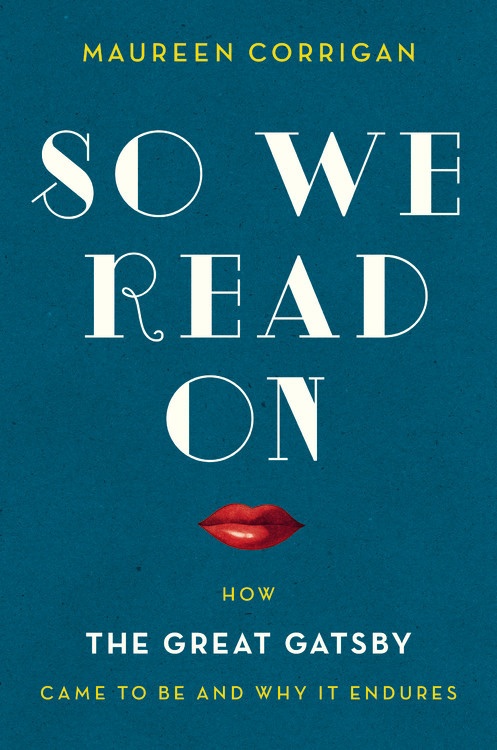
Maureen Corrigan has been NPR’s book critic for 25 years. She also reviews regularly for many national publications and is the Critic in Residence at Georgetown University. Last fall, she shared her longtime passion for F. Scott Fitzgerald’s masterpiece in So We Read on: How The Great Gatsby Came To Be and Why It Endures. Often underappreciated and misread because of its brevity and apparent simplicity, the novel is, she says, our “Greatest American Novel”:

Gatsby‘s magic emanates not only from its powerhouse poetic style — in which ordinary American language becomes unearthly — but from the authority with which it nails who we want to be as Americans.

Corrigan, like so many of us, first encountered The Great Gatsby as a teenager. “I thought The Great Gatsby was a boring novel about rich people,” she says in her book’s introduction.”The bad news is that we read it in high school or even (shudder) junior high, when we’re much too young . . .”  Then she spends almost 300 pages explaining why she thinks The Great Gatsby is truly The Great American Novel, worth reading again and again.

“Are you tired of it yet?” my husband and close friends would ask me every so often during the time I was writing this book and, of course, rereading The Great Gatsby. I can honestly answer “No.” I don’t know how he did it, but Fitzgerald wrote a novel that shows me new things every time I read it. That, for me, is the working definition of a great book: one that’s inexhaustible.

The Great Gatsby, originally published in 1925, initially sold poorly and received mixed reviews. By the mid-thirties, not only was the country in a depression — so was Fitzgerald’s career. He suffered from a host of physical illnesses that were complicated by alcoholism; his wife, Zelda, was incarcerated in a mental hospital; and he was deeply in debt. No one at that time would have predicted that Fitzgerald’s short novel would one day be the most widely read books in the world, eventually selling more than 25 million copies.

West of Sunset opens as Fitzgerald, badly in need of money to pay for Zelda’s medical care and his daughter Scottie’s private school tuition, heads west to Hollywood to take a screenwriting job at a movie studio: Read more

Why I Hate Reading Challenges — And Why I’m Participating in One

IMG_1244I keep hearing about reading “challenges”.  Readers challenge themselves to read a certain number of books or pages in a year, or they try to read certain types of books that are outside their comfort zones. These challenges don’t appeal to me at all. I know a lot of avid readers find them fun and rewarding, but the message I get from the challenges is that reading is a chore and people need all the encouragement they can get. This message seems to start in grade school, when children are forced to read for a prescribed length of time and to read books that are of no interest to them. Read more

Island Fog — Book Review and Author Interview

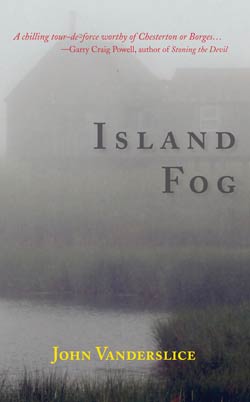
Island FogThe future draped before him like an island fog: dank, listless, and inscrutable. Possibly even dangerous. Only his next step was visible, nothing beyond.
“Island Fog”

The air feels more wet and more cold than even five minutes ago, a thicker texture of gray. You are in the high tide of afternoon fog.
“How Long Will You Tarry?”

Strange things happen in John Vanderslice’s Island Fog, sometimes under the mysterious cover of fog and sometimes out in the open. The eleven linked stories in Island Fog all take place on Nantucket, a small island (49 square miles) 30 miles off the coast of Massachusetts. The haunting, often surreal stories are tied together by the island’s unique history and geography. The collection begins with a story set in 1795, “Guilty Look”, and ends with “Island Fog”, a story that takes place in 2005. In both stories, the protagonist is nightmarishly trapped in a situation that doesn’t seem to offer any hope of escape. A respected wigmaker and bank board member is determined guilty of theft on the basis of a “guilty look”, despite the fact he has located one of the actual criminals, and a college student becomes ensnared in an unbreakable “employment contract” with a diabolical employer. The sinister undertones in these stories, and in several others, reminded me of Shirley Jackson’s dark and ominous short fiction, set in seemingly peaceful New England towns. Read more

10 Books to Read This Winter

A few months ago, I shared a list of 10 books to read in the fall. I’ve read most of them — and Jane Smiley and Colm Tóibín, I apologize! I’ll get to Some Luck and Nora Webster very soon, I promise. I know they’re both going to be wonderful. (I really need to read Some Luck because the second book in Smiley’s trilogy, Early Warning, is coming out in April. )

Even though I still have many, many books from 2014 (and before) in my to-read stack, the publishing industry is not going to wait for me, or anyone, to catch up. So here’s a list of 10 exciting new books with winter 2015 publication dates. Is it a coincidence that three of them have “girl” in the title? Did the success of The Girl with the Dragon Tattoo and Gone Girl convince publishers and authors that “girl” is the magic word? I’ve already found several intriguing “girl” books coming out this spring — Hyacinth Girls, Girl Underwater, Girl at War . . .
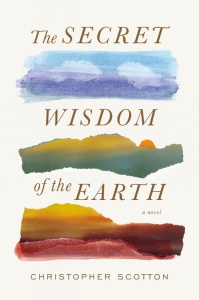
962ab117cc4ac2dd9054af8b597fde98First of all, happy publication day to Christopher Scotton, whose debut novel, The Secret Wisdom of the Earth, is undoubtedly going to be one of my favorite books of 2015. It’s a  coming-of-age story set in Appalachia 30 years ago. Following a family tragedy, 14-year-old Kevin is sent to spend the summer with his veterinarian grandfather (“Pops”) in Medgar, Kentucky. Pops, whose life has brought him wisdom and an unwavering moral compass, will remind readers of Atticus Finch. Medgar is a depressed coal town facing a massive mountaintop removal operation that is blowing up the hills, backfilling the hollows — and deeply dividing the townspeople. The violent events of that summer will begin Kevin’s transformation from a wounded boy into an adult.9781594633669M

If you’re in the mood for a very smart, well-plotted psychological thriller, I recommend The Girl on the Train by Paula Hawkins (due next Tuesday, January 13). I read the entire book on one cold, rainy Sunday, thanks to a suggestion from my friend Sue at the Cottage Book Shop. The New York Times says: “The Girl on the Train has more fun with unreliable narration than any chiller since Gone Girl, the book still entrenched on best-seller lists two and a half years after publication because nothing better has come along. The Girl on the Train has Gone Girl-type fun with unreliable spouses, too.” I’m not sure I’d agree that “nothing better has come along” — what about The Headmaster’s Wife?

Tim Johnston has written a YA novel and a collection of short stories, but Descent (published today) is his first novel for adults. I haven’t read it yet, but it’s been receiving great reviews. Here’s what NPR has to say, including the inevitable Gone Girl comparison:

The premise of Descent may sound pretty straightforward: One summer morning while vacationing with her family in the foothills of the Rockies, a young girl, a high-school athlete in her senior year, goes out for a run in the higher altitudes — and disappears.

And Moby-Dick‘s about the whaling industry.

A good genre writer might have turned this into a conventional suspense novel, making us worry about the missing girl with every page that goes by — but Tim Johnston has written a book that makes Gone Girl seem gimmicky and forced. I worried about the missing girl with every page, yes. But I also suffered every torment felt by her family, father, mother, brother, and those linked to the family. So this is a thriller plus!

I’m currently reading and enjoying West of Sunset, by Stewart O’Nan (due January 13) about the last few years of F. Scott Fitzgerald’s life, when he tried to rejuvenate his career by working as a Hollywood screenwriter. I think O’Nan, author of 15 novels, is a brilliant and unappreciated writer. He writes beautifully about everything from the quiet days of an elderly widow (Emily, Alone) to a diphtheria outbreak in mid-19th century Wisconsin (A Prayer for the Dying) to a bankrupt couple trying to save their marriage (The Odds).
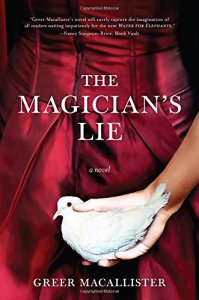
1402298684.01.LZZZZZZZThe Magician’s Lie (due January 13), by Greer Macallister, has been described as a cross between Water for Elephants and The Night Circus — sounds intriguing! Publishers Weekly gives it a starred review, calling it “top-notch”:

This well-paced, evocative, and adventurous historical novel from Macallister, a poet and short story writer, chronicles the career of America’s preeminent female stage illusionist at the turn of the 20th century, who, as the Amazing Arden, created the lurid, controversial stage act known as the Halved Man. When Arden’s husband is found murdered following her performance in Waterloo, Iowa, she falls under suspicion, particularly after she goes on the lam.

As I’ve mentioned before, I can never resist a boarding school novel. Some are excellent (Old School) and some are not (The Starboard Sea), but I read them all. The Half Brother, by Holly LeCraw, (due February 17) has an unusual perspective: it’s about a young teacher coming of age, not a student. The plot twists are truly amazing. The website The Millions just published its “Great Book Preview” for 2015, listing The Half Brother as one of its most anticipated releases:

The novel begins with an epigraph from gifted teacher-writer Andre Dubus, who says he “learned to walk into a classroom wondering what I would say” rather than planning. The Half Brother captures his spirit, and the result is one of the finest school-set novels in recent memory.

My friend and coworker Kathy, who has impeccable taste in books, recommends Funny Girl, by Nick Hornby, (due February 3). Funny Girl, about a young TV starlet in 1960s London, is “both a heartfelt defence and a wholly convincing example of what popular entertainment can achieve”, according to the London Telegraph. I love Nick Hornby for the comments 9781594205415Hhe made recently when speaking about his new novel at the Cheltenham Literary Festival:
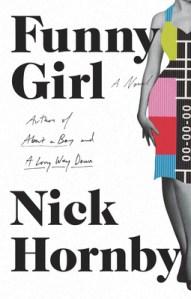
My real campaign is to get everybody – adult, kids, everybody – to read something that they’re loving. And if they’re not loving it, stop reading it . . . Every time we pick up a book for a sense of duty and we find that we’re struggling to get through it, we’re reinforcing the notion that reading is something you should do but telly is something you want to do. It shouldn’t be like that. Novels should be like TV. It shouldn’t be hard work and we should do ourselves a favour. It doesn’t mean you have to read easy books, because you can have very complicated connections to very difficult books, but as long as you’re racing through it, that’s the thing.

Girl Runner, by Carrie Snyder, (due February 3) was recommended to me by another trusted source (also named Cathy), our HarperCollins sales rep. Inspired by the 1928 Canadian Olympic women’s track team, Girl Runner is the story of female athletes in the 1920s, an era when women’s sports became popular. According to the Canadian publication Quill and Quire:

Girl Runner is a plot-driven narrative of one of those forgotten women, fictional 104-year-old Aganetha “Aggie” Smart. Now wheelchair-bound, alone and abandoned in a nursing home, Aggie asks, “Who will write my obituary?” now that everyone who knew her is gone. The ambitious and uncompromising Aggie reflects on her rich and storied life: her childhood in rural Ontario, her work at the Rosebud Confectionery factory, the friendships she forged, her brief fame as a 1920s Olympic track star and Canadian darling, and her failures and triumphs along the way.
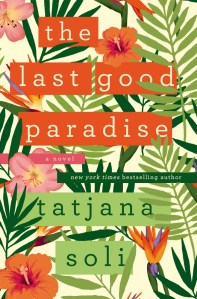
9781250043962Doesn’t everyone sometimes dream of running off to an idyllic tropical island? (Especially if you live in Chicago and the temperature is hovering near zero . . .) The Last Good Paradise, by Tatjana Soli (due February 10) Is about a group of people who have done just that. Soli has one of the best author websites I’ve ever seen, and she introduces her latest novel with a beautiful letter:

Dear Reader:

“Twenty years from now you will be more disappointed by the things that you didn’t do than by the ones you did do. So throw off the bowlines. Sail away from the safe harbor. Catch the trade winds in your sails. Explore. Dream. Discover.” 
Mark Twain

A successful attorney at a big Los Angeles law firm is about to open a restaurant with her chef husband. Suddenly they take off, and you find they have gone to the South Pacific with one-way tickets. How does that happen? I find it fascinating when someone starts one life to start another entirely different one, one of the most famous examples being Gauguin . . .

I know March seems far away, but I have to mention Erik Larson’s upcoming book, Dead Wake: The Last Crossing of the Lusitania (due March 10). I’ve loved every one of Larson’s books (In the Garden of Beasts is his most recent, published four years ago) and I have high hopes for Dead Wake. Here’s what Kirkus Reviews has to say:

Larson once again demonstrates his expert researching skills and writing abilities, this time shedding light on nagging questions about the sinking of the Lusitania on May 7, 1915 . . . An intriguing, entirely engrossing investigation into a legendary disaster. Compared to Greg King and Penny Wilson’s Lusitania (2014), also publishing to coincide with the 100th anniversary of the sinking, Larson’s is the superior account.

What’s on your winter reading list?