Rest is not idleness, and to lie sometimes on the grass under trees on a summer’s day, listening to the murmur of the water, or watching the clouds float across the sky, is by no means a waste of time.
John Lubbock
And of course, reading is never a waste of time. The number of good books to read is overwhelming, and sometimes I get frustrated when I realize I’ve spent hours reading something that is just OK, when there are piles of other books waiting for me. It’s maddening to go on a trip with several carefully chosen books, only to find that not one of them is especially engaging. That’s when I have to remind myself that I’m not going to love every book, and that even the time spent reading a mediocre book is time well spent. As Will Schwalbe says in Books for Living, “You can learn something from the very worst books . . . even if it’s just one gleaming insight in a muddy river of words.”
Case in point: on a recent long weekend, I packed a couple of brand-new books I thought I would love: The Bookshop of Yesterdays by Amy Meyerson and That Kind of Mother by Rumaan Alam. They were both disappointing, but I learned a couple of things that I probably should have already known: 1) Just because a book centers on an independent bookstore doesn’t mean it’s a great book; and 2) If I didn’t like the author’s first book (in this case, Alam’s Rich and Pretty) it’s unlikely that I’ll like his second.
 The third book I read on that trip, which I didn’t start until the plane ride home, was one that I tossed in my bag at the last minute — The Fact of a Body by Alexandria Marzano-Lesnevich. A terrific mash-up of true crime and memoir, this is one of the best nonfiction books I’ve read in years. When she was a law student, the author spent the summer working on an appeal for a convicted child murderer, Ricky Langley. An avowed opponent of the death penalty, Marzano-Lesnevich found herself wishing for Langley’s execution. As she examined the case, eventually spending years studying every detail, she came to a new understanding of her own painful childhood and a radically different view of the legal system.
Here are eight more books I recommend, whether you’re in the mood for easy summer reading (The High Season, The Book of Essie), serious literary fiction (Asymmetry, The Great Believers, The Dependents), something in between (The Locals, Visible Empire), or bittersweet humor (Less).
 The High Season by Judy Blundell
This is the quintessential beach book! The High Season is the most entertaining book I’ve read in a long time. Ruthie Beamish abandoned her art career to direct a small museum on the West Fork of Long Island. Now a board filled with social climbers wants to oust her, and Ruthie faces losing not only her job but her beloved waterfront home. Take this one on your next vacation, whether you’re on the beach or not.
Visible Empire by Hannah Pittard
I love books where several plot threads come together in an unexpected way, and I love books based on little-known events in history — so Visible Empire hit my sweet spot. In 1962, an Atlanta-bound jet crashed in Paris, killing 121 passengers, most of whom were prominent in Atlanta society, who’d just finished a cultural tour of Europe. Pittard imagines the aftermath of this tragedy, focusing on several characters connected to the deceased passengers.
Less by Andrew Sean Greer
Last year’s Pulitzer Prize winner for fiction is that rarest of all literary prize winners — a comic novel. The readers I’ve discussed this book with seem bewildered about why Greer’s novel won the prize. Recent winners have covered the violence of slavery (The Underground Railroad), the legacy of the Vietnam War and the immigrant experience (The Sympathizer), and the horrors of World War II (All the Light We Cannot See). How does a story about a middle-aged gay man traveling around the world to avoid his ex-lover’s wedding compare to these lofty works? Read it, and prepare to be dazzled. The blurb on the Pulitzer website describes the book better than I ever could: “A generous book, musical in its prose and expansive in its structure and range, about growing older and the essential nature of love.”
 The Great Believers by Rebecca Makkai
One of my favorite novels of the year, and the only one that’s moved me to tears, The Great Believers tells the story of Chicago’s AIDS crisis in the 1980s through the eyes of Yale Tishman, the development director at an art gallery. Makkai skillfully weaves the story of Yale and his community with two others that are almost as compelling: that of Fiona, his deceased friend Nico’s younger sister, who loses her daughter to a religious cult and goes to Paris to track her down, and Nora, the elderly owner of a valuable art collection she wants to donate to Yale’s art gallery, against the wishes of her family. Don’t start this book unless you have plenty of time, because you won’t want to stop.
The Book of Essie by Meghan MacLean Weir
Seventeen-year-old Essie Hicks is the youngest daughter of an evangelical preacher. Nearly every move she makes is filmed for the TV reality show featuring her family. When she becomes pregnant, the producers, aided by her conniving mother, spin the story by planning a wedding — to be aired on TV, naturally. It’s all rather unbelievable, until you remember the Duggar family (“19 Kids and Counting”) and their fall from grace — and you’ll keep turning the pages. The Book of Essie, Weir’s debut, is an adult novel, but it reads like YA and is perfect for teenagers.
The Dependents by Katherine Dion
The Dependents is a lovely and quiet novel that will linger in your mind long after you turn the last page. In its beautifully rendered exploration of relationships — between husband and wife, parent and child, and friends — it reminds me of Alice McDermott’s fiction. Another reviewer mentioned that the book reminded her of Wallace Stegner’s Crossing to Safety (I assume because of the focus on the lifelong friendship between two married couples), and that is high praise indeed.
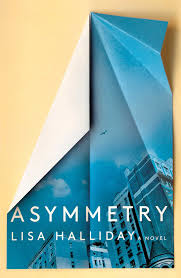 Asymmetry by Lisa Halliday
When Lisa Halliday was in her twenties, she had an affair with Philip Roth. Her debut novel is about a young editor who has a relationship with a famous author who bears a strong resemblance to Philip Roth. At least, that’s what you think this novel is about — until the second section, when the narrative focuses on a Muslim man detained at Heathrow. Imaginative and thought-provoking, Asymmetry is a “literary phenomenon”, according to the New Yorker. It’s the kind of book you’ll want to discuss the minute you finish it. Less than 300 pages long, Asymmetry raises more questions and covers more territory than most books twice its length.
The Locals by Jonathan Dee
Just after 9/11, a wealthy New Yorker, Philip Hadi, moves his family to their vacation home in the Berkshires, and quickly becomes involved — perhaps over-involved — in local politics. Meanwhile, Mark Firth, a contractor who’s remodeling Hadi’s house, faces his own problems. As the novel progresses and tensions between the locals and the interloper escalate, Dee introduces a cast of characters in fictional Howland, Massachusetts, each with a distinct voice. The Locals is reminiscent of Richard Russo’s upstate New York novels — but with a bit more of an edge. There’s plenty of material for a book group discussion; I’d start out by asking why Dee included the first chapter, narrated by a New York City con artist who never becomes important to the story.
What four-star books have you read recently?

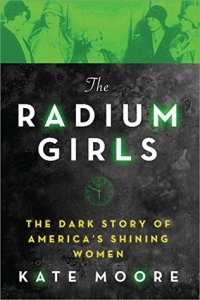 A lot of readers must think they’re friends with actress Emma Watson, because her feminist book club, “Our Shared Shelf”, has 294,000 Instagram followers and 215,000 Goodreads group members. (I’m glad I don’t have to supply the wine and cheese.) Watson, who became famous through her portrayal of brave and brilliant Hermione in the Harry Potter movies, is a United Nations Women Goodwill Ambassador with a special interest in gender equality and its benefits for both men and women. UN Goodwill Ambassadors are celebrity advocates, drawn from the “worlds of art, music, film, sport and literature to highlight key issues.” Recent selections include The Hate U Give by Angie Thomas and The Radium Girls: The Dark Story of America’s Shining Women by Kate Moore.
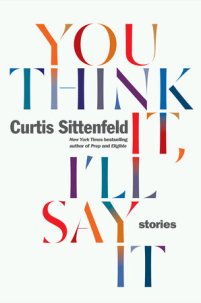 Actress and producer Reese Witherspoon has even more friends than Emma Watson — she shares monthly book recommendations with more than 13 million Instagram followers. Here’s what she had to say about her most recent pick, You Think It, I’ll Say It by Curtis Sittenfeld:
 As Doubleday publishing executive Todd Doughty points out, celebrity endorsements reach a much larger audience than TV or radio interviews or newspaper reviews: “In previous times, you would have the Oprah or Daily Show bump. Now you have the Reese Witherspoon bump from Instagram.” Vogue magazine calls Witherspoon the “new patron saint of literature”, describing her posts as the “equivalent of an Oprah’s Book Club stamp for the social media generation.” An hour-long author interview with Terry Gross on NPR’s Fresh Air reaches a million listeners, while a photo of Reese holding a book reaches many millions of potential readers. “It’s absolutely something we think about,” says Miriam Parker, an associate publisher at Ecco Books. “We try to get books to people with big social-media followings and are strategic about it.”
 If you’ve ever participated in a book club, you know that Edmund Wilson is absolutely right. That’s what makes book discussions such enriching — but sometimes frustrating — experiences. Over the past thirty years, I’ve been a member of several book groups and I’ve facilitated many others. Highlights, or perhaps lowlights, of groups I’ve facilitated: the club “discussing” The Poisonwood Bible in which not one person had read the book (which didn’t prevent them from expressing strong opinions) and the group of elderly women who thought our meeting to talk about Tolstoy and the Purple Chair was actually naptime.
 Readers in Chicago’s northern suburbs, please come to one of our book discussions next month:
 We’re also planning to hold presentations on “Books You Can’t Wait to Discuss” this summer — the first is scheduled for the evening of Thursday, July 12 at the Book Stall. What was the latest book you couldn’t wait to talk about with your book club (or your spouse, best friend, or co-worker)? Please share your recent favorite in the comment section below, on Facebook or Twitter, or via email (bksonthetable@gmail.com).
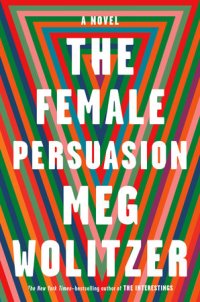 I won’t bore you with long-winded complaints about the weather, but I will mention that it snowed and rained all weekend — which meant that I had the perfect excuse to stay home and become completely absorbed in The Female Persuasion by Meg Wolitzer.
 Not everyone is going to love Kate Greathead’s debut novel, Laura and Emma, but I’m crazy about it. Not much happens; it’s a character study of a woman named Laura, who comes from a very privileged background in New York but has never felt that she fits in. When she gets pregnant by accident, she raises her daughter, Emma, on her own. The writing is just perfect; Kate Greathead has a unique voice that resonated with me. It’s perfect for readers who enjoyed Emily, Alone by Stewart O’Nan, Someone by Alice McDermott, or My Name is Lucy Barton by Elizabeth Strout. These books are the opposite of page-turners, but I found them more compelling than any thriller.
 Prairie Fires: The American Dreams of Laura Ingalls Wilder by Caroline Fraser successfully combines the true story of Wilder’s difficult life and American expansion in the West in an original and captivating narrative. This meticulously researched book — which just won the Pulitzer Prize for biography — will fascinate not only Little House on the Prairie fans but anyone with an interest in the complicated history of pioneers and homesteaders.
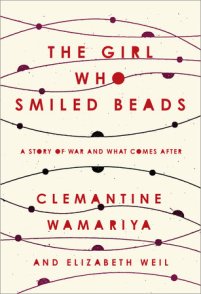 In one of the most moving memoirs I’ve ever read, Clemantine Wamariya, a very young survivor of the Rwandan genocide, tells her heartbreaking story of loss and survival. The Girl Who Smiled Beads: A Story of War and What Comes After is reminiscent of A Long Way Gone by former child soldier Ismael Beah. With her older sister, six-year-old Clemantine fled her home and wandered throughout Africa in search of safety, finally receiving asylum in the United States. As a young adult, she tries to come to terms with the tragedy that shaped her life:
 I absolutely adored The Friend by Sigrid Nunez, about a writer who loses her dearest friend but finds solace when she becomes the reluctant owner of the Great Dane he has left behind. It’s a lovely, unsentimental story about grief, friendship, literature, and the bond between people and their pets, filled with the narrator’s thoughts on reading and writing. If you love dogs and books, you’ll savor this jewel of a book. I promise you that it’s not sappy. This will definitely make my list of favorite novels at the end of the year.
 April is National Poetry Month!
 If your idea of reading poetry is your sophomore English teacher leading the class through a grim line-by-line analysis of “Ode on a Grecian Urn”, I suggest you pick up a copy of Matthew Zapruda’s Why Poetry — along with Devotions: The Selected Poems of Mary Oliver. These books will show you the joy of reading a poem without viewing it as a coded message.
 Believe it or not, a century or so ago, poetry was popular, published every day in newspapers and magazines. Consider Margaret Fishback , the real-life inspiration for the title character in Kathleen Rooney’s absolutely delightful Lillian Boxfish Takes a Walk, Fishback, a highly paid advertising copywriter long before the days of Madmen, published four bestselling books of poetry, and her clever verse, amusing and easy to understand, was published in Vanity Fair, Good Housekeeping, Harper’s Bazaar, The New Yorker, The Wall Street Journal, The New York Times, to name just a few. Lillian Boxfish, just out in paperback, is a charming chronicle not only of the life of a remarkable woman but of six decades of change in Lillian’s beloved New York City.
 Distracted Driver Awareness Month
 Pets Are Wonderful Month, Prevention of Cruelty to Animals Month, and National Canine Fitness Month
 National Food Month (also, National Fresh Celery Month and National Soft Pretzel Month)
 My favorite novel so far this year:
 For anyone who loved When Breath Becomes Air:
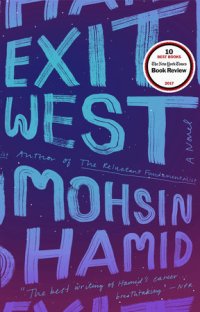 2017 Man Booker Prize finalist, new in paperback:
 To keep on your bedside table:
 For fans of domestic thrillers:
 The shortest hardcover book I’ve ever read: (144 pages, lots of white space):
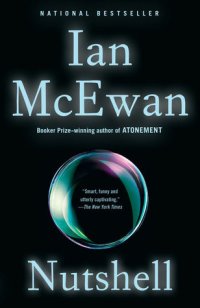 Nutshell by Ian McEwan (208 pages) — Told from the viewpoint of an unborn child and inspired by Hamlet, Nutshell is a murder mystery unlike anything you’ve read before — starting with the first sentence: “So, here I am, upside down inside of a woman.” I’ve discussed this book with two different groups and both found plenty of rich material for discussion.
 The Ninth Hour by Alice McDermott (256 pages) — Alice McDermott is one of my very favorite writers, and I’ve had to wait four years for The Ninth Hour. (Someone came out in 2013). Every time I read one of her books, I think, This one is her best, and that’s exactly what went through my mind when I finished The Ninth Hour. In Brooklyn, about one hundred years ago, a young husband commits suicide, leaving behind his pregnant wife. His widow, Annie, and his daughter, Sally, are taken in by nuns in the nearby convent. Sally marries a local boy, Patrick, and their children and grandchildren are the narrators of this beautiful and poetic novel.
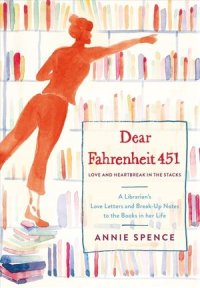 Dear Fahrenheit 451: Love and Heartbreak in the Stacks: A Librarian’s Love Letters and Breakup Notes to the Books in Her Life by Annie Spence (256 small pages) — Annie Spence’s book is snarkier than Ann Hood’s, perhaps aimed at a millennial audience, but clever and delightful. Maybe every book club member could write a love letter (or breakup note) to a book on her shelves?
 What do you plan to do the day before Thanksgiving? We’ve all heard that the Wednesday before Thanksgiving is supposed to be one of the year’s busiest travel days, but now, according to a recent Barnes & Noble survey, Thanksgiving Eve is the “busiest reading day of the year”.
 Where were these people last Wednesday when I was delayed for several hours at O’Hare? I read almost an entire book in that time (Becoming Nicole: The Transformation of an American Family, by Amy Ellis Nutt), and I’m not a speed reader. I’m leading a book discussion on Laurie Frankel’s novel, This Is How It Always Is, about a family raising a transgender child, and wanted to read nonfiction about this subject. If you really want to liven up your Thanksgiving gathering, I recommend either of these books.
 People who manage to find time to read do it two ways: first, they squeeze reading into their days in creative ways, and second, they make it a priority. They don’t think of reading as an indulgence. Why do people think taking an hour out of the day to exercise is a necessity, while they see spending an hour with a book as a luxury, on a par with window shopping or bubble baths? And who, except maybe medical residents on a 36 hour shift or parents of newborn twins, doesn’t spend at least an hour a day watching TV or checking social media? Really, hardly anyone is “too busy to read.” It’s all in how you choose to spend your time. No judgment if you’d rather do other things, but don’t say, “I just don’t have time to read!”
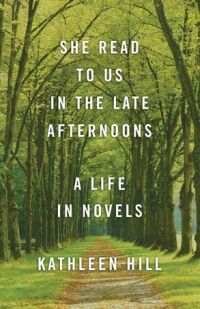
 This Thanksgiving Eve, I won’t be traveling. I’ll be at home, curled up with She Read to Us in the Late Afternoons: A Life in Novels, a memoir about Kathleen Hill’s reading life and how it has intersected with her “real” life. My current audiobook is Dear Fahrenheit 451: Love and Heartbreak in the Stacks: A Librarian’s Love Letters and Breakup Notes to the Books in Her Life, by Annie Spence, which is absolutely delightful, although I could do without all the f-bombs. We all know librarians are cool.
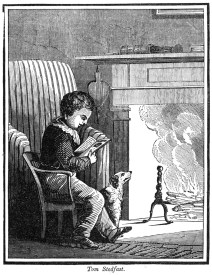 And indeed, what is better than to sit by one’s fireside in the evening with a book, while the wind beats against the window and the lamp is burning?
 I’m currently reading and enjoying Manhattan Beach — but it’s very different from Jennifer Egan’s earlier novels, which experimented with form and content. According to an article in the New Yorker, “
 On the other hand, I loved Alice McDermott’s The Ninth Hour. McDermott is one of my very favorite writers, and I’ve had to wait four years for The Ninth Hour. (Someone came out in 2013). Every time I read one of her books, I think, This one is her best, and that’s exactly what went through my mind when I finished The Ninth Hour. In Brooklyn, about one hundred years ago, a young husband commits suicide, leaving behind his pregnant wife. His widow, Annie, and his daughter, Sally, are taken in by nuns in the nearby convent. Sally marries a local boy, Patrick, and their children and grandchildren are the narrators of this beautiful and poetic novel.
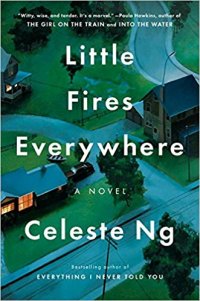 I can’t stop raving about Little Fires Everywhere. It’s hard to believe that Celeste Ng could top Everything I Never Told You, her debut novel, but I think she has. In many ways, the books are similar. Everything I Never Told You starts with the mysterious death of a teenager; Little Fires Everywhere starts with a mysterious house fire. Both novels are concerned with the secret lives of teenagers and clashes between cultural groups. But Little Fires Everywhere adds even more layers of depth, with more characters and subplots. Don’t start this book until you have plenty of reading time ahead of you — you won’t want to stop. By the way, Little Fires Everywhere was Reese Witherspoon’s September pick for her book club. She often chooses terrific books — Alice Hoffman’s The Rules of Magic, which is next up in my TBR pile, is her selection this month.
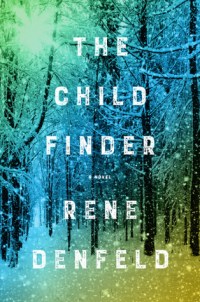 One book I haven’t seen on any of the fall preview lists is Rene Denfeld’s The Child Finder, and I don’t know why, because it’s one of the best books I’ve read all year. If anyone thought Denfeld was a one-hit wonder (The Enchanted) — don’t worry, The Child Finder is spectacular. The “child finder” of the title is Naomi, a private investigator who has a mysterious gift for finding missing children — and who was once a missing child herself. A heartbroken couple hires her to find their little girl, Madison, lost when they were cutting down a Christmas tree in Oregon’s Skookum National Forest. As Naomi searches for Madison, she comes closer to discovering the secrets of her own past. Echoes of fairy tales resound throughout this gorgeous novel, reminding the reader of the power of stories and imagination to heal and redeem. I can’t wait to meet the author at a Lake Forest Book Store luncheon this Wednesday.
 Almost every year, when the nominees for the major literary prizes (Man Booker, National Book Award, and Pulitzer) are announced, I am bewildered. There’s always at least one book that I think is a masterpiece that the panels overlook, and there’s always at least one book that I think is mediocre that makes the shortlists.
 Wow — that’s a lot of summer reading. It seems like the Poetry judges get off easy! The judges are authors, booksellers, librarians, and critics. This year’s Fiction judges are authors Alexander Chee, Dave Eggers, Karolina Waclawiak, and Jacqueline Woodson (chair), and bookseller Annie Philbrick. Last week, they chose ten novels that include works by established authors and past winners (Manhattan Beach by 2001 finalist Jennifer Egan, to be published October 3, and Sing, Unburied, Sing by 2011 winner Jesmyn Ward) as well as by debut authors (The Leavers by Lisa Ko, A Kind of Freedom by Margaret Wilkerson Sexton, Barren Island by Carol Zoref).
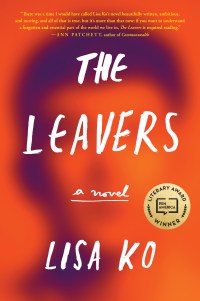 The Leavers and Pachinko (by Min Jin Lee) — but it’s hard to believe that those two novels are “the best of the best.” I enjoyed them both, but do they deserve to be National Book Award nominees?
 The Leavers, about a Chinese immigrant woman and the son she abandons, also addresses cultural differences. It’s a worthwhile and enjoyable novel — but is it better than Little Fires Everywhere by Celeste Ng, or Everybody’s Son by Thrity Umrigar? Those excellent novels also concern themselves with adoption, race, and class. Actually, so does ‘Round Midnight by Laura McBride, which will definitely make my list of favorite novels at the end of 2017. McBride brilliantly weaves together the stories of several characters with Las Vegas as the backdrop. The writing is gorgeous and the story is perfectly paced and constructed, with surprises at every turn.
 Julia Glass’s A House Among the Trees is another of my favorites that didn’t make this year’s National Book Award longlist. Inspired by the life and career of Maurice Sendak, this compassionate and insightful novel explores art, truth-telling, and loyalty, while telling a well-plotted story. Glass won the National Book Award for her debut novel, Three Junes, in 2002. surprising the literary community. According to an article in New York magazine titled “Cinderella Story,”:
 Here’s the 2017 longlist for the National Book Award in Fiction — cast your vote, and we’ll see what happens in November. And if you’ve read any of those, I’d love to know what you think.
 Books on the Table