Tips for Choosing Book Club Books

cover
There’s plenty to discuss in The Deepest Secret.

“What’s our next book?” — the dreaded question facing every book club. Here are some suggestions to help increase your chances of choosing a book that will inspire a fun and enlightening discussion:

  1. Decide if you’re a democracy or a dictatorship. Will your group vote on the books, or will each member be given the chance to make an executive decision on your monthly selection?
  2. Don’t worry about whether everyone will like the book. Some of the best book club discussions happen when not everyone likes the book. And sometimes a member who came into the meeting with a negative opinion of the book goes home with a new appreciation for it.
  3. And don’t worry about liking fictional characters. You’re not befriending them, you’re discussing why they behave as they do.
  4. Don’t be afraid of nonfiction. I think nonfiction books often provide the best material for discussion.
  5. cover-2Unless you’re a very literary group, choose books that focus on interesting issues. Your book club meeting most likely isn’t going to resemble a college English seminar. You’ll  probably have more fun talking about the ethical problems presented in The Immortal Life of Henrietta Lacks than the imagery in The Age of Innocence.
  6. Pick a book that is the right length for the amount of time your group has to read it. Don’t choose The Luminaries if your group is meeting in three weeks.
  7. Don’t choose The Luminaries (or anything of similar density) if your group is the type that discusses the book for 15 minutes and then moves on to more important things — like where you should meet next month.
  8. 9780547554839_hresBeware of books that one of your members describes as “uplifting” or “feel-good”. There won’t be much to talk about.
  9. Take advantage of all the resources that are available online and in your community. There are countless websites devoted to book clubs, including lists of suggested books. Your local library and bookstore will be happy to make recommendations for you, and to let you know what other groups are reading.
  10. Ask your friends (especially out-of-town friends) what their book clubs have read and how successful their choices were. Post “Any great book club books you can recommend?” as your Facebook status.
  11. Consider organizing a book exchange.  Have everyone bring a book he or she has recently read and trade books. At the next meeting, briefly review all the books and if one stands out, choose it for an in-depth discussion.
  12. Leave some flexibility in your schedule; don’t choose books for the whole year.
  13.  If your group is having a hard time finishing books — or agreeing on book choices — read a short story or an essay. You could even spend the year reading The Best American Short Stories 2013 or The Best American Essays 2013.
  14. Think about choosing books that have won major prizes (National Book Award, Pulitzer Prize, Man Booker) or have received good reviews in publications you trust.

cover-1I always look to Publishers Weekly for book recommendations; if a book gets a starred review in PW, I pay attention. Carla Buckley’s The Deepest Secret got a starred review, which doesn’t surprise me; the reviewer called it “superb”, and I agree! I read the book last fall, because I was going to meet Carla at a dinner hosted by Random House to introduce authors and editors to Chicago-area booksellers. The Deepest Secret is the story of Eve Lattimore, a parent who makes a terrible error in judgment — and then compounds that mistake by keeping it secret, in an effort to protect her chronically ill son. Much more than a page-turner, The Deepest Secret is a morally complex exploration of parental love. It’s a rare and wonderful treat to read a suspenseful novel that is also character-driven. Book clubs will argue about the choices that Eve, her family, and friends make; there are no easy answers.

I started reading the book the day before I was due to meet Carla. I arrived at the dinner nearly 30 minutes early (very unusual for me) and sat in my car reading the book until the appointed time. When I saw people starting to enter the restaurant, I stashed the book in my purse and joined them. I introduced myself to the first person I saw — who turned out to be Carla Buckley! I told her that her new book was truly “unputdownable” and that I hated to tear myself away from it; I’m not sure she believed me until I showed her my book, with a page dog-eared about halfway through. Carla (along with another terrific author, Jenny Milchman) will be coming back to the Chicago area on May 8 — please join us (with or without your book club) for a great discussion. No need to choose the books — they are already chosen for you! Jenny is the author of two suspense novels: Cover of Snow, a psychological thriller about a young wife in upstate New York investigating her husband’s mysterious suicide, and Ruin Falls (due in April)  about a mother desperately searching for her missing children. (Cover of Snow, Jenny’s debut novel, also received a starred review in Publishers Weekly.)
 

10 Love Stories for Valentine’s Day

Years ago, we had an elderly customer who regularly came into the store asking for a “juicy romance”. (She was Russian, so the “r”  rolled off her tongue in a very charming way.) It was always a challenge to find just the right book for her. She didn’t want formula romance fiction; she wanted a good love story, and she wanted one every week. Another requirement was that the book not be set in Russia. It’s not easy to find a well-written love story. Maybe Valentine’s Day has put you in the mood for a “juicy romance”?  I asked my coworkers for their favorites, old and new, and got some terrific recommendations.

9780143124542HJust about everyone on our staff has read and loved Me Before You by Jojo Moyes. It’s the story of a young woman who is hired as the caregiver to a man who’s become a quadriplegic after a motorcycle accident. Get out the Kleenex when you’re about two-thirds of the way through. Here’s what Liesl Schillinger of the New York Times had to say:

When I finished this novel, I didn’t want to review it; I wanted to reread it. Which might seem perverse if you know that for most of the last hundred pages I was dissolved in tears. Jojo Moyes, the writer who produced this emotional typhoon, knows very well that Me Before You is, as British critical consensus affirms, “a real weepy.” And yet, unlike other novels that have achieved their mood-melting powers through calculated infusions of treacle — Erich Segal’s Love Story comes immediately to mind — Moyes’s story provokes tears that are redemptive, the opposite of gratuitous. Some situations, she forces the reader to recognize, really are worth crying over.

9781594205477HKathy recommends The Death and Life of Charlie St. Cloud, by Ben Sherwood, which is not only a story of a romance between a man and a woman but a story of the undying love between two brothers.

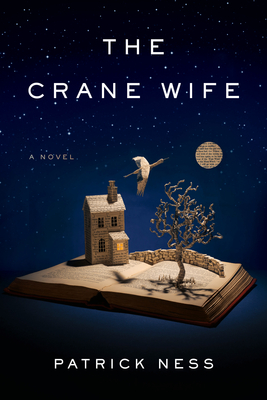
Max couldn’t pick just one favorite; it was a tossup among three recent books: The Perfume Collector by Kathleen Tessaro, The Crane Wife by Patrick Ness, and The Rosie Project by Graeme Simsion. I adored The Crane Wife as well, which surprised me, because it’s based on a folk tale and involves magical realism — two things that are usually immediate turnoffs for me. This novel, about a sad and lonely man in London who falls in love with a beautiful and mysterious woman (who may or may not be a human version of the injured crane who landed in his backyard), captivated me.

Leeni has fond memories of Daddy-Long-Legs, by Jean Webster, and so do I. An epistolary novel for young readers written in 1912, it contains all the elements of a classic love story — including an orphanage and a mysterious benefactor. I wish I still had my childhood copy — it was probably the first romantic book I ever read.

Molly is smitten with Letters From Skye, by Jessica Brockmole, another novel told in letters. A young poet from the remote Isle of Skye off the coast of Scotland receives a fan letter from an American student, and their correspondence turns into a complicated love affair.

Anna Karenina is Diane’s choice — and it’s hard to argue with that! William Faulkner called Tolstoy’s masterpiece “the best novel ever written”. Recently, the New York Times ran an article called “A Sentimental Education” in which contemporary authors discussed the ways literature has taught them about love. Ann Patchett reflected on the difference between reading Anna Karenina at the age of 21 and at 49:

When I was 21 I read Anna Karenina. I thought Anna and Vronsky were soul mates. They were deeply in love and therefore had to be together. I found Karenin cruel and oppressive for keeping his wife from her destiny. Levin and Kitty and the peasants bored me. I read those parts quickly.

Last year I turned 49, and I read the book again. This time, I loved Levin and Kitty. I loved the fact that after she declined his proposal he waited for a long time to mend his hurt feelings and then asked her again. I loved that she had grown up in the interim and now felt grateful for a second chance. Anna and Vronsky bored me. I thought Anna was selfish and shrill. My heart went out to poor Karenin, who tried to be decent.

IMG_0146And my favorites? In order to keep the list to ten, I’ll pick just two wonderful love stories: Birdsong, by Sebastian Faulks, and The Art of Hearing Heartbeats, by Jan-Philipp Sendker. The two books couldn’t be more different — Birdsong, set in World War I, is dark and tragic, while  The Art of Hearing Heartbeats, set in Burma, is mystical and exotic. But both are about the power of love to connect and heal.

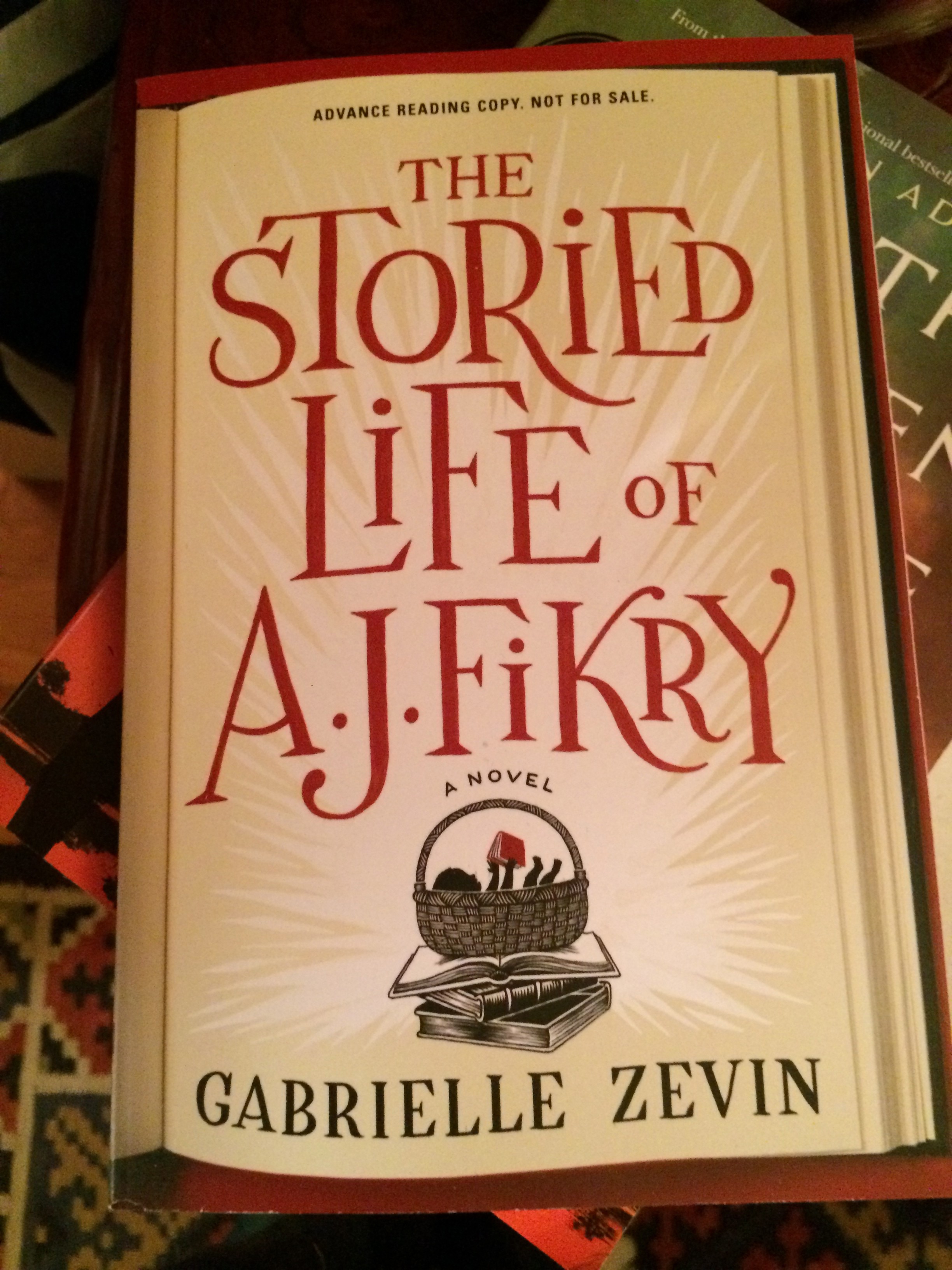
I have to add a “bonus” book to the list – The Storied Life of A.J. Fikry, by Gabrielle Zevin, due for publication in April. I picked up a copy at Winter Institute in Seattle and read it cover to cover in one day. It’s about a heartbroken bookseller whose life is transformed by love — and it’s going to be one of my favorite love stories of all time. I can’t wait to tell you about it in April!


The chalkboard in my kitchen.

Book Review — The Sense of Touch

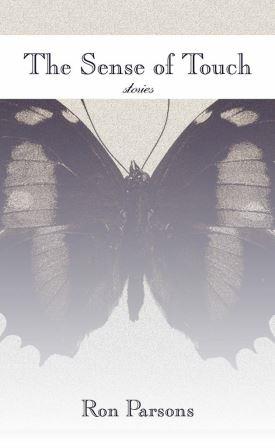
Ron ParsonsAs I’ve said before, I think short stories don’t get enough love. So when I was asked to be a blog tour host for The Sense of Touch, a short story collection by debut author Ron Parsons, I jumped at the chance. It didn’t hurt that I had just read a story of his (“Big Blue”) on the Storyville app. This is a subscription app that delivers a short story “from the best story collections published by commercial and independent presses” to your IPhone or IPad once a week. It’s not free (because the founders believe all writers should be paid for their creative work), but it is inexpensive.

Ron Parsons is a partner at a law firm in Sioux Falls, South Dakota. He specializes in appellate work and has appeared before the United States Supreme Court. He has published many works in addition to the stories in The Sense of Touch (many of which were originally published in literary journals)  — but they appeared in the South Dakota Law Review, with titles like “Should the Eighth Circuit Recognize Procedural Misjoinder?” and “Cattle on a Thousand Hills: Reflections on the Beef Checkoff Litigation”. Now, I don’t know anything about law journals, but that last title sounds poetic to me; is it common to call legal articles “reflections”?

Parsons studied English as an undergraduate at the University of Minnesota. Several years ago, he came across some of the stories he wrote in college, and says he was inspired to revise the stories and make them “readable”. Like many Midwesterners, Parsons is overly modest. The stories are more than readable; they beautifully capture the physical and emotional landscapes of Minnesota, South Dakota, and Michigan. All of them focus on the yearning for human connection (“the sense of touch”) and the ways in which connections can be forged and broken.

The collection opens with “Hezekiah Number Three”, about Naseem, a brilliant but disturbed Bangladeshi immigrant searching for his father and his place in the world. The events in the story are set in motion by an accusation of sexual misconduct — touch gone wrong. Naseem, trying desperately to fight his solitude and his demons, befriends the story’s narrator, Tom. Naseem convinces Tom to go for a hot air balloon ride, promising they will fly so close to Mount Rushmore that they will “touch George Washington’s nose”.

In the title story, “The Sense of Touch”, the narrator is touched inappropriately by a trusted teacher; later, while volunteering for a campus organization, he is attacked by a developmentally disabled adult. He drifts away from his long-distance girlfriend: “Absence disembodies. If a person isn’t there for you to touch, they are not real.” His creative writing teacher, Vonda, tells the class that touch is the only sense that can be trusted:

“Now touch, touch, she continued. “Touch is right exactly there. You have it. It’s solid; you can grab and hold on. There’s weight. There’s substance. Light don’t matter, air doesn’t change it, nothing gets in the way. Touch is silent. And silence is the only way to contemplate infinite things. You see, touch works. Never trust anything, not until you can touch it. With touch, you know you know.”

The Sense of TouchBut Vonda is the narrator’s “untouchable muse . . . close enough to want to grab, and hold on”.  And the narrator does just that — he tries to hold on.

In “The Black Hills”, two old friends, Daniel and Ed,  reunite for a visit after Ed has lost his sight in an accident. His remaining senses, he explains, “are extremely acute. It’s a little something we sightless folks like to call sensory compensation”.  Ed, Daniel, and Daniel’s roommate, a Lakota woman named Dawn, go on a picnic to “Hippie Falls, the best and most secret swimming hole in all of the Black Hills”. In the dreamlike surroundings of the falls, Daniel and Ed begin quietly competing for Dawn’s attention. Daniel’s betrayal of Ed seems particularly cruel since it is destined to end their friendship; as he leaves the next morning, “He wanted to say something, but his words were cold to the touch”.

I’m not sure if it’s technically the best story in the collection, but the one I found most affecting was “As Her Heart is Navigated”. A young woman, Haley, learns that her seemingly gentle boyfriend, Clint, has a violent streak, when he punches a wall in a fit of rage, and that she is capable of healing touch, when she saves the life of an elderly neighbor. Haley feels physically and emotionally trapped by Clint:

He was encroaching upon her, cautiously, like a kind of creeping web — a sweet one, to be sure — a spool of cotton candy threads, unraveling and catching in her hair, attaching to her clothes. And the more she struggles, the more she feels stuck.

Parsons’s writing can be uneven. Some of the dialogue seems stilted, and sometimes he includes unnecessary exposition — for example, in the middle of an evocative description of a waterfall, he says, “It was a perfect spot for sunbathing”. But much of the writing is quite lovely, and the characters (a runaway farm wife, a barber raising his grandson, a twin who’s lost his brother) are well-drawn. He tackles some big themes — loneliness, commitment, friendship, and betrayal — always returning to the “sense of touch”. I look forward to reading more stories (and perhaps a novel?) by Ron Parsons.

To learn more about Ron Parsons, please visit his website or check out his Facebook page.

tlc tour host

5 Reasons to Read Short Stories

Collections of short stories are hard to sell. I can almost predict the response when I offer a book of short stories to a customer:

ME: What can I help you find this afternoon?

CUSTOMER: Well . . . I’m just looking for something good to read. Anything you’ve read lately you would recommend?

coverME: Oh, yes! I really enjoyed Astray by Emma O’Donoghue. She wrote Room.  It’s a collection of short stories, and I thought just about every story was wonderful.

CUSTOMER: Uh-huh . . . I wasn’t really looking for short stories. Anything else?

And booksellers aren’t the only ones who have trouble convincing people to read short stories. Author David Abrams has the same problem, as he notes in the website Book Riot:

I’ve always been a champion of the short story, both as a writer and a reader, and it always stuns me into silence when I have friends–good friends, well-read, intelligent, reasonable friends–who dismiss short stories with a flap of the hand, a pinch of the lips, and a deprecating, “Oh, I don’t do short stories.” It’s said in the same tone of voice a vegetarian would say, “I don’t do meat.” When I come back with, “Why not?” the answers are always vague and insubstantial. I have yet to find anyone who can give me a solid, tangible reason they don’t like short stories. I suspect they’re afraid of short stories, an aversion that began in grade school . . . By their nature, short stories compress language to its densest gem-like state (second only to poetry); novels sprawl and emphasize plot and are generally more accessible to younger readers. I could be wrong, but I think the average 15-year-old would rather read The Catcher in the Rye than “Young Goodman Brown.”

bernice_covWriters themselves have a hard time selling their short stories. Most are grateful if their stories see print in obscure literary magazines. This wasn’t always the case. In the 1920s, F. Scott Fitzgerald was able to support a lavish lifestyle through sales of short stories to popular magazines; the Saturday Evening Post paid him as much as $4,000 for a single story. In 1930, Edith Wharton sold a story to Cosmopolitan for $5,000.  (Imagine how much that would be in today’s dollars!) Writers used the income from short stories to support themselves as they worked on novels. Now, writes critic A.O. Scott in the New York Times, “A young writer who turns up at the office of an editor or literary agent with a volume of stories is all but guaranteed a chilly, pitying welcome. That kind of thing is just not commercial.”

I’ve been reading that the short story is experiencing a resurgence. It’s true that Alice Munro, arguably the best short story writer of our time, won the Nobel Prize for literature in 2013, and that George Saunders was a 2013 National Book Award finalist for his short story collection, The Tenth of December.  And digital publishing may be revitalizing the short story; in an article in the New York Times entitled “Good Fits for Today’s Little Screens: Short Stories”, Leslie Kaufman writes, “The Internet may be disrupting much of the book industry, but for short-story writers it has been a good thing.” She quotes Amber Dermont, a novelist who has recently published a short story collection: “The single-serving quality of a short narrative is the perfect art form for the digital age . . . Stories are models of concision, can be read in one sitting, and are infinitely downloadable and easily consumed on screens.”

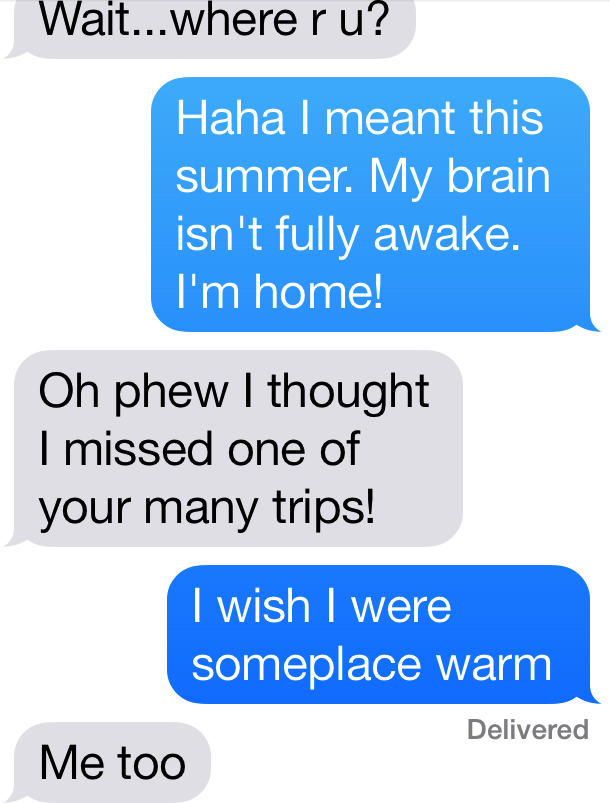
A typical text conversation of mine. Not a shining example of how digital technology enhances writing skills.

In the same article, Cal Morgan, an editor at HarperCollins, says that digital communication has had a positive influence on younger writers:

The generation of writers out of college in the last few years has been raised to engage with words like no generation before. Our generation was raised on passive media like television and telephones; this generation has been engaged in writing to each other in text messages on a 24-hour basis. I think it has made them bolder and tighter.

Hmmm, I’m not sure if texting makes anyone’s writing “bolder and tighter”, and I really don’t think the new generation of writers has “been raised to engage with words like no generation before” — but I appreciate the attempt at putting a positive spin on round-the-clock texting.

Here’s my sales pitch for short stories:

  1. They’re . . .  short. When you’re between books, or don’t have the time to immerse yourself in your current book, it’s very satisfying to read a thoughtful, well-written story. You feel like you’ve accomplished something. And there are many stories you can read in 10 or 15 minutes . . . stories that you will be thinking about for much, much longer than that.
  2. They’re usually very well-written.  Writers who are able to publish collections of short stories are generally well-established literary writers. It takes a tremendous amount of skill to write a good short story. Even if you scratch your head trying to figure out what the story was really about, you will appreciate the writing.
  3. They’re perfect for book clubs. No one can show up to your book club without having read the selection — anyone can find the time to read a short story or two. How about a meeting where you compare two short stories? A discussion based on a story might actually last longer than a discussion of The Goldfinch — especially if only two members of your group have finished it and the rest don’t want the ending ruined.
  4. They are wonderful to listen to or to read aloud. I really enjoy the NPR Selected Shorts podcasts. I find it hard to listen to audiobooks; I keep losing track of the plot. But short stories are ideal for car trips or walks.
  5. They lend themselves to rereading. I’m much more likely to reread a short story than a novel. I’m often amazed by how much more I appreciate a story when I read it again. I’m sure I’d feel the same way if I reread I novel, but I rarely do that; there’s always another book waiting.

I recommend starting with a short story anthology so you can read what an editor considers the best stories by top short story writers. I love the Best American Short Stories series, which comes out in paperback every fall. Each year, there’s a different editor, who’s a well-respected author; the 2013 volume is edited by Elizabeth Strout. The O. Henry Prize Stories series is also wonderful. I can almost guarantee that if you pick up any book in either of these series, you will find at least one story that speaks to you.

cover-1Here’s a list of 10 favorite short story collections, new and old:

  • What We Talk About When We Talk About Anne Frank by Nathan Englander
  • Different Seasons (4 novellas) by Stephen King
  • Bark by Lorrie Moore (due 2/25/14)
  • Dear Life by Alice Munro
  • The Complete Stories by Flannery O’Connor
  • Nine Stories by J.D. Salinger
  • Selected Stories by William Trevor
  • Collected Stories and Other Writings by John Cheever
  • Unaccustomed Earth and Interpreter of Maladies by Jhumpa Lahiri

Next on my list? The News from Spain by Joan Wickersham.

Further reading on short stories:

A Brief History of the Short Story in America (Critical Mass, blog of the National Book Critics Circle of America)

Sorry, the Short Story Boom is Bogus (Salon)

Brevity’s Pull: In Praise of the Short Story (New York Times)

Good Fit for Today’s Little Screens: Short Stories (New York Times)

20 for 2012: Short Story Collections (Book Riot)

Reading on a Jet Plane

All my books are packed, I’m ready to go . . .  (apologies to John Denver and Peter, Paul & Mary)

Last week, I went to the American Booksellers Association Winter Institute in Seattle — a four-day educational conference for independent booksellers. Packing my clothes was easy; people in the book business are not known for being fashion-forward, and January in Seattle does not require the layers of fleece, wool, and down that are needed in Chicago. So after I filled my carry-on suitcase with jeans, yoga pants, and sweaters, I started the difficult task of deciding which books to take — always the trickiest part of trip preparation.

9780062279972-1What about the book I’m reading that only has 50 pages left to go — worth bringing, when I might finish it at the gate before the plane even takes off? And that big, fat, HEAVY new hardcover — what if I haul it along and end up hating it? Should I bring something that I’m obligated to read so I can’t keep putting it aside the way I do at home? How about something mindless that I can leave behind?  I always bring 150% of the books I think I’ll have time to read on a trip– ever since I was delayed overnight in the Frankfurt Airport, where I ran out of reading material and was forced to buy the only non-pornographic English language option available, The Sum of All Fears by Tom Clancy. Now my greatest fear is being stranded without a good book, or two, or three.

And yes, I do know about e-books. They’re fine; I have my IPad loaded with them. I just don’t enjoy reading them the same way I enjoy reading real books. They serve the purpose the same way eating at McDonald’s does the job when you’re on a road trip. I’d rather eat at McDonald’s than go hungry, but I don’t feel nourished the same way I would if I ate real food. And besides, what happens when the e-reader runs out of juice and there’s no power supply available, or it malfunctions?

As I was pondering my book options for the trip, it dawned on me that I really only needed to bring two books — one to read on the four-hour flight to Seattle, and one for “insurance” in case of delays. After all, I was going to a booksellers’ conference where I was going to be given dozens of wonderful new books to read and share with my colleagues. So what did I bring? The Wind Is Not a River, by Brian Payton (which I’d just started reading but knew I was going to love) and Careless People: Murder, Mayhem and the Invention of the Great Gatsby by Sarah Churchwell (which I wanted to finish reading because the author is coming to Lake Forest for an event in February).

The Wind Is Not a River is my favorite kind of book — it’s a war story and a love story, and it focuses on a somewhat obscure piece of history. Set in Seattle and Alaska during World War II, the novel contains two narratives. Journalist John Easley impersonates a Royal Canadian Air Force officer to investigate the Japanese invasion of the Aleutian Islands in Alaska. (The U.S. authorities didn’t allow journalists to cover the invasion since they felt Americans would panic if they knew how close the Japanese actually were to America’s mainland.) He accompanies an American crew on a bombing run over the islands and is shot down. For months, he lives in a cave, foraging for food and evading the Japanese occupiers. Meanwhile, his wife Helen passes herself off as a showgirl and joins a USO group headed to Alaska to entertain the troops — but her real purpose is to track down her missing husband.

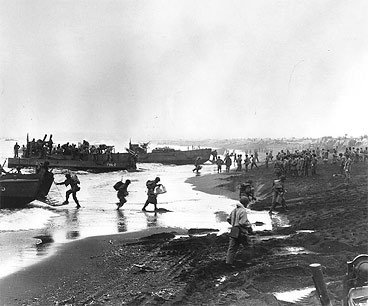
The Battle of Attu, the only World War II land battle in North America.

Author Brian Payton expertly moves between the two stories, which are equally compelling. John’s battles against starvation and gangrene and Helen’s desperate attempts to get information from unwilling officials are both vividly rendered. His writing beautifully evokes the stark, unfriendly landscape of the Aleutian Islands. In her review in the Chicago Tribune, Beth Kephardt says: “Payton’s great gift is characterizing a specific place and time; I would read anything Payton writes about landscape.”  (To read the complete Chicago Tribune review, click Chicago Tribune/Printers Row.)

Soon after John is shot down, he meets another survivor — a young airman from Texas. Payton describes their encounter in language that perfectly evokes the scene, yet makes me think of E.B. White’s rule for writers — “Omit needless words”:

Then, just as swiftly as it began, the fog stalls its retreat. Like a wave racing down the beach to the sea, it hesitates, reverses course, then comes flooding back again. They walk toward each other in the gathering mist, the preceding color and light now seeming like a dream. They approach each other with widening grins, like they’re the only ones in on the joke. And when they meet, they hug each other long and hard, like men who had cheated death together — like men convinced the worst is behind them.

Of course, the worst is not behind them. The journey ahead for John Easley and Karl Bitburg will test their courage and endurance — just as Helen’s search reveals the strength and determination she never knew she had.

I closed The Wind Is Not a River just as the plane was beginning its descent into Seattle. As I looked out the window at the gorgeous scenery of the Pacific Northwest, I imagined Helen Easley boarding the ship that would take her to the Aleutian Islands to look for her husband. I had to remind myself that what I’d just read was historical fiction, and that Helen and John never existed. But they seem just as real to me as Zelda and F. Scott Fitzgerald do in Careless People, another book with two narratives. In the fall of 1922, Scott and Zelda moved to Long Island; around the same time, in nearby New Jersey, a double murder (a married minister and his mistress) took place. In her well-researched work of history and biography, Sarah Churchwell connects these stories in surprising and insightful ways.  Next week, I’ll be interviewing Churchwell, an American literature scholar currently living in England. I hope she has a peaceful plane trip, with plenty of time to read!

Do You Keep a Reading Journal?

Gloria's book journal
Gloria’s book journal

One of the unexpected pleasures of Books on the Table has been reconnecting with old friends. I recently heard from Gloria, who worked at Lake Forest Book Store for several years and then moved to Door County, Wisconsin. Gloria, who had a rewarding career as a nurse, turned to bookselling later in life.  Her first job was at Borders back in the days when applicants had to take a difficult test to prove their “bookworthiness”.  In response to “10 Books I’d Save in a Fire (or a Flood)”, Gloria commented:

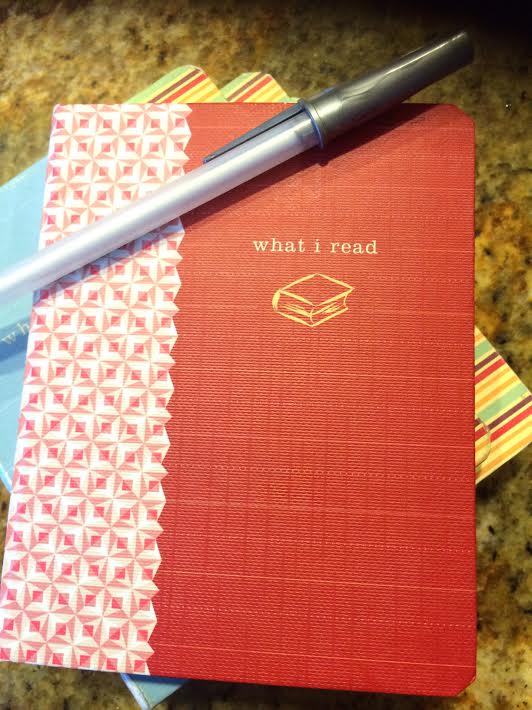
When I was a child my family home had two devastating fires (one electrical/smoking related and the other set by a sibling playing with matches). No one was ever hurt but many treasured possessions like books and photos were lost. Then as a young mother, I lost my children’s baby pictures to a cold-hearted burglar. So . . . my mind is prepared and my old childhood books are already gone. (After reading two of my current recommendations, Ru and A Constellation of Vital Phenomena, I place my losses in the perspective where they belong.) What I would save now are these little ‘What I Read’ journals. For the last several years I write a short synopsis of everything I read; include the date, my reaction, little tidbits like “bought off the table at LFBS(!)” or “read during January 2014 deep freeze”. As I get older I sometimes don’t remember what I had for dinner last night….these journals refresh my memory of all the many great, and occasional not so great, books I’ve read. I know people who’ve done this much of their lives. Lucky them!

Gloria has met many other book lovers in Door County, including one who has little boxes filled with index cards with information about books she’s read, and one who has a list of all the books she’s read going back to high school. That’s impressive — although when I was in high school, I did have a little journal full of “meaningful” quotes from poems and songs. I would be embarrassed to read that now, especially when I recall that one of those quotes was from the Grateful Dead: “What a long, strange trip it’s been”.

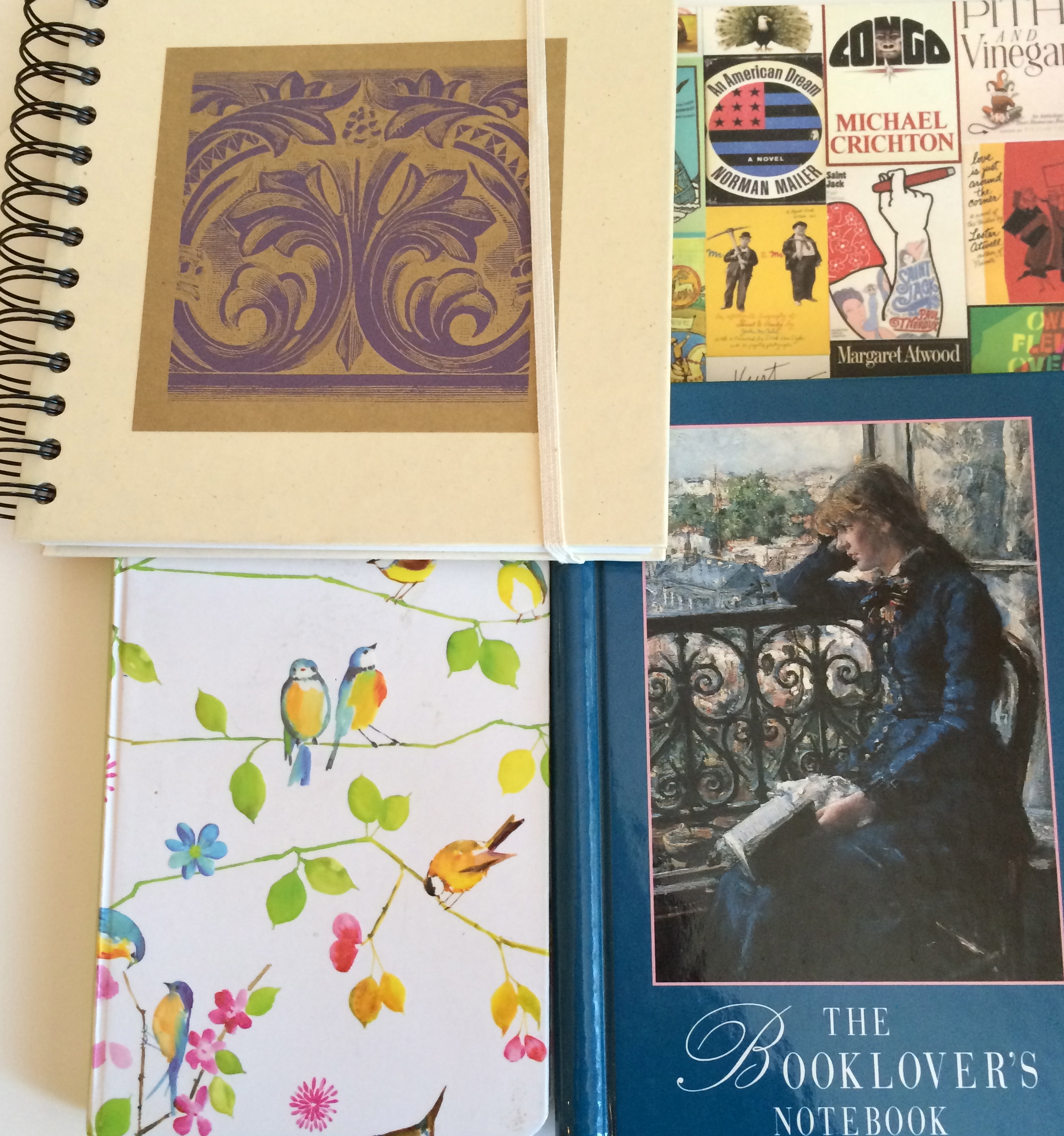
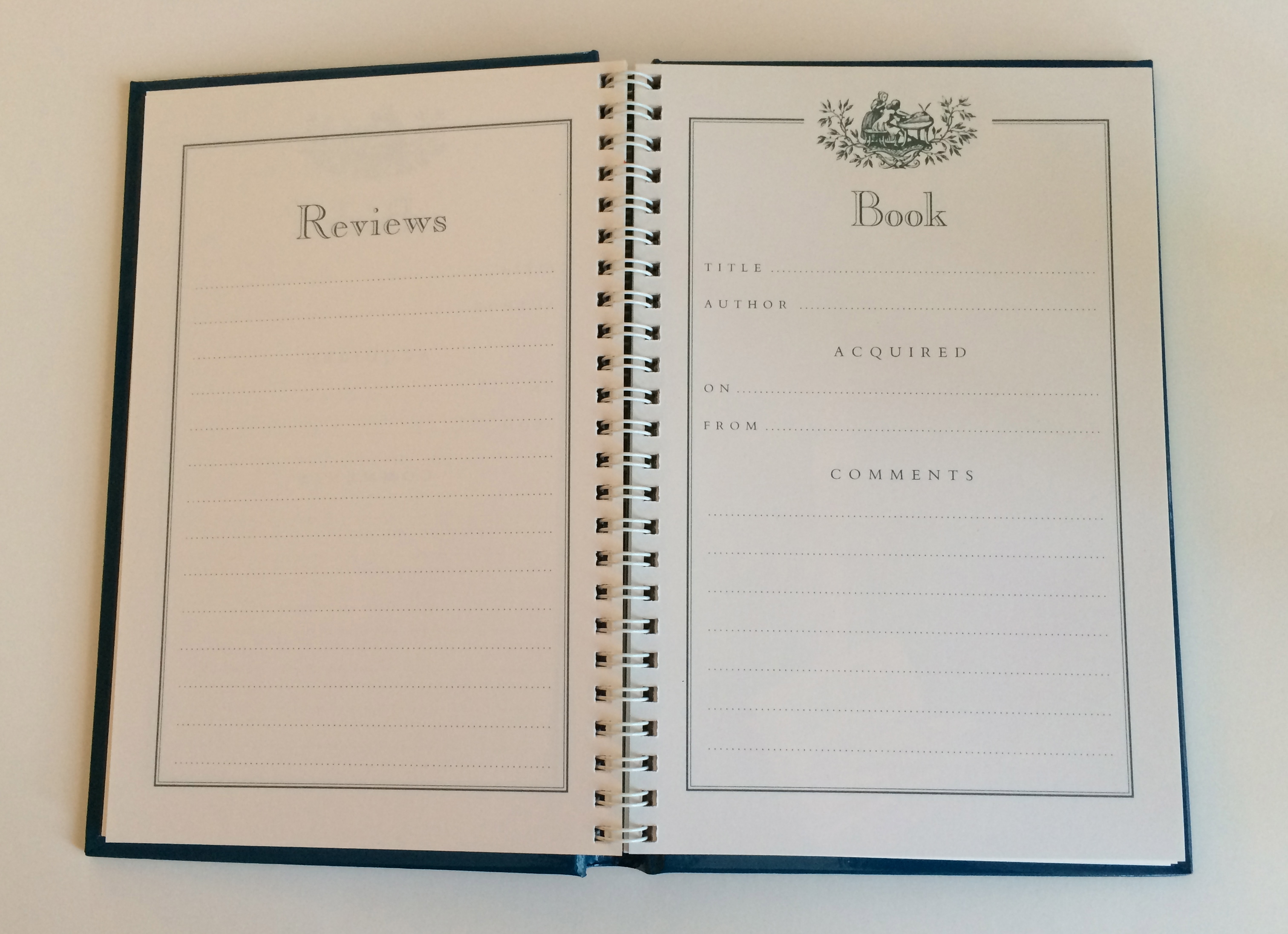
My collection of book journals -- not a word has been written in any of them.
My collection of book journals — not a word has been written in any of them.

I’ve never kept a book journal. I have a collection of  lovely blank books that I bought with the intention of keeping track of the books I’ve read (and want to read)  but those books are still empty. Every time I bought a beautiful hardbound journal, I thought that would be the one that would inspire me to record my reading. Now, I’m trying to remember to list my books  on the “Recently Read” and “In My Stacks” pages of Books on the Table, but I’m not even doing very well with that. I wish I’d kept a journal of all the books I’ve read, starting in childhood. This year, I’m going to keep track of the books I’ve read, and I’m going to keep a list of books I plan to read. It’s certainly an easier resolution to keep than losing 10 pounds or working out every day!

Apparently, even successful authors have difficulty remembering to use their reading journals. While procrastinating this morning, I found a post called “The Reading Resolution” on the Jungle Red Writers (“smart and sassy crime fiction writers”) blog. Deborah Crombie says:

I have attempted, on numerous occasions, to keep track of WHAT I read. I have a book journal, with, well, maybe three pages filled out.  I’ve put books in my personal journal, occasionally. (And don’t ask how long it’s been since I made an entry in that!)  I’ve made notes on what I’m reading now and again in my calendar.

Deborah’s fellow author, Julia Spencer-Fleming, admits to the same problem:

What I DO want to try in 2014 is keeping a book journal. I get so frustrated when someone asks me, “what are you reading?” or we do

The pristine pages of one of my book journals.

one of our book recommendation posts here on JRW, because half the time, I can’t recall the name or author of the great book I devoured just last month!

Does anyone have any suggestions for a really good-looking book journal to make it easier for me?

I’m sorry, Julia, but I have some very good-looking journals and they haven’t made it any easier for me . . . good luck!

To read “The Reading Resolution” blog post, click Jungle Red Writers. Contributors to the blog are Deborah Crombie, Julia Spencer-Fleming, Hallie Ephron, and several other mystery/suspense novelists.

Salvaged Pages — 10 Books I’d Save in a Fire (or a Flood)

The common reader, as Dr. Johnson implies, differs from the critic and the scholar . . . He reads for his own pleasure rather than to impart knowledge or correct the opinions of others.  Virginia Woolf, The Common Reader (1925); one of the books I’d save in a fire.

IMG_0014Earlier this week, a pipe burst at Lake Forest Book Store and within minutes, the entire basement was flooded and thousands of books were ruined. Certainly this was a catastrophe, but the store has insurance and the books can be replaced. Right before this happened, my colleague and I were chuckling over “Planning for Natural Disasters”,  one of the seminars offered at the upcoming American Booksellers Association Winter Institute: Why would anyone go to that, we wondered, when there are fascinating alternatives like “Sad and Dark YA Literature”? Now we know.

The flood made me think about what books I would try to save if there were a fire or flood in my house. (I’m not speaking literally, you realize! If there’s REALLY an emergency, I will not be standing in front of my bookshelves wondering which books to take. This is an academic question, like “If you could only take one book to a desert island, which one would you choose?”) Which books would I miss the most? Which ones can’t be replaced? Not many, it turns out. Most of the books I own would be easy to replace. I’d be sad to lose my signed ARCs from author events and trade shows, but those wouldn’t be the ones I’d grab on the way out the door.

The books I would want to save are books that belonged to me as a child, or to my parents and grandparents.  Many are long out of print. Just looking at their covers takes me right back to my childhood. They are falling apart, with loose pages, broken spines, and missing dust jackets.

Peter Pan by J.M. Barrie This version (1910) belonged to my grandmother, who was born in 1904.
Peter Pan by J.M. Barrie
This version (1910) belonged to my grandmother, who was born in 1904.
1 x 1 by e.e. cummings My grandmother was in the habit of writing to authors she admired, and a postcard thanking her for her fan letter is in the book.
1 x 1 by e.e. cummings
My grandmother was in the habit of writing to authors she admired, and a postcard thanking her for her fan letter is in the book. Think it’s worth anything?


James and the Giant Peach by Roald Dahl My aunt was kind enough to give me a lovely inscribed book, and I took a marker and corrected her spelling of "niece".
James and the Giant Peach by Roald Dahl
My aunt was kind enough to give me a lovely inscribed book, and I took a marker and corrected her spelling of “niece”. Not very nice!
The Bounty Trilogy by Charles Nordhoff and James Hall I reread these 3 books (all in one volume) over and over again.
The Bounty Trilogy by Charles Nordhoff and James Hall
I reread these 3 books (all in one volume) over and over.
The Common Reader by Virginia Woolf My grandmother (born in 1908) apparently received this book when she was 20, and years later added a bookplate with her new married name. I used this for research on my honors thesis when I was 20.
The Common Reader by Virginia Woolf
My grandmother (born in 1908) apparently received this book when she was 20, and years later added a bookplate with her new married name. I used this for research on my honors thesis when I was 20.
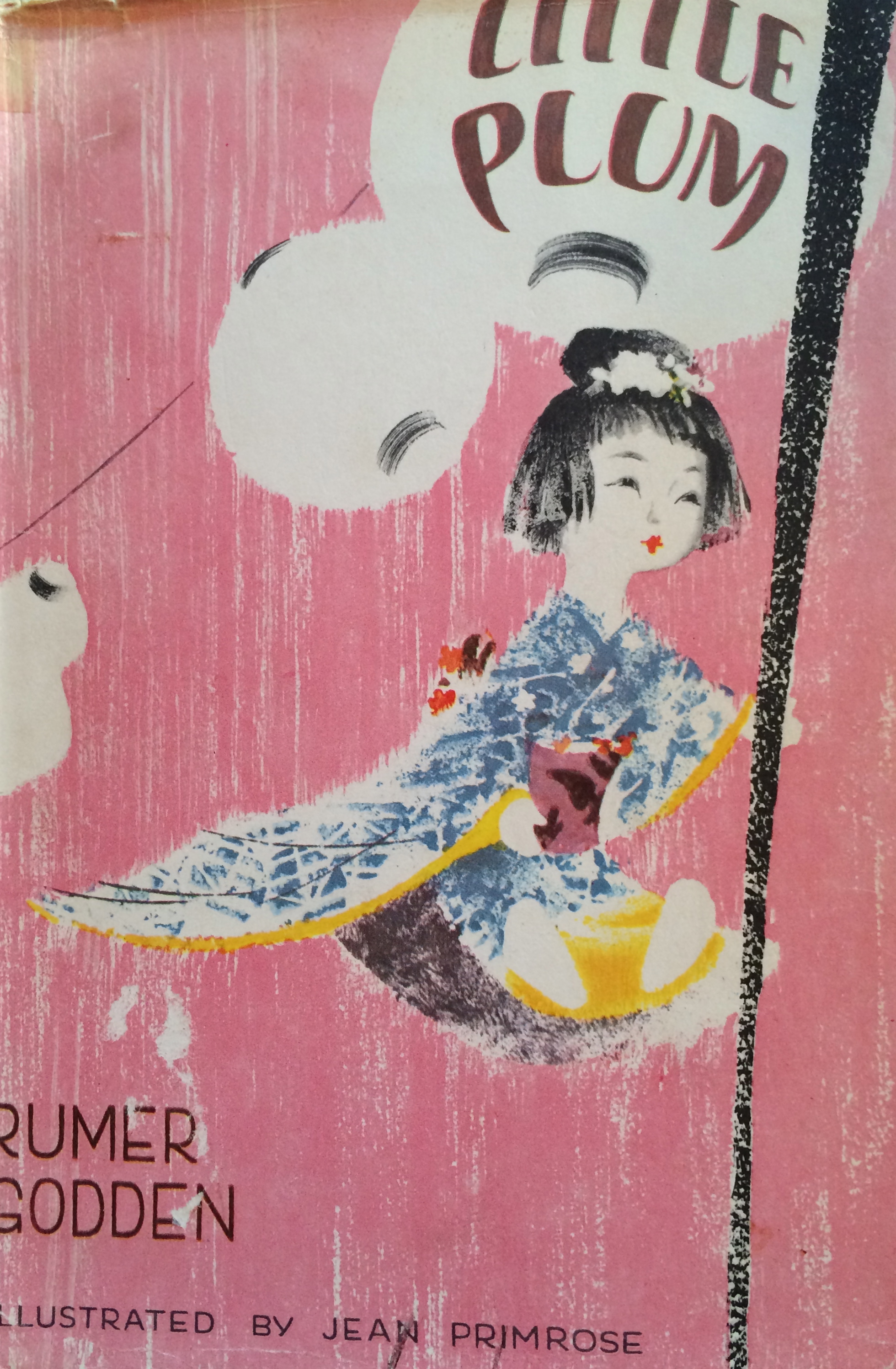
Little Plum by Rumer Godden A wonderful story about a lonely little girl and a Japanese dollhouse . . . so sad it's no longer in print.
Little Plum by Rumer Godden
A wonderful story about a lonely little girl and a Japanese dollhouse . . . so sad it’s no longer in print.
The Fabulous Flight by Robert Lawson I tracked this book down on Ebay -- it was a childhood favorite that I borrowed from the library again and again.
The Fabulous Flight by Robert Lawson
I tracked this book down on Ebay — it was a childhood favorite that I borrowed from the library again and again.
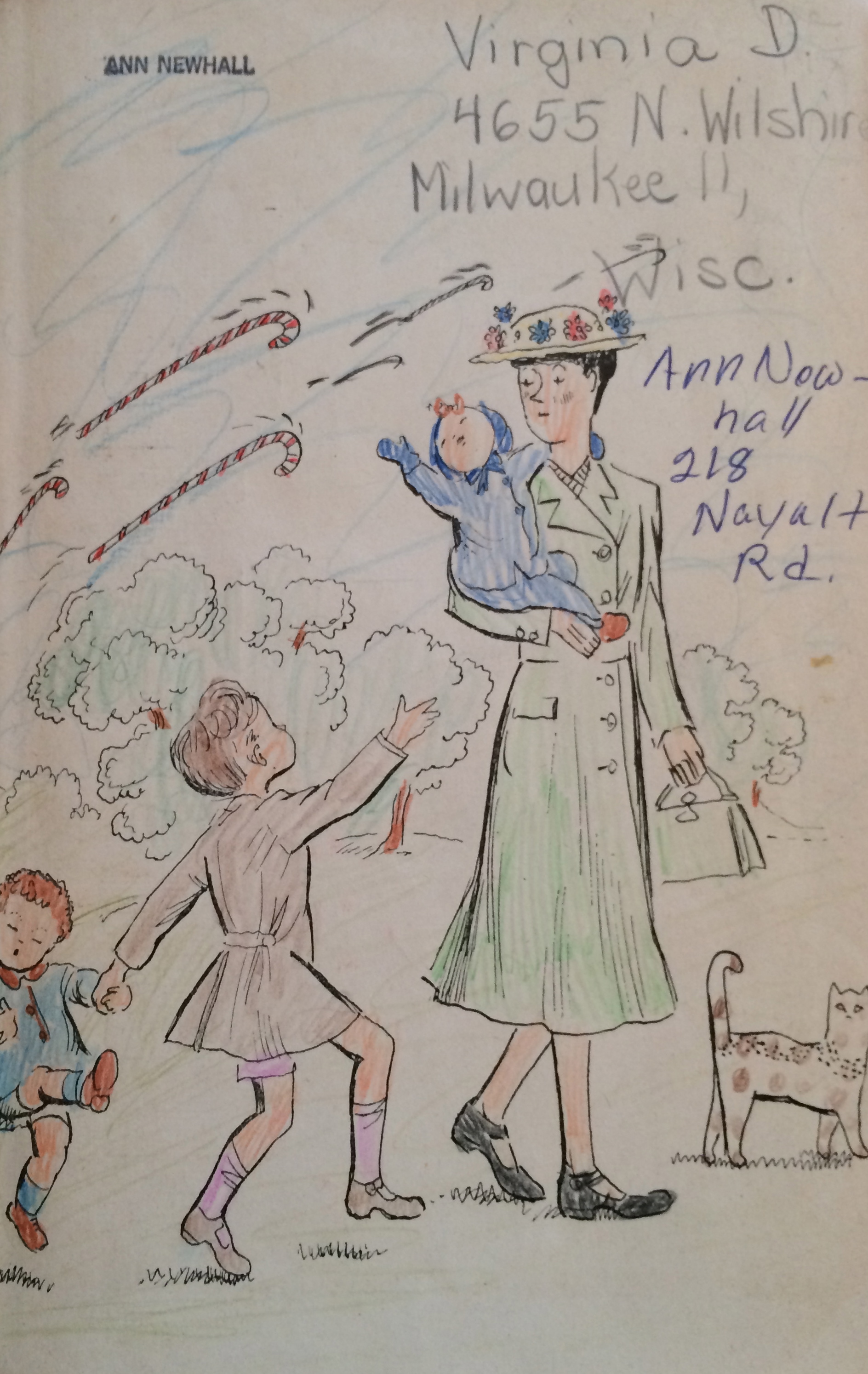
Mary Poppins Opens the Door by P.L. Travers Originally my mother's, I added my name and address. I don't know who colored the illustrations!
Mary Poppins Opens the Door by P.L. Travers
Originally my mother’s, I added my name and address. I don’t know who colored the illustrations!
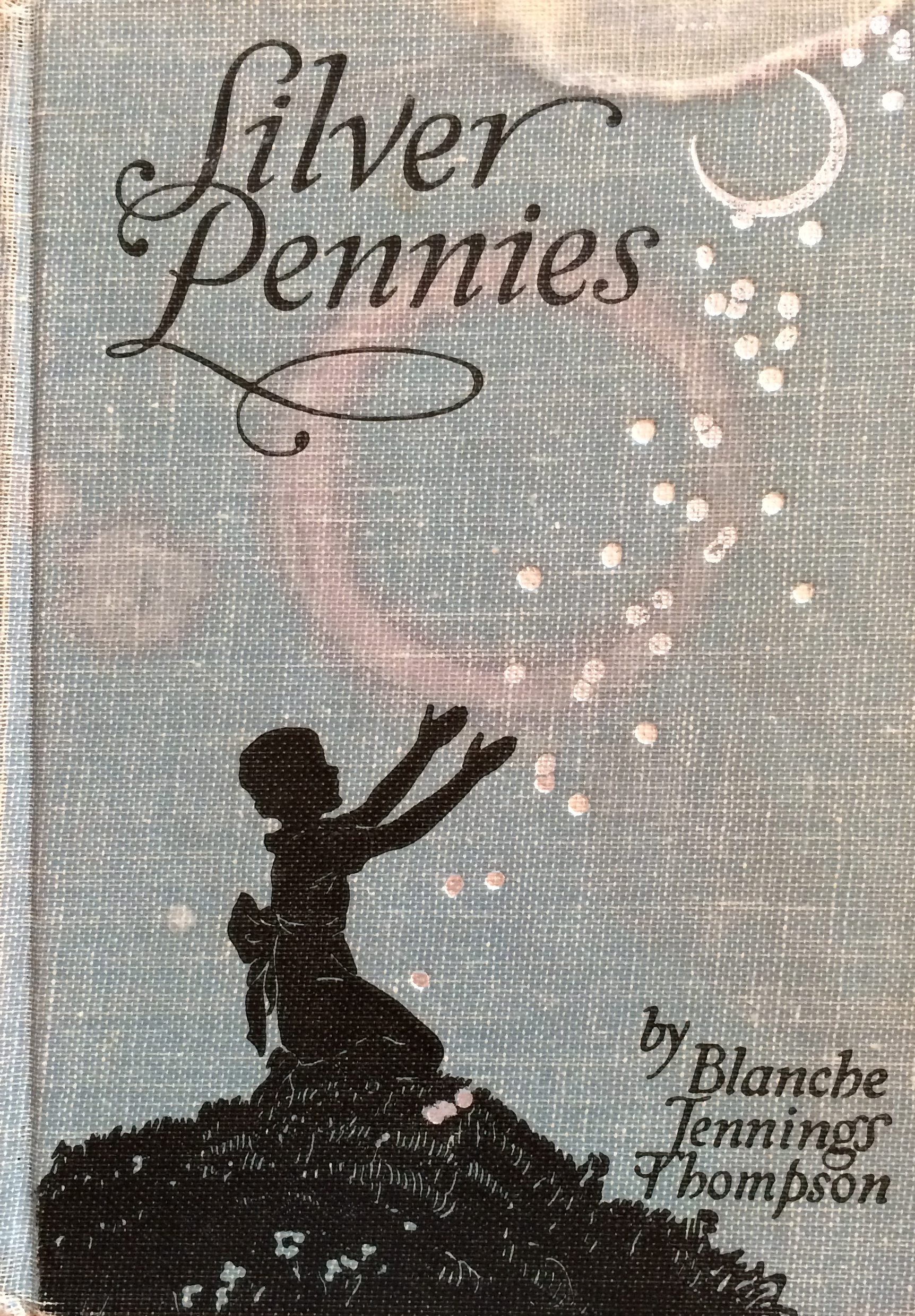
Silver Pennies My mother gave me this lovely little book of poems when I was five, and I circled the poems I liked and crossed out the ones I didn't.
Silver Pennies
My mother gave me this lovely little book of poems when I was five, and I circled the poems I liked and crossed out the ones I didn’t.
The Lonely Doll Learns a Lesson by Dare Wright Apparently some people find the Lonely Doll books creepy; I would never give up my  collection.
The Lonely Doll Learns a Lesson by Dare Wright
Apparently some people find the Lonely Doll books creepy; I would never give up my collection.

IMG_0011I asked my friends and colleagues which books they treasure most, and received some interesting responses.

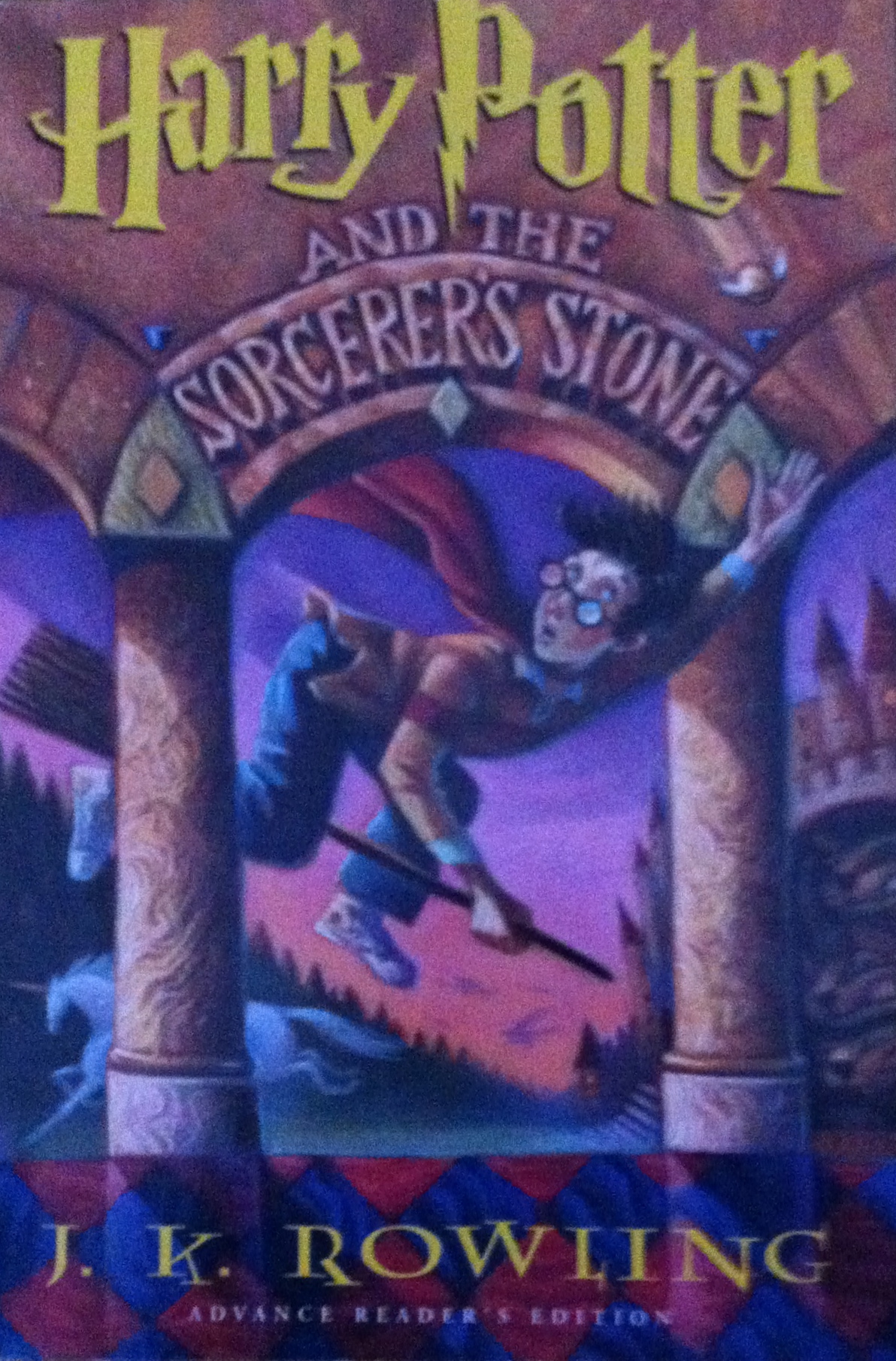
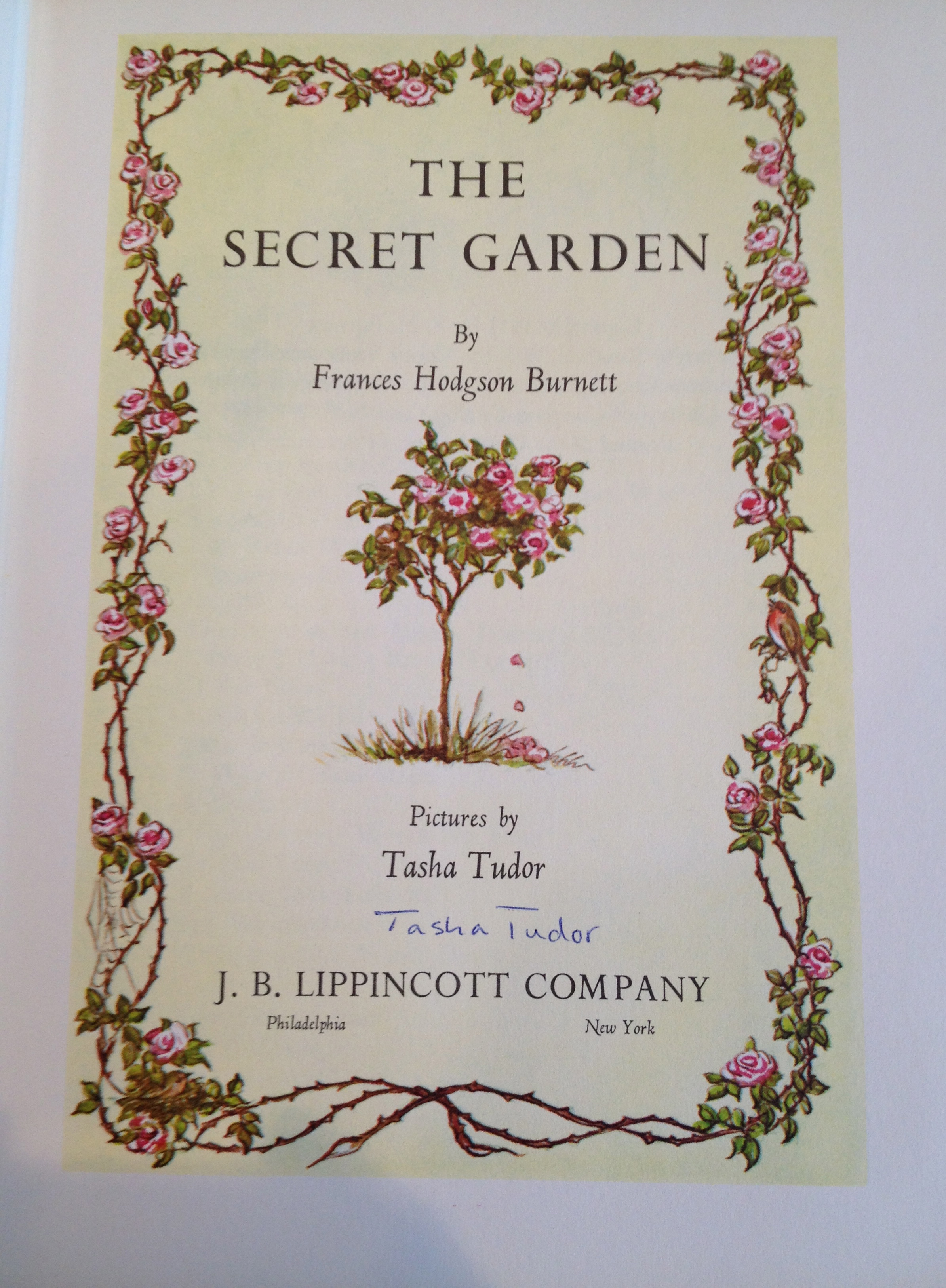
Sue chose her ARC of Harry Potter and the Sorcerer’s Stone, which she remembers reading on her porch to her family while on vacation in Michigan . . . she recalls her husband asking her not to read any more unless he was there! She could tell it was a classic from the first page. Molly is still sad she lost her inscribed copies of Laura Ingalls Wilder’s Littlephoto 1 House series, but still has a copy of Kahlil Gibran’s The Prophet, given to her by a beloved teacher and mentor 30 years ago. Ann is most attached to her copy of The Secret Garden, signed by Tasha Tudor, as well as “The Needlepoint Book: 303 Stitches, with Patterns and Projects by Jo Ippolito Christensen.  I purchased this one myself in the 80’s.  I threw the cover away a few years ago because it literally was torn to shreds.  I wish I could remember the cost.  Explanations and illustrations are wonderful in this book.  Of course, the projects are quite dated, but the stitches remain the same.  I saw the same version of the book on Etsy listed as “vintage” for $9.95.”

photo 1Most poignant was Kathy’s choice: Salvaged Pages,  a collection of diaries written by young people, ages 12 to  22, during the Holocaust, most of whom perished before their liberation. This is a book that should never go out of print.

What about you? Are there books in your library you would hate to lose?


Perfect Reading Weather

It’s currently -15 degrees in Chicago — and that’s at noon, with the sun shining. Yesterday I saw a Facebook post from Garrison Keillor’s bookstore in St. Paul, Minnesota, showing a digital thermometer reading -14 degrees, with the caption, “Dear Rest of the World, in Minnesota we call this ‘book weather’. Enjoy.” Thank you, Common Good Books, for giving voice to what I have always thought: the worse the weather, the better the day.

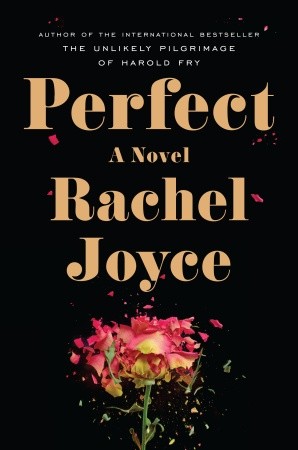
www.randomhouse-1I love to hibernate. If I am reincarnated as an animal, I would like to be a bear. The only problem is that bears are not literate, and I like to spend my hibernation time reading. On New Year’s Day (which is always a wonderful day to stay home in pajamas), I finished reading Rachel Joyce’s Perfect. I adored this lovely novel, and have been thinking about it ever since. Joyce tells two stories, in alternating chapters: the story of Byron, a young boy whose innocent childhood comes to an end when something happens on an ordinary morning on the way to school, and the story of Jim, a middle-aged man whose life is crippled by obsessive-compulsive disorder. The reader may or may not anticipate the way in which these two lives end up intersecting ( I didn’t!), but that doesn’t matter — the beauty of this book is in the characters. Perfect is one of the rare character-driven novels in which the plot is well-paced and full of surprises.

As I’ve said before, I have no problem with unlikable characters in literature. The best fiction helps us understand human nature, and unlikable characters are necessary for that. Still, it’s a real pleasure to read about lovable characters. By “lovable” characters, I don’t mean “endearing”; I mean characters that the reader grows to understand and love. There are no perfect characters in this book. They all make grave mistakes that have unforeseen and unfortunate consequences, but they are trying to do what they think is right. Byron and his friend James develop “Operation Perfect” to protect Diana, Byron’s mother, after she is involved in a potentially dangerous situation. Diana is a kind, fragile. and sensitive woman, married to a domineering husband, who is easily manipulated. (She is reminiscent of another sad and lovely English woman, Princess Diana  — am I reading too much into the fact that Rachel Joyce named her Diana?) She loves her children fiercely, but is ill-equipped to care for them — and Byron takes on the burdensome role of parent.

Whatever happened, he must never tell his mother what she had done. Of all the people to know, she was the most dangerous. He told himself this over and over while her fingers crept through his hair and the rain pattered on the leaves and the thunder grew tame.

Perfect is filled with ambiguity, which is part of what makes the book so haunting. Are some of the events imagined by the characters, or did they really happen? And does it matter if they actually occurred? Because, as Byron notes, “Within months, everything had changed, and the changes could never be put right. Nothing could atone for his mother’s mistake.” Jim knows that the obsessive rituals he is compelled to perform won’t prevent tragedy from striking, but his rational mind is overpowered by his need to compensate for what he sees as unpardonable sins: “How can he start again with Eileen? What about the rituals? . . . What she has no idea about is who he is, what he did in the past and all that he must continue to do to atone for that.” Did he really do anything unforgivable?

I’m looking forward to discussing this book in person and online — it raises many, many interesting questions about friendship, class, marriage, parents and children, guilt, truth . . . and perfection. As my first read of 2014, Perfect sets a high standard.

Book Club Spotlight — The Book Thieves

Some book clubs are very well organized. They have regularly scheduled meetings, choose a year’s worth of books at a time (sometimes according to a clever theme) , and assign a leader to every discussion.  That is not how my book club operates. We meet every six weeks or so, and the date is chosen via email poll. We don’t like to choose our books too far ahead, because who knows what terrific book we will all want to read six months from now?

9781594204784HThis year, I volunteered to serve as the secretary of our book club. (Or was I drafted? I can’t recall.) My performance has not been up to par, even by our book club’s relatively low standards. In fact, I neglected my duties so badly that one of our members seized control and organized our annual Christmas book swap. Because she is a very nice person, she did this in a kind and tactful way, sending me the following emails:

Email #1: Are we having a book exchange in December or did that get past us all? Just wanted to make sure I did not miss anything.

Email #2: Do you want me to send an email to the group and see if we could get an impromptu group together the week of the 10th? I am happy to work on that if you think that is fun.

I gratefully accepted the offer, and last week 12 of us gathered for our favorite book club tradition — the holiday book exchange, also known as book thievery. I know many other book club organize similar exchanges over the holidays, but I wonder if our club takes ours just a little more seriously. The element of thievery certainly adds to the drama (and the fun). One of our members is the self-appointed referee and makes sure that the “official” rules are followed.

Each member brings a wrapped book. It can be any book (hardcover or paperback) — a novel, biography, cookbook, or even a beautiful coffee table book. Once someone brought what was once euphemistically called a “marriage manual” — I’m told that book is still in the back of another member’s closet, waiting for the right opportunity to reappear. 51GHq5y52OL._SX200_Sometimes there are add-on items — an adorable Santa carrying a stack of books was very popular one year. Everyone takes a number (this year from 1 to 12), and #1 is the first to choose. #2 then can decide whether to choose another wrapped book or “steal” from #1 . . . and so on, up to #12, who has the final pick. I think this type of gift exchange is called a “Yankee swap”. Our group is very fond of stealing, and our referee has to enforce rules about the number of times a book can be stolen. One of our members spoke for all of us when she said:

The book exchange is definitely a highlight because I always find it interesting to see what books people choose to bring and what is the “hot” book/gift each year.  The stealing and maneuvering always makes me laugh!  I also like seeing the different iterations that turn up — magazines, book related gifts, and book/gift combos!

This year, we had a terrific selection of books to steal — I think the only thing they have in common is that they were all published in 2013:

  • The Goldfinch (Donna Tartt) — Two members brought copies, and both were repeatedly stolen.
  •  Wave (Sonali Deraniyagala) — Just named one of the 10 best books of the year by the New York Times.
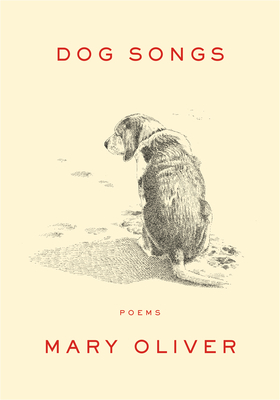
  • Dog Songs (Mary Oliver) and Dog Shaming (Pascale Lemire)
  • The Ocean at the End of the Lane (Neil Gaiman)
  • The Burgess Boys (Elizabeth Strout)
  • The Last First Day (Carrie Brown)
  • A Literary Christmas: An Anthology
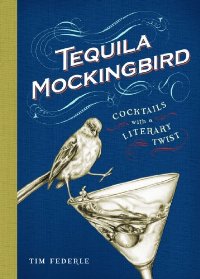
  • Tequila Mockingbird: Cocktails with a Literary Twist (Tim Federle) — I stole this one and I’m happy I did — Romeo and Julep, anyone?
  • This is the Story of a Happy Marriage (Ann Patchett) — My contribution!
  • The Conquest of Everest (George Lowe)
  • Subscription to Vanity Fair — Creatively packaged in a wine bag.

Not only did everyone go home with a new book, we agreed on our next three book club selections. We are all anxious to read The Goldfinch — any book that’s received such extraordinary acclaim is a perfect choice for us. Several of our members have read Sutton by J.R. Moehringer, and thought our husbands would enjoy it as well — so that’s what we will read for our couples’ get-together in February. And we are th_a2948c4fc82083353093e0133d3393f1_1364311155_magicfields_HB__BOOK_COVERIMAGE_1_1looking forward to discussing Alice McDermott’s Someone, the quiet and lovely story of an “ordinary” woman examining her life.

Our book club has been meeting (and stealing) since 1993. I asked our members to share their favorite memories of the past 20 years:

  • The evening when a husband and wife reviewed (together) The Great Gatsby — everyone came dressed in 1920s attire. He had read the book 59 times and was a Gatsby fanatic/expert!
  • The contentious discussion of Atlas Shrugged; some of the most vociferous opinions were expressed by those who had not made their way through that very long book.
  • The time when a member brought her sick infant to a meeting; as she said, “nothing comes between me and my book club!”
  • The discussion of Into Thin Air that was interrupted when a member received a call that her house was on fire.
  • The very thorough review of The Shipping News, a book that some members weren’t enthusiastic about at first but grew to appreciate.
  • The couples’ discussion of E.L. Doctorow’s The March, complete with a Union table with a blue tablecloth and a Confederate table with a gray tablecloth.
  • The field trip we took to Oak Park to visit Frank Lloyd Wright’s home and studio, after reading Loving Frank.

We are looking forward to the next 20 years of reading, friendship, and theft!

For information on Yankee swaps: www.giftypedia.com/Yankee_Swap Of course, you can make (and enforce) your own rules!

10 Books to Read After the Holidays

IMG_1716Winter has definitely arrived in Chicago — it’s 15 degrees (without the wind chill) and snow is on the ground. There is nothing more appealing than curling up on a comfortable couch with a good book — and possibly a blanket and a cup of hot tea. A roaring fire would be nice too, but we are having a problem with our fireplace. The chimney doesn’t seem to be drawing properly; every time we light a fire, the house gets very smoky. So I’ve just called our local chimney cleaning service, called  (I am not kidding) Ashwipe Chimney Sweeps. Anyway, I’m not going to be able to squeeze in much reading time over the next couple of weeks. There are Christmas presents to buy and wrap, meals to plan and cook, parties to attend, kids coming home on vacation. The bookstore would probably like it if I showed up and worked. And did I mention that my daughter is getting married three days after Christmas?

One of the best things about working in a bookstore is the endless supply of ARCs (advance readers’ copies) that we have piled in our basement. I probably shouldn’t tell you this, but we actually keep them in the bathroom. The store isn’t very big, and that’s really the only place they fit. I also have a backlog of electronic ARCs on my IPad. I have ARCs for books that will come out in June — no sense reading those now, because chances are I won’t remember the books very well by the time they’re published. So I try to read books that are either just published or soon to be published. Sometimes something comes along that has to be read immediately, because it’s so compelling — it might be a book that a friend or colleague absolutely loved, or one that called my name and displaced the others on my stack. Then I forget all about publication dates and read what I want.

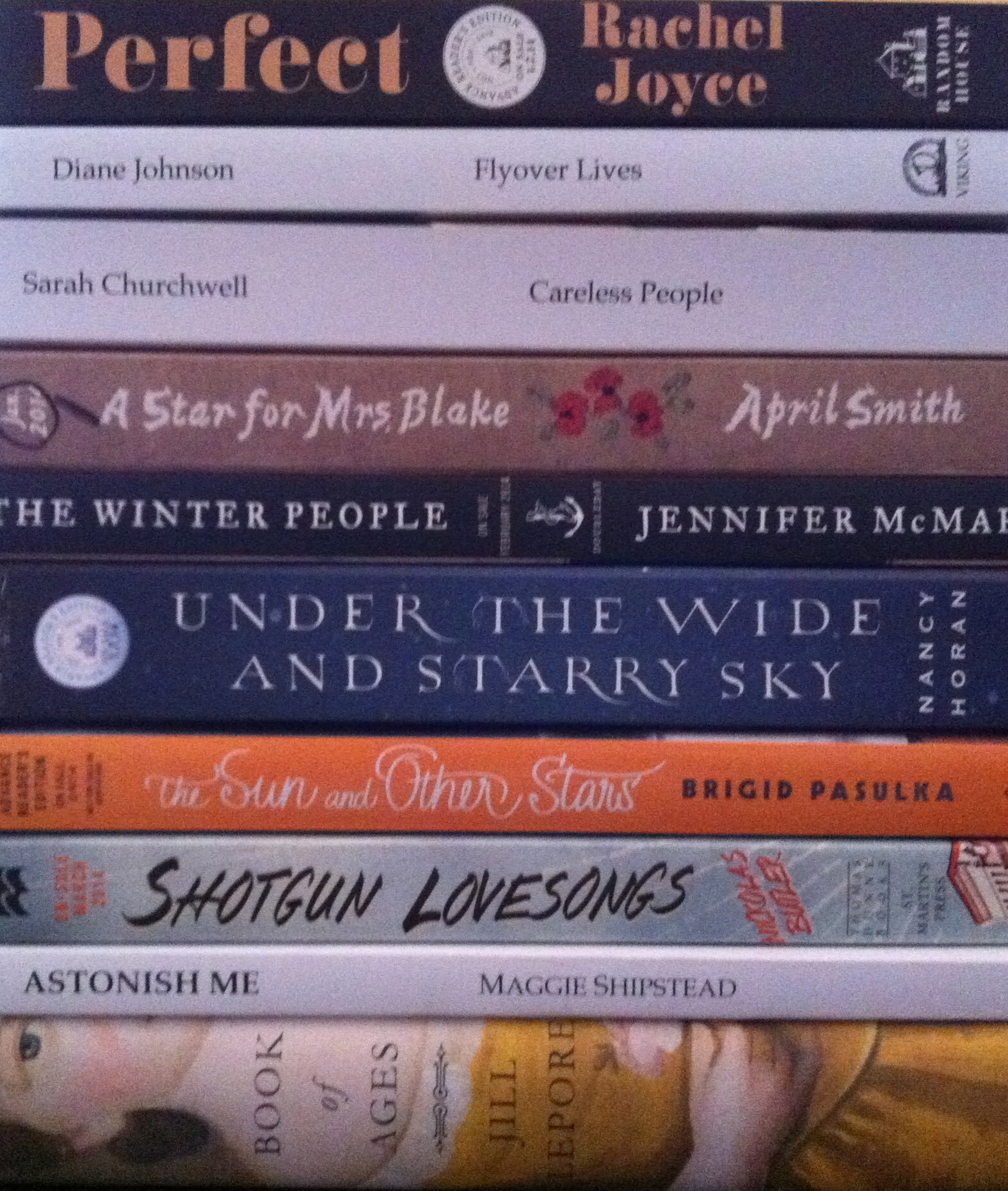
I have a pile of books I’m looking forward to reading in January and February. (Nine of them will be published during those months, and one — Book of Ages — is already out.) Any bets on how many I end up reading?

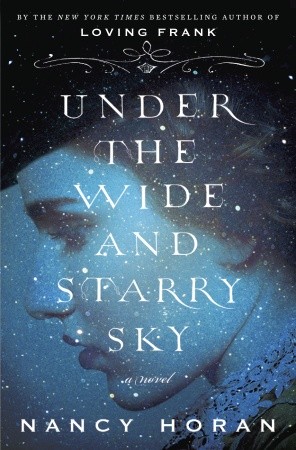
Nancy Horan's Loving Frank is one of my favorite works of biographical fiction. Her second novel is about another passionate love affair (Scottish writer Robert Louis Stevenson and his American wife, Fanny).
Nancy Horan’s Loving Frank is one of my favorite works of biographical fiction. Her second novel is about another passionate love affair (Scottish writer Robert Louis Stevenson and his American wife, Fanny).
Second novel by Chicago author Brigid Pasulka -- her first one was set in Poland; this one takes place in Italy.
Second novel by a wonderful Chicago author, Brigid Pasulka — her first one was set in Poland; this one takes place in Italy.
Debut novel by a Wisconsin author -- several colleagues have read this small-town story and loved it.
Debut novel by a Wisconsin author — several colleagues recently read this small-town story and loved it.
Book of Ages was a finalist for the National Book Award in nonfiction. I'm looking forward to reading about Jane Frankliln -- Benjamin Franklin's youngest sister and a brilliant person in her own right. (Also, a mother of 12!)
Book of Ages was a finalist for the National Book Award in nonfiction. I’m looking forward to reading about Benjamin Franklin’s youngest sister — a brilliant writer and commentator in her own right, and the mother of 12.
F. Scott Fitzgerald called Tom and Daisy Buchanan "careless people". This book tells the surprising story behind The Great Gatsby.
F. Scott Fitzgerald called Tom and Daisy Buchanan “careless people”. This book tells the surprising true story behind The Great Gatsby.
Darker than The Unlikely Pilgrimage of Harold Fry, Perfect is about a young boy whose view of the world is shattered.
I’m told that Perfect is darker than The Unlikely Pilgrimage of Harold Fry. It’s about a young boy whose view of the world is suddenly shattered.
Five  World War I Gold Star mothers travel to Europe to say final goodbyes to their sons.
Five World War I Gold Star mothers travel to Europe to say final goodbyes to their sons.
Diane Johnson explores her Midwestern roots in this memoir -- and she'll literally be returning to the Midwest as well; she visits Lake Forest in late January.
Diane Johnson explores her Midwestern roots in this memoir — and she’ll literally be returning to the Midwest as well; she visits Lake Forest in late January.
I adored Maggie Shipstead's first novel, Seating Arrangements. Her new novel is about the world of professional ballet.
I adored Maggie Shipstead’s first novel, Seating Arrangements. Her new novel is about the world of professional ballet.
A ghost story set in Vermont -- right up my alley. Chris Bohjalian liked it and I'm betting I will too.
A ghost story set in Vermont — right up my alley. Chris Bohjalian liked it and I’m betting I will too.