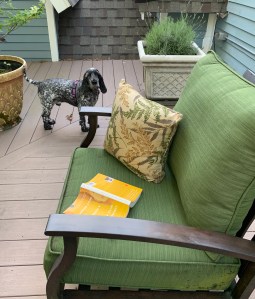
Every year, summer reading lists suggest “beach reads” you’ll want to “dive into”, the “hottest” books that are “making waves”. Dozens and dozens of books are touted as “must reads” for your beach bag or suitcase. The World Economic Forum takes a data-driven approach to summer reading recommendations, analyzing 67 lists and presenting what it calls “the most statistically sound summer reading list on the internet.” The 45 books on this list are almost all fiction written by women, and almost all were published in the last six months.
 The World Economic Forum recommends some pretty good books — City of Girls by Elizabeth Gilbert (#1 on the list), The Most Fun We Ever Had by Claire Lombardo, Fleishman Is In Trouble by Taffy Brodesser-Akner — as well as The Nickel Boys by Colson Whitehead (#2 on the list), probably the most acclaimed book of the summer. (I haven’t read it yet — I’m saving it for my vacation this month.)
What this list of the summer’s “most-endorsed reads” doesn’t include are five of my recent favorites:
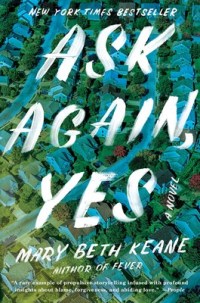 Ask Again, Yes (Mary Beth Keane) — I couldn’t love a book any more than I loved Ask Again, Yes. Kate Gleeson and Peter Stanhope grow up next door to each other in New York City suburb, both the children of Irish immigrants in the police force. A tragic incident divides the two families, but Kate and Peter remain friends and eventually fall in love. I don’t want to reveal any more about the plot, but I will say that this is a grace-filled story of love and forgiveness that will stay with you.
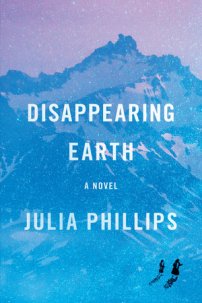 Disappearing Earth (Julia Phillips) — “This should win the Pulitzer!” a friend exclaimed at a recent book club meeting. I agree — Disappearing Earth is definitely prize-worthy. Set in Kamchatka, a peninsula in northeastern Russia, this highly original and beautifully written novel explores the lives of girls and women, both “native” and Russian, in this remote and tension-filled area. Each chapter is a short story, introducing new characters, but is also a piece of a puzzle. What happened to the young girls who disappeared in the opening pages? You won’t be able to put the book down until the final chapter. Maybe this is a stretch, but it reminded me of The Girl With the Dragon Tattoo — without all the confusing parts.
 Miracle Creek (Angie Kim) — One of the book clubs I moderate chose this as their favorite book of the past few years. It’s a terrific page-turner, with plenty to discuss (experimental medical treatments, raising special needs children, the experience of immigration, cultural differences, marital secrets). When a hyperbaric therapy chamber explodes, killing two people, law enforcement quickly recognizes this was no accident and accuses the chamber’s owner, a Korean immigrant. But could it have been the mother of a patient, or perhaps one of the fanatics who had been demonstrating against the controversial therapy? A series of unreliable narrators provide their version of events, leading to a surprising conclusion.
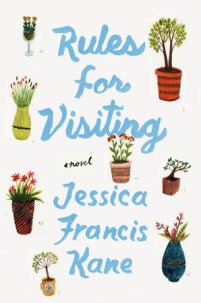 Rules for Visiting (Jessica Francis Kane) — May Attaway is a forty-year-old single woman, working as a gardener at a university and living with her eighty-year-old father. When a professor wins a prize for writing a poem about a tree that May planted, the university rewards her with thirty days of paid leave. Realizing she’s neglected her friendships, May leaves her comfort zone and reconnects with four old friends. This is a lovely jewel of a book, filled with warmth and wit, that will remind you of the importance of friends, good books — and plants.
On the World Economic Forum’s “list of lists” and very good:
 The Most Fun We Ever Had (Claire Lombardo) — If you like dysfunctional family dramas (and I do!), this is for you. It’s one of the best of its kind. Marilyn and David, married (mostly happily) for forty years, have raised four very different adult daughters. Their world is rocked when a teenage grandson, given up for adoption, enters their lives. Chicagoans, take note: this absorbing novel is set in our city and the suburbs.
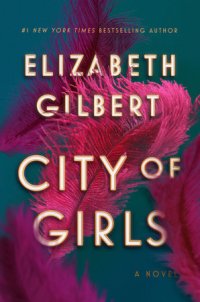 City of Girls (Elizabeth Gilbert) — Maybe you loved Elizabeth Gilbert’s bestselling memoir, Eat Pray Love; maybe you hated it. It doesn’t matter, because you would never guess they’re written by the same author. I suppose you could say they both focus on the same theme — the freedom of women to live as they choose — but the style and tone couldn’t be more different. City of Girls covers seventy years in the life of Vivian Morris, who comes to New York as a naive college dropout in 1940 and becomes a successful costume designer as well as a sexual adventurer. What I enjoyed most about this fun book was the dialogue (plenty of witty repartee), the eccentric characters, the clothes, and Vivian’s unexpected friendship with a damaged veteran.
 Fleishman Is in Trouble (Taffy Brodesser-Akner) — Recently separated from his workaholic wife, Rachel, Toby Fleishman is enjoying a robust social life when Rachel vanishes, leaving him with their two children. This clever and insightful debut novel both satirizes and scrutinizes contemporary marriage. It bogged down for me a bit in the middle — I got tired of Toby’s exploits in the world of dating apps — but ultimately redeemed itself with a satisfying, and unexpected, ending. Reviewers have compared this book to Where’d You Go, Bernadette?, and I can see why.
I hope August is a wonderful reading month for you!
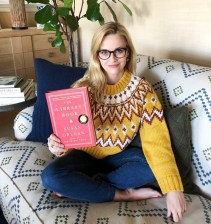 I don’t think authors need me to criticize them. I assume that by the time their books are published, they’ve received a lifetime’s worth of criticism, from professors, classmates, editors, and “sensitivity readers”. Lorentzen’s basic point, which is that both readers and writers deserve “painstaking appraisals” of serious books is a good one. I agree with him that much of what now passes as literary journalism is lightweight — for example, lists of “reading recommendations” with blurbs lifted from jacket copy, Instagram photos of celebrities with books as props, and five-minute TV interviews in which it’s obvious that interviewer hasn’t read the author’s book. But if a photo of Reese Witherspoon reading The Library Book inspires her fans to read Susan Orlean’s fascinating narrative about public libraries and their place in our society, what’s wrong with that?
 Objecting to what he calls “a consumerist vision of reading”, Lorentzen says, “I’m skeptical of the popular and the commercial.” Yes, bestselling books can be poorly written and formulaic, but so are many “literary” books. It seems almost too obvious to state that many bestsellers are popular for a very good reason — they’re terrific books by any standard. For example, the current New York Times bestseller list includes Circe by Madeline Miller, A Gentleman in Moscow by Amor Towles, and Being Mortal by Atul Gawande — books beloved by both critics and ordinary readers.
 The Island of Sea Women by Lisa See
 Maybe You Should Talk to Someone: A Therapist, Her Therapist, and Our Lives Revealed by Lori Gottlieb
 The Storm on Our Shores: One Island, Two Soldiers, and the Forgotten Battle of World War II by Mark Obmascik
 Southern Lady Code by Helen Ellis
 Nanaville: Adventures in Grandparenting by Anna Quindlen
 According to multiple Internet sources, Frank Zappa came up with the saying, “So many books, so little time.” Well, it turns out that Zappa didn’t coin this phrase; it comes from a pamphlet called So Many Books, So Little Time, What to Do? published in 1892 by a British organization called the National Home Reading Union that aimed to guide middle-class and working-class citizens in their “reading practices and choices.” Frank Zappa did say some other smart things, such as “Communism doesn’t work because people like to own stuff” and “A mind is like a parachute. It doesn’t work if it is not open.” He also said, “Drop out of school before your mind rots from exposure to our mediocre educational system. Forget about the Senior Prom and go to the library and educate yourself if you’ve got any guts” and “Tobacco is my favorite vegetable” Well, keep in mind this is a person who named his children Moon Unit and Dweezil.
 The Honey Bus: A Memoir of Loss, Courage and A Girl Saved by Bees by Meredith May
 Save Me the Plums: My Gourmet Memoir by Ruth Reichl
 An American Summer: Love and Death in Chicago by Alex Kotlowitz
 Henry, Himself by Stewart O’Nan
 The Dreamers by Karen Thompson Walker
 The Huntress by Kate Quinn
 Sadie by Courtney Summers
 The Age of Light by Whitney Scharer
 The River by Peter Heller
 Little Faith by Nickolas Butler
 A list of books with “winter” in the title would be fun — The Dakota Winters, by Tom Barbash , is a brand-new and absorbing novel about growing up in the famous Dakota apartment building in New York, with John Lennon as a neighbor, and The Winter Soldier, by Daniel Mason, is terrific historical fiction about an Austrian medical student sent to a remote field hospital during World War I. And how about Isabel Allende’s In the Midst of Winter, a beautiful novel about three characters whose lives collide during a Brooklyn blizzard, and Robin Oliveira’s Winter Sisters, a page-turner set in 19th century Albany, New York that features a former Civil War surgeon, Mary Sutter (last seen in My Name is Mary Sutter)? My favorite “winter” novel has to be The Long Winter, which I think is the best of Laura Ingalls Wilder’s Little House series.
 I really love books about whaling. I’m one of those rare readers who not only enjoyed Moby Dick but didn’t skip the long passages about whaling techniques. Nathaniel Philbrick’s In the Heart of the Sea, narrative nonfiction about shipwrecked whalers, is one of my favorite books. I’m also fascinated with indigenous people who live in remote areas, so The Last Whalers: Three Years in the Far Pacific With a Courageous Tribe and a Vanishing Way of Life, by Doug Bock Clark, hit my sweet spot. I think anyone who enjoys excellent narrative nonfiction will find this book fascinating, and hard to put down. The New York Times review says, it “has the texture and coloring of a first-rate novel”, and I agree.
 When a lot of people whose opinions you respect keep telling you to read a book, you should listen to them. For some reason, I was dubious about Elena Ferrante’s acclaimed Neapolitan Novels, but after watching My Brilliant Friend on HBO, I decided to give the series another try — and now I’m hooked. I wish someone had told me that these books are an Italian version of A Tree Grows in Brooklyn — but even better, because the story just keeps going.
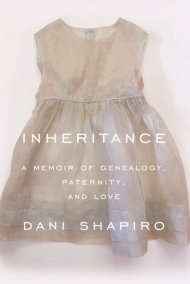 For some memoir authors, one book isn’t enough. An article about the increasing number of “serial memoirists” explores this phenomenon:
  Bill Bryson, watch out — Jennifer Traig is encroaching on your territory. In Act Natural: A Cultural History of Misadventures in Parenting, she delves deep into the history of Western child-rearing, starting with ancient Rome, juxtaposing detailed research with scathing wit. In order to keep their babies from stumbling into “bubbling pots of gruel”, medieval parents swaddled their babies tightly and hung them from hooks on the hall, “like purses on a bathroom stall.”
 I can never resist a book about books, especially one about children’s books, so I couldn’t wait to read The Enchanted Hour: The Miraculous Power of Reading Aloud in the Age of Distraction, by Meghan Cox Gurdon, the children’s book critic for the Wall Street Journal. (Doesn’t that sound like a dream job?) She shares fascinating data from the Reading and Literacy Discovery Center at Cincinnati Children’s Hospital, among other research centers, that prove what “we enthusiasts have long suspected is true: reading aloud really is a kind of magic elixir.”
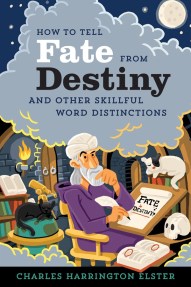 I am such a word nerd that I actually enjoy reading books about grammar and vocabulary. I don’t know how many people like me exist, but there must be enough of us to justify publishing these books. How to Tell Fate From Destiny: And Other Skillful Word Distinctions by Charles Harrington Elster and Dreyer’s English: An Utterly Correct Guide to Clarity and Style by Benjamin Dreyer (copy chief of Random House). If you were the kind of kid who liked to read the dictionary, you’ll enjoy both of these books, which are both full of humor as well as useful information.
 You might think a certain category of book is not for you, but then you read one and change your mind. I didn’t think I would like a graphic memoir, but I absolutely adored Hey, Kiddo: How I Lost My Mother, Found My Father, and Dealt With Family Addiction, by Jarrett J. Krosoczka. It’s unlike anything I’ve read before, and humanizes the opioid crisis in way no other book I’ve read on the subject has been able to do.


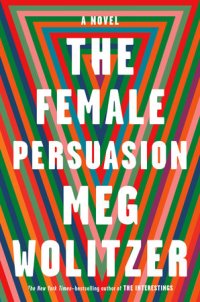 I won’t bore you with long-winded complaints about the weather, but I will mention that it snowed and rained all weekend — which meant that I had the perfect excuse to stay home and become completely absorbed in The Female Persuasion by Meg Wolitzer.
 Not everyone is going to love Kate Greathead’s debut novel, Laura and Emma, but I’m crazy about it. Not much happens; it’s a character study of a woman named Laura, who comes from a very privileged background in New York but has never felt that she fits in. When she gets pregnant by accident, she raises her daughter, Emma, on her own. The writing is just perfect; Kate Greathead has a unique voice that resonated with me. It’s perfect for readers who enjoyed Emily, Alone by Stewart O’Nan, Someone by Alice McDermott, or My Name is Lucy Barton by Elizabeth Strout. These books are the opposite of page-turners, but I found them more compelling than any thriller.
 Prairie Fires: The American Dreams of Laura Ingalls Wilder by Caroline Fraser successfully combines the true story of Wilder’s difficult life and American expansion in the West in an original and captivating narrative. This meticulously researched book — which just won the Pulitzer Prize for biography — will fascinate not only Little House on the Prairie fans but anyone with an interest in the complicated history of pioneers and homesteaders.
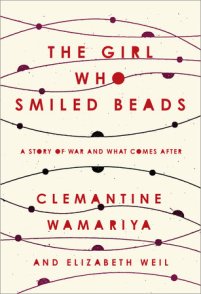 In one of the most moving memoirs I’ve ever read, Clemantine Wamariya, a very young survivor of the Rwandan genocide, tells her heartbreaking story of loss and survival. The Girl Who Smiled Beads: A Story of War and What Comes After is reminiscent of A Long Way Gone by former child soldier Ismael Beah. With her older sister, six-year-old Clemantine fled her home and wandered throughout Africa in search of safety, finally receiving asylum in the United States. As a young adult, she tries to come to terms with the tragedy that shaped her life:
 I absolutely adored The Friend by Sigrid Nunez, about a writer who loses her dearest friend but finds solace when she becomes the reluctant owner of the Great Dane he has left behind. It’s a lovely, unsentimental story about grief, friendship, literature, and the bond between people and their pets, filled with the narrator’s thoughts on reading and writing. If you love dogs and books, you’ll savor this jewel of a book. I promise you that it’s not sappy. This will definitely make my list of favorite novels at the end of the year.
 April is National Poetry Month!
 If your idea of reading poetry is your sophomore English teacher leading the class through a grim line-by-line analysis of “Ode on a Grecian Urn”, I suggest you pick up a copy of Matthew Zapruda’s Why Poetry — along with Devotions: The Selected Poems of Mary Oliver. These books will show you the joy of reading a poem without viewing it as a coded message.
 Believe it or not, a century or so ago, poetry was popular, published every day in newspapers and magazines. Consider Margaret Fishback , the real-life inspiration for the title character in Kathleen Rooney’s absolutely delightful Lillian Boxfish Takes a Walk, Fishback, a highly paid advertising copywriter long before the days of Madmen, published four bestselling books of poetry, and her clever verse, amusing and easy to understand, was published in Vanity Fair, Good Housekeeping, Harper’s Bazaar, The New Yorker, The Wall Street Journal, The New York Times, to name just a few. Lillian Boxfish, just out in paperback, is a charming chronicle not only of the life of a remarkable woman but of six decades of change in Lillian’s beloved New York City.
 Distracted Driver Awareness Month
 Pets Are Wonderful Month, Prevention of Cruelty to Animals Month, and National Canine Fitness Month
 National Food Month (also, National Fresh Celery Month and National Soft Pretzel Month)
 My favorite book this year (so far):
 My favorite novel so far this year:
 For anyone who loved When Breath Becomes Air:
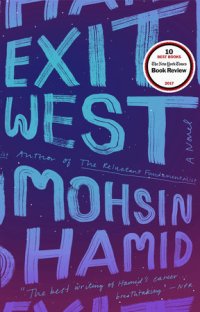 2017 Man Booker Prize finalist, new in paperback:
 To keep on your bedside table:
 For fans of domestic thrillers:
 The shortest hardcover book I’ve ever read: (144 pages, lots of white space):
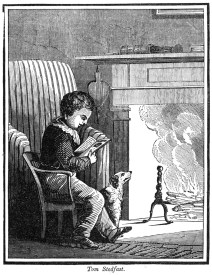 And indeed, what is better than to sit by one’s fireside in the evening with a book, while the wind beats against the window and the lamp is burning?
 I’m currently reading and enjoying Manhattan Beach — but it’s very different from Jennifer Egan’s earlier novels, which experimented with form and content. According to an article in the New Yorker, “
 On the other hand, I loved Alice McDermott’s The Ninth Hour. McDermott is one of my very favorite writers, and I’ve had to wait four years for The Ninth Hour. (Someone came out in 2013). Every time I read one of her books, I think, This one is her best, and that’s exactly what went through my mind when I finished The Ninth Hour. In Brooklyn, about one hundred years ago, a young husband commits suicide, leaving behind his pregnant wife. His widow, Annie, and his daughter, Sally, are taken in by nuns in the nearby convent. Sally marries a local boy, Patrick, and their children and grandchildren are the narrators of this beautiful and poetic novel.
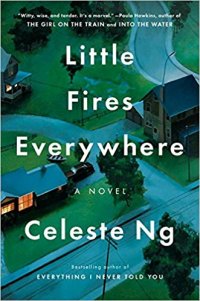 I can’t stop raving about Little Fires Everywhere. It’s hard to believe that Celeste Ng could top Everything I Never Told You, her debut novel, but I think she has. In many ways, the books are similar. Everything I Never Told You starts with the mysterious death of a teenager; Little Fires Everywhere starts with a mysterious house fire. Both novels are concerned with the secret lives of teenagers and clashes between cultural groups. But Little Fires Everywhere adds even more layers of depth, with more characters and subplots. Don’t start this book until you have plenty of reading time ahead of you — you won’t want to stop. By the way, Little Fires Everywhere was Reese Witherspoon’s September pick for her book club. She often chooses terrific books — Alice Hoffman’s The Rules of Magic, which is next up in my TBR pile, is her selection this month.
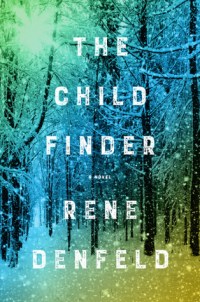 One book I haven’t seen on any of the fall preview lists is Rene Denfeld’s The Child Finder, and I don’t know why, because it’s one of the best books I’ve read all year. If anyone thought Denfeld was a one-hit wonder (The Enchanted) — don’t worry, The Child Finder is spectacular. The “child finder” of the title is Naomi, a private investigator who has a mysterious gift for finding missing children — and who was once a missing child herself. A heartbroken couple hires her to find their little girl, Madison, lost when they were cutting down a Christmas tree in Oregon’s Skookum National Forest. As Naomi searches for Madison, she comes closer to discovering the secrets of her own past. Echoes of fairy tales resound throughout this gorgeous novel, reminding the reader of the power of stories and imagination to heal and redeem. I can’t wait to meet the author at a Lake Forest Book Store luncheon this Wednesday.
 Almost every year, when the nominees for the major literary prizes (Man Booker, National Book Award, and Pulitzer) are announced, I am bewildered. There’s always at least one book that I think is a masterpiece that the panels overlook, and there’s always at least one book that I think is mediocre that makes the shortlists.
 Wow — that’s a lot of summer reading. It seems like the Poetry judges get off easy! The judges are authors, booksellers, librarians, and critics. This year’s Fiction judges are authors Alexander Chee, Dave Eggers, Karolina Waclawiak, and Jacqueline Woodson (chair), and bookseller Annie Philbrick. Last week, they chose ten novels that include works by established authors and past winners (Manhattan Beach by 2001 finalist Jennifer Egan, to be published October 3, and Sing, Unburied, Sing by 2011 winner Jesmyn Ward) as well as by debut authors (The Leavers by Lisa Ko, A Kind of Freedom by Margaret Wilkerson Sexton, Barren Island by Carol Zoref).
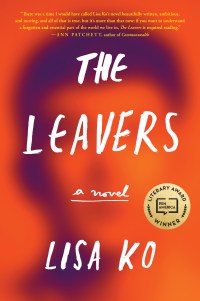 The Leavers and Pachinko (by Min Jin Lee) — but it’s hard to believe that those two novels are “the best of the best.” I enjoyed them both, but do they deserve to be National Book Award nominees?
 The Leavers, about a Chinese immigrant woman and the son she abandons, also addresses cultural differences. It’s a worthwhile and enjoyable novel — but is it better than Little Fires Everywhere by Celeste Ng, or Everybody’s Son by Thrity Umrigar? Those excellent novels also concern themselves with adoption, race, and class. Actually, so does ‘Round Midnight by Laura McBride, which will definitely make my list of favorite novels at the end of 2017. McBride brilliantly weaves together the stories of several characters with Las Vegas as the backdrop. The writing is gorgeous and the story is perfectly paced and constructed, with surprises at every turn.
 Julia Glass’s A House Among the Trees is another of my favorites that didn’t make this year’s National Book Award longlist. Inspired by the life and career of Maurice Sendak, this compassionate and insightful novel explores art, truth-telling, and loyalty, while telling a well-plotted story. Glass won the National Book Award for her debut novel, Three Junes, in 2002. surprising the literary community. According to an article in New York magazine titled “Cinderella Story,”:
 Here’s the 2017 longlist for the National Book Award in Fiction — cast your vote, and we’ll see what happens in November. And if you’ve read any of those, I’d love to know what you think.
 Books on the Table