Fallout — Book Review (and Giveaway!)

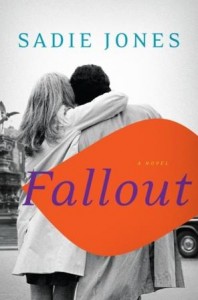
FalloutI will read fiction about almost any topic, as long as the story, the characters, and the writing engage me. Certain topics are shoo-ins — I can’t resist books about boarding schools and colleges; I’m fascinated by novels that have a medical angle; and I gravitate towards fiction about World Wars I and II. Other subjects don’t intrigue me in the least, but that doesn’t stop me from reading about them. I can’t think of a subject I’m less interested in than college baseball, but I absolutely loved Chad Harbach’s The Art of Fielding. Because, of course, The Art of Fielding isn’t “about” baseball. Westish College baseball is the vehicle Harbach uses to develop the relationships among his characters. Similarly, Maggie Shipstead’s Astonish Me is “about” professional ballet — but what engaged me was the story of the characters’ struggles to come to terms with their limitations. Learning a little bit about ballet was a bonus.

I’m an avid theatergoer, so it was with high hopes that I picked up Fallout, by Sadie Jones. The novel is set in England during the 1960s and 1970s, focusing on four young people struggling to make it in the world of theater: Luke, a playwright, Paul, a producer, Leigh, a stage manager, and Nina, an actress. Love triangles ensue — Luke, Paul, and Leigh; Luke, Nina, and Tony, an older theater producer. Clandestine love affairs destroy long friendships and working collaborations. The novel is painstakingly constructed, unfolding at a steady pace and returning always to Luke, the protagonist.

Luke is the son of an alcoholic and neglectful father and a mentally ill mother who has been hospitalized during most of his childhood. He has an artist’s sensibility from an early age, with intellectual curiosity and an intense drive to succeed. He writes journal entries, poems, and plays (before he has ever seen one performed on stage):

He read anything, everything, and then his Shakespeare again. And again . . . He watched all the plays on the BBC, wrote down the names of the playwrights and transposed the dialogue in a high-speed scrawl, not looking at the page . . . The life inside him was tearing him up; writing himself inside out in lined-paper notebooks, rushing and looking and working and moving but knowing all the time that he was just staying still.

The reader knows from the prologue that Luke will become a success. What the reader doesn’t know is how he achieves his success, and the fates of his friends and lovers. The most interesting parts of the book, for me, were about Luke as a creator of plays and about the experience of being part of a theatrical production. Jones beautifully describes Nina’s reaction to seeing the audience respond to Luke’s first hit play:

And then the first laugh; a scattered, surprised sort of laugh, moving from the front of the audience to the back as if it were asking permission, and not quite reaching them. She looked at Luke again. He had dug his face further into his hands, hunched down in his seat. Then there was another laugh — this one quick and shocked — quite loud and from the whole theatre together. It was as if the audience had decided as one how they felt, from then on there was a batting back and forth between the actors and the watchers, like percussion; beat, line, laugh, line, laugh, beat and the play came to life.

Luke’s plays come to life in Fallout, but the characters never really came alive for me — especially Paul and Leigh. In one scene, Leigh protests against the misogyny she perceives in a play produced by Tony (and starring Nina), but, disappointingly, her character becomes little more than a love interest until much later in the book.  Luke is certainly the most well-developed character, but I never warmed up to him. Nina, the damaged product of a manipulative stage mother, shows promise as a well-rounded character but ends up as a stereotypical victim who can’t accept that she deserves happiness. Tony, her cruel and abusive husband, is a villain with no redeeming qualities except the love of theater: “Luke saw that they loved theatre, and cared for the plays and helpless as he was in his hatred of Tony as Nina’s jailor he could not help but admire his incisive mind. He had a rare talent; he knew what worked.”

There’s a certain grim humorlessness in this novel; I found myself wishing for some comic relief. I recall reading somewhere that no one in a Chekhov play is ever happy, and this book reminded me a bit of a Chekhov play. (There’s even an aspiring actress named Nina in Chekhov’s The Seagull.) The tone of the book surprised me; it’s very different from Jones’s last book, The Uninvited Guests, a clever comedy of manners that takes place in an Edwardian country house. The Uninvited Guests is filled with black humor, and the pace moves briskly. I applaud Jones for trying something different and perhaps more ambitious with Fallout. I haven’t read her first two books yet — The Outcast and Small Wars, both set in the 1950s and both very well-received.
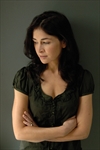
Sadie JonesSadie Jones, the daughter of an actress and a writer, worked as an unsuccessful screenwriter for 15 years before becoming a novelist. Her debut novel,  The Outcast, won the prestigious Costa Award for a first novel in 2008. What kept her going, she told the London Telegraph, were “tales of writers such as Mary Wesley and J.K. Rowling who became successful after years of struggle . . . Now it’s nice to be someone else’s hopeful story.”

Fallout received excellent reviews in two London newspapers, the Guardian (“Fallout: Sadie Jones at the Peak of Her Powers”) and the Independent (“a hugely enjoyable contribution to the backstage genre”).

The publisher, HarperCollins, has generously provided me with an extra copy of Fallout. If you’d like to receive it — along with a copy of The Uninvited Guests — please write a brief comment below about why you’d like to receive the books. I’ll pick a name out of the proverbial hat. U.S. entries only, please.

I read this book as part of a blog tour. To visit more stops on the tour, click here.

tlc logo


Essentialism: What Really Matters

coverBeware the barrenness of a busy life.
Socrates

Tell me, what is it you plan to do
With your one wild and precious life?
Mary Oliver

I’ve always been wary of books that claim they will “change your life”. Books certainly can change your life, but in my experience the books that have an enormous impact are books that sneak up on you. They aren’t commercially packaged to change your life, but somehow they do. They make you understand other people in a way you never did before. In her brilliant collection of essays, The Empathy Exams, Leslie Jamison says, “Empathy isn’t just something that happens to us . . . it’s also a choice we make: to pay attention, to extend ourselves.” Reading is one way we leave ourselves behind and consider life from another person’s point of view.

I believe that one of the main reasons to read — aside from pure enjoyment and escape — is to develop empathy — “to get inside another person’s state of heart or mind”, as Jamison says. And when we understand others, we understand ourselves better too. Books whose purpose is to help us understand and improve ourselves have always seemed a little simple-minded and self-indulgent to me.

So when I picked up Greg McKeown’s Essentialism: The Disciplined Pursuit of Less, I had low expectations. I imagined I’d scan it, as a courtesy to the publicist who sent it to me, and set it aside. Instead, I read it in one sitting, underlining and turning down pages as I read. The book resonated with me in a way that no business book ever has. (The book is categorized as “business & economics/personal success; it’s a toss-up whether to shelve it under Business or Self-Help.)

McKeown’s book shows us how to shape a life that is filled with meaningful activity. The book doesn’t advocate that we abandon our electronic devices, and it doesn’t provide tips for time management or organization.  It’s a philosophical guide to setting priorities in life. McKeown asks:

What if we stopped celebrating being busy as a measurement of importance? What if instead we celebrated how much time we had spent listening, pondering, meditating, and enjoying time with the most important people in our lives?

Appropriately for its topic, Essentialism is a short, concise book. It contains 20 brief chapters, each the length of a magazine article. Every chapter opens with a quotation that epitomizes the chapter; for example, the quote at the beginning of the chapter entitled “Escape: The Perks of Being Unavailable”, by Pablo Picasso, states “Without great solitude no serious work is possible.”

McKeown refers to the “Way of the Essentialist”, a phrase that grates on me because it sounds  New-Agey and pseudo-spiritual. But I do like his description of what the path to Essentialism is:

The way of the Essentialist is the relentless pursuit of less but better . . . it isn’t about setting New Year’s resolutions to say “no” more, or about pruning your in-box, or about mastering some new strategy in time management. It is about pausing constantly to ask, “Am I investing in the right activities?” There are far more activities and opportunities in the world than we have time and resources to invest in. And although many of them may be good, or even very good, the fact is that most are trivial and few are vital. The way of the Essentialist involves learning to tell the difference; learning to filter through all those options and selecting only those that are truly essential.

Throughout the book, McKeown uses concrete examples that illustrate how companies and individuals have successfully applied Essentialist principles:

  • Making trade-offs: Southwest Airlines cutting what were once considered essential services
  • Adhering to a mission statement: Johnson & Johnson reacting to the Tylenol tampering emergency
  • Depending on a routine: Michael Phelps’s training schedule
  • Discerning what really matters in a situation: Nora Ephron’s approach to journalism

If I’m starting to sound like an evangelist for Essentialism . . . well, maybe I am. I just bought five copies to give to my children and their significant others. Usually, I try very hard not to foist books on my family!

One of my favorite mantras in the book, which has  already been helpful to me in quite a few situations, is: “If it’s not a clear yes, it’s a clear no.” How many times have I said “yes” to something that I wasn’t completely enthusiastic about, and then regretted it later? Another little kernel of wisdom is: “If you don’t prioritize your life, someone else will.” That might seem obvious, but sometimes we need to be reminded of simple truths.


Monday Match-Up: Astonish Me & Frances and Bernard

cover

The intellect of man is forced to choose
Perfection of the life, or of the work,
And if it take the second must refuse
A heavenly mansion, raging in the dark.
When all that story’s finished, what’s the news?
In luck or out the toil has left its mark:
That old perplexity an empty purse,
Or the day’s vanity, the night’s remorse.
William Butler Yeats

On one level, Maggie Shipstead’s new novel, Astonish Me, is about professional ballet. It’s a fascinating glimpse into an unfamiliar world. Beginning in 1973, the story follows Joan Joyce, a member of the corps de ballet in a New York dance company, and her relationship with the company’s star, Arslan Rusakov, whom she has helped defect from the Soviet Union. Joan, unlike her roommate Elaine, never succeeds as a soloist and ends up marrying her childhood sweetheart and teaching ballet. She does, however, raise a son who becomes a tremendously talented dancer.

The story is interesting in its own right, with plenty of surprises, but what intrigued me most was the examination of the artistic life. Artists — whether they are dancers, or writers, or painters — are always striving for perfection. In a BookPage interview, Maggie Shipstead said:

But I think there’s a common experience among writers and dancers (and probably most artists) of what it’s like to spend all your time trying to do something that’s extremely difficult, something that requires a massive amount of practice and dedication and might give you a rush of satisfaction one day and then leave you feeling utterly defeated the next. It’s a precarious way to live.

Often, artists are forced to come to terms with their limitations — particularly in ballet, because of the extreme physical requirements. When Joan, who knows she will never achieve real success, becomes pregnant and retires from ballet, she feels she has escaped:  “For the first time she can remember, she is not afraid of failing, and the relief feels like joy”. She always has the lingering feeling, however, that the artist’s path is somehow superior to hers — a feeling that is shared by those close to her.

IMG_1538
Maggie Shipstead visits Lake Forest — August 2013

Her husband, Jacob, boasts to strangers about being married to a former  ballet dancer. Her art is an essential part of her, and he is saddened that she has given up on it: “For as long as he has known Joan, since they were almost children, she has lived a double life, as a dancer and as a civilian, and her retirement means that she has been reduced in some essential way.”  He thinks that Joan and their son, Harry, see him as  “uncool” and his job as an educator is “mundane”:

Sometimes he has an urge to remind them that he is the only one with a college degree, let alone a doctorate, that he knows things they don’t, but he resists. He doesn’t want to talk himself into thinking less of his family.

The novel explores the connection between artistic success and self-absorption. Arslan, probably the most fascinating character, is a narcissist. Harry is disdainful of dancers he views as less talented than he. Jacob wonders if egotism and art are inextricably linked: “Ballet, like other pursuits that require immense determination and reward showmanship, seems to foster hubris. But maybe all art fosters hubris.”

Joan lives vicariously through Harry and his friend, Chloe, who becomes Joan’s protegé: “She had not expected to find much in teaching besides a little extra income, something to do, and a way to keep fit. She had not anticipated that she might be able to recreate, even improve, her young self through the body of another.”

Astonish Me is an impressive novel — but even more so in light of the fact that it is very different from Maggie Shipstead’s first novel, Seating Arrangements. Seating Arrangements (which I enjoyed immensely) is a rather dark comedy of manners that takes place over a single wedding weekend on a Massachusetts island. It’s completely different in subject matter, scope, and tone from Astonish Me. Maggie explains that her work is not autobiographical: “The WASPy world of Seating Arrangements interested me but wasn’t any more my world than ballet is. I hope I always try to push myself. I think I would be bored if I didn’t. Because my two novels are so different, though, it’s difficult to compare them. ”

9780547858241_hres 2Frances and Bernard is Carlene Bauer’s debut novel but not her first book. Not That Kind of Girl is a memoir of growing up as an evangelical Christian. (I haven’t read it — although having read Frances and Bernard, my curiosity is piqued.) The novel is loosely based on letters between poet Robert Lowell and novelist and short story writer Flannery O’Connor. In an interview with Intelligent Life (the online culture magazine of The Economist), Bauer describes Frances and Bernard as a follow-up to her memoir: “God makes another appearance. As do two writers, one male, the other female, who have a lifelong friendship that might be love.” Frances and Bernard is an epistolary novel — some of the letters are between the two protagonists, and some of them are written by these two characters to others.

Like Astonish Me, Frances and Bernard is concerned with the relationship of the artist to the larger world.  Frances is determined never to marry, believing that she cannot be both a wife and a writer. After a visit to Frances’s family, Bernard writes to his best friend, Ted:

I saw also that Frances is perfectly suited to family life, that she swims about her people like a fish in their waters . . . she knows this about herself, that she could easily spend her days cooking, cleaning, and corralling children, that she could quite easily be charmed into a life in which she gave order to other lives, not words, and I think this is why she is so strict with herself on the point of marriage. She does not know anyone who has written and mothered, so she thinks it is impossible . . . But she needs to be in control, and she has chosen to be in control of the people in her stories.

Frances and Bernard meet at an artists’ colony in the late 1950s, and soon begin writing to each other. Their correspondence is both intellectual and spiritual; Frances is a lifelong Catholic and Bernard has recently converted to Catholicism. Bernard writes, “Let’s not ever talk of work in these letters. When I see you again I want to talk to you about work, but I am envisioning our correspondence as a spiritual dialogue”. The spiritual dialogue continues throughout the novel, even after Bernard suffers the first of many manic episodes and loses his faith.

A review in the New York Times comments that Bauer doesn’t accurately capture the voices of Lowell and O’Connor: “What Bauer doesn’t always get right is the sound of these writers . . . O’Connor and Lowell happen to be among the most unmistakable stylists of the past century”. I think this is a slightly unfair criticism, since the novel never claims to be a biographical novel about those two authors. It is simply inspired by their lives.  I thought the writing was lovely, and the voices of the letter writers were distinctive and authentic. The review does note that:

What Bauer gets right is the shifting balance of literary ambition and emotional need, Yeats’s old choice between perfection of the life or of the work. “This is why I won’t marry,” Frances reflects. “I am not built for self-abnegation.” She clings to her ancestral faith like a life preserver, all the while wondering whether, as she puts it, “I cheated myself out of what might have made me happy.”

How should we live? That is the question that all the best fiction asks, and that’s the question that both Astonish Me and Frances and Bernard ask. What do we owe to the people we love? How do we know what we are meant to do with our lives? How important is it that we make the most of our talents?

STL150


Monday Match-Up: The Headmaster’s Wife & You Should Have Known

I like the term “match-up” because it has different meanings. It can refer to a head-to-head competition, a pairing or linkage of two similar things, or an investigation of the connections between two things. Often, when I’m reading a book I’m reminded of another book; sometimes the connection is obvious and sometimes it isn’t.

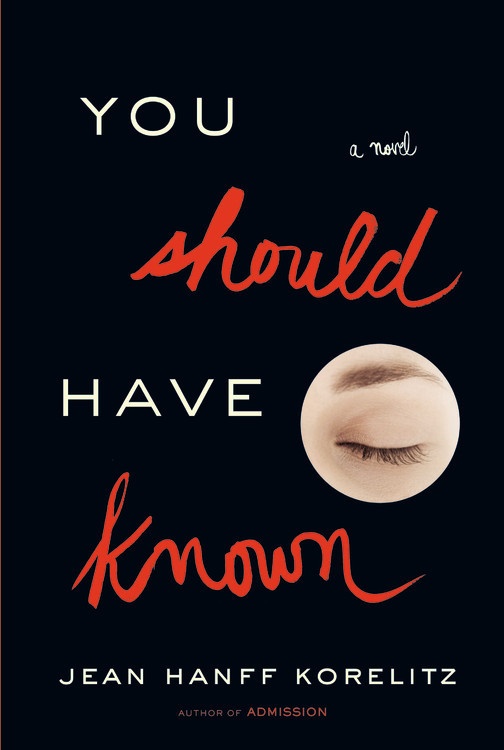
The Headmaster’s Wife, by Thomas Christopher Greene,  and You Should Have Known, by Jean Hanff Korelitz, are both what I call “literary page-turners”. By that I mean books that are well-written and thought-provoking, with fully developed characters and layers of complexity, but are fairly fast-paced. Both of these books keep the reader guessing, and are somewhat disturbing.

Some readers have found The Headmaster’s Wife more than “somewhat” disturbing. It’s a hard book to review, because revealing the crucial plot element would be a huge spoiler. I got involved in a brief exchange on Twitter with another book blogger, who said she was finding the book extremely “creepy”. My response was “How far into it are you?” Because I knew exactly what she meant, and I wanted to suggest that she might feel differently once she was farther along.

9781250038944The Headmaster’s Wife opens when Arthur Winthrop, headmaster of a New England boarding school, is found wandering naked in Central Park.  As he begins to tell his story to the police, it becomes clear to the reader that Arthur is an unreliable narrator. Just how unreliable he is only becomes obvious about halfway through the book. At this point Arthur’s wife lends her perspective to the story, and the reader must determine whose version of the truth to believe.  As the author said in an interview with the Burlington Free Press, “I like to think of it as a bifurcated narrative, and it’s the same story told from two points of view.” There’s a certain similarity to Gone Girl, without the psychopathy. Arthur is a sad and broken man, but not an evil one.

The book is, as I said, a page-turner, with very surprising plot twists (one of my Twitter buddies said it made her “gasp”), but it’s much more than that. It’s a beautifully written exploration of marriage, friendship, grief, and mental illness. What do we owe to those we love? What actions are unforgivable? What is the breaking point from which a person can’t recover? Greene said the questions he asked himself when writing the book were, “What happens if you don’t hold it together? What happens if life just completely falls apart?” I think book clubs would run out of time before they ran out of discussion material from The Headmaster’s Wife.

25906d314df6192f270fbbc6058c8bceYou Should Have Known is the title of Jean Hanff Korelitz’s new novel — and also the title of the self-help book written by the protagonist of the novel, Grace Sachs. Grace is a therapist turned pop psychology author; the thesis of her bestselling book, “You Should Have Known”, is that women ignore early clues that men they are dating are not good husband material. They engage in wishful thinking, and then are surprised when their husbands turn out to be liars, philanderers . . . or worse.

It turns out that Grace is just as clueless as her patients and readers. Her husband, Jonathan, a pediatric oncologist, disappears under very suspicious circumstances. According to a Publishers Weekly interview with the author, just because someone is bright and well-educated doesn’t mean she can see what should be obvious:

I started thinking about what I’ve always been interested in: how people can’t see things that are right in front of them. All you have to do is read the papers to see endless examples of smart people who can’t see the nose on their faces. How could the partner of Bernie Madoff not have known what he was up to?

Well, how could she? Is denial of  what seems evident to others criminal, or immoral? Should Grace have known that her husband was a psychopath? Is it fair to blame people for blinding themselves to the truth? Again, great book club discussion questions. In an interview with Entertainment Weekly, when Korelitz was asked if she thinks her novel, “like Gone Girl, is part of a fiction trend of not seeing the truth about those we’re closest to?”, she said:

I think that many of us have this fascination with knowing who someone really is. It’s the idea that informs Pride and Prejudice. You make snap judgments about who people are and then bring your own creative energy and personal needs to fill in the gaps and make the person that you want that person to be. In fiction, it’s been a trend for as long as there’s been the novel.

I think Korelitz is absolutely right. People are, and have always been, fascinated by the idea of “the stranger beside me”. (Remember the book by that name by Ann Rule, about Ted Bundy?) In The Headmaster’s Wife, Arthur suffers what might be a psychotic break and becomes a stranger to his wife; in You Should Have Known, Grace discovers that her beloved husband was most likely always a stranger to her.

All the Light We Cannot See — Book Review

One day earlier this month, I was frantically getting ready for an author brunch (with the amazing Carol Cassella — more on that in another post!), trying to fit all my warm weather clothes in a carry-on suitcase, and negotiating slushy sidewalks in boots and a down coat as I ran last-minute errands. The next day, I was lounging by the Caribbean with a book in hand,  deciding whether to order a cocktail or Diet Coke with lunch. (The choice was easy: cocktail.) What could be better than a few days of sun and relaxation after a brutal Chicago winter? During the winter of 2013-14, Chicago had 26 days when the low temperature was zero or below, setting a record. On March 3, the low was -2 degrees.

The resort offered yoga and spinning classes, tennis, and a workout facility. I intended to take advantage of all of these and brought the required clothing and equipment, but the lounge chairs were just too comfortable . . . and the books I brought were too tempting. I don’t usually like to recommend books that aren’t published yet, but All the Light We Cannot See is an exception — it’s extraordinary! If you’re in a book club, this would be a wonderful choice for a discussion this summer or fall.

cvr9781476746586_9781476746586_lgAll the Light We Cannot See by Anthony Doerr (releases 5/6/14)
I know it’s trite to say “I didn’t want the book to end”, but it’s true — I really didn’t want this book to end. I read the last 50 pages very slowly. Anthony Doerr spent 10 years writing All the Light We Cannot See, the story of two young people struggling to survive during World War II.  Marie-Laure LeBlanc, blind since early childhood, flees Paris with her father and takes refuge with her eccentric great-uncle Etienne in Saint-Malo. With Marie-Laure and her father is what may or may not be an enormously valuable diamond from the Museum of Natural History, where Monsieur LeBlanc is the locksmith. The Germans are searching throughout France for the diamond, becoming increasingly desperate after the Allies invade Normandy.

While Marie-Laure is growing up in Paris, learning Braille and how to navigate the city with her cane, Werner Pfennig is growing up in a German orphanage. A precocious child with a gift for electronics, Werner is saved from a life in the coal mines when a Nazi official identifies his talent and sends him to a paramilitary academy for Hitler Youth. The lives of Werner and Marie-Laure converge in August 1944, when the city of Saint-Malo was almost completely destroyed by fire.

In a Youtube video, Doerr says that he was inspired to write the book to illustrate the power of radio — for good and for evil. In the book’s epigraph, he quotes Joseph Goebbels: “It would not have been possible for us take power or to use it in the ways we have without the radio”. The sound waves of radio are “the light we cannot see”:

Radio: it ties a million ears to a single mouth. Out of loudspeakers all around Zollverein, the staccato voice of the Reich grows like some imperturbable tree; its subjects lean toward its branches as if towards the lips of God. And when God stops whispering, they become desperate for someone who can put things right.

But radio is also the voice of the French resistance:

He waits until dark. Marie-Laure sits in the mouth of the wardrobe, the false back open, and listens to her uncle switch on the microphone and the transmitter in the attic. His mild voice speaks numbers into the garret. Then music plays, soft and low, full of cellos tonight . . .

“The light we cannot see” refers to many other things besides sound waves. “Light we cannot see” is different from darkness, or absence of light; it’s there, we just can’t see it. Having gone blind as a child, Marie-Laure vaguely remembers being able to see light. Werner is trapped in darkness after the bombing of Saint-Malo, but he knows there is light above him.

Sometimes, in the darkness, Werner thinks the cellar may have its own faint light, perhaps emanating from the rubble, the space going a bit redder as the August day above them progresses toward dusk. After a while, he is learning, even total darkness is not quite darkness; more than once he thinks he can see his spread fingers when he passes them in front of his eyes.

The English major in me wants to go on and on about the metaphors of light and darkness in the novel, but I’ll spare you. The writing in All the Light We Cannot See is magnificent. Each beautifully crafted chapter is short — no more than a few pages, and some chapters are only one page — and perfectly titled: “Time of the Ostriches”; “The Arrest of the Locksmith”; “The Blade and the Whelk”. The parallel strands within the book — Marie-Laure’s story and Werner’s story — appear in alternating chapters, coming together towards the end. The surprise isn’t that they meet, but what happens during the next 60 years. Are people, as Anne Frank famously said, “really good at heart”? All the Light We Cannot See makes us consider that question again.


The Crossroads of Circumstance

Every story would be another story, and unrecognizable if it took up its characters and plot and happened somewhere else . . . Fiction depends for its life on place. Place is the crossroads of circumstance, the proving ground of, What happened? Who’s here? Who’s coming?
Eudora Welty

ArmchairBEA LogoExample

Today’s Armchair BEA topic, “Beyond the Borders”, made me think of a post I wrote a couple of months ago about the importance of setting in a novel — focusing on Anthony Marra’s A Constellation of Vital Phenomena. Like most Americans, I had only a vague idea of where Chechnya was and little knowledge of the wars that had taken place there. This brilliant book took me out of my comfort zone.

Last week I wrote about my favorite book titles. What could be a better title than Anthony Marra’s A Constellation of Vital Phenomena? This novel — the most powerful I’ve read in years — is set in Chechnya during the two recent wars that ravaged that country.  Two doctors — Sonja, an ethnic Russian, and Akhmed, a Chechen villager — endanger their own lives to save the life of Havaa, a little girl whose home has been burned and whose father has been taken away by Russian soldiers.  The title comes from a definition of life in a Russian medical textbook:

Life: a constellation of vital phenomena — organization, irritability, movement, growth, reproduction, adaptation.

www.randomhouseAs Anthony Marra points out in an interview with Jill Owens of Powell’s Books, “There are six point-of-view characters in the novel. Life is structured as an intersection and a constellation, really, of these six vital phenomena. The novel was structured as a constellation of these six characters, and as soon as I saw it, I just had to use this as the title.”

Recently, at a staff meeting at our store, each bookseller agreed to read one newly released paperback that no one else on staff had yet read. We’re all avid readers, of course, but sometimes we get in a rut and all read the same books. We recommend them to each other as well as to customers — and before you know it, five booksellers have read (and are all recommending) A Tale for the Time Being. I’d read many rave reviews of A Constellation of Vital Phenomena (Ron Charles of the Washington Post: “I haven’t been so overwhelmed by a novel in years. At the risk of raising your expectations too high, I have to say you simply must read this book”) and I was intrigued — but a little intimidated by the fact that it takes place in Chechnya. I am embarrassed to admit that all I knew about Chechnya that it was a former Soviet republic and that the Boston marathon bombers came from there. I vaguely knew that a war had recently taken place in Chechnya, but I had no idea there were two separate wars.

The setting is very important to me in fiction — nearly as important as the characters. I dislike books that are set in an indeterminate setting. Case in point: The Tiger’s Wife, by Tea Obrecht, another novel about a doctor trying to save lives during a modern war.  Why is it set in an unnamed Balkan country? I wanted to know what Balkan country. It sounded like Croatia — but for some reason, the author withheld the crucial details that would confirm that it actually was Croatia.   I don’t mind a totally imaginary setting — Narnia, Hogwarts and Middle Earth all seem very real to me — but I find hybrid real/imaginary settings frustrating and distracting. (Why, for example, does Scott Turow set his books in Kindle County? Why not Cook County?) The details of a place help amplify the themes of the novel, making them more universal. As a reader, I can anchor myself in a specific setting and then allow myself to explore the novel without wondering where it is taking place.

chechnyaPart of the joy of reading for me comes from learning about the history and culture of unfamiliar places. I’m not the only American reader who knew very little about Chechnya before reading A Constellation of Vital Phenomena. When asked why the conflict in Chechnya hasn’t been adequately covered in the United States, Marra said:

That idea that the Chechen Wars represent a localized conflict without significance to the larger world isn’t uncommon in the West, and I think it’s resulted in a great cultural shrug toward the region. I’ve never understood that. Chechnya has a remarkable history filled with remarkable people, who in the 19th century inspired such writers as Tolstoy, Lermontov, and Pushkin.

I began working on this novel because I was fascinated with Chechnya . . . I couldn’t find a single novel available in English set during the recent Chechen Wars. In that sense, I came to this book as a reader rather than a writer. I wanted to find this novel in a bookstore, but it wasn’t there yet.

Novelist Philip Hensher writes in the Guardian: “Often, when I think of a novel I love, it is not the plot that comes to mind, or even, sometimes, the characters, but the setting.” It’s true — I could describe the China of Pearl Buck’s The Good Earth or the New York of Tom Wolfe’s The Bonfire of the Vanities, but I couldn’t possibly tell you much about the characters in those books, or recount their plots. (In the same way, I remember the exact layout of a house I lived in when I was five, but very little of what happened there.)

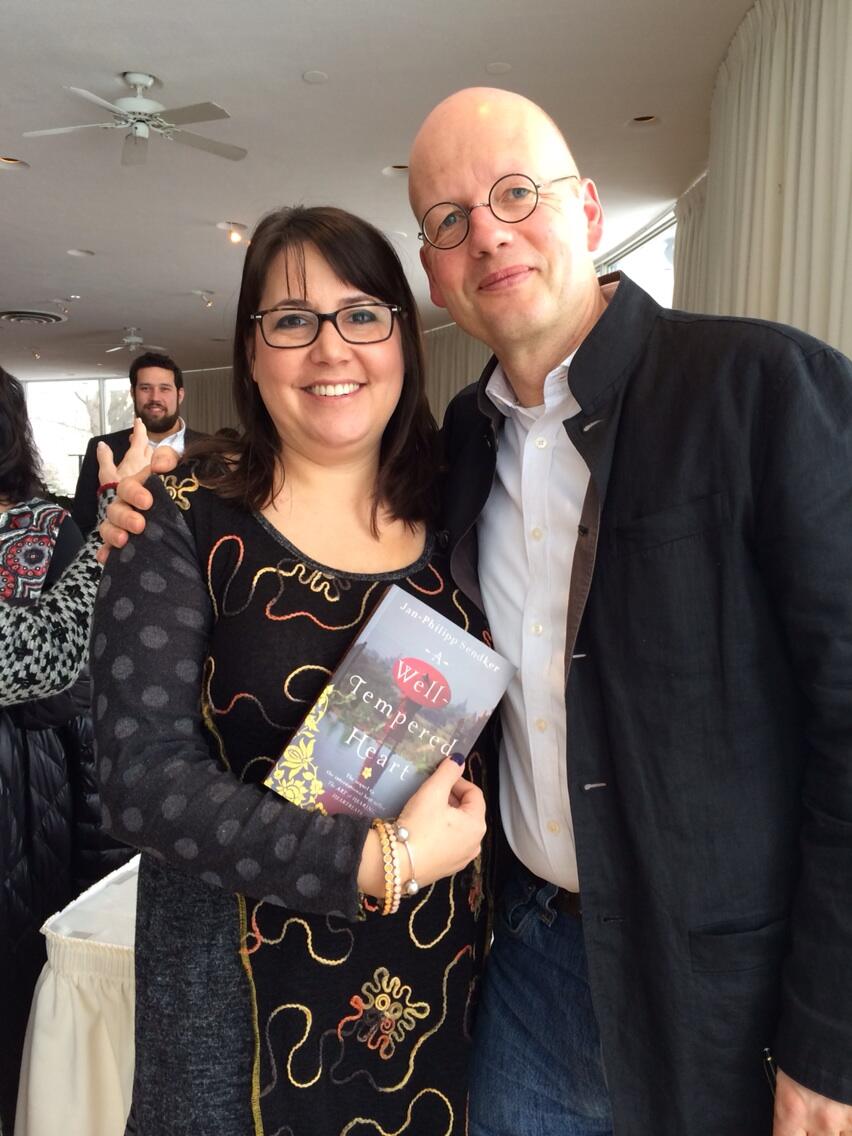
1489183383Jan-Philipp Sendker, a journalist, was inspired to write his lovely novels because of a specific place — Burma. He had never considered writing fiction before, but after a visit to Burma on a journalistic assignment in 1995, his imagination was sparked. The result was The Art of Hearing Heartbeats, a love story between a blind man and a crippled girl. It’s a story that Jan-Philipp says could only have happened in Burma. The book, written in German, was eventually translated into English and became an American bestseller — as well as one of Lake Forest Book Store’s bestselling books of all time. He visited Lake Forest for a luncheon when The Art of Hearing Heartbeats was published in the United States, and we were thrilled to welcome him back last week when he was on tour for the sequel, A Well-Tempered Heart.

Jan-Philipp Sendker with a fan

Jan-Philipp had no intention of writing a sequel —  and in fact was almost finished with a novel set in China —  but while daydreaming in a teahouse in a Burmese village, he became obsessed with the thought of continuing Julia’s story. And while traveling through the country, he encountered a Burmese man who had spent eight years in captivity for crimes he didn’t commit, who explained that only by forgiving his captors could he set himself free. Jan-Philipp put aside the novel he was writing and wrote A Well-Tempered Heart, about what he calls the “difficult art of forgiving”.  As I listened to Jan-Philipp describe his travels in Burma and how his novels came to be, I also thought — as I often do at author events —  about how lucky readers are, in this digital age, to hear an author speak from the heart. Jan-Philipp told us he’s writing a third book in the series, so we’re hoping he returns to Lake Forest.

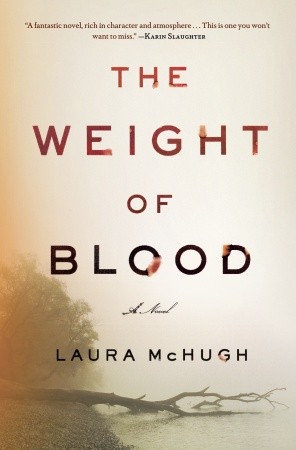
www.randomhouse-1I have to mention one more new book in which setting plays a crucial role — Laura McHugh’s debut novel, The Weight of Blood. Set in an isolated, unwelcoming small town in the Ozarks, this dark and suspenseful novel tells the story of two missing women — Cheri, a mentally handicapped teenager, and Lila, a young mother. This book, which reminded me a little of Gone Girl, kept me up late at night. I’ve never been to rural Missouri (and after reading this book, I’m not sure I want to!), but I feel as if I’ve been there — and the region seems nearly as foreign as Burma or Chechnya. In an interview with Shelf Awareness, Laura McHugh, who grew up in the Ozarks, explains why she set her book there:

The forbidding landscape and the remoteness of the Ozarks create a sense of foreboding that helps set the tone of the novel. And I’ve always been fascinated by the culture, which is steeped in folk wisdom, home remedies, and superstition. We were outsiders in our tiny town, yet at the same time, it became my home. Years after moving away, I was still haunted by the place, and the novel allowed me to explore the darker side of those tight-knit rural communities where outsiders aren’t welcome.

What’s next for me? I’ve just started The Headmaster’s Wife by Thomas Christopher Greene, set in familiar territory — New York City and Vermont. (This book is not to be confused with The Headmaster’s Wager or The Headmaster’s Dilemma . . . or two other books called The Headmaster’s Wife.) I’m already finding that while the geography is familiar, the story and the characters are wonderfully surprising.

To Review or Not to Review?

I don't think this is the best approach to book reviewing.
I don’t think this is the best approach to book reviewing.

Any reviewer who expresses rage and loathing for a novel is preposterous. He or she is like a person who has put on full armor and attacked a hot fudge sundae. — Kurt Vonnegut

There’s been a lot of controversy recently about negative book reviews.  The New York Times Book Review tackled this topic a couple of weeks ago, with opposing viewpoints presented by Francine Prose and Zoe Heller. Prose asks, “Why would a sensible writer ask people not to buy a book? If the novel, as we also hear, is moribund or dead, why drive another nail into its sad little coffin?” Heller counters with the argument that authors “write for other people. They write to have an effect, to elicit a reaction . . .  they are not kindergarteners bringing home their first potato prints for the admiration of their parents, but grown-ups who have chosen to present their work in the public arena.”

So, if a critic has a negative reaction to a book, should that reviewer decline to publish the review? This is what Prose advocates: “I began returning books I didn’t like to editors. I thought, life is short, I’d rather spend my time urging people to read things I love.” I sympathize with her point of view. As a bookseller and book blogger, I’d prefer not to spend time telling people about books I found pretentious, or boring, or poorly written. (But if anyone asks me, I’m happy to oblige! I have to maintain credibility.) However, I’m not a professional book critic. I look to critics such as Prose and Heller to provide me with guidance. When I read a book review, I want to see evidence that the reviewer is a critical thinker.  If I wanted to see “5 stars!!! Best book ever!” I could look at Goodreads.

Fewer and fewer newspapers and magazines publish book reviews; in fact, many major newspapers have eliminated their book sections. The Chicago Tribune reinvented their book section in 2012, calling it “Printers Row” and making it available only as a supplementary print or digital subscription. It’s described as “the Chicago Tribune’s literary journal, fiction, and membership program”. I appreciate that the Tribune is making an effort to keep literary criticism alive in a major newspaper. In fact, Printers Row doesn’t seem to have any problem publishing negative reviews. I just wish they’d agree with me more often on which books to review negatively! We are definitely not on the same page, so to speak.

I was captivated by the main character's voice in this inventive novel.
I was captivated by the main character’s voice in this inventive novel.

A case in point is the recent review of The Sun and Other Stars, by Brigid Pasulka (a Chicagoan), written by Troy Jollimore, a poet, philosophy professor, and book critic. Jollimore claims that the novel shows a “preference for sentimentality over real emotion”.  Calling a literary novel “sentimental” is fairly harsh. But how does a critical reader determine if a novel is sentimental? Jollimore tries to back up his claim with examples from the novel; for instance, he states that the tragic events in the novel are “plot devices” that are “exploited” to move the story forward. Hmmm . . . sounds a little bit like Supreme Court Justice Potter Stewart defining pornography by saying “I know it when I see it”. Aren’t all tragic events in fiction plot devices to a certain extent?

My response to the novel could not have been more different. I found the novel genuinely moving and the characters well-developed and believable. The Sun and Other Stars takes place in a small village on the Italian Riviera. Etto, the protagonist, is the 22-year-old son of the village butcher. His twin brother, a “calcio” (“soccer”, in American parlance) star,  has recently died in a motorcycle crash and his grief-stricken mother committed suicide not long afterwards. Etto and his father exist in their own separate orbits, unable to connect with each other. When Yuri, a famous Ukrainian calcio player, comes to San Benedetto for the summer, everything changes for Etto and his father — especially after Etto meets Yuri’s beautiful sister.

The book, which is in many ways a love letter to all things Italian, takes its title from the final lines of Dante’s Divine Comedy:

But already my desire and my will
were being turned like a wheel, all at one speed,
by the Love which moves the sun and the other stars.

Just as Dante survives the horrors of hell and comes to know God’s love, so does Etto survive despair and grief and come to know love again. Calcio, which had separated him from his father and his fellow villagers, brings them together. Yes, the story has all the makings of a romantic comedy, but it never becomes hackneyed or predictable. Brigid Pasulka gives Etto a completely original and endearing voice, filled with melancholy and black humor.

The first knock of the morning plinks against the window, the start of the procession of nonne on their way to mass. Nonne, nonne, nonne, and more nonne. This is what sociologists call the aging of Europe, and Liguria’s demographics are the most top-heavy of them all, crammed with nonne, nobody stupid or naive enough to bring more babies into this world. They clutch each other’s arms, crossing the front windows so slowly, you can see the gossip gathering in clouds over their heads . . . the nonne take to the streets every morning without fail.  After all, they’re in training. They must have strong backs to prop up the 80 percent of us who have stopped hedging our bets with God.

Besides being the only man in San Benedetto who isn’t obsessed with calcio, Etto is set apart in another way: he is half American. Calcio brought his parents together; they met at a soccer match and fell in love despite a language barrier. But art is what bonded mother and son:

Mamma used to be as passionate about art as Papa is about calcio. It was the reason she came to Europe in the first place, because she said she was tired of learning art history from slides, and tired of being in California, where there was nothing older than she was. . . She could make any museum interesting, even when I was a kid. She would take me around to each sculpture or painting as if she was introducing me to old friends.

Etto decides to paint a replica of the Sistine Chapel in his old high school, replacing the Biblical figures with San Benedetto villagers. He says, “You are probably shaking your head, thinking, what kind of deficiente thinks he will be able to paint a copy of the Sistine Chapel on the ceiling of a classroom? What kind of arrogant stronzo?” This final tribute to his mother enables him to start coming to terms with the grief and anger he feels over her death.

Readers will notice that Italian words are sprinkled throughout the novel without italics — or explanation. At first, I found this slightly distracting — and then, as I learned their meanings, I found it brilliant. Etto is bilingual, and most likely thinks in both Italian and English. Pasulka’s use of language in this way enriches his voice and makes him seem even more real.

Obviously, the Printers Row reviewer didn’t share my enthusiasm for The Sun and Other Stars. Besides missing the genuine emotion that was so evident to me, he missed the beauty of the language and the originality of the story. I thought Pasulka masterfully combined love, tragedy, art, and sports to create a wonderfully inventive novel.

To read the full article about the pros and cons of negative book reviews, click Do We Really Need Negative Book Reviews?

Tips for Choosing Book Club Books

cover
There’s plenty to discuss in The Deepest Secret.

“What’s our next book?” — the dreaded question facing every book club. Here are some suggestions to help increase your chances of choosing a book that will inspire a fun and enlightening discussion:

  1. Decide if you’re a democracy or a dictatorship. Will your group vote on the books, or will each member be given the chance to make an executive decision on your monthly selection?
  2. Don’t worry about whether everyone will like the book. Some of the best book club discussions happen when not everyone likes the book. And sometimes a member who came into the meeting with a negative opinion of the book goes home with a new appreciation for it.
  3. And don’t worry about liking fictional characters. You’re not befriending them, you’re discussing why they behave as they do.
  4. Don’t be afraid of nonfiction. I think nonfiction books often provide the best material for discussion.
  5. cover-2Unless you’re a very literary group, choose books that focus on interesting issues. Your book club meeting most likely isn’t going to resemble a college English seminar. You’ll  probably have more fun talking about the ethical problems presented in The Immortal Life of Henrietta Lacks than the imagery in The Age of Innocence.
  6. Pick a book that is the right length for the amount of time your group has to read it. Don’t choose The Luminaries if your group is meeting in three weeks.
  7. Don’t choose The Luminaries (or anything of similar density) if your group is the type that discusses the book for 15 minutes and then moves on to more important things — like where you should meet next month.
  8. 9780547554839_hresBeware of books that one of your members describes as “uplifting” or “feel-good”. There won’t be much to talk about.
  9. Take advantage of all the resources that are available online and in your community. There are countless websites devoted to book clubs, including lists of suggested books. Your local library and bookstore will be happy to make recommendations for you, and to let you know what other groups are reading.
  10. Ask your friends (especially out-of-town friends) what their book clubs have read and how successful their choices were. Post “Any great book club books you can recommend?” as your Facebook status.
  11. Consider organizing a book exchange.  Have everyone bring a book he or she has recently read and trade books. At the next meeting, briefly review all the books and if one stands out, choose it for an in-depth discussion.
  12. Leave some flexibility in your schedule; don’t choose books for the whole year.
  13.  If your group is having a hard time finishing books — or agreeing on book choices — read a short story or an essay. You could even spend the year reading The Best American Short Stories 2013 or The Best American Essays 2013.
  14. Think about choosing books that have won major prizes (National Book Award, Pulitzer Prize, Man Booker) or have received good reviews in publications you trust.

cover-1I always look to Publishers Weekly for book recommendations; if a book gets a starred review in PW, I pay attention. Carla Buckley’s The Deepest Secret got a starred review, which doesn’t surprise me; the reviewer called it “superb”, and I agree! I read the book last fall, because I was going to meet Carla at a dinner hosted by Random House to introduce authors and editors to Chicago-area booksellers. The Deepest Secret is the story of Eve Lattimore, a parent who makes a terrible error in judgment — and then compounds that mistake by keeping it secret, in an effort to protect her chronically ill son. Much more than a page-turner, The Deepest Secret is a morally complex exploration of parental love. It’s a rare and wonderful treat to read a suspenseful novel that is also character-driven. Book clubs will argue about the choices that Eve, her family, and friends make; there are no easy answers.

I started reading the book the day before I was due to meet Carla. I arrived at the dinner nearly 30 minutes early (very unusual for me) and sat in my car reading the book until the appointed time. When I saw people starting to enter the restaurant, I stashed the book in my purse and joined them. I introduced myself to the first person I saw — who turned out to be Carla Buckley! I told her that her new book was truly “unputdownable” and that I hated to tear myself away from it; I’m not sure she believed me until I showed her my book, with a page dog-eared about halfway through. Carla (along with another terrific author, Jenny Milchman) will be coming back to the Chicago area on May 8 — please join us (with or without your book club) for a great discussion. No need to choose the books — they are already chosen for you! Jenny is the author of two suspense novels: Cover of Snow, a psychological thriller about a young wife in upstate New York investigating her husband’s mysterious suicide, and Ruin Falls (due in April)  about a mother desperately searching for her missing children. (Cover of Snow, Jenny’s debut novel, also received a starred review in Publishers Weekly.)


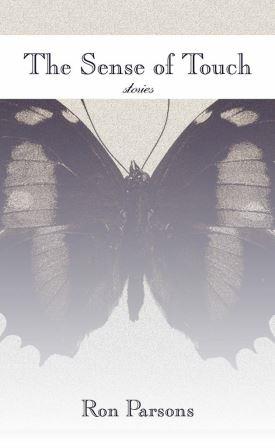
Book Review — The Sense of Touch

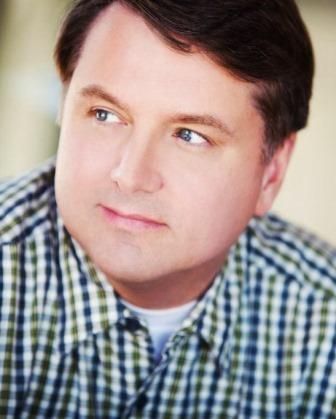
Ron ParsonsAs I’ve said before, I think short stories don’t get enough love. So when I was asked to be a blog tour host for The Sense of Touch, a short story collection by debut author Ron Parsons, I jumped at the chance. It didn’t hurt that I had just read a story of his (“Big Blue”) on the Storyville app. This is a subscription app that delivers a short story “from the best story collections published by commercial and independent presses” to your IPhone or IPad once a week. It’s not free (because the founders believe all writers should be paid for their creative work), but it is inexpensive.

Ron Parsons is a partner at a law firm in Sioux Falls, South Dakota. He specializes in appellate work and has appeared before the United States Supreme Court. He has published many works in addition to the stories in The Sense of Touch (many of which were originally published in literary journals)  — but they appeared in the South Dakota Law Review, with titles like “Should the Eighth Circuit Recognize Procedural Misjoinder?” and “Cattle on a Thousand Hills: Reflections on the Beef Checkoff Litigation”. Now, I don’t know anything about law journals, but that last title sounds poetic to me; is it common to call legal articles “reflections”?

Parsons studied English as an undergraduate at the University of Minnesota. Several years ago, he came across some of the stories he wrote in college, and says he was inspired to revise the stories and make them “readable”. Like many Midwesterners, Parsons is overly modest. The stories are more than readable; they beautifully capture the physical and emotional landscapes of Minnesota, South Dakota, and Michigan. All of them focus on the yearning for human connection (“the sense of touch”) and the ways in which connections can be forged and broken.

The collection opens with “Hezekiah Number Three”, about Naseem, a brilliant but disturbed Bangladeshi immigrant searching for his father and his place in the world. The events in the story are set in motion by an accusation of sexual misconduct — touch gone wrong. Naseem, trying desperately to fight his solitude and his demons, befriends the story’s narrator, Tom. Naseem convinces Tom to go for a hot air balloon ride, promising they will fly so close to Mount Rushmore that they will “touch George Washington’s nose”.

In the title story, “The Sense of Touch”, the narrator is touched inappropriately by a trusted teacher; later, while volunteering for a campus organization, he is attacked by a developmentally disabled adult. He drifts away from his long-distance girlfriend: “Absence disembodies. If a person isn’t there for you to touch, they are not real.” His creative writing teacher, Vonda, tells the class that touch is the only sense that can be trusted:

“Now touch, touch, she continued. “Touch is right exactly there. You have it. It’s solid; you can grab and hold on. There’s weight. There’s substance. Light don’t matter, air doesn’t change it, nothing gets in the way. Touch is silent. And silence is the only way to contemplate infinite things. You see, touch works. Never trust anything, not until you can touch it. With touch, you know you know.”

The Sense of TouchBut Vonda is the narrator’s “untouchable muse . . . close enough to want to grab, and hold on”.  And the narrator does just that — he tries to hold on.

In “The Black Hills”, two old friends, Daniel and Ed,  reunite for a visit after Ed has lost his sight in an accident. His remaining senses, he explains, “are extremely acute. It’s a little something we sightless folks like to call sensory compensation”.  Ed, Daniel, and Daniel’s roommate, a Lakota woman named Dawn, go on a picnic to “Hippie Falls, the best and most secret swimming hole in all of the Black Hills”. In the dreamlike surroundings of the falls, Daniel and Ed begin quietly competing for Dawn’s attention. Daniel’s betrayal of Ed seems particularly cruel since it is destined to end their friendship; as he leaves the next morning, “He wanted to say something, but his words were cold to the touch”.

I’m not sure if it’s technically the best story in the collection, but the one I found most affecting was “As Her Heart is Navigated”. A young woman, Haley, learns that her seemingly gentle boyfriend, Clint, has a violent streak, when he punches a wall in a fit of rage, and that she is capable of healing touch, when she saves the life of an elderly neighbor. Haley feels physically and emotionally trapped by Clint:

He was encroaching upon her, cautiously, like a kind of creeping web — a sweet one, to be sure — a spool of cotton candy threads, unraveling and catching in her hair, attaching to her clothes. And the more she struggles, the more she feels stuck.

Parsons’s writing can be uneven. Some of the dialogue seems stilted, and sometimes he includes unnecessary exposition — for example, in the middle of an evocative description of a waterfall, he says, “It was a perfect spot for sunbathing”. But much of the writing is quite lovely, and the characters (a runaway farm wife, a barber raising his grandson, a twin who’s lost his brother) are well-drawn. He tackles some big themes — loneliness, commitment, friendship, and betrayal — always returning to the “sense of touch”. I look forward to reading more stories (and perhaps a novel?) by Ron Parsons.

To learn more about Ron Parsons, please visit his website or check out his Facebook page.

tlc tour host

Reading on a Jet Plane

All my books are packed, I’m ready to go . . .  (apologies to John Denver and Peter, Paul & Mary)

Last week, I went to the American Booksellers Association Winter Institute in Seattle — a four-day educational conference for independent booksellers. Packing my clothes was easy; people in the book business are not known for being fashion-forward, and January in Seattle does not require the layers of fleece, wool, and down that are needed in Chicago. So after I filled my carry-on suitcase with jeans, yoga pants, and sweaters, I started the difficult task of deciding which books to take — always the trickiest part of trip preparation.

9780062279972-1What about the book I’m reading that only has 50 pages left to go — worth bringing, when I might finish it at the gate before the plane even takes off? And that big, fat, HEAVY new hardcover — what if I haul it along and end up hating it? Should I bring something that I’m obligated to read so I can’t keep putting it aside the way I do at home? How about something mindless that I can leave behind?  I always bring 150% of the books I think I’ll have time to read on a trip– ever since I was delayed overnight in the Frankfurt Airport, where I ran out of reading material and was forced to buy the only non-pornographic English language option available, The Sum of All Fears by Tom Clancy. Now my greatest fear is being stranded without a good book, or two, or three.

And yes, I do know about e-books. They’re fine; I have my IPad loaded with them. I just don’t enjoy reading them the same way I enjoy reading real books. They serve the purpose the same way eating at McDonald’s does the job when you’re on a road trip. I’d rather eat at McDonald’s than go hungry, but I don’t feel nourished the same way I would if I ate real food. And besides, what happens when the e-reader runs out of juice and there’s no power supply available, or it malfunctions?

As I was pondering my book options for the trip, it dawned on me that I really only needed to bring two books — one to read on the four-hour flight to Seattle, and one for “insurance” in case of delays. After all, I was going to a booksellers’ conference where I was going to be given dozens of wonderful new books to read and share with my colleagues. So what did I bring? The Wind Is Not a River, by Brian Payton (which I’d just started reading but knew I was going to love) and Careless People: Murder, Mayhem and the Invention of the Great Gatsby by Sarah Churchwell (which I wanted to finish reading because the author is coming to Lake Forest for an event in February).

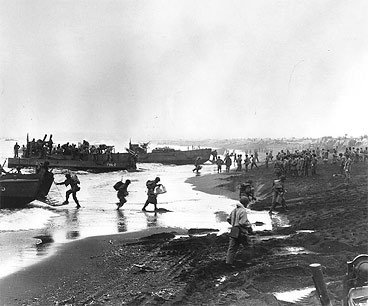
The Wind Is Not a River is my favorite kind of book — it’s a war story and a love story, and it focuses on a somewhat obscure piece of history. Set in Seattle and Alaska during World War II, the novel contains two narratives. Journalist John Easley impersonates a Royal Canadian Air Force officer to investigate the Japanese invasion of the Aleutian Islands in Alaska. (The U.S. authorities didn’t allow journalists to cover the invasion since they felt Americans would panic if they knew how close the Japanese actually were to America’s mainland.) He accompanies an American crew on a bombing run over the islands and is shot down. For months, he lives in a cave, foraging for food and evading the Japanese occupiers. Meanwhile, his wife Helen passes herself off as a showgirl and joins a USO group headed to Alaska to entertain the troops — but her real purpose is to track down her missing husband.

The Battle of Attu, the only World War II land battle in North America.

Author Brian Payton expertly moves between the two stories, which are equally compelling. John’s battles against starvation and gangrene and Helen’s desperate attempts to get information from unwilling officials are both vividly rendered. His writing beautifully evokes the stark, unfriendly landscape of the Aleutian Islands. In her review in the Chicago Tribune, Beth Kephardt says: “Payton’s great gift is characterizing a specific place and time; I would read anything Payton writes about landscape.”  (To read the complete Chicago Tribune review, click Chicago Tribune/Printers Row.)

Soon after John is shot down, he meets another survivor — a young airman from Texas. Payton describes their encounter in language that perfectly evokes the scene, yet makes me think of E.B. White’s rule for writers — “Omit needless words”:

Then, just as swiftly as it began, the fog stalls its retreat. Like a wave racing down the beach to the sea, it hesitates, reverses course, then comes flooding back again. They walk toward each other in the gathering mist, the preceding color and light now seeming like a dream. They approach each other with widening grins, like they’re the only ones in on the joke. And when they meet, they hug each other long and hard, like men who had cheated death together — like men convinced the worst is behind them.

Of course, the worst is not behind them. The journey ahead for John Easley and Karl Bitburg will test their courage and endurance — just as Helen’s search reveals the strength and determination she never knew she had.

I closed The Wind Is Not a River just as the plane was beginning its descent into Seattle. As I looked out the window at the gorgeous scenery of the Pacific Northwest, I imagined Helen Easley boarding the ship that would take her to the Aleutian Islands to look for her husband. I had to remind myself that what I’d just read was historical fiction, and that Helen and John never existed. But they seem just as real to me as Zelda and F. Scott Fitzgerald do in Careless People, another book with two narratives. In the fall of 1922, Scott and Zelda moved to Long Island; around the same time, in nearby New Jersey, a double murder (a married minister and his mistress) took place. In her well-researched work of history and biography, Sarah Churchwell connects these stories in surprising and insightful ways.  Next week, I’ll be interviewing Churchwell, an American literature scholar currently living in England. I hope she has a peaceful plane trip, with plenty of time to read!