The Santa Claus Man — Book Review

image001-199x300 copySo Gluck stretched the truth in the service of Santa Claus. Sometimes one had to take liberties with facts in order to get, and keep, people’s attention, he reasoned. What was Santa Claus if not a friendly deception invented to delight and encourage better behavior?

One Christmas Eve, journalist Alex Palmer discovered that his great-great-uncle, John Duval Gluck, Jr.,  was the founder of New York’s Santa Claus Association. For 15 years during the early 20th century, this charitable organization was responsible for fulfilling the wishes of thousands of New York children who sent letters to the North Pole. Palmer was dismayed to learn that Gluck wasn’t so much a philanthropist as he was a huckster, who lined his pockets with money from generous and trusting donors.

Palmer’s exhaustively researched book, The Santa Claus Man: The Rise and Fall of a Jazz Age Con Man and the Invention of Christmas in New York, is — as the title indicates — about more than Gluck’s nefarious activities.  The book includes two linked narratives: a sympathetic  and comprehensive chronicle of Gluck’s life and personality, showing the complex motivations for his self-aggrandizing and often dishonest activities, and an equally detailed account of the transformation of Christmas from a religious holiday into a cultural and commercial event.

A self-described “secret history sleuth”, Palmer is the author of two previous books,  Weird-O-Pedia: The Ultimate Collection of Surprising, Strange, and Incredibly Bizarre Facs About (Supposedly) Ordinary Things and Literary Miscellany: Everything You Always Wanted to Know About Literature. For a writer oriented towards the quirky side of life, delving into the obscure story of New York’s “Santa Claus man” and his world was a fascinating project. Palmer’s research led him to previously unknown relatives. He says:

My search to uncover the true story of John Gluck took me to Georgia, Florida, Texas, and into hidden pockets of New York City. I spoke to relatives I hadn’t known existed and was lucky enough to meet them. My first big break came with I tracked down a distant cousin of mine . . . She recalled John fondly and offhandedly mentioned she may have some of his papers in storage somewhere. In fact, she discovered she had several storage boxes full of his stuff . . . a trove of John’s personal correspondence, official Santa Claus Association documents, and original Santa letters that served as the backbone of The Santa Claus Man.

Palmer also uncovered an FBI report on Gluck’s deceptive activities, documents about Supreme Court case Gluck fought against the Boy Scouts of America, and “lots more Santa letters”.  Palmer says his investigation “revealed a man who yearned for escape from a mundane life, but lost his bearings once he broke free.” The book includes nearly 40 pages of endnotes and a bibliography, attesting to Palmer’s thorough exploration of his subject. (It also contains dozens of terrific vintage photos, including a sketch of Gluck’s proposed Santa Claus Building, intended to “blend spiritual ideals and consumerism into a true ‘Cathedral of Commerce'”.)

Sometimes Palmer’s enthusiasm for trivia overwhelms the reader, detracting from the narrative. It probably isn’t necessary to know, for example, that the nation’s first airmail delivery took place on September 23, 1911 in a Bieriot XI monoplane and included a sack of 640 letters and 1,280 postcards.

Palmer successfully places Gluck’s story in historical context. Publishers Weekly comments that:

Palmer deftly weaves in other cultural touchstones such as the genesis of the Boy Scouts, Clement Clarke Moore’s “A Visit from St. Nicholas,” and the WWI Christmas Day armistice (in which opposing armies traded goods) to tell the larger story of America’s adoption and adaptation of Christmas that endures to this day.

The Boy Scouts are, in fact, integral to the story. In 1910, two Boy Scout organizations were formed in the United States: the Boy Scouts of America and the American Boy Scout (no “s”, peculiarly — and later to become the United States Boy Scout.) The groups differed in one significant way: members of the American Boy Scout carried guns. Many parents didn’t want their Boy Scouts armed, especially after one 12-year-old American Boy Scout shot and killed a 9-year-old boy. The “chief scout” of the American Boy Scout organization didn’t think that banning guns from his organization was the best way to ensure the group’s survival — instead, he decided, they would volunteer to help the Santa Claus Man.

If you’re looking for a sweet Christmas story, The Santa Claus Man probably isn’t what you have in mind — but history and true crime buffs will enjoy this offbeat tale of greed and good intentions.

All the Stars in the Heavens — Book Review

I’m interested in how we survive by the labor of our own hands, and who we choose to love. Those are my two themes—they’re in every book I write.
Adriana Trigiani

Adriana Trigiani’s latest novel is an unabashedly romantic story of Hollywood’s golden age, peopled with the stars of yesteryear — Spencer Tracy, David Niven, Myrna Loy, Carole Lombard, Hattie McDaniel — and Clark Gable and Loretta Young. Trigiani paints a romantic picture of Gable and Young as star-crossed lovers, kept apart by the strict moral codes and sexist double standard of the times.

Their problems were not of the heart, or their intentions, but of the practical world, which was defined by the wily and improbable laws enforced by the studios that employed them, and by the public, whose ticket dollars gave them the final say. Gable and Young were indentured to the stardom that made their lifestyle possible.

Fans of old movies and old-fashioned, multi-generational sagas will love All the Stars in the Heavens. It’s the kind of novels described in blurbs as “sweeping” — an overused word that is, nonetheless, apt when applied to this Hollywood epic. If the book were a movie it would be called a “biopic”. We first meet Loretta Young as a child actress, working to help her single mother pay the bills, and follow her as she becomes a leading lady in Hollywood, falling in love with the wrong men, and eventually a grandmother, watching herself and Clark Gable on a VHS tape of The Call of the Wild.

Warning to readers: don’t Google “Loretta Young”, “Clark Gable” — or anything else in the book that piques your curiosity. I made the mistake of doing that and I not only ruined the story for myself, but came across some recent information (so recent that Trigiani wouldn’t have known about it while writing the book) that cast doubt on one of the central plot elements. Granted, All the Stars in the Heavens is fiction, but it’s clear Trigiani tried to keep her story within the basic outline of Young’s life.

The most interesting character in the book is one Trigiani invented — Alda Ducci, Young’s secretary and dear friend. An Italian immigrant, Alda came to the Young household after being asked to leave the Daughters of Charity of Saint Vincent de Paul, where she had been training to become a nun. The Mother Superior at the convent says, “‘I’m told this a fine Catholic family, very devout. You would be a secretary to one of the daughters. She works in pictures. Her name is Loretta Young.'” I was reminded of The Sound of Music, when Maria leaves the Abbey and falls in love with Captain von Trapp. (Remember the Baroness: “And somewhere out there is a lady who I think will never be a nun.”)

Not only does Alda form a deep and abiding friendship with her employer, she falls in love with Luca Chetta, a scene painter on the set of The Call of the Wild. Both the friendship with Loretta and the relationship with Luca happen improbably fast. Almost immediately after meeting Alda, Luca says, “‘I’m already crazy about you . . . You got a big, sad heart. And big, beautiful eyes. I want to understand why you’re sad. And I want to look into those eyes of yours forever.'”  Alda responds: “‘You sound like a movie script.'”

The dialogue in All the Stars in the Heavens does sound like a movie script — a movie script from another era. It’s sometimes corny, but often the repartee is witty and flirtatious. Trigiani knows how to set a scene too, from the cold and isolated area of northern Washington where The Call of the Wild was filmed to the ancient and crowded neighborhood in Padua, Italy where Alda’s family lives.

Would I recommend All the Stars in the Heaven? For me, it was a welcome break from serious nonfiction, as well as a nostalgic trip to a bygone era. It’s fun reading, and you’ll learn a little something about old Hollywood. Like many of the movies the book references, All the Stars in the Heavens is clever, entertaining, and doesn’t probe too deeply. Trigiani is a terrific storyteller, and she has great material to work with in this book — which is her first biographical novel.

It’s not surprising that Trigiani chose to write about the movie business. A theater major in college, she spent 15 years as a playwright, comedy troupe actress, TV writer/producer (writing several episodes for the Cosby Show), and documentary filmmaker before turning to fiction writing. Her first novel, Big Stone Gap, the first in a series set in her Virginia hometown, started out as a screenplay. The movie version (written and directed by Trigiani and starring Ashley Judd) was just released last month. The reviews have been middling; the Washington Post’s was typical, concluding that “In a lot of ways this is a Chicken Soup for the Soul sort of movie. But sometimes, especially when the air’s starting to turn brisk, that’s exactly what you need.”

And every once in a while, what you need is a Hollywood novel that gives you a glimpse of a glamorous world that no longer exists. I also recommend A Touch of Stardust by Kate Alcott (the filming of Gone With the Wind) and, if you’d prefer something more literary, Beautiful Ruins by Jess Walter (the making of Cleopatra).

Stories are people. I’m a story, you’re a story . . . your father is a story. Our stories go in every direction, but sometimes, if we’re lucky, our stories join into one, and for a while, we’re less alone.
Jess Walter, Beautiful Ruins

Click here for my review of Adriana Trigiani’s 2014 release, The Supreme Macaroni Company.

The Indifferent Stars Above: The Harrowing Saga of the Donner Party — Book Review

The Indifferent Stars Above COVERAnd they had nailed the boards above her face,
The peasants of that land,
Wondering to lay her in that solitude,
And raised above her mound
A cross they had made of two bits of wood,
And planted cypress round;
And left her to the indifferent stars above.
W.B. Yeats, “A Dream of Death” (epigraph to The Indifferent Stars Above)

But I think what Sarah’s story tells us is that there were in fact heroes in the Donner Party, and that heroes are sometimes the most ordinary-seeming people. It reminds us that as ordinary as we might be, we can, if we choose, take the harder road, walk forth bravely under the indifferent stars.
Daniel James Brown, The Indifferent Stars Above

Before he wrote The Boys in the Boat, which has been a New York Times paperback bestseller for 73 weeks (and is currently #1), Daniel James Brown published two other works of narrative nonfiction: Under a Flaming Sky: The Great Hinckley Firestorm of 1894 (2006) and The Indifferent Stars Above: The Harrowing Saga of a Donner Party Bride (2009). With the popularity of The Boys in the Boat, surely one of the decade’s best-loved books, Brown’s publisher has released a paperback edition of The Indifferent Stars Above, changing the subtitle and adding a “P.S.” section at the back. (Brown published his first two books with HarperCollins, switching to Penguin with The Boys in the Boat.)

TheBoysintheBoatWhat has made The Boys in the Boat so successful? It’s a story that’s not only universally appealing but also previously unknown to most readers. The book initially received no national media attention, but became a word-of-mouth phenomenon. According to the Seattle Times:

When The Boys in the Boat was published in hardback in the spring of 2013. It immediately gained an audience of rowers. Then “the rowers started giving it to their moms and dads,” Brown said. Robert Sindelar, managing partner at Third Place Books in Lake Forest Park, WA says that “The Boys in the Boat is the kind of book readers almost feel compelled to testify for . . . It’s a book that people are passionate about sharing.”

The Indifferent Stars Above is a fascinating historical narrative about the pioneer era and the limits of human endurance, but it’s not one that most people will be recommending to all their friends. It’s a “niche” book, not a book for everyone. Many readers, even history buffs, will find the book just too grisly. Let’s face it — when you think of the Donner Party, you think of cannibalism. Brown says:

Though we understandably tend to think of it as a story about death and cannibalism, I wanted to approach the Donner Party saga as a survival story. After all, roughly half the people who constituted the Donner Party lived through the ordeal, which means that at the end of the day there were some forty individual survival stories to be told. To my mind, how each survivor managed to sustain his or her life is ultimately more interesting than how the others died.

Despite Brown’s emphasis on the courage of the survivors, he is obligated to include many gory details of the lengths to which these people had to go in order to survive. I’m not squeamish, but I found a few sections of The Indifferent Stars Above to be difficult reading. I persevered, however, because all my life I’ve been captivated both by survival stories and the pioneer era. A childhood favorite was Patty Reed’s Doll, narrated by the doll of one of the survivors of the Donner Party tragedy. The doll had nothing to say about the cannibalism surrounding her, mentioning only that Patty cries because she has a stomachache from hunger.

The accuracy of Brown’s account seems undisputed. Not only does the book include 13 pages of sources, many of them primary sources (newspaper accounts, diaries, letters) but he retraced the Donner Party’s route — which gave him “innumerable small insights into the physical world Sarah had moved through on her journey.”

Brown, as you know if you’ve read The Boys in the Boat, is a talented storyteller. In The Indifferent Stars Above, he’s wisely chosen to focus on one member of the Donner Party —  21-year-old Sarah Graves Fosdick. Sarah, her new husband, and the entire Graves family (parents and eight children) set out from Illinois as part of a pioneer wagon train seeking better farming opportunities in California. Brown has a “tenuous connection” to Sarah. His great-uncle, George W. Tucker, journeyed west on the same wagon train with the Graves family: “He had traveled where she traveled . . . his bones had walked the same tedious trails, stretched out at night on the same patches of prairie sod, climbed laboriously through the same icebound mountain passes.” I haven’t read Brown’s first book, Under a Flaming Sky, but reviews note that Brown also has a personal connection to that story; his great-grandfather was killed in the Great Hinckley Fire chronicled in the book.

Originally, the book’s subtitle was The Harrowing Saga of a Donner Party Bride, suggesting that the focus of the book would be on Sarah Fosdick. I’m not sure why the publisher decided to change the subtitle to The Harrowing Saga of the Donner Party, but my cynical guess is that they thought male readers would be turned off by the word “bride”. Brown’s choice to concentrate on Sarah and her family makes the story all the more compelling, transforming what could have been a fairly dry historical account into narrative nonfiction about real people. However, as Brown points out, “Sarah hasn’t made it easy. She left little record of her own experiences, and while others who suffered through the ordeal with her that winter have left us with their own, sometimes quite detailed accounts, few of them have had much to say about her.”

Therein lies a problem with Sarah as a character. She serves to help the reader imagine what it would be like to be a desperately frightened 21-year-old woman, stranded in the wilderness and trying to rescue her family, but she doesn’t come alive as an individual. We just don’t know enough about her, and Brown is too meticulous a nonfiction writer to invent personal characteristics. The book, he says in the introduction, is a “lens through which I hope you will be able to gaze with compassion and understanding on one young woman and all that the world once was to her.” By that measure, the book succeeds — but I found it disappointing not to know more about Sarah as an individual. It’s unfair to compare Sarah’s portrayal with that of Joe Rantz and the other “boys in the boat”, but it’s almost unavoidable. Sarah remains at a distance from the reader, while the 1936 Olympic crew team and their coach are people the reader comes to know intimately.

One of my favorite aspects of The Indifferent Stars Above is the historical context that Brown provides. Often, he digresses from the Donner Party story, in a very engaging manner, to talk about nitty-gritty details of life in the 19th century. These asides give us a more rounded picture of the pioneers. They weren’t just “strong-jawed men circling the wagons to hold off Indian attacks and hard-edged women endlessly churning butter and peering out from under sunbonnet with eyes as cold and hard as river-worn stones”. Brown fills us in on common diseases of the time (the “Illinois shakes”), hygiene along the trail (minimal), birth control (not very effective), weapons (generally Revolutionary War-era), burial customs, attitudes toward children, and holiday traditions.

Like the crew team, Sarah and the group of brave pioneers who set out on jimmy-rigged snowshoes across the Sierra Nevada to get help for their starving families were ordinary people trying to do their very best under difficult circumstances. Theirs was a life and death struggle, not a quest for an American gold medal, but the same theme runs through both books: character, hard work, and heroism. Some of the moral decisions the Donner Party made, including the decision to practice cannibalism, are open to debate. Readers who have the stomach for The Indifferent Stars Above will find themselves wondering what they would have done if they were trapped in the snow during that cold winter of 1846-47.

Mendocino Fire — Book Review

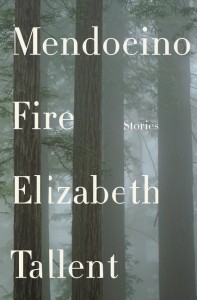
Mendocino-Fire-394x600-197x300She could swear that an enthralled reader nineteen years old is the most beautiful animal on earth — at least, she’s seen one or two who were, in their spellbound moment, the incarnation of extremest human beauty. They were not themselves. Literature looked back at her from their eyes and told her certain things she was sure they ought not to have understood at their age.

Elizabeth Tallent, “The Wilderness”

Heidi Pitlor, series editor of The Best American Short Stories, estimates she reads between 3,500 and 4,500 stories a year — yet even she cannot explain exactly what makes short story succeed. “It’s easier, in the end, to say what doesn’t work than to pinpoint exactly what does, as a successful short story does not expose its mechanics”, she says in an article entitled “What Makes a Good Short Story‘, adding that “a good story tells you something interesting about someone. Things happen in a good story. People reveal who they are.”

The stories in Elizabeth Tallent’s brilliant collection, Mendocino Fire, unveil the inner lives of a diverse cast of characters. The stories are peopled with men and women who face turning points in their relationships with others and emotional crises within themselves. The twenty-something son of a fisherman comes to term with his father’s rejection (“The Wrong Son”); an aging political activist blames a scavenged Persian rug for the demise of his hasty marriage (“Tabriz’); a wronged woman drives across the country to track down her ex-husband and his new wife, with surprising repercussions (“Nobody You Know”); a working-class couple pressure their teenage son into a shotgun marriage and become entwined with his troubled wife (“Never Come Back”); a young woman embarks on an impulsive affair with a famous writer (“Narrator”). These five stories, and the five more that comprise Mendocino Fire, exemplify short story writing at its best.

As every writing instructor I’ve ever had has emphasized, short stories depend on scenes. Pitlor emphasizes the importance of scenes:

Sometimes, story writers seem to forget to write scenes . . . Too often, we as readers enter a story via a small action (a door opening, a phone ringing) and then are held captive while the author utilizes a disproportionate amount of space introducing a character, his marriage, his children, his divorce, his parents and his emotional limitations before we return to the room he just entered or the phone call that just begun. In a 17-page story, each page matters. Each sentence matters. Pacing matters.

With one exception, the stories in Mendocino Fire are built on scenes. In “Narrator”, the protagonist describes the first hours she spent with her soon-to-be lover — a writer who understands very well the importance of detail:

We spent the night over coffee in a cafe on Telegraph Avenue, breaking story-length pieces off from our lives, making a slice of torte disappear in alternating forkfuls. Our waitress’s forgetfulness he explained as distraction: she had a sick child at home. How can you tell? Unicorn stamp on her left hand. How a local pediatrician commemorates non-crying visits.

Tallent, who has been an English professor at Stanford since 1994, is the author of three previous short story collections (In Constant Flight, Time with Children, and Honey), along with a novel (Museum Pieces) and a work of critical analysis (Married Men and Magic Tricks: John Updike’s Erotic Heroes). When Time with Children was published in 1987, the New York Times review commented that “Like John Updike . . . Ms. Tallent is interested in the ways in which the institution of marriage affects our contradictory yearnings for freedom and safety, independence and domesticity.” And like Updike, Tallent constructs beautiful sentences — some very short, some almost a full page in length. One sentence, in particular from “Briar Switch”, a story about a woman facing the impending death of her estranged father (and fittingly, the final story in the collection) is really a prose poem. Both physical and emotional coldness figure into “Briar Switch”, as this sentence excerpt illustrates:

At the other end of the closet is her father’s overcoat, and it stops her, his overcoat simply hanging there, not an overcoat she has any special associations with except that by virtue of being his it evokes the first overcoat she knew him in, no cold like the winter cold borne in with her father’s overcoat, coldest in its folds, but also, all over, distinctly cold, and as if the cryptic eyes your father turns on you were not mystery enough, this ghostly cold comes as a sly erotic assault, a little squall for your child’s senses when that coat shrugs its way down to you . .

Talent’s stories have been published in many magazines and anthologies (The New Yorker, Esquire, Harper’s,The Paris Review, The Best of Tin House, The PEN/O.Henry Prize Stories, and The Best American Short Stories) and have received many awards. Pitlor selected my favorite  story in Mendocino Fire, “The Wilderness”, for the 2013 edition of The Best American Short Stories.  This story breaks the rules — it’s a “sceneless” (to use Pitlor’s word) meditation. The story begins with an English professor contemplating her students’ dependence on electronic devices and their desire for constant connectivity, and ends with the professor ruminating on her great-great-grandfather’s experiences as a Civil War soldier in the Battle of the Wilderness and her own need for connection — with him and with other people. It’s a beautiful, poetic story that demands to be read again and again. The professor recalls a childhood visit to a museum, when she encountered mummies and “for the first time comprehended death”:

Her heart has always been the same size as it was that long-ago Sunday when she first saw those eyes pointed at both ends, and she has always felt the same to herself. Secretly, because people are supposed to go through enormous changes, to mature, she wonders if there is something wrong with her, to feel such consistency between who she is now and who she was then when she looked down into those alive-dead eyes.

The professor, like Tallent’s other characters —  Finn, the tree-sitter in “Mendocino Fire”; Clio in “Eros 101”;  the ex-wife in “Mystery Caller” — wants what we all want: intimate connection with other people, to know and be known. That universal longing links the ten stories of Mendocino Fire. The collection is Tallent’s first book in 20 years, but fortunately we won’t have to wait that long for her next book — she has a memoir,  Perfectionism, due for publication in 2016.

Don’t think you’re a short story fan? Check out Five Reasons to Read Short Stories

Carrying Albert Home — Book Review

y648-1The story of how my parents carried Albert home was a bit more than their fanciful tales of youthful adventure. Put all together, it was their witness and testimony to what is heaven’s greatest and perhaps only true gift, that strange and marvelous emotion we inadequately call love.

Homer Hickam (the younger)

Homer Hickam grew up hearing tall tales about his mother’s alligator, Albert. Elsie Hickam “loved Albert more than just about anything in the whole world”, but Elsie’s new husband, Homer, finally issues an ultimatum: “‘Me or that alligator.'” After thinking it over, Elsie reluctantly agrees to give up her beloved pet, returning him to his native Florida. The young couple’s road trip from West Virginia to Florida involves more adventures than most people have in a lifetime.

Elsie and Homer befriend John Steinbeck while visiting a vagrant camp; they have dinner with Ernest Hemingway in Key West just before the Labor Day Hurricane of 1935; they become paid actors when they stumble upon a movie set; and they have run-ins with a variety of lowlifes and criminals, from bank robbers to bootleggers to smugglers.  Albert himself plays baseball, flies in a plane, and plays a mysterious part in saving Homer’s life.

At its heart, Carrying Albert Home is a love story. In an interview, Hickam says, “It’s a book for people who are in love, want to be loved, know somebody who has been in love, or is interested in love even as a concept.” Read more

WWW Wednesday — Fall Reading Version 1.0

September’s Baccalaureate
A combination is
Of Crickets — Crows — and Retrospects
And a dissembling Breeze

That hints without assuming —
An Innuendo sear
That makes the Heart put up its Fun
And turn Philosopher.

Emily Dickinson

Here’s a little anecdote about this poem, and Emily Dickinson, one of my favorite poets. I remembered that she had written a  little poem about September — and aging — but I couldn’t find it in my copy of her collected poetry. So I searched the Internet, using the terms “Emily Dickinson September poem”. I found the poem, but I also came upon the following quotation by Suzanne Supplee (an author with whom I am not familiar): “Emily Dickinson, in my opinion, is the perfect (although admittedly slightly cliche) poet for lonely fat girls.” I’d been so happy to find the poem, which was as lovely as I remembered, and then Suzanne Supplee had to go and take the wind right out of my sails. I’m not going to let that quote (which I’m sure was taken out of context) ruin Emily Dickinson for me. I’ll be turning the beautiful line “Of Crickets — Crows — and Retrospects” over in my mind for a long time.

What am I currently reading? What did I just finish reading? And what will I read next?

9781594634475I’m about halfway through Lauren Groff’s Fates and Furies, which I almost put down after the first 30 pages or so. Several reviews (both from professional critics and from readers I trust) convinced me to stick it out, and I’m glad I have — I’m thoroughly absorbed now. I have a love-hate relationship with Groff’s writing style — some sentences amaze me with their originality, while others strike me as pretentious. A review on NPR raves about Groff’s writing:

The book is a master class in best lines; a shining, rare example of that most unforgiving and brutal writer’s advice: All you have to do is write the best sentence you’ve ever written. Then 10,000 more of the best. Then find a way to string them together into the story of something.

Which is what Groff has done here. And if you do want to learn how to be a great writer, you could do worse than skipping out on that M.F.A. program or pricey writer’s retreat, dropping 28 bucks on this book, studying the hell out of it, and then spending all that money you just saved on gin cocktails and hats. It’s that good. That beautiful. Occasionally, that stunning.

I’m warming, just a little, to the characters, now that I’m in the second half of the book (“Furies”), but at first I found them not only unlikable but unrealistic. As one commenter on NPR said,

Amazing writing. Absolutely beautiful. My question for the author: Do you think people like this couple actually exist, and you are delving into their psyches, or are you purposely creating otherworldly main characters? I have met many people from many different walks of life but have never met anyone even remotely like Lancelot and Mathilde. Am I just not meeting the right people? Is it all just metaphorical?

All I can reveal about the plot is that it revolves around a marriage and the two people’s very different perceptions, and that it’s very well constructed. Sounds like Gone Girl, right? Both have their share of melodrama and plot twists. Fates and Furies is rooted in Greek mythology, with plenty of Shakespearean references (one of the main characters is a playwright), making it self-consciously literary while Gone Girl presents itself as a straight page-turner. I’m looking forward to following the discussion on NPR, which has chosen it to discuss on the Morning Edition Book Club.

y648I need something light and funny to counterbalance the darkness in Fates and Furies, so my current audiobook is Amy Poehler’s Yes Please. Yesterday I drove several miles past my exit because I was having so much fun listening to Amy. She jumps from childhood to Second City to motherhood to Saturday Night Live, with several guest readers — including her mother. I know the print book has lots of photos and illustrations, but it can’t be as entertaining as the audio — although I have to be honest and tell you that it’s not as good as Bossypants, by Amy’s good friend Tina Fey.

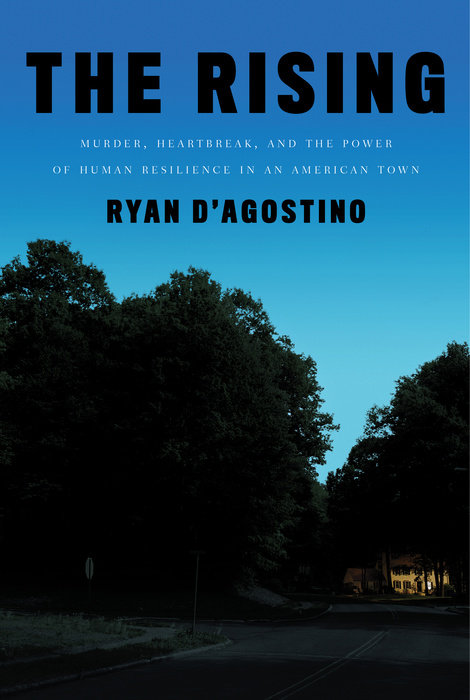
9780804140164I just finished reading The Rising: Murder, Heartbreak, and the Power of Resilience in an American Town, by Ryan D’Agostino. The devastating true story of Dr. William Petit, who lost his wife and two daughters — and was critically injured himself — in a brutal attack in the family’s Connecticut home. Amazingly, Petit has not only survived but managed to rebuild his life. This book, which I read in one day, is a real-life companion to Bill Clegg’s Did You Ever Have a Family.

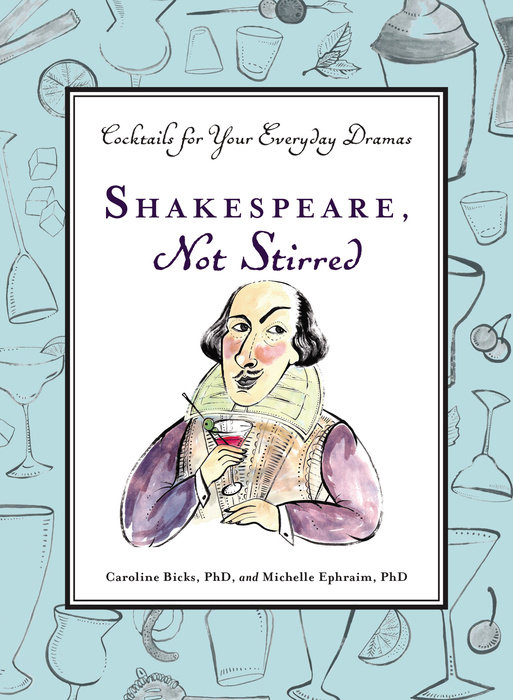
9780399173004Because every serious book needs to be followed by something light and amusing, I read Shakespeare, Not Stirred: Cocktails for Your Everyday Dramas, by two English professors — Caroline Bicks, Ph.D. and Michelle Ephraim, Ph.D.

Now some of you may be thinking: Booze? Professors? Isn’t this why we need to get rid of tenure? But hear us out. Shakespeare wasn’t just interested in Fate, Revenge, and Tragic Flaws. His plays are saturated with alcohol-related themes, and it’s our job to know about them.

These Shakespeare scholars obviously had a blast putting together this collection of recipes for cocktails and appetizers. Every page contains fun and interesting Shakespeare trivia; reading this short book is a bartending course and Shakespeare seminar combined.

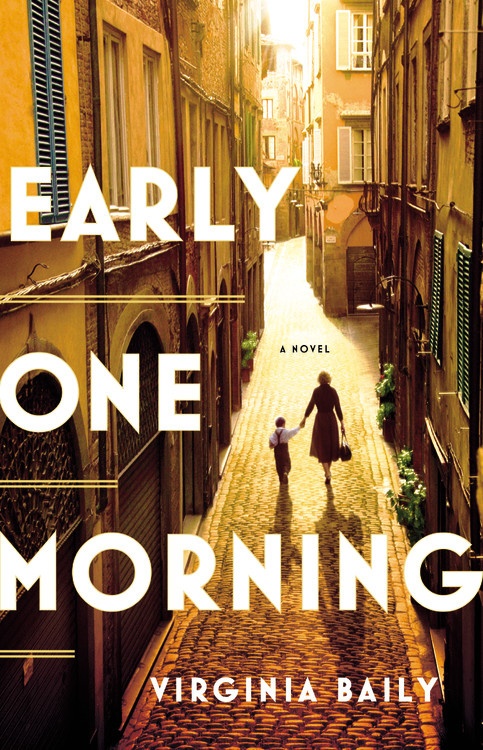
y648-1What’s next? Because I can never get too much of World War II, probably Early One Morning by Virginia Baily, about the decision a young Italian woman makes to save the life of a young Jewish boy — a decision that has repercussions 30 years later. The reviews describe the novel as not just a war story, but as an adoption story. And because I always need a laugh, Carrying Albert Home by Homer Hickam, the “semi-true” tale of Hickam’s parents’ journey from West Virginia to Florida with their pet alligator in tow. I started reading the ARC a couple of months ago, and misplaced it — I just found it, and can’t wait to pick it up again, because it’s sweet and nostalgic and funny. It’s a rough world, and as I just heard Elizabeth Berg say, there’s nothing wrong with a little sentimentality.

10 New Books I’m Looking Forward to This Fall

That old September feeling, left over from school days, of summer passing, vacation nearly done, obligations gathering, books and football in the air … Another fall, another turned page: there was something of jubilee in that annual autumnal beginning, as if last year’s mistakes had been wiped clean by summer.
Wallace Stegner, Angle of Repose

Stegner eloquently phrased what I’ve always believed — September is the true beginning of the year.  January is just another long, cold month of hibernation and diets. Fall is traditionally when the major publishers come out with their “big books”. According to the Boston Globe, “The fall book publishing season mirrors the movie industry’s Oscar-jockeying season. Publishers typically use the last few weeks running up to the holiday buying season to release their most prestigious, and commercially promising, new titles”.

Some of the books I’m looking forward to reading this fall are “prestigious” and some may be “commercially promising”, but those aren’t qualities that are important to me as a reader, or even as a bookseller. On the other hand, I don’t like to engage in reverse snobbery either —  I don’t avoid a book just because it’s popular.

The 10 books on my list sound like what I’ll want to read this fall while curled up with a blanket on my favorite reading chair.

6f7409195b3da2bf053b771b8d91d7efEarly One Morning by Virginia Baily (due September 29)

Published in the U.K. earlier this year, Baily’s second novel tells the story of Chiara, a young woman who impulsively saves the life of a young Jewish boy, whom she names “Daniele”,  during the Nazi occupation of Italy. Her decision reverberates a generation later, when a teenage girl contacts her, claiming to be Daniele’s daughter. The Guardian calls the book “highly original” noting that “The book works because it gives itself fully to its characters and their relationships, from which its ample plot spirals outwards with a confidently handled complexity and depth.”

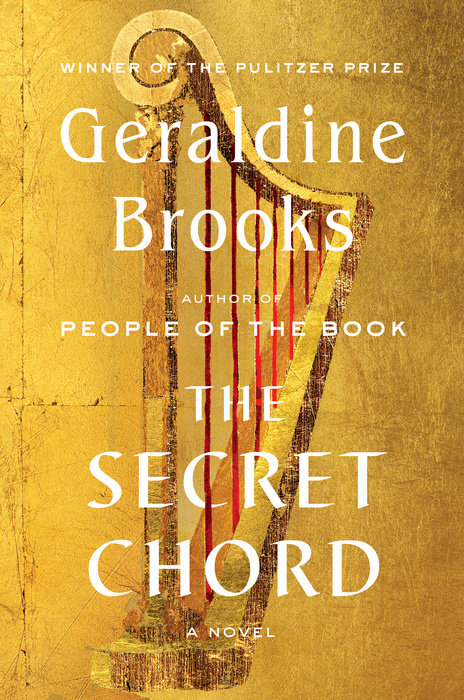
9780670025770The Secret Chord by Geraldine Brooks (due October 6)

Brooks, who’s written four previous novels, including the Pulitzer Prize-winning March, is one of my favorite authors. The Secret Chord imagines the life of the biblical King David. In a Publishers Weekly interview, Brooks explains her fascination with King David, describing his story as “encompassing most of human experience: there’s love and loss, triumph and despair, victory and defeat. ‘Everything happens to him,’ she says, pointing out that the biblical account is the ‘first piece of history writing that we have,’ predating Herodotus by 500 years.”

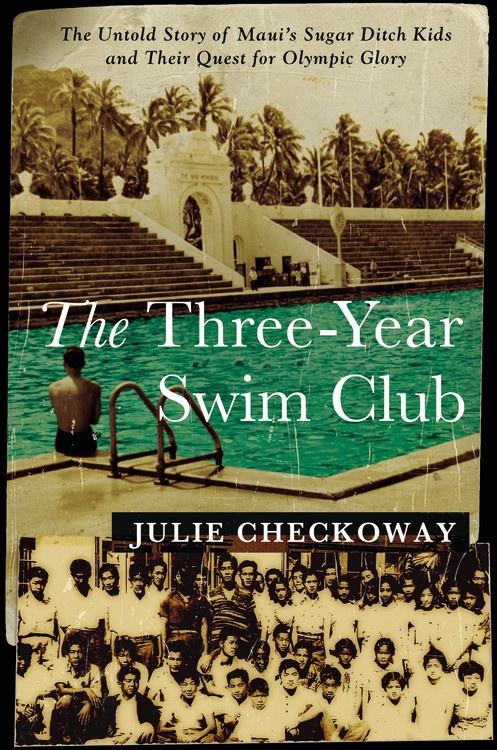
930cb8822e923066f1cfb42fa388117eThe Three Year Swim Club: The Untold Story of Maui’s Sugar Ditch Kids and Their Quest for Olympic Glory by Julie Checkoway (due October 27)

I know this probably isn’t another Boys in the Boat (what could be?), but I can’t resist an underdog sports story — and this one sounds terrific. The “Three-Year Swim Club” was a group of poor Japanese-American children who started their swimming careers training in irrigation ditches in the 1930s and later became world champions. Checkoway focuses on the team’s innovative and inspirational coach, Soichi Sakomoto, an unsung hero whose accomplishments have gone relatively unnoticed.

9781594634475Fates and Furies by Lauren Groff (available now)

This is one of the big “buzz” books of the season, so I think I should have an opinion. The first section of the book, “Fates”, chronicles a marriage from the husband’s point of view of ; the second section, “Furies”, provides the wife’s version. I’m slightly worried that Fates and Furies is going to be too self-consciously literary for my taste, but we’ll see.  Longlisted for the National Book Award.

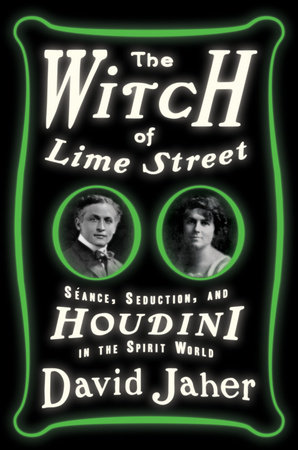
9780307451064The Witch of Lime Street: Séance, Seduction, and Houdini in the Spirit World by David Jaher (due October 6)

I love narrative nonfiction about quirky topics! This account of the rivalry between Harry Houdini, crusader against charlatans and the spiritualism movement, and Margery Crandon, self-proclaimed spirit medium, is right up my alley.

9780525429777Clementine: The Life of Mrs. Winston Churchill by Sonia Purnell (due October 27)

Clementine came to me on the recommendation of my friend and coworker Kathy, who always picks terrific nonfiction. Published earlier this year in the U.K. to coincide with the 75th anniversary of Winston Churchill becoming Prime Minister, The Independent says that Sonia Purnell’s “compellingly readable”  biography of Churchill’s wife “brings her out from behind the shadow cast by the Great Man and argues for her historical importance.”

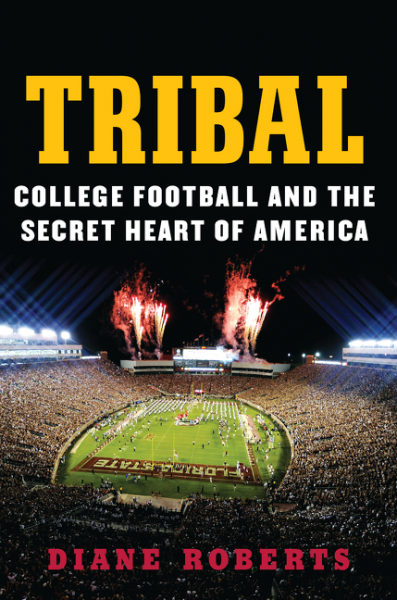
y648Tribal: College Football and the Secret Heart of America by Diane Roberts (due October 27)

I’m not crazy about football, but I am intrigued by the sport as an American cultural phenomenon. (The best book I’ve read on the subject — so far — is Rammer Jammer Yellow Hammer: A Road Trip Into the Heart of Fan Mania, by Warren St. John.) Roberts, an English professor at Florida State, says she’s a “conflicted” football fan:”I’m like those people who aren’t sure they believe in the Virgin Birth and the literal Resurrection but still show up for church because they like the music and take solace in the liturgy.”

Schiff_THEWITCHESThe Witches: Salem, 1692 by Stacy Schiff (due October 27)

I’m absolutely fascinated by the Salem Witch Trials, and for good reason — I was born in Salem, along with many of my ancestors. Pulitzer Prize winner Schiff says that we have a “completely skewed idea of what happened” in Salem; “it’s something we all know about, but we actually are relatively misinformed.”

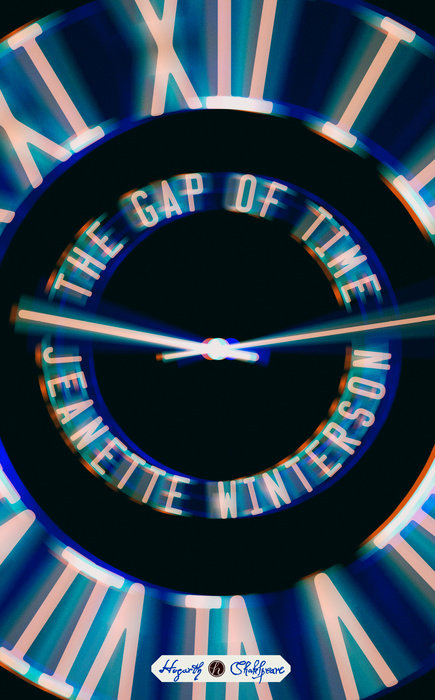
9780804141352The Gap of Time by Jeanette Winterson (due October 6)

First in the new Hogarth Shakespeare series, The Gap of Time is a “cover” version of The Winter’s Tale. The publisher’s website explains that Hogarth has commissioned well-known authors “to write prose ‘retellings’ of Shakespeare’s plays for the modern reader.” These new versions will be true to the spirit of the original dramas and their popular appeal, while giving authors an exciting opportunity to reinvent these seminal works of English literature.” What a great idea!

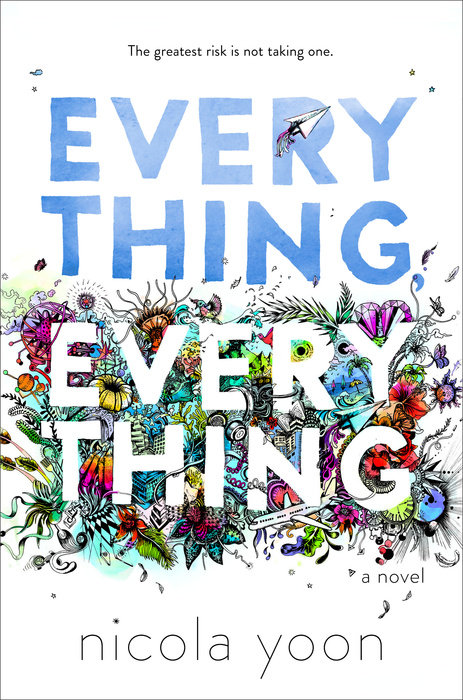
9780553496642Everything Everything by Nicola Yoon (available now)

Ann Kingman recommended this YA novel on my favorite podcast, Books on the Nightstand: “I don’t want to say too much about it, because you really should go into this book without knowing too much about it. All I’ll say is that the main character is a teenage girl who suffers from debilitating allergies that require her to stay inside of her home.” Ann hasn’t steered me wrong yet, so I’m going to add it to my list.

Happy Fall!

The Hummingbird — Book Review

9780062369543-1

a small bird
with a terrible hunger,
with a thin beak probing and dipping
and a heart that races so fast

it is only a heartbeat ahead of breaking

Mary Oliver, “Summer Story”

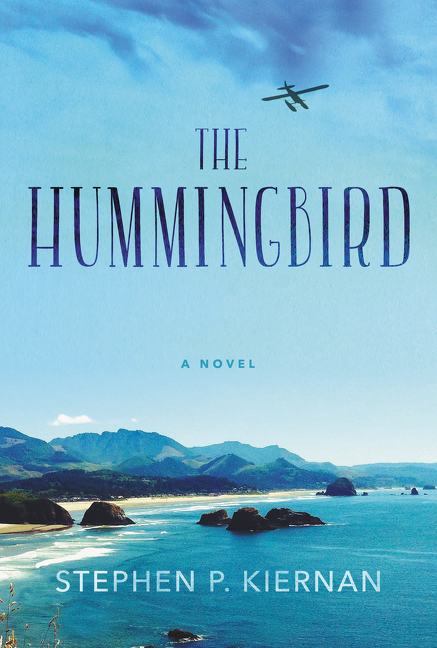
Sometimes the books I enjoy the most are the most difficult to review. Books that I fall in love with seem to blur my critical eye. It can be hard to determine just why a book hit my sweet spot. Was it the subject matter, the underlying theme, the characters, the setting, the structure, the writing style — or, as in the case of Stephen P. Kiernan’s The Hummingbird, all of these? Obscure World War II history — check. End of life issues — check. Multiple story lines (including a book within a book) — check. Admirable (if imperfect) characters — check. It’s a real joy to read a novel about people whose lives are rooted in integrity.

When Deborah Birch arrives home from an emotionally and physically draining day as a hospice nurse, she has a second job waiting for her: caring for Michael, her emotionally damaged husband. After his third tour of duty in Iraq, Michael “returned home in a permanent mood of nitroglycerine, always just one bump away from exploding”.

Deborah’s current patient, retired history professor Barclay Reed, is a “crusty coot” whose sharp tongue and temper have sent several other hospice nurses packing. Deborah is able to see the fear and emotional pain that are buried beneath his disagreeable exterior, and she is fascinated by his brilliant mind. Gradually, Barclay (“‘Professor Reed, ideally'”) and Deborah (“‘I shall call you Nurse Birch'”) form a bond, as he helps her understand her husband’s warrior mentality and she helps him make the most of his final days.

Deborah says she is “known for sticking. For staying. For never giving up. It wasn’t true only of patients but reflected my whole life”. She stays with her patients, literally until they take their last breaths, and she stays with Michael, even though “he wasn’t a husband; he was a hand grenade”.  Deborah’s job is to help patients surrender to death, but she is having a much more difficult time helping her tormented husband find peace: “Iraqi insurgents were not the only adversaries Michael needed a truce with. It was me, too.”

The Hummingbird inspires the reader to consider the meaning of peace. When do we fight and when do we surrender? Can it take greater courage to surrender than to keep fighting? How do we let go of fear and develop trust?  The Professor’s unpublished book, The Sword, examines these questions through the story of Japanese pilot Ichiro Soga and his journey to reconciliation. Kiernan deftly weaves chapters from Barclay’s manuscript throughout The Hummingbird, illuminating Deborah and Michael’s path toward healing. As Kiernan mentions in his Author’s Note, the essential details of Soga’s story are historically accurate.

Kiernan knows his material when it comes to hospice; a career journalist, he is the author of a nonfiction book called Last Rights: Rescuing the End of Life from the Hospital System and frequently speaks and consults on how to expand use of hospice, palliative care and advance directives. Deborah’s scenes with Barclay, as well as flashbacks to her experiences with other dying patients and their families, are vivid and authentic  — due not only to Kiernan’s clear writing but to his familiarity with hospice. Sue Boucher (The Cottage Book Shop) texted me as she was reading The Hummingbird to say: “I’m fascinated by Deborah’s experiences with patients at the end of their lives. She has such insight into the process.”

Curious readers may be wondering why the title of the book is The Hummingbird. A patient of Deborah’s carved her a hummingbird, a talisman she touches every day as “a solid reminder that every patient, no matter how sick or impoverished, gives lasting gifts to the person entrusted with his care.” Sometimes, Deborah discovers, these are “unexpected gifts” from the unlikeliest of sources.

For more reviews, please visit TLC Book Tours.

A Window Opens — Book Review

a-window-opens-9781501105432_lg

Sometimes you just know. And so you rearrange your life around what you glimpsed through a little window that opened for one second to show you a glimpse of something you might never get to see again. Even so, you know you will never forget the view.

Alice Pearse, heroine of Elisabeth Egan’s debut novel, A Window Opens, has an enviable life — a husband she’s crazy about, three great kids, a house in the suburbs, and a rewarding part-time job as the books editor of a women’s magazine. She even has a babysitter who’s a modern-day Mary Poppins, close and loving relationships with her parents and in-laws, and a best friend who owns the local bookstore. When Alice’s husband doesn’t make partner at his law firm and impulsively decides to open his own law practice (for which he has not a single client), Alice volunteers to become the family breadwinner. That involves making a deal with the devil — which in this case is Scroll, an up-and-coming company with a diabolically quirky corporate culture.

Like Lewis Carroll’s Alice, Alice Pearse falls down a rabbit hole and enters a strange new environment, peopled with exasperating and unpleasant characters. Alice soon discovers that Scroll, a thinly disguised version of Amazon, is the workplace from hell — especially for a book lover.  Greg, the president of Scroll (and architect of the “Paper is Poison” initiative), whose “revolutionary ideas about selling books” may not actually involve selling books at all, is thoroughly repulsive to Alice. At their first one-on-one meeting, Greg gestures to the stack of books on Alice’s desk and says:

“You really want to pollute the environment with that crap? . . . No, seriously, I just got back from a fact-finding mission at the Strand. That place is a tinderbox waiting to go up in flames. We have to ask ourselves, what kind of impact is all that paper having on our planet?”

Alice’s immediate boss, Genevieve, is more interested in how Alice reads than what she reads, asking her in an interview whether she “toggles” between her “device and carbon-based books”. Still, Alice is initially smitten with Genevieve, whom she mistakenly identifies as a fellow bibliophile. She’s flattered and intrigued when Genevieve describes Alice’s potential role at the company as the “ScrollCrier . . . someone to liaise with the publishing community at large”. After Alice joins the company, it gradually becomes clear to her that Genevieve is not her friend, and not even an effective manager :”Then it occurred to me that Genevieve might be implementing a new leadership strategy from the One Minute Manager. Befriend, then berate. Was that a thing?”

“Toggling” is one of the themes of A Window Opens — juggling roles as employee, wife, mother, friend, and daughter; switching between traditional means of connection (handwritten notes, “real” books, bookstores, in-person book groups) and modern technology (e-books, email, social media, Scroll’s “GatheringPlace”). Alice is pulled in so many directions as she “toggles” that she temporarily loses sight of what’s really important to her. Egan, who, like her novel’s protagonist, is a literary editor at a women’s magazine and a mother of three living in New Jersey, spent a year working as an editor at Amazon. In an article in the New York Times, she says, “‘That fish-out-of-water feeling was drawn from my experience at Amazon.'”

The article also mentions that the novel “is already causing a stir in the literary world, in part because it feeds into pervasive anxiety about the role of Amazon and the future of independent bookstores and publishing overall. It also arrives, coincidentally, in the midst of a debate about the work culture at Amazon.”

As I read A Window Opens, I wondered why there are so few novels that take place in office settings, given that so many people spend the majority of their waking hours in cubicles and conference rooms. Certainly, conflict abounds in offices — drama is not only found in other workplaces, such as hospitals and schools. An article in the Guardian asks, “Why don’t novels do work?”, stating that “we spend most of our lives making a living, but it’s a rare novelist that tackles this centrally important subject.” Even novels that appear to be about work actually aren’t, the article claims; “the books are set in offices, but the fulcrum of the plots tend to be about the characters’ private lives.” In her novel, Egan nicely balances (or should I say “toggles”?) the story of Alice’s career and the story of her personal life.

On the advice of early readers, Egan changed the original ending of the book. I don’t want to give anything away, so I won’t say anything more, but do me a favor: please read this wonderful book and let me know what you think of the ending. I’m dying to discuss it!

WWW Wednesday — Family Version

IMG_1705Yesterday we had friends visit for lunch who had never been to our lake house before. The first thing one of them said after admiring the view was, “Wow! What a great place for reading.” She’s absolutely right — there’s no better place for reading than sitting outside on a beautiful summer day with the lake and mountains in the background. There are always plenty of other things to do, especially when the sun is shining, but we all treasure our reading time.

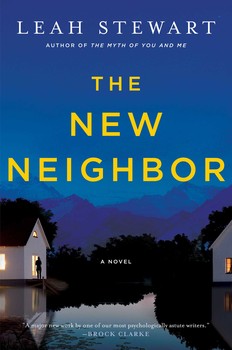
the-new-neighbor-9781501103513_lgI just finished reading several books that are perfect for summer reading. My colleague Di recommended Leah Stewart’s The New Neighbor, a terrific page-turner about two lonely women in Sewanee, Tennessee who are both hiding painful secrets. Jennifer Young and her 4-year-old son move in near 91-year-old retired nurse Margaret Riley, and Margaret soon becomes obsessed with digging into Jennifer’s past. The New York Times says “Both women, whom we come to know in great depth, are guarding secrets and neither can afford to make friends . . . Stewart never relaxes her tight focus on these complex characters.” Stewart based the novel in part on her grandmother’s experiences as a World War II battlefield nurse.

9780553392319We Never Asked for Wings, by Vanessa Diffenbaugh (out in hardcover yesterday) is, like Diffenbaugh’s The Language of Flowers, the story of a young woman in crisis.  When Letty Espinosa’s parents return to their native Mexico, Letty must finally grow up and become a parent to her teenage son, Alex, and six-year-old daughter, Luna.  Diffenbaugh does a wonderful job creating vivid and sympathetic characters. I was particularly drawn to Alex, who has always regarded his mother as more of an older sister than as an authority figure.  I passed the novel along to my mother, who enjoyed it as much as I did. I liked The Language of Flowers very much, so I was nervous when I started reading her sophomore book. Surprisingly, I liked We Never Asked for Wings even more — it’s more true-to-life, with none of the magical realism that made The Language of Flowers a less-than-perfect book for me. Vanessa Diffenbaugh will be visiting Lake Forest for an author luncheon next week, and I’m looking forward to meeting her and asking her a few questions.

9780804140034Maybe some people don’t find nonfiction books about war appropriate summer reading, but Jeff and I do! I am fascinated by the French Resistance, and Alex Kershaw’s Avenue of Spies: A True Story of Terror, Espionage, and One American Family’s Heroic Resistance in Nazi-Occupied Paris is a worthy addition to my collection of World War II books. It’s not on a par with In the Garden of Beasts, by Erik Larson, but it’s a similar story: an American family, living in occupied Paris, shows unusual courage in the direst of circumstances. American physician Sumner Jackson, his Swiss wife, Toquette, and their son, Phillip, are given the opportunity to leave France when the French surrender is imminent, but they elect to stay and join the Resistance — while living almost next door to the Parisian headquarters of the Gestapo.

51ZVQ8T7JKL._SY344_BO1,204,203,200_Jeff is delving deeply into World War I, thoroughly absorbed in Catastrophe 1914: Europe Goes to War, by British military historian Max Hastings. We heard the author speak at an event last year, and Jeff is finally getting to the book, which the New York Times calls “a highly readable narrative that should — but won’t — be the last word on the subject.” He also recently read Testament of Youth, which is author Vera Brittain’s memoir of her experiences as a nurse during World War I that led her to pacifism, political activism, and a writing career. It’s a little embarrassing that Jeff has finished the book and I have just started it, because it’s my book group’s August selection.

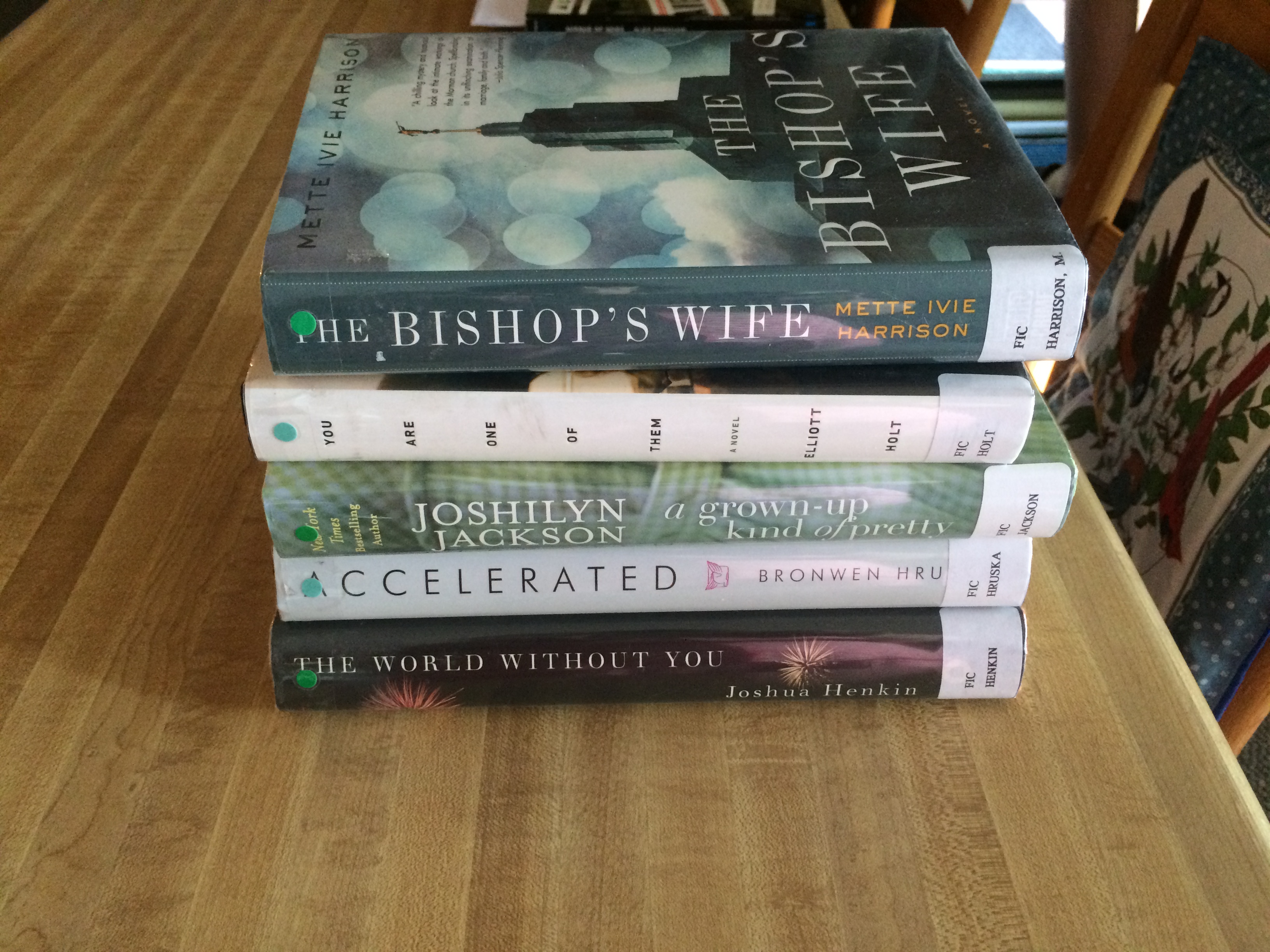
IMG_1697My mother wins the award for most prolific reader. (Also, most prolific crossword puzzle solver . . . actually, the only crossword puzzle solver.) She’s thrilled that our little town recently rebuilt and expanded its public library, and regularly comes home with big stacks of library books.  She’s read some excellent books, and particularly recommends You Are  One of Them, by Elliott Holt. One of my favorite authors, Maggie Shipstead, gave Holt’s debut novel a rave review:

Inspired by the story of Samantha Smith, the American schoolgirl who wrote to the Soviet premier Yuri Andropov in 1982, and asked if he intended to start a nuclear war, has the momentum of a mystery but is, more essentially, a consideration of how we are haunted by loss . . . The main thing, though, is that You Are One of Them is a hugely absorbing first novel from a writer with a fluid, vivid style and a rare knack for balancing the pleasure of entertainment with the deeper gratification of insight. More, please.

I just emailed the bookstore to order a paperback copy of You Are One of Them — I find that library books and lakeside reading don’t mix well I’ve already managed to drop one book in the water and spill coffee an another. Some of my mother’s books go back to the library unfinished. My mother feels, and I agree, that you can usually tell after a few pages if a book is worth reading.  Isn’t that the best thing about libraries? You haven’t invested anything in the book so there’s no pressure to finish. And the worst thing is that you have to take care of the books . . .

What did you just finish reading? What are you currently reading? What do you think you’ll read next?