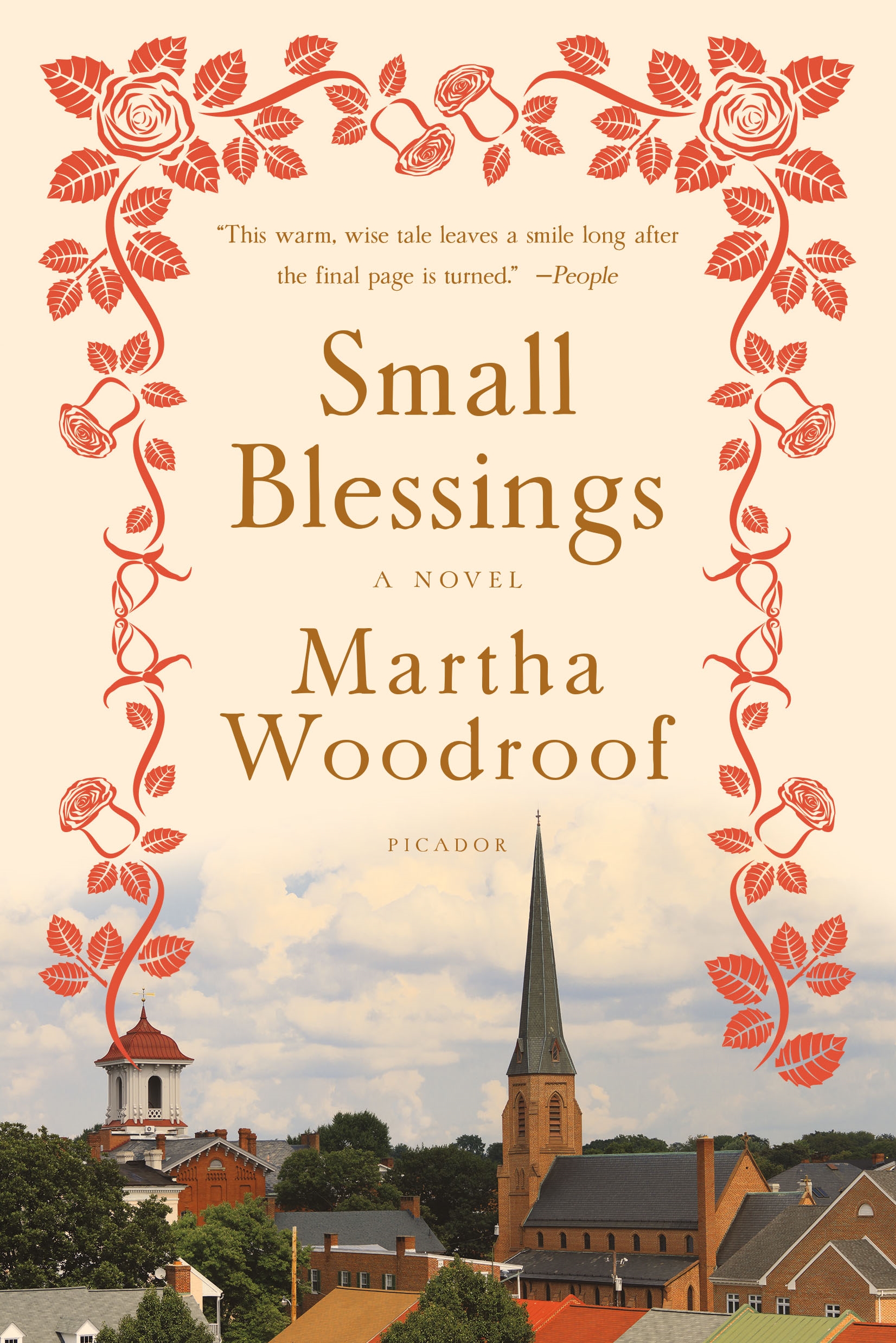
10 Questions for Martha Woodroof, Author of Small Blessings

Small Blessings_tp

Small pleasures; deeply enjoyed. How old was she before she recognized this as the true joy of living?
Perhaps she should write a book. Or perhaps not.
Too many people wrote books already.
Agnes Tattle

Small Blessings, just released in paperback this week, had the misfortune of being published in hardcover on the heels of The Storied Life of A.J. Fikry. Both novels are about lonely, bookish people who find love, with the help of orphaned children who show up unexpectedly. They’re about second chances in life — and now Small Blessings, with a gorgeous new cover, has a second chance at finding its readership. It’s a truly special novel, and I’m glad I finally discovered it.

I had the pleasure of “talking” with Martha Woodroof in an online interview, and I mentioned to her that one thing that really resonated with me in the book was the loving relationship between the protagonist, Professor Tom Putnam, and his mother-in-law. Woodroof says that mothers-in-law are the “much-maligned and under-appreciated other mothers in our lives”, and she’d like to start a campaign to make sure they receive equal recognition on Mother’s Day. I’m all for that, since not only do I have a wonderful mother-in-law, I’m now a mother-in-law myself!

When you publish a novel, lots of lovely people write to tell you who their favorite character is. And the clear frontrunner in the Small Blessings favorite character sweepstakes is – ta da! – Agnes Tattle, the protagonist’s seventy-year-old mother-in-law. And why shouldn’t she be? Agnes Tattle is a smart, tough realist. She’s taken great whacking lumps, endured tremendous grief, and yet she still remains unafraid to love her rather unconventional family with all her craggy heart.

Martha Woodroof indulged my curiosity about her writing career and Small Blessings, answering my long-winded questions in detail.

Maybe it isn’t polite to start out by talking about your age — but I think readers would like to know that you became a published novelist in your mid-sixties. I remember years ago reading a newspaper advice column (Ann Landers, maybe?) in which the advice-seeker asked if she was too old to go back to college — “I’ll be 60 when I’m done!” The advice columnist’s answer was, “And how old will you be if you don’t go?” What inspired you to write Small Blessings, and what influence did your age and life experiences have on the writing of the book?

Small Blessings may be the first novel I’ve published, but it is the third one I’ve written. I taught myself how to write novels by writing novels; which is the same way I learned how to be a restaurant owner and a public radio producer/feature reporter.

I have always wanted to get better and better at whatever I’m doing, and I’m also pretty much unafraid to fall flat on my face if the fall is educational. In that respect I am like Mavis Callahan (the mother of Small Blessings‘s female protagonist Rose Callahan) in that one of my best qualities is that I bounce.

Small Blessings is a novel about facing your small, unacknowledged fears and defying them. It tells the story of nice people who have gotten stuck denying something important about themselves. They gotten comfortable living with that denial only to have a chance at real happiness if they will dare to be fully themselves.

I, myself, learned the necessity of being who you are in the world as it actually is through much trial and much error — much bouncing, if you will! And much bouncing takes a lot of time. So I don’t think I knew what I needed to know in order to write Small Blessings until I’d done quite a lot of living myself.

And please, I never consider discussions of my age impolite. My age is part of who I am, after all.

Reading your wonderful book was such an enjoyable and satisfying experience. For one thing, the novel takes place in two of my favorite literary locales — a bookstore and a college campus. What led you to set the novel in The Book Shop?

Oh golly, while I can truly say that none of the characters in Small Blessings are based on anyone I know, The Book Shop is a flat-out tribute to The Sweet Briar College Bookstore, where I worked for about a year-and-a-half back in the nineties.

I’m a long-term recoverer from substance abuse, and that job was the first job I had in sobriety that really challenged me. Skipper Fitts, the then-Director, took me in like a homeless kitten and gave me an opportunity contribute to a college community in creative, meaningful ways. Setting Small Blessings there is, in some ways, an expression of gratitude to Skipper, to my co-workers at The Bookstore, and to the Sweet Briar College community.

Sadly, the Board of Directors has chosen to close Sweet Briar for the murkiest of reasons. The alums, faculty, and Amherst County Commonwealth Attorney have all mounted legal challenges to this decision. Here’s hoping SBC lives on!

I think people yearn for uplifting books with likable characters, and that describes Small Blessings. (I can’t tell you how many times people have told me they didn’t like a book because they found the characters unlikable.) Could you tell us a little bit about how your characters came to be?

I’m not sure I can. They were just kind of there. I got up one morning, started writing the opening scene at The Bookstore, looked around to see who was there at the time, and rolled with it.

How did the title of the book come to be? Was it the working title all along? (“He would at least have a comfortable beginning to this long tumultuous day. Small blessings.”)

As I remember, the title was right there the morning I sat down to write the first scene. It’s a phrase from my childhood that I’ve always loved.

After attending a booksellers’ conference In Seattle last year, you said, “What indie people want from me is a sense of whether my book belongs on their shelves; i.e. can they visualize actual customers to whom they can hand the novel and say with assurance, “You will love this.” You are absolutely right. If you were a bookseller like me, what would you say about Small Blessings to a potential customer?

Hmmm. I would make a rotten bookseller, I think, as I always go on about books I love.

However, since you’ve asked me to take a stab at bare-bones brevity, I would say Small Blessings is the story of a truly nice man who risks his comfort in the cause of happiness.

Who are your favorite contemporary authors? I love the description you use in your blog of “warm bath” storytellers — authors you can “sink into without fear of being surprised by hopelessness.” 

I’m rather an omnivore when it comes to reading. Really. The only thing I ask is that a book be well-written (and this includes not being self-consciously writerly), and that it tell a story that expands the range of my own experience. At the moment, I’m reading Dennis Lehane’s Live by Night, which I’m finding pretty yummy. After I’m done, I plan to read a new biography of Ben Franklin. And I just reread a novel (Friday Nights) by Joanna Trollope who is one of my warm bath novelists.

As you’ve already figured out, I am not much a fan of hopelessness for hopelessness’s sake in fiction. Nor am I a fan of the saccharine. Give me real (fictional) people facing real (fictional) problems!
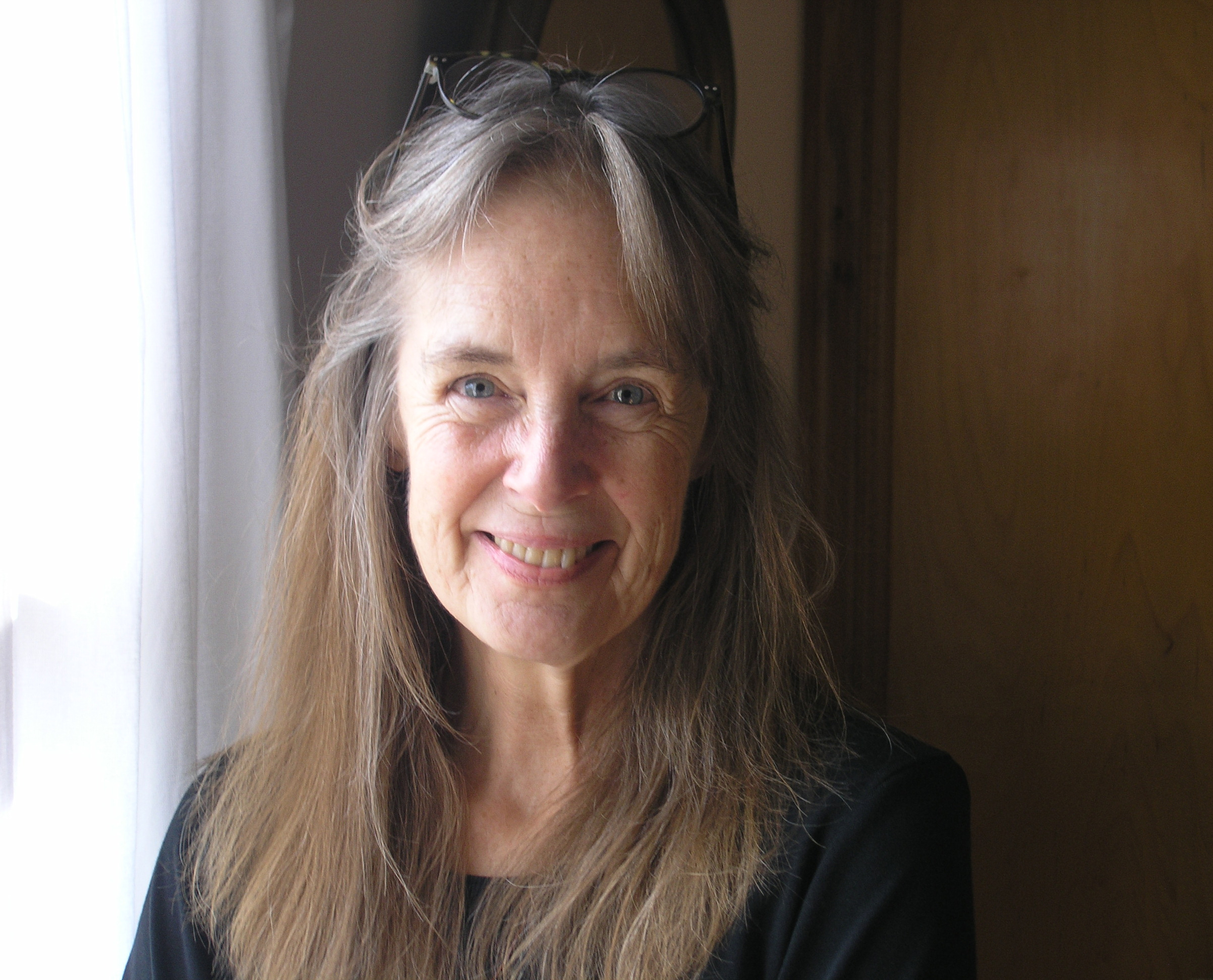
Martha Woodroof_cred_Charles WoodroofHow have your life and writing career changed since the publication of Small Blessings?

I suppose the biggest change is in the focus of the conversations I have with people I meet. As a public radio feature reporter, I’ve spent years making people comfortable talking about themselves. But since the publication of Small Blessings, I’ve had to learn how to be comfortable talking about myself.

Are you a member of a writers’ group, and if so, what part does it play in your life and career? Do you see yourself as a part of a literary community?

I’m not a member of a formal writers’ group, but I know many writers. As we writers tend to talk about what we do and how we do it, I feel very much a part of a literary community.

Do you have a favorite bookstore, and if you do, what makes it special?

I really love any Indie bookstore, for the same reason that I love any restaurant that is chef-owned. Both have souls un-dulled by corporate culture.

If we could have a glimpse of your personal library, what would it look like? How is it organized?

In our house the words “organized” and “library” do not belong in the same sentence. Every room except one has a bookshelf and all those bookshelves are overflowing. The only truly arranged bits are the shelf where I’ve stowed the books I reported on nationally for NPR and the shelf in the guest room that holds an almost complete collection of Elmore Leonard novels.

Need a Mother’s Day present? Of course, I recommend Small Blessings! Martha Woodroof also has some terrific recommendations for novels “in which women of a certain age shine” on her blog.

The Mapmaker’s Children — Book Review and Giveaway

The Mapmaker's ChildrenJohn Brown’s body lies a-mouldering in the grave,
John Brown’s body lies a-mouldering in the grave,
But his soul goes marching on.

When abolitionist John Brown’s daughters hear this song for the first time they are shocked: “Annie gasped and covered her mouth in horror. Even Sarah took a step back.” Less than a year before — on December 2, 1859 — their father had been executed for “crimes committed during the raid on the United States Armory at Harpers Ferry . . . the capital offenses of treason, murder, and conspiracy with no cause.”

John Brown, unlike most anti-slavery activists of his time, believed that armed insurrection was the only way to defeat the evil of slavery. Brown enlisted his sons in the fight against the “blasphemy of slavery”, but kept his wife and daughters ignorant of the details of their work. Sarah, who has survived a life-threatening illness that left her infertile, discovers that their home is a stop on the Underground Railroad:

Sarah knew her father was deeply invested in the Great Abolition Calling. Her brothers had fought and died in Kansas Territory for it, but the Brown women had never been privy to their plans and actions. John thought it too dangerous. A woman’s role was to be the helper — to tend to the household and raise strong children in service to God’s purpose.

John Brown, age 46
John Brown, age 46

Sarah, however, can never bear children, and her artistic gifts help many “passengers” on the Underground Railroad find their way to freedom. Her father even asks her to draw a map that will lead slaves in the area surrounding Harpers Ferry to a meeting point where they could join Brown and his men — a map that is seized by “southern lawmen”, making Sarah a target for arrest.

More than 150 years later, a young couple moves into a historic home on Apple Hill Lane in New Charlestown, West Virginia, not far from Harpers Ferry. Eden and Jack Anderson have struggled with years of infertility, and their marriage is at the breaking point. In her quest for the “seal of authenticity that could blast their real estate values through the roof” — a listing on the National Register of Historic Places — Eden discovers that the house may indeed have connections to the Underground Railroad.  A Civil War-era porcelain doll’s head, a hidden key, and a secret root cellar are all interesting clues — but what do they mean? With the help of Cleo, the little girl next door, and Mrs. Silverdash, local historian and bookstore owner, Eden attempts to solve the puzzle.

Eden’s research eventually brings her indirectly to another infertile woman, Sarah Brown, who visited the house on Apple Hill Lane 150 years earlier. Sarah, the “mapmaker”, may not be destined to have children, but her legacy is just as real and valuable. As Eden comes to terms with her possible infertility, she sees that a life without children can still be valuable and productive. Author Sarah McCoy seems to be asking the question that Mary Oliver asks in her poem “Wild Geese”: “Tell me, what is it you plan to do with your one wild and precious life?”

The novel is expertly constructed, although sometimes relying too much on coincidence, with the two narratives coalescing in a very satisfying and surprising way. One problem with novels that use dual narratives is that one of them is usually more interesting than the other, and The Mapmaker’s Children is no exception. The drama and tragedy of Sarah’s life overpowers the sadness and disappointment of Eden’s. Of course, suffering is relative, and the reader’s heart goes out to both Eden and Sarah, who have experienced loss and grief but face the future with hope and courage. Eden says to 11-year-old Cleo:

We can’t force life to do what we want when we want it. We can’t change yesterday or control tomorrow. We can only live today as best we can. And it just might turn out better than expected.

Sarah’s perspective changes after she nearly dies from dysentery:

Sarah had been on her deathbed and had risen a new person, tired of being on the outskirts, tired of waiting for fate to decide if she lived or died, tired of powerlessness. If she was damaged and never to have the family of her sisters and mother, what was there left to fear?

McCoy’s greatest accomplishment in The Mapmaker’s Children is her vivid depiction of Sarah Brown. She says, “I was more concerned with capturing Sarah’s heart and future impact in the present day than on writing an official profile.” That sentence perfectly describes the value and historical fiction. I’ve often struggled with an explanation of historical fiction. When someone asks me, “Is it true?”, I’ve said, not very coherently, “Well, yes, the author did a lot of research, but made some things up, like letters and dialogue, and changed some things around to make a better story.” McCoy explains it much better:

My role as the storyteller was simply to use the tools of my craft and imagine what Sarah’s life might’ve looked like, how she felt, her struggles and joys, what she might’ve dreamed, even as I dreamed her into existence. I did my homework for years: researched newspaper articles, letters, distant Brown relatives alive today, Sarah’s real-life art, Underground Railroad artifacts, symbols, and codes, bootleggers, baby dolls, and a colossal amount of John Brown information available in library archives.

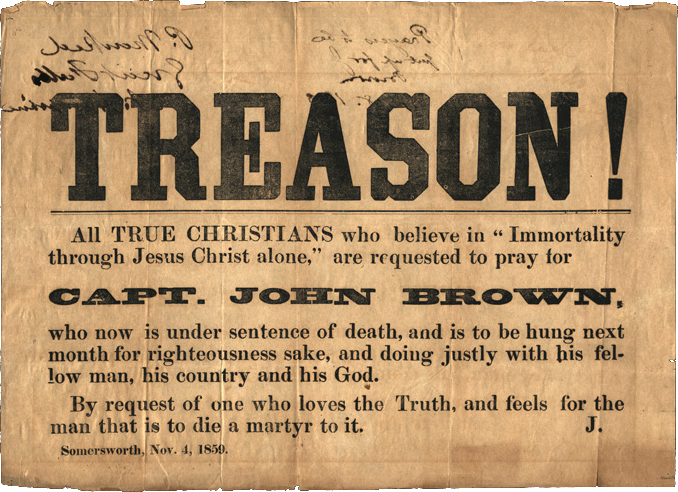
John_Brown_-_Treason_broadside,_1859If you’re interested in learning more about John Brown — who remains a controversial figure today — I highly recommend The Good Lord Bird by James McBride (the National Book Award winner for fiction in 2013). John Vanderslice, an author and a professor of creative writing, teaches the novel in his class on historical fiction. He says, “The narrator’s voice just takes hold of you and doesn’t let you go. And what a way to bring crazy John Brown alive for an audience. I don’t think I can ever think of John Brown the same way after reading McBride’s book.”

Now, when I think of John Brown, I will think of Sarah Brown, whose maps and artwork demonstrate that we may have untapped talents and courage — qualities that are hidden like the root cellar on Apple Hill Lane, waiting to be found.

Crown Publishers is giving away one hardcover copy to a Books on the Table follower (U.S. entries only, please). To enter, please leave a comment with your email address or email me at bksonthetable@gmail.com.

To read more reviews of The Mapmaker’s Children, check out TLC Book Tours.

The Dream Lover — Author Interview

9780812993158

I would eventually see that certain kinds of melancholia are natural for many artists, and not only melancholia but strange kinds of behavior that are difficult for anyone who is not an artist to understand, let alone embrace.
George Sand in The Dream Lover

Elizabeth Berg has been one of my favorite authors for a very long time. She’s amazingly talented and prolific, even though she didn’t publish her first novel until she was in her mid-forties. Durable Goods came out in 1993, and almost every year since then I’ve had the pleasure of reading a new Elizabeth Berg novel or short story collection. Some years she even published two books. I was disappointed last year when no Berg book appeared on our store shelves.

“Aha!” you say. “She’s turning into a slacker.” Actually, no. A couple of years ago, Berg decided to change gears and write a historical novel. As she tells it, one day she was reading about George Sand in The Writer’s Almanac and became curious about Sand’s life and times, particularly what she calls “the good stuff” — “deeply personal things about her character as well as her thoughts and feelings.”

Berg called her friend Nancy Horan, author of two biographical novels (Loving Frank and Under the Wide and Starry Sky) and implored her to write about George Sand. In a conversation with Horan (which appears at the back of The Dream Lover), Berg said to her fellow author:

I thought you would be the perfect person to write a novel about her; I so admired the way you provided intimate access into the character of Mamah Cheney in Loving Frank . . . I believe when you answered the phone I said, “Nancy! You have to write about George Sand! She’s so interesting! . . . You said, “You write it!” I told you I couldn’t, possibly. But then the idea wouldn’t go away, and so I plunged in, buoyed up by the last words you said to me: “Oh, of course you can write it. It will be fabulous!”

Horan was right — it is fabulous. Readers will be captivated by Berg’s lovely and perceptive rendering of George Sand’s brilliant and tumultuous life. Sand, born Aurore Dupin, left her unhappy marriage to become an independent woman — and eventually the first female bestselling author in France. The questions Berg raises through her imaginative portrayal of Sand’s inner and outer lives are as relevant today as they were in 19th century France. Must one pay a price for fame and success? How can a woman balance motherhood with her career?  What does it mean to be a female artist?

“Tell me, George. Do you wish you’d been born a man?”

I thought for a moment, then said, “In my youth, I wished that. I very much admired my father and I wanted to be just like him . . . But now I find I don’t wish to be either man or woman. I wish to be myself.”

Berg “plunged in” by reading Sand’s very lengthy autobiography, Story of My Life, and found that Sand took hold of her imagination:

George Sand entered my subconscious. I began to dream of her; then, I thought, to dream like her. I know that might sound arrogant or at least unlikely. But I believe she captured me, and I was a most willing prisoner.

Berg was kind enough to answer my questions about The Dream Lover, even though she’s on an exhausting month-long book tour. The tour started here in Chicago, and Lake Forest Book Store was thrilled to host a luncheon (at a French restaurant, of course) and an evening event at a nearby library on publication day.

499px-George_Sand
Portrait of George Sand, 1835 (age 31)

I have to admit I knew very little about George Sand before I read The Dream Lover. I knew two things: that she was an 18th century French writer and that she wore men’s clothing. I suspect that’s much as most of your readers know. The character you brought to life is, as you say, “a mass of contradictions”. How would you compare the process of developing George Sand’s character on the page to the process of bringing a completely fictional character to life? And is any character completely fictional, or do they all incorporate elements of people you’ve known?

You’ve heard the phrase,” You can’t make this stuff up!”, right? That was my experience in writing about George Sand. Her life was so interesting, so full of outrageous incident, such tragedy, such scandal, but also such joy and tenderness and catharsis I could never get away with trying to suggest such things would be plausible if I were writing about a fictional character. Truth really is stranger than fiction!

697355-3How do you think modern readers who’ve never read the work of George Sand before would respond to her work (in translation)? Is there a particular novel that you would recommend? And are her works still widely read by the French?

I don’t think George Sand is widely read by anyone, actually. But one book I would recommend is Lettres d’un Voyageur, which is Sand’s travel writing and contains some of the most ravishing descriptions of Venice I’ve ever had the pleasure to read. Also, if you’re up for a loooooong book, try her 1,000+ page autobiography. It’s fascinating, and one of the things I liked best about it is the way that she respects where she came from, and devotes a great deal of space to her grandparents and parents. I also recommend her letters, especially those between her and Gustave Flaubert.

Did your research involve any travel to Paris and/or the French countryside, or any study of French?

I’ve been to Paris. I purposely did not go to Nohant, because I wanted to see it as it was, not as it has become. Now that I’ve finished the book, however, I’m dying to go. I minored in French in college, but I’m afraid I’ve forgotten most of it.

George Sand had to change her name to succeed as a writer — and today, I am sorry to tell you, many men won’t read books they perceive as being “chick” books. (This includes about 90% of literary fiction.) Why do you think this is? I find women to be much more catholic in their reading tastes than men, and I’m always wondering why. 

Well, I guess the simple and unfortunate answer is that women are still second-class citizens, still often times not taken seriously, not given the respect (or salary or recognition) that they are due. A lot of people are tired of hearing that, but their ennui doesn’t mean the problem isn’t real. I make a concerted effort to support women writers—and women in general. That’s all I can do.

If we could have a glimpse of your personal library, what would it look like? How is it organized?

Like most writers, I have a gazillion books: literary fiction, poetry, essays, memoir, non-fiction titles, graphic novels. Organized? No. It is a mess. Once, I hired three college girls to organize my library and they made it worse. Help!

Could you tell us about your writers’ group(s)? Do you see yourself as part of a literary community in Chicago and how would you characterize that community?

My writers’ group is made up of seven women who meet weekly at a study room in the Oak Park Public Library. Not all of us are there every time, but we try to be. Anyone who brings pages reads them aloud and is then critiqued by the group. We are kind, but honest. Supportive and fun. Often times, we bring good food to share. I love that part. If only dogs could come to the library, it would be perfect. I do see myself as part of a literary community in Chicago, and am interested in working with others to convince publishers to send us more authors.

In your interview with Nancy Horan, you say, “I hope readers will finish the last sentence of The Dream Lover and say to themselves, Boy! That was a good read!” What have you read recently yourself that made you say that? Do you have any favorite historical novels?

Well, I loved Loving Frank, of course. Favorite recent reads include Rachel Joyce’s Perfect, Karl Ove Knausgaard’s My Struggle (volumes 1 and 2) and Anne Tyler’s A Spool of Blue Thread. I thought Akhil Sharma’s Family Life was astonishingly good.

One woman brought me a wrist corsage--for the second time, as she pointed out.
One woman brought me a wrist corsage–for the second time, as she pointed out. “Oh, I love wrist corsages!” I told her. “I know,” she said. “You told me that last time” “I always wanted one to wear to the prom, but I never got one,” I said, and she said, “I know, You told me that last time, too.” I snapped that corsage right on and I felt like Principessa Elizabetta.

As you well know, an author’s work doesn’t end when her book is published — a whole new phase of her job begins. How do you feel about that — do you enjoy promoting the book, which involves social media and public speaking?

I love meeting people who read and like my books, and am so grateful when someone comes to a reading and says, “You know, I’ve never come to a reading before. This was fun!” I’m not nuts about doing interviews on the phone when I can’t see the person’s face; it makes me nervous. I’m not nuts about hanging around airports day after day. But I AM nuts about room service, and the fact that my wonderful publisher is willing to send me on the road.

I’m sure readers would love to hear about your Writing Matters events. Could you tell me a little bit about what inspired you to start them? I know you’ve mentioned that you are trying to gain some visibility for under appreciated authors. I’ve always wondered why some books “take off” and others — just as wonderful, if not more so — don’t find their audience.

Writing Matters was inspired because one day I was talking to a friend and extremely good writer, Leah Hager Cohen, about a book she had coming out. I asked if she were coming to Chicago on tour; I wanted to go to one of her readings. She said oh, her publisher didn’t tour her. She didn’t sell enough books to warrant a tour. Here is a brilliant writer (and wonderful, kind and engaging personality) who got a rave review on the front page of the New York Times Book Review. Here is someone who is such an inspiration to read, so talented. I told her, “Well, you’re going to come to Chicago now, because I’m going to do an event for you.” With only three weeks to plan, we rented the Hemingway Museum, got food and flowers and wine , made posters to advertise and programs to hand out, and voila: Writing Matters was born. At the first reading, we had 75 people, at the second, 150.

We’ve now completed a year’s worth of every-three-month readings, and next time we’re doing something different in that we’re having a children’s book writer: the delightful Amy Krouse Rosenthal. (The time after that, I’m shooting for highly esteemed poet Charles Simic.) I wanted Writing Matters to serve author, community, and audience, to make it an elevated kind of book signing that would be a real evening out. All proceeds go to buy books for children who would otherwise not have them; currently we give the money to Magic Tree Bookshop to set up an account for the kids at Hephzibah. They can go to the bookstore and pick out whatever book strikes their fancy. It’s really rewarding to see authors get the audience they deserve, audiences to get the authors they deserve, and to serve the community not only by buying books for children but by advertising (for free) local business and restaurants that we like on our programs. There is always a reading by a kid for a warm-up act, and there is always a surprise of some kind. It’s a lot of work to produce, but totally worth it.

I recommend you check out Elizabeth Berg’s Facebook page, which is an absolute delight — many of her posts are actually essays, and I think you’ll find them inspiring and uplifting.


Where They Found Her — Book Review

Where-They-Found-Her-198x300

In order that two imperfect souls might touch perfection.
E.M. Forster
(note from Justin Sanderson to his wife, Molly)

Is it just me, or do other readers find the adjectives used on book jackets to describe the book’s contents pretty silly? Where They Found Her, Kimberly McCreight’s second novel, is called a “blistering novel of psychological suspense.” At least it wasn’t labeled “luminous” — I guess that worn-out term is reserved for literary novels.

Blistering or not, Where They Found Her is fast-paced, multi-layered, meticulously constructed, and peopled with interesting and believable characters. If you pick it up in the evening, prepare to stay up late, because you won’t want to stop reading. Readers sometimes say they read a book in a “single sitting”, and you can’t take that too literally (don’t they have to get off the couch and get a snack?), but I did read this book in one day. It’s that kind of book. To quote McCreight herself, who was actually describing Gillian Flynn’s novels, it’s “character-driven, miss-your-subway-stop suspense.”

Like so many successful suspense novels, Where They Found Her is narrated by multiple characters — another reason to consume this book in big chunks. If you read a chapter or two every day, you’ll undoubtedly get confused. McCreight skillfully adds to the varied perspectives with journal entries, records of psychiatric sessions, transcripts of online chats, and online newspaper articles (with reader comments).

The book opens with an unnamed narrator disposing of a bag of evidence in a dumpster behind a suburban tanning salon:

I have to shove hard to get the blood-soaked towels in, even harder to push the canvas bag through the thin crack. I’m afraid for a second it’ll get stuck. But when I push my whole weight against it, it flies through so fast that I almost smash my face against the edge of the dumpster. When I pull my hands out,they’re covered in blood. For a second I think it’s mine. But it’s not mine. It’s the baby’s blood. All over me again, just like it was an hour ago.

What has happened, and who is telling the story? Readers won’t find out for almost 300 pages, with plenty of detours along the way. It’s revealed in the first couple of chapters that the body of a newborn baby has been found in the woods near the college campus in the upscale suburb of Ridgedale, New Jersey.

Molly Sanderson, wife of a Ridgedale University professor and new to the staff of the Ridgedale Reader,  investigates the story — which turns out to be much more complicated than she originally anticipated, leading back to unsavory secrets in Ridgedale’s past. Molly’s own past, which includes a painful childhood and the recent loss of her baby, influences her reporting of the crime — or is it a crime?

“A crime scene? That seems to presuppose a murder. Do we know that?” I asked, pleased that I’d picked up on his jumping of the gun.

“Good point, I suppose we don’t,” Erik said. “Our source in the department was vague . . . Despite what they seem to think, the local police aren’t entitled to any sort of special treatment from us, but they’ll already be on the defensive with the university to contend with.”

Barbara, wife of the local police chief, Sandy, a high school girl with a difficult home life, and Jenna, Sandy’s troubled mother, also lend their points of view to the disturbing events in Ridgedale. These events include not only the mystery of the body found near the campus, but other, perhaps even more compelling, subplots involving the seamy underbelly of a seemingly peaceful college town. The less said about these subplots, the better — if you’d like to read a review that does include spoilers (and participate in a discussion), please visit Sarah’s Book Shelves. Sarah includes her “wrong guesses” and “lingering questions”.

In an interview on BookPage, McCreight was asked, “What’s it like writing in multiple voices?”

Extremely liberating and occasionally very tricky. My favorite part of writing is being able to live in someone else’s skin. Multiple points of view mean becoming several different “selves,” which is all the better. It also gives me the freedom to explore the narrative from several perspectives, making the process of discovery that is so integral to my writing process that much more exciting.

That said, it does take effort to keep the voices distinct while ensuring that each character’s story has a well-formed arc, internally consistent and effectively knit into the broader whole.

McCreight is adept at shifting perspectives, gradually adding clues that may lead readers to solve the puzzle of the dead newborn. Not this reader, however; I was completely surprised when I learned the identity of the parents. On rereading sections of the book, I realized I had overlooked certain subtle hints. McCreight does include some red herrings — and again, those became more obvious on a second reading. (The New York Times quipped that McCreight’s first novel, Reconstructing Amelia, is “a mystery with enough red herring to stock Lake Michigan.”)

Molly’s English professor husband, Justin, leaves little notes for Molly to find. Readers will find that these notes — all quotes from famous writers — work, as McCreight mentions in her BookPage interview, “on multiple levels”. And They Found Her works on multiple levels as well — for example, who is the “her”? Who are the “they”? The answers are not as simple as they first appear.

This novel, like Reconstructing Amelia, is a perfect crossover book for teenagers. YA readers will enjoy the fast pace, the 17-year-old narrator, and the campus setting. McCreight is currently working on YA speculative fiction (The Outliers), focusing on this question: “What if women’s greater emotionality—so often deemed a sign of weakness—was, in fact, our greatest strength?” The question is interesting in light of Where They Found Her. Molly’s emotional response to the news story she’s asked to cover actually does provide her with strength and purpose.

For more reviews of Where They Found Her, please check out TLC Book Tours.

WWW Wednesday — Vacation Version

FullSizeRenderIt’s WWW Wednesday, where I (sort of) answer these questions:

What did you just finish reading? What are you currently reading? What do you think you’ll read next?

I’m visiting my mother (and enjoying some beautiful weather) in Hilton Head, South Carolina, so it’s been a treat to be able to read outside. Yesterday, I spent some time on the beach, where it was fun to see real-life “beach reading” — lots of people stretched out on the sand, reading trashy books and magazines. My unscientific survey showed that 90% of the beach readers found their reading material at a local grocery store (mass market paperbacks by Danielle Steel, David Baldacci, James Patterson, Debbie Macomber) or on the shelves of their rental house (The Red Tent, The Black Swan, The Hot Zone,The Shack).

9781594633669MThe other 10% — including my niece — were reading The Girl on the Train. (One of them was reading an ARC, and I was dying to ask her how she came by it, but I thought it was time for me to mind my own business. People were probably already wondering why I kept walking by and craning my neck to see the titles of their books.) My favorite beach reader was a little boy who dug a big hole in the sand (possibly trying to reach China), then climbed in, and curled up with Rick Riordan’s The Lightning Thief.

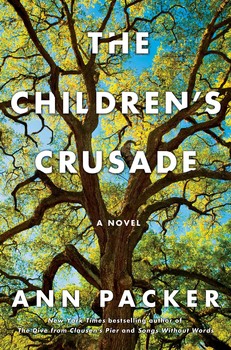
the-childrens-crusade-9781476710457_lgNobody seemed interested in what my husband and I were reading, but if they had been, they would have seen that I was engrossed in The Children’s Crusade, by Ann Packer. I’ll be posting a full review of this wonderful book, which focuses on four siblings raised by a loving, attentive father and a neglectful mother. In today’s New York Times review, Katie Kitamura says:

How do we become who we are? There are many ways of approaching this slipperiest of questions, from the experimental rigor of cognitive neuroscience to the teasing excavations of psychoanalysis. It is, of course, natural territory for the novel, and though The Children’s Crusade follows one nuclear family, its scope is broadened by its attempts at an answer . . . After a brief prologue, in which the origin myth of the family is related in some of Packer’s best and most rapturous prose, childhood emerges as the true sacred space of the novel — not because it represents innocence, but because it might contain the key to decoding the adult self.

9780767919418Jeff’s beach book was One Summer: America 1927, by Bill Bryson, which he’s thoroughly enjoying — even though he typically reads serious history books, the kind that have lots of footnotes. He’s been sharing fun facts with me as he goes along — for instance, that the 1920s were “the golden age of reading”. Some reviewers tend to be a little snobby about Bryson. The Washington Post disdainfully compares One Summer to a Danielle Steel novel, a Cracker Barrel pamphlet, and CliffsNotes. Lighten up, Washington Post!  A lot of us may be part of that “mass-circulation audience” who enjoy and “need more accessible, easy-to-read history”.

9781605986883My mother is not a fan of the beach, but she has plenty of comfortable reading spots at home. She’s reading and enjoying The Listener, by Rachel Basch, which I absolutely loved. Unlike so many novels I’ve read recently, every sentence in it is necessary. I feel like I read many novels that are slightly bloated . . . just a little too long, with elements that don’t contribute to the development of the plot or characters. The Listener is about our need to be known. A psychologist, the widowed father of two grown daughters, treats a college student who is confused about his gender identity. He becomes romantically involved with the mother of this student — without knowing she is the mother of his patient. Complications ensue, involving his daughters and their shared past. The resolution is not pat and tidy, but it’s perfect. I thought Tricia Tierney’s comment was apt: “Rachel is one of the smartest writers around with such a finely honed craft delivered with heart. Don’t you find yourself re-reading her sentences?” (Tricia manages events at the Westport, Connecticut Barnes and Noble and blogs at Tricia Tierney’s Blog.)

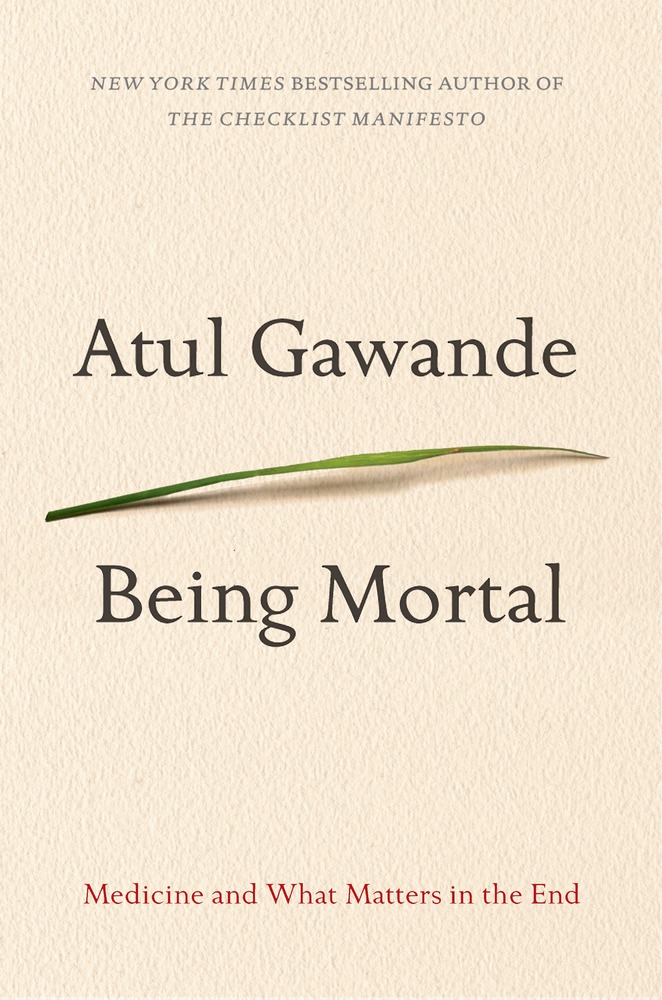
1000H-9780805095159It’s time for me to pack up and head back to Chicago — currently cloudy and 41 degrees. On the plane, I think I’ll finish reading Atul Gawande’s Being Mortal. There’s no better time to contemplate mortality than while flying above the clouds, right? I can also indulge in a favorite travel activity, walking up and down the aisle to see what people are reading. Too bad for me that e-readers have made it much more difficult for me to snoop. I saw very few e-readers at the beach, by the way — must have been the fear of sand and water damage. I’d love to know what you’re reading — on the beach, at home, or anywhere!

It’s Monday, March 30 — What Are You Reading?

FullSizeRender
Cowboy boots are a must in Nashville.

After a whirlwind weekend in Nashville, I need some R and R — reading and recovery! I’d never been to a bachelorette party before, but I did know that I wouldn’t need to bring my usual quota of reading material. I managed to make it through People Style Watch on the plane before falling asleep. (I’m not falling for their suggestions on spring fashion — bellbottoms and overalls were not attractive when I wore them back in the 1970s, and they haven’t improved in the last 40 years.)

This week promises to be quiet and peaceful, with the schools on spring break and lots of people out of town. Last week was a flurry of activity in the bookstore as customers rushed in to pick up books to read on the beach and the plane.

Some readers are serial monogamists, sticking with one book and then moving on to the next. Others are polygamists, juggling several books at once. (I just Googled the term “book polygamist” to make sure I wasn’t inadvertently plagiarizing, and stumbled upon a list of “popular polygamy books”. Turns out I’ve read most of them — is that weird?) I am, and have always been, a polygamous reader. I like juggling several books — usually one novel, one or two nonfiction books, and an audiobook. I like at least one of the books to be an e-book so I can read it in bed after my husband falls asleep.

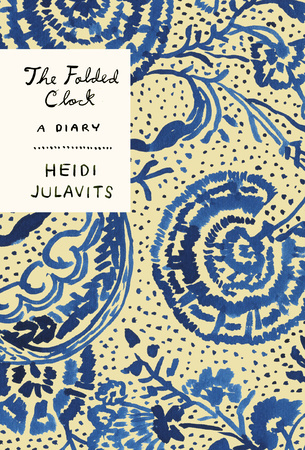
9780385538985This week’s e-book is The Folded Clock: A Diary, by Heidi Julavits. I started it last week and was immediately captivated. It’s a memoir based on the author’s discovery of her childhood diaries. The Folded Clock earned a rave review on the front page of yesterday’s New York Times Book Review. Here’s what the reviewer, Eula Bliss, has to say:

“She lost herself to me,” Julavits writes of her younger self. And so did I, with great pleasure. Losing one’s self is, after all, one of the rewards of reading. The opportunity to inhabit another self, to experience another consciousness, is perhaps the most profound trespass a work of literature can allow.

9780812993158In two weeks, beloved author Elizabeth Berg will be launching her first work of historical fiction at a couple of events hosted by Lake Forest Book Store.  I started reading The Dream Lover a couple of weeks ago and sadly had to put it aside so I could finish my book club books. Berg delves into the heart and mind of writer George Sand, born Aurore Dupin, who was the first female bestselling author in France. I’m planning on finishing the book this week, because I have an upcoming interview with Berg — stay tuned!

9781250063779I just finished Mimi Malloy, at Last!, by Julia McDonnell, and I’m still trying to decide how I feel about it. The title character is a sixty-something Irish-American divorcee with six daughters. Mimi has recently been forced into retirement, and is reluctantly exploring her sad family history. She’s a wonderful character, full of wit and humor, with plenty of sharp edges. (One of the blurbs aptly compares her to Olive Kitteridge.) The novel includes a sweet love subplot between Mimi and her apartment building’s superintendent, which is oddly juxtaposed with the disturbing story of Mimi’s horrific childhood. Readers looking for light “beach reading” will find that although the novel is a page-turner that reads quickly, it’s much darker than it initially appears. Even the title seems inappropriate — it sounds like the title of a children’s book about a plucky tomboy. It’s strange that the ARC I have has no exclamation point in the title, while the published book (both hardcover and paperback editions) includes an exclamation point.

9781605986883I just started The Listener, by Rachel Basch. I’ve mentioned before that I am a complete sucker for books set on campuses, so this book — about a psychologist who counsels students at a small liberal arts college in Maine — had my name all over it. I loved an earlier book of Basch’s, The Passion of Reverend Nash, which covers some of the same territory as The Listener: the complicated relationship between the healer and the patient.

9780767919418And finally, my current audiobook is One Summer: America, 1927, by Bill Bryson. Our couples’ book club is discussing this book in a few weeks, and I think it’s a great choice. Bill Bryson is one of my favorite nonfiction authors — he’s really mastered the art of writing books that simultaneously entertain and inform. However . . . I think maybe he should stick to writing and his publisher should hire a professional narrator for his audiobooks. His voice has a strange, prissy quality that is driving me crazy. I think I may have to switch to the print book and find another audiobook for my walks.

The sun is shining and the temperature in Chicago is heading toward 50 degrees, so I’m heading out to take a walk with Bill. I’ll let you know if I decide to end our relationship!

It’s Monday — What Are you Reading? is hosted by Book Journey.

An Uncomplicated Life — Book Review

9780062359940Having a child with a disability is like having a life coach you didn’t ask for. You realize that perspective is a blessing that ‘s available to anyone who seeks it. Or has it forced upon him. The miracle of an imperfect child is the light she casts on your own imperfections. After a time, she will teach you far more than you will teach her, and you will discover that “normal” comes in a sliding scale.

The words “miracle” and “blessing” in the same paragraph may raise red flags for some readers, but An Uncomplicated Life is not a sentimental story about saintlike parents and an angelic child. It’s a father’s honest, heartfelt, and nuanced account of “building a better Jillian” — and in the process, building a better Paul Daugherty. (“No one has ever accused me of being nice,” he claims.)

The day Paul and Kerry Daugherty’s daughter, Jillian, was born was “the last bad day” in the Daugherty family’s life. Paul, a sports columnist for the Cincinnati Post, was covering the World Series in San Francisco when his wife called with the happy news that Jillian had arrived. Paul and Kerry experienced the “dark kaleidoscope of human emotions” that day when they learned that Jillian had Down Syndrome.

The Daughertys determined before even leaving the hospital that “Jillian’s potential would not be tethered to anyone’s preconceptions.” Their mantras become “Expect: Don’t Accept”, “Nothing is Definite”, and “Let Jillian be Jillian.” When Paul questions their decision to fight the school system to keep Jillian in a traditional classroom, wondering if they were expecting too much of their daughter, Kerry reminds him of their guiding principles.

Kerry, ironically, is an employee of the school district that the Daughertys battle for years in order to ensure that Jillian receives the education to which she’s entitled. Readers will sympathize with Kerry and Paul as they spend Jillian’s high school years trying to “locate the elusive, happy middle between learning and learning under budget.”

Paul Daugherty
Paul Daugherty

Jillian brings laughter into her family’s life, and her father includes many charming and funny anecdotes that illustrate her headstrong and independent nature. Daugherty, a journalist who cranks out newspaper articles and columns every day, is a talented storyteller, and his anecdotes about Jillian’s escapades and triumphs are a joy to read. Daugherty takes pains to portray Jillian as an individual, not a stereotypical Down’s syndrome child. Often, Daugherty writes, people are patronizing and saccharine in their descriptions of Jillian, as if she were a “golden retriever”.

There’s an edge to Paul Daugherty, and the Daugherty household is like any other household — far from idyllic. The Daughertys’ approach has required sacrifices, and Paul — who can be a harsh self-critic — is frank about the resentment he sometimes feels. He knows, for example, that his dream of retiring to play golf in South Carolina probably won’t happen.

Expanding Jillian’s dreams means constricting our own. This isn’t a complaint. It’s not bitterness. It’s just a fact. Her goals tug at ours. They are not compatible. Our lives are less separable than the lives of typical parents and their grown children . . . Sometimes, I resent that.

Daugherty is also candid about the pain he and Kerry feel when Jillian is excluded from school or social activities. Although she is never treated unkindly, the fact remains that she is different from her peers. Jillian joins the JV dance team, and is able, for the most part, to keep up with her peers. But is she really part of the team?

Jillian’s dance teammates treated her like the rest of typical peers did: Arms-length pleasant. They didn’t mind having her on the team. But I don’t think they relished it ether. They included her in team functions . . . After practice or games they went their ways, and Jillian went home. We didn’t know if the girls hung out together after practice. We never asked.

Daugherty doesn’t dwell on his occasional feelings of anger or frustration, but chooses to focus on the enormous gifts Jillian has brought to his family. Although his family’s story is unique, any parent will identify with his experiences. All parents learn from their children. Jillian’s life may be less complicated than most others — including the lives of her parents and older brother– but its clarity of purpose inspires those she comes in contact with “to do better, to be better”.

In the bookstore, I’m frequently asked to recommend “feel-good” books that are “uplifting”. I’m often at a loss, since I find most books that fit that description to be unbearably hokey. For whatever reason, I gravitate toward books about war, family dysfunction, illness, and tragic events of all kinds. So it was truly a pleasure for me to read a well-written book that inspired me and made me think.

To read more reviews of An Uncomplicated Life, check out TLC Book Tours.

Watch the Youtube book trailer, with photos of Jillian and her family.

The Tusk That Did the Damage — Book Review

9780385354127-204x300

That is because of the tusk, the boy said, his eyes watering. It was the tusk that did the damage. What if I return it? Can’t I reverse the curse?

Oh my sweet stupid son, there is no reversing a curse, everyone knows that. But who says we cannot turn this curse into a blessing?

Tania James, The Tusk That Did the Damage

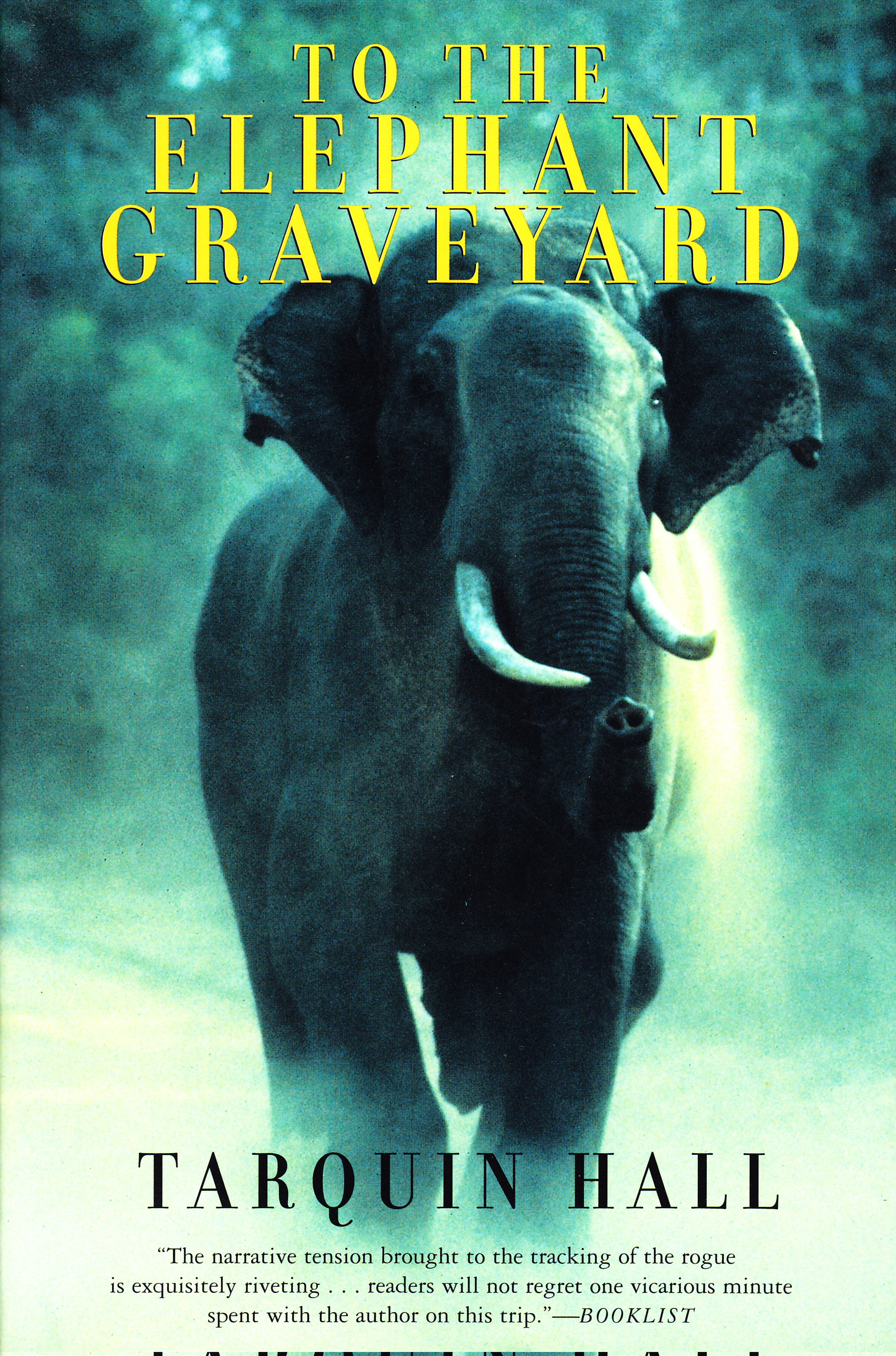
In the 1990s, a rogue elephant terrorized the countryside of northeastern India, killing 38 people. At first, journalist Tarquin Hall thought the reports of the elephant’s vengeful and cruel behavior were “implausible”:

“Babar is riding happily on his mother’s back when a wicked hunter, hidden behind some bushes, shoots at them.”

Elephants do not breathe smoke and fire, they are not gods, and they certainly do not go around in the middle of the night knocking down people’s homes and singling out particular human beings for premeditated murder. Elephants are kindly, intelligent, generally good-natured creatures, like Babar and Dumbo.

Hall wrote a book, To the Elephant Graveyard, about the Indian government’s hunt for the murderous elephant and the changing relationship between human beings and elephants caused by the destruction of natural habitats. In an interview with the Los Angeles Times, Tania James explains how Hall’s book provided inspiration for The Tusk That Did the Damage, her novel about elephant poaching in southern India:

9780802138354I was reading a nonfiction book called To the Elephant Graveyard . . . and it makes mention of a real-life elephant that used to bury its victims. The elephant would carry the body for miles beforehand, and in some cases, if people tried to take the body away, he would bring it back. Or he would guard the burial site . . .There was something kind of human in its madness, I guess, and I know this is kind of a human-centric way of thinking about it, but there was something recognizable about that madness that made me want to know where that elephant had come from. I wanted to know the tipping point that led to a life as a violent rogue elephant.

Read more

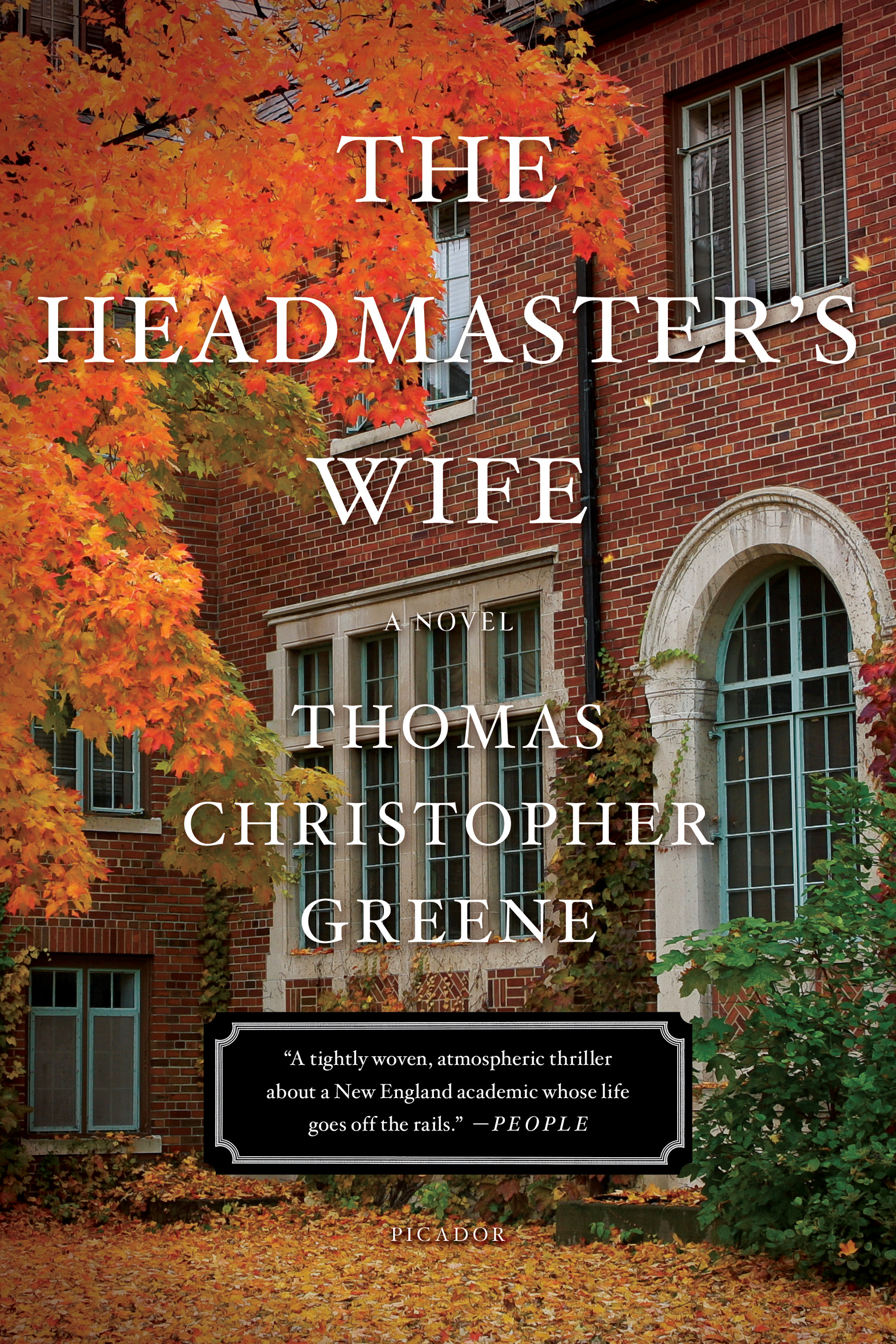
10 Questions for Thomas Christopher Greene, Author of The Headmaster’s Wife (Plus a Giveaway!)

Headmaster's Wife-2
Paperback cover

Booksellers often fall in love with a terrific new book, only to find that the hardcover version is a tough sell. We console ourselves by saying that the book will really “take off” in paperback, and very often that’s true. Certain books, through a combination of serendipity and quality, sell enormously well in hardcover for years without being released in paperback. (Think of Gone Girl, The Goldfinch, Unbroken . . .) But most paperback releases are scheduled for 9 to 12 months after hardcover publication, depending on sales. Some of those paperbacks do sell much, much better than their hardcover versions, especially those that appeal to book clubs.

Author Nichole Bernier interviewed publishers, editors, authors, and literary agents for an article in The Millions about relaunching books in paperback, learning that “A paperback isn’t just a cheaper version of the book anymore. It’s a makeover. A facelift. And for some, a second shot.” Melanie Benjamin, whose paperbacks have been very popular with book club audiences, observed that “‘ . . .  almost every book these days gets a new cover for the paperback. It’s almost as if they’re doing two different books for two different audiences, with the paperback becoming the ‘book club book.'” M.J. Rose, of the book marketing firm Authorbuzz, said, “‘I think that as opposed to a re-release being less important, it’s more than ever important because it gives a book a second chance with a new cover and lower cost, plus you can use all the great reviews the hardcover got.'”

9781250038944
Hardcover jacket

The Headmaster’s Wife, by Thomas Christopher Greene — one of my 10 Favorite Books of 2014 — was just released in paperback. The publisher must think that ivy-covered brick buildings appeal to book clubs, because only one minor change appears on the cover: Richard Russo’s blurb has been replaced with a quote from a People magazine review. Too bad, because what Russo says is spot-on: “I read the second half of The Headmaster’s Wife with my mouth open, my jaw having dropped at the end of the first half. Thomas Christopher Greene knows how to hook a reader and land him.”

The Headmaster’s Wife opens when Arthur Winthrop, headmaster of a New England boarding school, is found wandering naked in Central Park. As he begins to tell his story to the police, it becomes clear to the reader that Arthur is an unreliable narrator. Just how unreliable he is only becomes obvious about halfway through the book. At this point Arthur’s wife lends her perspective to the story, and the reader must determine whose version of the truth to believe. Read more

Life from Scratch — Book Review

After a good dinner, one can forgive anybody, even one’s own relations.
Oscar Wilde

No one who cooks, cooks alone. Even at her most solitary, a cook in the kitchen is surrounded by generations of cooks past, the advice and menus of cooks present, the wisdom of cookbook writers.
Laurie Colwin

6201374Sasha Martin, creator of the popular blog Global Table Adventure, didn’t set out to write a memoir about what she calls her “rough background”. Martin intended to chronicle the four years she spent cooking meals from every country in the world. She envisioned a book filled with “sweet stories about overcoming pickiness”, not one that brought back painful memories of her difficult upbringing.  But when Martin’s editor asked her what inspired her to begin her ambitious cooking project, Martin realized that Life from Scratch was going to be about much more than food:

Every time I tried to answer her, memory pushed me further and further back in time – all the way to the foods and stories of my childhood. Introspection (and lots of tears) brought me face to face with my rough and tumble childhood – the string of foster homes, the painful separation from my mother, and the tragic death of a beloved family member.

Food, specifically cooking with my mother, had been an important anchor early on but as an adult I felt disconnected from that experience. As I worked to build my own family, cooking the world had become much more than trying new food – it became a path towards healing. It was my way of working out what unconditional love and belonging meant. Reflected in the desire for my daughter to love her world, I also saw my own need to love my world and feel loved by it. After a childhood in turmoil I was hungry for peace.

Many of Martin’s early childhood memories take place in the “warm, fragrant space” of the kitchen in a tiny apartment in a working-class suburb of Boston. Martin’s eccentric mother invents creative meals from the meager groceries she’s able to obtain, using every scrap and telling Martin and her brother that “a little mold never hurt anyone”.  I was reminded of Ruth Reichl’s first memoir, Tender at the Bone, in which she dubs her unbalanced mother “The Queen of Mold”. Martin’s mother, unlike Reichl’s, is actually a good cook, serving delicacies like Hungarian crepes and a 21-layer German Tree Cake. Readers will debate whether she’s a good mother. Certainly, she faces many challenges and makes life difficult for her children — but how much of the family’s turbulence is within her control?

Read more