10 Summer Paperback Picks — Nonfiction

Truth is stranger than fiction, but it is because Fiction is obliged to stick to
possibilities; Truth isn’t.
Mark Twain

Lee Gutkind, editor and founder of the literary magazine Creative Nonfiction, wrote a book on narrative nonfiction called You Can’t Make This Stuff Up. Many of the best stories I’ve ever read are true — yet they are improbable, unlikely, and downright unbelievable. In an interview with Creative Nonfiction, brilliant narrative historian Erik Larson discusses the joy of researching and telling a true story that readers would find implausible if it were presented in a novel:

If you find the story and you get enough details, you can tell a good story. There’s a great paradox with fiction. If I tried to write a novel in which I proposed that the daughter of the American ambassador was sleeping with the first chief of the Gestapo, no one would believe it. But because it happened—wow!—this is interesting.

The difference between narrative nonfiction and other nonfiction (history, biography, politics, etc.) is that in narrative nonfiction the story is more important than the subject. I have zero interest in horse racing, for example, but I loved Laura Hillenbrand’s Seabiscuit. The best nonfiction writers transcend their subject matter to shape stories that read like novels. That said, there are some topics I find irresistible; here are some paperbacks, new and old, that kept me up late at night and that I think are perfect summer reading. The publication dates are the dates when the paperbacks were released; in many cases, the paperback editions include updated information as well as author interviews and discussion questions.

If you’re interested in polar exploration and the indomitable human spirit:

9780307946911In the Kingdom of Ice: The Grand and Terrible Voyage of the USS Jeannette by Hampton Sides (2015)

Like all the best narrative nonfiction books, In the Kingdom of Ice is much more than an enthralling account of historical events. Sides paints a detailed picture of post-Civil War society, when many young men who missed the opportunity to fight in the war were looking for opportunities to become heroes. His engaging, and often very funny, portrayal of newspaper titan James Gordon Bennett, Jr. (backer of the voyage), shows us the increasing role of the press. He covers Native American culture in the Arctic . . . the state of scientific and geographic knowledge in the Victorian era . . . and most of all, the enormous human capacity for courage and endurance.

Like the crew of the Jeannette, the sailors in Alfred Lansing’s Endurance: Shackleton’s Incredible Voyage (reissue, 2015) were locked in the polar ice pack. You won’t complain about summer heat and humidity when you read about their hellish experiences. The book was originally published in 1959, and the survivors of the expedition to Antarctica all provided first-hand accounts to Lansing. The new edition includes more illustrations and maps, as well as a terrific introduction by Nathaniel Philbrick, who explains how “a young Midwesterner . . .  came to write this classic tale of survival and the sea and how, after languishing in relative obscurity, Lansing’s Endurance came to be so enthusiastically embraced by a new generation of readers.”

If you’re fascinated by cannibals and headhunters:
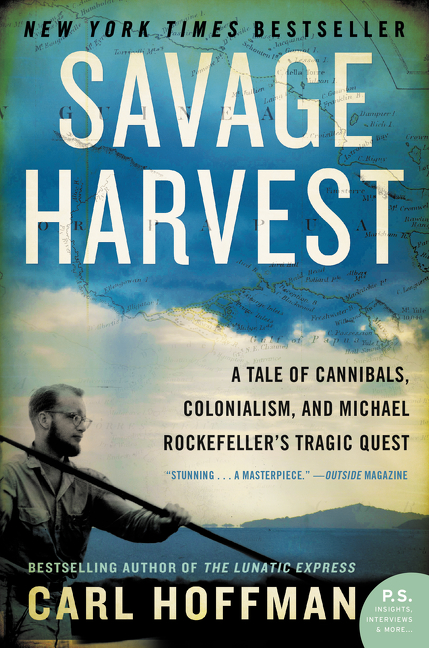
9780062116161Savage Harvest: A Tale of Cannibals, Colonialism, and Michael Rockefeller’s Tragic Quest by Carl Hoffman (2015)

In 1961, the 23-year-old son of New York governor Nelson Rockefeller disappeared while traveling through New Guinea on an expedition to find art for his family’s Museum of Primitive Art. While his death was officially ruled a drowning, questions remain — and Carl Hoffman attempts to solve the 50-year-old mystery, delving into an investigation of the violent culture of the Asmat tribe. The New York Times calls the book a “taut thriller”, and it’s an apt description.

Lost in Shangri-La: A True Story of Survival, Adventure, and the Most Daring Rescue Mission of World War II by Mitchell Zuckoff (2012)

Lost in Shangri-La, one of the best nonfiction page-turners I’ve ever read, is unusual in that one of the heroic survivors is a woman. A plane is shot down over the cannibal-infested jungles of New Guinea, with only three survivors, all of whom are injured.

If you are a fan of antiquarian maps and books, not to mention true crime:
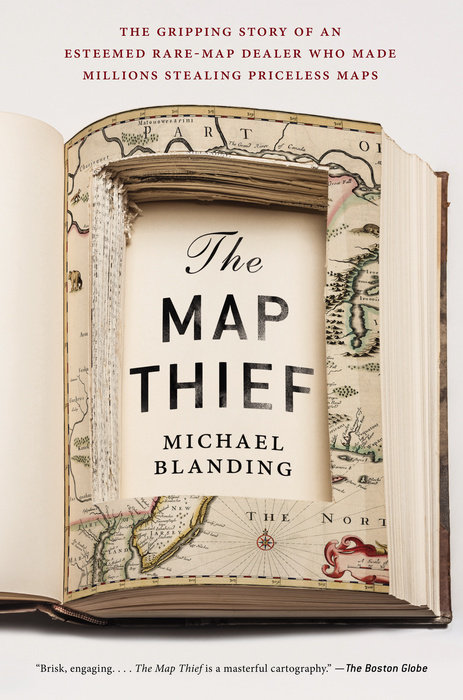
9781592409402The  Map Thief: The Gripping Story of an Esteemed Rare-Map Dealer Who Made Millions Stealing Priceless Maps by Michael Blanding (2015)

You rarely encounter a baffling title in narrative nonfiction. The subtitles almost always do a great job summarizing the book, although sometimes — as in this case — they sound a little unwieldy. (I think the reader should decide if the story is gripping, thank you.) The story is gripping, as promised in the subtitle, and interesting from a psychological point of view. What drove E. Forbes Smiley to destroy his career by becoming a thief?

The Professor and the Madman: A Tale of Murder, Insanity, and the Making of the Oxford English Dictionary by Simon Winchester (2005)

I’ll never get tired of recommending this book. Once again, the subtitle provides almost all the information you need to know before starting the book, but I’ll fill in the blanks by telling you that the “professor” is Dr. James Murray, editor of the Oxford English Dictionary, and the “madman” is Dr. William Minor, a Civil War veteran incarcerated in a mental hospital who is the dictionary’s most prolific contributor of definitions. The shocking ending of this book gives new meaning to the phrase “you can’t make this stuff up”.

If you are struggling to understand class and race, especially in relation to higher education:

the-short-and-tragic-life-of-robert-peace-9781476731919_lgThe Short and Tragic Life of Robert Peace: A Brilliant Young Man Who Left Newark for the Ivy League by Jeff Hobbs (due in paperback 7/15)

Robert Peace, a 2002 graduate of Yale and a product of inner-city Newark, was murdered at age 30 in a drug-related shooting. Hobbs, who was Peace’s roommate in college and who remained a close friend after graduation, has written one of the most thought-provoking books I’ve read in a long time. Why did Peace, a brilliant young man with a promising career in scientific research, succumb to the drug trade? Hobbs thoroughly and thoughtfully examines Peace’s life in all its complexity and contradictions, with the help of Peace’s family, friends, colleagues, and teachers.

A Hope in the Unseen: An American Odyssey from the Inner City to the Ivy League by Ron Suskind (1999)

Pulitzer Prize winner Suskind follows teenager Cedric Jennings as he, with the help of his dedicated and hardworking mother, strives to succeed at a high school in one of the poorest neighborhoods in Washington, D.C. and later at Brown University.

If you love Shirley Jackson as much as I do:
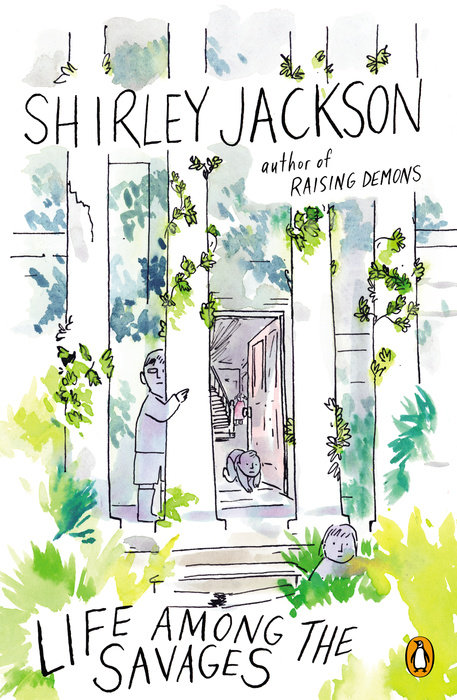
9780143128045Life Among the Savages and Raising Demons by Shirley Jackson (reissue, 2015)

These gems from the 1950s have recently been reissued in paperback — I suspect because a collection of Jackson’s previously unpublished writings (Let Me Tell You)  is being published in August. The  humorous essays about family life in Raising Demons and Life Among the Savages are very different from the dark, sinister fiction for which Jackson is known.

What are your favorite nonfiction books?

I
10 Summer Paperback Picks

In the spring, I posted a list of 10 of my favorite recent books just published (or about to be published) in paperback. It’s now official summer reading season, and dozens of new paperbacks are piled high on bookstore tables. Some of these (Station Eleven) were critically and commercially successful in hardcover; some (The Blessings) didn’t get as much attention as they deserved in hardcover; and some (The Red Notebook) are brand new books, never published in hardcover.

More and more books are being published as paperback originals. According to an article in the Wall Street Journal (“The Stigma of Paperback Originals”), American publishers view the “straight to paperback” format as “an increasingly attractive option—perhaps the only option—for young authors with no track record, midcareer authors with a challenging track record and international authors being published for the first time in the U.S.” The Journal points out the paperback original is “the industry standard ‘ In Europe, the U.K., Australia and New Zealand.”

Frances Coady, formerly publisher of Picador, the paperback imprint of Macmillan, is quoted in the article as saying: “You have to ask yourself questions like, ‘Is it better to sell 5,000 or 8,000 copies in hardcover and try to reinvent the book in paperback?’—which, unless there’s some extraordinary piece of luck, is really hard to do—or ‘Is it better to sell 50,000 in a paperback original?'”

As a reader, I vote for the paperback option — especially now that paperbacks are so high-quality. Some even have fancy French flaps. Gone are the days when you cracked open a paperback only to have loose pages flutter out. And booksellers have a much easier time convincing customers to take a chance on a new author with a paperback than with a hardcover. Here are 10 books to take a chance on this summer:

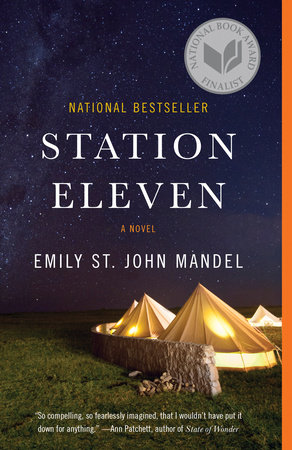
9780804172448Station Eleven by Emily St. John Mandel (hardcover 9/14; paperback 6/15)
WHAT WAS LOST IN THE COLLAPSE: almost everything, almost everyone, but there is still such beauty. Twilight in the altered world, a performance of A Midsummer Night’s Dream in a parking lot in the mysteriously named town of St. Deborah by the Water, Lake Michigan shining a half mile away.

I’m surprised this book was released in paperback only nine months after it came out in hardcover. One of five finalists for the National Book Award in fiction, the post-apocalyptic novel has been a bestseller for months. Despite the acclaim, I would never have picked up this book if it hadn’t been a selection for my book group. I couldn’t imagine getting through, much less enjoying, a dystopian novel. But I truly loved every page and recommend it without reservations to anyone who reads literary fiction. I was captivated by the first chapter, which takes place during a performance of King Lear. In a New York Times interview, the author said,

I wanted to write a love letter to the modern world, and a way to write about all these things we take for granted was to write about their absence. People would want what was best about the world, and it’s subjective, but to me, that would include the plays of Shakespeare.

women-kings-260x388-1Where Women Are Kings by Christie Watson (paperback original 4/15)
They said that the wizard was something Mama had dreamed, and because she was sick in the head. But how could Mama’s dream get inside Elijah’s head? And now they told him that Mama hurt him badly. Every time he closed his eyes, he remembered and he wanted to scratch out the memory but he couldn’t. It waited there for him like a wolf under a tree.

Seven-year-old Elijah, the son of an abusive and mentally unstable Nigerian immigrant, finds refuge with Nikki and Obi in a stable home. But Elijah comes to believe he is possessed by a wizard. This heartbreaking, beautifully written story explores  foster care, childhood trauma, interracial adoption, mental illness, religious ideology, and the complex nature of parental love.

9780345807335Dear Committee Members by Julie Schumacher (hardcover 8/14; paperback 6/23/15)
. . . Remembering Ms. Newcombe now  — though my file drawer contains thousands of lives for which I often find myself feeling accountable — I realize I am well disposed in her favor; in fact, I thoroughly urge you to offer her a job. Why? Because as a student of literature and creative writing, Ms. Newcombe honed crucial traits that will be of use to you: imagination, patience, resourcefulness, and empathy. The reading and writing of fiction both requires and instills empathy– the insertion of oneself into the life of another.

Professor Jason Fitger’s personal life and writing career are falling apart, and he tells the story through a series of very funny letters of recommendation. “Clever” doesn’t begin to describe this novel, which is much more than a satire of academia. If you enjoyed Where’d You Go, Bernadette?, you’ll love Dear Committee Members.

9781594633881The Vacationers by Emma Straub (hardcover 5/14; paperback 6/15)
A good swimming pool could do that—make the rest of the world seem impossibly insignificant, as far away as the surface of the moon.

When a New York family spends a summer vacation in a rented house in Mallorca, things are a little too close for comfort. From the New York Times: “For those unable to jet off to a Spanish island this summer, reading The Vacationers may be the next-best thing. Straub’s gorgeously written novel follows the Post family — a food writer named Franny; her patrician husband, Jim; and their children, 28-year old Bobby and 18-year-old Sylvia — to Mallorca . . . When I turned the last page, I felt as I often do when a vacation is over: grateful for the trip and mourning its end.” I felt the same way! I’ve heard that The Rocks by Peter Nichols, just published a couple of weeks ago, is another wonderful book set in Mallorca — I can’t wait to read it.

44e1505bebb7632d9a662b978df7fc9aThe Blessings by Elise Juska (hardcover 5/14; paperback 5/15)
She thought about how it was something they would all remember forever. How this was family: to own such moments together. To experience them in all their raw shock and sadness, then get the food from the refrigerator, unwrap the crackers and fill the glasses, keep the gears turning, the grand existing beside the routine, the ordinary.

This lovely novel follows several generations of a close Irish-American family from Philadelphia, in a “deceptively simple tale that examines the foibles, disappointments and passions that tie family members together” (Publishers Weekly). The book reminded me a bit of Olive Kitteridge, since it’s a collection of linked stories. Like the PW reviewer, I felt lucky to have spent some time in the Blessings’ presence.

UnknownWe Are Not Ourselves by Matthew Thomas (hardcover 8/14; paperback 6/15)
You are not in this life to count up victories and defeats. You are in it to love and be loved.

Both an epic novel of the 20th century in America and an intimate story of a marriage and family, We Are Not Ourselves amazed me with its sympathy for its complex and flawed characters. As I was reading it, I was reminded of Alice McDermott. The New York Times reviewer remarked on the connection between the two authors: “Mr. Thomas’s narrow scope (despite a highly eventful story) and bull’s-eye instincts into his Irish characters’ fear, courage and bluster bring to mind the much more compressed style of Alice McDermott. (According to this book’s acknowledgments, she has been one of his teachers. If he wasn’t an A student then, he is now.)” Daniel Goldin, owner of Boswell Book Company put it more succinctly; he notes that McDermott’s novels are “on the slim side” and calls Matthew Thomas “Alice McDermott on steroids”.

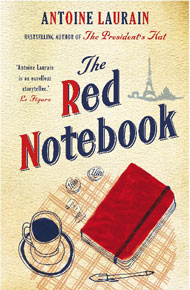
9781908313867The Red Notebook by Antoine Laurain (paperback original 3/15)
He drank some more wine, feeling he was about to commit a forbidden act. A transgression. For a man should never go through a woman’s handbag — even the most remote tribe would adhere to that ancestral rule. Husbands in loincloths definitely did not have the right to go and look for a poisoned arrow or a root to eat in their wives’ rawhide bags.

I hate to use the word “charming”, but this little jewel of a novel really is charming — and it’s not sappy. Parisian bookseller Laurent Letellier finds a woman’s handbag on the street, containing plenty of personal items — including a red notebook — but no clues to the owner’s identity. This has been one of our store’s staff and customer favorites for months — it’s the kind of book people buy in multiples to give as gifts.

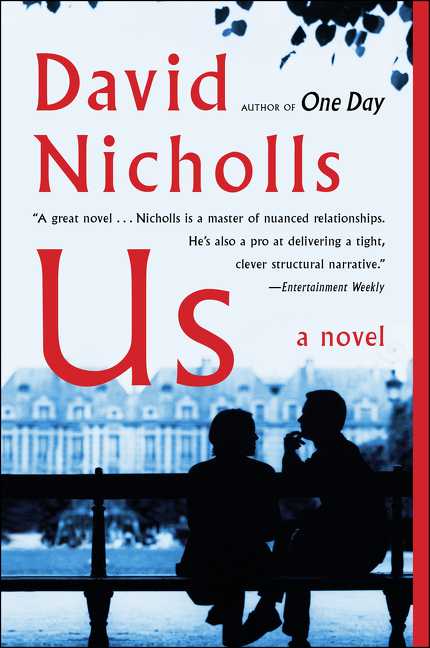
9780062365590Us by David Nicholls (hardcover 10/14; paperback due 6/30/15)
. . .  And, like many men of my generation, I enjoy military history, my “Fascism-on-the-march books”, as Connie calls them. I’m not sure why we should be drawn to this material. Perhaps it’s because we like to imagine ourselves in the cataclysmic situations that our fathers and grandfathers faced, to imagine how we’d behave when tested, whether we would show our true colours and what they would be. Follow or lead, resist or collaborate?

Has Douglas and Connie’s long marriage, as she claims, run its course? A summer “grand tour” of Europe with their sullen teenage son, Albie, brings matters to a head. If a book could be described as a romantic comedy, that would be the appropriate term for this smart and delightful novel. The characters, especially Albie, will drive you crazy — just like real people.

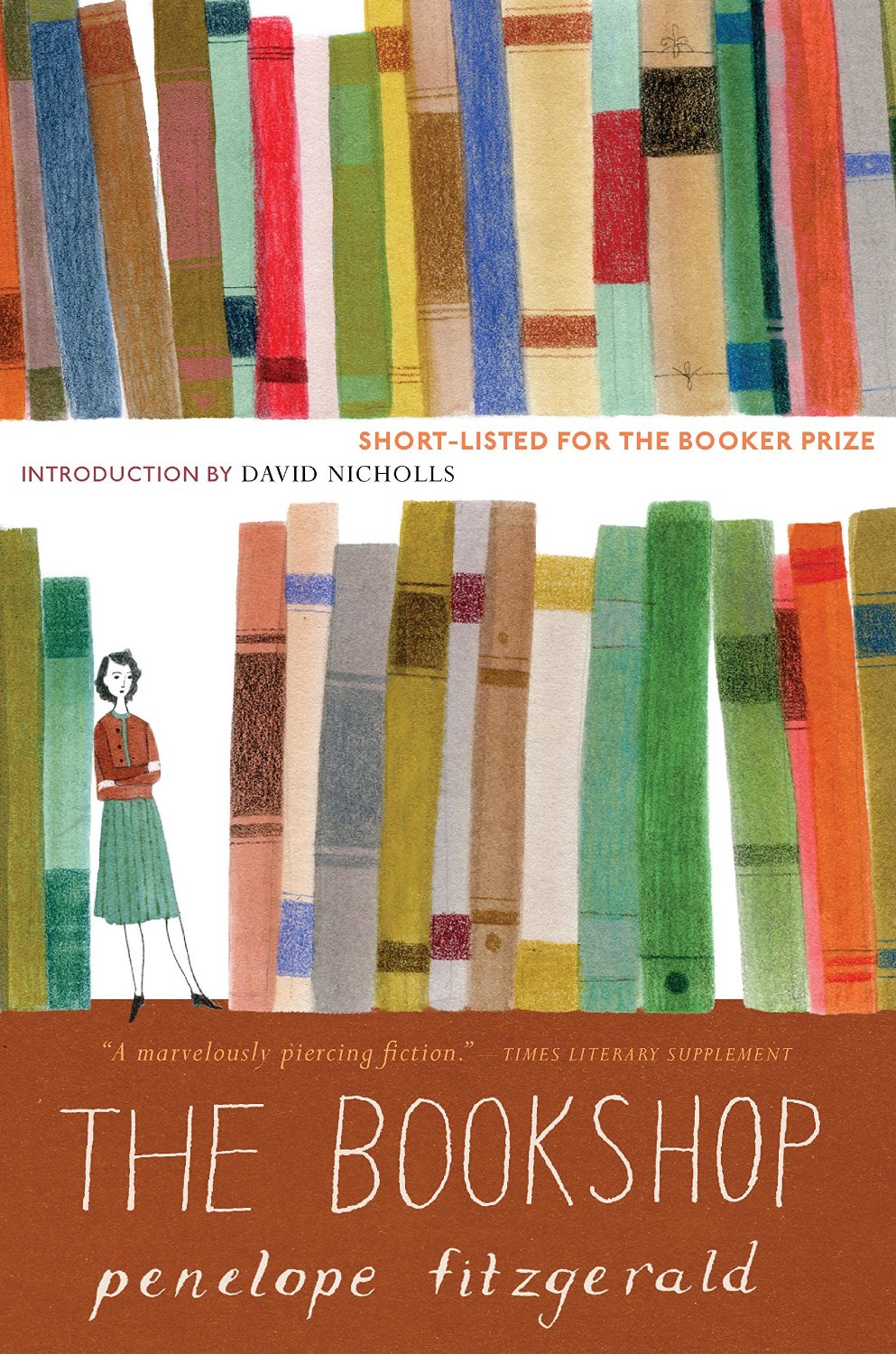
A1Ugvdz5AnL._SL1500_The Bookshop by Penelope Fitzgerald, with introduction by David Nicholls (paperback original published in the U.S. 6/15)
A good book is the precious life-blood of a master-spirit, embalmed and treasured up on purpose to a life beyond life, and as such it must surely be a necessary commodity.

I’m thrilled that this brilliant novel is being introduced to a new generation of American readers.  It’s about a widow who decides to open a bookshop in an isolated English village, encountering resistance from her neighbors. David Nicholls, who worked as a bookseller at Waterstones in London for several years, writes in introduction to the new edition of The Bookshop:

With typical self-deprecation, Fitzgerald called The Bookshop a “short novel with a sad ending”, which is true I suppose, but takes no account of Fitzgerald’s wit and playfulness . . . Fitzgerald’s great gift, often remarked upon, was the precision and economy of her prose . . .

It’s worth noting that Fitzgerald was a late bloomer. The New Yorker points out that The Bookshop, “published when Fitzgerald was sixty-one, announced her arrival on the literary scene.”

9780143127444The Hundred-Year House by Rebecca Makkai (hardcover 7/14; paperback 5/15)
But here at Laurelfield, there was something more in the mornings, a buzzing sensation about the whole house, as if it weren’t the servants keeping it running but some other energy. As if the house had roots and leaves and was busy photosynthesizing and sending sap up and down, and the people running through were as insignificant as burrowing beetles.

Once an artists’ colony, now a luxurious private home, the “hundred-year house” has a profound effect on its residents and visitors. Using an innovative narrative structure — the book begins at the dawn of the 21st century and travels back in time to 1900 — Rebecca Makkai draws us in to a world filled with artists, poets, academics, heirs and heiresses . . . and perhaps a ghost. I was enthralled from the first page. Makkai has a new book coming out this summer — a short story collection called Music for Wartime.

It just occurred to me that all the books on this list are fiction. There are plenty of great nonfiction books coming out this summer as well, and I’ll be highlighting those soon. Which paperbacks are you planning on picking up this summer?

“It Takes a Genius to Make People Laugh” — 10 Funny Authors

9780062351494

Give me a choice and I’ll take A Midsummer Night’s Dream over Hamlet every time. Any fool with steady hands and a working set of lungs can build up a house of cards and then blow it down, but it takes a genius to make people laugh.
Stephen King

I think I am a pretty good seat mate on planes and trains. (Automobiles,too.) I don’t take up more than my share of the available space, I don’t initiate inane conversations, I don’t listen to loud music with improperly inserted earbuds, and I definitely do not carry and eat bags of fast food. If anyone has an explanation, please let me know why someone would sit at an airport gate, clutching a bag of greasy McDonald’s burgers and fries, and then wait to eat the cold, smelly food until an hour or so into the flight.

However, on a recent flight, I think I really annoyed the grumpy man sitting next to me. My offense? I laughed, and more than once. The first time it happened, I chuckled softly and he shifted in his seat and looked slightly irritated. The irritated look progressed to a lengthier glare, and finally he connected his headphones to his laptop. No, he did not appear to be outlining a plan for combating terrorism or putting the final touches on an important scientific presentation. He was playing solitaire.

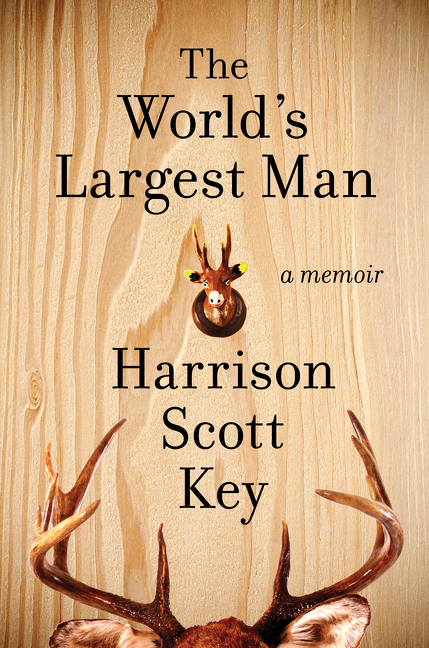
The book that made me laugh — again and again — was The World’s Largest Man, a memoir by Harrison Scott Key about his complicated relationship with his father.  It’s Key’s first book, but he has published essays in many magazines. According to his website, Key writes with the “comic verve of David Sedaris and the deft satire of Mark Twain or Roy Blount, Jr.”, but if we’re going to make comparisons, I’d say he is more like a cross between Bill Bryson and Pat Conroy.

Key grew up in Mississippi, the bookish son of a father whose main interests were hunting, fishing, and football — and in transforming his sensitive son into a different person, one who enjoyed waking at 4 a.m. and spending the day in a deer stand:

Why couldn’t I have been born with no arms? I knew, though, even if I had no arms, Pop would have found a way for me to hunt, rigging complicated pulley systems into trees and hoisting me up in a sack, then dropping me on the animals with a knife in each foot.

Key enjoyed a special bond with his mother, an elementary school teacher. who introduced “the perverse habit of reading through the gateway drug of encyclopedias, which she begged my father to purchase from a man at the door, hoping to counterbalance our growing knowledge of firearms and axes and tractors with more peaceful, productive knowledge.” Key preferred spending the day grocery shopping with his mother to hunting with his father and brother:

I was not encouraged, generally, to go grocery shopping with Mom, because Pop knew that if you sent your sons to the grocery store too much, they might learn how to locate water chestnuts, which could lead down a dark path toward vegetarian stir-fry and the wearing of aprons and eventually marrying someone named Cecil . . . How could hunting deer ever compare to hunting vanilla ice cream, which is generally docile and will let you pour syrup on it without running away?

Although Key is a gifted humorist, The World’s Largest Man is not a nonstop laugh riot. At its heart, it’s a story about love and acceptance. Much of the book is heartbreaking and poignant. Key succeeds in showing us the contradictory aspects of his father’s deeply flawed personality — a personality that turns out to be a greater influence on him than he had ever imagined.

One of the best things about humorous books is that they lend themselves to rereading. Sometimes it’s comforting knowing that what you are about to read will tickle your funnybone.

9780670824397_xlgI adored Roald Dahl as a child, and I still do. Which of his books is the funniest? It’s hard to say, but I’m partial to Matilda, probably because she’s a bookworm;

“There aren’t many funny bits in Mr. Tolkien either,” Matilda said.
“Do you think that all children’s books ought to have funny bits in them?” Miss Honey asked.
“I do,” Matilda said. “Children are not so serious as grown-ups and love to laugh.”

The first “grown-up” funny book I remember reading was Auntie Mame, by Patrick Dennis (a pseudonym). I found it on my grandmother’s bookshelves, and it made me laugh and laugh. It was out of print for more than 50 years, but it was reissued in 2001 and remains available.

Adam Freudenheim, publisher of Penguin Classics, called Auntie Mame “a lost classic” and said that he could not resist publishing a “laugh-out-loud” novel. He said: “There are lots of comic novels that aren’t that funny. It is very difficult to write ‘funny’ well. This one is sheer bliss.”

A lot of parents and teachers turn their noses up at Dav Pilkey‘s books, particularly the Captain Underpants seriesThat makes me sad, because my children loved Dav Pilkey. Guess what — kids and adults like different things. For example, some of the activities I remember enjoying as a child were throwing rocks in puddles with neighborhood children to see who could 9780062238498-1make the biggest splash . . . spinning in circles until I got dizzy and fell down . . . dressing my dog in pajamas. If Pilkey’s books had been available, I’m sure I would have laughed myself silly over them. What 7-year-old could resist Captain Underpants and the Terrifying Return of Tippy Tinkletrousers, or Captain Underpants and the Perilous Plot of Professor Poopypants? A little potty humor ever did anyone any harm, and I think Pilkey shows kids that reading doesn’t have to be a grim and serious pursuit, accompanied by timers and worksheets, but can be entertaining and laugh-inducing.

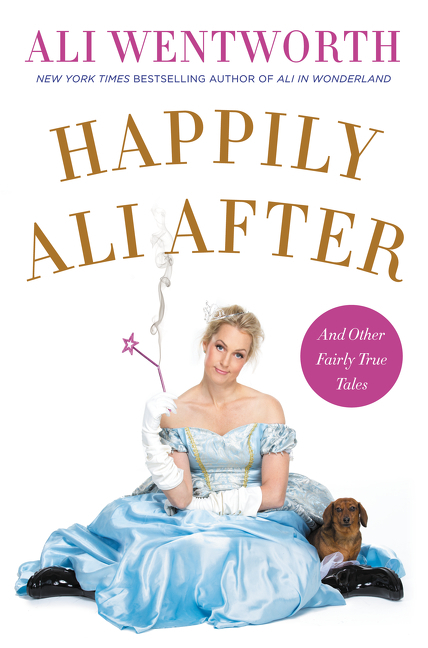
Comic actress Ali Wentworth has published one humorous memoir, Ali in Wonderland: And Other Tall Tales, and has another one, Happily Ali After: And Other Fairly True Tales, coming out in June. They’re perfect light reading, full of wickedly witty anecdotes about Wentworth’s growing-up years, career, and current family life.

9780804140416Comedian Jim Gaffigan is the male counterpart to Ali Wentworth. His books, Dad is Fat and Food: A Love Story, are hilarious when it comes to raising children and (of course) food:

There’s an old Weight Watchers saying: “Nothing tastes as good as thin feels.” I for one can think of a thousand things that taste better than thin feels. Many of them are two-word phrases that end with cheese (Cheddar cheese, blue cheese, grilled cheese).

I recently reread Nora Ephron’s roman à clef about the breakup of her marriage to journalist Carl Bernstein, Heartburn. I was worried it would seem dated, but it was every bit as clever and funny as I remembered:

Vera said: “Why do you feel you have to turn everything into a story?”
So I told her why.
Because if I tell the story, I control the version.
Because if I tell the story, I can make you laugh, and I would rather have you laugh at me than feel sorry for me.
Because if I tell the story, it doesn’t hurt as much.
Because if I tell the story, I can get on with it.

David Sedaris‘s books are hysterically funny, but best listened to on audio. And if you ever have the chance to hear his live performance, don’t pass it up. He is extremely gracious and will spend hours after his shows personalizing books and chatting with readers. I love the stories in Me Talk Pretty One Day in which Sedaris imagines how his broken French must sound to his classmates in French class. Attempting to describe the Easter bunny, he says, “‘The rabbit of Easter. He bring of the chocolate . . . He come in the night when one sleep on a bed. With a hand he have a basket and foods.'”

9780307279460I think Bill Bryson‘s funniest book might be his account of hiking the Appalachian Trail, A Walk in the Woods. I’m a little dubious about the upcoming movie — Robert Redford, who is almost 80, plays Bryson, who was in his 40s when he wrote the book. Also, the humor doesn’t stem as much from the events as it does from Bryson’s way with words:

Black bears rarely attack. But here’s the thing. Sometimes they do. All bears are agile, cunning and immensely strong, and they are always hungry. If they want to kill you and eat you, they can, and pretty much whenever they want. That doesn’t happen often, but – and here is the absolutely salient point – once would be enough.

Christopher Buckley is a political satirist, skewering everything from Chinese-American relations (They Eat Puppies, Don’t They?) to the tobacco industry (Thank You for Smoking) to the fiscal crisis (Doomsday). I’ve enjoyed his comic novels, but I especially liked his collection of essays, But Enough About You. According to the New York Times:

Buckley writes in a conversational style replete with deadpan asides. Perhaps he spends hours meticulously crafting each bon mot, but what he conveys in his work is the image of an assured writer amusing himself at the keyboard, expansively waving the reader over to join in the fun.

What are your favorite humorous books?

10 Spring Paperback Picks

bd0040693e50f5ed2b7aecbdbb56addc“When is it coming out in paperback?” — one of the most frequently asked questions in any bookstore.

“There’s no hard-and-fast rule about when the paperback should ride in for that second release. A year to paperback used to be standard, but now a paperback can release earlier — to capitalize on a moderately successful book before it’s forgotten — or later, if a hardcover is still turning a strong profit,” according to an article in The Millions.

This spring, bookstore tables will be stacked high with terrific new paperbacks. Some of these (The Goldfinch, The Invention of Wings) are books that were hugely successful in hardcover. Many of them are books that are still trying to find their audience. Almost always, the covers are redesigned for paperback versions, with new artwork and review quotes. Authors “know it’s their greatest chance of coming out of the gate a second time — same race, fresh horse,” says author Nichole Bernier.

What makes some books sell like crazy in hardcover while others — just as appealing — languish on the shelves? For example, The Girl on the Train is supposedly the fastest-selling adult novel in publishing history. I liked the book a lot; I read it in a day, and recommended it to anyone who wanted a fast-paced, twisty and turny psychological thriller. Over the years, though, I’ve read plenty of other books that I thought were just as good, or better, that didn’t have a fraction of Girl on the Train‘s success.

Jynne Martin, publicity director for Riverhead Books, says in an interview with the Daily Beast that the phenomenon of The Girl on the Train can be attributed to “a constellation of a lot of different things”, ranging from “rave reviews from critics, spillover excitement from the Gone Girl movie, and a concerted push by the whole Penguin Random House operation.” The Daily Beast asked Paula Hawkins why she thought her book “has resonated” so much with readers:

It’s a difficult thing to say. There are certain things about the story that I think are universally recognizable. The sort of enjoyment that we all get from that voyeuristic impulse of looking into other people’s house as we pass them and the idea that there might be something sinister or strange going on in the houses we pass every day or in our neighborhood, is a very compelling idea. So I think that’s one thing people have latched on to. There are also some strong voices in there that readers have responded to. I also have to say that the publishers, both in the U.S. and U.K., did a fantastic job of getting people talking about it on social media and getting lots of reviewers interested.

I don’t think we’ll see The Girl on the Train in paperback until well after a year of its publication date (which was January 2015).

Here are some of my favorite new paperbacks — most of them didn’t get the love they deserved when they came out in hardcover, and now they get a second chance.

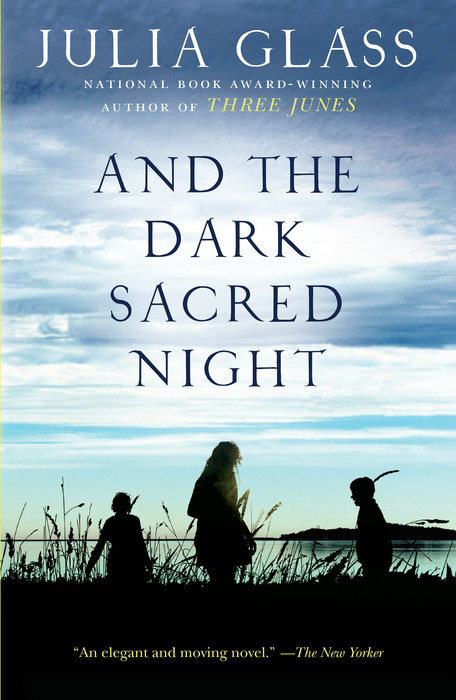
9780307456113And the Dark Sacred Night (Julia Glass) — Julia Glass has been a heroine of mine ever since she arrived on the literary scene in 2002, with the publication of her debut novel, Three Junes. I hate to use the term “late in life”, but recognition of her talent has come later in life than it does for most published writers. Glass was 46 years old when she won the National Book Award for Three Junes — seven years older than Flannery O’Connor (one of my favorite literary heroines) was when she died. And the Dark Sacred Night isn’t a sequel to Three Junes, but some of the same characters reappear. It’s a beautifully written, emotionally powerful novel with fully textured characters trying to make sense of the mysterious past and how it connects to the sometimes confusing present. For my review from April 2014, click here.

The Arsonist (Sue Miller) — Set in a small New Hampshire town, the novel centers on Frankie, a burned-out relief worker who’s returned home from Africa to spend time with her aging parents while she figures out what to do with the rest of her life. Almost as 9780062286468soon as Frankie arrives, an arsonist begins destroying the homes of summer residents. The most compelling part of the book for me was the portrayal of Frankie’s mother trying to cope with her husband, a retired professor slipping into dementia.

Fourth of July Creek (Smith Henderson) — A favorite of my book club, debut novel Fourth of July Creek is the story of two fathers in 1980s Montana: a flawed social worker and a backwoods survivalist. According to the Washington Post, “this richly plotted novel is another sign, if any were needed, that new fiction writers are still telling vibrant, essential stories about the American experience.”

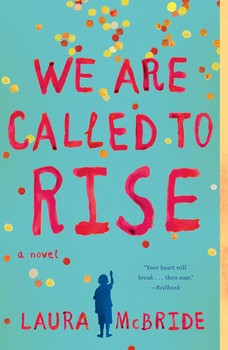
we-are-called-to-rise-9781476738970_lgWe Are Called to Rise (Laura McBride) –I couldn’t love this book more, and was disappointed that it didn’t really take off in hardcover. Another debut novel, We Are Called to Rise chronicles the lives of four very different Las Vegas residents (a young immigrant boy, a social worker, a war veteran turned police officer, and the officer’s mother) in a heartbreaking but ultimately hopeful story. For a very insightful review, visit one of my favorite book blogs, Read Her Like an Open Book.

Signed, Sealed, Delivered: Celebrating the Joys of Letter Writing (Nina Sankovitch) –You’ll be inspired to get some lovely stationery and a beautiful pen after you read this love letter to the art of written correspondence. Sankovitch (author of Tolstoy and the Purple Chair, which I also adored), found a cache of letters in a house she and her family were renovating. The letters were written from a college freshman to his mother in the early 20th century. The book, which Sankovitch calls her “quest to understand what it is about letters that makes them so special”, is a joy to read.

9781101872871The Children Act (Ian McEwan) — I don’t think you can ever go wrong with Ian McEwan, and although this book isn’t my favorite of his, it’s still very, very good. It’s the morally complex and emotionally resonant story of a judge who becomes personally involved in a court case concerning a teenage Jehovah’s Witness who is refusing a lifesaving blood transfusion. It’s a great choice for book clubs — my own book club had a fascinating discussion.

The Mockingbird Next Door due 5/5 (Marja Mills) — This book has spurred quite a bit of controversy. Mills, a Chicago Tribune reporter, became friendly with Harper Lee and her sister and eventually moved in next door. Her memoir of their friendship is “authorized, sympathetic, and respectful” (Washington Post), and fun to read. However, Lee has since denied that she cooperated with Mills. It’s particularly interesting in light of the upcoming publication of Go Set a Watchman.

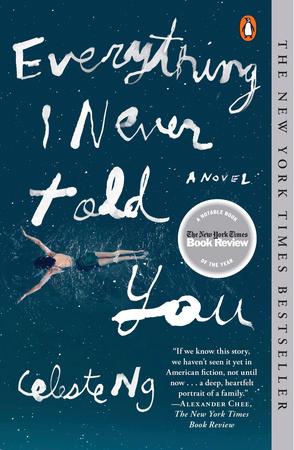
9780143127550Everything I Never Told You due May 12 (Celeste Ng) — First-time novelist Ng impressed me with her assured, precise writing style and her careful, well-paced narrative structure. The novel begins with the disappearance of a mixed-race family’s “perfect” daughter and goes on to explore the family’s pathology. It’s heartbreaking . . . but you’ll want to read it in one sitting.

My Salinger Year due May 12 (Joanna Rakoff) — I loved this memoir of Rakoff’s stint in the 1990s as an assistant to J.D. Salinger’s literary agent! From the Chicago Tribune: “Her memoir is a beautifully written tribute to the way things were at the edge of the digital revolution, and also to the evergreen power of literature to guide us through all of life’s transitions.” If I were making a list of my top 10 memoirs (and maybe I should), this would be on it. Perfect for fans of Marjorie Hart’s Summer at Tiffany.

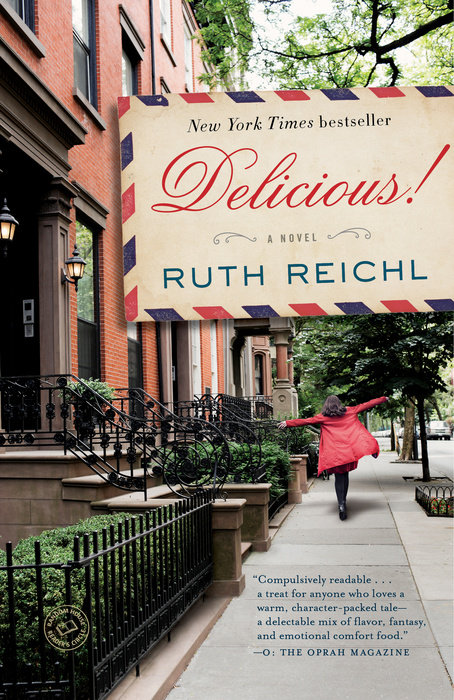
9780812982022Delicious! due May 12 (Ruth Reichl) — Reichl, former editor of Gourmet magazine and author of several wonderful memoirs (Tender at the Bone, Garlic and Sapphires, Comfort Me With Apples — all must-reads for foodies), tries her hand at fiction with Delicious! — with great success. It’s a roman á clef about a cooking magazine that folds, including a clever mystery and a coming-of-age story.

What will you be picking up in paperback this spring? I’ve just started Justin Go’s The Steady Running of the Hour, which is wonderful so far — yet another book that didn’t get its due in hardcover.

Dog-Eared Pages: 10 Quotes I Love

My third grade teacher, Mrs. Pierce, once reprimanded me for turning down the page of my book. She informed me that this was called “dog-earing” and it was very, very bad, on a par with wasting food at lunchtime and talking in the halls — two other crimes I had committed. Now I’m almost as old as Mrs. Pierce was then, and I can dog-ear my books anytime I want. If you borrow a book from me and there are lots of pages turned down, you know that this is a really good book filled with passages worth rereading and remembering.

In high school, one of my favorite English teachers, Mr. Regan, told us that “quote” is a verb and “quotation” is a noun. Mr. Regan, the co-author of our textbook, the English Competence Handbook, devoted an entire chapter to the proper use of “Quotations”. To the chagrin of English teachers everywhere, the word “quote” has become commonly used as a noun. Even the people in charge of websites devoted to cataloging quotes seem confused. One website calls itself The Quote Garden (“celebrating 17 years online”) but lists quotations in hundreds of categories, from “curmudgeonesque” to “ladybugs”.

Ever since I left Mrs. Pierce’s classroom,  I’ve dog-eared quite a few pages. Here are some of my favorite quotes (sorry, Mr. Regan!) about books and reading:

9780385531955When a book is a time machine, taking me back and sideways to other minds and times and cities and planets but mostly forward, forward to dinnertime, to when my mother would walk in the door and the unsympathetic girl would leave and I could re-emerge into my life, and it would be only the two of us again, my mother and me, and although I felt like I barely had her at least she was mine alone — who would give such magic away?
Holly LeCraw, The Half Brother

There is something called the rapture of the deep, and it refers to what happens when a deep-sea diver spends too much time at the bottom of the ocean and can’t tell which way is up. When he surfaces, he’s liable to have a condition called the bends, where the body can’t adapt to the oxygen levels in the atmosphere. All of this happens to me when I surface from a great book.
Nora Ephron, I Feel Bad About My Neck

962ab117cc4ac2dd9054af8b597fde98At eight, Arthur was walking five miles every other Tuesday to Mrs. Robert J. Taylor’s in Glassville to borrow a book from her considerable collection of eighty-five volumes. He was Robinson Crusoe sneaking through the jungle, scouting for ambush. He was Gulliver negotiating the fleshy landscapes of the Brobdingnags. He was Ahab, substituting green moss boulders for the white whale and losing his leg a thousand times. For Arthur, the words gathered in waterfall thoughts that spilled off the page into the pools of imagination collecting in his head.
Christopher Scotton, The Secret Wisdom of the Earth

Never did she find anything so difficult as to keep herself from losing her temper when she was suddenly disturbed while absorbed in a book. People who are fond of books know the feeling of irritation which sweeps over them at such a moment. The temptation to be unreasonable and snappish is one not easy to manage.
Frances Hodgson Burnett, A Little Princess

imgresSo Matilda’s strong young mind continued to grow, nurtured by the voices of all those authors who had sent their books out into the world like ships on the sea. These books gave Matilda a hopeful and comforting message: You are not alone.
Roald Dahl, Matilda

Writing and reading decrease our sense of isolation. They deepen and widen and expand our sense of life: they feed the soul. When writers make us shake our heads with the exactness of their prose and their truths, and even make us laugh about ourselves or life, our buoyancy is restored. We are given a shot at dancing with, or at least clapping along with, the absurdity of life, instead of being squashed by it over and over again. It’s like singing on a boat during a terrible storm at sea. You can’t stop the raging storm, but singing can change the hearts and spirits of the people who are together on that ship.
Anne Lamott, Bird by Bird

ZHer library would have been valuable to a bibliophile except she treated her books execrably. I would rarely open a volume that she had not desecrated by underlining her favorite sections with a ball-point pen. Once I had told her that I would rather see a museum bombed than a book underlined, but she dismissed my argument as mere sentimentality. She marked her books so that stunning images and ideas would not be lost to her.
Pat Conroy, The Prince of Tides

It was easy enough to write a sentence, but if you were going to create a work of art, the way Melville had, each sentence needed to fit perfectly with the one that preceded it, and the unwritten one that would follow. And each of those sentences needed to square with the ones on either side, so that three became five and five became seven, seven became nine, and whichever sentence he was writing became the slender fulcrum on which the whole precarious edifice depended. That sentence could contain anything, anything, and so it promised the kind of absolute freedom that, to Affenlight’s mind, belonged to the artist and the artist alone. And yet that sentence was also beholden to the book’s very first one, and its last unwritten one, and every sentence in between.
Chad Harbach, The Art of Fielding

9781410468895When I read a book, I want you to be reading it at the same time. I want to know what would Amelia think of it. I want you to be mine. I can promise you books and conversation and all my heart, Amy.
Gabrielle Zevin, The Storied LIfe of A.J. Fikry

I never deliberately learned to read, but somehow I had been wallowing illicitly in the daily papers. In the long hours of church — was it then that I learned? I could not remember not being able to read hymns. Now that I was compelled to think about it, reading was something that just came to me, as learning to fasten the seat of my union suit without looking around, or achieving two bows from snarl of shoelaces. I could not remember when the lines above Atticus’s moving finger separated into words, but I had stared at them all the evenings in my memory . . . Until I feared I would lose it, I never loved reading. One does not love breathing.
Harper Lee, To Kill a Mockingbird

Do you turn down pages, highlight, underline, or use Post-It notes to remember favorite passages?

For more inspiring and thought-provoking literary quotes, check out The Broke and the Bookish, host of Top 10 Tuesday.


WWW Wednesday — Vacation Version

FullSizeRenderIt’s WWW Wednesday, where I (sort of) answer these questions:

What did you just finish reading? What are you currently reading? What do you think you’ll read next?

I’m visiting my mother (and enjoying some beautiful weather) in Hilton Head, South Carolina, so it’s been a treat to be able to read outside. Yesterday, I spent some time on the beach, where it was fun to see real-life “beach reading” — lots of people stretched out on the sand, reading trashy books and magazines. My unscientific survey showed that 90% of the beach readers found their reading material at a local grocery store (mass market paperbacks by Danielle Steel, David Baldacci, James Patterson, Debbie Macomber) or on the shelves of their rental house (The Red Tent, The Black Swan, The Hot Zone,The Shack).

9781594633669MThe other 10% — including my niece — were reading The Girl on the Train. (One of them was reading an ARC, and I was dying to ask her how she came by it, but I thought it was time for me to mind my own business. People were probably already wondering why I kept walking by and craning my neck to see the titles of their books.) My favorite beach reader was a little boy who dug a big hole in the sand (possibly trying to reach China), then climbed in, and curled up with Rick Riordan’s The Lightning Thief.

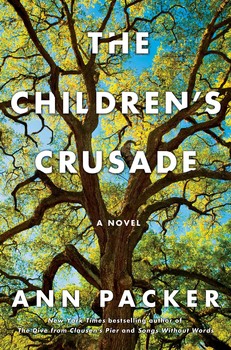
the-childrens-crusade-9781476710457_lgNobody seemed interested in what my husband and I were reading, but if they had been, they would have seen that I was engrossed in The Children’s Crusade, by Ann Packer. I’ll be posting a full review of this wonderful book, which focuses on four siblings raised by a loving, attentive father and a neglectful mother. In today’s New York Times review, Katie Kitamura says:

How do we become who we are? There are many ways of approaching this slipperiest of questions, from the experimental rigor of cognitive neuroscience to the teasing excavations of psychoanalysis. It is, of course, natural territory for the novel, and though The Children’s Crusade follows one nuclear family, its scope is broadened by its attempts at an answer . . . After a brief prologue, in which the origin myth of the family is related in some of Packer’s best and most rapturous prose, childhood emerges as the true sacred space of the novel — not because it represents innocence, but because it might contain the key to decoding the adult self.

9780767919418Jeff’s beach book was One Summer: America 1927, by Bill Bryson, which he’s thoroughly enjoying — even though he typically reads serious history books, the kind that have lots of footnotes. He’s been sharing fun facts with me as he goes along — for instance, that the 1920s were “the golden age of reading”. Some reviewers tend to be a little snobby about Bryson. The Washington Post disdainfully compares One Summer to a Danielle Steel novel, a Cracker Barrel pamphlet, and CliffsNotes. Lighten up, Washington Post!  A lot of us may be part of that “mass-circulation audience” who enjoy and “need more accessible, easy-to-read history”.

9781605986883My mother is not a fan of the beach, but she has plenty of comfortable reading spots at home. She’s reading and enjoying The Listener, by Rachel Basch, which I absolutely loved. Unlike so many novels I’ve read recently, every sentence in it is necessary. I feel like I read many novels that are slightly bloated . . . just a little too long, with elements that don’t contribute to the development of the plot or characters. The Listener is about our need to be known. A psychologist, the widowed father of two grown daughters, treats a college student who is confused about his gender identity. He becomes romantically involved with the mother of this student — without knowing she is the mother of his patient. Complications ensue, involving his daughters and their shared past. The resolution is not pat and tidy, but it’s perfect. I thought Tricia Tierney’s comment was apt: “Rachel is one of the smartest writers around with such a finely honed craft delivered with heart. Don’t you find yourself re-reading her sentences?” (Tricia manages events at the Westport, Connecticut Barnes and Noble and blogs at Tricia Tierney’s Blog.)

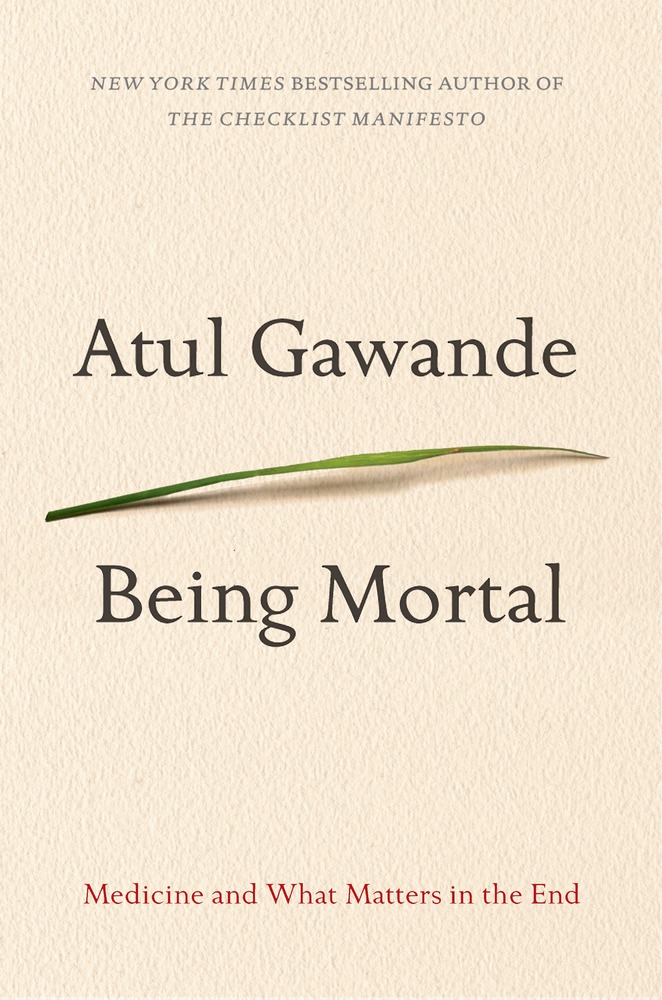
1000H-9780805095159It’s time for me to pack up and head back to Chicago — currently cloudy and 41 degrees. On the plane, I think I’ll finish reading Atul Gawande’s Being Mortal. There’s no better time to contemplate mortality than while flying above the clouds, right? I can also indulge in a favorite travel activity, walking up and down the aisle to see what people are reading. Too bad for me that e-readers have made it much more difficult for me to snoop. I saw very few e-readers at the beach, by the way — must have been the fear of sand and water damage. I’d love to know what you’re reading — on the beach, at home, or anywhere!

10 Books Recommended to Me (Thanks, Readers!)

When I interview an author, or attend an author event and have the opportunity to ask a question, I always ask the author to recommend his or her favorite books. I’m always collecting book recommendations — from friends, family members, colleagues, blog commenters, customers, bloggers and reviewers, even strangers at airports. Of course, I can’t read all the books that are recommended to me, but certain titles come up again and again. And certain people have built tremendous credibility over the years.

Thank you, everyone, for the recommendations. Here are 10 that are on my to-read list; some have even made it to the to-read shelf in my bedroom:

9780307455925Americanah (Chimimanda Ngozi Adichie) — Several friends who are terrific readers told me I HAVE to read this book. One was “shocked” I haven’t read it and another told me it is “extremely thought-provoking”.

Amsterdam (Ian McEwan) — Thomas Christopher Greene, author of The Headmaster’s Wife, says Amsterdam was the last truly wonderful book he read — “Not new, but . . . very smart and lovely novel. Wish I had written it.” I think I’ve read almost all of McEwan’s books, but somehow I missed this one.

1000H-9780805095159Being Mortal (Atul Gawande) — Recommended by several thoughtful friends, and also by Ann Patchett (who I wish was my friend). On her bookstore’s blog, Ann says:

I’m all for people having different tastes, liking different books, but everyone needs to read this book because at some point everyone is going to die, and it’s possible that someone we love is going to die before us. Being Mortal is about having that conversation and thinking the hard things through. It’s not a depressing book, instead it’s thoughtful, probing, and smart.

The Buried Giant (Kazuo Ishiguro) — Bridget, our Penguin Random House sales rep, always has the best recommendations, and The Buried Giant is one of her 2015 favorites. I’ve loved Ishiguro’s other books and have been waiting a long time for this one.

Dark Rooms (Lili Anolik) — Several blog readers told me I absolutely must read this debut novel (which takes place at a boarding school, a setting I can never resist) — one said it’s a “perfect beach read”.

The Great Beanie Baby Bubble: Mass Delusion and the Dark Side of Cute (Zac Bissonnette) — Daniel, owner of Boswell Book Company in Milwaukee, always has interesting book recommendations. He says “What a fun and fascinating read this is! On top of a great story and larger-than-life characters, there are actually some marketing lessons embedded in the narrative.”

9780802123411H is for Hawk (Helen Macdonald) — Highly recommended by several trusted sources, including Perseus sales rep Johanna. The quotation she posted is enough to make me want to read the book, which has already won major literary prizes in Great Britain:

There is a time in life when you expect the world to be always full of new things. And then comes a day when you will realize that is not how it will be at all. You see that life will become a thing made of holes. Absences. Losses. Things that were there and are no longer. And you realize, too, that you have to grow around and in between the gaps, though you can put your hand out to where the things were and feel that tense, shining dullness of the space where the memories are.”

The Narrow Road to the Deep North (Richard Flanagan) — It won the 2014 Man Booker Prize, but I’m more impressed by my friend Kathy’s recommendation. She and I share similar taste in books and are both fascinated by World War II.

9781908313867The Red Notebook (Antoine Lauren) — Sue, from the Cottage Book Shop, just texted me from her vacation to tell me to read Laurain’s latest: “You should pick up The Red Notebook — wonderful. I liked it more than The President’s Hat. Actually, I loved it.” Well, of course — it’s about a Parisian bookseller.
A Spool of Blue Thread (Anne Tyler) — Recommended by several great readers, including two of my favorite librarians. Andrea Larson at Cook Memorial Public Library says: “Her knack for capturing characters and making them not just real, but recognizable, is phenomenal. And she absolutely nails dialogue.”

Please keep your suggestions coming! What else should I add to my ever-growing list?

It’s Monday, March 30 — What Are You Reading?

FullSizeRender
Cowboy boots are a must in Nashville.

After a whirlwind weekend in Nashville, I need some R and R — reading and recovery! I’d never been to a bachelorette party before, but I did know that I wouldn’t need to bring my usual quota of reading material. I managed to make it through People Style Watch on the plane before falling asleep. (I’m not falling for their suggestions on spring fashion — bellbottoms and overalls were not attractive when I wore them back in the 1970s, and they haven’t improved in the last 40 years.)

This week promises to be quiet and peaceful, with the schools on spring break and lots of people out of town. Last week was a flurry of activity in the bookstore as customers rushed in to pick up books to read on the beach and the plane.

Some readers are serial monogamists, sticking with one book and then moving on to the next. Others are polygamists, juggling several books at once. (I just Googled the term “book polygamist” to make sure I wasn’t inadvertently plagiarizing, and stumbled upon a list of “popular polygamy books”. Turns out I’ve read most of them — is that weird?) I am, and have always been, a polygamous reader. I like juggling several books — usually one novel, one or two nonfiction books, and an audiobook. I like at least one of the books to be an e-book so I can read it in bed after my husband falls asleep.

9780385538985This week’s e-book is The Folded Clock: A Diary, by Heidi Julavits. I started it last week and was immediately captivated. It’s a memoir based on the author’s discovery of her childhood diaries. The Folded Clock earned a rave review on the front page of yesterday’s New York Times Book Review. Here’s what the reviewer, Eula Bliss, has to say:

“She lost herself to me,” Julavits writes of her younger self. And so did I, with great pleasure. Losing one’s self is, after all, one of the rewards of reading. The opportunity to inhabit another self, to experience another consciousness, is perhaps the most profound trespass a work of literature can allow.

9780812993158In two weeks, beloved author Elizabeth Berg will be launching her first work of historical fiction at a couple of events hosted by Lake Forest Book Store.  I started reading The Dream Lover a couple of weeks ago and sadly had to put it aside so I could finish my book club books. Berg delves into the heart and mind of writer George Sand, born Aurore Dupin, who was the first female bestselling author in France. I’m planning on finishing the book this week, because I have an upcoming interview with Berg — stay tuned!

9781250063779I just finished Mimi Malloy, at Last!, by Julia McDonnell, and I’m still trying to decide how I feel about it. The title character is a sixty-something Irish-American divorcee with six daughters. Mimi has recently been forced into retirement, and is reluctantly exploring her sad family history. She’s a wonderful character, full of wit and humor, with plenty of sharp edges. (One of the blurbs aptly compares her to Olive Kitteridge.) The novel includes a sweet love subplot between Mimi and her apartment building’s superintendent, which is oddly juxtaposed with the disturbing story of Mimi’s horrific childhood. Readers looking for light “beach reading” will find that although the novel is a page-turner that reads quickly, it’s much darker than it initially appears. Even the title seems inappropriate — it sounds like the title of a children’s book about a plucky tomboy. It’s strange that the ARC I have has no exclamation point in the title, while the published book (both hardcover and paperback editions) includes an exclamation point.

9781605986883I just started The Listener, by Rachel Basch. I’ve mentioned before that I am a complete sucker for books set on campuses, so this book — about a psychologist who counsels students at a small liberal arts college in Maine — had my name all over it. I loved an earlier book of Basch’s, The Passion of Reverend Nash, which covers some of the same territory as The Listener: the complicated relationship between the healer and the patient.

9780767919418And finally, my current audiobook is One Summer: America, 1927, by Bill Bryson. Our couples’ book club is discussing this book in a few weeks, and I think it’s a great choice. Bill Bryson is one of my favorite nonfiction authors — he’s really mastered the art of writing books that simultaneously entertain and inform. However . . . I think maybe he should stick to writing and his publisher should hire a professional narrator for his audiobooks. His voice has a strange, prissy quality that is driving me crazy. I think I may have to switch to the print book and find another audiobook for my walks.

The sun is shining and the temperature in Chicago is heading toward 50 degrees, so I’m heading out to take a walk with Bill. I’ll let you know if I decide to end our relationship!

It’s Monday — What Are you Reading? is hosted by Book Journey.

10+ Books to Read This Spring (Or Later)

9780374171339Happy St. Patrick’s Day! Only three more days until the official first day of spring. I actually went outside without a coat yesterday. Winter was a great reading season, but there are so many wonderful books to read this spring I can hardly keep track of them all.

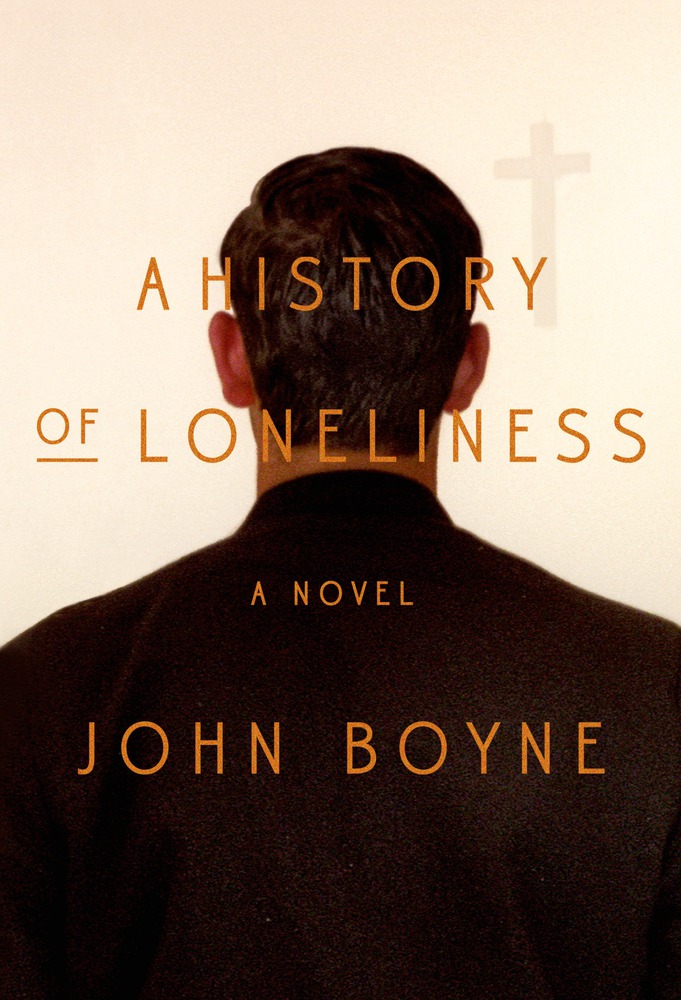
Yes, there is one book written by an Irish author on my list of 10 books to read this spring — A History of Loneliness, by John Boyne. I’m sorry I didn’t include Boyne in my post on Irish authors last March, because he’s a spectacular writer whose books run the gamut from a children’s book about the Holocaust (The Boy in the Striped Pajamas) to a ghost story for adults (This House is Haunted). In A History of Loneliness, Boyne explores the life of an aging Irish priest confronting his past and the scandals rocking his beloved church.9780062333001

If you’re in the mood for something lighter, The Bookseller, by Cynthia Swanson, might fit the bill. I can never resist any book about bookselling, and Swanson’s debut novel — which is on the March Indie Next list — sounds enchanting. It’s about Kitty, a struggling,single bookstore owner who dreams every night about being Katharyn, a married woman with a house and a loving family. Eventually she begins to wonder which of her lives is real. One of my colleagues read this book and enjoyed it, but thought the ending was a little “sappy”. So consider yourself warned — but sometimes I’m in the mood for a sentimental book. The Storied Life of A.J. Fikry could certainly be described that way, but I think you’d have to be a real cynic not to love that book!

Hausfrau, Jill Alexander Essbaum’s first novel, is certainly not sappy. Sue Boucher of the Cottage Book Shop says it’s “creepy . . . but kind of perfect.” Essbaum is not your everyday writer of psychological thrillers — she’s published four collections of poetry. The “hausfrau” of the title is Anna Benz, a modern-day Anna Karenina and expatriate housewife in Zurich who “will provoke strong feelings in readers well after the final page”, according to the starred Publishers Weekly review.

9780812993158I’m reading The Dream Lover, by Elizabeth Berg, and absolutely loving it. The novel is an exploration of new territory for Berg, who has never written historical fiction before. She delves into the heart and mind of writer George Sand, born Aurore Dupin, who was the first female bestselling author in France. In an interview with Nancy Horan, which appears at the end of the book, Berg says that “George Sand entered my subconscious. I began to dream like her; then I thought, to dream like her . . . I believe she captured me, and I was a most willing prisoner.” I am similarly captivated by Berg’s marvelous book, which will be out on April 7.

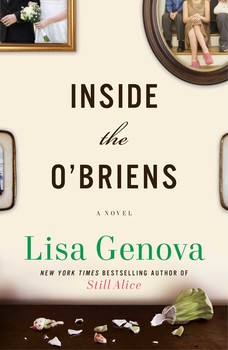
inside-the-obriens-9781476717777_lgAlso due on April 7 — Inside the O’Briens, by Lisa Genova, which I think is her best book yet. Genova is enjoying newfound popularity because of the success of the movie based on her first book, Still Alice. The story of a loving family in crisis, Inside the O’Briens focuses on Joe O’Brien, a tough Boston cop who is devastated when he learns that he is suffering from Huntington’s disease — and that his four children may have inherited the disease from him. I would like to ask readers a provocative question, though: when is a novel literature and when is it propaganda? I don’t mean propaganda in the negative sense of the word, but in the sense that the purpose of the book is to promote a cause.

I don’t read many self-help books, but every so often one really resonates with me. Usually the ones that do are books that combine self-help with business or psychology. (Greg McKeown’s Essentialism is a perfect example.) Better Than Before: Mastering the Habits of Our Everyday Lives, by Gretchen Rubin, was entertaining to read and also packed with helpful tips for developing good habits — and breaking bad ones. (Just don’t ask me how successful I’ve been in putting those tips into practice.)

9780062273475The Wilderness of Ruin: A Tale of Madness, Fire, and the Hunt for America’s Youngest Serial Killer, by Roseanne Montillo, is reminiscent of The Devil in the White City. It’s the true story of a 14-year-old Boston boy who preyed on children in the late 19th century. The criminal investigation raised legal and medical questions that are still being debated today. The  book is particularly fascinating in light of the current trial of the Boston marathon bomber.

Mary Norris, author of Between You and Me: Confessions of a Comma Queen (due April 6), is much more than a copy editor; she’s a delightfully wicked and witty writer. Norris has been on staff at the New Yorker since 1978, upholding the magazine’s notoriously high standards. The New Republic describes “Norris’s very funny, lucid, and lively new book” as “part memoir, part language guide, and part personal account of life at the New Yorker.” I enjoyed every page, and learned a few things besides. By the way, a truly awful article in the Wall Street Journal on March 13, entitled “There is No ‘Proper English'”, says “. . . you may use ‘they’ as a singular generic pronoun; you may say ‘between you and I.’ The pedants’ prohibitions on constructions like these are not supported by the evidence of general usage.” What would Mary Norris say? Or my grandmother, for that matter?

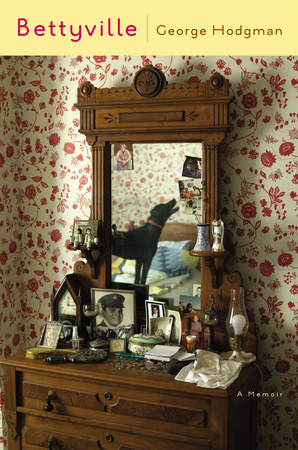
9780525427209When George Hodgman lost his editorial job in New York, he returned to his hometown of Paris, Missouri (“population 1,246 and falling”) to care for his 91-year-old mother. Hodgman’s honest and affecting portrait of their relationship, Bettyville,  moved me both to laughter and tears. As Hodgman told Terry Gross in an interview on NPR’s Fresh Air, “a good part of my role is to just do little things that make her as happy as possible all along the way – every day.”

I have been hearing amazing things, including lots of comparisons to The Goldfinch, about A Little Life, by Hanya Yanagihara. Publishers Weekly says that the 700-page “epic American tragedy”, which covers 30 years in the lives of four college friends, is:

. . . a novel that values the everyday over the extraordinary, the push and pull of human relationships—and the book’s effect is cumulative. There is real pleasure in following characters over such a long period, as they react to setbacks and successes, and, in some cases, change. By the time the characters reach their 50s and the story arrives at its moving conclusion, readers will be attached and find them very hard to forget.

And because it’s too hard to stop at 10, please indulge me while I mention three more new spring books I’m excited about: What Comes Next and How to Like It, by Abigail Thomas, a lovely collection of essays that follows  A Three Dog Life; At the Water’s Edge, by Sara Gruen (author of Water for Elephants), historical fiction that takes place in the Scottish highlands during World War II; and The Children’s Crusade, by Ann Packer (author of The Dive From Clausen’s Pier), the chronicle of a California family, spanning five decades.

For more lists of great books to read this spring, check out the lists at The Broke and the Bookish.

Life is Short — 9 Books I’m Never Going to Read

My books have been part of my life forever. They have been good soldiers, boon companions. Every book has survived numerous purges over the years; each book has repeatedly been called onto the carpet and asked to explain itself. I own no book that has not fought the good fight, taken on all comers, and earned the right to remain.
Joe Queenan

All the books we own, both read and unread, are the fullest expression of self we have at our disposal. . . But with each passing year, and with each whimsical purchase, our libraries become more and more able to articulate who we are, whether we read the books or not.
Nick Hornby

IMG_1221Every now and then, when my bookshelves start to overflow, I get the urge to purge. I never do a very good job. Professional organizers recommend making three piles: “keep”; “toss”; and “donate”. The “toss” pile is usually very small, because I feel terrible throwing away a book unless it is truly falling apart. I can almost always fill a bag with books to donate, but I end up re-shelving dozens of books that a more ruthless culler would donate without a second thought. My rule of thumb is that I feel any ambivalence at all, the book gets to stay. I’m not listening to the advice Marie Kondo offers in The Life-Changing Magic of Tidying Up , which is to keep no more than 30 books in a home library and to house that library in a closet.

I’ve realized that I own many books that have survived multiple purges. If I’m going to be honest, I have to admit I will never read these books. They are no longer books to be read; they are decorative objects. The question I’ve decided to ask about every unread book I own is whether I would carry it on a trip. (Keep in mind I have no problem lugging hardcover books wherever I go. I carried In the Kingdom of Ice on a two-week trip to Europe last fall and I was happy to have it with me.)

So here are 9 hardcover books I have considered reading many times but I know I will never read. I tried hard to part with at least 10, but I just couldn’t. (I have an easier time giving away paperbacks.) They’re packed in a shopping bag, ready to be dropped at the back door of the Lake Forest Library. This is the collection point for the Friends of the Library annual book sale, and there is a large sign warning potential used book thieves that security cameras are in use. I wonder if some people think that because they’re donating some books, they get to take a few as well. Those people must be even worse at cleaning out their bookshelves than I am!

If anyone thinks I’m making a big mistake getting rid of any of these books, let me know . . .

9780307958341Book of Ages: The Life and Opinions of Jane Franklin by Jill Lepore
A National Book Award finalist in 2013, Book of Ages came highly recommended from a trusted source — but whenever I’m deciding what to read next, I look at its lovely cover and then choose something else.

Thrive: The Third Metric to Redefining Success and Creating a Life of Well-Being, Wisdom, and Wonder by Arianna Huffington
A publisher sent me Thrive as part of an ill-conceived program called “Blogging for Books”.  I don’t even understand the title. What does she mean by “third metric”? I guess I would have to read the book to find out, but I’m not that curious.

Artisan Bread in Five Minutes a Day: The Discovery That Revolutionizes Home Baking by Jeff Hertzberg and Zoë François
I bought this book seven or eight years ago under the misguided impression I would want to spend any time at all (even five minutes) baking bread.  It’s never been opened.

Every Day is for the Thief by Teju Cole
This book, about a Nigerian immigrant in New York who returns to his home country, received a lot of critical acclaim, as did its predecessor, Open City. However — and this is a deal-breaker for me — it is about an unnamed character.

The Love of My Youth by Mary Gordon
Over the past few years, I’ve picked it up, put it down . . . picked it up, put it down . . . Time for The Love of My Youth to find a new home where it will be appreciated.970b55d1c222cd0f5b577d2f96aab9d5

The Historian by Elizabeth Kostova
How on earth did I end up with a book about vampires on my shelf, even a supposedly literary one? I did consider keeping The Historian for a minute, because I came across this quotation while flipping through the book: “It was good to walk into a library again; it smelled like home.”

The Private Life of Chairman Mao by Dr. Li Zhisui
This 750-page book, which was written by Mao’s personal physician, was given to me in 1996. I think it’s safe to say I’ll never read it. Especially since I just skimmed the first chapter and learned more than I wanted to know about Mao’s lack of oral hygiene.

Outlander by Diana Gabaldon
I’ve had this book so long that the pages have turned yellow. People love this series, I know. I started it, and it’s just not for me; I hate time travel.

The Kid: The Immortal Life of Ted Williams by Ben Bradlee, Jr.
I never intended to read this book, but I thought my husband might like it. What was I thinking? He’s not going to read an 864-page “epic biography” of Ted Williams, no matter how good it is.

Oh, and by the way — in the spirit of full disclosure, I have to add that I didn’t personally carry In the Kingdom of Ice through Holland, Belgium, and France. I took every opportunity to sneak it into my husband’s bag. I think he would say that it was worth bringing with us, because he enjoyed it as much as I did.