Why I’m Grateful to Fiction Writers

9781410468895Let us be grateful to the people who make us happy; they are the charming gardeners who make our souls blossom.
Marcel Proust

An author makes you notice, makes you pay attention, and this is a great gift. My gratitude for good writing is unbounded; I’m grateful for it the way I’m grateful for the ocean.
Anne Lamott

I recently finished a 4-week creative writing course called “A Story a Day”. Do you know how hard it is to write a story a day? Every day, for four weeks, the instructor emailed a prompt. On Wednesday evenings, we met and discussed the stories we’d written during the week, as well as a story by a published author that illustrated the theme of the week — plot, characterization, dialogue, etc.

Actually, I shouldn’t say I finished this course. I still have quite a few outstanding assignments. Some of the prompts left me absolutely bewildered. I especially had a hard time with the ones that required me to move outside my “comfort zone” and write speculative fiction. I learned that my comfort zone  — would that be my imagination? — is very limited and that I am not interested in writing (or reading) speculative fiction.

What else did I learn? I learned that it is really, really difficult to write fiction. You know the little disclaimer in novels that says something to the effect of “Any resemblance to actual persons, living or dead, is coincidental”? My characters almost all have some resemblance to real people. I am amazed by writers who imagine and create unique, fully formed characters. As I’ve mentioned before, I don’t care if the characters are likable; I just want to believe in them. As Claire Messud said, “If you’re reading to find friends, you’re in deep trouble. We read to find life, in all its possibilities. The relevant question isn’t ‘Is this a friend for me?’ but ‘Is this character alive?'”  (That being said, it is a wonderful reading experience when a character not only comes alive on the page but makes his or her way into your heart.)

This year, I read some spectacular novels. I want to thank 10 writers (some of whom are debut novelists) for creating memorable characters and stories.

cvr9781476746586_9781476746586_lgAnthony Doerr, who spent 10 years writing All the Light We Cannot See, my favorite novel of 2014.

Gabrielle Zevin, who created my favorite character this year, the cantankerous A.J. Fikry, in her love letter to the book business — and to reading — The Storied Life of A.J. Fikry.

Erin Lindsay McCabe, who brought both my husband and me to tears in her debut novel, I Shall Be Near to You, a tender love story about a headstrong young woman who disguises herself as a man and follows her husband into battle in the Civil War.

Matthew Thomas, whose first novel, We Are Not Ourselves, is a masterpiece. Like Anthony Doerr, it took him 10 years to write his book.  Both an epic novel of the 20th century in America and an intimate story of a marriage and family, We Are Not Ourselves amazed me with its sympathy for its complex and flawed characters.

Laura McBride, whose debut novel, We Are Called to Rise, chronicles the lives of four very different Las Vegas residents (a young immigrant boy, a social worker, a war veteran turned police officer, and the officer’s mother) in a heartbreaking but ultimately hopeful story.

E. Lockhart, who made me a convert to well-written young adult literature with her poetic and tragic novel, We Were Liars. I knew from the first page I was reading something extraordinary, because the voice of Cadence, the teenage narrator, struck me as completely authentic.9780062285508
Julia Glass, who brought some of my favorite characters from Three Junes back to the page in And the Dark Sacred Night. Glass’s characters are imperfect, sometimes likable, sometimes annoying, but always interesting and fully textured.

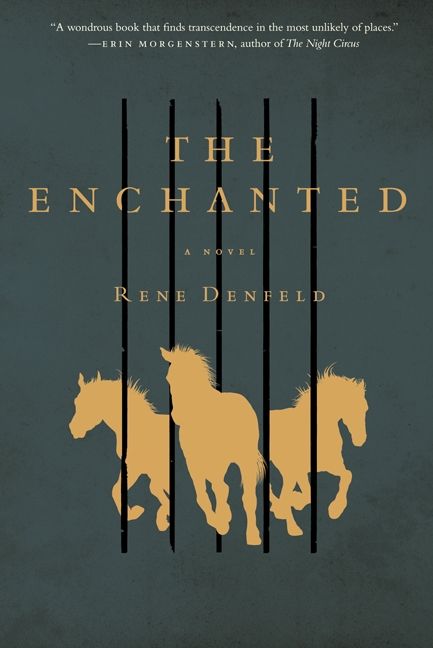
Rene Denfeld, who is such a skilled writer that she made me feel compassion for a prisoner on death row, who has committed a crime “too terrible to name” in her debut novel, The Enchanted.

Thrity Umrigar, who created two unforgettable characters (an uneducated Indian immigrant and her therapist) in The Story Hour. Umrigar was also kind enough to send me a long, thoughtful email answering some questions I raised in my review of her novel.
9780062365583Sebastian Barry, who always awes me with his beautiful writing, and broke new ground in The Temporary Gentleman, the story of an Irishman who makes some wrong turns in life and ends up as an expatriate in Africa after World War II.

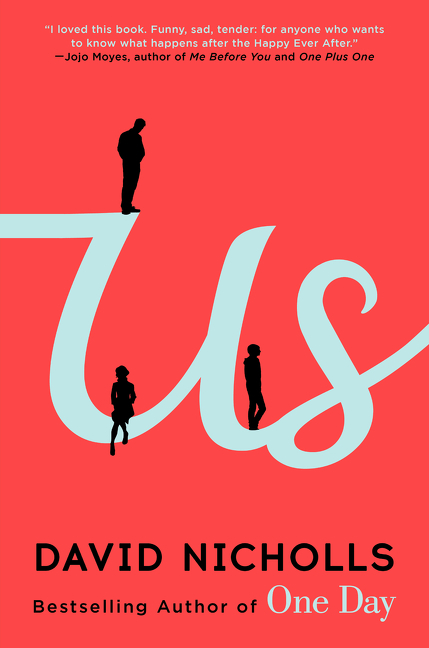
David Nicholls, who wrote Us, a delightful romantic comedy about a marriage that may or may not have run its course. In the words of my coworker, Max, it includes “just enough humor to counteract the bittersweet”.  The characters, especially Albie, the sullen teenage son, drove me crazy — just like real people.

Which novelists are you most grateful for this year?

Have a wonderful Thanksgiving, and I hope you have some time to read over the long weekend!


WWW Wednesday — Mother-Daughter Version 2.0

IMG_1099
Too cold to sit outside . . .

It’s WWW Wednesday, where I answer three questions:

What are you currently reading? What did you recently finish reading? What do you plan to read next?

I’m visiting my mother in Hilton Head, South Carolina, so I’ll answer those questions for both of us. And no, we are not reading outside on lounge chairs. The temperature is 44 degrees — not outdoor reading weather, although it’s balmy compared to Chicago’s current 19 degrees.

Here’s what we are currently reading:

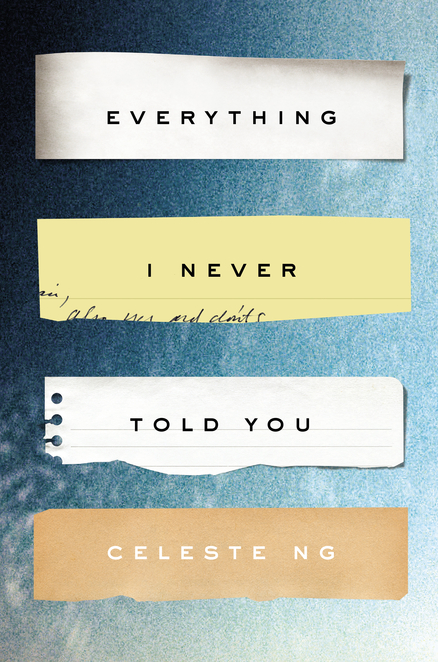
9781594205712MI’m in the middle of Everything I Never Told You by Celeste Ng. My book group is discussing it tomorrow night, so you might say I’m cutting it a little close, but I like to read my book group books as close to the meetings as possible so they’re fresh in my mind.  I’m impressed with Ng’s assured, precise writing style and her careful, well-paced narrative structure. It’s the kind of book you want to read in one sitting. All the reviews I’ve read, including this one from the New York Times, have been excellent:

Celeste Ng’s debut novel, Everything I Never Told You, is a literary thriller that begins with some stock elements: a missing girl, a lake, a local bad boy who was one of the last to see her and won’t say what he knows. The year is 1977, the setting, a quiet all-American town in Ohio, where everyone knows one another and nothing like this has ever happened before.

This is familiar territory, but Ng returns to it to spin an unfamiliar tale, with a very different kind of girl from the ones we’ve been asked to follow before. If we know this story, we haven’t seen it yet in American fiction, not until now.

One of our members emailed today to say she wouldn’t be able to make it to the meeting (it’s her daughter’s birthday — I guess that’s a decent excuse): “I loved the book even though I thought it was heart-wrenching. Can’t wait to hear about the discussion. Two great books in a row. We are on a roll.” (Last month we discussed All the Light We Cannot See.)

My mother is reading What Alice Forgot by Liane Moriarty, for her next book club meeting. It’s about a 39-year-old woman who loses her memory and thinks she is 29, pregnant with her first child. She thinks it might be a little lightweight for a book club discussion. I am embarrassed to admit that I keep confusing this book with Still Alice by Lisa Genova, which is a moving novel about a woman suffering from early onset Alzheimer’s disease.  Genova is a Harvard-trained neuroscientist who has written several novels about families dealing with brain disorders. (Still Alice, by the way, has just been made into a movie starring Julianne Moore and Alec Baldwin, with a wide release scheduled for 9780062325143January 2015.)

Here’s what we just finished reading:

The last book I finished was The Wild Truth by Carine McCandless. McCandless is the sister of Chris McCandless, the young man whose journey of self-discovery and eventual starvation in the Alaskan wilderness was told by Jon Krakauer in Into the Wild. I don’t really know what to think about this book. Into the Wild raised more questions than it answered, and The Wild Truth answers some of those questions. But it was disconcerting to learn that Krakauer (and also Sean Penn, who directed the movie version) were in possession of key missing information and agreed with the McCandless family not to reveal it. The conclusion I reached as a reader about McCandless’s reasons for severing ties with his family and disappearing “into the wild” turned out to be faulty. I feel a bit cheated knowing that Krakauer didn’t present the whole story in his book, although I understand why he couldn’t reveal family secrets.

coverMy mother recently read The Children Act by Ian McEwan, about a London family court judge who must make a decision about whether to order a lifesaving blood transfusion for a 17-year-old Jehovah’s Witness. My mother highly recommends The Children Act, although her favorite McEwan novel remains Atonement. The London Independent echoes her thoughts, saying, “In short: this novel is not as good as Atonement, but what modern novel is?”

What’s next?

I’m going to return to Us by David Nicholls, which I was finding absolutely delightful, but had to set aside to read my book club book. I got a text from a friend last week who asked me if I’d read Us yet, saying, “Loved Us, read it next if you can . . . it’s a perfect book.” So of course I had to pick it up right away! It was longlisted for this year’s Man Booker Prize. I also just picked up a copy of Maureen Corrigan’s And So We Read On: How The Great Gatsby Came to Be and Why It Endures, which I can’t wait to read. (See Ann Patchett’s thoughts on the book here.)

I see that my mother has a big stack of books to be read. Right on top is A Star for Mrs. Blake by April Smith, the story of a group of Gold Star mothers (women whose sons were killed in World War I) who make a government-sponsored pilgrimage to Europe to visit their sons’ graves.

I’d love to know what you’re reading and what you’re thinking of reading next. I’m especially interested in book club selections, since I’m planning a book club roundup of great discussion books.

spreadthelove-1


Remembering World War I

Verdun
Verdun

Published at 11:11 a.m. on 11/11

Armistice Day — first celebrated on November 11, 1919 to commemorate the end of World War I — officially became Veterans Day in 1954, when President Eisenhower signed legislation that ensured that American veterans of all wars would be honored every November 11. In France and Belgium, Armistice Day (Armistice de la Première Guerre mondiale) is observed on November 11 as well. (British Commonwealth countries refer to Armistice Day as Remembrance Day, or Poppy Day.) This year, special events are planned in Europe because 2014 marks the 100th anniversary of the outbreak of World War I. Today, French President François Hollande, British Prime Minister David Cameron, and German Chancellor Angela Merkel will inaugurate the International Memorial of Notre Dame de Lorette, a “Ring of Remembrance” at Ablan Saint Nazaire in northern France, near the Belgian border. The stunning new memorial is located on a plateau overlooking France’s largest military cemetery.

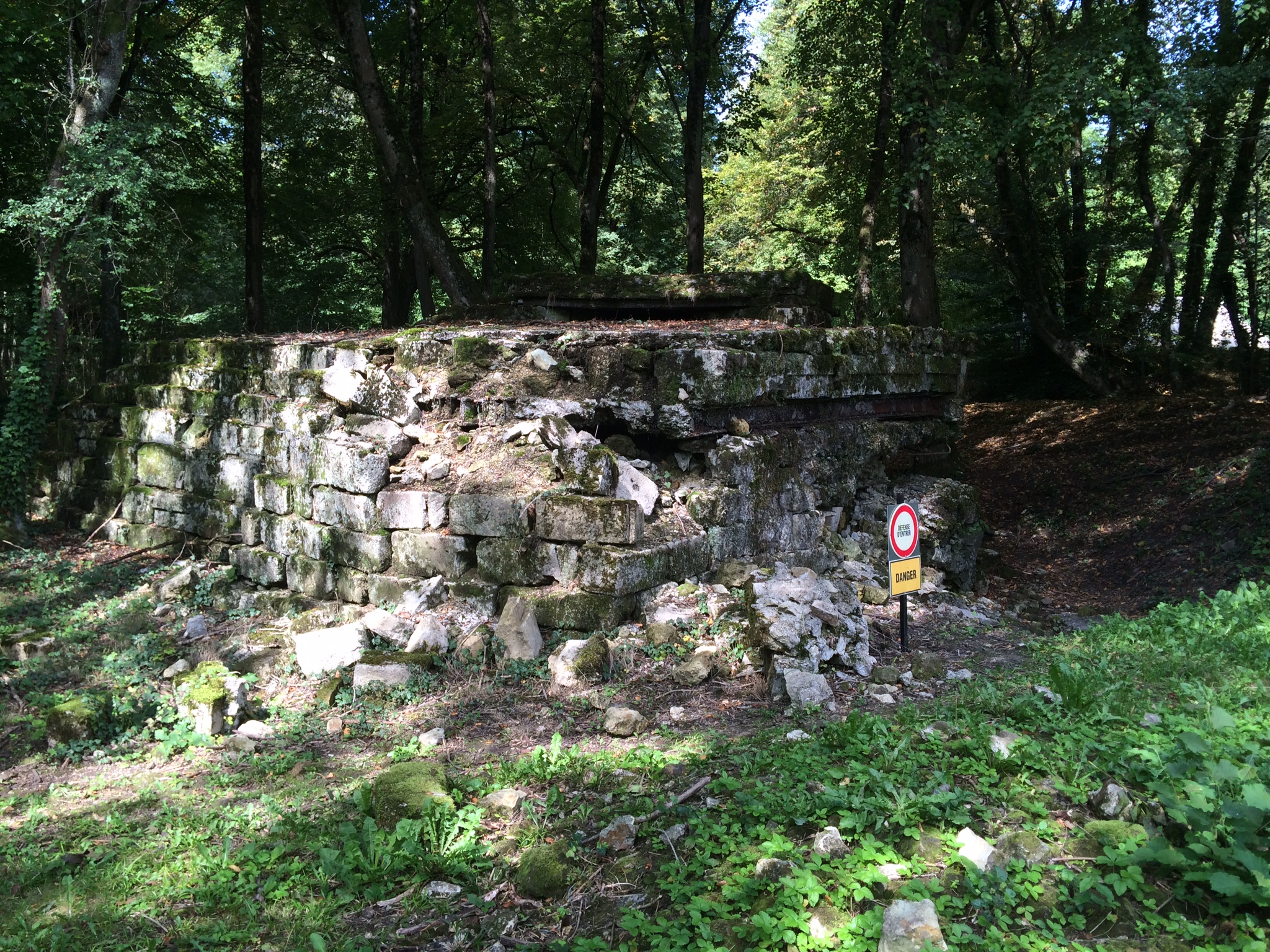
In September, Jeff and I visited Verdun, site of one of the longest and bloodiest battles in World War I. To this day, many areas where the ten-month battle took place are off-limits because of unexploded munitions. Trenches and huge bomb craters define the landscape, and ruined villages have been left as memorials. Our knowledgeable tour guide provided an interesting French perspective on World War I and arranged for lunch at the informal museum of Jean-Paul de Vries, a charismatic local resident who has found more than 30,000 World War I artifacts in the countryside near his home.

Richard Rubin, author of The Last of the Doughboys: The Forgotten Generation and Their Forgotten World War, explored the battlefields with M. de Vries and visited his two-story garage:

I call it a garage because it had a vehicle door in front and sat in the midst of a village, but inside it was much more like a barn with a large loft. Whatever it once was, it is now full of locally found bayonets, rifles, grenade launchers; trench knives, “persuaders”, entrenching tools; helmets, gas masks, wristwatches; mess kits, eating utensils, pots, pans, jugs; horseshoes, saddles, harnesses, ammunition crates, wicker shell carriers; Bibles and religious statuettes; enough bottles to supply several bars and pharmacies; and many, many photographs . . .

It’s a museum . . . haphazard and compelling, wondrous and sad. M. de Vries accepts donations but does not charge admission. Everything he has here was offered up to him, for free, by the earth. Experts say France’s World War I battlefields will continue to regurgitate artifacts of that war for another two or three centuries.

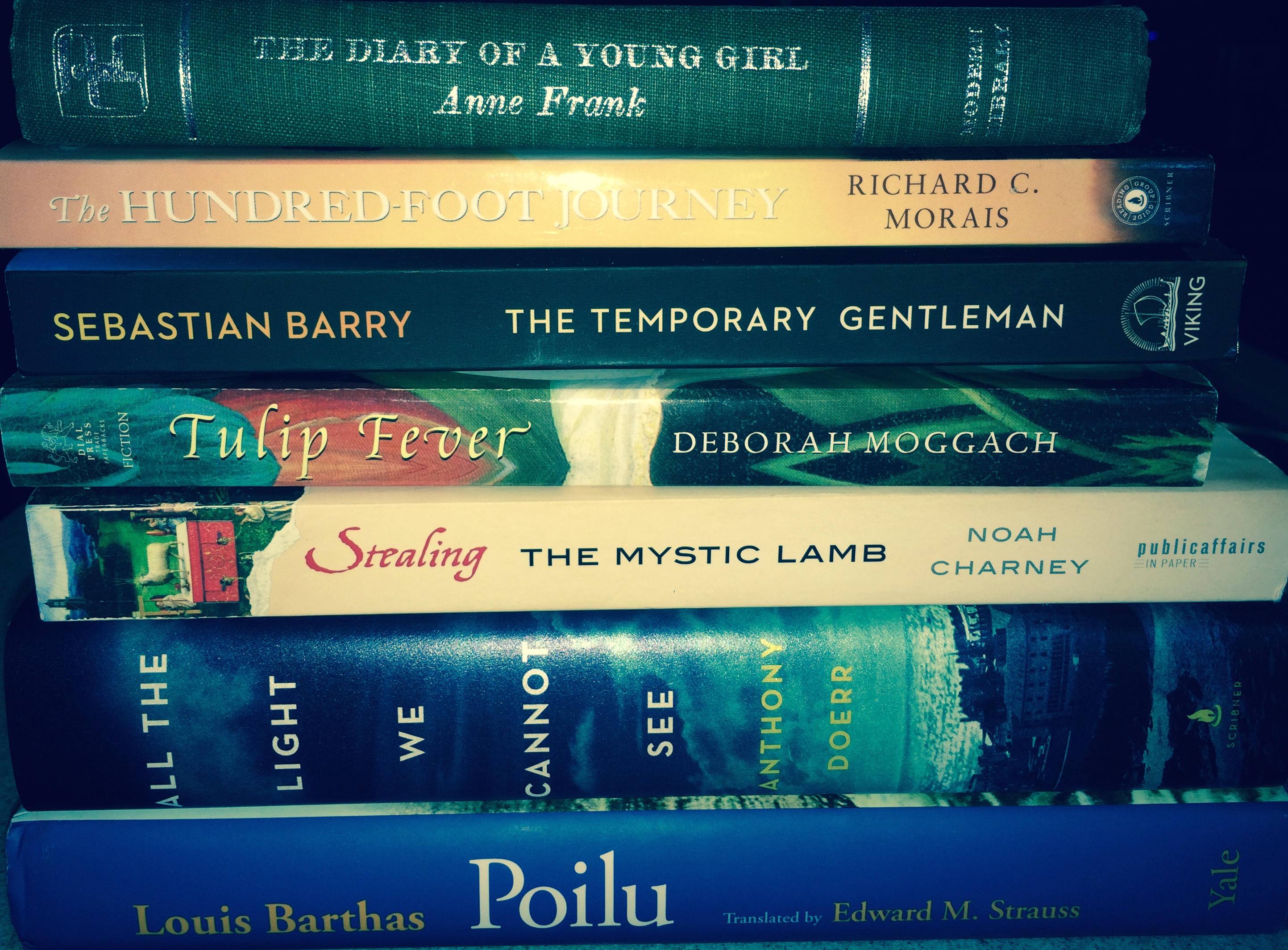
I’ve read a lot of historical fiction about World War I, but my husband is the expert when it comes to actual history. In addition to The Last of the Doughboys, his collection of World War I nonfiction includes the following (and many more):

Poilu: The World War I Notebooks of Corporal Louis Barthas, Barrelmaker, 1914-1918 —  A new translation of the actual wartime diaries of a French soldier. Barthas spent four years in almost constant combat, fightingIMG_0180 in every major French battle. Somehow he managed to chronicle his experiences in a series of notebooks. When he arrived home, he added information (letters, official reports, clippings, etc.), eventually filling 19 volumes. (By the way, “poilu” means “hairy one” in French and is the French version of the American “doughboy” — an infantryman.)

The Missing of the Somme (Geoff Dyer) — Dyer, the grandson of a veteran of the Battle of the Somme, has written what the Wall Street Journal calls “a lyrical meditation on memory and the meaning of World War I”.

To End All Wars: A Story of Loyalty and Rebellion, 1914-1918 (Adam Hochschild) — The New York Times describes Hochschild as “a historian ‘from below’, as it were, or from the viewpoint of the victims. He stays loyal to this method in “To End All Wars,” concentrating on the appalling losses suffered by the rank and file and the extraordinary courage of those who decided that the war was not a just one” and adds that “this is a book to make one feel deeply and painfully, and also to think hard.”

The Pity of War: Explaining World War I (Niall Ferguson) — Controversial British historian argues that World War I was not inevitable, as other historians have claimed, but can be almost entirely blamed on the actions of Great Britain.

I enjoyed Stanley Weintraub’s Silent Night: The Story of the World War I Christmas Truce. In 1914, 100,000 soldiers on the Western Front took part in a temporary cease-fire on Christmas Eve. The last survivor of the truce, Sgt. Alfred Anderson of Scotland’s Fifth Battalion Black Watch, died in 2005 at the age of 109.

There are no living World War I veterans today . . . but there are plenty of other veterans to thank for their service.


Nonfiction November — 10 Favorite Survival Books

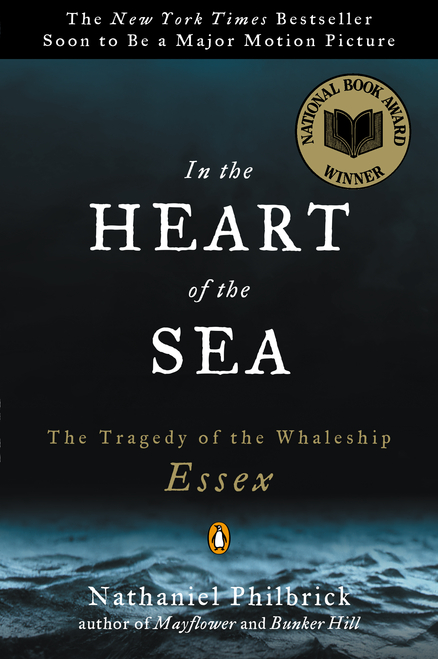
9780141001821MI just saw a preview for the movie version of In the Heart of the Sea: The Tragedy of the Whaleship Essex, one of my all-time favorite nonfiction books. (And by the way, when did the word “trailer” creep into common usage, replacing the unpretentious and much more accurate “preview”?) Seeing a clip from the movie –which included a glimpse of the deadly white whale — reminded me how much I enjoyed Nathaniel Philbrick’s enthralling account of the survivors of the sinking of the Essex. (It won the National Book Award for nonfiction in 2000.) I’ve had a strange fascination with survival stories, especially those that take place at sea, ever since childhood.

I grew up near the ocean, and spent most of my summers on boats. I remember lying in my cozy bunk at night, reading Survive the Savage Sea (originally published in 1973, and still in print) by the light of a little battery-powered lamp. Dougal Robertson’s book describes how his boat was sunk by a pod of killer whales, and how his family managed to survive for 38 days in a little dinghy with few provisions. As I recall, they had little more than a bag of onions and some fruit. I felt a little guilty when I complained about the stale cereal and canned vegetables we ate on our boat.

When I ran out of tales of shipwrecked sailors, I turned to adventure on land. Alive, by Piers Paul Read, was shocking and gruesome– so it was right up my 14-year-old alley. I don’t think my tastes have evolved much, because I continue to be intrigued by true stories of bravery in the face of danger. The best one I’ve read recently is In the Kingdom of Ice: The Grand and Terrible Voyage of the USS Jeannette, by Hampton Sides. Sides, a journalist and historian, has written several other excellent works of nonfiction; I especially liked Ghost Soldiers: The Epic Account of World War II’s Greatest Rescue Mission, about a daring raid on a POW camp in the Philippines.

Like all the best narrative nonfiction books, In the Kingdom of Ice is much more than an enthralling account of an historical event. 9780385535373Sides paints a detailed picture of post-Civil War society, when many young men who missed the opportunity to fight in the war were looking for opportunities to become heroes. His engaging, and often very funny, portrayal of newspaper titan James Gordon Bennett, Jr. (backer of the voyage), shows us the increasing role of the press. He covers Native American culture in the Arctic . . . the state of scientific and geographic knowledge in the Victorian era . . . and most of all, the enormous human capacity for courage and endurance.

Endurance: Shackleton’s Incredible Voyage, by Alfred Lansing, takes place at the other end of the world. The book (originally published in 1959) was just re-issued in honor of the 100th anniversary of Shackleton’s amazing expedition. It’s deservedly a classic. And it’s more uplifting than many survival stories; Shackleton’s entire crew survived their ordeal.

Several members of Teddy Roosevelt’s party in The River of Doubt: Theodore Roosevelt’s Darkest Journey, by Candice Millard, were not so lucky. After he lost the presidential election in 1912, Roosevelt planned an expedition to explore the River of Doubt, a previously unmapped tributary of the Amazon. I recommend this book over and over — it’s on its way to becoming a classic in adventure literature.

Unbroken: A World War II Story of Survival, Resilience, and Redemption, by Laura Hillenbrand, has to be one of the most moving stories of survival ever written. All I can say is that if you haven’t read it, you should. I also think it should be required reading for all high school students. Especially the ones who think they’re deprived if they don’t have the latest iPhone.

9780061988349Lost in Shangri-La: A True Story of Survival, Adventure, and the Most Incredible Rescue Mission of World War II, by Mitchell Zuckerman, is unusual in that one of the heroic survivors is a woman. A plane is shot down over the cannibal-infested jungles of New Guinea, with only three survivors, all of whom are injured. This book didn’t get the attention it deserved when it was published, but it’s one of the best nonfiction page-turners I’ve ever read.

Batavia’s Graveyard: The True Story of the Heretic Who Led History’s Greatest Mutiny, by Mike Dash, has it all: shipwreck . . . mutiny . . . murder . . . and survival. When a Dutch ship sinks off the coast of Australia, the survivors take refuge on a desert island — where they are at the mercy of a fanatical band of mutineers. It’s another “truth is stranger than fiction” story that reads like a thriller.

Deep Down Dark: The Untold Stories of 33 Men Buried in a Chilean Mine, and the Miracle That9780374280604 Set Them Free, by Héctor Tobar, probably shouldn’t be listed as one of my favorites — because I haven’t read it yet. But I have heard so many glowing reviews from trusted sources that I am pretty sure I am going to love it. Here’s what the Los Angeles Times reviewer has to say:

The miners’ journey into the underworld and their miraculous return is an epic tale for all time. In his new book, Deep Down Dark, journalist and former Times staffer Héctor Tobar proves equal to the occasion. Weaving together the drama of the miners’ harrowing ordeal below ground with the anguish of families and rescuers on the surface, Tobar delivers a masterful account of exile and human longing, of triumph in the face of all odds. Taut with suspense and moments of tenderness and replete with a cast of unforgettable characters, Deep Down Dark ranks with the best of adventure literature.

What determines whether a person survives an ordeal? Obviously, luck is the most important factor — but, as all these books show us, some people possess an indomitable spirit. Louis Zamperini, hero of Unbroken, says:

Yet a part of you still believes you can fight and survive no matter what your mind knows. It’s not so strange. Where there’s still life, there’s still hope. What happens is up to God.


WWW Wednesday

What did you just finish reading? What are you currently reading? What do you think you’ll read next?

short-and-tragic-life-of-robert-peace-9781476731902_lgLast night, I finished The Short and Tragic Life of Robert Peace by Jeff Hobbs. It was a miserable,rainy day in Chicago, and I was lucky enough to spend most of the day reading. Robert Peace, a 2002 graduate of Yale and a product of inner-city Newark, was murdered at age 30 in a drug-related shooting. Hobbs, who was Peace’s roommate in college and who remained a close friend after graduation, has written one of the most thought-provoking books I’ve read in a long time. Why did Peace, a brilliant young man with a promising career in scientific research, succumb to the drug trade? Hobbs thoroughly and thoughtfully examines Peace’s life in all its complexity and contradictions, with the help of Peace’s family, friends, colleagues, and teachers. I can’t imagine a better book for book club discussions. To learn more, read the excellent review in the New York Times.

I’m reading two other books right now — An Unnecessary Woman by Rabih Alameddine (a finalist for the 2014 National Book Award) and Just Mercy by Bryan Stevenson. I always like to have at least two books in progress, one paper book and one e-book. I much prefer reading “real” books, but I love reading in bed, and in the interest of marital harmony, I stick to e-books late at night.

9780802122940An Unnecessary Woman is about Aaliyah, a 72-year-old retired bookseller living alone in Beirut, translating her favorite books into Arabic:

I long ago abandoned myself to a blind lust for the written word. Literature is my sandbox. In it I play, build my forts and castles, spend glorious time. It is the world outside that gives me trouble. I have adapted tamely, though not conventionally, to this visible world so I can retreat without much inconvenience into my inner world of books.

In an NPR interview, the author says the book asks this question:, “How do we balance an inner life with an outer life and how important is each?” I’m really savoring this book — although I’m still rooting for All the Light We Cannot See to win the National Book Award.

Bryan Stevenson, author of Just Mercy, is the founder of the Equal Justice Initiative, a nonprofit organization that is dedicated to 9780385535373helping people who have been denied fair treatment in the justice system.  One early review refers to Stevenson as a modern-day “Atticus Finch” — which is ironic, because Stevenson reminds us that Atticus Finch actually lost his case in To Kill a Mockingbird. I’ve just read the first couple of chapters, but I’m finding the book fascinating and eye-opening.

What’s up next? My book club will be discussing Everything I Never Told You by Celeste Ng at our November meeting, and I can’t wait to start In the Kingdom of Ice by Hampton Sides. Jeff and I will both be reading that, because we have plans to get together with another couple and talk about it over dinner. What about you? What’s on your list?

www_wednesdays4

10 Books to Read This Fall

I can’t believe it’s already the last day of September. It’s been a glorious month here in Chicago, and I’m savoring every minute of the warmth and sunshine. For what it’s worth, the Farmers’ Almanac is predicting another frigid and snowy winter in the Midwest. All the more reason to have a pile of good books waiting to be read! Here are 10 books either just published or due to be published this fall to add to your list.

9780062306814The Miniaturist (Jessie Burton)
In 17th century Amsterdam, a young woman marries a wealthy businessman, who gives her a replica of their canal house — opening the door to many strange happenings. The book was inspired by an actual cabinet house owned by Petronella Oortman — which I was lucky enough to see recently in the Rijksmuseum.  The Guardian says it is “a fabulously gripping read” that will “appeal to fans of Girl With a Pearl Earring and The Goldfinch“, which think describes it perfectly. (Although I dislike the word “read” used as a noun . . .)9780062336019

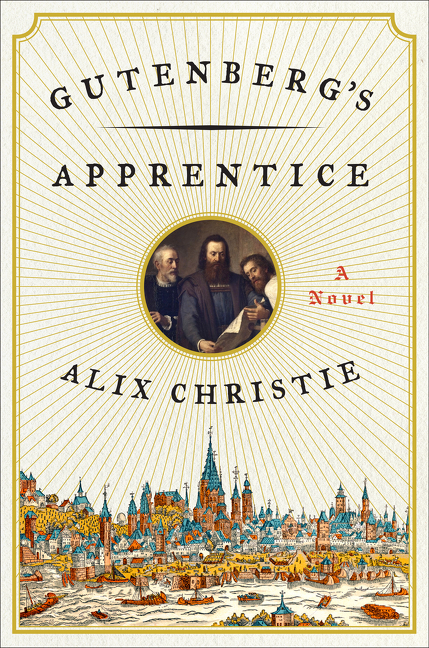
Gutenberg’s Apprentice (Alix Christie)
Author Christie, a letterpress printer, contends that Gutenberg’s success was due to his gifted young apprentice, Peter Schoeffer. According to the New York Times, “Christie spotlights intriguing parallels between 15th-century Europe and the digital media of the 21st-century world.” As a lover of the printed page, I can’t wait to read this one.

The Short and Tragic Life of Robert Peace (Jeff Hobbs)
Robert Peace escaped the slums of Newark, New Jersey to attend Yale University — where he was author Hobbs’s roommate. He died at age 30, the victim of a gang-related drug assassination. The book has been receiving a lot of acclaim; the Los Angeles Times says: “In the end, The Short Tragic Life of Robert Peace is a book that is as much about class as it is race. Peace traveled across America’s widening social divide, and Hobbs’s book is an honest, insightful and empathetic account of his sometimes painful, always strange journey.” (Two other excellent books on this topic are The Other Wes Moore by Wes Moore and A Hope in the Unseen by Ron Suskind.)

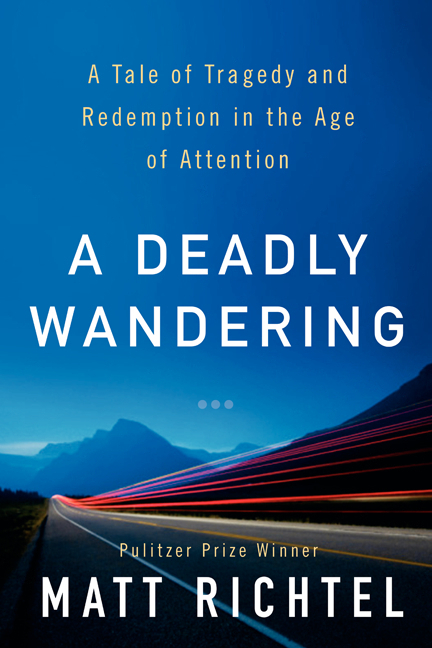
9780062284068A Deadly Wandering (Matt Richtel)
A groundbreaking legal case and the latest scientific research on the brain and attention combine in this compulsively readable page-turner about a devastating accident affecting several families and the perils of multitasking in today’s digital world. There are no villains in Pulitzer-Prize winning author Richtel’s moving story of heartbreak and healing. I can’t recommend this book strongly enough.

What the Lady Wants (Renee Rosen)
Rosen’s first historical novel, Dollface, is an entertaining and enlightening excursion back to Prohibition-era Chicago.  I’m anxious to read her next book, set in the Gilded Age, about department store tycoon Marshall Field and his love affair with Delia Canton. There will be opportunities in Chicago to meet Renee Rosen, hear her read from the book, and ask questions; details to come.  (Due November 4)

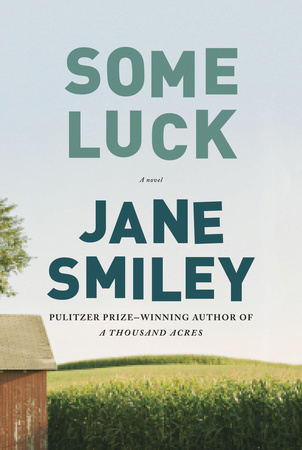
9780307700315Some Luck (Jane Smiley)
Smiley won the Pulitzer Prize for A Thousand Acres, a modern-day retelling of King Lear.  She returns to Iowa farm country with her new novel about 33 years in the lives of Walter and Rosanna Langdon and their five very different children. Each chapter covers a single year, beginning in 1920 soon after Walter’s return from World War I. The book is the first installment in a trilogy about the Langdons, and about the transformation of American culture and society in the 20th and 21st centuries. According to Publishers Weekly, “Smiley conjures a world—time, place, people—and an engaging story that makes readers eager to know what happens next.”

A Sudden Light (Garth Stein)
The Art of Racing in the Rain is one of my favorite books, and I’ve been eagerly awaiting Stein’s new novel. This one is not narrated by a dog — instead, by a 14-year-old boy, Trevor Riddell. Trevor’s bankrupt, recently separated father brings him and his sister Serena to their grandfather’s mansion in order to move the old man to a nursing home and sell the property for much-needed cash. However, Trevor discovers that there may be a ghost in the house, and secrets in his family’s history, that will prevent his father from carrying out his plan. I’m in the middle of the book now, and loving it . . . and that is surprising, because I hate ghosts.

we-are-not-ourselves-9781476756660_lgWe Are Not Ourselves (Matthew Thomas)
I think this debut novel, the story of more than 50 years in the life of Eileen Tumulty Leary and her family, is a masterpiece. I read the book months ago, and I still can’t stop thinking about it. As I was reading it, I was reminded of Alice McDermott. The New York Times reviewer remarked on the connection between the two authors: “Mr. Thomas’s narrow scope (despite a highly eventful story) and bull’s-eye instincts into his Irish characters’ fear, courage and bluster bring to mind the much more compressed style of Alice McDermott. (According to this book’s acknowledgments, she has been one of his teachers. If he wasn’t an A student then, he is now.)”

Five Days Left (Julie Lawson Timmer)
If you’re in the mood for a good cry, this is the book for you. Two people have five days left with the people they love most. I can’t really tell you more than that, except that if you read it on public transportation, make sure you have some Kleenex handy. It will definitely get your book club talking, although if you are the one who recommends it, you may be accused of suggesting “depressing” reading material.

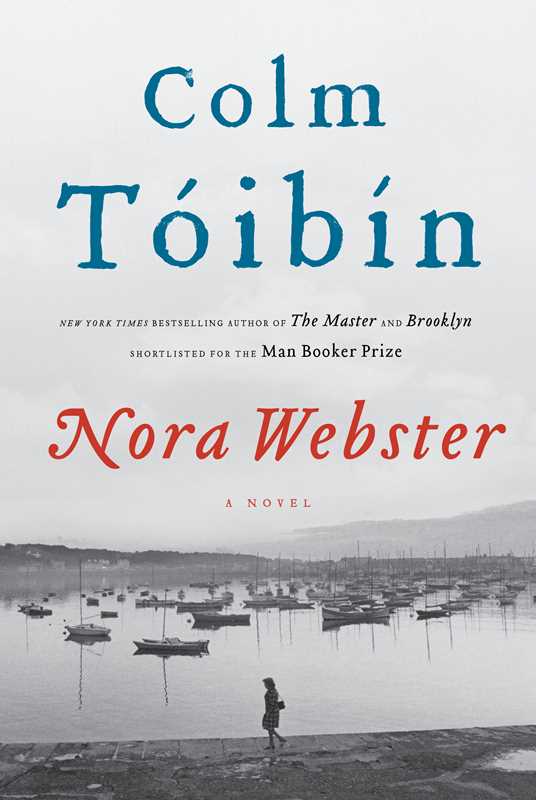
Nora Webster (Colm Tóibín)9781439138335
I’ve loved everything I’ve read by Irish author Tóibín, especially Brooklyn and The Master, and have been hearing wonderful things about his new novel. Set in his hometown in Wexford County, Nora Webster is the story of a widow raising four children in Ireland during the 1960s and early 1970s.  The Chicago Tribune says: “There is no flash and dazzle in Tóibín’s writing, just unobtrusive control, profound intelligence and peerless empathy that is almost shocking in its penetration.” I’m looking forward to hearing Tóibín speak at the Chicago Humanities Festival on November 9. (Due October 7)

STL300_border

Back to School — 10 Favorite Campus Novels

I’ve always been drawn to novels set in the academy. I like the parochial closed world in which incompatible people are forced to come to terms with one another. I like the relatively high tolerance for oddity and the relatively low threat of physical violence. I like characters who speak in complete sentences, use lofty vocabulary and sprinkle their repartee with literary references.
Cynthia Crossen, “Back to School” in the Wall Street Journal

September used to be the traditional “back to school” month, but August has become the new September. (I would love it if someone could provide me with a good explanation of this phenomenon — but if it has anything to do with football schedules, I don’t want to hear it.) College students are moving into dorm rooms, children are buying new backpacks and sneakers, and teachers are preparing classrooms and lesson plans.

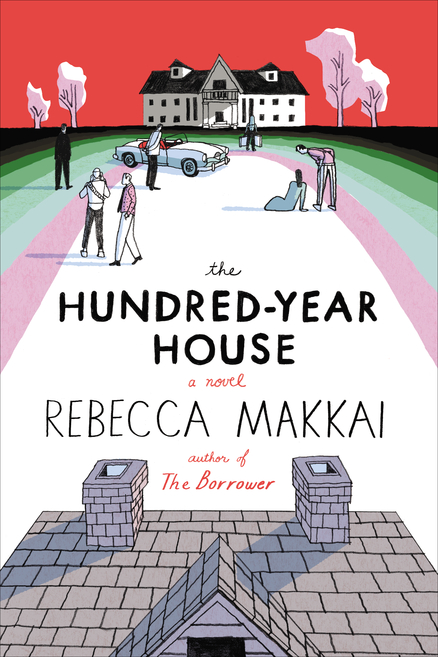
9780525426684MLast week, when I visited Lake Forest Academy’s campus for Lake Forest Book Store’s author event with Rebecca Makkai, the school was feverishly getting the campus ready for the upcoming year. But in the beautiful Little Theater in the historic Armour House, where tea with Rebecca took place, no sounds of construction could be heard. The audience was enraptured with Rebecca’s reading from her new novel, The Hundred-Year House.

Just back from a book tour on the East Coast, Rebecca was on her home turf. A native of Chicago’s North Shore, she has taught at Lake Forest Academy, as well as at Forest Bluff Montessori School and Lake Forest College.

The Hundred-Year House has received rave reviews from the Chicago Tribune, Los Angeles Times, NPR Books, Publishers Weekly, Library Journal, People, and many more publications — and was selected as one of Oprah’s top “summer reads”. I loved Rebecca’s debut novel, The Borrower, and was thrilled when our Penguin sales rep gave me a bound galley of The Hundred-Year House. I sent him the following mini-review:

Once an artists’ colony, now a luxurious private home, the “hundred-year house” has a profound effect on its residents and visitors. Using an innovative narrative structure — the book begins at the dawn of the 21st century and travels back in time to 1900 — Rebecca Makkai draws us in to a world filled with artists, poets, academics, heirs and heiresses . . . and perhaps a ghost. Rebecca’s gorgeous writing enthralled me from the first page. She lives and works in the Chicago suburb where our store is located and where the story takes place, but I would have been just as mesmerized even if I hadn’t been curious about her portrayal of our town.

What I didn’t mention is that academia and campus life (specifically, inter-departmental politics at a small liberal arts college) are integral to The Hundred-Year House. I’ve always enjoyed novels set on campuses — it must be nostalgia for my school days. I think the first adult book I ever read that took place at a school was The Catcher in the Rye, when I was 12 or 13, and I remember wondering if there really was a Pencey Prep. (No, but the McBurney School did exist.)

So, in the spirit of “back to school” (which really should be next month, but nobody asked me), here are 10 of my favorite campus novels, old and new:

The Last Enchantments by Charles Finch
A coming-of-age story about a young man who leaves his political career and devoted girlfriend behind to spend a year studying at Oxford. This is Finch’s first contemporary novel–he’s best known for his Charles Lenox Victorian mysteries.

This Side of Paradise by F. Scott Fitzgerald
Fitzgerald’s semi-autobiographical debut novel is set at Princeton (which he attended, but did not graduate from): “From the first he loved Princeton—its lazy beauty, its half-grasped significance, the wild moonlight revel of the rushes, the handsome, prosperous big-game crowds, and under it all the air of struggle that pervaded his class.”

2e5fadd2709fcd35faa8523e11a328bdThe Art of Fielding by Chad Harbach
I have zero interest in college baseball, but I savored this story of students, faculty, and administrators at fictional Westish College in Wisconsin. It’s one of my all-time favorites. The Melville references are a bonus.

Admission by Jean Hanff Korelitz
Portia Nathan is an admissions officer at Princeton, involved in a stale relationship with an English professor. The novel was made into a movie starring Tina Fey — of course, the book is better.

Straight Man by Richard Russo
Russo is one of my favorite authors, and Straight Man is Russo at his best. It’s a smart and touching satire about an English professor at a little-known university.

Dear Committee Members by Julie Schumacher9780385538138
I just read this one — it came out yesterday!  It’s a hilarious (and short) novel made up of letters of recommendation that English professor Jason Fitzger is constantly called upon to write.

Moo by Jane Smiley
Even more satirical than Straight Man, Moo pokes fun at every aspect of university life.

The Secret History by Donna Tartt
Since the publication of The Goldfinch, there’s renewed interest in Tartt’s first book — a very smart literary mystery that moves backwards in time.

Commencement by J. Courtney Sullivan
This surprisingly insightful novel follows four young women through their college years at Smith and afterwards. It’s a familiar formula (remember Mary McCarthy’s The Group?) but Sullivan makes it fresh.

9780375701498Old School by Tobias Wolff
Prep school novels are tough. Most of them don’t ring true to me. This one, about a scholarship student at an elite boarding school in the 1960s, is beautifully written and authentic.

Last December, Rebecca Makkai was kind enough to spend a few hours at Lake Forest Book Store as our guest bookseller for a day. (Author Sherman Alexie spearheaded this program, which brought authors into independent bookstores to sell books.) Rebecca highly recommended Virgins, a prep school novel by Pamela Erens, which I promptly bought . . . and haven’t read yet.  It will be my back to school book!


STL150

10 Dog Books — That Won’t Make You Cry

photo
Stanley

Such short little lives our pets have to spend with us, and they spend most of it waiting for us to come home each day. It is amazing how much love and laughter they bring into our lives and even how much closer we become with each other because of them.
John Grogan, Marley and Me: Life and Love With the World’s Worst Dog

My daughter and son-in-law are the proud new “parents” of Stanley, the world’s most adorable yellow Labrador puppy. Stanley’s breeder has the following warning to prospective dog owners on her website:

If you have read the book (Marley and Me), you will know that although Marley was a sweet boy, he was NOT a good one . . . he was a NIGHTMARE! Although his owners loved him, they did not enjoy him to the fullest because he was so out-of-control . . . Many, many dogs with this type of personality (not just labs) end up in shelters.

Of course, she is right. I think the same phenomenon happened in the 1960s when the movie 101 Dalmatians (also based on a book) was released. People adopted Dalmatians because of their cute spotted coats, not realizing how much energy those dogs have.

Marley and Me, like so many dog books, ends with the dog’s death. Even children’s books about dogs — Where the Red Fern Grows,  Old Yeller,  Sounder — need to be read with a box of tissues nearby. And anyone who doesn’t get choked up at the end of The Art of Racing in the Rain must have a cold heart.

So here are some terrific books about dogs that probably won’t make you cry:

T9780061374234he Story of Edgar Sawtelle by David Wroblewski
Wroblewski’s debut novel (and to date, only novel) is unlike anything I’ve ever read. Edgar Sawtelle, who is mute, helps his family raise and train a fictional breed of very intelligent and intuitive dogs on their farm on Wisconsin. When a family tragedy occurs, Edgar embarks on an odyssey with three loyal dogs. Shakespeare aficionados will enjoy the many parallels to Hamlet.

The Dogs of Babel by Carolyn Parkhurst
I’ve never forgotten this quirky novel, which came out about 10 years ago. After his wife dies in a fall from a tree — witnessed only by the family dog, Lorelei — a linguistics professor attempts to teach his dog to talk so he can find out if her death was a suicide.

James Herriot’s Dog Stories: Warm and Wonderful Stories About the Animals Herriot Loves Best by James Herriot
There was no “YA” when I was a teenager. So I read all James Herriot’s books, starting with All Creatures Great and Small. (That’s when I wasn’t reading Flowers in the Attic , The Thorn Birds, or The Flame and the Flower — remember those?)  His very best dog stories are all now compiled in one book.

Dog Songs by Mary Oliver9781594204784M
This lovely little book, according to the New York Times, “transcends its dogginess. It’s also about love, impermanence, and the tears in things . . . Her poems, with their charity and lyric clarity, can provide the kind of solace that dogs give”.

Pack of Two: The Intricate Bond Between People and Dogs by Caroline Knapp
Knapp’s memoir explores both her relationship with her own rescue dog, who helped her through grief and recovery from addiction, and animal-human relationships in general.

A Three Dog Life by Abigail Thomas
One evening, Thomas’s husband, Richard, took their dog, Harry, out for a walk — and Harry returned alone. Richard had been hit by a car and was permanently brain-damaged. Thomas reinvents her life and her marriage — with the help of Harry and two more dogs.

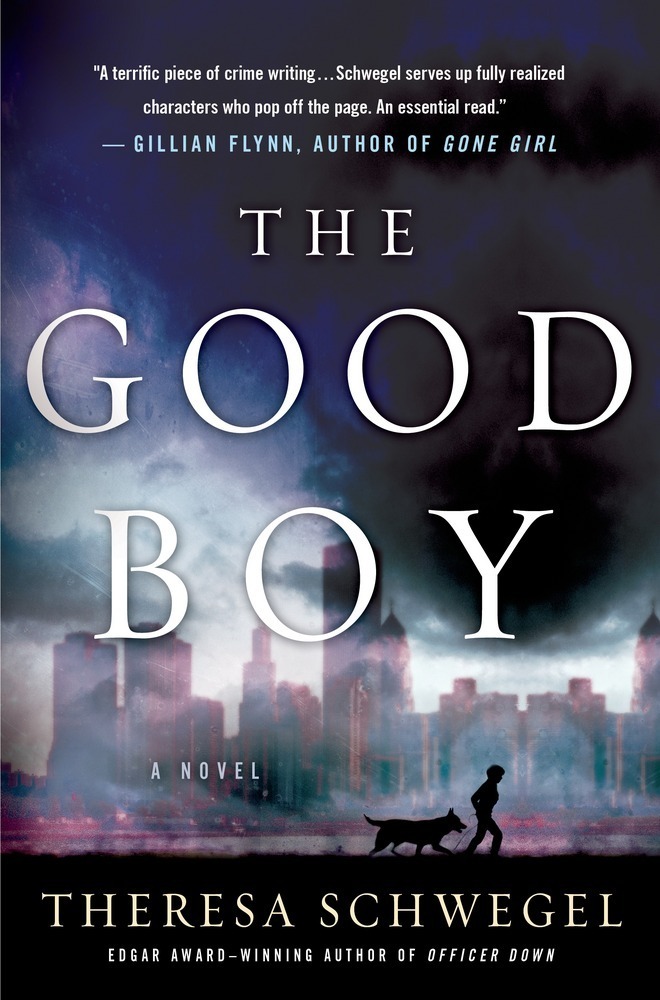
9781250001795The Good Boy by Theresa Schwegel
The “good boy” of the title refers not only to 11-year-old Joel Murphy (son of Chicago K9 police officer Pete Murphy), but to Butchie, Pete’s police dog. The New York Times says, “For all the dog books currently in vogue, it’s hard to beat this one for canine verisimilitude or talent. Butchie is a fully credible character . . . The dog elevates a fairly conventional detective story into something much more lovable”.

Sweetwater Creek by Anne River Siddons
What a great combination — a “beach book” about dogs!  It’s the coming-of-age story about a young girl whose family breeds Boykin spaniels on their plantation in South Carolina. After reading this novel, I thought (briefly) about adopting a Boykin, the state dog of South Carolina. (Does Illinois have a state dog?)

Mountaintop-CoverThe Mountaintop School for Dogs and Other Second Chances by Ellen Cooney

Full disclosure: I don’t know if this book will make you cry because I haven’t read it yet. Just published this month, it’s about a young woman, fresh out of a rehab program, who rebuilds her life at a sanctuary for abused dogs. Publishers Weekly says, “Cooney has crafted a feel-good, canine-filled tale of cross-generational friendship, healing, and solidarity.

Good Dog: Stories of Man’s Best Friend and the Writers Who Love Them by David DiBenedetto and the editors of Garden & Gun 

Before I read this book, I had never heard of Garden & Gun magazine — not surprising, since I’m not much of a gardener and I don’t own a gun. The magazine runs a monthly column called “Good Dog” — beautifully written essays by well-known authors about the kinship between humans and their canine companions. It’s coming out in November, and it’s a real treat — I started out planning to read a story or two, and ended up reading the whole book.

Daphne
Daphne

And finally, I don’t want to brag . . . but I can’t help mentioning that my sister’s Brittany Spaniel puppy, Daphne, was just chosen “dog of the week” at the Wellesley Booksmith (in suburban Boston) where she is a “frequent visitor”!STL300_border

WWW Wednesday — Husband/Wife Version

IMG_0759A few weeks ago, my mother and I answered three questions:

What are you currently reading? What did you recently finish reading? What do you plan to read next?

Today, I’ll answer those questions for my husband, Jeff, and me. We are busy planning a trip to Europe, with visits to Amsterdam, Ghent, Paris, Normandy, and Brittany. So we have stacks of books that take place in those locations . . . many more than we can ever read, I’m afraid!

I’m currently reading Tulip Fever by Deborah Moggach, a novel about tulipomania, art, and a 9780385334921love triangle in 17th century Amsterdam. In 2000, when the novel was published, the New York Times said “Moggach’s sumptuous prose creates an impression of serenity that belies the passions just beneath the surface of Amsterdam in the 1630s, where the tulip market is reaching record highs . . . it’s a novel that ponders what it means to push things too far, and keenly examines what the consequences might be.” As the Publishers Weekly review pointed out, it is “popular fiction created at a high pitch of craft and rapid readability”. I’m enjoying the short chapters, each providing different points of view and each opening with an appropriate philosophical quotation.

9781610390965Jeff is in the middle of Stealing the Mystic Lamb: The True Story of the World’s Most Coveted Masterpiece, by Noah Charney. If you  read Monuments Men (or saw the movie based on the book), you’ll recall the scene where the Allies discover Jan van Eyck’s “Adoration of the Mystic Lamb”, colloquially known as the “Ghent Altarpiece”, hidden in a German salt mine. Charney says, “For all its adventures, the biography of the Ghent Altarpiece, an inanimate object, reads as far more dramatic than the life of any human being”.Alexander_FlirtingFrench_jkt_FinalComp.indd

I just finished Flirting with French: How a Language Charmed Me, Seduced Me, and Nearly Broke My Heart, by William Alexander. (I read an advance copy — it will be published in mid-September.) The author is a Francophile who very badly wants to become fluent in French, and tries every available educational method — but finds it’s impossible for him. The book is filled with humor — as well as all sorts of interesting information about linguistics, neuroscience, and French history and culture. If you like Bill Bryson, you’ll love William Alexander.

9780544290488This month marks the 100th anniversary of the outbreak of World War I. Jeff recently read — and highly recommends — two books about the First World War. The Last of the Doughboys: The Forgotten Generation and Their Forgotten World War is based on interviews with the last surviving American veterans of World War I. Author Richard Rubin tracked down dozens of surviving veterans (all over 100 years old at the time of the interviews, and all now deceased) and recorded their experiences fighting 9780300191592in the trenches. Jeff also read Poilu: The World War I Notebooks of Corporal Louis Barthas, Barrelmaker, 1914-1918. It’s a new translation of the actual wartime diaries of a French soldier. Barthas spent four years in almost constant combat, fighting in every major French battle. Somehow he managed to chronicle his experiences in a series of notebooks. When he arrived home, he added information (letters, official reports, clippings, etc.), eventually filling 19 volumes. (By the way, “poilu” means “hairy one” in French and is the French version of the American “doughboy” — an infantryman.)

9780062306814What’s up next? I’ll be reading The Hundred-Foot Journey for my book/movie club. Part of the book takes place in France, and Anthony Bourdain says it’s “easily the best novel ever set in the world of cooking” — sounds wonderful! I’m also looking forward to reading The Miniaturist (due August 26), by Jessie Burton — more historical fiction about 17th century Amsterdam. It was inspired by a miniatures cabinet now housed in the Rijksmuseum.cvr9781476746586_9781476746586_lg

Jeff has a treat in store — All the Light We Cannot See, by Anthony Doerr, my favorite book of 2014 — so far. (Coincidentally, miniatures also play an important role in this novel.) We’ll be visiting the walled city of Saint-Malo, which was almost totally destroyed by fire in 1944 and which is where the paths of the book’s main characters converge. I found through Google Maps that 4 rue Vauborel really does exist, so we will have to find out what’s there today . . . perhaps a “tall, narrow house”?


Road Trip “Reading” — The Joys of Audiobooks

What we found at the end of our drive!

People are always worried about what’s happening next. They often find it difficult to stand still, to occupy the now without worrying about the future. People are generally not satisfied with what they have; they are very concerned with what they are going to have.
Enzo, the canine narrator of The Art of Racing in the Rain by Garth Stein

I’ve been doing a lot of driving this summer, much of it on my own, and I’ve rediscovered the joys of audiobooks. When I take my daily (well, almost daily) walks at home, I listen to music or podcasts. But this summer I drove from Chicago to New Hampshire, round trip, and I needed to alleviate the monotony with full-length books.

If you’ve ever listened to audiobooks, you know the narrator makes all the difference. Once, I was browsing through the bargain bin at a college bookstore and found The Portrait of a Lady on CD for only $2.99. I thought it would be fun to “reread” classic literature on my upcoming 18-hour drive. After an hour or so of the narrator’s sleep-inducing drone, I dropped The Portrait of a Lady in a trash can at an Indiana rest stop. Sorry, Henry James.

David Sedaris reads his own books (not possible for Henry James, I know), and they are absolutely delightful. Whenever I read something by Sedaris, I can hear his distinctive voice in my head. His books are collections of short comic pieces, best suited for short trips.  (I have the audio version of Me Talk Pretty One Day stashed in my glove compartment, along with NPR’s Driveway Moments, just in case I’m stuck in traffic and there’s nothing on the radio.)

I chose four audiobooks for my road trip earlier this month, and amazingly, they were all winners. I know that because I never once got drowsy while listening, and because I was tempted to buy the print versions.  (In the case of The Art of Racing in the Rain, I succumbed.) I didn’t throw any of them in a trash can, which is good because two of them came from the public library.

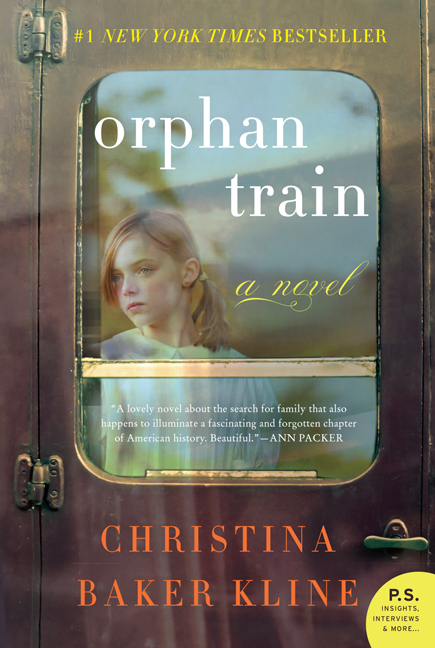
9780061950728Orphan Train, by Christina Baker Kline, is a book club favorite that’s been on the bestseller list for months. So of course I didn’t want to read it. I read a nonfiction book, Orphan Trains: Charles Loring Brace and the Children He Saved and Failed, by Stephen O’Connor, so I thought I’d read enough on that topic. I was wrong, of course.  Orphan Train is a dual narrative, with one story taking place in the Midwest during the Depression and the other taking place in present-day Maine. Niamh is an Irish immigrant who was orphaned and sent west on a train to be “adopted”; Molly is a Penobscot Indian who has spent her childhood in foster care. Eventually, their lives intersect.

My 10-year-old niece, Lily, was with me for the drive to New Hampshire, and she listened to part of Orphan Train, with great interest. I had to fill her in on some background because she was busy reading her own book in the back seat when I started listening. (Lily is a child after my own heart; she can read in the car without getting sick!) Orphan Train, with its focus on young girls coming of age in difficult circumstances, is a terrific book to share with younger readers. The audiobook reader was wonderful, especially with Niamh’s Irish brogue.

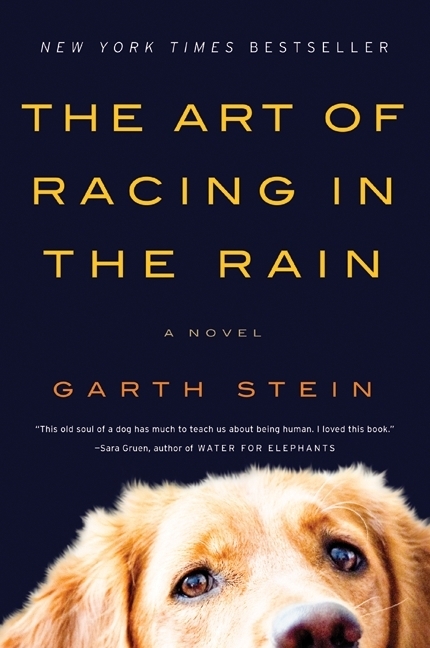
9780061537967The Art of Racing in the Rain is narrated by a dog, whose owner is a racecar driver. I was very dubious about the idea of a dog as storyteller, and I’ve never had the slightest interest in auto racing. I will try never to be so narrow-minded again, because I loved this book — so much that I raced out and bought a copy. The Art of Racing in the Rain is a truly lovely book about the love between friends, parents and children, husbands and wives — and dogs and their owners. It’s a meditation on how to live an honorable and courageous life. I do have to warn you that it’s a little dangerous to listen to while driving, because you will undoubtedly cry. Garth Stein has a new book coming out in September, A Sudden Light, and I can’t wait to read it. It’s about a 14-year-old boy who discovers family secrets while trying to save his parents’ marriage.

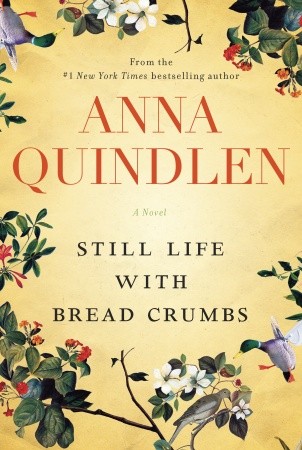
Still Life with Bread Crumbs, by Anna Quindlen, has been on my to-read list for months. I loved Quindlen’s most recent essay collection, Lots of Candles, www.randomhousePlenty of Cake, but wasn’t crazy about her last couple of novels. So I was pleasantly surprised that I enjoyed Still Life with Bread Crumbs as much as I did. It’s about Anna Winter, a 60-year-old photographer whose career is in decline. To save money and revitalize herself, she decides to rent out her beloved New York apartment and move to the country for the year. I wasn’t sure if there would be enough narrative force in this novel to make it a good audiobook, but Quindlen is so skilled at portraying characters that I was completely absorbed. I feel almost as if I’d recognize Anna if I bumped into her on the street. I knew from the beginning, when she and a local roofer (who becomes a key character in the book) discuss possible strategies for removing the raccoon that’s trapped in her attic, that I would be “reading” about interesting, tangible characters.

41EnRJM+hjLCode Name Verity, by Elizabeth Wein, is a YA novel, and I’m not sure why. Queenie, or “Verity,” is a young, female British intelligence officer who’s been captured by the Gestapo when her plane crashed in occupied France. Her best friend, Maddie, is the pilot who flew the plane. The first section of the book is a confession that Verity has written to her captors, followed by Maddie’s version of the story. It’s important to keep in mind that Verity is a spy, so she’s by definition an unreliable narrator. It’s a difficult book to describe without giving away key plot points. What I enjoyed most were the voices of the two narrators. Of all the audiobooks I listened to on my trip, this stood out for the high-quality narration. Here’s a review from Audiofile magazine:

To reveal almost anything about the way events in Code Name Verity unfold would spoil the book’s many twists and turns and revelations . . . The audiobook is its own revelation—narrators Morven Christie and Lucy Gaskell bring Queenie and Maddie to vibrant life, and listeners will fall in love with them from the start. Gaskell and especially Christie perform (and even sing in) a variety of English and Scottish accents as well as flawless French and German. More than that, they so fully inhabit the characters that the most harrowing moments, so intimate and immediate on audio, are nearly unbearable. It’s an extraordinary book, made even more extraordinary by their truly spellbinding narration.

I’m trying to decide what my next audiobook will be. Even though I don’t have any more road trips planned, I have plenty of 45-90 minute drives on the horizon. Suggestions are welcome!

STL300_border