Woke up this morning with
a terrific urge to lie in bed all day
and read. Fought against it for a minute.Then looked out the window at the rain.
And gave over. Put myself entirely
in the keep of this rainy morning.Raymond Carver
Rainy day reading . . . beach reading . . . airplane reading . . . what’s the difference? To me, a good book is a good book whether I’m curled up on the couch on a rainy day, lying on a lounge chair at the beach, or crammed into a middle seat on a long flight. But there is something about a dreary day that makes a person want to hibernate and read. We’ve had a lot of those days recently in the Midwest — so many that I finally read quite a few long magazine articles that I was literally saving for a rainy day.
One of those articles was “Like This or Die: The Fate of the Book Review in the Age of the Algorithm” by Christian Lorentzen, published in the April issue of Harper’s. Lorentzen laments the decline of the traditional book review:
The basic imperatives of the review—analysis and evaluation—are being abandoned in favor of a nodding routine of recommendation. You might like this, you might like that. Let’s have a little chat with the author. What books do you keep on your bedside table? What’s your favorite TV show? Do you mind that we’re doing this friendly Q&A instead of reviewing your book? What if a generation of writers grew up with nobody to criticize them?
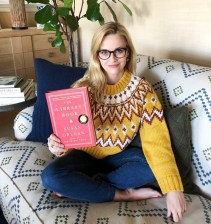 I don’t think authors need me to criticize them. I assume that by the time their books are published, they’ve received a lifetime’s worth of criticism, from professors, classmates, editors, and “sensitivity readers”. Lorentzen’s basic point, which is that both readers and writers deserve “painstaking appraisals” of serious books is a good one. I agree with him that much of what now passes as literary journalism is lightweight — for example, lists of “reading recommendations” with blurbs lifted from jacket copy, Instagram photos of celebrities with books as props, and five-minute TV interviews in which it’s obvious that interviewer hasn’t read the author’s book. But if a photo of Reese Witherspoon reading The Library Book inspires her fans to read Susan Orlean’s fascinating narrative about public libraries and their place in our society, what’s wrong with that?
 Objecting to what he calls “a consumerist vision of reading”, Lorentzen says, “I’m skeptical of the popular and the commercial.” Yes, bestselling books can be poorly written and formulaic, but so are many “literary” books. It seems almost too obvious to state that many bestsellers are popular for a very good reason — they’re terrific books by any standard. For example, the current New York Times bestseller list includes Circe by Madeline Miller, A Gentleman in Moscow by Amor Towles, and Being Mortal by Atul Gawande — books beloved by both critics and ordinary readers.
Lorentzen can’t resist recommending his own favorite authors, mentioning Yaa Gyasi, author of Homegoing (“formally daring historical fiction”) and Nico Walker, the incarcerated author of Cherry (“the opioid epidemic’s hard-boiled chronicler”). I would say yes to Gyasi and her powerful, lyrical novel about slavery and its legacy; no to Walker and his repetitive, needlessly vulgar novel with thinly developed female characters.
Bookmarks editor Dan Sheehan asked fourteen literary critics to weigh in on Lorentzen’s essay:
Is relentlessly sunny book “coverage” replacing honest book criticism, or merely supplementing it? Are listicles, Bookstagram, and literary Twitter nothing but treacly promotion puddles on the surfaces of which books can float unscrutinized and unchallenged; or are they in fact vibrant and necessary new arenas of discourse wherein previously silenced critical voices can finally be heard?
In a thoughtful discussion (“The Book Review is Dead: Long Live the Book Review”), most critics found some merit in Lorentzen’s argument, but most also — like me — agreed that Lorentzen’s elitism ignores the positive aspects of 21st century book coverage:
What’s the point of panning a disappointing debut that the vast majority of your audience doesn’t—and has no reason to—know of? ~ David Canfield, Entertainment Weekly
I don’t think there’s anything wrong with cheerleading, not when there are so many wonderful books to talk about, not when there’s a chance that people might be listening. ~ Steph Cha, LA Times
Readers come in all stripes, and offering a wide array of reviews and profiles and Q&As and lists (or listicles) is a way to draw more attention to books, a way to offer more variety and attract the attention and interest of readers to books they might want to read. ~ Laurie Hertzel, National Book Critics Circle President
Criticism should not only be evaluation or recommendation, but it’s not anti-intellectual or wrong for readers to want recommendations or to enjoy curated lists . . . The best we can do is to keep thinking and writing about books, relentlessly and endlessly, as much as we possibly can. ~ Constance Grady, Vox
I keep a log of all the books I’ve read, with brief reviews. (For the current list, see Read in 2019.) You can see that there are a few books I really disliked, but not many, probably because if I’m not enjoying a book, I don’t finish it. The books that I choose to spotlight in blog posts are books I liked enough to recommend to other readers. They’re not necessarily masterpieces. Here are a six books (one fiction, five nonfiction) that I enjoyed recently, with appropriately positive reviews. (I draw the line at posting photos of me with books, however — I’m firmly in Christian Lorentzen’s camp when it comes to selfies.)
 The Island of Sea Women by Lisa See
The best part of this book was learning about a culture that I had no idea even existed — the lives of haenyeo (female divers who can hold their breath for up to three minutes and earn their living by harvesting animals and plants from the ocean) and their matrifocal community of Jeju Island, off the coast of South Korea. Beginning during the Japanese colonial period in the 1930s and moving through decades of rapid change, The Island of Sea Women tells the story of the friendship between Mi-Ja, the daughter of a Japanese collaborator, and Young-Sook, the daughter of the diving collective’s leader.
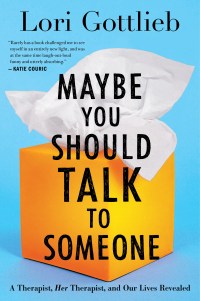 Maybe You Should Talk to Someone: A Therapist, Her Therapist, and Our Lives Revealed by Lori Gottlieb
When an unexpected crisis sends therapist Lori Gottlieb into a depression, she seeks the help of another therapist to reassemble the pieces of her life. With humor and compassion, Gottlieb weaves her story with the stories of several patients she’s treating, including an insufferably egotistical Hollywood producer, a lonely elderly woman who’s planning to commit suicide on her next birthday, a newlywed recently diagnosed with a terminal illness, and a millennial who can’t seem to form meaningful relationships. Although it’s nonfiction, this book has twists that will keep you turning the pages. You’ll root for Gottlieb and for her patients — even that obnoxious producer, who has a backstory that will bring tears to your eyes.
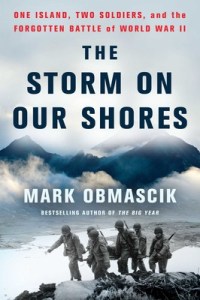 The Storm on Our Shores: One Island, Two Soldiers, and the Forgotten Battle of World War II by Mark Obmascik
Probably, most readers don’t know much about the only World War II battle fought in North American — the Battle of Attu, which took place in the Aleutian Islands of Alaska in 1943. This well-researched account personalizes history by focusing on two soldiers — a Japanese medic named Paul Tatsuguchi, educated in America and drafted into the Imperial Army, and an American coal mine, Dick Laird who killed him — and found his diary. Versions of the diary were distributed to American soldiers. Many questions are left unanswered at the end of this book, which I suppose is inevitable because this is real history, not historical fiction; still, I felt the author could have spent more time addressing some of the moral controversy raised by the diary.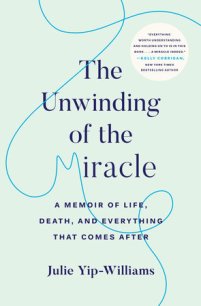
The Unwinding of the Miracle: A Memoir of Life, Death and Everything That Comes After by Julie Yip-Williams
I must be a masochist because I can’t seem to stop reading memoirs written by people who are dying: The Bright Hour, When Breath Becomes Air, and now The Unwinding of the Miracle. Each one is more heartbreaking — and yet more inspiring — than the last. Born blind in Vietnam, Julie Yip-Williams barely survived childhood; her family tried to euthanize her because of her disability. So it truly is a miracle that she escaped Vietnam in a leaky boat, received surgery in the United States that allowed her to see, graduated from Williams College and Harvard Law School, married, and had a family. Her book, based on a blog she started when she was diagnosed with cancer, is a beautifully written account of a life well lived.
 Southern Lady Code by Helen Ellis
This northern lady really enjoyed Helen Ellis’s collection of sharp and snappy essays, Despite the title, they’re not all about being Southern. And anyway, how can you not adore a writer whose idea of a fun evening is to invite her girlfriends over to drink wine and put together a 500-piece jigsaw puzzle of “a spooky owl in mid-flight”? I just want to know how I can get on Helen’s guest list. If you like David Sedaris, you’ll love Helen Ellis.
 Nanaville: Adventures in Grandparenting by Anna Quindlen
How could I not love this book? Anna Quindlen is one of my favorite authors AND I recently became a grandmother. This is going to be my go-to gift for all the new grandmothers in my life. That said, I don’t think you need to be a grandmother to enjoy Nanaville; if you’ve had a beloved grandparent in your life, that’s enough.
Since you’ve read this far, here’s a bonus recommendation: Ask Again, Yes, by Mary Beth Keane, out on May 28. One of my favorites this year, it’s the story of the complicated relationship between next-door neighbors.
 A list of books with “winter” in the title would be fun — The Dakota Winters, by Tom Barbash , is a brand-new and absorbing novel about growing up in the famous Dakota apartment building in New York, with John Lennon as a neighbor, and The Winter Soldier, by Daniel Mason, is terrific historical fiction about an Austrian medical student sent to a remote field hospital during World War I. And how about Isabel Allende’s In the Midst of Winter, a beautiful novel about three characters whose lives collide during a Brooklyn blizzard, and Robin Oliveira’s Winter Sisters, a page-turner set in 19th century Albany, New York that features a former Civil War surgeon, Mary Sutter (last seen in My Name is Mary Sutter)? My favorite “winter” novel has to be The Long Winter, which I think is the best of Laura Ingalls Wilder’s Little House series.
 I really love books about whaling. I’m one of those rare readers who not only enjoyed Moby Dick but didn’t skip the long passages about whaling techniques. Nathaniel Philbrick’s In the Heart of the Sea, narrative nonfiction about shipwrecked whalers, is one of my favorite books. I’m also fascinated with indigenous people who live in remote areas, so The Last Whalers: Three Years in the Far Pacific With a Courageous Tribe and a Vanishing Way of Life, by Doug Bock Clark, hit my sweet spot. I think anyone who enjoys excellent narrative nonfiction will find this book fascinating, and hard to put down. The New York Times review says, it “has the texture and coloring of a first-rate novel”, and I agree.
 When a lot of people whose opinions you respect keep telling you to read a book, you should listen to them. For some reason, I was dubious about Elena Ferrante’s acclaimed Neapolitan Novels, but after watching My Brilliant Friend on HBO, I decided to give the series another try — and now I’m hooked. I wish someone had told me that these books are an Italian version of A Tree Grows in Brooklyn — but even better, because the story just keeps going.
 For some memoir authors, one book isn’t enough. An article about the increasing number of “serial memoirists” explores this phenomenon:
  Bill Bryson, watch out — Jennifer Traig is encroaching on your territory. In Act Natural: A Cultural History of Misadventures in Parenting, she delves deep into the history of Western child-rearing, starting with ancient Rome, juxtaposing detailed research with scathing wit. In order to keep their babies from stumbling into “bubbling pots of gruel”, medieval parents swaddled their babies tightly and hung them from hooks on the hall, “like purses on a bathroom stall.”
 I can never resist a book about books, especially one about children’s books, so I couldn’t wait to read The Enchanted Hour: The Miraculous Power of Reading Aloud in the Age of Distraction, by Meghan Cox Gurdon, the children’s book critic for the Wall Street Journal. (Doesn’t that sound like a dream job?) She shares fascinating data from the Reading and Literacy Discovery Center at Cincinnati Children’s Hospital, among other research centers, that prove what “we enthusiasts have long suspected is true: reading aloud really is a kind of magic elixir.”
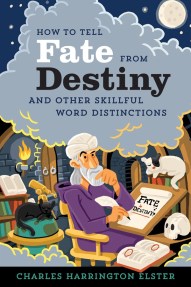 I am such a word nerd that I actually enjoy reading books about grammar and vocabulary. I don’t know how many people like me exist, but there must be enough of us to justify publishing these books. How to Tell Fate From Destiny: And Other Skillful Word Distinctions by Charles Harrington Elster and Dreyer’s English: An Utterly Correct Guide to Clarity and Style by Benjamin Dreyer (copy chief of Random House). If you were the kind of kid who liked to read the dictionary, you’ll enjoy both of these books, which are both full of humor as well as useful information.
 You might think a certain category of book is not for you, but then you read one and change your mind. I didn’t think I would like a graphic memoir, but I absolutely adored Hey, Kiddo: How I Lost My Mother, Found My Father, and Dealt With Family Addiction, by Jarrett J. Krosoczka. It’s unlike anything I’ve read before, and humanizes the opioid crisis in way no other book I’ve read on the subject has been able to do.
 April is National Poetry Month!
 If your idea of reading poetry is your sophomore English teacher leading the class through a grim line-by-line analysis of “Ode on a Grecian Urn”, I suggest you pick up a copy of Matthew Zapruda’s Why Poetry — along with Devotions: The Selected Poems of Mary Oliver. These books will show you the joy of reading a poem without viewing it as a coded message.
 Believe it or not, a century or so ago, poetry was popular, published every day in newspapers and magazines. Consider Margaret Fishback , the real-life inspiration for the title character in Kathleen Rooney’s absolutely delightful Lillian Boxfish Takes a Walk, Fishback, a highly paid advertising copywriter long before the days of Madmen, published four bestselling books of poetry, and her clever verse, amusing and easy to understand, was published in Vanity Fair, Good Housekeeping, Harper’s Bazaar, The New Yorker, The Wall Street Journal, The New York Times, to name just a few. Lillian Boxfish, just out in paperback, is a charming chronicle not only of the life of a remarkable woman but of six decades of change in Lillian’s beloved New York City.
 Distracted Driver Awareness Month
 Pets Are Wonderful Month, Prevention of Cruelty to Animals Month, and National Canine Fitness Month
 National Food Month (also, National Fresh Celery Month and National Soft Pretzel Month)
 National Older Americans Month
 Anna Quindlen’s new book, Alternate Side, about a Manhattan couple with an empty nest (who could be described as “older Americans”) who are facing problems with each other and in their closely knit neighborhood, is terrific. According to the Washington Post, “Quindlen has written a book that only a New Yorker — or at least someone who has lived there for a stint — could love. The rest of the world may have a hard time relating to the characters.” It’s true that this book — like Lillian Boxfish and The Friend — is a New York book, but you certainly don’t need to have lived in New York, or even to understand the city’s “alternate side” parking regulations, to enjoy this novel. You can never go wrong with Anna Quindlen.
 What do you plan to do the day before Thanksgiving? We’ve all heard that the Wednesday before Thanksgiving is supposed to be one of the year’s busiest travel days, but now, according to a recent Barnes & Noble survey, Thanksgiving Eve is the “busiest reading day of the year”.
 Where were these people last Wednesday when I was delayed for several hours at O’Hare? I read almost an entire book in that time (Becoming Nicole: The Transformation of an American Family, by Amy Ellis Nutt), and I’m not a speed reader. I’m leading a book discussion on Laurie Frankel’s novel, This Is How It Always Is, about a family raising a transgender child, and wanted to read nonfiction about this subject. If you really want to liven up your Thanksgiving gathering, I recommend either of these books.
 People who manage to find time to read do it two ways: first, they squeeze reading into their days in creative ways, and second, they make it a priority. They don’t think of reading as an indulgence. Why do people think taking an hour out of the day to exercise is a necessity, while they see spending an hour with a book as a luxury, on a par with window shopping or bubble baths? And who, except maybe medical residents on a 36 hour shift or parents of newborn twins, doesn’t spend at least an hour a day watching TV or checking social media? Really, hardly anyone is “too busy to read.” It’s all in how you choose to spend your time. No judgment if you’d rather do other things, but don’t say, “I just don’t have time to read!”
 This Thanksgiving Eve, I won’t be traveling. I’ll be at home, curled up with She Read to Us in the Late Afternoons: A Life in Novels, a memoir about Kathleen Hill’s reading life and how it has intersected with her “real” life. My current audiobook is Dear Fahrenheit 451: Love and Heartbreak in the Stacks: A Librarian’s Love Letters and Breakup Notes to the Books in Her Life, by Annie Spence, which is absolutely delightful, although I could do without all the f-bombs. We all know librarians are cool.
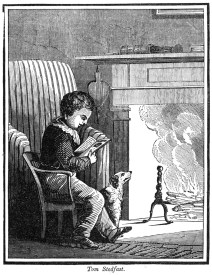 And indeed, what is better than to sit by one’s fireside in the evening with a book, while the wind beats against the window and the lamp is burning?
 I’m currently reading and enjoying Manhattan Beach — but it’s very different from Jennifer Egan’s earlier novels, which experimented with form and content. According to an article in the New Yorker, “
 On the other hand, I loved Alice McDermott’s The Ninth Hour. McDermott is one of my very favorite writers, and I’ve had to wait four years for The Ninth Hour. (Someone came out in 2013). Every time I read one of her books, I think, This one is her best, and that’s exactly what went through my mind when I finished The Ninth Hour. In Brooklyn, about one hundred years ago, a young husband commits suicide, leaving behind his pregnant wife. His widow, Annie, and his daughter, Sally, are taken in by nuns in the nearby convent. Sally marries a local boy, Patrick, and their children and grandchildren are the narrators of this beautiful and poetic novel.
 I can’t stop raving about Little Fires Everywhere. It’s hard to believe that Celeste Ng could top Everything I Never Told You, her debut novel, but I think she has. In many ways, the books are similar. Everything I Never Told You starts with the mysterious death of a teenager; Little Fires Everywhere starts with a mysterious house fire. Both novels are concerned with the secret lives of teenagers and clashes between cultural groups. But Little Fires Everywhere adds even more layers of depth, with more characters and subplots. Don’t start this book until you have plenty of reading time ahead of you — you won’t want to stop. By the way, Little Fires Everywhere was Reese Witherspoon’s September pick for her book club. She often chooses terrific books — Alice Hoffman’s The Rules of Magic, which is next up in my TBR pile, is her selection this month.
 One book I haven’t seen on any of the fall preview lists is Rene Denfeld’s The Child Finder, and I don’t know why, because it’s one of the best books I’ve read all year. If anyone thought Denfeld was a one-hit wonder (The Enchanted) — don’t worry, The Child Finder is spectacular. The “child finder” of the title is Naomi, a private investigator who has a mysterious gift for finding missing children — and who was once a missing child herself. A heartbroken couple hires her to find their little girl, Madison, lost when they were cutting down a Christmas tree in Oregon’s Skookum National Forest. As Naomi searches for Madison, she comes closer to discovering the secrets of her own past. Echoes of fairy tales resound throughout this gorgeous novel, reminding the reader of the power of stories and imagination to heal and redeem. I can’t wait to meet the author at a Lake Forest Book Store luncheon this Wednesday.
 Almost every year, when the nominees for the major literary prizes (Man Booker, National Book Award, and Pulitzer) are announced, I am bewildered. There’s always at least one book that I think is a masterpiece that the panels overlook, and there’s always at least one book that I think is mediocre that makes the shortlists.
 Wow — that’s a lot of summer reading. It seems like the Poetry judges get off easy! The judges are authors, booksellers, librarians, and critics. This year’s Fiction judges are authors Alexander Chee, Dave Eggers, Karolina Waclawiak, and Jacqueline Woodson (chair), and bookseller Annie Philbrick. Last week, they chose ten novels that include works by established authors and past winners (Manhattan Beach by 2001 finalist Jennifer Egan, to be published October 3, and Sing, Unburied, Sing by 2011 winner Jesmyn Ward) as well as by debut authors (The Leavers by Lisa Ko, A Kind of Freedom by Margaret Wilkerson Sexton, Barren Island by Carol Zoref).
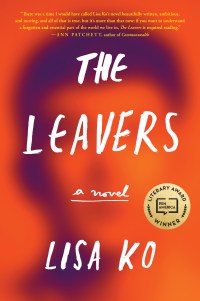 The Leavers and Pachinko (by Min Jin Lee) — but it’s hard to believe that those two novels are “the best of the best.” I enjoyed them both, but do they deserve to be National Book Award nominees?
 The Leavers, about a Chinese immigrant woman and the son she abandons, also addresses cultural differences. It’s a worthwhile and enjoyable novel — but is it better than Little Fires Everywhere by Celeste Ng, or Everybody’s Son by Thrity Umrigar? Those excellent novels also concern themselves with adoption, race, and class. Actually, so does ‘Round Midnight by Laura McBride, which will definitely make my list of favorite novels at the end of 2017. McBride brilliantly weaves together the stories of several characters with Las Vegas as the backdrop. The writing is gorgeous and the story is perfectly paced and constructed, with surprises at every turn.
 Julia Glass’s A House Among the Trees is another of my favorites that didn’t make this year’s National Book Award longlist. Inspired by the life and career of Maurice Sendak, this compassionate and insightful novel explores art, truth-telling, and loyalty, while telling a well-plotted story. Glass won the National Book Award for her debut novel, Three Junes, in 2002. surprising the literary community. According to an article in New York magazine titled “Cinderella Story,”:
 Here’s the 2017 longlist for the National Book Award in Fiction — cast your vote, and we’ll see what happens in November. And if you’ve read any of those, I’d love to know what you think.
 A new Little Free Library just popped up in my neighborhood. I’ll admit to feeling a little jealous, because I’ve always thought that my house, which is on a corner lot, would be the perfect location for a Little Free Library.
 It’s Not Easy Bein’ Me is not one of my favorite books. In fact, I have no idea how it ended up in my house. Did I pick it up at a booksellers’ conference? Did it arrive in the mail, unsolicited, for me to review? Did it belong to one of my children? I have no idea, but when I scanned my shelves for something to donate to the new Little Free Library, I didn’t see anything I wanted to part with, until I spotted It’s Not Easy Bein’ Me. I certainly didn’t want to part with one of my favorite books. Now I feel guilty, because obviously Little Free Libraries are not intended to be dumping grounds for dud books — although an article in the Denver Post calls Little Free Libraries “Little Jails for Bad Books.” Maybe someone in town is a huge Rodney Dangerfield fan and will be thrilled to find a pristine, hardcover copy of this book, free for the taking.
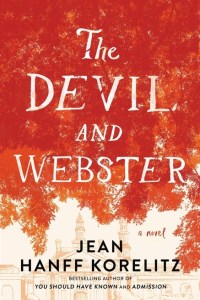 My neighbors seem to be less greedy than Greenstone’s. I’m going to keep donating books to the Little Free Library, but it’s unlikely I’ll share my favorites. Saints for All Occasions? No way. ‘Round Midnight? I don’t think so. The Devil and Webster. No. Maybe I’d lend those to trustworthy friends. I’d be happy to donate my copy of Idaho . . . somebody might like it.
 My mother, who reads more than just about anyone I know, is generous with her books. She reads books quickly and then passes them along, keeping only a select few. Once she’s finished a book, she sees no reason for it to take up valuable shelf space. Out it goes into a shopping bag in her garage; when the bag is full, she takes it to a used bookstore that rewards her with store credit. And of course, her friends and family benefit from her reading habit. When I find a padded manila envelope in my mailbox marked “Media Mail”, sometimes it’s from a New York publisher, but often it’s from my mother.
 Winnie-the-Pooh (the set of four books, including the stories and the poems) by A.A. Milne
 The Wind in the Willows by Kenneth Grahame
 Gone With the Wind by Margaret Mitchell
 The World According to Garp by John Irving
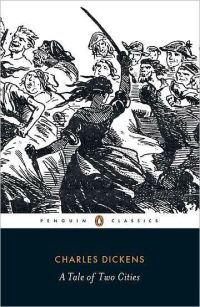 A Tale of Two Cities by Charles Dickens
 “Attention Book-Lovers: Take the 2017 POPSUGAR Reading Challenge”; “Around the Year in 52 Books”; “11 Tips to Read More in 2017, Because 2017 Is the Year You Conquer Your TBR
 However, I don’t see how reading a book “with a red spine” or one with “a cat on the cover” will enrich my reading life, and I have mixed feelings about what some of these articles seem to imply. They unfortunately convey the impression that reading is just another activity for self-improvement, akin to running on the treadmill. Put in your hour a day with a book by an author “with a different ethnicity than you” and you will be a better reader and a better person. I never liked the reading logs my children were required to keep in grade school. The well-intentioned logs implied that reading was a dreary task that had to be documented, conflicting with my view that reading was a pleasurable activity very different from memorizing multiplication tables. Flashlight under the covers, anyone?
 Books for Living contains 26 chapters, each focusing on a particular book that resonated with Schwalbe at a particular time in his life — and that continues to resonate with him. He discusses what led him to each book , the people in his life he associates with the book, and why it is important to him. The books range from children’s books (Stuart Little, Wonder) to classics (The Odyssey, David Copperfield) to contemporary fiction (A Little Life, The Girl on the Train).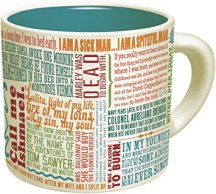
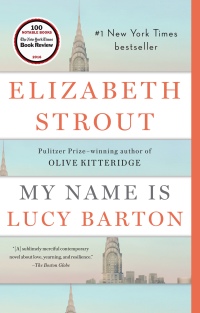 My teacher saw that I loved reading, and she gave me books, even grown-up books, and I read them. And then later in high school I still read books, when my homework was done, in the warm school. But the books brought me things. This is my point. They made me feel less alone.
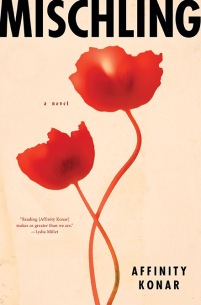 Books had never led me in the wrong direction. It seemed foolish to try to endure without such counsel by my side.
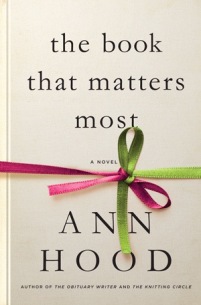 They had been raised, Charlotte and Beatrice, on books. When they had a question, literature answered it. If they complained about being bored, their mother — a melancholy Parisian who used laudanum to assuage the pains of homesickness and her husband’s infidelities — would hand them a book. “No one who reads can ever be bored,” she’d tell them . . .
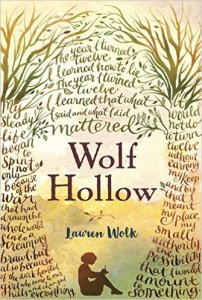 At times, I was so confused that I felt like the stem of a pinwheel surrounded by whir and clatter, but through that whole unsettling time I knew that it simply would not do to hide in the barn with a book and an apple and let events plunge forward without me.
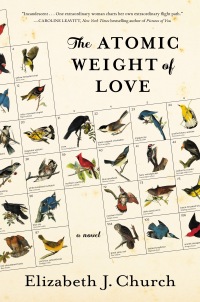 His years on earth had taught him that good things happen to those who honor the kindheartedness of others.
 Books on the Table