. . . In our travels near and far, we’ve not only looked to novels to provide a new dimension to our travel experiences, but equally, we’ve sought out the literary places in our travels that will give us a deeper perspective on the books we cherish.
Shannon McKenna Schmidt and Joni Rendon, Novel Destinations
If you love to read and to travel (and to read while you travel!) you will feel as though the authors of Novel Destinations wrote their informative and delightful book just for you. Subtitled A Travel Guide to Literary Landmarks From Jane Austen’s Bath to Ernest Hemingway’s Key West, this comprehensive handbook, including 500 literary sites, is a dream come true for traveling bibliophiles. I think I used a whole pad of Post-it notes marking all the bookish places I want to visit. Like the authors (“two lifelong voracious readers who share an equally passionate appetite for exploration”), I prepare for a trip by reading novels about the area I’m preparing to visit.
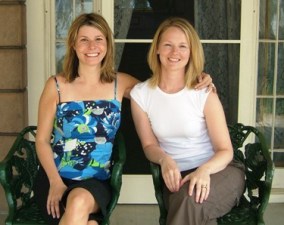
Part of the appeal of Novel Destinations is its creative organization and beautiful design. The book is divided into two sections, “Travel by the Book”, which covers literary experiences (author houses and museums, writers at home and abroad, literary festivals and tours, and book-related lodgings, restaurants, and bars), and “Journeys Between the Pages”, which describes in depth eleven locales immortalized by famed novelists. The two authors spent years traveling the world collecting information — from locations, dates, and hours to reading suggestions and fun literary trivia and gossip.
Shannon was kind enough to answer, in detail, my questions about her top tdestinations and her favorite books, authors, and characters. She even shared a few packing tips!
Of all the “novel destinations” you’ve visited, was there one that a) surprised you the most and b) disappointed (or underwhelmed you) the most? Can you pick your very favorite literary destination — one that you’d return to again and again?
A place that surprised me is Alexandre Dumas’ Château de Monte Cristo near Paris for how completely imaginative it is. First you walk along a wooded path and through man-made grottos, then past a waterfall and a moat-encircled pavilion Dumas used as his office. Finally, you reach the castle, which looks like a confection made of stone. One of the highlights inside is the ornate and colorful Moorish Room, designed by Tunisian craftsmen Dumas brought back with him after visiting the African nation. The Château de Monte Cristo is a domain worthy of an adventure writer.
Honestly, I haven’t been disappointed in any of the literary sites I’ve visited. Moderating expectations is a good idea, though, depending on the place because each one really is unique. Some are lavish like Sir Walter Scott’s castle in the Scottish border country, whereas Edgar Allan Poe’s tiny cottage in New York City reflects his hardscrabble circumstances. Mark Twain’s richly designed and decorated house in Connecticut incorporates his love of travel, while W.B. Yeats’ stone tower in the Irish countryside contains no furnishings but plenty of atmosphere.
 A literary landmark that I have returned to again and again is the Ernest Hemingway Home and Museum in Key West, Florida. I’ve been there three times, taking the excellent and entertaining tour on each visit. Although I confess it’s not only the literary aspect that draws me to the Hemingway Home. There are 50 or so cats that live on the property and have the run of the house and grounds, even sleeping in Hemingway’s bedroom. A ship’s captain gave Hemingway a six-toed cat named Snow White, and some of the felines that live there today are its descendants. With the combination of a literary connection and cats, the Hemingway Home is pretty much my version of heaven.
What would your five “desert island” books be? I find it impossible to choose just one, but if you can — go for it!
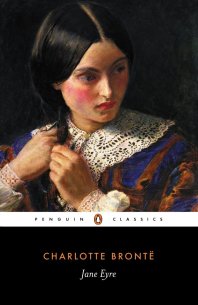 It doesn’t seem fair to select a novel by just one Brontë sister, so I would have to go with Jane Eyre (Charlotte), Wuthering Heights (Emily), and The Tenant of Wildfell Hall (Anne). Plus while reading the books I could reminisce about visiting Brontë Country, the atmospheric moors in West Yorkshire, England.
Rounding out my picks would be two of my favorite travel books: Ernest Hemingway’s A Moveable Feast (gossipy and lyrical) and John Steinbeck’s Travels with Charley, the ultimate road trip memoir.
Do you read electronically when you travel, or do you carry paper books with you? What’s your favorite reading location — on a plane, a beach, a cafe, your hotel room . . .? Have you ever been stranded anywhere without anything to read?
I was slow coming around to the idea of an e-reader, but now I wouldn’t travel without one. It means you have a current read plus a choice of back-up books at the ready; it has built-in lighting, which is handy when sharing a hotel room with another person who wants to turn in earlier than you do; and it saves space. I spent the last three years trekking around the globe with a 40-litre backpack as my main piece of luggage, and there wasn’t much room to spare. And since I’ve been using an e-reader while traveling, I’ve never been caught without anything to read (every bibliophile’s nightmare!). Even if I’m somewhere with no shops around or finish a book late at night in a hotel room, I can download something .
I read printed books, too, especially when I’m in a fixed location for a while and don’t need to tote them along. On a book exchange shelf at a ferry terminal along Alaska’s Inside Passage, I found a copy of Margaret Atwood’s The Handmaid’s Tale and devoured it during the ride instead of admiring the scenery.
My favorite place to read is at the beach, with sitting in front of a roaring fire a close second—the latter is more of a fantasy, though, since it rarely happens.
Can you share any special packing tips for travelers? Anything you can’t leave home without?
 Mostly my packing tips are about saving space, honed during years of living from a backpack. Some of my favorites: exfoliating soap bars (no need to carry both bath gel and a mesh scrubby; Etsy.com has a ton of varieties), a sun hat that can be rolled up (ones made of grosgrain ribbon are attractively detailed and sturdy enough to keep their shape), and Butterfly Twists folding ballet flats. And I always have a pashmina or other large scarf with me. It can double as a blanket on an airplane and comes in handy as a cover-up when visiting churches or temples.
What were your favorite books as a child?
I trace my wanderlust back to a book I read as a kid: an illustrated children’s version of Jules Verne’s Around the World in Eighty Days. The thrilling story was like a siren’s song with its depictions of distant ports of call. I was also partial to biographies about women like Clara Barton and Marie Curie. And Nancy Drew mysteries.
If you could meet a fictional character (or two), who would you pick?
Sleuthing with Sherlock Holmes and Dr. Watson would be a great adventure. We would then cap off a day of detecting with a stop at the Museum Tavern, a London pub across from the British Museum where Arthur Conan Doyle was a regular.
 If you could be any character from literature, who would it be?
I once took an online quiz, “Which Classic Literary Character Are You?”, and it came up with Jo March. Which seems appropriate because Novel Destinations was partly inspired by a trip I took to Louisa May Alcott’s home in Concord, Massachusetts, with my mother, sister, and niece. Visiting Orchard House is like stepping into the pages of Little Women.
If you could meet any writer, dead or alive, who would it be and what would you want to know?
I would love an invitation to visit Edith Wharton at The Mount, her grand Berkshires estate. (She designed the 42-room house and elaborate gardens herself.) We would sit on the terrace and reminisce about our travels, including her journeys to Malta, the Italian Alps, and other destinations. Joining us would be Henry James, Wharton’s close friend and a regular guest at The Mount. The two once traveled together through France and toured the home of French feminist writer George Sand, whom they both admired. True literary travelers, the duo even nicknamed their car “George” in her honor.
 And finally — what’s the best book you’ve read recently (in the past year or so)?
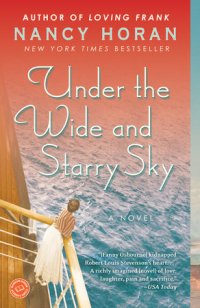
Under the Wide and Starry Sky by Nancy Horan has adventure and romance, lovely writing and a literary angle. It’s a novel featuring Scottish writer Robert Louis Stevenson and his American wife, Fanny Osbourne, how they met and their remarkable life together, which took them from an art colony in France to the South Seas. The story made me cry at the end, which I consider the sign of a good book.
 If we stop writing letters, who will keep our history or dare venture upon a biography? George Washington, Oscar Wilde, T.E. Lawrence, Virginia Woolf, Oliver Wendell Holmes, E.B. White, Vera Nabokov, J.P. Morgan — if any of these vivid predecessors still belong to us in some fragmented private way, it’s because of their letters or diaries (which are letters to ourselves) or thanks to some strong biography built on a ledge of letters.
 Mina Harker, one of Dracula’s victims, closes her letters by saying “Your ever-loving Mina Harker.” Frankenstein’s ill-fated fiancée, Elizabeth Lavenza, ends a letter with “Adieu! Take care of yourself, and I entreat you, write!”. What do these two characters have in common? They both appear in epistolary novels, books written either entirely or mostly in letters.
 Of course, sometimes only real letters will do. I treasure several anthologies of letters from both famous and ordinary people. War Letters: Extraordinary Correspondence from American Wars (edited by Andrew Carroll) and Letters of Note: An Eclectic Collection of Correspondence Deserving of a Wider Audience (edited by Shaun Usher). Volume 2 of Letters of Note just came out last month, and I’m savoring every letter. My all-time favorite epistolary book is Helene Hanff’s 84, Charing Cross Road (which, surprisingly, was made into a movie that does justice to the book), which chronicles a 20-year correspondence between Hanff, a writer in New York, and Frank Doel, an antiquarian bookseller in London. Another favorite is My Dearest Friend: Letters of Abigail and John Adams, which contains just a fraction of the 1,100 letters that the couple wrote to each other during the many separations they endured over the course of their 54-year marriage. Their letters bring the world of this country’s founders alive more than any other surviving documents.
 In a recent book called Signed, Sealed, Delivered: Celebrating the Joys of Letter Writing, Nina Sankovitch describes finding a trunk filled with hundreds of letters in a shed attached to a house her family was renovating in the Upper West Side of New York. The letters belonged to the original owners of the home, the Seligman family, and the vast majority of them were written by James Seligman to his parents (whom he addressed as “Dearest Mamma” or “Darling Parents”) during his years at Princeton, 1908-1912. Nina feels that rereading the letters James left behind “proves all over again, the power of the written, the handwritten, word.” Aside from a listing on an online family tree, James left no other evidence of his life. Nina says:
 Since I was at the gate, not strapped into an airplane seat, I was able to move out of earshot of the impromptu concert, crossing my fingers that the young musicians would not be seated near me on the plane. I was really looking forward to finishing my book, Carly Simon’s memoir, Boys in the Trees.
 I did not have to sit near the harmonica-playing duo on the plane. Instead, I sat across from a young mother who had an infant in a front carrier and a two-year-old in the seat beside her. Both children fell asleep within 20 minutes of takeoff. (This never once happened to me, I want you know.) She ordered a Bloody Mary, settled back in her seat, opened her book (The Rosie Project, I couldn’t help but notice) and smiled at me. “Pure bliss, right?” I said to her.
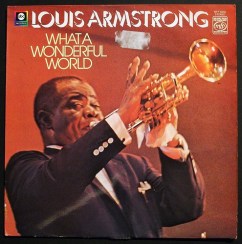 Most American cities name their airports for politicians (Reagan, JFK) or military heroes (Logan, O’Hare). Not New Orleans. The New Orleans airport is named after one of the 20th century’s most beloved musicians, Louis Armstrong — which signals to visitors that the city has a unique character. Tennessee Williams reportedly said, “America only has three cities: New York, San Francisco, and New Orleans. Everywhere else is Cleveland.”
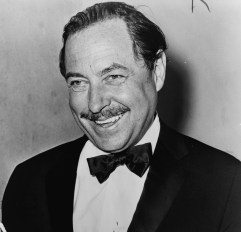 We left the subzero weather behind in “Cleveland” (which in our case was Chicago) last weekend and spent three days in Tennessee Williams’s adopted city. During our food tour, which included six stops at New Orleans restaurants, we saw the house in the French Quarter where Williams wrote A Streetcar Named Desire. (I don’t think the eight miles we walked that day came even close to burning the calories we consumed!) Kenneth Holditch, Ph.D., longtime friend of Williams, co-editor of the Library of America’s editions of Williams’s works, and the author of Tennessee Williams and the South, told the New Orleans Times-Picayune that “New Orleans was created by writers and visual artists . . . Sherwood Anderson once said this is a ‘city of imagination.’”
 For me, no vacation is complete without at least one bookstore visit. On our first day, we stumbled upon Beckham’s Bookshop in the French Quarter , which was everything a used bookstore should be — quirky, dusty, and packed with treasures. There was even a resident cat. My favorite section in the store was “True Crime and Rascality”. Because I’m unable to walk out of a bookstore without buying something, I picked up a copy of The House on First Street: My New Orleans Story, by Julia Reed. Reed, a journalist, got married and moved to the Garden District of New Orleans just before Hurricane Katrina struck. The New York Times critic, literary biographer Blake Bailey, gave the book a rave review despite his initial misgivings:
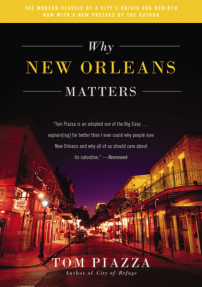 We rode the famous St. Charles streetcar to uptown New Orleans and visited a lovely independent bookstore, Octavia Books. I bought two more books: My New Orleans, Gone Away: A Memoir of Loss and Renewal, by Peter M. Wolf,and a signed copy of Why New Orleans Matters, by Tom Piazza. Piazza wrote his book in 2005, during “five agonizing weeks” following Hurricane Katrina. The updated edition, published in 2015, includes information about the city’s recovery. In the preface, Piazza says:
 Thousands of adventurous people were in evidence on Saturday afternoon during the memorial parade for David Bowie. The parade, led by the Preservation Hall Jazz Band and Arcade Fire, was announced on social media just two days ahead of time but attracted Bowie fans and curiosity seekers from all over. Even though we didn’t have appropriate attire (space suits, tutus, gold lame), we jumped into the fray and followed the parade. At one point, we were just a few feet away from Win Butler of Arcade Fire, who was dressed in a hot pink suit and singing Bowie’s “Heroes”.
 John Kennedy Toole’s A Confederacy of Dunces, set in New Orleans, appears on Bowie’s list. I’ve never read this book, which is often referred to as a “cult classic” and won the Pulitzer Prize in 1981. Walker Percy said, “It is a great pity that John Kennedy Toole is not alive and well and writing. But he is not, and there is nothing we can do about it but make sure that this gargantuan tumultuous human tragi-comedy is at least made available to a world of readers.” If it weren’t for Percy, A Confederacy of Dunces would most likely never have been published. He was teaching at Loyola University in New Orleans when Toole’s mother brought him her late son’s novel. Percy championed the book, and Louisiana State University Press published it. The book was the first novel from an academic press to win a Pulitzer — beating out Percy’s novel, The Second Coming.
 Books on the Table