The Golden Son — Book Review

It was like when you make a move in chess and just as you take your finger off the piece, you see the mistake you’ve made, and there’s this panic because you don’t know yet the scale of disaster you’ve left yourself open to.
Kazuo Ishiguro, Never Let Me Go

Not only was it impossible to truly belong in America, but he didn’t fit in here anymore either. He was a dweller of two lands, accepted by none.
Shilpi Somaya Gowda, The Golden Son

y6481Anil Patel, the “golden son” in Shilpi Somaya Gowda’s insightful new novel, is torn between his desire to pursue an independent life and career in the United States and his obligations to his family and community in India. The story of an immigrant feeling untethered both in his adopted country and his native land is a familiar one, but The Golden Son offers a fresh perspective.

Anil, the eldest son of a prosperous landowner, is the first in his family to pursue higher education. As a child, he witnesses a baby girl, initially rejected by her parents because of a cleft palate, given “a smile as beautiful and perfect” as that of her siblings through the miracle of modern medicine — and through the efforts of Anil’s father, the wise village arbiter. Anil’s destiny is to become a doctor himself, as well as to follow in his father’s footsteps and negotiate all the disputes, minor and major, in his community.

As the successful eldest son in the family, Anil is unprepared for how inadequate he feels both in his roles as medical intern and village peacemaker. In an interview on “The Morning Show” on Canadian TV, Gowdi, the daughter of Indian immigrants, says her inspiration for the novel was her experience observing the tradition of the elder male as the family arbiter: “I thought it would be interesting to build a character who gets pulled into that type of role, perhaps when he’s not ready for it and doesn’t really want it.” In an interview with BookPage, she said:

I have long been intrigued by the Indian tradition of settling disputes within a community. I grew up hearing stories about lives that were changed: women granted divorces from abusive marriages, for example, before there were laws in place to protect them. Of course, not all disputes were settled happily, and afterward they had to go back to living together in the same community. It’s so different from the nearly anonymous, transactional way we administer justice.

The host of “The Morning Show” (who I doubt read the book) described The Golden Son as “‘Grey’s Anatomy’ meets ‘Slumdog Millionaire'”, which is a silly comparison because the only thing The Golden Son and “Slumdog Millionaire” have in common is that they both take place in India. However . . . fans of medical dramas (on screen or on the page) will love The Golden Son. The medical scenes, which take place in settings as varied as a busy inner-city emergency room, a high-tech cardiac catheterization lab and intensive care unit, the bedside of a cancer patient, and a makeshift clinic in a rural Indian village, are vivid and authentic. Gowda, who says she is “humbled by the nobility of the medical profession”, interviewed many patients and medical professionals as part of her research process. Her own father-in-law and brother-in-law are physicians.

When Anil begins a new life as a physician in the United States, he leaves behind not only his family, but his childhood friend, Leena. Her family, less prosperous than the Patels, arranges a marriage for her that turns out to be a colossal mistake. Gowda presents the story of Leena’s misfortunes as a parallel narrative to Anil’s story, building tension as the reader anticipates the moment when they come together.

The novel really develops momentum in the second half, as subplots involving Leena’s family and in-laws and Anil’s roommates, girlfriends, colleagues and supervisors all intertwine, with a surprising and satisfying ending. The novel both begins and ends with a chess game, with the game of chess as a metaphor for life recurring throughout the book. It’s not a subtle metaphor, but this isn’t an esoteric book. It’s a sincere, well-structured novel about, as the author notes, “the universal truths across cultures”.

y6482I also enjoyed Gowda’s bestselling debut novel, The Secret Daughter, about an Indian girl, adopted by an American couple, who decides to return to her birth country. A fascinating in-depth interview with Shilpi Somaya Gowda, in which she discusses both her novels, as well as her background growing up in two countries (Canada and India), her writing process, the status of women in India is available as a webcast on the Amnesty International Book Club website.


Books on the Table in New Orleans

New Orleans is unlike any city in America. Its cultural diversity is woven into the food, the music, the architecture – even the local superstitions. It’s a sensory experience on all levels and there’s a story lurking around every corner.
Ruta Sepetys

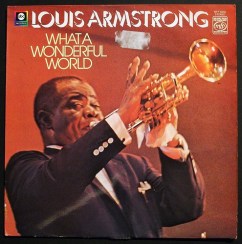
2957291075_51fce98859Most American cities name their airports for politicians (Reagan, JFK) or military heroes (Logan, O’Hare). Not New Orleans. The New Orleans airport is named after one of the 20th century’s most beloved musicians, Louis Armstrong — which signals to visitors that the city has a unique character. Tennessee Williams reportedly said, “America only has three cities: New York, San Francisco, and New Orleans. Everywhere else is Cleveland.”
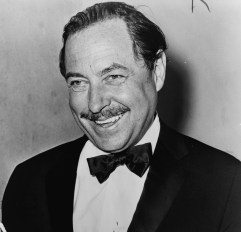
tennessee_williams_nywtsWe left the subzero weather behind in “Cleveland” (which in our case was Chicago) last weekend and spent three days in Tennessee Williams’s adopted city. During our food tour, which included six stops at New Orleans restaurants, we saw the house in the French Quarter where Williams wrote A Streetcar Named Desire. (I don’t think the eight miles we walked that day came even close to burning the calories we consumed!) Kenneth Holditch, Ph.D., longtime friend of Williams, co-editor of the Library of America’s editions of Williams’s works, and the author of Tennessee Williams and the South, told the New Orleans Times-Picayune that  “New Orleans was created by writers and visual artists . . . Sherwood Anderson once said this is a ‘city of imagination.’”

IMG_1838For me, no vacation is complete without at least one bookstore visit. On our first day, we stumbled upon Beckham’s Bookshop in the French Quarter , which was everything a used bookstore should be — quirky, dusty, and packed with treasures. There was even a resident cat. My favorite section in the store was “True Crime and Rascality”. Because I’m unable to walk out of a bookstore without buying something, I picked up a copy of The House on First Street: My New Orleans Story, by Julia Reed. Reed, a journalist, got married and moved to the Garden District of New Orleans just before Hurricane Katrina struck. The New York Times critic, literary biographer Blake Bailey, gave the book a rave review despite his initial misgivings:
I really wanted to pan this book. First of all, with the exception of Walker Percy’s Moviegoer, I tend to dislike literature about New Orleans (oh the decadence! the quaintness!) . . . It’s also a Hurricane Katrina memoir. I’d considered writing my own Katrina memoir, and now I realize I probably never will.

Reed includes her “Favorite New Orleans Reads” at the back of the book.  She recommends, among others,  The Moviegoer (“it remains, even now, an accurate rendering of a certain subset of upper-class New Orleanians”); Bandits, by Elmore Leonard (“You can almost smell the inside of the Bourbon Street bars”); and The Feast of All Saints, by Anne Rice (“No vampires, just free people of color in pre-Civil War New Orleans”).

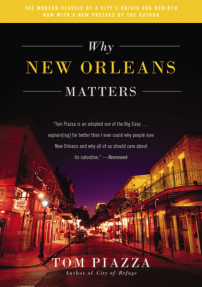
y648We rode the famous St. Charles streetcar to uptown New Orleans and visited a lovely independent bookstore, Octavia Books. I bought two more books: My New Orleans, Gone Away: A Memoir of Loss and Renewal, by Peter M. Wolf,and a signed copy of Why New Orleans Matters, by Tom Piazza. Piazza wrote his book in 2005, during “five agonizing weeks” following Hurricane Katrina. The updated edition, published in 2015, includes information about the city’s recovery. In the preface, Piazza says:
As long as New Orleans exists, it will attract the imaginative, the creative, the adventurous, and the soulful people of the world. Walking down almost any street and drinking in the cocktail of historical resonance, architectural whimsy, olfactory magic, savoring the peculiar mix of seriousness and play, of new possibilities, good and bad, around any corner, will remind you of why it is good to be alive.

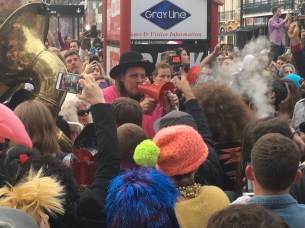
IMG_1840Thousands of adventurous people were in evidence on Saturday afternoon during the memorial parade for David Bowie. The parade, led by the Preservation Hall Jazz Band and Arcade Fire, was announced on social media just two days ahead of time but attracted Bowie fans and curiosity seekers from all over. Even though we didn’t have appropriate attire (space suits, tutus, gold lame), we jumped into the fray and followed the parade. At one point, we were just a few feet away from Win Butler of Arcade Fire, who was dressed in a hot pink suit and singing Bowie’s “Heroes”.

david-bowie
Poster for the American Library Association marketing campaign, 1987

Apparently David Bowie was a world-class reader. Geoffrey Marsh, who curated the Victoria & Albert Museum retrospective exhibit of Bowie’s life,  describes Bowie as “a voracious reader” who often read as much as “a book a day”. Bowie told Vanity Fair that reading was his idea of perfect happiness — and that the quality he most admires in a man is “the ability to return books”.  According to the London Telegraph, Bowie (“a remarkably well-read man”) brought hundreds of books with him when he went on tour: “I had these cabinets– it was a travelling library — and they were rather like the boxes that amplifiers get packed up in . . . I have an extraordinarily good collection of books.” Readers who are interested in Bowie’s  100 favorite books can check out the list here. The books, both fiction and nonfiction, cover an enormous range of territory; art, music, history, religion, psychology, and poetry. I haven’t read (or even heard of) many of them, but we do share one favorite: Fran Lebowitz’s Metropolitan Life.

0802130208John Kennedy Toole’s A Confederacy of Dunces, set in New Orleans, appears on Bowie’s list. I’ve never read this book, which is often referred to as a “cult classic” and won the Pulitzer Prize in 1981. Walker Percy said, “It is a great pity that John Kennedy Toole is not alive and well and writing. But he is not, and there is nothing we can do about it but make sure that this gargantuan tumultuous human tragi-comedy is at least made available to a world of readers.” If it weren’t for Percy, A Confederacy of Dunces would most likely never have been published. He was teaching at Loyola University in New Orleans when Toole’s mother brought him her late son’s novel. Percy championed the book, and Louisiana State University Press published it. The book was the first novel from an academic press to win a Pulitzer — beating  out Percy’s novel, The Second Coming.

Rhoda Faust, owner of Maple Street Bookshop in New Orleans, also helped Toole’s mother find a publisher. She told the Times-Picayune that the novel “captures New Orleans better than anything else on the face of the earth ever has”, but that it’s popular with readers everywhere: “Humor translates . . . the people within A Confederacy of Dunces are going through the same things other people and their families are going through.”

Susan Larson, author of The Booklover’s Guide to New Orleans and host of the local NPR affiliate’s show on books, “This Reading Life”, says: “Few American cities have such a visible and inviting literary culture, played out on its streets every day.” Larson often reads two books a day — when she was a judge for the Pulitzer, she had to read 300 books in six months. That New Orleans reader could put the rest of us — including David Bowie — to shame!


Book Club Spotlight — Celebrity Book Clubs


41cpynrrvxl-_ac_ul320_sr210320_
The first selection of Oprah’s book club

It all started with Oprah Winfrey. In 1996, she launched a book club that made an enormous impact on readers, authors, and publishers. For 15 years, Oprah’s choices became worldwide bestsellers. During the heyday of her club,  Oprah’s power as a recommender, often called the “Oprah Effect” in the publishing world, was unparalleled. Michael Pietsch, currently CEO of Hachette Book Group and past publisher of Little, Brown & Co., said in a USA Today article that Oprah “didn’t originate the idea of book clubs, but more than anyone, she has spread the idea of reading a book as a shared community.” Nora Rawlinson, who’s been the editor of Library Journal, Publishers Weekly, and now EarlyWord, citing surveys showing that “friends’ recommendations are the top reasons people buy a book” says that “Oprah is the ultimate friend to her audience.”

A lot of readers must think they’re friends with actress Emma Watson, because as of today, 84,000 people had signed up for her new feminist book club, “Our Shared Shelf”. Watson, who became famous through her portrayal of brave and brilliant  Hermione in the Harry Potter movies, is a United Nations Women Goodwill Ambassador with a special interest in gender equality and its benefits for both men and women. UN Goodwill Ambassadors are celebrity advocates, drawn from the “worlds of art, music, film, sport and literature to highlight key issues.”

Watson has ambitious plans for her book club. In her announcement on Goodreads, she says:

The plan is to select and read a book every month, then discuss the work during the month’s last week (to give everyone time to read it!). I will post some questions/quotes to get things started, but I would love for this to grow into an open discussion with and between you all. Whenever possible I hope to have the author, or another prominent voice on the subject, join the conversation.

9780679456209Watson has selected Gloria Steinem’s memoir, My Life on the Road, for the first online discussion, scheduled to begin in  a couple of weeks. (The exact date isn’t clear.) I’m not sure how the logistics of an online discussion with thousands of people will work, but kudos to Emma Watson for launching the club on January 6, choosing the first book on January 8, and attracting 84,000 enthusiastic participants less than a week later. I’m just glad I don’t have to supply the wine and cheese.

Mark Zuckerberg made a reading resolution last year, announcing on January 2, 2015 that he planned to read a book every other week and post discussions on Facebook. His Facebook page for “A Year of Books” says: “We will read a new book every two weeks and discuss it here. Our books will emphasize learning about new cultures, beliefs, histories and technologies.” As of December 28, the “community” (Zuckerberg never refers to it as a “book club”) had read 23 books, just short of the stated goal of 26 books. Many recent commenters wondered if “A Year of Books” would continue in 2016; one commenter replied, “I believe that Mark has a new challenge for 2016”. He does — and it doesn’t involve books. Zuckerberg posted this update on Facebook:

Every year, I take on a personal challenge to learn new things and grow outside my work at Facebook. My challenges in recent years have been to read two books every month, learn Mandarin and meet a new person every day. My personal challenge for 2016 is to build a simple AI to run my home and help me with my work.

On Immunity.JPGI guess that building a robot would take away from my reading time, so I’ll stick with books. Zuckerberg’s reading list, with a few exceptions, looks pretty dreary to me — I’m not reading The Structure of Scientific Revolutions (a history of science published in 1970) anytime soon. Maybe Zuckerberg got burned out on reading because he didn’t include any fiction in the mix, except a work of science translated from the Chinese (The Three-Body Problem) whose title refers to the “three-body problem in orbital mechanics.” I did enjoy, and highly recommend, one of Zuckerberg’s picks — On Immunity: An Inoculation, by Eula Biss. This fascinating book, which defies categorization (science? sociology? memoir?) would be a great choice for real-life book clubs.
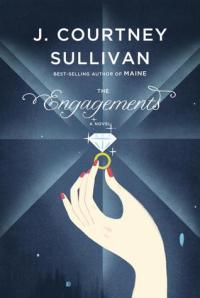
16071736Vogue magazine calls actress and producer Reese Witherspoon the “new patron saint of literature”.  Witherspoon’s production company, Pacific Standard, produced film adaptations of Cheryl Strayed’s Wild and Gillian Flynn’s Gone Girl; current projects include movie versions of The Engagements (J. Courtney Sullivan) and Luckiest Girl Alive (Jessica Knoll) and a TV miniseries based on Big Little Lies (Liane Moriarty). According to Vogue:

As if bringing these stories to the big screen weren’t enough, Witherspoon constantly promotes the many books on her nightstand on her Instagram account. Her posts, which have included snaps of Lena Dunham’s Not That Kind of Girl, Malala Yousafzai’s memoir, and many others, have become the equivalent of an Oprah’s Book Club stamp for the social media generation.

I’ve come across many references to Reese Witherspoon’s “book club”, but all I could find was her Instagram feed with photos of book she’s reading followed by thousands of brief comments from her adoring fans — “She always reads awesome books!”; “Follow Reese for book recommendations!”; “Have to get this one!” This seems like a far cry from Oprah’s hour-long, in-depth televised interviews with authors. But more power to Witherspoon for getting on her celebrity soapbox to support books she loves. The cynic in me needs to add that some of these are books she’s bought the film rights to — so not only does she love them, she has a financial stake in their success.

rosie-project-9781476729091_lgBill Gates doesn’t have a book club, but he frequently posts reviews on his blog, Gates Notes. He told the New York Times he reads about 50 books a year, mostly nonfiction with a few novels interspersed. He’s a book blogger after my own heart, telling the Times that “he rarely posts negative reviews of books, explaining that he sees no need to waste anyone’s time telling them why they shouldn’t bother reading something.” He recommends one of his fellow billionaire Mark Zuckerberg’s choices, On Immunity:  “When I stumbled across the book on the Internet, I thought it might be a worthwhile read. I had no idea what a pleasure reading it would be. ” Gates also enjoyed Graeme Stimson’s The Rosie Project, a charming novel about a professor on the autism spectrum trying to find love: “It’s an extraordinarily clever, funny, and moving book about being comfortable with who you are and what you’re good at. I’m sending copies to several friends . . . This is one of the most profound novels I’ve read in a long time.”

Do celebrities influence your book choices? And what do you think of online book clubs in general?

10 Books to Pick Up in the New Year

For last year’s words belong to last year’s language
And next year’s words await another voice.
And to make an end is to make a beginning.
T.S. Eliot, “Little Gidding”

Movie studios save the best for last, releasing potential award winners at the end of the year. An article in Psychology Today on behavioral decision-making explores this phenomenon:

Either movie executives know to release their “Oscar bait” films at the end of the year, or that those in charge of nominating films for awards tend to pick films that were released in the last few months of the year. Either way, movies that opened later in the year are overrepresented.

Book publishers, on the other hand, release very few books in December. Magazines and newspapers focus on year-end lists of top books, not reviews of new books. Holiday shoppers are looking for gift books they’ve heard about, not brand-new books by unknown authors. Booksellers can’t learn about new books during the Christmas rush. And no one has any time to read — they’re at the movies.

After New Year’s Day, bookstore shelves and tables will be stocked with shiny new hardcovers and paperbacks. Spend that gift card you just received on yourself — and even though all the diet books come out in January, don’t buy The Paleovedic Diet or The 17-Day Green Tea Diet. Buy yourself a book that will entertain, absorb, and enlighten you, and curl up with a cup of tea, green or not.

New in hardcover:

The Guest Room by Chris Bohjalian (1/5)
I’m adding this to my list of books that made me cringe, but that I couldn’t put down. Does that make sense? As always, Chris Bohjalian knows how to tell a story. In his latest novel, he sheds light on white slavery and prostitution. Think of the movie Taken — but imagine those horrific events taking place in the United States, with the involvement of upper-middle class suburbanites.

The Sound of Gravel by Ruth Wariner (1/5)
Wow! I read this memoir about growing up in a polygamist Mormon doomsday cult in one day. The author is her mother’s fourth child and her father’s 39th.  If you liked The Glass Castle, The Sound of Gravel is for you.

The Expatriates by Janice Y.K. Lee (1/12)
I dislike the term “women’s fiction” — but when you have a novel about three women, all expatriates in Hong Kong, who are grappling with their roles as mothers/caretakers and daughters, that’s what it is. But it’s women’s fiction at its very best — tautly written, with well-developed characters and a surprising storyline.

My Name is Lucy Barton by Elizabeth Strout (1/12)
Pulitzer Prize winner Elizabeth Strout (Olive Kitteridge) is one of my favorite authors. Her new book tells the story of Lucy Barton, a young woman from an abusive and impoverished background who (perhaps, she suggests, because she is “ruthless”) becomes a functioning adult and successful writer. The book, like Kent Haruf’s Our Souls at Night, is very short, with no wasted words; it’s a novel that raises many questions and that I won’t soon forget.

25279165The Swans of Fifth Avenue by Melanie Benjamin (1/26)
The surprise in this delightful book is not that Melanie Benjamin paints a complete portrait of Truman Capote, which I expected, but that she brings Babe Paley to life as a lonely and wounded woman. I’ve read and enjoyed all of Benjamin’s biographical novels — The Swans of Fifth Avenue is my favorite.

The Road to Little Dribbling : More Notes from a Small Island by Bill Bryson (1/19)
Some of Bryson’s books are funnier than others, but they’re all amusing, informative, and worth reading. His latest is a follow-up to Notes from a Small Island, a view of Britain from an American expatriate’s perspective, which came out 20 years ago.

New in paperback:

Inside the O’Briens by Lisa Genova (1/5)
This could be Lisa Genova’s best novel yet. The story of a loving family in crisis, Inside the O’Briens focuses on Joe O’Brien, a tough Boston cop who is devastated when he learns that he is suffering from Huntington’s disease — and that his four children may have inherited the lethal gene from him.

The Daylight Marriage by Heidi Pitlor (1/5)
I couldn’t stop reading The Daylight Marriage — spent a Sunday reading it, with the New York Times remaining in its plastic wrapper until I finished. This novel about a broken marriage, one which was perhaps ill-fated from the beginning, is devastating. Think Gone Girl with real people you might know instead of psychopaths.

f6720869102a7a8921af812ebe9bd8ccThe Secret Wisdom of the Earth by Christopher Scotton (1/5)
Readers of this blog are probably tired of hearing me rhapsodize about Scotton’s debut novel, one of my 2015 favorites. I’m thrilled that it’s out in paperback and will reach more readers.

Leaving Before the Rains Come by Alexandra Fuller (1/12)
Fuller’s eventful life continues to provide her with interesting and thought-provoking subject matter. In her latest memoir, the dissolution of her marriage causes her to face her past from a new vantage point.

Books on the Table wishes you a happy, healthy, and book-filled 2016!


Top 25 Books of 2015 — Booksellers Share Their Favorites

My little horse must think it queer
To stop without a farmhouse near
Between the  woods and frozen lake
The darkest evening of the year.
Robert Frost, “Stopping by Woods on a Snowy Evening”

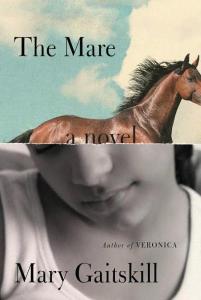
unnamed201_2In North America, today is the winter solstice, which means it’s the shortest day of the year. Here in Chicago, that means we will have only 9 hours and 7 minutes of daylight today. I plan to take full advantage of the dark and dreary weather, spending the longest evening of the year curled up with a good book — The Mare, by Mary Gaitskill. I’m loving this book, and if I were making a list of my favorite books of 2015, it would be a contender.
f6720869102a7a8921af812ebe9bd8cc
Paperback edition — available 1/6/16

Because I’ve talked about my favorite books so much already, I’m sharing some of my colleagues’ top picks. Collectively, our #1 choice was Christopher Scotton’s The Secret Wisdom of the Earth (Molly called it “my 2015 ‘Pulitzer'”), which is coming out in paperback on January 6.

Although several booksellers named five or six books as “favorites” — “I cannot possibly limit it further”, said one; “It’s funny how hard that question is to answer”, said another — I’m narrowing the list to one or two books each. I’ve included fiction, nonfiction, children’s and YA. Most of the books were published this year, but some are older books that we discovered in 2015.

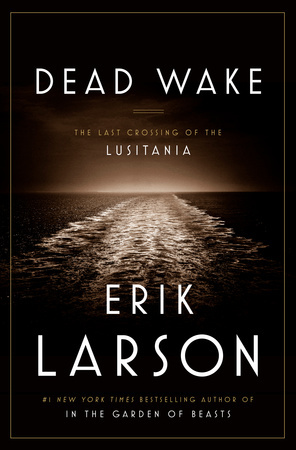
9780307408860Laura S. recommends Erik Larson’s latest, Dead Wake: The Last Crossing of the Lusitania, as well as Sophie Kinsella’s YA debut, Finding Audrey.

9780062284075Diane‘s top choice for adults is A Deadly Wandering: A Mystery, A Landmark Investigation, and the Astonishing Science of Attention in the Digital Age (Matt Richtel) –a book that I think everyone should read, along with Being Mortal (Atul Gawande). (For my review of A Deadly Wandering, click here.) For younger readers, Di’s favorite is The Thing About Jellyfish (Ali Benjamin), a National Book Award finalist.

Ann P.  loves a backlist title, Everything Beautiful Began After — Simon van Booy’s first novel.

9780802123411For Susan R., along with Laura B. (one of our Penguin Random House reps)  the choice was easy: an award-winner that has appeared on many “best of 2015” lists —H is for Hawk, by Helen Macdonald. The New York Times called this memoir “breathtaking”.

Lisa’s pick is Our Souls at Night, Kent Haruf’s last novel, which is also a book club favorite.

50th anniversary edition — “the most beautiful book in the world”

Diana can’t decide between one of this year’s hottest books  — Fates and Furies  (Lauren Groff) — and a modern classic, Stoner (John Williams), originally published in 1965 and re-released several years ago. Stoner — which is not about a pot-smoker, but a farm boy turned English professor (William Stoner, Ph.D.) — is “the greatest American novel you’ve never heard of”, according to the New Yorker. It’s a superb book — don’t miss it!

Susan P.‘s bookselling heart was touched by A Window Opens, Elisabeth Egan’s wise and witty debut novel about a full-time mother and part-time editor who suddenly needs to find a “real” job — and lands at “Scroll”, a soul-sucking company that seems determined to put independent bookstores out of business. (For my review, click here.)

Kathy P.‘s #1  book of 2015 is The Buried Giant. Kazuo Ishiguro’s first novel in 10 years, set in England’s mythical past, is “a rumination on memory, love and war worthy of a place among the greats” (The Guardian).

Anne H. (our Macmillan rep) had a hard time deciding — she said, “This is such a hard question! It makes me think I need to start keeping a list of books I read.” She settled on Jenny Lawson’s irreverent memoir, Furiously Happy: A Funny Book About Horrible Things, and Paul Murray’s satirical novel, The Mark and the Void.  (Can you tell Anne has a good sense of humor?)

9780525429777Molly says Confessions of an Imaginary Friend: A Memoir by Jacques Papier (Michelle Cuevas) is the best middle grade book she’s read this year — “and maybe ever”.  Clementine: The Life of Mrs. Winston Churchill is her nonfiction pick for the year.

Max loves Carrying Albert Home, the heartwarming, “semi-true” story of author Homer Hickam’s parents and their odyssey throughout the Southeast with their pet alligator. She was thrilled when Hickam stopped by Lake Forest Book Store to chat and sign books. (For my review, click here.)

Eleanor is a fan of The Red Notebook (Antoine Laurain), the charming, romantic and very French tale of a lost handbag — and a perfect gift book for anyone with a tender heart.

Cathy S. (our HarperCollins rep) sent me the longest list of anyone, mentioning that “I also realize that I’ve read a lot of ‘older’ books like Life after Life by Atkinson that I hadn’t had time to read before”.  Cathy — who never steers me wrong — recommends The Wolf Border (Sarah Hall), and the fourth installment in Elena Ferrante”s Neapolitan series, The Story of the Lost Child. (Countless other readers I trust have recommended this series as well.)

Nancy  is a fan of A Tale for the Time Being (Cynthia Ozecki), shortlisted for the Man Booker Prize in 2013 and a terrific book club choice.

9780312577223From across the lake at The Cottage Book Shop in Glen Arbor, Michigan, Sue sends two favorites: Days of Awe (Lauren Fox) and The Nightingale (Kristin Hannah), two books I enjoyed very much as well. The Nightingale is a real departure for Hannah, and although it’s not as literary as All the Light We Cannot See, it’s a good choice for readers looking for another absorbing story about Nazi-occupied France.

And my favorite? It’s impossible to choose one, but if I had to pick the most unforgettable books I read this year, I’d choose A Little Life (Hanya Yanigahara) and Station Eleven (Emily St. John Mandel). How about you?


The Santa Claus Man — Book Review

image001-199x300 copySo Gluck stretched the truth in the service of Santa Claus. Sometimes one had to take liberties with facts in order to get, and keep, people’s attention, he reasoned. What was Santa Claus if not a friendly deception invented to delight and encourage better behavior?
One Christmas Eve, journalist Alex Palmer discovered that his great-great-uncle, John Duval Gluck, Jr.,  was the founder of New York’s Santa Claus Association. For 15 years during the early 20th century, this charitable organization was responsible for fulfilling the wishes of thousands of New York children who sent letters to the North Pole. Palmer was dismayed to learn that Gluck wasn’t so much a philanthropist as he was a huckster, who lined his pockets with money from generous and trusting donors.

Palmer’s exhaustively researched book, The Santa Claus Man: The Rise and Fall of a Jazz Age Con Man and the Invention of Christmas in New York, is — as the title indicates — about more than Gluck’s nefarious activities.  The book includes two linked narratives: a sympathetic  and comprehensive chronicle of Gluck’s life and personality, showing the complex motivations for his self-aggrandizing and often dishonest activities, and an equally detailed account of the transformation of Christmas from a religious holiday into a cultural and commercial event.

A self-described “secret history sleuth”, Palmer is the author of two previous books,  Weird-O-Pedia: The Ultimate Collection of Surprising, Strange, and Incredibly Bizarre Facs About (Supposedly) Ordinary Things and Literary Miscellany: Everything You Always Wanted to Know About Literature. For a writer oriented towards the quirky side of life, delving into the obscure story of New York’s “Santa Claus man” and his world was a fascinating project. Palmer’s research led him to previously unknown relatives. He says:

My search to uncover the true story of John Gluck took me to Georgia, Florida, Texas, and into hidden pockets of New York City. I spoke to relatives I hadn’t known existed and was lucky enough to meet them. My first big break came with I tracked down a distant cousin of mine . . . She recalled John fondly and offhandedly mentioned she may have some of his papers in storage somewhere. In fact, she discovered she had several storage boxes full of his stuff . . . a trove of John’s personal correspondence, official Santa Claus Association documents, and original Santa letters that served as the backbone of The Santa Claus Man.

Palmer also uncovered an FBI report on Gluck’s deceptive activities, documents about Supreme Court case Gluck fought against the Boy Scouts of America, and “lots more Santa letters”.  Palmer says his investigation “revealed a man who yearned for escape from a mundane life, but lost his bearings once he broke free.” The book includes nearly 40 pages of endnotes and a bibliography, attesting to Palmer’s thorough exploration of his subject. (It also contains dozens of terrific vintage photos, including a sketch of Gluck’s proposed Santa Claus Building, intended to “blend spiritual ideals and consumerism into a true ‘Cathedral of Commerce'”.)

Sometimes Palmer’s enthusiasm for trivia overwhelms the reader, detracting from the narrative. It probably isn’t necessary to know, for example, that the nation’s first airmail delivery took place on September 23, 1911 in a Bieriot XI monoplane and included a sack of 640 letters and 1,280 postcards.

Palmer successfully places Gluck’s story in historical context. Publishers Weekly comments that:

Palmer deftly weaves in other cultural touchstones such as the genesis of the Boy Scouts, Clement Clarke Moore’s “A Visit from St. Nicholas,” and the WWI Christmas Day armistice (in which opposing armies traded goods) to tell the larger story of America’s adoption and adaptation of Christmas that endures to this day.

The Boy Scouts are, in fact, integral to the story. In 1910, two Boy Scout organizations were formed in the United States: the Boy Scouts of America and the American Boy Scout (no “s”, peculiarly — and later to become the United States Boy Scout.) The groups differed in one significant way: members of the American Boy Scout carried guns. Many parents didn’t want their Boy Scouts armed, especially after one 12-year-old American Boy Scout shot and killed a 9-year-old boy. The “chief scout” of the American Boy Scout organization didn’t think that banning guns from his organization was the best way to ensure the group’s survival — instead, he decided, they would volunteer to help the Santa Claus Man.

If you’re looking for a sweet Christmas story, The Santa Claus Man probably isn’t what you have in mind — but history and true crime buffs will enjoy this offbeat tale of greed and good intentions.

Book Club Spotlight — The Breakfast Club (YA for Grownups)

imgresA children’s story that can only be enjoyed by children is not a good children’s story in the slightest.
C.S. Lewis

Last year, journalist Ruth Graham published a provocative article (“Against YA”) in Slate that inspired a tedious debate about whether adults should waste their time reading books written for young people. This isn’t a new dispute — 15 years ago,  in a New York Times essay called “Besotted With Potter”, William Safire said:

The trouble is that grown-ups are buying these books ostensibly to read to kids, but actually to read for themselves. As Philip Hensher warns in the Independent newspaper, this leads to ‘the infantilization of adult culture . . .’

It seems to me that a greater concern is prematurely exposing children to adult culture.

You can waste hours of your life googling “adults reading YA” — you’ll find countless impassioned responses to Graham’s piece. Or you can spend that time actually reading a YA novel and decide for yourself. Make sure you choose one that’s critically acclaimed, not the latest dystopian vampire thriller (unless that’s your thing). Read a recent award winner, or reread a favorite from your teenage years, and then decide if young adult literature is worth your time. I’ve reread A Tree Grows in Brooklyn and A Wrinkle in Time many times, gaining new insights with each reading.

Pamela Paul, editor of the New York Times Book Review, is a member of “Kidlit”, a book club that reads children’s and young adult fiction. Paul says of the group: ” . . . none of it feels like homework. The themes are serious and the discussions intense, but the books are fast-paced and fun.” Author Gretchen Rubin started the group when she found that many of her friends and colleagues in the publishing industry shared her passion for children’s literature. Similar groups have sprung up all over the country — I’ve heard of groups called “Young at Heart”, “Forever Young”, and “Never Too Old”.

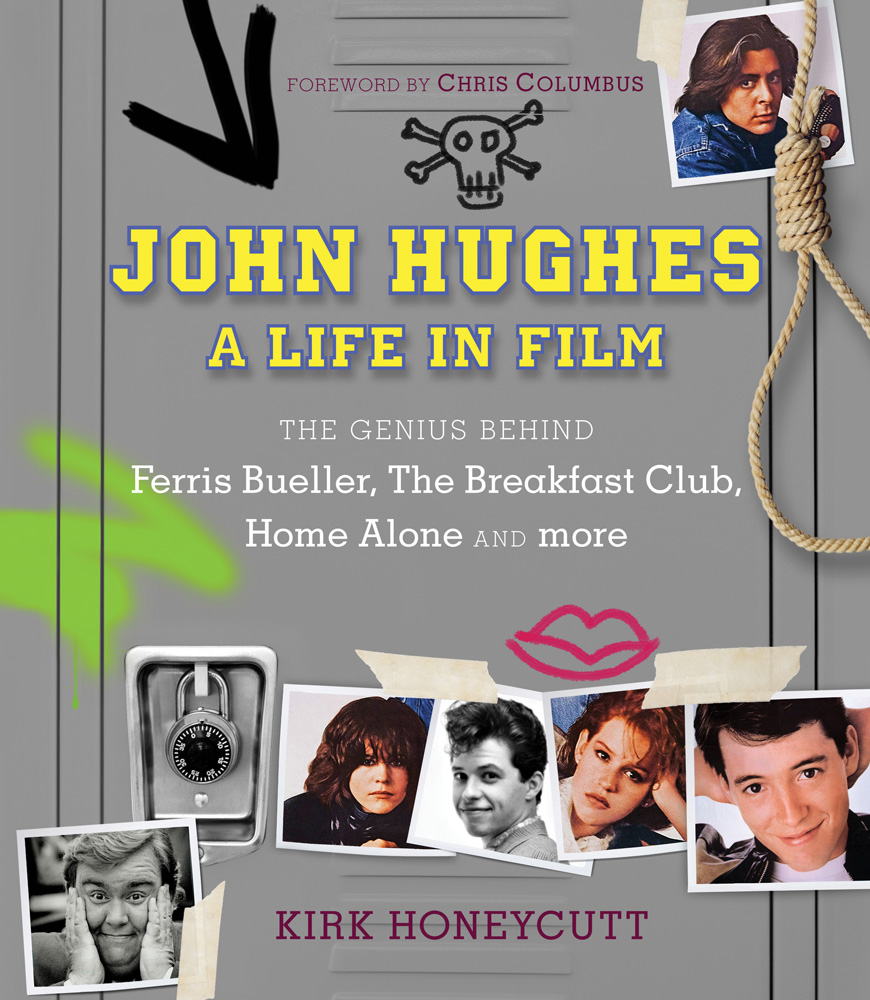
9781631060229In homage to movie director John Hughes, who understood adolescents so well, we at Lake Forest Book Store named our YA book group “The Breakfast Club”. (We meet in the morning, before the store opens.) After his retirement, Hughes lived in Lake Forest and was a frequent visitor to the bookstore. Always impeccably dressed in a beautiful sport coat with a pocket square, he was an avid reader and fascinating conversationalist. I highly recommend Kirk Honeycutt’s recent book,  John Hughes: A Life In Film: The Genius Behind The Breakfast Club, Ferris Bueller’s Day Off, Home Alone and More.

We’ve meet three times (September, October, and November). The books we read this fall, all award winners, inspired interesting discussions and would be good choices for any book club, whatever the focus of the club.

51VH2IQT8AL._SX331_BO1,204,203,200_The Impossible Knife of Memory by Laurie Halse Anderson

High school senior Hayley, daughter of an emotionally damaged Iraqi war veteran, struggles to live a “normal” life when she and her father, Andy, settle into his childhood home. Anderson’s father, who was stationed at Dachau during World War II, inspired her to write the story of a family affected by post-traumatic stress syndrome.

Odysseus had twenty years to shed his battle skin. My grandfather left the battlefield in France and rode home in a ship that crawled across the ocean slowly so he could catch his breath. I get on a plane in hell and get off, hours later, at home.

A good companion adult book would be Phil Klay’s short story collection, Redeployment, which won the National Book Award for fiction last year. 

51LOhJFau8LBelzhar by Meg Wolitzer

Jam’s parents don’t know what to do with her when she can’t seem to recover from her grief, so they send her to the Wooden Barn, a boarding school for “emotionally fragile, highly intelligent teenagers”. In a very unusual English class, she and her classmates begin to heal. Wolitzer skillfully incorporates fantasy into a novel that at first seems like a straightforward prep school story.

But it’s never just been the journals that have made the difference, I don’t think. It’s also the way the students are with one another . . . the way they talk about books and authors and themselves. Not just their problems, but their passions too. The way they form a little society and discuss whatever matters to them. Books light the fire—whether it’s a book that’s already written, or an empty journal that needs to be filled in.

Belzhar isn’t a retelling of Sylvia Plath’s The Bell Jar, but The Bell Jar plays an important part in the story. Wolitzer’s adult novels are excellent — particularly The Interestings, which follows a group of friends from adolescence through middle age. 

515e3HFpceLI’ll Give You the Sun by Jandy Nelson

Teenage twins Noah and Jude, both artists, are as close as two people can be, but they compete for the love of their parents and the attention of a new friend. Nelson, a poet and literary agent turned YA author, gives us each twin’s perspective in this thoughtful, but well-plotted exploration of art and love.

Meeting your soul mate is like walking into a house you’ve been in before – you will recognize the furniture, the pictures on the wall, the books on the shelves, the contents of drawers: You could find your way around in the dark if you had to.

Irving Stone’s classic biographical novel, The Agony and the Ecstasy, is a perfect companion book, since sculpting out of stone plays an important role in I’ll Give You the Sun — and the twins’ mother has written her own book on Michelangelo.

We’re deciding now what to read for the first quarter of 2016. The 2015 National Book Award winner for Young People’s Literature, Challenger Deep, by Neil Shusterman, seems like an obvious choice. (I’m also intrigued by one of the finalists, Bone Gap, by Laura Ruby.) My co-leader Diane, who reads lots of YA, just read and loved the historical novel Salt to the Sea, by Ruta Sepetys (due February 2), recommended to us by our Penguin children’s book rep, Sheila Hennessey. Sheila also suggested Mosquitoland, by David Arnold, which has been on my list for a long time. We’d love other suggestions of YA books that grownups can learn from and enjoy!

All the Stars in the Heavens — Book Review

I’m interested in how we survive by the labor of our own hands, and who we choose to love. Those are my two themes—they’re in every book I write.
Adriana Trigiani

Adriana Trigiani’s latest novel is an unabashedly romantic story of Hollywood’s golden age, peopled with the stars of yesteryear — Spencer Tracy, David Niven, Myrna Loy, Carole Lombard, Hattie McDaniel — and Clark Gable and Loretta Young. Trigiani paints a romantic picture of Gable and Young as star-crossed lovers, kept apart by the strict moral codes and sexist double standard of the times.

Their problems were not of the heart, or their intentions, but of the practical world, which was defined by the wily and improbable laws enforced by the studios that employed them, and by the public, whose ticket dollars gave them the final say. Gable and Young were indentured to the stardom that made their lifestyle possible.

Fans of old movies and old-fashioned, multi-generational sagas will love All the Stars in the Heavens. It’s the kind of novels described in blurbs as “sweeping” — an overused word that is, nonetheless, apt when applied to this Hollywood epic. If the book were a movie it would be called a “biopic”. We first meet Loretta Young as a child actress, working to help her single mother pay the bills, and follow her as she becomes a leading lady in Hollywood, falling in love with the wrong men, and eventually a grandmother, watching herself and Clark Gable on a VHS tape of The Call of the Wild.

Warning to readers: don’t Google “Loretta Young”, “Clark Gable” — or anything else in the book that piques your curiosity. I made the mistake of doing that and I not only ruined the story for myself, but came across some recent information (so recent that Trigiani wouldn’t have known about it while writing the book) that cast doubt on one of the central plot elements. Granted, All the Stars in the Heavens is fiction, but it’s clear Trigiani tried to keep her story within the basic outline of Young’s life.

The most interesting character in the book is one Trigiani invented — Alda Ducci, Young’s secretary and dear friend. An Italian immigrant, Alda came to the Young household after being asked to leave the Daughters of Charity of Saint Vincent de Paul, where she had been training to become a nun. The Mother Superior at the convent says, “‘I’m told this a fine Catholic family, very devout. You would be a secretary to one of the daughters. She works in pictures. Her name is Loretta Young.'” I was reminded of The Sound of Music, when Maria leaves the Abbey and falls in love with Captain von Trapp. (Remember the Baroness: “And somewhere out there is a lady who I think will never be a nun.”)

Not only does Alda form a deep and abiding friendship with her employer, she falls in love with Luca Chetta, a scene painter on the set of The Call of the Wild. Both the friendship with Loretta and the relationship with Luca happen improbably fast. Almost immediately after meeting Alda, Luca says, “‘I’m already crazy about you . . . You got a big, sad heart. And big, beautiful eyes. I want to understand why you’re sad. And I want to look into those eyes of yours forever.'”  Alda responds: “‘You sound like a movie script.'”

The dialogue in All the Stars in the Heavens does sound like a movie script — a movie script from another era. It’s sometimes corny, but often the repartee is witty and flirtatious. Trigiani knows how to set a scene too, from the cold and isolated area of northern Washington where The Call of the Wild was filmed to the ancient and crowded neighborhood in Padua, Italy where Alda’s family lives.

Would I recommend All the Stars in the Heaven? For me, it was a welcome break from serious nonfiction, as well as a nostalgic trip to a bygone era. It’s fun reading, and you’ll learn a little something about old Hollywood. Like many of the movies the book references, All the Stars in the Heavens is clever, entertaining, and doesn’t probe too deeply. Trigiani is a terrific storyteller, and she has great material to work with in this book — which is her first biographical novel.

It’s not surprising that Trigiani chose to write about the movie business. A theater major in college, she spent 15 years as a playwright, comedy troupe actress, TV writer/producer (writing several episodes for the Cosby Show), and documentary filmmaker before turning to fiction writing. Her first novel, Big Stone Gap, the first in a series set in her Virginia hometown, started out as a screenplay. The movie version (written and directed by Trigiani and starring Ashley Judd) was just released last month. The reviews have been middling; the Washington Post’s was typical, concluding that “In a lot of ways this is a Chicken Soup for the Soul sort of movie. But sometimes, especially when the air’s starting to turn brisk, that’s exactly what you need.”

And every once in a while, what you need is a Hollywood novel that gives you a glimpse of a glamorous world that no longer exists. I also recommend A Touch of Stardust by Kate Alcott (the filming of Gone With the Wind) and, if you’d prefer something more literary, Beautiful Ruins by Jess Walter (the making of Cleopatra).

Stories are people. I’m a story, you’re a story . . . your father is a story. Our stories go in every direction, but sometimes, if we’re lucky, our stories join into one, and for a while, we’re less alone.
Jess Walter, Beautiful Ruins

Click here for my review of Adriana Trigiani’s 2014 release, The Supreme Macaroni Company.

Matchmaking: 10 Nonfiction/Fiction Pairs

Fiction and nonfiction are not so easily divided. Fiction may not be real, but it’s true; it goes beyond the garland of facts to get to emotional and psychological truths.
Yann Martel

The National Endowment for the Arts recently studied the reading habits of Americans, and one of their findings won’t surprise any bookseller: “Men are more likely to read nonfiction books than fiction, while the opposite holds true for women.” The NEA defines a “literary reader” as someone who has read “at least one novel, play, or poem within the last 12 months”. According to this definition, 47% of American adults are “literary readers”. So if a person (female) reads one novel in a year — say, Fifty Shades of Gray — she is a “literary reader”, but if a person (male) reads dozens of nonfiction books — The Boys in the Boat, The Innovators, The Warmth of Other Suns — he is some type of “non-literary”, inferior reader?

Like Nancy Pearl, librarian, NPR book critic, and author of Book Lust, I’m an omnivore when it comes to books. When asked how she chooses the books she discusses on Morning Edition’s “Under the Radar” segments, she said:

Simple: I just pick some of the titles that I’ve most enjoyed since the last time I was on, without concern for whether they’re fiction or nonfiction, genre or not, or aimed or classified as being for children or teens. Because I am an omnivorous reader, at first glance my choices always seem to me to be completely higgledy-piggledy, with no book bearing any similarity to any other.

So whether you’re an omnivore, a carnivore (nonfiction reader), or herbivore (fiction reader), here are some complementary sets of fiction and nonfiction books. (For a list of books for the confirmed carnivore, check out 10 Books for “Carnivorous” Readers — which includes Steven Rinella’s Meat Eater: Adventures of an American Hunter.)

9780804137744Interested in Civil War cross-dressing?
Nonfiction: Liar, Temptress, Soldier, Spy: Four Women Undercover in the Civil War by Karen Abbott
A rollicking chronicle of the exploits of four female spies (two Union, two Confederate) during the Civil War.
Fiction: I Shall Be Near to You by Erin McCabe
In this beautiful story of love and war, a headstrong young woman disguises herself as a man, enlists in the Union Army, and follows her new husband off to battle.

Want to read about work/life balance?
Nonfiction: Lean In: Women, Work, and the Will to Lead by Sheryl Sandberg
Sandberg’s book advising young women to be more ambitious received a lot of unfair criticism — much of it, I suspect, from people who didn’t read it. Anne-Marie Slaughter, author of the recent book, Unfinished Business: Women Men Work Faa-window-opens-9781501105432_lgmily, wrote an excellent review in the New York Times.
Fiction: A Window Opens by Elisabeth Egan
The clever and entertaining story of a full-time mother and part-time editor who suddenly needs to find a “real” job — and lands at “Scroll”, an up-and-coming company with a diabolically quirky corporate culture

Want to understand more about developmentally disabled young adults?
Nonfiction: An Uncomplicated Life: A Father’s Memoir of His Exceptional Daughter by Paul Daugherty
A wonderful book for any parent — through the story of the first 25 years of his daughter Jillian’s life, Daugherty reminds us of the precious gifts our children are, “exceptional” or not.
Fiction: A Step Toward Falling by Cammie McGovern
In McGovern’s second novel for young adults, two achievement-oriented high school students fail to protect a developmentally disabled classmate, Belinda, at a pivotal moment. Belinda, who narrates sections of the book, comes to life as a three-dimensional character.

Think you need to learn more about why school shootings happen?
Nonfiction: Columbine by Dave Cullen
Cullen spent 10 years researching the events at Columbine High School, and what he found was that “most of what we ‘know’ about Columbine was wrong.” The killers, he points out, were not bullied — they were, in fact, bullies themselves.
Fiction: We Need to Talk About Kevin by Lionel Shriver
One of the most chilling books I’ve ever read.

Interested in the craft of writing?
Nonfiction: On Writing by Stephen King and Escaping Into the Open by Elizabeth Berg
Both are not only excellent writing manuals but entertaining memoirs as well.
Fiction: How to Write a Novel by Melanie Sumner9781101873472-1
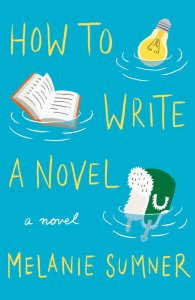
Maybe it’s a bit of a stretch pairing How to Write a Novel with books on how to write, because Sumner’s debut novel is only on the surface about writing a novel. While trying to write a book, following the instructions in a writing manual, 12-year-old Aristotle stumbles upon some family secrets. Fans of Where’d You Go, Bernadette? will adore this smart and endearing novel.

Fascinated by World War I?
Nonfiction: Testament of Youth by Vera Brittain
This classic memoir of love and loss in World War I-era England should be required reading for anyone interested in that time period.
Fiction: The Absolutist by John Boyne and A Long Long Way by Sebastian Barry
I love both of these books so much that I can’t decide which is my favorite World War I novel. (Birdsong, by Sebastian Faulks, is a runner-up.) Both are beautifully written and almost unbearably sad.

9780061958274Are you a Little House on the Prairie fan?
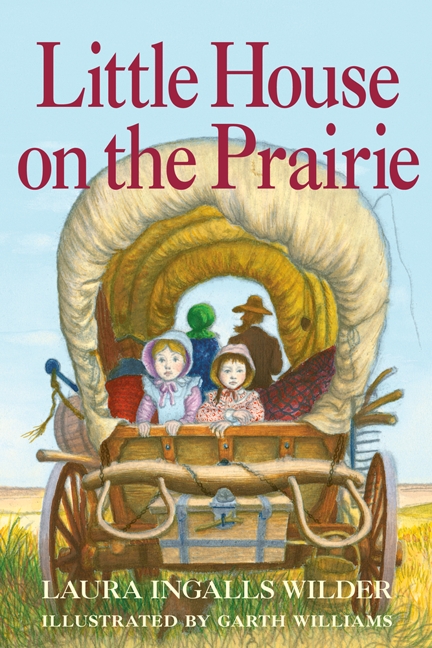
Nonfiction: Pioneer Girl: The Annotated Autobiography by Laura Ingalls Wilder and Pamela Smith Hill
Hill, the author of a biography of Laura Ingalls Wilder, edited Wilder’s memoir — which is really a rough draft of the Little House books. An article in the Los Angeles Times points out that the Little House series was written for children, and Wilder’s memoir “would have been rated R for violence and adult content.”
Fiction: Pioneer Girl by Bich Minh Nguyen
Lee Lien, daughter of hardworking Vietnamese immigrants, is a newly minted Ph.D. in English literature with no job who finds a mysterious gold brooch belonging to her mother — an item that may have belonged to Laura Ingalls Wilder.

Curious about reclusive authors?
Nonfiction: My Salinger Year by Joanna Rakoff
Actually, Salinger doesn’t show up much in Rakoff’s memoir of her stint as a famously eccentric literary agent, but his brief appearances are memorable — and so is the book.
Fiction: & Sons by David Gilbert
A big, fat novel centering on A.N. Dyer — a reclusive writer reminiscent of J.D. Salinger. If you like Jonathan Franzen, you’ll like this. There’s a lot going on — a novel within a novel, lots of characters, and even a touch of science fiction.

9781101872871What happens when cultural and religious differences collide with modern medicine?
Nonfiction: The Spirit Catches You and You Fall Down: A Hmong Child, Her American Doctors, and the Collision of Two Cultures by Anne Fadiman
Published almost 20 years ago, this award-winning book — one of my “top 10” works of narrative nonfiction — includes a new afterword with updates on the characters and on the author herself.
Fiction: The Children Act by Ian McEwan
The morally complex and emotionally resonant story of a London family court judge who must make a decision about whether to order a lifesaving blood transfusion for a 17-year-old Jehovah’s Witness.

What was it like to live through Hurricane Katrina?
Nonfiction: Five Days at Memorial by Sheri Fink
The author is a physician and Pulitzer Prize winning journalist who’s written a gripping account of the life-and-death decisions medical staff at Memorial Medical Center in New Orleans were forced to make during Hurricane Katrina.
Fiction: Salvage the Bones by Jesmyn Ward
The 2011 National Book Award for fiction, set in Mississippi just before and during Hurricane Katrina, has ‘the aura of a classic”, according to Ron Charles of the Washington Post.

Books on the Table in New York

Don’t you love New York in the fall? It makes me want to buy school supplies.
Nora Ephron (from You’ve Got Mail, the best bookstore movie ever)

If I ever get rich, I’m going to come here and buy all the books I want.
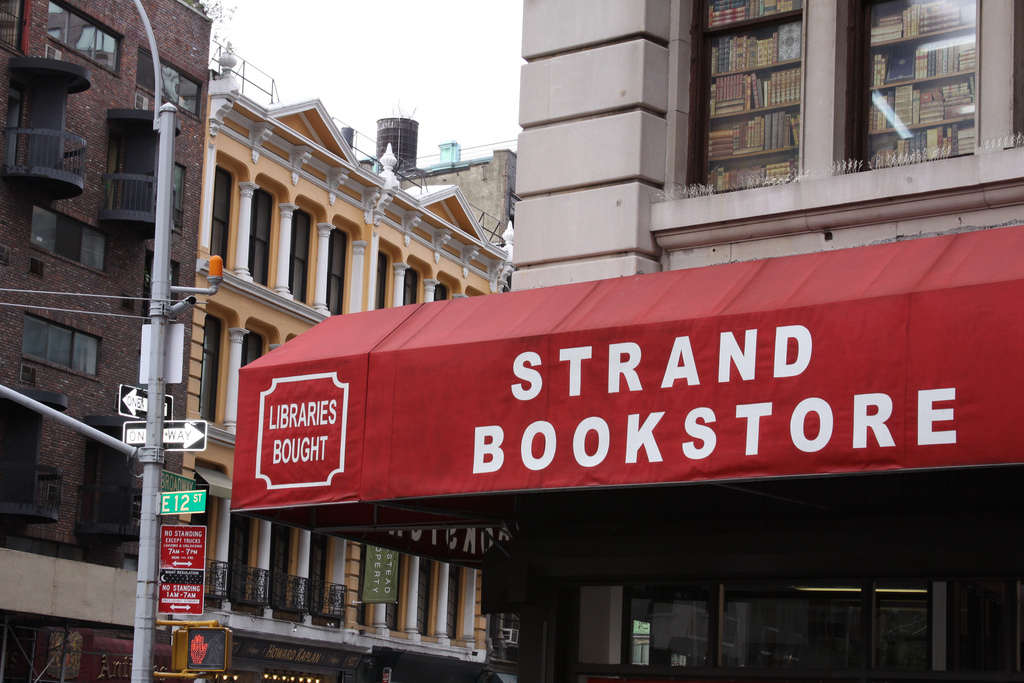
Overheard at the Strand Bookstore

3782319053_344f405b95_bMy husband and I just spent a gorgeous fall weekend in New York with our son, and actually did buy some school supplies — at the famous Strand Bookstore, which claims to have 18 miles of books. That’s the length of the New Hampshire coastline. The books (new and used) at the Strand are not only crammed into hundreds of shelves, but piled on table after table.

The Strand has more tables than I’ve ever seen in a bookstore, and they aren’t your usual “new fiction” and “new nonfiction”.  Here are just a few of the Strand’s tables:

IMG_1787Award-winning books
My favorite: In the Heart of the Sea: The Tragedy of the Whaleship Essex by Nathaniel Philbrick (also on the Read the Book First table of books adapted into movies)

Culinary literature
My favorite: Blood, Bones and Butter: The Inadvertent Education of a Reluctant Chef by Gabrielle Hamilton

Must-own short stories (What a pleasure to see a whole table devoted to short stories!)
My favorite: The Collected Stories by Grace Paley

Books everybody loves
My favorite: In the Garden of Beasts: Love, Terror and an American Family in Hitler’s Berlin by Erik Larson
Most curious selection: Valley of the Dolls by Jacqueline Susann

IMG_1794Expand your horizons
I must really need to expand my horizons, because I hadn’t read much of anything on this table. Maybe I’ll start with Oliver Sacks, whose books are currently featured?

YA bestsellers
My favorite: Eleanor & Park by Rainbow Rowell

One table in particular attracted a large crowd — the “erotica” table, which surprisingly is located right next to the children’s section. Maybe the staff has found that parents of young children are the store’s biggest erotica customers? I quickly moved away from that table, imagining how embarrassing it would be if my son found me browsing there. I couldn’t even say I was doing “research”, because Lake Forest Book Store definitely does not carry erotica. We don’t even have a romance section.

Just to prove that no bookstore can stock everything, the Strand didn’t have a book I wanted to take a look at — Symphony for City of the Dead: Dmitri Shostakovich and the Siege of Leningrad by M.T. Anderson. I always feel a little bad, even though I shouldn’t, when customers come into our store with a book review ripped out of a magazine or newspaper and we don’t have the book — even though I know we can’t have everything in our little store, and that we do a really good job stocking the books that appeal to our customer base. So I felt better when a huge bookstore like the Strand didn’t have a book that had received a great review in that day’s New York Times.

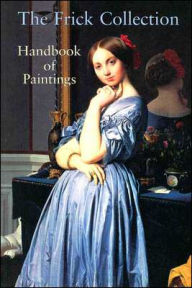
9781857593280_p0_v1_s192x300I took a lot of photos in the Strand, although I was a little worried someone would confront me, thinking I was one of those awful people who take photos and then order the book elsewhere. Actually, I became one of those people later that day when we were in the gift shop at the Frick Collection. We bought a copy of the Frick’s Handbook of Paintings, along with Meet You in Hell: Andrew Carnegie, Henry Clay Frick, and the Bitter Partnership That Changed America by Les Standiford, and then on the way out Jeff saw something that intrigued him called The Curious Map Book, which was large and heavy. So I snapped a photo (sorry, Frick Collection gift shop) and e-mailed an order to Lake Forest Book Store.

It’s nearly impossible to leave the Strand without buying something. Jeff and I each bought a blank book (our “school supplies”) and I bought a journal called Literary Listography: My Reading Life in Lists. I can’t resist that kind of thing, and this one is filled with hand-drawn illustrations. I successfully resisted buying more reading material to lug home, but Jeff and Charlie filled a  couple of shopping bags with books. (None of their selections came from the erotica section.)

9781400031702I tossed in a copy of Donna Tartt’s The Secret History, for Charlie’s roommate. At brunch, he had asked me whether I thought The Goldfinch was worth reading. I said it absolutely was, but recommended that he read The Secret History first. “If it involves a bitchy female protagonist, I’m in,” he said. I said that it did, which isn’t exactly true, but I’m pretty sure he’ll love the book anyway.

We had brunch at Pete’s Tavern, which says it’s the oldest bar in New York and bills itself as “the tavern O. Henry made famous.” Supposedly, O. Henry wrote “The Gift of the Magi” there. Of greater interest to me is the fact that Ludwig Bemelmans created Madeline in a booth at Pete’s. According to a 1999 article in the New York Times:

Petes-tavern-2007_crop-1Madeline must be the only famous French orphan born in a tavern near Gramercy Park. It was there, 60 years ago, that Ludwig Bemelmans, her creator, jotted on the back of a menu the famous phrases, ”In an old house in Paris that was covered with vines lived 12 little girls in two straight lines.”

A plaque honoring Bemelmans, who died in 1962, was dedicated at that bar, Pete’s Tavern, in late September. The small crowd that gathered for the occasion included his widow, Madeleine (known as Mimi), and his daughter, Barbara, who were inspirations for Madeline.

9781101911617Because it’s a requirement to go to the theater during a New York weekend, we saw this year’s Tony Award winner —  The Curious Incident of the Dog in the Night-Time. The performances and the staging in the play, adapted from Mark Haddon’s novel, were superb. You don’t so much watch the play as become immersed in the mind of the main character, a 15-year-old boy on the autism spectrum. To the critic who sniffed,  “I’m sorry to tell you a winsome puppy figures in (the play’s) denouement”, I’d like to say that we really liked the puppy. Haddon published a fascinating piece in the Guardian about the process of adapting his novel into a play, noting that “Just as the novel was a novel about novels and how we read them, so the play is a play about plays and how we watch them.”

I’m already looking forward to planning our next trip, which I’m hoping will include tickets to the hit play Hamilton (inspired by Ron Chernow’s book, Alexander Hamilton). And how about staying at the Library Hotel, in which “each of the 10 guestroom floors honor one of the 10 categories of the Dewey Decimal System and each of our 60 rooms are uniquely adorned with books and art exploring a distinctive topic within the category it belongs to.)?