WWW Wednesday — Family Version

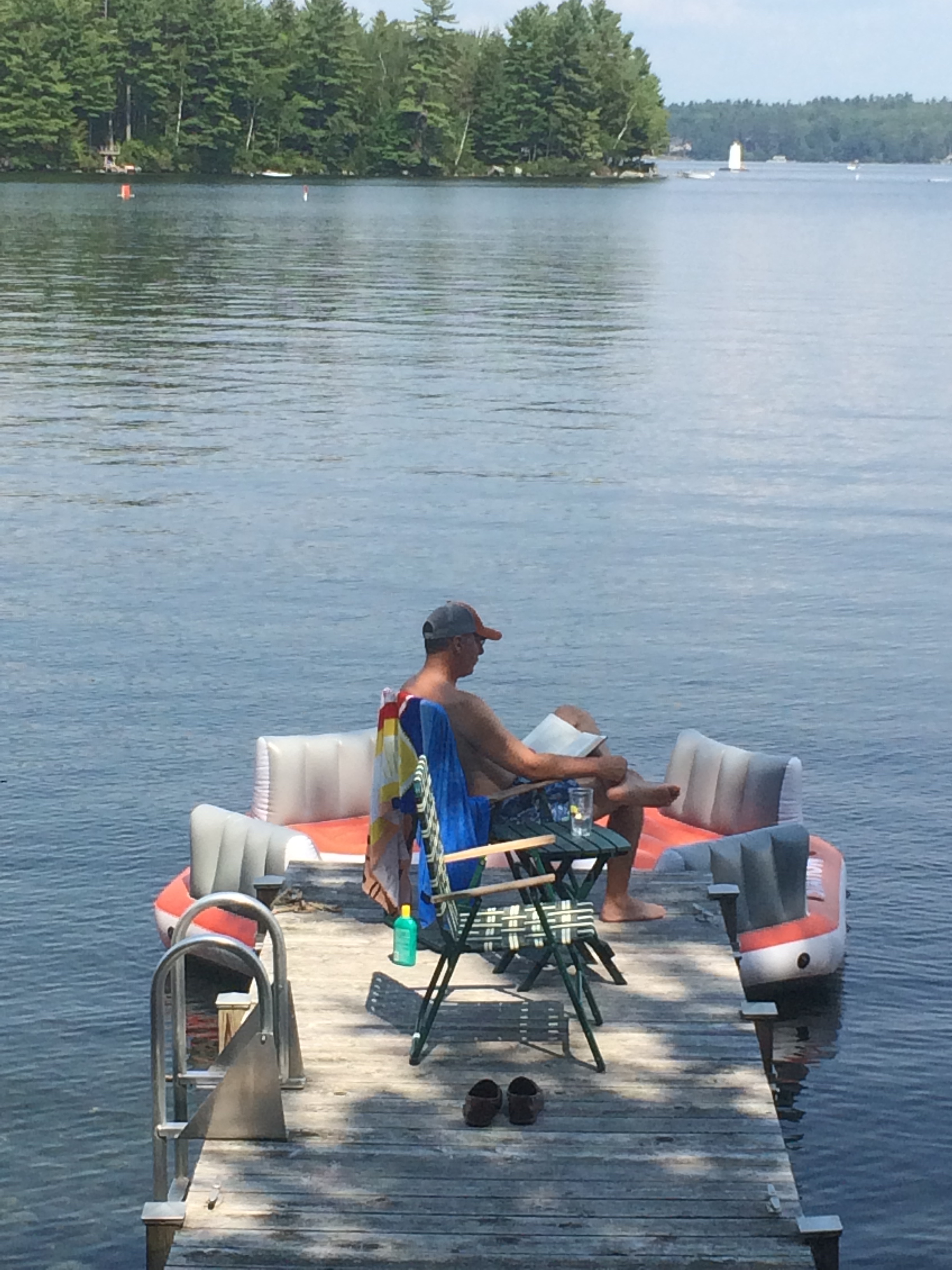
IMG_1705Yesterday we had friends visit for lunch who had never been to our lake house before. The first thing one of them said after admiring the view was, “Wow! What a great place for reading.” She’s absolutely right — there’s no better place for reading than sitting outside on a beautiful summer day with the lake and mountains in the background. There are always plenty of other things to do, especially when the sun is shining, but we all treasure our reading time.

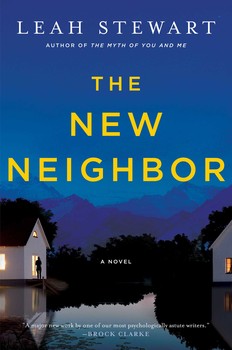
the-new-neighbor-9781501103513_lgI just finished reading several books that are perfect for summer reading. My colleague Di recommended Leah Stewart’s The New Neighbor, a terrific page-turner about two lonely women in Sewanee, Tennessee who are both hiding painful secrets. Jennifer Young and her 4-year-old son move in near 91-year-old retired nurse Margaret Riley, and Margaret soon becomes obsessed with digging into Jennifer’s past. The New York Times says “Both women, whom we come to know in great depth, are guarding secrets and neither can afford to make friends . . . Stewart never relaxes her tight focus on these complex characters.” Stewart based the novel in part on her grandmother’s experiences as a World War II battlefield nurse.

9780553392319We Never Asked for Wings, by Vanessa Diffenbaugh (out in hardcover yesterday) is, like Diffenbaugh’s The Language of Flowers, the story of a young woman in crisis.  When Letty Espinosa’s parents return to their native Mexico, Letty must finally grow up and become a parent to her teenage son, Alex, and six-year-old daughter, Luna.  Diffenbaugh does a wonderful job creating vivid and sympathetic characters. I was particularly drawn to Alex, who has always regarded his mother as more of an older sister than as an authority figure.  I passed the novel along to my mother, who enjoyed it as much as I did. I liked The Language of Flowers very much, so I was nervous when I started reading her sophomore book. Surprisingly, I liked We Never Asked for Wings even more — it’s more true-to-life, with none of the magical realism that made The Language of Flowers a less-than-perfect book for me. Vanessa Diffenbaugh will be visiting Lake Forest for an author luncheon next week, and I’m looking forward to meeting her and asking her a few questions.

9780804140034Maybe some people don’t find nonfiction books about war appropriate summer reading, but Jeff and I do! I am fascinated by the French Resistance, and Alex Kershaw’s Avenue of Spies: A True Story of Terror, Espionage, and One American Family’s Heroic Resistance in Nazi-Occupied Paris is a worthy addition to my collection of World War II books. It’s not on a par with In the Garden of Beasts, by Erik Larson, but it’s a similar story: an American family, living in occupied Paris, shows unusual courage in the direst of circumstances. American physician Sumner Jackson, his Swiss wife, Toquette, and their son, Phillip, are given the opportunity to leave France when the French surrender is imminent, but they elect to stay and join the Resistance — while living almost next door to the Parisian headquarters of the Gestapo.

51ZVQ8T7JKL._SY344_BO1,204,203,200_Jeff is delving deeply into World War I, thoroughly absorbed in Catastrophe 1914: Europe Goes to War, by British military historian Max Hastings. We heard the author speak at an event last year, and Jeff is finally getting to the book, which the New York Times calls “a highly readable narrative that should — but won’t — be the last word on the subject.” He also recently read Testament of Youth, which is author Vera Brittain’s memoir of her experiences as a nurse during World War I that led her to pacifism, political activism, and a writing career. It’s a little embarrassing that Jeff has finished the book and I have just started it, because it’s my book group’s August selection.

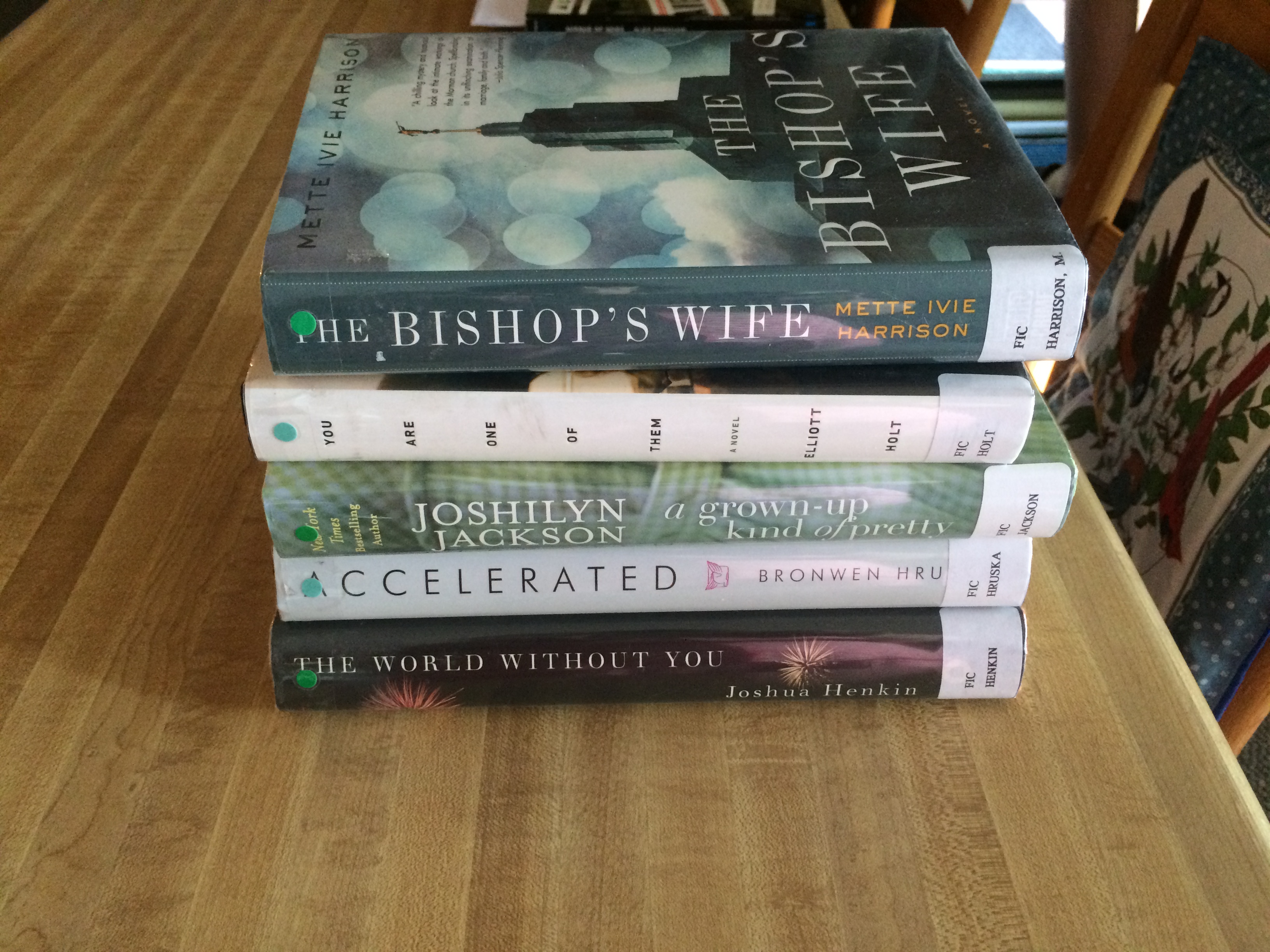
IMG_1697My mother wins the award for most prolific reader. (Also, most prolific crossword puzzle solver . . . actually, the only crossword puzzle solver.) She’s thrilled that our little town recently rebuilt and expanded its public library, and regularly comes home with big stacks of library books.  She’s read some excellent books, and particularly recommends You Are  One of Them, by Elliott Holt. One of my favorite authors, Maggie Shipstead, gave Holt’s debut novel a rave review:

Inspired by the story of Samantha Smith, the American schoolgirl who wrote to the Soviet premier Yuri Andropov in 1982, and asked if he intended to start a nuclear war, has the momentum of a mystery but is, more essentially, a consideration of how we are haunted by loss . . . The main thing, though, is that You Are One of Them is a hugely absorbing first novel from a writer with a fluid, vivid style and a rare knack for balancing the pleasure of entertainment with the deeper gratification of insight. More, please.

I just emailed the bookstore to order a paperback copy of You Are One of Them — I find that library books and lakeside reading don’t mix well I’ve already managed to drop one book in the water and spill coffee an another. Some of my mother’s books go back to the library unfinished. My mother feels, and I agree, that you can usually tell after a few pages if a book is worth reading.  Isn’t that the best thing about libraries? You haven’t invested anything in the book so there’s no pressure to finish. And the worst thing is that you have to take care of the books . . .

What did you just finish reading? What are you currently reading? What do you think you’ll read next?

10 Summer Paperback Picks

In the spring, I posted a list of 10 of my favorite recent books just published (or about to be published) in paperback. It’s now official summer reading season, and dozens of new paperbacks are piled high on bookstore tables. Some of these (Station Eleven) were critically and commercially successful in hardcover; some (The Blessings) didn’t get as much attention as they deserved in hardcover; and some (The Red Notebook) are brand new books, never published in hardcover.

More and more books are being published as paperback originals. According to an article in the Wall Street Journal (“The Stigma of Paperback Originals”), American publishers view the “straight to paperback” format as “an increasingly attractive option—perhaps the only option—for young authors with no track record, midcareer authors with a challenging track record and international authors being published for the first time in the U.S.” The Journal points out the paperback original is “the industry standard ‘ In Europe, the U.K., Australia and New Zealand.”

Frances Coady, formerly publisher of Picador, the paperback imprint of Macmillan, is quoted in the article as saying: “You have to ask yourself questions like, ‘Is it better to sell 5,000 or 8,000 copies in hardcover and try to reinvent the book in paperback?’—which, unless there’s some extraordinary piece of luck, is really hard to do—or ‘Is it better to sell 50,000 in a paperback original?'”

As a reader, I vote for the paperback option — especially now that paperbacks are so high-quality. Some even have fancy French flaps. Gone are the days when you cracked open a paperback only to have loose pages flutter out. And booksellers have a much easier time convincing customers to take a chance on a new author with a paperback than with a hardcover. Here are 10 books to take a chance on this summer:

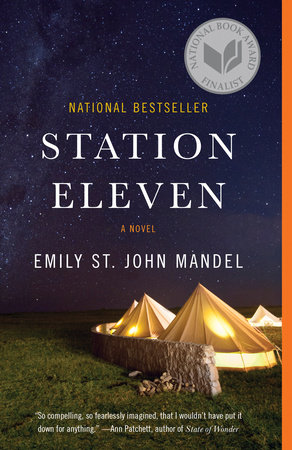
9780804172448Station Eleven by Emily St. John Mandel (hardcover 9/14; paperback 6/15)
WHAT WAS LOST IN THE COLLAPSE: almost everything, almost everyone, but there is still such beauty. Twilight in the altered world, a performance of A Midsummer Night’s Dream in a parking lot in the mysteriously named town of St. Deborah by the Water, Lake Michigan shining a half mile away.

I’m surprised this book was released in paperback only nine months after it came out in hardcover. One of five finalists for the National Book Award in fiction, the post-apocalyptic novel has been a bestseller for months. Despite the acclaim, I would never have picked up this book if it hadn’t been a selection for my book group. I couldn’t imagine getting through, much less enjoying, a dystopian novel. But I truly loved every page and recommend it without reservations to anyone who reads literary fiction. I was captivated by the first chapter, which takes place during a performance of King Lear. In a New York Times interview, the author said,

I wanted to write a love letter to the modern world, and a way to write about all these things we take for granted was to write about their absence. People would want what was best about the world, and it’s subjective, but to me, that would include the plays of Shakespeare.

women-kings-260x388-1Where Women Are Kings by Christie Watson (paperback original 4/15)
They said that the wizard was something Mama had dreamed, and because she was sick in the head. But how could Mama’s dream get inside Elijah’s head? And now they told him that Mama hurt him badly. Every time he closed his eyes, he remembered and he wanted to scratch out the memory but he couldn’t. It waited there for him like a wolf under a tree.

Seven-year-old Elijah, the son of an abusive and mentally unstable Nigerian immigrant, finds refuge with Nikki and Obi in a stable home. But Elijah comes to believe he is possessed by a wizard. This heartbreaking, beautifully written story explores  foster care, childhood trauma, interracial adoption, mental illness, religious ideology, and the complex nature of parental love.

9780345807335Dear Committee Members by Julie Schumacher (hardcover 8/14; paperback 6/23/15)
. . . Remembering Ms. Newcombe now  — though my file drawer contains thousands of lives for which I often find myself feeling accountable — I realize I am well disposed in her favor; in fact, I thoroughly urge you to offer her a job. Why? Because as a student of literature and creative writing, Ms. Newcombe honed crucial traits that will be of use to you: imagination, patience, resourcefulness, and empathy. The reading and writing of fiction both requires and instills empathy– the insertion of oneself into the life of another.

Professor Jason Fitger’s personal life and writing career are falling apart, and he tells the story through a series of very funny letters of recommendation. “Clever” doesn’t begin to describe this novel, which is much more than a satire of academia. If you enjoyed Where’d You Go, Bernadette?, you’ll love Dear Committee Members.

9781594633881The Vacationers by Emma Straub (hardcover 5/14; paperback 6/15)
A good swimming pool could do that—make the rest of the world seem impossibly insignificant, as far away as the surface of the moon.

When a New York family spends a summer vacation in a rented house in Mallorca, things are a little too close for comfort. From the New York Times: “For those unable to jet off to a Spanish island this summer, reading The Vacationers may be the next-best thing. Straub’s gorgeously written novel follows the Post family — a food writer named Franny; her patrician husband, Jim; and their children, 28-year old Bobby and 18-year-old Sylvia — to Mallorca . . . When I turned the last page, I felt as I often do when a vacation is over: grateful for the trip and mourning its end.” I felt the same way! I’ve heard that The Rocks by Peter Nichols, just published a couple of weeks ago, is another wonderful book set in Mallorca — I can’t wait to read it.

44e1505bebb7632d9a662b978df7fc9aThe Blessings by Elise Juska (hardcover 5/14; paperback 5/15)
She thought about how it was something they would all remember forever. How this was family: to own such moments together. To experience them in all their raw shock and sadness, then get the food from the refrigerator, unwrap the crackers and fill the glasses, keep the gears turning, the grand existing beside the routine, the ordinary.

This lovely novel follows several generations of a close Irish-American family from Philadelphia, in a “deceptively simple tale that examines the foibles, disappointments and passions that tie family members together” (Publishers Weekly). The book reminded me a bit of Olive Kitteridge, since it’s a collection of linked stories. Like the PW reviewer, I felt lucky to have spent some time in the Blessings’ presence.

UnknownWe Are Not Ourselves by Matthew Thomas (hardcover 8/14; paperback 6/15)
You are not in this life to count up victories and defeats. You are in it to love and be loved.

Both an epic novel of the 20th century in America and an intimate story of a marriage and family, We Are Not Ourselves amazed me with its sympathy for its complex and flawed characters. As I was reading it, I was reminded of Alice McDermott. The New York Times reviewer remarked on the connection between the two authors: “Mr. Thomas’s narrow scope (despite a highly eventful story) and bull’s-eye instincts into his Irish characters’ fear, courage and bluster bring to mind the much more compressed style of Alice McDermott. (According to this book’s acknowledgments, she has been one of his teachers. If he wasn’t an A student then, he is now.)” Daniel Goldin, owner of Boswell Book Company put it more succinctly; he notes that McDermott’s novels are “on the slim side” and calls Matthew Thomas “Alice McDermott on steroids”.

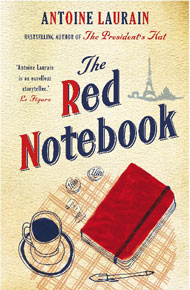
9781908313867The Red Notebook by Antoine Laurain (paperback original 3/15)
He drank some more wine, feeling he was about to commit a forbidden act. A transgression. For a man should never go through a woman’s handbag — even the most remote tribe would adhere to that ancestral rule. Husbands in loincloths definitely did not have the right to go and look for a poisoned arrow or a root to eat in their wives’ rawhide bags.

I hate to use the word “charming”, but this little jewel of a novel really is charming — and it’s not sappy. Parisian bookseller Laurent Letellier finds a woman’s handbag on the street, containing plenty of personal items — including a red notebook — but no clues to the owner’s identity. This has been one of our store’s staff and customer favorites for months — it’s the kind of book people buy in multiples to give as gifts.

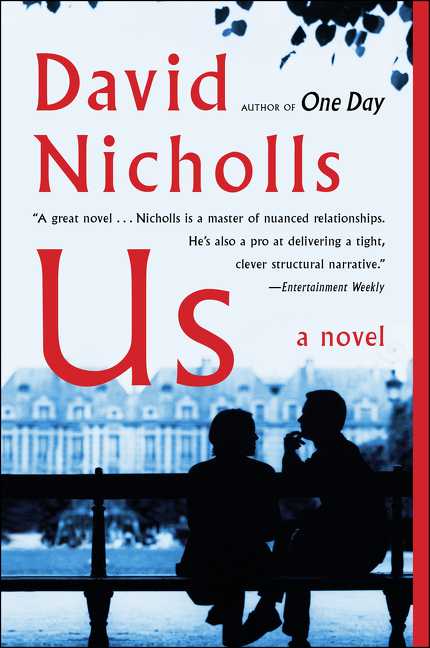
9780062365590Us by David Nicholls (hardcover 10/14; paperback due 6/30/15)
. . .  And, like many men of my generation, I enjoy military history, my “Fascism-on-the-march books”, as Connie calls them. I’m not sure why we should be drawn to this material. Perhaps it’s because we like to imagine ourselves in the cataclysmic situations that our fathers and grandfathers faced, to imagine how we’d behave when tested, whether we would show our true colours and what they would be. Follow or lead, resist or collaborate?

Has Douglas and Connie’s long marriage, as she claims, run its course? A summer “grand tour” of Europe with their sullen teenage son, Albie, brings matters to a head. If a book could be described as a romantic comedy, that would be the appropriate term for this smart and delightful novel. The characters, especially Albie, will drive you crazy — just like real people.

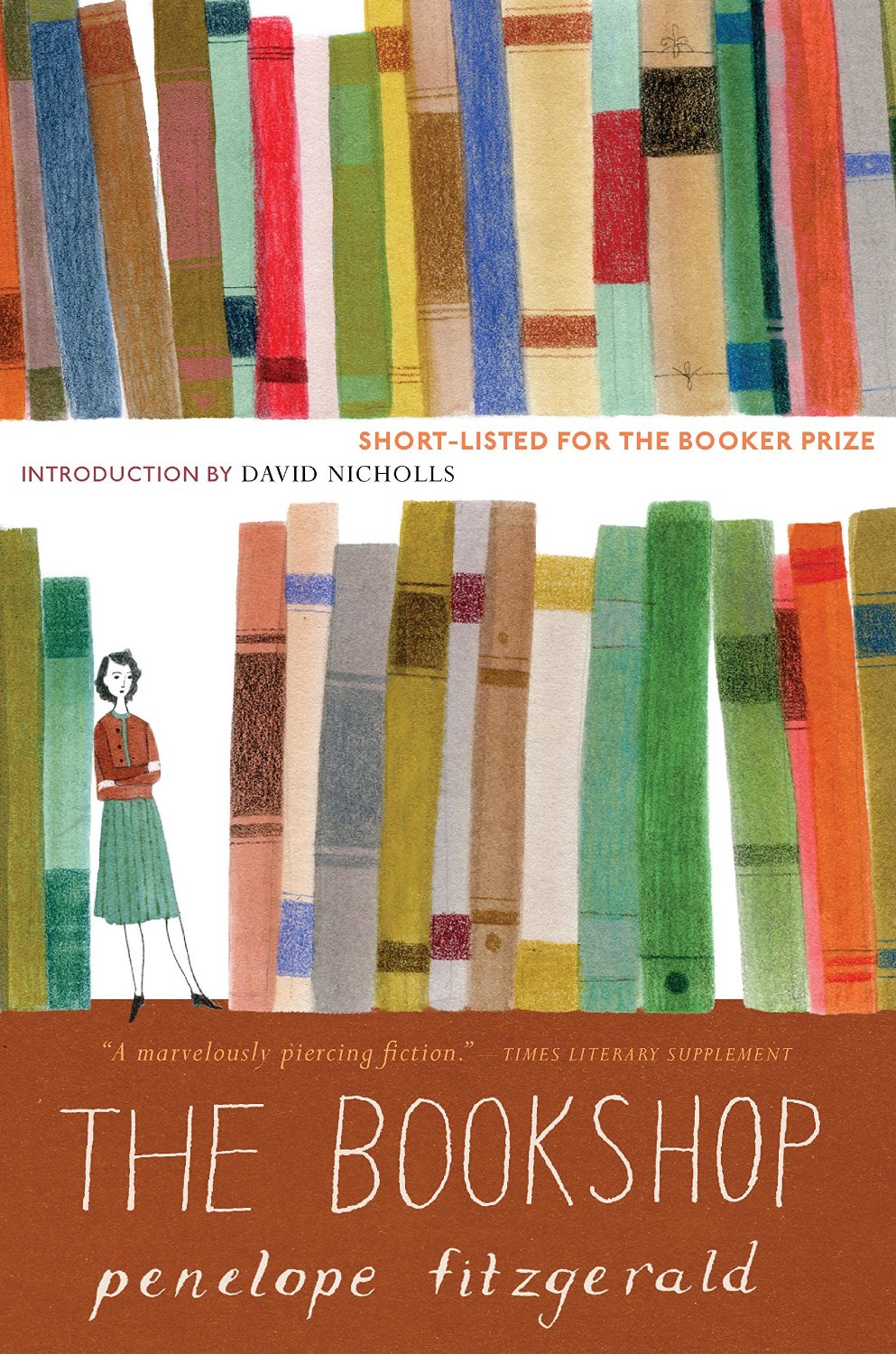
A1Ugvdz5AnL._SL1500_The Bookshop by Penelope Fitzgerald, with introduction by David Nicholls (paperback original published in the U.S. 6/15)
A good book is the precious life-blood of a master-spirit, embalmed and treasured up on purpose to a life beyond life, and as such it must surely be a necessary commodity.

I’m thrilled that this brilliant novel is being introduced to a new generation of American readers.  It’s about a widow who decides to open a bookshop in an isolated English village, encountering resistance from her neighbors. David Nicholls, who worked as a bookseller at Waterstones in London for several years, writes in introduction to the new edition of The Bookshop:

With typical self-deprecation, Fitzgerald called The Bookshop a “short novel with a sad ending”, which is true I suppose, but takes no account of Fitzgerald’s wit and playfulness . . . Fitzgerald’s great gift, often remarked upon, was the precision and economy of her prose . . .

It’s worth noting that Fitzgerald was a late bloomer. The New Yorker points out that The Bookshop, “published when Fitzgerald was sixty-one, announced her arrival on the literary scene.”

9780143127444The Hundred-Year House by Rebecca Makkai (hardcover 7/14; paperback 5/15)
But here at Laurelfield, there was something more in the mornings, a buzzing sensation about the whole house, as if it weren’t the servants keeping it running but some other energy. As if the house had roots and leaves and was busy photosynthesizing and sending sap up and down, and the people running through were as insignificant as burrowing beetles.

Once an artists’ colony, now a luxurious private home, the “hundred-year house” has a profound effect on its residents and visitors. Using an innovative narrative structure — the book begins at the dawn of the 21st century and travels back in time to 1900 — Rebecca Makkai draws us in to a world filled with artists, poets, academics, heirs and heiresses . . . and perhaps a ghost. I was enthralled from the first page. Makkai has a new book coming out this summer — a short story collection called Music for Wartime.

It just occurred to me that all the books on this list are fiction. There are plenty of great nonfiction books coming out this summer as well, and I’ll be highlighting those soon. Which paperbacks are you planning on picking up this summer?
The Dismantling — Book Review

9780142181744If you’re in the mood for a smart, unusual thriller, The Dismantling is a terrific choice. On the surface, it’s about the illegal organ trade in the United States. I have no idea how much of this sort of criminal activity actually takes place here. As we all know, once you start researching something on the Internet, you can easily descend into a rabbit hole and emerge with no greater understanding of the original subject you were trying to investigate. That’s what happened when I typed in “black market organs” in the Google search box on my computer.

In Brian DeLeeuw’s thought-provoking novel, cash-strapped Maria Campos has little difficulty finding an organ broker online who is willing to buy a section of her liver. Medical school dropout Simon Worth has joined a shady organization called Health Solutions that matches poor and desperate people willing to sell their organs with rich and desperate people whose time on the legal transplant list is running out. Posing as the second cousin of Lenny Pellegrini, an NFL player suffering from alcoholism and severe depression, Maria travels to New York to “donate” a portion of her liver, collect a large chunk of cash, and start a new life. When things go badly awry, Simon is forced to face his painful past and decide what kind of person he wants to be in the future.

The “dismantling” of the title refers not just to the dismantling of Maria’s body when she sells her liver, but to the breakdown of her life when she suffered trauma as an adolescent. Simon’s life fell apart when he experienced tragedy as a young adult, and Lenny’s physical and mental health were destroyed when he was repeatedly injured during his football career. DeLeeuw asks the reader to consider whether lives can be reassembled after they have been stripped bare. Can there be redemption after “dismantling”?

DeLeeuw explains in an interview with fellow author Christopher Beha how he came up with the idea of using illegal transplants as a vehicle to explore themes of morality in contemporary society:

I came up with the character of Simon Worth first—a young man who is carrying around an enormous amount of guilt and shame, someone who feels that he is not capable of living a regular life with a regular job, friends, girlfriend. He feels defective in some way—psychically isolated—and yet he also has these large student loans to pay off from a failed attempt at medical school, so he needs to get his hands on money quickly. He can’t just retreat entirely from life. I knew I wanted take this character with very little to lose, somebody who feels as though a vital part of himself has already died, and place him in the center of a criminal underworld, turn him into an unlikely criminal.

This dovetailed with my more general desire to write an internally-focused, slow-burn crime novel. In 2008 and 2009, I started noticing articles about the organ trade popping up more frequently in mainstream newspapers and magazines; the more I read, the more I was intrigued. The idea that everything is up for sale now, that you can put a price on absolutely anything—that was of course part of the fascination. I also thought the question of individual autonomy and agency was raised here in an interesting way: should people have the right to sell parts of their bodies? Or is there something inherently unethical about the market exchange of organs?

brian-abuotThe author’s description of his novel as “slow-burn” is vivid and accurate. The novel’s action moves between the past and the present, gradually illuminating the inner lives of the characters. Asked in an interview with author Matthew Rubinstein to describe the value of “slow reveals”, DeLeeuw says:

Some novels take place only in the present, and draw their suspense from forward motion. But the novels I like most have that element, but also have a counterpoint of revealing more and more about the characters’ pasts–their back stories. There’s the interplay of the current plot with the revelation of past information. As the reader learns more about the character’s past, the present-day action takes on more resonance. For me, this push-pull between past and present helps with the book’s rhythm. I like setting up propulsive present action scenes alternating with sections going back to the past. In this novel, describing Simon’s background enriches the protagonist’s character and makes the present-day tension more understandable.

In this interview, DeLeeuw lists several authors whose books influenced him while he was writing The Dismantling: Colin Harrison (Manhattan Nocturne), Jennifer Egan (Look at Me), Donna Tartt (The Secret History), and Patricia Highsmith (Strangers on a Train). He doesn’t mention David Benioff’s  World War II thriller City of Thieves, but I wonder if Benioff (co-creator of Game of Thrones and an accomplished screenwriter) was an influence also. DeLeeuw, who recently moved from New York to Los Angeles, is a screenwriter as well as a novelist.

A fascinating subplot in The Dismantling, and one that is very topical, has to do the permanent health damage suffered by ex-NFL players. At first, Lenny seems to be an unsympathetic character, but Simon’s — and the reader’s — heart eventually goes out to this broken man. Simon reflects on the legacy of Lenny’s short career as an offensive lineman:

The rest, though, he’d had to pay for himself, with no insurance company willing to assume the future costs of such a battered consumer . . . And this was only the toll on his body. The damage to his mind had surely been subtler, more insidious. Most likely there hadn’t been one or two big hits Lenny could point to and say that’s where it all started; most likely it was the accumulation, over a decade and a half, of the routine catastrophes of each snap, stretching back to whenever teenaged Lenny had discovered the power and joy of being both the unstoppable force and the immovable object.

Lenny’s friend and benefactor, Howard Crewes, is filled with remorse for an incident that took place during his own football career. He views helping Lenny as a way to atone for his past sins, just as Simon is trying to atone for his own moral failures. Maria, on the other hand, is seeking revenge. Maria’s actions lead the reader to think about retribution and whether it is ever justified.

A thriller, by definition, is plot-driven, usually with a crime at the center of the story, but what exactly is a literary thriller? Is it just a marketing term, or does it mean something more? I think it is a thriller for people who don’t typically read thrillers — people who are more interested in character development, social issues, intellectual ideas, and good writing than a fast-paced story. If that describes you, I recommend The Dismantling.

For more reviews, please visit TLC Book Tours.

Books In and Out of Print

41DXF6CG59L._SS500_
Back in the Dark Ages, we used to look books up in these big, heavy volumes. They had very small print!

I can’t count how many times I’ve had to tell a disappointed customer that a book is “out of print”.

“But that can’t be!” the customer will exclaim. “It’s a wonderful book. And it just came out a couple of years ago.”

A couple of years is a long time in the fast-paced world of book publishing, where the focus is always on the next bestseller. Most books die a quiet death after their one and only printing. Bookstores return unsold volumes to publishers, and I’m sorry to tell you that eventually publishers may destroy those books.

Once, an elderly woman asked me to order a book that she said was a special favorite. I couldn’t find any listing for this book or its author (or for any variation of their names), so I finally asked her if it was an older book. “Not really,” she said. “It came out after the war.” “The war” was World War II, and I tried, without success, to convince her that it really was an old book and unavailable for us to order. I offered to do an out-of-print search, but she wanted only a brand new copy. I’m sure she thought I was a hopeless incompetent and went off to torture some other bookstore.

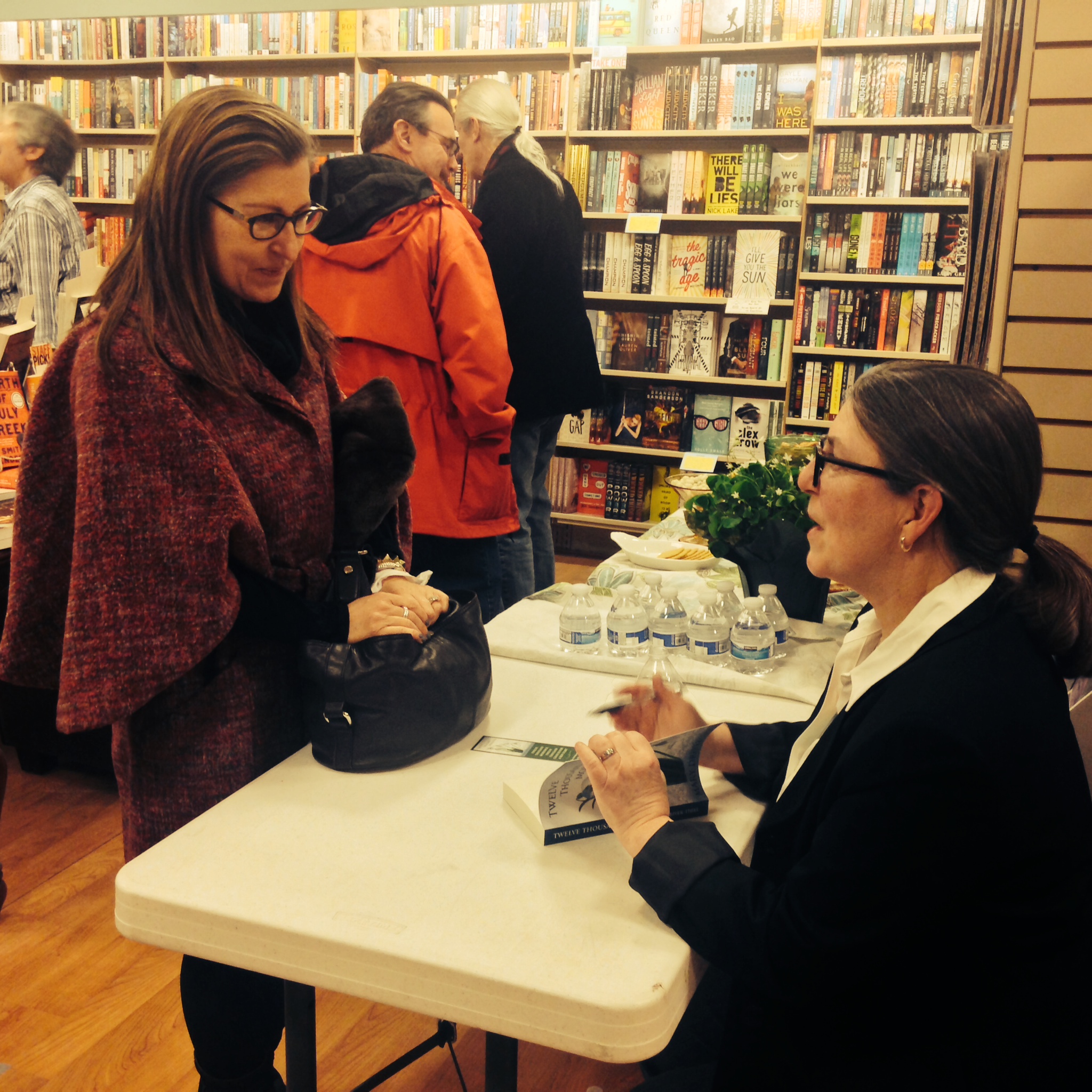
Unknown-1Recently, I had coffee with local author Mary Driver-Thiel, who had just published her second novel, Twelve Thousand Mornings. Our conversation meandered from Mary’s writing career to favorite new books to the literary legacy left by Mary’s mother and grandparents. Mary set up her own publishing company, Pine Lake Press, and has published both her books independently. Through self-publishing, Mary is able to maintain complete editorial control over her books — and she will decide how long they stay in print.

Mary is a third-generation author. I think she and her mother are probably the only mother and daughter who have both held readings at Lake Forest Book Store. Mary’s mother, Ginny Winter (called “Mrs. Munroe Winter” in the invitation the bookstore sent IMG_0432in 1962), wrote a series of children’s books on ballet, riding, swimming, skating, and more. Mary’s grandmother, Mary Adams Kraus, published several books of poetry. All their books are out of print, with just a few available on eBay. Mary’s grandfather, Milo Winter, was a well-known children’s book illustrator, and several of his books remain in print today.

photo 1
Mary Driver-Thiel signing books at Lake Forest Book Store.

Twelve Thousand Mornings, the engaging story of a middle-aged woman who is forced to reinvent her life (“What did a 56-year-old woman who had never had a proper job in her life do when she was left destitute?”), is off to a great start. The book, a sequel to Mary’s well-received earlier novel, The World Undone, has been popular at Lake Forest Book Store. Now Mary must transform herself from a writer into a marketer: “It’s a funny thing–when I spend months and months in solitary pursuit of a finished novel, I daydream about the launch and promo. I really do enjoy talking to people about my work.”

The literary community is divided on the question of whether the explosive growth of self-publishing is a positive development. Author Thomas Christopher Greene (who most recently published The Headmaster’s Wife with Macmillan), says has “mixed feelings” about self-publishing:

I have friends who choose to self-publish. I do think publishing, when done well, is a team sport though. I certainly don’t want to have to worry about designing covers or choosing fonts or distribution or copyediting. There is also a crucial curation role that publishers play.

Clearly, many writers are frustrated with the “curation” function that publishers, who are traditionally gatekeepers, serve. No one seems to know exactly how many books are independently published each year, but estimates range from 300,000 to 500,00 or more. How many of these are family memoirs and cookbooks or other efforts intended only for a small audience? And how many are serious literary endeavors? Again, no solid information is available.

Mary emphasizes on her website that self-publishing doesn’t mean DIY; many authors who publish independently understand, as she does, that creating a book is a “team sport”:

Yes, anyone can self-publish a book for under fifty bucks, and if it’s just for friends and family, that’s fine. But for someone who is planning to venture into the bigger world of serious writing, multiple edits for content and copy are essential. Essential, too, is hiring a high-caliber formatter to keep the widows, orphans, and dingbats under control and a professional graphic designer because a book is, indeed, judged by its cover.  There is also a world of difference between do-it-yourself publishing and independent publishing with a quality team. To quote my wise and wonderful agent, April Eberhardt, “We can and must educate authors, and the publishing world at large, that ‘indie’ and ‘self-published’ mean many different things.”

Perhaps the biggest hurdle facing self-published authors is getting the book noticed — by booksellers, readers, and reviewers. To say the market is oversaturated is an understatement. Bookstores can stock and display only a tiny fraction of the books that are published each year. As an article in Forbes magazine harshly points out to would-be authors: “No one cares about your book. That’s it in a nutshell. There are somewhere between 600,000 and 1,000,000 books published every year in the US alone, depending on which stats you believe . . .on average, they sell less than 250 copies each. Yours won’t stand out.”

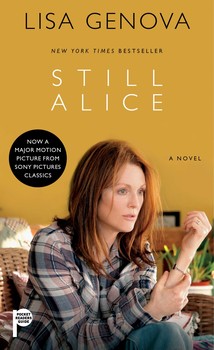
still-alice-9781501107733_lgEvery now and then, through a serendipitous collection of factors, a self-published book becomes wildly successful. The most recent example is Lisa Genova’s Still Alice, which she decided to publish herself after she couldn’t find an agent or publisher. In her website, Genova says:

It’s important to know that a self-published book was not my goal. I self-published because I couldn’t make any headway on the conventional road to a book deal. My self-publishing goal was to demonstrate that Still Alice had an enthusiastic and sizeable audience. I wanted to give my book a chance to wave its arms in the air and yell at the top of its lungs, to create a buzz loud enough for the literary agents and publishing houses to hear. And at the end of my self-published day, I still wanted a book deal from a traditional publishing house.

Eight years later, Still Alice is still in print, along with Genova’s three subsequent novels. (And of course, Still Alice was made into an excellent movie, with Julianne Moore winning the Oscar for Best Actress.) That’s a Cinderella story that doesn’t happen very often . . . but it’s one that I’m sure every self-published novelist knows.

10 Questions for Martha Woodroof, Author of Small Blessings

Small Blessings_tp

Small pleasures; deeply enjoyed. How old was she before she recognized this as the true joy of living?
Perhaps she should write a book. Or perhaps not.
Too many people wrote books already.
Agnes Tattle

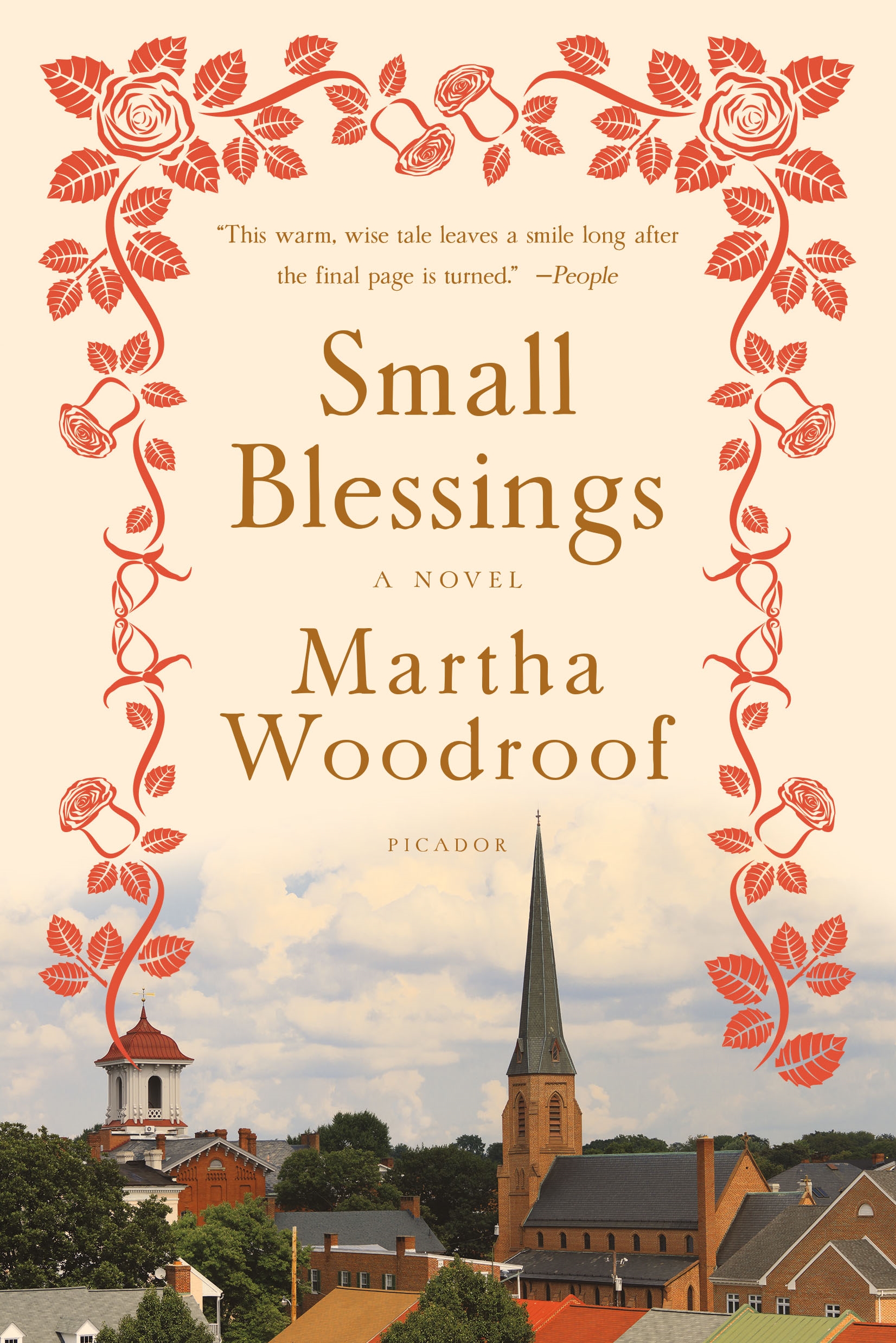
Small Blessings, just released in paperback this week, had the misfortune of being published in hardcover on the heels of The Storied Life of A.J. Fikry. Both novels are about lonely, bookish people who find love, with the help of orphaned children who show up unexpectedly. They’re about second chances in life — and now Small Blessings, with a gorgeous new cover, has a second chance at finding its readership. It’s a truly special novel, and I’m glad I finally discovered it.

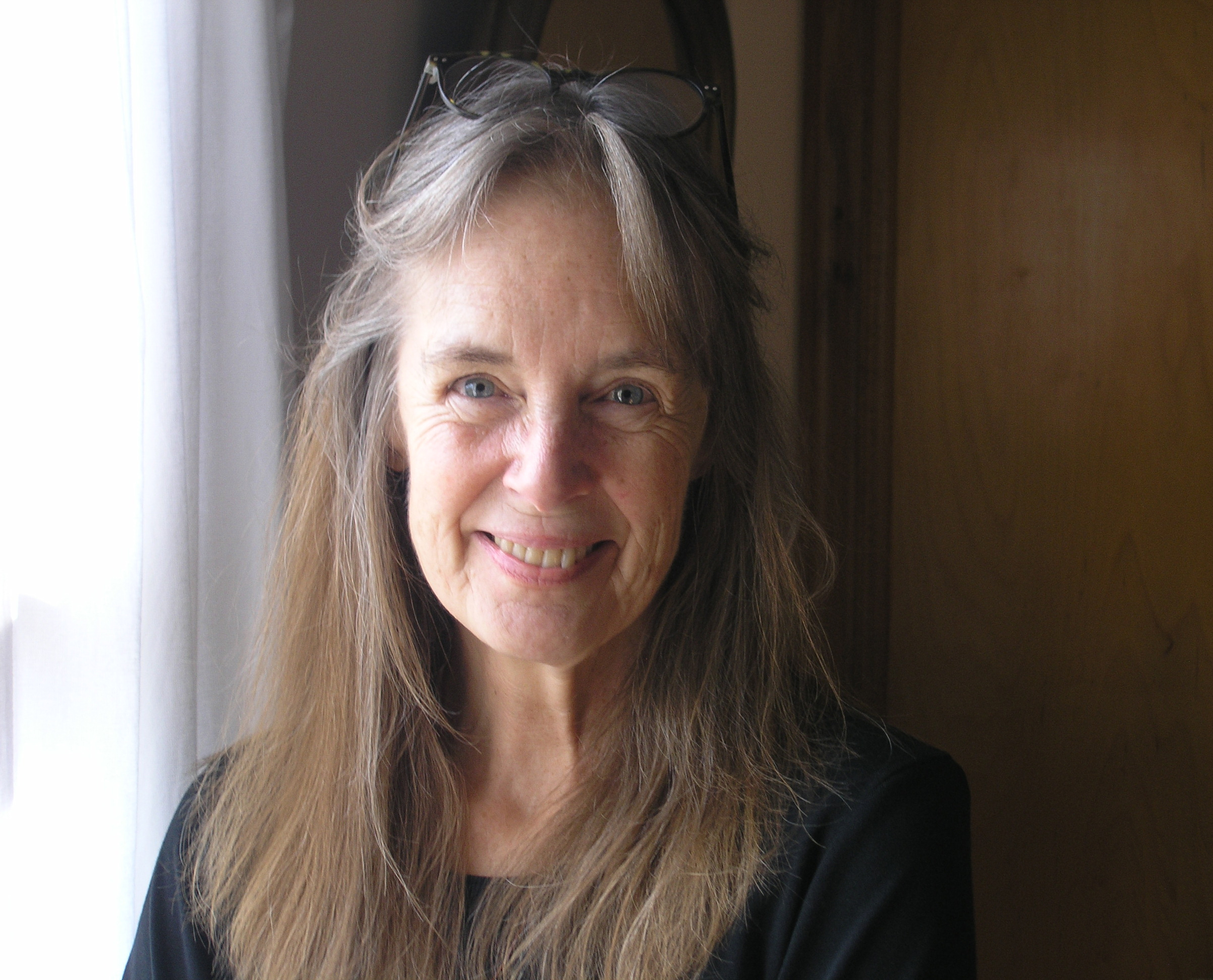
I had the pleasure of “talking” with Martha Woodroof in an online interview, and I mentioned to her that one thing that really resonated with me in the book was the loving relationship between the protagonist, Professor Tom Putnam, and his mother-in-law. Woodroof says that mothers-in-law are the “much-maligned and under-appreciated other mothers in our lives”, and she’d like to start a campaign to make sure they receive equal recognition on Mother’s Day. I’m all for that, since not only do I have a wonderful mother-in-law, I’m now a mother-in-law myself!

When you publish a novel, lots of lovely people write to tell you who their favorite character is. And the clear frontrunner in the Small Blessings favorite character sweepstakes is – ta da! – Agnes Tattle, the protagonist’s seventy-year-old mother-in-law. And why shouldn’t she be? Agnes Tattle is a smart, tough realist. She’s taken great whacking lumps, endured tremendous grief, and yet she still remains unafraid to love her rather unconventional family with all her craggy heart.

Martha Woodroof indulged my curiosity about her writing career and Small Blessings, answering my long-winded questions in detail.

Maybe it isn’t polite to start out by talking about your age — but I think readers would like to know that you became a published novelist in your mid-sixties. I remember years ago reading a newspaper advice column (Ann Landers, maybe?) in which the advice-seeker asked if she was too old to go back to college — “I’ll be 60 when I’m done!” The advice columnist’s answer was, “And how old will you be if you don’t go?” What inspired you to write Small Blessings, and what influence did your age and life experiences have on the writing of the book?

Small Blessings may be the first novel I’ve published, but it is the third one I’ve written. I taught myself how to write novels by writing novels; which is the same way I learned how to be a restaurant owner and a public radio producer/feature reporter.

I have always wanted to get better and better at whatever I’m doing, and I’m also pretty much unafraid to fall flat on my face if the fall is educational. In that respect I am like Mavis Callahan (the mother of Small Blessings‘s female protagonist Rose Callahan) in that one of my best qualities is that I bounce.

Small Blessings is a novel about facing your small, unacknowledged fears and defying them. It tells the story of nice people who have gotten stuck denying something important about themselves. They gotten comfortable living with that denial only to have a chance at real happiness if they will dare to be fully themselves.

I, myself, learned the necessity of being who you are in the world as it actually is through much trial and much error — much bouncing, if you will! And much bouncing takes a lot of time. So I don’t think I knew what I needed to know in order to write Small Blessings until I’d done quite a lot of living myself.

And please, I never consider discussions of my age impolite. My age is part of who I am, after all.

Reading your wonderful book was such an enjoyable and satisfying experience. For one thing, the novel takes place in two of my favorite literary locales — a bookstore and a college campus. What led you to set the novel in The Book Shop?

Oh golly, while I can truly say that none of the characters in Small Blessings are based on anyone I know, The Book Shop is a flat-out tribute to The Sweet Briar College Bookstore, where I worked for about a year-and-a-half back in the nineties.

I’m a long-term recoverer from substance abuse, and that job was the first job I had in sobriety that really challenged me. Skipper Fitts, the then-Director, took me in like a homeless kitten and gave me an opportunity contribute to a college community in creative, meaningful ways. Setting Small Blessings there is, in some ways, an expression of gratitude to Skipper, to my co-workers at The Bookstore, and to the Sweet Briar College community.

Sadly, the Board of Directors has chosen to close Sweet Briar for the murkiest of reasons. The alums, faculty, and Amherst County Commonwealth Attorney have all mounted legal challenges to this decision. Here’s hoping SBC lives on!

I think people yearn for uplifting books with likable characters, and that describes Small Blessings. (I can’t tell you how many times people have told me they didn’t like a book because they found the characters unlikable.) Could you tell us a little bit about how your characters came to be?

I’m not sure I can. They were just kind of there. I got up one morning, started writing the opening scene at The Bookstore, looked around to see who was there at the time, and rolled with it.

How did the title of the book come to be? Was it the working title all along? (“He would at least have a comfortable beginning to this long tumultuous day. Small blessings.”)

As I remember, the title was right there the morning I sat down to write the first scene. It’s a phrase from my childhood that I’ve always loved.

After attending a booksellers’ conference In Seattle last year, you said, “What indie people want from me is a sense of whether my book belongs on their shelves; i.e. can they visualize actual customers to whom they can hand the novel and say with assurance, “You will love this.” You are absolutely right. If you were a bookseller like me, what would you say about Small Blessings to a potential customer?

Hmmm. I would make a rotten bookseller, I think, as I always go on about books I love.

However, since you’ve asked me to take a stab at bare-bones brevity, I would say Small Blessings is the story of a truly nice man who risks his comfort in the cause of happiness.

Who are your favorite contemporary authors? I love the description you use in your blog of “warm bath” storytellers — authors you can “sink into without fear of being surprised by hopelessness.” 

I’m rather an omnivore when it comes to reading. Really. The only thing I ask is that a book be well-written (and this includes not being self-consciously writerly), and that it tell a story that expands the range of my own experience. At the moment, I’m reading Dennis Lehane’s Live by Night, which I’m finding pretty yummy. After I’m done, I plan to read a new biography of Ben Franklin. And I just reread a novel (Friday Nights) by Joanna Trollope who is one of my warm bath novelists.

As you’ve already figured out, I am not much a fan of hopelessness for hopelessness’s sake in fiction. Nor am I a fan of the saccharine. Give me real (fictional) people facing real (fictional) problems!

Martha Woodroof_cred_Charles WoodroofHow have your life and writing career changed since the publication of Small Blessings?

I suppose the biggest change is in the focus of the conversations I have with people I meet. As a public radio feature reporter, I’ve spent years making people comfortable talking about themselves. But since the publication of Small Blessings, I’ve had to learn how to be comfortable talking about myself.

Are you a member of a writers’ group, and if so, what part does it play in your life and career? Do you see yourself as a part of a literary community?

I’m not a member of a formal writers’ group, but I know many writers. As we writers tend to talk about what we do and how we do it, I feel very much a part of a literary community.

Do you have a favorite bookstore, and if you do, what makes it special?

I really love any Indie bookstore, for the same reason that I love any restaurant that is chef-owned. Both have souls un-dulled by corporate culture.

If we could have a glimpse of your personal library, what would it look like? How is it organized?

In our house the words “organized” and “library” do not belong in the same sentence. Every room except one has a bookshelf and all those bookshelves are overflowing. The only truly arranged bits are the shelf where I’ve stowed the books I reported on nationally for NPR and the shelf in the guest room that holds an almost complete collection of Elmore Leonard novels.

Need a Mother’s Day present? Of course, I recommend Small Blessings! Martha Woodroof also has some terrific recommendations for novels “in which women of a certain age shine” on her blog.

10 Spring Paperback Picks

bd0040693e50f5ed2b7aecbdbb56addc“When is it coming out in paperback?” — one of the most frequently asked questions in any bookstore.

“There’s no hard-and-fast rule about when the paperback should ride in for that second release. A year to paperback used to be standard, but now a paperback can release earlier — to capitalize on a moderately successful book before it’s forgotten — or later, if a hardcover is still turning a strong profit,” according to an article in The Millions.

This spring, bookstore tables will be stacked high with terrific new paperbacks. Some of these (The Goldfinch, The Invention of Wings) are books that were hugely successful in hardcover. Many of them are books that are still trying to find their audience. Almost always, the covers are redesigned for paperback versions, with new artwork and review quotes. Authors “know it’s their greatest chance of coming out of the gate a second time — same race, fresh horse,” says author Nichole Bernier.

What makes some books sell like crazy in hardcover while others — just as appealing — languish on the shelves? For example, The Girl on the Train is supposedly the fastest-selling adult novel in publishing history. I liked the book a lot; I read it in a day, and recommended it to anyone who wanted a fast-paced, twisty and turny psychological thriller. Over the years, though, I’ve read plenty of other books that I thought were just as good, or better, that didn’t have a fraction of Girl on the Train‘s success.

Jynne Martin, publicity director for Riverhead Books, says in an interview with the Daily Beast that the phenomenon of The Girl on the Train can be attributed to “a constellation of a lot of different things”, ranging from “rave reviews from critics, spillover excitement from the Gone Girl movie, and a concerted push by the whole Penguin Random House operation.” The Daily Beast asked Paula Hawkins why she thought her book “has resonated” so much with readers:

It’s a difficult thing to say. There are certain things about the story that I think are universally recognizable. The sort of enjoyment that we all get from that voyeuristic impulse of looking into other people’s house as we pass them and the idea that there might be something sinister or strange going on in the houses we pass every day or in our neighborhood, is a very compelling idea. So I think that’s one thing people have latched on to. There are also some strong voices in there that readers have responded to. I also have to say that the publishers, both in the U.S. and U.K., did a fantastic job of getting people talking about it on social media and getting lots of reviewers interested.

I don’t think we’ll see The Girl on the Train in paperback until well after a year of its publication date (which was January 2015).

Here are some of my favorite new paperbacks — most of them didn’t get the love they deserved when they came out in hardcover, and now they get a second chance.

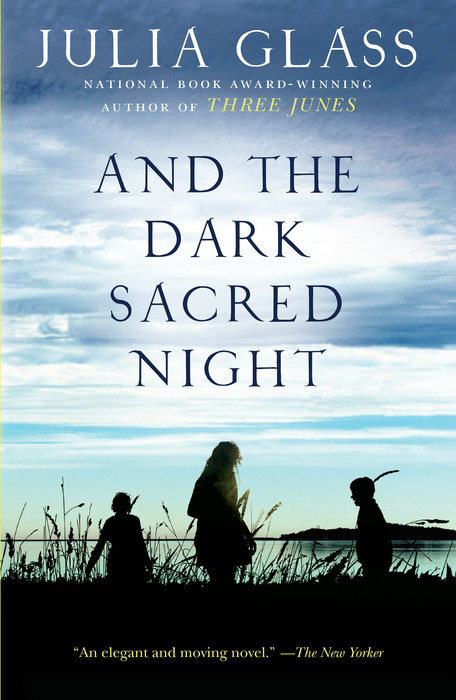
9780307456113And the Dark Sacred Night (Julia Glass) — Julia Glass has been a heroine of mine ever since she arrived on the literary scene in 2002, with the publication of her debut novel, Three Junes. I hate to use the term “late in life”, but recognition of her talent has come later in life than it does for most published writers. Glass was 46 years old when she won the National Book Award for Three Junes — seven years older than Flannery O’Connor (one of my favorite literary heroines) was when she died. And the Dark Sacred Night isn’t a sequel to Three Junes, but some of the same characters reappear. It’s a beautifully written, emotionally powerful novel with fully textured characters trying to make sense of the mysterious past and how it connects to the sometimes confusing present. For my review from April 2014, click here.

The Arsonist (Sue Miller) — Set in a small New Hampshire town, the novel centers on Frankie, a burned-out relief worker who’s returned home from Africa to spend time with her aging parents while she figures out what to do with the rest of her life. Almost as 9780062286468soon as Frankie arrives, an arsonist begins destroying the homes of summer residents. The most compelling part of the book for me was the portrayal of Frankie’s mother trying to cope with her husband, a retired professor slipping into dementia.

Fourth of July Creek (Smith Henderson) — A favorite of my book club, debut novel Fourth of July Creek is the story of two fathers in 1980s Montana: a flawed social worker and a backwoods survivalist. According to the Washington Post, “this richly plotted novel is another sign, if any were needed, that new fiction writers are still telling vibrant, essential stories about the American experience.”

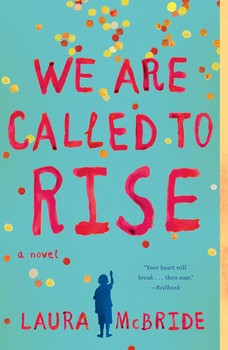
we-are-called-to-rise-9781476738970_lgWe Are Called to Rise (Laura McBride) –I couldn’t love this book more, and was disappointed that it didn’t really take off in hardcover. Another debut novel, We Are Called to Rise chronicles the lives of four very different Las Vegas residents (a young immigrant boy, a social worker, a war veteran turned police officer, and the officer’s mother) in a heartbreaking but ultimately hopeful story. For a very insightful review, visit one of my favorite book blogs, Read Her Like an Open Book.

Signed, Sealed, Delivered: Celebrating the Joys of Letter Writing (Nina Sankovitch) –You’ll be inspired to get some lovely stationery and a beautiful pen after you read this love letter to the art of written correspondence. Sankovitch (author of Tolstoy and the Purple Chair, which I also adored), found a cache of letters in a house she and her family were renovating. The letters were written from a college freshman to his mother in the early 20th century. The book, which Sankovitch calls her “quest to understand what it is about letters that makes them so special”, is a joy to read.

9781101872871The Children Act (Ian McEwan) — I don’t think you can ever go wrong with Ian McEwan, and although this book isn’t my favorite of his, it’s still very, very good. It’s the morally complex and emotionally resonant story of a judge who becomes personally involved in a court case concerning a teenage Jehovah’s Witness who is refusing a lifesaving blood transfusion. It’s a great choice for book clubs — my own book club had a fascinating discussion.

The Mockingbird Next Door due 5/5 (Marja Mills) — This book has spurred quite a bit of controversy. Mills, a Chicago Tribune reporter, became friendly with Harper Lee and her sister and eventually moved in next door. Her memoir of their friendship is “authorized, sympathetic, and respectful” (Washington Post), and fun to read. However, Lee has since denied that she cooperated with Mills. It’s particularly interesting in light of the upcoming publication of Go Set a Watchman.

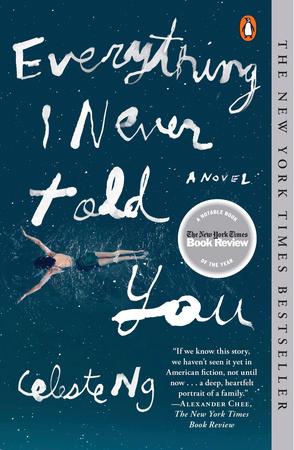
9780143127550Everything I Never Told You due May 12 (Celeste Ng) — First-time novelist Ng impressed me with her assured, precise writing style and her careful, well-paced narrative structure. The novel begins with the disappearance of a mixed-race family’s “perfect” daughter and goes on to explore the family’s pathology. It’s heartbreaking . . . but you’ll want to read it in one sitting.

My Salinger Year due May 12 (Joanna Rakoff) — I loved this memoir of Rakoff’s stint in the 1990s as an assistant to J.D. Salinger’s literary agent! From the Chicago Tribune: “Her memoir is a beautifully written tribute to the way things were at the edge of the digital revolution, and also to the evergreen power of literature to guide us through all of life’s transitions.” If I were making a list of my top 10 memoirs (and maybe I should), this would be on it. Perfect for fans of Marjorie Hart’s Summer at Tiffany.

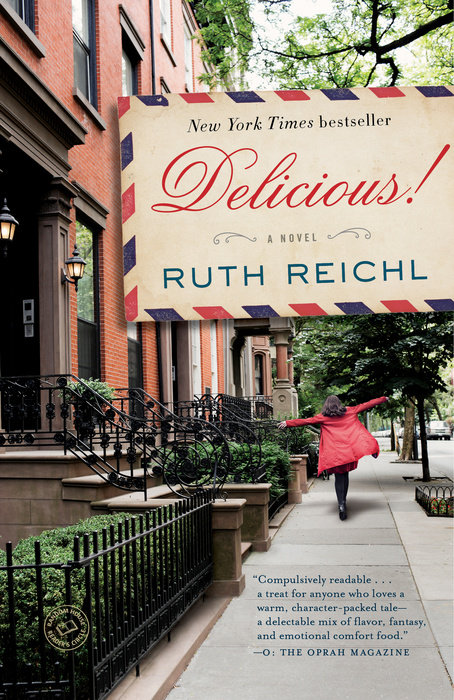
9780812982022Delicious! due May 12 (Ruth Reichl) — Reichl, former editor of Gourmet magazine and author of several wonderful memoirs (Tender at the Bone, Garlic and Sapphires, Comfort Me With Apples — all must-reads for foodies), tries her hand at fiction with Delicious! — with great success. It’s a roman á clef about a cooking magazine that folds, including a clever mystery and a coming-of-age story.

What will you be picking up in paperback this spring? I’ve just started Justin Go’s The Steady Running of the Hour, which is wonderful so far — yet another book that didn’t get its due in hardcover.

Where They Found Her — Book Review

Where-They-Found-Her-198x300

In order that two imperfect souls might touch perfection.
E.M. Forster
(note from Justin Sanderson to his wife, Molly)

Is it just me, or do other readers find the adjectives used on book jackets to describe the book’s contents pretty silly? Where They Found Her, Kimberly McCreight’s second novel, is called a “blistering novel of psychological suspense.” At least it wasn’t labeled “luminous” — I guess that worn-out term is reserved for literary novels.

Blistering or not, Where They Found Her is fast-paced, multi-layered, meticulously constructed, and peopled with interesting and believable characters. If you pick it up in the evening, prepare to stay up late, because you won’t want to stop reading. Readers sometimes say they read a book in a “single sitting”, and you can’t take that too literally (don’t they have to get off the couch and get a snack?), but I did read this book in one day. It’s that kind of book. To quote McCreight herself, who was actually describing Gillian Flynn’s novels, it’s “character-driven, miss-your-subway-stop suspense.”

Like so many successful suspense novels, Where They Found Her is narrated by multiple characters — another reason to consume this book in big chunks. If you read a chapter or two every day, you’ll undoubtedly get confused. McCreight skillfully adds to the varied perspectives with journal entries, records of psychiatric sessions, transcripts of online chats, and online newspaper articles (with reader comments).

The book opens with an unnamed narrator disposing of a bag of evidence in a dumpster behind a suburban tanning salon:

I have to shove hard to get the blood-soaked towels in, even harder to push the canvas bag through the thin crack. I’m afraid for a second it’ll get stuck. But when I push my whole weight against it, it flies through so fast that I almost smash my face against the edge of the dumpster. When I pull my hands out,they’re covered in blood. For a second I think it’s mine. But it’s not mine. It’s the baby’s blood. All over me again, just like it was an hour ago.

What has happened, and who is telling the story? Readers won’t find out for almost 300 pages, with plenty of detours along the way. It’s revealed in the first couple of chapters that the body of a newborn baby has been found in the woods near the college campus in the upscale suburb of Ridgedale, New Jersey.

Molly Sanderson, wife of a Ridgedale University professor and new to the staff of the Ridgedale Reader,  investigates the story — which turns out to be much more complicated than she originally anticipated, leading back to unsavory secrets in Ridgedale’s past. Molly’s own past, which includes a painful childhood and the recent loss of her baby, influences her reporting of the crime — or is it a crime?

“A crime scene? That seems to presuppose a murder. Do we know that?” I asked, pleased that I’d picked up on his jumping of the gun.

“Good point, I suppose we don’t,” Erik said. “Our source in the department was vague . . . Despite what they seem to think, the local police aren’t entitled to any sort of special treatment from us, but they’ll already be on the defensive with the university to contend with.”

Barbara, wife of the local police chief, Sandy, a high school girl with a difficult home life, and Jenna, Sandy’s troubled mother, also lend their points of view to the disturbing events in Ridgedale. These events include not only the mystery of the body found near the campus, but other, perhaps even more compelling, subplots involving the seamy underbelly of a seemingly peaceful college town. The less said about these subplots, the better — if you’d like to read a review that does include spoilers (and participate in a discussion), please visit Sarah’s Book Shelves. Sarah includes her “wrong guesses” and “lingering questions”.

In an interview on BookPage, McCreight was asked, “What’s it like writing in multiple voices?”

Extremely liberating and occasionally very tricky. My favorite part of writing is being able to live in someone else’s skin. Multiple points of view mean becoming several different “selves,” which is all the better. It also gives me the freedom to explore the narrative from several perspectives, making the process of discovery that is so integral to my writing process that much more exciting.

That said, it does take effort to keep the voices distinct while ensuring that each character’s story has a well-formed arc, internally consistent and effectively knit into the broader whole.

McCreight is adept at shifting perspectives, gradually adding clues that may lead readers to solve the puzzle of the dead newborn. Not this reader, however; I was completely surprised when I learned the identity of the parents. On rereading sections of the book, I realized I had overlooked certain subtle hints. McCreight does include some red herrings — and again, those became more obvious on a second reading. (The New York Times quipped that McCreight’s first novel, Reconstructing Amelia, is “a mystery with enough red herring to stock Lake Michigan.”)

Molly’s English professor husband, Justin, leaves little notes for Molly to find. Readers will find that these notes — all quotes from famous writers — work, as McCreight mentions in her BookPage interview, “on multiple levels”. And They Found Her works on multiple levels as well — for example, who is the “her”? Who are the “they”? The answers are not as simple as they first appear.

This novel, like Reconstructing Amelia, is a perfect crossover book for teenagers. YA readers will enjoy the fast pace, the 17-year-old narrator, and the campus setting. McCreight is currently working on YA speculative fiction (The Outliers), focusing on this question: “What if women’s greater emotionality—so often deemed a sign of weakness—was, in fact, our greatest strength?” The question is interesting in light of Where They Found Her. Molly’s emotional response to the news story she’s asked to cover actually does provide her with strength and purpose.

For more reviews of Where They Found Her, please check out TLC Book Tours.

Dog-Eared Pages: 10 Quotes I Love

My third grade teacher, Mrs. Pierce, once reprimanded me for turning down the page of my book. She informed me that this was called “dog-earing” and it was very, very bad, on a par with wasting food at lunchtime and talking in the halls — two other crimes I had committed. Now I’m almost as old as Mrs. Pierce was then, and I can dog-ear my books anytime I want. If you borrow a book from me and there are lots of pages turned down, you know that this is a really good book filled with passages worth rereading and remembering.

In high school, one of my favorite English teachers, Mr. Regan, told us that “quote” is a verb and “quotation” is a noun. Mr. Regan, the co-author of our textbook, the English Competence Handbook, devoted an entire chapter to the proper use of “Quotations”. To the chagrin of English teachers everywhere, the word “quote” has become commonly used as a noun. Even the people in charge of websites devoted to cataloging quotes seem confused. One website calls itself The Quote Garden (“celebrating 17 years online”) but lists quotations in hundreds of categories, from “curmudgeonesque” to “ladybugs”.

Ever since I left Mrs. Pierce’s classroom,  I’ve dog-eared quite a few pages. Here are some of my favorite quotes (sorry, Mr. Regan!) about books and reading:

9780385531955When a book is a time machine, taking me back and sideways to other minds and times and cities and planets but mostly forward, forward to dinnertime, to when my mother would walk in the door and the unsympathetic girl would leave and I could re-emerge into my life, and it would be only the two of us again, my mother and me, and although I felt like I barely had her at least she was mine alone — who would give such magic away?
Holly LeCraw, The Half Brother

There is something called the rapture of the deep, and it refers to what happens when a deep-sea diver spends too much time at the bottom of the ocean and can’t tell which way is up. When he surfaces, he’s liable to have a condition called the bends, where the body can’t adapt to the oxygen levels in the atmosphere. All of this happens to me when I surface from a great book.
Nora Ephron, I Feel Bad About My Neck

962ab117cc4ac2dd9054af8b597fde98At eight, Arthur was walking five miles every other Tuesday to Mrs. Robert J. Taylor’s in Glassville to borrow a book from her considerable collection of eighty-five volumes. He was Robinson Crusoe sneaking through the jungle, scouting for ambush. He was Gulliver negotiating the fleshy landscapes of the Brobdingnags. He was Ahab, substituting green moss boulders for the white whale and losing his leg a thousand times. For Arthur, the words gathered in waterfall thoughts that spilled off the page into the pools of imagination collecting in his head.
Christopher Scotton, The Secret Wisdom of the Earth

Never did she find anything so difficult as to keep herself from losing her temper when she was suddenly disturbed while absorbed in a book. People who are fond of books know the feeling of irritation which sweeps over them at such a moment. The temptation to be unreasonable and snappish is one not easy to manage.
Frances Hodgson Burnett, A Little Princess

imgresSo Matilda’s strong young mind continued to grow, nurtured by the voices of all those authors who had sent their books out into the world like ships on the sea. These books gave Matilda a hopeful and comforting message: You are not alone.
Roald Dahl, Matilda

Writing and reading decrease our sense of isolation. They deepen and widen and expand our sense of life: they feed the soul. When writers make us shake our heads with the exactness of their prose and their truths, and even make us laugh about ourselves or life, our buoyancy is restored. We are given a shot at dancing with, or at least clapping along with, the absurdity of life, instead of being squashed by it over and over again. It’s like singing on a boat during a terrible storm at sea. You can’t stop the raging storm, but singing can change the hearts and spirits of the people who are together on that ship.
Anne Lamott, Bird by Bird

ZHer library would have been valuable to a bibliophile except she treated her books execrably. I would rarely open a volume that she had not desecrated by underlining her favorite sections with a ball-point pen. Once I had told her that I would rather see a museum bombed than a book underlined, but she dismissed my argument as mere sentimentality. She marked her books so that stunning images and ideas would not be lost to her.
Pat Conroy, The Prince of Tides

It was easy enough to write a sentence, but if you were going to create a work of art, the way Melville had, each sentence needed to fit perfectly with the one that preceded it, and the unwritten one that would follow. And each of those sentences needed to square with the ones on either side, so that three became five and five became seven, seven became nine, and whichever sentence he was writing became the slender fulcrum on which the whole precarious edifice depended. That sentence could contain anything, anything, and so it promised the kind of absolute freedom that, to Affenlight’s mind, belonged to the artist and the artist alone. And yet that sentence was also beholden to the book’s very first one, and its last unwritten one, and every sentence in between.
Chad Harbach, The Art of Fielding

9781410468895When I read a book, I want you to be reading it at the same time. I want to know what would Amelia think of it. I want you to be mine. I can promise you books and conversation and all my heart, Amy.
Gabrielle Zevin, The Storied LIfe of A.J. Fikry

I never deliberately learned to read, but somehow I had been wallowing illicitly in the daily papers. In the long hours of church — was it then that I learned? I could not remember not being able to read hymns. Now that I was compelled to think about it, reading was something that just came to me, as learning to fasten the seat of my union suit without looking around, or achieving two bows from snarl of shoelaces. I could not remember when the lines above Atticus’s moving finger separated into words, but I had stared at them all the evenings in my memory . . . Until I feared I would lose it, I never loved reading. One does not love breathing.
Harper Lee, To Kill a Mockingbird

Do you turn down pages, highlight, underline, or use Post-It notes to remember favorite passages?

For more inspiring and thought-provoking literary quotes, check out The Broke and the Bookish, host of Top 10 Tuesday.


10 Books Recommended to Me (Thanks, Readers!)

When I interview an author, or attend an author event and have the opportunity to ask a question, I always ask the author to recommend his or her favorite books. I’m always collecting book recommendations — from friends, family members, colleagues, blog commenters, customers, bloggers and reviewers, even strangers at airports. Of course, I can’t read all the books that are recommended to me, but certain titles come up again and again. And certain people have built tremendous credibility over the years.

Thank you, everyone, for the recommendations. Here are 10 that are on my to-read list; some have even made it to the to-read shelf in my bedroom:

9780307455925Americanah (Chimimanda Ngozi Adichie) — Several friends who are terrific readers told me I HAVE to read this book. One was “shocked” I haven’t read it and another told me it is “extremely thought-provoking”.

Amsterdam (Ian McEwan) — Thomas Christopher Greene, author of The Headmaster’s Wife, says Amsterdam was the last truly wonderful book he read — “Not new, but . . . very smart and lovely novel. Wish I had written it.” I think I’ve read almost all of McEwan’s books, but somehow I missed this one.

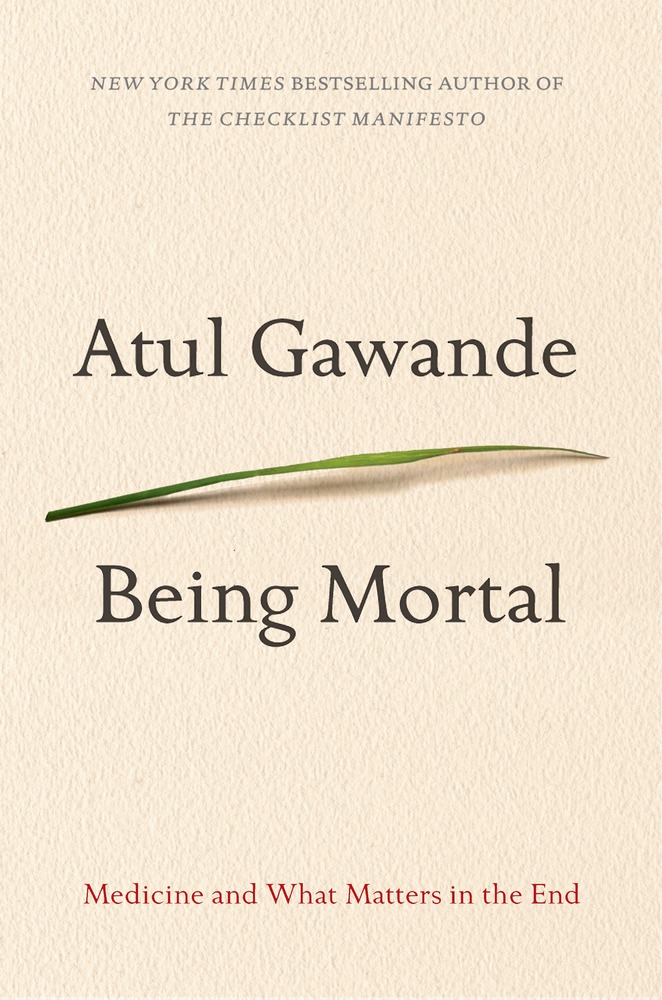
1000H-9780805095159Being Mortal (Atul Gawande) — Recommended by several thoughtful friends, and also by Ann Patchett (who I wish was my friend). On her bookstore’s blog, Ann says:

I’m all for people having different tastes, liking different books, but everyone needs to read this book because at some point everyone is going to die, and it’s possible that someone we love is going to die before us. Being Mortal is about having that conversation and thinking the hard things through. It’s not a depressing book, instead it’s thoughtful, probing, and smart.

The Buried Giant (Kazuo Ishiguro) — Bridget, our Penguin Random House sales rep, always has the best recommendations, and The Buried Giant is one of her 2015 favorites. I’ve loved Ishiguro’s other books and have been waiting a long time for this one.

Dark Rooms (Lili Anolik) — Several blog readers told me I absolutely must read this debut novel (which takes place at a boarding school, a setting I can never resist) — one said it’s a “perfect beach read”.

The Great Beanie Baby Bubble: Mass Delusion and the Dark Side of Cute (Zac Bissonnette) — Daniel, owner of Boswell Book Company in Milwaukee, always has interesting book recommendations. He says “What a fun and fascinating read this is! On top of a great story and larger-than-life characters, there are actually some marketing lessons embedded in the narrative.”

9780802123411H is for Hawk (Helen Macdonald) — Highly recommended by several trusted sources, including Perseus sales rep Johanna. The quotation she posted is enough to make me want to read the book, which has already won major literary prizes in Great Britain:

There is a time in life when you expect the world to be always full of new things. And then comes a day when you will realize that is not how it will be at all. You see that life will become a thing made of holes. Absences. Losses. Things that were there and are no longer. And you realize, too, that you have to grow around and in between the gaps, though you can put your hand out to where the things were and feel that tense, shining dullness of the space where the memories are.”

The Narrow Road to the Deep North (Richard Flanagan) — It won the 2014 Man Booker Prize, but I’m more impressed by my friend Kathy’s recommendation. She and I share similar taste in books and are both fascinated by World War II.

9781908313867The Red Notebook (Antoine Lauren) — Sue, from the Cottage Book Shop, just texted me from her vacation to tell me to read Laurain’s latest: “You should pick up The Red Notebook — wonderful. I liked it more than The President’s Hat. Actually, I loved it.” Well, of course — it’s about a Parisian bookseller.
A Spool of Blue Thread (Anne Tyler) — Recommended by several great readers, including two of my favorite librarians. Andrea Larson at Cook Memorial Public Library says: “Her knack for capturing characters and making them not just real, but recognizable, is phenomenal. And she absolutely nails dialogue.”

Please keep your suggestions coming! What else should I add to my ever-growing list?

10+ Books to Read This Spring (Or Later)

9780374171339Happy St. Patrick’s Day! Only three more days until the official first day of spring. I actually went outside without a coat yesterday. Winter was a great reading season, but there are so many wonderful books to read this spring I can hardly keep track of them all.

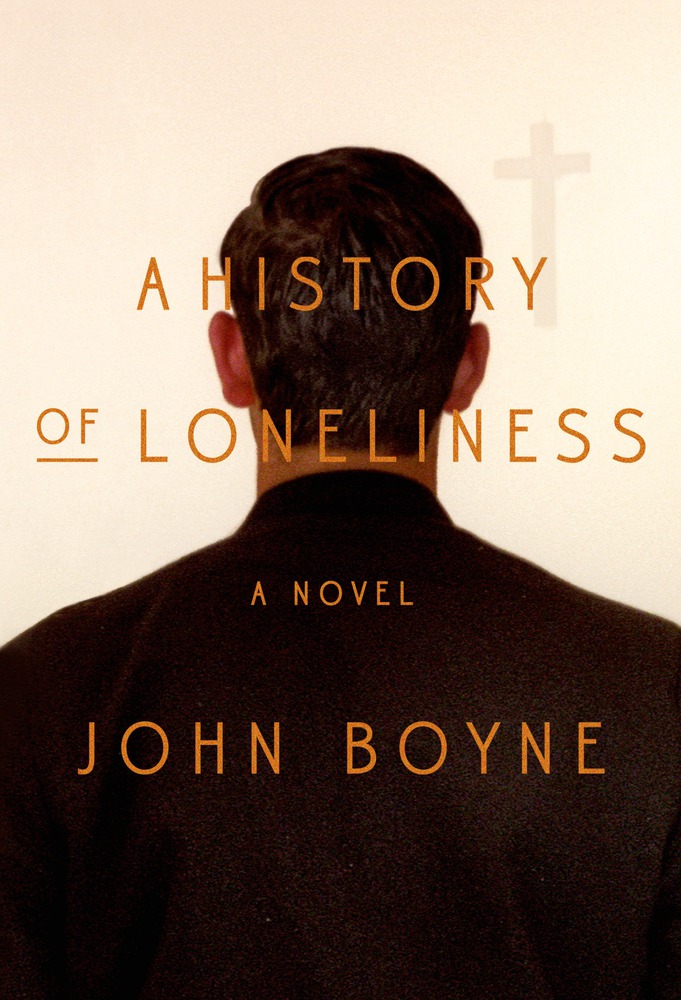
Yes, there is one book written by an Irish author on my list of 10 books to read this spring — A History of Loneliness, by John Boyne. I’m sorry I didn’t include Boyne in my post on Irish authors last March, because he’s a spectacular writer whose books run the gamut from a children’s book about the Holocaust (The Boy in the Striped Pajamas) to a ghost story for adults (This House is Haunted). In A History of Loneliness, Boyne explores the life of an aging Irish priest confronting his past and the scandals rocking his beloved church.9780062333001

If you’re in the mood for something lighter, The Bookseller, by Cynthia Swanson, might fit the bill. I can never resist any book about bookselling, and Swanson’s debut novel — which is on the March Indie Next list — sounds enchanting. It’s about Kitty, a struggling,single bookstore owner who dreams every night about being Katharyn, a married woman with a house and a loving family. Eventually she begins to wonder which of her lives is real. One of my colleagues read this book and enjoyed it, but thought the ending was a little “sappy”. So consider yourself warned — but sometimes I’m in the mood for a sentimental book. The Storied Life of A.J. Fikry could certainly be described that way, but I think you’d have to be a real cynic not to love that book!

Hausfrau, Jill Alexander Essbaum’s first novel, is certainly not sappy. Sue Boucher of the Cottage Book Shop says it’s “creepy . . . but kind of perfect.” Essbaum is not your everyday writer of psychological thrillers — she’s published four collections of poetry. The “hausfrau” of the title is Anna Benz, a modern-day Anna Karenina and expatriate housewife in Zurich who “will provoke strong feelings in readers well after the final page”, according to the starred Publishers Weekly review.

9780812993158I’m reading The Dream Lover, by Elizabeth Berg, and absolutely loving it. The novel is an exploration of new territory for Berg, who has never written historical fiction before. She delves into the heart and mind of writer George Sand, born Aurore Dupin, who was the first female bestselling author in France. In an interview with Nancy Horan, which appears at the end of the book, Berg says that “George Sand entered my subconscious. I began to dream like her; then I thought, to dream like her . . . I believe she captured me, and I was a most willing prisoner.” I am similarly captivated by Berg’s marvelous book, which will be out on April 7.

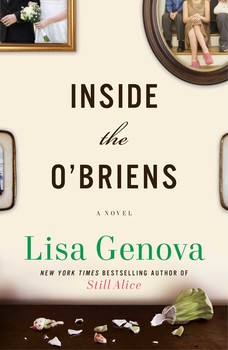
inside-the-obriens-9781476717777_lgAlso due on April 7 — Inside the O’Briens, by Lisa Genova, which I think is her best book yet. Genova is enjoying newfound popularity because of the success of the movie based on her first book, Still Alice. The story of a loving family in crisis, Inside the O’Briens focuses on Joe O’Brien, a tough Boston cop who is devastated when he learns that he is suffering from Huntington’s disease — and that his four children may have inherited the disease from him. I would like to ask readers a provocative question, though: when is a novel literature and when is it propaganda? I don’t mean propaganda in the negative sense of the word, but in the sense that the purpose of the book is to promote a cause.

I don’t read many self-help books, but every so often one really resonates with me. Usually the ones that do are books that combine self-help with business or psychology. (Greg McKeown’s Essentialism is a perfect example.) Better Than Before: Mastering the Habits of Our Everyday Lives, by Gretchen Rubin, was entertaining to read and also packed with helpful tips for developing good habits — and breaking bad ones. (Just don’t ask me how successful I’ve been in putting those tips into practice.)

9780062273475The Wilderness of Ruin: A Tale of Madness, Fire, and the Hunt for America’s Youngest Serial Killer, by Roseanne Montillo, is reminiscent of The Devil in the White City. It’s the true story of a 14-year-old Boston boy who preyed on children in the late 19th century. The criminal investigation raised legal and medical questions that are still being debated today. The  book is particularly fascinating in light of the current trial of the Boston marathon bomber.

Mary Norris, author of Between You and Me: Confessions of a Comma Queen (due April 6), is much more than a copy editor; she’s a delightfully wicked and witty writer. Norris has been on staff at the New Yorker since 1978, upholding the magazine’s notoriously high standards. The New Republic describes “Norris’s very funny, lucid, and lively new book” as “part memoir, part language guide, and part personal account of life at the New Yorker.” I enjoyed every page, and learned a few things besides. By the way, a truly awful article in the Wall Street Journal on March 13, entitled “There is No ‘Proper English'”, says “. . . you may use ‘they’ as a singular generic pronoun; you may say ‘between you and I.’ The pedants’ prohibitions on constructions like these are not supported by the evidence of general usage.” What would Mary Norris say? Or my grandmother, for that matter?

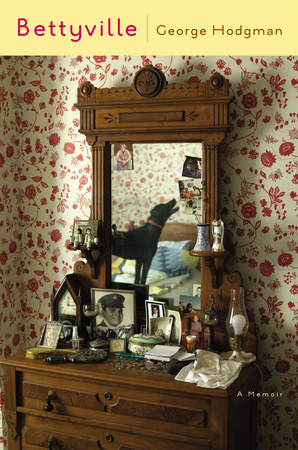
9780525427209When George Hodgman lost his editorial job in New York, he returned to his hometown of Paris, Missouri (“population 1,246 and falling”) to care for his 91-year-old mother. Hodgman’s honest and affecting portrait of their relationship, Bettyville,  moved me both to laughter and tears. As Hodgman told Terry Gross in an interview on NPR’s Fresh Air, “a good part of my role is to just do little things that make her as happy as possible all along the way – every day.”

I have been hearing amazing things, including lots of comparisons to The Goldfinch, about A Little Life, by Hanya Yanagihara. Publishers Weekly says that the 700-page “epic American tragedy”, which covers 30 years in the lives of four college friends, is:

. . . a novel that values the everyday over the extraordinary, the push and pull of human relationships—and the book’s effect is cumulative. There is real pleasure in following characters over such a long period, as they react to setbacks and successes, and, in some cases, change. By the time the characters reach their 50s and the story arrives at its moving conclusion, readers will be attached and find them very hard to forget.

And because it’s too hard to stop at 10, please indulge me while I mention three more new spring books I’m excited about: What Comes Next and How to Like It, by Abigail Thomas, a lovely collection of essays that follows  A Three Dog Life; At the Water’s Edge, by Sara Gruen (author of Water for Elephants), historical fiction that takes place in the Scottish highlands during World War II; and The Children’s Crusade, by Ann Packer (author of The Dive From Clausen’s Pier), the chronicle of a California family, spanning five decades.

For more lists of great books to read this spring, check out the lists at The Broke and the Bookish.