WWW Wednesday — Vacation Version

FullSizeRenderIt’s WWW Wednesday, where I (sort of) answer these questions:

What did you just finish reading? What are you currently reading? What do you think you’ll read next?

I’m visiting my mother (and enjoying some beautiful weather) in Hilton Head, South Carolina, so it’s been a treat to be able to read outside. Yesterday, I spent some time on the beach, where it was fun to see real-life “beach reading” — lots of people stretched out on the sand, reading trashy books and magazines. My unscientific survey showed that 90% of the beach readers found their reading material at a local grocery store (mass market paperbacks by Danielle Steel, David Baldacci, James Patterson, Debbie Macomber) or on the shelves of their rental house (The Red Tent, The Black Swan, The Hot Zone,The Shack).

9781594633669MThe other 10% — including my niece — were reading The Girl on the Train. (One of them was reading an ARC, and I was dying to ask her how she came by it, but I thought it was time for me to mind my own business. People were probably already wondering why I kept walking by and craning my neck to see the titles of their books.) My favorite beach reader was a little boy who dug a big hole in the sand (possibly trying to reach China), then climbed in, and curled up with Rick Riordan’s The Lightning Thief.
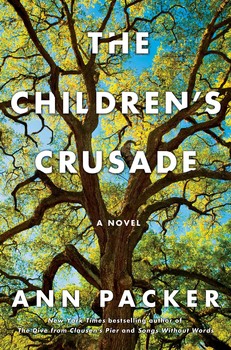
the-childrens-crusade-9781476710457_lgNobody seemed interested in what my husband and I were reading, but if they had been, they would have seen that I was engrossed in The Children’s Crusade, by Ann Packer. I’ll be posting a full review of this wonderful book, which focuses on four siblings raised by a loving, attentive father and a neglectful mother. In today’s New York Times review, Katie Kitamura says:

How do we become who we are? There are many ways of approaching this slipperiest of questions, from the experimental rigor of cognitive neuroscience to the teasing excavations of psychoanalysis. It is, of course, natural territory for the novel, and though The Children’s Crusade follows one nuclear family, its scope is broadened by its attempts at an answer . . . After a brief prologue, in which the origin myth of the family is related in some of Packer’s best and most rapturous prose, childhood emerges as the true sacred space of the novel — not because it represents innocence, but because it might contain the key to decoding the adult self.

9780767919418Jeff’s beach book was One Summer: America 1927, by Bill Bryson, which he’s thoroughly enjoying — even though he typically reads serious history books, the kind that have lots of footnotes. He’s been sharing fun facts with me as he goes along — for instance, that the 1920s were “the golden age of reading”. Some reviewers tend to be a little snobby about Bryson. The Washington Post disdainfully compares One Summer to a Danielle Steel novel, a Cracker Barrel pamphlet, and CliffsNotes. Lighten up, Washington Post!  A lot of us may be part of that “mass-circulation audience” who enjoy and “need more accessible, easy-to-read history”.

9781605986883My mother is not a fan of the beach, but she has plenty of comfortable reading spots at home. She’s reading and enjoying The Listener, by Rachel Basch, which I absolutely loved. Unlike so many novels I’ve read recently, every sentence in it is necessary. I feel like I read many novels that are slightly bloated . . . just a little too long, with elements that don’t contribute to the development of the plot or characters. The Listener is about our need to be known. A psychologist, the widowed father of two grown daughters, treats a college student who is confused about his gender identity. He becomes romantically involved with the mother of this student — without knowing she is the mother of his patient. Complications ensue, involving his daughters and their shared past. The resolution is not pat and tidy, but it’s perfect. I thought Tricia Tierney’s comment was apt: “Rachel is one of the smartest writers around with such a finely honed craft delivered with heart. Don’t you find yourself re-reading her sentences?” (Tricia manages events at the Westport, Connecticut Barnes and Noble and blogs at Tricia Tierney’s Blog.)
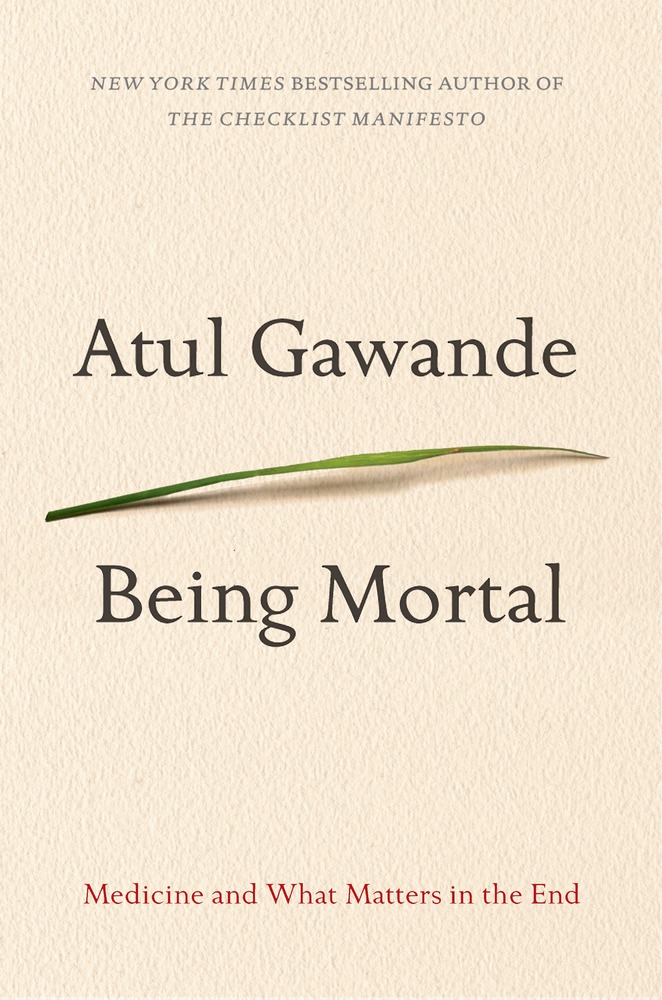
1000H-9780805095159It’s time for me to pack up and head back to Chicago — currently cloudy and 41 degrees. On the plane, I think I’ll finish reading Atul Gawande’s Being Mortal. There’s no better time to contemplate mortality than while flying above the clouds, right? I can also indulge in a favorite travel activity, walking up and down the aisle to see what people are reading. Too bad for me that e-readers have made it much more difficult for me to snoop. I saw very few e-readers at the beach, by the way — must have been the fear of sand and water damage. I’d love to know what you’re reading — on the beach, at home, or anywhere!

Happy April Fool’s Day!

Published every weekday, Shelf Awareness is the online newsletter for independent booksellers. They publish an April Fool’s edition that has been known to fool many intelligent people. Here’s my favorite article, along with a list of headlines from today’s issue.

Summer of Discoveries: “New” Salinger, Dickens, Homer on Way

Following the discovery of manuscripts by both Dr. Seuss and Harper Lee earlier this year, long-lost works by J.D. Salinger, Charles Dickens and Homer have been found and will be published this summer, too.

salinger_033115J.D. Salinger’s Franny & Zooey & Buddy & Bessie, which was written in the early 1970s, is the first Glass family novel to be published following the author’s death. According to a Hachette spokesman, the novel marks a peculiar philosophical shift from the rest of Salinger’s work and is set very soon after the events of the novella “Zooey.” The plot, said the spokesman, involves Franny “finally getting it together and getting a job.”

dickens_033115Simon & Schuster, meanwhile, will publish a Charles Dickens novella called “The Actress” this summer. Written not long after the beginning of the author’s affair with Ellen Ternan, the semi-autobiographical story apparently was never shown to anyone and hidden immediately in a lockbox. Less a story than an allegory, the novella suggests that there’s nothing weird about a prominent public figure leaving his wife of 21 years for an 18-year-old.

homer033115By far the most surprising discovery is the transcription of an untitled, previously unknown epic poem attributed to Greek poet Homer. The transcription, believed to be the work of a medieval scholar whose name is now lost, was found recently in the ruins of an abbey in France. The epic continues the story of Odysseus after his return to Ithaca. No longer contending with angry gods, being imprisoned by nymphs or waging war, the Greek king struggles to adjust to domestic life, the onset of middle age and the departure of his son Telemachus to have his own adventures.

After a fierce bidding war, Penguin Random House obtained rights to publish the poem’s English translation. Although the epic did not quite stand the test of time like The Iliad or The Odyssey, the publisher’s spokespeople have insisted that it’s still a very compelling read, as it shows a more “introspective, subtle and relatable” side of the blind poet. A first printing of three million is planned. —Alex Mutter

Click on Shelf Awareness to read the articles below, and more:

Obama Appoints James Patterson “Book Czar”

Barnes & Noble Adding Indiebound Kiosks

Algorithim’s First Novel: 7R345UR3 15L4ND

Amazon to Team Up with Indie Booksellers

European Takeover of American Bookselling

They all sound pretty legit at first glance, don’t they? Happy Spring!

10 Books Recommended to Me (Thanks, Readers!)

When I interview an author, or attend an author event and have the opportunity to ask a question, I always ask the author to recommend his or her favorite books. I’m always collecting book recommendations — from friends, family members, colleagues, blog commenters, customers, bloggers and reviewers, even strangers at airports. Of course, I can’t read all the books that are recommended to me, but certain titles come up again and again. And certain people have built tremendous credibility over the years.

Thank you, everyone, for the recommendations. Here are 10 that are on my to-read list; some have even made it to the to-read shelf in my bedroom:

9780307455925Americanah (Chimimanda Ngozi Adichie) — Several friends who are terrific readers told me I HAVE to read this book. One was “shocked” I haven’t read it and another told me it is “extremely thought-provoking”.

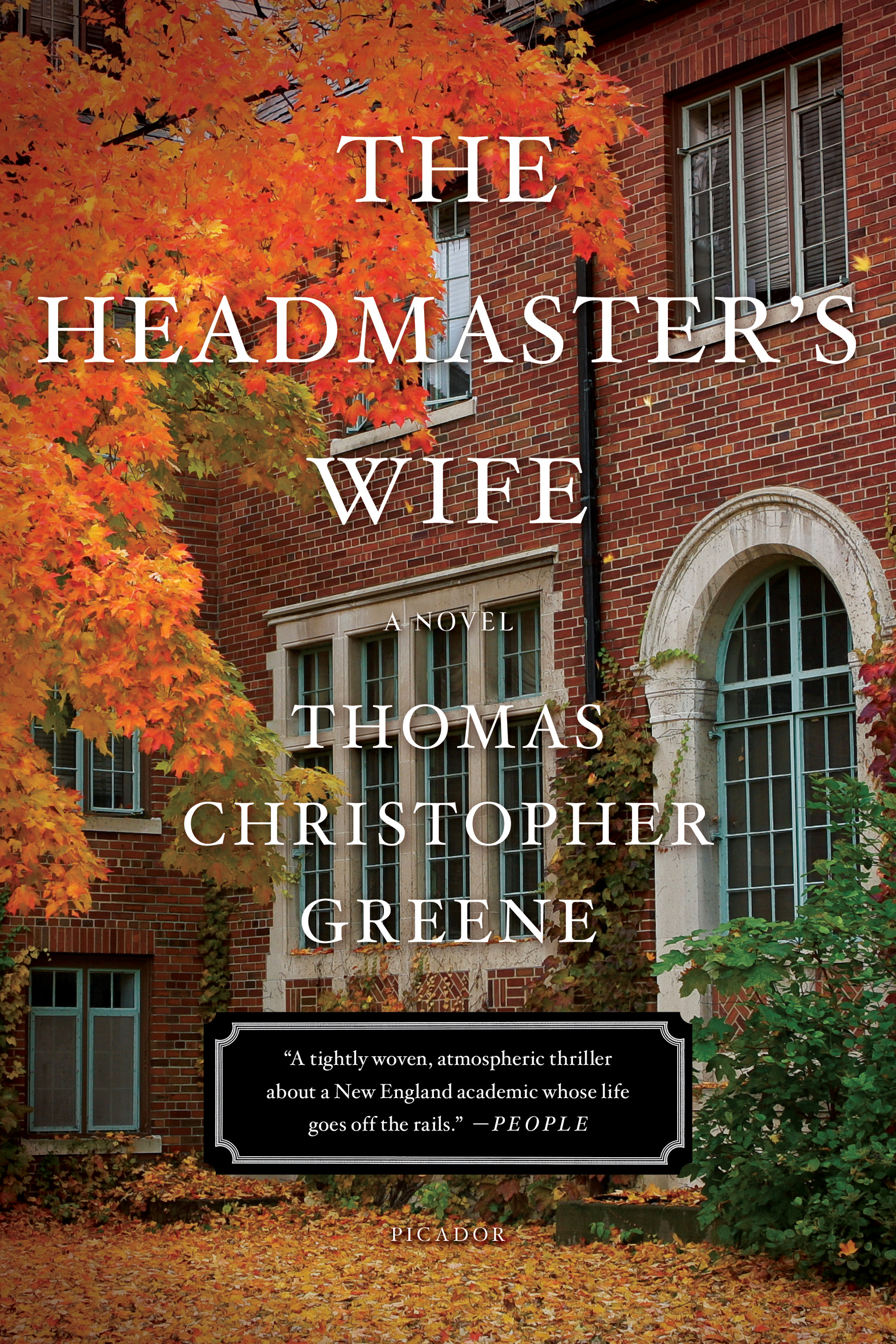
Amsterdam (Ian McEwan) — Thomas Christopher Greene, author of The Headmaster’s Wife, says Amsterdam was the last truly wonderful book he read — “Not new, but . . . very smart and lovely novel. Wish I had written it.” I think I’ve read almost all of McEwan’s books, but somehow I missed this one.

1000H-9780805095159Being Mortal (Atul Gawande) — Recommended by several thoughtful friends, and also by Ann Patchett (who I wish was my friend). On her bookstore’s blog, Ann says:

I’m all for people having different tastes, liking different books, but everyone needs to read this book because at some point everyone is going to die, and it’s possible that someone we love is going to die before us. Being Mortal is about having that conversation and thinking the hard things through. It’s not a depressing book, instead it’s thoughtful, probing, and smart.

The Buried Giant (Kazuo Ishiguro) — Bridget, our Penguin Random House sales rep, always has the best recommendations, and The Buried Giant is one of her 2015 favorites. I’ve loved Ishiguro’s other books and have been waiting a long time for this one.

Dark Rooms (Lili Anolik) — Several blog readers told me I absolutely must read this debut novel (which takes place at a boarding school, a setting I can never resist) — one said it’s a “perfect beach read”.

The Great Beanie Baby Bubble: Mass Delusion and the Dark Side of Cute (Zac Bissonnette) — Daniel, owner of Boswell Book Company in Milwaukee, always has interesting book recommendations. He says “What a fun and fascinating read this is! On top of a great story and larger-than-life characters, there are actually some marketing lessons embedded in the narrative.”

9780802123411H is for Hawk (Helen Macdonald) — Highly recommended by several trusted sources, including Perseus sales rep Johanna. The quotation she posted is enough to make me want to read the book, which has already won major literary prizes in Great Britain:

There is a time in life when you expect the world to be always full of new things. And then comes a day when you will realize that is not how it will be at all. You see that life will become a thing made of holes. Absences. Losses. Things that were there and are no longer. And you realize, too, that you have to grow around and in between the gaps, though you can put your hand out to where the things were and feel that tense, shining dullness of the space where the memories are.”

The Narrow Road to the Deep North (Richard Flanagan) — It won the 2014 Man Booker Prize, but I’m more impressed by my friend Kathy’s recommendation. She and I share similar taste in books and are both fascinated by World War II.

9781908313867The Red Notebook (Antoine Lauren) — Sue, from the Cottage Book Shop, just texted me from her vacation to tell me to read Laurain’s latest: “You should pick up The Red Notebook — wonderful. I liked it more than The President’s Hat. Actually, I loved it.” Well, of course — it’s about a Parisian bookseller.
A Spool of Blue Thread (Anne Tyler) — Recommended by several great readers, including two of my favorite librarians. Andrea Larson at Cook Memorial Public Library says: “Her knack for capturing characters and making them not just real, but recognizable, is phenomenal. And she absolutely nails dialogue.”

Please keep your suggestions coming! What else should I add to my ever-growing list?

It’s Monday, March 30 — What Are You Reading?

FullSizeRender
Cowboy boots are a must in Nashville.

After a whirlwind weekend in Nashville, I need some R and R — reading and recovery! I’d never been to a bachelorette party before, but I did know that I wouldn’t need to bring my usual quota of reading material. I managed to make it through People Style Watch on the plane before falling asleep. (I’m not falling for their suggestions on spring fashion — bellbottoms and overalls were not attractive when I wore them back in the 1970s, and they haven’t improved in the last 40 years.)

This week promises to be quiet and peaceful, with the schools on spring break and lots of people out of town. Last week was a flurry of activity in the bookstore as customers rushed in to pick up books to read on the beach and the plane.

Some readers are serial monogamists, sticking with one book and then moving on to the next. Others are polygamists, juggling several books at once. (I just Googled the term “book polygamist” to make sure I wasn’t inadvertently plagiarizing, and stumbled upon a list of “popular polygamy books”. Turns out I’ve read most of them — is that weird?) I am, and have always been, a polygamous reader. I like juggling several books — usually one novel, one or two nonfiction books, and an audiobook. I like at least one of the books to be an e-book so I can read it in bed after my husband falls asleep.

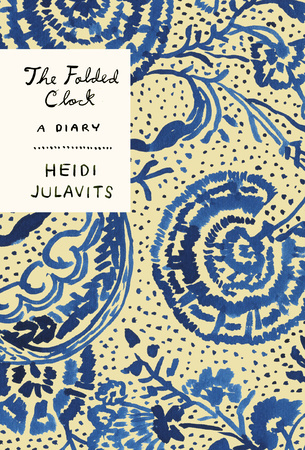
9780385538985This week’s e-book is The Folded Clock: A Diary, by Heidi Julavits. I started it last week and was immediately captivated. It’s a memoir based on the author’s discovery of her childhood diaries. The Folded Clock earned a rave review on the front page of yesterday’s New York Times Book Review. Here’s what the reviewer, Eula Bliss, has to say:

“She lost herself to me,” Julavits writes of her younger self. And so did I, with great pleasure. Losing one’s self is, after all, one of the rewards of reading. The opportunity to inhabit another self, to experience another consciousness, is perhaps the most profound trespass a work of literature can allow.

9780812993158In two weeks, beloved author Elizabeth Berg will be launching her first work of historical fiction at a couple of events hosted by Lake Forest Book Store.  I started reading The Dream Lover a couple of weeks ago and sadly had to put it aside so I could finish my book club books. Berg delves into the heart and mind of writer George Sand, born Aurore Dupin, who was the first female bestselling author in France. I’m planning on finishing the book this week, because I have an upcoming interview with Berg — stay tuned!

9781250063779I just finished Mimi Malloy, at Last!, by Julia McDonnell, and I’m still trying to decide how I feel about it. The title character is a sixty-something Irish-American divorcee with six daughters. Mimi has recently been forced into retirement, and is reluctantly exploring her sad family history. She’s a wonderful character, full of wit and humor, with plenty of sharp edges. (One of the blurbs aptly compares her to Olive Kitteridge.) The novel includes a sweet love subplot between Mimi and her apartment building’s superintendent, which is oddly juxtaposed with the disturbing story of Mimi’s horrific childhood. Readers looking for light “beach reading” will find that although the novel is a page-turner that reads quickly, it’s much darker than it initially appears. Even the title seems inappropriate — it sounds like the title of a children’s book about a plucky tomboy. It’s strange that the ARC I have has no exclamation point in the title, while the published book (both hardcover and paperback editions) includes an exclamation point.

9781605986883I just started The Listener, by Rachel Basch. I’ve mentioned before that I am a complete sucker for books set on campuses, so this book — about a psychologist who counsels students at a small liberal arts college in Maine — had my name all over it. I loved an earlier book of Basch’s, The Passion of Reverend Nash, which covers some of the same territory as The Listener: the complicated relationship between the healer and the patient.

9780767919418And finally, my current audiobook is One Summer: America, 1927, by Bill Bryson. Our couples’ book club is discussing this book in a few weeks, and I think it’s a great choice. Bill Bryson is one of my favorite nonfiction authors — he’s really mastered the art of writing books that simultaneously entertain and inform. However . . . I think maybe he should stick to writing and his publisher should hire a professional narrator for his audiobooks. His voice has a strange, prissy quality that is driving me crazy. I think I may have to switch to the print book and find another audiobook for my walks.

The sun is shining and the temperature in Chicago is heading toward 50 degrees, so I’m heading out to take a walk with Bill. I’ll let you know if I decide to end our relationship!

It’s Monday — What Are you Reading? is hosted by Book Journey.

An Uncomplicated Life — Book Review

9780062359940Having a child with a disability is like having a life coach you didn’t ask for. You realize that perspective is a blessing that ‘s available to anyone who seeks it. Or has it forced upon him. The miracle of an imperfect child is the light she casts on your own imperfections. After a time, she will teach you far more than you will teach her, and you will discover that “normal” comes in a sliding scale.

The words “miracle” and “blessing” in the same paragraph may raise red flags for some readers, but An Uncomplicated Life is not a sentimental story about saintlike parents and an angelic child. It’s a father’s honest, heartfelt, and nuanced account of “building a better Jillian” — and in the process, building a better Paul Daugherty. (“No one has ever accused me of being nice,” he claims.)

The day Paul and Kerry Daugherty’s daughter, Jillian, was born was “the last bad day” in the Daugherty family’s life. Paul, a sports columnist for the Cincinnati Post, was covering the World Series in San Francisco when his wife called with the happy news that Jillian had arrived. Paul and Kerry experienced the “dark kaleidoscope of human emotions” that day when they learned that Jillian had Down Syndrome.

The Daughertys determined before even leaving the hospital that “Jillian’s potential would not be tethered to anyone’s preconceptions.” Their mantras become “Expect: Don’t Accept”, “Nothing is Definite”, and “Let Jillian be Jillian.” When Paul questions their decision to fight the school system to keep Jillian in a traditional classroom, wondering if they were expecting too much of their daughter, Kerry reminds him of their guiding principles.

Kerry, ironically, is an employee of the school district that the Daughertys battle for years in order to ensure that Jillian receives the education to which she’s entitled. Readers will sympathize with Kerry and Paul as they spend Jillian’s high school years trying to “locate the elusive, happy middle between learning and learning under budget.”

Paul Daugherty
Paul Daugherty

Jillian brings laughter into her family’s life, and her father includes many charming and funny anecdotes that illustrate her headstrong and independent nature. Daugherty, a journalist who cranks out newspaper articles and columns every day, is a talented storyteller, and his anecdotes about Jillian’s escapades and triumphs are a joy to read. Daugherty takes pains to portray Jillian as an individual, not a stereotypical Down’s syndrome child. Often, Daugherty writes, people are patronizing and saccharine in their descriptions of Jillian, as if she were a “golden retriever”.

There’s an edge to Paul Daugherty, and the Daugherty household is like any other household — far from idyllic. The Daughertys’ approach has required sacrifices, and Paul — who can be a harsh self-critic — is frank about the resentment he sometimes feels. He knows, for example, that his dream of retiring to play golf in South Carolina probably won’t happen.

Expanding Jillian’s dreams means constricting our own. This isn’t a complaint. It’s not bitterness. It’s just a fact. Her goals tug at ours. They are not compatible. Our lives are less separable than the lives of typical parents and their grown children . . . Sometimes, I resent that.

Daugherty is also candid about the pain he and Kerry feel when Jillian is excluded from school or social activities. Although she is never treated unkindly, the fact remains that she is different from her peers. Jillian joins the JV dance team, and is able, for the most part, to keep up with her peers. But is she really part of the team?

Jillian’s dance teammates treated her like the rest of typical peers did: Arms-length pleasant. They didn’t mind having her on the team. But I don’t think they relished it ether. They included her in team functions . . . After practice or games they went their ways, and Jillian went home. We didn’t know if the girls hung out together after practice. We never asked.

Daugherty doesn’t dwell on his occasional feelings of anger or frustration, but chooses to focus on the enormous gifts Jillian has brought to his family. Although his family’s story is unique, any parent will identify with his experiences. All parents learn from their children. Jillian’s life may be less complicated than most others — including the lives of her parents and older brother– but its clarity of purpose inspires those she comes in contact with “to do better, to be better”.

In the bookstore, I’m frequently asked to recommend “feel-good” books that are “uplifting”. I’m often at a loss, since I find most books that fit that description to be unbearably hokey. For whatever reason, I gravitate toward books about war, family dysfunction, illness, and tragic events of all kinds. So it was truly a pleasure for me to read a well-written book that inspired me and made me think.

To read more reviews of An Uncomplicated Life, check out TLC Book Tours.

Watch the Youtube book trailer, with photos of Jillian and her family.

10+ Books to Read This Spring (Or Later)

9780374171339Happy St. Patrick’s Day! Only three more days until the official first day of spring. I actually went outside without a coat yesterday. Winter was a great reading season, but there are so many wonderful books to read this spring I can hardly keep track of them all.

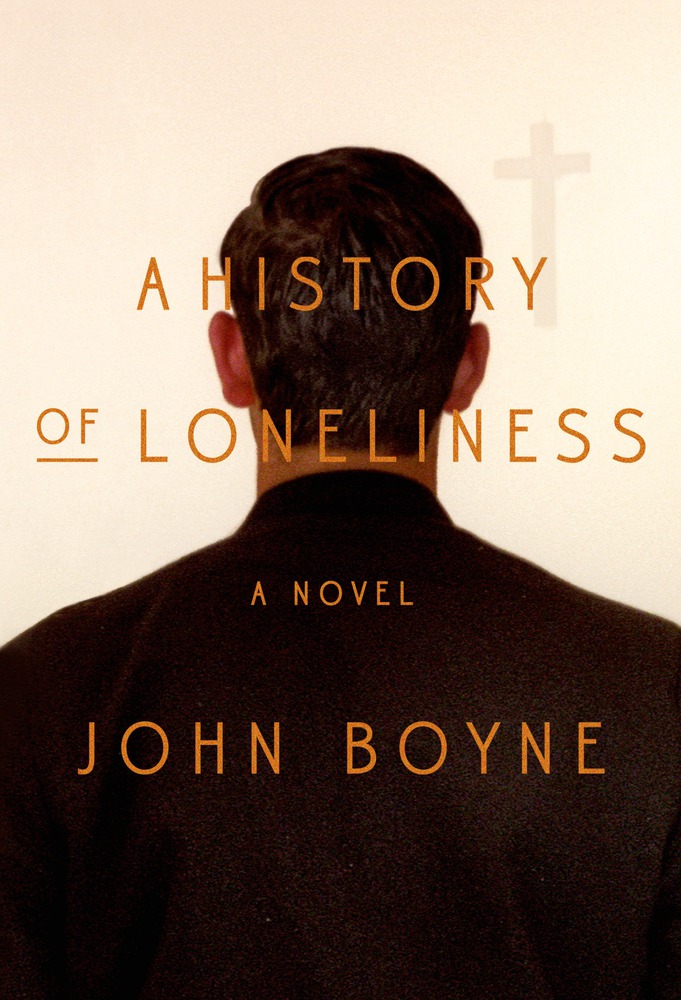
Yes, there is one book written by an Irish author on my list of 10 books to read this spring — A History of Loneliness, by John Boyne. I’m sorry I didn’t include Boyne in my post on Irish authors last March, because he’s a spectacular writer whose books run the gamut from a children’s book about the Holocaust (The Boy in the Striped Pajamas) to a ghost story for adults (This House is Haunted). In A History of Loneliness, Boyne explores the life of an aging Irish priest confronting his past and the scandals rocking his beloved church.9780062333001

If you’re in the mood for something lighter, The Bookseller, by Cynthia Swanson, might fit the bill. I can never resist any book about bookselling, and Swanson’s debut novel — which is on the March Indie Next list — sounds enchanting. It’s about Kitty, a struggling,single bookstore owner who dreams every night about being Katharyn, a married woman with a house and a loving family. Eventually she begins to wonder which of her lives is real. One of my colleagues read this book and enjoyed it, but thought the ending was a little “sappy”. So consider yourself warned — but sometimes I’m in the mood for a sentimental book. The Storied Life of A.J. Fikry could certainly be described that way, but I think you’d have to be a real cynic not to love that book!

Hausfrau, Jill Alexander Essbaum’s first novel, is certainly not sappy. Sue Boucher of the Cottage Book Shop says it’s “creepy . . . but kind of perfect.” Essbaum is not your everyday writer of psychological thrillers — she’s published four collections of poetry. The “hausfrau” of the title is Anna Benz, a modern-day Anna Karenina and expatriate housewife in Zurich who “will provoke strong feelings in readers well after the final page”, according to the starred Publishers Weekly review.

9780812993158I’m reading The Dream Lover, by Elizabeth Berg, and absolutely loving it. The novel is an exploration of new territory for Berg, who has never written historical fiction before. She delves into the heart and mind of writer George Sand, born Aurore Dupin, who was the first female bestselling author in France. In an interview with Nancy Horan, which appears at the end of the book, Berg says that “George Sand entered my subconscious. I began to dream like her; then I thought, to dream like her . . . I believe she captured me, and I was a most willing prisoner.” I am similarly captivated by Berg’s marvelous book, which will be out on April 7.

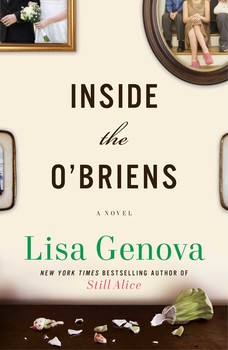
inside-the-obriens-9781476717777_lgAlso due on April 7 — Inside the O’Briens, by Lisa Genova, which I think is her best book yet. Genova is enjoying newfound popularity because of the success of the movie based on her first book, Still Alice. The story of a loving family in crisis, Inside the O’Briens focuses on Joe O’Brien, a tough Boston cop who is devastated when he learns that he is suffering from Huntington’s disease — and that his four children may have inherited the disease from him. I would like to ask readers a provocative question, though: when is a novel literature and when is it propaganda? I don’t mean propaganda in the negative sense of the word, but in the sense that the purpose of the book is to promote a cause.

I don’t read many self-help books, but every so often one really resonates with me. Usually the ones that do are books that combine self-help with business or psychology. (Greg McKeown’s Essentialism is a perfect example.) Better Than Before: Mastering the Habits of Our Everyday Lives, by Gretchen Rubin, was entertaining to read and also packed with helpful tips for developing good habits — and breaking bad ones. (Just don’t ask me how successful I’ve been in putting those tips into practice.)

9780062273475The Wilderness of Ruin: A Tale of Madness, Fire, and the Hunt for America’s Youngest Serial Killer, by Roseanne Montillo, is reminiscent of The Devil in the White City. It’s the true story of a 14-year-old Boston boy who preyed on children in the late 19th century. The criminal investigation raised legal and medical questions that are still being debated today. The  book is particularly fascinating in light of the current trial of the Boston marathon bomber.

Mary Norris, author of Between You and Me: Confessions of a Comma Queen (due April 6), is much more than a copy editor; she’s a delightfully wicked and witty writer. Norris has been on staff at the New Yorker since 1978, upholding the magazine’s notoriously high standards. The New Republic describes “Norris’s very funny, lucid, and lively new book” as “part memoir, part language guide, and part personal account of life at the New Yorker.” I enjoyed every page, and learned a few things besides. By the way, a truly awful article in the Wall Street Journal on March 13, entitled “There is No ‘Proper English'”, says “. . . you may use ‘they’ as a singular generic pronoun; you may say ‘between you and I.’ The pedants’ prohibitions on constructions like these are not supported by the evidence of general usage.” What would Mary Norris say? Or my grandmother, for that matter?

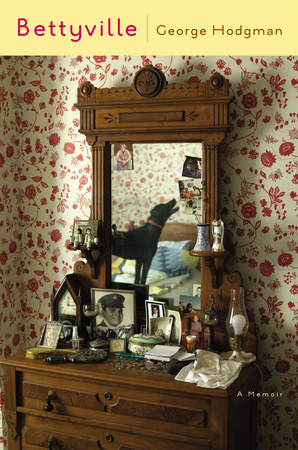
9780525427209When George Hodgman lost his editorial job in New York, he returned to his hometown of Paris, Missouri (“population 1,246 and falling”) to care for his 91-year-old mother. Hodgman’s honest and affecting portrait of their relationship, Bettyville,  moved me both to laughter and tears. As Hodgman told Terry Gross in an interview on NPR’s Fresh Air, “a good part of my role is to just do little things that make her as happy as possible all along the way – every day.”

I have been hearing amazing things, including lots of comparisons to The Goldfinch, about A Little Life, by Hanya Yanagihara. Publishers Weekly says that the 700-page “epic American tragedy”, which covers 30 years in the lives of four college friends, is:

. . . a novel that values the everyday over the extraordinary, the push and pull of human relationships—and the book’s effect is cumulative. There is real pleasure in following characters over such a long period, as they react to setbacks and successes, and, in some cases, change. By the time the characters reach their 50s and the story arrives at its moving conclusion, readers will be attached and find them very hard to forget.

And because it’s too hard to stop at 10, please indulge me while I mention three more new spring books I’m excited about: What Comes Next and How to Like It, by Abigail Thomas, a lovely collection of essays that follows  A Three Dog Life; At the Water’s Edge, by Sara Gruen (author of Water for Elephants), historical fiction that takes place in the Scottish highlands during World War II; and The Children’s Crusade, by Ann Packer (author of The Dive From Clausen’s Pier), the chronicle of a California family, spanning five decades.

For more lists of great books to read this spring, check out the lists at The Broke and the Bookish.

The Tusk That Did the Damage — Book Review

9780385354127-204x300

That is because of the tusk, the boy said, his eyes watering. It was the tusk that did the damage. What if I return it? Can’t I reverse the curse?

Oh my sweet stupid son, there is no reversing a curse, everyone knows that. But who says we cannot turn this curse into a blessing?

Tania James, The Tusk That Did the Damage

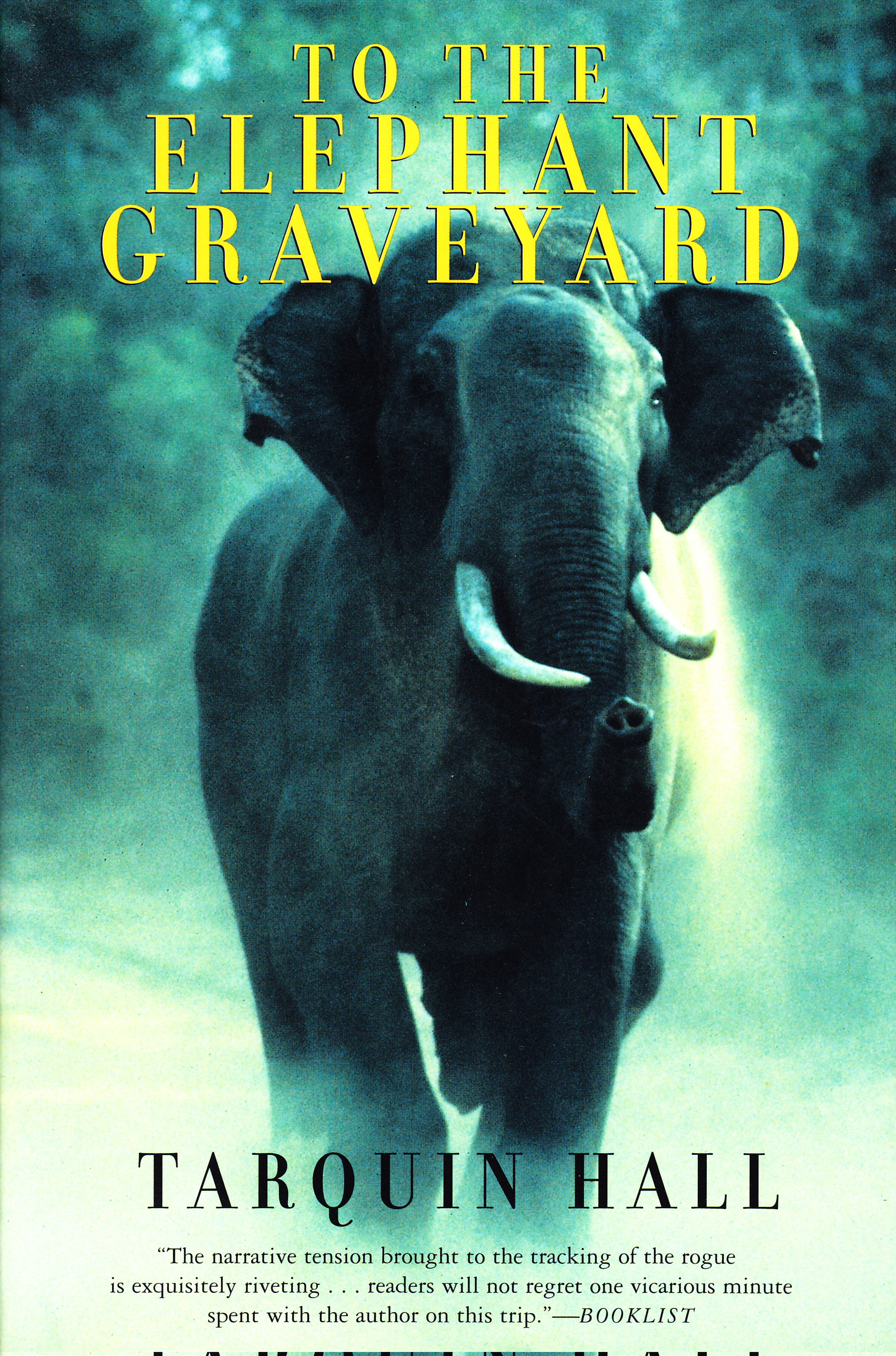
In the 1990s, a rogue elephant terrorized the countryside of northeastern India, killing 38 people. At first, journalist Tarquin Hall thought the reports of the elephant’s vengeful and cruel behavior were “implausible”:

“Babar is riding happily on his mother’s back when a wicked hunter, hidden behind some bushes, shoots at them.”

Elephants do not breathe smoke and fire, they are not gods, and they certainly do not go around in the middle of the night knocking down people’s homes and singling out particular human beings for premeditated murder. Elephants are kindly, intelligent, generally good-natured creatures, like Babar and Dumbo.

Hall wrote a book, To the Elephant Graveyard, about the Indian government’s hunt for the murderous elephant and the changing relationship between human beings and elephants caused by the destruction of natural habitats. In an interview with the Los Angeles Times, Tania James explains how Hall’s book provided inspiration for The Tusk That Did the Damage, her novel about elephant poaching in southern India:

9780802138354I was reading a nonfiction book called To the Elephant Graveyard . . . and it makes mention of a real-life elephant that used to bury its victims. The elephant would carry the body for miles beforehand, and in some cases, if people tried to take the body away, he would bring it back. Or he would guard the burial site . . .There was something kind of human in its madness, I guess, and I know this is kind of a human-centric way of thinking about it, but there was something recognizable about that madness that made me want to know where that elephant had come from. I wanted to know the tipping point that led to a life as a violent rogue elephant.

Read more

10 Questions for Thomas Christopher Greene, Author of The Headmaster’s Wife (Plus a Giveaway!)

Headmaster's Wife-2
Paperback cover

Booksellers often fall in love with a terrific new book, only to find that the hardcover version is a tough sell. We console ourselves by saying that the book will really “take off” in paperback, and very often that’s true. Certain books, through a combination of serendipity and quality, sell enormously well in hardcover for years without being released in paperback. (Think of Gone Girl, The Goldfinch, Unbroken . . .) But most paperback releases are scheduled for 9 to 12 months after hardcover publication, depending on sales. Some of those paperbacks do sell much, much better than their hardcover versions, especially those that appeal to book clubs.

Author Nichole Bernier interviewed publishers, editors, authors, and literary agents for an article in The Millions about relaunching books in paperback, learning that “A paperback isn’t just a cheaper version of the book anymore. It’s a makeover. A facelift. And for some, a second shot.” Melanie Benjamin, whose paperbacks have been very popular with book club audiences, observed that “‘ . . .  almost every book these days gets a new cover for the paperback. It’s almost as if they’re doing two different books for two different audiences, with the paperback becoming the ‘book club book.'” M.J. Rose, of the book marketing firm Authorbuzz, said, “‘I think that as opposed to a re-release being less important, it’s more than ever important because it gives a book a second chance with a new cover and lower cost, plus you can use all the great reviews the hardcover got.'”

9781250038944
Hardcover jacket

The Headmaster’s Wife, by Thomas Christopher Greene — one of my 10 Favorite Books of 2014 — was just released in paperback. The publisher must think that ivy-covered brick buildings appeal to book clubs, because only one minor change appears on the cover: Richard Russo’s blurb has been replaced with a quote from a People magazine review. Too bad, because what Russo says is spot-on: “I read the second half of The Headmaster’s Wife with my mouth open, my jaw having dropped at the end of the first half. Thomas Christopher Greene knows how to hook a reader and land him.”

The Headmaster’s Wife opens when Arthur Winthrop, headmaster of a New England boarding school, is found wandering naked in Central Park. As he begins to tell his story to the police, it becomes clear to the reader that Arthur is an unreliable narrator. Just how unreliable he is only becomes obvious about halfway through the book. At this point Arthur’s wife lends her perspective to the story, and the reader must determine whose version of the truth to believe. Read more

Life from Scratch — Book Review

After a good dinner, one can forgive anybody, even one’s own relations.
Oscar Wilde

No one who cooks, cooks alone. Even at her most solitary, a cook in the kitchen is surrounded by generations of cooks past, the advice and menus of cooks present, the wisdom of cookbook writers.
Laurie Colwin

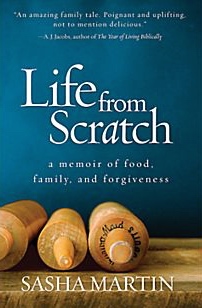
6201374Sasha Martin, creator of the popular blog Global Table Adventure, didn’t set out to write a memoir about what she calls her “rough background”. Martin intended to chronicle the four years she spent cooking meals from every country in the world. She envisioned a book filled with “sweet stories about overcoming pickiness”, not one that brought back painful memories of her difficult upbringing.  But when Martin’s editor asked her what inspired her to begin her ambitious cooking project, Martin realized that Life from Scratch was going to be about much more than food:

Every time I tried to answer her, memory pushed me further and further back in time – all the way to the foods and stories of my childhood. Introspection (and lots of tears) brought me face to face with my rough and tumble childhood – the string of foster homes, the painful separation from my mother, and the tragic death of a beloved family member.

Food, specifically cooking with my mother, had been an important anchor early on but as an adult I felt disconnected from that experience. As I worked to build my own family, cooking the world had become much more than trying new food – it became a path towards healing. It was my way of working out what unconditional love and belonging meant. Reflected in the desire for my daughter to love her world, I also saw my own need to love my world and feel loved by it. After a childhood in turmoil I was hungry for peace.

Many of Martin’s early childhood memories take place in the “warm, fragrant space” of the kitchen in a tiny apartment in a working-class suburb of Boston. Martin’s eccentric mother invents creative meals from the meager groceries she’s able to obtain, using every scrap and telling Martin and her brother that “a little mold never hurt anyone”.  I was reminded of Ruth Reichl’s first memoir, Tender at the Bone, in which she dubs her unbalanced mother “The Queen of Mold”. Martin’s mother, unlike Reichl’s, is actually a good cook, serving delicacies like Hungarian crepes and a 21-layer German Tree Cake. Readers will debate whether she’s a good mother. Certainly, she faces many challenges and makes life difficult for her children — but how much of the family’s turbulence is within her control?

Read more

Life is Short — 9 Books I’m Never Going to Read

My books have been part of my life forever. They have been good soldiers, boon companions. Every book has survived numerous purges over the years; each book has repeatedly been called onto the carpet and asked to explain itself. I own no book that has not fought the good fight, taken on all comers, and earned the right to remain.
Joe Queenan

All the books we own, both read and unread, are the fullest expression of self we have at our disposal. . . But with each passing year, and with each whimsical purchase, our libraries become more and more able to articulate who we are, whether we read the books or not.
Nick Hornby

IMG_1221Every now and then, when my bookshelves start to overflow, I get the urge to purge. I never do a very good job. Professional organizers recommend making three piles: “keep”; “toss”; and “donate”. The “toss” pile is usually very small, because I feel terrible throwing away a book unless it is truly falling apart. I can almost always fill a bag with books to donate, but I end up re-shelving dozens of books that a more ruthless culler would donate without a second thought. My rule of thumb is that I feel any ambivalence at all, the book gets to stay. I’m not listening to the advice Marie Kondo offers in The Life-Changing Magic of Tidying Up , which is to keep no more than 30 books in a home library and to house that library in a closet.

I’ve realized that I own many books that have survived multiple purges. If I’m going to be honest, I have to admit I will never read these books. They are no longer books to be read; they are decorative objects. The question I’ve decided to ask about every unread book I own is whether I would carry it on a trip. (Keep in mind I have no problem lugging hardcover books wherever I go. I carried In the Kingdom of Ice on a two-week trip to Europe last fall and I was happy to have it with me.)

So here are 9 hardcover books I have considered reading many times but I know I will never read. I tried hard to part with at least 10, but I just couldn’t. (I have an easier time giving away paperbacks.) They’re packed in a shopping bag, ready to be dropped at the back door of the Lake Forest Library. This is the collection point for the Friends of the Library annual book sale, and there is a large sign warning potential used book thieves that security cameras are in use. I wonder if some people think that because they’re donating some books, they get to take a few as well. Those people must be even worse at cleaning out their bookshelves than I am!

If anyone thinks I’m making a big mistake getting rid of any of these books, let me know . . .

9780307958341Book of Ages: The Life and Opinions of Jane Franklin by Jill Lepore
A National Book Award finalist in 2013, Book of Ages came highly recommended from a trusted source — but whenever I’m deciding what to read next, I look at its lovely cover and then choose something else.

Thrive: The Third Metric to Redefining Success and Creating a Life of Well-Being, Wisdom, and Wonder by Arianna Huffington
A publisher sent me Thrive as part of an ill-conceived program called “Blogging for Books”.  I don’t even understand the title. What does she mean by “third metric”? I guess I would have to read the book to find out, but I’m not that curious.

Artisan Bread in Five Minutes a Day: The Discovery That Revolutionizes Home Baking by Jeff Hertzberg and Zoë François
I bought this book seven or eight years ago under the misguided impression I would want to spend any time at all (even five minutes) baking bread.  It’s never been opened.

Every Day is for the Thief by Teju Cole
This book, about a Nigerian immigrant in New York who returns to his home country, received a lot of critical acclaim, as did its predecessor, Open City. However — and this is a deal-breaker for me — it is about an unnamed character.

The Love of My Youth by Mary Gordon
Over the past few years, I’ve picked it up, put it down . . . picked it up, put it down . . . Time for The Love of My Youth to find a new home where it will be appreciated.970b55d1c222cd0f5b577d2f96aab9d5

The Historian by Elizabeth Kostova
How on earth did I end up with a book about vampires on my shelf, even a supposedly literary one? I did consider keeping The Historian for a minute, because I came across this quotation while flipping through the book: “It was good to walk into a library again; it smelled like home.”

The Private Life of Chairman Mao by Dr. Li Zhisui
This 750-page book, which was written by Mao’s personal physician, was given to me in 1996. I think it’s safe to say I’ll never read it. Especially since I just skimmed the first chapter and learned more than I wanted to know about Mao’s lack of oral hygiene.

Outlander by Diana Gabaldon
I’ve had this book so long that the pages have turned yellow. People love this series, I know. I started it, and it’s just not for me; I hate time travel.

The Kid: The Immortal Life of Ted Williams by Ben Bradlee, Jr.
I never intended to read this book, but I thought my husband might like it. What was I thinking? He’s not going to read an 864-page “epic biography” of Ted Williams, no matter how good it is.

Oh, and by the way — in the spirit of full disclosure, I have to add that I didn’t personally carry In the Kingdom of Ice through Holland, Belgium, and France. I took every opportunity to sneak it into my husband’s bag. I think he would say that it was worth bringing with us, because he enjoyed it as much as I did.