Those Amazing Ephron Sisters — Part I (Delia)

9780399166556HFour sisters, brought up in Hollywood by  famous screenwriter parents, all grow up to be successful writers. Sounds like a novel or movie script, doesn’t it? In fact, the youngest Ephron daughter, Amy, was named after the youngest March daughter in Little Women. In an Oprah magazine article, Hallie Ephron says:

As we got older, we grew comfortable in roles that met our parents’ expectations. Nora was the smart one. Delia, the comedian. I was the pretty, obedient one. And Amy was the adventurous mischief-maker. But in reality, we were more alike than we were different—all bossy and opinionated, witty and articulate, like our mother. At dinner, a three-course event that anchored every evening at 6:30 sharp, the competition for airtime was Darwinian.

This morning, I listened to Terry Gross interview Delia Ephron about her collection of autobiographical essays, Sister Mother Husband Dog. In the interview, Delia described the Ephron dinner table. Her father would shout, “That’s a great line — write it down!” whenever one of his daughters said anything clever or amusing. The four girls were groomed to be writers from an early age. Nora, the eldest, was an early success — “published when she was born”, according to Delia. The other three were relatively late bloomers. Delia published an essay, “How to Eat Like a Child”, in the New York Times when she was 32, and her writing career took off from there, including  over a dozen books and numerous plays and screenplays. Many of the scripts were co-written with Nora. Amy began writing in her late thirties, and Hallie got started when she was close to 50.

Delia covers a lot of territory in Sister Mother Husband Dog. The first essay, “Losing Nora”, made me cry . . . and made me deeply grateful for my own sister. (And it also made me grateful that I was fortunate enough to see Nora’s last play, Lucky Guy, last year on Broadway.) My favorite essay is called “Bakeries”, and of course, it’s about bakeries — but also about “having it all”. You’ll have to read the whole essay to see how Delia gracefully segues from bakeries to the concept of “having it all”, but here’s one of my favorite passages:

To me, having it all — if one wants to define it at all — is the magical time when what you want and what you have match up . . . It might be a fleeting moment — drinking a cup of coffee on a Sunday morning when the light is especially bright. It might also be a few undisturbed hours with a novel I’m in love with, a three-hour lunch with my best friend, reading Goodnight Moon to a child, watching a Nadal-Federer match.

Delia has a wicked sense of humor — honed, she says, at that Ephron family dinner table. She says, “That’s where I learned how to tell a story and that I was funny.” Her thoughts on her  wayward hair, the banks taking over her neighborhood,  Twitter/modern technology, the “name-jacking” of her website, and Anthony Weiner made me laugh out loud. Weiner, she tells us, “could not have it all”.

Sister Mother Husband Dog starts with an essay about Nora’s death and ends with “Collaboration”, about the scripts Nora and Delia worked on together.  I loved reading about their writing process and about the inner workings of the movie business. One of their most successful projects was the screenplay for You’ve Got Mail, one of my favorite movies. Delia says that screenplay was “an especially good collaboration”; they chose to set it in the world of books because “we both loved books, had grown up in a house were books were worshipped”.  When I finished reading “Collaboration”, I wanted MORE — more of Delia Ephron’s wisdom, insight, and humor.

In the Fresh Air interview, Terry asked Delia how Nora’s premature death affected Delia’s feelings about getting older, pointing out that one of Nora’s best-known works is her collection of essays about women and aging, I Feel Bad About My Neck. Delia’s poignant response was, “I do feel that I have to do everything quickly. I don’t want to waste a day”.

Read Hallie Ephron’s thoughts on growing up with three talented sisters here:  http://www.oprah.com/spirit/Nora-Ephrons-Mother-Hallie-Ephron-Essay/3#ixzz2n0AJevCV

Mob Wives Chicago: Renee Rosen’s Dollface

I recently met Renee Rosen at a Palatine Public Library event called Writing the Past– a panel discussion with three historical novelists. Renee and two other Chicago-area writers (Charles Finch, author of the Charles Lenox Victorian mystery series, and Melanie Benjamin, author of The Aviator’s Wife, Mrs. Tom Thumb, and Alice I Have Been) talked about the challenges and rewards of writing historical fiction. I’d just finished reading Dollface and was especially interested in Renee’s perspective on historical fiction.

816Several years ago, when Renee published her first novel (Every Crooked Pot, a contemporary novel), I recommended it again and again to both teenagers and adults. Renee’s portrayal of the relationship between a young girl with a disfiguring birthmark and her complicated father has remained one of my favorite coming of age stories. At first, I was surprised that the same Renee Rosen wrote both Every Crooked Pot and Dollface. But both books are about young women who feel like outsiders, struggling to belong and to find out who they are. Vera Abramowitz (a.k.a. “Dollface”), the title character and narrator,  just happens to be a gun moll.

In a Chicago Tribune review, Rick Kogan says:

There are few local writers who are more determined than Rosen. Her first, the novel Every Crooked Pot, was published in 2007, and she has spent the intervening years immersing herself in local history and polishing her style. These have been years well spent and excitingly realized in Dollface.

In the panel discussion, Renee mentioned that her original manuscript focused on male gangsters of Prohibition-era Chicago. In a post on her blog (“The Original Bad Boys”), Renee points out that these deadly criminals were very young men:

When you think of bad boys, they didn’t get any “badder” than Al Capone and Hymie Weiss.  In fact, Hymie Weiss was so bad that even Capone was scared of him.  And yet, in reality these original bad boys were indeed really just a bunch of boys.  During the Roaring ‘20s, the average age of a gangster was probably twenty-five and most of them were gunned down before their thirtieth birthdays.

imagesEveryone knows that Prohibition was a colossal flop that did more to accelerate the consumption of alcohol than curb it. But it was also a breeding ground of opportunity for young street thugs, safe crackers and petty thieves. Practically overnight these kids went from scuffed up boots and soft caps to doubled-breasted suits and fedoras. They suddenly found themselves with money, power and broads. Girls everywhere chucked their corsets, defiantly bobbed their hair and flocked to these dashing young men who were just as forbidden as the hooch they were bootlegging.

Renee followed valuable advice from an editor to “move the men to the sidelines and give your women their due”.  We’re all familiar with Al Capone and his contemporaries, but the story told from the point of view of the female characters is fresh and imaginative.  Vera wrestles with the morality of loving a gangster:

I looked at the others and wondered how they could live with it — knowing what their men had done. I thought I’d found a way to justify it. I told myself that Shep was different from other gangsters, that he would never hurt anyone unless it was in self-defense, that underneath it all, he was a kindhearted, loving man. But what was I supposed to tell myself now that he’d been arrested and was out hunting Capone?

After listening to the panel discussion, I had many more questions for Renee — here’s the Q and A.

I loved your debut novel, Every Crooked Pot. (I’m always on the lookout for adult novels that appeal to teenagers — I’m not a fan of the “YA” genre.) Your second novel, Dollface, is historical fiction and clearly a departure from your first novel. What inspired you to move into historical fiction?

I actually started working on Dollface before Every Crooked Pot was published. I always loved history, especially the 1920s. I was drawn to that era even before Boardwalk Empire and the remake of The Great Gatsby came on the scene. I figured if I was that interested in this time period, maybe others would be, too.

For you, what is the line between fiction and fact? How much liberty do you think a writer of historical fiction can take with the facts? Is Vera Abramowitz based on a real person?

Great question. I’ve talked to other authors about this very thing and I admit that it is something I wrestle with. In Dollface I really tried to be as historically accurate as possible and spent a lot of time on my author’s note in the back to point out wherever I deviated from a timeline or a historical fact. I also tried to indicate what really happened because fact is definitely stranger than fiction, which is one of the great joys of conducting research.

As to how much liberty I take depends in part on how much information is available. For example, in my next book, What The Lady Wants, there was very little written about Marshall Field and Delia Canton’s personal lives so I’ve had to fill in the blanks. However, when I do that, I’m very conscious of basing it on other information that I’ve uncovered.

And lastly, Vera, the main character in Dollface is purely fictional, but again, I tried to make her true to the time.

Which current-day authors do you most enjoy reading? Do you read historical fiction? I read an interview with another historical fiction author who said she never reads historical fiction, only fact, because she is afraid she will then get fact and fiction confused in her mind. 

The usual suspects instantly come to mind: Jhumpa Lahiri, Michael Chabon, Michael Cunningham, Donna Tartt. And yes, I do read historical fiction, though I can see why some would shy away from it. When I started researching Dollface there weren’t a lot of novels based in the 1920s so bleeding fact with fiction wasn’t really an issue. I’m finding many more novels set in my new time period from 1870s – 1900s and I’m loving it. I personally love getting a history lesson in while I’m reading.

If you had lived during the 1920s, what sort of life do you imagine you would have led?

I’m certain that I would not have had half the excitement that Vera has. And that’s a good thing! But knowing me, I’m sure I would have gone to speakeasies and I’m probably just enough of a rebel that I would have bobbed my hair and worn lip rouge. Probably would have flashed a kneecap or two as well!

How long did it take you to write Dollface — and how much of that was spent on research?

I worked on Dollface for about 10 years and the research was ongoing. I found that as the story evolved, I needed to learn more about a particular aspect of that era. I spent a lot of time meeting with people, everyone from Al Capone’s great niece to local historians as well as digging up old newspaper clips from the 1920s. It was really thrilling. I loved every minute of it!

As I’m sure you discovered with the publication of your first book, a whole new phase of a writer’s job begins when the book is published. How do you feel about that? Do you enjoy promoting the book, which involves networking and public speaking?

I’m actually loving it, mostly because I love the material so much. The gangsters and the Roaring Twenties were just fascinating so it’s very easy for me to talk about. I also have a background in advertising and marketing so for me, promotion is second nature. I know a lot of authors struggle with this and for me the most challenging aspect is finding the time to do it all and still continue working on the next book. Because there’s always a next book in the works!

The characters in Dollface are vivid and three-dimensional. Do you identify with any particular character — or with more than one? 

Another really terrific question! I definitely didn’t base any of the characters on myself but I can relate to aspects of their personalities. For example, given her background, I can appreciate why Vera is seeking security and a more glamorous life. I also can understand Evelyn’s insecurities and I feel for her when she tolerates Izzy’s abuse. I loved Shep’s diplomacy as much as Basha’s brashness. And something all the characters do is justify and rationalize their lot in life. I think many of us can relate to that, even if we don’t approve of their choices.

What are your favorite books set in Chicago (besides Dollface!)? (Mine would have to be The Devil in the White City by Erik Larsen . . . I also loved Crossing California by Adam Langer.)

I’m with you on The Devil in the White City. I’d also add another non-fiction book, Sin in the Second City by Karen Abbott.  I adore Sister Carrie and The Jungle and for a fascinating historical overview of the city, I don’t think you can beat City of the Century.

Do you belong to a writers’ group? Do you see yourself as part of the literary community in Chicago and how would you characterize that community? 

I do have a critique partner but I’m not currently part of a writer’s group. However, I would say that I’m fairly involved in the Chicago literary community, which is vibrant and very much alive. There’s an ever-expanding group of folks here comprised of writers, booksellers, reps and agents that meet once every other month for Publishing Cocktails that Keir Graff and Javier Ramirez started up. It’s always at a different location—sometimes we’ll do a cash mob at a bookstore and then move on to a local watering hole, other times, we’ll do a book swap. It’s always great fun.

Something else that has kind of taken on a life of its own is our All-You-Can-Eat-Sushi Lunches. And I know, no one should look for a bargain when it comes to sushi, but we’ve found a great little place (best kept secret in Chicago) and once a month we meet and eat and drink and talk for hours about books and writing and reading. It’s our version of the Algonquin Round Table.

What are your favorite places to go in Chicago — for example, any special parks? museums? restaurants? 

I do adore the Chicago History Museum and the Art Institute. I’m also fortunate enough to have the lakefront within walking distance from my home and there’s nothing better on a beautiful day. Another great thing about Chicago are all the wonderful restaurants—new ones popping up and old favorites you can always count on.

Gang violence continues to plague Chicago. How would you compare the violence that took place nearly 100 years ago with the violence that’s happening today?

Wow, that could be a thesis! I’m sure there are many people more qualified than I am to answer this, but I’ll try. Sadly, there are still a lot of parallels in terms of loyalties, the oath of silence, territories, bloodshed, etc. But, I will say that in the Twenties there were far fewer innocent people and children who became victims of gang violence. I also think that the gangsters of the Twenties saw themselves as businessmen first and foremost. They were much more likely to mingle and do business with other legitimate, established businessmen and even celebrities. Some gangsters, like Capone, even became a celebrity of sorts in his own right.
10 Books the Critics (And I) Loved

I’m not really a book reviewer; I’m a book recommender. If I’m reading I book I don’t like, I have no problem putting that book down and moving on to the next one in my stack.  There are far too many 9781400067558wonderful books in the world to bother with those that don’t capture my attention. That’s why I wouldn’t want to be a critic. People who agree to review books end up having to plow through a certain number of books they don’t enjoy — and then, if they’re honest, enumerate what they see as the failings of those books. I prefer to ignore the books that aren’t to my taste and to spread the good word about the ones that are. Maybe that attitude comes from 15 years of bookselling? When someone comes in the store and asks for a recommendation, I don’t point out the books that the customer wouldn’t like! If I’m asked point blank what I think of a book, and it’s one I disliked, I usually say, “It wasn’t my cup of tea”. That response covers a lot of territory. . . . although I’m always happy to expand on it.

Apparently, there is a controversy in the world of book reviewing about the value of negative book reviews. The well-regarded critic Laura Miller addressed this issue in an article for the online magazine Salon entitled “The Case for Positive Book Reviews”, stating “Critics who have a choice generally prefer to call attention to books they find praiseworthy”.

In yesterday’s New York Times review of The Death of Santini, Frank Bruni quotes the author, Pat Conroy:

I trained myself to be unafraid of critics, and I’ve held them in high contempt since my earliest days as a writer because their work seems pinched and sullen and paramecium-souled . .  No writer has suffered over morning coffee because of the savagery of my review of his or her latest book, and no one ever will.

Although Bruni finds Conroy to be self-righteous in his refusal to criticize other writers (especially, Bruni notes, when his sensitivity doesn’t seem to extend to the Conroy family members who are used as material in his books), I appreciate Conroy’s position. Jacob Silverman, a columnist and book reviewer, does not.  In an article in Salon,  “Against Enthusiasm: The Epidemic of Niceness in Online Book Culture”, Silverman argues that there is a place for critical voices and negative reviews, saying “reviewers shouldn’t be recommendation machines” — that they should all “think more and enthuse less”. I appreciate his position as well — but I would rather keep my negative thoughts to myself.

cover-1I certainly respect the work that book critics do, and I am an enthusiastic reader of book reviews. Every Sunday, the book review section is the first one I pull out of the paper. I know I could read it earlier, when it arrives in the mail at the store, or online, but I like the ritual of reading it on Sundays. During the week, I read other book reviews online, in magazines, and in newspapers, but there is something special about the Sunday New York Times Book Review. I have a love-hate relationship with the Book Review — I’m mystified, and frequently annoyed, by the editors’ choices of books they deem worthy of review. But when I read a review of a book that I thought was terrific and find that the Times thought it was terrific too, I feel validated as a reader.

Here is a list of 10 books published in the last year or two that I loved, and that the critics loved as well. (Maybe sometime I’ll make a list of books that I thought were wonderful that the critics dismissed.)

And the Mountains Echoed by Khaled Hosseini; reviewed by Michiko Kakutani/New York Times www.nytimes.com/2013/05/21/books/and-the-mountains-echoed-by-khaled-hosseini.html

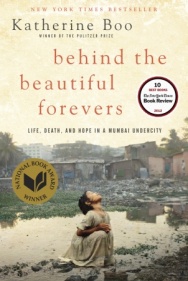
Behind the Beautiful Forevers by Katherine Boo; reviewed by Janet Maslin/New York Times www.nytimes.com/2012/01/31/books/katherine-boos-first-book-behind-the-beautiful-forevers.html

Big Brother by Lionel Shriver reviewed by Julie Myerson/The Observer www.theguardian.com/books/2013/may/11/big-brother-lionel-shriver-review

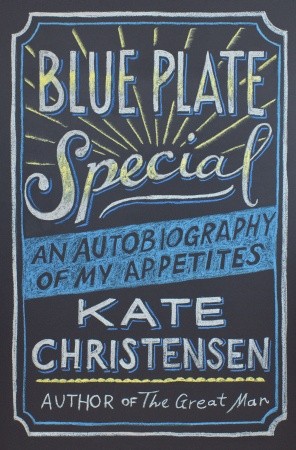
Blue Plate Special by Kate Christensen reviewed by Max Watman/Wall Street Journal online.wsj.com/news/articles/SB10001424127887324354704578636141281560474

Lost Girls: An Unsolved American Mystery by Robert Kolker reviewed by Mimi Swartz/New York Times www.nytimes.com/2013/07/07/books/review/lost-girls-by-robert-kolker.html

The Orphan Master’s Son by Adam Johnson reviewed by Michiko Kakutani/New York Times www.nytimes.com/2012/01/13/books/the-orphan-masters-son-by-adam-johnson-review.html?pagewanted=2a

9780062236678-1The Painted Girls by Cathy Marie Buchanan reviewed by Susan Vreeland/Washington Post articles.washingtonpost.com/2013-01-21/entertainment/36472794_1_dancers-sisters-marie-van-goethem

Sister Mother Husband Dog (Etc.) by Delia Ephron reviewed by Elinor Lipman/New York Times www.nytimes.com/2013/09/15/books/review/delia-ephrons-sister-mother-husband-dog-etc.html

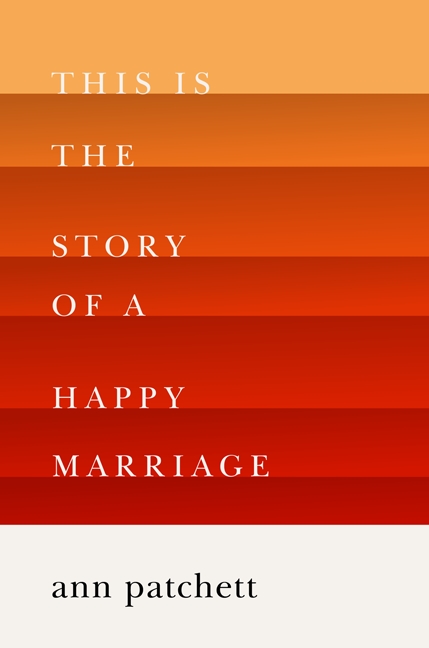
This Is the Story of a Happy Marriage by Ann Patchett reviewed by Maureen Corrigan/NPR www.npr.org/2013/11/13/244996958/a-marriage-a-divorce-a-dying-dog-and-essays-done-right

With or Without You by Domenica Ruta reviewed by Margaux Fragoso/New York Times www.nytimes.com/2013/03/24/books/review/with-or-without-you-by-domenica-ruta.html?pagewanted=2&_r=0


Online Book Roundtable

9781616203160Would you like to participate in a book club that has no meetings . . . no expectations . . . no rules? Welcome to the Online Book Roundtable! I’m not calling it a book club, because the word “club” implies that there are members, requirements, and an organizational structure. The Roundtable will have none of those pesky things. What we’ll do is choose a book each month, and as we read, we’ll comment on the book online (using the “comments” section of Books on the Table). The comment section does NOT require you to provide your name or email address. If you don’t want to provide public comments, please email me at bksonthetable@gmail.com and I’ll incorporate your comments anonymously in the discussion. I’ll provide reviews and related information about the book, and supply some discussion questions as we go along. We will plan on about a 4-6 week period from the time the book is chosen until we finish our discussion and choose the next book.

Here are a couple of interesting links about online book clubs:

http://flavorwire.com/414409/the-new-golden-age-of-online-book-clubs/

http://www.nytimes.com/2013/09/22/fashion/online-book-clubs-talk-that-stays-on-the-page.html?_r=0

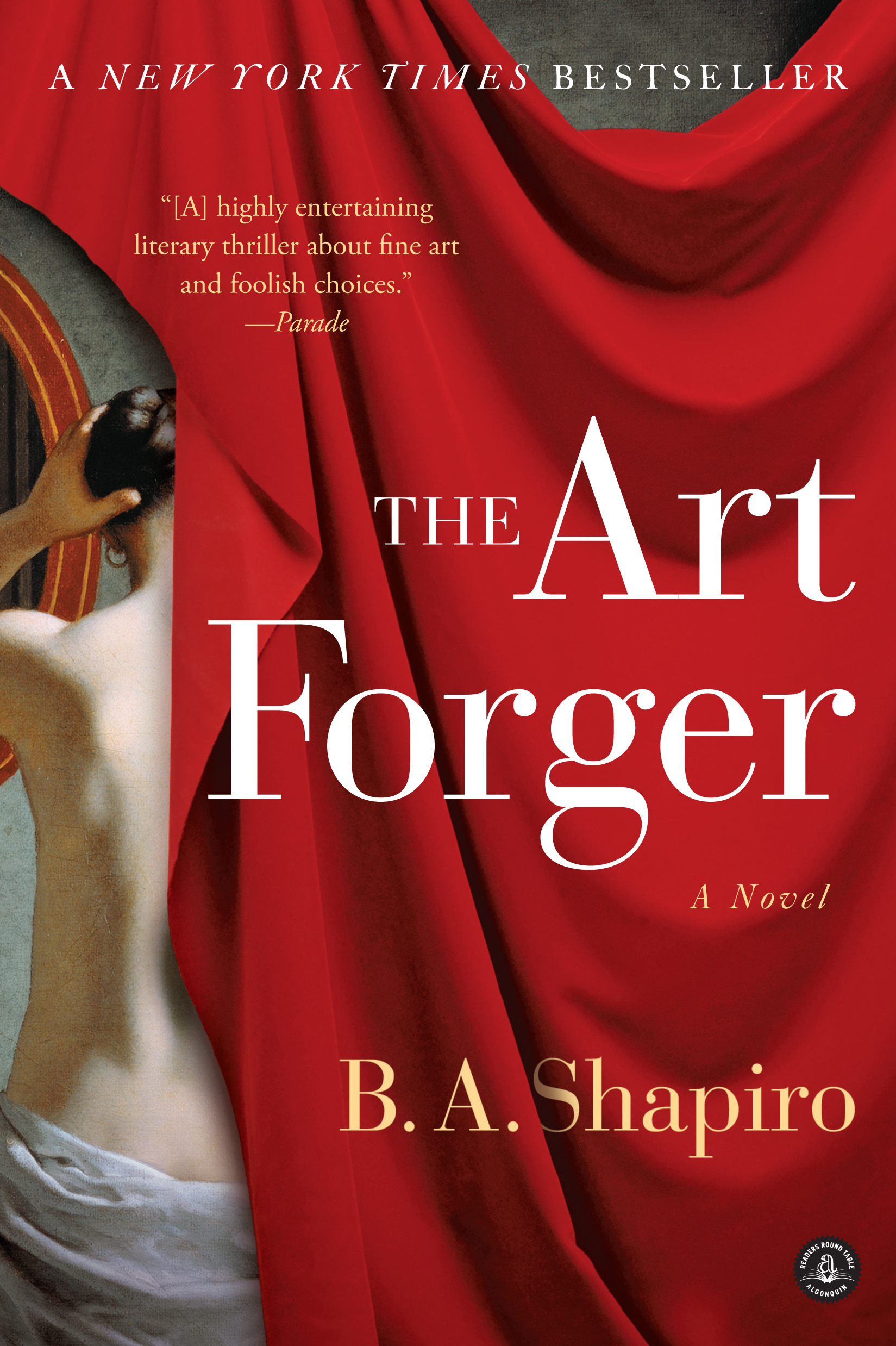
The first book selection will be The Art Forger by B.A. Shapiro:

Almost twenty-five years after the Isabella Stewart Gardner Museum’s infamous art heist—still the largest unsolved art theft in history—one of the stolen Degas paintings is delivered to the Boston studio of a young artist named Claire Roth. Claire, whose reputation has been tarnished by scandal and who now makes her living reproducing famous works of art for a popular online retailer, has entered into a Faustian bargain with Aiden Markel, a powerful gallery owner. She agrees to forge the Degas in exchange for a one-woman show in his renowned gallery. But as she begins her work, she starts to suspect that this long-missing masterpiece—the very one that had been hanging at the Gardner for one hundred years—may itself be a forgery.

As Claire searches for the truth about the painting’s origins, she finds herself in a desperate race through a labyrinth of trapdoors, dead ends, and deceit, where secrets hidden since the late nineteenth century may be the only evidence that can save her from incrimination. Blending art history with passions of the heart, B. A. Shapiro allows us to smell the oil paint, see the brush strokes, feel the artist’s ambition and the collector’s fanaticism. As she explores the ingenious techniques of forgery and reimagines historical relationships, she reveals both the beauty of the artist’s vision and the ugliness the desire for great art can unleash.

The Art Forger is a thrilling novel about seeing—and not seeing—the secrets that lie beneath the canvas.

B. A. Shapiro lives in Boston and teaches fiction writing at Northeastern University.

Please feel free to comment any time! Since we’re entering into the busy holiday season, let’s read and discuss The Art Forger through mid-December, and then start with a new book in early January.

If your book club has discussed The Art Forger, I’d love to hear about it. The Lake Forest Book Store book club will be talking about the book next Tuesday (11/19) and I’ll report on that meeting.


My Reading Life with Pat Conroy

I was saddened to learn that Pat Conroy died yesterday (March 4, 2016), at the age of 70. In his obituary, the New York Times says that Conroy’s “legion of admirers . . . hung on his every word, entranced by the naked emotionalism of his male characters, the Lowcountry atmosphere and the page-turning Southern yarns.” Two years ago, I wrote about Conroy’s last book, The Death of Santini (published in 2013) and my long nearly 30-year membership in the Pat Conroy fan club.

How many aspiring writers have been told to “write what you know”? If Pat Conroy was given that timeworn advice, he’s certainly taken it to heart.  Both his novels and his memoirs are about what he knows — growing up as the son of an abusive Marine Corps fighter pilot, attending the Citadel as a basketball player and budding writer, losing a brother to suicide, coping with a sister’s mental illness. In his latest memoir, The Death of Santini, Conroy says, ” My books have always been disguised voyages into that archipelago of souls known as the Conroy family.”

coverI discovered Pat Conroy in 1987, with a paperback copy of The Prince of Tides. My first baby was born that year, and when he was asleep, I was reading Pat Conroy. As tired as I was, I stayed up late, immersed in the drama of the Wingo family — a violent and cruel father . . . a suicidal poet sister . . . escaped convicts on the loose . . . and a ferocious pet tiger. When I finished all 664 pages, I couldn’t wait to read more of Conroy’s writing. I quickly went through The Water is Wide, The Great Santini, and The Lords of Discipline — and then I was finished. The books went on the shelf, and my love affair with big, fat books continued when Tom Wolfe’s The Bonfire of the Vanities grabbed my attention.

Conroy disappeared for years, and finally published Beach Music in 1995. I wanted to love the book, but found I couldn’t get past the flowery prose and stilted dialogue. So it was with trepidation that I picked up My Losing Season several years later. On the surface, this memoir recounts Conroy’s senior year playing basketball at the Citadel, but it’s really about his relationship with his father, his coach, and his teammates, and finding his voice as a writer.

Do you think that Hemingway knew he was a writer at twenty years old? No, he did not. Or Fitzgerald, or Wolfe. This is a difficult concept to grasp. Hemingway didn’t know he was Ernest Hemingway when he was a young man. Faulkner didn’t know he was William Faulkner. But they had to take the first step. They had to call themselves writers. That is the first revolutionary act a writer has to make. It takes courage. But it’s necessary.

Even though I’m not interested in college basketball, I was captivated by Conroy’s story of failure and how it shaped him into the person and writer he became. It remains one of my favorite memoirs . . . along with My Reading Life, which Conroy published in 2010. (I wasn’t enamored with South of Broad, Conroy’s 2009 novel.) My Reading Life isn’t exactly a memoir; it’s a collection of essays about the powerful role of reading in Conroy’s difficult life. A person can’t be a writer without first being a reader, and Conroy tells us how he became a reader:

My mother turned me into an insatiable, fanatical reader. It was her gentle urging, her hurt, insistent voice, that led me to discover my identity by taking a working knowledge of the great books with me always. She wanted me to read everything of value, and she taught me to out-read my entire generation, as she had done hers. . . I have tried to read two hundred pages every day of my life since I was a freshman in high school because I knew that I would come to the writing of books without the weight of culture and learning that a well-established, confidently placed family could offer its children. I collected those long, melancholy lists of the great books that high school English teachers passed out to college-bound students, and I relied on having consumed those serious litanies of books as a way to ease my way into the literary life.

Even today, I hunt for the fabulous books that will change me utterly. I find myself happiest in the middle of a book in which I forget that I am reading, but am instead immersed in a made-up life lived at the highest pitch. Reading is the most rewarding form of exile and the necessary discipline for novelist who burns with the ambition to get better.

The Death of Santini covers some familiar ground — the relationship between Conroy and his terrifyingly abusive father, Don Conroy (a.k.a. “The Great Santini”). But this is a story of redemption — Don Conroy has transformed himself from a monster into a loving father and grandfather. At the end of The Prince of Tides, Tom Wingo (Pat Conroy’s alter ego), says, “I learned that I needed to love my mother and father in all their flawed, outrageous humanity. And in families there are no crimes beyond forgiveness. But it is the mystery of life that sustains me now.” Fact reflects fiction in The Death of Santini, for Conroy shows us how he is able to forgive Don Conroy for his vicious cruelty towards his family. The writing of the book was a necessary part of Conroy’s healing; he says in the prologue:

Mom and Dad, I need to go back there once again.  I’ve got to try to make sense of it one last time . . . Then I’ll be finished with you, Mom and Dad. I’ll leave you in peace and not bother you again. And I’ll pray that your stormy spirits find peace in the house of the Lord. But I must examine the wreckage one last time.

Don Conroy was, according to his son, far more cruel and abusive than Bull Meecham, the”Great Santini” of the novel. When Conroy sent his editor a first draft of the novel, she told him she was troubled by his potrayal of the Colonel — “no  reader could expect to believe that such an unsavory man could exist without a single virtue to recommend him. To make him credible, I had to include scenes that displayed a softer and kinder man.” This softer and kinder man eventually came to life, in the person of the elderly Don Conroy. Throughout his life, he enjoyed attending his son’s book signings; in fact, father and son made a pact that no customer would ever leave without a book signed by them both. (Of course, he often bragged that his line for autographs was longer.) He was enormously proud of Conroy’s success, and, in fact, wrote a letter to his entire extended family defending The Great Santini:

Pat is a very clever storyteller and I was totally absorbed and encountered every emotion, as reading very slowly, life with father unfolded in this work of fiction. It was as though I knew some of the characters personally . . . Pat did a superb job in developing the character Mary Ann . . . with all modesty, fell far short on Santini — which is quite understandable with such a dashing and complex character.

Yes, Don Conroy is a complex character — and Conroy does an extraordinary job of portraying that complexity in The Death of Santini. In one of the most moving scenes in the book, Conroy describes his father’s grief after his youngest son’s funeral: “Forgiven at last, my father sat in a chair in the living room, not even trying to control his crying. His kids surrounded him, because his love of Tom provided us an understanding of his own love for all of us. It was a day of surreal, uncommon beauty.”

Conroy closes the book with the eulogy he wrote for his father’s funeral. Is this really the last time Conroy will “examine the wreckage” of his tumultuous family? In an interview in BookPage, he claims it is: “I’m going to try to leave the family in peace. There are other things to write about.” We’ll see.

Book Club Spotlight — The “No Regrets” Book Club

Actually, this book club isn’t called the “No Regrets” Book Club. I don’t think it has an official name, but I thought that should be its name because when I asked the members to tell me their favorite and least favorite selections,  I got variations on this response:

There has not been a single book that I have regretted reading and I have learned something from every book and everyone in the group through  our discussions, even involving books we haven’t liked very much.

cover-1I love this group’s attitude, energy, and enthusiasm — not to mention their longevity. They’ve been going strong for almost 20 years and have read about 180 books — classics, poetry, plays, memoirs, and of course, current fiction and nonfiction.  They are open to reading almost anything they think will inspire good conversation. Members of the group have come and gone throughout the years, but there is a core group of about 12 women — including two published authors!

The “No Regrets” readers have planned many creative book-related field trips. They have attended the Chicago Humanities Festival, where Frank McCourt (Angela’s Ashes) was a speaker. They have gone to the Steppenwolf Theater to see The Book Thief adapted as a play and to the local multiplex to see the movie version of The Great Gatsby. When a book club selection is set in another country known for its cuisine (France, Japan, China . . .), of course they must meet in an appropriate restaurant. And they have attended events at Lake Forest College and local libraries.

Every September, the group chooses books to read for the next nine months. Each member brings book suggestions and presents them to the group. The selection is democratic — the books with the most votes win. They always make sure to include a classic and a nonfiction book. Here’s their reading list for this fall and winter:

  • Me Before You (Jojo Moyes) — contemporary fiction
  • The Heretic’s Daughter (Kathleen Kent) — historical fiction
  • Listening Below the Noise: The Transformative Power of Silence (Anne LeClaire) — spirituality
  • The Secret Garden (Frances Hodgson Burnett) — classic children’s fiction
  • The Fault in Our Stars (John Green) — YA
  • The End of Your Life Book Club (Will Schwalbe) — memoir

What an interesting and diverse list!  “A little something for everyone,” said a member.  I particularly loved The End of Your Life Book Club — I’ll be curious to hear about that discussion. The book is a tender, moving memoir of Will Schwalbe’s deep and abiding relationship with his mother, and how books brought them even closer together. It’s a celebration of the transformative power of books. Reading is a solitary activity — but, as all book club members know, there is joy in sharing the books that you love. J.R. Moehringer, author of The Tender Bar, has this to say about The End of Your Life Book Club:

Will Schwalbe’s brave and soulful elegy to his remarkable mother, his recollection of their sparklingly literate conversations, is a timely reminder that one exceptional person, or one exceptional book, can be a torch coverin the darkness.

In November, the group meets at Lake Forest Book Store for a book review night to get a head start on Christmas shopping. (As Garrison Keillor said, “A book is a gift you can open again and again”.)  In December, the regular discussion is followed by a wrapped paperback grab bag: “It is great fun and everyone tries to bring interesting books to choose from,” according to a member.

The last meeting of the book club year takes place in June, when they meet at Ragdale, an artists’ community and retreat located on the country estate of architect Howard Van Doren Shaw. The porch of the main house provides a beautiful place to enjoy dinner, and the library is a cozy and peaceful spot for a book discussion . . . and, I imagine, reflection on a wonderful year of reading and friendship.

cover-2In no particular order, here are 10 favorite book club picks from the “No Regrets” club:

  • Crossing to Safety (Wallace Stegner)
  • Cutting for Stone (Abraham Verghese)
  • To Kill a Mockingbird (Harper Lee)
  • The Samurai’s Garden (Gail Tsukiyama)
  • Water for Elephants (Sara Gruen)
  • Year of Wonders (Geraldine Brooks)
  • Angela’s Ashes (Frank McCourt)
  • The Immortal Life of Henrietta Lacks (Rebecca Skloot)
  • The Red Tent (Anita Diamant)
  • The Aviator’s Wife (Melanie Benjamin) paired with A Gift From the Sea (Anne Morrow Lindbergh)

I’d love to feature more book clubs in Books on the Table — please tell me about your book club! Please fill out the contact form below, or email me at bksonthetable@gmail.com.

Special thanks to Leeni Ellis for telling me about her wonderful book club!

← Back

Thank you for your response. ✨

Author Events — Behind the Scenes

ArmchairBEA LogoExampleHello Armchair BEA Participants!

I’ve been coordinating author events for a small independent bookstore for many years. I can honestly say every author we’ve worked with has been delightful and interesting. Authors are the nicest people! Since becoming a blogger less than a year ago, I’ve discovered that most of them like to interact online. I think when they are procrastinating or have writer’s block, Twitter and Facebook call to them.

I’d like to point out something about the etiquette of author events. Most of our events are free. The publisher sends the author on a publicity tour, at no cost to the author or the bookstores involved, with the expectation that books will be sold. Bookstores that exhibit a poor track record of sales at their events won’t be offered many more authors. So if you want to continue meeting authors at events in your community, you need to show your support by buying books at the events. Nothing irritates an independent bookstore more than attendees who show up with books they’ve previously purchased on Amazon to be signed by the author. Does Amazon bring authors to your community?

Thanks for listening . . . and here’s a post from October, 2013, about one of my favorite recent author events. In this case, Carol Rifka Brunt arranged her own travel. She came all the way from England for several appearances in the United States. We were thrilled and honored to host her!

Lunch with Carol Rifka Brunt

This week I was fortunate enough to meet Carol Rifka Brunt, author of Tell the Wolves I’m Home. It’s always an amazing experience to meet the actual person whose writing you’ve admired. I’ve met many authors over the years, and I’ve almost never been disappointed. At first, I was surprised to learn that it isn’t enough for an author to write a successful book. Once the book is finished, author has another job: to market the book. If the author is lucky, his or her publisher will provide a lot of marketing support, including a publicity tour. But often the burden is on the author to arrange and publicize events.

ImageCarol Rifka Brunt is a case in point. Carol’s first novel landed on the New York Times bestseller list and has received rave reviews from all sorts of publications, including the Wall Street Journal and O, Oprah Winfrey’s magazine. Nonetheless, Carol was on her own when it came to organizing events promoting the book’s paperback release. Her friend Rebecca Makkai (Lake Forest resident and award-winning author of The Borrower and many short stories) suggested she contact Lake Forest Book Store. We were excited to hear from Carol, since we had read Tell the Wolves I’m Home and were enthusiastically recommending it. She told us she planned to speak at Western Michigan University on October 14 and wondered if she could visit Lake Forest afterwards. Of course, we immediately scheduled a luncheon and started spreading the word. Here’s what Carol posted on her blog:

Unlike a lot of authors, I haven’t done any readings or live events to support or promote Tell the Wolves I’m Home in the US. One reason for this is that I live in the UK, which makes it kind of logistically difficult. Another is that I’ve been lucky enough to have readers pick up the book and spread the word without me having to set foot to pavement, which is fantastic. In fact, Tell the Wolves just hit the New York Times bestseller list–a minor miracle for a geeky little book like this–and I haven’t been in the US once since it first came out in June 2012.

But although events haven’t really been a necessity, I have to say that I think I’ve missed out on one of the really enjoyable parts of being an author by not getting out there–meeting readers.

Readers in the Chicago area were thrilled to meet Carol — 50 of us gathered at Authentico in Lake Forest for a luncheon to hear Carol speak about her wonderful book. Tell the Wolves I’m Home is the story of a 14-year-old girl, June Elbus, whose beloved uncle has just died of AIDS. June adored — almost worshiped — her Uncle Finn, whose last work was a portrait of June and her older sister. The portrait becomes a virtual character in the novel, as June and her family come to terms with their loss and with an unlikely friendship that June develops. Tell the Wolves I’m Home is a perfect book club selection — it’s immediately engaging, it has layers of complexity without being dense, and it’s thought provoking. There are no heroes or villains in this story — only people trying to do their best in a difficult situation.

Carol read a lovely passage from her book, talked about the art that inspired her, engaged the audience in a discussion, and answered questions. I think those of us who had already read the book wanted to read it again after hearing Carol speak — and I suspect those who hadn’t read it couldn’t wait to get home and start reading. Spending time with Carol added another dimension to the reading experience — so we thank her for doing so well at her second job: book promoter.

Carol’s website is full of interesting information and links to reviews: http://www.carolrifkabrunt.com.

Fall Reading, Part 2 — Top 10 Lists

Last week I attended the Heartland Fall Forum,  a conference for independent booksellers. Book nerds from all over the Midwest gathered to “meet, network, promote new titles, place orders, and learn crucial skills”. (That’s from the official literature.) It was, as promised, very informative, and loads of fun as well.  Sue Boucher was asked to present her favorite books for fall at the Buzz Panel session; unfortunately,  I couldn’t attend because I was at the social media session,  creatively titled “Tweak Your Tweets”.  I learned a lot about Twitter at that session,  and have actually started tweeting. Right away, I attracted some followers — including someone whose name I can’t reproduce here because it’s in a foreign alphabet, and another person who seems to be running an escort service.

Another thing I learned at the social media session was that people like to read lists. This made sense to me because I like to read lists, but then I realized I like to read almost anything, including cereal boxes and church bulletins. Anyway, I thought Sue put together a great list of 10 new books to read this fall:

  • The Daughters of Mars (Thomas Keneally) — Australian author Keneally won the Booker Prize for Schindler’s List; his new novel tells the story of two sisters, both nurses, who leave their home in Australia to join a hospital ship at the beginning of World War I.
  • Empty Mansions: The Mysterious Life of Huguette Clark and the Spending of a Great American Fortune (Bill Dedman and Paul Clark Newell Jr.) —  Dedman (who won a Pulitzer Prize for journalism) is a cousin of Huguette Clark, the heiress who grew up in the largest house in New York City yet lived the last 20 years of her life in a single room.
  • A Guide for the Perplexed (Dara Horn)– Three interconnected narratives (from the Book of Genesis, medieval philosophy, and modern technology) explore the meaning of memory.
  • The Last First Day (Carrie Brown) — A quiet and beautiful love story about a couple facing their retirement from a private boys’ school.cover
  • Longbourn (Jo Baker) — For fans of Jane Austen and Downton Abbey — Pride and Prejudice from the point of view of the servants.
  • The Lowland (Jhumpa Lahiri) — Two brothers grow up together in India; one becomes involved in radical politics and one travels to the United States to pursue an academic career . . . and they both end up marrying the same woman.
  • The Outcasts (Katherine Kent) — A great romp! A woman escapes from a Texas brothel and finds herself on the run from the law.
  • The Rosie Project (Graeme C. Simsion) — Reminiscent of The Curious Incident of the Dog in the Night-Time, this is an absolutely delightful story about a brilliant yet socially challenged professor on the hunt for a wife.
  • The Signature of All Things (Elizabeth Gilbert) — Yes, the same Elizabeth Gilbert who wrote Eat Pray Love and Committed. But this novel is a total departure from Gilbert’s two memoirs — it’s about a 19th century female botanist.
  • Someone (Alice McDermott) — Like The Last First Day, this is a quiet book — the simple, beautifully written story of an ordinary woman, her life, and family.

My book club met last week and we came up with our own list of books. We hadn’t met all summer, and the purpose of our meeting was for us to share our favorite books we had read over the past few months. Here are 10 books our members suggested:

  • Sharp Objects  (Gillian Flynn) — Flynn’s debut novel is just as dark and disturbing as Gone Girl.
  • Yonahlossee Riding Camp for Girls (Anton DiSclafani) — A coming of age story set in the Blue Ridge Mountains in the 1930s.
  • The Burgess Boys  (Elizabeth Strout) — The author of Pulitzer-Prize winner Olive Kitteridge returns with the story of three siblings leading very different lives.
  • Rules of Civility (Amor Towles) — One of those rare books everyone loves. In Depression-era New York, a young secretary catapults into high society.1-dbda025b04
  • The Other Wes Moore (Wes Moore) — Nonfiction account of two men named Wes Moore — one a Rhodes Scholar, decorated war veteran, and White House Fellow and one a convicted murderer serving a life term in prison.
  • Flat Water Tuesday (Ron Irwin) — One reviewer called it “A Separate Peace with rowing”.
  • The Perfume Collector (Kathleen Tessaro) — A young woman in London receives a mysterious inheritance that takes her to an old Parisian perfume shop. Packed with information about how perfume is made.
  • Beautiful Ruins (Jess Walter) — The New York Times loved this book just as much as Madonna Merritt, our book group recommender, calling it a “high-wire feat of bravura storytelling”.
  • Stations of the Heart: Parting With a Son (Richard Lischer) — Lischer, a professor of theology at Duke, has written a beautiful tribute to his son, who died at age 33 of melanoma.
  • Sutton (J.R. Moehringer) — Moehringer, author of The Tender Bar (a book group favorite), succeeds admirably at his first foray into fiction. Famous bank robber Willie Sutton was a complicated and brilliant man, full of contradictions.
Thank you, Diane Grumhaus — who served as book club hostess and scribe!

Men, Women, & Reading

Today is my husband’s birthday (Happy Birthday, Jeff!) and that made me think about the differences between men’s and women’s reading tastes.  I was trying to decide which book to give him for his birthday. When I started working at Lake Forest Book Store, our owner, Sue Boucher, gave me a “tour” of the store. The space we occupied at the time was only 1000 square feet, so the tour didn’t take long, but I learned some interesting things along the way. Sue pointed out the “men’s” and “women’s” sections. The men’s, as you might guess, was filled with murder mysteries and spy thrillers, while the women’s shelves contained literary fiction.

I had never given much thought to which books might appeal primarily to men and which might be “women’s” books. I had always dismissed a few authors as men’s authors I didn’t want to read, (such as the recently departed Tom Clancy), but I had always liked all kinds of books and vaguely assumed everyone else was the same.  I knew that my sons didn’t want to read The Babysitters Club series and my daughter wasn’t interested in science fiction, but they had all enjoyed listening to us read Charlotte’s Web, The Witches, the Narnia books, and the Little House books.

Now I was learning to think like a bookseller, not just as an independent reader, and what I learned fascinated me. First of all, I discovered that the differences start early. If a book features a female as the main character, boys, for the most part, won’t read it. However, girls are happy to read about either boys or girls. Why do you think J.K. Rowling wrote about Harry Potter, not Helen Potter? Yes, Hermione is a smart and independent girl, but she’s still a sidekick. Do boys want to read about “the girl who lived”? This difference carries through to adulthood — it’s a rare male reader, in my experience,  who is interested in reading a novel featuring a female character.

Over the years, I found that another generalization held true — boys and men are more interested in novels featuring action, humor, and factual information than they are in books about love, family relationships, and young people coming of age.  And men are much more interested in nonfiction than women. If you tell a woman a work of nonfiction “reads like a novel”, that’s a great selling point —  but it’s not necessarily for a man. I wonder why elementary school teachers insist that boys read fiction, when so many of them would much prefer to read a sports biography or a factual book about war? Is the literary value of any novel greater than the literary value of nonfiction?

TheBoysintheBoatAnyway, I finally decided not to get my husband another book. I looked at his nightstand and realized I had already provided him with enough reading to take him through 2013 and well into 2014. (By the way, he’s not a fan of mysteries or spy thrillers — but he does love history.) He’s now reading The Boys in the Boat: Nine Americans and Their Epic Quest for Gold at the 1936 Berlin Olympics by Daniel James Brown — which was my favorite book from the last few months.  Everyone knows about Jesse Owens’s famous victory at the 1936 Olympics, but how many know about the University of Washington crew team’s win?

This is a perfect book for both men and women — if you’re looking for a book to share with your spouse, this is the one.  On the surface, it’s an underdog sports story in the vein of Seabiscuit or The Greatest Game Ever Played,  but it’s much more than a sports book. The “boys in the boat” were the nine students at the University of Washington (eight rowers and one coxswain) who overcame obstacle after obstacle to defeat the Germans at the 1936 Olympics. The fact that they were attending college at all was a miracle — almost all of them were from dirt-poor families struggling to feed their families during the Depression. One of the boys was actually abandoned by his family and had to forage in the woods for food. This book hooked me from the first page, when Daniel James Brown describes his first meeting with his neighbor, Joe Rantz (one of the legendary nine):

I knew only two things about Joe when I knocked his daughter Judy’s door that day. I knew that in his mid-seventies he had singlehandedly hauled a number of cedar logs down a mountain, then hand-split the rails and cut the posts and installed all 2,224 linear feet of the pasture fence I had just climbed over — a task so herculean I shake my head in wonderment whenever I think about it. And I knew he had been one of nine young men from the state of Washington — farm boys, fishermen, and loggers — who shocked both the rowing world and Adolf Hitler by winning the gold medal in eight-oared rowing at the 1936 Olympics.

It’s a thrilling story, even though the outcome is known from page one. The personalities involved, the historical context, and the details about rowing and boatbuilding all combine to create a multi-dimensional narrative. It’s an inspirational story as well; Brown starts  each chapter of The Boys in the Boat  with a quotation by George Pocock, the British-born boatbuilder and unofficial coach and guru to the University of Washington crew. The final quotation in the book is posted in the boathouse at the University of Washington:

Harmony, balance, rhythm. There you have it. That’s what life is all about.

Link to a video of the famous race, complete with a German announcer:


Early Decision — Book Review

9780062240699The clock is ticking for thousands of privileged high school seniors — the early decision deadlines at top colleges are looming. Lacy Crawford’s roman à clef, Early Decision: Based on a True Frenzy, is a glimpse into the world of an independent college counselor and her clients. The main character in Early Decision is Anne, a 27-year-old Chicagoan with degrees from Princeton and the University of Chicago who’s not quite sure what she wants to do with her life. She stumbles upon a career as a “college whisperer”  to students from wealthy families in Chicago and the North Shore. To the mothers, she’s a shoulder to lean on; to the fathers, she’s a voice of reason; and to the stressed-out teenagers, she’s a buffer between them and their anxious parents. But she wonders why:

. . . she was dating a man who cheated like mad and helping high school kids with their college applications .  . Every year, in late December as the application deadlines were bearing down, Anne swore she would never do it again. And then come spring, the phone calls came.

What I enjoyed most about Early Decision wasn’t the insider’s look at college admissions.  There have been several recent novels on that topic — most notably, Admission, by Jean Hanff Korelitz (made into a terrific movie starring Tina Fey) — as well as a spate of nonfiction accounts. Readers seem to have an endless appetite for information about the mysterious world of college admissions. I am no different — although, having weathered my three children’s college applications, I am growing a little tired of the whole subject. But I think  Early Decision is about much more than college — it’s about what it means to become an independent adult, and what it means to raise productive citizens. What decisions should parents make for children? How do we teach our children to make decisions for themselves? How can young adults gain self-knowledge and take control of their own futures? Anne, as well as her students, is struggling to make a life for herself:

Here is what was going to happen: Anne was going to wake up one morning in full possession of the authority she needed to go out and start her life. To acquire the position she really wanted — whatever that was — and succeed. . . She did not know how to explain why it hadn’t happened yet. She had been careful and diligent. She’d earned terrific grades. There had been classes in college about which she was passionate, and books she underlined so hard she tore the page . . . Her professors loved her, but none of them shared with her the knowledge she needed: How did such work lead to a life full of days? What, exactly, did one do?

Like her protagonist, Lacy Crawford was a private college admissions counselor.  As a high school English teacher, she discovered a talent for helping students with their personal essays for college. Parents began asking her to help their children with the admissions process, and a successful, 15-year career was born. When asked in an interview with The Atlantic why she didn’t write a tell-all memoir, Lacy said:

I have no interest in hurting people who have already been hurt by their parents’ ambition. These are stories of real devastation. And I was able to shine a spotlight on things with fiction that I wouldn’t have been able to do otherwise . . . I also didn’t want to write a memoir. I don’t have to relive my 20s. It wasn’t that fun the first time.

But reading Early Decision is fun — the humor is satirical without being mean-spirited, the writing is clever and fluid, the main characters are interesting and three-dimensional, and the ending is very satisfying.  Without giving too much away, I can tell you that nearly everyone makes the right decision. There’s an epilogue with updates on the five students that the book follows (four are wealthy, one is the daughter of a maid), as well as on the other characters — including April, Anne’s obnoxious neighbor. If you like ends tied up neatly in a book, this one is for you.

The literal French translation of roman à clef is “novel with a key”. The term originates from 17th century France when it was common for novelists to portray political and public figures masked as fictional characters. There might have been an actual key in the form of epigraphs. Today, the term is used a little more broadly, to describe a book about real events or people, with details obscured. (My favorite roman á clef of all time: Nora Ephron’s Heartburn.)