The Half Brother — Book Review

9780385531955The Half Brother tells a familiar story: growing up at a New England boarding school. What makes the novel fresh and original is that it focuses on the coming of age of a young teacher.  In the beginning of the book, Charlie Garrett is not much older than his students:

Teaching English at Abbott was my first job, right out of college . . . for me the idea of being employed at all, at a job that entailed skill and responsibility, was unreal, ludicrous. The only time I felt even slightly proficient at life was when I was holding a book in my hand.

Many novels are set at schools, but I’ve read few that capture the essence of what goes in on the classroom as well as The Half Brother. Charlie has received no formal training as a teacher, and is initially terrified of his students. He develops a persona, “a tweedy, knowledgeable, unflappable self”, and discovers that he actually has a gift for teaching:

At the window of my classroom, looking out, I was in the prow of a landship, forging ahead with my new self, built on the scaffolding of these names; then I turned around and my own energy went forth, joined theirs, became something new and larger. I had not expected to feel my own self slowly emerging as I tried to draw out theirs. I had not expected to love anyone, is what I’m saying. Sometimes they looked at me in amazement at what came out of their mouths.

As a new teacher, Charlie is drawn to one of his students, May Bankhead, who is a “faculty brat” — the daughter of the school chaplain. They correspond with each other after May’s graduation, and when she returns to campus several years later to care for her dying father, May and Charlie finally admit to themselves what they’ve always felt for each other.

Later, May becomes a teacher at Abbott herself — and so does Charlie’s younger half-brother, Nicky. Charlie has always been protective of Nicky, who is brilliant, handsome, and popular, yet strangely vulnerable. The inevitable triangle follows– and that’s all that I can tell you about the plot of The Half Brother, because the plot twists — which do not rely on unreliable narrators — are truly surprising. Read more

The Last Good Paradise — Book Review

9781250043962

What was this thing, the pursuit of happiness, that moved out of reach as you approached? Was the emphasis on the wrong word? Was it simply about pursuit? Did said happiness evaporate when one got within proximity of it, moving off to lure one from yet another difficult, forward location?

Tatjana Soli’s new novel, The Last Good Paradise, is a black comedy that takes place on a remote island in the South Pacific. Ann and Richard, a successful couple in their thirties, run away from Los Angeles after an unscrupulous business partner bankrupts them. They take refuge at “the most isolated, lonesome destination” Ann could find — Sauvage, a resort “sans telephone, WiFi, or electricity”. Their relaxing idyll turns into a melodrama with a quirky cast of characters.

I began reading this book with high hopes, having admired the author’s previous novels — The Lotus Eaters (about a love triangle in wartime Vietnam) and The Forgetting Tree (a family tragedy set on a California citrus ranch). I’ve always been fascinated by French Polynesia, Captain Cook’s voyages, and,seafaring stories — especially Mutiny on the Bounty and Moby-Dick. Read more

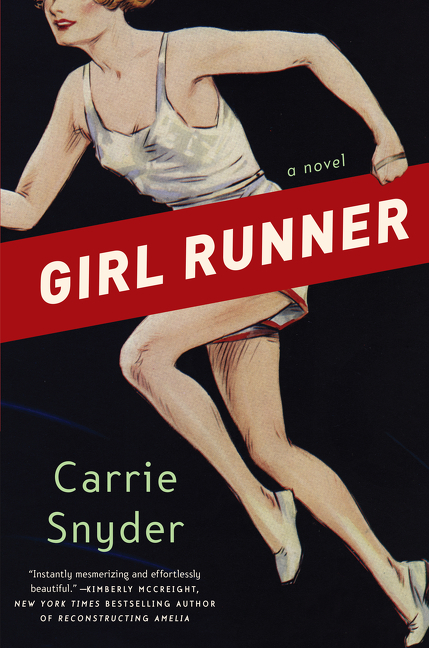
Girl Runner — Book Review

9780062336040And still I run: I run and run, without rest, as if even now there is time and purpose and I will gain, at last — before my spool of silence unwinds — what I’ve yet to know.

Former Olympic athlete Aganetha Smart is 104 years old at the beginning of Girl Runner, spending her final days in a nursing home where she is wheelchair-bound, unable to speak clearly, “a bit deaf — though not so deaf as they think — and not quite blind.” She has outlived everyone she’s cared about and wonders if anyone will remember her: “My achievement is to have lived long enough to see my life vanish. Who will write my obituary?”

In 1928, Aganetha was at the top of her game, a gold medalist in the 800 meter race at the Amsterdam Olympics. Her extraordinary running ability took her far away from her family’s farm in rural Canada, where she had already suffered more grief and loss than many people experience in a lifetime. From the time she was a small child, Aggie was a runner — fast and indefatigable. She was the one the family sent running for the doctor when there was an emergency on the farm.

Although Aggie Smart is a fictional character, author Carrie Snyder was inspired to create her by Canada’s real 1928 female track and field team, known as the “Matchless Six”.  The 1928 Olympics were the first at which women competed in track and field events, and it would be the last — until 1960 — at which women were allowed to participate in races farther than 200 meters. An Olympic committee blocked women from distance running, claiming that several female runners at the 1928 race dropped out, and that several others collapsed at the finish. (Film footage of the race refutes these claims; click here for an interesting article about the controversy in Runner’s World.) Read more

WWW Wednesday — Staff Picks

9780761178422What did you just finish reading? What are you currently reading? What do you think you’ll read next?

Today, at our monthly meeting, our staff discussed those very questions. Our meetings are supposed to begin at 8:00 a.m., and we rush to get through as many book reviews as possible before the store opens at 9:30.

Sheet Pan Suppers, by Molly Gilbert, has been a hit with our staff and customers, although clearly the title is a bit of a misnomer — this morning we sampled the raspberry white chocolate scones, which were delicious! (The subtitle of this great cookbook is 120 Recipes for Simple, Surprising, Hands-Off Meals Straight From the Oven, Plus Breakfast, Desserts, and Snacks Too!) I noticed that the scones sat untouched for the first half of the meeting, as our health-conscious booksellers delicately nibbled on clementines, but that somehow by the end of the meeting the scones were almost gone.

What else have we read recently?9781402298684

Last week was a great reading week for me — I finished two debut novels that I absolutely adored. The Magician’s Lie, by Greer Macallister, is a historical novel about a young, female magician (the “Amazing Arden”) at the turn of the 20th century, who is accused of murder. She is captured and interrogated by a country sheriff who has problems of his own, and during the course of one long night in a rural police station, we learn about the magician’s past. How did an aspiring dancer, born into a wealthy family, end up running a successful traveling magic show — and running for her life? It’s a terrific period piece, with a murder mystery and just a touch of the supernatural. If you enjoyed Water for Elephants, you’ll love this book.

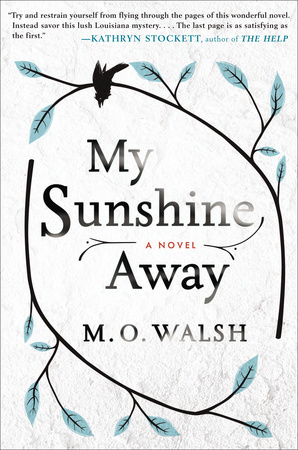
9780399169526I can’t say enough good things about My Sunshine Away, by M.O. Walsh (due February 10).  During the summer of 1989, the narrator of My Sunshine Away is fourteen years old and in love with his neighbor on Piney Creek Road in Baton Rouge, Louisiana, Lindy Simpson. When Lindy becomes the victim of a rape, everything changes. The narrator finds himself, along with other neighbors, interrogated about the crime:

Don’t believe what you see on the crime shows today. No single hairs were tweezed out of Old Man Casemore’s lawn. No length of rope was sent off to a lab. No DNA was salvaged off the pebbles of our concrete. And although the people of Woodland Hills answered earnestly every question that was asked of them, although they tried their best to be helpful, there was no immediate evidence to speak of.

Although My Sunshine Away is suspenseful — sometimes almost unbearably so — it’s really a coming of age story. It’s about an immature, self-centered boy becoming an adult with integrity. As he recounts the pivotal events of his youth, the narrator’s voice is authentic and compelling. At one point, he reflects on the nature of nature of memory:

And it is not until times like these, when there are years between myself and the events, that I feel even close to understanding my memories and how the people I’ve known have affected me. And I am often impressed and overwhelmed by the beautiful ways the heart and mind work without cease to create this feeling of connection.

Although I’ve never been to Baton Rouge, I felt as if I had after reading Walsh’s lyrical descriptions of this singular place. Walsh, who is the director of the Creative Writing Workshop at the University of New Orleans, clearly heeds every creative writing teacher’s advice: “Show, don’t tell.” He shows us a setting and characters that are as vivid as any I’ve encountered on the page. The novel reminded me in some ways of Alice Sebold’s The Lovely Bones — but without the murder and the accompanying trip to heaven, and with a great deal more wisdom. Read more

The Grown Ups — Book Review

IThe Grown Ups have lived a great deal among grown-ups. I have seen them intimately, close at hand. And that hasn’t much improved my opinion of them.
Antoine de Saint-Exupéry, The Little Prince

They had entered the thorny wilderness, and the golden gates of their childhood had for ever closed behind them.
George Eliot, The Mill on the Floss

What does it mean to be a “grown-up”?  That’s one of the questions that Robin Antalek asks in her engaging coming-of-age novel, The Grown Ups. The book opens in the summer of 1997, with Suzie Epstein, Sam Turner, and their friends celebrating Suzie’s fifteenth birthday at a loosely supervised party in Rye, New York. That night, Suzie and Sam embark on a clandestine romance that will last all summer.

Right away, we know something is not right in the neighborhood: “It was the summer all the children in the neighborhood caught a virus.” Soon it becomes apparent that the grown-ups have more serious problems than the stomach flu: “The second time Mr. Epstein caused a scene in the driveway of the Epstein family home, the neighborhood was still under siege by the virus and was unusually quiet for the middle of a summer day.” Read more

Jazz Age January: West of Sunset & And So We Read On

24de28664bdf1f004be5425016536035“His dream must have seemed so close that he could hardly fail to grasp it. He did not know that it was already behind him.”
F. Scott Fitzgerald, The Great Gatsby

As I read West of Sunset,  Stewart O’Nan’s lovely, sad fictionalized account of F. Scott Fitzgerald’s final years, I found myself wondering what Maureen Corrigan would think.

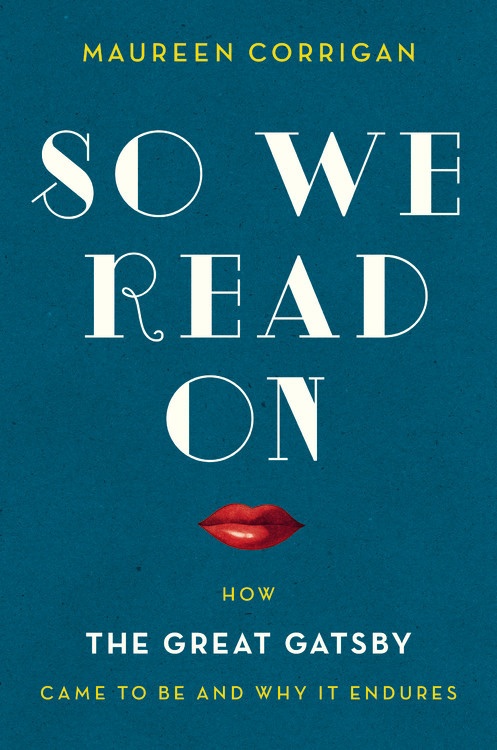
Maureen Corrigan has been NPR’s book critic for 25 years. She also reviews regularly for many national publications and is the Critic in Residence at Georgetown University. Last fall, she shared her longtime passion for F. Scott Fitzgerald’s masterpiece in So We Read on: How The Great Gatsby Came To Be and Why It Endures. Often underappreciated and misread because of its brevity and apparent simplicity, the novel is, she says, our “Greatest American Novel”:

Gatsby‘s magic emanates not only from its powerhouse poetic style — in which ordinary American language becomes unearthly — but from the authority with which it nails who we want to be as Americans.

Corrigan, like so many of us, first encountered The Great Gatsby as a teenager. “I thought The Great Gatsby was a boring novel about rich people,” she says in her book’s introduction.”The bad news is that we read it in high school or even (shudder) junior high, when we’re much too young . . .”  Then she spends almost 300 pages explaining why she thinks The Great Gatsby is truly The Great American Novel, worth reading again and again.

“Are you tired of it yet?” my husband and close friends would ask me every so often during the time I was writing this book and, of course, rereading The Great Gatsby. I can honestly answer “No.” I don’t know how he did it, but Fitzgerald wrote a novel that shows me new things every time I read it. That, for me, is the working definition of a great book: one that’s inexhaustible.

The Great Gatsby, originally published in 1925, initially sold poorly and received mixed reviews. By the mid-thirties, not only was the country in a depression — so was Fitzgerald’s career. He suffered from a host of physical illnesses that were complicated by alcoholism; his wife, Zelda, was incarcerated in a mental hospital; and he was deeply in debt. No one at that time would have predicted that Fitzgerald’s short novel would one day be the most widely read books in the world, eventually selling more than 25 million copies.

West of Sunset opens as Fitzgerald, badly in need of money to pay for Zelda’s medical care and his daughter Scottie’s private school tuition, heads west to Hollywood to take a screenwriting job at a movie studio: Read more

Island Fog — Book Review and Author Interview

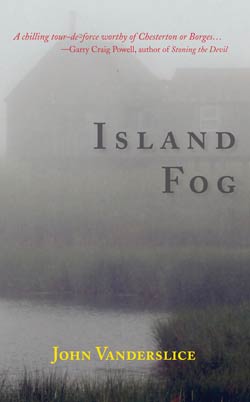
Island FogThe future draped before him like an island fog: dank, listless, and inscrutable. Possibly even dangerous. Only his next step was visible, nothing beyond.
“Island Fog”

The air feels more wet and more cold than even five minutes ago, a thicker texture of gray. You are in the high tide of afternoon fog.
“How Long Will You Tarry?”

Strange things happen in John Vanderslice’s Island Fog, sometimes under the mysterious cover of fog and sometimes out in the open. The eleven linked stories in Island Fog all take place on Nantucket, a small island (49 square miles) 30 miles off the coast of Massachusetts. The haunting, often surreal stories are tied together by the island’s unique history and geography. The collection begins with a story set in 1795, “Guilty Look”, and ends with “Island Fog”, a story that takes place in 2005. In both stories, the protagonist is nightmarishly trapped in a situation that doesn’t seem to offer any hope of escape. A respected wigmaker and bank board member is determined guilty of theft on the basis of a “guilty look”, despite the fact he has located one of the actual criminals, and a college student becomes ensnared in an unbreakable “employment contract” with a diabolical employer. The sinister undertones in these stories, and in several others, reminded me of Shirley Jackson’s dark and ominous short fiction, set in seemingly peaceful New England towns. Read more

WWW Wednesday — New Year’s Eve

What did you just finish reading? What are you currently reading? What do you think you’ll read next?

9781607747307First of all, based on how my clothes are fitting, I SHOULD be reading one of the zillions of diet books that magically appear on bookstore shelves this time of year. The Bulletproof Diet: Lose Up to a Pound a Day, Reclaim Energy and Focus, Upgrade Your Life  . . . The Burn: Why Your Scale is Stuck and What to Do About It  . . . 20 Pounds Younger: The Life-Transforming Plan for a Fitter, Sexier You! I’m particularly intrigued by Zero Belly Diet: Lose Up to 16 Lbs. in 14 Days! Unfortunately, the only surefire method I know for losing weight quickly is a case of the flu, and I’m trying to avoid that.

I did just read a book related to self-improvement: The Life-Changing Magic of Tidying Up: The Japanese Art of Decluttering and Organizing, by Marie Kondo. Recently published in the United States after hitting the bestseller lists in Japan and Europe, this is no ordinary guide to household management. Kondo is more of a Zen philosopher than an organizational expert. For example, most professional organizers advise clients to get rid of clothes they haven’t worn in a year. Kondo tells her readers to remove every item from their closets, determining which items “spark joy”.  New York Times writer Penelope Green tested Kondo’s advice and found it surprisingly effective: Read more

Village of Secrets — Book Review

Village of SecretsRecently, a customer asked me to help her choose her book group’s next selection. She mentioned that they had recently read Unbroken, and said emphatically, “No more World War II books! We’ve read enough about that.” This isn’t the first time I’ve heard that comment. I honestly can’t understand how anyone could ever read enough about World War II.

I think the first book I read about the Second World War and the Holocaust was Anne Frank’s The Diary of a Young Girl, when I was 9 or 10. One of the questions that book raised to me, as a child, is the same question that historian Caroline Moorehead examines in Village of Secrets: Defying the Nazis in Vichy France: What enables some people to risk their lives, and those of their families, to do what is courageous and morally right? Especially when those around them are either ignoring or participating in the evil?

Moorehead set out to chronicle the heroic acts of villagers in the mountains of the Ardèche, a remote area of eastern France. The residents of Le Chambon-sur-Lignon and surrounding villages were able to save the lives of thousands who were hunted by the Gestapo: resisters, Freemasons, communists, OSS and SOE agents, and Jews. Many of those who were protected and hidden were children whose parents had been sent to concentration camps.

France, as Moorehead describes in painful detail, was a country “not merely resigned to defeat, but ready to blame itself for what had happened, and eager to accommodate and anticipate lest the worst befall”. “Accommodating” and “anticipating” involved taking an active role in arresting and deporting French Jews:

It would be many years before it was acknowledged that, from the very beginning, with their censuses, their revisions of nationality, their Statuts des Juifs, their seizure of property and businesses and their expulsions from professions and jobs, Vichy had effectively paved the way for Hitler’s Final Solution in France . . . As the SS officer Helmut Knochen declared at his trial in 1947: “We found no difficulty with the Vichy government in implementing Jewish policy.”

Village of Secrets is an engrossing, painstakingly researched account of what Moorehead calls a “remarkable adventure in imagination and cooperation”. The story first came to light in the early 1950s when an American magazine published a story about André Trocmé, the Protestant pastor in Le Chambon who led his parish’s effort to rescue the targets of German persecution. This story helped France define its wartime experience, “by minimizing collaborators and celebrating resisters”. The story also contributed to the myth that the saintlike Trocmé, through Gandhian non-violence, the help of a “good German officer”,  and the cooperation of a regional prefect, saved 5,000 lives.

The truth, Moorehead found in her research — which involved interviews with many villagers — is much more complicated than the original news story about a pacifist minister who spearheaded a brave effort to save lives in Vichy France.

What actually took place on the plateau of the Vivarais-Lignon during the grey and terrifying years of German occupation and Vichy rule is indeed about courage, faith and morality. But it is also about the fallibility of memory.

Moorehead portrays Trocmé not as a saint, but as a complicated and mercurial person — and only one of many brave individuals who were instrumental in the resistance efforts. In 1990, a young minister, Alain Arnoux, organized a colloquium to discuss the “various renderings of the past” that had become so divisive in Le Chambon:

He was sick to death of the bickering, the animosities, the films, books, speeches, each one more inaccurate than the last, the ever inflated numbers of those rescued — 5,000! 8,000! . . . For three days in October 1990, the war on the plateau was rehashed. All those neglected by Trocmé . . .  the many other Protestant pastors, the Catholics, the farmers who hid the children, the children themselves, now grown into adults — were heard.

In her efforts to uncover the true story of the “Village of Secrets”, Moorehead asked herself — and others — what differentiated Le Chambon and the surrounding villages from other areas in Vichy France. Why were more people in, proportionately, saved from the Nazis in that little region than anywhere else in France? She acknowledges that “all over France, other villages, other towns, convents, families, Protestants, Catholics, Gaullists and communists, at great risk to themselves, sheltered those pursued by the Nazis . . . Parallel to the map of Vichy is a map of decency.” But somehow, she says, the story of the Plateau Vivarais-Lignon is different — a “felicitous combination of timing, place, and people”.

If you haven’t read enough World War II history — and I hope you haven’t — I highly recommend Village of Secrets. I will warn you that your head will spin from all the different names you will encounter — pastors, rescuers, children, German officials, and more. (There are two characters named Madeleine, for example.) Moorehead helpfully includes a list of all the major characters in the beginning of the book, as well as a timeline that includes major events in the war as well as in the Plateau Vivarais-Lignon.  I flipped back to these pages many times.

Moorehead’s narrative flows smoothly, despite all the dates, names, and details. She’s an accomplished author of history and 9780061650710biography, with 15 books to her credit. I also recommend A Train in Winter: An Extraordinary Story of Women, Friendship, and Resistance in Occupied France. Village of Secrets is a natural companion to A Train in Winter, also focusing on the nature of heroism. In the epigraph to Village of Secrets, Moorehead quotes Mordechai Paldiel, a leading scholar on rescue during the Holocaust:

In searching for an explanation of the motivations of the Righteous Among the Nations, are we not really saying: what was wrong with them? Are we not, in a deeper sense, implying that their behavior was something other than normal? . . . . Is acting benevolently and altruistically such an outlandish and unusual type of behavior, supposedly at odds with man’s inherent character, as to justify a meticulous search for explanations? Or is it conceivable that such behavior is as natural to our psychological constitution as the egoistic one we accept so matter-of-factly?

For more reviews, please click on TLC Book Tours.


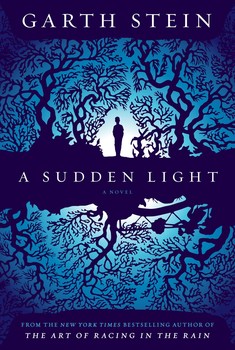
A Sudden Light — Book Review

sudden-light-9781439187036_lg

Stories continue in all directions to include even the retelling of the stories themselves, as legend is informed by interpretation, and interpretation is informed by time. And so I tell my story to you, as the Mariner told his: he, standing outside the wedding party, snatching at a passing wrist, paralyzing his victim with his gaze; I, standing with my family at the edge of this immortal forest. I tell this story because telling this story is what I must do.
Garth Stein, A Sudden Light

Yesterday, while he was fitting me for new sneakers, the salesman asked me what my favorite book was. (How did the subject come up, you wonder? Never one to waste a moment of potential reading time, I was reading a book while waiting my turn in the shoe store.) I told him that was an impossible question to answer — I could only give him a list of my favorite books. “No,” he said. “You have to pick one. I’ll start. Mine is Odd Thomas, by Dean Koontz.”

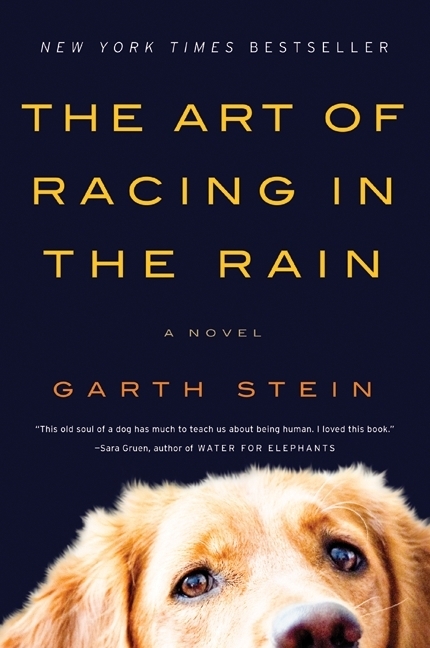
OK, I thought. Fair enough. I wanted to get my sneakers and move on with my day. So I said the first book that popped into my mind: The Art of Racing in the Rain, by Garth Stein.  When I described the book, he was fascinated — it turns out he is an auto racing fan AND a dog owner. Not that those characteristics are necessary for a person to enjoy The Art of Racing in the Rain, but that lucky coincidence made it a sure bet. When the salesman told me he “still likes paper books” and that he didn’t think there were any bookstores left in the northern suburbs of Chicago, I gave him directions to Lake Forest Book Store, 10 minutes away from the shoe store. I hope he went.

Garth Stein’s The Art of Racing in the Rain isn’t my favorite book (as I said, there’s no such thing) 9780061537967but it is a book that I hold close to my heart. I’ve read it, reread it, underlined favorite passages, and listened to it on audio. No critic would call it a literary masterpiece — it’s not multi-layered, it’s sentimental, and the writing, while lovely, is not distinctive. It’s more what I would call a little jewel of a book — not ambitious in its scope, but perfect at what it sets out to do. Enzo, the dog who narrates the book, has a voice that no reader will ever forget. I hate to use the word “uplifting”, but that’s what this book is, even with the inevitable sadness at the end.

Stein published The Art of Racing in the Rain in 2008, so it’s been a six-year wait for his fourth novel, A Sudden Light. (Stein is also the author of two previous novels, which I haven’t yet read.) A Sudden Light has some elements in common with The Art of Racing in the Rain: the Seattle setting, a compelling narrator — in this case, a precocious 14-year-old boy — and an air of mysticism.

Trevor Riddell’s  bankrupt, recently separated father, Jones, brings him to his grandfather’s mansion (Riddell House) in order to move the old man to a nursing home and sell the property for much-needed cash. However, Trevor discovers that there may be a ghost in the house, and secrets in his family’s history, that will prevent his father and his Aunt Serena from carrying out their plan. Trevor badly wants the plan to succeed, because he thinks that if his father has money in the bank he and his mother will be more likely to reconcile.

A Sudden Light is told from the perspective of Trevor as an adult, telling the story of the fateful summer when he lived at Riddell House with his grandfather (who may or may not have dementia), his Aunt Serena (who may be mentally ill, evil, or perhaps both), and his  father (who is a lost soul, trying to find his way back to his wife and his son, and to come to terms with his dysfunctional family). Trevor’s voice captivated me right away, and I read eagerly for the first third of the book.

Then things became problematic for me. Trevor discovers (too easily) old family diaries and letters that reveal many ugly secrets. He encounters a ghost, who helpfully fills in the missing parts of the sordid Riddell family history. Aunt Serena, Trevor’s father’s sister, who has never married and lives with her father as his caretaker, displays increasingly erratic and sinister behavior. I found it especially creepy that she always addresses Trevor’s father as “Brother Jones”.  She — like some of her Riddell ancestors — was too much of a stock villain to be a believable character.

I should admit I have a problem with ghosts. I think they are usually a silly plot device. Usually, when a ghost appears in a novel, that is the moment when I lose interest. That didn’t happen right away in this book, because I held out hope that the ghost was a figment of Trevor’s imagination. I don’t want to give anything away, but the ghosts do turn out to be other than what they originally seem. Still, not long after the ghost showed up. I began finding the story contrived and unbelievable. I’m not sure why I can easily accept a dog as a narrator, but not a ghost as a character. Maybe it’s because it is a fact, accepted by every sane human being, that dogs do not narrate books, while apparently there are reasonable people who believe in ghosts.

Trevor Riddell is one of those people. He has a difficult time convincing his mother, a brilliant scholar of comparative literature, that the Riddell House ghosts exist: “‘I’m sorry,’ she says. ‘I thought you were making up stories — going a little crazy in this house with your imagination and nothing to keep you occupied. I didn’t know how to believe you. I’m so sorry'”. Trevor’s mother has spent her life as an agnostic, accepting the inexplicable. The connection Trevor feels with the ghosts of his ancestors helps him develop a faith that sustains him:

Perhaps that’s what life is about–the search for such a connection. The search for magic. The search for the inexplicable. Not in order to explain it, or contain it. Simply in order to feel it. Because in that recognition of the sublime, we see for a moment the entire universe in the palm of our hand. And in that moment, we touch the face of God.