Happy first day of spring! Today is the vernal equinox (or the autumnal equinox, if you’re in the southern hemisphere). I was a little fuzzy on the term “equinox”, so I turned to Google and found that the London Telegraph explained it very clearly:
The March equinox marks the moment the Sun crosses the celestial equator – the imaginary line in the sky above the Earth’s equator – from south to north. This happens on March 19, 20 or 21 every year . . . Since night and day are nearly exactly the same length – 12 hours – all over the world the event is called the equinox, which in Latin, literally means ‘equal night’ (equi – equal, and nox – night).
I also didn’t know that certain rituals are associated with the spring equinox. According to the Elephant Journal, picnics, kite-flying, and special cleansing baths accompanied by candles and incense are good ways to celebrate spring. The article’s author also suggests an activity that, despite my enthusiasm for the coming season, I will not be engaging in: “Gather a circle of sisters around a fire, to share stories, laughter and music. I’m usually naked dancing by my first bonfire if the neighbors are not up for the weekend, or indoors by the wood stove.”
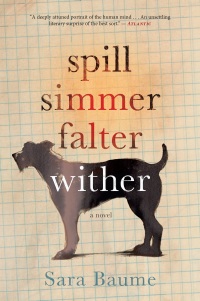 I’m all for sharing stories, laughter, and music, but I like to keep my clothes on. And even though it’s supposed to be spring, I still like a cozy blanket over me when I read on the couch in the evening. Right now, I’m reading Spill Simmer Falter Wither, by Irish author Sara Baume, just out in paperback. Told in poetic language, it’s the story of two outcasts, a lonely 57-year-old man and his one-eyed dog. If you liked The Curious Incident of the Dog in the Night-Time, this will appeal to you.
Here are nine other terrific books, just out in paperback, that you may have missed in hardcover:
 Lilac Girls by Martha Hall Kelly
Anyone who loved The Nightingale, Salt to the Sea, The Invisible Bridge, or All the Light We Cannot See will find Hall’s debut novel both unforgettable and hard to put down. Historical fiction at its best, the novel tells the powerful story of female prisoners subjected to medical experimentation at the hands of the Nazis. Three narrators — a Polish teenager, a German doctor, and an American humanitarian, all based on real women, lend their distinctive voices to this meticulously researched story of heartbreak and courage.
The North Water by Ian McGuire
This adventure story certainly isn’t everyone’s cup of tea, but I read it in two days. The North Water was chosen by the New York Times Book Review as one of the year’s ten best books, so I can’t be the only person who willingly reads about violence aboard a 19th century whaling expedition — gruesome murders, polar bear attacks, animal slaughter, and violence galore.
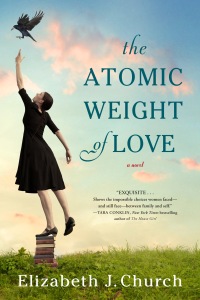 The Atomic Weight of Love by Elizabeth J. Church
Meridian (Meri), a young biology student at the University of Chicago, marries her much older professor, Alden, and gives up her own dreams of becoming an ornithologist when her husband is sent to Los Alamos to help develop the atomic bomb. This lovely novel of love, sacrifice, and societal change spans 30 years in Meri and Alden’s flawed marriage. This would be a perfect book club selection — beautiful writing and plenty of issues to discuss.
The Summer Before the War by Helen Simonson
Simonson, author of Major Pettigrew’s Last Stand, brings us a kinder, gentler World War I book than most. The story centers on Beatrice Nash, a young Latin teacher who arrives in the small village of Rye during the summer of 1914. Determined to make her own way after the death of her beloved father, Beatrice is thwarted by the sexist mores of the times. She befriends a local family, the Kents, whose nephews — each for his own complicated reasons — volunteer to serve in France soon after war is declared. Warning: you may shed a tear or two at the end of this lovely, charming book, which is a perfect choice for fans of Downton Abbey.
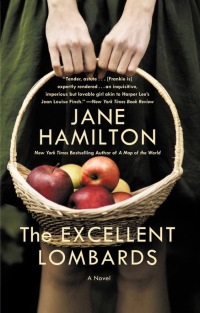 The Excellent Lombards by Jane Hamilton (coming in paperback on April 4)
Jane Hamilton is one of my very favorite authors, and it’s been seven years since her last novel. The Excellent Lombards is well worth the wait. It’s a jewel. The story, like so many others I’ve read recently, is about a young person growing up and finding her place in the world. Mary Frances Lombard (“Frankie”) enters a grade school geography bee, learning from her teacher that “‘everything about the place where you live determines Who You Are’”.
A Mother’s Reckoning: Living in the Aftermath of Tragedy by Sue Klebold
The question that everyone asked after the Columbine tragedy, Where were their parents?, is partially answered in this painfully honest memoir by the mother of one of the two killers.
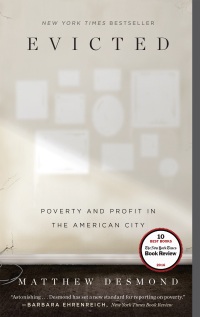 Evicted: Poverty and Profit in the American City by Matthew Desmond
Desmond, a sociologist, has written a work of nonfiction that reads like the most compelling novel you can imagine. Evicted is reminiscent of Behind the Beautiful Forevers, Random Family, and There Are No Children Here. He follows eight Milwaukee families struggling to find and keep safe and affordable housing, along with the property owners who control their fates.
Lit Up: One Reporter. Three Schools. 24 Books Tht Can Change Lives by David Denby
Denby, film critic for the New Yorker for many years, wanted to learn how schools can foster the love of reading in screen-addicted teenagers. His account of the time he spent observing dedicated teachers fighting this uphill battle kept me reading late at night.
 The Underdogs: Children, Dogs, and the Power of Unconditional Love by Melissa Faye Greene
Melissa Fay Greene ( author of Praying for Sheetrock and There Is No Me Without You, among others) is one of my favorite nonfiction writers. The Underdogs tells the story of Karen Shirk, founder of the service dog academy 4 Paws for Ability. Karen trained her own service dog after she became profoundly disabled and was rejected by every service dog agency she approached. I was riveted by Karen’s story, and the stories of the amazing dogs she trains who are able to help people in ways that humans cannot.
 In a
In a 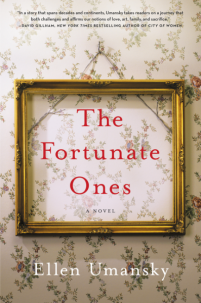 The Fortunate Ones by Ellen Umansky
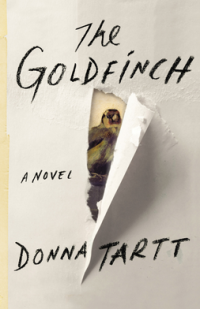 The Goldfinch by Donna Tartt (winner of the Pulitzer Prize in 2014)
 I Am Madame X by Gioia Diliberto
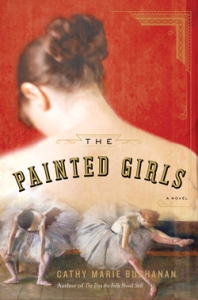 The Painted Girls by Cathy Marie Buchanan
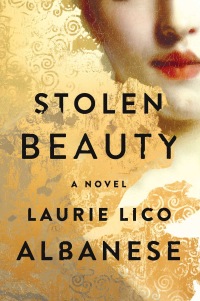 I’ve just started reading Stolen Beauty by Laurie Lico Albanese, about Gustav Klimt and Adele Bloch-Bauer, the “woman in gold” who is the subject of two of his most famous paintings. So far, so good — and my husband highly recommends Anne-Marie O’Connor’s nonfiction account, The Lady in Gold: The Extraordinary Tale of Gustav Klimt’s Masterpiece, Portrait of Adele Bloch-Bauer.
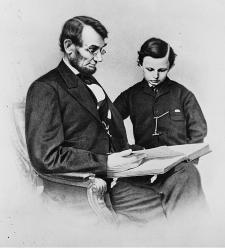 All I have learned, I learned from books.
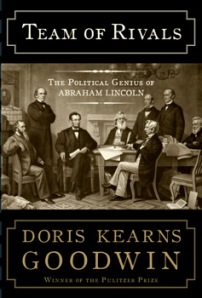 In 2012, when Daniel Day-Lewis astonished us with his performance in Steven Spielberg’s Lincoln, readers rediscovered Doris Kearns Goodwin’s Team of Rivals: The Political Genius of Abraham Lincoln (the book on which the movie was partially based.) Unlike my husband, I don’t usually take my history straight up — I prefer a little fiction mixed in — but I thoroughly enjoyed Team of Rivals.
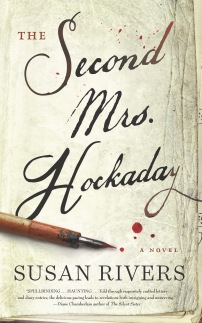 The Second Mrs. Hockaday (Epistolary novel about a young wife accused of infanticide while her Confederate Army officer husband leaves her to run the family farm) by Susan Rivers
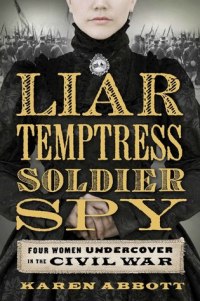 Liar Temptress Soldier Spy (Nonfiction that reads like fiction; a rollicking chronicle of the exploits of four female spies –two Union, two Confederate –during the Civil War) by Karen Abbott
 I haven’t read either The Underground Railroad by Colson Whitehead (winner of the 2016 National Book Award for fiction) or Lincoln in the Bardo by George Saunders, although both are universally acclaimed. For a glowing review of Lincoln in the Bardo, check out today’s New York Times Book Review.) One of my coworkers, whose opinions I always trust and whose taste I almost always share, loved Lincoln in the Bardo, and says it “will haunt me for some time (pun entirely intended) . . . It is not a straight forward narrative. It is a complex (yet, very entertaining) discussion of the manner in which we live and how that life will affect the manner in which we die and our afterlife.” (By the way, “bardo” is the Tibetan term for purgatory.) I’m sure both of these books are superb and well worth reading, but I have a problem with
 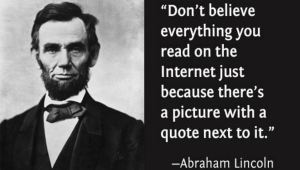 books that mix reality and fantasy. Usually, the minute a ghost appears in a novel I lose interest. Or, for that matter, when the “underground railroad” turns into an actual train. Does anyone else have that problem, or am I just lacking in imagination?
 All you need is love. But a little chocolate now and then doesn’t hurt.
 Paiuk has come up with an alternative to making valentines out of construction paper, glitter, and lace doilies — she and her family will be making “gratitude bookmarks”. Bookmarks can’t possibly offend anyone, although I have to admit I’m one of those terrible people who usually ends up dog-earing the pages of my books.
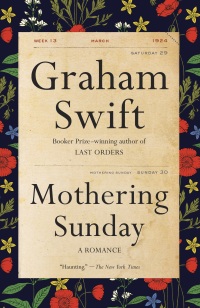 Mothering Sunday by Graham Swift
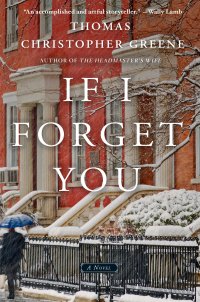 If I Forget You by Thomas Christopher Greene
 I recently enjoyed Jennifer Weiner’s collection of personal essays, Hungry Heart: Adventures in Life, Love, and Writing. Weiner has a big chip on her shoulder, so she would hate to hear me say that I don’t love her novels because they are “chick lit”. However, I really liked her book of essays, and found myself underlining passages and turning down pages.
 Crooked Heart by Lissa Evans
 The Heart is a Lonely Hunter by Carson McCullers
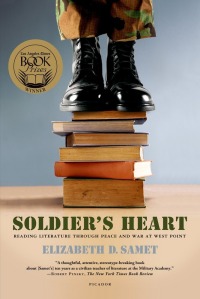 Soldier’s Heart: Reading Literature Through Peace and War at West Point by Elizabeth D. Samet
 Old Heart by Peter Ferry
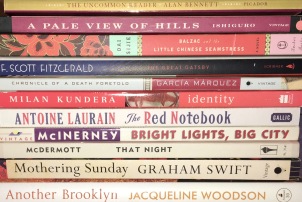
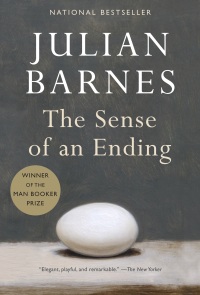 The Sense of an Ending by Julian Barnes (163 pages)
 Last Night at the Lobster by Stewart O’Nan (146 pages)
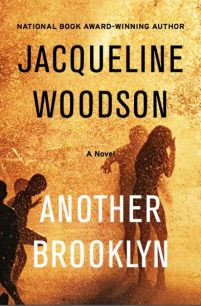 Another Brooklyn by Jacqueline Woodson (170 pages)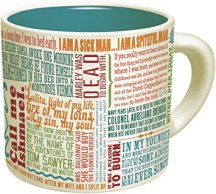
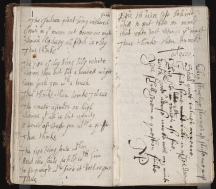
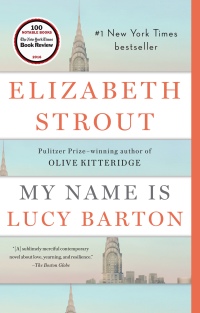 My teacher saw that I loved reading, and she gave me books, even grown-up books, and I read them. And then later in high school I still read books, when my homework was done, in the warm school. But the books brought me things. This is my point. They made me feel less alone.
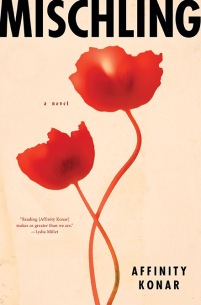 Books had never led me in the wrong direction. It seemed foolish to try to endure without such counsel by my side.
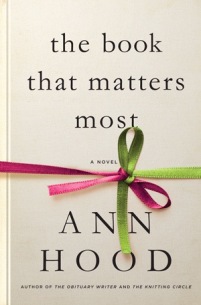 They had been raised, Charlotte and Beatrice, on books. When they had a question, literature answered it. If they complained about being bored, their mother — a melancholy Parisian who used laudanum to assuage the pains of homesickness and her husband’s infidelities — would hand them a book. “No one who reads can ever be bored,” she’d tell them . . .
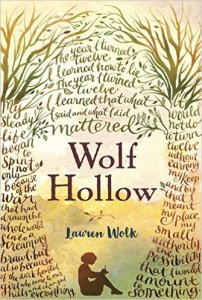 At times, I was so confused that I felt like the stem of a pinwheel surrounded by whir and clatter, but through that whole unsettling time I knew that it simply would not do to hide in the barn with a book and an apple and let events plunge forward without me.
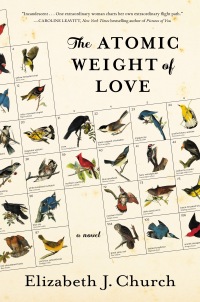 His years on earth had taught him that good things happen to those who honor the kindheartedness of others.
 At a recent get-together, a (male) friend told me all about a great book he’d just read, prefacing his comments by saying, “I’m sure you haven’t read it.” The book? Blood and Thunder: The Epic Story of Kit Carson and the Conquest of the American West, by Hampton Sides, published about ten years ago. Obviously, he couldn’t imagine that Blood and Thunder would appeal to women, and he doesn’t know me well enough to know that I’ve loved books about the American West ever since I was a child, both fiction and nonfiction. (And yes, I have read Blood and Thunder. It’s great, as is anything by Hampton Sides; my favorite is In the Kingdom of Ice: The Grand and Terrible Polar Voyage of the USS Jeannette).
 The same evening, I got involved in a nostalgic conversation about favorite childhood books. When I mentioned The Little House on the Prairie series, someone said wistfully that she’d loved those books as a child but couldn’t share them with her children because she has only boys. I told her that I’d read the whole series — not just Farmer Boy — to one of my boys, and he’d enjoyed them almost as much as I did. “But they’re about girls!” she said. Well, no. They’re about people, and the settling of the American West. We give boys books featuring animals, aliens, and wizards, but we balk at suggesting they read about girls?
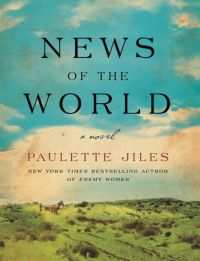 Several of my favorite books this year have been truly “unisex”. A Gentleman in Moscow, News of the World, When Breath Becomes Air, Salt to the Sea — all would appeal to almost any reader, male or female. Still, I need to oblige a friend who asked me to recommend books for men. I know she’s not alone in her quest to find books suitable for husbands, fathers, brothers, and sons — so here are some ideas for last-minute shoppers.
 Patient H.M.: A Story of Memory, Madness, and Family Secrets by Luke Dittrich
 Indestructible: One Man’s Rescue Mission That Changed the Course of WWII by John R. Bruning
 The North Water by Ian McGuire
 A few more manly suggestions:
 The booksellers at Lake Forest Book Store are not, on the surface, a diverse group. For one thing, we are all female. We are also all middle-aged, which is a horrible term, but one for which I can’t think of an appropriate euphemism. This doesn’t mean that we all like the same books. All of us are committed to reading widely, always mindful that our job is to recommend books to all kinds of readers. We have individual reading tastes, but we are all the same in that no one wants to squander time on a poorly written or boring book.
 Our buyer, Laura, said: “My favorite literary reads are The Nix (Nathan Hill), News of the World (Paulette Jiles), Mothering Sunday (Graham Swift) and Mischling (Affinity Konar). They are each so different (a sprawling contemporary story; a beautiful piece of historical fiction; a compact, compelling personal narrative and and a haunting World War II novel). My favorite heartwarming, simply lovely book is A Gentleman in Moscow (Amor Towles).” (Mine too!)
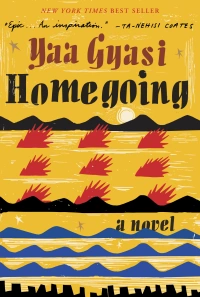 Diane commented that “This was such a strong year for fiction! I read so many fantastic books– these are not in a particular order but two of them may be in my top-ten lifetime list. For all of them, the characters were so strong and the writing drove these books even more than plot/pace: Homegoing (Yaa Gyasi) Behold the Dreamers (Imbolo Mbue), The Mothers (Brit Bennett), News of the World, Wolf Hollow. Diane and I lead a YA book group for adults, and Wolf Hollow was one of our group’s favorites.
 Eleanor chose Lilac Girls, Martha Hall Kelly’s debut novel, which I adored as well. Anyone who loved The Nightingale, Salt to the Sea, The Invisible Bridge, or All the Light We Cannot See will find this book both unforgettable and hard to put down. Historical fiction at its best, the novel tells the powerful story of female prisoners subjected to medical experimentation at the hands of the Nazis.
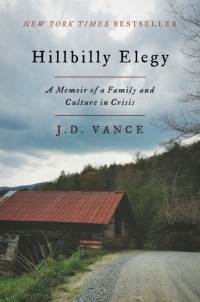 Susan P.’s pick was Hillbilly Elegy: A Memoir of a Family and Culture in Crisis, by J.D. Vance: “It is the poignant, inspiring, and eminently readable story of a young man overcoming the many drawbacks and disadvantages of his youth. Incisive and articulate, a very thoughtful examination of the issues of systemic poverty.”
 Nonfiction: Generation Chef: Risking It All for a New American Dream by Karen Stabiner
 spite of the challenges presented by the legal and economic system in France.
 Michael Lewis has a new book coming out in December, The Undoing Project: A Friendship That Changed Our Minds, about two Israeli psychologists who did groundbreaking research on decision-making and judgment.
 Nonfiction: On Living by Kerry Egan
 If we stop writing letters, who will keep our history or dare venture upon a biography? George Washington, Oscar Wilde, T.E. Lawrence, Virginia Woolf, Oliver Wendell Holmes, E.B. White, Vera Nabokov, J.P. Morgan — if any of these vivid predecessors still belong to us in some fragmented private way, it’s because of their letters or diaries (which are letters to ourselves) or thanks to some strong biography built on a ledge of letters.
 Mina Harker, one of Dracula’s victims, closes her letters by saying “Your ever-loving Mina Harker.” Frankenstein’s ill-fated fiancée, Elizabeth Lavenza, ends a letter with “Adieu! Take care of yourself, and I entreat you, write!”. What do these two characters have in common? They both appear in epistolary novels, books written either entirely or mostly in letters.
 Of course, sometimes only real letters will do. I treasure several anthologies of letters from both famous and ordinary people. War Letters: Extraordinary Correspondence from American Wars (edited by Andrew Carroll) and Letters of Note: An Eclectic Collection of Correspondence Deserving of a Wider Audience (edited by Shaun Usher). Volume 2 of Letters of Note just came out last month, and I’m savoring every letter. My all-time favorite epistolary book is Helene Hanff’s 84, Charing Cross Road (which, surprisingly, was made into a movie that does justice to the book), which chronicles a 20-year correspondence between Hanff, a writer in New York, and Frank Doel, an antiquarian bookseller in London. Another favorite is My Dearest Friend: Letters of Abigail and John Adams, which contains just a fraction of the 1,100 letters that the couple wrote to each other during the many separations they endured over the course of their 54-year marriage. Their letters bring the world of this country’s founders alive more than any other surviving documents.
 In a recent book called Signed, Sealed, Delivered: Celebrating the Joys of Letter Writing, Nina Sankovitch describes finding a trunk filled with hundreds of letters in a shed attached to a house her family was renovating in the Upper West Side of New York. The letters belonged to the original owners of the home, the Seligman family, and the vast majority of them were written by James Seligman to his parents (whom he addressed as “Dearest Mamma” or “Darling Parents”) during his years at Princeton, 1908-1912. Nina feels that rereading the letters James left behind “proves all over again, the power of the written, the handwritten, word.” Aside from a listing on an online family tree, James left no other evidence of his life. Nina says:
 Books on the Table