I’m on vacation this week, so I thought I’d share a post from one of my favorite blogs, Musing: A Laid-Back Lit Journal. Musing is the brainchild of author and bookstore owner Ann Patchett and her staff at Parnassus Books in Nashville. I’m always happy when I see a new post from Musings in my in-box!
Summer is a great season to be a bibliophile, because it’s considered a totally normal activity to sit in a beach/pool/lawn/whatever chair and plow through books one after the other. (Speaking of which, check out Zadie Smith’s fantastic What It Means to Be Addicted to Reading: “The beach is one of the few places pathological readers can pass undetected among their civilian cousins.”) In addition to Ann’s current favorites, here’s what our staff is reading and loving right now.
It’s WWW Wednesday, where I answer three questions:
What are you currently reading? What did you recently finish reading? What do you plan to read next?
I’m on vacation in New Hampshire, at my mother’s summer house on Lake Sunapee. We had family members coming and going for the past few days, but now it’s quiet . . . so quiet that a pair of loons swam right past our dock late yesterday afternoon.
Here’s what we are currently reading:
I’m reading The Black Hour, by Lori Rader-Day. It’s a debut mystery novel by a Chicago writer, set at a university very much like Northwestern. Sociology professor Amelia Emmet thought violence was a research topic, not a personal issue — until she was shot by a student.
My mother is reading Heather Gudenkauf’s page-turner, Little Mercies, the story of a veteran social worker and devoted mother who makes a horrible mistake. Gudenkauf says she’s not sure how to categorize her books: “Are they literary mysteries, thrillers, or emotional family dramas? My hope is that they are all of these!”
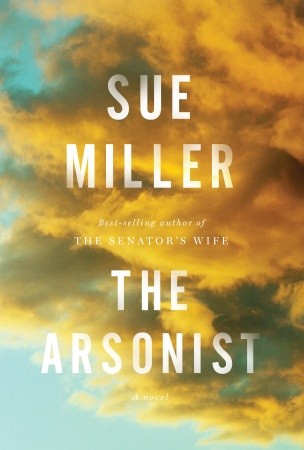
The last book I finished was The Arsonist, by Sue Miller — one of my favorite authors. It turned out to be quite appropriate, since it’s set in a small New Hampshire town. The novel centers on Frankie, a burned-out relief worker who’s returned home from Africa to spend time with her aging parents while she figures out what to do with the rest of her life. Almost as soon as Frankie arrives, an arsonist begins destroying the homes of summer residents. The most compelling part of the book for me was the portrayal of Frankie’s mother trying to cope with her husband, a retired professor slipping into dementia.
My mother has outread me on this vacation (I don’t think “outread” is a real word, but I’m going to pretend that it is.) She’s just read — and recommends — I Can’t Complain, a book of essays by Elinor Lipman, Restless, a terrific espionage novel by William Boyd, and We Are Water, Wally Lamb’s latest. Maybe I’ll have to try We Are Water again — when I first tried reading it, I couldn’t get into it.
What’s next? I thought I had brought Chris Bohjalian’s new book, Close Your Eyes, Hold Hands, in my bag, because my mother wanted to read it — but it’s gone AWOL, so we may have to make a trip to the local bookstore to pick up a copy. I think the next book in her pile is an ARC of Mary Kubica’s debut suspense novel The Good Girl. (I was lucky enough to meet Mary at a publisher dinner earlier this year. The book has been getting a lot of buzz, including being chosen as an Indie Next Pick for August. I’m looking forward to reconnecting with Mary at an author event in Lake Forest on August 20.)
I’m planning on reading Bittersweet, by Miranda Beverly-Whittemore ( a family story set in a summer retreat in Vermont, recommended by my most trusted source, Sue Boucher) and No Longer and Not Yet, by Joanna Clapps Hermann (a collection of stories that take place on the Upper West Side of Manhattan).
We’d love to hear what you’ve just read, what you’re reading now, and what you’re planning to read next!
Return to the Hump Day blog hop on Julie Valerie’s book blog by clicking here!
I’ve always disliked the term “beach book”. What on earth is a beach book? If a book engages me, it’s going to engage me whether I’m at the beach, on a plane, on my couch, or in bed. (Well, maybe not in bed — too much likelihood of falling asleep, no matter how riveting the book.) CNN recently interviewed some well-known authors about their summer reading habits, defining beach reads this way: “While there are no hard and fast rules about what constitutes a ‘beach read,’ the idea is that they can be read quickly, or that they’re light in tone. Always, they’re captivating and preferably escapist.”
Joshua Ferris is a man after my own heart. He says, “What I bring to the beach is whatever I’m reading at the moment, and what I’m reading at any given moment usually concerns death, misery and marital discord, which don’t seem too beachy . . . I find it impossible to alter my reading for the sake of a season.”
Emma Donoghue, who “wants a meaty plot; brilliant language; extra points for hilarity”, is a very sensible person. She says she actually prefers to read magazines on the beach, due to the mess factor. So if I make it to the beach this summer, I’ll bring a pile of magazines — although here on Lake Michigan, we have these pesky little biting flies that make it almost impossible to read anything, or even to remain on the beach.
Here are 10 recommendations for summer reading. They’re all either available now or will be later this month.
Save the Date: The Occasional Mortifications of a Serial Wedding Guest by Jen Doll
The New York Times (which called Jen Doll “Emily Post’s worst nightmare”) gave journalist Doll’s nonfiction account of weddings she’s attended a so-so review, but I thoroughly enjoyed her take on modern-day weddings. And yes, she needs some help in the manners department.
Fourth of July Creek by Smith Henderson
From the Oregonian: “Set deep in the backwoods of Reagan-era Montana and containing all the necessary ingredients of a slow-burn literary thriller — prickly characters, graphic writing, creeping suspense, Fourth of JulyCreek spins quite an unsettling yarn.” I’ve been waiting to read this ever since I picked it up at Winter Institute in January.
Goodnight June by Sarah Jio
From the publisher: “Goodnight Moonby Margaret Wise Brown is an adored childhood classic, but its real origins are lost to history. Sarah Jio offers a suspenseful and heartfelt take on how the “great green room” might have come to be.” I’ve just finished reading this and it is truly delightful.
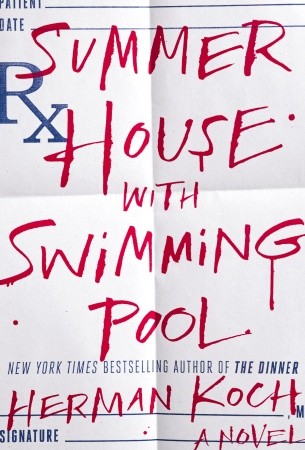
Summer House with Swimming Pool by Herman Koch
If you liked The Dinner, you’ll love Herman Koch’s latest. If you found The Dinner too dark . . . skip this one. From Publishers Weekly: “In Koch’s equally devious follow-up to The Dinner, civilization is once again only a thin cover-up for man’s baser instincts . . . very few real-world events will distract readers from finishing this addictive book in one or two sittings.”
The Other Language by Francesca Marciano
From the New York Times: “What makes these tales stand out as captivating exemplars of storytelling craft is Ms. Marciano’s sympathetic, but wryly unsentimental knowledge of these people’s inner lives; her ability — not unlike Alice Munro’s — to capture the entire arc of a character’s life in handful of pages; and her precise yet fluent prose (the result, perhaps, of writing in a second language), that immerses us, ineluctably, in the predicaments of her men and women.” Every list of recommendations needs a short story collection, and The Other Language is the best I’ve read in a long time.
Say What You Will by Cammie McGovern
I’m slowly becoming a fan of (good) YA literature — and this one is excellent. From the publisher: “The Fault in Our Stars meets Eleanor & Park in this beautifully written, incredibly honest, and emotionally poignant novel. Cammie McGovern’s insightful young adult debut is a heartfelt and heartbreaking story about how we can all feel lost until we find someone who loves us because of our faults, not in spite of them.”
The Arsonist by Sue Miller
From Publishers Weekly: “A small New Hampshire town provides the backdrop for Miller’s provocative novel about the boundaries of relationships and the tenuous alliance between locals and summer residents when a crisis is at hand.” Several colleagues are highly recommending The Arsonist, and I’ve thoroughly enjoyed everything Sue Miller has written.
My Salinger Year by Joanna Rakoff
I loved this memoir of Rakoff’s stint as an assistant to J.D. Salinger’s literary agent! From the Chicago Tribune: “Her memoir is a beautifully written tribute to the way things were at the edge of the digital revolution, and also to the evergreen power of literature to guide us through all of life’s transitions.”
China Dolls by Lisa See
From Publishers Weekly: “In the beginning of See’s stellar ninth book, three young women, Grace, Helen, and Ruby, meet and form an unlikely but strong bond in San Francisco in 1938, as the Golden Gate International Exhibition is about to open . . .The depth of See’s characters and her winning prose makes this book a wonderful journey through love and loss.” I’m thrilled that Lisa See is coming to our community for an event in late June.
The Vacationers by Emma Straub
From the New York Times: “For those unable to jet off to a Spanish island this summer, reading The Vacationers may be the next-best thing. Straub’s gorgeously written novel follows the Post family — a food writer named Franny; her patrician husband, Jim; and their children, 28-year old Bobby and 18-year-old Sylvia — to Majorca . . . When I turned the last page, I felt as I often do when a vacation is over: grateful for the trip and mourning its end.” I felt the same way!
Not only are they commemorated by columns and inscriptions, but there dwells also an unwritten memorial of them, graven not on stone but in the hearts of men.
Pericles, Funeral Oration ( delivered in Athens 2500 years ago and a source of inspiration for Abraham Lincoln’s Gettysburg Address)
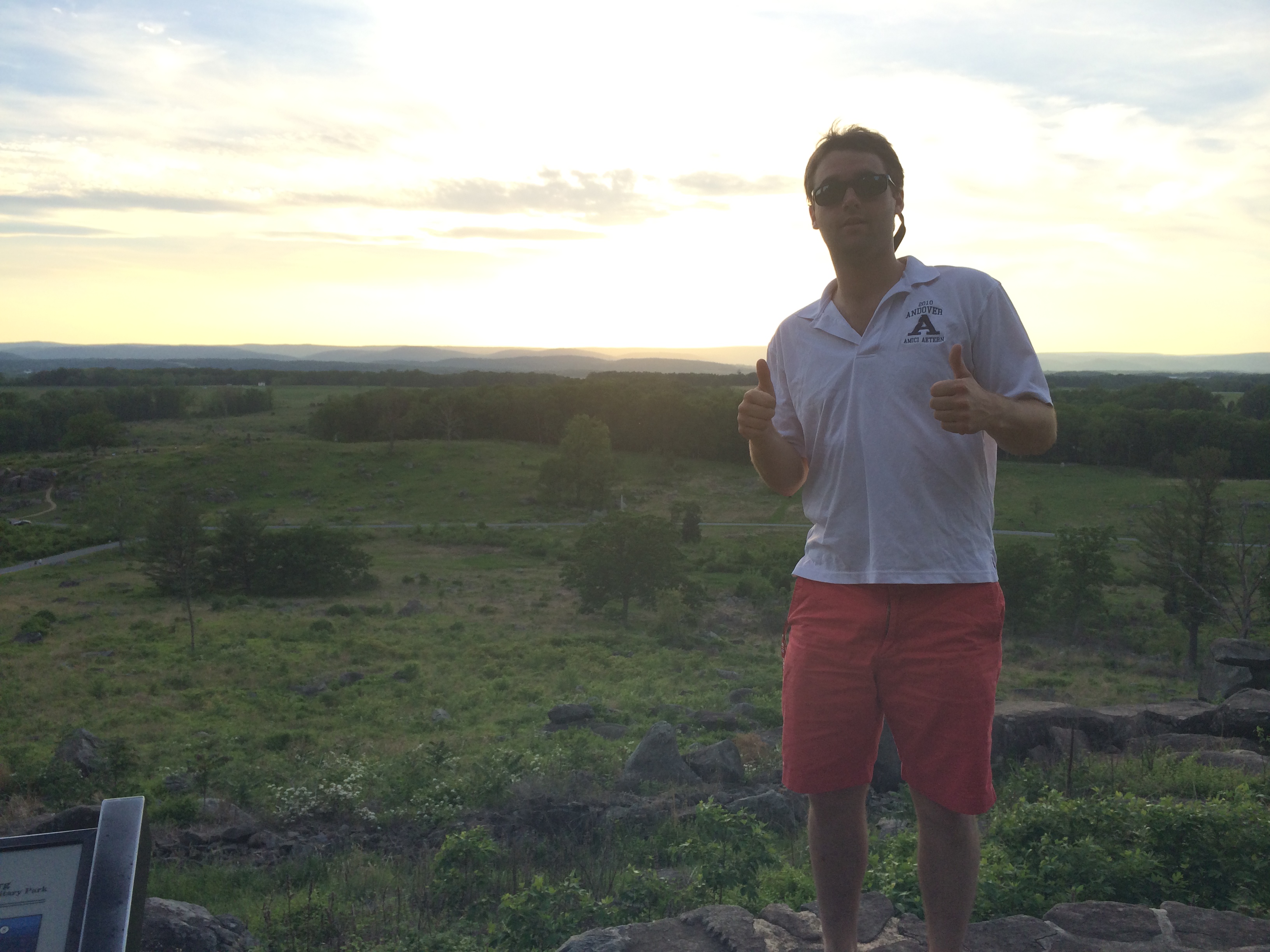
Memorial Day is almost over, and I’m finally getting to my Monday blog post — so this will be short. (I guess I should have written it ahead of time!) I’ve just returned from my son Charlie’s college graduation. He’s now on a cross-country road trip, starting in Ithaca, New York and ending in San Francisco. His first stop was Gettysburg, where he saw as much of the battlefield and monuments as he could until the sun set. To coin Lincoln’s phrase, it seems “altogether fitting and proper” that Charlie visited Gettysburg on the day that has been set aside to honor those who died while serving in our armed forces.
Michael Shaara’s Pulitzer Prize winning novel about the Battle of Gettysburg, The Killer Angels, is a modern classic. I have to admit I’ve never read it, but my husband (a true Civil War buff) says it’s well worth reading. My list of favorite war novels includes books about the Civil War, and World Wars I and IIas well:
Corelli’s Mandolin (Louis deBernieres) There’s just a touch of magical realism in this lovely novel about a Greek island that’s occupied by the Italian army during World War II.
City of Thieves (David Benioff) During the siege of Leningrad, two Russians must carry out an impossible task — or face execution.
Restless (William Boyd) An English woman learns that her mother is a White Russian who was recruited by the British as a spy. From the New York Times: “Boyd has written a crackling spy thriller, but more than that, he has evoked the atmosphere of wartime espionage: the clubby, grubby moral accommodations, the paranoia . . .”
The Absolutist (John Boyne ) From Publishers Weekly: “In this relentlessly tragic yet beautifully crafted novel, Boyne documents the lives of two inseparable men navigating the trenches of WWI and the ramifications of a taboo involvement.”
Birdsong (Sebastian Faulks) A young Englishman falls in love with a married French woman during a business trip to France in 1910; they meet again, during World War I. I read this for the first time about 15 years ago, and have never forgotten the vivid scenes of trench warfare, or the love story.
The Widow of the South (Robert Hicks) Based on the true story of Carrie McGavock, who tended the graves of the 1,500 soldiers buried on her family’s land. We visited the actual site in Franklin, Tennessee last fall.
A Very Long Engagement (Sebastian Japrisot) A French woman who doesn’t believe her fiancé was killed in the First World War embarks on an investigation and discovers the corrupt system the French government used to deal with soldiers who tried to avoid combat.
Gone With the Wind (Margaret Mitchell) I don’t know how many times I read this book as a teenager, but my old paperback copy is falling apart. I can even remember the first sentence, without looking: “Scarlett O’Hara was not beautiful, but men seldom realized it when caught by her charm as the Tarleton twins were.”
The Invisible Bridge (Julie Orringer) The best World War II novel I’ve read in the past few years. From the Chicago Tribune: “Set largely in Hungary, with Paris, the city of light, serving as a kind of Byzantium for several characters who spend hopeful, youthful years there in the opening chapters of the novel, The Invisible Bridge is a tale of war-torn lovers, family and survival of the luckiest rather than the fittest.”
The Caine Mutiny (Herman Wouk) An old favorite, The Caine Mutiny takes place on a Navy warship in the Pacific. I’ve loved all of Herman Wouk’s books — The Winds of War, War and Remembrance, and two wonderful (and unappreciated) coming-of-age stories — Marjorie Morningstar and City Boy. (No, they’re not war novels, but since I’m touting Herman Wouk I have to mention them!)
I’ve read very little fiction about the more recent wars. On my list are Matterhorn by Karl Marantes (Vietnam), The Yellow Birds by Kevin Powers (Iraq), and Redeployment (Iraq and Afghanistan). I read Sparta by Roxana Robinson, about Conrad, a young veteran returning from Iraq who has difficulty readjusting to civilian life. Conrad is a classics major at Williams College from an upper-middle class (and decidedly unmilitary family) from suburban New York City. When he comes home suffering from PTSD, his family is too bewildered to offer any meaningful help. The book was insightful in many ways, but I couldn’t fathom the idea that a family like Conrad’s would abandon him to the bureaucracy of the VA.
Our next national holiday is July 4. I plan to read a contemporary war novel by then and let you know what I think. If you have any other suggestions, I’d love to hear them.
Is anyone else really, really tired of the term “curated”? To quote from the Chowhound website: “You curate a museum, or perhaps an art collection for a billionaire”. I agree — restaurants don’t “curate” wine lists, and book reviewers don’t “curate” lists of books. I promise never to use that annoying word in this blog! What I will do is present a list of books that my oldest son liked a lot. Today is David’s 27th birthday, so of course I bought him a book. (I also bought him a plane ticket, but he’ll need something to read on the plane, right?) I started thinking about David’s evolution as a reader, from Richard Scarry’s Cars and Trucks and Things That Go, to the DK Eyewitness Pond and River LIfe, to Rick Reilly’s Who’s Your Caddy?.
To make a silly analogy to the animal kingdom, readers can be divided into three categories: herbivores (fiction readers), carnivores (nonfiction readers), and omnivores (people who read anything). David, like so many of his gender, is a carnivore. Even as a young child, he preferred the fact-oriented series The Magic Schoolbus to its fictional cousin, the Magic Tree House series. (Although he loved Jon Scieszka’s books about the Time Warp Trio — it must have been the humor. I’ve found, as a bookseller and a parent, that if a book is funny a little boy will like it.)
So is it any surprise that a book David recently enjoyed, and recommends to other carnivores, is called Meat Eater? It’s written by journalist Steven Rinella, also the author of American Buffalo: A Lost Icon. But don’t take David’s word for it. Here’s what the New York Times and Wall Street Journal had to say about the book:
The stories in Meat Eater are full of empathy and intelligence….In some sections of the book, the author’s prose is so engrossing, so riveting, that it matches, punch for punch, the best sports writing. When Mr. Rinella wades into the surging Grand River, to throw a fly for steelheads, the story moves as well as Tom Callahan writing about Johnny Unitas in the 1958 championship or Bill Nack writing about Secretariat. — Wall Street Journal
Truth be told, I have lived a life plenty comfortable with my disdain toward hunters and hunting. And then along comes Steven Rinella and his revelatory memoir Meat Eater to ruin everything. Unless you count the eternal pursuit of the unmetered parking space, I am not a hunter. I am, however, on a constant quest for good writing. . . This is survival of the most literate. —New York Times
If you’re a carnivore, or know someone who is, here are a few other suggestions from David’s library (both his childhood library and his current bookshelves):
Harris and Me (Gary Paulsen)
All Paulsen’s books are wonderful, but this one is special. It’s about a city boy who spends the summer on his cousin’s farm. There are many hilarious incidents, with just the right amount of crude humor to appeal to grade school age boys. It’s fiction — as are many of Paulsen’s other books (including the Hatchet series) — but still good for carnivores.
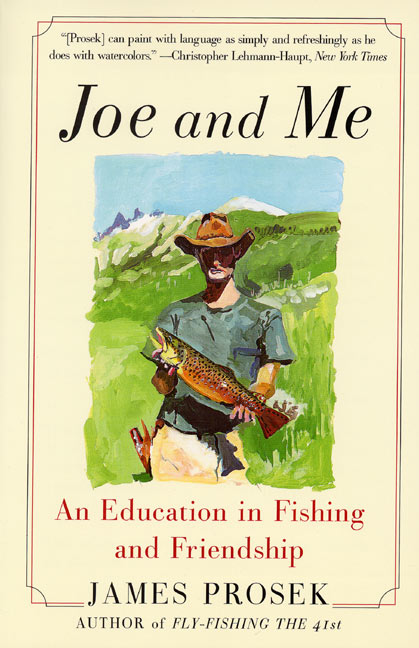
Joe and Me: An Education in Fishing and Friendship (James Prosek)
A coming of age story about a teenage boy who runs afoul of the local fish and game warden. David’s copy looks like it’s been read a few times. Prosek has written many other terrific books about fly fishing, but this is the only one for YA readers.
Who’s Your Caddy?: Looping for the Great, Near Great, and Reprobates of Golf (Rick Reilly)
I think I enjoyed this book as much as David did, and I don’t even follow golf. Reilly has to be a great writer if he can get me to read a golf book. I started reading it because I was slightly worried about the content, and then got hooked. (Looking back, I can’t believe I was worried about what a sophomore in high school was reading. Can you tell David is my oldest?)
Into Thin Air: A Personal Account of the Mount Everest Disaster (Jon Krakauer)
A classic adventure story about an ill-fated ascent of Mount Everest in 1996. Krakauer’s Intothe Wild is excellent as well.
The Psychopath Test: A Journey Through the Madness Industry (Jon Ronson)
Our whole family passed this book around on vacation a couple of summers ago — it’s fascinating! What a relief it was to find that none of us is a psychopath.
Methland: The Death and Life of an American Small Town (Nick Reding)
Journalist Reding spent four years in a small town in Oelwein, Iowa, examining the effects of the meth epidemic on that town and similar towns all over the Midwest. My daughter and I couldn’t put this book down either.
Boomerang: Travels in the New Third World (Michael Lewis)
It seems that Michael Lewis can do no wrong — his books, starting with Liar’s Poker (another favorite of David’s) — are uniformly excellent, transforming complicated economics into entertaining and informative narratives.
No Easy Day: A Firsthand Account of the Mission That Killed Osama Bin Laden (Mark Owen)
The movie Zero Dark Thirty tells a little bit of the story; this book, written by a Navy SEAL, provides all the details. Apparently the author (who used a pseudonym) was criticized for revealing secrets without clearance from the government.
An American Caddie in St. Andrews: Growing Up, Girls, and Looping on the Old Course (Oliver Horovitz)
An American teenager spends a “gap year” in Scotland as a caddy at the world’s most famous golf course — and returns to work there year after year, even after college graduation.
Guess where we are going to celebrate David’s birthday tonight? A hot new barbecue restaurant in Chicago — Green Street Smoked Meats*. And I hope he likes the book I’m giving him: The Price of Silence: The Duke Lacrosse Scandal, the Power of the Elite, and the Corruption of Our Great Universities, by Bill Cohan. It just got a rave review in the New York Times.
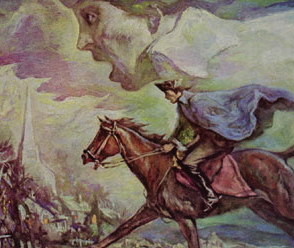
I had a different post planned today, but this morning I remembered that it is Patriots’ Day (also known as “Marathon Monday”) in my birthplace, Massachusetts. Patriots’ Day commemorates the opening battle of the Revolutionary War — remember the opening lines of Henry Wadsworth Longfellow’s famous poem?
Listen my children and you shall hear
Of the midnight ride of Paul Revere,
On the eighteenth of April in Seventy-five;
Hardly a man is now alive
Who remembers that famous day and year.
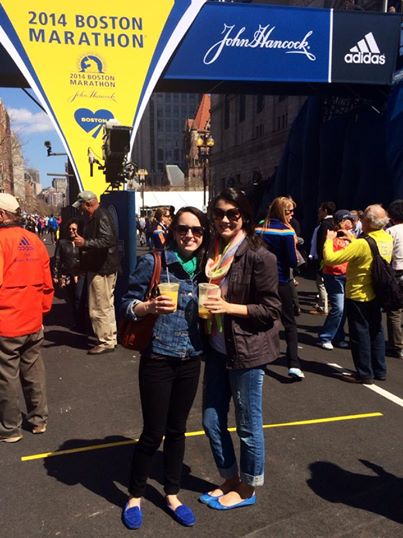
Massachusetts observes Patriots’ Day on the third Monday in April. It’s typically a festive day in Boston, with battle reenactments, the Red Sox playing at home, and of course, the marathon. Last year, Patriots’ Day fell on April 15. It was a busy day for me — we were cohosting Chris Bohjalian at a nearby library for the paperback release of his spectacular novel about Armenian genocide, The Sandcastle Girls, and I had to file my taxes. So I had no idea what my daughter, who lives in Boston, was talking about that afternoon when I finally saw her texts: “Don’t worry, I’m fine!”; “Ran all the way home and staying inside”; “Call me!” I knew that her office was closed for the day and she was planning on watching the marathon. I finally reached her and found that she and her friends were in a bar near the finish line when the bombs went off. They didn’t know what had happened, and simply headed for safety as quickly as possible. Today, she and her friends are cheering for the 36,000 runners from all over the world whose participation in the marathon is a tribute to last year’s bombing victims.
The only marathon I can imagine participating in is a reading marathon. (Just in case you’re interested, there’s one planned next weekend — Dewey’s Read-a-Thon.) In honor of the Boston Marathon, I’d like to share a list of my favorite books set in and around Boston.
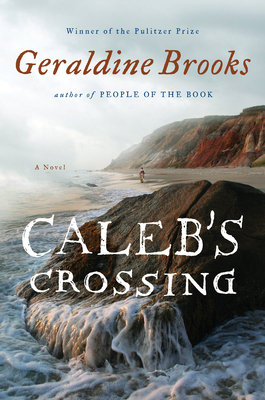
Caleb’s Crossing (Geraldine Brooks)
Brooks (also the author of March, the story of the absent father in Little Women, among other historical novels) brings to life the story of Caleb Cheeshahteaumauk, the first Native American graduate of Harvard.
Townie (Andre Dubus III)
Growing up in tough neighborhoods north of Boston and largely abandoned by his famous father, Andre Dubus III learned the best way to protect himself was to throw the first punch. Over time, he transformed himself from a violent youth into an empathetic writer. Last year, Dubus was on a college trip to Boston with his daughter on the day of the marathon bombings. In a moving account written for Boston magazine, he refers to the “old rage” he felt when confronted with the tragedy that took place:
. . . For rage only brings more rage in return. So then what must we do? We must run again. And if we cannot run, we should walk or wheel ourselves, but we must go out in the street and begin training, each in our own way, for that Monday in April next year when one of the finest cities on earth opens her arms to all those who strive. And if my daughter decides to come to Boston in the fall, I will stand behind her completely, for she must continue to live her life with joy and gratitude and resolve. We all must. For this is a city that demands and deserves it, one I have always loved, but now, well, I love it more than ever before.
North of Boston (Elisabeth Elo)
Elo’s debut is a literary thriller featuring Pirio Kasparov, a hard-as-nails Boston perfume executive who has the amazing ability to survive for long periods in very cold water. After the lobster boat she is on is rammed and sunk by a freighter, Pirio is convinced the tragedy was no accident.
The Heretic’s Daughter (Kathleen Kent)
Kent, a descendant of one of the accused Salem witches, mines her family’s history. The New York Times reviewer says:
Granted, the based-on-my-family-history novelization is too often a product of a weekend writers’ workshop and the misplaced belief that the stories Grandpa told are immensely, immensely interesting. Maybe that’s just jealousy talking. Why couldn’t any of my ancestors have gotten themselves hanged as witches? But The Heretic’s Daughter overcomes this and several other obstacles . . . It is a powerful coming-of-age tale in which tragedy is trumped by an unsinkable faith in human nature.
I was born in Salem, and also (or so I’ve been told) am descended from an accused witch, so this book absolutely fascinated me. (I’m always careful to say “accused witchThey weren’t really witches, after all.
The Given Day (Dennis Lehane) The Given Day takes place at the end of the First World War, culminating in the Boston police strike. It brings to mind E.L. Doctorow’s Ragtime, with celebrities and politicians of the time (Babe Ruth, Calvin Coolidge, Eugene O’Neill) mixing with the novel’s fictional characters. The sequel to The Given Day, Live by Night, is set in Prohibition-era Boston, and is being made into a movie (produced by Ben Affleck) for 2015 release. Lehane’s mysteries are excellent as well, particularly Mystic River and Gone, Baby, Gone. Lehane published an article in the New York Times the day after the 2013 marathon, entitled “Messing With the Wrong City”:
But I do love this city. I love its atrocious accent, its inferiority complex in terms of New York, its nut-job drivers, the insane logic of its street system . . . Bostonians don’t love easy things, they love hard things — blizzards, the bleachers in Fenway Park, a good brawl over a contested parking space. Two different friends texted me the identical message yesterday: They messed with the wrong city.
All Souls: A Family Story from Southie (Michael Patrick MacDonald)
MacDonald grew up in a housing project in South Boston and lost four siblings to violence. The story of his survival reminds me of Angela’s Ashes.
Make Way for Ducklings (Robert McCloskey)
I had to include this classic picture book on the list. When my children were little, no trip to Boston was complete without a visit to the Public Garden to see the statue of Mrs. Mallard and her ducklings.
Run (Ann Patchett)
I love everything Ann Patchett has ever written. Run takes place over 24 hours in the life of Bernard Doyle, former mayor of Boston, and his two adopted sons, Teddy and Tip.
With or Without You (Domenica Ruta)
A good companion to Townie, Ruta’s memoir is, according to the New York Times, “a recovery memoir in which the most vivid character doesn’t recover”. That character is Ruta’s mother, a drug user and dealer — and a toxic mother. The Times article explores Ruta’s background:
In person Domenica, 33, is a lot like her book. She’s sharp, intense, funny in that darkly sarcastic way that working-class New Englanders so often are, and given to bursts of strong feeling. She now lives in Brooklyn, but last week she came back to Danvers, the town where she grew up. Turning off the highway, she suddenly said: “My heart always beats really fast right here. I don’t know why.” A few moments later she became ironic and added, “Welcome to the mean streets of Danvers, those hardscrabble streets.” In fact Danvers is an unfancy and mostly unremarkable North Shore suburb, whose greatest distinction is that in the 17th century it was where the Salem witches came from.
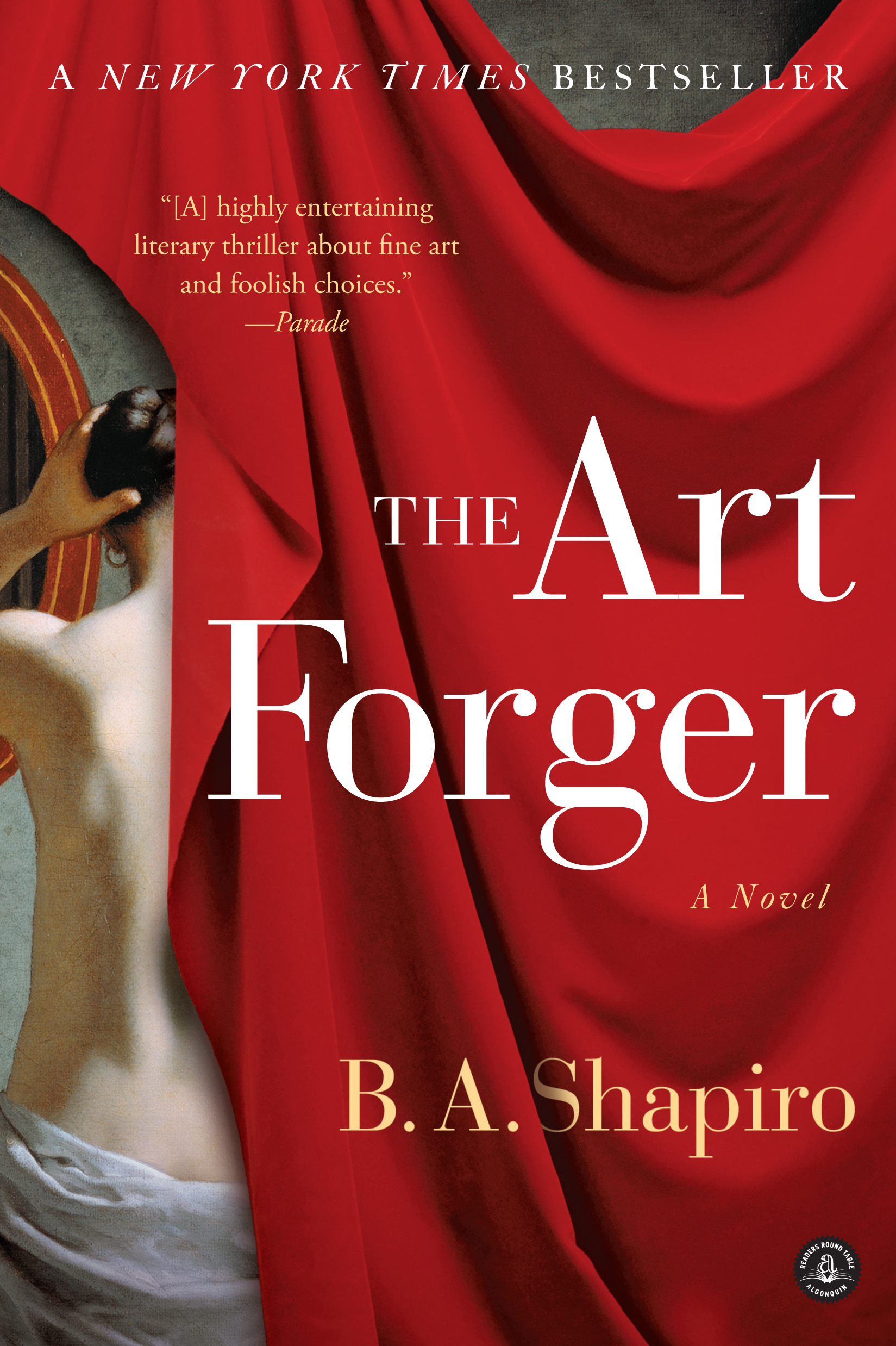
The Art Forger (B.A. Shapiro)
In 1990, 13 paintings and drawings were stolen from the Isabella Stewart Gardner Museum. The crime has never been solved, and if you visit the museum today, you’ll see blank spaces on the walls where the works of art should hang. In Shapiro’s entertaining and enlightening novel, one of the paintings apparently resurfaces.
There are many mysteries set in Boston; probably the best known is Robert Parker’s Spenser series. Also popular are series by Linda Barnes, Hank Phillippi Ryan, and Tess Gerritsen. I’ve never read any of these, since I’m not a huge mystery fan, but maybe I should expand my horizons.
My daughter and a friend at the 2014 Boston Marathon.
I have to admit that I’m not a YA reader. I would like to be, but there are only so many reading hours in the day, and my list of Old Adult fiction and nonfiction just keeps growing. I know that YA is a huge phenomenon in the publishing world, and I need to learn more about it.
What exactly is YA? That’s the question that I saw on Twitter a few days ago. Someone else asked, “Is Tell the Wolves I’m Home YA”? Multiple people responded, all with variations on the same answer: “No, it’s coming-of-age”. What is the difference? My guess is that YA fiction is written with a teenage audience in mind, whereas literary fiction isn’t targeted toward a particular demographic group. The recent phenomenon of adults reading YA is fascinating to me. Does it reflect our youth-oriented culture in general? When I was a teenager, I was more interested in reading “up” than my mother was in reading “down”. She didn’t read my copies of Forever and Go Ask Alice, but I did read her copies of TheGodfather and Ordinary People. (Then again, I was more interested in borrowing her clothes than she was in wearing mine. I think mothers today aspire to dress like their daughters.)
Now parents are borrowing their children’s copies of Divergent and Twilight, or even buying those series for themselves. Certain books are “crossover” novels, published as YA in one country and adult in another. The Curious Incident of the Dog in the Night-Time (Mark Haddon) and The Boy inthe Striped Pajamas (John Boyne) were marketed as YA in Great Britain and adult in the United States, while The Book Thief (Marcus Zusak), sold as YA here, was originally published as an adult book in Australia.
When customers ask me for books that will appeal to their teenagers but are not “YA” books, I have some tried-and-true favorites I suggest. You could think of these as “gateway” books to grown-up literature. (Back when I was reading GoAsk Alice, marijuana was considered the “gateway” drug to heroin. Now you can legally buy marijuana in Colorado!) Often, the customer will say, “Oh! I have a copy of The Secret Life of Bees (or The Help, or Into Thin Air) at home . . . maybe he/she would like that.” Here are 10+ other books that appeal to young people:
Durable Goods, Joy School, and True to Form by Elizabeth Berg: A trio of books about army brat Katie Nash, growing up with an abusive father.
Unbroken by Laura Hillenbrand: Still in hardcover more than 3 years after publication! Teenagers are amazed and inspired by Louie Zamperini’s story. Have them read it before the movie comes out.
The Bean Trees and Pigs in Heaven by Barbara Kingsolver: Two books about spirited adventurer Taylor Greer and her adopted Cherokee daughter, Turtle.
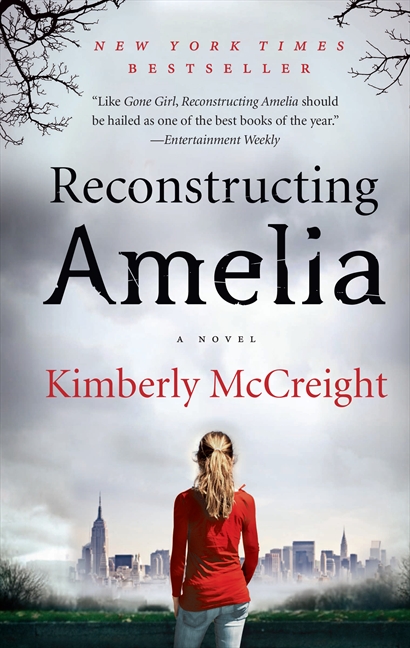
Reconstructing Amelia by Kimberly McCreight: Page-turner about a mother investigating her teenage daughter’s apparent suicide.
The Pact (or anything, really) by Jodi Picoult: No need to elaborate. Teenagers love Jodi.
Who’s Your Caddy: Looping for the Great, Near Great, and Reprobates of Golf by Rick Reilly (his new book, out in May — Tiger, Meet My Sister . . . And Other Things IProbably Shouldn’t Have Said sounds like it will be perfect for older teenagers too): Sports Illustrated writer Reilly has written many very insightful and funny golf books.
The Yonalohssee Riding Camp for Girls by Anton DiSclafani: Who doesn’t love a boarding school book? This one is set in the 1930s, at a school for equestriennes in the mountains of North Carolina.
Me Talk Pretty One Day (or anything except Squirrel Seeks Chipmunk) by David Sedaris: Hilarious, and even better on audio.
Maus and Maus II by Art Spiegelman: Graphic novels of the Holocaust.
Old School by Tobias Wolff: Another boarding school novel; this one has a cameo appearance by Robert Frost.
What are your favorite gateway books for teenagers?
This past Sunday, I read an article in the New York Times called “Let Me Count the Days”, by novelist James Collins. Collins, a self-confessed book accumulator, describes his shocking realization that at 55, he probably will die before he can read all the books he owns:
That leaves around 3,300 unread books. If I read one book a week . . . but you and I know that I don’t read one book a week, I read a couple a month, grazing in a few others. If I read two books a month, kit would take me 137 years to read those unread books. So there we have it . . . I am not going to live for 137 more years, and therefore I do not have enough time left to read the books I own.
I’m younger than James Collins, but not much. I don’t have 3,300 unread books in my house, but I do have a lot. So I’m going to include some of those unread books in my list of 10 books to read over the next few months, along with enticing new books to be published this spring.
And the Dark Sacred Night by Julia Glass (due in April)
From the publisher (Random House): “In this richly detailed novel about the quest for an unknown father, Julia Glass brings new characters together with familiar figures from her first two novels, immersing readers in a panorama that stretches from suburban New Jersey to rural Vermont and ultimately to the tip of Cape Cod.” I loved Glass’s earlier books, so this one is sure to be a treat.
Frog Music by Emma Donoghue (due in April)
From Publishers Weekly: “Donoghue’s first literary crime novel is a departure from her bestselling Room, but it’s just as dark and just as gripping as the latter . . . Based on the circumstances surrounding the grizzly real-life murder of Jenny Bonnet, a law-flouting, pants-wearing frog catcher who lived in San Francisco in the mid-1870s, this investigation into who pulled the trigger is told in episodic flashbacks.”
The Steady Running of the Hour by Justin Go (due in May)
From the publisher (Simon & Schuster): “In 1924, the English mountaineer Ashley Walsingham dies attempting to summit Mount Everest, leaving his fortune to his former lover, Imogen Soames-Andersson—whom he has not seen in seven years. Ashley’s solicitors search in vain for Imogen, but the estate remains unclaimed. Nearly 80 years later, new information leads the same law firm to Tristan Campbell, a young American who could be the estate’s rightful heir. If Tristan can prove he is Imogen’s descendant, the inheritance will be his. But with only weeks before Ashley’s trust expires, Tristan must hurry to find the evidence he needs.” This is Go’s debut novel.
The Temporary Gentleman by Sebastian Barry (due in May)
From the publisher (Penguin): “Irishman Jack McNulty is a “temporary gentleman”—an Irishman whose commission in the British army in WWII was never permanent.” Barry is one of my favorite authors, and this book is the sixth in a series of interconnected novels that bring to life members of Barry’s own family — the Dunnes and the McNultys.
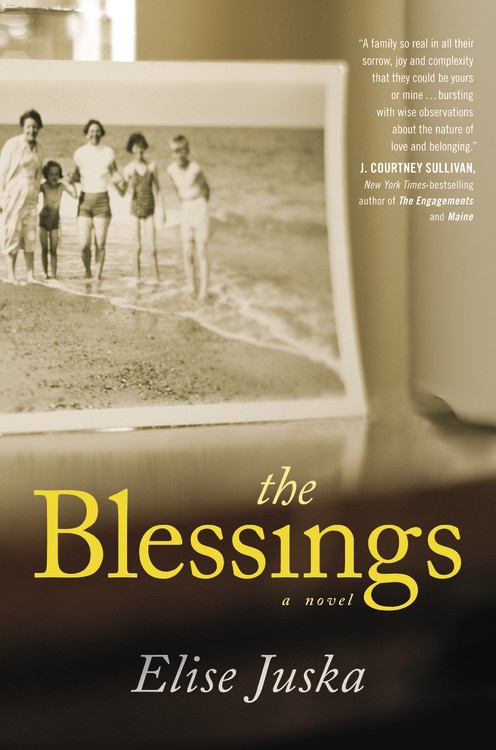
The Blessings by Elise Juska (due in May)
From Publishers Weekly: “Several generations of the Blessings, a Philadelphia-based, Irish-American family, come beautifully to life in a deceptively simple tale that examines the foibles, disappointments and passions that tie family members together.” A few of my colleagues have read this and highly recommend it.
The Enchanted by Rene Denfeld (in my stack)
From Publishers Weekly: “The fiction debut from nonfiction author and journalist Denfeld is a striking one-of-a-kind prison novel. The narrator, who is on death row and remains nameless until the book’s end, explains that the prison, although a place where “the walls sigh with sadness,” is enchanted . . . a stunning first novel.” I’ve been reading rave reviews of this book.
Ordinary Grace by William Kent Krueger (in my stack)
From the publisher (Simon & Schuster): “Ordinary Grace is a brilliantly moving account of a boy standing at the door of his young manhood, trying to understand a world that seems to be falling apart around him. It is an unforgettable novel about discovering the terrible price of wisdom and the enduring grace of God.” A favorite at Lake Forest Book Store, and one I’ve been meaning to read for a long time.
Mr. Penumbra’s 24-Hour Bookstore by Robin Sloan (in my stack)
From the New York Times: “Mr. Penumbra’s 24-Hour Bookstore is eminently enjoyable, full of warmth and intelligence. Sloan balances a strong plot with philosophical questions about technology and books and the power both contain.” I can’t resist a book about a bookstore.
Frances and Bernard by Carlene Bauer (in my stack)
From the Washington Post: “Frances and Bernard portrays two writers drawn into a friendship sparked by mutual admiration. They elegantly convey their reflections, encouragements and chastisements in letters written over a span of 11 years.” Loosely based on the friendship between Flannery O’Connor and Robert Lowell, this epistolary novel also explores issues of faith.
The Goldfinch by Donna Tartt (in my stack; my book club’s choice for April) — I know, I know. Everyone has read this except me.
It’s supposed to be Top 10 Tuesday (thank you, The Broke and the Bookish!), but I have to add a book I’ve already read that I absolutely adored. I don’t give out stars . . . but 5 stars wouldn’t be enough for this one.
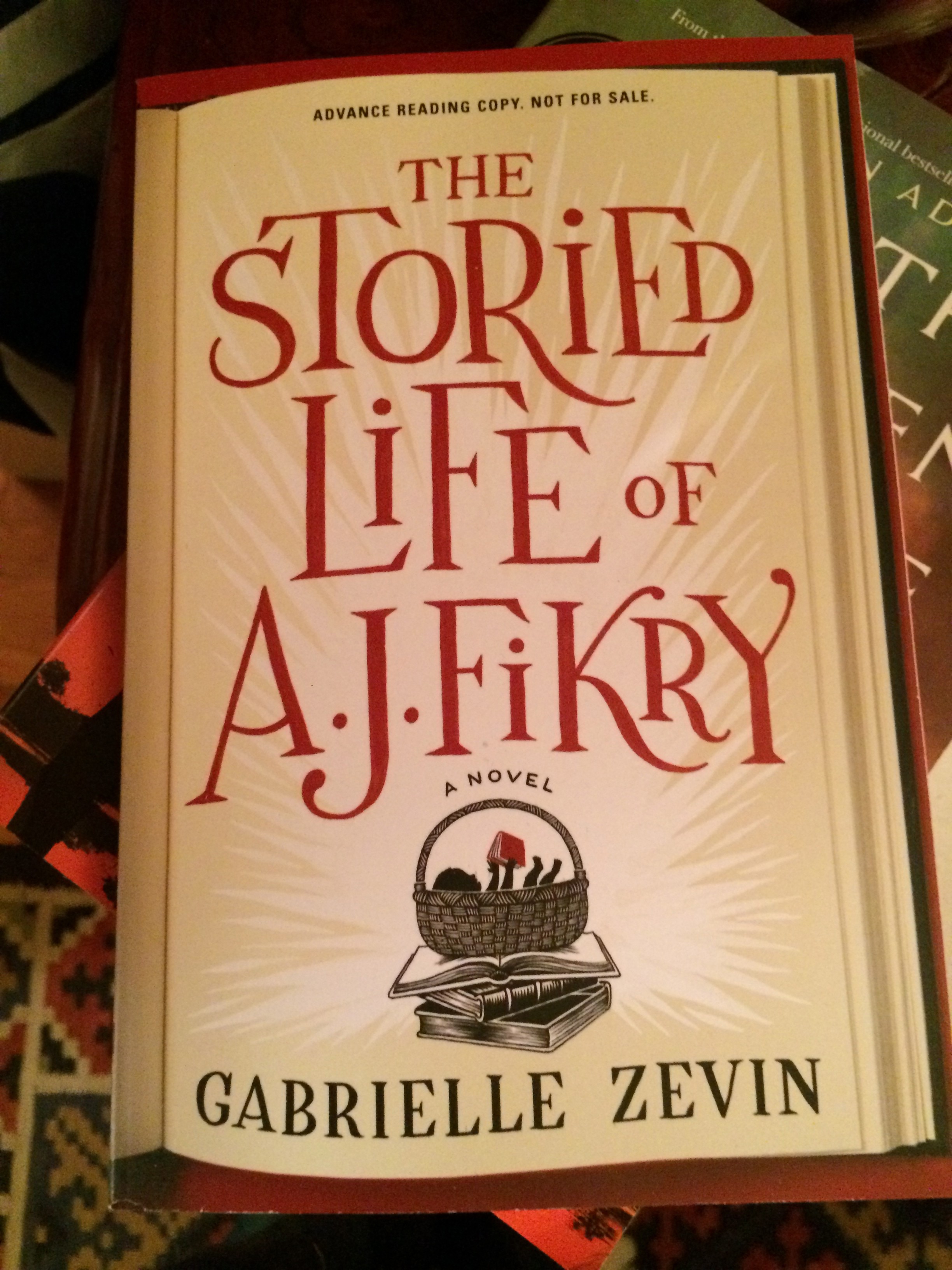
The Storied Life of A.J. Fikry (due in April) by Gabrielle Zevin
I picked up a copy of this book at Winter Institute in January and I have already read it twice . . . it’s a joy. Here’s a review from Bookselling This Week, the online newsletter of the American Booksellers Association:
#1 Pick: The Storied Life of A.J. Fikry: A Novel, by Gabrielle Zevin
Fikry is a bookseller with a small shop in a sleepy island resort town off the coast of Massachusetts. He’s a bit cantankerous, but with good reason: his wife, the ‘people person’ of the relationship, has recently died and his prized possession, a rare copy of Tamerlane, has gone missing. Despite those losses, there’s one strange addition, a baby girl left on his doorstep with an explicit request for Fikry to take her in. Zevin’s novel offers the reality of both death and rebirth, held together by the spirit of the bookstore. It’s a romantic comedy, a spiritual journey, and if you include the chapter openings, a collection of short story criticisms as well. In short, it’s a celebration of books and the people who read them, write them, and sell them.—Daniel Goldin, Boswell Book Company, Milwaukee, Wisconsin
What’s in a name? That which we call a rose
By any other name would smell as sweet.
Does Juliet’s famous quotation hold true for the titles of books as well? It’s hard to imagine these famous books with the titles their authors first contemplated:
The Great Gatsby was originally going to be called Trimalchio in West Egg or Under the Red, White, and Blue.
The working titles of Gone With the Wind were Tote the Weary Load or Mules in Horses’ Harnesses.
The Sound and the Fury (“the best-titled book of all time”, according to Book Riot) started out as Twilight.
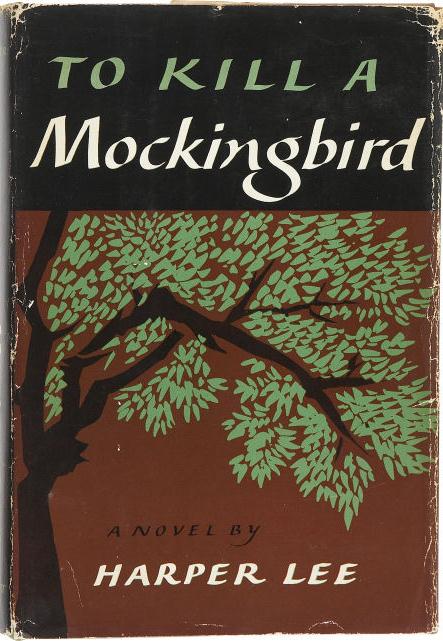
I’d vote for To Kill a Mockingbird as one of the best titles of all time. It’s a memorable and poetic title that hints at the central theme of the book without revealing too much. Harper Lee settled on the title after discarding two others, Atticus and Go Set a Watchman. I’m glad she didn’t name her masterpiece after the book’s hero. I confess to a bias against book titles that are the same as the main character’s name. Pride and Prejudice strikes me as a much better title than Emma, for example. Emma is so much more than a character study — why did Jane Austen decide to name the book after the protagonist? Books named after their protagonists seem to indicate a lack of originality on the part of their authors, but I know that’s not the case. Charlotte Bronte (Jane Eyre), Leo Tolstoy (Anna Karenina), and Charles Dickens (David Copperfield, Oliver Twist, Nicholas Nickleby) certainly didn’t suffer from a lack of originality. Maybe I am overemphasizing the significance of titles?
People are often surprised to learn that book titles can’t be copyrighted. Many times, we’ve had customers ask for a particular book without knowing the author’s name, only to find out that there are many books with the same title. I don’t know why anyone would choose a title that’s been used over and over, but it happens all the time. For example, a customer recently came in asking if we had The Dressmaker. A book with that title by Kate Alcott came out last year, and I assumed that’s the one the customer wanted. But when I described the plot (the dressmaker is a personal maid on the Titanic and ends up in a lifeboat), the customer said that wasn’t the book she wanted. I found four other books called The Dressmaker, but none of those was the one the customer had in mind. (It turned out she wanted Mrs. Lincoln’s Dressmaker by Jennifer Chiaverini . . . not to be confused with Mrs. Lincoln’s Dressmaker by Lynda Jones.)
Authors today typically don’t have total control over their books’ titles. They may be attached to a certain title, only to be told after an editorial or marketing meeting that the title is deemed inappropriate for various reasons. In an interview on The Awl (a great website that covers publishing and “the issues of the day”), author Laurie Frankel (The Atlas of Love) describes her experience working with her publisher to choose a book title:
I can only explain how I learned to stop worrying and love the title. My agent, who knows much more about writing and selling books than I do, loved it. My publisher, who knows much more about writing and selling books than I do, loved it. My editor, who had been as attached to Naked Love and its titular moment as I was, loved the new title . . . Meanwhile, at work on novel number two, I have a working title I refuse to get emotionally attached to. And this niggling reminder I learned in kindergarten and have clung to ever since: it’s what’s inside that counts.
Laurie Frankel is absolutely right, but I still love an unforgettable title that perfectly captures the essence of the book. Here are 10 of my favorites (including both classics and recent books) — what are yours?
The Sense of an Ending (Julian Barnes)
Wuthering Heights (Jane Bronte)
Tell the Wolves I’m Home (Carol Rifka Brunt)
A Hologram for the King (Dave Eggers)
The Art of Fielding (Chad Harbach)
A Tale for the Time Being (Ruth Ozeki)
Where’d You Go, Bernadette? (Maria Semple)
A Tree Grows in Brooklyn (Betty Smith)
Angle of Repose (Wallace Stegner)
The Warmth of Other Suns (Isabel Wilkerson)
And one more thing: I have to mention how much I hate it when the publisher adds a subtitle to the title of a novel, which they seem to do more and more frequently. Immediate turnoff. For example, Sebastian Faulks’s Birdsong is one of my favorite books. Below the title on the current paperback cover, it says “A Novel of Love and War“. I think the reader can probably figure that out. What’s next? War and Peace: A Novel of War and Peace? The Scarlet Letter: A Novel of Infidelity?
Years ago, we had an elderly customer who regularly came into the store asking for a “juicy romance”. (She was Russian, so the “r” rolled off her tongue in a very charming way.) It was always a challenge to find just the right book for her. She didn’t want formula romance fiction; she wanted a good love story, and she wanted one every week. Another requirement was that the book not be set in Russia. It’s not easy to find a well-written love story. Maybe Valentine’s Day has put you in the mood for a “juicy romance”? I asked my coworkers for their favorites, old and new, and got some terrific recommendations.
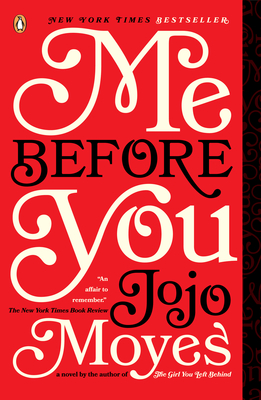
Just about everyone on our staff has read and loved Me Before You by Jojo Moyes. It’s the story of a young woman who is hired as the caregiver to a man who’s become a quadriplegic after a motorcycle accident. Get out the Kleenex when you’re about two-thirds of the way through. Here’s what Liesl Schillinger of the New York Times had to say:
When I finished this novel, I didn’t want to review it; I wanted to reread it. Which might seem perverse if you know that for most of the last hundred pages I was dissolved in tears. Jojo Moyes, the writer who produced this emotional typhoon, knows very well that Me Before You is, as British critical consensus affirms, “a real weepy.” And yet, unlike other novels that have achieved their mood-melting powers through calculated infusions of treacle — Erich Segal’s Love Story comes immediately to mind — Moyes’s story provokes tears that are redemptive, the opposite of gratuitous. Some situations, she forces the reader to recognize, really are worth crying over.
Kathy recommends The Death and Life of Charlie St. Cloud, by Ben Sherwood, which is not only a story of a romance between a man and a woman but a story of the undying love between two brothers.
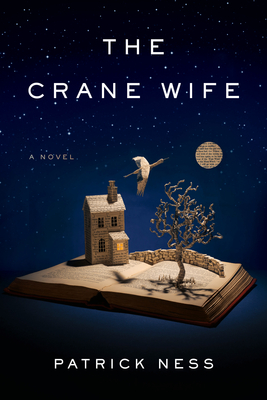
Max couldn’t pick just one favorite; it was a tossup among three recent books: ThePerfume Collector by Kathleen Tessaro, The CraneWife by Patrick Ness, and The Rosie Project by Graeme Simsion. I adored The Crane Wife as well, which surprised me, because it’s based on a folk tale and involves magical realism — two things that are usually immediate turnoffs for me. This novel, about a sad and lonely man in London who falls in love with a beautiful and mysterious woman (who may or may not be a human version of the injured crane who landed in his backyard), captivated me.
Leeni has fond memories of Daddy-Long-Legs, by Jean Webster, and so do I. An epistolary novel for young readers written in 1912, it contains all the elements of a classic love story — including an orphanage and a mysterious benefactor. I wish I still had my childhood copy — it was probably the first romantic book I ever read.
Molly is smitten with Letters From Skye, by Jessica Brockmole, another novel told in letters. A young poet from the remote Isle of Skye off the coast of Scotland receives a fan letter from an American student, and their correspondence turns into a complicated love affair.
Anna Karenina is Diane’s choice — and it’s hard to argue with that! William Faulkner called Tolstoy’s masterpiece “the best novel ever written”. Recently, the New York Times ran an article called “A Sentimental Education” in which contemporary authors discussed the ways literature has taught them about love. Ann Patchett reflected on the difference between reading Anna Karenina at the age of 21 and at 49:
When I was 21 I read Anna Karenina. I thought Anna and Vronsky were soul mates. They were deeply in love and therefore had to be together. I found Karenin cruel and oppressive for keeping his wife from her destiny. Levin and Kitty and the peasants bored me. I read those parts quickly.
Last year I turned 49, and I read the book again. This time, I loved Levin and Kitty. I loved the fact that after she declined his proposal he waited for a long time to mend his hurt feelings and then asked her again. I loved that she had grown up in the interim and now felt grateful for a second chance. Anna and Vronsky bored me. I thought Anna was selfish and shrill. My heart went out to poor Karenin, who tried to be decent.
And my favorites? In order to keep the list to ten, I’ll pick just two wonderful love stories: Birdsong, by Sebastian Faulks, and The Art of Hearing Heartbeats, by Jan-Philipp Sendker. The two books couldn’t be more different — Birdsong, set in World War I, is dark and tragic, while The Art of Hearing Heartbeats, set in Burma, is mystical and exotic. But both are about the power of love to connect and heal.
I have to add a “bonus” book to the list – The Storied Life of A.J. Fikry, by Gabrielle Zevin, due for publication in April. I picked up a copy at Winter Institute in Seattle and read it cover to cover in one day. It’s about a heartbroken bookseller whose life is transformed by love — and it’s going to be one of my favorite love stories of all time. I can’t wait to tell you about it in April!

















 Books on the Table