Lit Up — Thoughts on Teenagers and Reading

Together and alone, we need literature as California valleys need rain.
David Denby, Lit Up

9780805095852_LitUp_JK.inddBack in the 1980s, film critic David Denby wondered “how anyone could be hurt by reading a good book”. The controversy at the time, which continues to this day, was how we define a “good book” and whether the traditional Western classics are relevant in our multicultural society.  The 48-year-old Denby returned to his alma mater, Columbia University, and spent a full academic year studying the Western canon. He wrote a book, Great Books: My Adventures with Homer, Rousseau, Woolf, and the Indestructible Writers of the Western World, about how the experience reinvigorated his intellectual life.

Denby describes his new book, Lit Up: One Reporter. Three Schools. 24 Books That Can Change Lives, as a “prequel” to Great Books. He spent an academic year (2011-12) in sophomore English classrooms at the Beacon School, a  magnet school in Manhattan, and another year (2013-14) in English classrooms at two other public schools — Mamaroneck High School, in a wealthy New York suburb, and James Hillhouse High School, in inner-city New Haven, Connecticut. He wanted to learn:

How do you establish reading pleasure in busy, screen-loving teenagers — and in particular, pleasure in reading serious work? Is it still possible to raise teenagers who can’t live without reading something good? Or is that idea absurd? And could the struggle to create such hunger have any effect on the character of boys and girls?

Denby’s time in the classroom with some unusually gifted and devoted teachers — who are passionate readers themselves — shows that it is possible to transform reluctant or even hostile readers into engaged and curious readers. But it’s an uphill battle, and even more difficult for students who lack the context or vocabulary to understand what they’re attempting to read. If students don’t know when or why the Civil War was fought, they’re not going to connect to The Red Badge of Courage. If they don’t know what the Holocaust was, they’re not going to make any sense of Elie Wiesel’s Night.

The teachers Denby introduces in Lit Up have the difficult, nearly impossible job of getting students to read the assigned texts and of helping students find books outside of the required reading that they will enjoy and relate to on a personal level. Both Denby and the teachers acknowledge that the way to get kids to read is to get them first to read anything they like: “Get them started as readers by giving them books they could easily enjoy, including young adult novels; get them caught up in narratives, stories, outcomes.”

As a bookseller, I agree with this philosophy wholeheartedly. As Ann Patchett said, “I’m all for reading bad books because I consider them to be a gateway drug. People who read bad books now may or may not read better books in the future. People who read nothing now will read nothing in the future.” I’ve always been a bit mystified by parents who are overly concerned about the content in their children’s reading material. If your third grader who struggles with reading loves Captain Underpants or Junie B. Jones, who cares? They’re developing a habit of reading and enjoyment of the written word. And anyway, do you want the reading police ticketing you for reading Us Weekly?

The problem is that these teachers know, just as all avid readers know, that one of the greatest benefits of reading is to develop an understanding of the wider world and the people in it. Reading isn’t just about holding a mirror up to ourselves and validating what we already think and feel. The teachers we come to know and admire in Lit Up work hard, with more success than I would have anticipated, to get kids to read challenging books that open their eyes to people and experiences far beyond the limited scope of their lives.

Jessica Zelinski, who teaches sophomore English at Hillhouse High School, the worst-performing public school in New Haven, regularly organizes a classroom event called a “Read Around”. She chooses several books she thinks will interest her students, and brings multiple copies to class, encouraging every student to sample each book.  One of the students, who initially looked at Ishmael Beah’s devastating memoir of his years as a boy soldier in Sierra Leone, A Long Way Gone, and said, “This doesn’t interest me,” ends up reading the book with great interest — and, through the efforts of Miss Zelinski, meeting the author at a nearby college. Miss Zelinski, who feels that the Hillhouse curriculum often condescends to the students by not expecting much from them, says to the author, “Maybe they’ll enjoy life more, if I can get them reading. I would like to nurture in them the idea that there are other worlds.”

I was so fascinated by Denby’s stories about the students and teachers he came to know that I read this book in just one day. It’s a very personal account, not a sociological treatise. Denby says of the students he observed:

I decided not to suppress my feelings about them. I would describe them physically (or they would never come alive on the page) and commit the sin of ‘judging’, always bearing in mind that they were very young. Fifteen-year-olds, through an academic year, develop stems and roots, their cells divide. In particular, I wanted to see if readers could be born — what happens when a non-reader becomes a reader? — which meant necessarily recording the students’ mistakes and awkward moments as well as their insights and breakthroughs as they struggled into life.
americangirlsimageI read this book just after I finished another book about American teenagers, American Girls: The Secret Lives of American Teenagers, by Nancy Jo Sales, which is truly one of the most depressing books I’ve ever read. If Sales is to be believed — and I hope with all my heart she’s not — the lives of most teenage girls revolve around taking pictures of themselves and posting them online, hoping for validation. In this book, physical appearance is everything, the search for male approval is paramount, and feminism is completely dead. A recent Wall Street Journal review said: “The secret life of teenagers sometimes seems entirely a response to nude pictures and requests for them—a response, that is, to male adolescent desire, as it shows up digitally. But female vanity is also at play.”

I wish the teenagers (both boys and girls) in American Girls had teachers like Sean Leon, Mary Beth Jordan, Jessica Zelinski, Mary Whittemore, and Daniel Guralnik, who would introduce them to inspiring books that would help them develop into empathetic people.  At the very least, they should consider the words of Atticus Finch in To Kill a Mockingbird, one novel I’m certain every high school student is required to read:

You never really understand a person until you consider things from his point of view — until you climb into his skin and walk around in it.


Just Breathe: Thoughts on Writing Book Reviews

A good day is a day when I can not just read a book, but write a review of it.
Christopher Hitchens

The critic leaves at curtain fall
To find, in starting to review it,
He barely saw the play at all,
For starting to review it.
E.B. White

Your work is ingenious. It’s quality work. And there are simply too many notes, that’s all. Cut a few and it will be perfect.
Emperor Franz Joseph I of Austria to Mozart in the movie Amadeus

the-elements-of-style“Too many words” was how a customer recently characterized a book on the bestseller shelf in our store. I knew exactly what she meant. Many nonfiction books fit this description. They should have been magazine articles, but their authors were determined to stretch the material into full-length books. I’ve also read plenty of novels that would have benefited from the most valuable advice in Strunk and White’s classic writing guide, The Elements of Style: Omit needless words.
It’s easy to criticize a book you have mixed feelings about, or don’t like at all. What’s difficult is to review a book you love, without mindless gushing. When I recommend a book, in person or in writing, I don’t want to sound like an evangelist for the Church of My New Favorite Book. I want to communicate two important things:

  • Specifically why I think the book is worth a reader’s time, with particular attention to the quality of writing and  level of originality.y6482
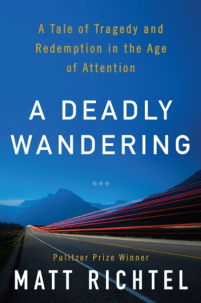
  • Why I connected with it, and which other readers will connect with it. Not every book is for everyone. (Except A Deadly Wandering and Being Mortal. Everyone who drives a car and/or isn’t immortal should read those books.)

I’m not the only one who struggles with sharing my enthusiasm without the use of hackneyed, meaningless language. Everyone who writes about books, from book reviewers in major newspapers to marketing executives at publishing companies to readers who post online reviews to authors who write blurbs for their colleagues, all end up using the same overblown adjectives: transcendent, stunning, luminous, incandescent, spellbinding, gripping, compellingunputdownable, dazzling . . . I can’t count how many times I’ve read that a book was breathtaking. Several books recently left the reviewers breathless, and one will “have the reader breathlessly turning pages.”  I like to read more than the average person, but spin class, not reading, leaves me breathless.

Authors try to help each other when they come up with blurbs. An author might want to write “Run-of-the-mill midlist literary novel with a moderate amount of family dysfunction and a predictable plot that might keep your interest if you’re on a plane with nothing else to read”, but wants to support a friend, so she writes, “Very rarely, a few times in a lifetime, you open a book and when you close it again nothing can ever be the same. Walls have been pulled down, barriers broken, a dimension of feeling, of existence itself, has opened in you that was not there before.”

Author Gary Shteyngart, who’s written more than 150 blurbs and apparently considers it his duty to support other writers, told NPR he doesn’t need to read an entire book in order to come up with an endorsement:

I can figure things out pretty quickly. I’ll look at a first sentence [of a galley], I’ll look at the cover and it just comes to me. … Sometimes I try to read further — but you know, how far can you get? Does anyone even read these books anymore? . . . I’ve compared people to Shakespeare, Tolstoy or whatever. I’ll do anything.

Well, I promise that if I recommend a book I have actually read every page of that book. While I enjoy supporting authors whose work I admire, I have no obligation to post positive reviews of their books. I’m spreading the word about books I love because in the insanely competitive world of book publishing, where hundreds of thousands of books come out each year in the United States alone, individual books need all the help they can get. Cream doesn’t always rise to the top on its own.

The hardest part of writing rave reviews is explaining why a book found its way into my heart, and why it might make its way into yours, without resorting to describing it as captivating, unforgettable, enthralling, brilliant, or mesmerizing. I’ve been guilty of using all these words, but I am proud to say I have never called a book luminous.

I have a little collection of hyperbolic or silly quotes from reviews — here’s one from the New York Times, on Lawrence Osborne’s The Forgiven: “A lean book that moves like a panther”. I can’t decide if it’s ridiculous or radiant. What do you think?


What to Read Next — February 2016

I do so hate finishing books. I would like to go on with them for years.
Beatrix Potter

Every reader knows the feeling. As you turn the final pages of a book, you start to think, But what will I read next? You look at the stack of unread books on your nightstand, or you search your computer for that list of must-read books you saved. You hunt for that little scrap of paper with the title of a book that a friend said you absolutely have to read. You plan a trip to the library or bookstore to pick up more books to add to your pile.

Of course, you can always hedge your bets by reading several books at a time. When you finish one, you just move on to the middle of the next one. Sooner or later, though, you have to choose a new book. Sometimes the choice is made for you — you need to read your next book club book, whether it’s something you’re in the mood for or not. Many of my favorite books have been books I’ve read out of obligation.

January was a terrific reading month for me, leaving me with several books I highly recommend and only a couple of disappointments. If you’re looking for your next great book, here are my most recent favorites:

9780399160301Salt to the Sea by Ruta Sepetys
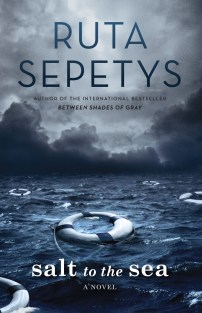
Four teenage narrators, each with a unique and memorable voice, tell the story of the events leading to the worst maritime disaster you’ve never heard of: the sinking of the Wilhelm Gustloff in the Baltic Sea during the final days of World War II. Nearly 10,000 people died, most of them refugees fleeing from the Soviets. Author Ruta Sepetys brilliantly constructs an addictive historical narrative that will appeal to readers who enjoyed All the Light We Cannot See or The Nightingale. (And isn’t that almost everyone?) Don’t be put off by the YA categorization — Salt to the Sea, like The Book Thief, is perfect for both teenagers and adults.

The Wall Street Journal calls Salt to the Sea “masterfully crafted”, noting that “Ruta Sepetys seizes on this tragic and forgotten episode to create a superlative novel.”

Sepetys is now on a national publicity tour — I’m looking forward to meeting her on Monday, February 8 at the Book Stall in Winnetka, Illinois. For her event schedule, check out her website.

When Breath Becomes Air by Paul Kalanithi
9780812988406When Breath Comes Air is one of those books you want to give to everyone you love. If you  start reading the book with a pen in hand, ready to underline your favorite passages, you’ll find yourself underlining almost the whole book. Dr. Paul Kalanithi, a 37-year-old neurosurgeon, wrote the book after he was diagnosed with terminal cancer. He didn’t quite finish, but the memoir he left behind — with a beautiful foreword from Abraham Verghese and an equally lovely epilogue written by his widow, Dr. Lucy Kalanithi — is a masterpiece.
Ann Patchett says: “It’s a brilliant piece of writing and a singular and profound piece of thinking, but it’s also more than that: When Breath Becomes Air makes us stop and think about how gorgeous life is, how heart-wrenching and brief and amazing.”

y648Challenger Deep by Neal Shusterman
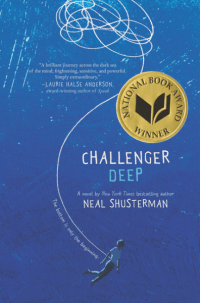
Our YA book group at Lake Forest Book Store chose Challenger Deep because it was the 2015 National Book Award winner in the YA category. After I read the first 30 or 40 pages, I had no idea what was going on. I considered calling my co-leader and suggesting we apologize for our selection and pick another book. However, I decided to trust the National Book Award judges, and I persevered. I ended up loving this novel, which vividly recreates a teenage boy’s struggle with mental illness. The narrative switches between straightforward accounts and hallucinations, dreams, and distorted versions of reality. I don’t know if it’s ever really possible to comprehend mental illness, but Challenger Deep, more than anything I’ve ever read, helped me gain a bit of understanding.

51rc2b8fvkbl-_sx327_bo1204203200_The Lightkeepers by Abby Geni
Abby Geni’s debut novel is a literary page-turner, perfectly blending evocative writing and deft characterization with a tension-filled — and creepy — plot. The novel is worth reading just for its setting, the isolated and dangerous Farallon Islands off the coast of San Francisco. Miranda, a nature photographer, accepts a one-year assignment there, with only a few odd and unfriendly scientists for company. Not long after her arrival, one of them is found dead. Accidents happen all the time on the “islands of the dead”, but was this an accident?

The Chicago Tribune says:

Part murder mystery, part psychological thriller, part ode to one of the western world’s wildest landscapes, this dark, compelling tale is an astonishingly ambitious debut . . . In this, her first work of long-form fiction, Geni shuns predictable protocols of plot, character and setting. Taking a leap off the literary cliff is not for wimps. It’s a testament to Geni’s skills that she takes her readers with her.

My next two books will be While the City Slept: A Love Lost to Violence and a Young Man’s Descent into Madness by Pulitzer Prize winner Eli Sanders,to scratch my true crime itch, and The Forgetting Time by Sharon Guskin, because a page-turner about parental love and reincarnation sounds irresistible.  How about you?


Books on the Table in New Orleans

New Orleans is unlike any city in America. Its cultural diversity is woven into the food, the music, the architecture – even the local superstitions. It’s a sensory experience on all levels and there’s a story lurking around every corner.
Ruta Sepetys

2957291075_51fce98859Most American cities name their airports for politicians (Reagan, JFK) or military heroes (Logan, O’Hare). Not New Orleans. The New Orleans airport is named after one of the 20th century’s most beloved musicians, Louis Armstrong — which signals to visitors that the city has a unique character. Tennessee Williams reportedly said, “America only has three cities: New York, San Francisco, and New Orleans. Everywhere else is Cleveland.”
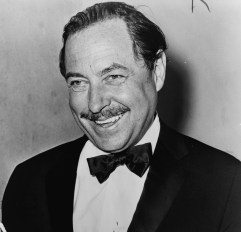
tennessee_williams_nywtsWe left the subzero weather behind in “Cleveland” (which in our case was Chicago) last weekend and spent three days in Tennessee Williams’s adopted city. During our food tour, which included six stops at New Orleans restaurants, we saw the house in the French Quarter where Williams wrote A Streetcar Named Desire. (I don’t think the eight miles we walked that day came even close to burning the calories we consumed!) Kenneth Holditch, Ph.D., longtime friend of Williams, co-editor of the Library of America’s editions of Williams’s works, and the author of Tennessee Williams and the South, told the New Orleans Times-Picayune that  “New Orleans was created by writers and visual artists . . . Sherwood Anderson once said this is a ‘city of imagination.’”

IMG_1838For me, no vacation is complete without at least one bookstore visit. On our first day, we stumbled upon Beckham’s Bookshop in the French Quarter , which was everything a used bookstore should be — quirky, dusty, and packed with treasures. There was even a resident cat. My favorite section in the store was “True Crime and Rascality”. Because I’m unable to walk out of a bookstore without buying something, I picked up a copy of The House on First Street: My New Orleans Story, by Julia Reed. Reed, a journalist, got married and moved to the Garden District of New Orleans just before Hurricane Katrina struck. The New York Times critic, literary biographer Blake Bailey, gave the book a rave review despite his initial misgivings:
I really wanted to pan this book. First of all, with the exception of Walker Percy’s Moviegoer, I tend to dislike literature about New Orleans (oh the decadence! the quaintness!) . . . It’s also a Hurricane Katrina memoir. I’d considered writing my own Katrina memoir, and now I realize I probably never will.

Reed includes her “Favorite New Orleans Reads” at the back of the book.  She recommends, among others,  The Moviegoer (“it remains, even now, an accurate rendering of a certain subset of upper-class New Orleanians”); Bandits, by Elmore Leonard (“You can almost smell the inside of the Bourbon Street bars”); and The Feast of All Saints, by Anne Rice (“No vampires, just free people of color in pre-Civil War New Orleans”).

y648We rode the famous St. Charles streetcar to uptown New Orleans and visited a lovely independent bookstore, Octavia Books. I bought two more books: My New Orleans, Gone Away: A Memoir of Loss and Renewal, by Peter M. Wolf,and a signed copy of Why New Orleans Matters, by Tom Piazza. Piazza wrote his book in 2005, during “five agonizing weeks” following Hurricane Katrina. The updated edition, published in 2015, includes information about the city’s recovery. In the preface, Piazza says:
As long as New Orleans exists, it will attract the imaginative, the creative, the adventurous, and the soulful people of the world. Walking down almost any street and drinking in the cocktail of historical resonance, architectural whimsy, olfactory magic, savoring the peculiar mix of seriousness and play, of new possibilities, good and bad, around any corner, will remind you of why it is good to be alive.

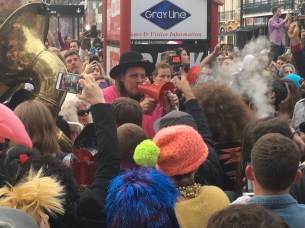
IMG_1840Thousands of adventurous people were in evidence on Saturday afternoon during the memorial parade for David Bowie. The parade, led by the Preservation Hall Jazz Band and Arcade Fire, was announced on social media just two days ahead of time but attracted Bowie fans and curiosity seekers from all over. Even though we didn’t have appropriate attire (space suits, tutus, gold lame), we jumped into the fray and followed the parade. At one point, we were just a few feet away from Win Butler of Arcade Fire, who was dressed in a hot pink suit and singing Bowie’s “Heroes”.

david-bowie
Poster for the American Library Association marketing campaign, 1987

Apparently David Bowie was a world-class reader. Geoffrey Marsh, who curated the Victoria & Albert Museum retrospective exhibit of Bowie’s life,  describes Bowie as “a voracious reader” who often read as much as “a book a day”. Bowie told Vanity Fair that reading was his idea of perfect happiness — and that the quality he most admires in a man is “the ability to return books”.  According to the London Telegraph, Bowie (“a remarkably well-read man”) brought hundreds of books with him when he went on tour: “I had these cabinets– it was a travelling library — and they were rather like the boxes that amplifiers get packed up in . . . I have an extraordinarily good collection of books.” Readers who are interested in Bowie’s  100 favorite books can check out the list here. The books, both fiction and nonfiction, cover an enormous range of territory; art, music, history, religion, psychology, and poetry. I haven’t read (or even heard of) many of them, but we do share one favorite: Fran Lebowitz’s Metropolitan Life.

0802130208John Kennedy Toole’s A Confederacy of Dunces, set in New Orleans, appears on Bowie’s list. I’ve never read this book, which is often referred to as a “cult classic” and won the Pulitzer Prize in 1981. Walker Percy said, “It is a great pity that John Kennedy Toole is not alive and well and writing. But he is not, and there is nothing we can do about it but make sure that this gargantuan tumultuous human tragi-comedy is at least made available to a world of readers.” If it weren’t for Percy, A Confederacy of Dunces would most likely never have been published. He was teaching at Loyola University in New Orleans when Toole’s mother brought him her late son’s novel. Percy championed the book, and Louisiana State University Press published it. The book was the first novel from an academic press to win a Pulitzer — beating  out Percy’s novel, The Second Coming.
Rhoda Faust, owner of Maple Street Bookshop in New Orleans, also helped Toole’s mother find a publisher. She told the Times-Picayune that the novel “captures New Orleans better than anything else on the face of the earth ever has”, but that it’s popular with readers everywhere: “Humor translates . . . the people within A Confederacy of Dunces are going through the same things other people and their families are going through.”

Susan Larson, author of The Booklover’s Guide to New Orleans and host of the local NPR affiliate’s show on books, “This Reading Life”, says: “Few American cities have such a visible and inviting literary culture, played out on its streets every day.” Larson often reads two books a day — when she was a judge for the Pulitzer, she had to read 300 books in six months. That New Orleans reader could put the rest of us — including David Bowie — to shame!


The Most (and Least) Popular Books on the Table Posts of 2015

Happy New Year! I’m writing this blog to keep track of my reading and to encourage me to think more critically about what I read — but also to help bring readers and books together. I love sharing my enthusiasm for books that have found a place in my heart. I thought that looking at my 2015 year-end blog statistics would help me plan informative and engaging posts for 2016.

cvr9781476746586_9781476746586_lgWhen I checked to see which posts received the most views, I was surprised. The #1 post for 2015 is my review of All the Light We Cannot See  (originally posted in March 2014, six weeks before the book came out)– also the #1 post for 2014. Book reviews don’t usually get as much readership as other posts, but I guess that when the book being reviewed is a much-loved Pulitzer Prize winner, it’s a different story.
Just a few page views behind the All the Light We Cannot See review was 10 Spring Paperback Picks, which had double the page views of the #3 post (5 Reasons to Read Short Stories.) I wondered why that post was so popular, with triple the readership of similar posts — 10 Summer Paperback Picks, 10 Books to Get Your Book Club Talking — and five times the readership of 10 Summer Paperback Picks –Nonfiction? I thought there had to be some reason that the 10 Spring Paperback Picks post has been so popular throughout the summer, fall, and winter.

I discovered the reason inadvertently when I googled “Girl on the Train paperback” a few days ago. I didn’t find the paperback release date — but I did learn that Books on the Table’s 10 Spring Paperback Picks shows up as one of the first Google hits when those search terms are used. Which should be a good thing, except that readers who click on that link will not find out when The Girl on the Train will come out in paperback. What they will learn is a little bit about how the book industry decides when to release books in paperback and what my favorite summer 2015 paperback recommendations were.

Here are the top 10 posts from 2015, along with my theories about why they were the most popular.

#1: All the Light We Cannot See — Book Review (2014)
Searches for “discussion questions for All the Light We Cannot See”  led hundreds of readers to my book review — I hope they weren’t too unhappy when they found my post didn’t include any questions. I’ve considered including discussion questions in book reviews, but I never have because good discussion guides are usually available on publishers’ websites. Maybe I should include links to those, along with a few extra questions?

Those who wanted to know “what happened to the diamond in All the Light We Cannot See” were definitely disappointed, as was the reader interested in “the best food to serve at All the Light We Cannot See book club meeting”. (I suggest either French or German.)

By the way – if your book club is one of those that only discusses paperbacks, keep in mind that the paperback edition of All the Light We Cannot See is due in October 2016.

9781594633669M#2: 10 Spring Paperback Picks
Everyone is dying to know when The Girl on the Train is coming out in paperback. Keep in mind that the paperback edition of Gone Girl didn’t come out until nearly two years after the hardcover publication — but several months before the movie release. The movie version of The Girl on the Train is scheduled to hit theaters in October 2016.

#3: 5 Reasons to Read Short Stories (2014)
In what may be an age of limited attention spans, are short stories making a comeback? Over the past few years, many top-notch short story collections have been published, and the last two National Book Award winners for fiction have been collections of stories (Redeployment and Fortune Smiles). Or maybe people are bewildered by short stories; Books on the Table statistics show lots of readers wondering “why are short stories worth reading?” and “why do people read short stories?”.

#4: 10 Summer Paperback Picks
People like reading paperbacks in the summer!

9780062359940#5: An Uncomplicated Life — Book Review
One reason this post was so popular is that Paul Daugherty,  the author of An Uncomplicated Life: A Father’s Memoir of His Exceptional Daughter, is a columnist at the Cincinnati Inquirer and he mentioned the review in his blog.  Another reason is that An Uncomplicated Life is a wonderful, inspiring book — don’t miss it! (It’s now out in paperback.) Daugherty’s daughter, Jillian, was married last June; in a letter he wrote to her, published on the website The Mighty, Daugherty said: ” I don’t know what the odds are of a woman born with Down syndrome marrying the love of her life. I only know you’ve beaten them.”

#6: Where They Found Her — Book Review
I’m not sure why this review got the attention it did, except that Where They Found Her is a popular book club selection. Many readers were searching for “Where They Found Her spoilers” — does this mean they hadn’t read the book and their book club meeting was starting in an hour?

Orphan #8#7: Orphan #8 — Author Interview
Kim van Alkemade’s  terrific debut novel, a paperback original, was an Indie Next pick. She provided detailed and thoughtful answers to my questions — but so did Elizabeth Berg, a much better-known author, in a discussion of The Dream Lover a few months earlier, and that interview had very low readership.  Could it be that people were looking for information about Christina Baker Kline’s Orphan Train (another paperback original), which has been on the New York Times bestseller list for over two years?

#8: 10 Books to Get Your Book Club Talking
Clearly, people are always looking for “discussable” books. A glance at search terms shows that they are also trying to find “book club books that are fun not depressing”, “great book club books for couples”, and, surprisingly often, “book club cocktail napkins”.

9780062259301#9: The Story Hour — Book Review (2014)
I loved this book, but I’m surprised the review made it into the top 10 because The Story Hour seems like one of those quiet and lovely books that hasn’t received the acclaim it deserves. All of Thrity Umrigar’s books are well worth reading, but my favorite is The Space Between Us.

#10: Nonfiction November : 10 Favorite Survival Books (2014)
When I’m warm and comfortable on my couch at home, usually with a blanket and a cup of hot tea, I like nothing better than to read about people trapped in the polar ice cap or shivering in a lifeboat. I must not be alone in my reading tastes because I see many searches for ” best nonfiction adventure books”  and “true survival stories”.

And here are three of my favorite posts from 2015 — which, according to the statistics, almost no one read:

Nonrequired Reading
I feel strongly about not forcing children to read books they don’t like. Maybe people disagree and don’t want to tell me? Did the Garfield photo turn people off? Or maybe the title is bad?

Books on the Table Goes to the Movies
Maybe I should stick to writing about books. I recently went to see the Chicago Lyric Opera’s production of Bel Canto (based on Ann Patchett’s book) and considered writing a post called Books on the Table Goes to the 24de28664bdf1f004be5425016536035Opera. It’s probably best I didn’t.

Jazz Age January: West of Sunset & So We Read On
Something has to be in last place — this post ranks #71 out of 71 posts published in 2015 — but this was one of my favorites! Am I the only one who cares about F. Scott Fitzgerald?

I’m interested in what you’d like to see more (or less) of in Books on the Table in 2016. Suggestions, please!


How to Pick the Perfect Gift Book — And 24 Eclectic Recommendations

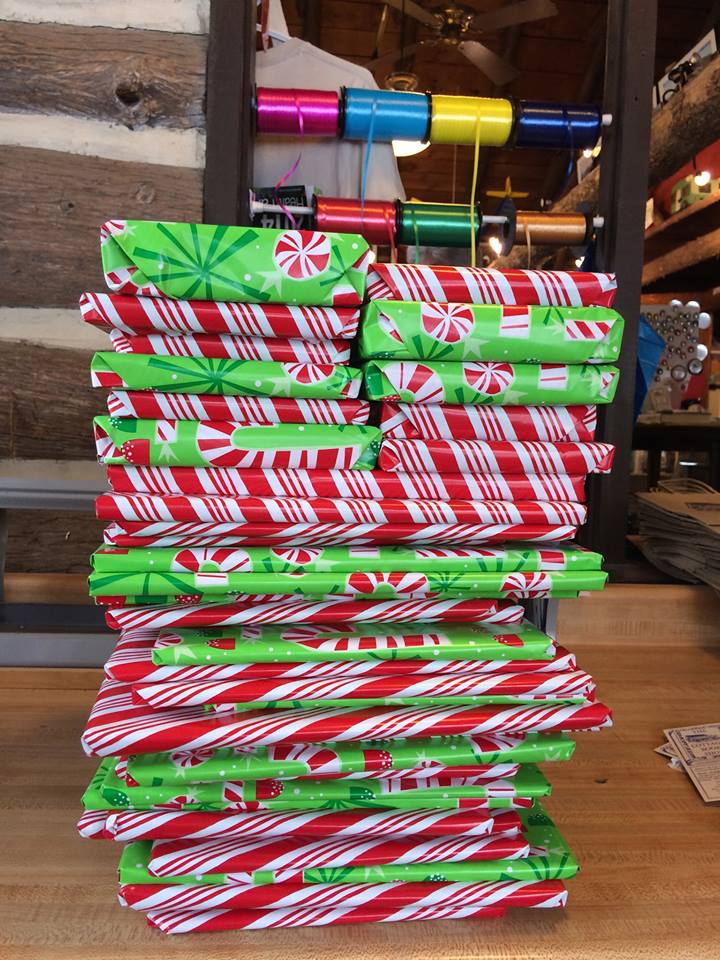
Books for the holiday book drive in Glen Arbor, Michigan
Elves at the Cottage Book Shop in Glen Arbor, MI have been busy wrapping.

Books make great gifts because they’re easy to wrap.
Amy Sedaris

Two years ago, I wrote a post called 5 Books NOT to Give this Holiday Season. I listed the kinds of books that are most likely to be returned, and reminded shoppers not to inscribe books with heartfelt messages: “Dearest Lily, I hope you enjoy Little Women as much as I did when I was your age. Love, Aunt Ann.” Lily may want to exchange Little Women for #7  in the Zombie Vampires in Outer Space series, and that’s OK. You want her to have a book she’ll read rather than one she’ll use as a decorative object, right?

A friend was horrified last Christmas when her parents received a book about end-of-life issues. Books about death and dying don’t make the most cheerful holiday presents. Atul Gawande’s Being Mortal is one of my favorite books of 2015, but I’m not giving it to anyone as a gift. I don’t even like to give books that have the word “die” in them: 1000 Places to See Before You Die; 1001 Books You Must Read Before You Die; 100 Things Iowa State Fans Should Know & Do Before They Die (no, I didn’t make that one up!).

This year, I’m taking a positive approach. Instead of telling you which books are bad gifts, I’ll suggest a few that might be good gifts. I say “might” because, of course, you’re taking a chance. Matching a book with a reader is mysterious alchemy — which brings me to another point. If you’re thinking of giving a book to someone who’s not a reader, be very careful. Make sure it’s a useful book rather than a reading book. Your interior designer sister, who loves shelter magazines, would probably appreciate Sharon Santoni’s lovely book, My Stylish French Girlfriends. Your law student brother, who’s buried in textbooks but enjoys cooking, might like the new Jacques Pepin cookbook, Heart and Soul in the Kitchen.

Every major publication, print and digital, publishes a list of the “best” books of the year. The Wall Street Journal creates a master list by compiling books cited on 12 year-end lists: “Best Books of 2015: The Best of the Best-of Lists”. The New York Times publishes a list of 100 Notable Books, and then follows that a week later with The 10 Best Books of 2015. These lists are interesting to read, but not necessarily helpful as gift giving guides. I don’t know about you, but there’s no one on my list who would appreciate The Invention of Nature: Alexander von Humboldt’s Natural World (“Alexander von Humboldt may have been the pre-eminent scientist of his era, second in fame only to Napoleon, but outside his native Germany, his reputation has faded . . .). I’m sure that’s a worthy book, but my friends and family are more likely to receive Tim Federle’s new mixology book, Gone With the Gin: Cocktails With a Hollywood Twist. (We enjoyed Tequila Mockingbird: Cocktails With a Literary Twist.)

Here are a few ideas for gift books . . . just in case you haven’t finished your shopping. (Or maybe you deserve to buy yourself a book.) Several of these recommendations appear on 2015 “best books” lists, but I’ve tried to include others that have been overlooked. They may not be the “best”, whatever that means, but maybe they’ll be perfect for someone on your list.

02dde0b11247a412ef5ab2d18f7ba165For art aficionados:

Hold Still: A Memoir with Photographs by Sally Mann
One of the best memoirs I’ve ever read — it doesn’t seem fair that Sally Mann is a talented writer and photographer! She describes it as a “deeply personal explorations of the landscape of the American South, the nature of mortality (and the mortality of nature), intimate depictions of my husband and the indelible marks that slavery left on the world surrounding me.”

For Shakespeare lovers:

Still Time by Jean Hegland
A gorgeous novel about an aging professor, suffering from Alzheimer’s, whose extensive knowledge and understanding of Shakespeare helps him understand a world that is becoming more and more confusing. Like Lisa Genova’s Still Alice, Still Time is about a professor suffering from dementia — but it’s an entirely different, and I’d argue, a more subtle and thought-provoking novel.

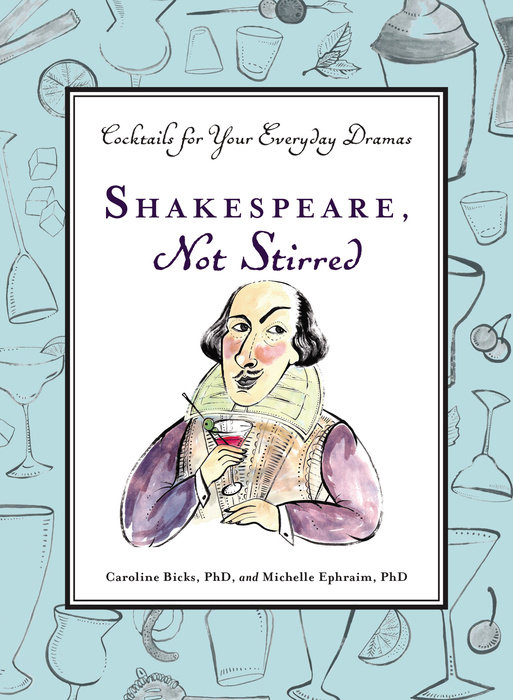
9780399173004Shakespeare, Not Stirred: Cocktails for Your Everyday Dramas by Caroline Bicks and Michelle Ephraim

Two Shakespeare scholars obviously had a blast putting together this collection of recipes for cocktails and appetizers. Every page contains fun and interesting Shakespeare trivia; reading this short book is a bartending course and Shakespeare seminar combined.

The Gap of Time by Jeanette Winterson
First in the new Hogarth Shakespeare series, The Gap of Time is a modern retelling of The Winter’s Tale. Brilliant and entertaining!

For readers like me who can’t get enough of little-known World War II history:

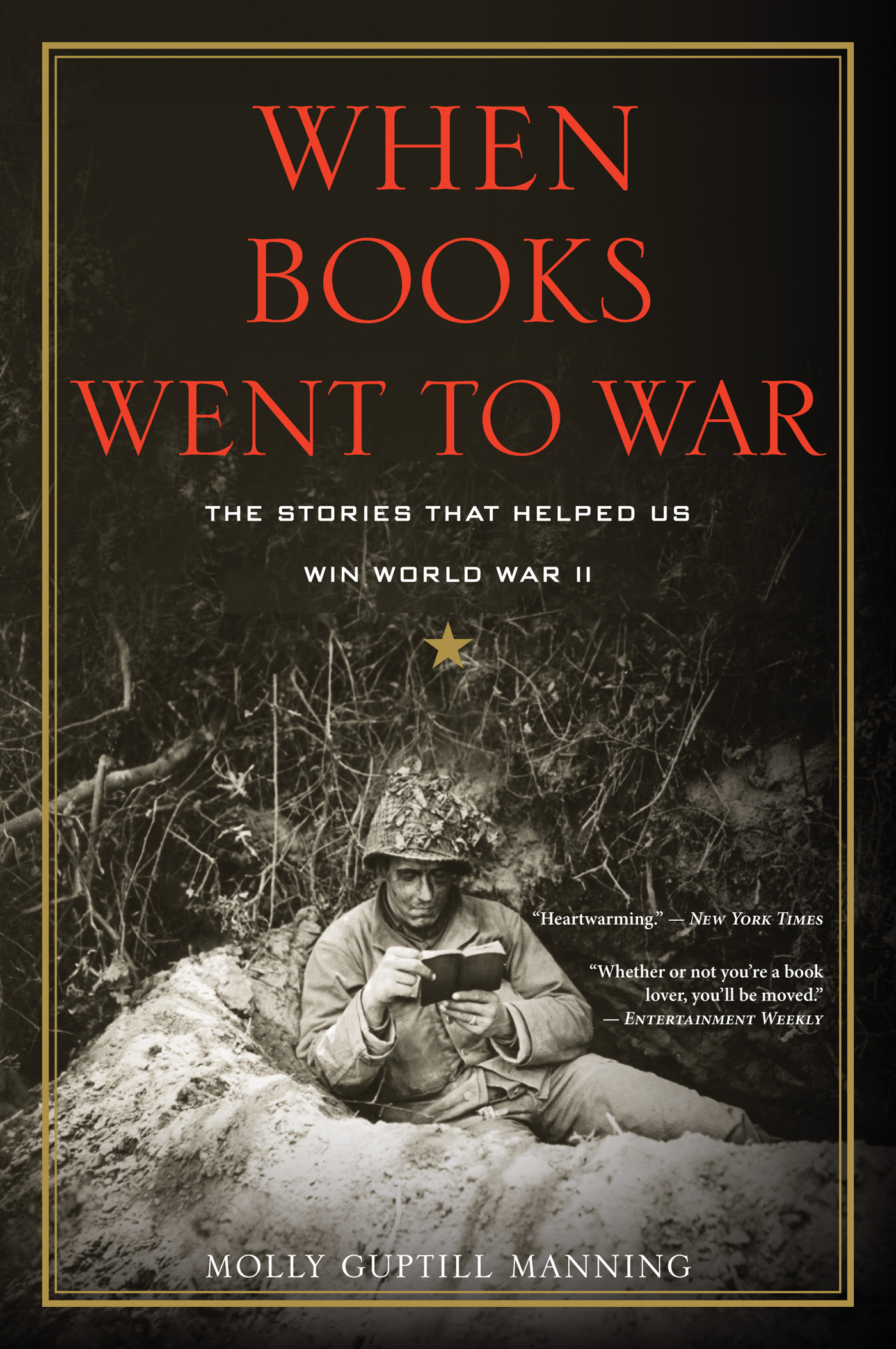
9780544570405_hresWhen Books Went to War: The Stories That Helped Us Win World War II by Molly Guptill Manning
Between 1943 and 1947, the government distributed 120 million paperback books (called Armed Services Editions, or ASEs) to millions of United States servicemen. Manning’s stirring book illustrates the power these books had to combat Nazi propaganda, “soothe an aching heart, renew hope for the future, and provide a respite when there was no escape” and to “build a new literate middle class” after the war.

The Hummingbird by Stephen P. Kiernan
The story of a hospice nurse, her terminally ill patient (a history professor specializing in World War II history), and her war veteran husband, The Hummingbird is beautiful, suspenseful, and inspiring.

For everyone who loved The Storied Life of A.J. Fikry (plus, no one dies in this one):

a-window-opens-9781501105432_lgA Window Opens by Elisabeth Egan
The clever and entertaining story of a full-time mother and part-time editor who suddenly needs to find a “real” job — and lands at “Scroll”, an up-and-coming company with a diabolically quirky corporate culture. Perfect for all those readers who don’t want to read “dark” or “depressing” books, the novel pays tribute to independent bookstores — and tells a heartwarming family story at the same time.

For parents who’ve just survived their high school senior’s college application process:

The Admissions by Meg Mitchell Moore
This insightful and delightfully witty novel is about much more than getting into college: the secrets the members of the upwardly mobile Hawthorne family are keeping from each other, and the admissions they must make.

962ab117cc4ac2dd9054af8b597fde98For everyone whose favorite book is To Kill a Mockingbird:

The Secret Wisdom of the Earth by Christopher Scotton
The very first book I read in 2015 remains one of my favorites of the year.  Harper Lee meets Pat Conroy in this coming of age story set in Appalachia 30 years ago.

For all the readers who cheered for the University of Washington crew in The Boys in the Boat:

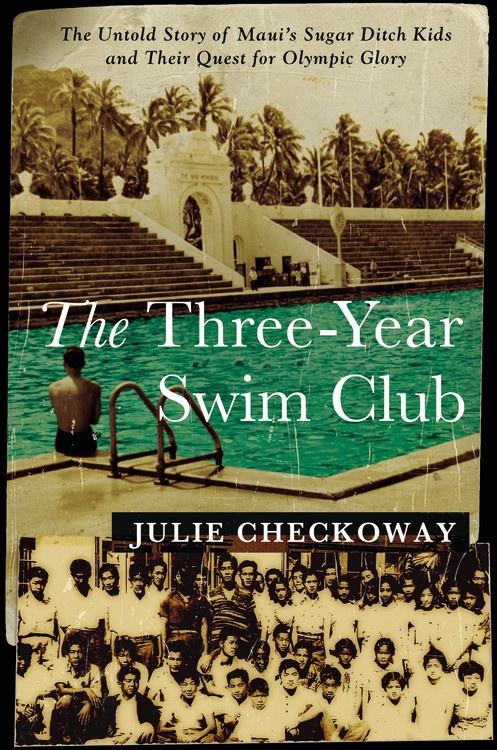
930cb8822e923066f1cfb42fa388117eThe Three-Year Swim Club by Julie Checkoway
Who can resist an underdog sports story? The “Three-Year Swim Club” was a group of poor Japanese-American children who started their swimming careers training in irrigation ditches in the 1930s and later became world champions. Checkoway focuses on the team’s innovative and inspirational coach, Soichi Sakomoto, an unsung hero whose accomplishments have gone relatively unnoticed.

Girl Runner by Carrie Snyder
A young female runner leaves her family farm and wins a gold medal at the 1928 Olympics. At the age of 104, wheelchair-bound and nearly blind and deaf, she returns to the farm with two young filmmakers. Actually . . . this is nothing like The Boys in the Boat; first of all, it’s fiction, and second, it’s achingly sad. But it is about the Olympics, and it is a great book!

For Ruth Reichl fans/literary foodies:

My Kitchen Year by Ruth Reichl
After Gourmet magazine folded, editor Ruth Reichl took comfort in the kitchen. Her new book chronicles her year of cooking and healing, with plenty of delicious recipes.

Voracious: A Hungry Reader Cooks Her Way Through Great Books by Cara Nicoletti
I loved every page of this book, which is like nothing else I’ve ever read — part memoir, part cookbook, and part literary criticism. The author is a butcher (!) and book lover, and the book contains 50 recipe, each inspired by a book that’s meaningful to her.

Life From Scratch: A Memoir of Food, Family and Forgiveness by Sasha Martin
The author set out to cook a recipe from every country in the world and blog about it — along the way, she made peace with her past and connected with the world around her. Reminiscent of Ruth Reichl’s Tender at the Bone, it’s a heartfelt, plainspoken chronicle of how food and cooking can heal damaged souls.

For teenagers who want to read adult books:

Where They Found Her by Amanda McCreight
Plot twists and red herrings abound in this novel of psychological suspense that takes place in a seemingly peaceful college town.  YA readers will enjoy the fast pace, the 17-year-old narrator, and the campus setting.

The Half Brother by Holly LeCraw
The Half Brother covers familiar territory: growing up at a New England boarding school. What makes the novel fresh and original is that it focuses on the coming of age of a young teacher.

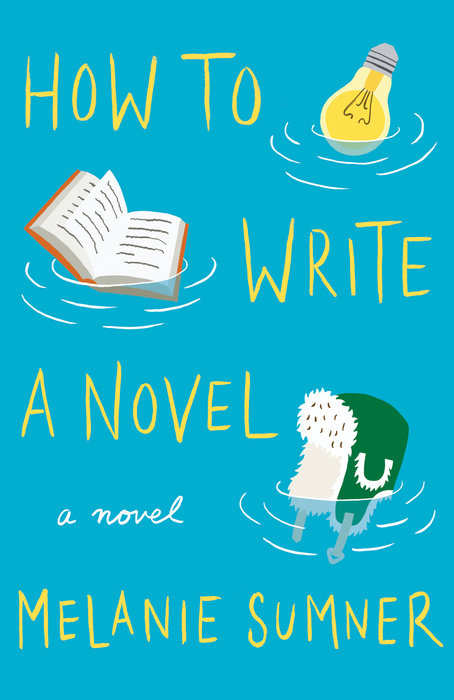
9781101873472-1How to Write a Novel by Melanie Sumner
I loved every page of this book, and what I enjoyed most was the voice of the 12.5-year-old (and yes, that’s how she refers to herself) narrator, Aristotle. While trying to write a book, following the instructions in a writing manual, Aristotle stumbles upon some family secrets. Perfect for fans of Where’d You Go, Bernadette? — another great YA crossover.

For adults who want to read YA books:

Belzhar by Meg Wolitzer
Jam’s parents don’t know what to do with her when she can’t seem to recover from her grief, so they send her to the Wooden Barn, a boarding school for “emotionally fragile, highly intelligent teenagers”. In a very unusual English class, she and her classmates begin to heal. Wolitzer skillfully incorporates fantasy into a novel that at first seems like a straightforward prep school story.

515e3HFpceLI’ll Give You the Sun by Jandy Nelson
Teenage twins Noah and Jude, both artists, are as close as two people can be, but they compete for the love of their parents and the attention of a new friend. Nelson, a poet and literary agent turned YA author, gives us each twin’s perspective in this thoughtful, but well-plotted exploration of art and love.

And . . . three favorite 2015 books that haven’t received enough recognition:

the-childrens-crusade-9781476710457_lgThe Children’s Crusade by Ann Packer
I savored every page of this beautiful novel, which explores the complicated relationships among four siblings raised by an attentive, loving father and a neglectful mother.

The Listener by Rachel Basch
A psychologist, the widowed father of two grown daughters, treats a college student who is confused about his gender identity. He becomes romantically involved with the mother of this student — without knowing she is the mother of his patient. Complications ensue, involving his daughters and their shared past.

My Sunshine Away by M.O. Walsh
Walsh’s debut is suspenseful, sometimes almost unbearably so, but it’s more than a crime novel; it’s the story of an immature, self-centered boy who manages to become an adult with integrity.

did-you-ever-have-a-family-9781476798172_lgTwo favorite 2015 books that have received plenty of accolades:

Did You Ever Have a Family by Bill Clegg
This book will keep you up late at night, and it will break your heart. The writing is gorgeous, and the tragic story is perfectly constructed.

A Little Life by Hanya Yanagihara
In case you haven’t been sufficiently traumatized by Clegg’s novel . . . read A Little Life. The 700-page “epic American tragedy” covering 30 years in the lives of four college friends is one of the most powerful books I’ve ever read. You’ll never forget it.

What books are you giving this year? And which ones are you hoping to receive?


Books on the Table Goes to the Movies

An art whose limits depend on a moving image, mass audience, and industrial production is bound to differ from an art whose limits depend on language, a limited audience, and individual creation. In short, the filmed novel, in spite of certain resemblances, will inevitably become a different artistic entity from the novel on which it is based.
George Bluestone, Novels Into Film

Books and movies are like apples and oranges. They both are fruit, but taste completely different.
Stephen King

41-ykfaghdl-_sx302_bo1204203200_I recently read an article in the website Wired provocatively titled “The Martian Proves Movies Are Now Better Than Their Books”.  The piece was, as I expected, a tedious criticism of Andy Weir’s bestselling novel. The novel isn’t a literary masterpiece, but it’s an absorbing and original story that makes readers — even readers like me, who think they hate science fiction — care about Mark Watney, the character who is abandoned on Mars. According to Wired, “Freed of Watney’s long monologues and Weir’s deep explanations of botany and chemistry, the movie is far more agile than the book.”

Well, Wired, that’s a big difference between books and movies. Books rely on narration, monologues, and detailed explanations; movies depend on visual images. The movie of The Martian is certainly more “agile”, if that means compressing the story into 140 minutes of screen time.

Maybe what the Wired reviewer was trying to say is that The Martian is a 4-star movie, but only a 3-star book? The material, in his opinion, was better suited to a movie than it was to a book. I disagree — the “long monologues” that the reviewer disliked helped me understand Mark Watney’s personality, and care about his fate. The scientific information piqued my curiosity, even though I didn’t fully understand much of it.

What’s surprising is that The Martian is such an entertaining movie, since most of the time only Watney is on screen. In an NPR interview, Weir said, “Matt Damon just completely nails the character of Watney. He’s exactly the way I imagined him.” Watney’s humor, intelligence, and buoyant attitude came through beautifully in the movie. Weir also commented on the visual impact of the movie:  “There are beautiful shots of Mars and Martian scenery and terrain. That’s something that’s really hard to convey in a book. There’s only so long you can describe scenery and landscape before the reader throws the book over his shoulder.”

For readers, it’s a real pleasure to see favorite books live a second life on the screen. It can be easy to find fault, especially when favorite scenes and characters are cut or altered, and sometimes the director’s entire vision seems wrong. (I’m thinking of the 2012 film version of Anna Karenina.) But readers need to remember that a faithful interpretation of a book often doesn’t make the best movie. It’s “better to take the spirit of a novel and work it into a new, original movie”, according to an Atlantic article on supposedly “unfilmable” books. Authors and filmmakers often agree that the goal of a successful movie adaptation is a movie that retains the spirit of the book. Director Ang Lee says, “Either you ruin a novel and make a great film, or you can be loyal to the book and make a bad movie.” Author David Mitchell adds, “Be careful . . . when a filmmaker says, ‘I won’t change a thing.'”

Some beloved books will never make it to the screen. The Catcher in the Rye is a case in point — despite the efforts of Hollywood producers (Samuel Goldwyn, Billy Wilder, John Cusack, Tobey Maguire, Leonardo DiCaprio, and more) — a movie has never been made. In a letter in which he refused to sell the movie rights, J.D. Salinger said, “The weight of the book is in the narrator’s voice, the non-stop peculiarities of it, his personal, extremely discriminating attitude to his reader-listener.”

97817435401072015 has been a terrific year for movie adaptations of books. The day after Thanksgiving, we saw the movie version of a book I loved, Colm Tóibín’s Brooklyn.It’s a jewel of a movie, and I highly recommend it. The story concerns a young Irish immigrant, Eilis, who comes to the United States in the 1950s. Horribly homesick at first, she falls in love and begins to make a life for herself. A tragedy calls her home to Ireland and she is torn between her two lives.

Colm Tóibín is thrilled with Brooklyn as a movie. He concurs with all the film critics who have commented on the performance of 21-year-old Irish-American actress Saoirse Ronan as Eilis. Asked if Ronan portrays Eilis as he imagined her, Tóibín commented on her emotional authenticity:

She was able to move from looking satisfied or in control, to suddenly seeming to be about to lose control, or feeling very sad. She could let a cloud cross her face very, very quickly and easily and convincingly in a few seconds. The camera’s on her face quite a lot, and you see everything she’s feeling about leaving home, going away. She doesn’t have to speak; it’s there. If you’re a novelist, you can feel only jealousy toward it.

After I saw the movie, I tracked down my copy of Brooklyn (which came out in 2009). I had marked several passages I particularly liked, including this one, which is such a clear and beautiful evocation of homesickness:

She was nobody here. It was not just that she had no friends and family; it was rather that she was a ghost in this room, in the streets on the way to work, on the shop floor. Nothing meant anything… . Nothing here was part of her. It was false and empty, she thought. She closed her eyes and tried to think, as she had done so many times in her life, of something she was looking forward to, but there was nothing. Not the slightest thing. Not even Sunday.

I also recalled that the ending of the book was a little different from the ending of the movie. Novels, in Tóibín’s opinion, require a certain ambiguity that doesn’t work in films. The ending of the movie version of Brooklyn is more clear-cut and emotionally satisfying than the ending of the novel. Tóibín said:

There’s a moment toward the end of the movie in which much more emotion is released than I will ever allow to occur because I work with a sort of restraint, and I like endings where the reader just doesn’t know exactly what happens. In a movie, you make a different pact with the audience. You can’t just end a page before the real ending, which I think in a novel you can always do, and you almost must always do.

Earlier in 2015, I saw several excellent movie adaptations of favorite books — Still Alice, Testament of Youth, and Far From the Madding Crowd (which inspired me to reread the book). My son tells me that Room is excellent, but I got claustrophobia reading the book and I’m not sure if I can sit through the movie! Opening this month are two movies based on nonfiction books I loved — In the Heart of the Sea and The Big Short. And of course, I can’t wait to see Macbeth. 

51wbz2g5txl-_sx323_bo1204203200_At least no American publisher has released a movie tie-in edition of Macbeth. (Sadly, Penguin released one in the U.K.: “Now a major motion picture . . .”). I’m not sure why publishers keep coming out with these movie tie-in editions, because readers hate them. We’ve had many customers choose to special-order a book with the original cover rather than buy the one with the movie tie-in cover we have in the store.  Two years ago, The Week published an article called “The Great Gatsby and 7 Other Hideous Movie Tie-In Book Covers”.  Some are worse than others, but I’ve seen very few that are improvements over the original covers.
What’s your favorite movie adaptation of a book?


Book Club Spotlight — The Breakfast Club (YA for Grownups)

imgresA children’s story that can only be enjoyed by children is not a good children’s story in the slightest.
C.S. Lewis

Last year, journalist Ruth Graham published a provocative article (“Against YA”) in Slate that inspired a tedious debate about whether adults should waste their time reading books written for young people. This isn’t a new dispute — 15 years ago,  in a New York Times essay called “Besotted With Potter”, William Safire said:

The trouble is that grown-ups are buying these books ostensibly to read to kids, but actually to read for themselves. As Philip Hensher warns in the Independent newspaper, this leads to ‘the infantilization of adult culture . . .’

It seems to me that a greater concern is prematurely exposing children to adult culture.

You can waste hours of your life googling “adults reading YA” — you’ll find countless impassioned responses to Graham’s piece. Or you can spend that time actually reading a YA novel and decide for yourself. Make sure you choose one that’s critically acclaimed, not the latest dystopian vampire thriller (unless that’s your thing). Read a recent award winner, or reread a favorite from your teenage years, and then decide if young adult literature is worth your time. I’ve reread A Tree Grows in Brooklyn and A Wrinkle in Time many times, gaining new insights with each reading.

Pamela Paul, editor of the New York Times Book Review, is a member of “Kidlit”, a book club that reads children’s and young adult fiction. Paul says of the group: ” . . . none of it feels like homework. The themes are serious and the discussions intense, but the books are fast-paced and fun.” Author Gretchen Rubin started the group when she found that many of her friends and colleagues in the publishing industry shared her passion for children’s literature. Similar groups have sprung up all over the country — I’ve heard of groups called “Young at Heart”, “Forever Young”, and “Never Too Old”.

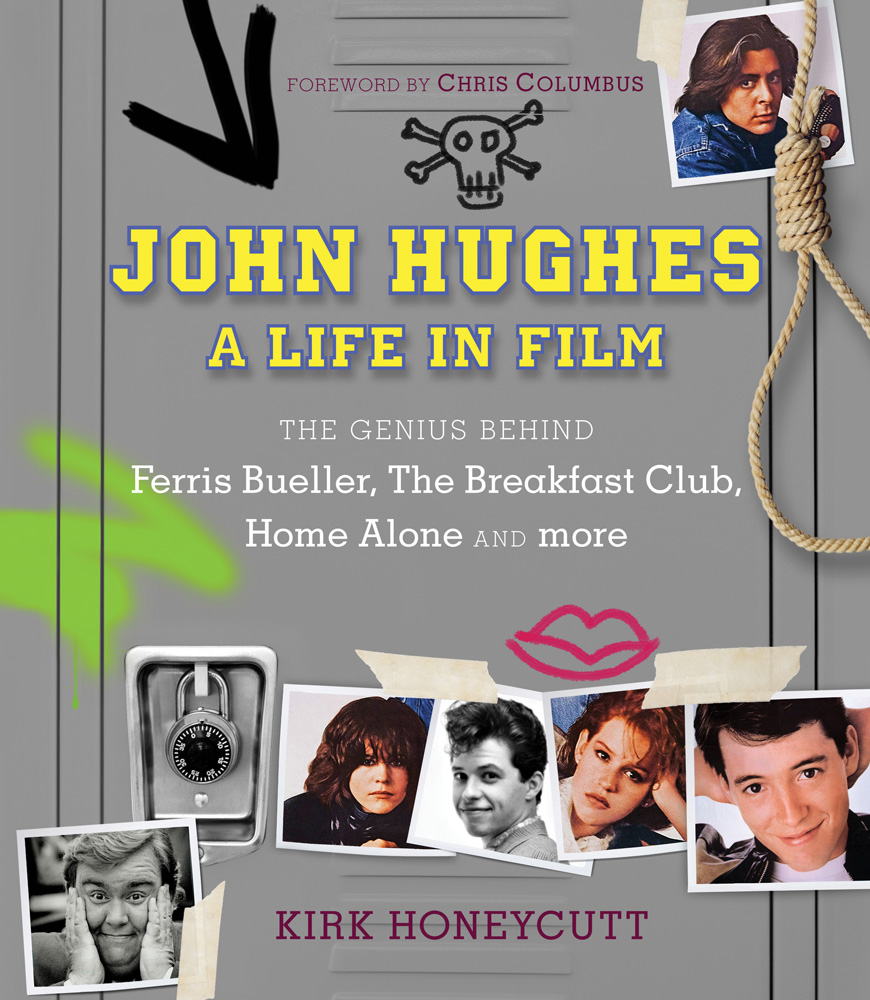
9781631060229In homage to movie director John Hughes, who understood adolescents so well, we at Lake Forest Book Store named our YA book group “The Breakfast Club”. (We meet in the morning, before the store opens.) After his retirement, Hughes lived in Lake Forest and was a frequent visitor to the bookstore. Always impeccably dressed in a beautiful sport coat with a pocket square, he was an avid reader and fascinating conversationalist. I highly recommend Kirk Honeycutt’s recent book,  John Hughes: A Life In Film: The Genius Behind The Breakfast Club, Ferris Bueller’s Day Off, Home Alone and More.

We’ve meet three times (September, October, and November). The books we read this fall, all award winners, inspired interesting discussions and would be good choices for any book club, whatever the focus of the club.

51VH2IQT8AL._SX331_BO1,204,203,200_The Impossible Knife of Memory by Laurie Halse Anderson

High school senior Hayley, daughter of an emotionally damaged Iraqi war veteran, struggles to live a “normal” life when she and her father, Andy, settle into his childhood home. Anderson’s father, who was stationed at Dachau during World War II, inspired her to write the story of a family affected by post-traumatic stress syndrome.

Odysseus had twenty years to shed his battle skin. My grandfather left the battlefield in France and rode home in a ship that crawled across the ocean slowly so he could catch his breath. I get on a plane in hell and get off, hours later, at home.

A good companion adult book would be Phil Klay’s short story collection, Redeployment, which won the National Book Award for fiction last year. 

51LOhJFau8LBelzhar by Meg Wolitzer

Jam’s parents don’t know what to do with her when she can’t seem to recover from her grief, so they send her to the Wooden Barn, a boarding school for “emotionally fragile, highly intelligent teenagers”. In a very unusual English class, she and her classmates begin to heal. Wolitzer skillfully incorporates fantasy into a novel that at first seems like a straightforward prep school story.

But it’s never just been the journals that have made the difference, I don’t think. It’s also the way the students are with one another . . . the way they talk about books and authors and themselves. Not just their problems, but their passions too. The way they form a little society and discuss whatever matters to them. Books light the fire—whether it’s a book that’s already written, or an empty journal that needs to be filled in.

Belzhar isn’t a retelling of Sylvia Plath’s The Bell Jar, but The Bell Jar plays an important part in the story. Wolitzer’s adult novels are excellent — particularly The Interestings, which follows a group of friends from adolescence through middle age. 

515e3HFpceLI’ll Give You the Sun by Jandy Nelson

Teenage twins Noah and Jude, both artists, are as close as two people can be, but they compete for the love of their parents and the attention of a new friend. Nelson, a poet and literary agent turned YA author, gives us each twin’s perspective in this thoughtful, but well-plotted exploration of art and love.

Meeting your soul mate is like walking into a house you’ve been in before – you will recognize the furniture, the pictures on the wall, the books on the shelves, the contents of drawers: You could find your way around in the dark if you had to.

Irving Stone’s classic biographical novel, The Agony and the Ecstasy, is a perfect companion book, since sculpting out of stone plays an important role in I’ll Give You the Sun — and the twins’ mother has written her own book on Michelangelo.

We’re deciding now what to read for the first quarter of 2016. The 2015 National Book Award winner for Young People’s Literature, Challenger Deep, by Neil Shusterman, seems like an obvious choice. (I’m also intrigued by one of the finalists, Bone Gap, by Laura Ruby.) My co-leader Diane, who reads lots of YA, just read and loved the historical novel Salt to the Sea, by Ruta Sepetys (due February 2), recommended to us by our Penguin children’s book rep, Sheila Hennessey. Sheila also suggested Mosquitoland, by David Arnold, which has been on my list for a long time. We’d love other suggestions of YA books that grownups can learn from and enjoy!

Nonfiction November: This Year’s Overlooked Gems

You can tell a more incredible over-the-top story if you use a nonfiction form.
Chuck Palahniuk

There is really no fiction or non-fiction; there is only narrative. One mode of perception has no greater claim on the truth than the other . . .
E.L. Doctorow

November is a busy month, and that’s not just because of Thanksgiving and the beginning of the holiday season. I don’t know how these things work, but the powers that be have determined that November is also National Novel Writing Month, National Peanut Butter Lovers Month, Historic Bridge Awareness Month, Manatee Awareness Month, and International Drum Month — and of course, it’s No Shave November. Thank goodness for that, because who has time to shave while writing a novel and learning about historic bridges?

In the world of book blogging, it’s Nonfiction November.  Dozens of reviewers share their favorite recommendations for nonfiction books. Many of the same best-selling titles pop up again and again, and for good reason — they’re excellent books, well worth reading. Atul Gawande’s Being Mortal should be required reading for anyone who’s mortal, but you don’t need me to tell you about it.

I suspect many readers regard nonfiction as a homework assignment, not riveting reading. Novelist Chris Bohjalian said, “People seem to read so much more nonfiction than fiction, and so it always gives me great pleasure to introduce a friend or family member to a novel I believe they’ll cherish but might not otherwise have thought to pick up and read.” I’ve found the opposite — in my experience, nonfiction is usually a harder sell than fiction.

Over the past year, I’ve read plenty of nonfiction, including a few books that — at least in my little corner of the world — haven’t received the love they deserve. I’ve mentioned these terrific books before, but they’re worth mentioning again.

The Light of the World by Elizabeth Alexander
Poet Alexander has written a gorgeous chronicle of her family’s grief after her 50-year-old husband died unexpectedly. Every short chapter (most are 2-3 pages) is like a poem, with spare, beautiful feeling and intense feeling. The book is reminiscent of Joan Didion’s The Year of Magical Thinking.
From the Boston Globe review:  ” . . . A poetry lover, and a memoirist of loss myself, I expected to like Alexander’s book. But nothing could have prepared me for the experience of reading The Light of the World. It riveted me, rent me, sent me reeling. It flooded me with ineffable joy.”

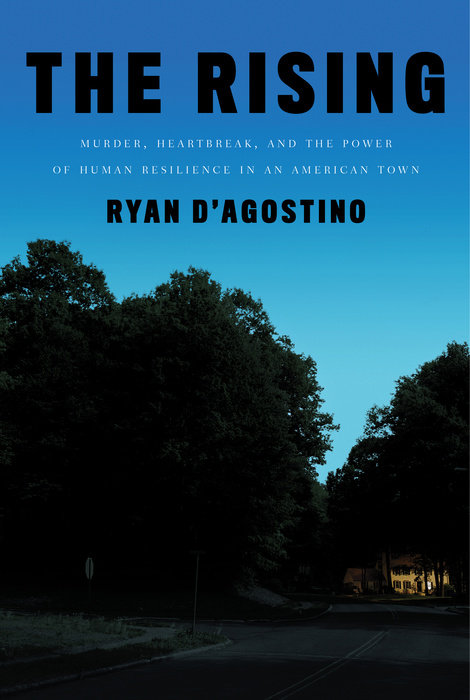
9780804140164The Rising: Murder, Heartbreak, and the Power of Resilience in an American Town by Ryan D’Agostino
The devastating true story of Dr. William Petit, who lost his wife and two daughters — and was critically injured himself — in a brutal attack in the family’s Connecticut home. Amazingly, Petit has not only survived but managed to rebuild his life.
From the Publishers Weekly review: “D’Agostino’s tender approach to his subject and story is impressive as he artfully charts Petit’s emotional thawing without resorting to cloying prose or melodrama . . .Though a horrific crime provides the backdrop, this book is a remarkable account of hope, fellowship, and love in the face of tragedy.”

9780062268679Something Must Be Done About Prince Edward County: A Family, A Virginia Town, A Civil Rights Battle by Kristen Green
Veteran journalist Green chronicles the years when Prince Edward County, Virginia closed its public schools rather than obey the federal mandate to desegregate — and tells the story of her family’s part in this shameful chapter of history.
From the New York Times review: “It is this personal story that makes her mix of memoir and history . . . so absorbing as she returns home to interview family and friends about a past that many would rather leave there.”

9780062351494The World’s Largest Man by Harrison Scott Key
A hilarious (and sometimes heartbreaking) memoir about a bookish son’s relationship with his testosterone-fueled father. Although Key is a gifted humorist, The World’s Largest Man is not a nonstop laugh riot. At its heart, it’s a story about love and acceptance. Much of the book is heartbreaking and poignant. Key succeeds in showing us the contradictory aspects of his father’s deeply flawed personality — a personality that turns out to be a greater influence on him than he had ever imagined. Perfect for fans of Pat Conroy.
From the Florida Times-Union review: “The first part of this memoir by Savannah College of Art and Design professor Harrison Scott Key will have you laughing out loud. The remainder may bring you to tears . . . Key laments the lost art of Southern story-telling, one he believes has gone the way of the family farm, but once you read The World’s Largest Man, you’ll realize he may be a tad premature.”

Between You and Me: Confessions of a Comma Queen by Mary Norris
Much more than a copy editor, Norris is a delightfully wicked and witty writer. She’s been on staff at the New Yorker since 1978, upholding the magazine’s notoriously high standards. Her memoir is sprinkled with grammar advice, as well as plenty of gossipy tidbits. I enjoyed every page, and learned a few things besides.
From the New Republic review: “Norris’s very funny, lucid, and lively new book” is  “part memoir, part language guide, and part personal account of life at the New Yorker.”

Which books this year have you loved that haven’t received their share of attention?

Thieves, Murderers, and Psychopaths: Why I Like True Crime

Beneath the gore and smoke and loam, this book is about the evanescence of life, and why some men choose to fill their brief allotment of time engaging the impossible, others in the manufacture of sorrow. In the end it is a story of the ineluctable conflict between good and evil, daylight and darkness, the White City and the Black.

Erik Larson, The Devil in the White City: Murder, Magic, and Madness at the Fair That Changed America

Last week, a customer asked me to recommend a new true crime book. It took me a minute to think of one, because nobody has ever asked me that before. I don’t know why, because true crime books are really popular. In Cold Blood, Helter Skelter, The Executioner’s Song, The Devil in the White CityUnder the Banner of Heaven — all bestsellers. But “true crime” sounds just a bit unsavory. Maybe readers think they’ll appear macabre or voyeuristic if they’re interested in true crime. Some true crime authors have been accused of profiting from other people’s misfortunes. Others have been criticized for falsely befriending criminals to extract information.

15749967517_c304ed6a38_bThe 2014 podcast Serial, which tells the true story of the investigation into the murder of a teenage girl, has become the most popular podcast in history. According to the Wall Street Journal, Serial “gets people to drop everything and just listen . . . it’s a testament to the power of good storytelling”. Also, Serial is open-ended, like many true crime stories. In real life, often we don’t know what really happened. I think that’s part of the appeal of true crime. The loose ends are not as neatly tied up as they are in fictional murder mysteries. Certain details remain hidden. Even in situations when a criminal cooperates with an author, the criminal can’t be trusted to tell the truth.

I’ve always preferred true crime stories to fictional ones. Even as a child I didn’t care for Nancy Drew, but gravitated to encyclopedia entries about Jack the Ripper and Lizzie Borden. I think they reason may be that I’ve always been more interested in character than plot. In most true crime, the reader knows “whodunit” at the beginning of the book. True crime author Walter Walker said that Ann Rule, perhaps the best-known author in the genre, possessed “the narrative skill to create suspense from a situation in which the outcome is a matter of fact, known to many readers before they open the book.”

As a teenager, I discovered Ann Rule”s The Stranger Beside Me, a study of the serial killer Ted Bundy — who happened to be Rule’s colleague. When Bundy was arrested for a series of murders in the Seattle area, Rule initially didn’t believe her friend could be guilty. Rule, who died several months ago, wrote dozens of true crime books after the success of The Stranger Beside Me. Her books focus on the “why” of heinous crimes more than the “how”:

I look for true stories where, just when you think nothing else bizarre can happen, it does . . . What real people do is far more compelling than anything a novelist can think up! . . . I am drawn to cases where the suspect(s) is NOT the classic murderer. I’ve learned that my readers are as interested as I am in the psychopathology of the criminal mind.

IMG_1807Rule’s obituary says, “In a crowded field, she consistently led the pack, taking up most of the real estate in the true crime shelves of bookstores.” From what I’ve seen, most bookstores today don’t separate true crime into its own section. If you google “true crime books”, the same ones come up on every list. On a recent visit to the Book Stall in Winnetka, Illinois, I was surprised to see several shelves dedicated to true crime. Most were historical, rather than contemporary in the vein of Ann Rule, but what a treasure trove of new and exciting true crime:

Bizarre family secrets in 19th century England (The Dead Duke, His Secret Wife, and the Missing Corpse: An Extraordinary Edwardian Case of Deception and Intrigue) by Piu Marie Eatwell

Arsenic poisoners (The Inheritor’s Powder: A Tale of Arsenic Murder and the New Forensic Science by Sandra Hempel and The Poisoner: The Life and Times of Victorian England’s Most Notorious Doctor by Stephen Bates)

The previously unsolved murder of a Hollywood mogul (Tinseltown: Murder, Morphine, and Madness at the Dawn of Hollywood by William J. Mann)

A Prohibition-era kidnapping and the birth of the FBI (The Year of Fear: Machine Gun Kelly and the Manhunt That Changed the Nation by Joe Urschel)

A father and son spy team (The Spy’s Son: The True Story of the Highest-Ranking CIA Officer Ever Convicted of Espionage and the Son He Trained to Spy for Russia by Bryan Denson)

9780062273475A teenage psychopath in 19th century Boston (The Wilderness of Ruin: A Tale of Madness, Fire, and the Hunt for America’s Youngest Serial Killer by Roseanne Montillo)

The Isabella Stewart Gardner Museum theft (Master Thieves: The Boston Gangsters Who Pulled Off the World’s Greatest Art Heist by Stephen Kurkjian)

A murderous Parisian con man and his mistress (Little Demon in the City of Light: A True Story of Murder in Belle Époque Paris by Steven Levingston)

Why do I enjoy true crime? Why does anyone? A few minutes of cursory Internet research was unenlightening, to say the least. An article in Psychology Today claims that women like true crime because the books “may provide important information and survival strategies should they ever be in a dangerous situation”. Hmmm, I don’t think so. Edmund L. Pearson, who wrote many nonfiction crime books in the early 20th century, including one on Lizzie Borden, said it best:

Writers of book reviews, sixty to eighty times a year, begin their articles with the grave inquiry: Why do people like to read about murder? After a discussion, in language that seems to be the result of profound thought, they come to the conclusion that people like to read such books because they do.