The Bookstore Conversation I Dread

Oscar_Wilde_SaronyI don’t like novels that end happily. They depress me so much.
Oscar Wilde

If you’re an avid reader and you like people, selling books is not hard. It’s not as if you’re trying to sell a complicated computer system to a business, or cold-calling strangers with a two-for-one deal on burial plots. You’re chatting with nice people about books, and — most of the time — what could be more fun than that?

indie-bookstore“I’m just browsing, thanks.”

Several kinds of customers come into bookstores. When browsers wander in, they make it clear that they do not want or need any help. The bookseller’s job is to keep an eye on those people because sooner or later they actually do want help and often get annoyed if you don’t intuit this immediately. Other people come in with a purpose. Some of them need a specific book — the Real ACT Guide, or their book club selection (about which they have very little information, such as the title or author), or a London guidebook. These are both the easiest and the most difficult customers — either you pull the desired book off the shelf and hand it over, with a satisfied customer leaving in less than five minutes — or you waste a good chunk of your time on the computer trying to figure out which translation of the Odyssey the high school is using, and which warehouse has stock.

“What’s the hot new book?”

The customers who are the most fun are the ones who want recommendations:

“Something funny for my third grader who hates to read . .. he’s already read all the Wimpy Kid books.”
“A page-turner for a long plane flight.”
“A mystery . . . well, maybe a thriller . . . for my father, who’s recovering from hip surgery.”
“Something brand new for my girlfriend’s birthday — she’s read everything and she loves historical fiction.”
“My mom loves a little romance but nothing too racy, please — no Fifty Shades of Gray.”
“I just need a really, really good book.”

“No war, no dysfunctional families!”

As much as I enjoy talking with customers — discussing favorites and not so favorites, recommending undiscovered gems, and sharing ideas about book club picks — I dread one conversation that regularly repeats itself. I call it the Depressing Books conversation. A customer, usually female, asks me to suggest books for her book group. I ask her what the group has read recently, and whether these choices inspired good discussions. She starts to tell me, and then exclaims, “But they were all so DEPRESSING! Can you suggest a happy book? Doesn’t anyone write happy books anymore?” One customer gave me a list of taboo topics, which included war, illness, death, and unhappy families.

I’ve heard this question, or a variation of it, countless times — and I still don’t have a good answer. Often I answer the question with a question: “What do you mean by ‘depressing’”? It seems that what many readers want are books about likable people who have good things happen to them. If some not-so-good things happen, they shouldn’t be too bad, and in any case everything should turn out all right in the end. I talk about conflict, and drama, and how these are elements of good storytelling. As Deborah Triesman, fiction editor of the New Yorker, says, “Happiness is static, and fiction has to move.”

Small Blessings_tpWhy I can’t create a list of happy book recommendations
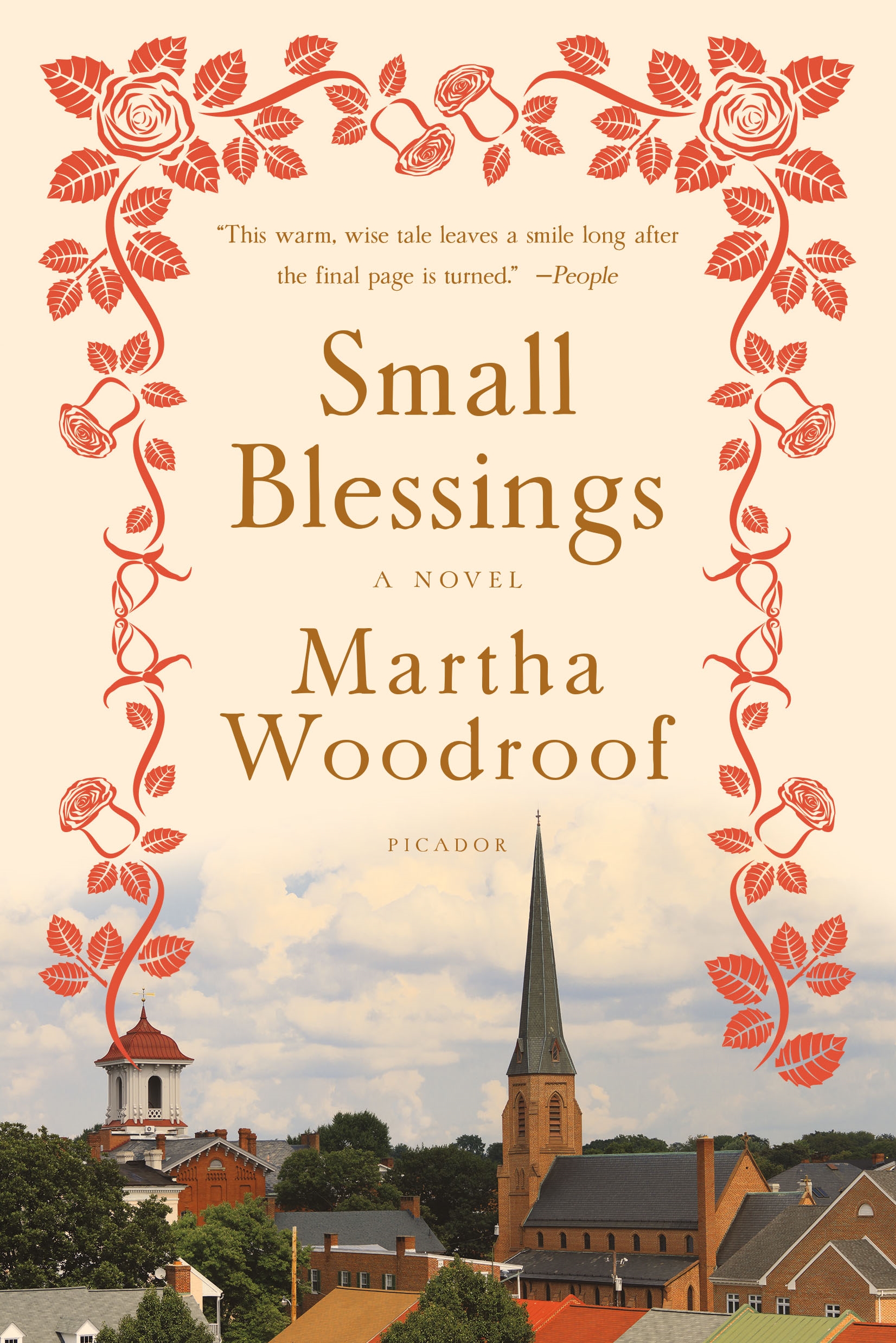
I’ve been trying to compile my own list of books that are non-depressing, yet meaty. Every once in a while, I’ll read a book — most recently it was the marvelous Small Blessings, by Martha Woodroof — that I think is a perfect for this list, only to have my bubble burst when someone points out a “depressing” plot element in my happy book. Guess what? There is almost no way to write a compelling story without including some of life’s unpleasantness. Aspiring authors, take note: there is a huge market for books the reading public perceives as “happy” and uplifting. The trick is to write one that’s not too saccharine. (Also, please bear in mind that the parents of middle-grade reluctant readers — who are mostly male — need MORE FUNNY BOOKS. Fart jokes are OK.)

I recently discovered a website called Positively Good Reads (“feel-good fiction with substance: an upbeat reading list for people who often find serious novels depressing”) which includes a list of books that make the site’s creator feel “hopeful about humankind”. It’s an odd list, weighted heavily in favor of classics that most people already know about (Jane Eyre, Pride and Prejudice, Little Women, A Room With a View, To Kill a Mockingbird), many of which are packed with upsetting topics.
88da2cf387cd631c_oprah-book-club-booksEveryone’s a critic when it comes to Oprah’s book choices

Why do readers so often use the vague and negative term “depressing” to describe contemporary novels? Oprah’s Book Club selections seem to elicit special scorn. Oprah Winfrey did an amazing thing back in 1996 when she launched her monthly book club. For 15 years, she shared her love of reading and promoted her favorite books (many by relatively unknown authors). Many highbrow critics scoffed at Oprah’s Book Club; Scott Stossel, an editor at the Atlantic, said: “There is something so relentlessly therapeutic, so consciously self-improving about the book club that it seems antithetical to discussions of serious literature. Literature should disturb the mind and derange the senses; it can be palliative, but it is not meant to be the easy, soothing one that Oprah would make it.”

If Stossel was interested in the opinions of everyday readers — which I doubt — he should have spent some time talking with my bookstore’s customers. Many of them found Oprah’s selections far from “easy” and “soothing” and were quick to dismiss her choices as “downers”. In an article in The Oprah Affect, a collection of scholarly essays about Oprah’s Book Club, R. Mark Hall says Oprah was “often chided by Book Club participants for choosing stories her readers find grim or even depressing.”

cover-1“Feel-good” literature — hard to find, harder to define
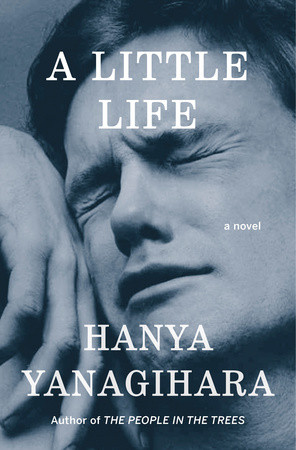
Cynthia Crossen, who wrote the “Dear Book Lover” column in the Wall Street Journal for several years, received a request from a book club for a list of “recent releases that are uplifting and joyful to read, yet also stimulating—something that would satisfy our intellectual needs but also make us feel good about the world.” She didn’t have many suggestions, citing the theory of Daniel Gilbert (author of a nonfiction book about what the very word happy actually means, Stumbling on Happiness) that “people are generally poor prognosticators of what will make them happy” and noting that “the same may be true of predicting books that will leave the reader feeling uplifted and joyful.” Maybe another reason she had few recommendations is that she’s not the kind of reader looking for cheerful books, as evidenced by her rave review of Hanya Yanigihara’s dark and disturbing novel, A Little Life, which she calls “one of the most compelling, original, and moving novels I have ever read.”

9781410468895Compelling. Original. Moving. Those are the three of the four qualities I look for most in a book, fiction or nonfiction. (I’d add “beautifully written” to the list.) I’m not expecting a book to make me feel good about the world, although sometimes that’s nice. The Storied Life of A.J. Fikry gave me a warm fuzzy feeling, although I’ve talked to several people who thought the book was sad and that A.J. was unlikable. The only books that make me feel depressed are books I wish I hadn’t invested time in reading, because I didn’t gain any knowledge or emotional insight from them and the only feelings they evoked were negative. I picked up You, a thriller by Caroline Kepnes, because the main character was a bookstore employee. Turns out he was a psychopath who stalked a woman and then locked her in a torture chamber he’d built in the basement of his bookstore. The plot of this creepy book was filled with holes, and the characters were uninteresting — I didn’t even care about the victim. I hate to use the dreaded word, but this book was just plain . . . depressing.

WWW Wednesday — Fall Reading Version 1.0

September’s Baccalaureate
A combination is
Of Crickets — Crows — and Retrospects
And a dissembling Breeze

That hints without assuming —
An Innuendo sear
That makes the Heart put up its Fun
And turn Philosopher.

Emily Dickinson

Here’s a little anecdote about this poem, and Emily Dickinson, one of my favorite poets. I remembered that she had written a  little poem about September — and aging — but I couldn’t find it in my copy of her collected poetry. So I searched the Internet, using the terms “Emily Dickinson September poem”. I found the poem, but I also came upon the following quotation by Suzanne Supplee (an author with whom I am not familiar): “Emily Dickinson, in my opinion, is the perfect (although admittedly slightly cliche) poet for lonely fat girls.” I’d been so happy to find the poem, which was as lovely as I remembered, and then Suzanne Supplee had to go and take the wind right out of my sails. I’m not going to let that quote (which I’m sure was taken out of context) ruin Emily Dickinson for me. I’ll be turning the beautiful line “Of Crickets — Crows — and Retrospects” over in my mind for a long time.

What am I currently reading? What did I just finish reading? And what will I read next?

9781594634475I’m about halfway through Lauren Groff’s Fates and Furies, which I almost put down after the first 30 pages or so. Several reviews (both from professional critics and from readers I trust) convinced me to stick it out, and I’m glad I have — I’m thoroughly absorbed now. I have a love-hate relationship with Groff’s writing style — some sentences amaze me with their originality, while others strike me as pretentious. A review on NPR raves about Groff’s writing:

The book is a master class in best lines; a shining, rare example of that most unforgiving and brutal writer’s advice: All you have to do is write the best sentence you’ve ever written. Then 10,000 more of the best. Then find a way to string them together into the story of something.

Which is what Groff has done here. And if you do want to learn how to be a great writer, you could do worse than skipping out on that M.F.A. program or pricey writer’s retreat, dropping 28 bucks on this book, studying the hell out of it, and then spending all that money you just saved on gin cocktails and hats. It’s that good. That beautiful. Occasionally, that stunning.

I’m warming, just a little, to the characters, now that I’m in the second half of the book (“Furies”), but at first I found them not only unlikable but unrealistic. As one commenter on NPR said,

Amazing writing. Absolutely beautiful. My question for the author: Do you think people like this couple actually exist, and you are delving into their psyches, or are you purposely creating otherworldly main characters? I have met many people from many different walks of life but have never met anyone even remotely like Lancelot and Mathilde. Am I just not meeting the right people? Is it all just metaphorical?
All I can reveal about the plot is that it revolves around a marriage and the two people’s very different perceptions, and that it’s very well constructed. Sounds like Gone Girl, right? Both have their share of melodrama and plot twists. Fates and Furies is rooted in Greek mythology, with plenty of Shakespearean references (one of the main characters is a playwright), making it self-consciously literary while Gone Girl presents itself as a straight page-turner. I’m looking forward to following the discussion on NPR, which has chosen it to discuss on the Morning Edition Book Club.

y648I need something light and funny to counterbalance the darkness in Fates and Furies, so my current audiobook is Amy Poehler’s Yes Please. Yesterday I drove several miles past my exit because I was having so much fun listening to Amy. She jumps from childhood to Second City to motherhood to Saturday Night Live, with several guest readers — including her mother. I know the print book has lots of photos and illustrations, but it can’t be as entertaining as the audio — although I have to be honest and tell you that it’s not as good as Bossypants, by Amy’s good friend Tina Fey.

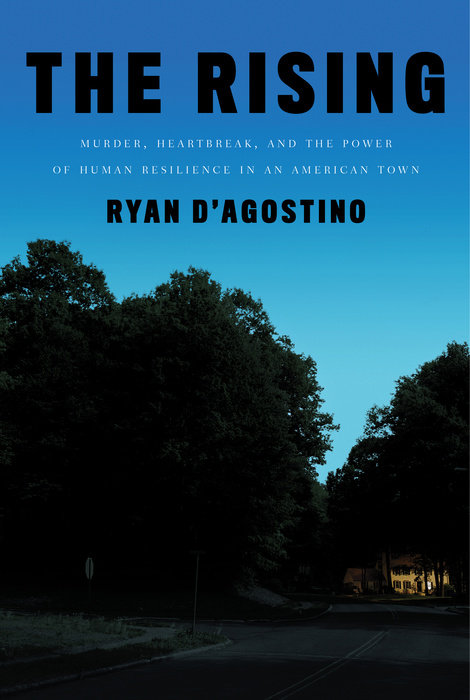
9780804140164I just finished reading The Rising: Murder, Heartbreak, and the Power of Resilience in an American Town, by Ryan D’Agostino. The devastating true story of Dr. William Petit, who lost his wife and two daughters — and was critically injured himself — in a brutal attack in the family’s Connecticut home. Amazingly, Petit has not only survived but managed to rebuild his life. This book, which I read in one day, is a real-life companion to Bill Clegg’s Did You Ever Have a Family.

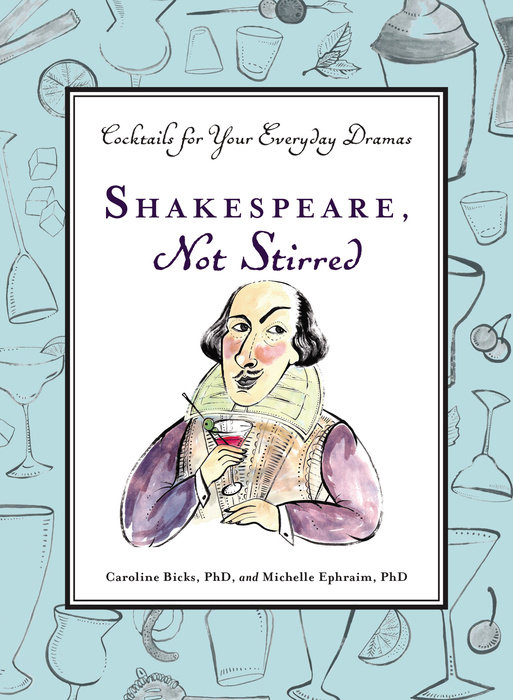
9780399173004Because every serious book needs to be followed by something light and amusing, I read Shakespeare, Not Stirred: Cocktails for Your Everyday Dramas, by two English professors — Caroline Bicks, Ph.D. and Michelle Ephraim, Ph.D.

Now some of you may be thinking: Booze? Professors? Isn’t this why we need to get rid of tenure? But hear us out. Shakespeare wasn’t just interested in Fate, Revenge, and Tragic Flaws. His plays are saturated with alcohol-related themes, and it’s our job to know about them.

These Shakespeare scholars obviously had a blast putting together this collection of recipes for cocktails and appetizers. Every page contains fun and interesting Shakespeare trivia; reading this short book is a bartending course and Shakespeare seminar combined.

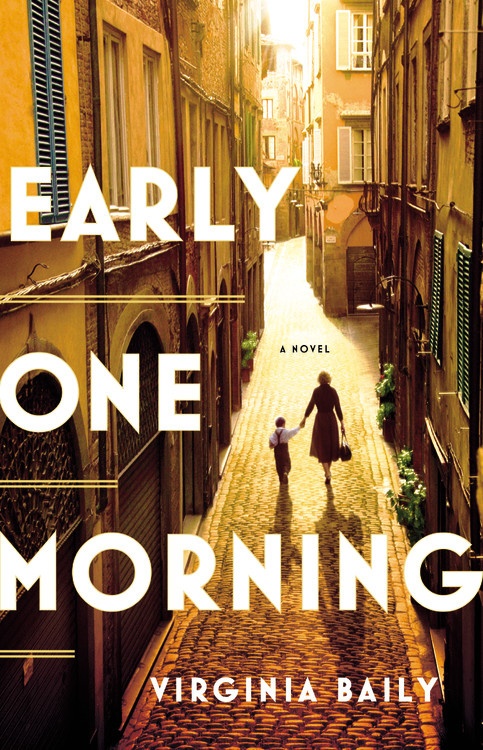
y648-1What’s next? Because I can never get too much of World War II, probably Early One Morning by Virginia Baily, about the decision a young Italian woman makes to save the life of a young Jewish boy — a decision that has repercussions 30 years later. The reviews describe the novel as not just a war story, but as an adoption story. And because I always need a laugh, Carrying Albert Home by Homer Hickam, the “semi-true” tale of Hickam’s parents’ journey from West Virginia to Florida with their pet alligator in tow. I started reading the ARC a couple of months ago, and misplaced it — I just found it, and can’t wait to pick it up again, because it’s sweet and nostalgic and funny. It’s a rough world, and as I just heard Elizabeth Berg say, there’s nothing wrong with a little sentimentality.

10 New Books I’m Looking Forward to This Fall

That old September feeling, left over from school days, of summer passing, vacation nearly done, obligations gathering, books and football in the air … Another fall, another turned page: there was something of jubilee in that annual autumnal beginning, as if last year’s mistakes had been wiped clean by summer.
Wallace Stegner, Angle of Repose

Stegner eloquently phrased what I’ve always believed — September is the true beginning of the year.  January is just another long, cold month of hibernation and diets. Fall is traditionally when the major publishers come out with their “big books”. According to the Boston Globe, “The fall book publishing season mirrors the movie industry’s Oscar-jockeying season. Publishers typically use the last few weeks running up to the holiday buying season to release their most prestigious, and commercially promising, new titles”.

Some of the books I’m looking forward to reading this fall are “prestigious” and some may be “commercially promising”, but those aren’t qualities that are important to me as a reader, or even as a bookseller. On the other hand, I don’t like to engage in reverse snobbery either —  I don’t avoid a book just because it’s popular.

The 10 books on my list sound like what I’ll want to read this fall while curled up with a blanket on my favorite reading chair.

6f7409195b3da2bf053b771b8d91d7efEarly One Morning by Virginia Baily (due September 29)

Published in the U.K. earlier this year, Baily’s second novel tells the story of Chiara, a young woman who impulsively saves the life of a young Jewish boy, whom she names “Daniele”,  during the Nazi occupation of Italy. Her decision reverberates a generation later, when a teenage girl contacts her, claiming to be Daniele’s daughter. The Guardian calls the book “highly original” noting that “The book works because it gives itself fully to its characters and their relationships, from which its ample plot spirals outwards with a confidently handled complexity and depth.”

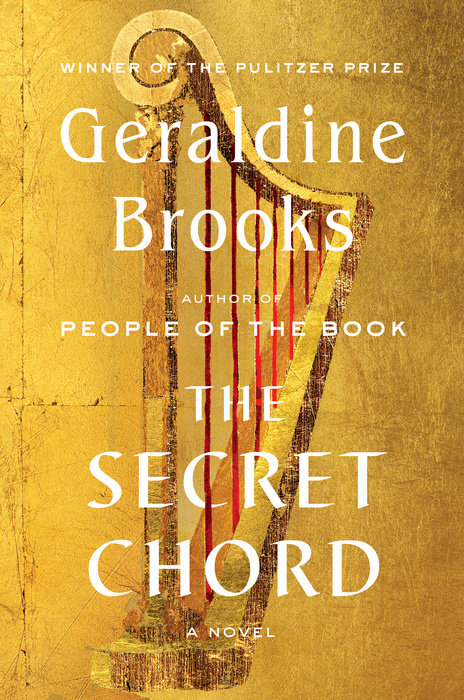
9780670025770The Secret Chord by Geraldine Brooks (due October 6)

Brooks, who’s written four previous novels, including the Pulitzer Prize-winning March, is one of my favorite authors. The Secret Chord imagines the life of the biblical King David. In a Publishers Weekly interview, Brooks explains her fascination with King David, describing his story as “encompassing most of human experience: there’s love and loss, triumph and despair, victory and defeat. ‘Everything happens to him,’ she says, pointing out that the biblical account is the ‘first piece of history writing that we have,’ predating Herodotus by 500 years.”

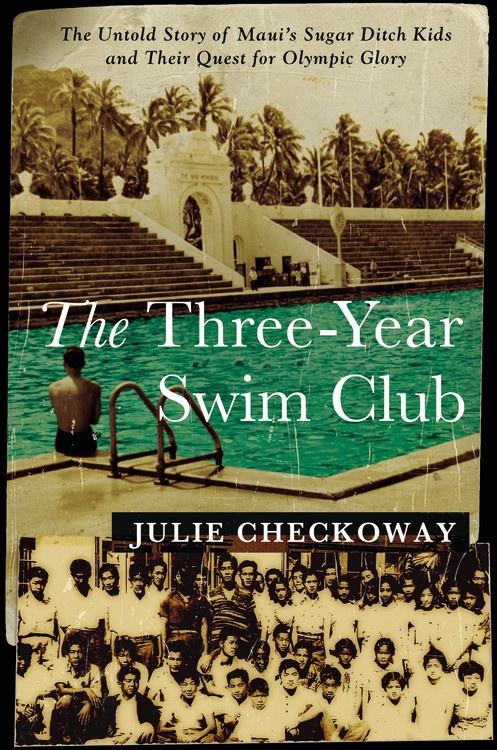
930cb8822e923066f1cfb42fa388117eThe Three Year Swim Club: The Untold Story of Maui’s Sugar Ditch Kids and Their Quest for Olympic Glory by Julie Checkoway (due October 27)

I know this probably isn’t another Boys in the Boat (what could be?), but I can’t resist an underdog sports story — and this one sounds terrific. The “Three-Year Swim Club” was a group of poor Japanese-American children who started their swimming careers training in irrigation ditches in the 1930s and later became world champions. Checkoway focuses on the team’s innovative and inspirational coach, Soichi Sakomoto, an unsung hero whose accomplishments have gone relatively unnoticed.

9781594634475Fates and Furies by Lauren Groff (available now)

This is one of the big “buzz” books of the season, so I think I should have an opinion. The first section of the book, “Fates”, chronicles a marriage from the husband’s point of view of ; the second section, “Furies”, provides the wife’s version. I’m slightly worried that Fates and Furies is going to be too self-consciously literary for my taste, but we’ll see.  Longlisted for the National Book Award.

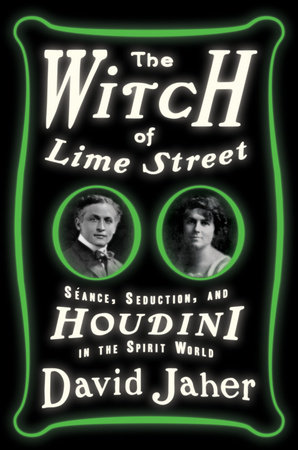
9780307451064The Witch of Lime Street: Séance, Seduction, and Houdini in the Spirit World by David Jaher (due October 6)

I love narrative nonfiction about quirky topics! This account of the rivalry between Harry Houdini, crusader against charlatans and the spiritualism movement, and Margery Crandon, self-proclaimed spirit medium, is right up my alley.

9780525429777Clementine: The Life of Mrs. Winston Churchill by Sonia Purnell (due October 27)

Clementine came to me on the recommendation of my friend and coworker Kathy, who always picks terrific nonfiction. Published earlier this year in the U.K. to coincide with the 75th anniversary of Winston Churchill becoming Prime Minister, The Independent says that Sonia Purnell’s “compellingly readable”  biography of Churchill’s wife “brings her out from behind the shadow cast by the Great Man and argues for her historical importance.”

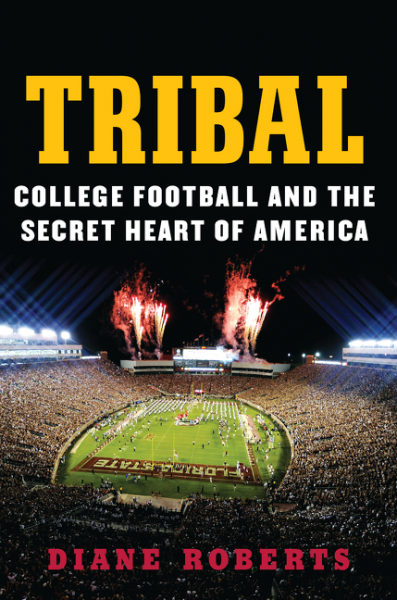
y648Tribal: College Football and the Secret Heart of America by Diane Roberts (due October 27)

I’m not crazy about football, but I am intrigued by the sport as an American cultural phenomenon. (The best book I’ve read on the subject — so far — is Rammer Jammer Yellow Hammer: A Road Trip Into the Heart of Fan Mania, by Warren St. John.) Roberts, an English professor at Florida State, says she’s a “conflicted” football fan:”I’m like those people who aren’t sure they believe in the Virgin Birth and the literal Resurrection but still show up for church because they like the music and take solace in the liturgy.”

Schiff_THEWITCHESThe Witches: Salem, 1692 by Stacy Schiff (due October 27)

I’m absolutely fascinated by the Salem Witch Trials, and for good reason — I was born in Salem, along with many of my ancestors. Pulitzer Prize winner Schiff says that we have a “completely skewed idea of what happened” in Salem; “it’s something we all know about, but we actually are relatively misinformed.”

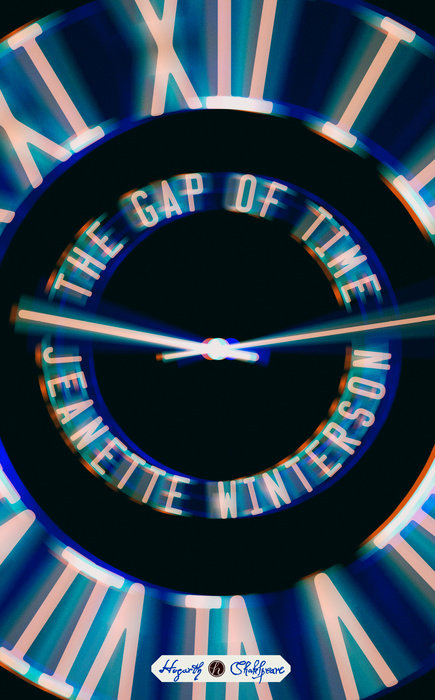
9780804141352The Gap of Time by Jeanette Winterson (due October 6)

First in the new Hogarth Shakespeare series, The Gap of Time is a “cover” version of The Winter’s Tale. The publisher’s website explains that Hogarth has commissioned well-known authors “to write prose ‘retellings’ of Shakespeare’s plays for the modern reader.” These new versions will be true to the spirit of the original dramas and their popular appeal, while giving authors an exciting opportunity to reinvent these seminal works of English literature.” What a great idea!

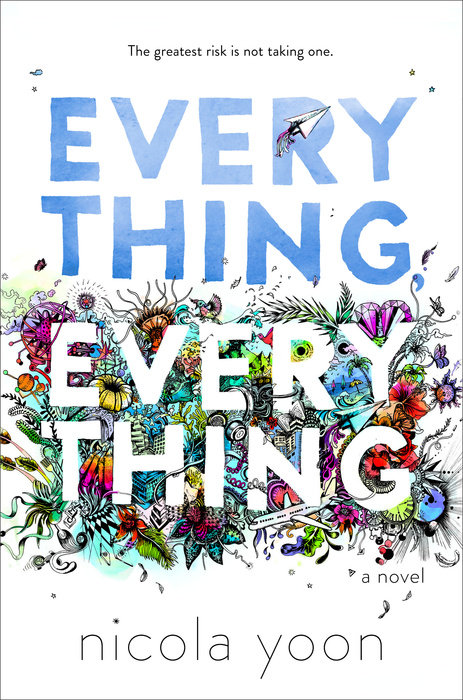
9780553496642Everything Everything by Nicola Yoon (available now)

Ann Kingman recommended this YA novel on my favorite podcast, Books on the Nightstand: “I don’t want to say too much about it, because you really should go into this book without knowing too much about it. All I’ll say is that the main character is a teenage girl who suffers from debilitating allergies that require her to stay inside of her home.” Ann hasn’t steered me wrong yet, so I’m going to add it to my list.

Happy Fall!

10 Books to Get Your Book Club Talking

What makes a good book club book? I discussed this at length in another post (How to Choose Great Book Club Books) over a year ago, but on rereading that post I realize I didn’t clearly state one of the most important criteria: the best book club books are the ones your club is enthusiastic about reading. Yes, one of the best things about being part of a book club is reading books you wouldn’t ordinarily pick up — but that can be one of the worst things too. I would probably never have read Station Eleven — which is one of my all-time favorites — if it hadn’t been a book club selection, but I also would never have suffered through Interview With a Vampire, and I’m never getting back the hours of my life I wasted on Anne Rice. (In fairness to the long-defunct book club that picked Interview With a Vampire, I should mention that the club also selected Crossing to Safety, which remains one of my top recommendations for book groups.)

So, the first step is choosing books that the group looks forward to reading, rather than books that your members view as homework assignments. Keep in mind that you can’t please everyone, and almost every book club has at least one naysayer. The next challenge is making sure that your selections will inspire the kinds of discussions your book club is interested in having. Groups of friends (“private” clubs) often are more likely to talk about personal issues, while groups that meet in libraries, bookstores, community centers, etc. (“public” clubs) are more likely to concentrate on literary criticism. And although almost any book, in the right hands, can stimulate conversation, some books that are enormously fun to read are clunkers when it comes to discussion. Some books are too polarizing and may provoke arguments rather than civil discourse.

Here are 10 recent books that I think would get your book club talking.

9780062268679Something Must Be Done About Prince Edward County by Kristen Green
Veteran journalist Green chronicles the years when Prince Edward County, Virginia closed its public schools rather than obey the federal mandate to desegregate — and tells the story of her family’s part in this shameful chapter of history.
Something to talk about: Green feels ashamed of her family’s actions both before she was born and during her childhood. Why do people feel guilty for past actions of family members?

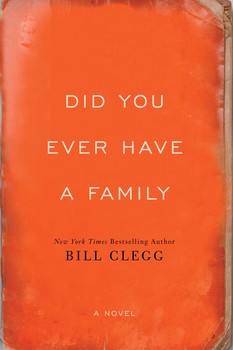
did-you-ever-have-a-family-9781476798172_lgDid You Ever Have a Family by Bill Clegg
One of four American novels longlisted for this year’s Man Booker Prize, this gorgeously written novel will keep you up late at night and it will break your heart.
Something to talk about: The book was reviewed twice in the New York Times  — in the Sunday book review section and then on Monday, by a different reviewer. The first review was positive and respectful, calling the novel “masterly” and “thoughtful”; the second was not just negative, but unkind and snarky: “Critics have arranged warm reviews around it like tea candles . . .  But the pocket where I generally put the nice things I want to say about a book is, in this instance, pretty empty.” Why do you think two reviews would vary to that degree? And is there ever any reason for a mean-spirited review?

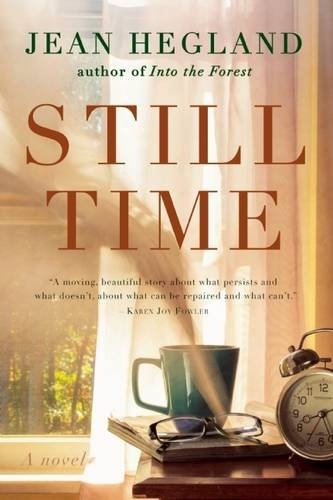
55970100767930LStill Time by Jean Hegland
John Wilson, an English professor with Alzheimer’s disease, finds that his extensive knowledge and understanding of Shakespeare helps him make sense of an increasingly bewildering world. Like Lisa Genova’s Still Alice, Still Time is about a professor suffering from dementia — but it’s an entirely different, and I’d argue, a more subtle and thought-provoking novel.
Something to talk about: John named his estranged daughter Miranda, after the heroine of one of his favorite Shakespeare plays. How do the themes of forgiveness and reconciliation in The Tempest connect to John’s efforts to make amends at the end of his life?

9780804170154The Painter by Peter Heller
If these first lines don’t grab you, I don’t know what will: “I never imagined I would shoot a man. Or be a father. Or live so far from the sea.”  Jim Stegner is a painter of “outsider art” and fly fisherman with a propensity for violence who gets himself involved with some very bad people. Is it any coincidence that this character and Wallace Stegner (“the dean of Western writers”) share a last name?
Something to talk about: What caused Jim to become a violent man? What causes anyone to become violent?

02dde0b11247a412ef5ab2d18f7ba165Hold Still by Sally Mann
One of the best memoirs I’ve ever read — it doesn’t seem fair that Sally Mann is a talented writer and photographer! This is a book that must be read in print form — the photographs are integral to the story, and an e-book doesn’t do them justice. And if you discuss this book, someone must bring a book of Mann’s photographs to the meeting.
Something to talk about: What is art? (Now there’s a question you can never get tired of!)

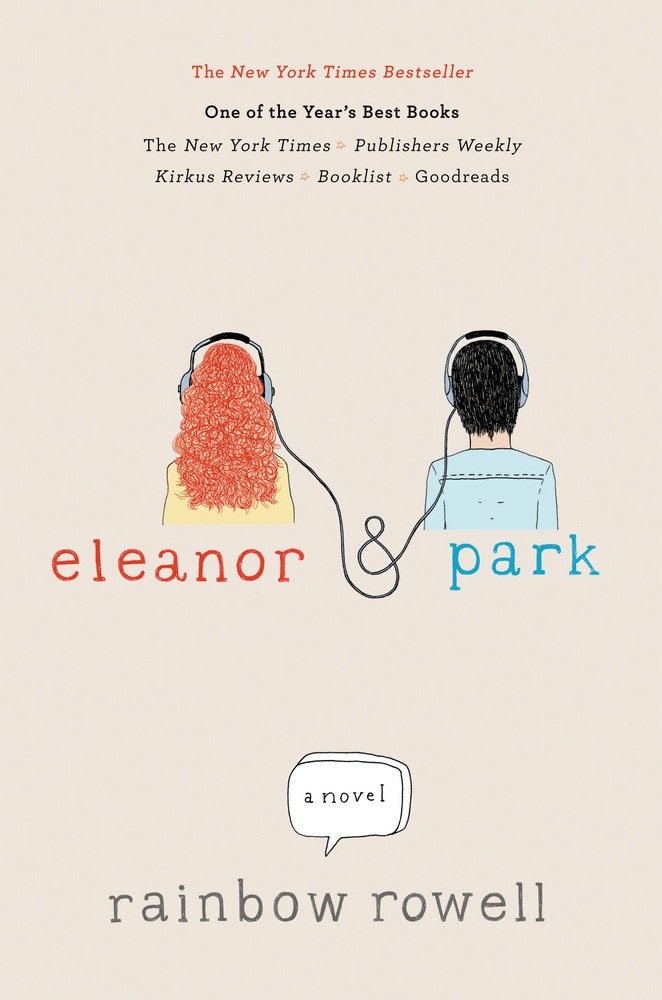
9781250012579Eleanor & Park by Rainbow Rowell
What a jewel of a book! It’s classified as YA, but the story of two lonely teenagers who become friends and later fall in love will appeal to anyone who has a heart. It’s hard to believe that Rowell’s characters aren’t real people; their voices are original and true. It’s the kind of book you want to buy multiple copies of and give to everyone you know.
Something to talk about: What makes this novel a YA novel? Yes, it’s told from the perspective of two teenagers — but so are many adult books.

962ab117cc4ac2dd9054af8b597fde98The Secret Wisdom of the Earth by Christopher Scott
Following a family tragedy, 14-year-old Kevin is sent to spend the summer with his wise veterinarian grandfather in Medgar, Kentucky. Pops, whose life has brought him wisdom and an unwavering moral compass, will remind readers of Atticus Finch. Medgar is a depressed coal town facing a massive mountaintop removal operation that is blowing up the hills, backfilling the hollows — and deeply dividing the townspeople. The violent events of that summer will begin Kevin’s transformation from a wounded boy into an adult. Read this one instead of Go Set a Watchman!
Something to talk about: Each of the short chapters has a poetic title that was obviously chosen with care: “The Occasional Shifting of Boot Sole on Pine”; “The Price of Future Memories”; “Under the Protection of Red Cloud”. What does this add to the novel? Why do some authors number their chapters instead of giving them titles?

MSY_paperbackMy Salinger Year by Joanna Rakoff
A delightful memoir about Rakoff’s stint as an assistant to J.D. Salinger’s literary agent, this book is, according to the Chicago Tribune, “a beautifully written tribute to the way things were at the edge of the digital revolution, and also to the evergreen power of literature to guide us through all of life’s transitions.” The book provides plenty of fodder for discussion on its own, but it would be fun to read in conjunction with a Salinger book or short story. It’s perfect for fans of Marjorie Hart’s Summer at Tiffany.
Something to talk about: What was your first “real” job, and what part did it play in your eventual career?

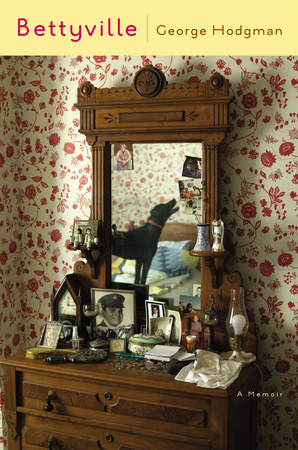
9780525427209Bettyville by George Hodgman
When George Hodgman lost his editorial job in New York, he returned to his hometown of Paris, Missouri (“population 1,246 and falling”) to care for his 91-year-old mother. Hodgman’s honest and affecting portrait of their relationship moved me both to laughter and tears. This memoir is a terrific companion to Atul Gawande’s Being Mortal — which I believe everyone should read, but may be too painful and intense to talk about in a group setting. Ann Patchett has this to say about Being Mortal: “I’m all for people having different tastes, liking different books, but everyone needs to read this book because at some point everyone is going to die, and it’s possible that someone we love is going to die before us.”
Something to talk about: George, of course, does a lot for Betty — he moves in with her and becomes her caretaker. But what does Betty do for George?

0395843677The Best American Short Stories of the Century edited by John Updike and Katrina Kenison
I absolutely love short stories, and I can’t understand why they aren’t more popular — especially with book groups. They’re perfect for all those people who say they don’t have time to read. (For more on my thoughts on short stories, read 5 Reasons to Read Short Stories.) I recently joined a group that discusses short stories, and we spent a fascinating 90 minutes talking about “Bright and Morning Star”, written by Richard Wright in 1939. The group spends several months discussing stories from a particular decade in the 20th century. A group could choose any anthology of short stories or essays; the Best American Series (“the premier annual showcase for the country’s finest short fiction and nonfiction”)published by Mariner Books, will come out in early October. There are collections of travel writing, science and nature writing, sports writing, and more.

For further reading on choosing “discussable” books, please check out Is Your Book Club in a Rut? Here Are 10 Helpful Hints, by a librarian who’s experienced at working with book groups. “Steer clear of plot driven novels,” she advises, and I couldn’t agree more. The Girl on the Train is a terrific page-turner, but I’m not sure it would lend itself to an in-depth discussion. It would be fun to serve gin and tonics in honor of Rachel, although I don’t think the canned variety is available in the United States.

I’d love to know what your book club is reading this fall — and if you discussed any terrific books over the summer. I’m planning on compiling reading lists for different kinds of book clubs, and welcome your suggestions.

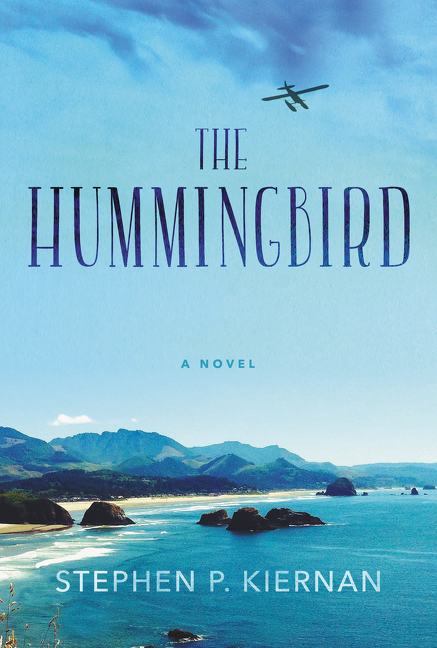
The Hummingbird — Book Review

9780062369543-1

a small bird
with a terrible hunger,
with a thin beak probing and dipping
and a heart that races so fast

it is only a heartbeat ahead of breaking

Mary Oliver, “Summer Story”

Sometimes the books I enjoy the most are the most difficult to review. Books that I fall in love with seem to blur my critical eye. It can be hard to determine just why a book hit my sweet spot. Was it the subject matter, the underlying theme, the characters, the setting, the structure, the writing style — or, as in the case of Stephen P. Kiernan’s The Hummingbird, all of these? Obscure World War II history — check. End of life issues — check. Multiple story lines (including a book within a book) — check. Admirable (if imperfect) characters — check. It’s a real joy to read a novel about people whose lives are rooted in integrity.

When Deborah Birch arrives home from an emotionally and physically draining day as a hospice nurse, she has a second job waiting for her: caring for Michael, her emotionally damaged husband. After his third tour of duty in Iraq, Michael “returned home in a permanent mood of nitroglycerine, always just one bump away from exploding”.

Deborah’s current patient, retired history professor Barclay Reed, is a “crusty coot” whose sharp tongue and temper have sent several other hospice nurses packing. Deborah is able to see the fear and emotional pain that are buried beneath his disagreeable exterior, and she is fascinated by his brilliant mind. Gradually, Barclay (“‘Professor Reed, ideally'”) and Deborah (“‘I shall call you Nurse Birch'”) form a bond, as he helps her understand her husband’s warrior mentality and she helps him make the most of his final days.

Deborah says she is “known for sticking. For staying. For never giving up. It wasn’t true only of patients but reflected my whole life”. She stays with her patients, literally until they take their last breaths, and she stays with Michael, even though “he wasn’t a husband; he was a hand grenade”.  Deborah’s job is to help patients surrender to death, but she is having a much more difficult time helping her tormented husband find peace: “Iraqi insurgents were not the only adversaries Michael needed a truce with. It was me, too.”

The Hummingbird inspires the reader to consider the meaning of peace. When do we fight and when do we surrender? Can it take greater courage to surrender than to keep fighting? How do we let go of fear and develop trust?  The Professor’s unpublished book, The Sword, examines these questions through the story of Japanese pilot Ichiro Soga and his journey to reconciliation. Kiernan deftly weaves chapters from Barclay’s manuscript throughout The Hummingbird, illuminating Deborah and Michael’s path toward healing. As Kiernan mentions in his Author’s Note, the essential details of Soga’s story are historically accurate.

Kiernan knows his material when it comes to hospice; a career journalist, he is the author of a nonfiction book called Last Rights: Rescuing the End of Life from the Hospital System and frequently speaks and consults on how to expand use of hospice, palliative care and advance directives. Deborah’s scenes with Barclay, as well as flashbacks to her experiences with other dying patients and their families, are vivid and authentic  — due not only to Kiernan’s clear writing but to his familiarity with hospice. Sue Boucher (The Cottage Book Shop) texted me as she was reading The Hummingbird to say: “I’m fascinated by Deborah’s experiences with patients at the end of their lives. She has such insight into the process.”

Curious readers may be wondering why the title of the book is The Hummingbird. A patient of Deborah’s carved her a hummingbird, a talisman she touches every day as “a solid reminder that every patient, no matter how sick or impoverished, gives lasting gifts to the person entrusted with his care.” Sometimes, Deborah discovers, these are “unexpected gifts” from the unlikeliest of sources.

For more reviews, please visit TLC Book Tours.

We Never Asked for Wings — Author Interview

9780553392319

Migrating birds reorient themselves at sunset. The exact reason is unknown, but at twilight, just when the sun drops beyond the horizon line, birds flying in the wrong direction correct their flight paths all at once.

Four years ago, Vanessa Diffenbaugh published her first novel, The Language of Flowers, which became a surprise bestseller — and a staff and customer favorite at Lake Forest Book Store. It’s rare that a new author builds an audience so quickly. Kathryn Stockett  comes to mind — but it’s been more than six years since The Help was published and there’s no new book on the horizon.

Vanessa Diffenbaugh’s much-anticipated second novel, We Never Asked for Wings, has just arrived in stores. Her whirlwind publicity tour included two events in the Chicago suburbs: an evening reading and discussion at Highland Park Public Library and a Lake Forest Book Store luncheon. Quite a few of the attendees had met Vanessa when she visited Lake Forest for a luncheon in September 2011, just a couple of weeks after The Language of Flowers was published. That event — one of Vanessa’s very first —  was a benefit for the Allendale Association, a local organization serving troubled children and adolescents.

Few authors are lucky enough to be sent on publisher-sponsored publicity tours. As author Justin Taylor points out in an article entitled “On the Total Weirdness of the Book Tour”, both reading and writing (“these two vast solitudes”) are fundamentally private activities, yet book tours attempt to transform them into social events:

Every art form has its peculiarities but the strangest thing about writing . . . is that its fundamental attribute is solitude. Plays, concerts, operas, movies take dozens if not hundreds to make, and are seen by thousands (or millions) in their turn. Even the painter, who might work alone or with assistants, eventually sees his work on a wall in a room in the company of that of his colleagues.

I’m sure authors get tired of answering the same questions at event after event, but in my experience they are all unfailingly gracious, even with inane queries — “Do you write in longhand or on a computer?” “How can I get my book published?”. Most attendees ask more insightful questions, often about the story behind the book. I’m always interested in what the author is currently reading; the “what’s on your nightstand?” question always asked in the New York Times Book Review “By the Book” column. When I interview authors, I try my best to ask them a few questions they haven’t been asked multiple times.  Last week, Vanessa was kind enough to take some time from her busy schedule to chat with me.

I asked Vanessa what readers ask her most frequently. She said, without any hesitation, that readers are most curious about how her personal life ties in with her fiction. Vanessa has spent her adult life working with disadvantaged youth, as a mentor, teacher, and foster parent. Her experiences have inspired her characters — Victoria, the young woman aging out of foster care and facing life alone in The Language of Flowers and Alex, the bright and precocious teenager trying to get to know his parents, and himself in We Never Asked for Wings  and her motifs: flowers, birds, and feathers.

Vanessa mentioned that the natural world plays an important role in how her characters make sense of their lives. Alex’s knowledge of bird migration, for example, draws him closer to his grandparents and helps him understand why they returned to Mexico. Vanessa’s brother-in-law is a climate scientist at Stanford whose help was invaluable as Vanessa planned Alex’s science project inspired by his grandfather’s feather collection. In the Q and A session after Vanessa’s reading, she mentioned that she’s always been a nature lover, having grown up in a small farming community.

When Vanessa began writing We Never Asked for Wings (a long and difficult process that took more than three years and involved a complete rewrite) she intended the book to focus on the dichotomy between educational opportunities for wealthy and poor children, not on illegal immigration. In an interview on MomAdvice/Sundays with Writers, she says:

For me, it is especially interesting that I wrote a book about immigration because I had no intention of doing so! I was thinking about economic and educational inequality, and themes of motherhood and family. But as I got deeper and deeper into this novel, it struck me that I had created a community of characters in which immigration status would be an issue. It would be disingenuous to write about a low-income community in California and pretend that every citizen in the book would be documented. That simply isn’t the case, and it has profound implications for the people who live in these communities.

I was particularly curious about the abandoned housing project by the ocean where Alex and his family live. I could visualize the muddy expanses and decrepit buildings of Eden’s Landing, but I couldn’t find any information about the Landing on the Internet. Actually, Vanessa told me, the setting of We Never Asked for Wings was based on Columbia Point, a housing project on a peninsula in Boston that was razed in the 1980s. She initially planned on setting the novel in Boston, but as a native Californian, her heart was in the area she knows best.

The other question I was especially interested in was why she decided to write We Never Asked for Wings as a purely realistic novel, with none of the magical realism that characterized The Language of Flowers. Her answer, which surprised me, was that she thought the book was entirely realistic. What I, and other readers, saw as fantastical events were not, according to Vanessa — they were caused by the power of suggestion.

Vanessa pointed out that her book contains two coming of age stories — Alex’s, of course, but also his mother’s, as Letty learns to become an adult and a parent. The flashbacks to Letty’s troubled teenage years and Alex’s first experience with love will appeal to teenage readers who are ready for adult books. One of my colleagues mentioned that her son, a high school student, was enjoying We Never Asked for Wings, finding himself interested not only in Alex’s story but the immigration issues raised in the novel.

And guess what? Vanessa was called to the podium before I got a chance to ask her what’s on her nightstand. I recommend, though, that you add We Never Asked for Wings to the stack on your nightstand.

A Window Opens — Book Review

a-window-opens-9781501105432_lg

Sometimes you just know. And so you rearrange your life around what you glimpsed through a little window that opened for one second to show you a glimpse of something you might never get to see again. Even so, you know you will never forget the view.

Alice Pearse, heroine of Elisabeth Egan’s debut novel, A Window Opens, has an enviable life — a husband she’s crazy about, three great kids, a house in the suburbs, and a rewarding part-time job as the books editor of a women’s magazine. She even has a babysitter who’s a modern-day Mary Poppins, close and loving relationships with her parents and in-laws, and a best friend who owns the local bookstore. When Alice’s husband doesn’t make partner at his law firm and impulsively decides to open his own law practice (for which he has not a single client), Alice volunteers to become the family breadwinner. That involves making a deal with the devil — which in this case is Scroll, an up-and-coming company with a diabolically quirky corporate culture.

Like Lewis Carroll’s Alice, Alice Pearse falls down a rabbit hole and enters a strange new environment, peopled with exasperating and unpleasant characters. Alice soon discovers that Scroll, a thinly disguised version of Amazon, is the workplace from hell — especially for a book lover.  Greg, the president of Scroll (and architect of the “Paper is Poison” initiative), whose “revolutionary ideas about selling books” may not actually involve selling books at all, is thoroughly repulsive to Alice. At their first one-on-one meeting, Greg gestures to the stack of books on Alice’s desk and says:

“You really want to pollute the environment with that crap? . . . No, seriously, I just got back from a fact-finding mission at the Strand. That place is a tinderbox waiting to go up in flames. We have to ask ourselves, what kind of impact is all that paper having on our planet?”

Alice’s immediate boss, Genevieve, is more interested in how Alice reads than what she reads, asking her in an interview whether she “toggles” between her “device and carbon-based books”. Still, Alice is initially smitten with Genevieve, whom she mistakenly identifies as a fellow bibliophile. She’s flattered and intrigued when Genevieve describes Alice’s potential role at the company as the “ScrollCrier . . . someone to liaise with the publishing community at large”. After Alice joins the company, it gradually becomes clear to her that Genevieve is not her friend, and not even an effective manager :”Then it occurred to me that Genevieve might be implementing a new leadership strategy from the One Minute Manager. Befriend, then berate. Was that a thing?”

“Toggling” is one of the themes of A Window Opens — juggling roles as employee, wife, mother, friend, and daughter; switching between traditional means of connection (handwritten notes, “real” books, bookstores, in-person book groups) and modern technology (e-books, email, social media, Scroll’s “GatheringPlace”). Alice is pulled in so many directions as she “toggles” that she temporarily loses sight of what’s really important to her. Egan, who, like her novel’s protagonist, is a literary editor at a women’s magazine and a mother of three living in New Jersey, spent a year working as an editor at Amazon. In an article in the New York Times, she says, “‘That fish-out-of-water feeling was drawn from my experience at Amazon.'”

The article also mentions that the novel “is already causing a stir in the literary world, in part because it feeds into pervasive anxiety about the role of Amazon and the future of independent bookstores and publishing overall. It also arrives, coincidentally, in the midst of a debate about the work culture at Amazon.”

As I read A Window Opens, I wondered why there are so few novels that take place in office settings, given that so many people spend the majority of their waking hours in cubicles and conference rooms. Certainly, conflict abounds in offices — drama is not only found in other workplaces, such as hospitals and schools. An article in the Guardian asks, “Why don’t novels do work?”, stating that “we spend most of our lives making a living, but it’s a rare novelist that tackles this centrally important subject.” Even novels that appear to be about work actually aren’t, the article claims; “the books are set in offices, but the fulcrum of the plots tend to be about the characters’ private lives.” In her novel, Egan nicely balances (or should I say “toggles”?) the story of Alice’s career and the story of her personal life.

On the advice of early readers, Egan changed the original ending of the book. I don’t want to give anything away, so I won’t say anything more, but do me a favor: please read this wonderful book and let me know what you think of the ending. I’m dying to discuss it!

WWW Wednesday — Family Version

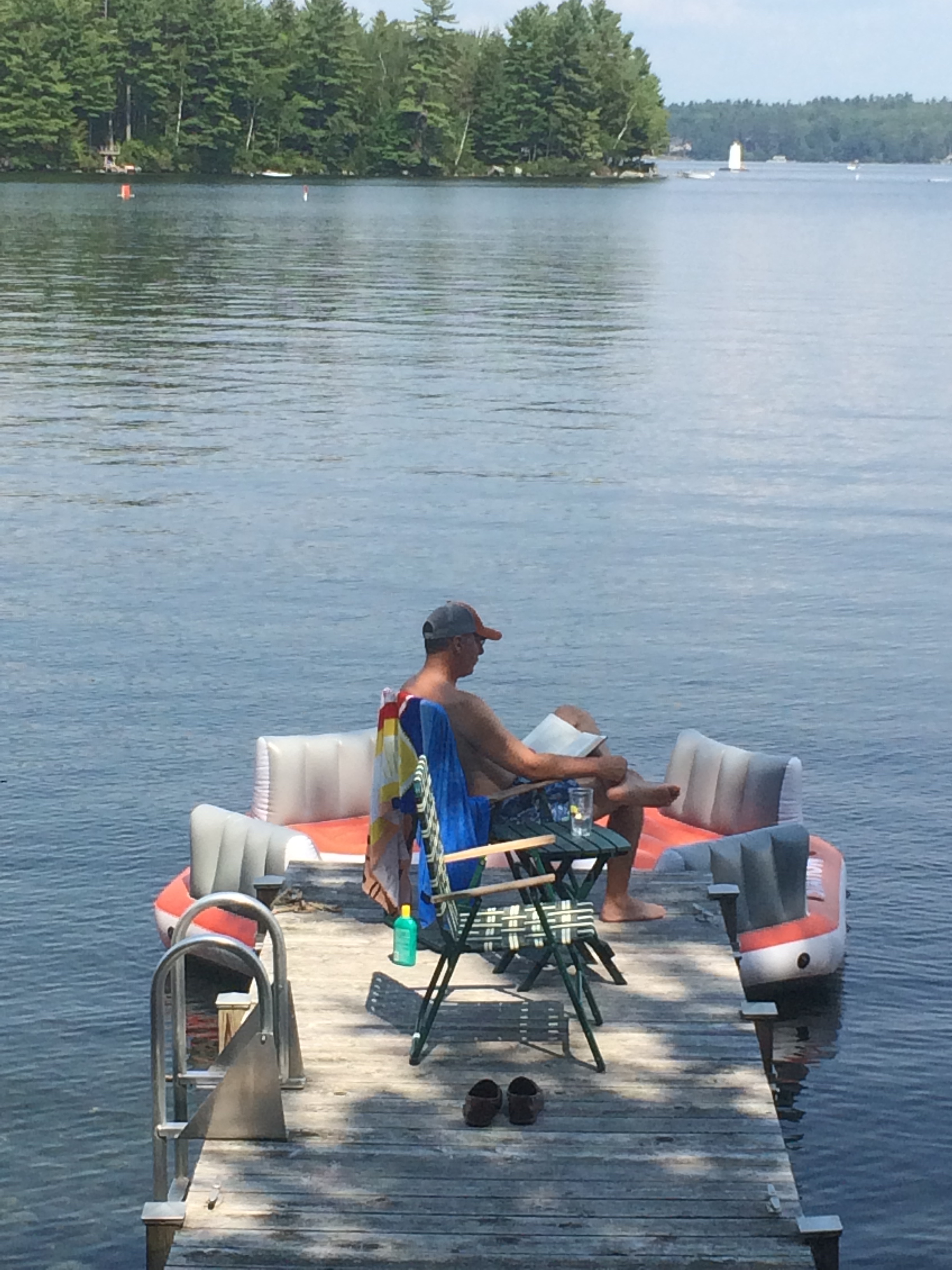
IMG_1705Yesterday we had friends visit for lunch who had never been to our lake house before. The first thing one of them said after admiring the view was, “Wow! What a great place for reading.” She’s absolutely right — there’s no better place for reading than sitting outside on a beautiful summer day with the lake and mountains in the background. There are always plenty of other things to do, especially when the sun is shining, but we all treasure our reading time.

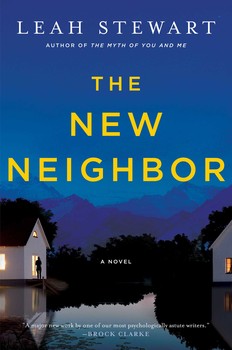
the-new-neighbor-9781501103513_lgI just finished reading several books that are perfect for summer reading. My colleague Di recommended Leah Stewart’s The New Neighbor, a terrific page-turner about two lonely women in Sewanee, Tennessee who are both hiding painful secrets. Jennifer Young and her 4-year-old son move in near 91-year-old retired nurse Margaret Riley, and Margaret soon becomes obsessed with digging into Jennifer’s past. The New York Times says “Both women, whom we come to know in great depth, are guarding secrets and neither can afford to make friends . . . Stewart never relaxes her tight focus on these complex characters.” Stewart based the novel in part on her grandmother’s experiences as a World War II battlefield nurse.

9780553392319We Never Asked for Wings, by Vanessa Diffenbaugh (out in hardcover yesterday) is, like Diffenbaugh’s The Language of Flowers, the story of a young woman in crisis.  When Letty Espinosa’s parents return to their native Mexico, Letty must finally grow up and become a parent to her teenage son, Alex, and six-year-old daughter, Luna.  Diffenbaugh does a wonderful job creating vivid and sympathetic characters. I was particularly drawn to Alex, who has always regarded his mother as more of an older sister than as an authority figure.  I passed the novel along to my mother, who enjoyed it as much as I did. I liked The Language of Flowers very much, so I was nervous when I started reading her sophomore book. Surprisingly, I liked We Never Asked for Wings even more — it’s more true-to-life, with none of the magical realism that made The Language of Flowers a less-than-perfect book for me. Vanessa Diffenbaugh will be visiting Lake Forest for an author luncheon next week, and I’m looking forward to meeting her and asking her a few questions.

9780804140034Maybe some people don’t find nonfiction books about war appropriate summer reading, but Jeff and I do! I am fascinated by the French Resistance, and Alex Kershaw’s Avenue of Spies: A True Story of Terror, Espionage, and One American Family’s Heroic Resistance in Nazi-Occupied Paris is a worthy addition to my collection of World War II books. It’s not on a par with In the Garden of Beasts, by Erik Larson, but it’s a similar story: an American family, living in occupied Paris, shows unusual courage in the direst of circumstances. American physician Sumner Jackson, his Swiss wife, Toquette, and their son, Phillip, are given the opportunity to leave France when the French surrender is imminent, but they elect to stay and join the Resistance — while living almost next door to the Parisian headquarters of the Gestapo.

51ZVQ8T7JKL._SY344_BO1,204,203,200_Jeff is delving deeply into World War I, thoroughly absorbed in Catastrophe 1914: Europe Goes to War, by British military historian Max Hastings. We heard the author speak at an event last year, and Jeff is finally getting to the book, which the New York Times calls “a highly readable narrative that should — but won’t — be the last word on the subject.” He also recently read Testament of Youth, which is author Vera Brittain’s memoir of her experiences as a nurse during World War I that led her to pacifism, political activism, and a writing career. It’s a little embarrassing that Jeff has finished the book and I have just started it, because it’s my book group’s August selection.

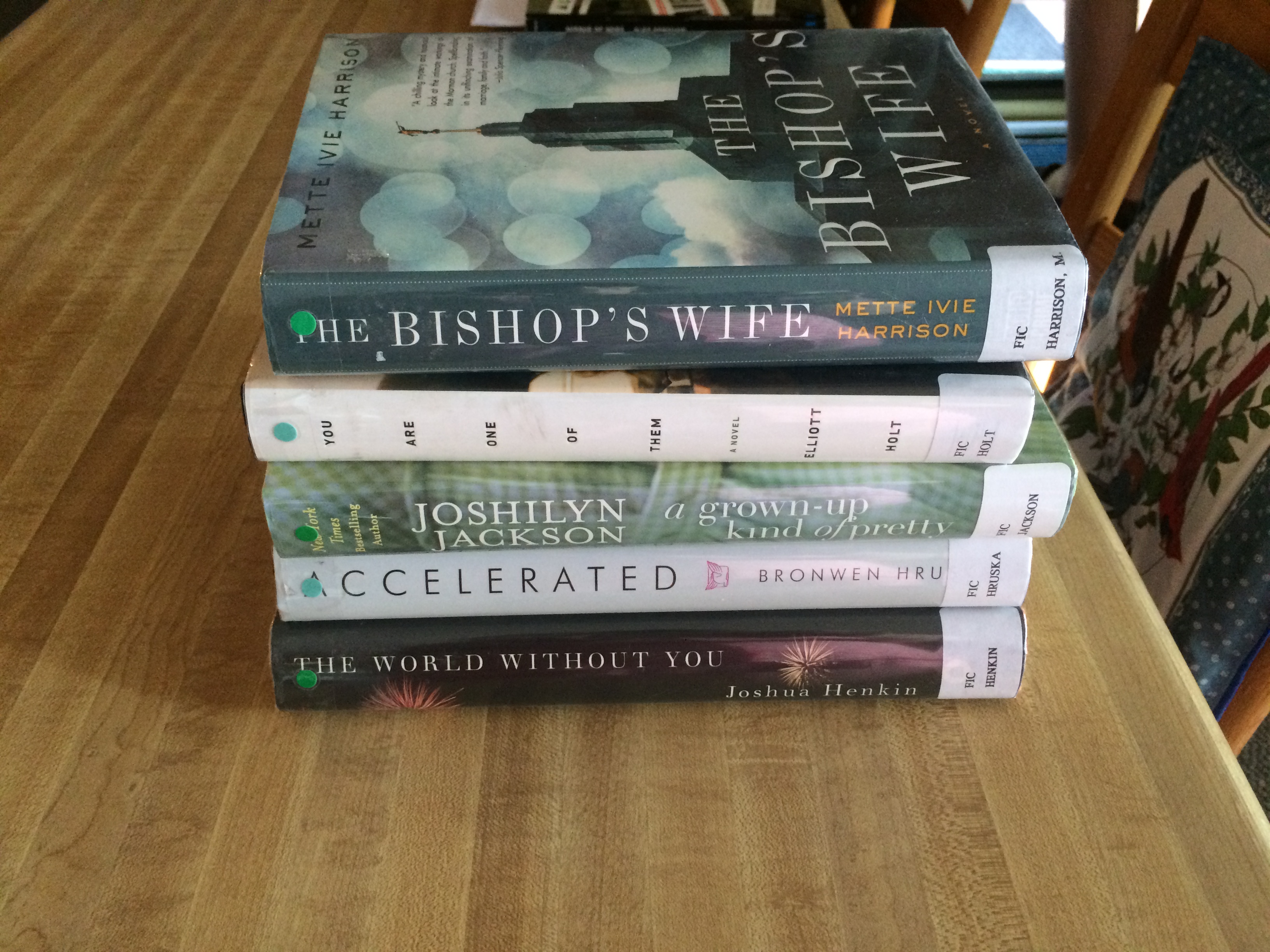
IMG_1697My mother wins the award for most prolific reader. (Also, most prolific crossword puzzle solver . . . actually, the only crossword puzzle solver.) She’s thrilled that our little town recently rebuilt and expanded its public library, and regularly comes home with big stacks of library books.  She’s read some excellent books, and particularly recommends You Are  One of Them, by Elliott Holt. One of my favorite authors, Maggie Shipstead, gave Holt’s debut novel a rave review:

Inspired by the story of Samantha Smith, the American schoolgirl who wrote to the Soviet premier Yuri Andropov in 1982, and asked if he intended to start a nuclear war, has the momentum of a mystery but is, more essentially, a consideration of how we are haunted by loss . . . The main thing, though, is that You Are One of Them is a hugely absorbing first novel from a writer with a fluid, vivid style and a rare knack for balancing the pleasure of entertainment with the deeper gratification of insight. More, please.

I just emailed the bookstore to order a paperback copy of You Are One of Them — I find that library books and lakeside reading don’t mix well I’ve already managed to drop one book in the water and spill coffee an another. Some of my mother’s books go back to the library unfinished. My mother feels, and I agree, that you can usually tell after a few pages if a book is worth reading.  Isn’t that the best thing about libraries? You haven’t invested anything in the book so there’s no pressure to finish. And the worst thing is that you have to take care of the books . . .

What did you just finish reading? What are you currently reading? What do you think you’ll read next?

Bookstore Spotlight — Cottage Book Shop

IMG_1600

Bookstores attract the right kind of folk. Good people like A.J. and Amelia. And I like talking about books with people who like talking about books. I like paper. I like how it feels, and I like the feel of a book in my back pocket. I like how a new book smells, too.
Officer Lambiase, The Storied Life of A.J. Fikry 

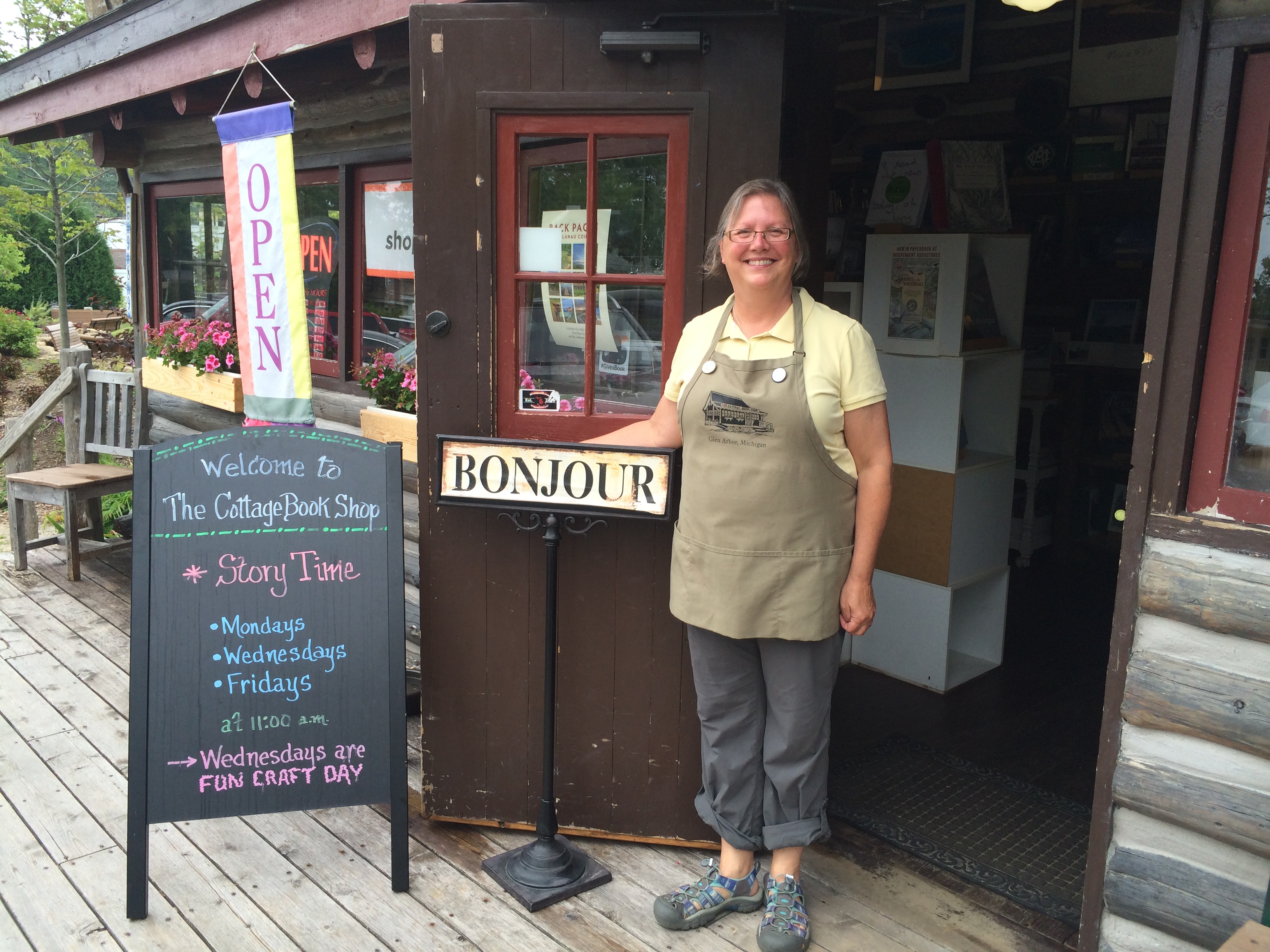
Lots of people retire and move to a new home, slowing down and enjoying newfound leisure time. When Sue Boucher’s husband retired last year, the Bouchers sold their house in the Chicago suburbs  and settled in a place they’ve vacationed in for years — Leelenau County, Michigan. The move also meant that Sue had to sell her beloved store, Lake Forest Book Store. Sue enjoys gardening, knitting, hiking, biking, spending time with friends and family — and of course, reading — but she wasn’t ready to say goodbye to the book business.

“I never thought I’d fall in love with another bookstore,” Sue said, but fall in love she did — with one of the most charming bookstores I’ve ever seen, the Cottage Book Shop in Glen Arbor, Michigan. Housed in a log cabin that was built in 1920 and moved from its original location to its current one in 1998, the shop is packed with a wide assortment of carefully chosen books — plus puzzles, games,toys, and cards. The walls are covered with the work of local artists. Sue bought the store in the spring of 2014 from longtime owner Barbara Siepker, who was planning to retire. (Her vision of retirement apparently didn’t involve running a small business!)

11824925_10153528233884803_6439038564801579186_n“Summer is our version of the Christmas season,” Sue said, when I mentioned how busy the store was on a Monday afternoon. Glen Arbor overflows with visitors and summer residents from June through August, with a tiny local population the rest of the year. Last week — which should have been one of the store’s busiest all year —  a storm of Biblical proportions with 100 mph winds hit the town, downing hundreds of trees and causing power outages for nearly a week. The Cottage stayed open almost every day, conducting business with old-fashioned technology (lanterns) and modern technology (iPhones).

9781908313867I had fun “working” as a guest bookseller in the shop for a few hours on Monday, which meant that I put on an official Cottage Book Shop apron and walked around the store straightening shelves and chatting with customers.  I recommended some of my favorites, and  — since I know the alphabet — I was able to help a few people locate specific titles. A constant trail of families entered the store, looking for summer reading for both parents and children. “This is my favorite time to read,” a woman told me as she picked out a stack of paperbacks. “Every summer we come here for two weeks and I come here right away to stock up. It’s my first stop right after the grocery store.”

FullSizeRender-1What’s popular right now at the Cottage Book Shop? Bestsellers include A Man Called Ove (Fredrik Backman), The Red Notebook (Antoine Laurain), Leaving Time (Jodi Picoult), The Martian (Andy Weir), Ordinary Grace (William Kent Kreuger), Lisette’s List (Susan Vreeland), The Boys in the Boat (Daniel James Brown), and My Salinger Year (Joanna Rakoff) — all great choices for vacation reading. Local interest books are big sellers as well, including gorgeous photography books (Ice Caves of Leelenau), children’s picture books (Petoskey Stone Soup) and field guides (Birds of Michigan).

9780143127666Not surprisingly, Harper Lee’s Go Set a Watchman has been selling briskly — and Sue had a great turnout for a screening of the film version of To Kill a Mockingbird the night before the release of Go Set a Watchman. I haven’t read it yet . . . unfortunately, I’ve read so many articles about the book that I can’t imagine enjoying it. Too many preconceived notions can spoil the excitement of starting a brand new book. I did enjoy, and wholeheartedly recommend, Marja Mills’s The Mockingbird Next Door, a delightful account of Mills’s friendship with Harper Lee and her sister.

I suggested The Mockingbird Next Door for the September selection for the Cottage’s Book of the Month Club. (But maybe it’s not a good suggestion — maybe everyone has heard enough about Harper Lee?) Every month, club members receive a paperback in the mail. Sue and her staff try to pick high-quality books with broad appeal. The August choice is  a wonderful one — Neverhome, by Laird Hunt, a lyrical novel about a farmer’s wife who leaves her husband behind to fight for the Union in the Civil War.

I can’t wait to go back to the Cottage Book Shop — maybe in the winter, when the little log cabin will be buried in snow? I’d love to hear which bookstores you’ve visited on your vacations.

Orphan #8 — Author Interview

The historian will tell you what happened. The novelist will tell you what it felt like.
E.L. Doctorow

Orphan #8Orphans are as common in literature as no-good, two-timing liars and cheats are in country music. Cinderella . . . Jane Eyre . . .  Peter Pan and the Lost Boys . . .Heidi . . .Huckleberry Finn . . .  Frodo Baggins . . . Harry Potter . . . the list of brave and noble orphans who succeed against the odds is seemingly endless. Children’s literature, especially, is full of children who have lost parents. Could this be because this is every child’s greatest fear?

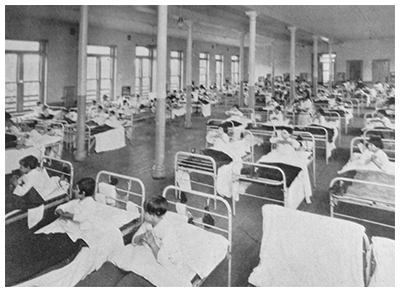
Kim van Alkemade’s grandfather, Victor Berger, was not technically an orphan, but he suffered the loss of his father at a young age.  In 1918, Harry Berger, a Russian immigrant working in the shirtwaist industry, ran off to Colorado, leaving Victor and his family destitute. Fannie Berger, “like thousands of parents before her, who, for reasons of death or desertion or illness, were unable to care for their children,” brought her children to the Hebrew Orphan Asylum in New York City.

Van Alkemade, an English professor at Shippensburg University in Pennsylvania, was conducting family research at the Center for Jewish Research when she discovered archives that inspired her to write Orphan #8.  “The idea of writing a historical novel was the furthest thing from my mind when I opened Box 54 of the Hebrew Orphan Asylum collection,” she writes.  But her curiosity was piqued when she read a motion approved by the orphanage’s Executive Committee: “the purchase of wigs for eight children who had developed alopecia as a result of X-ray treatments given to them at the Home for Hebrew Infants.”

Orphan #8 is the fictionalized story of one of those children, Rachel Rabinowitz, following her throughout her life as she comes to terms with her past as a subject of medical experimentation. Rachel’s struggle to become a whole human being, able to work, love, and even to forgive, absorbed me from start to finish. I’m always fascinated by stories inspired by little-known historical events, and Orphan #8 is moving and well-written. Kim van Alkemade was kind enough to answer my questions about the book and her career.

I read with interest the information on your website about how your family history inspired you to write Orphan #8. What made you decide to write the story as fiction, rather than narrative nonfiction?

There is a lot of my family history in Orphan #8 and I had considered narrative nonfiction for that story, but once I read about the X-ray treatments on the eight children I knew I wanted to imagine what life would have been like for one of these children. By weaving together bits of family history and research, I was able to create an imaginary story that had a compelling narrative arc.

For you, what is the line between fact and fiction? How much liberty do you think a writer of historical fiction can take with historical fact?

The line is: fact is fact, fiction is fiction. Orphan #8 is inspired by true events, but it is not a true story. I made up every character, the settings, the situations, all the dialogue (except for some of the things Dr. Hess says). Even the characters based on my family members are fictional creations. Yes, I incorporated a lot of research, and the main situation of a female orphanage doctor giving X-ray treatments to eight children did happen—but this novel is absolutely fiction. I include as much fact as possible, however, from how much a train ticket from New York to Denver would cost to how doctors treated breast cancer in the 1950s, because I want readers to have an authentic experience. The great thing about historical fiction is that it’s not a dissertation. I can take liberties. I can invent some things. I’m not sure what it’s like for the reader, but I suspect some things that seem very factual I actually made up (like how to make a wig) and other things that seem totally made up are factual (the Coney Island Amateur Psychoanalytic Society).

What audience, if any, did you have in mind as you were writing the book? (I see the book as having crossover appeal to teenagers who are interested in exploring historical fiction.)

I think Orphan #8 is a great book for mature young adults or new adult readers. There are a couple of sexy moments, and the novel deals with some heavy subjects, so I’d have to say I had an adult audience in mind as I wrote. On the other hand, Rachel is a child or a teenager for half of the book, so I think younger readers could really relate to her.

dormitoryThe term “orphanage” seems quaint now; indeed, most of today’s “orphans” are placed in foster homes, with the goal being family reunification. What is your opinion of how contemporary social service agencies handle children who have no parents or whose parents are unwilling or unable to care for them, compared with the institutional care provided 100 years ago?

In the novel, Rachel considers this very question. Even during the years in which Orphan #8 is set, the large institutional orphanages were falling out of fashion as foster care and group homes were on the rise. The philosophy behind the huge orphanages was that children of poor immigrants were probably better off away from their parents and relatives (if they had them) because the institution could provide a clean, healthy environment that promoted Americanization. In many ways, the Hebrew Orphan Asylum really saved my family. It gave my grandpa and his brothers a stable, predictable home and because my great-grandma worked there, it kept my family together. I’m not sure what alternative my great-grandma had at that time.

Orphan #8 was published as a paperback original. How did your publisher come to this decision, and what effect do you think it will have on the success of the book?

I’m not sure how William Morrow came to this decision,but that was the plan from early on. I’m really pleased about it. Though personally I purchase many hardcover new releases, the price can be steep especially compared to an e-book, so I think paperback is the best of both worlds.

Congratulations on the selection of Orphan #8 as an Indie Next Pick! Do you have a favorite bookstore where you enjoy browsing, and if you do, what makes it special?

In Carlisle, Pennsylvania, where I live, our local independent bookstore is Whistlestop Bookshop. I walked in there about a week after I’d gotten the offer for my novel, and the owner, Jeff Wood, said, “I hear we’re going to be selling your book soon.” “How did you hear that?” I asked. “Your mom was in and told me.” That’s a pretty good illustration of the role our local indie bookstore plays in our community! It really is special because everyone who works there knows the customers, it seems that everyone in town knows Jeff, and most of the time when I go in I run into someone I know.

As you undoubtedly know, a whole new phase of a writer’s life begins when the book is published. How do you feel about that? Are you looking forward to promoting the book, which involves writing and public speaking?

Well, I’m a teacher so I’m used to standing in front of people and talking, but I did want my book events to be more entertaining than a lecture, so this summer I took an improv comedy class and it was so much fun! I shed a lot of inhibitions and am thinking of ways to incorporate what I learned when I give readings. I’m really grateful to have this opportunity so even though I was very anxious about social media at the beginning, I’ve learned to embrace it because I want to do my part to promote the book. This morning I was on live television for the first time ever doing a three-minute spot about the book, and I had a good time!

Which contemporary authors (in particular, authors of historical fiction) do you most enjoy reading? When friends ask you for recommendations, what are your “go-to” suggestions?

Recently I’ve read historical fiction by Amy Bloom, Alice Hoffman, Dolen Perkins-Valdez, Bernice McFadden, Nina Revoyr, Sarah Waters, David Leavitt and Laird Hunt. I still revere Mary Renault’s historical novels about Alexander the Great—my favorite is The Persian Boy.

Which books and authors have helped you develop into the writer you are today?

I re-read Ragtime by E. L. Doctorow to get up my courage to try historical fiction, and as I was preparing to do my rewrite of Orphan #8 I re-read Ann Patchett’s State of Wonder to figure out how she paced the plot and Bel Canto to see how she managed the point-of-view. I also read all three of Donna Tartt’s novels in one month just as The Goldfinch was coming out. She gave me the courage to use the novel to express ideas that were important to me—and to write longer sentences.

I’m sure readers would like to hear more about your career as an English professor. Could you tell us a little about your academic interests and your favorite courses to teach? Are you part of a writers’ group? How do you balance your writing life with your academic responsibilities?

Well, as an undergraduate I was a double-major in English and History, and writing historical fiction has turned out to be a perfect blend of those life-long interests. I teach creative nonfiction, which is what my previous publications have been, as well as composition and technical writing. I enjoy the creativity and autonomy of planning a class. I do have a writer’s group that meets every month and my friends and colleagues are very generous in reading my early drafts. It really comes down to setting a goal for every day. When I am rough drafting, I do a word count, aiming for 1000 words a day. Once I start revising, it’s an hour every morning. I check it off on my calendar. I miss some days, of course, but then I feel crappy so I get back to work.

If we could have a glimpse of your personal library, what would it look like? How is it organized?

I just have everything alphabetical by author, unless it’s a biography. On each shelf, the books I’ve read are upright and the ones I haven’t read yet are on their side. I have the nonfiction and the fiction and the young adult all missed together. When my daughter was in school I read everything she read, so I have a lot of great young adult books. I keep all the picture books on the lowest shelf together so when I have very young visitors they can choose for themselves.

Orphan #8 has is a perfect choice for book clubs. Have you participated in a book club, either as a member or a facilitator? How do you think book groups will respond to your novel?

I am in a book club that meets at my house every other month. We’re an eclectic mix in terms of religion and background and nationality, and we read a diverse selection of contemporary fiction. My group let me practice on them by reading Orphan #8 but most of our discussion ended up being about my family because my mom is in the group, and it was her dad who grew up in the orphanage. From reading blog posts about the novel, I see there are so many ways to respond to it, I think groups will have a lot to talk about!

For reviews of Orphan #8, please visit TLC Book Tours.