Here’s an updated version of my 2014 post celebrating Irish authors. Happy St. Patrick’s Day!
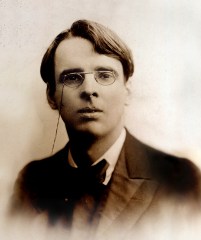
William Butler Yeats
Let us go forth, the tellers of tales, and seize whatever prey the heart longs for, and have no fear. Everything exists, everything is true, and the earth is only a little dust under our feet.
William Butler Yeats, The Celtic Twilight: Faerie and Folklore
Forget the green beer, McDonald’s Shamrock Shakes, and buttons that say, “Kiss Me, I’m Irish”. Let’s celebrate one of Ireland’s greatest contributions to the world: its authors. Yeats, of course (my favorite poet of all time), James Joyce, Oscar Wilde, George Bernard Shaw, Samuel Beckett . . . all giants of literature, studied by every English major. I have to admit that although I loved Joyce’s Dubliners and Portrait of the Artist as a Young Man, I struggled with Ulysses. I’m pretty sure I skulked into the college bookstore, looking for the CliffsNotes on the revolving wire rack tucked into the back corner.
Several years ago, Jeff and I visited Dublin for a few days. It was a perfect trip for a history buff (Jeff) and a literature lover (me). We explored the Dublin Writers’ Museum, saw the Joyce statue on O’Connell Street, waited in line to see the Book of Kells at Trinity College, toured Kilmainham Gaol (Jeff’s idea, not mine), went to several plays, and stopped by more than our share of pubs. (We didn’t, however, retrace Leopold Bloom’s route through the city on the guided walk offered by the Joyce Cultural Centre. ) As someone who relied on the CliffsNotes to get through Ulysses, I didn’t feel entitled to take that tour!) We did have dinner at the Winding Stair on the River Liffey. Downstairs is one of the oldest independent bookshops in Dublin and upstairs is a restaurant serving “good, old-fashioned home cooking”.
Life is a journey up a spiral staircase; as we grow older we cover the ground we have covered before, only higher up; as we look down the winding stair below us we measure our progress by the number of places where we were but no longer are. The journey is both repetitious and progressive; we go both round and upward.
William Butler Yeats
I always like to read something about the place I’m visiting, so on the flight to Dublin I read In the Woods by Tana French. It’s a murder mystery/psychological thriller, featuring two detectives from the Dublin Murder Squad trying to solve two murders that have taken place 20 years apart. I’m not usually much of a mystery reader, but this one captivated me because of the gorgeous writing and the evocation of modern Ireland, in addition to the complex puzzle of two parallel crimes. One of those crimes is never solved; this is not a formulaic mystery. In an interview, Tana French describes her favorite mystery novels:
. . . the ones that experiment with the boundaries of the genre: Donna Tartt’s TheSecret History (which is both my favorite literary novel and my favorite crime novel), where you find out on the first page who killed whom; Josephine Tey’s The FranchiseAffair, a deeply unsettling study of a psychopath, where the villain is obvious almost from the start and the most serious crime is basically wasting police time; Dennis Lehane’s Mystic River, where the guilty go free and the innocent pay for others’ crimes.
French has written four other Dublin Murder Squad novels, all excellent: The Likeness, Faithful Place, Broken Harbor, and The Secret Place. Each touches on Irish themes, from the “Celtic Tiger” and the recession that followed to the country’s folklore and medieval history. They are, according to the New York Times, “brilliant and satisfying novels about memory, identity, loss, and what defines us as humans.” If you’re lucky enough to take a trip to Dublin, I highly recommend taking a Tana French novel or two along.
If I had to choose a favorite Irish author, it would be a tie between Colm Toíbín and Sebastian Barry. When you read one of Barry’s novels, you know you are reading the work of a poet. (Barry is in fact the author of two collections of poetry and numerous plays, in addition to eight novels.) The New York Times says, “Mr. Barry has said that his novels and plays often begin as poems . . . but his language never clots the flow of his story; it never gives off a whiff of labor and strain. It is like a song, with all the pulse of the Irish language, a song sung liltingly and plaintively from the top of Ben Bulben into the airy night.” You can choose at random almost any passage from any one of his novels and be struck by the beauty of the language, but here’s one of my favorites, from A Long Long Way:
Such a singing voice he had. His mother, who was a blunt woman enough, one of the Cullens herself, daughter of the coppicer on the Humewood estate in Wicklow, got only good from it. She set him on a chair to sing like any woman might, and he threw his small head back and sang some song of the Wicklow districts, as might be, and she saw in her mind a hundred things, of childhood, rivers, woods, and felt herself in those minutes to be a girl again, living, breathing, complete. And wondered in her private mind at the power of mere words, the mere things you rolled round in your mouth, the power of them strung together on the penny string of a song, how they seemed to call up a hundred vanished scenes, gone faces, lost instances of human love.
Willie Dunne, the protagonist of A Long Long Way, who has such a beautiful singing voice as a child, ends up going to France when World War I breaks out in 1914, and fighting against his own people in the Easter Uprising of 1916. The Dunne family appears again and again in Barry’s novels. Willie is the brother of Annie Dunne, who is the title character of an earlier novel, and of Lily Bere, who is the main character in On Canaan’s Side. Similarly, The Trial of Eneas McNulty, The Secret Scripture, and the The TemporaryGentleman all focus on members of the McNulty family. Read as a whole, Barry’s novels cover the Irish experience of the entire 20th century. In interview with the Guardian, Barry says, “I am trying to rescue my characters from the cold hand of history, and from the silences that surround certain turbulent periods in our own history.”
The Irish tradition of oral storytelling continues to influence today’s Irish writers. The Guardian says, “Language remains, for Barry, something heard or spoken rather than black marks on a page, and he vividly remembers being read to as a child.”
“Storytelling pre-dates homo sapiens and the technique of writing,” Barry says. “I can’t actually do anything until I can hear it singing. I’m praised – or maybe blamed – for poetic writing, but it’s really just how I take it down. It’s not a conscious effort, it’s the language of how I hear and see those things.” In Angela’s Ashes, his wonderful memoir of growing up poor in Ireland in the 1930s and 1940s, Frank McCourt describes discovering Shakespeare while quarantined in the hospital with typhoid fever: “I don’t know what it means and I don’t care because it’s Shakespeare and it’s like having jewels in my mouth when I say the words. If I had a whole book of Shakespeare they could keep me in the hospital for a year.”
Colm Toíbín, like Sebastian Barry, is a versatile wordsmith — he’s written novels, short stories, essays, plays, poems, criticism, and nonfiction. I haven’t read all his books, but I loved The Master, The Testament of Mary, and Brooklyn. Although Toíbín’s work has been shortlisted for the Man Booker Prize several times and has received plenty of critical acclaim, he hit the jackpot recently when his 2009 novel, Brooklyn, was made into a successful movie that received three Academy Award nominations — Best Picture, Best Actress, and Best Adapted Screenplay. ToíbÍn’s deceptively simple story of a young Irish immigrant, Eilis, who comes to the United States in the 1950s is a powerful meditation on love and belonging. Horribly homesick at first, Eilis falls in love and begins to make a life for herself in New York. A tragedy calls her home to Ireland and she is torn between her two lives. Toíbín’s description of Eilis’s loneliness as a new immigrant will resonate with anyone who has ever felt friendless and alone:
She was nobody here. It was not just that she had no friends and family; it was rather that she was a ghost in this room, in the streets on the way to work, on the shop floor. Nothing meant anything… . Nothing here was part of her. It was false and empty, she thought. She closed her eyes and tried to think, as she had done so many times in her life, of something she was looking forward to, but there was nothing. Not the slightest thing. Not even Sunday.
The spotlight also shone recently on Irish-born author Emma Donoghue, author of the 2010 novel Room as well as many other novels, short story collections, plays, screenplays, and works of literary criticism. The film version was nominated for four Academy Awards this year –Best Picture, Best Actress, Best Director, and Best Adapted Screenplay. Brie Larson, who won for Best Actress, was gracious enough to thank Emma Donoghue in her acceptance speech. (Donoghue also wrote the screenplay.) Have you ever noticed how rarely actors remember to acknowledge writers — the people whose creativity started the whole project?
Here’s to all the Irish storytellers and their gift of gab!
What is a free man except a man with money?
Bob, an escaped slave
My life was not my own, but my clan’s.
Istillicha, a Creek Indian
I have been in this country for twelve years, and from every angle I can only see that Americans have made a religion of the individual — it’s seeping already into the discontent slaves and the Indian factions . . .
Louis Le Clerc Milfort, French “tracker and deputy of justice”
Katy Simpson Smith’s second historical novel, Free Men, takes a hard look at one of the values our country holds dear: personal freedom. The American South in the late 18th century was a “landscape of merciless individual pursuit”, but people still longed for human connection. If you’re looking for a page-turner, this is not the book for you. But if you want to read a novel of ideas with gorgeous language, you’ll find Free Men rewarding and thought-provoking.
In the spring of 1788, seven years after the British surrendered at Yorktown, three desperate men, all fleeing unbearable situations, join forces for a few days in the thick woods of what is now southern Alabama. They rob and murder a group of white traders (“American loyalists”) and their Indian guides. One of the guides escapes and reports the crime to his chief, Seloatka. Le Clerc, a French “gentleman adventurer” who is married to a Creek Indian woman, volunteers to hunt down the three murderers.
Le Clerc himself is on the run, having left behind a wife and a comfortable life in France: “I sought out the new, the republican, the individual,” he says. He cares more about the motives and characters of the three criminals than he does about actually bringing them to justice. Justice, he says, “became secondary to wisdom.” More interested in the “burgeoning science” of psychology than history or philosophy, Le Clerc wants to hold a “fresh mirror up to the machinations of humanity”.
Each of the “ruthless highway robbers” that Le Clerc pursues– Bob, an escaped slave, Istillicha, a Creek Indian, and Cat, a broken-hearted widower and farmer — has his own reasons for seeking freedom by heading west through unfamiliar and unsettled territory. They make an unlikely group of comrades; Le Clerc notes that:
In any country in the world they could not subsist together, yet here they were, wandering in a polite clump through woods that belonged apparently to no one, ignoring all the reasons to strike out on their own, to take the money and fall back into their segregated homes, because even America has rules.
The reader learns the basic facts of the story in the first two pages of the book. This is not a plot-driven novel; it’s a novel concerned with why things happened, not what happened. The four major characters — Le Clerc, Bob, Istillicha, and Cat — each, in their own distinctive voices, tell the stories of what brought them to the banks of what is now known as “Murder Creek”. Winna, the wife Bob leaves behind at the plantation, has her own short chapter in the middle of the book, reminding us that not only men sought freedom in the 18th century.
In an interview with Catherine Bock at Parnassus Books in Nashville (which picked Free Men for its First Editions Club in February), Smith said that as a reader, what she loves in a book are “sentences that are startling or playful or lush”. Free Men is full of sentences I’d describe using just those words; in fact, I stopped underlining them after the first couple of chapters because there were so many. Here are a few examples of sentences that stopped me in my tracks:
My brother Primus was dark and shiny, like someone had wrapped an old brown sheet around a boy of gold. (Bob)
There were soft apple spots in my father. (Cat)
I loved my mother’s brother as a boy will love a bear he sees through spaces in the forest. (Istillicha)
Smith, a history Ph.D. and the author of We Have Raised All of You: Motherhood in the South, 1750-1835, told an interviewer on WNCN in Raleigh, North Carolina that the exciting aspect of writing historical fiction is examining the “emotions and motivations behind people’s actions, which very often in history is something one can only speculate about, especially with the kinds of people who didn’t leave behind written records — the enslaved, women, marginal members of society.” Perhaps she has something in common with Le Clerc, who also wants to understand why people behave as they do.
Smith said “trying to get in the heads of 18th century men was a thrill for me.” While I thought the men’s voices were authentic for the most part, in some instances the characters slip into the mindsets of modern-day Americans. For example, would an 18th century slave say, “. . . this was not a life but a system, and for the first time my boyish grief took on the color of rage”?
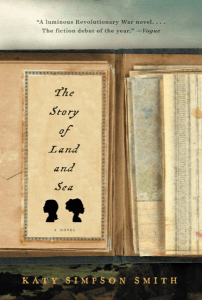
If you enjoy literary historical fiction set in America — The Good Lord Bird (James McBride), MiddlePassage (Charles Johnson), The Known World (Edward P. Jones) — you’ll love Free Men. I’ve just started reading Smith’s previous novel, The Story of Landand Sea, which is set during the Revolutionary War on the North Carolina coast, and it’s terrific.
Betsy returned to her chair, took off her coat and hat, opened her book and forgot the world again.
Maud Hart Lovelace, Betsy and Tacy Go Downtown
Mother used to say escape is never further than the nearest book.
David Mitchell, Cloud Atlas
As soon as March arrives, customers start asking for spring break reading recommendations for themselves and their families. You’d think it would be easy to come up with a list of fun “beach reads”, but every year that request flummoxes me. I understand that lots of people want to read lightweight books while on vacation, but far too many books pegged as “escape” reading are too predictable to be entertaining. I don’t think I’m a book snob, but if I’m going to spend six or more hours reading a book, I want to feel I’ve been enlightened as well as entertained. I want to gain something, whether it’s a little better understanding of human nature or concrete knowledge.
“Escape” reading to me means a book that will absorb and surprise me. Readers all have different ideas of what it means to lose themselves in a book, which is why it’s so difficult to recommend all-purpose vacation reading. My husband’s preferred beach reading often includes books about obscure aspects of Civil War history, while my older son likes sports biographies. Neither one of them would be interested in the latest Harlan Coben or David Baldacci. A few books have managed to intrigue nearly everyone in the family; I recall one vacation when we read The Psychopath Test by Jon Ronson. I don’t know what that says about our family, but I do know that nonfiction is often the best vacation reading.
Several of my favorite nonfiction books from 2015 are out in paperback this month, just in time to take on vacation:
H is for Hawk by Helen Macdonald H is for Hawk was on almost every “Best Books of the Year” list and won several major literary prizes. As the New Yorker pointed out, it “defies every genre”. On the surface, it’s about poet, naturalist, and falconer Macdonald’s grief after losing her father and her experience training Mabel, a goshawk. The writing is simply gorgeous; I savored every word. The Telegraph says:
This book is a soaring triumph. It is a joy to follow Mabel and Macdonald’s flight out of such disconsolate scenes as one settles into a new roost and the other gradually comes to realise that “hands are for other human hands to hold. They should not be reserved exclusively as perches for hawks.”
Macdonald will be on tour in the United States in April, and I’m looking forward to hearing her speak at Independence Grove Forest Preserve in Libertyville, Illinois.
Life from Scratch: A Memoir of Food, Family and Forgiveness by Sasha Martin
The author set out to cook a recipe from every country in the world and blog about it — along the way, she made peace with her past and connected with the world around her. It’s a heartfelt, plainspoken chronicle of how food and cooking can heal damaged souls. Think The Glass Castle with recipes. (Click here for my complete review.)
Pirate Hunters: Treasure, Obsession, and the Search for a Legendary Pirate Ship by Robert Kurson
Two expert wreck divers (including John Chatterton, of Kurson’s terrific Shadow Divers) risk their safety and life savings to find a pirate ship off the coast of the Dominican Republic. It’s a fascinating page-turner, and I loved learning more about the Golden Age of piracy.
The Residence: Inside the Private World of the White House by Kate Andersen Brower
Pure fun for trivia buffs, this well-researched and detail-packed insider’s glimpse of the inner workings of the White House focuses on the staff members behind the scenes at what Harry S. Truman called the “great white jail”. According to the Wall Street Journal, Brower was inspired by “the class-bound and obligation-ruled prison represented by a fictitious country manor, the one in television’s “Downton Abbey'”. What better time to read The Residence than when we are all wondering who will be living in the White House a year from now?
If you’re willing to take a hardcover on vacation, I have four eclectic recommendations. Not one is a doorstop — they’re all packable:
The Swans of Fifth Avenue by Melanie Benjamin
The surprise in this delightful book is not that Melanie Benjamin paints a complete portrait of Truman Capote, which I expected, but that she brings Babe Paley to life as a lonely and wounded woman. All of Benjamin’s books are entertaining, informative, and well worth reading, but this is my favorite. And if I had to pick the quintessential spring break book, this would be it. It’s a great book club choice — there’s plenty to discuss, plus lots of options for fun cocktails, snacks, and even costumes.
Fortune Smiles by Adam Johnson
Before I read this collection of longish short stories, I couldn’t understand how it could have won the 2015 National Book Award instead of A Little Life. I still think A Little Life should have won, but I can see why the judges awarded the prize to Fortune Smiles. Each story is brilliant and memorable. My husband and I discussed it over dinner with another couple, and we ran out of time before we ran out of material.
This Was Not the Plan by Cristina Alger
Charlie Goldwyn didn’t plan on becoming a widower responsible for a high-maintenance five-year-old. Nor did he plan on losing his job at a high-powered Manhattan law firm. Charlie’s mother is dead, and he’s never had a relationship with his father. Alone and adrift, he finally learns what it means to be a parent — and a son. I loved this witty and poignant story about family and friendship. Alger’s first novel, The Darlings, about a family much like the Madoffs,is terrific as well.
Why We Came to the City by Kristopher Jansma
It’s a formula we’ve read many times before: a group of 20-something friends grapple with adulthood in the big city. But Jansma invigorates this scenario in his new novel, which is very different from his much less conventional first novel, The Unchangeable Spots of Leopards. His writing is lovely, and his characters are as real and believable as any I’ve encountered recently. A couple of years ago, I organized an event for Jansma at our store. Events with debut authors are always a gamble. Unfortunately we didn’t draw much of a crowd that evening. But he was gracious and enthusiastic. I hope his readings are standing room only now!
If you have a vacation planned this spring, what will you be reading?
I was saddened to learn that Pat Conroy died yesterday (March 4, 2016), at the age of 70. In his obituary, the New York Times says that Conroy’s “legion of admirers . . . hung on his every word, entranced by the naked emotionalism of his male characters, the Lowcountry atmosphere and the page-turning Southern yarns.” Two years ago, I wrote about Conroy’s last book, The Death of Santini (published in 2013) and my long nearly 30-year membership in the Pat Conroy fan club.
How many aspiring writers have been told to “write what you know”? If Pat Conroy was given that timeworn advice, he’s certainly taken it to heart. Both his novels and his memoirs are about what he knows — growing up as the son of an abusive Marine Corps fighter pilot, attending the Citadel as a basketball player and budding writer, losing a brother to suicide, coping with a sister’s mental illness. In his latest memoir, The Death ofSantini, Conroy says, ” My books have always been disguised voyages into that archipelago of souls known as the Conroy family.”
I discovered Pat Conroy in 1987, with a paperback copy of The Prince of Tides. My first baby was born that year, and when he was asleep, I was reading Pat Conroy. As tired as I was, I stayed up late, immersed in the drama of the Wingo family — a violent and cruel father . . . a suicidal poet sister . . . escaped convicts on the loose . . . and a ferocious pet tiger. When I finished all 664 pages, I couldn’t wait to read more of Conroy’s writing. I quickly went through The Water is Wide, The Great Santini, and The Lords of Discipline — and then I was finished. The books went on the shelf, and my love affair with big, fat books continued when Tom Wolfe’s The Bonfire of the Vanities grabbed my attention.
Conroy disappeared for years, and finally published Beach Music in 1995. I wanted to love the book, but found I couldn’t get past the flowery prose and stilted dialogue. So it was with trepidation that I picked up My Losing Season several years later. On the surface, this memoir recounts Conroy’s senior year playing basketball at the Citadel, but it’s really about his relationship with his father, his coach, and his teammates, and finding his voice as a writer.
Do you think that Hemingway knew he was a writer at twenty years old? No, he did not. Or Fitzgerald, or Wolfe. This is a difficult concept to grasp. Hemingway didn’t know he was Ernest Hemingway when he was a young man. Faulkner didn’t know he was William Faulkner. But they had to take the first step. They had to call themselves writers. That is the first revolutionary act a writer has to make. It takes courage. But it’s necessary.
Even though I’m not interested in college basketball, I was captivated by Conroy’s story of failure and how it shaped him into the person and writer he became. It remains one of my favorite memoirs . . . along with My Reading Life, which Conroy published in 2010. (I wasn’t enamored with South of Broad, Conroy’s 2009 novel.) My Reading Life isn’t exactly a memoir; it’s a collection of essays about the powerful role of reading in Conroy’s difficult life. A person can’t be a writer without first being a reader, and Conroy tells us how he became a reader:
My mother turned me into an insatiable, fanatical reader. It was her gentle urging, her hurt, insistent voice, that led me to discover my identity by taking a working knowledge of the great books with me always. She wanted me to read everything of value, and she taught me to out-read my entire generation, as she had done hers. . . I have tried to read two hundred pages every day of my life since I was a freshman in high school because I knew that I would come to the writing of books without the weight of culture and learning that a well-established, confidently placed family could offer its children. I collected those long, melancholy lists of the great books that high school English teachers passed out to college-bound students, and I relied on having consumed those serious litanies of books as a way to ease my way into the literary life.
Even today, I hunt for the fabulous books that will change me utterly. I find myself happiest in the middle of a book in which I forget that I am reading, but am instead immersed in a made-up life lived at the highest pitch. Reading is the most rewarding form of exile and the necessary discipline for novelist who burns with the ambition to get better.
The Death of Santini covers some familiar ground — the relationship between Conroy and his terrifyingly abusive father, Don Conroy (a.k.a. “The Great Santini”). But this is a story of redemption — Don Conroy has transformed himself from a monster into a loving father and grandfather. At the end of The Prince of Tides, Tom Wingo (Pat Conroy’s alter ego), says, “I learned that I needed to love my mother and father in all their flawed, outrageous humanity. And in families there are no crimes beyond forgiveness. But it is the mystery of life that sustains me now.” Fact reflects fiction in The Death of Santini, for Conroy shows us how he is able to forgive Don Conroy for his vicious cruelty towards his family. The writing of the book was a necessary part of Conroy’s healing; he says in the prologue:
Mom and Dad, I need to go back there once again. I’ve got to try to make sense of it one last time . . . Then I’ll be finished with you, Mom and Dad. I’ll leave you in peace and not bother you again. And I’ll pray that your stormy spirits find peace in the house of the Lord. But I must examine the wreckage one last time.
Don Conroy was, according to his son, far more cruel and abusive than Bull Meecham, the”Great Santini” of the novel. When Conroy sent his editor a first draft of the novel, she told him she was troubled by his potrayal of the Colonel — “no reader could expect to believe that such an unsavory man could exist without a single virtue to recommend him. To make him credible, I had to include scenes that displayed a softer and kinder man.” This softer and kinder man eventually came to life, in the person of the elderly Don Conroy. Throughout his life, he enjoyed attending his son’s book signings; in fact, father and son made a pact that no customer would ever leave without a book signed by them both. (Of course, he often bragged that his line for autographs was longer.) He was enormously proud of Conroy’s success, and, in fact, wrote a letter to his entire extended family defending The Great Santini:
Pat is a very clever storyteller and I was totally absorbed and encountered every emotion, as reading very slowly, life with father unfolded in this work of fiction. It was as though I knew some of the characters personally . . . Pat did a superb job in developing the character Mary Ann . . . with all modesty, fell far short on Santini — which is quite understandable with such a dashing and complex character.
Yes, Don Conroy is a complex character — and Conroy does an extraordinary job of portraying that complexity in The Death of Santini. In one of the most moving scenes in the book, Conroy describes his father’s grief after his youngest son’s funeral: “Forgiven at last, my father sat in a chair in the living room, not even trying to control his crying. His kids surrounded him, because his love of Tom provided us an understanding of his own love for all of us. It was a day of surreal, uncommon beauty.”
Conroy closes the book with the eulogy he wrote for his father’s funeral. Is this really the last time Conroy will “examine the wreckage” of his tumultuous family? In an interview in BookPage, he claims it is: “I’m going to try to leave the family in peace. There are other things to write about.” We’ll see.
Together and alone, we need literature as California valleys need rain.
David Denby, Lit Up
Back in the 1980s, film critic David Denby wondered “how anyone could be hurt by reading a good book”. The controversy at the time, which continues to this day, was how we define a “good book” and whether the traditional Western classics are relevant in our multicultural society. The 48-year-old Denby returned to his alma mater, Columbia University, and spent a full academic year studying the Western canon. He wrote a book, Great Books: My Adventures with Homer, Rousseau, Woolf, and the Indestructible Writers of the Western World, about how the experience reinvigorated his intellectual life.
Denby describes his new book, Lit Up: One Reporter. Three Schools. 24 Books That Can Change Lives, as a “prequel” to Great Books. He spent an academic year (2011-12) in sophomore English classrooms at the Beacon School, a magnet school in Manhattan, and another year (2013-14) in English classrooms at two other public schools — Mamaroneck High School, in a wealthy New York suburb, and James Hillhouse High School, in inner-city New Haven, Connecticut. He wanted to learn:
How do you establish reading pleasure in busy, screen-loving teenagers — and in particular, pleasure in reading serious work? Is it still possible to raise teenagers who can’t live without reading something good? Or is that idea absurd? And could the struggle to create such hunger have any effect on the character of boys and girls?
Denby’s time in the classroom with some unusually gifted and devoted teachers — who are passionate readers themselves — shows that it is possible to transform reluctant or even hostile readers into engaged and curious readers. But it’s an uphill battle, and even more difficult for students who lack the context or vocabulary to understand what they’re attempting to read. If students don’t know when or why the Civil War was fought, they’re not going to connect to The Red Badge of Courage. If they don’t know what the Holocaust was, they’re not going to make any sense of Elie Wiesel’s Night.
The teachers Denby introduces in Lit Up have the difficult, nearly impossible job of getting students to read the assigned texts and of helping students find books outside of the required reading that they will enjoy and relate to on a personal level. Both Denby and the teachers acknowledge that the way to get kids to read is to get them first to read anything they like: “Get them started as readers by giving them books they could easily enjoy, including young adult novels; get them caught up in narratives, stories, outcomes.”
As a bookseller, I agree with this philosophy wholeheartedly. As Ann Patchett said, “I’m all for reading bad books because I consider them to be a gateway drug. People who read bad books now may or may not read better books in the future. People who read nothing now will read nothing in the future.” I’ve always been a bit mystified by parents who are overly concerned about the content in their children’s reading material. If your third grader who struggles with reading loves Captain Underpants or Junie B. Jones, who cares? They’re developing a habit of reading and enjoyment of the written word. And anyway, do you want the reading police ticketing you for reading Us Weekly?
The problem is that these teachers know, just as all avid readers know, that one of the greatest benefits of reading is to develop an understanding of the wider world and the people in it. Reading isn’t just about holding a mirror up to ourselves and validating what we already think and feel. The teachers we come to know and admire in Lit Up work hard, with more success than I would have anticipated, to get kids to read challenging books that open their eyes to people and experiences far beyond the limited scope of their lives.
Jessica Zelinski, who teaches sophomore English at Hillhouse High School, the worst-performing public school in New Haven, regularly organizes a classroom event called a “Read Around”. She chooses several books she thinks will interest her students, and brings multiple copies to class, encouraging every student to sample each book. One of the students, who initially looked at Ishmael Beah’s devastating memoir of his years as a boy soldier in Sierra Leone, A Long Way Gone, and said, “This doesn’t interest me,” ends up reading the book with great interest — and, through the efforts of Miss Zelinski, meeting the author at a nearby college. Miss Zelinski, who feels that the Hillhouse curriculum often condescends to the students by not expecting much from them, says to the author, “Maybe they’ll enjoy life more, if I can get them reading. I would like to nurture in them the idea that there are other worlds.”
I was so fascinated by Denby’s stories about the students and teachers he came to know that I read this book in just one day. It’s a very personal account, not a sociological treatise. Denby says of the students he observed:
I decided not to suppress my feelings about them. I would describe them physically (or they would never come alive on the page) and commit the sin of ‘judging’, always bearing in mind that they were very young. Fifteen-year-olds, through an academic year, develop stems and roots, their cells divide. In particular, I wanted to see if readers could be born — what happens when a non-reader becomes a reader? — which meant necessarily recording the students’ mistakes and awkward moments as well as their insights and breakthroughs as they struggled into life.
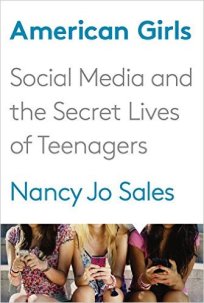
I read this book just after I finished another book about American teenagers, American Girls: The Secret Lives of American Teenagers, by Nancy Jo Sales, which is truly one of the most depressing books I’ve ever read. If Sales is to be believed — and I hope with all my heart she’s not — the lives of most teenage girls revolve around taking pictures of themselves and posting them online, hoping for validation. In this book, physical appearance is everything, the search for male approval is paramount, and feminism is completely dead. A recent Wall Street Journal review said: “The secret life of teenagers sometimes seems entirely a response to nude pictures and requests for them—a response, that is, to male adolescent desire, as it shows up digitally. But female vanity is also at play.”
I wish the teenagers (both boys and girls) in American Girls had teachers like Sean Leon, Mary Beth Jordan, Jessica Zelinski, Mary Whittemore, and Daniel Guralnik, who would introduce them to inspiring books that would help them develop into empathetic people. At the very least, they should consider the words of Atticus Finch in To Kill a Mockingbird, one novel I’m certain every high school student is required to read:
You never really understand a person until you consider things from his point of view — until you climb into his skin and walk around in it.
Dancers are just flowers, and flowers grow without any literal meaning, they are just beautiful. We’re like flowers. A flower doesn’t tell you a story. It’s in itself a beautiful thing.
George Balanchine
The other girls, and their imperfections, fade away as Mira runs ahead on a stream of energy and light. Her body tells her what to do and she just goes along with it . . . Something great is growing in her, unrolling its tendrils, sprouting buds in all directions. Sometimes the song in her body is almost too loud; it fills her eyes, makes them tear up in something like gratitude.
Sari Wilson, Girl Through Glass
The first thing you need to know about Sari Wilson’s debut novel, Girl Through Glass, is that it’s much more than a “ballet book”. Like every memorable book, it transcends its surface subject matter and explores universal themes; in this case, art, obsession, sexuality, and family relationships. “I really wanted to write a book that wasn’t just about ballet,” Wilson said at an event at the Book Stall in Winnetka, Illinois. “The idioms and milieu of ballet make for compelling human drama.”
The world of ballet in late 20th century New York provides a fascinating backdrop for the novel’s two narratives. Mira is a young girl with a difficult family life who finds refuge in the art and discipline of ballet. Kate is an ex-dancer and college dance history professor who can’t seem to move forward and is forced to revisit her buried past. For both, George Balanchine’s ideal of feminine beauty looms large. “Ballet is woman,” Balanchine famously said. The subject of Kate’s Ph.D. dissertation was “Corporeality Subverted: The (Dis)embodied Feminine in the Aesthetic of George Balanchine, 1958-1982”.
Doesn’t almost every little girl dream of becoming a ballerina? My dream died quickly, after several months of patient instruction from Mrs. Goneconto at the local YMCA. I was disappointed to learn at the first class that I was not immediately issued a tutu and toe shoes, and things went downhill from there. Mira and her fellow “bunheads” exist on a different level, pushing themselves to their physical and emotional limits in what Wilson calls “pure devotion to an ideal”.
Wilson, whose own dance career was cut short by an injury, called herself a “recovering ballerina” in a recent New York Times piece, “My Nutcracker Recovery”. When her daughter is cast in a production of “The Nutcracker”, Wilson has mixed feelings — but as she watches her little girl rehearse, Wilson remembers her childhood passion for dance: “My own early swooning love for ballet — for the pure motion and expression of dance — floods back to me, confusing, powerful, bittersweet, and it finds me a little bit healed.”
Girl Through Glass is at its heart a coming of age story, focusing on a girl and a woman at inflection points in their lives. Wilson spent years crafting the novel, which was a creative endeavor, she points out, not unlike choreographing a dance.
How would you compare the art of writing to the art of dance?
In a lot of ways they seem inverse: dance is an art that is performance-based, completely dependent on the body as instrument for communication; writing is a cerebral art and employs written language as an instrument for art. But underneath, they share a lot: the need for discipline, repetition, and a strong desire to communicate. In the age-old days, dance and poetry were integrated, I think, but they split off from each other and became their own disciplines. But in their roots, they are very related.
Like many fiction writers, you started out by writing short stories. You mentioned that Girl Through Glass had its origins in a short story about a young ballet dancer. How would you compare the process of writing short stories with the process of writing a novel?
Writing short stories is sustainable in sprints, whereas writing novels is a marathon undertaking. For me, the novel demanded a wider range of skills—analytic and associative. Novels are aptly named—each adheres to its own rules, its own logic, they are very elastic. I enjoy the form because it can accommodate multiple dialectics and tensions.
Have you made any particular effort to connect with the ballet community? How do you think members of that community will view the novel?
One of the things that I have been really gratified about is that the ballet community has been so accepting of the novel. I have had dancers and former dancers and “recovering” dancers (my term) tell me that the novel describes their own experience. It’s not a glowing portrait of the ballet world, but it is a one told with love and passion—maybe the passion of a child who can love and be hurt deeply. I think dancers understand that the novel is full of admiration for what they do, as well as what the costs can be.
You very deftly weave the two narratives — Mira’s and Kate’s — together. Was one of them more difficult to write than the other? Did you know where the story was going when you began?
I actually didn’t know where the story was going. I first wrote Mira’s storyline. When I had finished, I realized that the novel wasn’t complete—around the same time, I started writing from this other voice, a 1st person voice, a much older voice, a bit bitter, even angry. I didn’t know who it was at the time. As I wrote her story I realized who she was and how she was connected to Mira. I realized I could use Kate’s story as a frame for ordering Mira’s story; it was only then that I felt I had a book, a novel.
You paint a vivid and accurate picture of 1970s New York City. New York has changed a great deal in the past few decades. What, if anything, has been lost?
It’s trendy, I guess, to be nostalgic for 1970s New York, but for me it is very specific nostalgia: the nostalgia of the world through a child’s eyes that has been transformed. So it’s a journey into personal memory of a lost childhood world, a New York City of the past—a very frayed urban landscape. But what has been lost? Well, there is a great Edmund White piece about this in The New York Times ; in it he basically says it has to do with the economy and real estate. What is largely lost is the sense of freedom to fail abundantly that the city allowed people at that time—that ecosystem benefited creativity and allowed a certain kind of romanticism around art-making, but at the cost of safety.
How has ballet changed since MIra’s and Kate’s years as young dancers?
Mira’s era was a very specific era, when Balanchine aesthetic was at its very height. I think the playing field is much wider now—there are so many more different types of companies with modern and ballet cross-over. And the conversation about body image and race that is happening around Misty Copeland’s terrific rise is all very exciting and overdue.
Kate finds that the world of academia is, in its own way, as cutthroat and competitive as the world of dance. Can you comment on that?
Yes, that actually surprised me. I’m not in academia, but as I did my research I came to realize that there was an incredible amount of cutthroat competition in that world—especially at Kate’s level. Kate has made it into a pool of very talented and ambitious candidates for which there are not enough permanent positions, which makes her situation very tenuous. Not unlike the hierarchies of the dance world, in which there are very few coveted spots for soloists and principals.
For generations, little girls have dreamed of becoming ballerinas — and some of them have suffered, physically and emotionally, as they’ve pursued their ambitions. Certain parents (and not just ballet parents) are willing to sacrifice and also to let their children experience physical and emotional harm in the hopes of raising superstars. Adults, like Maurice, can become obsessed with the beauty of ballet. What is it about ballet that inspires such passion?
Maybe it is the kind of innocence that it requires, a kind of passionate innocence and a ungovernable belief in beauty (in the broader Romantic sense, Beauty as in Truth)? There probably will always be something captivating about noble suffering in pursuit of some truth? So much art is about this theme. Ballet displays it in the vernacular of the body and in a kind of nobility of form that can be as hypnotizing as well as destructive. It can contain, I suppose, our best and worst impulses as humans. It holds a mirror up to our inner selves, perhaps.
Thank you, Sari, for answering my questions so thoroughly and thoughtfully!
A good day is a day when I can not just read a book, but write a review of it.
Christopher Hitchens
The critic leaves at curtain fall
To find, in starting to review it,
He barely saw the play at all,
For starting to review it.
E.B. White
Your work is ingenious. It’s quality work. And there are simply too many notes, that’s all. Cut a few and it will be perfect.
Emperor Franz Joseph I of Austria to Mozart in the movie Amadeus
“Too many words” was how a customer recently characterized a book on the bestseller shelf in our store. I knew exactly what she meant. Many nonfiction books fit this description. They should have been magazine articles, but their authors were determined to stretch the material into full-length books. I’ve also read plenty of novels that would have benefited from the most valuable advice in Strunk and White’s classic writing guide, The Elements of Style: Omit needless words.
It’s easy to criticize a book you have mixed feelings about, or don’t like at all. What’s difficult is to review a book you love, without mindless gushing. When I recommend a book, in person or in writing, I don’t want to sound like an evangelist for the Church of My New Favorite Book. I want to communicate two important things:
Specifically why I think the book is worth a reader’s time, with particular attention to the quality of writing and level of originality.
Why I connected with it, and which other readers will connect with it. Not every book is for everyone. (Except A Deadly Wandering and Being Mortal. Everyone who drives a car and/or isn’t immortal should read those books.)
I’m not the only one who struggles with sharing my enthusiasm without the use of hackneyed, meaningless language. Everyone who writes about books, from book reviewers in major newspapers to marketing executives at publishing companies to readers who post online reviews to authors who write blurbs for their colleagues, all end up using the same overblown adjectives: transcendent, stunning, luminous, incandescent, spellbinding, gripping, compelling, unputdownable, dazzling . . . I can’t count how many times I’ve read that a book was breathtaking. Several books recently left the reviewers breathless, and one will “have the reader breathlessly turning pages.” I like to read more than the average person, but spin class, not reading, leaves me breathless.
Authors try to help each other when they come up with blurbs. An author might want to write “Run-of-the-mill midlist literary novel with a moderate amount of family dysfunction and a predictable plot that might keep your interest if you’re on a plane with nothing else to read”, but wants to support a friend, so she writes, “Very rarely, a few times in a lifetime, you open a book and when you close it again nothing can ever be the same. Walls have been pulled down, barriers broken, a dimension of feeling, of existence itself, has opened in you that was not there before.”
Author Gary Shteyngart, who’s written more than 150 blurbs and apparently considers it his duty to support other writers, told NPR he doesn’t need to read an entire book in order to come up with an endorsement:
I can figure things out pretty quickly. I’ll look at a first sentence [of a galley], I’ll look at the cover and it just comes to me. … Sometimes I try to read further — but you know, how far can you get? Does anyone even read these books anymore? . . . I’ve compared people to Shakespeare, Tolstoy or whatever. I’ll do anything.
Well, I promise that if I recommend a book I have actually read every page of that book. While I enjoy supporting authors whose work I admire, I have no obligation to post positive reviews of their books. I’m spreading the word about books I love because in the insanely competitive world of book publishing, where hundreds of thousands of books come out each year in the United States alone, individual books need all the help they can get. Cream doesn’t always rise to the top on its own.
The hardest part of writing rave reviews is explaining why a book found its way into my heart, and why it might make its way into yours, without resorting to describing it as captivating, unforgettable, enthralling, brilliant, or mesmerizing. I’ve been guilty of using all these words, but I am proud to say I have never called a book luminous.
I have a little collection of hyperbolic or silly quotes from reviews — here’s one from the New York Times, on Lawrence Osborne’s The Forgiven: “A lean book that moves like a panther”. I can’t decide if it’s ridiculous or radiant. What do you think?
I do so hate finishing books. I would like to go on with them for years.
Beatrix Potter
Every reader knows the feeling. As you turn the final pages of a book, you start to think, But what will I read next? You look at the stack of unread books on your nightstand, or you search your computer for that list of must-read books you saved. You hunt for that little scrap of paper with the title of a book that a friend said you absolutely have to read. You plan a trip to the library or bookstore to pick up more books to add to your pile.
Of course, you can always hedge your bets by reading several books at a time. When you finish one, you just move on to the middle of the next one. Sooner or later, though, you have to choose a new book. Sometimes the choice is made for you — you need to read your next book club book, whether it’s something you’re in the mood for or not. Many of my favorite books have been books I’ve read out of obligation.
January was a terrific reading month for me, leaving me with several books I highly recommend and only a couple of disappointments. If you’re looking for your next great book, here are my most recent favorites:
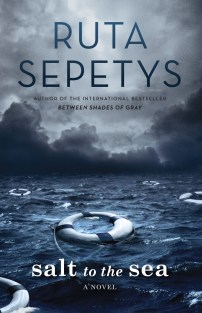
Salt to the Sea by Ruta Sepetys
Four teenage narrators, each with a unique and memorable voice, tell the story of the events leading to the worst maritime disaster you’ve never heard of: the sinking of the Wilhelm Gustloff in the Baltic Sea during the final days of World War II. Nearly 10,000 people died, most of them refugees fleeing from the Soviets. Author Ruta Sepetys brilliantly constructs an addictive historical narrative that will appeal to readers who enjoyed All the Light We Cannot See or The Nightingale. (And isn’t that almost everyone?) Don’t be put off by the YA categorization — Salt to the Sea, like The Book Thief, is perfect for both teenagers and adults.
The Wall Street Journal calls Salt to the Sea “masterfully crafted”, noting that “Ruta Sepetys seizes on this tragic and forgotten episode to create a superlative novel.”
Sepetys is now on a national publicity tour — I’m looking forward to meeting her on Monday, February 8 at the Book Stall in Winnetka, Illinois. For her event schedule, check out her website.
When Breath Becomes Air by Paul Kalanithi When Breath Comes Air is one of those books you want to give to everyone you love. If you start reading the book with a pen in hand, ready to underline your favorite passages, you’ll find yourself underlining almost the whole book. Dr. Paul Kalanithi, a 37-year-old neurosurgeon, wrote the book after he was diagnosed with terminal cancer. He didn’t quite finish, but the memoir he left behind — with a beautiful foreword from Abraham Verghese and an equally lovely epilogue written by his widow, Dr. Lucy Kalanithi — is a masterpiece.
Ann Patchett says: “It’s a brilliant piece of writing and a singular and profound piece of thinking, but it’s also more than that: When Breath Becomes Air makes us stop and think about how gorgeous life is, how heart-wrenching and brief and amazing.”
Challenger Deep by Neal Shusterman
Our YA book group at Lake Forest Book Store chose Challenger Deep because it was the 2015 National Book Award winner in the YA category. After I read the first 30 or 40 pages, I had no idea what was going on. I considered calling my co-leader and suggesting we apologize for our selection and pick another book. However, I decided to trust the National Book Award judges, and I persevered. I ended up loving this novel, which vividly recreates a teenage boy’s struggle with mental illness. The narrative switches between straightforward accounts and hallucinations, dreams, and distorted versions of reality. I don’t know if it’s ever really possible to comprehend mental illness, but Challenger Deep, more than anything I’ve ever read, helped me gain a bit of understanding.
The Lightkeepers by Abby Geni
Abby Geni’s debut novel is a literary page-turner, perfectly blending evocative writing and deft characterization with a tension-filled — and creepy — plot. The novel is worth reading just for its setting, the isolated and dangerous Farallon Islands off the coast of San Francisco. Miranda, a nature photographer, accepts a one-year assignment there, with only a few odd and unfriendly scientists for company. Not long after her arrival, one of them is found dead. Accidents happen all the time on the “islands of the dead”, but was this an accident?
The Chicago Tribune says:
Part murder mystery, part psychological thriller, part ode to one of the western world’s wildest landscapes, this dark, compelling tale is an astonishingly ambitious debut . . . In this, her first work of long-form fiction, Geni shuns predictable protocols of plot, character and setting. Taking a leap off the literary cliff is not for wimps. It’s a testament to Geni’s skills that she takes her readers with her.
My next two books will be While the City Slept: A Love Lost to Violence and a Young Man’s Descent into Madness by Pulitzer Prize winner Eli Sanders,to scratch my true crime itch, and The Forgetting Time by Sharon Guskin, because a page-turner about parental love and reincarnation sounds irresistible. How about you?
It was like when you make a move in chess and just as you take your finger off the piece, you see the mistake you’ve made, and there’s this panic because you don’t know yet the scale of disaster you’ve left yourself open to.
Kazuo Ishiguro, Never Let Me Go
Not only was it impossible to truly belong in America, but he didn’t fit in here anymore either. He was a dweller of two lands, accepted by none.
Shilpi Somaya Gowda, The Golden Son
Anil Patel, the “golden son” in Shilpi Somaya Gowda’s insightful new novel, is torn between his desire to pursue an independent life and career in the United States and his obligations to his family and community in India. The story of an immigrant feeling untethered both in his adopted country and his native land is a familiar one, but The GoldenSon offers a fresh perspective.
Anil, the eldest son of a prosperous landowner, is the first in his family to pursue higher education. As a child, he witnesses a baby girl, initially rejected by her parents because of a cleft palate, given “a smile as beautiful and perfect” as that of her siblings through the miracle of modern medicine — and through the efforts of Anil’s father, the wise village arbiter. Anil’s destiny is to become a doctor himself, as well as to follow in his father’s footsteps and negotiate all the disputes, minor and major, in his community.
As the successful eldest son in the family, Anil is unprepared for how inadequate he feels both in his roles as medical intern and village peacemaker. In an interview on “The Morning Show” on Canadian TV, Gowdi, the daughter of Indian immigrants, says her inspiration for the novel was her experience observing the tradition of the elder male as the family arbiter: “I thought it would be interesting to build a character who gets pulled into that type of role, perhaps when he’s not ready for it and doesn’t really want it.” In an interview with BookPage, she said:
I have long been intrigued by the Indian tradition of settling disputes within a community. I grew up hearing stories about lives that were changed: women granted divorces from abusive marriages, for example, before there were laws in place to protect them. Of course, not all disputes were settled happily, and afterward they had to go back to living together in the same community. It’s so different from the nearly anonymous, transactional way we administer justice.
The host of “The Morning Show” (who I doubt read the book) described The Golden Son as “‘Grey’s Anatomy’ meets ‘Slumdog Millionaire'”, which is a silly comparison because the only thing The Golden Son and “Slumdog Millionaire” have in common is that they both take place in India. However . . . fans of medical dramas (on screen or on the page) will love The Golden Son. The medical scenes, which take place in settings as varied as a busy inner-city emergency room, a high-tech cardiac catheterization lab and intensive care unit, the bedside of a cancer patient, and a makeshift clinic in a rural Indian village, are vivid and authentic. Gowda, who says she is “humbled by the nobility of the medical profession”, interviewed many patients and medical professionals as part of her research process. Her own father-in-law and brother-in-law are physicians.
When Anil begins a new life as a physician in the United States, he leaves behind not only his family, but his childhood friend, Leena. Her family, less prosperous than the Patels, arranges a marriage for her that turns out to be a colossal mistake. Gowda presents the story of Leena’s misfortunes as a parallel narrative to Anil’s story, building tension as the reader anticipates the moment when they come together.
The novel really develops momentum in the second half, as subplots involving Leena’s family and in-laws and Anil’s roommates, girlfriends, colleagues and supervisors all intertwine, with a surprising and satisfying ending. The novel both begins and ends with a chess game, with the game of chess as a metaphor for life recurring throughout the book. It’s not a subtle metaphor, but this isn’t an esoteric book. It’s a sincere, well-structured novel about, as the author notes, “the universal truths across cultures”.
I also enjoyed Gowda’s bestselling debut novel, The Secret Daughter, about an Indian girl, adopted by an American couple, who decides to return to her birth country. A fascinating in-depth interview with Shilpi Somaya Gowda, in which she discusses both her novels, as well as her background growing up in two countries (Canada and India), her writing process, the status of women in India is available as a webcast on the Amnesty International Book Club website.
New Orleans is unlike any city in America. Its cultural diversity is woven into the food, the music, the architecture – even the local superstitions. It’s a sensory experience on all levels and there’s a story lurking around every corner.
Ruta Sepetys
Most American cities name their airports for politicians (Reagan, JFK) or military heroes (Logan, O’Hare). Not New Orleans. The New Orleans airport is named after one of the 20th century’s most beloved musicians, Louis Armstrong — which signals to visitors that the city has a unique character. Tennessee Williams reportedly said, “America only has three cities: New York, San Francisco, and New Orleans. Everywhere else is Cleveland.”
We left the subzero weather behind in “Cleveland” (which in our case was Chicago) last weekend and spent three days in Tennessee Williams’s adopted city. During our food tour, which included six stops at New Orleans restaurants, we saw the house in the French Quarter where Williams wrote A Streetcar Named Desire. (I don’t think the eight miles we walked that day came even close to burning the calories we consumed!) Kenneth Holditch, Ph.D., longtime friend of Williams, co-editor of the Library of America’s editions of Williams’s works, and the author of Tennessee Williams and the South, told the New Orleans Times-Picayune that “New Orleans was created by writers and visual artists . . . Sherwood Anderson once said this is a ‘city of imagination.’”
For me, no vacation is complete without at least one bookstore visit. On our first day, we stumbled upon Beckham’s Bookshop in the French Quarter , which was everything a used bookstore should be — quirky, dusty, and packed with treasures. There was even a resident cat. My favorite section in the store was “True Crime and Rascality”. Because I’m unable to walk out of a bookstore without buying something, I picked up a copy of The House on First Street: My New Orleans Story, by Julia Reed. Reed, a journalist, got married and moved to the Garden District of New Orleans just before Hurricane Katrina struck. The New York Times critic, literary biographer Blake Bailey, gave the book a rave review despite his initial misgivings:
I really wanted to pan this book. First of all, with the exception of Walker Percy’s Moviegoer, I tend to dislike literature about New Orleans (oh the decadence! the quaintness!) . . . It’s also a Hurricane Katrina memoir. I’d considered writing my own Katrina memoir, and now I realize I probably never will.
Reed includes her “Favorite New Orleans Reads” at the back of the book. She recommends, among others, The Moviegoer (“it remains, even now, an accurate rendering of a certain subset of upper-class New Orleanians”); Bandits, by Elmore Leonard (“You can almost smell the inside of the Bourbon Street bars”); and The Feast of All Saints, by Anne Rice (“No vampires, just free people of color in pre-Civil War New Orleans”).
We rode the famous St. Charles streetcar to uptown New Orleans and visited a lovely independent bookstore, Octavia Books. I bought two more books: My New Orleans, Gone Away: A Memoir of Loss and Renewal, by Peter M. Wolf,and a signed copy of Why New Orleans Matters, by Tom Piazza. Piazza wrote his book in 2005, during “five agonizing weeks” following Hurricane Katrina. The updated edition, published in 2015, includes information about the city’s recovery. In the preface, Piazza says:
As long as New Orleans exists, it will attract the imaginative, the creative, the adventurous, and the soulful people of the world. Walking down almost any street and drinking in the cocktail of historical resonance, architectural whimsy, olfactory magic, savoring the peculiar mix of seriousness and play, of new possibilities, good and bad, around any corner, will remind you of why it is good to be alive.
Thousands of adventurous people were in evidence on Saturday afternoon during the memorial parade for David Bowie. The parade, led by the Preservation Hall Jazz Band and Arcade Fire, was announced on social media just two days ahead of time but attracted Bowie fans and curiosity seekers from all over. Even though we didn’t have appropriate attire (space suits, tutus, gold lame), we jumped into the fray and followed the parade. At one point, we were just a few feet away from Win Butler of Arcade Fire, who was dressed in a hot pink suit and singing Bowie’s “Heroes”.
Poster for the American Library Association marketing campaign, 1987
Apparently David Bowie was a world-class reader. Geoffrey Marsh, who curated the Victoria & Albert Museum retrospective exhibit of Bowie’s life, describes Bowie as “a voracious reader” who often read as much as “a book a day”. Bowie told Vanity Fair that reading was his idea of perfect happiness — and that the quality he most admires in a man is “the ability to return books”. According to the London Telegraph, Bowie (“a remarkably well-read man”) brought hundreds of books with him when he went on tour: “I had these cabinets– it was a travelling library — and they were rather like the boxes that amplifiers get packed up in . . . I have an extraordinarily good collection of books.” Readers who are interested in Bowie’s 100 favorite books can check out the list here. The books, both fiction and nonfiction, cover an enormous range of territory; art, music, history, religion, psychology, and poetry. I haven’t read (or even heard of) many of them, but we do share one favorite: Fran Lebowitz’s Metropolitan Life.
John Kennedy Toole’s A Confederacy of Dunces, set in New Orleans, appears on Bowie’s list. I’ve never read this book, which is often referred to as a “cult classic” and won the Pulitzer Prize in 1981. Walker Percy said, “It is a great pity that John Kennedy Toole is not alive and well and writing. But he is not, and there is nothing we can do about it but make sure that this gargantuan tumultuous human tragi-comedy is at least made available to a world of readers.” If it weren’t for Percy, A Confederacy of Dunces would most likely never have been published. He was teaching at Loyola University in New Orleans when Toole’s mother brought him her late son’s novel. Percy championed the book, and Louisiana State University Press published it. The book was the first novel from an academic press to win a Pulitzer — beating out Percy’s novel, The Second Coming.
Rhoda Faust, owner of Maple Street Bookshop in New Orleans, also helped Toole’s mother find a publisher. She told the Times-Picayune that the novel “captures New Orleans better than anything else on the face of the earth ever has”, but that it’s popular with readers everywhere: “Humor translates . . . the people within AConfederacy of Dunces are going through the same things other people and their families are going through.”
Susan Larson, author of The Booklover’s Guide to New Orleans and host of the local NPR affiliate’s show on books, “This Reading Life”, says: “Few American cities have such a visible and inviting literary culture, played out on its streets every day.” Larson often reads two books a day — when she was a judge for the Pulitzer, she had to read 300 books in six months. That New Orleans reader could put the rest of us — including David Bowie — to shame!

 Several years ago, Jeff and I visited Dublin for a few days. It was a perfect trip for a history buff (Jeff) and a literature lover (me). We explored the Dublin Writers’ Museum, saw the Joyce statue on O’Connell Street, waited in line to see the Book of Kells at Trinity College, toured Kilmainham Gaol (Jeff’s idea, not mine), went to several plays, and stopped by more than our share of pubs. (We didn’t, however, retrace Leopold Bloom’s route through the city on the guided walk offered by the Joyce Cultural Centre. ) As someone who relied on the CliffsNotes to get through Ulysses, I didn’t feel entitled to take that tour!) We did have dinner at the Winding Stair on the River Liffey. Downstairs is one of the oldest independent bookshops in Dublin and upstairs is a restaurant serving “good, old-fashioned home cooking”.
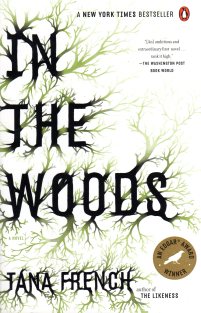 I always like to read something about the place I’m visiting, so on the flight to Dublin I read In the Woods by Tana French. It’s a murder mystery/psychological thriller, featuring two detectives from the Dublin Murder Squad trying to solve two murders that have taken place 20 years apart. I’m not usually much of a mystery reader, but this one captivated me because of the gorgeous writing and the evocation of modern Ireland, in addition to the complex puzzle of two parallel crimes. One of those crimes is never solved; this is not a formulaic mystery. In an interview, Tana French describes her favorite mystery novels:
 If I had to choose a favorite Irish author, it would be a tie between Colm Toíbín and Sebastian Barry. When you read one of Barry’s novels, you know you are reading the work of a poet. (Barry is in fact the author of two collections of poetry and numerous plays, in addition to eight novels.) The New York Times says, “Mr. Barry has said that his novels and plays often begin as poems . . . but his language never clots the flow of his story; it never gives off a whiff of labor and strain. It is like a song, with all the pulse of the Irish language, a song sung liltingly and plaintively from the top of Ben Bulben into the airy night.” You can choose at random almost any passage from any one of his novels and be struck by the beauty of the language, but here’s one of my favorites, from A Long Long Way:
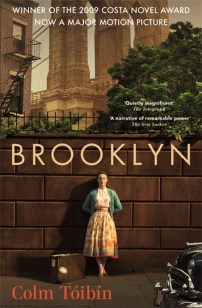 Colm Toíbín, like Sebastian Barry, is a versatile wordsmith — he’s written novels, short stories, essays, plays, poems, criticism, and nonfiction. I haven’t read all his books, but I loved The Master, The Testament of Mary, and Brooklyn. Although Toíbín’s work has been shortlisted for the Man Booker Prize several times and has received plenty of critical acclaim, he hit the jackpot recently when his 2009 novel, Brooklyn, was made into a successful movie that received three Academy Award nominations — Best Picture, Best Actress, and Best Adapted Screenplay. ToíbÍn’s deceptively simple story of a young Irish immigrant, Eilis, who comes to the United States in the 1950s is a powerful meditation on love and belonging. Horribly homesick at first, Eilis falls in love and begins to make a life for herself in New York. A tragedy calls her home to Ireland and she is torn between her two lives. Toíbín’s description of Eilis’s loneliness as a new immigrant will resonate with anyone who has ever felt friendless and alone: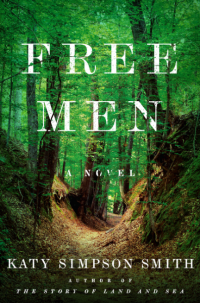
 Smith said “trying to get in the heads of 18th century men was a thrill for me.” While I thought the men’s voices were authentic for the most part, in some instances the characters slip into the mindsets of modern-day Americans. For example, would an 18th century slave say, “. . . this was not a life but a system, and for the first time my boyish grief took on the color of rage”?
 As soon as March arrives, customers start asking for spring break reading recommendations for themselves and their families. You’d think it would be easy to come up with a list of fun “beach reads”, but every year that request flummoxes me. I understand that lots of people want to read lightweight books while on vacation, but far too many books pegged as “escape” reading are too predictable to be entertaining. I don’t think I’m a book snob, but if I’m going to spend six or more hours reading a book, I want to feel I’ve been enlightened as well as entertained. I want to gain something, whether it’s a little better understanding of human nature or concrete knowledge.
 H is for Hawk by Helen Macdonald
 The Residence: Inside the Private World of the White House by Kate Andersen Brower
 The Swans of Fifth Avenue by Melanie Benjamin
 This Was Not the Plan by Cristina Alger
 How many aspiring writers have been told to “write what you know”? If Pat Conroy was given that timeworn advice, he’s certainly taken it to heart. Both his novels and his memoirs are about what he knows — growing up as the son of an abusive Marine Corps fighter pilot, attending the Citadel as a basketball player and budding writer, losing a brother to suicide, coping with a sister’s mental illness. In his latest memoir, The Death of Santini, Conroy says, ” My books have always been disguised voyages into that archipelago of souls known as the Conroy family.”
 Conroy disappeared for years, and finally published Beach Music in 1995. I wanted to love the book, but found I couldn’t get past the flowery prose and stilted dialogue. So it was with trepidation that I picked up My Losing Season several years later. On the surface, this memoir recounts Conroy’s senior year playing basketball at the Citadel, but it’s really about his relationship with his father, his coach, and his teammates, and finding his voice as a writer.
 The Death of Santini covers some familiar ground — the relationship between Conroy and his terrifyingly abusive father, Don Conroy (a.k.a. “The Great Santini”). But this is a story of redemption — Don Conroy has transformed himself from a monster into a loving father and grandfather. At the end of The Prince of Tides, Tom Wingo (Pat Conroy’s alter ego), says, “I learned that I needed to love my mother and father in all their flawed, outrageous humanity. And in families there are no crimes beyond forgiveness. But it is the mystery of life that sustains me now.” Fact reflects fiction in The Death of Santini, for Conroy shows us how he is able to forgive Don Conroy for his vicious cruelty towards his family. The writing of the book was a necessary part of Conroy’s healing; he says in the prologue:
 Back in the 1980s, film critic David Denby wondered “how anyone could be hurt by reading a good book”. The controversy at the time, which continues to this day, was how we define a “good book” and whether the traditional Western classics are relevant in our multicultural society. The 48-year-old Denby returned to his alma mater, Columbia University, and spent a full academic year studying the Western canon. He wrote a book, Great Books: My Adventures with Homer, Rousseau, Woolf, and the Indestructible Writers of the Western World, about how the experience reinvigorated his intellectual life.
 I read this book just after I finished another book about American teenagers, American Girls: The Secret Lives of American Teenagers, by Nancy Jo Sales, which is truly one of the most depressing books I’ve ever read. If Sales is to be believed — and I hope with all my heart she’s not — the lives of most teenage girls revolve around taking pictures of themselves and posting them online, hoping for validation. In this book, physical appearance is everything, the search for male approval is paramount, and feminism is completely dead. A recent Wall Street Journal review said: “The secret life of teenagers sometimes seems entirely a response to nude pictures and requests for them—a response, that is, to male adolescent desire, as it shows up digitally. But female vanity is also at play.”
 Dancers are just flowers, and flowers grow without any literal meaning, they are just beautiful. We’re like flowers. A flower doesn’t tell you a story. It’s in itself a beautiful thing.
 Doesn’t almost every little girl dream of becoming a ballerina? My dream died quickly, after several months of patient instruction from Mrs. Goneconto at the local YMCA. I was disappointed to learn at the first class that I was not immediately issued a tutu and toe shoes, and things went downhill from there. Mira and her fellow “bunheads” exist on a different level, pushing themselves to their physical and emotional limits in what Wilson calls “pure devotion to an ideal”.
 For generations, little girls have dreamed of becoming ballerinas — and some of them have suffered, physically and emotionally, as they’ve pursued their ambitions. Certain parents (and not just ballet parents) are willing to sacrifice and also to let their children experience physical and emotional harm in the hopes of raising superstars. Adults, like Maurice, can become obsessed with the beauty of ballet. What is it about ballet that inspires such passion?
 “Too many words” was how a customer recently characterized a book on the bestseller shelf in our store. I knew exactly what she meant. Many nonfiction books fit this description. They should have been magazine articles, but their authors were determined to stretch the material into full-length books. I’ve also read plenty of novels that would have benefited from the most valuable advice in Strunk and White’s classic writing guide, The Elements of Style: Omit needless words.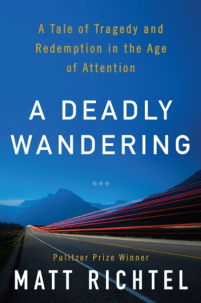
 Salt to the Sea by Ruta Sepetys
 When Breath Comes Air is one of those books you want to give to everyone you love. If you start reading the book with a pen in hand, ready to underline your favorite passages, you’ll find yourself underlining almost the whole book. Dr. Paul Kalanithi, a 37-year-old neurosurgeon, wrote the book after he was diagnosed with terminal cancer. He didn’t quite finish, but the memoir he left behind — with a beautiful foreword from Abraham Verghese and an equally lovely epilogue written by his widow, Dr. Lucy Kalanithi — is a masterpiece.
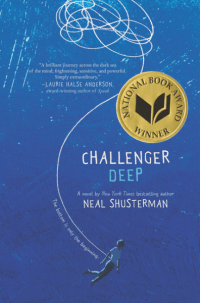 Challenger Deep by Neal Shusterman
 The Lightkeepers by Abby Geni
 Anil Patel, the “golden son” in Shilpi Somaya Gowda’s insightful new novel, is torn between his desire to pursue an independent life and career in the United States and his obligations to his family and community in India. The story of an immigrant feeling untethered both in his adopted country and his native land is a familiar one, but The Golden Son offers a fresh perspective.
 I also enjoyed Gowda’s bestselling debut novel, The Secret Daughter, about an Indian girl, adopted by an American couple, who decides to return to her birth country. A fascinating in-depth interview with Shilpi Somaya Gowda, in which she discusses both her novels, as well as her background growing up in two countries (Canada and India), her writing process, the status of women in India is available as a
 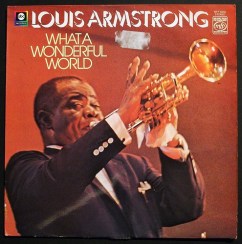 Most American cities name their airports for politicians (Reagan, JFK) or military heroes (Logan, O’Hare). Not New Orleans. The New Orleans airport is named after one of the 20th century’s most beloved musicians, Louis Armstrong — which signals to visitors that the city has a unique character. Tennessee Williams reportedly said, “America only has three cities: New York, San Francisco, and New Orleans. Everywhere else is Cleveland.”
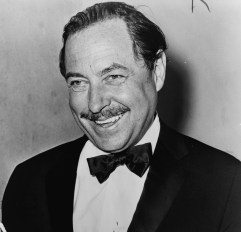 We left the subzero weather behind in “Cleveland” (which in our case was Chicago) last weekend and spent three days in Tennessee Williams’s adopted city. During our food tour, which included six stops at New Orleans restaurants, we saw the house in the French Quarter where Williams wrote A Streetcar Named Desire. (I don’t think the eight miles we walked that day came even close to burning the calories we consumed!) Kenneth Holditch, Ph.D., longtime friend of Williams, co-editor of the Library of America’s editions of Williams’s works, and the author of Tennessee Williams and the South, told the New Orleans Times-Picayune that “New Orleans was created by writers and visual artists . . . Sherwood Anderson once said this is a ‘city of imagination.’”
 For me, no vacation is complete without at least one bookstore visit. On our first day, we stumbled upon Beckham’s Bookshop in the French Quarter , which was everything a used bookstore should be — quirky, dusty, and packed with treasures. There was even a resident cat. My favorite section in the store was “True Crime and Rascality”. Because I’m unable to walk out of a bookstore without buying something, I picked up a copy of The House on First Street: My New Orleans Story, by Julia Reed. Reed, a journalist, got married and moved to the Garden District of New Orleans just before Hurricane Katrina struck. The New York Times critic, literary biographer Blake Bailey, gave the book a rave review despite his initial misgivings:
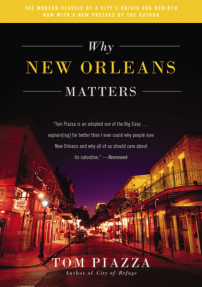 We rode the famous St. Charles streetcar to uptown New Orleans and visited a lovely independent bookstore, Octavia Books. I bought two more books: My New Orleans, Gone Away: A Memoir of Loss and Renewal, by Peter M. Wolf,and a signed copy of Why New Orleans Matters, by Tom Piazza. Piazza wrote his book in 2005, during “five agonizing weeks” following Hurricane Katrina. The updated edition, published in 2015, includes information about the city’s recovery. In the preface, Piazza says:
 Thousands of adventurous people were in evidence on Saturday afternoon during the memorial parade for David Bowie. The parade, led by the Preservation Hall Jazz Band and Arcade Fire, was announced on social media just two days ahead of time but attracted Bowie fans and curiosity seekers from all over. Even though we didn’t have appropriate attire (space suits, tutus, gold lame), we jumped into the fray and followed the parade. At one point, we were just a few feet away from Win Butler of Arcade Fire, who was dressed in a hot pink suit and singing Bowie’s “Heroes”.
 John Kennedy Toole’s A Confederacy of Dunces, set in New Orleans, appears on Bowie’s list. I’ve never read this book, which is often referred to as a “cult classic” and won the Pulitzer Prize in 1981. Walker Percy said, “It is a great pity that John Kennedy Toole is not alive and well and writing. But he is not, and there is nothing we can do about it but make sure that this gargantuan tumultuous human tragi-comedy is at least made available to a world of readers.” If it weren’t for Percy, A Confederacy of Dunces would most likely never have been published. He was teaching at Loyola University in New Orleans when Toole’s mother brought him her late son’s novel. Percy championed the book, and Louisiana State University Press published it. The book was the first novel from an academic press to win a Pulitzer — beating out Percy’s novel, The Second Coming.
 Books on the Table