The Tusk That Did the Damage — Book Review

9780385354127-204x300

That is because of the tusk, the boy said, his eyes watering. It was the tusk that did the damage. What if I return it? Can’t I reverse the curse?

Oh my sweet stupid son, there is no reversing a curse, everyone knows that. But who says we cannot turn this curse into a blessing?

Tania James, The Tusk That Did the Damage

In the 1990s, a rogue elephant terrorized the countryside of northeastern India, killing 38 people. At first, journalist Tarquin Hall thought the reports of the elephant’s vengeful and cruel behavior were “implausible”:

“Babar is riding happily on his mother’s back when a wicked hunter, hidden behind some bushes, shoots at them.”

Elephants do not breathe smoke and fire, they are not gods, and they certainly do not go around in the middle of the night knocking down people’s homes and singling out particular human beings for premeditated murder. Elephants are kindly, intelligent, generally good-natured creatures, like Babar and Dumbo.

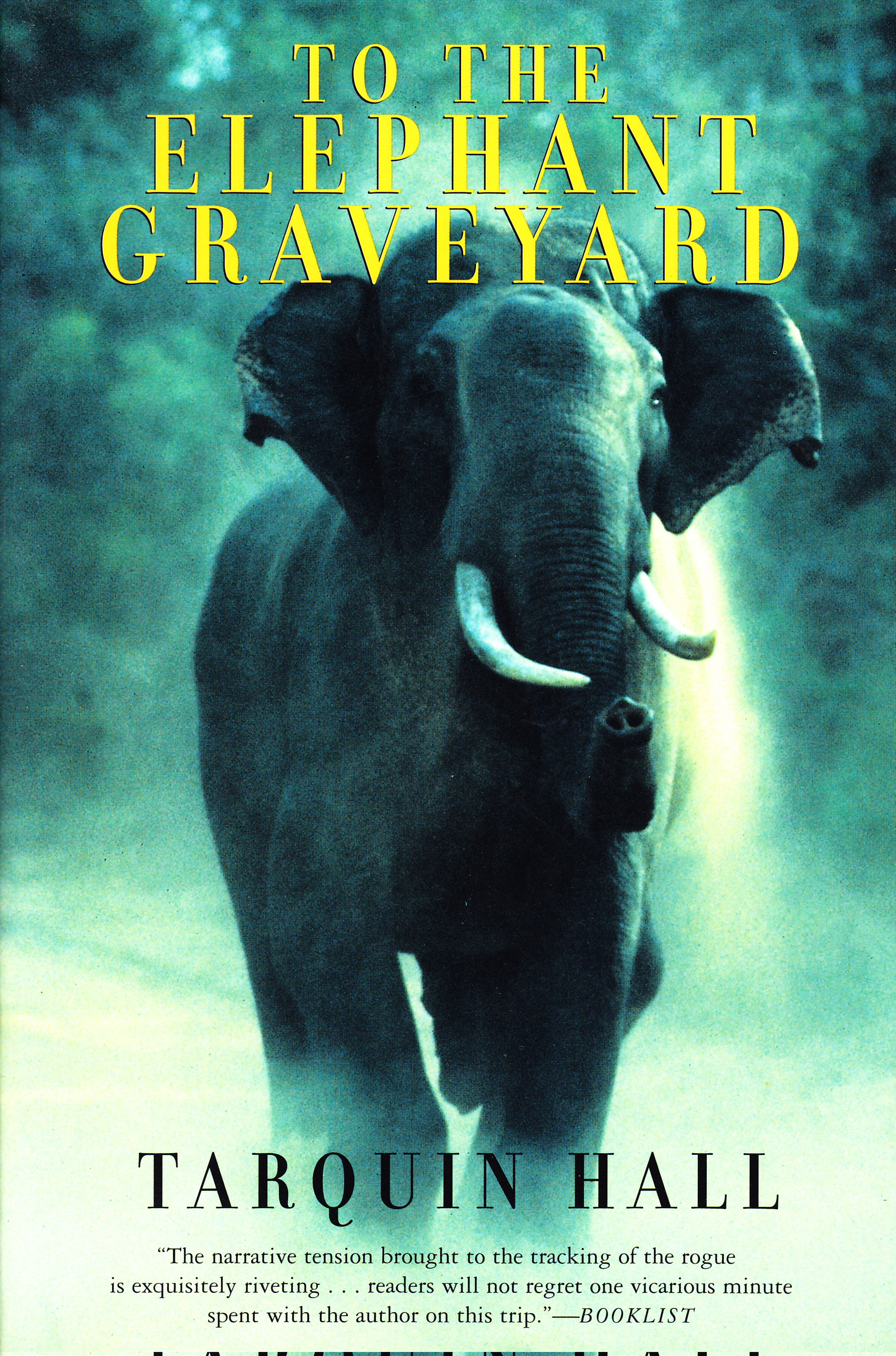
Hall wrote a book, To the Elephant Graveyard, about the Indian government’s hunt for the murderous elephant and the changing relationship between human beings and elephants caused by the destruction of natural habitats. In an interview with the Los Angeles Times, Tania James explains how Hall’s book provided inspiration for The Tusk That Did the Damage, her novel about elephant poaching in southern India:

9780802138354I was reading a nonfiction book called To the Elephant Graveyard . . . and it makes mention of a real-life elephant that used to bury its victims. The elephant would carry the body for miles beforehand, and in some cases, if people tried to take the body away, he would bring it back. Or he would guard the burial site . . .There was something kind of human in its madness, I guess, and I know this is kind of a human-centric way of thinking about it, but there was something recognizable about that madness that made me want to know where that elephant had come from. I wanted to know the tipping point that led to a life as a violent rogue elephant.

Read more

10 Questions for Thomas Christopher Greene, Author of The Headmaster’s Wife (Plus a Giveaway!)

Headmaster's Wife-2
Paperback cover

Booksellers often fall in love with a terrific new book, only to find that the hardcover version is a tough sell. We console ourselves by saying that the book will really “take off” in paperback, and very often that’s true. Certain books, through a combination of serendipity and quality, sell enormously well in hardcover for years without being released in paperback. (Think of Gone Girl, The Goldfinch, Unbroken . . .) But most paperback releases are scheduled for 9 to 12 months after hardcover publication, depending on sales. Some of those paperbacks do sell much, much better than their hardcover versions, especially those that appeal to book clubs.

Author Nichole Bernier interviewed publishers, editors, authors, and literary agents for an article in The Millions about relaunching books in paperback, learning that “A paperback isn’t just a cheaper version of the book anymore. It’s a makeover. A facelift. And for some, a second shot.” Melanie Benjamin, whose paperbacks have been very popular with book club audiences, observed that “‘ . . .  almost every book these days gets a new cover for the paperback. It’s almost as if they’re doing two different books for two different audiences, with the paperback becoming the ‘book club book.'” M.J. Rose, of the book marketing firm Authorbuzz, said, “‘I think that as opposed to a re-release being less important, it’s more than ever important because it gives a book a second chance with a new cover and lower cost, plus you can use all the great reviews the hardcover got.'”

9781250038944
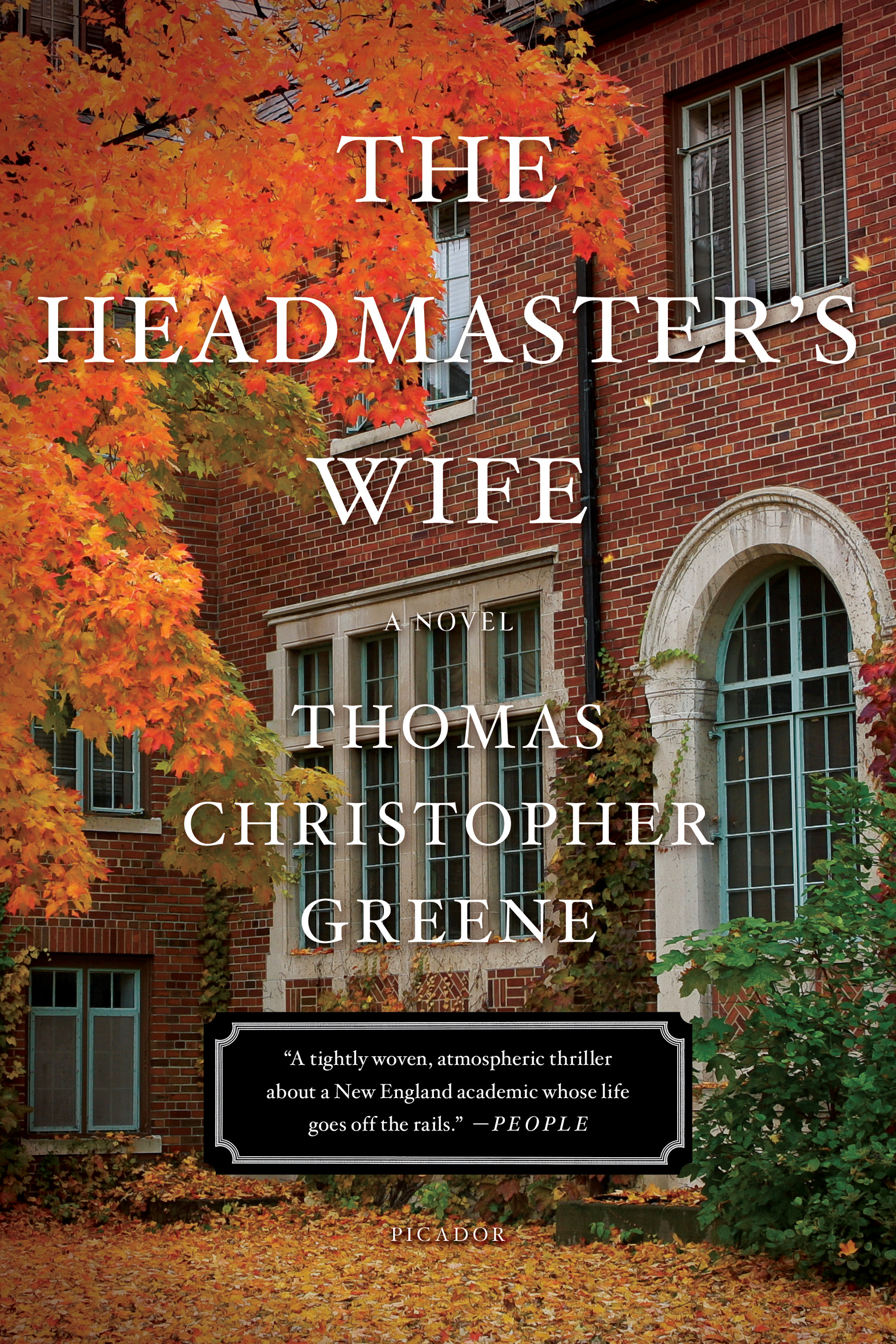
Hardcover jacket

The Headmaster’s Wife, by Thomas Christopher Greene — one of my 10 Favorite Books of 2014 — was just released in paperback. The publisher must think that ivy-covered brick buildings appeal to book clubs, because only one minor change appears on the cover: Richard Russo’s blurb has been replaced with a quote from a People magazine review. Too bad, because what Russo says is spot-on: “I read the second half of The Headmaster’s Wife with my mouth open, my jaw having dropped at the end of the first half. Thomas Christopher Greene knows how to hook a reader and land him.”

The Headmaster’s Wife opens when Arthur Winthrop, headmaster of a New England boarding school, is found wandering naked in Central Park. As he begins to tell his story to the police, it becomes clear to the reader that Arthur is an unreliable narrator. Just how unreliable he is only becomes obvious about halfway through the book. At this point Arthur’s wife lends her perspective to the story, and the reader must determine whose version of the truth to believe. Read more

Life from Scratch — Book Review

After a good dinner, one can forgive anybody, even one’s own relations.
Oscar Wilde

No one who cooks, cooks alone. Even at her most solitary, a cook in the kitchen is surrounded by generations of cooks past, the advice and menus of cooks present, the wisdom of cookbook writers.
Laurie Colwin

6201374Sasha Martin, creator of the popular blog Global Table Adventure, didn’t set out to write a memoir about what she calls her “rough background”. Martin intended to chronicle the four years she spent cooking meals from every country in the world. She envisioned a book filled with “sweet stories about overcoming pickiness”, not one that brought back painful memories of her difficult upbringing.  But when Martin’s editor asked her what inspired her to begin her ambitious cooking project, Martin realized that Life from Scratch was going to be about much more than food:

Every time I tried to answer her, memory pushed me further and further back in time – all the way to the foods and stories of my childhood. Introspection (and lots of tears) brought me face to face with my rough and tumble childhood – the string of foster homes, the painful separation from my mother, and the tragic death of a beloved family member.

Food, specifically cooking with my mother, had been an important anchor early on but as an adult I felt disconnected from that experience. As I worked to build my own family, cooking the world had become much more than trying new food – it became a path towards healing. It was my way of working out what unconditional love and belonging meant. Reflected in the desire for my daughter to love her world, I also saw my own need to love my world and feel loved by it. After a childhood in turmoil I was hungry for peace.

Many of Martin’s early childhood memories take place in the “warm, fragrant space” of the kitchen in a tiny apartment in a working-class suburb of Boston. Martin’s eccentric mother invents creative meals from the meager groceries she’s able to obtain, using every scrap and telling Martin and her brother that “a little mold never hurt anyone”.  I was reminded of Ruth Reichl’s first memoir, Tender at the Bone, in which she dubs her unbalanced mother “The Queen of Mold”. Martin’s mother, unlike Reichl’s, is actually a good cook, serving delicacies like Hungarian crepes and a 21-layer German Tree Cake. Readers will debate whether she’s a good mother. Certainly, she faces many challenges and makes life difficult for her children — but how much of the family’s turbulence is within her control?

Read more

Life is Short — 9 Books I’m Never Going to Read

My books have been part of my life forever. They have been good soldiers, boon companions. Every book has survived numerous purges over the years; each book has repeatedly been called onto the carpet and asked to explain itself. I own no book that has not fought the good fight, taken on all comers, and earned the right to remain.
Joe Queenan

All the books we own, both read and unread, are the fullest expression of self we have at our disposal. . . But with each passing year, and with each whimsical purchase, our libraries become more and more able to articulate who we are, whether we read the books or not.
Nick Hornby

IMG_1221Every now and then, when my bookshelves start to overflow, I get the urge to purge. I never do a very good job. Professional organizers recommend making three piles: “keep”; “toss”; and “donate”. The “toss” pile is usually very small, because I feel terrible throwing away a book unless it is truly falling apart. I can almost always fill a bag with books to donate, but I end up re-shelving dozens of books that a more ruthless culler would donate without a second thought. My rule of thumb is that I feel any ambivalence at all, the book gets to stay. I’m not listening to the advice Marie Kondo offers in The Life-Changing Magic of Tidying Up , which is to keep no more than 30 books in a home library and to house that library in a closet.

I’ve realized that I own many books that have survived multiple purges. If I’m going to be honest, I have to admit I will never read these books. They are no longer books to be read; they are decorative objects. The question I’ve decided to ask about every unread book I own is whether I would carry it on a trip. (Keep in mind I have no problem lugging hardcover books wherever I go. I carried In the Kingdom of Ice on a two-week trip to Europe last fall and I was happy to have it with me.)

So here are 9 hardcover books I have considered reading many times but I know I will never read. I tried hard to part with at least 10, but I just couldn’t. (I have an easier time giving away paperbacks.) They’re packed in a shopping bag, ready to be dropped at the back door of the Lake Forest Library. This is the collection point for the Friends of the Library annual book sale, and there is a large sign warning potential used book thieves that security cameras are in use. I wonder if some people think that because they’re donating some books, they get to take a few as well. Those people must be even worse at cleaning out their bookshelves than I am!

If anyone thinks I’m making a big mistake getting rid of any of these books, let me know . . .
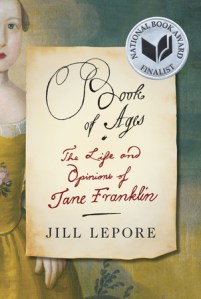
9780307958341Book of Ages: The Life and Opinions of Jane Franklin by Jill Lepore
A National Book Award finalist in 2013, Book of Ages came highly recommended from a trusted source — but whenever I’m deciding what to read next, I look at its lovely cover and then choose something else.

Thrive: The Third Metric to Redefining Success and Creating a Life of Well-Being, Wisdom, and Wonder by Arianna Huffington
A publisher sent me Thrive as part of an ill-conceived program called “Blogging for Books”.  I don’t even understand the title. What does she mean by “third metric”? I guess I would have to read the book to find out, but I’m not that curious.

Artisan Bread in Five Minutes a Day: The Discovery That Revolutionizes Home Baking by Jeff Hertzberg and Zoë François
I bought this book seven or eight years ago under the misguided impression I would want to spend any time at all (even five minutes) baking bread.  It’s never been opened.

Every Day is for the Thief by Teju Cole
This book, about a Nigerian immigrant in New York who returns to his home country, received a lot of critical acclaim, as did its predecessor, Open City. However — and this is a deal-breaker for me — it is about an unnamed character.

The Love of My Youth by Mary Gordon
Over the past few years, I’ve picked it up, put it down . . . picked it up, put it down . . . Time for The Love of My Youth to find a new home where it will be appreciated.970b55d1c222cd0f5b577d2f96aab9d5
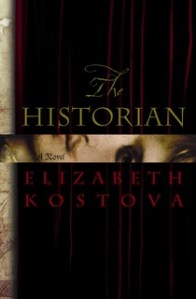
The Historian by Elizabeth Kostova
How on earth did I end up with a book about vampires on my shelf, even a supposedly literary one? I did consider keeping The Historian for a minute, because I came across this quotation while flipping through the book: “It was good to walk into a library again; it smelled like home.”

The Private Life of Chairman Mao by Dr. Li Zhisui
This 750-page book, which was written by Mao’s personal physician, was given to me in 1996. I think it’s safe to say I’ll never read it. Especially since I just skimmed the first chapter and learned more than I wanted to know about Mao’s lack of oral hygiene.

Outlander by Diana Gabaldon
I’ve had this book so long that the pages have turned yellow. People love this series, I know. I started it, and it’s just not for me; I hate time travel.

The Kid: The Immortal Life of Ted Williams by Ben Bradlee, Jr.
I never intended to read this book, but I thought my husband might like it. What was I thinking? He’s not going to read an 864-page “epic biography” of Ted Williams, no matter how good it is.

Oh, and by the way — in the spirit of full disclosure, I have to add that I didn’t personally carry In the Kingdom of Ice through Holland, Belgium, and France. I took every opportunity to sneak it into my husband’s bag. I think he would say that it was worth bringing with us, because he enjoyed it as much as I did.


The Half Brother — Book Review

9780385531955The Half Brother tells a familiar story: growing up at a New England boarding school. What makes the novel fresh and original is that it focuses on the coming of age of a young teacher.  In the beginning of the book, Charlie Garrett is not much older than his students:

Teaching English at Abbott was my first job, right out of college . . . for me the idea of being employed at all, at a job that entailed skill and responsibility, was unreal, ludicrous. The only time I felt even slightly proficient at life was when I was holding a book in my hand.

Many novels are set at schools, but I’ve read few that capture the essence of what goes in on the classroom as well as The Half Brother. Charlie has received no formal training as a teacher, and is initially terrified of his students. He develops a persona, “a tweedy, knowledgeable, unflappable self”, and discovers that he actually has a gift for teaching:

At the window of my classroom, looking out, I was in the prow of a landship, forging ahead with my new self, built on the scaffolding of these names; then I turned around and my own energy went forth, joined theirs, became something new and larger. I had not expected to feel my own self slowly emerging as I tried to draw out theirs. I had not expected to love anyone, is what I’m saying. Sometimes they looked at me in amazement at what came out of their mouths.

As a new teacher, Charlie is drawn to one of his students, May Bankhead, who is a “faculty brat” — the daughter of the school chaplain. They correspond with each other after May’s graduation, and when she returns to campus several years later to care for her dying father, May and Charlie finally admit to themselves what they’ve always felt for each other.

Later, May becomes a teacher at Abbott herself — and so does Charlie’s younger half-brother, Nicky. Charlie has always been protective of Nicky, who is brilliant, handsome, and popular, yet strangely vulnerable. The inevitable triangle follows– and that’s all that I can tell you about the plot of The Half Brother, because the plot twists — which do not rely on unreliable narrators — are truly surprising. Read more

WWW Wednesday — Staff Picks

9780761178422What did you just finish reading? What are you currently reading? What do you think you’ll read next?

Today, at our monthly meeting, our staff discussed those very questions. Our meetings are supposed to begin at 8:00 a.m., and we rush to get through as many book reviews as possible before the store opens at 9:30.

Sheet Pan Suppers, by Molly Gilbert, has been a hit with our staff and customers, although clearly the title is a bit of a misnomer — this morning we sampled the raspberry white chocolate scones, which were delicious! (The subtitle of this great cookbook is 120 Recipes for Simple, Surprising, Hands-Off Meals Straight From the Oven, Plus Breakfast, Desserts, and Snacks Too!) I noticed that the scones sat untouched for the first half of the meeting, as our health-conscious booksellers delicately nibbled on clementines, but that somehow by the end of the meeting the scones were almost gone.

What else have we read recently?9781402298684

Last week was a great reading week for me — I finished two debut novels that I absolutely adored. The Magician’s Lie, by Greer Macallister, is a historical novel about a young, female magician (the “Amazing Arden”) at the turn of the 20th century, who is accused of murder. She is captured and interrogated by a country sheriff who has problems of his own, and during the course of one long night in a rural police station, we learn about the magician’s past. How did an aspiring dancer, born into a wealthy family, end up running a successful traveling magic show — and running for her life? It’s a terrific period piece, with a murder mystery and just a touch of the supernatural. If you enjoyed Water for Elephants, you’ll love this book.

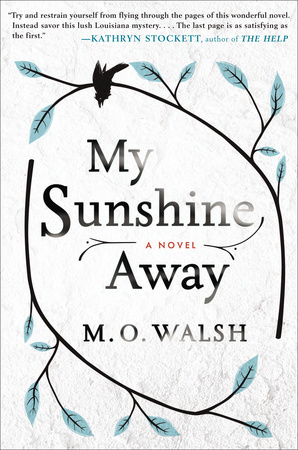
9780399169526I can’t say enough good things about My Sunshine Away, by M.O. Walsh (due February 10).  During the summer of 1989, the narrator of My Sunshine Away is fourteen years old and in love with his neighbor on Piney Creek Road in Baton Rouge, Louisiana, Lindy Simpson. When Lindy becomes the victim of a rape, everything changes. The narrator finds himself, along with other neighbors, interrogated about the crime:

Don’t believe what you see on the crime shows today. No single hairs were tweezed out of Old Man Casemore’s lawn. No length of rope was sent off to a lab. No DNA was salvaged off the pebbles of our concrete. And although the people of Woodland Hills answered earnestly every question that was asked of them, although they tried their best to be helpful, there was no immediate evidence to speak of.

Although My Sunshine Away is suspenseful — sometimes almost unbearably so — it’s really a coming of age story. It’s about an immature, self-centered boy becoming an adult with integrity. As he recounts the pivotal events of his youth, the narrator’s voice is authentic and compelling. At one point, he reflects on the nature of nature of memory:

And it is not until times like these, when there are years between myself and the events, that I feel even close to understanding my memories and how the people I’ve known have affected me. And I am often impressed and overwhelmed by the beautiful ways the heart and mind work without cease to create this feeling of connection.

Although I’ve never been to Baton Rouge, I felt as if I had after reading Walsh’s lyrical descriptions of this singular place. Walsh, who is the director of the Creative Writing Workshop at the University of New Orleans, clearly heeds every creative writing teacher’s advice: “Show, don’t tell.” He shows us a setting and characters that are as vivid as any I’ve encountered on the page. The novel reminded me in some ways of Alice Sebold’s The Lovely Bones — but without the murder and the accompanying trip to heaven, and with a great deal more wisdom. Read more