Seen at the Beach

woman_reading_on_the_beachThe beach is not a place to work; to read, write or to think . . . too warm, too damp, too soft for any real mental discipline or sharp flights of spirit.
Anne Morrow Lindbergh, Gift from the Sea

I’m sorry, Mrs. Lindbergh, but I respectfully disagree. Maybe my beach reading doesn’t require “real mental discipline”, but the beach gives me a sense of being removed from the rest of the world that makes it easy to disappear into the alternate reality of a book. The crashing waves and high-flying clouds are a soothing backdrop, helping me concentrate on the pages in front of me.

Psychotherapist Robin Rosenberg agrees that beach vacations are ideal for reading:

“In our regular lives we’re all over-scheduled, and probably stressed,” says Rosenberg. In addition to that stress, Rosenberg refers to the heavy “cognitive load” we carry each day—the constant need to sort and weigh information in an overstimulated environment. “When you’re sitting on a beach, the cognitive load is very low,” says Rosenberg. “You have time to wonder, to let your mind wander, to be really curious, to be introspective if you’re an introspective person.”

Of course, no matter how absorbing a book may be, every so often I have to get up and stretch my legs. During last week’s vacation in Florida, I got off my lounge chair not only for meals ,but to make sure I got in my 10,000 steps. As I walked on the beach, I took note of what other beachgoers were reading. Contrary to what you’d expect, very few people were reading the kind of books that are thought of as “beach reads” — mass market mysteries and romances. Hardcovers outnumbered paperbacks by about 2:1, and I didn’t see many e-readers. Here’s an incomplete list of the books I saw on the beach:

162224Most popular book:
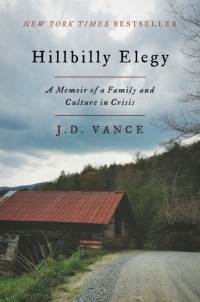
Hillbilly Elegy: A Memoir of a Family and Culture in Crisis by J.D. Vance
I saw at least five people reading this book, which is currently #1 on the New York Times bestseller list. (One of them was my husband.)

Book that I have had in a pile at home for months but haven’t read:
The Trouble with Goats and Sheep by Joanna Cannon

Book that I know I should read but haven’t; 2016 National Book Award winner:
The Underground Railroad by Colson Whitehead

Debut novel that I loved 15 years ago and had totally forgotten about:
Crow Lake by Mary Lawson

Psychological thriller that a lot of people liked but I didn’t:
Luckiest Girl Alive by Jessica Knoll

20897517One of my all-time favorite nonfiction books:
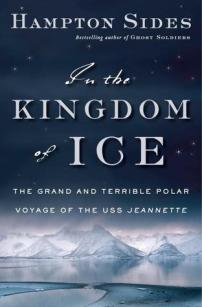
In the Kingdom of Ice: The Grand and Terrible Polar Voyage of the USS Jeannette by Hampton Sides

The newest book on the beach (published on February 7):
Black Edge: Inside Information, Dirty Money, and the Quest to Bring Down the Most Wanted Man on Wall Street by Sheelah Kolhatkar

The oldest book on the beach, and the only classic (published in 1934):
Tender is the Night by F. Scott Fitzgerald

The second-oldest book on the beach (published in 1984)
The Last Lion: Winston Spencer Churchill: Visions of Glory, 1874-1932) by William Manchester

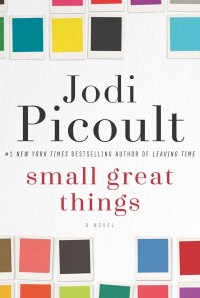
small-great-things-hc-400wBest Jodi Picoult novel in a long time, if you can ignore the preachy message:
Small Great Things by Jodi Picoult

Perfect beach reading, with self-contained chapters:
Outliers: The Story of Success by Malcolm Gladwell

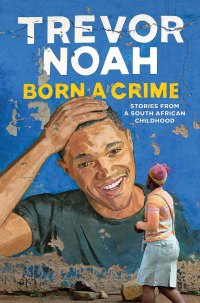
trevor-noah-born-a-crimeGreat book for book clubs:
Born a Crime: Stories from a South African Childhood by Trevor Noah

Book that no one should read on the beach, or even bring on vacation:
The Lose Your Belly Diet: Change Your Gut, Change Your Life by Travis Stork

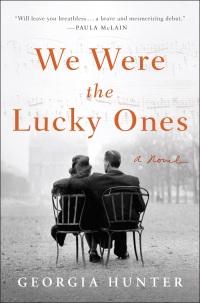
9780399563089And what did I read? My favorites were A Piece of the World by Christina Baker Kline (complete review coming next week) and We Were the Lucky Ones by Georgia Hunter. Hunter’s debut novel is the heart-wrenching story of an extended Polish family (five grown siblings, their parents, and spouses) who are separated during World War II. Miraculously, all survive after years of unspeakable suffering. The novel is based on the experiences of the author’s family, and is a tribute to their courage — and luck.

More reviews to come in the next few weeks . . .

10 Books to Read in Honor of Lincoln’s Birthday

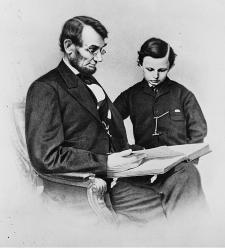
a26tlincolnAll I have learned, I learned from books.
Abraham Lincoln

There will never be anything more interesting than that American Civil War.
Gertrude Stein

My husband is a Civil War buff. In honor of Lincoln’s birthday, I just went through Jeff’s extensive collection of Civil War books, in search of a few that I’d also read and could recommend. This is what I learned:

  • He owns about 75 books on the Civil War, and most of them would be of interest only to other diehard Civil War/Lincoln enthusiasts. For example: A Victor, Not a Butcher: Ulysses S. Grant’s Overlooked Genius; Terrible Swift Sword: The Life of General Philip H. Sheridan; and River Run Red: The Fort Pillow Massacre in the American Civil War. I will not be reading these books.
  • All serious Civil War history books have explanatory subtitles.
  • These books are scattered throughout our house, not stored neatly together in a Civil War section. Our house is not a library.
  • Wherever they are found, they are dusty. So are all the books surrounding them, and in fact, all of our bookshelves. I regret to say that I found not only dust but petrified bugs behind some of the books on the highest shelves.
  • We should spend a few hours on a ladder and remove all the books from the shelves, dusting each book and cleaning the shelves. It’s unlikely that we will ever do that, unless some even more onerous task arises that makes bookshelf cleaning appear to be a better alternative.

I don’t want anyone to think that Jeff is some kind of Civil War nut — although he did name all his childhood cats (both male and female) after Civil War generals. He doesn’t dress in a Union Army uniform and participate in battle re-enactments — although we attended one of those many years ago, at the Lake County Forest Preserve in Wauconda, Illinois. I think it was an attempt to entertain our children on a Sunday afternoon. As I recall, one of our sons was fascinated with the surgical tools used in Civil War field hospitals. On family road trips, he’s forced us to stop at various battlefields (Chickamauga . . . Antietam . . . Bull Run), but we’ve never gone on a trip dedicated to touring Civil War sites. He’s never visited the Abraham Lincoln Presidential Library and Museum in Springfield, Illinois.

And until recently, he had never been to the Abraham Lincoln Book Shop in Chicago. That’s right — there is an independent book store dedicated to Abraham Lincoln books and memorabilia. The shop, which was founded in 1938, “specializes in books, autographs, photos, artwork and memorabilia of U.S. political and military history, particularly Lincoln, the Civil War and the U.S. presidency.” Owner Daniel Weinberg told the Chicago Tribune that his favorite Lincoln biography is  A. Lincoln by Ronald C. White. (For the complete interview, click here.)

According to Paul Tetreault, director of Ford’s Theatre, more than 15,000 books have been written about Lincoln, “more than have been written about any person in world history, with the exception of Jesus Christ.” In 2011, Ford’s Theatre Center for Education and Leadership unveiled a 34-foot (three-story) tower of books about Abraham Lincoln, “symbolizing that the last word about this great man will never be written”.

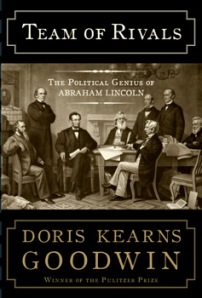
cvr9780684824901_9780684824901_lgIn 2012, when Daniel Day-Lewis astonished us with his performance in Steven Spielberg’s Lincoln, readers rediscovered Doris Kearns Goodwin’s Team of Rivals: The Political Genius of Abraham Lincoln (the book on which the movie was partially based.) Unlike my husband, I don’t usually take my history straight up — I prefer a little fiction mixed in — but I thoroughly enjoyed Team of Rivals.

If you’re in a Civil War mood, here are my favorite recommendations — both fiction and nonfiction.

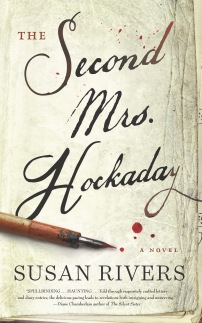
img_1136The Second Mrs. Hockaday (Epistolary novel about a young wife accused of infanticide while her Confederate Army officer husband leaves her to run the family farm) by Susan Rivers

Slaves in the Family (The author explores his family’s slave-owning past) by Edward Ball

The March (Novel about Sherman’s March) by E.L. Doctorow — not to be confused with

March (Fiction about the wartime experiences of Mr. March, the absent father in Little Women) by Geraldine Brooks — who is married to the author of

Confederates in the Attic: Dispatches from the Unfinished Civil War (Ex-war correspondent Horwitz joins a band of Civil War reenactors — fascinating and hilarious) by Tony Horwitz

The Widow of the South (Novel based on the true story of Carrie McGavock, whose home became a field hospital) by Robert Hicks

I Shall Be Near to You (In this beautiful story of love and war, a headstrong young woman disguises herself as a man, enlists in the Union Army, and follows her new husband into battle) by Erin Lindsay McCabe

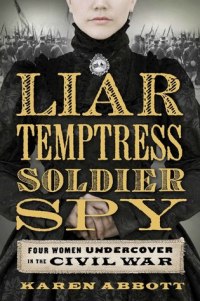
18679391Liar Temptress Soldier Spy (Nonfiction that reads like fiction; a rollicking chronicle of the exploits of four female spies –two Union, two Confederate –during the Civil War) by Karen Abbott

My Name is Mary Sutter (Fiction about a midwife who passes herself off as a man to serve as a surgeon in a military hospital) by Robin Oliveira

Cold Mountain (National Book Award winner in 1997; a Confederate deserter walks through the war-torn South to reunite with his beloved) by Charles Frazier

And for children: Across Five Aprils by Irene Hunt, which started it all for Jeff.

97808129953431I haven’t read either The Underground Railroad by Colson Whitehead (winner of the 2016 National Book Award for fiction) or Lincoln in the Bardo by George Saunders, although both are universally acclaimed. For a glowing review of Lincoln in the Bardo, check out today’s New York Times Book Review.) One of my coworkers, whose opinions I always trust and whose taste I almost always share, loved Lincoln in the Bardo, and says it “will haunt me for some time (pun entirely intended) . . . It is not a straight forward narrative. It is a complex (yet, very entertaining) discussion of the manner in which we live and how that life will affect the manner in which we die and our afterlife.” (By the way, “bardo” is the Tibetan term for purgatory.) I’m sure both of these books are superb and well worth reading, but I have a problem with abe_3books that mix reality and fantasy. Usually, the minute a ghost appears in a novel I lose interest. Or, for that matter, when the “underground railroad” turns into an actual train. Does anyone else have that problem, or am I just lacking in imagination?

Happy birthday, Abe!


Happy Valentine’s Day from Books on the Table!

valentines_day_m26ms_in_the_shape_of_a_heart_8418026760All you need is love. But a little chocolate now and then doesn’t hurt.
Charles M. Schulz

I think . . . if it is true that there are as many minds as there are heads, then there as many kinds of love as there are hearts.
Leo Tolstoy, Anna Karenina

I’ve never had strong feelings about Valentine’s Day. I always thought it was a nice little holiday, reminding people to take a little time to celebrate the loving relationships in their lives. Who doesn’t enjoy candy, heart-shaped cookies, flowers, special dinners, and cards (sweet, mushy, or funny . . . carefully chosen, or homemade)?

Apparently many people find Valentine’s Day offensive, and possibly even painful. Cara Paiuk wrote a long letter (reprinted in the Washington Post) detailing her many objections to school-mandated Valentine’s Day activities:

To my husband and I, Valentine’s Day is a Hallmark holiday: a fabricated, hyper-commercialized event designed for retailers to peddle their wares and restaurants to fill seats. I also feel that it pressures couples to conform to a saccharine social norm while deprecating singledom, and I’ve seen people both in and out of relationships struggle with living up to the romantic expectations conjured by this collective cultural fantasy . . .Valentine’s Day is a cute and fun celebration of love to some, but it is a searing reminder of rejection, loneliness, and unrequited affection for many others.

If Paiuk had done a little research, she’d have learned that Valentine’s Day is far from a “Hallmark holiday”. The modern holiday is rooted in both ancient Roman traditions and early Christian history, and has been celebrated as St. Valentine’s Day since the 5th century A.D. Americans have been exchanging handmade valentines since the 18th century, and the first commercial valentines became available in the mid-19th century when Esther Howland of Worcester, Massachusetts founded the New England Valentine Company.
livre-histoire-damour-coeurPaiuk has come up with an alternative to making valentines out of construction paper, glitter, and lace doilies — she and her family will be making “gratitude bookmarks”. Bookmarks can’t possibly offend anyone, although I have to admit I’m one of those terrible people who usually ends up dog-earing the pages of my books.

If you’ve read this far, you’re probably wondering when I’m going to stop criticizing Cara Paiuk’s campaign for “change, one heart at a time”, and start talking about books. My original intention was to update the list of great love stories I posted three years ago, but I realized I didn’t have many love stories to add. Here are a few of my favorites from 2016 — I haven’t read anything in 2017 that could be described as a love story, although I am devouring The Passion of Dolssa by Julie Berry, a YA novel about friendship and religious belief that takes place in 13th century Provence.
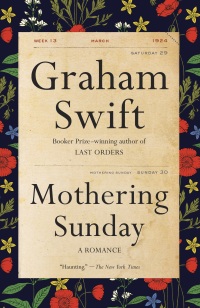
9781101971727Mothering Sunday by Graham Swift
Downton Abbey fans will love this book, which NPR says “is one of those deceptively spare tales (like The Sense of an Ending) that punch well above their weight.” Jane Fairchild, now a successful author in her nineties, was a housemaid to an upper-class British family after World War I — and was involved in an affair with one of the family’s wealthy neighbors. How can you resist a novel that opens with this sentence: “Once upon a time, before the boys were killed and when there were more horses than cars, before the male servants disappeared and they made do, at Upleigh and at Beechwood, with just a cook and a maid . . .”?

The Atomic Weight of Love by Elizabeth J. Church
Church’s debut novel was inspired by the lives of her parents and their contemporaries. Meridian (Meri), a young biology student at the University of Chicago, marries her much older professor, Alden, and gives up her own dreams of becoming an ornithologist when her husband is sent to Los Alamos to help develop the atomic bomb. This lovely novel of love, sacrifice, and societal change spans 30 years in Meri and Alden’s flawed marriage.

When in French: Love in a Second Language by Lauren Collins
Lauren Collins decides to learn French to deepen her relationship with her French husband and his family. Along the way, she gains insight into herself, her marriage, linguistics, and cultural differences. This is a charming memoir, but more than that, it’s an examination of how language defines who we are.
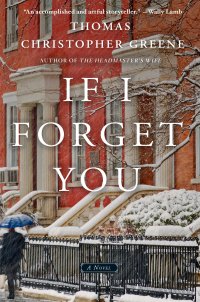
if-i-forget-youIf I Forget You by Thomas Christopher Greene
The author of The Headmaster’s Wife, one of my favorites of 2014, is back with a story of lost love. Henry Gold and Margot Fuller fall in love as students at a small college in upstate New York, only to be separated by forces beyond their control. Many years later, they meet again on a New York street and begin the painful process of reconnecting.

An amazing number of books have the word “heart” in the title. According to Edelweiss (a website for booksellers and librarians that aggregates publishers’ catalogs), more than 3,000 books with the word “heart” in the title were published last year. These included such gems as Cold-Hearted Rake, Depraved Heart, and Montana Hearts: Her Weekend Wrangler, as well as dozens of books about heart-healthy diets and lifestyles and countless books about journeys into the “heart” of nearly any locale you could imagine. Edelweiss doesn’t include the gazillion self-published books now available, such as A Thug Stole My Heart and Cupid Has a Heart-On.

16130440I recently enjoyed Jennifer Weiner’s collection of personal essays, Hungry Heart: Adventures in Life, Love, and Writing. Weiner has a big chip on her shoulder, so she would hate to hear me say that I don’t love her novels because they are “chick lit”. However, I really liked her book of essays, and found myself underlining passages and turning down pages.

Looking at my own bookshelves, I saw many favorites, old and new, that you might not think of as Valentine’s Day books, but that have earned a special place in my heart:

9780062364845_p0_v2_s192x300Crooked Heart by Lissa Evans
A precocious 10-year-old orphan is evacuated from London during the Blitz — and is placed with a couple of marginally successful con artists. Darkly humorous yet touching, this book is Roald Dahl for grownups. An American edition of one of the author’s earlier books, Their Finest (about wartime propaganda) comes out on February 14, probably because the movie version releases in April.

Crooked Little Heart by Anne Lamott
I love everything Anne Lamott has ever written. Most people are more familiar with her nonfiction, but she’s written several terrific novels. Crooked Little Heart is a coming-of-age story about a young girl playing on the junior tennis circuit.

Heartburn by Nora Ephron
I’ve reread Heartburn several times, and it’s as funny and poignant today as it was when I first read it back in 1983. Nora Ephron exacted sweet revenge on her ex-husband, journalist Carl Bernstein, with this roman á clef about a pregnant cookbook writer and her philandering husband.

37380The Heart is a Lonely Hunter by Carson McCullers
Another book I’ve read multiple times, The Heart is a Lonely Hunter is a Southern Gothic masterpiece. Published in 1940 when Carson McCullers was only 23, the novel hasn’t exactly been forgotten (it was an Oprah’s Book Club selection in 2004), it’s been eclipsed by a similar book — To Kill a Mockingbird.

In the Heart of the Sea: The Tragedy of the Whaleship Essex by Nathaniel Philbrick
Winner of the National Book Award for nonfiction in 2000, Philbrick’s account of the survivors of the Essex shipwreck in 1820 is absolutely enthralling. I guess I like books about maritime disasters (and cannibalism) more than I like love stories.

Heart and Soul in the Kitchen by Jacques Pépin
I like to cook, but I love reading cookbooks. This one is particularly fun to read, packed with anecdotes, essays, and cooking tips. The recipes are geared towards home cooks, not professional chefs, and there are great illustrations. Another favorite cookbook is John Besh’s Cooking From the Heart and Susan Branch’s The Heart of the Home (which is unfortunately out of print but available used.)
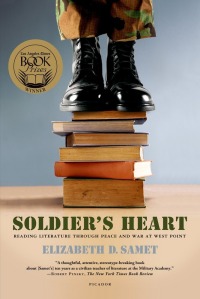
9780312427825Soldier’s Heart: Reading Literature Through Peace and War at West Point by Elizabeth D. Samet
Elizabeth Samet has been an English professor at West Point since 1997, responsible for directing the introductory literature class for 1,100 freshmen (or “plebes”). Part memoir, part meditation on literature and its place in both civilian and military society, the book is a fascinating glimpse at West Point life and a powerful argument for literature as a way to understand the world.
775089650_a604d8de8b_bOld Heart by Peter Ferry
When Peter Ferry taught high school English in Lake Forest, Illinois, one of his students was Dave Eggers. Eggers has high praise for his former teacher’s second novel:

Old Heart manages to weave together an astonishing array of themes and layers – the perils and freedoms of old age, the complexity of family ties, the liberation of travel, and finally, Ferry presents and proves the bold and needed idea that it’s never too late to re-open the past to recast the present.

Happy Valentine’s Day from the bottom of my heart!

8 Short Novels Your Book Club Will Actually Finish

Very few very long novels earn their length. My fingers are always twitching for a blue pencil.
Ian McEwan

I’ve never met a reader who doesn’t like short novels . . .What a short novel asks is that you commit, in one sitting, the same amount of time to reading as you frequently commit to a film or a football match. Make that commitment and, in many cases, the payoff outweighs the investment.
Cynan Jones

img_2656-2
Three books, 2,208 pages

Let’s face it: Most books are too long. If I’m going to read a book that’s 400 pages or more, it had better be spectacular. It seems to me that books, like people, have been getting heavier over the past 20 years — and recent studies confirm my suspicion. The Guardian says:

Books are steadily increasing in size, according to a survey that has found the average number of pages has grown by 25% over the last 15 years.

A study of more than 2,500 books appearing on New York Times bestseller and notable books lists and Google’s annual survey of the most discussed books reveals that the average length has increased from 320 pages in 1999 to 400 pages in 2014.

Even children’s books are getting longer; one study states that the average length of a middle-grade book published in 1996 was 137 pages, while in 2016 the average length was 290 pages.

img_2658
11 books, 1,825 pages

Peirene Press, a boutique publishing company based in London, specializes in short books. They “only publish books of less than 200 pages that can be read in the same time it takes to watch a DVD.”  What if book clubs, especially those whose members aren’t showing up or aren’t finishing (or even starting) the assigned reading, took a leaf out of Peirene’s book, so to speak, and only chose books that are 200 pages or shorter? Length does not necessarily correspond with complexity or quality. The Great Gatsby, the quintessential Great American Novel and required reading for almost every high school student, is only 180 pages long.

Book clubs are often too ambitious with their selections, choosing books that they think they should read, not books they really want to read, AND picking books that are very long.  One book club with which I’m intimately acquainted chose Barkskins by Annie Proulx (736 pages), with less than stellar results: no one finished the book. They still managed to have a great discussion, and everyone agreed the book was worth finishing. This group, all great readers, had much better luck with News of the World (224 pages), Homegoing (320 pages), and The Book of Unknown Americans (304 pages), which everyone in the group read and loved. (However, another favorite was A Little Life, 720 pages long.)

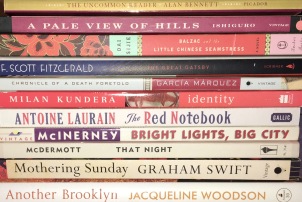
The average reading speed is about 300 words per minute. A trade paperback has roughly 300 words per page, depending on variables such as font size and amount of dialogue. So a 200-page book takes the average reader a little over three hours to read. I think anyone who’s committed to a book group can devote three hours to the monthly selection, unless it’s truly dreadful. Here are thumbnail reviews of ten books, both old and new, that you can polish off on a Saturday afternoon. The New York Times describes The Sense of an Ending as “a short book, but not a slight one”, which actually characterizes all these books.

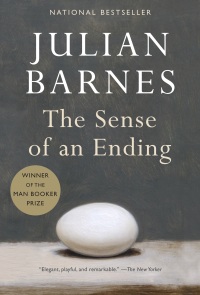
9780307947727The Sense of an Ending by Julian Barnes (163 pages)
Winner of the 2011 Man Booker Prize, this novel is much more accessible and plot-driven than the typical Booker Prize novel. Tony Webster, a retired historian in his sixties, receives an unusual bequest that causes him to reflect on his past. This was a favorite of my coed book group.

Balzac and the Little Chinese Seamstress by Dai Sijie (184 pages)
Based on the author’s experience with “re-education” during Mao’s Cultural Revolution, this is the tale of two city boys sent to the countryside for manual labor. They discover a hidden suitcase full of Western literature and begin their own program of re-education, introducing the village seamstress to Balzac, Cervantes, Tolstoy, and other forbidden writers.

9781101971727Mothering Sunday by Graham Swift (177 pages)
Downton Abbey fans will love this book, which NPR says “is one of those deceptively spare tales (like The Sense of an Ending) that punch well above their weight.” Jane Fairchild, now a successful author in her nineties, was a housemaid to an upper-class British family after World War I — and was involved in an affair with one of the family’s wealthy neighbors. How can you resist a novel that opens with this sentence: “Once upon a time, before the boys were killed and when there were more horses than cars, before the male servants disappeared and they made do, at Upleigh and at Beechwood, with just a cook and a maid . . .”?

The Red Notebook by Antoine Laurain (159 pages)
When a Parisian bookseller comes upon a lost handbag containing a red notebook and no identification, he tries to track down the owner. This lovely little book about the power of kindness is just right for readers who find many contemporary novels “depressing”, and it has more depth than you might first imagine. (Two of Laurain’s other books are available in English translation as well — The President’s Hat and French Rhapsody. They’re both delightful, and barely above the 200-page cutoff.)

5497435-_uy200_Last Night at the Lobster by Stewart O’Nan (146 pages)
Manny DeLeon, manager of a failing Red Lobster, has just learned that his restaurant is closing and he’s been demoted to assistant manager at a nearby Olive Garden. Despite a blizzard that keeps customers and employees away on the restaurant’s final night, Manny won’t close early. It doesn’t sound like much of a story, but O’Nan (one of my favorite authors) has written an emotionally resonant reflection on the American Dream.

Our Souls at Night by Kent Haruf (192 pages)
Addie Moore and Louis Waters, both widowed and in their seventies, are long-time neighbors who seek respite from loneliness in an unusual way: through a platonic friendship that includes sleeping in the same bed. Kent Haruf gives more insight into the lives and longings of his characters in less than 200 pages than many authors do in books double that length.

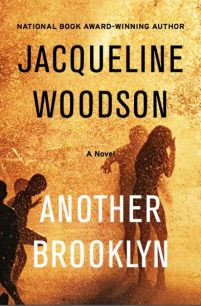
another-brooklyn-393x600Another Brooklyn by Jacqueline Woodson (170 pages)
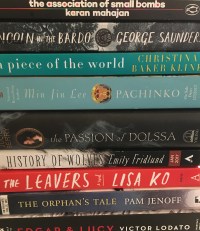
A runner-up for last year’s National Book Award, Another Brooklyn is a poetic coming-of-age story set in 1970s Brooklyn. I was tempted to race through, but forced myself to slow down and savor the spare and beautiful language.

The Uncommon Reader by Alan Bennett (120 pages)
Queen Elizabeth II stumbles upon a bookmobile parked by Buckingham Palace and discovers a love of reading, with amusing and unexpected consequences. It’s a perfect book for any bookworm — I l love that the Queen keeps a reading journal.

Which do you prefer — a big fat book you can get lost in for days or weeks, or a short novel you can read in a couple of hours?

For more suggestions, check out 8 More Short Books for Your Book Club.

What to Read Next — Winter 2017

img_2651It’s always better to have too much to read than not enough.
Ann Patchett

I have piles of brand new books to read, as well as dozens of galleys for upcoming books downloaded on my e-reader. I’m constantly amazed at the volume of high-quality books that appear every season, not to mention the number of talented debut authors. The creative spirit and the love for the written world in our world are stronger than ever.

How do I choose what to read next? Sometimes I’m crippled by indecision. I read a chapter of one so-so book and then of another, glancing over at the stack of January releases and thinking that there’s probably a gem buried in there . . . one that I will be excited to share with other readers.

9780385353540That’s why it’s so annoying when I read a book that disappoints me and that I can’t recommend. I take comfort in Will Schwalbe’s comments in Books for Living that “every book changes your life” and “there is no book so bad that you can’t find anything in it of interest”.  I would never call Emily Ruskovich’s debut novel, Idaho, a bad book, but I wish I’d devoted my treasured reading hours to a book that I could enthusiastically recommend. Ruskovich’s writing is spectacular, but to fall in love with a book, this middlebrow reader also needs a comprehensible story. I don’t need every loose end tied up, but I do want to understand something about the characters’ motivations — and I finished this overhyped book as bewildered as I was when I started. The New York Times disagreed with me (check out Smith Henderson’s review here), and so have other readers — if you’ve read Idaho, I’m curious to know what you think.)
Now . . . on to books that I encourage you to pick up this winter.

28251431-_uy200_If you like John Irving and Tom Wolfe . . .
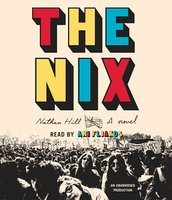
The Nix by Nathan Hill
How could I have forgotten to recommend The Nix, which came out last summer? Hill’s debut novel is my favorite “big book” of 2016. Every once in a while, you want to wrap yourself up in a long novel that covers everything from family relationships to social history. Since you may be wondering what a “nix” is, I’ll fill you in. It’s a Norwegian house spirit that the main character, Samuel, hears frightening tales about during his childhood and is “the perfect organizing motif for a book about the small mistakes that become a life’s great tragedies, and secrets held too close and for too long”, according to NPR. The New York Times says the book is the “love child of Thomas Pynchon and David Foster Wallace”, a statement I can’t address since I’ve never been able to make my way through either of those authors’ books. I thought the satirical writing was reminiscent of John Irving and Tom Wolfe; John Irving himself compared Hill to Charles Dickens. Comparisons aside, The Nix is a creative tour de force and a joy to read.

img_1136If you enjoyed News of the World by Paulette Jiles . . .
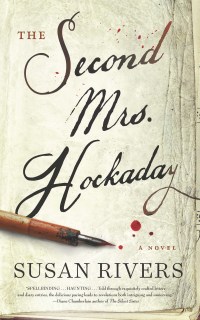
The Second Mrs. Hockaday by Susan Rivers
I read this epistolary novel in a day, amazed at the suspense Rivers is able to build through letters, court documents, and diary excerpts. Based on historical records, The Second Mrs. Hockaday tells the story of a young girl, Placidia, who marries a Confederate officer, Major Hockaday, during the Civil War just days after they meet. When Hockaday returns home two years later, he learns that Placidia has been accused of bearing and murdering a baby while he was gone. What actually happened and why won’t Placidia speak in her own defense? This slim novel, perfect for book clubs, will inspire discussion about race and the legacy of slavery, women’s changing roles, forgiveness, and redemption,

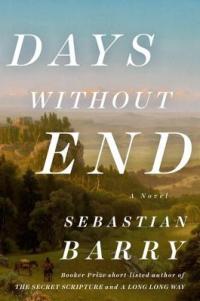
30212107Days Without End by Sebastian Barry
I’ve just started reading Days Without End, but I am already enthralled. I think Sebastian Barry is one of our most underrated (and under-read) authors. When you read one of his books, you know you’re reading the work of a poet. You can choose at random almost any passage from any one of his novels and be struck by the beauty of the language. Here’s what the Guardian has to say about Barry’s latest novel: “Days Without End is a work of staggering openness; its startlingly beautiful sentences are so capacious that they are hard to leave behind, its narrative so propulsive that you must move on.”

Days Without End follows the adventures of teenager Thomas McNulty, who flees the Irish potato famine and signs up for the United States Army. Barry has written several other novels about the McNulty family (The Trial of Eneas McNulty, The Secret Scripture, and The Temporary Gentleman). Each one of them is well worth reading –as are his novels about the Dunne family — and you don’t need to read them in any particular order.

small-admissions-9781501122521_hrIf you’re in the mood for the print version of a romantic comedy (happy ending and all) . . .

Small Admissions by Amy Poeppel
I have a weakness for behind-the-scenes novels set in admissions departments. Small Admissions has a unusual twist: it takes place in the crazy world of New York day schools. The author apparently knows what she’s talking about, since she worked in the admissions department of a prestigious private school in New York. This novel is fun light reading, with plenty of characters you’ll love to hate and a satisfying romance.

If you loved A Gentleman in Moscow (and Doctor Zhivago) . . .

The Patriots by Sana Krasikov9780385524414
According to Yann Martel (Life of Pi), The Patriots is “a masterwork, a Doctor Zhivago for our times”, and indeed, it has much in common with that beloved classic. (Although I think the Count in A Gentleman in Moscow has more in common with Zhivago than any of the characters in The Patriots.) I absolutely loved this book, which is top-notch historical fiction about three generations, beginning with an idealistic young woman from Brooklyn who moves to Russia during the Stalin years and taking us through the tumultuous events in the Soviet Union in the 20th century to post-Cold War America.

y648Lara: The Untold Love Story and the Inspiration for Doctor Zhivago by Anna Pasternak
Journalist Anna Pasternak reveals the true story of the love affair between her great-uncle, author Boris Pasternak, and his muse, Olga Ivinskaya — the model for the fictional Lara in Doctor Zhivago.

What are you planning to read this winter? And how do you decide?

Secrets From the Eating Lab — Book Review

secrets-from-the-eating-lab-cover-1I urge you to get to your leanest livable weight and then, whatever it is, decide that it’s okay. Because your weight is not the point. You were not put on this earth to mold yourself into a perfect physical specimen.
Traci Mann, Secrets From the Eating Lab

I’ve never reviewed a diet book before. In fact, I’ve always thought that diet books were a waste of time and money. If you want to lose weight, there’s no quick fix. Eat less and exercise more. Honestly, on the cold and gray January day I picked up Traci Mann’s Secrets From the Eating Lab: The Science of Weight Loss, The Myth of Willpower, and Why You Should Never Diet Again, I didn’t expect to be entertained or to learn much. I thought I’d skim the book so I could convince myself that a diet was a really bad idea.

Traci Mann, Ph.D., is a professor at the University of Minnesota, where she founded the Health and Eating Lab.  Her area of expertise is the psychology of eating, dieting, and self-control. She has compiled research from dozens of psychological and medical studies to argue two major points: first, that weight is largely controlled by genetics, and second, that obesity is “not a death sentence”.

Secrets From the Eating Lab is not the only book to claim that diets don’t work for long-term weight loss, but according to psychotherapist Jean Fain, author of another “no diet” diet book, The Self-Compassion Diet, it’s the “most persuasive and entertaining”.  To whet your appetite, so to speak, here are a few examples of Mann’s wit and wisdom:

On willpower and self-control:

Sometimes it may look like people are doing an impressive job of resisting something when really they simply aren’t tempted by it. Maybe your friends who are so good at resisting cookies are just not that into cookies. People like that, are, after all, alleged to exist.

On dieting and shame:

There is no cause for guilt or shame about things you eat. Eating is not a moral act. Perhaps there are certain circumstances in which eating can be immoral, such as the occasional act of cannibalism, taking candy from a baby, or finishing your husband’s carton of salted caramel ice cream before he gets home from work.

On how people’s eating is influenced by their culture and other people:

Sometimes our family members have an unspoken influence on our eating. When I am sneaking thin slice after thin slice of Rice Krispie treats from a pan on my counter, I eat a precisely calibrated amount. I eat until right before so much is gone that the people in my household will kill me if I eat any more.

On the increase in portion sizes:

My favorite piece of evidence about the increase in portion sizes comes from a study comparing the size of the foods in different paintings of the Last Supper from over the centuries. To control for the different-sized paintings, the researchers did their comparisons by calculating a food-to-head ratio. Presumably heads have not gotten larger in that time. Over the years, however, the bread, entrees, and plates all did.

Yes, this is an entertaining diet book. Mann’s tone is chatty and humorous, making Secrets From the Eating Lab as fun to read as any novel you’d take to the beach. I particularly enjoyed reading about the studies conducted in Mann’s eating lab. Deception, Mann says, is necessary in eating research because if people know their eating habits are being studied, they will change their behavior. “We have to be a little sneaky,” Mann says.

As fascinating as I found Mann’s descriptions of research on eating, dieting, and willpower, I wasn’t entirely convinced by her arguments. I found myself wondering what studies weren’t included in the book. It’s hard to believe that people are genetically programmed to be obese, or that it’s truly healthy to be obese. Mann cites studies that claim that weight distribution (belly fat) is more unhealthy than extra weight. “It is the apple pattern that is problematic, not the pear pattern,” she says, adding that she knows “only one apple-shaped woman.” Really ??? Also, I wish she had addressed the issue of the increase in childhood obesity.

You won’t find any “secrets” in this book, but you will find some great commonsense tips for healthy eating. One of my favorites is to “get alone with a vegetable”. Don’t eat anything until you have eaten some vegetables, Mann says, because “there is only one contest that a healthy food has a fighting chance at winning: a contest between a healthy food and no food at all.”

Please excuse me while I go feast on some cucumber slices . . . there aren’t any Rice Krispie treats or salted caramel ice cream in my house!

Books for Living

Reading is the best way I know to learn how to examine your life. By comparing what you’ve done to what others have done, and your thoughts and theories and feelings to those of others, you learn about yourself and the world around you. Perhaps that is why reading is one of the few things you do alone that can make you feel less alone. It is a solitary activity that connects you to others.
Will Schwalbe, Books for Living

9780385353540“Attention Book-Lovers: Take the 2017 POPSUGAR Reading Challenge”; “Around the Year in 52 Books”; “11 Tips to Read More in 2017, Because 2017 Is the Year You Conquer Your TBR
List” . . .

Along with dieting, exercising, and generally becoming better people, we’re also supposed to revamp our reading lives this year. It’s not enough to read what we enjoy — we’re supposed to “read harder”, which apparently means reading a “superhero comic with a female lead” and an “LGBTQ+ romance novel”. We’re advised to schedule reading time, the same way we’re supposed to squeeze in workouts.

I appreciate the message behind the articles offering advice for readers. Making time for reading is important, and so is reading outside our comfort zones. Many of them have great ideas; the Miami Herald recently published a terrific story, 9 Ways to Read More Books in 2017, which suggests, among other things, putting down your phone, reading audiobooks, and abandoning books you don’t enjoy:

If a book doesn’t grab you, give up. I have been told my 25-page rule is too hasty, so let’s make it 50 pages. If a book hasn’t grabbed you 50 pages in, move along and feel no guilt. It’s the author’s responsibility to reel you in, not yours to finish something you don’t like. I’m still bitter about the time I wasted on Donna Tartt’s The Goldfinch only to abandon it 200 pages in.

17370-men-and-women-performing-aerobic-exercises-pvHowever, I don’t see how reading a book “with a red spine” or one with “a cat on the cover” will enrich my reading life, and I have mixed feelings about what some of these articles seem to imply. They unfortunately convey the impression that reading is just another activity for self-improvement, akin to running on the treadmill. Put in your hour a day with a book by an author “with a different ethnicity than you” and you will be a better reader and a better person. I never liked the reading logs my children were required to keep in grade school. The well-intentioned logs implied that reading was a dreary task that had to be documented, conflicting with my view that reading was a pleasurable activity very different from memorizing multiplication tables. Flashlight under the covers, anyone?

Some of the “reading challenges” online do include inspiring suggestions for readers looking to expand their reading horizons. I particularly like the list posted on The Modern Mrs. Darcy, Reading for Fun: Put the Oomph Back in Your Reading Life. This challenge includes my favorite kind of book —  a “book about books or reading”.

Enter Will Schwalbe, who has written an entire book, Books for Living, about how books of all kinds can  help us “engage with the world, become better people, and understand life’s questions, big and small”. Some of the books that have changed his life, he says, “are undoubtedly among the great works of our time. Others almost certainly are not.” No book is a waste of time according to Schwalbe: “There is no book so bad that you can’t find anything in it of interest . . even “just one gleaming insight in a muddy river of words.”

9780804172707Books for Living contains 26 chapters, each focusing on a particular book that resonated with Schwalbe at a particular time in his life — and that continues to resonate with him. He discusses what led him to each book , the people in his life he associates with the book, and why it is important to him. The books range from children’s books (Stuart Little, Wonder) to classics (The Odyssey, David Copperfield) to contemporary fiction (A Little Life, The Girl on the Train).
How did he choose to read these books? Through trial and error, mostly:

I’m not a particularly disciplined or systematic seeker. I don’t give a great deal of thought to the books I choose—I’ll read anything that catches my eye. Most of the time, when I choose what I’m going to read, it has absolutely nothing to do with improving myself. Especially when I’m at my happiest, I’m unlikely to search for a book to make me happier. But it’s often during these periods of non-seeking that I’ve stumbled across a book that has changed my life.

I can’t imagine a better way to start your reading year than by picking up a copy of Books for Living. When I started the book, I began underlining. And underlining, and underlining — until I realized that I needed to stop, because I was underlining almost everything. (The first passage I underlined was in the first page of the introduction, when Schwalbe describes a terrifying recurring dream, in which he’s in an airport, about to miss his flight, when he realizes has nothing to read on the plane.)

Best wishes for a happy year of reading!

Schwalbe published an essay in the Wall Street Journal, The Need To Read, which is a wonderful distillation of Books for Living

My New Year’s Resolution

Maybe our favorite quotations say more about us than about the stories and people we’re quoting.
John Green

You may want to keep a commonplace book which is a notebook where you can copy parts of books you think are in code, or take notes on a series of events you may have observed that are suspicious, unfortunate, or very dull. Keep your commonplace book in a safe place, such as underneath your bed, or at a nearby dairy.
Lemony Snicket

81mlx7kp13l-_sx355_
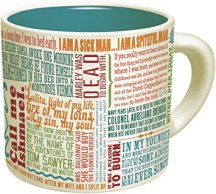
One of the literary quote mugs my son gave me for Christmas

At the end of the year, how do I know which books were my favorites? All I have to do is go through my books to see which ones have the most dog-eared pages.

My third grade teacher, Mrs. Pierce, once reprimanded me for turning down the page of my book. She informed me that this was called “dog-earing” and it was very, very bad, on a par with wasting food at lunchtime and talking in the halls — two other crimes I had committed. Now I’m almost as old as Mrs. Pierce was then, and I can dog-ear my books anytime I want. If you borrow a book from me and there are lots of pages turned down, you know that this is a really good book filled with passages worth rereading and remembering.

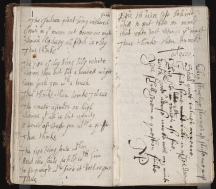
One of my resolutions for 2017 is to transcribe my favorite quotes and passages into a notebook. I already do this with poems, and have found that the act of copying lines of poetry by hand helps me understand and remember them.  I have a brand new “commonplace book” ready to fill, along with a box of my favorite Bic fine point roller pens. (I also plan to lose ten pounds . . . )

commonplace_book_mid_17th_century
17th century commonplace book

In high school, one of my favorite English teachers, Mr. Regan, told us that “quote” is a verb and “quotation” is a noun. Mr. Regan, the co-author of our textbook, the English Competence Handbook, devoted an entire chapter to the proper use of “Quotations”. To the chagrin of English teachers everywhere, the word “quote” has become commonly used as a noun. Even the people in charge of websites devoted to cataloging quotes seem confused. One website calls itself The Quote Garden (tagline: “I dig old books”) but lists quotations in hundreds of categories, from “curmudgeonesque” to “ladybugs”.

Ever since I left Mrs. Pierce’s classroom, I’ve dog-eared quite a few pages. Here are some of my favorite quotes (sorry, Mr. Regan!) from some of the best novels I read in 2016:

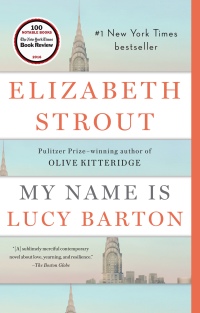
9780812979527My teacher saw that I loved reading, and she gave me books, even grown-up books, and I read them. And then later in high school I still read books, when my homework was done, in the warm school. But the books brought me things. This is my point. They made me feel less alone.
Elizabeth Strout, My Name Is Lucy Barton

And then he had come to think that what people needed, at bottom, was not only information but tales of the remote, the mysterious, dressed up as hard information. And he, like a runner, immobile in his smeared printing apron bringing it to them. Then the listeners would for a small space of time drift away into a healing place like curative waters.
Paulette Jiles, News of the World

When all was said and done, the endeavors that most modern men saw as urgent (such as appointments with bankers and the catching of trains), probably could have waited, while those they deemed frivolous (such of cups of tea and friendly chats) had actually deserved their immediate attention.
Amor Towles, A Gentleman in Moscow

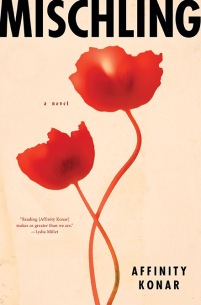
cover-mischlingBooks had never led me in the wrong direction. It seemed foolish to try to endure without such counsel by my side.
Affinity Konar, Mischling

Franny  on the other hand was just now opening the hardback copy of A Tree Grows inBrooklyn from her grandmother. Even from the first sentence, from the look of the words on the page, she could tell that was what she would be reading over Christmas vacation, not an LSAT prep book.
Ann Patchett, Commonwealth

Besides, could children ever be considered quite of sound mind? Seven was counted the age of reason, but Lib’s sense of seven-year-olds was that they still brimmed over with imagination. Children lived to play. Of course they could be put to work, but in spare moments they took their games as seriously as lunatics did their delusions. Like small gods, children formed their miniature worlds out of clay, or even just words. To them, the truth was never simple.
Emma Donoghue, The Wonder

9780393241655_300They had been raised, Charlotte and Beatrice, on books. When they had a question, literature answered it. If they complained about being bored, their mother — a melancholy Parisian who used laudanum to assuage the pains of homesickness and her husband’s infidelities — would hand them a book. “No one who reads can ever be bored,” she’d tell them . . .
Ann Hood, The Book That Matters Most

Forgiveness, they shouted, all the while committing their wrongs. When he was younger, Yaw wondered why they did not preach that the people should avoid wrongdoing altogether.
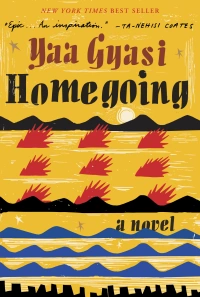
Yaa Gyasi, Homegoing

wolf-hollow-by-lauren-wolkAt times, I was so confused that I felt like the stem of a pinwheel surrounded by whir and clatter, but through that whole unsettling time I knew that it simply would not do to hide in the barn with a book and an apple and let events plunge forward without me.
Lauren Wolk, Wolf Hollow

Was that not the beauty of fiction, that it aimed closer at the bitter heart of truth than any biography could, that it could search out the spirit of those who may or may not have lived, and tell their story not as it unfolded, as a series of objective facts recorded by an indifferent world, but as they had lived it and, above all, felt it? Was there a finer way to honor friendship, and love, and being in the world?
Alison Anderson, The Summer Guest

Her boxes and crates of books were stacked alongside, and Beatrice had to still a quiver of anxiety that she was to live, for the first time, in a place without a single bookshelf.
Helen Simonson, The Summer Before the War

Church_AtomicWeight_HC_FINAL_PRNT.inddHis years on earth had taught him that good things happen to those who honor the kindheartedness of others.
Imbolo Mbue, Behold the Dreamers

I thought about how lives bump up against each other, whether for moments of superficial conversation in line at the post office or a deeper enmeshment, such as that I had with Jerry for those few months. How much meaning should I ascribe to knowing a stranger for the moments it took for me to donate to a V-book campaign? What are the evolutionary implications of kindness?
Elizabeth Church, The Atomic Weight of Love

Happy New Year! What are your reading resolutions for 2017?

Books for Men

man_reading_by_john_singer_sargent_reading_public_museumAt a recent get-together, a (male) friend told me all about a great book he’d just read, prefacing his comments by saying, “I’m sure you haven’t read it.” The book? Blood and Thunder: The Epic Story of Kit Carson and the Conquest of the American West, by Hampton Sides, published about ten years ago. Obviously, he couldn’t imagine that Blood and Thunder would appeal to women, and he doesn’t know me well enough to know that I’ve loved books about the American West ever since I was a child, both fiction and nonfiction. (And yes, I have read Blood and Thunder. It’s great, as is anything by Hampton Sides; my favorite is In the Kingdom of Ice: The Grand and Terrible  Polar Voyage of the USS Jeannette).

cb6702a0ceab927360bf8e23f45ccefbThe same evening, I got involved in a nostalgic conversation about favorite childhood books. When I mentioned The Little House on the Prairie series, someone said wistfully that she’d loved those books as a child but couldn’t share them with her children because she has only boys. I told her that I’d read the whole series — not just Farmer Boy — to one of my boys, and he’d enjoyed them almost as much as I did. “But they’re about girls!” she said. Well, no. They’re about people, and the settling of the American West. We give boys books featuring animals, aliens, and wizards, but we balk at suggesting they read about girls?
Male and female reading tastes often differ, to be sure. It’s a safe bet that most readers of a new account of an obscure Civil War battle will be male, just as most readers of the latest novel about a young woman coming of age will be female. (It’s interesting to me that so many literary novelists are male, when their audience seems to be predominantly female.)

news-of-the-world-coverSeveral of my favorite books this year have been truly “unisex”. A Gentleman in Moscow, News of the World, When Breath Becomes Air, Salt to the Sea — all would appeal to almost any reader, male or female. Still, I need to oblige a friend who asked me to recommend books for men. I know she’s not alone in her quest to find books suitable for husbands, fathers, brothers, and sons — so here are some ideas for last-minute shoppers.

The Perfect Horse: The Daring U.S. Mission to Rescue the Priceless Stallions Kidnapped by the Nazis by Elizabeth Letts
Fans of narrative nonfiction by Erik Larson and Laura Hillenbrand will love The Perfect Horse. The suspense is not whether the Lipizzaner stallions will be rescued, but how — and at what cost. The Christian Science Monitor calls the book a “perfect World War II rescue story”, and I agree.

9780812992731Patient H.M.: A Story of Memory, Madness, and Family Secrets by Luke Dittrich
“Patient H.M.” was Henry Molaison, a young man who was lobotomized in the 1950s in attempt to cure his severe epilepsy. The twist in this book is that the neurosurgeon who performed the surgery was Dr. William Beecher Scoville, the author’s grandfather. Dittrich provides a fascinating and personal viewpoint about the medical ethics involved with his grandfather’s career, as well as the changing attitudes towards mental illness during the 20th century.

Hillbilly Elegy: A Memoir of a Family and Culture in Crisis by J.D. Vance
Hillbilly Elegy has been receiving a lot of praise and publicity since it was published in June. It’s two books in one — a very personal story of growing up poor in southern Ohio (reminiscent of Rick Bragg’s All Over But the Shoutin’) and an exploration of the economic and social problems facing “hillbilly culture”.

Seinfeldia by Jennifer Keishin Armstrong
The (male) Seinfeld fans in my family enjoyed the behind-the-scenes look at the creative partnership between Larry David and Jerry Seinfeld.

a4f0f87eaa1b738dbb6a5f0923733ecdIndestructible: One Man’s Rescue Mission That Changed the Course of WWII by John R. Bruning
When naval aviator Pappy Gunn’s wife and four children are  taken prisoner by the Japanese in the Philippines, he devotes the next three years to rescuing them — and developing new weapons that would have a major effect on the war in the Pacific. I think male readers would find this story as riveting as I did.

Hero of the Empire: The Boer War, A Daring Escape and the Making of Winston Churchill by Candice Millard
Millard, author of The River of Doubt and Destiny of the Republic, is one of my favorite authors of narrative nonfiction.  The Wall Street Journal says that Millard “has developed a distinctive approach to writing about historical giants. She focuses tightly on a forgotten yet riveting episode in an extremely well-documented life . . .  for her latest book, Ms. Millard tackles one of modern history’s most chronicled figures, Winston Churchill. By one count, there are more than 12,000 books written about Churchill. Ms. Millard’s Hero of the Empire recounts an episode in a near-forgotten conflict: young Winston Churchill’s capture and dramatic escape during the Boer War.” One of my most discriminating male readers says this is his top book of 2016.

9781622795944_JKTmech.inddThe North Water by Ian McGuire
This adventure story probably isn’t everyone’s cup of tea, but I read it in two days. The North Water was chosen by  the New York Times Book Review as one of the year’s ten best books, so I can’t be the only person who willingly reads about violence aboard a 19th century whaling expedition — gruesome murders, polar bear attacks, animal slaughter, and violence galore. I think my friend who couldn’t believe I read Blood and Thunder would be even more shocked I enjoyed The North Water.

Free Men by Katy Simpson Smith
In the spring of 1788, seven years after the British surrendered at Yorktown, three desperate men, all fleeing unbearable situations, join forces for a few days in the thick woods of what is now southern Alabama. They rob and murder a group of white traders  and their Indian guides. One of the guides escapes and reports the crime to his chief, Seloatka. Le Clerc, a French “gentleman adventurer” who is married to a Creek Indian woman, volunteers to hunt down the three murderers. Perfect for fans of literary historical fiction who liked The Good Lord Bird (James McBride) or The Known World (Edward P. Jones).

14358879245_d675382279_bA few more manly suggestions:

For music fans, Born to Run (Bruce Springsteen), Testimony (Robbie Robertson); for golfers, A Life Well Played: My Stories (Arnold Palmer);  for business guys, Shoe Dog: A Memoir by the Creator of Nike (Phil Knight);  for Civil War buffs, American Ulysses: A Life of Ulysses S. Grant (Ronald C. White); and for mystery readers, Manitou Canyon (William Kent Krueger).

Happy Holidays!

Top Books of 2016 — Booksellers Share Their Favorites

Our favorite book is always the book that speaks most directly to us at a particular stage in our lives. And our lives change. We have other favorites that give us what we most need at that particular time. But we never lose the old favorites. They’re always with us
Lloyd Alexander

news-of-the-world-coverThe booksellers at Lake Forest Book Store are not, on the surface, a diverse group. For one thing, we are all female. We are also all middle-aged, which is a horrible term, but one for which I can’t think of an appropriate euphemism. This doesn’t mean that we all like the same books. All of us are committed to reading widely, always mindful that our job is to recommend books to all kinds of readers. We have individual reading tastes, but we are all the same in that no one wants to squander time on a poorly written or boring book.

Often, holiday shoppers ask for very specific recommendations — a sports novel for an eight-year-old boy, a picture book for a toddler, a Civil War history book for a grandfather, a cookbook for a newlywed couple. But often, customers just want to give a friend, relative, or business associate a really good book.

I emailed our booksellers, asking them to name their favorite book(s) of 2016.  “This is so tough. DON’T MAKE ME PICK,” said one. She’s right; it’s hard to choose just a few titles from all the memorable books published this year. So here’s a list of books that our booksellers mentioned again and again as their favorites. These are books, fiction and nonfiction,  that almost any reader who appreciates a well-written story will enjoy.

Molly says that “our fiction wall is, and has been this fall, packed with goodness . . . I Will Send Rain by Rae Meadows is one of my top choices. It’s a sparse telling of an Oklahoma Dust Bowl family and their struggles. It reminded me of Steinbeck and Cather. And new to our paperback table is a mystery that a customer turned me onto, I Let You Go by Clare Mackintosh. I could not put it down, and think it beats the pants off The Girl on the Train.”

9780670026197Our buyer, Laura, said: “My favorite literary reads are The Nix (Nathan Hill), News of the World (Paulette Jiles)Mothering Sunday (Graham Swift) and Mischling (Affinity Konar). They are each so different (a sprawling contemporary story; a beautiful piece of historical fiction; a compact, compelling personal narrative and and a haunting World War II novel). My favorite heartwarming, simply lovely book is A Gentleman in Moscow (Amor Towles).” (Mine too!)
Almost every staff member listed News of the World as a favorite. Beth mentioned the “heartwarming relationship between an older man and the young girl he is commissioned to return to her home”, and Kathy remarked that she was “drawn into the adventure immediately.” I thought the writing was dazzling, and it was a joy to encounter a protagonist who is a kind and honorable person with unwavering morals. We’re all jealous that Max, our store manager and early champion of the book, got to sit next to the author at an industry dinner. (For my complete review, click here.)

Laura went on to say that “2016 was an amazing year for children’s fiction: Salt to the Sea (Ruta Septys), Wolf Hollow (Lauren Wolk), and The Inquisitor’s Tale (Adam Gidwitz) are sure to become classics!” I agree — and I think that the definition of a classic book for children is one that has timeless and universal appeal. As C.S. Lewis said, “A children’s story that can only be enjoyed by children is not a good children’s story in the slightest.”

9781101947135Diane  commented that “This was such a strong year for fiction! I read so many fantastic books– these are not in a particular order but two of them may be in my top-ten lifetime list. For all of them, the characters were so strong and the writing drove these books even more than plot/pace: Homegoing (Yaa Gyasi) Behold the Dreamers (Imbolo Mbue), The Mothers (Brit Bennett), News of the WorldWolf Hollow. Diane and I lead a YA book group for adults, and Wolf Hollow was one of our group’s favorites.

Susan R. loved Homegoing, saying that “reading it felt like unwinding a beautiful braid.” NPR’s Maureen Corrigan listed Homegoing as her favorite debut novel of the year, and I’m with her. Along with A Gentleman in Moscow, it’s the book I’ve given most often as a gift. Susan also picked The Nix as a favorite, “probably because I could relate to every time period in the story, and it kept me reading way past my bedtime”.

Kathy paired Mischling (fiction) and Irena’s Children: The Extraordinary Story of the Woman Who Saved 25,000 Children from the Warsaw Ghetto (Tilar J. Mazzeo; nonfiction): “They were fantastic reads and I couldn’t put either book down. Important books to read to remember the suffering of children at the hands of the Nazis but both offering hope and heroism.” Kathy  also mentioned Trevor Noah’s terrific memoir about growing up in South Africa, Born a Crime.

9780345544803Eleanor chose Lilac Girls, Martha Hall Kelly’s debut novel, which I adored as well. Anyone who loved The Nightingale, Salt to the Sea, The Invisible Bridge, or All the Light We Cannot See will find this book both unforgettable and hard to put down. Historical fiction at its best, the novel tells the powerful story of female prisoners subjected to medical experimentation at the hands of the Nazis.

Eleanor also enjoyed The Perfect Horse: The Daring U.S. Mission to Rescue the Priceless Stallions Kidnapped by the Nazis, by Elizabeth Letts. If you’re a fan of narrative nonfiction by Erik Larson and Laura Hillenbrand, you’ll love The Perfect Horse. The suspense is not whether the Lipizzaner stallions will be rescued, but how — and at what cost. The Christian Science Monitor calls the book a “perfect World War II rescue story”, and I agree.

Nancy’s favorite was The Summer Guest, by Alison Anderson. The “summer guest” in this elegantly constructed novel is Anton Chekhov, who develops a close friendship with Zinaida, a member of his host family. When Zinaida’s chronicle of their relationship surfaces more than 100 years later, it’s possible that literary history may be radically changed. (Read my complete review here.)

162224Susan P.’s pick was Hillbilly Elegy: A Memoir of a Family and Culture in Crisis, by J.D. Vance: “It is the poignant, inspiring, and eminently readable story of a young man overcoming the many drawbacks and disadvantages of his youth. Incisive and articulate, a very thoughtful examination of the issues of systemic poverty.”

Ann P. chose The Summer Before the War, by Helen Simonson (author of the beloved Major Pettigrew’s Last Stand.) It’s a kinder, gentler World War I book than most, focusing on a young woman who comes to an English village to teach Latin just as the war is breaking out. Charming and poignant, it’s perfect for anyone suffering from Downton Abbey withdrawal.

Beth picked Last Days of Night, by Graham Moore: “Intriguing, fast-reading historical fiction with ingenious yet familiar characters – Edison, Westinghouse, Tesla and J.P. Morgan. This book details the competition among the men to be the true inventor of the light bulb and amass the fortunes that follow.”

What are your favorite books from the past year?