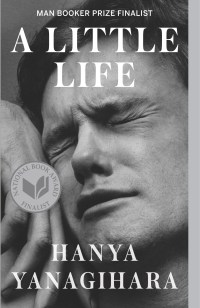
 Several days ago, a reader left a comment on the “In My Stack” page of this blog, urging me to read A Little Life, by Hanya Yanagihara. I was a little confused, since I read that unforgettable book more than a year ago. Shouldn’t I have removed it from “In My Stack” and included it in “Read in 2015”? Then I looked at the books I’d listed on “In My Stack” and realized that I hadn’t updated the list in years. Oops! (And by the way, I still think A Little Life should have won the National Book Award and the Man Booker Prize.)
So I wiped the list clean and started a new list of books that are In My Stack, with the intention of updating it every season. It’s hard to face the fact that it’s just not possible to read every book that catches my eye.
The three “practical rules” for reading, according to Ralph Waldo Emerson, are:
1. Never read any book that is not a year old.
2. Never read any but famed books.
3. Never read any but what you like; or, in Shakspeare’s phrase,“No profit goes where is no pleasure ta’en: In brief, sir, study what you most affect.”
Emerson’s third rule is easy for me to follow, but the first two pose problems. Whenever I read an “old” book, I feel like I’m missing out on all the exciting new books of the season. And although I read plenty of books that have received publicity, awards, and critical acclaim, I also like to find hidden gems that haven’t received the love they deserve. I do have to acknowledge that Emerson has a point. Books that stand the test of time are worth reading. So I’ve added Elena Ferrante’s My Brilliant Friend to my fall list, because so many people whose opinions I trust have recommended it.
Two books that I didn’t add to my list, because I read advance copies earlier this summer, but that I highly recommend adding to yours are Commonwealth by Ann Patchett (on sale September 13; full review to come) and A Gentleman in Moscow by Amor Towles (on sale September 6). Commonwealth is very good, although my favorite of Patchett’s novels remains State of Wonder.
 A Gentleman in Moscow is absolutely wonderful — one of the rare books I read slowly towards the end, because I just didn’t want to finish. It’s a hard act to follow, and every book I’ve read since has seemed vaguely second-rate in comparison. The “gentleman’ of the title is Count Alexander Ilyich Rostov, a Russian aristocrat born in 1889, who is sentenced by a Bolshevik tribunal to lifelong house arrest in Moscow’s Metropol Hotel. The Count’s life is spared, unlike so many others of his class, because a poem he wrote struck the revolutionaries as sympathetic to their cause.
In a Publishers Weekly interview, Amor Towles says: “As awful as the crimes of Stalinism were, the vast majority of the Russian population was trying to survive, to love, to have a sense of purpose.” The Count — whose life before the Revolution was spent, in his words,”dining, discussing. Reading, reflecting. The usual rigmarole”, and who is accused by the tribunal of being “a man so obviously without purpose” — is able to live a purposeful, and even sometimes joyful, life as a prisoner at the Metropol.
A Gentleman in Moscow contains all the elements that make me fall in love with a book: a beautifully constructed story connected to historical events, an appealing and multidimensional protagonist, and a sharp and engaging writing style that inspired me to underline dozens of passages. Frequently, Towles addresses the reader directly:
Popular wisdom tells us that when the reel of our concerns interferes with our ability to fall asleep, the best remedy is the counting of sheep in a meadow. But preferring to have his lamb encrusted with herbs and served with a red wine reduction, the Count chose a different methodology altogether.
I’ll leave it to you to find out what his methodology was. If you’ve read Rules of Civility, you already know what a smart and entertaining writer Towles is — perfect for page-turners and page-huggers alike. A Gentleman in Moscow will certainly be on my list of favorites at the end of the year.
What will I read next? The following books are “on deck”, but that could change any time.
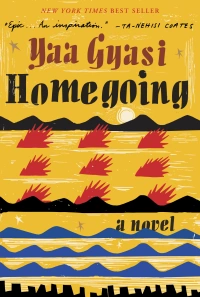 Homegoing by Yaa Gyasi (available now)
Homegoing, which has drawn raves from my coworkers, covers 300 years of African and American history, beginning with two sisters from Ghana, one who is sold into slavery and one who marries a British slave trader.
Shelter by Jung Yun (available now)
I need a good page-turner in the mix, and several bloggers who often share my tastes loved this book, which is rooted in the 2008 housing crisis.
The Sympathizer by Viet Thanh Nyugen (available now)
A must-read — it won the 2016 Pulitzer Prize for fiction.
 Mischling by Affinity Konar (September 6)
This debut novel, about identical twins at Auschwitz, has been receiving a lot of buzz (including a blurb by Anthony Doerr), and I can never read enough about World War II.
Nutshell by Ian McEwan (September 13)
McEwan is one of my favorite authors, and his new book sounds weird but interesting: it’s a murder mystery, inspired by Hamlet, told by an unborn child.
 Hero of the Empire: The Boer War, A Daring Escape, and the Making of Winston Churchill by Candice Millard (September 20)
Millard is one of my favorite nonfiction authors, and I’m fascinated by Winston Churchill, so I’m excited to read Hero of the Empire.
The Bookshop on the Corner by Jenny Colgan (September 20)
I can never resist a book about a bibliophile, and this one packs a double punch: the main character is a librarian who becomes a bookseller.
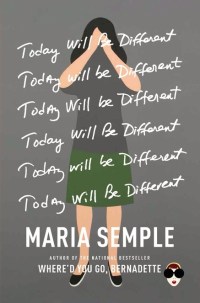 Today Will Be Different by Maria Semple (October 4)
I loved Where’d You Go, Bernadette and can’t wait to read Semple’s new book.
Let me know what you think I should add to (or subtract from!) my fall list.
 The Perfect Horse: The Daring U.S. Mission to Rescue the Priceless Stallions Kidnapped by the Nazis by Elizabeth Letts
 All is Not Forgotten by Wendy Walker
 You Will Know Me by Megan Abbott
 We Could Be Beautiful by Swan Huntley
 Dog Gone: A Lost Pet’s Extraordinary Journey and the Family Who Brought Him Home by Pauls Toutonghi
 The Lost Girls by Heather Young
 American Heiress: The Wild Saga of the Kidnapping, Crimes and Trial of Patty Hearst by Jeffrey Toobin
 The After Party by Anton DiSclafani
 Siracusa by Delia Ephron
 Harmony by Carolyn Parkhurst
 Patient H.M.: A Story of Memory, Madness, and Family Secrets by Luke Dittrich (available August 9)
 Before the Fall by Noah Hawley
 Be Frank With Me by Julia Claiborne Johnson
 The Book That Matters Most by Ann Hood (available August 9)
 The number one search term that’s led readers to Books on the Table over the past eighteen months is “Girl on the Train paperback release date”. That query led thousands of readers to a post from April 2015,
  A Window Opens by Elisabeth Egan
 Language Arts by Stephanie Kallos
 Crooked Heart by Lissa Evans
 The Hummingbird by Stephen P. Kiernan
 Every parent remembers listening politely (or at least pretending to listen) to their children’s long-winded plot descriptions of their favorite books, movies, or TV shows. As a grade schooler, my younger son had a more succinct way of conveying this information. He described everything in terms of its parentage. I asked him for some contemporary examples, and he offered these: If Lord of the Rings and The Sopranos had a baby, it would be Game of Thrones . . . if Jaws and the Sports Illustrated swimsuit edition had a baby, it would be The Shallows. (Is there a potential party game in this?)
 The Girls by Emma Cline
 Look at You Now: My Journey from Shame to Strength by Liz Pryor
 Sons and Daughters of Ease and Plenty by Ramona Ausubel
 Modern Lovers by Emma Straub
 The Excellent Lombards by Jane Hamilton
 Sweetbitter by Stephanie Danler
 If I Forget You by Thomas Christopher Greene
 Wolf Hollow by Lauren Wolk
 I just enjoy translating, it’s like opening one’s mouth and hearing someone else’s voice emerge.
 Garrison Keillor has collected his favorite selections from The Writer’s Almanac public radio show in anthologies — Good Poems and Good Poems for Hard Times. Two other anthologies I recommend are Poems That Make Grown Men Cry: 100 Men on the Words That Move Them and Poems That Make Grown Women Cry: 100 Women on the Words That Move Them. The editors of these books (father and son team Anthony and Ben Holden) asked notable men and women this question: “What poem moves you to tears?” Please don’t be put off by the word “cry” in the titles; the poems are emotionally powerful, not depressing.
 Confession: I’d never read anything by Neil Gaiman until last week, when I read his new collection of nonfiction pieces, The View from the Cheap Seats: Selected Nonfiction. Well, I read most of it. I admit to skimming the essays in Section II, “Some People I Have Known”, since they presupposed a certain amount of knowledge about influential science fiction and fantasy authors. The NPR reviewer calls the 550-page book a “hefty tome”, noting that Gaiman started as a journalist in the 1980s and that a complete collection of his nonfiction would “take up volumes”.
 See that little stream—we could walk to it in two minutes. It took the British a month to walk it—a whole empire walking very slowly, dying in front and pushing forward behind. And another empire walked very slowly backward a few inches a day, leaving the dead like a million bloody rugs.
 First World War, I recommend Richard Rubin’s The Last of the Doughboys: The Forgotten Generation and Their Forgotten World War. (Also, don’t miss Willa Cather’s One of Ours, which won the Pulitzer Prize for fiction in 1923.) For the French perspective, Jeff recommends Poilu: The World War I Notebooks of Corporal Louis Barthas, Barrelmaker, 1914-1918, a new translation of the actual wartime diaries of a French soldier.
 The Summer Before the War, by Helen Simonson (the author of Major Pettigrew’s Last Stand), is a kinder, gentler World War I book than most. The story centers on Beatrice Nash, a young Latin teacher who arrives in the small village of Rye during the summer of 1914. Determined to make her own way after the death of her beloved father, Beatrice is thwarted by the sexist mores of the times. She befriends a local family, the Kents, whose nephews — each for his own complicated reasons — volunteer to serve in France soon after war is declared. Beatrice is the most endearing character I’ve come across for a long time. She always has a quick comeback, even when faced with a supercilious solicitor or an arrogant American author. I loved every page of this book, which NPR says “rivals Simonson’s first in the charm department.” Yes, it’s charming — but it’s also poignant and beautifully written. You might even shed a tear or two. (By the way, if you’re suffering from Downton Abbey withdrawal, this is the book for you.)
 I’ve also enjoyed Jacqueline Winspear’s Maisie Dobbs series. Maisie Dobbs, the heroine, is a World War I veteran, having served as a battlefield nurse. After the war, she trains with famous private investigator Dr. Maurice Blanche, and when he retires, she sets up her own detective agency. In most of the 12 novels, Maisie solves a complex case in which First World War events play a role. In her review of the first book in the series, New York Times book reviewer Marilyn Stasio says: “Romantic readers sensing a story-within-a-story won’t be disappointed at the sensitivity and wisdom with which Maisie resolves her first professional assignment, an apparent case of marital infidelity that turns out to be a wrenching illustration of the sorrowful legacies of World War I.” I recommend reading
  Books on the Table