 At a recent get-together, a (male) friend told me all about a great book he’d just read, prefacing his comments by saying, “I’m sure you haven’t read it.” The book? Blood and Thunder: The Epic Story of Kit Carson and the Conquest of the American West, by Hampton Sides, published about ten years ago. Obviously, he couldn’t imagine that Blood and Thunder would appeal to women, and he doesn’t know me well enough to know that I’ve loved books about the American West ever since I was a child, both fiction and nonfiction. (And yes, I have read Blood and Thunder. It’s great, as is anything by Hampton Sides; my favorite is In the Kingdom of Ice: The Grand and Terrible Polar Voyage of the USS Jeannette).
 The same evening, I got involved in a nostalgic conversation about favorite childhood books. When I mentioned The Little House on the Prairie series, someone said wistfully that she’d loved those books as a child but couldn’t share them with her children because she has only boys. I told her that I’d read the whole series — not just Farmer Boy — to one of my boys, and he’d enjoyed them almost as much as I did. “But they’re about girls!” she said. Well, no. They’re about people, and the settling of the American West. We give boys books featuring animals, aliens, and wizards, but we balk at suggesting they read about girls?
Male and female reading tastes often differ, to be sure. It’s a safe bet that most readers of a new account of an obscure Civil War battle will be male, just as most readers of the latest novel about a young woman coming of age will be female. (It’s interesting to me that so many literary novelists are male, when their audience seems to be predominantly female.)
 Several of my favorite books this year have been truly “unisex”. A Gentleman in Moscow, News of the World, When Breath Becomes Air, Salt to the Sea — all would appeal to almost any reader, male or female. Still, I need to oblige a friend who asked me to recommend books for men. I know she’s not alone in her quest to find books suitable for husbands, fathers, brothers, and sons — so here are some ideas for last-minute shoppers.
The Perfect Horse: The Daring U.S. Mission to Rescue the Priceless Stallions Kidnapped by the Nazis by Elizabeth Letts
Fans of narrative nonfiction by Erik Larson and Laura Hillenbrand will love The Perfect Horse. The suspense is not whether the Lipizzaner stallions will be rescued, but how — and at what cost. The Christian Science Monitor calls the book a “perfect World War II rescue story”, and I agree.
 Patient H.M.: A Story of Memory, Madness, and Family Secrets by Luke Dittrich
“Patient H.M.” was Henry Molaison, a young man who was lobotomized in the 1950s in attempt to cure his severe epilepsy. The twist in this book is that the neurosurgeon who performed the surgery was Dr. William Beecher Scoville, the author’s grandfather. Dittrich provides a fascinating and personal viewpoint about the medical ethics involved with his grandfather’s career, as well as the changing attitudes towards mental illness during the 20th century.
Hillbilly Elegy: A Memoir of a Family and Culture in Crisis by J.D. Vance
Hillbilly Elegy has been receiving a lot of praise and publicity since it was published in June. It’s two books in one — a very personal story of growing up poor in southern Ohio (reminiscent of Rick Bragg’s All Over But the Shoutin’) and an exploration of the economic and social problems facing “hillbilly culture”.
Seinfeldia by Jennifer Keishin Armstrong
The (male) Seinfeld fans in my family enjoyed the behind-the-scenes look at the creative partnership between Larry David and Jerry Seinfeld.
 Indestructible: One Man’s Rescue Mission That Changed the Course of WWII by John R. Bruning
When naval aviator Pappy Gunn’s wife and four children are taken prisoner by the Japanese in the Philippines, he devotes the next three years to rescuing them — and developing new weapons that would have a major effect on the war in the Pacific. I think male readers would find this story as riveting as I did.
Hero of the Empire: The Boer War, A Daring Escape and the Making of Winston Churchill by Candice Millard
Millard, author of The River of Doubt and Destiny of the Republic, is one of my favorite authors of narrative nonfiction. The Wall Street Journal says that Millard “has developed a distinctive approach to writing about historical giants. She focuses tightly on a forgotten yet riveting episode in an extremely well-documented life . . . for her latest book, Ms. Millard tackles one of modern history’s most chronicled figures, Winston Churchill. By one count, there are more than 12,000 books written about Churchill. Ms. Millard’s Hero of the Empire recounts an episode in a near-forgotten conflict: young Winston Churchill’s capture and dramatic escape during the Boer War.” One of my most discriminating male readers says this is his top book of 2016.
 The North Water by Ian McGuire
This adventure story probably isn’t everyone’s cup of tea, but I read it in two days. The North Water was chosen by the New York Times Book Review as one of the year’s ten best books, so I can’t be the only person who willingly reads about violence aboard a 19th century whaling expedition — gruesome murders, polar bear attacks, animal slaughter, and violence galore. I think my friend who couldn’t believe I read Blood and Thunder would be even more shocked I enjoyed The North Water.
Free Men by Katy Simpson Smith
In the spring of 1788, seven years after the British surrendered at Yorktown, three desperate men, all fleeing unbearable situations, join forces for a few days in the thick woods of what is now southern Alabama. They rob and murder a group of white traders and their Indian guides. One of the guides escapes and reports the crime to his chief, Seloatka. Le Clerc, a French “gentleman adventurer” who is married to a Creek Indian woman, volunteers to hunt down the three murderers. Perfect for fans of literary historical fiction who liked The Good Lord Bird (James McBride) or The Known World (Edward P. Jones).
 A few more manly suggestions:
For music fans, Born to Run (Bruce Springsteen), Testimony (Robbie Robertson); for golfers, A Life Well Played: My Stories (Arnold Palmer); for business guys, Shoe Dog: A Memoir by the Creator of Nike (Phil Knight); for Civil War buffs, American Ulysses: A Life of Ulysses S. Grant (Ronald C. White); and for mystery readers, Manitou Canyon (William Kent Krueger).
Happy Holidays!
 Nonfiction: Generation Chef: Risking It All for a New American Dream by Karen Stabiner
 spite of the challenges presented by the legal and economic system in France.
 Michael Lewis has a new book coming out in December, The Undoing Project: A Friendship That Changed Our Minds, about two Israeli psychologists who did groundbreaking research on decision-making and judgment.
 Nonfiction: On Living by Kerry Egan
 Nonfiction: Hillbilly Elegy: A Memoir of a Family and Culture in Crisis by J.D. Vance
 If we stop writing letters, who will keep our history or dare venture upon a biography? George Washington, Oscar Wilde, T.E. Lawrence, Virginia Woolf, Oliver Wendell Holmes, E.B. White, Vera Nabokov, J.P. Morgan — if any of these vivid predecessors still belong to us in some fragmented private way, it’s because of their letters or diaries (which are letters to ourselves) or thanks to some strong biography built on a ledge of letters.
 Mina Harker, one of Dracula’s victims, closes her letters by saying “Your ever-loving Mina Harker.” Frankenstein’s ill-fated fiancée, Elizabeth Lavenza, ends a letter with “Adieu! Take care of yourself, and I entreat you, write!”. What do these two characters have in common? They both appear in epistolary novels, books written either entirely or mostly in letters.
 Of course, sometimes only real letters will do. I treasure several anthologies of letters from both famous and ordinary people. War Letters: Extraordinary Correspondence from American Wars (edited by Andrew Carroll) and Letters of Note: An Eclectic Collection of Correspondence Deserving of a Wider Audience (edited by Shaun Usher). Volume 2 of Letters of Note just came out last month, and I’m savoring every letter. My all-time favorite epistolary book is Helene Hanff’s 84, Charing Cross Road (which, surprisingly, was made into a movie that does justice to the book), which chronicles a 20-year correspondence between Hanff, a writer in New York, and Frank Doel, an antiquarian bookseller in London. Another favorite is My Dearest Friend: Letters of Abigail and John Adams, which contains just a fraction of the 1,100 letters that the couple wrote to each other during the many separations they endured over the course of their 54-year marriage. Their letters bring the world of this country’s founders alive more than any other surviving documents.
 In a recent book called Signed, Sealed, Delivered: Celebrating the Joys of Letter Writing, Nina Sankovitch describes finding a trunk filled with hundreds of letters in a shed attached to a house her family was renovating in the Upper West Side of New York. The letters belonged to the original owners of the home, the Seligman family, and the vast majority of them were written by James Seligman to his parents (whom he addressed as “Dearest Mamma” or “Darling Parents”) during his years at Princeton, 1908-1912. Nina feels that rereading the letters James left behind “proves all over again, the power of the written, the handwritten, word.” Aside from a listing on an online family tree, James left no other evidence of his life. Nina says:
 Several days ago, a reader left a comment on the “
 A Gentleman in Moscow is absolutely wonderful — one of the rare books I read slowly towards the end, because I just didn’t want to finish. It’s a hard act to follow, and every book I’ve read since has seemed vaguely second-rate in comparison. The “gentleman’ of the title is Count Alexander Ilyich Rostov, a Russian aristocrat born in 1889, who is sentenced by a Bolshevik tribunal to lifelong house arrest in Moscow’s Metropol Hotel. The Count’s life is spared, unlike so many others of his class, because a poem he wrote struck the revolutionaries as sympathetic to their cause.
 Homegoing by Yaa Gyasi (available now)
 Mischling by Affinity Konar (September 6)
 Hero of the Empire: The Boer War, A Daring Escape, and the Making of Winston Churchill by Candice Millard (September 20)
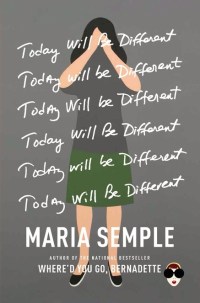 Today Will Be Different by Maria Semple (October 4)
 The Perfect Horse: The Daring U.S. Mission to Rescue the Priceless Stallions Kidnapped by the Nazis by Elizabeth Letts
 All is Not Forgotten by Wendy Walker
 You Will Know Me by Megan Abbott
 We Could Be Beautiful by Swan Huntley
 Dog Gone: A Lost Pet’s Extraordinary Journey and the Family Who Brought Him Home by Pauls Toutonghi
 The Lost Girls by Heather Young
 Garrison Keillor has collected his favorite selections from The Writer’s Almanac public radio show in anthologies — Good Poems and Good Poems for Hard Times. Two other anthologies I recommend are Poems That Make Grown Men Cry: 100 Men on the Words That Move Them and Poems That Make Grown Women Cry: 100 Women on the Words That Move Them. The editors of these books (father and son team Anthony and Ben Holden) asked notable men and women this question: “What poem moves you to tears?” Please don’t be put off by the word “cry” in the titles; the poems are emotionally powerful, not depressing.
 More than 500 authors are on hand to sign their books, and attendees queue up — sometimes for hours — to meet their favorite authors and receive personally inscribed books. I don’t have the patience to stand in line for much of anything, unless I’m forced to wait in a TSA line at the airport, so I didn’t get any signed books. If I were less antsy, I would have enjoyed meeting Candice Millard (signing Hero of the Empire: The Boer War, a Daring Escape, and the Making of Winston Churchill, coming in September), Jonathan Safran Foer (signing Here I Am, due in September and his first novel since Extremely Loud and Incredibly Close in 2005), Emma Cline (signing The Girls, her debut novel, which is the #1 Indie Pick for June), Amor Towles, author of Rules of Civility (signing A Gentleman in Moscow, out in September), Richard Russo (signing Everybody’s Fool, his follow-up to Nobody’s Fool), and dozens of others.
 OK, point taken. I’m not a book hoarder or a bibliomaniac — but I do have a hard time culling my bookshelves. (For more on my difficulties in this area, see
  April 23, 2016 marks the 400th anniversary of Shakespeare’s death. Historians believe that Shakespeare, in a bit of poetic serendipity, was also born on April 23. The Guardian lists some of the celebrations taking place worldwide:
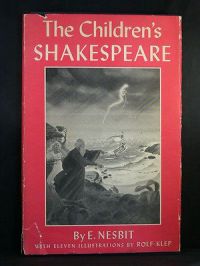 When I was eight or nine, someone gave me a book called The Children’s Shakespeare, by E. Nesbit (author of The Railway Children and many other classic children’s books) which summarizes each play in “words that little ones can understand”. In the introduction, Nesbit describes trying to read a A Midsummer NIght’s Dream to her young daughters, and having them complain they couldn’t understand the language:
 I can’t remember which Shakespeare play was the first one I ever saw, but I can tell you the first one in which I appeared — Macbeth. This is also the last Shakespeare play (or actually, any play) in which I’ve performed. My sixth grade teacher at Peck Elementary School, Mr. Baxter, assigned Macbeth to our class. He correctly guessed that sixth graders would love the violence, insanity, treachery, and witchcraft in the play. (E. Nesbit did not include Macbeth in The Children’s Shakespeare. She had a hard enough time with Romeo and Juliet’s suicides, failing to mention that Juliet stabs herself.) I recall a classroom discussion about why Macbeth killed Macduff’s innocent wife and young children:
 lthough I’m not much of a performer, I am an excellent audience member. Along with several dear friends, I’ve been a loyal subscriber to the Chicago Shakespeare Theater for many years. It’s a beautiful theater, built to evoke the design of the Globe Theater in London. No one throws rotten fruit at the stage as they supposedly did in Shakespeare’s time, although I once had the misfortune of being seated next to a heckler. (He didn’t care for Barbara Gaines’s modern interpretation of The Taming of the Shrew.
 Since I was at the gate, not strapped into an airplane seat, I was able to move out of earshot of the impromptu concert, crossing my fingers that the young musicians would not be seated near me on the plane. I was really looking forward to finishing my book, Carly Simon’s memoir, Boys in the Trees.
 I did not have to sit near the harmonica-playing duo on the plane. Instead, I sat across from a young mother who had an infant in a front carrier and a two-year-old in the seat beside her. Both children fell asleep within 20 minutes of takeoff. (This never once happened to me, I want you know.) She ordered a Bloody Mary, settled back in her seat, opened her book (The Rosie Project, I couldn’t help but notice) and smiled at me. “Pure bliss, right?” I said to her.
 How many aspiring writers have been told to “write what you know”? If Pat Conroy was given that timeworn advice, he’s certainly taken it to heart. Both his novels and his memoirs are about what he knows — growing up as the son of an abusive Marine Corps fighter pilot, attending the Citadel as a basketball player and budding writer, losing a brother to suicide, coping with a sister’s mental illness. In his latest memoir, The Death of Santini, Conroy says, ” My books have always been disguised voyages into that archipelago of souls known as the Conroy family.”
 Conroy disappeared for years, and finally published Beach Music in 1995. I wanted to love the book, but found I couldn’t get past the flowery prose and stilted dialogue. So it was with trepidation that I picked up My Losing Season several years later. On the surface, this memoir recounts Conroy’s senior year playing basketball at the Citadel, but it’s really about his relationship with his father, his coach, and his teammates, and finding his voice as a writer.
 The Death of Santini covers some familiar ground — the relationship between Conroy and his terrifyingly abusive father, Don Conroy (a.k.a. “The Great Santini”). But this is a story of redemption — Don Conroy has transformed himself from a monster into a loving father and grandfather. At the end of The Prince of Tides, Tom Wingo (Pat Conroy’s alter ego), says, “I learned that I needed to love my mother and father in all their flawed, outrageous humanity. And in families there are no crimes beyond forgiveness. But it is the mystery of life that sustains me now.” Fact reflects fiction in The Death of Santini, for Conroy shows us how he is able to forgive Don Conroy for his vicious cruelty towards his family. The writing of the book was a necessary part of Conroy’s healing; he says in the prologue:
 Books on the Table