

It all started with Oprah Winfrey. In 1996, she launched a book club that made an enormous impact on readers, authors, and publishers. For 15 years, Oprah’s choices became worldwide bestsellers. During the heyday of her club, Oprah’s power as a recommender, often called the “Oprah Effect” in the publishing world, was unparalleled. Michael Pietsch, currently CEO of Hachette Book Group and past publisher of Little, Brown & Co., said in a USA Today article that Oprah “didn’t originate the idea of book clubs, but more than anyone, she has spread the idea of reading a book as a shared community.” Nora Rawlinson, who’s been the editor of Library Journal, Publishers Weekly, and now EarlyWord, citing surveys showing that “friends’ recommendations are the top reasons people buy a book” says that “Oprah is the ultimate friend to her audience.”
A lot of readers must think they’re friends with actress Emma Watson, because as of today, 84,000 people had signed up for her new feminist book club, “Our Shared Shelf”. Watson, who became famous through her portrayal of brave and brilliant Hermione in the Harry Potter movies, is a United Nations Women Goodwill Ambassador with a special interest in gender equality and its benefits for both men and women. UN Goodwill Ambassadors are celebrity advocates, drawn from the “worlds of art, music, film, sport and literature to highlight key issues.”
Watson has ambitious plans for her book club. In her announcement on Goodreads, she says:
The plan is to select and read a book every month, then discuss the work during the month’s last week (to give everyone time to read it!). I will post some questions/quotes to get things started, but I would love for this to grow into an open discussion with and between you all. Whenever possible I hope to have the author, or another prominent voice on the subject, join the conversation.
 Watson has selected Gloria Steinem’s memoir, My Life on the Road, for the first online discussion, scheduled to begin in a couple of weeks. (The exact date isn’t clear.) I’m not sure how the logistics of an online discussion with thousands of people will work, but kudos to Emma Watson for launching the club on January 6, choosing the first book on January 8, and attracting 84,000 enthusiastic participants less than a week later. I’m just glad I don’t have to supply the wine and cheese.
Mark Zuckerberg made a reading resolution last year, announcing on January 2, 2015 that he planned to read a book every other week and post discussions on Facebook. His Facebook page for “A Year of Books” says: “We will read a new book every two weeks and discuss it here. Our books will emphasize learning about new cultures, beliefs, histories and technologies.” As of December 28, the “community” (Zuckerberg never refers to it as a “book club”) had read 23 books, just short of the stated goal of 26 books. Many recent commenters wondered if “A Year of Books” would continue in 2016; one commenter replied, “I believe that Mark has a new challenge for 2016”. He does — and it doesn’t involve books. Zuckerberg posted this update on Facebook:
Every year, I take on a personal challenge to learn new things and grow outside my work at Facebook. My challenges in recent years have been to read two books every month, learn Mandarin and meet a new person every day. My personal challenge for 2016 is to build a simple AI to run my home and help me with my work.
 I guess that building a robot would take away from my reading time, so I’ll stick with books. Zuckerberg’s reading list, with a few exceptions, looks pretty dreary to me — I’m not reading The Structure of Scientific Revolutions (a history of science published in 1970) anytime soon. Maybe Zuckerberg got burned out on reading because he didn’t include any fiction in the mix, except a work of science translated from the Chinese (The Three-Body Problem) whose title refers to the “three-body problem in orbital mechanics.” I did enjoy, and highly recommend, one of Zuckerberg’s picks — On Immunity: An Inoculation, by Eula Biss. This fascinating book, which defies categorization (science? sociology? memoir?) would be a great choice for real-life book clubs.
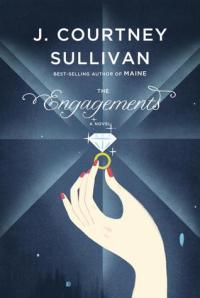 Vogue magazine calls actress and producer Reese Witherspoon the “new patron saint of literature”. Witherspoon’s production company, Pacific Standard, produced film adaptations of Cheryl Strayed’s Wild and Gillian Flynn’s Gone Girl; current projects include movie versions of The Engagements (J. Courtney Sullivan) and Luckiest Girl Alive (Jessica Knoll) and a TV miniseries based on Big Little Lies (Liane Moriarty). According to Vogue:
As if bringing these stories to the big screen weren’t enough, Witherspoon constantly promotes the many books on her nightstand on her Instagram account. Her posts, which have included snaps of Lena Dunham’s Not That Kind of Girl, Malala Yousafzai’s memoir, and many others, have become the equivalent of an Oprah’s Book Club stamp for the social media generation.
I’ve come across many references to Reese Witherspoon’s “book club”, but all I could find was her Instagram feed with photos of book she’s reading followed by thousands of brief comments from her adoring fans — “She always reads awesome books!”; “Follow Reese for book recommendations!”; “Have to get this one!” This seems like a far cry from Oprah’s hour-long, in-depth televised interviews with authors. But more power to Witherspoon for getting on her celebrity soapbox to support books she loves. The cynic in me needs to add that some of these are books she’s bought the film rights to — so not only does she love them, she has a financial stake in their success.
 Bill Gates doesn’t have a book club, but he frequently posts reviews on his blog, Gates Notes. He told the New York Times he reads about 50 books a year, mostly nonfiction with a few novels interspersed. He’s a book blogger after my own heart, telling the Times that “he rarely posts negative reviews of books, explaining that he sees no need to waste anyone’s time telling them why they shouldn’t bother reading something.” He recommends one of his fellow billionaire Mark Zuckerberg’s choices, On Immunity: “When I stumbled across the book on the Internet, I thought it might be a worthwhile read. I had no idea what a pleasure reading it would be. ” Gates also enjoyed Graeme Stimson’s The Rosie Project, a charming novel about a professor on the autism spectrum trying to find love: “It’s an extraordinarily clever, funny, and moving book about being comfortable with who you are and what you’re good at. I’m sending copies to several friends . . . This is one of the most profound novels I’ve read in a long time.”
Do celebrities influence your book choices? And what do you think of online book clubs in general?
 When I checked to see which posts received the most views, I was surprised. The #1 post for 2015 is my
  #2:
#2:  #5:
#5:  #7:
#7:  #9:
#9:  Opera. It’s probably best I didn’t.
 The Guest Room by Chris Bohjalian (1/5)
 The Sound of Gravel by Ruth Wariner (1/5)
 My Name is Lucy Barton by Elizabeth Strout (1/12)
 The Swans of Fifth Avenue by Melanie Benjamin (1/26)
 Inside the O’Briens by Lisa Genova (1/5)
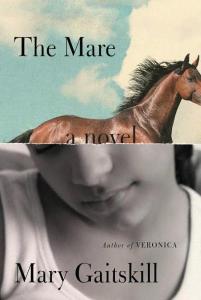 In North America, today is the winter solstice, which means it’s the shortest day of the year. Here in Chicago, that means we will have only 9 hours and 7 minutes of daylight today. I plan to take full advantage of the dark and dreary weather, spending the longest evening of the year curled up with a good book — The Mare, by Mary Gaitskill. I’m loving this book, and if I were making a list of my favorite books of 2015, it would be a contender.


 Anne H. (our Macmillan rep) had a hard time deciding — she said, “This is such a hard question! It makes me think I need to start keeping a list of books I read.” She settled on Jenny Lawson’s irreverent memoir, Furiously Happy: A Funny Book About Horrible Things, and Paul Murray’s satirical novel, The Mark and the Void. (Can you tell Anne has a good sense of humor?)

 So Gluck stretched the truth in the service of Santa Claus. Sometimes one had to take liberties with facts in order to get, and keep, people’s attention, he reasoned. What was Santa Claus if not a friendly deception invented to delight and encourage better behavior?
 This year, I’m taking a positive approach. Instead of telling you which books are bad gifts, I’ll suggest a few that might be good gifts. I say “might” because, of course, you’re taking a chance. Matching a book with a reader is mysterious alchemy — which brings me to another point. If you’re thinking of giving a book to someone who’s not a reader, be very careful. Make sure it’s a useful book rather than a reading book. Your interior designer sister, who loves shelter magazines, would probably appreciate Sharon Santoni’s lovely book, My Stylish French Girlfriends. Your law student brother, who’s buried in textbooks but enjoys cooking, might like the new Jacques Pepin cookbook, Heart and Soul in the Kitchen.
 Every major publication, print and digital, publishes a list of the “best” books of the year. The Wall Street Journal creates a master list by compiling books cited on 12 year-end lists:
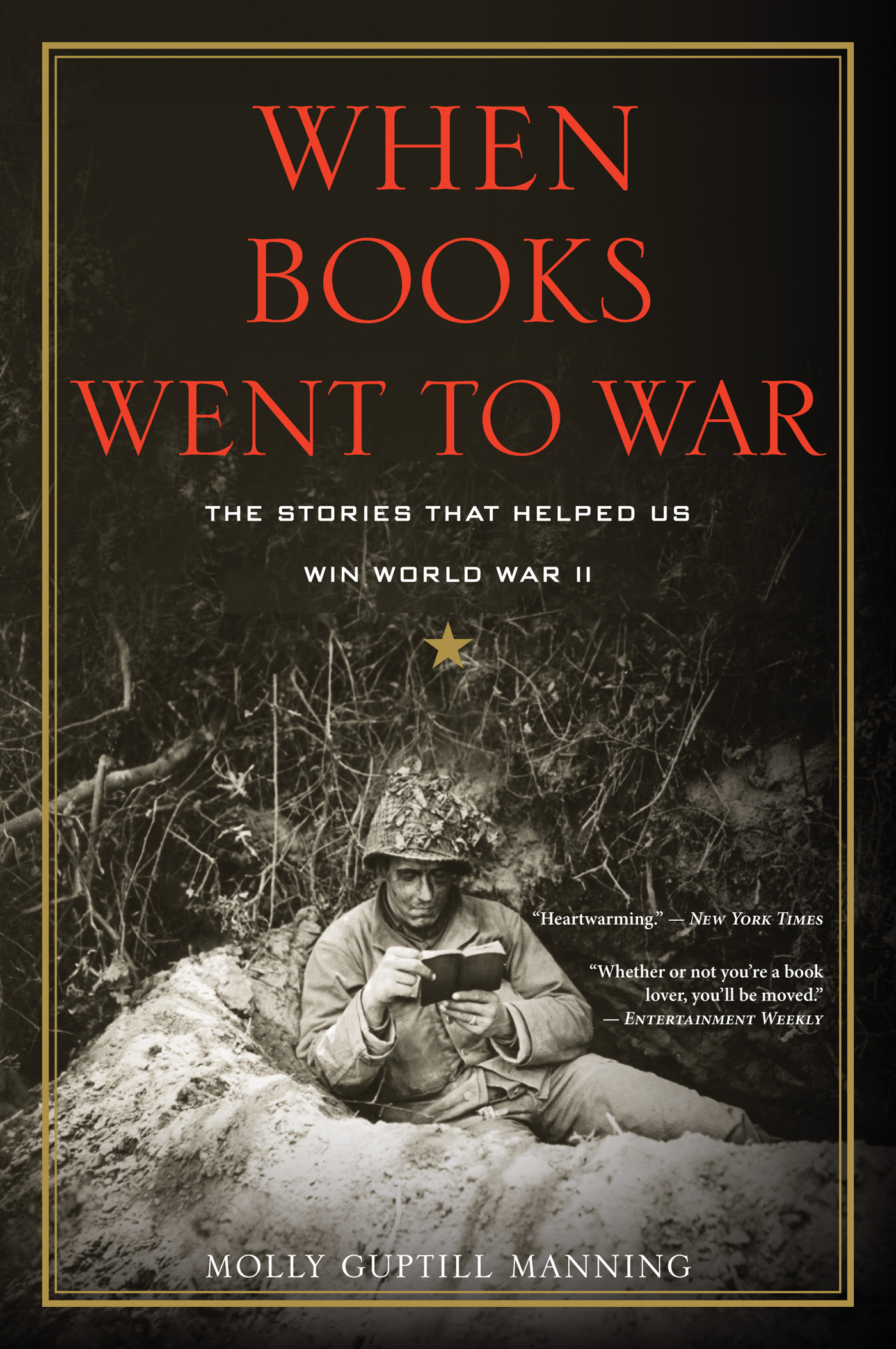


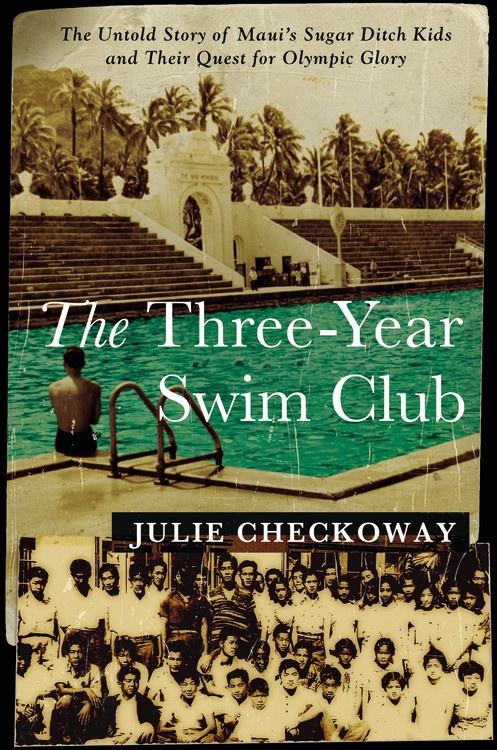
 My Kitchen Year by Ruth Reichl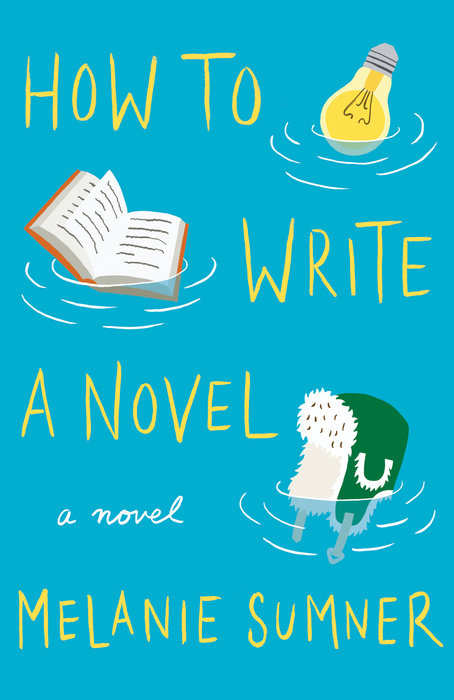

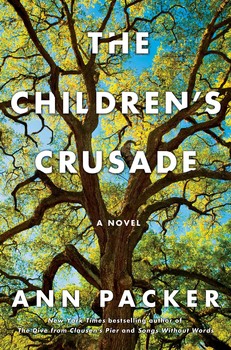
 Almost Famous Women autographed copy (Megan Mayhew Bergman) — This collection of “off-the-radar” female historical characters is going to the top of my pile.
 Villa America (Liza Klaussmann) — Historical fiction about Sara and Gerald Murphy, contemporaries of Hemingway and Fitzgerald, and their adventures with fellow expatriates on the French Riviera. Our hostess adored Jess Walter’s Beautiful Ruins — I think Villa America will be perfect for her.
 The Bee Cottage Story: How I Made a Muddle of Things and Decorated My Way Back to Happiness (Frances Schultz) — The member who ended up with this book hasn’t made a muddle of things, but she is in the middle of building and decorating a new house, so it’s perfect for her.
 A Little Life (Hanya Yanigihara) — Two members brought copies of this devastating and powerful book, and both were stolen three times, rendering them dead.
 I recently read an article in the website Wired provocatively titled “The Martian Proves Movies Are Now Better Than Their Books”. The piece was, as I expected, a tedious criticism of Andy Weir’s bestselling novel. The novel isn’t a literary masterpiece, but it’s an absorbing and original story that makes readers — even readers like me, who think they hate science fiction — care about Mark Watney, the character who is abandoned on Mars. According to Wired, “Freed of Watney’s long monologues and Weir’s deep explanations of botany and chemistry, the movie is far more agile than the book.”
 2015 has been a terrific year for movie adaptations of books. The day after Thanksgiving, we saw the movie version of a book I loved, Colm Tóibín’s Brooklyn.It’s a jewel of a movie, and I highly recommend it. The story concerns a young Irish immigrant, Eilis, who comes to the United States in the 1950s. Horribly homesick at first, she falls in love and begins to make a life for herself. A tragedy calls her home to Ireland and she is torn between her two lives.
 At least no American publisher has released a movie tie-in edition of Macbeth. (Sadly, Penguin released one in the U.K.: “Now a major motion picture . . .”). I’m not sure why publishers keep coming out with these movie tie-in editions, because readers hate them. We’ve had many customers choose to special-order a book with the original cover rather than buy the one with the movie tie-in cover we have in the store. Two years ago, The Week published an article called “The Great Gatsby and 7 Other Hideous Movie Tie-In Book Covers”. Some are worse than others, but I’ve seen very few that are improvements over the original covers.
 “We’re living in this terrible world with wars and broken hearts and starvation, but some of us are compelled to make art, like that’s supposed to help anything.”
 There are some stories interspersed that are almost like memoir snippets — I assume they’re fictionalized family history?


 Books on the Table