 The number one search term that’s led readers to Books on the Table over the past eighteen months is “Girl on the Train paperback release date”. That query led thousands of readers to a post from April 2015, 10 Spring Paperback Picks. In that post, I tried to identify the elusive quality that makes some books sell like crazy in hardcover while others — just as appealing — languish on the shelves. I mean, The Girl on the Train — supposedly one of the fastest-selling hardcover novels for adults in publishing history –was fun to read, but I’ve read plenty of similar books that disappeared from bookstore shelves in no time at all.
Hardcover books have a very short shelf life. Publishers accept returns from bookstores after three months, and if a book hasn’t sold in that time, it’s taking up valuable space and it’s sent back. Most unsold hardcovers will go to purgatory in a warehouse while their fates (a remainder store? the dreaded shredder?) are decided. If the authors of those books are lucky, their books will be released in paperback and reach a much wider audience.
Some terrific books you may have missed in hardcover are out in paperback this summer, just in time to read during the dog days of August.
 A Window Opens by Elisabeth Egan
This book touched my bookselling heart — it’s sort of a mashup of Goodnight June (Sarah Jio) and The Storied Life of A.J. Fikry. It’s the clever and entertaining story of a full-time mother and part-time editor who suddenly needs to find a “real” job — and lands at “Scroll”, an up-and-coming company with a diabolically quirky corporate culture. Perfect for all those readers who don’t want to read “dark” or “depressing” books, the novel pays tribute to independent bookstores — and tells a heartwarming family story at the same time. (See full review here.)
Our Souls at Night by Kent Haruf
Our Souls at Night is a beautiful and sad story, made sadder by the fact that Kent Haruf died shortly after completing his final edits on the novel. Haruf’s books are all set in the fictional town of Holt, Colorado and focus on everyday people and their need for connection with each other. The New York Times says: “His great subject was the struggle of decency against small-mindedness, and his rare gift was to make sheer decency a moving subject.” Addie Moore and Louis Waters, both widowed and in their seventies, are long-time neighbors who seek respite from loneliness in an unusual way: through a platonic friendship that includes sleeping in the same bed. Kent Haruf gives more insight into the lives and longings of his characters in less than 200 pages than many authors do in books double that length. I read the book in one afternoon and had to slow myself down so I could appreciate the plain yet poetic language.
 Language Arts by Stephanie Kallos
I read this book last summer and thought it was absolutely wonderful, but I feel like no one else read it in hardcover. Language Arts explores many of the same themes as Our Souls at Night, especially the themes of loss and human connection. How do you connect with someone you love who doesn’t have language? Charles Marlow, an English teacher and a lover of the written word, is the divorced father of an adult autistic son. His daughter has just left for college, and Charles is desperately lonely. I don’t want to say too much about his book, because it’s full of surprises.
The New Neighbor by Leah Stewart
If you’re in the mood for a well-written page-turner, don’t miss this novel about two lonely women in the isolated college town of Sewanee, Tennessee who are both hiding painful secrets. Jennifer Young and her 4-year-old son move in near 91-year-old retired nurse Margaret Riley, and Margaret soon becomes obsessed with digging into Jennifer’s past. The New York Times says “Both women, whom we come to know in great depth, are guarding secrets and neither can afford to make friends . . . Stewart never relaxes her tight focus on these complex characters.” Stewart based the novel in part on her grandmother’s experiences as a World War II battlefield nurse.
 Crooked Heart by Lissa Evans
Yet another book that deserves a second chance in paperback, Crooked Heart is “a wonderfully old-fashioned, Dickensian novel, with satisfying plot twists that invoke the flavor (and scams) of wartime London” (New York Times Book Review). A precocious 10-year-old orphan is evacuated during the Blitz — and is placed with a couple of marginally successful con artists. Darkly humorous yet poignant, this book is Roald Dahl for grownups.
Avenue of Spies: A True Story of Terror, Espionage, and One American Family’s Heroic Resistance in Nazi-Occupied Paris by Alex Kershaw
I am fascinated by the French Resistance, and Alex Kershaw’s Avenue of Spies is a worthy addition to my collection of World War II books. It’s not on a par with In the Garden of Beasts, by Erik Larson, but it’s still a riveting story: an American family, living in occupied Paris, shows unusual courage in the direst of circumstances. American physician Sumner Jackson, his Swiss wife, Toquette, and their son, Phillip, are given the opportunity to leave France when the French surrender is imminent, but they elect to stay and join the Resistance — while living almost next door to the Parisian headquarters of the Gestapo.
 The Hummingbird by Stephen P. Kiernan
One of my favorites of 2015, The Hummingbird deserves to be widely read. The story of a hospice nurse, her terminally ill patient (a history professor specializing in World War II history), and her war veteran husband, this novel is beautiful, suspenseful, and inspiring. I loved the multiple story lines (including a book within a book) and it’s a real joy to read a novel about people whose lives are rooted in integrity. (For a full review, click here.)
All the Time in the World by Caroline Angell
Caroline Angell’s debut novel, a paperback original, is a coming-of-age story about Charlotte, a gifted musician who takes refuge in a babysitting job with a prominent family on New York’s Upper East Side, after she is betrayed by a fellow composer. Tragedy strikes her employers, and Charlotte must make difficult decisions about her future. I loved this novel’s authentic portrayal of young children, as well as its glimpse into the world of musical composition.
The sequel to the tearjerker Me Before You, After You, came out in paperback last week. I haven’t read it yet, but my mother just finished it, and says it’s a worthy follow-up. What paperbacks are you packing in your beach bag?
 Confession: I’d never read anything by Neil Gaiman until last week, when I read his new collection of nonfiction pieces, The View from the Cheap Seats: Selected Nonfiction. Well, I read most of it. I admit to skimming the essays in Section II, “Some People I Have Known”, since they presupposed a certain amount of knowledge about influential science fiction and fantasy authors. The NPR reviewer calls the 550-page book a “hefty tome”, noting that Gaiman started as a journalist in the 1980s and that a complete collection of his nonfiction would “take up volumes”.
 She just smiled, said that she loved books more than anything, and started telling him excitedly what each of the ones in her lap was about. And Ove realised that he wanted to hear her talking about the things she loved for the rest of his life.
 Fredrik’s novels, bestsellers in Sweden, the United States, and dozens of other countries, hit the sweet spot for readers looking for fiction that’s charming, humorous, and a bit quirky — but not corny. They’re the kind of books that people fall in love with and give to all their friends. One of Fredrik’s editors told Publishers Weekly: “I think Fredrik is different from the dark crime writers and doing something different from writers in general . . . He has such a distinctive voice and point of view. He might be the herald of a larger trend in Scandinavian literature, but I think he’s doing his own thing.”
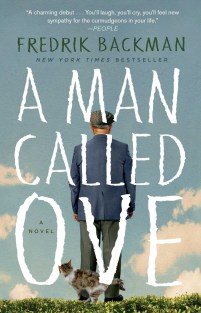 Fredrik Backman on:
 Britt-Marie:
 The classic Swedish picture books about triplets Snipp, Snapp and Snurr and Flicka, Ricka and Dicka:
 Pamela Wechsler, an attorney who spent many years as a criminal prosecutor in Boston and later became a consultant and writer for several TV shows, met the actor Billy Bob Thornton while she was a legal advisor on his movie, The Judge. Thornton — who won an Academy Award for writing the Sling Blade script — encouraged Wechsler to write a novel. The result is the page-turner Mission Hill, first in a planned series about Abby Endicott, a blue-blooded Boston prosecutor whose family expects her to join a white-shoe law firm but opts for the gritty world of criminal law. Thornton’s blurb is better than any description I could come up with: “Pam Wechsler delivers a thrill ride, crackling with suspense, wit and style. The story is rich, the characters are complex, and the writing is deft. I can’t wait for the next one.” I’m with Billy Bob! Watch for an interview with Wechsler on Books on the Table — but I warn you, the interview I just read on a website called
  Elizabeth J. Church, author of The Atomic Weight of Love, is also an attorney. Church, who’s published scholarly articles in legal and scientific journals as well as short stories, left the law after practicing for 30 years. She grew up in Los Alamos, New Mexico, the daughter of a research chemist who worked on the Manhattan Project during World War II. Church’s debut novel was inspired by the lives of her parents and their contemporaries. Meridian (Meri), a young biology student at the University of Chicago, marries her much older professor, Alden, and gives up her own dreams of becoming an ornithologist when her husband is sent to Los Alamos to help develop the atomic bomb. This lovely novel of love, sacrifice, and societal change spans 30 years in Meri and Alden’s flawed marriage. This would be a perfect book club selection — beautiful writing and plenty of issues to discuss. (Meri’s own experiences with women’s discussion groups are not very successful!)
 Squash champion Maria Toorpakai, author of the stunning memoir A Different Kind of Daughter: The Girl Who Hid From the Taliban in Plain Sight, risked her life to become a professional athlete. For over two years, death threats forced her to practice squash in her cement-walled bedroom. Born in Waziristan, the Taliban-dominated Federally Administered Tribal Area of northwest Pakistan, Toorpakai lived as a boy until she was sixteen. Her loving and liberal family supports her dream of athletic success, eventually allowing her to flee Pakistan and train with Jonathon Power, the world champion squash player who now runs the Power Squash Academy in Toronto. The human rights abuses that the Toorpakai vividly describes are numerous and shocking — as a young girl, is beaten by a mullah for showing an interest and athletics, and she sees a woman stoned to death. Don’t miss this powerful and inspiring memoir. I can’t wait to see Power’s documentary about Toorpakai’s s The War to Be Her, scheduled for release in September. (Special thanks to Aidan Harrison, squash pro at the Onwentsia Club in Lake Forest, Illinois and friend of Jonathon Power, who alerted me to Toorpakai’s amazing story.)
 We Never Asked for Wings by Vanessa Diffenbaugh (April 5)
 My Sunshine Away by M.O. Walsh (April 5)
 The Children’s Crusade by Ann Packer (April 5)
 Where They Found Her by Kimberly McCreight (April 19)
 Natural Born Heroes: Mastering the Lost Secrets of Strength and Endurance by Christopher McDougall (April 5)
 Between You and Me: Confessions of a Comma Queen by Mary Norris (April 4)
 Something Must Be Done About Prince Edward County: A Family, A Virginia Town, A Civil Rights Battle by Kristen Green (April 26)
 Margaret Sanger — nurse, birth control pioneer, social activist, free love advocate — led a big life. Too big to be contained in the pages of Ellen Feldman’s slim, fast-paced biographical novel, Terrible Virtue. I read Terrible Virtue in one afternoon, and although the book held me captive, it left me wanting more. Feldman races through Sanger’s long and eventful life, starting with her childhood as one of eleven siblings in a poor Irish Catholic family in upstate New York.
 Feldman presents Margaret Sanger not as a saint or a sinner, but as a complex, flawed visionary, driven not only by her passion for social justice and her vision of a better world, but by her own egotism. The reader feels both sympathy for the personal tragedy she endures and anger at her treatment of her family. Feldman, who tells most of the story from Margaret’s perspective, successfully uses short, straightforward sentences and an urgent tone to capture her voice. When Feldman breaks up Margaret’s narrative to include asides from other characters, addressed to Margaret, she is less successful. These sections, which don’t sound as though they are based on actual correspondence, are intended to add depth to Margaret’s portrayal, but they ring false to me.
 Back in the 1980s, film critic David Denby wondered “how anyone could be hurt by reading a good book”. The controversy at the time, which continues to this day, was how we define a “good book” and whether the traditional Western classics are relevant in our multicultural society. The 48-year-old Denby returned to his alma mater, Columbia University, and spent a full academic year studying the Western canon. He wrote a book, Great Books: My Adventures with Homer, Rousseau, Woolf, and the Indestructible Writers of the Western World, about how the experience reinvigorated his intellectual life.
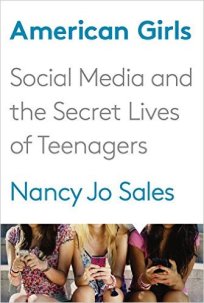 I read this book just after I finished another book about American teenagers, American Girls: The Secret Lives of American Teenagers, by Nancy Jo Sales, which is truly one of the most depressing books I’ve ever read. If Sales is to be believed — and I hope with all my heart she’s not — the lives of most teenage girls revolve around taking pictures of themselves and posting them online, hoping for validation. In this book, physical appearance is everything, the search for male approval is paramount, and feminism is completely dead. A recent Wall Street Journal review said: “The secret life of teenagers sometimes seems entirely a response to nude pictures and requests for them—a response, that is, to male adolescent desire, as it shows up digitally. But female vanity is also at play.”
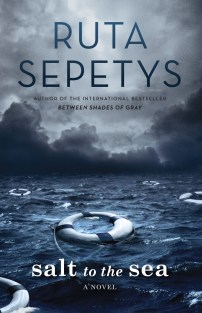 Salt to the Sea by Ruta Sepetys
 When Breath Comes Air is one of those books you want to give to everyone you love. If you start reading the book with a pen in hand, ready to underline your favorite passages, you’ll find yourself underlining almost the whole book. Dr. Paul Kalanithi, a 37-year-old neurosurgeon, wrote the book after he was diagnosed with terminal cancer. He didn’t quite finish, but the memoir he left behind — with a beautiful foreword from Abraham Verghese and an equally lovely epilogue written by his widow, Dr. Lucy Kalanithi — is a masterpiece.
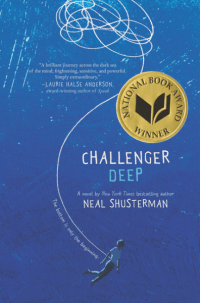 Challenger Deep by Neal Shusterman
 The Lightkeepers by Abby Geni
 Anil Patel, the “golden son” in Shilpi Somaya Gowda’s insightful new novel, is torn between his desire to pursue an independent life and career in the United States and his obligations to his family and community in India. The story of an immigrant feeling untethered both in his adopted country and his native land is a familiar one, but The Golden Son offers a fresh perspective.
 I also enjoyed Gowda’s bestselling debut novel, The Secret Daughter, about an Indian girl, adopted by an American couple, who decides to return to her birth country. A fascinating in-depth interview with Shilpi Somaya Gowda, in which she discusses both her novels, as well as her background growing up in two countries (Canada and India), her writing process, the status of women in India is available as a
  When I checked to see which posts received the most views, I was surprised. The #1 post for 2015 is my
  #2:
#2:  #5:
#5:  #7:
#7:  #9:
#9:  Opera. It’s probably best I didn’t.
 Books on the Table