“Snow in April is abominable,” said Anne. “Like a slap in the face when you expected a kiss.”
L.M. Montgomery, Anne of InglesideIt was April in Minneapolis and snowing, the flakes coming down in thick swirls enchanting the city”
Cheryl Strayed, Wild: From Lost to Found on the Pacific Crest Trail
As I write this post, snowflakes are swirling outside my window. Even though I’ve spent 34 springs in Chicago, I’m still surprised when April brings cold winds, sleet, hail, and snow instead of sunny days with warm breezes. I won’t be reading on my porch anytime soon; I’m glad we still have plenty of firewood because I anticipate quite a few more cozy evenings reading by the fire.

Right now, as usual, I’m reading two books, switching between them according to my mood. The first, Anne Tyler’s 20th novel, A Spool of Blue Thread, covers territory familiar to Tyler’s readers: the complicated relationships between the members of a middle-class Baltimore family. I love Anne Tyler’s writing, which I find comforting and wise at the same time. Critics seem to have a hard time classifying Tyler. Is she a (God forbid) women’s writer? Is she really a literary author? One New York Times reviewer snidely dismissed her books as “middling” and “middlebrow”. The Atlantic Monthly says: “In the eyes of many longtime readers, Tyler is especially gifted in her ability to deliver graceful, touching tales of the ordinary'” I agree — and evidently the Booker Prize judges did as well, since it was one of only two American novels shortlisted for last year’s award.

The second book I’m working my way through is one I can only recommend to new dog owners: The Art of Raising a Puppy, by the Monks of New Skete. If you’re as crazy as my husband and I are, and have decided to disrupt your life with a puppy, I suggest this book. It’s been many years since we brought home our last puppy, so a friend passed along her copy of The Art of Raising a Puppy. I’m finding it very helpful, and it’s fascinating reading . I guess when we had puppies before, we also had human children, leaving no time for reading about the monks’ thoughts on canine behavior!
I’ve just finished two recent releases that I can highly recommend:
 I stayed up way too late reading Lilac Girls, Martha Hall Kelly’s debut novel. Anyone who loved The Nightingale, Salt to the Sea, The Invisible Bridge, or All the Light We Cannot See will find this book both unforgettable and hard to put down. Historical fiction at its best, the novel tells the powerful story of female prisoners subjected to medical experimentation at the hands of the Nazis. Three narrators — a Polish teenager, a German doctor, and an American humanitarian, all based on real women, lend their distinctive voices to this meticulously researched story of heartbreak and courage.
While touring the actress and socialite Caroline Ferriday’s estate in Connecticut, Martha Hall Kelly noticed a black and white photo of a group of Polish women. “They are the Lapins–the rabbits,” the guide said. “Caroline took up their cause after they were experimented upon by the Nazis at Ravensbruck Concentration Camp.” Hall says:
I looked for a book about Caroline, but there wasn’t one. . . Somehow bewitched by the house and Caroline’s story, I thought of nothing else on the ride home . . . I set out to learn everything I could about Caroline Ferriday and the story of how she rallied America around The Rabbits. How she dedicated her life to making sure these women were not forgotten.
I’m already thinking about my top 10 books of 2016 — after all, the year is 25% over — and Lilac Girls will definitely make the list. Even if you think you’ve overdosed on World War II literature, don’t miss this one.
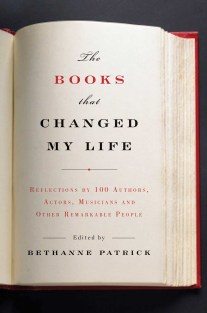 Like most book lovers, I adore books about books, and I thoroughly enjoyed Bethanne Patrick’s The Books That Changed My Life: Reflections by 100 Authors, Actors, Musicians, and Other Remarkable People. It’s a perfect book for your nightstand, because each of the essays is no more than three pages long. Each essay writer starts with a selection of a a life-altering book and a quotation from that book. They run the gamut from Gillian Flynn, who chose The Westing Game, to Rosanne Cash, who picked The Little House on the Prairie, to Tim Gunn, who selected Let Us Now Praise Famous Men. Bethanne Patrick says:
One of the parts of the project that makes me happiest is that although no one interviewed was given a list from which to choose and although none of them were told others’ choices in advance, there is only one duplicate title on the list . . . There are children’s books, poetry collections, biographies, classic novels, modern favorites, and even a comic book included.
The Books That Changed My Life is pure pleasure. It will make you think about which book — or books, because it’s hard to narrow it down to one — have had the greatest impact on you. It will also provide you with a list of books to add to your to-be-read list, since some of the contributors’ choices will intrigue you. I think book club members would enjoy discussing this book and the books that have influenced their own lives.
What’s next for me? I’m looking forward to reading Anna Quindlen’s latest novel, Miller’s Valley, and Bill Beverly’s debut, Dodgers, literary crime fiction about a Los Angeles gang member sent to kill a witness hiding in Wisconsin. I’ve been hearing great things about both of them.
Happy Spring!
 We Never Asked for Wings by Vanessa Diffenbaugh (April 5)
 My Sunshine Away by M.O. Walsh (April 5)
 The Children’s Crusade by Ann Packer (April 5)
 Where They Found Her by Kimberly McCreight (April 19)
 Natural Born Heroes: Mastering the Lost Secrets of Strength and Endurance by Christopher McDougall (April 5)
 Between You and Me: Confessions of a Comma Queen by Mary Norris (April 4)
 Something Must Be Done About Prince Edward County: A Family, A Virginia Town, A Civil Rights Battle by Kristen Green (April 26)
 Since I was at the gate, not strapped into an airplane seat, I was able to move out of earshot of the impromptu concert, crossing my fingers that the young musicians would not be seated near me on the plane. I was really looking forward to finishing my book, Carly Simon’s memoir, Boys in the Trees.
 I did not have to sit near the harmonica-playing duo on the plane. Instead, I sat across from a young mother who had an infant in a front carrier and a two-year-old in the seat beside her. Both children fell asleep within 20 minutes of takeoff. (This never once happened to me, I want you know.) She ordered a Bloody Mary, settled back in her seat, opened her book (The Rosie Project, I couldn’t help but notice) and smiled at me. “Pure bliss, right?” I said to her.
 Margaret Sanger — nurse, birth control pioneer, social activist, free love advocate — led a big life. Too big to be contained in the pages of Ellen Feldman’s slim, fast-paced biographical novel, Terrible Virtue. I read Terrible Virtue in one afternoon, and although the book held me captive, it left me wanting more. Feldman races through Sanger’s long and eventful life, starting with her childhood as one of eleven siblings in a poor Irish Catholic family in upstate New York.
 Feldman presents Margaret Sanger not as a saint or a sinner, but as a complex, flawed visionary, driven not only by her passion for social justice and her vision of a better world, but by her own egotism. The reader feels both sympathy for the personal tragedy she endures and anger at her treatment of her family. Feldman, who tells most of the story from Margaret’s perspective, successfully uses short, straightforward sentences and an urgent tone to capture her voice. When Feldman breaks up Margaret’s narrative to include asides from other characters, addressed to Margaret, she is less successful. These sections, which don’t sound as though they are based on actual correspondence, are intended to add depth to Margaret’s portrayal, but they ring false to me.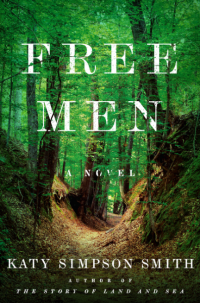
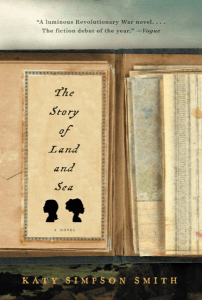 Smith said “trying to get in the heads of 18th century men was a thrill for me.” While I thought the men’s voices were authentic for the most part, in some instances the characters slip into the mindsets of modern-day Americans. For example, would an 18th century slave say, “. . . this was not a life but a system, and for the first time my boyish grief took on the color of rage”?
 As soon as March arrives, customers start asking for spring break reading recommendations for themselves and their families. You’d think it would be easy to come up with a list of fun “beach reads”, but every year that request flummoxes me. I understand that lots of people want to read lightweight books while on vacation, but far too many books pegged as “escape” reading are too predictable to be entertaining. I don’t think I’m a book snob, but if I’m going to spend six or more hours reading a book, I want to feel I’ve been enlightened as well as entertained. I want to gain something, whether it’s a little better understanding of human nature or concrete knowledge.
 H is for Hawk by Helen Macdonald
 The Residence: Inside the Private World of the White House by Kate Andersen Brower
 The Swans of Fifth Avenue by Melanie Benjamin
 This Was Not the Plan by Cristina Alger
 How many aspiring writers have been told to “write what you know”? If Pat Conroy was given that timeworn advice, he’s certainly taken it to heart. Both his novels and his memoirs are about what he knows — growing up as the son of an abusive Marine Corps fighter pilot, attending the Citadel as a basketball player and budding writer, losing a brother to suicide, coping with a sister’s mental illness. In his latest memoir, The Death of Santini, Conroy says, ” My books have always been disguised voyages into that archipelago of souls known as the Conroy family.”
 Conroy disappeared for years, and finally published Beach Music in 1995. I wanted to love the book, but found I couldn’t get past the flowery prose and stilted dialogue. So it was with trepidation that I picked up My Losing Season several years later. On the surface, this memoir recounts Conroy’s senior year playing basketball at the Citadel, but it’s really about his relationship with his father, his coach, and his teammates, and finding his voice as a writer.
 The Death of Santini covers some familiar ground — the relationship between Conroy and his terrifyingly abusive father, Don Conroy (a.k.a. “The Great Santini”). But this is a story of redemption — Don Conroy has transformed himself from a monster into a loving father and grandfather. At the end of The Prince of Tides, Tom Wingo (Pat Conroy’s alter ego), says, “I learned that I needed to love my mother and father in all their flawed, outrageous humanity. And in families there are no crimes beyond forgiveness. But it is the mystery of life that sustains me now.” Fact reflects fiction in The Death of Santini, for Conroy shows us how he is able to forgive Don Conroy for his vicious cruelty towards his family. The writing of the book was a necessary part of Conroy’s healing; he says in the prologue:
 Back in the 1980s, film critic David Denby wondered “how anyone could be hurt by reading a good book”. The controversy at the time, which continues to this day, was how we define a “good book” and whether the traditional Western classics are relevant in our multicultural society. The 48-year-old Denby returned to his alma mater, Columbia University, and spent a full academic year studying the Western canon. He wrote a book, Great Books: My Adventures with Homer, Rousseau, Woolf, and the Indestructible Writers of the Western World, about how the experience reinvigorated his intellectual life.
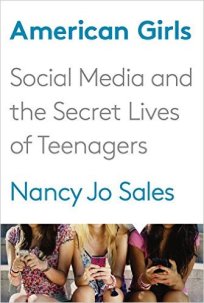 I read this book just after I finished another book about American teenagers, American Girls: The Secret Lives of American Teenagers, by Nancy Jo Sales, which is truly one of the most depressing books I’ve ever read. If Sales is to be believed — and I hope with all my heart she’s not — the lives of most teenage girls revolve around taking pictures of themselves and posting them online, hoping for validation. In this book, physical appearance is everything, the search for male approval is paramount, and feminism is completely dead. A recent Wall Street Journal review said: “The secret life of teenagers sometimes seems entirely a response to nude pictures and requests for them—a response, that is, to male adolescent desire, as it shows up digitally. But female vanity is also at play.”
 Dancers are just flowers, and flowers grow without any literal meaning, they are just beautiful. We’re like flowers. A flower doesn’t tell you a story. It’s in itself a beautiful thing.
 Doesn’t almost every little girl dream of becoming a ballerina? My dream died quickly, after several months of patient instruction from Mrs. Goneconto at the local YMCA. I was disappointed to learn at the first class that I was not immediately issued a tutu and toe shoes, and things went downhill from there. Mira and her fellow “bunheads” exist on a different level, pushing themselves to their physical and emotional limits in what Wilson calls “pure devotion to an ideal”.
 For generations, little girls have dreamed of becoming ballerinas — and some of them have suffered, physically and emotionally, as they’ve pursued their ambitions. Certain parents (and not just ballet parents) are willing to sacrifice and also to let their children experience physical and emotional harm in the hopes of raising superstars. Adults, like Maurice, can become obsessed with the beauty of ballet. What is it about ballet that inspires such passion?
 Salt to the Sea by Ruta Sepetys
 When Breath Comes Air is one of those books you want to give to everyone you love. If you start reading the book with a pen in hand, ready to underline your favorite passages, you’ll find yourself underlining almost the whole book. Dr. Paul Kalanithi, a 37-year-old neurosurgeon, wrote the book after he was diagnosed with terminal cancer. He didn’t quite finish, but the memoir he left behind — with a beautiful foreword from Abraham Verghese and an equally lovely epilogue written by his widow, Dr. Lucy Kalanithi — is a masterpiece.
 Challenger Deep by Neal Shusterman
 The Lightkeepers by Abby Geni
 Books on the Table