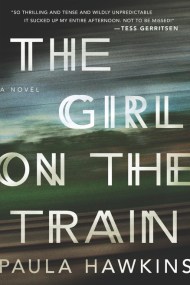
No, I still don’t know when The Girl on the Train will be released in paperback. That’s the #1 query that leads readers to Books on the Table, and as I mentioned in 10 Spring Paperback Picks last April, publishers often delay a paperback release when the hardcover is still selling well. The Girl on the Train (currently #6 on the New York Times hardcover fiction bestseller list) has been on the list for 62 weeks.
All the Light We Cannot See has been on the hardcover list for 98 weeks; curiously, I haven’t noticed much interest in when the paperback will come out. I wonder if this is because readers view All the Light We Cannot See as the kind of book they’re willing to buy and want to own in hardcover, while they see The Girl on the Train as the type of book they read on the beach and then pass along? In any case, All the Light still has a long way to go before it catches up with some bestselling novels of the past — The Da Vinci Code, The Bridges of Madison County, The Caine Mutiny, Auntie Mame, and Advise and Consent all stayed on the list for more than 100 weeks.
Some of my favorite books from 2015 are arriving in paperback this April. Some did well in hardcover (Erik Larson’s Dead Wake, Sally Mann’s Hold Still, and Anne Tyler’s A Spool of Blue Thread come to mind) but some are underappreciated gems; maybe now they’ll find the audience they deserve.
Fiction
 We Never Asked for Wings by Vanessa Diffenbaugh (April 5)
I liked Diffenbaugh’s second novel even more than her first, The Language of Flowers. It’s the coming-of-age story of two people: 16-year-old Alex, who’s devastated when his beloved grandparents return to their native Mexico, and his mother, Letty, who must finally learn to be a parent. It’s one of the best contemporary novels about immigration I’ve read, up there with The Book of Unknown Americans. You can read my interview with the author here.
 My Sunshine Away by M.O. Walsh (April 5)
During the summer of 1989, the narrator of M.O. Walsh’s debut novel is fourteen years old and in love with his neighbor on Piney Creek Road in Baton Rouge, Louisiana, Lindy Simpson. When Lindy becomes the victim of a rape, everything changes. Although My Sunshine Away is suspenseful — sometimes almost unbearably so — it’s really a coming of age story. It’s about an immature, self-centered boy becoming an adult with integrity. As he recounts the pivotal events of his youth, the narrator’s voice is authentic and compelling. At one point, he reflects on the nature of nature of memory:
And it is not until times like these, when there are years between myself and the events, that I feel even close to understanding my memories and how the people I’ve known have affected me. And I am often impressed and overwhelmed by the beautiful ways the heart and mind work without cease to create this feeling of connection.
Although I’ve never been to Baton Rouge, I felt as if I had after reading Walsh’s lyrical descriptions of this singular place. Walsh, who is the director of the Creative Writing Workshop at the University of New Orleans, clearly heeds every creative writing teacher’s advice: “Show, don’t tell.” He shows us a setting and characters that are as vivid as any I’ve encountered on the page. The novel reminded me in some ways of Alice Sebold’s The Lovely Bones — but without the murder and the accompanying trip to heaven, and with a great deal more wisdom.
 The Children’s Crusade by Ann Packer (April 5)
I savored every page of this beautiful novel, which explores the complicated relationships among four siblings raised by an attentive, loving father and a neglectful mother. NPR’s Maureen Corrigan (whose reviews are almost always spot-on) loved the book, saying Packer’s “splintered narrative style and the richness of her characters and language illuminate the unexpected depths of the commonplace.” Rebecca, one of the siblings, grows up to be a successful psychiatrist, and like all of us, she wonders if her childhood memories are accurate:
I remembered my memory of the moment, because after so long that’s what memory is: the replaying of a filmstrip that’s slightly warped from having gone through the projector so many times. I’ll never know what actually happened and what distortions I added.
 Where They Found Her by Kimberly McCreight (April 19)
If you’re in the mood for smart, character-driven psychological suspense, Where They Found Her is the book for you. It’s the kind of book you read in one day, or at least consumer in big chunks. The book opens with an unnamed narrator disposing of a bag of evidence in a dumpster behind a suburban tanning salon. What has happened, and who is telling the story? Readers won’t find out for almost 300 pages, with plenty of detours along the way. It’s revealed in the first couple of chapters that the body of a newborn baby has been found in the woods near the college campus in an upscale New Jersey suburb. Molly Sanderson, wife of a Ridgedale University professor and new to the staff of the local newspaper, investigates the story — which turns out to be much more complicated than she originally anticipated, leading back to unsavory secrets in Ridgedale’s past. For my complete review, click here.
Nonfiction
 Natural Born Heroes: Mastering the Lost Secrets of Strength and Endurance by Christopher McDougall (April 5)
MacDougall, author of Born to Run, is a terrific writer and he has a great story to tell in Natural Born Heroes — actually, two stories. He deftly juxtaposes the story of the audacious kidnapping of a Nazi general on the island of Crete with his personal quest to emulate the physical and mental endurance of classical Greek heroes. The subtitle makes the book sound as if it’s a physical fitness manual, which in a way it is. It’s interesting that the subtitle for the hardcover was How a Daring Band of Misfits Mastered the Lost Secrets of Strength and Endurance, emphasizing the historical aspect of the book. The London Independent says:
One of the most daring, madcap episodes of the Second World War was the kidnapping by Patrick Leigh Fermor, dirty trickster supreme, and his band of British eccentrics and Cretan hard men, of the German general Heinrich Kreipe.
Seventy years later, youngsters in inner-city London and the suburbs of Paris were becoming experts in parkour, using the urban landscape as an obstacle course to be negotiated with joyful freedom and intense physical discipline.
Christopher McDougall connects these two points, and many in between, in a heady confection that encompasses, among other subjects, military history, archaeology, Greek mythology, neat ways to kill a man and ideas on health and fitness that might just change your life.
My idea of exercise is a leisurely bike ride or a brisk walk (and preferably on a warm, sunny day), but I found this book absolutely riveting.
 Between You and Me: Confessions of a Comma Queen by Mary Norris (April 4)
I have recommended this book to quite a few people, and I stuck a shelf talker under the hardcover version, which remained in the unsold book for a long time. I’m not sure anyone took my advice, and I want you to know you’re missing out on a really good book. I wrote a mini-review about it last fall, and a reader commented: “I quite enjoyed Between You and Me. I think it didn’t get a ton of love because you have to be a very specific sort of person to want to read about words.” That’s true, but the book is about much more than words. The author, Mary Norris, has been the New Yorker‘s copy editor since 1978, upholding the magazine’s notoriously high standards. Her wicked and witty memoir is sprinkled with grammar advice, as well as plenty of gossipy tidbits. I enjoyed every page, and learned a few things besides.The New Republic review says: “Norris’s very funny, lucid, and lively new book” is “part memoir, part language guide, and part personal account of life at the New Yorker.”
 Something Must Be Done About Prince Edward County: A Family, A Virginia Town, A Civil Rights Battle by Kristen Green (April 26)
I really can’t champion this book enough, and I hope it finds a big audience in paperback. Veteran journalist Green chronicles the years when Prince Edward County, Virginia closed its public schools rather than obey the federal mandate to desegregate — and tells the story of her family’s part in this shameful chapter of history. The New York Times review commented that “It is this personal story that makes her mix of memoir and history . . . so absorbing as she returns home to interview family and friends about a past that many would rather leave there.”
Happy spring and happy reading!
 Margaret Sanger — nurse, birth control pioneer, social activist, free love advocate — led a big life. Too big to be contained in the pages of Ellen Feldman’s slim, fast-paced biographical novel, Terrible Virtue. I read Terrible Virtue in one afternoon, and although the book held me captive, it left me wanting more. Feldman races through Sanger’s long and eventful life, starting with her childhood as one of eleven siblings in a poor Irish Catholic family in upstate New York.
 Feldman presents Margaret Sanger not as a saint or a sinner, but as a complex, flawed visionary, driven not only by her passion for social justice and her vision of a better world, but by her own egotism. The reader feels both sympathy for the personal tragedy she endures and anger at her treatment of her family. Feldman, who tells most of the story from Margaret’s perspective, successfully uses short, straightforward sentences and an urgent tone to capture her voice. When Feldman breaks up Margaret’s narrative to include asides from other characters, addressed to Margaret, she is less successful. These sections, which don’t sound as though they are based on actual correspondence, are intended to add depth to Margaret’s portrayal, but they ring false to me.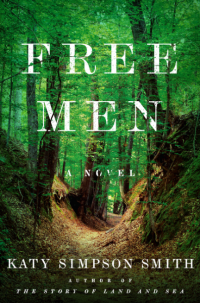
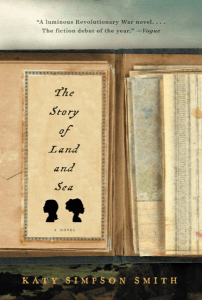 Smith said “trying to get in the heads of 18th century men was a thrill for me.” While I thought the men’s voices were authentic for the most part, in some instances the characters slip into the mindsets of modern-day Americans. For example, would an 18th century slave say, “. . . this was not a life but a system, and for the first time my boyish grief took on the color of rage”?
 As soon as March arrives, customers start asking for spring break reading recommendations for themselves and their families. You’d think it would be easy to come up with a list of fun “beach reads”, but every year that request flummoxes me. I understand that lots of people want to read lightweight books while on vacation, but far too many books pegged as “escape” reading are too predictable to be entertaining. I don’t think I’m a book snob, but if I’m going to spend six or more hours reading a book, I want to feel I’ve been enlightened as well as entertained. I want to gain something, whether it’s a little better understanding of human nature or concrete knowledge.
 H is for Hawk by Helen Macdonald
 The Residence: Inside the Private World of the White House by Kate Andersen Brower
 The Swans of Fifth Avenue by Melanie Benjamin
 This Was Not the Plan by Cristina Alger
 How many aspiring writers have been told to “write what you know”? If Pat Conroy was given that timeworn advice, he’s certainly taken it to heart. Both his novels and his memoirs are about what he knows — growing up as the son of an abusive Marine Corps fighter pilot, attending the Citadel as a basketball player and budding writer, losing a brother to suicide, coping with a sister’s mental illness. In his latest memoir, The Death of Santini, Conroy says, ” My books have always been disguised voyages into that archipelago of souls known as the Conroy family.”
 Conroy disappeared for years, and finally published Beach Music in 1995. I wanted to love the book, but found I couldn’t get past the flowery prose and stilted dialogue. So it was with trepidation that I picked up My Losing Season several years later. On the surface, this memoir recounts Conroy’s senior year playing basketball at the Citadel, but it’s really about his relationship with his father, his coach, and his teammates, and finding his voice as a writer.
 The Death of Santini covers some familiar ground — the relationship between Conroy and his terrifyingly abusive father, Don Conroy (a.k.a. “The Great Santini”). But this is a story of redemption — Don Conroy has transformed himself from a monster into a loving father and grandfather. At the end of The Prince of Tides, Tom Wingo (Pat Conroy’s alter ego), says, “I learned that I needed to love my mother and father in all their flawed, outrageous humanity. And in families there are no crimes beyond forgiveness. But it is the mystery of life that sustains me now.” Fact reflects fiction in The Death of Santini, for Conroy shows us how he is able to forgive Don Conroy for his vicious cruelty towards his family. The writing of the book was a necessary part of Conroy’s healing; he says in the prologue:
 Back in the 1980s, film critic David Denby wondered “how anyone could be hurt by reading a good book”. The controversy at the time, which continues to this day, was how we define a “good book” and whether the traditional Western classics are relevant in our multicultural society. The 48-year-old Denby returned to his alma mater, Columbia University, and spent a full academic year studying the Western canon. He wrote a book, Great Books: My Adventures with Homer, Rousseau, Woolf, and the Indestructible Writers of the Western World, about how the experience reinvigorated his intellectual life.
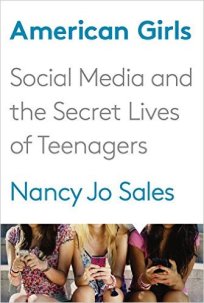 I read this book just after I finished another book about American teenagers, American Girls: The Secret Lives of American Teenagers, by Nancy Jo Sales, which is truly one of the most depressing books I’ve ever read. If Sales is to be believed — and I hope with all my heart she’s not — the lives of most teenage girls revolve around taking pictures of themselves and posting them online, hoping for validation. In this book, physical appearance is everything, the search for male approval is paramount, and feminism is completely dead. A recent Wall Street Journal review said: “The secret life of teenagers sometimes seems entirely a response to nude pictures and requests for them—a response, that is, to male adolescent desire, as it shows up digitally. But female vanity is also at play.”
 “Too many words” was how a customer recently characterized a book on the bestseller shelf in our store. I knew exactly what she meant. Many nonfiction books fit this description. They should have been magazine articles, but their authors were determined to stretch the material into full-length books. I’ve also read plenty of novels that would have benefited from the most valuable advice in Strunk and White’s classic writing guide, The Elements of Style: Omit needless words.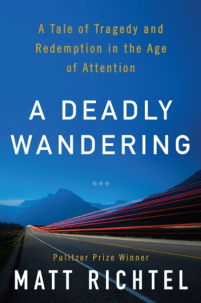
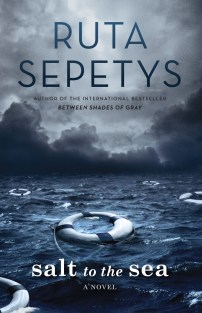 Salt to the Sea by Ruta Sepetys
 When Breath Comes Air is one of those books you want to give to everyone you love. If you start reading the book with a pen in hand, ready to underline your favorite passages, you’ll find yourself underlining almost the whole book. Dr. Paul Kalanithi, a 37-year-old neurosurgeon, wrote the book after he was diagnosed with terminal cancer. He didn’t quite finish, but the memoir he left behind — with a beautiful foreword from Abraham Verghese and an equally lovely epilogue written by his widow, Dr. Lucy Kalanithi — is a masterpiece.
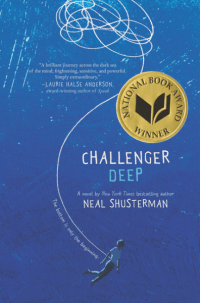 Challenger Deep by Neal Shusterman
 The Lightkeepers by Abby Geni
 Anil Patel, the “golden son” in Shilpi Somaya Gowda’s insightful new novel, is torn between his desire to pursue an independent life and career in the United States and his obligations to his family and community in India. The story of an immigrant feeling untethered both in his adopted country and his native land is a familiar one, but The Golden Son offers a fresh perspective.
 I also enjoyed Gowda’s bestselling debut novel, The Secret Daughter, about an Indian girl, adopted by an American couple, who decides to return to her birth country. A fascinating in-depth interview with Shilpi Somaya Gowda, in which she discusses both her novels, as well as her background growing up in two countries (Canada and India), her writing process, the status of women in India is available as a
 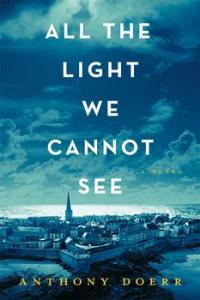 When I checked to see which posts received the most views, I was surprised. The #1 post for 2015 is my
  #2:
#2: 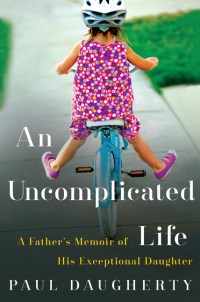 #5:
#5:  #7:
#7:  #9:
#9: 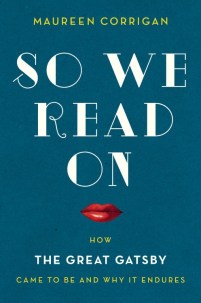 Opera. It’s probably best I didn’t.
 Books on the Table