10 Hurricane Books

I have seen tempests, when the scolding winds
Have rived the knotty oaks, and I have seen
The ambitious ocean swell and rage and foam,
To be exalted with the threatening clouds . . .
William Shakespeare, Julius Caesar

Along with millions of others in the southeastern United States, my mother was told to evacuate her home as Hurricane Matthew approached. Once I found she was safely in a motel 150 miles inland, I had one important question for her: did she have enough reading material? She assured me she did, and then told me she couldn’t wait to get back to The Woman in Cabin 10, by Ruth Ware. I guess that when faced with a hurricane, some people escape with psychological thrillers. Others might want to read about catastrophic storms. Here are ten books featuring hurricanes — both fiction and nonfiction — to pick up when you’ve watched enough swaying palm trees and crashing waves on the Weather Channel. None of these is a new book, but they’re all worth your time if you haven’t read them.

Time of Wonder by Robert McCloskey
I didn’t apprecitime_of_wonderate this lovely, poetic book as a child — like my own children, I much preferred Make Way for Ducklings and Blueberries for Sal — but now it’s my favorite McCloskey book. (And Robert McCloskey, along with E.B. White, is my favorite children’s author.)
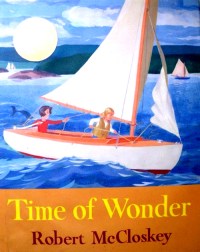
Take a farewell look at the waves and sky. Take a farewell sniff of the salty sea. A little bit sad about the place you are leaving, a little bit glad about the place you are going. It is a time of quiet wonder – for wondering, for instance: Where do hummingbirds go in a hurricane?

The Perfect Storm: A True Story of Men Against the Sea by Sebastian Junger
Actually, The Perfect Storm isn’t about a hurricane — it’s about a real-life tempest caused by the confluence of three storm systems. Even if you’ve seen the movie, the book is well worth reading. It’s great narrative nonfiction, combining science with human drama.

220px-isaacsstormcoverIsaac’s Storm: A Man, a Time, and the Deadliest Hurricane in History by Erik Larson
Isaac Cline, chief of the United States Weather Bureau’s station in Galveston, Texas, failed to anticipate the deadly strength of a hurricane that barreled through the Gulf of Mexico, killing an estimated 8,000 people — the largest loss of life in a weather-related disaster in U.S. history. According to the New York Times, Larson “weaves together the terror and stoicism of ships’ captains, housewives, children and forecasters, infusing their tales with palpable tension. Few historical reconstructions sustain such drama.”

Shutter Island by Dennis Lehane
On a small island off the coast of Massachusetts, a murderer has escaped from a hospital for the criminally insane. Federal marshals search for the dangerous patient as a hurricane  bears down on the island. The story is complicated, filled with twists and turns that I defy you to predict.

220px-zeitounZeitoun by Dave Eggers
When I read Eggers’s account of a New Orleans family devastated by Hurricane Katrina, I thought it was his best book so far. The New York Times reviewer said: “My guess is, 50 years from now, when people want to know what happened to this once-great city during a shameful episode of our history, they will still be talking about a family named Zeitoun.”

Five Days at Memorial: Life and Death in a Storm-Ravaged Hospital by Sheri Fink
The author is a physician and Pulitzer Prize-winning journalist who’s written a gripping account of the life-and-death decisions medical staff at Memorial Medical Center in New Orleans were forced to make during Hurricane Katrina

13618100Salvage the Bones by Jesmyn Ward
The 2011 National Book Award winner for fiction, set in Mississippi just before and during Hurricane Katrina and loosely based on the author’s own experiences, has “the aura of a classic”, according to Ron Charles of the Washington Post.

Last Train to Paradise: Henry Flagler and the Rise and Fall of the Spectacular Railroad That Crossed an Ocean by Les Standiford
Flagler, one of the founders of Standard Oil and the visionary who developed Florida as a vacation destination, built an engineering marvel: the Key West Railroad, crossing 150 miles of open sea. It was destroyed in the Labor Day Hurricane of 1935. Standiford, who’s also a novelist, has written a fascinating chronicle of a man, his accomplishments, and his era.

jamaica_200-4607c185a1e675e24bc7b743396f781e879f40f3-s300-c85A High Wind in Jamaica by Richard Hughes
This is one of those neglected classics that deserves to be rediscovered. Written in 1929, and still in print, it’s the story of a group of children whose homes are destroyed in a Caribbean hurricane. When the children are sent to England, pirates seize their ship. It sounds like an adventure story, but it’s more of a psychological drama. In an NPR segment, Andrew Sean Greer said, “To say A High Wind in Jamaica is a novel about children who are abducted by pirates is to make it seem like a children’s book. But that’s completely wrong; its theme is actually how heartless children are.”

Their Eyes Were Watching God by Zora Neale Hurston
Another classic (published in 1937), perhaps more widely read than A  High Wind in Jamaica, Their Eyes Were Watching God takes place in Florida in the early 20th century. The Okeechobee hurricane of 1928 figures prominently in this beautifully written coming-of-age novel.

The wind came back with triple fury, and put out the light for the last time. They sat in company with the others in other shanties, their eyes straining against crude walls and their souls asking if He meant to measure their puny might against His. They seemed to be staring at the dark, but their eyes were watching God.
What Would Emerson Read This Fall?

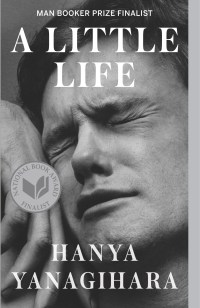
9780804172707Several days ago, a reader left a comment on the “In My Stack” page of this blog, urging me to read A Little Life, by Hanya Yanagihara. I was a little confused, since I read that unforgettable book more than a year ago. Shouldn’t I have removed it from “In My Stack” and included it in “Read in 2015”? Then I looked at the books I’d listed on “In My Stack” and realized that I hadn’t updated the list in years. Oops! (And by the way, I still think A Little Life should have won the National Book Award and the Man Booker Prize.)

So I wiped the list clean and started a new list of books that are In My Stack, with the intention of updating it every season. It’s hard to face the fact that it’s just not possible to read every book that catches my eye.

The three “practical rules” for reading, according to Ralph Waldo Emerson, are:

1. Never read any book that is not a year old.
2. Never read any but famed books.
3. Never read any but what you like; or, in Shakspeare’s phrase,“No profit goes where is no pleasure ta’en: In brief, sir, study what you most affect.”

Emerson’s third rule is easy for me to follow, but the first two pose problems. Whenever I read an “old” book, I feel like I’m missing out on all the exciting new books of the season. And although I read plenty of books that have received publicity, awards, and critical acclaim, I also like to find hidden gems that haven’t received the love they deserve. I do have to acknowledge that Emerson has a point. Books that stand the test of time are worth reading. So I’ve added Elena Ferrante’s My Brilliant Friend to my fall list, because so many people whose opinions I trust have recommended it.

Two books that I didn’t add to my list, because I read advance copies earlier this summer, but that I highly recommend adding to yours are Commonwealth by Ann Patchett (on sale September 13; full review to come) and A Gentleman in Moscow by Amor Towles (on sale September 6). Commonwealth is very good, although my favorite of Patchett’s novels remains State of Wonder.

9780670026197A Gentleman in Moscow is absolutely wonderful — one of the rare books I read slowly towards the end, because I just didn’t want to finish. It’s a hard act to follow, and every book I’ve read since has seemed vaguely second-rate in comparison. The “gentleman’ of the title is Count Alexander Ilyich Rostov, a Russian aristocrat born in 1889, who is sentenced  by a Bolshevik tribunal to lifelong house arrest in Moscow’s Metropol Hotel. The Count’s life is spared, unlike so many others of his class, because a poem he wrote struck the revolutionaries as sympathetic to their cause.
In a Publishers Weekly interview, Amor Towles says: “As awful as the crimes of Stalinism were, the vast majority of the Russian population was trying to survive, to love, to have a sense of purpose.” The Count — whose life before the Revolution was spent, in his words,”dining, discussing. Reading, reflecting. The usual rigmarole”, and who is accused by the tribunal of being “a man so obviously without purpose” — is able to live a purposeful, and even sometimes joyful, life as a prisoner at the Metropol.

A Gentleman in Moscow contains all the elements that make me fall in love with a book: a beautifully constructed story connected to historical events, an appealing and multidimensional protagonist, and a sharp and engaging writing style that inspired me to underline dozens of passages. Frequently, Towles addresses the reader directly:

Popular wisdom tells us that when the reel of our concerns interferes with our ability to fall asleep, the best remedy is the counting of sheep in a meadow. But preferring to have his lamb encrusted with herbs and served with a red wine reduction, the Count chose a different methodology altogether.

I’ll leave it to you to find out what his methodology was. If you’ve read Rules of Civility, you already know what a smart and entertaining writer Towles is — perfect for page-turners and page-huggers alike. A Gentleman in Moscow will certainly be on my list of favorites at the end of the year.

What will I read next? The following books are “on deck”, but that could change any time.

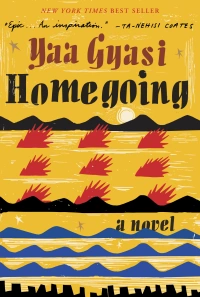
9781101947135Homegoing by Yaa Gyasi (available now)
Homegoing, which has drawn raves from my coworkers, covers 300 years of African and American history, beginning with two sisters from Ghana, one who is sold into slavery and one who marries a British slave trader.

Shelter by Jung Yun (available now)
I need a good page-turner in the mix, and several bloggers who often share my tastes loved this book, which is rooted in the 2008 housing crisis.

The Sympathizer by Viet Thanh Nyugen (available now)
A must-read — it won the 2016 Pulitzer Prize for fiction.

cover-mischlingMischling  by Affinity Konar (September 6)
This debut novel, about identical twins at Auschwitz, has been receiving a lot of buzz (including a blurb by Anthony Doerr), and I can never read enough about World War II.

Nutshell by Ian McEwan (September 13)
McEwan is one of my favorite authors, and his new book sounds weird but interesting: it’s a murder mystery, inspired by Hamlet, told by an unborn child.

9780385535731Hero of the Empire: The Boer War, A Daring Escape, and the Making of Winston Churchill by Candice Millard (September 20)
Millard is one of my favorite nonfiction authors, and I’m fascinated by Winston Churchill, so I’m excited to read Hero of the Empire.

The Bookshop on the Corner by Jenny Colgan (September 20)
I can never resist a book about a bibliophile, and this one packs a double punch: the main character is a librarian who becomes a bookseller.

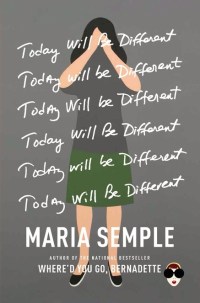
d28652364b8b57aceef0d93cf2791343Today Will Be Different by Maria Semple (October 4)
I loved Where’d You Go, Bernadette and can’t wait to read Semple’s new book.

Let me know what you think I should add to (or subtract from!) my fall list.


What’s a Page-Turner, Anyway?

I just came across an article by novelist Edan Lepucki, published in the Guardian a couple of years ago, with a catchy title: “Are you a page-turner or a page-hugger?”. Lepucki, recounting her days as a “very persuasive bookseller”, notes that some readers want a fast-paced, exciting story, some “long for a book’s language to give them pause, to slow them down with its rhythms and surprises”, and others (like me!) are “somewhere in the middle”.

I don’t need an action-packed plot, although I always enjoy well-timed, believable twists and turns. I need to feel that I’m learning something, whether it’s factual knowedge or an understanding of human nature. The books I abandon are poorly written (and that includes those that are pretentious, trying too hard to be “literary”), or their characters and situations don’t ring true. It doesn’t matter to me whether a book is fiction or nonfiction, as long as there is a sense of authenticity. And of course, some books just turn out to be boring, even though they push all the right buttons. (Sorry, Wolf Hall.)

Here are a half-dozen books published this summer that kept me turning pages, including a history book, a memoir, murder mysteries, and psychological thrillers.

9780345544803The Perfect Horse: The Daring U.S. Mission to Rescue the Priceless Stallions Kidnapped by the Nazis by Elizabeth Letts
If you’re a fan of narrative nonfiction by Erik Larson and Laura Hillenbrand, you’ll love The Perfect Horse. The suspense is not whether the Lipizzaner stallions will be rescued, but how — and at what cost. The Christian Science Monitor calls the book a “perfect World War II rescue story”, and I agree.

AllIsNotForgotten-WendyWalker-CoverAll is Not Forgotten by Wendy Walker
Walker, an attorney who specializes in family law, has written a disturbing and thought-provoking psychological thriller about the possible moral and legal implications of PTSD treatments, currently under development, that can erase memories of traumatic events. After fifteen-year-old Jenny Kramer is attacked at a party in her Connecticut suburb, she’s given a drug that obliterates her memory of the crime. I can’t say more without revealing key plot points, but if you like your fiction really dark (think Herman Koch), this is the book for you. Jenny’s psychiatrist, who narrates the book, reminded me of Koch’s vaguely sinister narrators.

0eb9d787dee2a96bd84e58dd82b1e459You Will Know Me by Megan Abbott
When I read an article on crime fiction in the Wall Street Journal that said Abbott’s “books are driven as much by intricate character development and rhythmic sentences as they are by plot”, I immediately brought home a copy of You Will Know Me. Set in the world of competitive gymnastics, Abbott’s eighth novel is a page-turner by anyone’s definition. Sixteen-year-old Devon Knox — and her parents — have their hearts set on the Olympics when a crime in their tight-knit community of gymnasts, parents, and coaches threatens to destroy their dream. I’d never read anything by Megan Abbott before, but now I’m hooked.

9780385540599We Could Be Beautiful by Swan Huntley
When Catherine West, the veteran of two broken engagements, meets William Stockton, the handsome son of old family friends, she thinks he’s the answer to her prayers. But is he? He seemed pretty creepy to me right off the bat, but Catherine ignores the warning signs — some subtle, some not so subtle. This debut novel — a very entertaining “beach read” —  is fun to read not so much because of its plot (which veers between predictability and ludicrousness), but because of Catherine’s voice, which is singularly funny.

9781101947012Dog Gone: A Lost Pet’s Extraordinary Journey and the Family Who Brought Him Home by Pauls Toutonghi
The title makes this book sound awful, I know — sort of like a hokey Reader’s Digest article. But trust me — it’s a lovely book, about much more than a lost dog. Virginia Marshall, brought up in an abusive home, wants to be the kind of mother she never had. After her adult son, Fielding, loses his dog Gonker on the Appalachian Trail, Ginny and her husband, John, devote every waking minute to helping Fielding find his beloved dog. I couldn’t stop reading this book, even though I knew from the title that Gonker would be found.  The author, who’s also written two novels, is the brother-in-law of Fielding Marshall.

y6481The Lost Girls by Heather Young
In 1935, six-year-old Emily Evans disappears from her family’s lake house in northern Minnesota, and the mystery is never solved. Two generations later, Justine inherits the decrepit house from her great-aunt Lucy, Emily’s older sister, and brings her two daughters there to escape her controlling boyfriend. Young does a masterful job connecting the present-day story and the story of the summer of 1935, building suspense that kept me reading late into the night. The New York Times says: “For all the beauty of Young’s writing, her novel is a dark one, full of pain and loss. And the murder mystery that drives it is as shocking as anything you’re likely to read for a good long while.”

What page-turners have you read this summer?


Summer 2016 Paperback Picks

9781594634024 (1)The number one search term that’s led readers to Books on the Table over the past eighteen months is “Girl on the Train paperback release date”. That query led thousands of readers to a post from April 2015, 10 Spring Paperback Picks. In that post, I tried to identify the elusive quality that makes some books sell like crazy in hardcover while others — just as appealing — languish on the shelves. I mean, The Girl on the Train — supposedly one of the fastest-selling hardcover novels for adults in publishing history –was fun to read, but I’ve read plenty of similar books that disappeared from bookstore shelves in no time at all.

Hardcover books have a very short shelf life. Publishers accept returns from bookstores after three months, and if a book hasn’t sold in that time, it’s taking up valuable space and it’s sent back. Most unsold hardcovers will go to purgatory in a warehouse while their fates (a remainder store? the dreaded shredder?) are decided. If the authors of those books are lucky, their books will be released in paperback and reach a much wider audience.

Some terrific books you may have missed in hardcover are out in paperback this summer, just in time to read during the dog days of August.

a-window-opens-9781501105456_hrA Window Opens by Elisabeth Egan
This book touched my bookselling heart — it’s sort of a mashup of Goodnight June (Sarah Jio) and The Storied Life of A.J. Fikry. It’s the clever and entertaining story of a full-time mother and part-time editor who suddenly needs to find a “real” job — and lands at “Scroll”, an up-and-coming company with a diabolically quirky corporate culture. Perfect for all those readers who don’t want to read “dark” or “depressing” books, the novel pays tribute to independent bookstores — and tells a heartwarming family story at the same time. (See full review here.)

Our Souls at Night by Kent Haruf
Our Souls at Night is a beautiful and sad story, made sadder by the fact that Kent Haruf died shortly after completing his final edits on the novel. Haruf’s books are all set in the fictional town of Holt, Colorado and focus on everyday people and their need for connection with each other. The New York Times says: “His great subject was the struggle of decency against small-mindedness, and his rare gift was to make sheer decency a moving subject.” Addie Moore and Louis Waters, both widowed and in their seventies, are long-time neighbors who seek respite from loneliness in an unusual way: through a platonic friendship that includes sleeping in the same bed. Kent Haruf gives more insight into the lives and longings of his characters in less than 200 pages than many authors do in books double that length. I read the book in one afternoon and had to slow myself down so I could appreciate the plain yet poetic language.

9780544715264Language Arts by Stephanie Kallos
I read this book last summer and thought it was absolutely wonderful, but I feel like no one else read it in hardcover. Language Arts explores many of the same themes as Our Souls at Night, especially the themes of loss and human connection. How do you connect with someone you love who doesn’t have language? Charles Marlow, an English teacher and a lover of the written word, is the divorced father of an adult autistic son. His daughter has just left for college, and Charles is desperately lonely. I don’t want to say too much about his book, because it’s full of surprises.

The New Neighbor by Leah Stewart
If you’re in the mood for a well-written page-turner, don’t miss this novel about two lonely women in the isolated college town of Sewanee, Tennessee who are both hiding painful secrets. Jennifer Young and her 4-year-old son move in near 91-year-old retired nurse Margaret Riley, and Margaret soon becomes obsessed with digging into Jennifer’s past. The New York Times says “Both women, whom we come to know in great depth, are guarding secrets and neither can afford to make friends . . . Stewart never relaxes her tight focus on these complex characters.” Stewart based the novel in part on her grandmother’s experiences as a World War II battlefield nurse.

y648Crooked Heart by Lissa Evans
Yet another book that deserves a second chance in paperback, Crooked Heart is “a wonderfully old-fashioned, Dickensian novel, with satisfying plot twists that invoke the flavor (and scams) of wartime London” (New York Times Book Review). A precocious 10-year-old orphan is evacuated during the Blitz — and is placed with a couple of marginally successful con artists. Darkly humorous yet poignant, this book is Roald Dahl for grownups.

Avenue of Spies: A True Story of Terror, Espionage, and One American Family’s Heroic Resistance in Nazi-Occupied Paris by Alex Kershaw
I am fascinated by the French Resistance, and Alex Kershaw’s Avenue of Spies is a worthy addition to my collection of World War II books. It’s not on a par with In the Garden of Beasts, by Erik Larson, but it’s still a riveting story: an American family, living in occupied Paris, shows unusual courage in the direst of circumstances. American physician Sumner Jackson, his Swiss wife, Toquette, and their son, Phillip, are given the opportunity to leave France when the French surrender is imminent, but they elect to stay and join the Resistance — while living almost next door to the Parisian headquarters of the Gestapo.

y648-1The Hummingbird by Stephen P. Kiernan
One of my favorites of 2015, The Hummingbird deserves to be widely read. The story of a hospice nurse, her terminally ill patient (a history professor specializing in World War II history), and her war veteran husband, this novel is beautiful, suspenseful, and inspiring. I loved the multiple story lines (including a book within a book) and it’s a real joy to read a novel about people whose lives are rooted in integrity. (For a full review, click here.)

All the Time in the World by Caroline Angell
Caroline Angell’s debut novel, a paperback original, is a coming-of-age story about Charlotte, a gifted musician who takes refuge in a babysitting job with a prominent family on New York’s Upper East Side, after she is betrayed by a fellow composer. Tragedy strikes her employers, and Charlotte must make difficult decisions about her future. I loved this novel’s authentic portrayal of young children, as well as its glimpse into the world of musical composition.

The sequel to the tearjerker Me Before You, After You, came out in paperback last week. I haven’t read it yet, but my mother just finished it, and says it’s a worthy follow-up. What paperbacks are you packing in your beach bag?


Books for Dog Lovers

Two years ago, when my daughter and son-in-law brought home a mischievous, roly-poly yellow Labrador puppy named Stanley, I posted a list of 10 Dog Books That Won’t Make You Cry.  Now that my husband and I have a new puppy, Frosty, dogs are on my mind again. I’ve recently read several wonderful new books about dogs. Here’s the 2014 post, updated with a few more great books for dog lovers. 

Such short little lives our pets have to spend with us, and they spend most of it waiting for us to come home each day. It is amazing how much love and laughter they bring into our lives and even how much closer we become with each other because of them.
John Grogan, Marley and Me: Life and Love With the World’s Worst Dog

IMG_1947
Stanley and Frosty

Marley and Me, like so many dog books, ends with the dog’s death. Even children’s books about dogs — Where the Red Fern Grows, Old Yeller, Sounder — need to be read with a box of tissues nearby. And anyone who doesn’t get choked up at the end of The Art of Racing in the Rain must have a cold heart.

So here are some terrific books about dogs that probably won’t make you cry:

y648The Underdogs: Children, Dogs, and the Power of Unconditional Love by Melissa Fay Greene
Melissa Fay Greene ( author of Praying for Sheetrock and  There Is No Me Without You, among others) is one of my favorite nonfiction writers. The Underdogs tells the story of Karen Shirk, founder of the service dog academy 4 Paws for Ability. Karen trained her own service dog after she became profoundly disabled and was rejected by every service dog agency she approached. I was riveted by Karen’s story, and the stories of the amazing dogs she trains who are able to help people in ways that humans cannot.  (The publication date is 5/17/16.)

y6482Following Atticus: Forty-eight High Peaks, One Little Dog, and an Extraordinary Friendship by Tom Ryan
I bought this book at a little bookstore while on vacation in New Hampshire last summer, even though I had brought plenty of reading material with me. I ended up reading the entire book the next day, ignoring the other books vying for my attention. Tom Ryan is a Massachusetts newspaper editor who, despite being out of shape and inexperienced at climbing, decides to climb all 48 of New Hampshire’s 4,000 foot mountains twice in one winter, with his miniature schnauzer, Atticus.

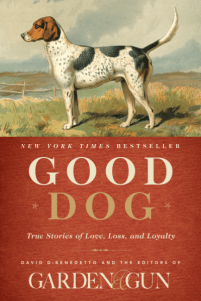
y6481Good Dog: True Stories of Love, Loss, and Loyalty by David DiBenedetto and the editors of Garden & Gun
Until I read this book last year, I had never heard of Garden & Gun magazine — not surprising, since I’m not much of a gardener and I don’t own a gun. The magazine runs a monthly column called “Good Dog” — beautifully written essays by well-known authors about the kinship between humans and their canine companions. The best of these essays are collected in this book, which is a real treat for any dog lover. Contributors include Jon Meacham, Dominique Browning, and Roy Blount, Jr.

9781250014573Off the Leash: A Year at the Dog Park by Matthew Gilbert
Matthew Gilbert, TV critic for the Boston Globe, didn’t think he was a dog lover — and he knew he was an introvert. But after he brought home an exuberant, sociable puppy, he began spending time at his neighborhood dog park with a quirky cast of characters, human and canine. I enjoyed every page of this humorous and insightful “dog-oir”(a term coined by the Los Angeles Times.)

The Story of Edgar Sawtelle by David Wroblewski
Wroblewski’s debut novel (and to date, only novel) is unlike anything I’ve ever read. Edgar Sawtelle, who is mute, helps his family raise and train a fictional breed of very intelligent and intuitive dogs on their farm on Wisconsin. When a family tragedy occurs, Edgar embarks on an odyssey with three loyal dogs. Shakespeare aficionados will enjoy the many parallels to Hamlet. (My mother — and a few others — said this book did make them cry.)

The Dogs of Babel by Carolyn Parkhurst
I’ve never forgotten this quirky novel, which came out about 12 years ago. After his wife dies in a fall from a tree — witnessed only by the family dog, Lorelei — a linguistics professor attempts to teach his dog to talk so he can find out if her death was a suicide.

James Herriot’s Dog Stories: Warm and Wonderful Stories About the Animals Herriot Loves Best by James Herriot
There was no “YA” when I was a teenager. So I read all James Herriot’s books, starting with All Creatures Great and Small. (That’s when I wasn’t reading Flowers in the Attic , The Thorn Birds, or The Flame and the Flower — remember those?) His very best dog stories are all now compiled in one book.

Dog Songs by Mary Oliver
This lovely little book, according to the New York Times, “transcends its dogginess. It’s also about love, impermanence, and the tears in things . . . Her poems, with their charity and lyric clarity, can provide the kind of solace that dogs give”.

Pack of Two: The Intricate Bond Between People and Dogs by Caroline Knapp
Knapp’s memoir explores both her relationship with her own rescue dog, who helped her through grief and recovery from addiction, and animal-human relationships in general.

A Three Dog Life by Abigail Thomas
One evening, Thomas’s husband, Richard, took their dog, Harry, out for a walk — and Harry returned alone. Richard had been hit by a car and was permanently brain-damaged. Thomas reinvents her life and her marriage — with the help of Harry and two more dogs.

The Good Boy by Theresa Schwegel
The “good boy” of the title refers not only to 11-year-old Joel Murphy (son of Chicago K9 police officer Pete Murphy), but to Butchie, Pete’s police dog. The New York Times says, “For all the dog books currently in vogue, it’s hard to beat this one for canine verisimilitude or talent. Butchie is a fully credible character . . . The dog elevates a fairly conventional detective story into something much more lovable”.

Sweetwater Creek by Anne River Siddons
What a great combination — a “beach book” about dogs! It’s the coming-of-age story about a young girl whose family breeds Boykin spaniels on their plantation in South Carolina. After reading this novel, I thought (briefly) about adopting a Boykin, the state dog of South Carolina. (Does Illinois have a state dog?)


What to Read Next — April 2016

“Snow in April is abominable,” said Anne. “Like a slap in the face when you expected a kiss.”
L.M. Montgomery, Anne of Ingleside

It was April in Minneapolis and snowing, the flakes coming down in thick swirls enchanting the city”
Cheryl Strayed, Wild: From Lost to Found on the Pacific Crest Trail

As I write this post, snowflakes are swirling outside my window. Even though I’ve spent 34 springs in Chicago, I’m still surprised when April brings cold winds, sleet, hail, and snow instead of sunny days with warm breezes. I won’t be reading on my porch anytime soon; I’m glad we still have plenty of firewood because I anticipate quite a few more cozy evenings reading by the fire.

9780553394399
Coming in paperback April 26

Right now, as usual, I’m reading two books, switching between them according to my mood. The first, Anne Tyler’s 20th novel, A Spool of Blue Thread, covers territory familiar to Tyler’s readers: the complicated relationships between the members of a middle-class Baltimore family. I love Anne Tyler’s writing, which I find comforting and wise at the same time. Critics seem to have a hard time classifying Tyler. Is she a (God forbid) women’s writer?  Is she really a literary author? One New York Times reviewer snidely dismissed her books as “middling” and “middlebrow”.  The Atlantic Monthly says: “In the eyes of many longtime readers, Tyler is especially gifted in her ability to deliver graceful, touching tales of the ordinary'” I agree — and evidently the Booker Prize judges did as well, since it was one of only two American novels shortlisted for last year’s award.

IMG_1914
Our new family member, Frosty

The second book I’m working my way through is one I can only recommend to new dog owners: The Art of Raising a Puppy, by the Monks of New Skete. If you’re as crazy as my husband and I are, and have decided to disrupt your life with a puppy, I suggest this book. It’s been many years since we brought home our last puppy, so a friend passed along her copy of The Art of Raising a Puppy. I’m finding it very helpful, and it’s fascinating reading . I guess when we had puppies before, we also had human children, leaving no time for reading about the monks’ thoughts on canine behavior!

I’ve just finished two recent releases that I can highly recommend:

9781101883075I stayed up way too late reading Lilac Girls, Martha Hall Kelly’s debut novel. Anyone who loved The Nightingale, Salt to the Sea, The Invisible Bridge, or All the Light We Cannot See will find this book both unforgettable and hard to put down. Historical fiction at its best, the novel tells the powerful story of female prisoners subjected to medical experimentation at the hands of the Nazis.  Three narrators — a Polish teenager, a German doctor, and an American humanitarian, all based on real women, lend their distinctive voices to this meticulously researched story of heartbreak and courage.
While touring  the actress and socialite Caroline Ferriday’s estate in Connecticut, Martha Hall Kelly noticed a black and white photo of a group of Polish women.  “They are the Lapins–the rabbits,” the guide said. “Caroline took up their cause after they were experimented upon by the Nazis at Ravensbruck Concentration Camp.” Hall says:

I looked for a book about Caroline, but there wasn’t one. . .  Somehow bewitched by the house and Caroline’s story, I thought of nothing else on the ride home . . . I set out to learn everything I could about Caroline Ferriday and the story of how she rallied America around The Rabbits. How she dedicated her life to making sure these women were not forgotten.

I’m already thinking about my top 10 books of 2016 — after all, the year is 25% over — and Lilac Girls will definitely make the list. Even if you think you’ve overdosed on World War II literature, don’t miss this one.

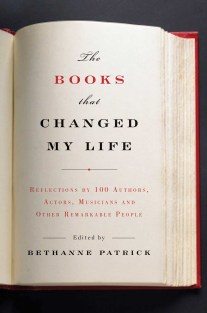
the-books-that-changed-my-life-9781941393659_hrLike most book lovers, I adore books about books, and I thoroughly enjoyed Bethanne Patrick’s The Books That Changed My Life: Reflections by 100 Authors, Actors, Musicians, and Other Remarkable People. It’s a perfect book for your nightstand, because each of the essays is no more than three pages long. Each essay writer starts with a selection of a a life-altering book and a quotation from that book. They run the gamut from Gillian Flynn, who chose The Westing Game, to Rosanne Cash, who picked The Little House on the Prairie, to Tim Gunn, who selected Let Us Now Praise Famous Men. Bethanne Patrick says:

One of the parts of the project that makes me happiest is that although no one interviewed was given a list from which to choose and although none of them were told others’ choices in advance, there is only one duplicate title on the list . . . There are children’s books, poetry collections, biographies, classic novels, modern favorites, and even a comic book included.

The Books That Changed My Life is pure pleasure. It will make you think about which book — or books, because it’s hard to narrow it down to one — have had the greatest impact on you. It will also provide you with a list of books to add to your to-be-read list, since some of the contributors’ choices will intrigue you. I think book club members would enjoy discussing this book and the books that have influenced their own lives.

What’s next for me? I’m looking forward to reading Anna Quindlen’s latest novel, Miller’s Valley, and Bill Beverly’s debut, Dodgers,  literary crime fiction about a Los Angeles gang member sent to kill a witness hiding in Wisconsin. I’ve been hearing great things about both of them.

Happy Spring!

Spring Paperback Picks — April 2016

No, I still don’t know when The Girl on the Train will be released in paperback. That’s the #1 query that leads readers to Books on the Table, and as I mentioned in 10 Spring Paperback Picks last April, publishers often delay a paperback release when the hardcover is still selling well. The Girl on the Train (currently #6 on the New York Times hardcover fiction bestseller list) has been on the list for 62 weeks.

All the Light We Cannot See has been on the hardcover list for 98 weeks; curiously, I haven’t noticed much interest in when the paperback will come out. I wonder if this is because readers view All the Light We Cannot See as the kind of book they’re willing to buy and want to own in hardcover, while they see The Girl on the Train as the type of book they  read on the beach and then pass along? In any case, All the Light still has a long way to go before it catches up with some bestselling novels of the past — The Da Vinci Code, The Bridges of Madison County, The Caine Mutiny, Auntie Mame, and Advise and Consent all stayed on the list for more than 100 weeks.

Some of my favorite books from 2015 are arriving in paperback this April. Some did well in hardcover (Erik Larson’s Dead Wake, Sally Mann’s Hold Still, and Anne Tyler’s A Spool of Blue Thread come to mind) but some are underappreciated gems; maybe now they’ll find the audience they deserve.

Fiction

9780553392333We Never Asked for Wings by Vanessa Diffenbaugh (April 5)
I liked Diffenbaugh’s second novel even more than her first, The Language of Flowers. It’s the coming-of-age story of two people: 16-year-old Alex, who’s devastated when his beloved grandparents return to their native Mexico, and his mother, Letty, who must finally learn to be a parent. It’s one of the best contemporary novels about immigration I’ve read, up there with The Book of Unknown Americans. You can read my interview with the author here.

9780425278109My Sunshine Away by M.O. Walsh (April 5)
During the summer of 1989, the narrator of M.O. Walsh’s debut novel is fourteen years old and in love with his neighbor on Piney Creek Road in Baton Rouge, Louisiana, Lindy Simpson. When Lindy becomes the victim of a rape, everything changes. Although My Sunshine Away is suspenseful — sometimes almost unbearably so — it’s really a coming of age story. It’s about an immature, self-centered boy becoming an adult with integrity. As he recounts the pivotal events of his youth, the narrator’s voice is authentic and compelling. At one point, he reflects on the nature of nature of memory:

And it is not until times like these, when there are years between myself and the events, that I feel even close to understanding my memories and how the people I’ve known have affected me. And I am often impressed and overwhelmed by the beautiful ways the heart and mind work without cease to create this feeling of connection.

Although I’ve never been to Baton Rouge, I felt as if I had after reading Walsh’s lyrical descriptions of this singular place. Walsh, who is the director of the Creative Writing Workshop at the University of New Orleans, clearly heeds every creative writing teacher’s advice: “Show, don’t tell.” He shows us a setting and characters that are as vivid as any I’ve encountered on the page. The novel reminded me in some ways of Alice Sebold’s The Lovely Bones — but without the murder and the accompanying trip to heaven, and with a great deal more wisdom.

the-childrens-crusade-9781476710464_lgThe Children’s Crusade by Ann Packer (April 5)
I savored every page of this beautiful novel, which explores the complicated relationships among four siblings raised by an attentive, loving father and a neglectful mother. NPR’s Maureen Corrigan (whose reviews are almost always spot-on) loved the book, saying Packer’s “splintered narrative style and the richness of her characters and language illuminate the unexpected depths of the commonplace.” Rebecca, one of the siblings, grows up to be a successful psychiatrist, and like all of us, she wonders if her childhood memories are accurate:

I remembered my memory of the moment, because after so long that’s what memory is: the replaying of a filmstrip that’s slightly warped from having gone through the projector so many times. I’ll never know what actually happened and what distortions I added.

y6483Where They Found Her by Kimberly McCreight (April 19)
If you’re in the mood for smart, character-driven psychological suspense, Where They Found Her is the book for you. It’s the kind of book you read in one day, or at least consumer in big chunks. The book opens with an unnamed narrator disposing of a bag of evidence in a dumpster behind a suburban tanning salon. What has happened, and who is telling the story? Readers won’t find out for almost 300 pages, with plenty of detours along the way. It’s revealed in the first couple of chapters that the body of a newborn baby has been found in the woods near the college campus in an upscale New Jersey suburb. Molly Sanderson, wife of a Ridgedale University professor and new to the staff of the local newspaper, investigates the story — which turns out to be much more complicated than she originally anticipated, leading back to unsavory secrets in Ridgedale’s past. For my complete review, click here.

Nonfiction

9780307742223Natural Born Heroes: Mastering the Lost Secrets of Strength and Endurance by Christopher McDougall (April 5)
MacDougall, author of Born to Run, is a terrific writer and he has a great story to tell in Natural Born Heroes — actually, two stories. He deftly juxtaposes the story of the audacious kidnapping of a Nazi general on the island of Crete with his personal quest to emulate the physical and mental endurance of classical Greek heroes. The subtitle makes the book sound as if it’s a physical fitness manual, which in a way it is. It’s interesting that the subtitle for the hardcover was How a Daring Band of Misfits Mastered the Lost Secrets of Strength and Endurance, emphasizing the historical aspect of the book. The London Independent says:

One of the most daring, madcap episodes of the Second World War was the kidnapping by Patrick Leigh Fermor, dirty trickster supreme, and his band of British eccentrics and Cretan hard men, of the German general Heinrich Kreipe.

Seventy years later, youngsters in inner-city London and the suburbs of Paris were becoming experts in parkour, using the urban landscape as an obstacle course to be negotiated with joyful freedom and intense physical discipline.

Christopher McDougall connects these two points, and many in between, in a heady confection that encompasses, among other subjects, military history, archaeology, Greek mythology, neat ways to kill a man and ideas on health and fitness that might just change your life.

My idea of exercise is a leisurely bike ride or a brisk walk (and preferably on a warm, sunny day), but I found this book absolutely riveting.

9780393352146_300-1Between You and Me: Confessions of a Comma Queen by Mary Norris (April 4)
I have recommended this book to quite a few people, and I stuck a shelf talker under the hardcover version, which remained in the unsold book for a long time. I’m not sure anyone took my advice, and I want you to know you’re missing out on a really good book. I wrote a mini-review about it last fall, and a reader commented: “I quite enjoyed Between You and Me. I think it didn’t get a ton of love because you have to be a very specific sort of person to want to read about words.” That’s true, but the book is about much more than words. The author, Mary Norris, has been the New Yorker‘s copy editor since 1978, upholding the magazine’s notoriously high standards. Her wicked and witty memoir is sprinkled with grammar advice, as well as plenty of gossipy tidbits. I enjoyed every page, and learned a few things besides.The New Republic review says: “Norris’s very funny, lucid, and lively new book” is “part memoir, part language guide, and part personal account of life at the New Yorker.”

y6482Something Must Be Done About Prince Edward County: A Family, A Virginia Town, A Civil Rights Battle by Kristen Green (April 26)
I really can’t champion this book enough, and I hope it finds a big audience in paperback. Veteran journalist Green chronicles the years when Prince Edward County, Virginia closed its public schools rather than obey the federal mandate to desegregate — and tells the story of her family’s part in this shameful chapter of history. The New York Times review commented that “It is this personal story that makes her mix of memoir and history . . . so absorbing as she returns home to interview family and friends about a past that many would rather leave there.”

Happy spring and happy reading!


What to Read Next — March 2016

Betsy returned to her chair, took off her coat and hat, opened her book and forgot the world again.
Maud Hart Lovelace, Betsy and Tacy Go Downtown

Mother used to say escape is never further than the nearest book.
David Mitchell, Cloud Atlas

DCF 1.0As soon as March arrives, customers start asking for spring break reading recommendations for themselves and their families. You’d think it would be easy to come up with a list of fun “beach reads”, but every year that request flummoxes me. I understand that lots of people want to read lightweight books while on vacation, but far too many books pegged as “escape” reading are too predictable to be entertaining. I don’t think I’m a book snob, but if I’m going to spend six or more hours reading a book, I want to feel I’ve been enlightened as well as entertained. I want to gain something, whether it’s a little better understanding of human nature or concrete knowledge.

“Escape” reading to me means a book that will absorb and surprise me. Readers all have different ideas of what it means to lose themselves in a book, which is why it’s so difficult to recommend all-purpose vacation reading. My husband’s preferred beach reading often includes books about obscure aspects of Civil War history, while my older son likes sports biographies. Neither one of them would be interested in the latest Harlan Coben or David Baldacci. A few books have managed to intrigue nearly everyone in the family; I recall one vacation when we read The Psychopath Test by Jon Ronson. I don’t know what that says about our family, but I do know that nonfiction is often the best vacation reading.

Several of my favorite nonfiction books from 2015 are out in paperback this month, just in time to take on vacation:

9780802124739H is for Hawk by Helen Macdonald
H is for Hawk was on almost every “Best Books of the Year” list and won several major literary prizes. As the New Yorker pointed out, it “defies every genre”. On the surface, it’s about poet, naturalist, and  falconer Macdonald’s grief after losing her father and her experience training Mabel, a goshawk. The writing is simply gorgeous; I savored every word. The Telegraph says:

This book is a soaring triumph. It is a joy to follow Mabel and Macdonald’s flight out of such disconsolate scenes as one settles into a new roost and the other gradually comes to realise that “hands are for other human hands to hold. They should not be reserved exclusively as perches for hawks.”

Macdonald will be on tour in the United States in April, and I’m looking forward to hearing her speak at Independence Grove Forest Preserve in Libertyville, Illinois.

Life from Scratch: A Memoir of Food, Family and Forgiveness by Sasha Martin
The author set out to cook a recipe from every country in the world and blog about it — along the way, she made peace with her past and connected with the world around her. It’s a heartfelt, plainspoken chronicle of how food and cooking can heal damaged souls. Think The Glass Castle with recipes. (Click here for my complete review.)

Pirate Hunters: Treasure, Obsession, and the Search for a Legendary Pirate Ship by Robert Kurson
Two expert wreck divers (including John Chatterton, of Kurson’s terrific Shadow Divers) risk their safety and life savings to find a pirate ship off the coast of the Dominican Republic. It’s a fascinating page-turner, and I loved learning more about the Golden Age of piracy.

y648The Residence: Inside the Private World of the White House by Kate Andersen Brower
Pure fun for trivia buffs, this well-researched and detail-packed insider’s glimpse of the inner workings of the White House focuses on the staff members behind the scenes at what Harry S. Truman called the “great white jail”. According to the Wall Street Journal, Brower was inspired by “the class-bound and obligation-ruled prison represented by a fictitious country manor, the one in television’s “Downton Abbey'”. What better time to read The Residence than when we are all wondering who will be living in the White House a year from now?

If you’re willing to take a hardcover on vacation, I have four eclectic recommendations. Not one is a doorstop — they’re all packable:

wfes345528698-2The Swans of Fifth Avenue by Melanie Benjamin
The surprise in this delightful book is not that Melanie Benjamin paints a complete portrait of Truman Capote, which I expected, but that she brings Babe Paley to life as a lonely and wounded woman. All of Benjamin’s books are entertaining, informative, and well worth reading, but this is my favorite. And if I had to pick the quintessential spring break book, this would be it. It’s a great book club choice — there’s plenty to discuss, plus lots of options for fun cocktails, snacks, and even costumes.

Fortune Smiles by Adam Johnson
Before I read this collection of longish short stories, I couldn’t understand how it could have won the 2015 National Book Award instead of A Little Life. I still think A Little Life should have won, but I can see why the judges awarded the prize to Fortune Smiles. Each story is brilliant and memorable. My husband and I discussed it over dinner with another couple, and we ran out of time before we ran out of material.

181307609d7413058f0f6a7067009c85This Was Not the Plan by Cristina Alger
Charlie Goldwyn didn’t plan on becoming a widower responsible for a high-maintenance five-year-old. Nor did he plan on losing his job at a high-powered Manhattan law firm. Charlie’s mother is dead, and he’s never had a relationship with his father. Alone and adrift, he finally learns what it means to be a parent — and a son. I loved this witty and poignant story about family and friendship. Alger’s first novel, The Darlings, about a family much like the Madoffs,is terrific as well.

Why We Came to the City by Kristopher Jansma
It’s a formula we’ve read many times before: a group of 20-something friends grapple with adulthood in the big city. But Jansma invigorates this scenario in his new novel, which is very different from his much less conventional first novel, The Unchangeable Spots of Leopards. His writing is lovely, and his characters are as real and believable as any I’ve encountered recently. A couple of years ago, I organized an event for Jansma at our store. Events with debut authors are always a gamble. Unfortunately we didn’t draw much of a crowd that evening. But he was gracious and enthusiastic. I hope his readings are standing room only now!

If you have a vacation planned this spring, what will you be reading?


What to Read Next — February 2016

I do so hate finishing books. I would like to go on with them for years.
Beatrix Potter

Every reader knows the feeling. As you turn the final pages of a book, you start to think, But what will I read next? You look at the stack of unread books on your nightstand, or you search your computer for that list of must-read books you saved. You hunt for that little scrap of paper with the title of a book that a friend said you absolutely have to read. You plan a trip to the library or bookstore to pick up more books to add to your pile.

Of course, you can always hedge your bets by reading several books at a time. When you finish one, you just move on to the middle of the next one. Sooner or later, though, you have to choose a new book. Sometimes the choice is made for you — you need to read your next book club book, whether it’s something you’re in the mood for or not. Many of my favorite books have been books I’ve read out of obligation.

January was a terrific reading month for me, leaving me with several books I highly recommend and only a couple of disappointments. If you’re looking for your next great book, here are my most recent favorites:

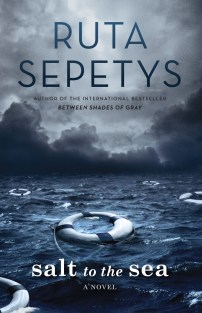
9780399160301Salt to the Sea by Ruta Sepetys
Four teenage narrators, each with a unique and memorable voice, tell the story of the events leading to the worst maritime disaster you’ve never heard of: the sinking of the Wilhelm Gustloff in the Baltic Sea during the final days of World War II. Nearly 10,000 people died, most of them refugees fleeing from the Soviets. Author Ruta Sepetys brilliantly constructs an addictive historical narrative that will appeal to readers who enjoyed All the Light We Cannot See or The Nightingale. (And isn’t that almost everyone?) Don’t be put off by the YA categorization — Salt to the Sea, like The Book Thief, is perfect for both teenagers and adults.

The Wall Street Journal calls Salt to the Sea “masterfully crafted”, noting that “Ruta Sepetys seizes on this tragic and forgotten episode to create a superlative novel.”

Sepetys is now on a national publicity tour — I’m looking forward to meeting her on Monday, February 8 at the Book Stall in Winnetka, Illinois. For her event schedule, check out her website.

When Breath Becomes Air by Paul Kalanithi
9780812988406When Breath Comes Air is one of those books you want to give to everyone you love. If you  start reading the book with a pen in hand, ready to underline your favorite passages, you’ll find yourself underlining almost the whole book. Dr. Paul Kalanithi, a 37-year-old neurosurgeon, wrote the book after he was diagnosed with terminal cancer. He didn’t quite finish, but the memoir he left behind — with a beautiful foreword from Abraham Verghese and an equally lovely epilogue written by his widow, Dr. Lucy Kalanithi — is a masterpiece.
Ann Patchett says: “It’s a brilliant piece of writing and a singular and profound piece of thinking, but it’s also more than that: When Breath Becomes Air makes us stop and think about how gorgeous life is, how heart-wrenching and brief and amazing.”

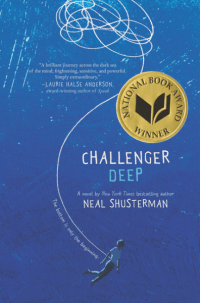
y648Challenger Deep by Neal Shusterman
Our YA book group at Lake Forest Book Store chose Challenger Deep because it was the 2015 National Book Award winner in the YA category. After I read the first 30 or 40 pages, I had no idea what was going on. I considered calling my co-leader and suggesting we apologize for our selection and pick another book. However, I decided to trust the National Book Award judges, and I persevered. I ended up loving this novel, which vividly recreates a teenage boy’s struggle with mental illness. The narrative switches between straightforward accounts and hallucinations, dreams, and distorted versions of reality. I don’t know if it’s ever really possible to comprehend mental illness, but Challenger Deep, more than anything I’ve ever read, helped me gain a bit of understanding.

51rc2b8fvkbl-_sx327_bo1204203200_The Lightkeepers by Abby Geni
Abby Geni’s debut novel is a literary page-turner, perfectly blending evocative writing and deft characterization with a tension-filled — and creepy — plot. The novel is worth reading just for its setting, the isolated and dangerous Farallon Islands off the coast of San Francisco. Miranda, a nature photographer, accepts a one-year assignment there, with only a few odd and unfriendly scientists for company. Not long after her arrival, one of them is found dead. Accidents happen all the time on the “islands of the dead”, but was this an accident?

The Chicago Tribune says:

Part murder mystery, part psychological thriller, part ode to one of the western world’s wildest landscapes, this dark, compelling tale is an astonishingly ambitious debut . . . In this, her first work of long-form fiction, Geni shuns predictable protocols of plot, character and setting. Taking a leap off the literary cliff is not for wimps. It’s a testament to Geni’s skills that she takes her readers with her.

My next two books will be While the City Slept: A Love Lost to Violence and a Young Man’s Descent into Madness by Pulitzer Prize winner Eli Sanders,to scratch my true crime itch, and The Forgetting Time by Sharon Guskin, because a page-turner about parental love and reincarnation sounds irresistible.  How about you?


The Most (and Least) Popular Books on the Table Posts of 2015

Happy New Year! I’m writing this blog to keep track of my reading and to encourage me to think more critically about what I read — but also to help bring readers and books together. I love sharing my enthusiasm for books that have found a place in my heart. I thought that looking at my 2015 year-end blog statistics would help me plan informative and engaging posts for 2016.

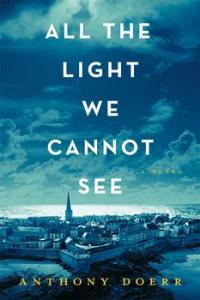
cvr9781476746586_9781476746586_lgWhen I checked to see which posts received the most views, I was surprised. The #1 post for 2015 is my review of All the Light We Cannot See  (originally posted in March 2014, six weeks before the book came out)– also the #1 post for 2014. Book reviews don’t usually get as much readership as other posts, but I guess that when the book being reviewed is a much-loved Pulitzer Prize winner, it’s a different story.
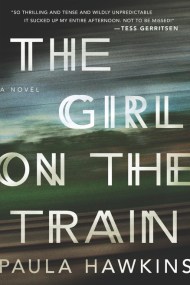
Just a few page views behind the All the Light We Cannot See review was 10 Spring Paperback Picks, which had double the page views of the #3 post (5 Reasons to Read Short Stories.) I wondered why that post was so popular, with triple the readership of similar posts — 10 Summer Paperback Picks, 10 Books to Get Your Book Club Talking — and five times the readership of 10 Summer Paperback Picks –Nonfiction? I thought there had to be some reason that the 10 Spring Paperback Picks post has been so popular throughout the summer, fall, and winter.

I discovered the reason inadvertently when I googled “Girl on the Train paperback” a few days ago. I didn’t find the paperback release date — but I did learn that Books on the Table’s 10 Spring Paperback Picks shows up as one of the first Google hits when those search terms are used. Which should be a good thing, except that readers who click on that link will not find out when The Girl on the Train will come out in paperback. What they will learn is a little bit about how the book industry decides when to release books in paperback and what my favorite summer 2015 paperback recommendations were.

Here are the top 10 posts from 2015, along with my theories about why they were the most popular.

#1: All the Light We Cannot See — Book Review (2014)
Searches for “discussion questions for All the Light We Cannot See”  led hundreds of readers to my book review — I hope they weren’t too unhappy when they found my post didn’t include any questions. I’ve considered including discussion questions in book reviews, but I never have because good discussion guides are usually available on publishers’ websites. Maybe I should include links to those, along with a few extra questions?

Those who wanted to know “what happened to the diamond in All the Light We Cannot See” were definitely disappointed, as was the reader interested in “the best food to serve at All the Light We Cannot See book club meeting”. (I suggest either French or German.)

By the way – if your book club is one of those that only discusses paperbacks, keep in mind that the paperback edition of All the Light We Cannot See is due in October 2016.

9781594633669M#2: 10 Spring Paperback Picks
Everyone is dying to know when The Girl on the Train is coming out in paperback. Keep in mind that the paperback edition of Gone Girl didn’t come out until nearly two years after the hardcover publication — but several months before the movie release. The movie version of The Girl on the Train is scheduled to hit theaters in October 2016.

#3: 5 Reasons to Read Short Stories (2014)
In what may be an age of limited attention spans, are short stories making a comeback? Over the past few years, many top-notch short story collections have been published, and the last two National Book Award winners for fiction have been collections of stories (Redeployment and Fortune Smiles). Or maybe people are bewildered by short stories; Books on the Table statistics show lots of readers wondering “why are short stories worth reading?” and “why do people read short stories?”.

#4: 10 Summer Paperback Picks
People like reading paperbacks in the summer!

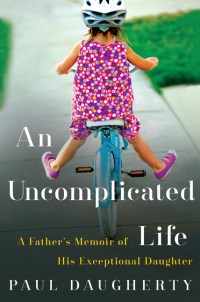
9780062359940#5: An Uncomplicated Life — Book Review
One reason this post was so popular is that Paul Daugherty,  the author of An Uncomplicated Life: A Father’s Memoir of His Exceptional Daughter, is a columnist at the Cincinnati Inquirer and he mentioned the review in his blog.  Another reason is that An Uncomplicated Life is a wonderful, inspiring book — don’t miss it! (It’s now out in paperback.) Daugherty’s daughter, Jillian, was married last June; in a letter he wrote to her, published on the website The Mighty, Daugherty said: ” I don’t know what the odds are of a woman born with Down syndrome marrying the love of her life. I only know you’ve beaten them.”

#6: Where They Found Her — Book Review
I’m not sure why this review got the attention it did, except that Where They Found Her is a popular book club selection. Many readers were searching for “Where They Found Her spoilers” — does this mean they hadn’t read the book and their book club meeting was starting in an hour?

Orphan #8#7: Orphan #8 — Author Interview
Kim van Alkemade’s  terrific debut novel, a paperback original, was an Indie Next pick. She provided detailed and thoughtful answers to my questions — but so did Elizabeth Berg, a much better-known author, in a discussion of The Dream Lover a few months earlier, and that interview had very low readership.  Could it be that people were looking for information about Christina Baker Kline’s Orphan Train (another paperback original), which has been on the New York Times bestseller list for over two years?

#8: 10 Books to Get Your Book Club Talking
Clearly, people are always looking for “discussable” books. A glance at search terms shows that they are also trying to find “book club books that are fun not depressing”, “great book club books for couples”, and, surprisingly often, “book club cocktail napkins”.

9780062259301#9: The Story Hour — Book Review (2014)
I loved this book, but I’m surprised the review made it into the top 10 because The Story Hour seems like one of those quiet and lovely books that hasn’t received the acclaim it deserves. All of Thrity Umrigar’s books are well worth reading, but my favorite is The Space Between Us.

#10: Nonfiction November : 10 Favorite Survival Books (2014)
When I’m warm and comfortable on my couch at home, usually with a blanket and a cup of hot tea, I like nothing better than to read about people trapped in the polar ice cap or shivering in a lifeboat. I must not be alone in my reading tastes because I see many searches for ” best nonfiction adventure books”  and “true survival stories”.

And here are three of my favorite posts from 2015 — which, according to the statistics, almost no one read:

Nonrequired Reading
I feel strongly about not forcing children to read books they don’t like. Maybe people disagree and don’t want to tell me? Did the Garfield photo turn people off? Or maybe the title is bad?

Books on the Table Goes to the Movies
Maybe I should stick to writing about books. I recently went to see the Chicago Lyric Opera’s production of Bel Canto (based on Ann Patchett’s book) and considered writing a post called Books on the Table Goes to the 24de28664bdf1f004be5425016536035Opera. It’s probably best I didn’t.

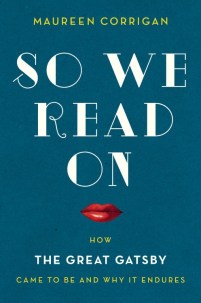
Jazz Age January: West of Sunset & So We Read On
Something has to be in last place — this post ranks #71 out of 71 posts published in 2015 — but this was one of my favorites! Am I the only one who cares about F. Scott Fitzgerald?

I’m interested in what you’d like to see more (or less) of in Books on the Table in 2016. Suggestions, please!